Socrates drank it. And that's the problem. The moment most people hear "hemlock," they picture a Greek philosopher dying slowly on a stone floor, which means they've already dismissed one of the most quietly magnificent trees in the eastern North American forest before they've ever stood beneath one. Poison hemlock is a weedy carrot-family plant, a low-growing herb with purple-blotched stems, and it belongs to an entirely different genus. The hemlock we're talking about here, Tsuga canadensis, is a towering conifer that can live 800 years, holds creek banks together with its shallow roots, and drops needles so fine and feathery they look like something a jeweler would make. These two plants share a name and nothing else.
I've stood at the base of old-growth hemlocks in the southern Appalachians where the canopy is so dense that almost nothing grows beneath it except moss and silence, and the air is noticeably cooler than in the surrounding forest. That's not an accident. This tree manufactures its own climate, and entire communities of species, some found nowhere else, depend on exactly that cold, shadowed, tannin-rich world it creates. That ecological reality is what drew me to it as a permaculture designer, and it's also what makes the crisis this tree now faces so difficult to sit with.
[1]Origin and History of Eastern Hemlock (Tsuga canadensis)
Botanical Background and Native Range
Eastern Hemlock stretches across an impressive swath of the continent, from eastern Canada south through the Appalachians to Georgia and Alabama, always gravitating toward the cool, moist understories where high humidity and well-drained soils let it do what it does best: grow slowly and live a very long time.[2][3] I've worked with a lot of patient plants in my career, but hemlock operates on a timeline that genuinely humbles me. Typical lifespans run 250 to 800 years, with maximum recorded ages exceeding 900 years and some specimens pushing past 1,000 under ideal conditions.[4][5] It doesn't reach reproductive maturity until 15 to 30 years of age, then produces small annual cone crops punctuated by heavier masting events every 2 to 5 years.[2] That kind of slow, deliberate strategy is something permaculture designers understand intuitively: invest in deep infrastructure, reproduce on your own schedule.
Part of what makes this tree such a committed specialist is its mycorrhizal network. Tsuga canadensis associates with over 100 species of ectomycorrhizal fungi, with particular affinities for Lactarius and Russula, partnerships that allow it to pull nutrients from the shaded, acidic soils where most competitors can't compete.[6][3] Its shade tolerance is extraordinary, functioning at light compensation points as low as 20 to 50 µmol photons per square meter per second, which is the botanical equivalent of thriving in a closet with a nightlight.[7] That specialization, however, comes with real vulnerabilities: the invasive hemlock woolly adelgid poses an existential threat, thin bark makes it highly susceptible to fire, and its shallow roots demand consistent soil moisture it can't always rely on as climates shift.[8][7]
The genus extends well beyond the East. Mountain Hemlock (Tsuga mertensiana) occupies subalpine zones from Alaska to northern California, growing 65 to 130 feet tall, living 200 to 500 years (with some stands exceeding 1,200), and adapting to brutal snowpack through branches engineered to flex rather than break.[9][10] Climate models now predict 50 to 80 percent habitat loss for Mountain Hemlock in its southern ranges as drought and warming push its zone upslope into increasingly thin air.[11] Southern Japanese Hemlock (Tsuga sieboldii) anchors the genus on the other side of the Pacific, native to mountainous terrain in southern Japan between 700 and 2,000 meters elevation, completing a picture of a lineage that evolved independently across the northern hemisphere's cool, wet highlands.[12]
Visual Characteristics of Eastern Hemlock
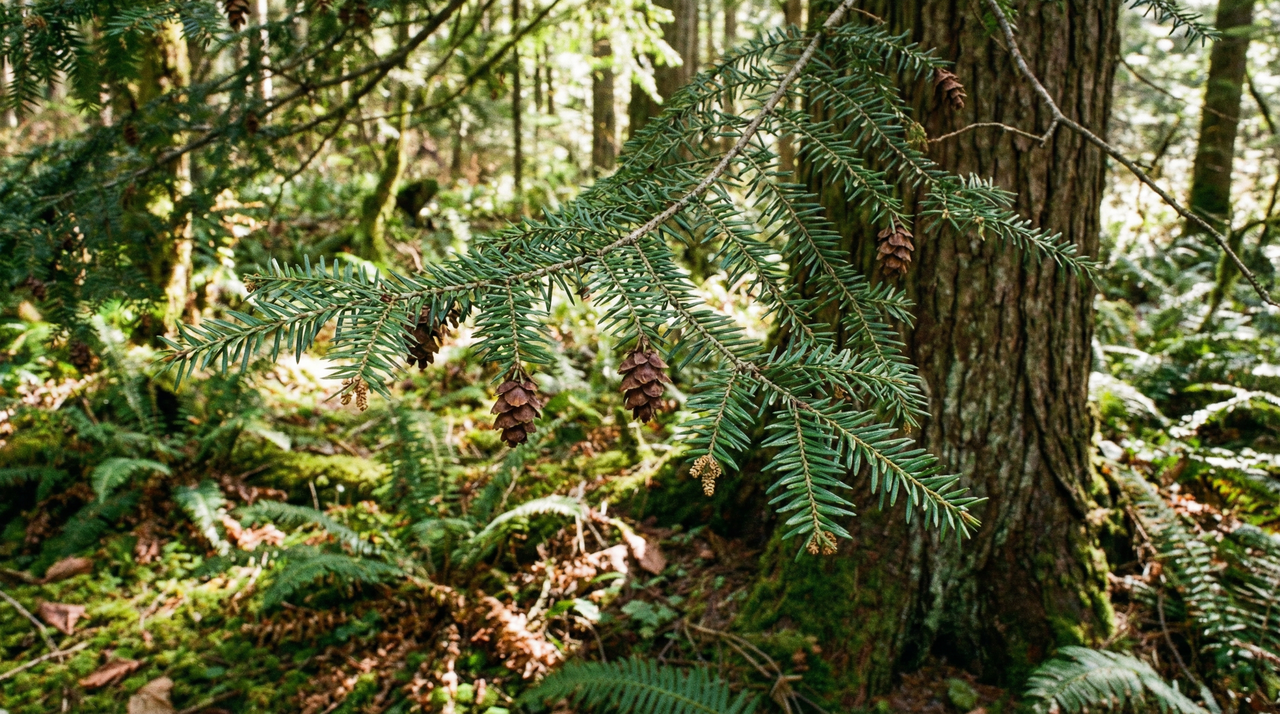
The first thing I tell people when they're learning to identify Eastern Hemlock is to flip the needle over. Those flat, linear needles, just 3 to 8 mm long with blunt or slightly notched tips, carry two crisp white stomatal bands on their undersides that make the twig look almost silver from below.[13][14] The needles are spirally arranged but rotate to lie in two distinct rows, giving every twig that soft, feathery, two-toned look that's instantly recognizable even in winter when cones are absent. In my experience consulting on native plant restorations, those white bands are the most reliable field marker there is.
The overall form evolves with age in a way I find genuinely beautiful. Young trees build a dense, pyramidal silhouette, but as they mature the shape opens up, becomes irregular, and the terminal branches develop that characteristic droop, a pendulous quality that gives old hemlocks something almost elegiac about their posture.[15] In cultivation expect 50 to 70 feet tall and 25 to 35 feet wide; in old-growth forest conditions, over 100 feet is possible.[16] The bark ages to a reddish-brown or grayish-brown with shallow furrows and an orange-brown inner layer, and the slender twigs share that warm reddish-brown tone, smooth with prominent lenticels.[15][3] Beneath the soil, the root system is surprisingly shallow, with 80 to 90 percent of roots concentrated in the top 50 cm, which has real implications for anyone siting these trees near structures or on slopes prone to saturated soils.[17]
Eastern Hemlock is monoecious, bearing small yellowish male cones and the pendant woody female cones (1 to 2 cm) that are probably the tree's most charming detail, dangling from branch tips and maturing from green to brown over the season.[18][2] The tiny winged seeds inside are about 3 mm, built for wind dispersal into the gaps where light occasionally reaches the forest floor.[19] Mountain Hemlock, by contrast, carries its cones erect rather than pendulous and positions stomata on the upper needle surface; its branches flex dramatically under snow load rather than drooping under their own weight, an adaptation as different in feel as it is logical for a subalpine species.[20][21]
Traditional and Cultural Uses
Long before European botanists assigned it a scientific name, the Iroquois (Haudenosaunee), Cherokee, Abenaki, Mi'kmaq, Ojibwe, and other nations had built a sophisticated pharmacopoeia around this conifer. Inner bark, needles, and cones were prepared as teas, decoctions, and poultices to treat colds, fevers, scurvy, stomach ailments, diarrhea, sore throats, wounds, boils, and inflammation, and the tree served as a diuretic and general tonic across multiple cultural traditions.[22][23] The vitamin C content of fresh needles made hemlock tea a genuine scurvy preventive, a fact that resonates with me when I think about how forest peoples developed nutritional resilience from what surrounded them in the understory. There's a direct parallel to how permaculture designers think about integrating food function into canopy selections today.
European settlers adopted many of these medicinal practices and added their own industrial dimension: hemlock bark became the backbone of colonial tanning operations, stripped in vast quantities to cure leather.[24][25] The wood went into canoes, homes, ships, and furniture, and by the 19th century the pressure from tannin extraction alone had left visible scars on eastern forest ecosystems. On the Pacific side of the continent, the Haida, Tlingit, and Coast Salish drew on Mountain Hemlock in strikingly similar ways: bark decoctions for colds and fevers, resin and pitch for wounds, branches for bedding and sweat lodge insulation, and ceremonial smoke from burning boughs.[26][27] Different species, different continent, strikingly similar ecological chemistry at work.
Fun Facts About Eastern Hemlock
The national champion Eastern Hemlock stands 145 feet tall with a 212-inch circumference and a 90-foot crown spread, which gives you a sense of what centuries of patience actually look like.[4] Beyond sheer size, its keystone status is hard to overstate: the dense canopy supports over 50 bird species, provides critical thermal cover for deer, seeds for birds and small mammals, and crucially shades streams enough to keep water temperatures cool for brook trout populations that simply cannot survive in unshaded reaches.[28][29] I've seen how hemlock groves create distinct microclimates in woodland designs, the kind of cool, damp pockets that support a completely different plant and invertebrate community than the surrounding forest, and it always strikes me how much ecological work one canopy species can do.
Its physiological adaptations are genuinely clever. Those small, two-ranked needles maximize light capture at low intensities, the drooping leader reduces snow load, and the shallow fibrous roots spread wide to harvest moisture from the litter layer above the mineral soil.[3][7] Masting is timed to cool, moist summers, with heavier seed crops every 2 to 5 years flooding the forest floor when conditions favor germination.[30] Cones can retain viable seeds for 3 to 7 years, a useful buffer in a species that can't afford to gamble its entire reproductive effort on a single good season.[30]
Hemlock woolly adelgid poses an existential threat that defines modern hemlock conservation. This invasive pest, established in the eastern U.S. since the 1950s, kills infested trees within 4 to 10 years with mortality rates exceeding 90 percent in heavily affected areas.[8][31] Secondary threats including hemlock defoliator moth and Phytophthora root rot add pressure, and climate-driven drought and warming reduce the tree's capacity to respond.[32] In my work with woodland systems, I've seen how early monitoring and integrated approaches combining systemic treatments with biological control agents (predatory beetles show real promise) can make a meaningful difference. The research on genetic resistance and assisted migration is moving forward, but the uncertainty is real and the window for intervention is narrow. This is a tree worth protecting with urgency.
Hemlock Varieties and Cultivars
If you dig into the taxonomy of Tsuga canadensis, you'll find two recognized subspecies: subsp. canadensis and subsp. caroliniana.[33] Neither shows up in nursery catalogs. Botanical subspecies and true varieties of eastern hemlock are taxonomic divisions, not horticultural selections, and for practical gardening purposes they're essentially irrelevant.[34] What matters for anyone actually shopping for a tree are the cultivars: selections made for ornamental traits that make eastern hemlock work in a garden rather than just a forest.
Notable Cultivars of Eastern Hemlock (Tsuga canadensis)
Somewhere between 10 and 15 cultivars of Tsuga canadensis are widely recognized and commercially available, selected for compact size, weeping habit, columnar form, or variegated foliage.[34][35] I reach for these constantly in shade-garden designs for clients with small urban lots, where the straight species would eventually overwhelm a space but a well-chosen cultivar delivers that same feathery, layered texture at a manageable scale.
'Pendula' is probably the most requested, its sweeping branches making it an outstanding specimen in a shaded corner. 'Compacta' stays genuinely dwarf and earns its place in rock gardens. 'Fastigiata' grows in a narrow columnar form that works where vertical accent is needed but horizontal space is tight. Rounding out the palette, 'Gracilis', 'Fruticosa', 'Variegata', 'Excelsa', and 'Arnold Promise' each bring something distinct in texture or silhouette.[34] None of these are fast-growing centerpiece trees; they're slow, refined specimens.
Western hemlock (Tsuga heterophylla) has its own ornamental selections, including 'Glauca' for bluish foliage, weeping forms like 'Pendula' and 'Thorsen's Weeping', a dwarf 'Compacta', the variegated 'Denham's Variegated', and disease-resistant 'Iron Mountain' for those with an eye toward forest health.[36][37] Mountain hemlock (Tsuga mertensiana) leans harder into cold tolerance and dwarf form; 'Elizabeth' tops out around 3 to 4 feet, 'Pygmaea' offers silvery-blue color with strong hardiness, and 'Compacta' gives a tidy columnar shape to about 6 to 8 feet.[38] These western and mountain selections are best treated as supporting players for readers outside the East; for most people shopping for a hemlock, Tsuga canadensis is the anchor.
Sourcing Eastern Hemlock Plants and Seeds
Eastern hemlock has solid availability through native plant nurseries, specialty conifer growers, and mail-order suppliers like Prairie Moon Nursery, Nature Hills, and FastGrowingTrees.com, with the strongest selection concentrated in the Northeast, Great Lakes, and Appalachian regions.[39][40] Seedlings in the 1 to 3 foot range typically run $15 to $50; larger specimens can reach $100 to $500 or more depending on size and form.[41][42] I time my orders for early spring delivery whenever possible to hit the optimal planting window before summer heat arrives.
Here's where sourcing gets serious: because of hemlock woolly adelgid, Eastern hemlock is subject to USDA APHIS quarantine regulations, and interstate movement generally requires a phytosanitary certificate confirming the stock is HWA-free; some states, including California, have additional import restrictions on top of that.[43] I learned early on, after buying unlabeled stock from a vendor I hadn't vetted carefully, that skipping this check is not worth the risk. I now request health documentation before any hemlock goes in the ground near other conifers, no exceptions. Buying only from certified, pest-free nurseries protects your garden and keeps you from contributing to adelgid spread in the wider landscape.[18]
Mountain hemlock is far less commercialized and best sourced through Pacific Northwest specialty nurseries or directories like the Lady Bird Johnson Wildflower Center; pricing is broadly similar, running $5 to $50 for small plants and $20 to $300 or more for larger specimens, with fewer federal movement restrictions than its eastern counterpart.[44][45]
Eastern Hemlock Propagation and Planting Guide
Eastern Hemlock rewards patience at every stage, and that starts well before a seed hits soil. Growing hemlock from seed means getting comfortable with a slow, deliberate process that mirrors the tree's own unhurried nature. Once you understand the seed's structure and what it needs, the whole propagation picture clicks into place.
Seed Morphology, Storage, and Viability
The seeds themselves are tiny and easy to underestimate. Each one has a body just 2-3 mm long, obovoid to ellipsoid and light to dark brown, with a thin membranous wing that extends the total length to about 8-10 mm.[3][2] That wing accounts for 70-80% of the total length and is the tree's primary dispersal mechanism, though wind rarely carries seeds more than 50 meters from the parent.[46] They're borne in small pendulous cones, 1.5-2.5 cm long, with typically 2-3 seeds per fertile scale.[3] Because the tree is monoecious, both male and female cones appear on the same individual, which matters if you're collecting from a single isolated specimen in a landscape planting.[47]
These seeds store exceptionally well. Tsuga canadensis is orthodox and desiccation-tolerant, meaning you can dry seeds to 5-10% moisture content without damaging viability.[7][48] For long-term banking, sealed airtight containers with desiccants at -18°C to -20°C can maintain viability for 10-20 or more years; for shorter-term storage of 2-5 years, 0-5°C at 15-30% relative humidity works well.[48][49] Fresh seed shows 80-90% initial viability, and properly stratified stored seed can still germinate at 70-90%.[50][51] Surface sterilization with a fungicide like captan or thiram before storage reduces mold contamination significantly, and viability testing via tetrazolium staining or germination assay tells you what you're actually working with before you commit to a stratification protocol.[52][53]
The seeds exhibit physiological dormancy and require 30-90 days of moist cold stratification at 1-5°C before they'll germinate. After that cold period, moving them to 20-25°C under high humidity brings germination in 2-4 weeks with rates ranging from 30-80% depending on seed quality and stratification duration.[51][54][46] I've found the full 90-day stratification consistently outperforms shorter periods, especially with seeds that have been in storage for a season or two.
Propagation Methods: Seeds, Cuttings, Layering, Grafting, and Tissue Culture
Seed is the most reliable path, full stop. After several seasons of struggling with cuttings and landing somewhere around 25% rooting success, I now default to seed for any conservation or restoration planting. Softwood or semi-hardwood cuttings taken late spring to early summer, treated with IBA at 1000-3000 ppm and stuck in peat-perlite under 80-90% humidity with bottom heat around 70-75°F, can achieve 20-50% success under ideal conditions.[55][56] Those numbers sound reasonable on paper, but in practice the variance is frustrating, and the humidity management alone requires more infrastructure than most home propagators want to maintain.
Layering is worth considering if you have a low-branching specimen in a shaded, moist spot. Success rates run 40-50% in the right conditions, making it more reliable than cuttings with far less intervention.[57][58] Grafting (bark or cleft onto same-species rootstock) and tissue culture are technically possible but rarely practical outside of specialized nursery or research settings.[58] As a genus note: Mountain Hemlock (Tsuga mertensiana) shares the orthodox seed behavior but stores for a shorter window of 5-10 years under optimal conditions, and seeds germinate post-snowmelt with a notable light dependence.[10]
Soil and Site Requirements for Eastern Hemlock
This tree wants moist, well-drained, acidic loamy or sandy-loam soil rich in organic matter, with a pH optimum of 4.5-6.0 (tolerating as wide as 3.5-7.0) and high porosity.[2][59] I always do a soil test before planting because I've seen iron deficiency turn healthy green needles lemon-yellow within a single season when pH crept too high. If adjustment is needed, elemental sulfur at 1-2 lbs per 100 square feet works, but only after you know your baseline.[60] And in my experience, hemlocks planted in even slightly heavy clay never fully thrive, regardless of pH correction. Clay inhibits drainage, and poor drainage invites Phytophthora root rot.[18]
The shallow, fibrous root system, concentrated in the top 15-30 cm of soil, means drainage and organic matter content aren't just preferences, they're structural requirements.[61] After watching two young hemlocks topple in a summer thunderstorm on shallow soil, I now insist on at least 18 inches of well-drained loam before planting. Ideally you want more than 120 cm depth to support a stable root plate long-term.[62] A 2-4 inch layer of shredded bark, pine needles, or wood chips mulched out from (not piled against) the trunk conserves moisture, moderates temperature swings, and gradually acidifies the soil over time.[63][64] I also inoculate every transplant with native mycorrhizal fungi; the mycorrhizal partnerships this species relies on are well documented, and in my own plantings the inoculated trees establish noticeably faster.
For container-grown seedlings, a mix of roughly 50% peat or coir, 30% perlite or pumice, and 20% pine bark fines at pH 5.0-6.5 replicates the conditions the tree prefers.[65] On light: Eastern Hemlock is genuinely shade-adapted, capable of growing in as little as 5% of full sunlight, and it prefers partial to full shade or 2-4 hours of direct sun daily.[59][4] In warmer parts of its range, morning sun with afternoon shade prevents needle scorch and keeps the root zone cooler through summer.[18]
Planting Timing, Spacing, and Establishment Techniques
Spring and fall are both suitable planting windows. Bare-root seedlings transplant well at 6-12 inches tall; container-grown stock at 8-18 inches gives you slightly more flexibility in site conditions.[66] Either way, cool, moist, shaded sites give you the best shot at strong establishment.
For landscape trees, 10-15 feet apart accommodates the mature crown spread of 10-30 feet; hedges and screens work at 6-10 feet, and forest plantation spacing of 8-12 feet balances density with airflow.[67][2] That airflow piece matters more than people expect. I've seen overcrowded hemlock plantings develop a suffocating microclimate where humidity-driven fungal problems take hold within just a few years. Wider spacing now prevents a lot of headache later, especially given the tree's slow-to-moderate growth rate of 0.3-0.6 m per year.[14] I also label seedling rows carefully in the first two years; first-year hemlock seedlings look surprisingly similar to other conifers, and more than once I've lost track of a row without a marker.
Germination Timeline and Early Growth Rates
After stratification, expect germination at 60-70°F within 2-4 weeks.[7] Once established, young trees push 1-2 feet per year, which feels slow until you watch a five-year-old sapling finally fill its space with lacy, layered branches.[2] The two timelines that matter most to growers are quite different: grafted ornamentals and Christmas tree stock can reach 6-8 feet in 10-15 years, while commercial timber rotations run 80-120 years to reach 12-18 inches DBH and 50-80 feet in height.[66][7] For comparison, Mountain Hemlock reaches reproductive maturity at 20-40 years from seed, though grafted specimens can flower as early as 3-5 years.[10] The Eastern Hemlock's slow pace is simply the price of admission. Clear the early hurdles of stratification, drainage, and shade, and you're setting the stage for a tree that will outlive most of the other plantings in your landscape by centuries.
Hemlock Care Guide: Growing and Maintaining Tsuga canadensis
The cardinal rule with hemlock is restraint. This is a tree shaped by cool, shaded forest understories over millions of years, and it performs best when you stop trying to push it and start trying to replicate what it already knows. That means shade, consistent moisture, minimal feeding, and a light hand with the pruners. Get those fundamentals right, and a hemlock will reward you with decades of graceful, low-maintenance presence.
Sunlight Requirements for Healthy Hemlock Growth
Eastern Hemlock is one of the most shade-tolerant conifers in North America, and that's not just a fun fact, it's the foundation of every siting decision you'll make.[47][68] Partial to full shade is ideal. Stick one in full sun, and within weeks you'll see uniform needle browning starting at the tips, branch dieback, and sparse etiolated growth that takes years to recover from, if it recovers at all.[69][70] I've grown hemlock near mature oaks and maples, and that's genuinely the sweet spot: dappled summer shade from the deciduous canopy, then a bit more light filtering through after leaf drop in winter, which the hemlock uses efficiently without ever getting scorched.[71][3] If you're designing a food forest or layered planting, hemlock belongs in the understory or at the north-facing edge where it gets protection rather than exposure.
Watering Needs and Moisture Management
Hemlocks are shallow-rooted, and that makes them more sensitive to moisture extremes than their stoic appearance suggests. Young trees need about an inch of water per week, applied one to two times weekly until established.[72][73] Overwater and you get root rot: needle chlorosis, branch dieback, fungal problems at the base.[74][72] Underwater a young tree and you'll see tip browning, needle drop, and stunted growth that can be hard to distinguish from other problems. Once established, mature hemlocks handle moderate dry spells, but supplemental irrigation during extended drought is still worthwhile. I deep-water mine every seven to ten days in dry stretches rather than light surface watering more often, because that shallow root system needs encouragement to stay well-anchored.[72][75] A two-to-four inch layer of organic mulch kept clear of the trunk does more work than almost any other single care practice, holding moisture, moderating soil temperature, and slowly acidifying the soil toward the pH 4.5-6.5 range these trees want.[74][76] Taper irrigation back in winter; roots are still active but the tree's needs drop significantly.
Heat Tolerance and Protection Strategies
Eastern Hemlock is rated for AHS Heat Zones 1-3, meaning it's comfortable where summer days above 86°F are rare.[18][77] Sustained temperatures above 95°F cause real physiological stress, and brief spikes toward 104°F are only survivable if nights cool below 70°F to allow recovery.[78][79] Seedlings and young trees are especially vulnerable: impaired growth and increased mortality show up when temperatures exceed 77-86°F for extended periods.[80][81] Heat and drought stress compound each other quickly: what starts as tip browning above 85°F can escalate to canopy thinning and branch dieback if moisture is also short.[47] One thing I've learned to watch for is distinguishing early heat-and-drought browning (tip-inward, even across the canopy) from adelgid damage, which tends to cluster and presents with the characteristic woolly deposits. The two problems can look similar at a glance, but the fix is completely different. If your hemlock is in a warm climate, site it on north or east-facing slopes, protect it with 30-50% shade where possible, keep the mulch ring at three to four inches, and stay away from urban heat sinks.[47][82] There are no cultivars with meaningful heat tolerance; this is fundamentally a cool-climate tree.
Frost Hardiness and Winter Protection
Cold hardiness is where hemlock genuinely impresses. Eastern Hemlock is hardy to USDA Zone 3, tolerating temperatures down to -40°F, and the RHS rates it H7 for the severest winters.[14][83] Mountain Hemlock carries that same extreme cold tolerance and adds flexible branches engineered to shed heavy snow loads rather than snap under them, a useful trait to understand when siting either species where ice and snow are part of winter life.[84][75] The real vulnerabilities aren't extreme cold but rather freeze-thaw cycling, desiccating winter winds, and south-aspect thaw-refreeze events that cause needle browning from tips inward, bud damage, and root heaving in young plants.[85][86] After I watched several young hemlocks struggle through an unusually volatile winter on a wind-exposed slope, I got religious about three-to-four inch mulch rings and temporary burlap windbreaks for anything under three years old. That combination carried them through, and those same trees are now problem-free.[87][88] Recovery from frost damage means pruning out dead wood once the extent of injury is clear in spring and monitoring carefully for secondary pest pressure, since stressed tissue is exactly what opportunistic insects seek out.
Feeding and Soil Fertility for Hemlocks
Eastern Hemlock rarely needs fertilizer, and pushing nitrogen in particular can increase susceptibility to hemlock woolly adelgid by stimulating the flush of succulent new growth the pest prefers.[89][88] After soil-testing several planting beds over the years, I now feed my hemlocks only every two or three years, and only when a test shows an actual deficiency. When feeding is warranted, a slow-release acidifying evergreen formula (something like NPK 10-8-6 or 5-10-5) applied at 0.5 to 1 lb of actual nitrogen per 1,000 square feet of root zone in early spring is the right approach.[89] Composted bark or a pine needle mulch gives you gentle, ongoing acidification without any of the risk. Never fertilize late in the season; hardening off before winter is more important than any growth boost you might chase.
Pruning, Maintenance, and Seasonal Rhythm
Hemlocks don't sprout from old wood. That single fact should govern every pruning decision you make. Cut back into bare older stems and you're left with a permanent gap, not a flush of regrowth.[90][91] Fortunately, hemlocks need very little pruning to maintain their natural pyramidal form. Work in late winter to early spring, before bud break, removing only dead, diseased, damaged, or crossing branches.[92] Bud break runs April through July, with pollen release in May and June and seed dispersal in fall and winter.[3][93] That phenological rhythm is your calendar for everything else too: prune and fertilize (if needed) before bud break, refresh the mulch ring in spring, deep-water through summer dry spells, taper irrigation as temperatures drop, and protect young trees before the first hard freeze. Keep three to five inches of organic mulch in a two-to-three foot radius year-round.[18][72] A hemlock managed this way, kept cool, moist, and unstressed, carries its own best defense against the pest and disease pressures that become serious only when vigor is already compromised.
Harvesting and Storing Eastern Hemlock
Most people who come to hemlock as a harvestable plant aren't thinking about timber rotations. They want to know when to pick needles for tea, whether the spring shoots are worth eating, and how to tell a ripe cone from one that's already shed its seed. Those are the questions I find most useful to answer here, so let's start there.
Timing and Maturity Cues for Needles, Shoots, and Cones
The edible harvest follows a simple spring rhythm. Young shoots and fresh needle growth emerge as the most tender, highest-quality material in spring, and that's when I always make my first pass. After years of working with native conifers in forest garden designs, I've learned to look for the pale, almost lime-green tips appearing against the darker older needles. There's a resinous sharpness to the scent that softens as the season progresses, and that early-season brightness is exactly what you want for tea.
Inner bark harvest also falls in spring, when the cambium separates most cleanly from the sapwood. It's worth being honest that this is a more disruptive harvest than picking needles; you're wounding the tree, so it should be done sparingly and never on stressed specimens.
Cone harvest runs on a different schedule entirely. Eastern Hemlock cones develop over roughly 6 to 7 months from pollination in late spring through seed dispersal in early fall, though the full cycle from pollination to seed maturation spans two years.[7][2] If you're collecting seed, watch for cones shifting from green to light brown, with the tiny scales (cones run just 1.5 to 2.5 cm long) just beginning to separate.[47] Harvest just before full opening to keep the most seed intact.[94] For Mountain Hemlock, timing shifts with elevation; lower sites ripen by late August while higher terrain above 2,000 meters can push into late October, and cones abort if summer temperatures exceed 25°C.[95]
Flavor Profile, Yield, and Best Harvest Techniques
Eastern Hemlock needle tea has a bright, citrusy, pine-forward flavor with lemony undertones and a noticeable astringency from tannins.[96][97] That astringency is the dominant note rather than bitterness, which surprises people who expect something harsh. Spring shoots eaten raw have a tender, occasionally chewy texture with a fresher, mintier quality on top of the resin.[96][98] I'd describe them as somewhere between spruce tips and a mild conifer candy -- more approachable than you'd expect.
The chemistry behind that seasonal brightness is straightforward. Monoterpene content, especially α-pinene, bornyl acetate, and limonene, peaks in spring and summer and drops off in fall and winter.[99] Younger needles carry higher concentrations of these volatiles than older growth, which is why early-season harvests genuinely taste brighter.[100] I've also noticed that material from northern populations tends toward a sharper, more pungent pinene character compared to the softer notes I get from trees in warmer zones, which lines up with research showing higher pinene content in northern populations.[47]
How you dry needles matters too. Drying can reduce volatile monoterpenes by up to 50%, flattening that fresh citrus-pine character into something earthier and more resinous.[101] I over-dried a batch once and the difference was immediately obvious; the brightness just wasn't there. Air-drying at room temperature preserves far more of the volatiles than any kind of heat.[101] The inner bark, harvested in spring and dried for flour, has a mucilaginous, faintly sweet quality with that same astringent undertone -- historically a famine food, but an interesting one.[96][98] Mountain Hemlock offers a milder, less resinous flavor profile, with spring growth noticeably sweeter than mature needles.[102]
Before harvesting a single needle, I always confirm identification against the cone shape, needle arrangement, and white-striped undersides that distinguish true hemlock from anything else in the landscape. Poison hemlock (Conium maculatum) is a completely unrelated herbaceous plant, not a tree, but the name overlap creates real confusion for new foragers. Double-check every time. The traits are distinctive once you know them, but no harvest is worth skipping that step.
Hemlock Preparation and Uses
Culinary Uses and Safety
The most rewarding entry point into Eastern Hemlock as a useful plant is also its gentlest: needle tea. Those soft spring tips, the light-green flush that arrives in early May, contain 200-500 mg of vitamin C per 100 g fresh weight[103][104] and brew into something genuinely pleasant: citrusy, lightly piney, with a mild astringency that's softer than spruce and nowhere near as resinous as fir.[98] I've described it in workshops as "lemon with a forest floor finish," and that usually lands. The needles also carry polyphenols, flavonoids, and catechins with antioxidant and mild anti-inflammatory properties,[105] which helps explain why Iroquois and Cherokee communities used needle and bark preparations for colds, respiratory trouble, and fever long before any lab confirmed the chemistry.[2][103]
The inner bark is the other traditional food use, edible after boiling and historically a genuine famine food: it provides carbohydrates plus 5-10% protein, calcium, and magnesium.[103][4] I think of this less as a recipe and more as a reminder of what this tree meant to people who depended on it. Mountain Hemlock (Tsuga mertensiana) offers similar culinary possibilities -- needle tea with a mildly citrusy, resinous quality, tender spring shoots eaten raw or sautéed, and cambium as emergency nutrition or in syrups[75][106] -- showing these uses hold across the genus. If you want to experiment further, fermentation actually reduces harsh terpenes and develops fruitier, more palatable esters.[107]
Now, the part I never skip in my foraging workshops. Eastern Hemlock (Tsuga canadensis) is categorically unrelated to poison hemlock (Conium maculatum), a herbaceous plant with deadly alkaloids that shares only a common name.[96] The confusion can kill, so positive identification is non-negotiable. I don't let students harvest until they can reliably distinguish hemlock's flat needles with two white stomatal bands from yew's pointed, nearly scentless needles -- crushing a hemlock needle gives you that pleasant resinous citrus; crush a yew needle and you get almost nothing, which should be your red flag. Yews (Taxus species) and Mountain Laurel (Kalmia latifolia) are the dangerous look-alikes here: yew contains cardiotoxic taxine alkaloids in its seeds, needles, and bark, while Mountain Laurel carries grayanotoxins capable of causing bradycardia, weakness, and coma.[108][109] Even correctly identified Eastern Hemlock can cause mild gastrointestinal upset in large quantities from its tannins, and pregnant individuals should avoid significant consumption due to potential oxytocic effects.[2][110] And after watching hemlock woolly adelgid decimate stands across Appalachia -- mortality exceeding 90% in affected regions[111] -- I now tell anyone asking about foraging wild hemlock to reconsider. Plant your own nursery stock. Harvest from that. Leave the forest trees alone.
Medicinal Preparations
Traditional dosage guidance suggests needle infusions using 1-2 teaspoons of dried needles per cup of hot water steeped 10-15 minutes, and bark decoctions using 1-2 g of dried bark simmered for 20 minutes, with daily maximums of roughly 3 g for needles and 4-6 g for bark.[112] I share these numbers as historical context, not prescriptions. There are no FDA-approved therapeutic uses for Eastern Hemlock, and the plant has potential mild anticoagulant properties that could interact with blood-thinning medications.[113] If you're drawn to its traditional medicine history, that's worth exploring with a qualified herbalist -- someone who can weigh the phytochemistry against your specific health context, not a foraging blog including this one.
Non-Food Uses in Landscape and Tradition
As a landscape tree, Eastern Hemlock's graceful pendulous form and exceptional deep-shade tolerance give it a role almost nothing else fills: it's the tree that transforms a dark, awkward corner into a layered, productive understory guild.[2][114] I've watched ferns, mosses, and woodland ephemerals establish under its canopy in ways they simply won't under harder-edged conifers.
The bark's high tannin content made Eastern Hemlock the backbone of the American leather tanning industry for generations and served Native communities as an antidiarrheal remedy and dye source.[115][2] Beyond tannins, the tree contributed inner bark fibers for baskets and cordage, resins for adhesives and varnishes, wood pulp for paper, and durable timber suited to wet environments like docks and bridges.[2][7] Mountain Hemlock tells a different story in the West: Pacific Northwest Indigenous groups shaped its wood into bows, canoes, and totem poles,[27][116] though its remote habitat and slow growth kept it out of commercial timber production. For permaculture designers, the takeaway is that when you grow hemlock intentionally on your own land, you're planting access to hemlock mulch, hemlock wood for future projects, and a living system whose value accumulates over decades -- no wild collection required.
Eastern Hemlock Health Benefits and Medicinal Uses
Eastern Hemlock (Tsuga canadensis) has nothing to do with poison hemlock (Conium maculatum). Nothing. They're not even remotely related botanically. Poison hemlock is a weedy carrot-family plant containing deadly piperidine alkaloids like coniine that cause neurotoxicity and death; Eastern Hemlock is a conifer with no such compounds.[117][2] The shared common name causes genuine fear and confusion, and I've watched people dismiss an entire, genuinely interesting plant because of it. That confusion deserves to be put to rest first.
Phytochemical Profile of Eastern Hemlock
Eastern Hemlock is chemically rich, and the bioactives are distributed unevenly across the plant in ways that matter practically. The bark carries the heaviest load of condensed tannins, specifically proanthocyanidins at roughly 10-20% of inner bark dry weight, while the needles are where you find the most flavonoids like quercetin, kaempferol, and taxifolin derivatives, plus the highest vitamin C concentrations.[118][119] Total phenolics in the leaves run around 50-100 mg per gram dry weight.[120] Then there are the essential oils, concentrated mostly in the needles and dominated by monoterpenes: α-pinene can make up 20-50% of the oil, alongside β-pinene, β-phellandrene, and bornyl acetate.[121][122]
These bioactive compounds are highly variable depending on season, site, and stress. Phenolic concentrations peak in fall and winter, and trees under herbivore pressure, like those facing hemlock woolly adelgid, ramp up terpenoid production as a chemical defense.[123][124] I've noticed the needle tea I brew from stressed trees in late fall has a noticeably more resinous bite than the milder spring tips, which aligns with studies documenting how environmental stress triggers terpenoid defense responses. Soil nitrogen and acidity also shift the profile.[125] Other Tsuga species follow similar patterns; Western and Mountain Hemlocks add sesquiterpenes like germacrene D to the essential oil mix, and Japanese Hemlock (Tsuga sieboldii) stands apart with podophyllotoxin-related lignans that give it a genuinely different and more potent toxicity profile.[126][127]
Traditional and Research-Backed Medicinal Applications
Indigenous peoples across the East developed a sophisticated relationship with this tree long before any lab confirmed why it worked. The Iroquois, Cherokee, Ojibwe, and Mohawk all used bark and needle preparations internally for colds, coughs, diarrhea, scurvy prevention, and as diuretics; externally, poultices addressed wounds, rheumatism, skin conditions, and bruises.[128][4][129] Pacific Northwest tribes leaned on Western and Mountain Hemlock for overlapping applications, and Japanese ethnobotany records similar uses for Tsuga sieboldii.[130][131] That consistency across cultures and continents is meaningful context.
Modern lab work has started explaining the mechanisms behind some of these uses. In vitro studies on Tsuga canadensis extracts show antioxidant activity via DPPH radical scavenging, antimicrobial effects against Gram-positive bacteria like Staphylococcus aureus, anti-inflammatory action through NF-κB pathway inhibition, and preliminary cytotoxic effects on certain cancer cell lines, plus some alpha-glucosidase inhibition that hints at anti-diabetic potential.[132][133][134] That's a genuinely interesting preliminary picture. But there are zero clinical trials in humans for any Tsuga species; every pharmacological finding remains in vitro or ethnobotanical.[135][136] The ethnobotanical record is rich and the in vitro data is promising, but I don't recommend medicinal doses without medical supervision. That's where traditional knowledge deserves modern caution, and I think honoring the ethnobotanical legacy means not overstating what we can currently prove.
Nutritional Value and Edible Uses
A lot of the traditional medicinal applications, especially for colds and scurvy, were as much nutritional as they were therapeutic. Fresh Eastern Hemlock needles contain 100-300 mg of vitamin C per 100 grams, which is the figure that made them genuinely life-saving for Indigenous peoples and early European settlers through long winters.[137] The needles are otherwise low-calorie (around 20-40 kcal per 100g), with modest protein and carbohydrates, and the dried mineral content is reasonably impressive: roughly 1200 mg calcium, 300 mg magnesium, and 500 mg potassium per 100 grams dried.[138]
The needles and young shoots are the most accessible edible parts; inner bark has been used after processing to reduce tannins. I brew a weak tea from fresh spring tips and it has a citrusy, resinous quality that's genuinely pleasant, lighter than you'd expect from a conifer and brighter than dried needles, which taste more tannic and less vibrant. The flavonoids and essential oils that carry those aromatic tsuga essential oil benefits are part of what you're tasting.[4][138] Western and Mountain Hemlock share similar nutritional profiles, though specific data on those species is limited compared to the Eastern anchor.[139]
Safety Considerations and Toxicity Profile
I always teach clients and students the same identification rule: look for the small, elegant cones and flattened needles with two white stomatal bands underneath before you trust the name on a plant tag. Relying on the word "hemlock" alone is not a strategy. That said, once you've correctly identified Eastern Hemlock, the actual toxicity profile is quite different from its notorious namesake. Eastern Hemlock lacks the alkaloids that make Conium maculatum deadly, and it's generally considered low to moderate toxicity for humans when used in moderation.[117][140]
Excess consumption is where problems start. High tannin content from bark or too many needles can cause gastrointestinal upset, cramps, and dizziness; large quantities are toxic to livestock.[96] Pollen and resins may trigger allergies or contact dermatitis in sensitive individuals, and essential oils should always be diluted for external use and never ingested directly.[141] Specific contraindications include pregnancy (possible uterine stimulant effects, inadequate safety data), breastfeeding, kidney disease, and potential interaction with warfarin given the vitamin K content.[142] If you're making hemlock tree tea, the standard guidance is a weak infusion: 1-2 teaspoons of needles per cup, no more than 1-3 cups per day, and confirmed ID before anything touches your cup. One note I want to flag clearly: prior references in some sources to taxanes in Tsuga were errors. Taxanes come from Taxus yews, not hemlock trees, and Mountain Hemlock shares Eastern Hemlock's low-risk profile rather than yew's toxicity.[143][144]
Hemlock Pests and Diseases
If you're growing Eastern hemlock, there's really one pest conversation that matters above all others, and it's not a minor one. The hemlock woolly adelgid has reshaped how we think about this tree entirely, from forest ecology down to individual landscape decisions. Everything else in the pest and disease picture is secondary, though that doesn't mean ignorable.
Hemlock Woolly Adelgid: The Primary Threat
The hemlock woolly adelgid (Adelges tsugae) is an invasive insect that can kill a mature Eastern hemlock within 4 to 10 years if left untreated, causing progressive defoliation and branch dieback as it drains the tree of its resources.[8][145] What makes it especially sobering is that Eastern hemlock has essentially no meaningful natural resistance; fewer than 1% of trees show high resistance, meaning nearly every specimen you plant is vulnerable.[8][146] After watching a client's lovely grove decline in under three years because an infestation went undetected through two mild winters, I now insist on yearly scouting starting in late winter, turning that painful lesson into a standing protocol for anyone I design with.
There is some real hope in the cultivar work being done. Selections including 'Dee Runk', 'Gentsch White', 'Hillier', NCH1, 'Pendula', and 'Monstrosa' show varying degrees of tolerance or resistance to HWA, and I've specified several of these in client designs with promising results.[147][148][149] Availability is still limited since much of this material flows into restoration programs rather than retail nurseries, so you'll need to hunt for it. Mountain hemlock (Tsuga mertensiana) sits in a better position by default: its cool, moist, high-elevation Pacific Northwest habitat creates conditions that moderate adelgid pressure, giving it meaningful natural tolerance the eastern species simply doesn't have.[150][151]
Other Insect Pests and Defense Mechanisms
Beyond HWA, hemlock faces elongate hemlock scale, spider mites, hemlock loopers, spruce budworm, hemlock borer, hemlock sawfly, hemlock engraver beetle, and a handful of other insects.[152][153] Elongate hemlock scale often co-occurs with HWA and amplifies damage through sap feeding and honeydew secretion, but the broader truth is that these secondary pests rarely threaten a healthy, unstressed tree on their own. A vigorous hemlock has real defenses: terpenoids like alpha-pinene and limonene, tannins and other phenolics, resin canals, thick needle cuticles, and the systemic support of mycorrhizal partners in the soil.[37][154] I think about these defenses the way I think about the volatile compounds in my garden herbs: impressive against generalist feeders, but no match for a specialist invader that evolved alongside a different host entirely.
For IPM, I've moved away from blanket imidacloprid use toward predatory beetle releases, particularly Laricobius nigrinus, in established plantings because the beetles establish and provide ongoing protection without requiring repeated chemical intervention.[155] Where chemical treatment is warranted, imidacloprid soil drench or trunk injection by a certified professional provides 2 to 4 years of protection per application, which is a meaningful window when you're managing a large or irreplaceable specimen.[156][157]
Major Diseases: Root Rots, Cankers, and Needle Issues
Root rots are the most lethal disease threat facing Eastern hemlock. Phytophthora cinnamomi thrives in wet or poorly drained soils and moves fast through stressed root systems, while Armillaria spreads tree-to-tree through root contact and is a primary driver of mortality in mature specimens.[158][159] I've done enough soil audits to recognize the difference by feel: healthy hemlock roots have a firm, almost waxy resistance to them, while Phytophthora-compromised roots are soft, discolored, and smell distinctly off, somewhere between wet cardboard and decay. By the time a homeowner notices canopy thinning, the root system is often already badly damaged.
Foliar problems are generally less lethal. Needle cast diseases caused by Lirula, Lophodermium, and Mycosphaerella species produce browning and needle drop, mostly on young trees.[160] Cankers from Neonectria or Cytospora can follow wounding, and hemlock rust (Melampsora farlowii) forms aecial blisters but trees usually recover.[158] Hemlock dwarf mistletoe (Arceuthobium tsugense) is a more serious parasitic problem, though it's far more common in Pacific Northwest populations than in eastern landscapes.[161] Mountain hemlock faces its own Annosus root rot risk in wet Pacific Northwest soils but largely avoids the needle cast issues that can disfigure eastern plantings.[162] No cultivar is immune to everything, but 'Pendula' has shown better relative tolerance on wet sites, and I've observed noticeably stronger survival through extended wet springs compared to straight-species seedlings.[163]
Cultural Practices for Prevention and Integrated Management
The most powerful thing I do for hemlock health in any design comes down to site selection and ongoing vigilance. Well-drained, acidic soil in the pH 5.0 to 6.5 range, proper spacing for airflow, watering at the base rather than overhead, pruning only during dry weather with careful debris disposal, 2 to 4 inches of mulch pulled well back from the trunk, and restrained fertilization that avoids excess nitrogen: these practices collectively reduce the humidity and stress conditions that invite both root rots and foliar disease.[164][165] Drought stress is its own category of risk, weakening the tree's chemical and physical defenses and opening the door to opportunistic pests and pathogens that a healthy specimen would otherwise shrug off.[2][166] A well-sited, consistently watered hemlock is genuinely more resilient than one treated reactively, and these same cultural foundations support the broader ecosystem functions that make this tree worth growing in the first place.
Hemlock in Permaculture Design
Eastern Hemlock isn't the plant you reach for when you want a productive food forest canopy. It won't feed you berries, fix nitrogen, or draw a crowd of pollinators. What it does instead is something subtler and, honestly, more impressive over the long arc of a design: it creates a cool, moist, deeply shaded microclimate that almost nothing else in zones 3-7 can replicate. That's the lens I use when I'm placing this tree, and it changes the whole conversation about where and why it belongs.
Forest Layer and Guild Roles
In its native eastern North American forests, hemlock occupies a fascinating middle position, functioning as both understory specialist and eventual canopy tree depending on stand age and site.[167][168][3] It can tolerate up to 90% shade for decades, then gradually ascend to 40-80 feet as gaps open above it. For permaculture design, that plasticity is genuinely useful.
The guild it supports is narrow but ecologically coherent. The dense, year-round canopy produces a cool, needle-litter floor that favors ferns, mosses, spring ephemerals like Trillium, and other acid-loving species that would struggle under a more generalist overstory.[169][19] I've paired it with native wood ferns and mosses in a shaded slope design, and within a few seasons that ground layer became genuinely self-sustaining, cool-rooted, and low on irrigation demand through summer. It's not a guild for edibles, though. If you're hoping to grow a productive understory of vegetables or fruiting shrubs beneath a mature hemlock, you'll be disappointed. I think of it as a dedicated woodland garden space rather than a food forest layer.
Wildlife value is real and consistent: seeds feed birds and small mammals, the dense branching shelters overwintering birds, and foliage tannins create a natural browse deterrent that reduces deer pressure without fencing.[168] Genus breadth matters here too. Mountain Hemlock (Tsuga mertensiana) and Western Hemlock (Tsuga heterophylla) shift the same functional template into subalpine Pacific Northwest contexts, sometimes forming a full canopy in protected sites, sometimes adopting prostrate forms at exposed high elevations.[9][75][170] That morphological flexibility makes the genus a useful design palette across a wide geographic range, even if the specific species changes by region.
Climate Preferences and Hardiness Zones
Eastern Hemlock is rated for USDA zones 3-7, with its genuine sweet spot in zones 5-7 and a cold floor around -40 °F in zone 3a.[33][18] I've seen snow-insulated seedlings come through -25 °F winters with barely a brown needle, while exposed specimens at the same site desiccated badly. Snow cover isn't incidental here; it's part of what the species evolved with, and placement matters accordingly.
The heat ceiling is where designers most often get into trouble. Above 85-90 °F, photosynthesis drops sharply, needles scorch, and pest pressure climbs.[171][2] The tree wants mean annual temperatures of 40-55 °F, summer averages below 75 °F, and 35-60 inches of evenly distributed rainfall alongside consistently high humidity.[172] That's a meaningful constraint. Unlike southern magnolia or live oak, which handle periodic high-heat episodes with relative indifference, hemlock genuinely suffers when summer temperatures run hot and dry for weeks at a time.
Siting choices follow directly from those requirements. Moist, acidic soils (pH 4.5-6.0), north-facing or sheltered slopes, and proximity to water sources give the best results.[173][2] It has low drought tolerance and essentially no salt tolerance, and urban heat islands are quietly hostile to it in ways that don't always show up until the tree is already declining. In my experience with similar cool-moist conifers, planting beneath a protective hardwood overstory during establishment dramatically improves survival in warmer or more exposed sites. Climate change compounds the difficulty: warming winters expand hemlock woolly adelgid range northward while heat and altered precipitation cycles reduce the tree's ability to defend itself.[14][174] After watching HWA devastate trees in the southern Appalachians, I now treat northern microclimates and high-elevation sites as genuinely preferable placement, not just a secondary option.
Mountain Hemlock extends the genus into zones 5a-7b with even heavier precipitation tolerance, thriving on 60-200 inches of annual moisture often delivered as fog and snowpack.[9][74] Western Hemlock and Japanese Hemlock push slightly into zones 6-8, maintaining the genus's characteristic humidity dependence throughout.[18]
Ecosystem Functions and Pollination Ecology
Hemlock is monoecious and entirely wind-pollinated. Male cones release bisaccate pollen grains (20-30 μm) in spring, typically April through June, under conditions of moderate temperature, light wind, and mid-range humidity.[3][175] Pollen stays viable for only one to two weeks, and effective dispersal generally reaches about 1-2 km under good conditions. In fragmented or stressed stands, adelgid pressure, drought, or phenological mismatch between male and female cone timing can reduce pollination success by 20-50%.[176][177] For anyone planting with seed production in mind, siting for gentle air movement and keeping multiple specimens within range is worth building into the design from the start.
Hemlock won't anchor a pollinator corridor or draw beneficial insects to your garden directly. What it does offer is structural habitat: cool branch cover for overwintering insects, bird nesting sites, and a shaded microclimate that indirectly supports the broader beneficial community a permaculture system depends on. The real ecological heavy lifting happens below ground and on the soil surface. Its shallow-to-moderate root system binds slopes, reduces erosion, and holds moisture in riparian zones.[178][2] The accumulating needle litter feeds soil microbes and holds moisture through dry spells, while foliar tannins discourage the kind of persistent deer browse that can disrupt an entire understory guild.[178] Those tannins are an ecological tool here, not a culinary one; that framing belongs elsewhere in this profile.
In practical terms, hemlock earns its place in a design through patience and precision. Choose a sheltered, humid, acidic site, build in monitoring for woolly adelgid from day one, and think of the tree as infrastructure rather than a yield node. The microclimate it builds over decades is the harvest.
The Tree That Taught Me to Think in Centuries
I still remember the first time I stood under a mature eastern hemlock and actually looked up, watching the light filter through those feathery, two-toned boughs, and felt the temperature drop a few degrees beneath it. That's not a metaphor; that's real microclimate work happening right above your head. I can design around a tree's fruit or flowers, but learning to design around a tree's shade, its age, its fragility, that took me longer than I'd like to admit.
Sources 178
- USDA Forest Service: Hemlock Woolly Adelgid ↩
- Eastern Hemlock (Tsuga canadensis) ↩
- Tsuga canadensis L. ↩
- Eastern Hemlock ↩
- Longevity of Eastern Hemlock in the Southern Appalachians ↩
- Mycorrhizal Fungi Associated with Eastern Hemlock ↩
- Silvics of North America: Tsuga canadensis ↩
- Hemlock Woolly Adelgid ↩
- USDA Forest Service - Mountain Hemlock ↩
- Silvics of North America: Tsuga mertensiana ↩
- Climate Change Vulnerability of Mountain Hemlock ↩
- Kew Science - Plants of the World Online ↩
- Tsuga canadensis ↩
- PLANTS Profile: Tsuga canadensis (eastern hemlock) ↩
- Missouri Botanical Garden Plant Finder - Tsuga canadensis ↩
- Tsuga canadensis (Canadian Hemlock, Eastern Hemlock) ↩
- Root System of Eastern Hemlock (Tsuga canadensis) in the Southern Appalachians ↩
- Tsuga canadensis ↩
- Tsuga canadensis Profile - USDA PLANTS Database ↩
- Tsuga mertensiana (mountain hemlock) ↩
- Western Hemlock - Tsuga heterophylla ↩
- Native American Ethnobotany: A Database of Foods, Drugs, Dyes and Fibers of Native American Peoples, Derived from Plants ↩
- Medicinal Plants of Native America ↩
- Ethnobotany of Tsuga canadensis ↩
- Historical Uses of Eastern Hemlock in Colonial America ↩
- Native American Ethnobotany Database ↩
- Ethnobotany of the Forest Peoples of British Columbia ↩
- The Hemlock Forests of the Eastern United States ↩
- Wildlife Use of Eastern Hemlock Forests ↩
- Cone Production and Seed Dispersal in Tsuga canadensis ↩
- Impacts of Hemlock Woolly Adelgid on Eastern Hemlock Physiology ↩
- Hemlock Woolly Adelgid: An Invasive Pest ↩
- USDA PLANTS Database: Tsuga canadensis ↩
- Missouri Botanical Garden Plant Finder: Tsuga canadensis ↩
- HortScape - NC State University Extension: Eastern Hemlock Cultivars ↩
- Tsuga heterophylla Varieties in Horticulture - Conifers.org ↩
- Disease-Resistant Hemlock Selections - USDA Forest Service ↩
- Conifers.org: Tsuga mertensiana Cultivars ↩
- Native Plant Database - Rank: Ere ↩
- Eastern Hemlock - Tsuga canadensis ↩
- Eastern Hemlock (Tsuga canadensis) Seedlings ↩
- Eastern Hemlock Trees for Sale ↩
- Hemlock Woolly Adelgid and Elongate Hemlock Scale Quarantine ↩
- Lady Bird Johnson Wildflower Center: Find Native Plant Nurseries ↩
- Tsuga mertensiana - Mountain Hemlock Seeds ↩
- Seed Dormancy and Germination in Tsuga canadensis ↩
- Reproductive Biology of Eastern Hemlock ↩
- Seed Storage of Conifers: An Overview of Orthodox Behavior in Tsuga Species ↩
- Desiccation Tolerance in Eastern Hemlock (Tsuga canadensis) Seeds ↩
- The Woody Plant Seed Manual ↩
- Seeds of Woody Plants in the United States ↩
- Testing Methods for Seed Viability ↩
- Tetrazolium Testing for Conifer Seeds ↩
- Germination of Eastern Hemlock Seeds ↩
- Propagation of Trees and Shrubs - Tsuga canadensis ↩
- Rooting Conifer Cuttings ↩
- Tree Grafting ↩
- Propagating Conifers: Hemlock - American Conifer Society ↩
- Eastern Hemlock Plant Guide ↩
- Soil pH and Liming for Evergreens ↩
- Tsuga canadensis - North Carolina Extension Gardener Plant Toolbox ↩
- Eastern Hemlock Rooting System - Canada Forest Service ↩
- Missouri Botanical Garden Plant Finder ↩
- University of Minnesota Extension - Growing Hemlocks ↩
- American Conifer Society - Container Growing Guide ↩
- Missouri Botanical Garden - Tsuga canadensis ↩
- Eastern Hemlock Planting Guide ↩
- Shade Tolerance of Forest Trees ↩
- USDA PLANTS Database: Tsuga canadensis ↩
- Conifer Sunscald and Environmental Stress ↩
- Tsuga canadensis ↩
- Tsuga mertensiana - Missouri Botanical Garden ↩
- Tsuga mertensiana ↩
- Tsuga mertensiana - Mountain Hemlock ↩
- Flora of North America: Tsuga mertensiana ↩
- Soil Preferences for Pacific Northwest Conifers ↩
- AHS Plant Heat Zones ↩
- Tsuga canadensis Care Sheet ↩
- Physiological Responses of Conifers to Temperature Stress ↩
- Impacts of Climate Change on Eastern Hemlock Regeneration ↩
- Heat and Drought Stress in Tsuga canadensis Seedlings ↩
- Eastern Hemlock Care Guidelines ↩
- RHS - Tsuga canadensis ↩
- Tsuga mertensiana ↩
- Winter Injury to Landscape Plants ↩
- Eastern Hemlock (Tsuga canadensis) - Cold Hardiness and Injury ↩
- Frost Protection for Conifers in the Home Landscape ↩
- Penn State Extension Seedling Production and Care ↩
- Care of the Eastern Hemlock ↩
- Pruning Evergreens ↩
- Shearing and Pruning Landscape Plants ↩
- Tsuga canadensis (Eastern Hemlock) ↩
- Tsuga canadensis (Eastern Hemlock) Plant Guide ↩
- Phenology and Maturity Indicators for Conifer Seed Harvest ↩
- Seeds of Woody Plants in the United States ↩
- Tsuga canadensis - Wikipedia ↩
- Flavor and Aroma Profile of Conifer Teas ↩
- Eastern Hemlock - Tsuga canadensis ↩
- Seasonal Variation in Volatile Terpenes of Eastern Hemlock ↩
- Chemical Composition of the Essential Oil from Tsuga canadensis Needles ↩
- Effects of Drying on Volatile Compounds in Conifer Needles ↩
- Mountain Hemlock - Tsuga mertensiana ↩
- Native American Ethnobotany Database - Tsuga canadensis ↩
- Vitamin C Content in Conifer Needles ↩
- Phytochemical Analysis of Tsuga canadensis ↩
- Native American Ethnobotany Database ↩
- Fermentation Impacts on Conifer Needle Flavor Chemistry ↩
- USDA Invasive Plant Atlas of the United States - Pacific Yew ↩
- Forest Service - Mountain Laurel ↩
- Toxicity of Hemlock Trees - Poison Control ↩
- Plant Conservation Alliance ↩
- Tsuga canadensis in Herbal Medicine ↩
- Medicinal Uses of Tsuga canadensis - Herbal Medicine Database ↩
- Landscape Plants for Eastern Region ↩
- Eastern Hemlock (Tsuga canadensis) Ethnobotanical Uses ↩
- Plants Profile - Mountain Hemlock ↩
- Poisonous Plants: Hemlock - Penn State Extension ↩
- Phytochemical Investigation of Tsuga canadensis ↩
- Secondary Metabolites in Eastern Hemlock: A Review ↩
- Tannins in Conifer Barks: Focus on Hemlock ↩
- Phytochemical and Pharmacological Profile of Tsuga canadensis ↩
- Chemical Composition of the Essential Oil from Eastern Hemlock (Tsuga canadensis) Needles ↩
- Seasonal Variation in Secondary Metabolites of Tsuga canadensis ↩
- Environmental Stress and Terpenoid Responses in Eastern Hemlock ↩
- Geographic Variation in Metabolites of Tsuga canadensis ↩
- Chemical composition of the essential oils of two conifer species: Tsuga mertensiana and Tsuga heterophylla ↩
- Podophyllotoxin and Related Lignans from Tsuga sieboldii ↩
- Traditional Medicinal Uses of Tsuga canadensis by Indigenous Peoples ↩
- Native American Ethnobotany Database ↩
- University of Michigan – Native American Ethnobotany Database: Tsuga heterophylla ↩
- Native American Medicinal Plants ↩
- Antioxidant and Antimicrobial Activities of Tsuga canadensis Extracts ↩
- Anti-inflammatory Potential of Hemlock Species Essential Oils ↩
- Cytotoxic Potential of Conifer Species Including Tsuga canadensis ↩
- Eastern Hemlock (Tsuga canadensis) - Traditional and Potential Uses ↩
- Tsuga canadensis in Traditional Medicine - PubMed ↩
- Vitamin C Content in Conifer Foliage ↩
- Nutritional Evaluation of Conifer Needles as a Potential Food Source ↩
- USDA PLANTS Profile: Tsuga mertensiana ↩
- Toxicity and Safety of Hemlock Species - Poison Control ↩
- Contact Dermatitis from Conifer Resins ↩
- Hemlock Tree: Health Benefits, Side Effects, Uses, Dose & Precautions ↩
- Natural Taxanes: From Plant Composition to Human Pharmacology and Toxicity - PMC ↩
- Tsuga mertensiana FEIS Review - USDA Forest Service ↩
- Hemlock Woolly Adelgid - USDA Forest Service ↩
- USDA Forest Service: Hemlock Woolly Adelgid ↩
- Northern Research Station - hemlock trees resistant to hemlock woolly adelgid ↩
- Hope for Hemlocks - Resistant Hemlock Trees ↩
- Breeding Eastern Hemlocks for Resistance to Hemlock Woolly Adelgid ↩
- Hemlock Woolly Adelgid: Biology and Management - USDA Forest Service ↩
- Resistance of Western Hemlocks to Hemlock Woolly Adelgid - Journal of Economic Entomology ↩
- Hemlock Woolly Adelgid and Elongate Hemlock Scale ↩
- Insects and Diseases of Eastern Hemlock - Penn State Extension ↩
- Mycorrhizal Symbiosis and Herbivore Resistance in Eastern Hemlock ↩
- Biological Control of Hemlock Woolly Adelgid ↩
- Hemlock Woolly Adelgid Management Guidelines ↩
- Insecticide Options for Hemlock Woolly Adelgid ↩
- Diseases of Eastern Hemlock ↩
- Armillaria Root Rot of Trees ↩
- Hemlock Diseases and Insect Pests ↩
- Hemlock Dwarf Mistletoe Biology ↩
- Diseases and Insects of Pacific Northwest Conifers ↩
- Disease and Insect Resistant Ornamental Trees: Eastern Hemlock ↩
- Eastern Hemlock: Identification, Ecology, and Management ↩
- Phytophthora Root Rot of Woody Ornamentals ↩
- Cultural Practices for Disease Management in Conifers ↩
- USDA PLANTS Database: Tsuga canadensis ↩
- Missouri Botanical Garden - Tsuga canadensis ↩
- Missouri Botanical Garden - Tsuga canadensis ↩
- Flora of North America: Tsuga heterophylla ↩
- Physiological Response of Eastern Hemlock to Temperature Stress ↩
- Missouri Botanical Garden Plant Finder - Tsuga canadensis ↩
- Soil and Site Requirements for Eastern Hemlock ↩
- Hemlock Woolly Adelgid and Climate Change ↩
- USDA Forest Service: Eastern Hemlock Silvics Manual ↩
- Hemlock Woolly Adelgid Impacts on Forest Ecology ↩
- Pollination Biology of Mountain Hemlock ↩
- Permaculture Guilds for Eastern Hemlock - UC ANR Publication ↩