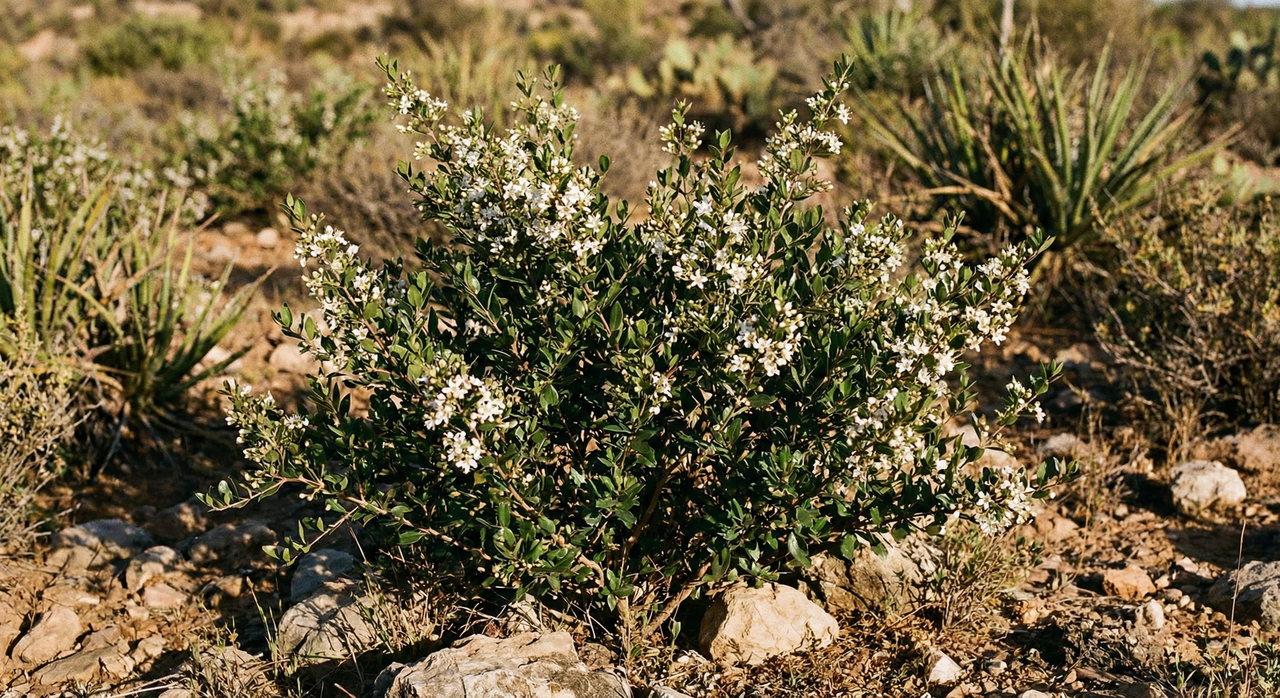
Most people have touched henna before they've ever seen the plant. The rust-colored paste at a festival booth, the bridal mehndi drying on someone's palms, the herbal hair treatment promising to cover grey; it's everywhere as a product and almost invisible as a living thing. I didn't actually grow Lawsonia inermis until my third year designing gardens in a hot, dry climate, and when I finally did, I was caught off guard by the fragrance. The flowers smell like roses and jasmine had a conversation, sweet and heady enough to stop you mid-walkthrough. Nobody had ever mentioned that.
Here's the contradiction that's stayed with me: henna is one of humanity's oldest cultivated dye plants, documented in Egyptian burials dating back to roughly 3000 BCE,[1] and yet most growers treat it as a novelty or a curiosity rather than a genuinely useful, long-lived shrub with serious permaculture credentials. It fixes no nitrogen, sure. But it stabilizes eroding slopes, feeds pollinators, produces harvestable dye from its own leaves, and in the right climate it asks for almost nothing in return. That gap between what this plant actually does and what most gardeners imagine it does is exactly what pulled me into writing this.
Henna Origin, History, and Botanical Background
If you'd asked me years ago what henna was before I started growing it, I'd have said something about wedding hands and reddish-brown patterns. What I didn't expect was how much the plant itself would fascinate me once I got to know it in the ground.
Native Habitat and Botanical Description of Lawsonia inermis
The henna plant, known botanically as Lawsonia inermis, is native to a broad sweep of hot, dry country: North Africa, the Arabian Peninsula, southwestern Asia including India and Pakistan, and parts of northern Australia.[2][3] In the wild it favors open scrublands, rocky slopes, and savannas at low elevations, thriving in the same Köppen climate zones that most gardeners would consider punishing: hot desert, semi-arid, and tropical savanna.[4] That's the henna plant's origin story in ecological terms, and it explains almost everything about how to grow it successfully.
In cultivation it behaves like a long-lived, productive shrub with a lifespan stretching anywhere from 20 to 50 years, sometimes longer, and it can remain productive for leaf harvest for 15 to 20 of those years.[5] What strikes most growers early on is how quickly it gets going. Flowering can happen within 5 to 12 months from seed, and reproductive maturity arrives in 1 to 3 years.[6] I've grown mine from seed to flowering in under a year in zone 9B, which still surprises me every time I look back at the notes. Indian subcontinent variants tend to tolerate slightly more moisture than continental African types, which matters if you're gardening somewhere humid.[7]
Visual Characteristics of the Henna Plant
The henna plant grows as a multi-branched shrub or small tree, typically reaching 2 to 6 meters tall with a spread of roughly 1.8 to 3.6 meters, though specimens in ideal conditions can push taller.[5][8] The bark starts smooth and grey-brown on young stems, roughening with age; the leaves are small, opposite, elliptic to lanceolate, dark green, and noticeably leathery with thick cuticles.[2] Those thick cuticles aren't just aesthetics; they're the plant's front-line adaptation to water loss in arid conditions, something I've come to appreciate watching henna shrug through Florida dry spells that leave ornamentals like hibiscus drooping.
The flowers are small, around 5 mm, and fragrant, ranging from white to pale yellowish-white or faintly pink, arranged in axillary panicles that typically appear during the dry season.[2][9] The scent is sweet and distinctive, a real garden asset. Beneath the soil, a deep taproot extends 2 to 3 meters or more, tapping groundwater reserves that keep the plant alive through drought conditions that would stress most shrubs.[10]
Traditional and Cultural Uses Through History
Henna's recorded history as a cosmetic and medicinal herb goes back to around 3000 BCE in ancient Egypt, where it was used to dye hair, nails, and skin, as well as in mummification and fabric dyeing; the Ebers Papyrus documents its early medicinal applications.[11][12] Roughly contemporaneous evidence from the Indus Valley and Vedic India shows henna already central to mehndi body art traditions at weddings and festivals, carrying meanings of love, prosperity, and protection from harm; UNESCO has since recognized related mehndi traditions as intangible cultural heritage.[11]
The Achaemenid Persian court used it for body art and as a cooling agent among the nobility, and by the 1st century CE it had reached Rome, where Pliny the Elder noted its use as a hair dye to cover grey.[13] Across Ayurvedic, Unani, and African traditional medicine systems, leaf paste prepared with water, lemon juice, or oils treated everything from eczema and burns to fever and malaria symptoms; Avicenna's 11th-century Canon of Medicine is among the texts documenting these applications.[14] The compound running through all of it is lawsone, a reddish-orange pigment concentrated in the leaves that binds to protein in skin, hair, and fiber. It's not primarily a food plant; historical use of young leaves as a supplement is minimal, and its enduring global value sits firmly in the cosmetic and dye traditions these ancient cultures built around it.[14]
Fun Facts About Henna
Taxonomically, henna sits in the Lythraceae family, which also includes pomegranate and crepe myrtle. Knowing that actually helps me explain it to garden visitors because once they see the flower structure, the family resemblance clicks. The concentration of lawsone in the leaves isn't fixed; it shifts with plant age, season, and leaf maturity, which is why experienced growers pay attention to those cues at harvest time.[2] I've noticed the leaves develop a deeper color and more pungent scent after a dry stretch in summer, and the paste from those leaves stains noticeably darker. That's the lawsone cycle in action.
Its physiological toolkit for surviving arid conditions is genuinely impressive: stomatal regulation, small leathery leaves, thick cuticles, and that deep taproot all work together.[4] In sandy, well-drained Central Florida soils, it outperforms a lot of showier ornamentals during dry spells. As for invasiveness, the plant can naturalize from seed in disturbed subtropical areas, but in Florida it's monitored rather than listed as a Category I or II invasive by the Florida Exotic Pest Plant Council.[7][15] Regular pruning for density, which I'd recommend regardless, keeps it well-behaved in any garden setting.
Henna Varieties and Where to Buy
Notable Henna Cultivars and Selections
Botanically, Lawsonia inermis is a monotypic genus with no formally recognized varieties or subspecies.[16][17][18] There is one species, and that's it. So if you're hunting a catalog for a specific cultivar the way you might with roses or basil, you're going to come up short. What does exist are a handful of informally selected, trade-named clones that growers have propagated vegetatively for particular traits. 'Aurea' and 'Strongii' tend to show up in ornamental contexts, selected for leaf color or compact habit, while 'Gulabi' and 'Jamalpur' are more often cited for higher dye yield.[19][20] In my experience helping clients put together dye gardens, though, these named selections rarely perform noticeably differently from good seed-grown plants once they're settled into the same hot, sunny spot. The marketing around them tends to outrun the actual data. I'd treat them as trade clones rather than distinct cultivars, and focus your energy on site conditions and soil rather than hunting down a specific name on a label.
Sourcing Henna Plants and Seeds in the US
Because the lawsonia inermis plant is native to tropical and subtropical climates, it requires a consistently warm, frost-free environment.[21][10] That climate specificity is exactly why you won't find it at a big-box garden center. Specialty tropical growers and online seed suppliers are the realistic path here.[22][23] I've found that sourcing seeds is generally easier and less expensive than tracking down live plants; expect to pay $5-15 for a seed packet of 20-50 seeds, while live specimens typically run $10-30 depending on size.[23][24] It's a slow grower, so starting from seed has been the most reliable route in my zone 9B garden, particularly when ordering from reputable tropical specialists. Vendors worth checking include Logee's, Mountain Valley Growers, Strictly Medicinal Seeds, Botanical Interests, and Burpee.[25][26][27] Availability across all of these tends to fluctuate seasonally, and you'll generally have better luck in southern coastal states than further inland.
A couple of regulatory realities are worth knowing before you order. If you garden in California, check your county regulations before purchasing, since the state restricts unregulated planting of Lawsonia inermis henna due to its potential invasiveness in Mediterranean climates.[28] Importing plants or seeds from outside the US also requires declaration and inspection under USDA APHIS protocols.[29] I've seen well-intentioned gardeners run into compliance headaches with plants that thrive in warm, dry conditions, so don't skip the research. Sourcing domestically from an established vendor is the cleanest path, especially when you're just getting started with this one.
Henna Propagation and Planting Guide
Before you can grow henna successfully, it helps to spend a moment actually looking at what you're starting with. Whether you're working from seed or taking cuttings, understanding the plant's biology makes every subsequent step feel less like guesswork and more like logic.
Understanding Henna Seeds: Morphology, Dormancy, and Viability
Henna seeds are small, only 1 to 4 mm long, with a distinctly angular, three-sided shape that feels almost geometric between your fingers.[30][31] Inside that hard, woody brown-to-black coat sits a straight embryo with two large cotyledons and very little endosperm.[32][33] I describe them to students as miniature pebbles, because that's genuinely what they feel like, and that hard coat is exactly the problem. Henna seeds exhibit physical dormancy, meaning water can't penetrate without some help.[34] Skip scarification or an overnight soak and you'll get patchy, discouraging germination. I learned this the hard way on my first seed tray, watching maybe a third of the seeds sprout while the rest sat there doing nothing for weeks. Viability under optimal storage runs around 50 to 70%, so even well-treated seeds won't all come up, and that's normal.[34] Treat it as a numbers game and sow generously.
Seed vs. Vegetative Propagation Methods
Seeds are the most common commercial starting point, but they come with a catch: henna outcrosses readily, which means seedlings show real genetic variation in leaf color, growth habit, and lawsone content.[35][36] For a home grower who just wants to experiment with natural dye, that variability can actually be part of the fun. You might end up with a plant that surprises you. For anyone who needs consistent dye yield or wants to propagate a named selection from the varieties section, vegetative propagation is the better route.
Softwood cuttings taken in early summer give you the fastest results, with rooting success reaching 70 to 95% when treated with IBA rooting hormone and kept at 25 to 30°C with high humidity.[37][38] I've found the warm-season timing makes a real difference; cuttings I've taken in cooler months from semi-hardwood material root more slowly and less reliably, usually in the 60 to 90% range over four to six weeks under the same conditions. Air layering and ground layering are solid alternatives if you have an established plant to work from, hitting 60 to 80% success under high humidity with IBA.[39][40] Tissue culture using nodal segments can reach 60 to 90% in lab settings, but that's well outside most home growers' toolkits. Grafting is rarely worth the trouble, with success rates as low as 20 to 40%.[39]
For most people growing henna at home, the choice comes down to this: seeds if you're starting from scratch and want to grow several plants affordably, softwood cuttings if you have access to a healthy parent plant and want genetic fidelity.
Soil, Site Selection, and Light Requirements
Henna's origins in arid North Africa, the Middle East, and South Asia tell you almost everything you need to know about site selection. It wants well-drained sandy loam, a pH between 6.5 and 7.5 for best growth and dye yield (though it tolerates 5.5 to 8.5 at reduced performance), and deep enough soil for its taproot to reach down at least 45 to 60 cm.[41][42][31] It's genuinely drought-tolerant once established, surviving on as little as 300 mm of annual rainfall, and it handles salinity well.[43][44] What it cannot handle is wet feet. I've lost more henna to soggy soil than to any pest, and the first symptom is always the lower leaves going yellow. That experience has made me obsessive about drainage in every bed I prepare for it. My standard test is to dig a 30 cm hole, fill it with water, and see how quickly it drains; if standing water remains after an hour, I amend heavily or choose a different spot.
For container growing, a mix weighted toward grit and coarse material works well. When it comes to pH, test before you plant and adjust with lime to raise or sulfur to lower. I once had a young plant develop interveinal yellowing within weeks of going into slightly acidic clay-amended soil; a targeted sulfur application to dial pH back into range resolved it within a month.
Full sun is non-negotiable for anyone growing henna as a dye plant. At least six to eight hours of direct light daily keeps the plant vigorous and lawsone production high; shade causes etiolation, paler foliage, and noticeably weaker dye quality.[31][4] If you're tucking it into a food forest, keep it on the sunny edge rather than the interior.
Spacing, Planting Technique, and Early Care
In ideal tropical conditions, henna reaches 4 to 6 m as a multi-branched shrub or small tree; in temperate gardens or containers it typically stays in the 1.2 to 1.8 m range.[45] Think of something in the size and habit range of firebush or pittosporum and you're in the right mental picture. For most garden situations, spacing plants 1.5 to 3 m apart gives them room to develop and allows airflow.[46][47] For hedging, tighten that to 1 to 1.5 m, though in humid climates I'd lean toward the wider end to reduce fungal pressure. Commercial plantings run 1,000 to 4,000 plants per hectare depending on the management system. Container growers should plan for at least a 12 to 18-inch diameter pot to accommodate the root system without stressing the plant.
Maturity takes 3 to 5 years, so placement decisions matter. Plant in a spot you're committed to. Early on, consistent but moderate watering while roots establish is more important than fertilizer; the goal is getting that taproot down into stable, well-drained soil before the plant faces any drought stress.
Germination Timeline and Transplanting
Once you've scarified or soaked your seeds as covered above, expect germination in 10 to 20 days at 25 to 30°C in moist, well-drained medium.[48][47] The seedlings that emerge look almost comically fragile, with tiny paired cotyledons and a thread-thin stem. Don't let that fool you. Once they hit 10 to 15 cm tall, which takes roughly four to six weeks, they're ready for transplanting and they toughen up quickly once they're in full sun.[48][47] Move them into their final spot on an overcast day if possible, water in well, and then back off. A plant in good drainage and strong light needs very little intervention from that point forward.
Henna Care Guide: Growing Lawsonia inermis Successfully
Henna is one of those plants that rewards you the moment you stop fighting its nature. It wants heat, it wants sun, and it genuinely doesn't care if you forget to water it for a couple of weeks once it's settled in. But get a few basics wrong, particularly around drainage and frost, and it'll punish you fast. I've been growing it in containers on my Central Florida patio for several seasons now, and most of what I know came from watching what the plant was trying to tell me, not from reading the manual.
Sunlight Requirements for Optimal Growth and Dye Production
Full sun is non-negotiable if you're growing henna for dye. The plant needs at least 6 to 8 hours of direct light daily to produce lawsone at the concentration that actually stains well.[49][22] I've noticed the same shade-stress pattern I see in basil: park it in filtered light and the leaves look lush but perform poorly. The color payoff just isn't there.
That said, Florida summers are brutal, and young plants can scorch under direct afternoon exposure. In intense heat, 30 to 50 percent shade cloth during the worst of the afternoon is a reasonable compromise, especially in the first season.[50][51] For anyone starting plants indoors before transplanting out, a south-facing window is the minimum; ideally, supplement with full-spectrum lighting for 12 to 14 hours a day until conditions outside are right.[52]
Watering Needs and Drought Tolerance
Henna evolved in semi-arid conditions, and that history shows in how it handles water. Once established, it's genuinely drought-tolerant, requiring deep but infrequent watering. The rule I follow: let the top inch or two of soil dry out before watering again, aiming for roughly one to two inches per week during active growth, or every seven to fourteen days during dry stretches.[53][54][55] I've watched established plants sail through three-week dry spells with only a bit of leaf drop that rebounds completely after one good deep soak.
Young plants are a different story. Seedlings and recently transplanted specimens need more consistent moisture, about an inch per week, to build the deep root system that makes mature plants so resilient.[56][55] The biggest mistake I see is overwatering, especially in humid summers. Yellowing lower leaves on soggy soil mean root rot is starting. If you catch it early, pull the plant, trim the mushy roots, and repot in fresh, well-drained mix. I've rescued several this way. A two to four inch mulch layer helps moderate moisture and reduce how often you need to intervene, and keeping soil pH between 6.5 and 7.5 with low salinity prevents a whole separate category of problems.[57][58]
Feeding and Fertilization for Healthy Foliage
Henna is a moderate feeder, and I'd argue less is more if your goal is dye quality rather than raw leaf volume. A balanced 10-10-10 or 8-8-8 fertilizer during the growing season keeps things steady without pushing the flush of lush, nitrogen-heavy growth that actually weakens lawsone concentration.[59][60] I've seen noticeably richer color from plants given moderate, soil-test-guided feeding versus those pushed hard with high-nitrogen fertilizer early on.
For a home or ornamental plant, two to three applications of one to two pounds of balanced fertilizer per mature plant per year is plenty, or a lighter monthly dose of around 10 to 20 grams of 10-10-10. Container plants need feeding every four to six weeks at half-strength.[61][62] Nitrogen drives leaf biomass, phosphorus supports roots and dye quality, and potassium builds the drought and stress resilience the plant is known for.[63][64] Yellowing new growth in alkaline soil usually signals iron chlorosis, corrected with chelated iron. Actual soil testing, at least once before you establish the plant, saves a lot of guessing.
Heat and Frost Tolerance
Henna's sweet spot is 20 to 35°C (68 to 95°F) with nights staying above 15°C (59°F).[31] It can push through up to 45°C (113°F), but sustained heat above 40°C brings leaf scorch, wilting, and curling. Zone 9B summers routinely test these limits. My approach is afternoon shade cloth, consistent deep watering, and four inches of mulch at the root zone. The plant's thick cuticles and strong stomatal control mean established specimens bounce back fast once the temperature drops and watering resumes, but seedlings are far more vulnerable during heat events.[65][8]
Pruning, Maintenance, and Seasonal Rhythm
Pruning henna right after the dry-season harvest is the move that sets up the strongest regrowth for the next cycle. Keep plants at two to three meters for easy harvesting, prune lightly in late winter or early spring, and avoid heavy cuts during the rainy season when disease pressure is highest.[66][67] Thinning the canopy improves air circulation and reduces fungal pressure. Follow each pruning session with a top-dress of compost and the next round of fertilizer.
Seasonally, henna stays evergreen in humid tropical conditions but behaves more semi-deciduously in drier climates.[31] Active growth, watering, and feeding belong to the warm wet months; in winter, cut watering back and stop fertilizing entirely. The plant appreciates humidity in the 50 to 70 percent range but adapts to drier air reasonably well. Shelter young plants from strong wind until the root system is established.[31][68]
Frost Protection and Winter Care
This is where henna care gets serious for anyone in a marginal zone. Rated USDA zones 9 to 11 and RHS H1c, it's a tender plant.[50][69] Growth slows below 10°C (50°F), real damage starts below 5°C (41°F), and prolonged exposure near 20 to 25°F can kill it outright. Symptoms come in fast: wilting, yellowing or browning leaves, blackened tissue, shoot dieback.[70][71]
My rule is simple: the moment the forecast shows anything near 40°F, my container plants move under cover to a bright spot indoors with watering reduced to a minimum. That one habit has prevented every winter loss I've had. For in-ground plants, frost blankets and windbreaks buy meaningful protection during brief cold snaps, and established deep-rooted specimens tolerate a short frost far better than young ones. Growers in zones 7 and 8 can treat henna as an annual or commit to overwintering indoors; in zone 9B, a mild winter requires vigilance, not complacency.
Harvesting Henna Leaves for Maximum Dye Content
Everything about harvesting henna comes back to one compound: lawsone. That reddish-orange naphthoquinone is what you're actually farming when you grow this plant, and when and how you cut directly determines how much of it ends up in your powder. I've grown henna for several seasons now, and the harvest timing question is the one I see growers get wrong most often.
Timing and Visual Cues for Peak Lawsone
From seed, most plants are ready for their first cut within 3 to 6 months, once they've reached a workable height with good foliar density.[72][48] Grafted plants take longer, usually 6 to 12 months post-graft before they're worth cutting.[73] After that, it's about watching the leaves. Lawsone content peaks when leaves are 90 to 120 days old, measuring roughly 3 to 5 cm long, with a firm texture and that telltale shift from deep green to a slightly yellowish cast at the margins.[74][75] That slight yellowing at the leaf edge is what I wait for. You only learn to recognize it after watching the plant through a few full cycles, but once you've seen it, you can't unsee it.
Harvest windows align with dry seasons in tropical regions, ideally between 25 and 35°C with low humidity.[76][77] In cooler or more humid climates, maturity can lag by a month or two.[78] In my Florida setting, those cues track reasonably well with our drier winter and spring months. Try to harvest before flowers fully open; once the plant commits to flowering, dye quality in the older leaves starts to slip. If you've missed that window, aim for when 70 to 80 percent of leaves on a branch look mature rather than holding out for perfect.[75]
Harvest Technique and Frequency
Cut in the morning during dry weather, using clean pruning shears rather than tearing branches by hand.[79] Clean cuts reduce disease entry points and leave the plant positioned to push new growth quickly. I've made morning harvests a firm routine, especially through Florida's humid summers when anything cut later in the day feels slower to dry and more prone to mold. Established plants can sustain 3 to 4 harvests per year with roughly 3 to 4 months between cuttings, which gives the shrub time to regenerate a full canopy of mature leaves before you come back around.[80][76] Think of it like harvesting rosemary: never take more than a third of the plant at once, keep your cuts above a healthy node, and the shrub will keep giving.
Expected Yields and Flavor Profile
First harvests are modest, typically 0.5 to 1 kg of dried leaf per plant.[72] Mature plants under ideal tropical conditions can reach 2 to 5 kg of dried leaves annually,[81] and those well-timed harvests are what get you there, since peak-maturity leaves contain 1 to 1.5 percent lawsone by dry weight.[74] In practice, home growers in variable-humidity climates should expect results toward the lower end of that range unless irrigation is dialed in consistently. I treat anything above 2 kg as a good year.
A word on edibility: henna leaves are not food. They taste bitter and acrid, with an astringent, leathery character and the kind of earthy, resinous volatiles that signal "do not eat this."[41][82] Some historical traditions in specific regions have used leaf preparations medicinally in very limited, formulated contexts, but I don't consider henna a kitchen plant under any circumstances, and neither should you without first reading the health benefits and preparation sections carefully. The lawsone that makes this plant so valuable as a dye is the same compound that raises real safety flags for internal use.
Henna Preparation and Uses
Is Henna Edible? Safety and Culinary Considerations
Many gardeners assume that if a plant has traditional medicinal uses, it must be safe to eat. With henna, that logic breaks down fast. Lawsonia inermis is not a food plant and is not recommended for human consumption.[83][84][2][85] The compound that makes it such a powerful dye, lawsone, is potentially toxic when ingested, and the seeds contain tannins and alkaloids that compound the risk.[86][87][88] As detailed in the safety profile, the risks of internal use are severe enough to rule out any culinary experimentation.[89][90] In my work with natural dyes, I always emphasize this clearly: henna is for the skin and hair, never the stomach. The research on lawsone and hemolytic risk is too clear to ignore.
There is a rare historical footnote worth acknowledging. Powdered henna seeds appear in some Yemeni culinary traditions,[91][92] but this is a cultural exception, not a general practice, and modern food safety guidance strongly discourages it.[93][94] Henna's real domain is cosmetic and ritual, and that's where its preparation story actually gets interesting.
Traditional Preparation Methods for Dye and Medicinal Use
The classic preparation starts with dried leaf powder mixed with something acidic, typically lemon juice or strong tea, sometimes with the addition of essential oils to enhance lawsone release and improve adhesion. This is the foundation of both henna tattooing and hair dyeing. What I learned early on, running workshops, is that you cannot rush this step. The paste needs to rest for several hours after mixing; skip the acidic catalyst or pull it off the skin too soon and the color stays weak. The chemistry is real: the acidic environment breaks down the leaf cell walls and frees the dye molecules to bind with skin proteins.
For topical medicinal applications, traditional preparations run from decoctions (roughly 5-10 g of dried leaves simmered in 250 ml of water) to simple poultices of 2-5 g of powder applied directly to the skin, to infused oils for longer-term use.[95] The WHO monograph makes clear that no oral dosage is established, and internal use is actively discouraged; these are all external preparations.
How you dry the leaves matters more than most people expect. Shade-drying at 95-104°F (35-40°C) for three to seven days preserves lawsone better than high-temperature methods, and sun-drying outperforms oven drying for pigment retention.[96][97][98] An optional cure in dark, humid conditions for one to two weeks can push dye yield higher.[96] After that, I store my dried powder in airtight containers in a cool, dark shed, keeping temperature between 50-68°F and humidity under 60%,[99] and I've found potency holds well for close to a year before the color starts to fade noticeably.
Non-Food and Permaculture Applications of Henna
Beyond dye and body art, henna earns its place in a subtropical garden on several other grounds. As a landscape designer, one of my favorite things about this plant is how it performs as a hedge. It's dense, fragrant when in bloom, and handles a tough sunny edge with minimal fuss; I've had visitors stop and ask what that sweet scent is every time the flowers open.[8][100] The bark fibers have traditional uses for rope and coarse textile production in its native range, and the woody stems work well as fuelwood or small implements. The plant also generates enough biomass to contribute meaningfully in agroforestry systems as fodder, fuel, or craft material.
The essential oil compounds, including lawsone and various flavonoids, have documented insecticidal and repellent activity against mosquitoes, cockroaches, and ticks,[101] which fits neatly into a permaculture design strategy where every plant does more than one job. Henna's value in the garden lies in its henna powder for hair coloring, its use in body art, its ecological services, and its ornamental presence, not in anything you'd put on a plate.
Henna Health Benefits, Medicinal Uses, and Safety
History and Cultural Significance in Medicine
Few plants have earned their medicinal credentials over such a long span of time. Lawsonia inermis has been used across cultures for more than 9,000 years, with evidence of its use in ancient Egyptian mummification and a direct mention in the Ebers Papyrus.[102][103] The same reddish-brown pigment that makes henna central to weddings and festivals across South Asia, the Middle East, and North Africa[102][104] is the very compound driving its pharmacological story. As a landscape designer, I find that deeply satisfying: the beauty and the medicine come from exactly the same source.
In Ayurvedic and Unani practice, henna leaves were applied topically to treat burns, wounds, eczema, and inflammatory skin conditions, with seeds used cautiously as a purgative and roots employed for their phenolic-rich properties.[105] Across Islamic, Hindu, and Jewish traditions, henna carried symbolic meanings of protection and fertility[106] alongside its practical medicinal roles. Traditional healers were, in hindsight, working with a genuinely complex pharmacopoeia. The question modern research keeps asking is: how much of that traditional knowledge actually holds up?
Key Phytochemicals: Lawsone and Supporting Compounds
Everything starts with lawsone (2-hydroxy-1,4-naphthoquinone). It is the primary bioactive compound and pigment in henna leaves. It typically makes up 1 to 2% of dried leaf weight, though the range runs from 0.25% to 2% depending on where the plant was grown, what season the leaves were harvested, and how they were dried.[107][108] Indian and Yemeni varieties tend toward the high end. Summer harvests from plants grown in acidic, organically managed soils hit the upper range.[109] High-temperature drying and direct sun exposure degrade it quickly. After years of working with dye plants, I've seen this firsthand: powders from different origins produce dramatically different stain depth, and now the chemistry explains exactly why.
Lawsone doesn't work alone. The leaves contain over 20 identified flavonoids including quercetin, kaempferol, and apigenin glycosides; phenolic acids like gallic and ellagic acid; condensed and hydrolyzable tannins; coumarins such as scopoletin; and monoterpenes including linalool and geraniol in the essential oil fraction.[110][111] The seed oil brings a different profile entirely, rich in oleic and linoleic acids with tocopherols.[112] Bark is richest in tannins and flavonoids; flowers concentrate phenolics; roots hold alkaloids. Each part of the plant has its own chemical character.
There's an ecological logic to all of this. Lawsone functions as a chemical defense, generating reactive oxygen species that are toxic to microbes, insects, and grazers.[113] Secondary metabolite production in the Lythraceae family is thought to have evolved as an adaptation to arid stress, intensifying in dryland conditions.[114] I've noticed established henna specimens seem to shrug off insect pressure that hammers nearby tender herbs, and this is probably why.
Pharmacological Research and Potential Benefits
The strongest evidence supports what traditional healers were already doing: using henna topically. Research shows anti-inflammatory effects via inhibition of NF-κB and MAPK pathways, reducing inflammatory cytokines like TNF-α and IL-6; antimicrobial activity against bacteria including S. aureus and E. coli, fungi, and viruses, with MIC values of 0.5 to 2 mg/mL attributed largely to lawsone's membrane-disrupting properties; and antioxidant activity through ROS scavenging and Nrf2 activation.[115][116][117] Wound healing studies show accelerated epithelialization, collagen synthesis, and angiogenesis through TGF-β and VEGF pathways.[118] The WHO monograph formally recognizes henna for topical treatment of skin infections and sores, and small clinical trials support these uses with good safety profiles.[119][120]
Beyond topical use, the research gets more interesting but also more preliminary. Analgesic effects in animal models are comparable to NSAIDs.[121] Antidiabetic potential via α-glucosidase inhibition has produced blood glucose reductions of up to 40% in diabetic rats at 200 to 400 mg/kg.[122] Hepatoprotective and anticancer effects, including apoptosis induction with IC50 values of 10 to 50 μM, appear primarily in vitro.[123] I find the lab results genuinely compelling, but we're still waiting on large-scale human trials, standardized dosing, and long-term safety data before any of those findings translate into practical guidance.[120]
Nutritional Profile of Henna Leaves
Here's the central paradox of henna's nutritional story: the numbers on paper look impressive, yet henna is not a food plant. Per 100g of fresh leaves, ranges reported in the literature include protein (3 to 15g), calcium (100 to 1,500mg), iron (10 to 50mg), magnesium (300 to 500mg), potassium (1,000 to 2,000mg), vitamin C (18 to 100mg), and vitamin E (2 to 4mg). Those figures often exceed common leafy greens, though the ranges are wide and highly variable with growing conditions, analytical methods, and storage, since vitamin C in particular degrades quickly. Traditional dietary use has always been extremely limited.
The reason is lawsone. When I teach permaculture students about functional plant chemistry, I compare henna to familiar edibles like moringa or amaranth that I've grown and harvested: the mineral profile looks similar on a lab printout, but lawsone changes the equation completely. Impressive nutritional data on a page doesn't override documented toxicity concerns. Henna belongs in the dye garden and the medicine cabinet, not the salad bowl.
Safety Considerations and Contraindications
Pure, properly prepared henna applied topically is generally safe for most people. The risk of allergic contact dermatitis exists but runs around 1 to 2% for pure henna.[124][125] In my demonstration mehndi workshops I've noticed that fresh-leaf pastes tend to produce fewer irritation reports than older, oxidized powders, which makes sense given how processing affects both lawsone levels and potential allergens. "Black henna" is a completely different story: products adulterated with para-phenylenediamine (PPD) carry sensitization rates of 5 to 10%, with documented cases of severe dermatitis, scarring, and systemic reactions.[126] The FDA has issued clear warnings, and I always tell clients to source pure, unadulterated powder from reputable suppliers.
Ingestion is where the real danger lives. Lawsone causes gastrointestinal distress at low doses and, at higher doses, can trigger hemolytic anemia, renal failure, and liver damage.[95] If you have G6PD deficiency, the risk of hemolytic anemia from ingestion is documented in case reports and I wouldn't suggest internal use under any circumstances, including traditional Ayurvedic oral doses.[127] The same applies during pregnancy: there is potential abortifacient activity, and the case for caution is strong enough that I recommend avoiding internal use entirely.[128] Theoretical interactions with anticoagulants and antidiabetics exist based on henna's pharmacological activity, though human data is limited. On the pet front, the ASPCA lists Lawsonia inermis as non-toxic to dogs, cats, and horses, with only mild GI upset possible from large amounts.[129] The bottom line: topical use of pure henna is well-supported and reasonably safe; internal use is not.
Henna Pests and Diseases
Natural Defenses and Common Insect Pests
There's a satisfying irony in henna's pest story. The same lawsone that stains skin and has been used medicinally for millennia also inhibits acetylcholinesterase in insects, causing paralysis and death on contact.[130][131] The leaves even carry glandular trichomes that secrete sticky bioactive compounds, physically trapping or deterring smaller herbivores before they've had a chance to chew.[132] I've used henna as a companion in guild plantings partly because its chemistry seems to discourage certain sap-suckers from lingering on neighboring plants. It's genuinely impressive built-in defense — against many generalists, at least.
Against a determined pest population, though, that chemistry only goes so far. Aphids, leafhoppers, thrips, spider mites, beetles, mealybugs, scale insects, whiteflies, and the henna looper caterpillar can all move in, particularly when plants are stressed by drought, high humidity, or poor ventilation.[133][134] I've noticed spider mite pressure spike on my plants during hot, dry spells with poor air movement — drought stress seems to undercut the plant's own defenses in a visible way. Diagnostically, each pest leaves its signature: aphids produce curled leaves and sticky honeydew that invites sooty mold; leafhoppers leave stippled, bronzed foliage; thrips create silvery streaks; spider mites bring fine webbing; beetles skeletonize leaves cleanly.[133]
For management, I stay with an IPM approach: good air circulation, biological allies like lady beetles for aphids and Encarsia parasitoids for whiteflies, and neem-based sprays or insecticidal soaps before reaching for anything broader.[135][136] One hard-won tip: when applying neem, cover the leaf undersides thoroughly. The trichomes can actually interfere with spray adhesion if you're not deliberate about it. There are no pest-resistant henna cultivars to lean on; the chemical defense is species-wide, not something breeders have been able to concentrate.[137] What's worth remembering is that those same defensive compounds make henna extracts effective against stored-grain pests like Tribolium castaneum and even mosquitoes, with repellent performance in some formulations comparable to DEET.[138][139] The plant isn't just a victim of its own pest roster; it's a resource for managing others.
Major Diseases and Prevention Strategies
Root rot is the disease I worry about most with henna, and in my experience, overwatering or poorly drained soil is the fastest way to lose a plant. Fusarium, Rhizoctonia, Pythium, and Phytophthora can all take hold once roots sit in saturated ground.[140][141] Soil preparation before planting is non-negotiable for this reason. On the foliar side, powdery mildew and leaf spot caused by Alternaria or Cercospora species are the main culprits, with severe leaf spot infections capable of cutting yields by up to 50%.[140][142] Bacterial blight shows up occasionally in persistently wet conditions; viral issues are rare.
The environmental triggers are predictable: high humidity, prolonged wet foliage, waterlogged soil, and paradoxically, drought stress that weakens the plant's overall immunity.[31][143] Nitrogen or iron deficiency from pH imbalance can quietly erode plant vigor and open the door wider to infection.[144] My first line of defense is always cultural: good spacing for air movement, drip irrigation instead of overhead watering, full sun siting, and prompt removal of any symptomatic material. I isolate plants showing early leaf spot immediately and burn or bag the debris rather than composting it; I've found that sanitation step prevents spread far more reliably than fungicide applications after the fact.[143][145]
When cultural measures aren't enough, sulfur-based products address powdery mildew; copper works for bacterial issues and leaf spot; broader options like mancozeb or tebuconazole exist for severe fungal infections but should genuinely be last-resort choices.[145] The cultivars 'BL-21' and 'Jamunia' show some tolerance to leaf spot, which is useful to know, though no resistant rootstocks exist for root rot.[146][142] Plants grown in full sun, dry climates simply face fewer foliar problems overall; henna's arid origins mean humid temperate gardens are working against the plant's natural advantage from the start.[147] Site it right, keep the roots dry between waterings, and most of these diseases stay theoretical.
Henna in Permaculture Design: Climate, Ecosystem Roles, and Guild Placement
Climate and Hardiness Zones for Growing Henna
Henna is solidly a USDA zones 9-11 plant, with optimal growth happening in that sweet spot between 70 and 95°F.[50][43] It can technically survive a brief dip to around 20°F, but sustained cold below 25-28°F will kill it outright. The RHS formally acknowledges this with their H1C frost-tender rating.[148] In zone 9B, where I've done most of my subtropical design work, siting matters enormously. A south-facing wall, a thick mulch collar before the first cold snap, and a windbreak on the north side can make the difference between a plant that bounces back in spring and one you're replacing every March.
What surprises most clients is just how little water henna actually needs once it's past that first establishment year. It thrives on 10 to 40 inches of annual rainfall and handles moderate humidity reasonably well, but it demands fast drainage and full sun above almost everything else.[149][150] I've watched mature specimens in Florida, Texas, and Arizona go weeks without supplemental irrigation during summer without flinching, outlasting hibiscus and even some salvias on the same site. Skip salt-spray locations, though; coastal exposure causes real leaf damage. For gardeners north of zone 9, container growing and overwintering indoors is entirely workable.[68]
Ecosystem Functions and Services of Henna
The flowers are something you notice immediately when henna is in bloom. Small, creamy-white to pinkish, and intensely honey-scented, they erupt in dense panicles and bring in bees, butterflies, moths, and hoverflies in a way I didn't fully anticipate the first time I planted one.[151] In mid-summer, when many Mediterranean herbs have gone dormant and pollinator support in dry gardens thins out, henna fills a genuine gap. The flowers are hermaphroditic and often protandrous, which promotes outcrossing and reliable seed set.[152] If you're working in a low-activity garden or growing for seed production, keeping a hive nearby or planning for manual pollination when temperatures sit between 75 and 85°F is worth considering.[153]
Below ground, henna's extensive root system does real stabilization work, making it a useful pioneer on arid slopes, disturbed dryland patches, or eroding edges where little else wants to establish.[154] Leaf litter adds modest organic matter over time, nothing dramatic, but meaningful in nutrient-poor sandy soils. I don't rely on henna for soil nitrogen or as a living mulch; it's not a legume, it doesn't fix nitrogen, and it won't hyperaccumulate minerals or double as ground cover.[155][156] Being upfront about that saves a lot of disappointed guild designers.
There's also a suspected mild allelopathic effect, with laboratory trials indicating leaf extracts can suppress germination of annuals like wheat and oats nearby, though strong documented allelopathy hasn't been established.[157][158] I'd treat it as competitive rather than weaponized. On the human-yield side, a single established shrub contributes dye leaves, insect repellent potential, browsable fodder, and fuelwood, while pulling landscape duty as a living hedge, which is a reasonable stack of outputs for a plant that asks so little once settled in.[68]
Forest Layer, Growth Habit, and Companion Planting Guilds
Henna sits firmly in the shrub layer of a forest garden, naturally reaching 13 to 20 feet when unpruned, though most growers keep it in the 5 to 10 foot range with regular cuts.[22][159] Its preference for open, disturbed, and sun-drenched sites means it doesn't belong tucked under a canopy tree where light is filtered. Put it on sunny edges, along hedgerows, or at the south-facing perimeter of a polyculture bed where it won't be overshadowed.
Guild-building with henna rewards a light touch. Rosemary, lavender, and low-growing Mediterranean herbs make genuinely good companions because their water and soil preferences align almost exactly.[160] In my earlier designs I made the mistake of planting nitrogen-fixing beans too close, hoping to compensate for the absent N-fixation. The beans struggled and the henna just quietly won. Nitrogen-fixers can work in the guild, but give them some lateral distance and make sure they're getting their own share of sun.[68] Heavy feeders are a harder no; henna competes effectively in lean soils, and a nutrient-hungry neighbor won't thrive in that dynamic.
Where henna really earns its place in a permaculture landscape is on those dry, compacted, or degraded patches where the impulse is to just mulch and wait. Its pioneer nature, deep roots, and tolerance for neglect make it a genuine reclamation tool, one that earns its keep ecologically while you're working out what comes next in the succession.
The Plant That Made Me Reconsider What "Useful" Really Means
I grew henna for two full seasons before I let myself actually use it, which felt almost absurd given why I'd planted it. But watching it push through cracked clay in a July that cooked everything else around it, I kept thinking: this shrub has outlasted empires. It colored the hands of people at weddings I'll never know about, in countries I've never visited, going back further than most recorded history. That kind of quiet persistence stays with you when you're out there with your pruning shears at six in the morning.
Sources 160
- Lawsonia inermis: A comprehensive review on phytochemistry and pharmacological aspects ↩
- Lawsonia inermis - Wikipedia ↩
- Kew Science: Plants of the World Online ↩
- Henna (Lawsonia inermis L.) Botanical and Ecological Overview ↩
- Missouri Botanical Garden Plant Finder - Lawsonia inermis ↩
- RHS Plant Finder - Lawsonia inermis ↩
- Henna (Lawsonia inermis) Fact Sheet ↩
- Lawsonia inermis - Kew Royal Botanic Gardens ↩
- Botanical Description of Lawsonia inermis ↩
- USDA PLANTS Database ↩
- Henna: A Cultural and Historical Perspective ↩
- The Ebers Papyrus: Ancient Egyptian Medicine ↩
- Pliny the Elder: Natural History ↩
- Lawsonia inermis L. (Henna): Ethnobotanical, Phytochemical and Pharmacological Overview ↩
- Invasive Plant Atlas of the United States ↩
- Royal Botanic Gardens, Kew - Plants of the World Online ↩
- USDA PLANTS Database ↩
- Flora of China ↩
- Missouri Botanical Garden Plant Finder ↩
- Canna Lilies Online - Lawsonia inermis Cultivars ↩
- Lawsonia inermis ↩
- Lawsonia inermis - Plant Finder ↩
- Growing Henna Plants ↩
- Lawsonia inermis Seeds ↩
- Mountain Valley Growers Nursery ↩
- Botanical Interests ↩
- Burpee ↩
- Invasive Plants List ↩
- Importation of Plants and Plant Products ↩
- Seed Morphology of Some Medicinal Plants ↩
- Lawsonia inermis ↩
- Seed Structure and Development in Lawsonia inermis ↩
- Embryology of Some Plants of the Family Lythraceae ↩
- Viability and Germination Studies of Lawsonia inermis Seeds ↩
- Genetic Variability in Lawsonia inermis Seedlings ↩
- Lawsonia inermis - Missouri Botanical Garden Plant Finder ↩
- Propagation of Henna (Lawsonia inermis) by Cuttings ↩
- Vegetative Propagation of Lawsonia inermis: Effect of Growth Regulators ↩
- Micropropagation of Lawsonia inermis L. through nodal explants ↩
- Propagation of Lawsonia inermis by Air Layering ↩
- Lawsonia inermis Cultivation ↩
- Agronomy of Henna (Lawsonia inermis L.) ↩
- Henna Plant Care ↩
- Lawsonia inermis (Henna) - CABI Compendium ↩
- CABI Compendium - Lawsonia inermis ↩
- Henna Cultivation Guide - ICAR ↩
- Lawsonia inermis - Missouri Botanical Garden ↩
- Growing Henna Plants: A Guide ↩
- Missouri Botanical Garden Plant Finder ↩
- Lawsonia inermis - USDA PLANTS Database ↩
- Royal Horticultural Society Lawsonia inermis ↩
- Henna Plant Care - University of Florida IFAS Extension ↩
- Lawsonia inermis - Henna ↩
- Irrigation and Nutrient Management in Henna ↩
- Henna Plant Care - University of Florida IFAS Extension ↩
- Cultivation of Henna in Arid Regions - FAO ↩
- Lawsonia inermis: Overwatering and Root Rot Prevention ↩
- University of Florida IFAS Extension - Henna Cultivation ↩
- Henna Plant Care: How To Grow And Care For Henna Plants ↩
- Cultivation of Henna (Lawsonia inermis L.) ↩
- Cultivation of Henna (Lawsonia inermis) - ICAR ↩
- Nutrient Management in Henna (Lawsonia inermis L.) ↩
- Effect of Nitrogen on Leaf Yield of Henna ↩
- University of Florida IFAS Extension: Micronutrient Plant Disorders ↩
- Study on Drought Adaptation in Lawsonia inermis ↩
- Cultivation of Henna (Lawsonia inermis) ↩
- Pruning Lawsonia inermis - University of Florida IFAS Extension ↩
- Growing Henna in the United States ↩
- Henna, Lawsonia inermis - RHS Gardening ↩
- Protecting Tropical Plants from Frost ↩
- Frost Damage in Tropical Plants ↩
- Henna Cultivation Practices ↩
- Propagation Techniques for Lawsonia inermis ↩
- Lawsone Content in Leaves of Lawsonia inermis at Different Maturity Stages ↩
- Henna (Lawsonia inermis L.) Cultivation and Utilization ↩
- Henna Cultivation and Harvesting Practices ↩
- Lawsonia inermis: Botany, Cultivation and Utilization ↩
- Climate Influence on Henna Leaf Yield and Quality ↩
- Henna Cultivation and Harvesting Guide ↩
- Henna Plant Cultivation Guide ↩
- Henna Plant: Harvest and Yield Management ↩
- Henna (Lawsonia inermis) Leaf: Chemical Composition and Biological Activities ↩
- Henna Safety Profile ↩
- Culinary Uses of Plants Database ↩
- Food Safety of Herbal Plants: Henna ↩
- Chemical Composition of Henna ↩
- Toxicological Review of Lawsone ↩
- Toxicity Profile of Henna Seeds ↩
- Clinical Case Reports on Henna Ingestion ↩
- G6PD Deficiency and Plant Toxins ↩
- Historical Medicinal Uses of Henna ↩
- Ethnobotanical Study of Yemeni Cuisine ↩
- Cultural and Cosmetic Significance of Henna ↩
- Global Henna Trade Analysis ↩
- WHO Monographs on Selected Medicinal Plants ↩
- Post-Harvest Management of Henna (Lawsonia inermis) ↩
- Effects of Processing on Henna Phytochemicals ↩
- Henna Leaf Drying and Quality Preservation ↩
- Processing and Storage of Medicinal Plants: Henna ↩
- Lawsonia inermis (Henna) - Missouri Botanical Garden ↩
- Research on henna oil repellent properties ↩
- Lawsonia inermis - Henna ↩
- Henna: Traditional Uses in Medicine and Cosmetics ↩
- Ethnobotany of Lawsonia inermis ↩
- Lawsonia inermis L. (Henna): Ethnobotanical Use, Phytochemical Constituents and Pharmacological Activities - A Review ↩
- Cultural Significance of Henna ↩
- A review on phytochemistry and pharmacological activities of henna (Lawsonia inermis L.) ↩
- Variation in Lawsone Content in Lawsonia inermis: Influence of Geographic and Seasonal Factors ↩
- Effect of Soil Composition on Secondary Metabolites in Henna Plants ↩
- Phytochemical investigation of Lawsonia inermis leaves for natural dye and antimicrobial agents ↩
- Phytochemical Constituents and Pharmacological Activities of Lawsonia inermis: A Review ↩
- Chemical composition of henna seed oil ↩
- Lawsone: Chemical Defense in Henna Plant ↩
- Phylogeny and Biogeography of Lythraceae ↩
- Anti-inflammatory effects of Lawsonia inermis L. mediated by the inhibition of NF-κB and MAPKs signaling pathways ↩
- Antimicrobial activity of henna (Lawsonia inermis) extracts against clinical isolates ↩
- Antioxidant and Nrf2 activation by henna extracts ↩
- Wound healing potential of henna leaf extract in excision wound model ↩
- WHO Monographs on Selected Medicinal Plants ↩
- Meta-Analysis of Henna for Inflammatory Skin Disorders ↩
- Anti-inflammatory and analgesic activities of Lawsonia inermis bark extract ↩
- Hypoglycemic effect of Lawsonia inermis in alloxan-induced diabetic rats ↩
- Anticancer potential of Lawsonia inermis: A review ↩
- Henna (Lawsonia inermis) Leaf Phytochemistry and Therapeutic Uses ↩
- Allergic Contact Dermatitis to Henna (Lawsonia inermis): A Review ↩
- FDA Warning on Black Henna Tattoos ↩
- Hemolytic anemia after henna ingestion in G6PD-deficient patient ↩
- Henna Use in Pregnancy: Safety Concerns ↩
- ASPCA Animal Poison Control Center ↩
- Insecticidal Activity of Lawsonia inermis Leaf Extract Against Stored Grain Pests ↩
- Role of Secondary Metabolites in Plant Defense Against Herbivores: Focus on Lawsonia inermis ↩
- Trichome Morphology and Chemical Defense in Lawsonia inermis Against Insects ↩
- Pests and Diseases of Henna (Lawsonia inermis) ↩
- Insect Pests of Medicinal Plants: Henna ↩
- Management of Pests in Lawsonia inermis ↩
- Integrated Pest Management for Henna Cultivation ↩
- Missouri Botanical Garden Plant Finder ↩
- Mosquito Repellent Potential of Henna (Lawsonia inermis) Oil ↩
- Evaluation of Lawsonia inermis Extracts for Pest Resistance in Crops ↩
- Diseases of Henna (Lawsonia inermis) ↩
- Pests and Diseases of Henna Plant ↩
- Fungal Pathogens of Henna and Resistant Varieties ↩
- Henna Plant Care and Disease Management ↩
- Missouri Botanical Garden Plant Finder: Lawsonia inermis ↩
- Missouri Botanical Garden Plant Finder - Lawsonia inermis ↩
- Breeding for Disease Resistance in Lawsonia inermis ↩
- Kew Gardens - Plants of the World Online - Lawsonia inermis ↩
- Henna (Lawsonia inermis) - RHS Gardening ↩
- Henna Plant Care and Cultivation - University of Florida EDIS ↩
- Lawsonia inermis - Royal Botanic Gardens, Kew ↩
- Pollination Biology of Henna (Lawsonia inermis L.) ↩
- Floral Biology and Pollination Ecology of Henna (Lawsonia inermis) ↩
- Henna Cultivation Guide: Pollination Strategies ↩
- Ecological Role of Henna in Arid Ecosystems ↩
- USDA PLANTS Database: Lawsonia inermis ↩
- Missouri Botanical Garden Plant Finder: Lawsonia inermis ↩
- UF/IFAS EOLSS - Lawsonia inermis ↩
- Henna (Lawsonia inermis) Ecology and Habitat - Useful Tropical Plants ↩
- Henna (Lawsonia inermis) - USDA Forest Service ↩
- Permaculture Research Institute: Henna in Permaculture ↩