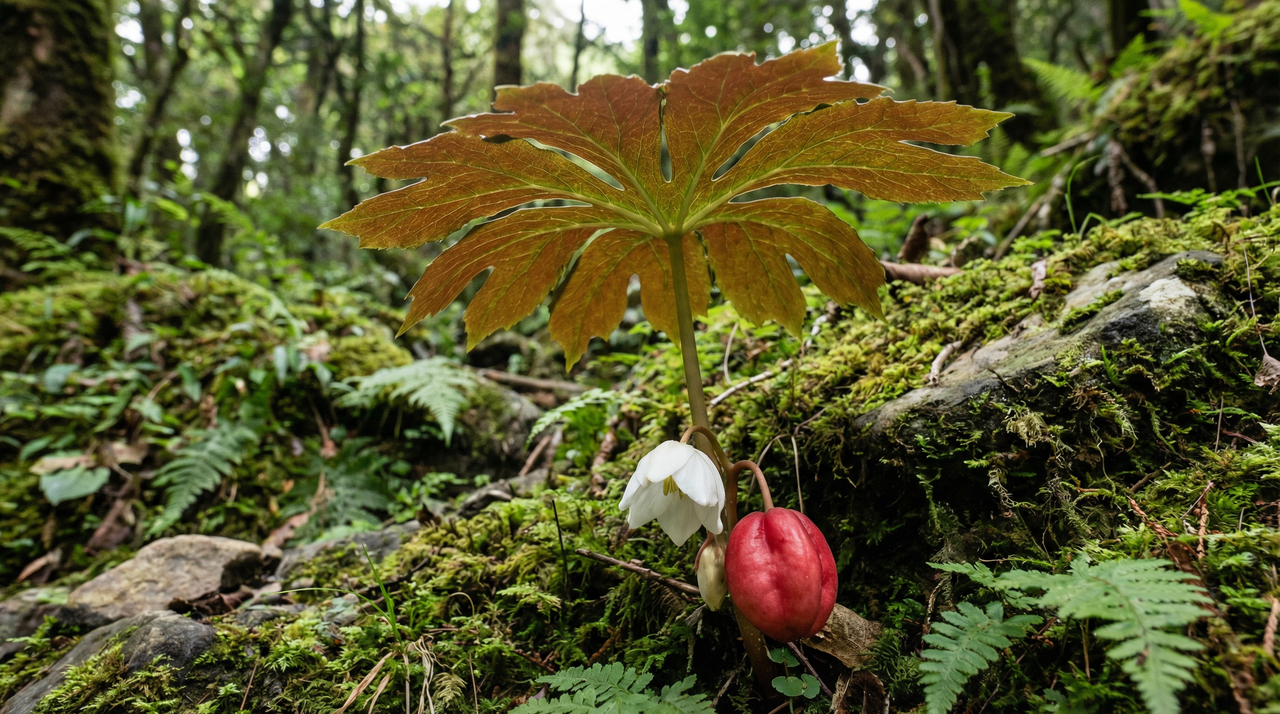
Every part of this plant can kill you except one small window of ripeness, and that window produces a fruit people describe as tasting somewhere between a mango and a strawberry. I've spent a lot of time around plants that hold contradiction at their core, but Himalayan May Apple (Sinopodophyllum hexandrum) makes most of them look straightforward. The same rhizome tissue that poisons livestock and causes severe systemic toxicity in humans is also the source of podophyllotoxin, the compound that chemists converted into etoposide, an FDA-approved chemotherapy drug used today to treat lung cancer, testicular cancer, and leukemia.[1] A plant that saves lives and ends them, sometimes in the same sentence.
What haunts me about this species is that the demand for its medicine has pushed it to the edge of existence. Wild populations across the Himalayas have declined by more than 80 percent, largely because slow-growing rhizomes take years to mature and collectors can't wait.[2] So we're watching a critically endangered plant disappear precisely because it's too useful to leave alone. If that tension doesn't make you want to understand this plant better, I'm not sure what will.
Himalayan May Apple Origin, History, and Botanical Background
Few plants I've encountered carry as much weight in as small a package as the Himalayan may apple. It's a compact woodland perennial that has healed people across the high Himalayas for millennia, inspired 19th-century botanists, and now supplies a precursor compound to modern cancer chemotherapy. That story has a dark side, though, and understanding where this plant comes from is inseparable from understanding why it's disappearing.
Botanical Background and Taxonomy
The name Sinopodophyllum emodi trips people up, partly because this plant went by Podophyllum hexandrum and Podophyllum emodi for a long time before phylogenetic work confirmed it belonged in its own genus, formally placed there by Indian botanist K.C. Mehta in 1957.[3][4] It's in the Berberidaceae family, making it a distant relative of barberries and American mayapple, but don't let that familiarity fool you into treating it as a garden-tough substitute for either. The ecology is completely different.
This is a plant of the upper Himalayan belt, native across Afghanistan, Pakistan, northern India, Nepal, Bhutan, and into southwestern China, growing in the shaded understory of temperate montane forests between roughly 1,800 and 4,200 meters elevation.[5][6] It wants moist, humus-rich, well-drained loamy soils with a pH between 5.5 and 7.0. The conditions it evolved in are not casual.
What makes its conservation situation so precarious is the intersection of biology and demand. The Himalayan may apple is a slow-growing, rhizomatous perennial that flowers annually once mature and spreads both by seed and vegetative offshoots, but individual plants often complete their lifecycle within a decade under natural conditions.[7][8] Slow recruitment plus high demand is a formula for collapse. Wild populations have declined by more than 50% range-wide and up to 90% in some areas.[9][10] The species now sits at Critically Endangered on the IUCN Red List, protected under India's Wildlife Protection Act, and listed on CITES Appendix II since 1994.[11] Having watched popular medicinal plants vanish from the wild when demand outpaces regeneration, I always prioritize cultivated stock for high-value species. For this one, the research on population collapse makes that non-negotiable.
Visual Characteristics
In the garden, the Himalayan may apple reads immediately as a woodland plant. It grows 30 to 90 centimeters tall with a 30 to 60 centimeter spread, emerging from a stout, nodular, creeping rhizome that's pale brown outside and whitish within, typically 5 to 15 centimeters long and up to 3 centimeters thick.[12] The stems are often flushed with reddish-brown hairs, which gives new growth a slightly dramatic appearance in spring.
The leaves are the showstopper. Large, peltate (the petiole attaches near the center of the blade rather than the margin), and palmately divided into five to nine deep lobes, each leaf can reach 30 centimeters across.[13][14] Working in shaded woodland gardens, I've come to think of this leaf shape as nature's light-collection strategy: that broad, umbrella-like surface is engineered for capturing every photon that filters through a dense canopy. Plants at higher altitudes or drier exposures produce smaller, thicker, more pubescent leaves, a useful reminder of how plastic this species is across its elevation range.[15]
Flowers appear from April through June: solitary, nodding, white to pinkish-white, saucer-shaped, about 2 to 3 centimeters across.[16] By late summer those flowers become glossy red berries, ovoid, up to 5 centimeters long, hanging pendulously under the foliage and dispersed by birds.[17] The fruit is visually striking; it reminds me of some of the toxic ornamentals I've specified in client gardens, where something beautiful is also something you want to keep away from children. The plant is deciduous, dying back to the rhizome each autumn and tolerating temperatures down to -15°C or -20°C, which places it in USDA zones 6 through 9.[18] Named cultivars essentially don't exist; this is still mostly a plant of botanical gardens, not nursery shelves.[19]
Traditional and Cultural Uses
This plant has been in human service for a very long time. Ayurvedic texts including the Charaka Samhita and Sushruta Samhita, dating roughly from 300 BCE to 200 CE, reference it under names including "Gaganabala." Tibetan medicine documents it in the Four Tantras as "bang-po."[20][21] Indigenous Himalayan communities including the Gaddis, Gujjars, Kinnauras, Sherpa, Tamang, and Garhwali peoples have long used rhizome and root preparations for warts, tumors, constipation, fevers, liver disorders, parasitic infections, and wounds, prepared as decoctions, pastes, powders, and tinctures.[22][23]
Beyond the medicinal, it carries ritual weight. Himalayan folklore treats it as a divine herb tied to purification rites, protective charms, and offerings to mountain deities.[24] That cultural depth is part of what makes the pharmacological exploitation so complicated; when modern pharmaceutical companies extract podophyllotoxin from wild rhizomes without compensating the communities who preserved that knowledge, there's an ethical dimension that UNEP's Convention on Biological Diversity has flagged explicitly as an access and benefit-sharing concern.[25] Traditional knowledge pointed pharmacologists to the right compound. The communities who held that knowledge have rarely shared in what followed.
Conservation and Fun Facts
The story of how this plant reached Western horticulture is actually quite charming: specimens arrived at Kew somewhere around 1820 to 1850, with botanists like Joseph Dalton Hooker documenting its local medicinal uses during Himalayan expeditions.[26][27] Kew went from collecting this plant as a botanical curiosity to now supporting propagation research as a conservation strategy. That shift from collection to conservation is something I've followed closely, and for critically endangered medicinals, it represents a meaningful change in how botanical institutions think about their role.
Climate modeling adds another layer of urgency. Projections under high-emission scenarios suggest suitable habitat could contract by 50 to 70% by 2100 as the species is forced to track cooler temperatures upslope into progressively smaller high-elevation refugia.[28] Combined with ongoing overharvesting for podophyllotoxin extraction and agricultural encroachment, the pressures are compounding.[23] Cultivation programs in India and Nepal, alongside ex-situ work at institutions including Kew and Missouri Botanical Garden, are attempting to bridge that gap.[29] For gardeners in suitable cool, moist climates who can genuinely replicate a Himalayan understory, growing this species from cultivated stock is a meaningful contribution. The specific mycorrhizal associations and multi-year establishment timeline make it a specialist's plant, but every well-grown garden specimen is one less reason to dig up a wild one. Just never forget that every part of this plant is toxic, and it demands respect at every stage of handling.
Himalayan May Apple Varieties and Sourcing
Botanical Varieties and Breeding Lines
If you come to this plant expecting a tidy list of named cultivars, you'll be disappointed. Sinopodophyllum hexandrum has no widely recognized horticultural selections or ornamental varieties.[30][31] The taxonomic distinctions that do exist are botanical rather than horticultural: two recognized varieties, S. hexandrum var. hexandrum (the widespread Himalayan form) and var. chinense (native to parts of China).[32] In the garden, these distinctions won't change how you grow the plant. What breeding work does exist has been driven entirely by medicinal chemistry. Indian research programs have selected elite lines for elevated podophyllotoxin content, achieving roughly 20 to 30 percent yield improvements over unimproved material.[33][34] The "selection story" here is pharmaceutical, not ornamental, and that shapes everything about how and where this plant is available.
How to Source Himalayan May Apple
This is where the plant gets genuinely complicated to acquire. Sinopodophyllum hexandrum is Critically Endangered on the IUCN Red List, its populations hammered by decades of rhizome overharvesting across India, Nepal, and Pakistan.[35][36] It has been listed under CITES Appendix II since 1997, meaning any international trade requires permits from both the exporting country and the importing nation.[11] For US gardeners, that means navigating U.S. Fish and Wildlife Service CITES permits, USDA APHIS phytosanitary approvals, and potentially state-level requirements on top of those.[37][38] I've researched the import pathway more than once, and it's the kind of regulatory thicket that keeps this plant firmly on my "specialist channels only" list.
The most important thing to understand is that artificially propagated material carries simplified permit requirements compared to wild-collected stock, which is a strong incentive to seek out nursery-grown plants with proper documentation rather than anything harvested from native populations.[39] In my work with conservation-minded clients, I always prioritize that cultivated, documented material, both for legal clarity and because wild collection is precisely what pushed this species to the brink. Reputable sources are limited to botanical gardens, conservation organizations, and seed banks like the Kew Millennium Seed Bank.[40][41] You won't find it at a typical US native plant nursery. Sustainable cultivation methods remain underdeveloped, and propagation efforts exist mainly for research and conservation purposes rather than commercial supply.[35][40]
If what you're after is a mayapple for your food forest guild, American Mayapple (Podophyllum peltatum) is genuinely easy to find in US native plant trade and far less fraught to establish. It's a distinct species with its own growth habits and conservation status, but it fills a similar shade-layer role considerably more accessibly. The Himalayan species belongs in specialist collections where its conservation requirements can be properly met, not in a casual planting where sourcing ethics are an afterthought.
Himalayan May Apple Propagation and Planting
Before anything else about propagation technique: Sinopodophyllum emodi is critically endangered under the IUCN Red List, severely depleted by the relentless poaching of mature rhizomes for international trade.[42][43] I only source from certified cultivated nurseries. The research is clear that home-grown stock, properly managed, can match or exceed wild material in podophyllotoxin content when conditions are right, so there's no ethical case for contributing to wild collection pressure. Every plant you successfully establish in your garden is one that didn't need to come out of a Himalayan hillside.
Propagation Methods for Himalayan May Apple
Seeds are small, ovoid, 2-5 mm long, enclosed in that gorgeous red fleshy fruit that ripens in late summer.[44][45] S. emodi is monoembryonic and also exhibits facultative apomixis, producing genetically identical offspring without fertilization in some conditions, which is botanically fascinating but doesn't make germination any easier.[46] Seeds have deep physiological dormancy and require cold stratification, typically 60-90 days at around 4-5°C, before they'll even consider germinating.[47][48] After stratification, germination happens in 1-3 months at 15-20°C, but rates typically land between 20-50% under garden conditions, occasionally reaching 60-70% when everything is optimized.[49][50] Mycorrhizal inoculant at sowing seems to improve success, which makes sense for a plant that evolved in fungus-rich forest soils.
I label every single flat meticulously because the first-year seedlings look deceptively like other woodland perennials and because, unlike American mayapple (Podophyllum peltatum) that many North American growers already know as a fast-establishing spreader, this species can take 5-7 years from seed to first harvestable rhizome. Fresh seed has 70-90% viability; store any surplus at 5-10% moisture content, 4-10°C in airtight containers, and viability holds for 1-3 years under refrigeration, or indefinitely in proper seed bank cryopreservation.[51][52] Seeds are valuable for conservation breeding and genetic diversity, but they're the slow road.
Rhizome division is where most growers, including me, want to spend their effort. Success rates run 70-90% when each division carries at least one viable bud, and divisions performed in spring or autumn settle in reliably.[53][54] I prefer autumn divisions in my zone; the rhizomes settle into the soil before hard dormancy sets in and show noticeably stronger spring emergence than spring-divided material in my experience. This method also cuts time to medicinal-quality rhizome harvest from 5-7 years (seed route) down to 3-5 years, and it maintains the genetic uniformity that matters for consistent podophyllotoxin levels.[55]
Tissue culture is the commercial and conservation gold standard: using MS medium with BAP and NAA, each explant can yield 4-10 shoots, making it the most efficient route for mass production and for selecting high-podophyllotoxin lines.[56][43] The main challenges are phenolic browning and getting plantlets acclimatized at high humidity (around 70%) after transfer to soil.[57] Having propagated other Berberidaceae in nursery settings, I've learned that adding activated charcoal to the medium or including antioxidants helps manage browning, though lab tissue culture is still specialist territory for most home growers. Root cuttings outperform stem cuttings (up to 80% vs. much lower for stems) when IBA at 1000-5000 ppm and a peat-perlite mix at 20-25°C are used. Layering can achieve 60-70% success.[58][59] Throughout propagation, watch for root rot pathogens (Phytophthora, Pythium) and damping-off; good drainage and sterilized media are non-negotiable.[54][60]
Soil, Site, and Planting Requirements
This plant evolved in the moist temperate understory of oak-rhododendron forests at 1800-4000 m in the western Himalayas,[61][62] and it hasn't forgotten. Partial to full shade is essential; in nursery settings, 50-70% shade cloth prevents the leaf scorch and wilting that hit fast in direct sun.[63] Humidity should run 60-80% with consistent cool temperatures, ideally 15-25°C, and shelter from drying wind.
For soil, think forest floor: well-drained, humus-rich loam or sandy-loam with high organic matter (5-20%), pH 6.0-6.5 for optimal growth and podophyllotoxin production, and at least 30-50 cm depth for the rhizomes to run.[64][54] In my experience, leaf-mold mulch is the single best amendment because it replicates natural forest floor conditions and buffers pH right into that sweet spot. Heavy soils need perlite or coarse sand worked in to prevent compaction; pH above 7.5 triggers iron-deficiency chlorosis and pH below 5.5 stunts growth, so both extremes are genuine problems.[65] Waterlogging is fatal; if your site stays wet after rain, address drainage before you plant anything. Container mixes follow the same logic: roughly 40% loam, 30% perlite or coarse sand, 30% mature compost or leaf mold, in pots at least 20-30 cm across.
Spacing, Technique, and Timeline to Maturity
Plant rhizome divisions 5-10 cm deep in spring or autumn, buds facing up, with 30-45 cm between plants and 45-60 cm between rows.[66][67] That spacing gives roughly 4-6 plants per square meter, enough room for rhizomes to expand and for air to move through the canopy in the humid shade where this plant lives. Crowded plants in moist conditions are an invitation to fungal problems. If you're planting for conservation or wild-simulation purposes, irregular spacing at 50-100 cm makes better ecological sense and adds resilience.[68] Commercial medicinal plots can go wider, up to 1 m, to prioritize rhizome bulk over canopy coverage.
Tissue-cultured plantlets go in at soil level; stratified seed sown in late summer or spring needs a moist, well-drained seedling medium under partial shade with close attention to damping-off, which can wipe out an entire flat fast.[63] Label everything. Himalayan may apple seedlings in their first year look disarmingly like other shade-loving woodland perennials, and with germination potentially stretching over 1-3 years, unlabeled flats become genuine mysteries. Rhizome divisions reach medicinal harvest size in 3-5 years under good conditions; seed-grown plants typically need 5-7 years to reach comparable rhizome mass.[50][69] That timeline is slow by any garden standard, but the plants growing in your woodland bed are actively relieving pressure on a critically endangered Himalayan species. That's a reasonable trade.
Himalayan May Apple Care Guide
Every cultural failure I've seen with Himalayan may apple traces back to one of two things: too much light or inconsistent moisture. Get those two right and the rest of the care guide is almost embarrassingly simple. This is a plant that spent millennia under a cool forest canopy at elevations between 1,800 and 4,200 meters, and it has no patience for conditions that don't approximate that.
Sunlight Requirements for Himalayan May Apple
Partial to full shade is non-negotiable.[70][71] Think of it like a hosta, but less forgiving. I once accidentally left a flat of seedlings where morning sun hit them for about two hours, and the leaf edges were scorching by noon. Direct light causes bleaching, wilting, and genuinely stunted growth.[30][72] The sweet spot is dappled or filtered light, maybe 4 to 6 hours of indirect light or gentle morning sun with solid afternoon shade.[73] If you see the stems stretching pale and thin, that's too little light, not too much; nudge the plant toward brighter indirect exposure rather than moving it anywhere near direct sun.
Watering Needs and Soil Moisture
Consistent, even moisture is the single most important care factor after light. The target is roughly an inch of water per week through the growing season in well-drained, humus-rich loamy soil with a pH between 5.5 and 7.0.[74][75] In my experience with shade-garden medicinals, letting the top inch dry out slightly between waterings is actually protective; it's the difference between evenly moist and waterlogged, and crown rot will kill this plant faster than drought will.[76][77] Reduce irrigation during dormancy, but don't let the rhizomes desiccate completely. Rainwater or low-salinity soft water is preferred; hard tap water over time can shift soil chemistry in ways this plant doesn't enjoy.[78] A 2 to 4 inch layer of leaf mold or bark mulch is my single best cultural recommendation for this plant: it retains moisture, moderates soil temperature, and protects the shallow rhizomes from temperature swings.[79]
Feeding and Soil Fertility for Himalayan May Apple
This is a light feeder that genuinely dislikes rich garden soil. A single spring top-dressing of compost or well-rotted manure is usually all it needs, and I only apply even that after a soil test confirms pH is sitting between 5.5 and 6.5.[70][80] If you want to use a balanced fertilizer, keep it low in nitrogen, something like a 5-10-10.[76] Early in my woodland garden I made the mistake of using a high-nitrogen fertilizer on a patch of young plants, and by midsummer I had long, floppy stems and visibly weaker growth. It took two seasons to recover. Excess nitrogen doesn't just cause legginess; it also reduces podophyllotoxin content in the rhizomes and raises disease susceptibility.[81][82] Heavy fertilization also disrupts the plant's relationship with arbuscular mycorrhizal fungi, particularly Glomus species, which are doing real work on phosphorus uptake.[83] Feed the soil ecology and the plant takes care of itself. If you see general yellowing, stunted growth, or purplish leaves, those are nutrient deficiency signals worth investigating with a soil test rather than reaching for fertilizer blindly.[84] Never fertilize during dormancy.
Frost Tolerance and Winter Protection
The rhizomes themselves are impressively cold-hardy once the plant is established, handling temperatures well below freezing in USDA zones 5 through 9, with the best performance in zones 6 to 8.[85][86] With good drainage and decent mulch, my established clumps have handled zone 6 winters without any losses. What's vulnerable isn't the dormant rhizome but the young shoots emerging in spring; a late frost will blacken and kill new growth fast.[87] The plant is fully deciduous, dying back to the ground each fall, so after foliage yellows I apply 4 to 6 inches of leaf mold to insulate the rhizomes, prevent heaving, and give emerging shoots a soft landing in spring.[88][89] In colder zones, a sheltered spot against a wall or under evergreens adds meaningful insurance.
Heat Tolerance and Summer Care
This is where Himalayan may apple draws a hard line. Its native range sits at elevations where daytime temperatures rarely exceed 25°C, and prolonged heat above 30°C causes wilting, scorching, chlorosis, and reduced growth.[90][73] In warmer parts of the mid-Atlantic and Southeast, I've found 60% shade cloth essential through July and August, combined with consistent mulching and occasional misting to raise ambient humidity around the leaves. It's suited to AHS Heat Zones 1 through 6; beyond that, the stress is real and the plant's medicinal value in the rhizomes declines along with its visual health.[91] Cooler microclimates, like the north side of a structure or a deeply shaded woodland edge, give gardeners in warmer zones their best chance.
Pruning, Maintenance, and Seasonal Rhythm
Maintenance is genuinely minimal, and that's by design. In early spring, before the new growth fully unfurls, I pull any yellowed or dead foliage from the previous year and that's usually the extent of pruning. No cutting back, no shaping, nothing aggressive.[92][93] The seasonal rhythm follows its alpine origins closely: shoots emerge in March or April before the canopy closes overhead, flowers appear from May into June, fruit ripens through summer, and by September or October the whole plant yellows and dies back into dormancy.[94][14] It also needs 4 to 6 weeks of cold below 4°C to break dormancy properly, so gardeners in very mild climates may see erratic emergence.[95] Because this plant takes 3 to 5 years to reach maturity, the most productive thing you can do is leave it alone and let it establish.[71] One safety note I'll always repeat: every part of the plant contains podophyllotoxin. I keep himalayan may apple well away from paths where children or pets wander, and I always wear gloves when dividing rhizomes. Patience and hands-off habitat mimicry are the real practice here.
Harvesting Himalayan May Apple
There's a line I keep coming back to with this plant: almost everything harvestable about it is either dangerous, slow, or both. That's not a complaint. It's a design principle. Himalayan may apple rewards patience and punishes impatience, and understanding that shapes every harvesting decision from the first ripe berry to a mature rhizome clump years down the road.
Timing and Ripeness Cues
Flowers appear in May or June, and the fruit takes 60 to 90 days to develop from there, ripening to a bright red, slightly soft berry about 2 to 3 centimeters across somewhere between July and September.[96][97] The visual shift from green and firm to deeply colored and yielding to gentle pressure is your harvest signal, and I want to be direct about why that matters: the green fruit looks genuinely tempting, almost like a small roma tomato. When I first started working with related woodland medicinals, that resemblance gave me pause. Green means toxic. Fully red and soft means the pulp is edible. There is no ambiguous middle ground worth testing.
Rhizome harvest follows a completely different calendar. The window is late summer into early winter, ideally October, after the leaves have yellowed and the plant has gone dormant post-fruiting.[98][99] That leaf senescence is your cue; when the foliage collapses and yellows, podophyllotoxin concentration in the rhizomes is at its seasonal peak, and the plant has finished its above-ground work for the year. Only plants at least 3 to 5 years old are candidates.[100] I think about ginseng and goldenseal here, other slow woodland medicinals where the instinct to harvest early costs you everything. The patience isn't optional. And even with mature plants, sustainable practice limits collection to 20 to 30 percent of any population given this species' critically endangered status in the wild.[101][102]
Harvesting Techniques for Fruit and Rhizomes
For fruit, if your site is short on pollinators (a real issue in urban or suburban plantings), hand-pollination during flowering improves fruit set considerably.[74] Pick berries only when the color is fully developed and the flesh gives slightly; the seeds inside remain toxic regardless of ripeness, so the harvest is the pulp only.[101]
Rhizome extraction is more involved. Use a garden fork rather than a spade; in my experience with shade-loving woodland perennials, the fork is significantly less likely to sever the rhizome cleanly through rather than lifting it intact. Work from the base of the plant downward to 10 to 20 centimeters, moving slowly.[102] Dry yield from a mature cultivated plant runs roughly 50 to 150 grams, and cultivated stands can produce 200 to 500 kilograms per hectare.[103] I've seen wild populations decline fast when over-harvested; in a garden setting, I treat every mature rhizome as something to protect and only divide when the clump is genuinely vigorous.
Yield, Flavor, and Safety Considerations
Before the flavor notes: all parts except the ripe fruit pulp contain podophyllotoxin at concentrations that cause serious reactions. Roots and unripe fruit run 1 to 5 percent; even ripe fruit pulp contains residual levels around 0.1 to 0.5 percent, with the seeds remaining fully toxic throughout.[104][105] I wear gloves whenever I'm dividing plants, and I keep children and pets away from unripe fruit and exposed roots without exception.
When you do get a fully ripe berry, the reward is modest but genuinely pleasant: sweet-tart, juicy, faintly acidic, with a fruity aroma sometimes compared to pineapple, apricot, strawberry, or wild apple.[106][107] Flavor descriptions vary a lot between sources and between individual plants, with occasional bitter or astringent finish. It's a local wild edible with a long Himalayan tradition, not a productive food crop. The real harvest here, year after patient year, is the rhizome, and the ethic around it is less about abundance than about stewardship.
Himalayan May Apple Preparation and Uses
Culinary Uses and Extreme Toxicity Risks
The only part of the Himalayan may apple that anyone should consider eating is the fully ripe, fully softened, orange-to-red berry flesh, and even that is based on anecdotal traditional practice rather than validated food safety research.[108][109][110] The roots, leaves, stems, flowers, unripe fruit, and the seeds inside even the ripest berry are all highly toxic, containing podophyllotoxin and related lignans at dangerous concentrations.[111][112] I treat this plant with the same respect I give foxglove or poison hemlock: beautiful in the landscape, but never for casual experimentation.
The ripe fruit does have real culinary appeal in its native range. Ethnobotanical accounts describe flavors ranging from sweet apricot to something closer to mango-strawberry, juicy and soft when fully ripe, with concentrated sweetness when dried and a tartness that benefits from added sweetener when cooked or made into jam.[113][114] Those descriptions are genuinely appealing. But the peer-reviewed safety margin is so thin that I've never been tempted to find out for myself. Unripe green berries are bitter and astringent from phenolic content and will cause gastrointestinal distress if eaten. Even traditional drying methods that reduce podophyllotoxin levels by 60 to 80 percent still leave substantial residual toxin present.[115] The comparison to American mayapple is worth noting: like its Himalayan cousin, Podophyllum peltatum allows only the fully ripe fruit flesh with seeds discarded.[116] I label both in my gardens clearly, having once reached for an unfamiliar berry without confirming ripeness; that near-miss was enough.
Acute poisoning from podophyllotoxin can begin within one to four hours and includes nausea, vomiting, severe diarrhea, dizziness, confusion, seizures, arrhythmias, and hematological collapse; cases can be fatal within days without treatment and no antidote exists.[117][118] The extensive medical contraindications detailed earlier mean no one should attempt home preparation. This is not a foraging candidate for Western gardens.
Traditional and Pharmaceutical Medicinal Preparations
The genuine story of Himalayan may apple in human culture is medicinal, not culinary. Ayurvedic, Siddha, and Tibetan Sowa Rigpa traditions all document use of the rhizomes for treating skin disorders, tumors, warts, fever, digestive complaints, and as an anthelmintic, with indigenous communities including the Bhutia, Sherpa, and Ladakhi among those who developed these practices over centuries.[119] That traditional knowledge ultimately led researchers to podophyllotoxin, which is now the basis for FDA-approved topical wart treatments like Condylox and, through semi-synthesis, the chemotherapy drug etoposide.[118]
Traditional preparation forms include alcohol tinctures, water decoctions, powders, and pastes, with pharmaceutical extraction using organic solvents like chloroform or methanol.[120] Historical dosing varied widely and was never standardized; even where traditional examples exist (such as 125 to 250mg of dried rhizome powder daily), modern pharmacopoeia insists on medical supervision for any internal use.[75] For growers involved in any legitimate research or cultivation program, rhizomes are shade-dried below 40°C for seven to ten days, then stored in cool, dry, airtight conditions to preserve podophyllotoxin integrity.[121] I'd add from experience with other lignan-rich roots that low-temperature drying matters especially in humid climates, where poor airflow invites mold that degrades both potency and safety.
Non-Food and Historical Applications
External applications formed a significant part of traditional Himalayan use: rhizome pastes and poultices for warts, leprosy, scabies, and syphilitic lesions, with internal preparations as cathartics, emetics, and treatments for bilious and parasitic conditions.[122][22] These are the same cytotoxic properties now harnessed in oncology, which is a remarkable line of cultural and pharmacological continuity. Home processing of the roots, however, is never advisable; the toxicity profile already covered in this article makes clear there is no safe amateur preparation route, and the plant's conservation status means wild-sourced material is both illegal and ecologically damaging to collect.
Himalayan May Apple Health Benefits and Medicinal Uses
Himalayan may apple occupies a strange and humbling place in the plant world. The same chemistry that has saved lives in oncology wards can kill someone who handles a root carelessly in a garden. That's not hyperbole. Sinopodophyllum emodi has given us two FDA-approved chemotherapy agents and a topical wart treatment, while remaining so toxic in its raw form that a gram or two of root material can trigger multi-organ failure. I do not experiment with raw Himalayan may apple extracts in any form. The research on its toxicity is too clear and the margin for error too small. What I can do is walk through the biochemistry honestly, because understanding why this plant is medically significant is inseparable from understanding why it demands serious respect.
Key Phytochemicals in Himalayan May Apple
The compound that defines this plant is podophyllotoxin, an aryltetralin lignan concentrated almost entirely in the rhizomes and roots. Concentrations typically run 0.5 to 6% dry weight, though under optimal conditions researchers have recorded peaks of 9 to 11%.[123][124][125] Related lignans including α-peltatin, β-peltatin, and 4'-demethylpodophyllotoxin accompany it in the tissue. What's striking is how dramatically environmental conditions shift those numbers. Altitude matters enormously: rhizome potency peaks at 3,000 to 3,500 meters, and the highest-quality material is harvested in late summer through early autumn, between August and November.[126][127] Anyone who has grown high-altitude medicinals knows the pattern: plants under environmental pressure often produce more of their defensive compounds. Drought, cold, and UV stress each upregulate podophyllotoxin biosynthesis, potentially increasing yields by 20 to 30%.[128]
Beyond the lignans, the plant carries flavonoids including quercetin, kaempferol, and myricetin, along with phenolic acids (p-coumaric and ferulic), terpenoids like β-sitosterol, and coumarins that contribute antioxidant and anti-inflammatory activity independent of podophyllotoxin.[129][130] These compounds likely function ecologically as UV screens and herbivore deterrents in the exposed subalpine understory. They also help explain why wild plants at high altitude have survived intensive harvesting pressure even as their numbers have collapsed. Unfortunately, the conservation status tells us the chemistry hasn't protected them from human demand: overharvesting of rhizomes for pharmaceutical extraction has pushed the species to Endangered on the IUCN Red List.[131]
Medicinal Research and Pharmacological Activities
Himalayan may apple has been central to Ayurvedic, Unani, and Tibetan medicine for centuries, used for everything from warts and tumors to digestive complaints and fever.[132][133] Modern pharmacology has traced at least some of that traditional utility directly to mechanism. Podophyllotoxin binds to the colchicine site on beta-tubulin, preventing microtubule assembly, which collapses the mitotic spindle and arrests dividing cells at the G2/M phase boundary.[134][135] From there, Bcl-2 downregulation, cytochrome c release, and caspase activation drive cells toward apoptosis.[136] The irony I always think about is that the same mechanism that makes this plant lethal to someone who eats a root is what makes its derivatives useful against cancer. Chemists took that toxicity and redirected it. Etoposide, a semisynthetic derivative, works differently: it targets topoisomerase II, stabilizes DNA cleavage complexes, and blocks religation, causing targeted DNA damage in rapidly dividing cells.[137][138] It's FDA-approved for lung cancer, lymphomas, testicular cancer, and other malignancies.
The pharmacological activity doesn't stop at cancer. Podophyllotoxin suppresses NF-κB signaling, reduces TNF-α and IL-6, and inhibits COX-2 and iNOS, with effects comparable to indomethacin in animal models.[139][140] Research has also documented antioxidant activity (DPPH scavenging, enhanced SOD and catalase), antimicrobial effects against bacteria and fungi, antiviral activity against HSV and influenza, analgesic effects, hepatoprotective properties, and anthelmintic activity.[140][141][142] The honest caveat across all of this: most evidence comes from in-vitro assays and animal models. Direct clinical trials on raw S. emodi extracts don't exist. The closest clinical validation is topical podofilox (pharmaceutical-grade podophyllotoxin) for genital warts, which achieves 30 to 50% clearance rates in controlled trials.[143] That's a purified, standardized compound under medical supervision, not a home remedy.
Nutrition of the Ripe Fruit
The fully ripe fruit is the one part of this plant with a reasonable safety profile for eating, and even there, "reasonable" comes with conditions. When the berry has turned yellow to red and softened completely, Himalayan communities have long eaten it in small quantities for mild nutritional support and stomach complaints.[30][144] The flavor is pleasant, reportedly similar to apricot or guava, with high water content running 80 to 85%.[145] Nutritionally, the fruit provides roughly 45 to 80 kcal per 100 grams, 10 to 15 grams of carbohydrates, 1 to 3 grams of fiber, 20 to 50 mg of vitamin C, and meaningful potassium (150 to 200 mg), calcium, and magnesium.[146][147] All figures vary by ripeness and growing region. The fruit also carries flavonoids, polyphenols, quercetin, and kaempferol that contribute antioxidant value, and crucially, ripe fruit contains only trace podophyllotoxin.[148][149] Traditional serving size is modest: 5 to 10 berries at most.[150] This is not a commercial food crop. Foraging it requires expert identification and a thorough understanding of ripeness cues, neither of which should be improvised.
Safety and Toxicity of Himalayan May Apple
Every part of this plant except the fully ripe fruit pulp is highly toxic. That bears saying plainly before anything else. The rhizomes and roots carry 0.2 to 10% podophyllotoxin by dry weight, and as little as 1 to 2 grams of root material has caused severe poisoning in documented cases.[150][151] The leaves, stems, unripe fruit, and seeds are also toxic. I label any potentially toxic bed in my designs clearly, and with a plant like this, where children or livestock could mistake the ripe berries for something innocuous, that precaution isn't optional. The plant is toxic to livestock as well, causing hemorrhagic gastroenteritis and neurological signs.[152]
Acute ingestion moves fast and seriously. Initial symptoms are gastrointestinal: nausea, vomiting, diarrhea, and abdominal pain. These progress to neurological signs including confusion, dizziness, seizures, and potentially coma, followed by bone marrow suppression and hepatic and renal damage.[153][151][154] Multi-organ failure is a real endpoint. The mechanism is the same one that makes etoposide a chemotherapy drug: microtubule assembly inhibition causes mitotic arrest in rapidly dividing cells throughout the body, not just tumors.[155] Skin contact with the latex sap can cause contact dermatitis, so gloves are non-negotiable when handling any plant material.[156]
Contraindications are extensive. Podophyllotoxin is teratogenic and abortifacient, making it absolutely contraindicated in pregnancy.[157][158] Lactation, children under two, severe liver or kidney disease, and concurrent use of CYP3A4 inhibitors or anticoagulants are also firm contraindications. Chronic exposure carries cumulative risks to bone marrow and reproductive function.[159] Misidentification compounds these risks. American mayapple (Podophyllum peltatum) is a common mix-up, and in the Himalayas, similar-looking species including Dysosma, Trillium, and Paris create additional confusion.[160][161] I teach clients to distinguish toxic look-alike berries by multiple features simultaneously, never one alone. With Himalayan may apple, the identification stakes are simply too high for casual confidence. Self-administration of any raw plant material is not appropriate under any circumstances. The pharmaceutical derivatives that work are professionally manufactured, precisely dosed, and used under clinical supervision for a reason.
Himalayan May Apple Pests and Diseases
There's a certain irony in the pest and disease story of Himalayan may apple. The same rhizomes that produce podophyllotoxin, one of the most potent anticancer compounds in modern pharmacology, also give the plant a formidable chemical shield against insects and pathogens. Crush a leaf and the bitter, acrid smell is immediate and unmistakable. In the cool, high-altitude forests between 2,000 and 4,000 meters where this plant evolved, that chemistry is enough to keep most casual browsers at bay. Move it into cultivation at lower elevations, in warmer or wetter conditions, and the picture changes fast.
Common Insect Pests
Aphids are the pest I watch for first, especially on new spring growth when shoots are tender and the podophyllotoxin concentration in young tissue is still building. Myzus persicae is the most frequently reported culprit, causing leaf curling, distortion, and potential virus transmission.[162][163] Spider mites, noctuid caterpillars, flea beetles, slugs, snails, and root-knot nematodes round out the usual suspects.[164] Slugs in particular are opportunistic in the moist, shaded spots this plant needs, and I've seen them shred young emerging foliage overnight. Deer and rabbits will browse leaves and fruit given the chance, especially in wilder garden settings where fencing isn't practical.[23]
The plant does fight back. Podophyllotoxin and related lignans deter feeding, and concentrations in leaf tissue can actually increase after initial herbivory as an induced response. Glandular trichomes add another layer of sticky, chemical deterrence.[165][166] Wild populations in their native habitat show meaningfully higher pest resistance than cultivated plants, particularly those grown at lower elevations or through monsoon seasons where the ecological cues that trigger these defenses are absent or mismatched.[167][168] Breeding programs in India and China have produced selections like Himalayan Elite and Podores-1 with improved tolerance to aphids and nematodes, but these aren't widely available to home growers yet.[169]
Fungal, Bacterial, and Viral Diseases
The disease story is really a drainage story. In its native cool-climate habitat, this plant shows moderate natural resistance, partly because podophyllotoxin has genuine antimicrobial activity.[170] Put it in warm, humid, poorly drained soil and that resilience evaporates. Root and crown rots caused by Phytophthora, Fusarium, Rhizoctonia, and Pythium are the most serious threats because they destroy the medicinal rhizome directly, the part you've spent three to five years growing.[171][172] Leaf spot fungi (Alternaria, Cercospora, Septoria), powdery mildew, anthracnose, and damping-off in seedlings follow, all triggered or worsened by waterlogged soil, overhead irrigation, heat above 25°C, or crowded spacing.[168][173]
Bacterial wilt (Ralstonia solanacearum), Xanthomonas leaf spot, and Pseudomonas syringae infections have been documented as secondary concerns.[174] Potyvirus and mosaic viruses can cause stunting and reduce podophyllotoxin yield; they're less frequently reported but worth monitoring, especially since aphid feeding creates entry points for viral transmission.[170] I've watched similar dynamics play out with American mayapple in my designs, where the whole Podophyllum group shares a vulnerability to the same rot pathogens the moment drainage fails.
Natural Defenses and Integrated Management
My approach with slow-growing medicinals like this one is to make the site itself do most of the protective work. Raised beds, well-draining humus-rich loam with a pH around 5.5 to 6.5, good air circulation between plants, and drip or base watering rather than overhead irrigation eliminate the conditions that favor every major pathogen on this list.[175][176] For aphids I start with neem oil and encourage lady beetles through companion planting before reaching for anything else. Trichoderma and mycorrhizal inoculation at planting give roots biological armor against the soil-borne rots. Bacillus thuringiensis handles caterpillars without disrupting beneficials, and copper-based sprays are a reasonable last resort for persistent fungal leaf issues.[177][178]
One thing I tell clients sourcing this plant: because resistant cultivars remain experimental and the published research on S. emodi's specific pathogen interactions is still thin, much of what we know is extrapolated from related species and regional cultivation reports.[179][169] Start with the healthiest rhizomes you can source from a reputable nursery, site the planting carefully, and resist the urge to intervene aggressively if something goes wrong. These plants resent root disturbance, and a curative drench to a struggling established clump will often cause more harm than the rot it was meant to treat. Prevention is the whole strategy here, and the plant's own chemistry will do a surprising amount of the heavy lifting if you give it the right conditions to work with.
Himalayan May Apple in Permaculture Design
Before you start clearing a spot in your food forest for this plant, you need to have an honest conversation with your climate. The himalayan may apple is native to elevations between 2000 and 4300 meters in the Himalayas, where it experiences monsoon-driven rainfall of 1000-2500 mm annually and growing-season temperatures that rarely push past 20°C.[180][181] That context matters enormously when you're deciding whether your site is even worth attempting.
Climate and Zones for Growing Himalayan May Apple
On paper, Sinopodophyllum emodi is hardy from USDA zones 5 through 9, with established dormant rhizomes tolerating winter lows down to -15°C or colder.[182][183] In practice, the zone range is misleading without the summer asterisk. Growing-season temperatures should stay in the 15-20°C range; once you push past roughly 29-30°C for any extended stretch, foliage scorches, the plant may go into induced dormancy, and repeated stress leads to outright decline.[184][185] I've watched the same thing happen with certain moisture-loving ferns and wild ginger when a heat dome rolls through: they look miserable by August and often don't recover fully the following spring. With this plant, the threshold is even less forgiving.
Successful cultivation in North America is currently concentrated in the Pacific Northwest, the Appalachian highlands, and specialized botanical collections.[78][186] If you're in zone 5, you'll want to mulch heavily over winter; if you're in the humid Southeast, I'd be honest with yourself that no amount of microclimate trickery will reliably compensate for a hot, sticky summer. This is still mostly a plant for dedicated collectors and specialized woodland guilds in the right geography.
Ecosystem Functions and Guild Roles
Once you've confirmed your climate fits, the functional picture gets genuinely exciting. As a rhizomatous perennial, Himalayan may apple forms expanding colonies that suppress weeds, stabilize slopes, and cycle nutrients, accumulating potassium and phosphorus while decomposing leaf litter builds soil humus beneath the canopy.[187][188] It also forms mycorrhizal associations, both arbuscular and ectomycorrhizal, that extend its reach and benefit neighboring plants by improving phosphorus and nitrogen availability in the root zone.[189] From a design standpoint, those colony-forming and mycorrhizal functions together make it a genuinely useful ground layer plant in shady woodland gaps, once it's established enough to hold its own.
The spring flowers, nodding white-to-pale-pink blooms around 3-5 cm across, attract bees, bumblebees, hoverflies, and other dipterans for nectar and pollen.[190][191] The egg-shaped fruits that follow ripen from green through yellow and red, drawing in birds, rodents, and insects that complete the seed-dispersal loop.[192] Those large, deeply lobed peltate leaves also add serious textural drama to a shaded border, turning yellow in autumn before the plant retreats underground.[193]
The medicinal dimension is where this plant gets complicated. Every part of the plant, with the rhizomes carrying the highest concentration, contains podophyllotoxin, a cytotoxic lignan that underpins modern chemotherapy drugs and topical treatments.[194][195] I treat every part of this plant as a medicinal substance rather than a casual garden perennial. Gloves always, labeled clearly, never planted where children play. Its colony-forming habit is wonderful for filling shady gaps, but this is not a play-friendly ground cover. The plant's status on the IUCN Red List as Endangered or Vulnerable and its regulation under CITES Appendix II means the conservation case for growing it is real, but it also means every acquisition decision carries ethical weight.[196][192]
Forest Layer and Companion Planting
In a forest garden, Himalayan may apple sits in the herbaceous understory and groundcover layers, reaching anywhere from 30 cm to 1.5 m depending on the form, and it genuinely thrives in dappled to deep shade beneath oaks, pines, or rhododendrons.[30][197] I've found that pairing it with Solomon's seal and ferns creates a layered textural carpet that suppresses weeds naturally by the second year. Just label everything carefully: the emerging shoots can look remarkably like those of other woodland herbs, and with a plant this toxic you don't want any ambiguity.
Other companions that work well include hostas, Pulmonaria, woodland sedges, Trilliums, Hepatica, wild ginger, and Lamium. All of these share the preference for humus-rich, evenly moist soil and filtered light.[198][187] The plant prefers slightly acidic to neutral soil in the pH 5.5-7.0 range and is a genuinely slow grower, taking 3-5 years from seed to reach maturity.[199] In client designs I almost always start new colonies with rhizome divisions to get functional ground cover within a reasonable timeline rather than waiting out the full seed-to-maturity arc. Give the colony room to spread and protect it from vigorous competition in those first two years; the patience pays off. And source only nursery-grown, cultivated stock. With a plant this endangered and this regulated, buying from a reputable propagator isn't optional, it's the whole point of growing it.
The Plant That Made Me Rethink What "Useful" Really Means
I've never harvested Himalayan may apple for medicine, and I probably never will. What I have done is sit beside a colony of those pleated, umbrella-like leaves on a cool May morning and think about the oncology ward, about the forests above Himachal Pradesh, about how many wild rhizomes were dug so we could have etoposide. Growing this plant, for me, is less about yield than about paying attention to what we've already taken.
Sources 199
- Etoposide - National Cancer Institute ↩
- Sinopodophyllum hexandrum - IUCN Red List ↩
- Flora of China: Berberidaceae ↩
- Sinopodophyllum emodi - Kew Science Plants of the World Online ↩
- Sinopodophyllum hexandrum (Royle) Ying - Flora of China ↩
- Podophyllum hexandrum Royle: Distribution, Propagation and Ethnopharmacological Aspects ↩
- Population Biology and Sustainable Harvesting of Podophyllum hexandrum ↩
- Population status and conservation challenges of Sinopodophyllum hexandrum in Nepal ↩
- Sinopodophyllum emodi ↩
- Overexploitation and Trafficking of Medicinal Plants in India ↩
- CITES Appendices ↩
- Sinopodophyllum emodi - Missouri Botanical Garden ↩
- Flora of China ↩
- Sinopodophyllum emodi - Kew Science ↩
- Morphological and Biochemical Variations in Sinopodophyllum hexandrum from Different Altitudes ↩
- Flora of China - Sinopodophyllum emodi ↩
- Seed Dispersal Mechanisms in Himalayan Understory Plants ↩
- Sinopodophyllum emodi - RHS Gardening ↩
- Sinopodophyllum emodi - Missouri Botanical Garden Plant Finder ↩
- History of Podophyllotoxin - PubMed Review ↩
- Tibetan Medicinal Plants ↩
- Traditional Uses of Podophyllum emodi in Indian Folk Medicine ↩
- Ethnobotanical Survey of Medicinal Plants Used by Indigenous Communities in Uttarakhand, India ↩
- Folk Medicine and Rituals in the Indian Himalayas ↩
- Access and Benefit-Sharing under the CBD: Case Studies from Asia ↩
- Kew Science - Plants of the World Online: Podophyllum emodi ↩
- Historical Documentation of Podophyllum in the Himalayas ↩
- Climate Change Impacts on Himalayan Medicinal Plants: A Case Study of Sinopodophyllum hexandrum ↩
- Conservation and Cultivation of Podophyllum hexandrum in India ↩
- Sinopodophyllum emodi ↩
- Podophyllum emodi Wall. ex Hook.f. & Thomson ↩
- Flora of China - Sinopodophyllum hexandrum ↩
- Breeding Strategies for Podophyllotoxin Yield Improvement in Indian Podophyllum ↩
- Biotechnological Interventions for Podophyllotoxin Production in Sinopodophyllum hexandrum ↩
- Sinopodophyllum hexandrum ↩
- Overexploitation and Conservation of Himalayan Medicinal Plants ↩
- Wildlife Importation Permits ↩
- Plants for Planting Manual ↩
- Importing Plants and Plant Products Regulated by CITES ↩
- Millennium Seed Bank Partnership ↩
- Podophyllum hexandrum ↩
- IUCN Red List - Sinopodophyllum hexandrum ↩
- Micropropagation of Podophyllum hexandrum: A Critical Review ↩
- Flora of China - Sinopodophyllum emodi ↩
- Embryology of Sinopodophyllum emodi Wall.: An endangered medicinal plant of Himalaya ↩
- Apomixis and Reproductive Biology in Podophyllum emodi ↩
- Seed Dormancy and Germination in Podophyllum hexandrum ↩
- Seed Germination of Podophyllum hexandrum Royle: Breaking Seed Dormancy ↩
- Seed Germination Studies on Sinopodophyllum emodi ↩
- Cultivation of Podophyllum emodi ↩
- Seed Storage of North Western Himalayan Plants ↩
- Seed Information Database - Podophyllum ↩
- Propagation of Podophyllum emodi Wall. - A Medicinal Plant ↩
- Cultivation Practices for Himalayan May Apple (Sinopodophyllum hexandrum) ↩
- Vegetative propagation of Sinopodophyllum emodi through rhizome cuttings ↩
- Micropropagation of Sinopodophyllum emodi ↩
- Micropropagation of Podophyllum hexandrum and Podophyllum emodi ↩
- Propagation of Podophyllum emodi: A Review ↩
- Propagation of Podophyllum emodi Wall. - An endangered medicinal plant ↩
- Diseases of Podophyllum Species: Root Rot Management ↩
- Flora of China ↩
- Sinopodophyllum emodi - Plants of the World Online ↩
- Sinopodophyllum emodi: Propagation and Care ↩
- RHS Gardening - Sinopodophyllum emodi ↩
- Missouri Botanical Garden Plant Finder - Sinopodophyllum emodi ↩
- Cultivation of Podophyllum emodi ↩
- Royal Horticultural Society Plant Profile - Sinopodophyllum emodi ↩
- Cultivation and Conservation of Podophyllum hexandrum ↩
- Cultivation and Production of Podophyllum hexandrum ↩
- Cultivation of Himalayan Mayapple (Sinopodophyllum hexandrum) ↩
- Sinopodophyllum emodi - Himalayan Mayapple ↩
- Royal Horticultural Society - Sinopodophyllum hexandrum Grow Guide ↩
- Sinopodophyllum emodi - Medicinal Plants of the Himalayas ↩
- Sinopodophyllum emodi - Useful Tropical Plants Database ↩
- Cultivation of Medicinal Plants: Podophyllum emodi ↩
- Growing Podophyllum Species: Watering Guide ↩
- Himalayan Mayapple Care Instructions ↩
- Podophyllum hexandrum (Himalayan Mayapple) Care Guide ↩
- Royal Horticultural Society - Sinopodophyllum hexandrum ↩
- Cultivation Practices for Himalayan Medicinal Plants ↩
- Fertilizer Effects on Sinopodophyllum hexandrum - Journal of Medicinal Plants ↩
- Agrotechnology for Podophyllum hexandrum Royle ↩
- Mycorrhizal associations of Sinopodophyllum hexandrum ↩
- Cultivation and Nutrient Management of Podophyllum hexandrum: A Review ↩
- Sinopodophyllum emodi Plant Profile ↩
- Sinopodophyllum emodi - Himalayan Mayapple ↩
- Frost Tolerance in Himalayan Medicinal Plants ↩
- Sinopodophyllum hexandrum (Podophyllum emodi) - Cultivation Notes ↩
- Overwintering Perennials in Cold Climates ↩
- Ecological Requirements of Podophyllum hexandrum ↩
- Cultivation of Himalayan Mayapple ↩
- Himalayan Medicinal Plants: Cultivation Guidelines ↩
- Sinopodophyllum emodi - Royal Horticultural Society ↩
- Reproductive Phenology and Conservation of Podophyllum hexandrum ↩
- Phenology of Sinopodophyllum hexandrum in the Western Himalaya ↩
- Podophyllum emodi Wall. - A multipurpose high value Himalayan medicinal herb ↩
- Phenology and reproductive biology of Podophyllum hexandrum ↩
- Podophyllotoxin: A Promising Natural Compound for Cancer Therapy - PMC ↩
- Sustainable Harvesting of Podophyllum hexandrum and Sinopodophyllum emodi ↩
- Sinopodophyllum emodi: A Review on Its Phytochemistry, Pharmacology and Conservation Strategies ↩
- Sustainable harvesting of medicinal plants in the Indian Himalayas ↩
- Podophyllum emodi Wall. - A source of podophyllotoxin: A review ↩
- Cultivation and Conservation of Podophyllum hexandrum and Podophyllum emodi ↩
- Podophyllum hexandrum: A Review ↩
- Sinopodophyllum hexandrum: A Review on its Phytochemistry and Pharmacology ↩
- Ethnobotany of Podophyllum hexandrum in the Indian Himalaya ↩
- The Genus Podophyllum: A Review ↩
- Flora of China ↩
- Sinopodophyllum hexandrum - Wikipedia ↩
- Edible and Medicinal Plants of the Himalayas - Ethnobotany ↩
- Peer-reviewed Phytochemistry Study on Sinopodophyllum emodi ↩
- Toxicity of Podophyllum species - Poison Control ↩
- Missouri Botanical Garden Plant Finder (2024) ↩
- Edible Wild Plants of the Himalaya - Ethnobotanical Notes ↩
- Royal Botanic Gardens, Kew - Sinopodophyllum hexandrum ↩
- Ethnobotanical Survey of Medicinal Plants Used by Indigenous Communities in the Himalayas ↩
- Podophyllum Toxicity - StatPearls - NCBI Bookshelf ↩
- Podophyllotoxin - Wikipedia ↩
- ETHNOBOTANICAL STUDY OF MEDICINAL PLANTS OF SOLAN DISTRICT, HIMALAYAN REGION ↩
- Podophyllum: A Review on Medicinal Uses and Extraction Methods ↩
- Post-Harvest Processing of Podophyllum emodi Rhizomes for Podophyllotoxin Extraction ↩
- Ethnobotanical uses of Sinopodophyllum emodi in the Himalayan region ↩
- Podophyllotoxin: a review on its phytochemistry, pharmacology and future perspectives ↩
- Comparative analysis of podophyllotoxin content in different parts of Podophyllum hexandrum ↩
- An analysis of podophyllotoxin and related compounds in Podophyllum hexandrum ↩
- Altitudinal variation in podophyllotoxin content of Podophyllum hexandrum ↩
- Seasonal Variation in Podophyllotoxin Content of Sinopodophyllum hexandrum ↩
- Stress-induced changes in podophyllotoxin biosynthesis in Sinopodophyllum ↩
- Secondary Metabolites from Sinopodophyllum emodi: A Review ↩
- Phytochemical and Pharmacological Profile of Podophyllum hexandrum: A Review ↩
- Sinopodophyllum emodi ↩
- Sinopodophyllum emodi: A Mini Review ↩
- Sinopodophyllum hexandrum: An Important Natural Source of Podophyllotoxin ↩
- Podophyllotoxin: Current Perspectives on the Antineoplastic Mechanism Action ↩
- Mechanisms of Action of Podophyllotoxin and Its Derivatives ↩
- Apoptosis Induction by Podophyllotoxin in Cancer Cells ↩
- Etoposide: A semisynthetic podophyllotoxin derivative used in cancer chemotherapy ↩
- Etoposide: A Review in Cancer Therapy ↩
- Anti-Inflammatory Effects of Podophyllotoxin via NF-κB Pathway ↩
- Antioxidant and Anti-inflammatory Activities of S. emodi ↩
- Antimicrobial and Analgesic Properties of Podophyllum hexandrum Extracts ↩
- Antiviral Properties of Lignans from Sinopodophyllum hexandrum ↩
- Podophyllotoxin for Genital Warts: A Randomized Controlled Trial ↩
- Himalayan May Apple (Sinopodophyllum emodi): Ethnobotanical Uses and Toxicity ↩
- Podophyllum emodi - Useful Tropical Plants ↩
- Nutritional and Phytochemical Evaluation of Wild Edible Fruits from the Himalayas ↩
- Nutritional Composition of Wild Edible Fruits from the Indian Himalaya ↩
- Phytochemical and Pharmacological Importance of Podophyllum emodi Wall. (syn. Sinopodophyllum emodi) ↩
- Phytochemical and Pharmacological Importance of Podophyllum hexandrum ↩
- Podophyllum hexandrum: Traditional Uses and Toxicity - NCBI ↩
- Toxicological Profile for Podophyllotoxin - NCBI Bookshelf ↩
- Veterinary Toxicology: Basic and Clinical Principles ↩
- Podophyllotoxin Poisoning: A Review - PMC ↩
- Podophyllum - StatPearls - NCBI Bookshelf ↩
- Toxicity and Mechanism of Podophyllotoxin ↩
- Podophyllin in Dermatology: Revisiting a Historical Drug - PMC ↩
- Podophyllum ↩
- Podophyllum - Drugs and Lactation Database (LactMed) ↩
- Podophyllotoxin and Its Derivatives: A Comprehensive Review of Their Pharmacology and Interactions ↩
- Flora of China - Sinopodophyllum emodi ↩
- Toxic Plants of the Himalaya: Podophyllum hexandrum ↩
- Pest Management in Medicinal Plants: Focus on Podophyllum Species ↩
- Pests and Diseases of Podophyllum Species ↩
- Insect Pests of Himalayan Medicinal Plants ↩
- Chemical Defenses of Sinopodophyllum hexandrum Against Herbivory ↩
- Trichomes and Glandular Secretions in Podophyllum Species ↩
- Cultivation Challenges of Sinopodophyllum emodi ↩
- Environmental Factors Affecting Sinopodophyllum emodi in India ↩
- Development of Podophyllum Cultivars for Pest and Disease Tolerance in India ↩
- Diseases of Podophyllum emodi Wall: A Review ↩
- Fungal Pathogens Affecting Sinopodophyllum emodi ↩
- Diseases of Podophyllum and Their Management ↩
- Horticultural Challenges and Disease Resistance in Indian May Apple ↩
- Bacterial and Viral Diseases in Podophyllum Species ↩
- Cultivation of Podophyllum emodi: A Review ↩
- Sinopodophyllum emodi: Distribution and Habitat ↩
- Integrated Pest Management for Medicinal Plants in India ↩
- Organic Disease Management in Podophyllum ↩
- Diseases and Pests of Podophyllum Species in the Himalaya ↩
- Köppen-Geiger Climate Classification Map - World Bank ↩
- Podophyllum hexandrum: Distribution and Ecology - ResearchGate ↩
- Royal Horticultural Society Plant Finder - Sinopodophyllum hexandrum ↩
- Missouri Botanical Garden Plant Finder - Sinopodophyllum hexandrum ↩
- Heat Stress Effects on Himalayan Medicinal Plants ↩
- Sinopodophyllum emodi - North Carolina Extension Gardener Plant Toolbox ↩
- Sinopodophyllum hexandrum Care Sheet ↩
- Functional Traits of Himalayan Herbs ↩
- Role of Understory Plants in Soil Conservation in Indian Forests ↩
- Mycorrhizal Associations in Understory Herbs of the Himalayas ↩
- Pollination Biology of Sinopodophyllum hexandrum in the Western Himalaya ↩
- Pollination biology of Podophyllum hexandrum (Royle) syn. Sinopodophyllum hexandrum (Royle) in the north-western Himalaya ↩
- Ecological Significance of Sinopodophyllum emodi in the Western Himalayas ↩
- Sinopodophyllum emodi ↩
- Plants of the World Online: Sinopodophyllum emodi ↩
- Podophyllotoxin: A Novel Potential Drug ↩
- Sinopodophyllum hexandrum ↩
- Flora of China - Sinopodophyllum emodi ↩
- Perennial Shade Plants for Permaculture ↩
- Ecology of Podophyllum emodi in the Western Himalaya ↩