Most people have walked under a honey locust without knowing it, noticing the fine, feathery canopy, maybe the dappled shade that doesn't kill the grass underneath, and moved on. What they almost certainly didn't notice was that the elegant tree above them is a domesticated version of something that once grew thorns the length of your hand, in clusters dense enough to stop a bison. I mean that literally: three-inch thorns branching into five-inch thorns, emerging straight from the bark in formations that look less like a defense mechanism and more like a dare.[1] The wild honey locust didn't evolve to deter deer. The leading hypothesis is that those thorns co-evolved with Pleistocene megafauna, woolly mammoths and giant ground sloths, animals that have been gone for ten thousand years. The tree is still armored for a world that no longer exists.
That tension between wild ferocity and cultivated elegance is what makes honey locust so fascinating to grow, design with, and honestly just think about. Spend enough time with this tree across different landscapes, from restored prairie edges to urban medians to permaculture food forests, and you start to see it as two plants occupying the same species: one a thorned, pod-dropping, nitrogen-cycling survivor, the other a tidy shade tree that landscape architects specify for parking lots. Understanding both versions matters enormously if you're thinking about planting one, because which honey locust you get depends almost entirely on choices made long before the tree arrives at your site.
Honey Locust Origin, History, and Traditional Uses
If you've ever driven through a Midwestern city and admired a graceful, fine-textured shade tree casting dappled light over a sidewalk, there's a good chance you were looking at a honey locust. The original wild tree is a genuinely formidable specimen, one built to survive floods, droughts, and browsing megafauna on the prairies and river bottoms of central North America.
Botanical Background and Native Range
Gleditsia triacanthos, the honey locust scientific name that Linnaeus formally established in 1753,[2] describes a medium to large deciduous tree native to a broad swath of central and eastern North America, from southern Ontario and Pennsylvania west to Nebraska and south to Texas and northern Florida.[3][4] In the wild, you'll find it in riparian zones, floodplains, and bottomland prairies, thriving across humid subtropical to humid continental climates at elevations from sea level up to around 3,300 feet.[5][6]
The species lives 100 to 200 years, sometimes pushing past 250 under ideal conditions, and typically reaches sexual maturity between 10 and 20 years, though it can flower as early as 6 to 10 years.[7][8] That longevity matters in permaculture design, where a canopy species you plant today shapes the system for generations. The species splits into two primary forms: the thorny wild type (G. t. subsp. triacanthos) and the naturally thornless subsp. inermis, which became the genetic foundation for the thornless cultivars that now account for over 95% of urban plantings.[9][10] European horticulturists discovered the tree sometime between 1635 and 1717, and by the 19th century it was widely cultivated abroad for timber, fodder, and ornament.[11][12] In my landscape design work, I almost exclusively specify thornless selections like 'Skyline' or 'Sunburst' for any site near paths, seating, or play areas. The wild form earns its place in restoration work, but those branched thorns are no joke in a family garden.
Visual Characteristics: Thorns, Pods, and Foliage
Young honey locusts grow with a pyramidal shape that gradually relaxes into an open, oval or rounded canopy at maturity, typically reaching 30 to 70 feet tall with a 30 to 50 foot spread, occasionally topping 100 feet in prime bottomland sites.[13][4] The wild tree announces itself immediately with its thorns: dark brown to black, branched, stout modified branchlets that can reach 10 to 15 cm or longer, clustered on the trunk and major branches.[13] They're substantially more elaborate than the simple paired spines of black locust (Robinia pseudoacacia), and seeing them side by side makes it clear why the wild honey locust was historically used as a living fence.[14]
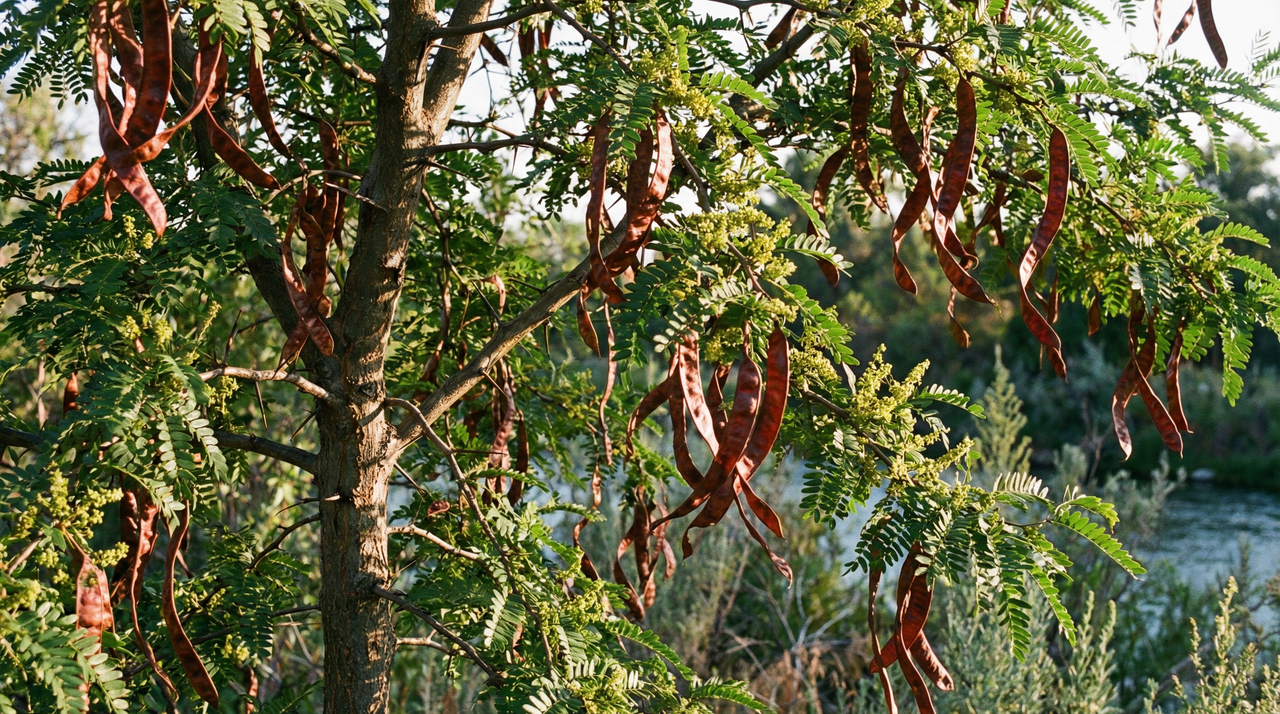
The foliage is what I'd call the tree's quiet elegance: alternate, pinnately or bipinnately compound leaves with 7 to 20 small elliptic to lanceolate leaflets, bright green and genuinely fern-like through summer, turning a clean golden yellow in autumn.[15][4] I've watched that seasonal shift across Midwest plantings many times, and the gold holds remarkably well before drop. Small greenish-yellow flowers open in 2 to 4 inch racemes in May and June, followed by the tree's most distinctive feature: flat, twisted, leathery seed pods ranging from 6 to 18 inches long, containing 10 to 30 hard oval seeds suspended in sweet pulp, maturing to dark brown-black and persisting well into winter.[4][7] The bark is gray-brown and deeply furrowed at maturity, the root system combines a deep taproot with extensive laterals, and the overall structure of this tree rewards four-season observation in any designed landscape.[16][7]
Native American Traditions and Early European Adoption
Long before Linnaeus catalogued it and European nurseries cultivated it, this tree was woven into the daily and ceremonial life of dozens of Indigenous nations. The ethnobotanical record here is genuinely rich. Cherokee, Choctaw, Menominee, Potawatomi, Osage, and other tribes ate the sweet pod pulp raw, dried it into flour, or fermented it into beverages; they roasted seeds for food and medicine; they used bark and roots to treat skin conditions, respiratory ailments, whooping cough, syphilis, and digestive problems; and they fashioned the dense, pointed thorns into fish hooks, needles, and tattooing tools.[17][18][7] The Osage even used crushed seeds as fish poison, an indication of just how completely this tree was integrated into practical life.[19] The bark served as an astringent, and the pods had some documented ceremonial roles as well.[20]
What strikes me every time I read through that ethnobotanical record is how perfectly it maps onto permaculture's "multiple yields from a single element" ethic. Food, medicine, tools, fodder, and fiber from one long-lived tree. That's not an accident; that's generations of careful observation. European settlers picked up on this utility quickly, and by the 19th century honey locust was valued across the Atlantic for timber, fodder, and ornamental use.[12] Today the species holds a Least Concern designation on the IUCN Red List, with modern cultivation focused heavily on thornless cultivars for ornamental and urban street-tree use.[21]
Fun Facts and Ecological Adaptations
Those branched thorns aren't just a nuisance; they serve as highly effective defensive structures that deter nearly all modern browsing mammals.[22][14] The pods tell a different story: that sweet, edible pulp is wildlife food, attracting deer, squirrels, and birds through the winter months when little else is available.[23][24] The first time I tasted fresh pod pulp on a foraging walk, I was surprised by how genuinely sweet it was, almost like a cross between honey and molasses. A hidden pantry, right there on a tree most people walk past without a second glance.
The tree's ecological resilience is real and well-documented. It thrives on as little as 15 to 20 inches of annual rainfall, tolerates road salt, urban pollution, heavy metals, and serious soil compaction, which explains why it became a go-to street tree across temperate cities worldwide.[23][25] That same adaptability is worth a word of caution: outside its core native range, Gleditsia triacanthos can spread aggressively, and it has become invasive in parts of Europe and Australia.[4][26] I always check local extension recommendations before including it in a planting guild, and I'd encourage anyone reading this to do the same. The related Chinese honey locust (Gleditsia sinensis), native to China, Korea, and Japan, occupies a distinct niche as a medicinal plant in Traditional Chinese Medicine and has naturalized in parts of the U.S. Midwest and Southeast,[27][28] though it's a different plant with a different story.
Honey Locust Varieties and Cultivars
The modern horticultural story of honey locust is really the story of how plant breeders tamed one of North America's most ferociously armed trees. Almost everything you'll find at a nursery today belongs to Gleditsia triacanthos var. inermis, the thornless subspecies selected specifically because it drops the three-inch thorns and produces far fewer pods than the wild type.[4][29][10] For urban streets and managed landscapes, that combination of reduced litter and zero thorn hazard is exactly why these cultivars took over.[4][29]
Popular Thornless Cultivars of Gleditsia triacanthos
If you're specifying a honey locust for a real project, these are the names worth knowing. 'Shademaster' is the go-to for shade and heat tolerance, broad-canopied and fast. 'Skyline' gives you a tighter, pyramidal silhouette with a strong branch structure, good for sites where you need height without sprawl. 'Imperial' runs more compact and columnar, with solid disease resistance and minimal pod drop. 'Allee' is the narrowest of the bunch and handles street planting especially well. Then there's 'Sunburst,' the showiest of the group, with new growth that flushes bright golden-yellow before settling to soft green. I've found that 'Sunburst' holds its color noticeably longer in partial shade than in full blast sun, which is worth factoring into siting decisions. 'Moraine' has a more arching habit and tends to drop its leaves slightly earlier in fall. All of these are named selections from var. inermis.[29][10] Some cultivars also push cold-hardiness further than the straight species, performing reliably into USDA zone 3 in protected positions.[4][30]
For permaculture readers who want more ecological function from the genus, it's worth knowing that Gleditsia sinensis, the Chinese honey locust, has its own thornless selections including 'Glex' and 'Haepai Longjin' that retain stronger nitrogen-fixing capacity and broader restoration value than most G. triacanthos cultivars.[31] The thornless G. triacanthos cultivars do still provide the open, dappled shade that works beautifully over understory fruit trees and nitrogen-fixers, so they're not without guild value; they just trade some of the wild form's defensive character for manageability.
Sourcing Honey Locust Trees Responsibly
'Shademaster' is the most-requested thornless cultivar through U.S. nurseries, and G. triacanthos is widely stocked.[32][4] Here's the catch, though: most seedling stock sold commercially is still thorny.[33] I learned this the hard way early in my career when a batch of "thornless" seedlings arrived that were anything but. Since then I've made it a rule to physically check the cultivar tag before anything goes on a truck. If the label just says Gleditsia triacanthos without a named cultivar or the inermis designation, assume it's thorny.
Timing your purchase matters. Trees establish most reliably when transplanted during dormancy, late fall through early spring, whether you're buying bare-root, balled-and-burlapped, or container stock.[33] At the nursery, I look for fibrous, pale roots with no circling or sour smell, no cankers on the trunk, clean branch attachments, and leaves free of the bronze stippling that signals spider mite damage.[33] Budget-wise, seeds run about $5 to $15 for a packet, saplings in the $20 to $60 range, and specimen-sized landscape trees can run $200 to $600 or more, with patented cultivars like 'Shademaster' at the higher end from licensed growers. Missouri Botanical Garden's PlantFinder and RHS databases are both useful for locating reputable sources.[32][34]
Before any of that, though, check your state's invasive species list. Gleditsia triacanthos is not federally regulated in the U.S., but it's officially listed as invasive in Connecticut, Indiana, Massachusetts, New Hampshire, New Jersey, New York, Ohio, Oregon, Washington, and Wisconsin, among others.[35][36][37] Its prolific seed production and root suckering let it move into disturbed ground fast, often at the expense of native vegetation.[38] I've seen it escape in disturbed areas well outside its historic core range, which is why I always pull up the current state advisories before recommending it anywhere borderline. Lists change, so check with your state agricultural department or local invasive species council before you plant.[35] Responsible design means asking that question before the tree goes in the ground, not after.
Honey Locust Propagation and Planting
Honey locust seeds don't give themselves up easily, and I mean that literally. Each one is a small, dark brown oval, about the size of a watermelon seed, with a hard, shiny coat so impermeable that untreated seeds routinely sit in the soil for a full season without doing much of anything.[39][40] Once you understand why, the whole propagation protocol starts to make sense.
Seed Characteristics and Preparation
Those seeds are tucked inside the long, twisted, reddish-brown pods you've probably seen curling on the ground in autumn. They store remarkably well: dried to low moisture and sealed in a cool, airtight container, viable seed can last 5 to 20 years.[41][42] But storage is the easy part. Getting them to germinate is where most people run into trouble.
The impermeable seed coat is the obstacle. Without scarification, germination rates stay below 20%. With it, you're looking at 70 to 95%.[23][43] The commercial method involves a concentrated sulfuric acid soak for 30 to 120 minutes, which is effective but genuinely hazardous, and I'd leave that to nursery operations with proper safety infrastructure. For small batches, I've had excellent results with 80-grit sandpaper: a light sanding on the edge of the seed opposite the hilum is usually enough to break the coat and let water in, and I consistently hit 80% or better without ever handling a carboy of acid. After scarification, a cold stratification period at 34 to 41°F for 30 to 90 days deepens germination uniformity, though it's optional if you're direct-seeding in fall. Once treated seeds hit moist, well-drained media at 70 to 85°F, expect sprouting within 10 to 21 days.[44]
Propagation Methods: From Seed to Grafting and Cuttings
Seeds are the standard approach for producing rootstocks at scale, and rightly so. But here's the catch: if you're growing a thornless cultivar like 'Sunburst' or 'Moraine', seeds won't get you there. Those traits don't come true from seed, so vegetative propagation is the only path to preserving them.[23]
Grafting is the preferred commercial route, and it works well. Cleft or veneer grafting onto seedling rootstocks in late winter or early spring, or T-budding in mid-summer, achieves success rates of 70 to 90%.[45][46] From a design standpoint, grafting thornless scions onto vigorous thorny seedling rootstocks gives you the best of both worlds: clean handling and landscape performance above the graft union, and raw pioneer-species vigor driving the root system below it.
Softwood cuttings root at 30 to 60% with IBA rooting hormone (1,000 to 3,000 ppm) in a sterile peat-perlite mix under high humidity and bottom heat.[47][48] It takes patience, but it's worth attempting for particularly valuable clones. Whichever method you use, keep drainage impeccable: Phytophthora and Pythium root rots are the primary propagation killers, especially in humid conditions and during establishment of cuttings.[49] Sterile media and careful watering discipline go a long way.
Soil, Site Selection, and Planting Requirements
Honey locust's reputation for soil adaptability is well-earned. It establishes readily across variable topographies and tolerates pH anywhere from 4.5 to 8.5 without complaint.[4][3] That said, its sweet spot is well-drained loamy soil at pH 6.0 to 7.5. Push above 7.5 and you'll start seeing iron chlorosis, the classic yellowed leaves with green veins. My honest advice: choosing a chlorosis-resistant cultivar like 'Skyline' or 'Imperial' from the start, or applying chelated iron foliar sprays in early spring, is far more reliable than trying to acidify already-alkaline urban soil after the fact.[50][51] If you do want to amend, test first. Guessing at sulfur or lime applications and getting pH wrong in the other direction creates a different set of problems.[52]
What I've seen more than once in urban work is what happens when soil depth is ignored. This tree needs at least 24 inches of uncompacted soil for its taproot to develop properly.[53] Sites where that's not possible produce shallow-rooted trees that never develop real drought tolerance and are far more vulnerable to storm damage. Full sun, at minimum 6 hours direct, drives the growth form and vigor you want.[54] Waterlogging is the one condition this tree genuinely cannot handle, even briefly during establishment.
Spacing, Timing, and Establishment Techniques
Spring planting after the last frost or fall planting at least six weeks before the first frost gives roots time to settle before temperature extremes hit.[55] If you're direct-seeding in fall, you get natural stratification for free, which simplifies the whole process. Container-grown stock in a 1:1:1 peat-perlite-sand mix gives you more seasonal flexibility and control.
Spacing depends almost entirely on what you're trying to accomplish. Ornamental and landscape plantings need 20 to 30 feet between trees to accommodate the 30 to 70-foot mature height and 25 to 40-foot canopy spread. Urban placements work at 15 to 25 feet. Timber and windbreak rows can go as close as 8 to 10 feet.[56][57] On poor or dry soils, err wider to reduce root competition during establishment.
I transplant seedlings at the 18 to 24-inch stage. Wait much longer and you risk disturbing the taproot enough to set the tree back by a full season. Once in the ground, water deeply at 1 to 2 inches per week for the first couple of years, soaking down to 12 to 18 inches to encourage that taproot to follow the moisture downward rather than staying shallow.[57][58] Past year two, the tree's drought tolerance becomes genuinely impressive. It hates wet feet during establishment, but once established, it largely stops needing your help.
The propagation method you choose has real consequences for when you'll see pods. Seed-grown trees typically don't produce reliably until year 8 to 10. Grafted trees start bearing in 3 to 5 years.[23][59] If pods are the goal in a permaculture or fodder system, that's a significant difference in planning horizon, and it makes the case for grafted stock more clearly than any other single factor.
Honey Locust Care Guide
After planting honey locust across a range of urban and residential designs, my strongest takeaway is this: get the first two or three years right, and the tree will largely look after itself for the next century. Most of the problems I've seen, borers tunneling into bark, yellowing foliage, canker infections, trace back to transplant stress, overwatering, or over-zealous fertilizing rather than any inherent weakness in the species. Honey locust care is mostly preventive.
Sunlight Requirements
Honey locust wants full sun, and it's genuinely adapted to get it. The bipinnate leaves adjust their angle to track available light, a form of heliotropism that lets the tree optimize photosynthesis whether it's growing in an open field or a tighter canopy gap.[57][60] Put it in too much shade, though, and you'll see leggy, chlorotic growth and an accelerated leaf drop that signals the tree is struggling rather than thriving.[61][57] The one exception I make is for new transplants in climates with brutal afternoon heat: a bit of temporary afternoon relief during the first summer can reduce scorch risk while the root system is still getting established. Once it's settled in, full sun all day is exactly what it wants.
Water Needs
Young trees need consistent, deep watering through their first two or three years. That's not negotiable. The goal is to encourage roots to go down, because it's that deep root architecture that eventually makes mature honey locust so remarkably drought-tolerant.[3][7] Once established, mature trees only need supplemental water during extended dry spells, roughly an inch every two to four weeks.[3] Honestly, in my experience with deep-rooted trees like this, root rot from poorly drained clay is a far more common killer than drought. Both honey locust and its Chinese relative Gleditsia sinensis are sensitive to waterlogged conditions, and overwatering shows up as yellowing leaves and fungal problems that are easy to misread as nutrient deficiency.[62][3] When in doubt, water deeply and less often rather than shallowly and frequently.
Feeding and Soil Fertility
Despite being a legume in the Fabaceae, honey locust does not fix significant atmospheric nitrogen.[4][57] I never count on it to build soil nitrogen the way black locust or alder would. It's a light to moderate feeder that tolerates poor, compacted, and drought-prone soils thanks to that deep root system, but it shouldn't be treated as a nitrogen source in a polyculture guild.[63]
Soil pH ideally sits between 6.0 and 7.5. The honey locust adapts to a surprisingly wide range from 4.0 to 8.0.[63][1] Run a soil test before you reach for any fertilizer. For young trees in their first couple of years, a balanced 10-10-10 applied at one to two pounds per thousand square feet across two or three applications is reasonable;[64] mature trees rarely need feeding at all unless a test shows a genuine deficiency, in which case a low-nitrogen formula like 5-10-10 is the better choice.[65] Excess nitrogen produces weak, fast-grown wood that's far more susceptible to borer damage and canker. I've seen it accelerate pest pressure on otherwise healthy trees. In alkaline soils above pH 7.5, watch for iron chlorosis: young leaves turning yellow while the veins stay green. A chelated iron drench corrects it quickly; I had a client planting recover noticeably within a single season, similar to what I've seen with iron-stressed oaks.[50] For general fertility, organic mulch and compost do more for long-term soil health than any granular program.[57]
Frost Tolerance
Honey locust is genuinely cold-hardy, rated for USDA zones 4 through 9 and capable of tolerating temperatures down to around -30°F.[66][4] That range reassures most temperate gardeners, and rightly so. Young trees in their first winter benefit from a thick layer of mulch over the root zone to prevent heaving in freeze-thaw cycles; I've seen this work reliably for container-grown nursery stock in zone 5 and 6 conditions. A few cultivars, 'Sunburst' being the most common example, may have slightly higher minimum temperature requirements than the straight species, so check cultivar-specific hardiness before planting in the coldest end of that range.[66]
Heat and Drought Tolerance
Once past establishment, mature honey locust handles serious heat with composure, rated for AHS heat zones 5 through 9 and capable of sustaining temperatures up to 100 to 105°F with adequate soil moisture.[67][68] Seedlings and young transplants are considerably more sensitive above 95°F. The stress signals to watch for are leaf scorch, wilting, and premature pod drop; in hot, humid summers I've observed leaf scorch most often when heat combines with compacted urban soils that restrict root access to deeper moisture.[57] Two to four inches of organic mulch over the root zone, deep infrequent watering, and fall or early spring planting timing all reduce heat stress meaningfully.[69] Cultivars like 'Shademaster' and 'Imperial' have shown particular reliability in urban heat conditions.[70]
Pruning and Maintenance
Prune in late winter or early spring before bud break, removing dead, diseased, or crossing branches to improve airflow and reduce entry points for pathogens.[71] Clean cuts on young wood are much less of an invitation to borers than the ragged wounds a lawnmower or string trimmer leaves on the lower trunk. After planting a lot of these trees, I've come to believe that protecting the bark from equipment damage during the first three years matters at least as much as any pruning program. Most pest and disease problems, borers, cankers, spider mites, trace back to stressed or wounded trees rather than randomly opportunistic insects, and over-fertilization with nitrogen is a reliable way to create exactly that vulnerability.[57] Mature trees need very little pruning intervention beyond routine monitoring.[57]
Seasonal Rhythm
Honey locust runs on a reliable temperate calendar: buds break in March or April, flowers appear in May or June, pods mature through August into November, and the tree drops its leaves and enters dormancy for winter.[23][4] Sexual maturity comes around years 10 to 20, and a well-sited tree can live 100 to 200 years. That's not a typo. In the food forests I've worked with, tracking this predictable cycle makes scheduling much simpler: late-winter pruning windows are obvious, spring fertilizer checks happen around bud break, and the August pod drop signals when to start watching for harvest timing. Planting a honey locust is genuinely a multigenerational decision, and once you understand its seasonal rhythm, care becomes less about intervention and more about informed observation.
Harvesting Honey Locust Pods
Before you ever think about picking a pod, you have to reckon with the long game. Honey locust is dioecious, meaning only female or bisexual trees produce pods at all,[23] so your harvest starts at planting with cultivar selection. After that comes the wait: grafted selections yield reliable pod crops years ahead of seed-grown alternatives. As someone who designs food forests with 20-year horizons, I account for this upfront. It's not a drawback so much as a reminder that you're planting for the long arc.
When to Harvest: Timing, Phenology, and Maturity Cues
From bloom (usually May through June) to physiological maturity runs roughly 120-180 days,[72][73][74] with warmer southern climates finishing toward the short end and northern growers waiting closer to six months. In practice, that puts harvest squarely in September through November across most temperate U.S. climates.[75] The cues I've come to trust are simple: pods shift from green to deep brown or dark brown-black, the texture goes dry, leathery, and brittle, and the seeds inside rattle audibly at roughly 10-15% moisture content.[75] The rattle test is the one I use every time now, after harvesting too-early pods that were chewy and bland. The moment I hear the first pods hit the ground on their own, I know the rest of the tree is close.
Weather shapes the timeline more than the calendar does. Dry, cool autumns are ideal; heavy late-season rain delays drying and invites mold, and in wet years I've had to spread harvested pods on screens indoors to finish the job.[76][77] A light frost can actually help, softening the pulp and nudging the sugars. Thornless cultivars like 'Sunburst' follow the same maturation window as wild types, though ornamental selections like 'Imperial' may produce few to no pods regardless of timing.[7][78]
Flavor, Texture, and Yield of Mature Pods
The payoff for getting the timing right is real. Fully mature pulp runs 30-40% fermentable sugars, with a chewy, mucilaginous texture that reads somewhere between a date and tamarind, and a caramel-vanilla aroma that hits you the moment you crack a pod open.[79][80] I always tell people that smell alone tells you whether you harvested at the right moment. Green or underdeveloped pods have none of it; they're tough, barely sweet, and not worth processing. Yields vary considerably depending on tree age, pollination success, and summer rainfall: young trees might give you a few pounds, while a mature, well-pollinated specimen can produce bushels in a good season. Plan your harvest expectations accordingly, and let the pods tell you when they're ready rather than watching the date.
Honey Locust Preparation and Uses
Culinary Uses of Honey Locust Pods and Seeds
Once you've collected those brown, rattle-dry honey locust pods the harvesting section describes, the simplest thing you can do is crack one open and chew the pulp straight. But the real fun starts when you dry it further and grind it into a naturally sweet, gluten-free flour or simmer it down into a syrup that carries genuine honey-molasses depth with a faint fruitiness underneath.[81][82] I've done this in my own kitchen, and I'll tell you: a light roast before grinding changes everything. The Maillard reaction pushes those mild sweet notes into genuine toffee and caramel territory that holds up beautifully in cookies or porridge.[83] Fermentation is another route worth exploring; the pulp can culture into a probiotic-rich syrup or a slightly sour, pleasantly funky drink that has real beverage potential.[84]
Seeds are another story. They need thorough heat treatment, either parboiling or roasting, before they're safe to eat.[85] I learned this the unpleasant way early on, cutting corners and assuming a quick soak was enough. It wasn't. Process them properly and you get a nutty, earthy meal worth adding to grain blends; skip that step and you'll regret it. Treat seed processing as the advanced technique it is, and lean on well-sourced guidance the first time through.
Medicinal Preparations and Traditional Remedies
Chinese honey locust (Gleditsia sinensis) tells a different preparation story. Its pods are loaded with saponins that make them unsuitable as everyday food for North American purposes, but in Traditional Chinese Medicine they're used as expectorant and antitussive agents, with mature pods prepared medicinally while young tender ones sometimes appear in Chinese cuisine.[28] The health benefits section covers the full phytochemical picture and safety considerations; the short version here is that the species you're working with matters enormously before you experiment with any preparation.
Non-Food and Practical Uses of Honey Locust
The wood is where honey locust earns a kind of reverence among people who work with it. Dense, rot-resistant, and genuinely hard, it's been used for items such as:
- Bows and tool handles
- Fence posts
- Furniture and flooring
- Musical instruments
European settlers recognized this utility early, cultivating honey locust for timber and as livestock fodder from the pods in what amounted to an early Midwestern agroforestry system.[7] In regenerative systems today that logic still holds: a fast-growing tree that can be selectively harvested for wood while simultaneously dropping a fodder crop is genuinely valuable. The Chinese species produces 10 to 15 tons per hectare per year of biomass useful for biofuel, animal feed, and mulch,[87] which gives you a sense of the productivity ceiling this genus can reach. For ornamental use, I always specify thornless cultivars in client designs where children or pets are present; the ferny canopy and golden fall color are fully intact without the liability of those wild thorns.[3]
Honey Locust Health Benefits
When I first started researching the medicinal side of honey locust, I expected the kind of thin ethnobotanical record you get with a lot of common landscape trees. What I found instead was a surprisingly deep tradition backed by genuinely interesting, if still preliminary, science. The picture is exciting. It's also incomplete, and I think it's worth holding both of those things at once.
Traditional and Medicinal Uses
Cherokee and Meskwaki healers used bark decoctions for coughs, whooping cough, and sore throats, and pressed inner bark into poultices for wounds, boils, and splinters.[88][17] Across the Pacific, Asian traditional medicine applied related Gleditsia species to swellings, skin infections, diarrhea, and diabetes.[89] What strikes me is how consistently those traditional targets, inflammation, infection, wound healing, show up in modern lab work on the same plant.
Substantive preclinical research shows extracts scavenge free radicals at levels comparable to ascorbic acid in DPPH, ABTS, and FRAP assays, partly by activating the Nrf2 pathway and boosting endogenous antioxidants like SOD and catalase.[90][91] Anti-inflammatory activity follows a similar pattern: inhibition of COX-2 and NF-κB, reduced TNF-α and IL-6, and paw edema reduction in animal models that in some studies rivaled indomethacin.[92][90] Antimicrobial assays show activity against Staphylococcus aureus, E. coli, and Candida albicans, with MIC values in the 25 to 100 μg/mL range, driven largely by saponins and flavonoids.[93][94] There's also early research on analgesic effects, blood glucose lowering and α-glucosidase inhibition in diabetic rat models, cytotoxic activity against HeLa and MCF-7 cells, hepatoprotective effects, and immune modulation, all promising, all preclinical.[95][96][97][98]
The critical caveat is that almost all of this is cell culture or animal model work. There is one small preliminary wound healing trial in humans, and no large randomized controlled trials.[89][99] Traditional knowledge pointed the way; modern validation is still catching up. The related Gleditsia sinensis (Chinese honey locust) is formally used in TCM as a purgative at 3 to 9g dried pod decoction, but it's contraindicated in pregnancy, children, and weak constitutions due to risks of nausea, diarrhea, and toxicity from its high saponin and lectin content.[100][101] That contrast matters: don't assume all Gleditsia uses are interchangeable.
Key Phytochemicals and Compounds
The chemistry behind these effects is genuinely interesting once you see how the plant has, in effect, distributed its defenses and functions across different tissues. Leaves and pods concentrate flavonoids, particularly quercetin, kaempferol, rutin, and isoquercitrin.[102] Bark loads up on triterpenoid saponins, with gleditsiosides and echinocystic acid derivatives reaching up to 10% in seed pods.[103][104] Phenolic acids (gallic, ellagic, ferulic), tannins, coumarins like scopoletin, and minor alkaloids round out a profile that threads through every part of the plant.[104][101]
These compounds do double duty ecologically, the saponins deter herbivores, flavonoids may support nitrogen-fixation signaling, and allelopathic compounds in leaf litter regulate competing vegetation.[101][105] From a grower's perspective, those profiles aren't fixed. Phenolics and flavonoids peak in spring and summer in young leaves, while drought or pollution stress bumps saponin production.[106][107] I've noticed that pods from trees in poor urban soils taste noticeably less sweet than those from trees on good loam, which fits the research showing soil pH and fertility shape secondary chemistry in related species.[108]
Nutritional Profile
The sweet pulp inside a ripe honey locust pod is the part worth eating, and Native American communities knew this long before food scientists ran the numbers. The pulp runs 30 to 50% sugars (sucrose and fructose primarily), delivers roughly 10 to 15% protein, contains meaningful fiber, and provides around 20 to 30mg of vitamin C per 100g along with an impressive mineral spread: approximately:
- 1,250mg potassium
- 180mg phosphorus
- 145mg calcium
- 120mg magnesium
- 4.2mg iron
- 2.5mg zinc per 100g dry weight
The flavor reminds me of tamarind: sweet, slightly musky, with a sticky, mucilaginous texture that makes sense once you know the sugar content. Those phenolics and flavonoids (total phenolics of 20 to 50mg GAE/g including quercetin and rutin glycosides) add real antioxidant value on top of the macro picture.[111] The seeds are a different story. They're higher in protein (25 to 35% dry basis) but hard, bitter, and loaded with saponins, tannins, and lectins that cause real digestive trouble unless you soak, boil, roast, or ferment them first, exactly as traditional users did when making flour, syrup, or fermented drinks from processed pods.[112][7] These figures come from botanical rather than standardized USDA food databases, so treat them as good-faith estimates rather than clinical precision.
Safety and Potential Side Effects
For most people, honey locust poses very low risk in normal landscape or foraging use. Oral extract toxicity studies show an LD50 above 2,000mg/kg, and the ASPCA lists it as non-toxic to dogs and cats, though large amounts of raw pods can cause mild GI upset in any species.[113][114] The story shifts meaningfully for livestock. Cattle and horses can develop colic, diarrhea, and digestive blockage from accumulated fallen pods, particularly unripe or autumn-matured pods where saponin and fermentable sugar loads peak.[115][116] A client of mine with a small farm learned this the hard way one November after a wet season kept the pods on the ground longer than usual; the extension agent she called confirmed this is a known seasonal risk. If you have grazing animals, manage pod drop actively or fence the drip line in autumn.
A few other hazards are worth naming clearly. Pollen can trigger hay fever in sensitive individuals.[117] Sap or thorn punctures can cause contact dermatitis in some people, though the thorn itself is a mechanical hazard, not a chemical one.[118] The most important identification warning: do not confuse honey locust with black locust (Robinia pseudoacacia), which contains robin toxin and is genuinely toxic. The easiest distinction I tell clients is to look at thorn arrangement and pod shape: honey locust has branched, multi-pronged thorns directly on the trunk and longer, twisted pods; black locust has paired simple thorns at leaf bases and short, flat seed pods.[119] Get that identification right before you forage or make any medicinal preparation. And given how thin the human clinical evidence still is, consult a healthcare professional before using any part of this tree medicinally.[89] Processed pulp has been safely eaten for generations; the raw seeds are the part to handle with real care.
Honey Locust Pests and Diseases
Disease Resistance and Common Issues
Honey locust holds up better than most landscape trees against fungal disease. USDA urban planting surveys rate it moderately resistant to many fungal pathogens, and botanical garden evaluations put it in the highly resistant category for common urban ailments.[120][121] Powdery mildew technically shows up on the pest list, but it's rarely severe, and the tree's leaf morphology seems to limit how much of a foothold it ever gets.[120] Bacterial issues like wetwood and slime flux are uncommon, and documented viral infections are nearly nonexistent.[120]
Where things get more real is with the stress-related diseases. Leaf spots from Cercospora, Phyllosticta, and Septoria stay below 5-10% incidence in most years, but a wet humid summer can push anthracnose up to 25% and cause early defoliation.[122][57] Canker diseases, including Thyronectria, Cytospora, and Botryosphaeria, affect 15-20% of mature trees in the Midwest and Northeast, mostly through branch dieback in trees that were already struggling.[123] I've watched honey locust in compacted urban soil bounce back once mulch and irrigation were corrected in a way that maples on the same site simply couldn't manage, which tells me that most of these disease problems are really site problems wearing a fungal costume. Verticillium wilt is a genuine concern in urban plantings, while Phytophthora root rot stays rare (under 5%) as long as drainage is adequate.[120]
Cultivar selection is your first line of defense. 'Imperial', 'Shademaster', 'Skyline', 'Sunburst', and 'Moraine' all carry improved tolerance to Verticillium, anthracnose, cankers, and leaf spots.[120][124] Beyond cultivar choice, disease pressure drops sharply with the right conditions: well-drained soil, full sun, moderate temperatures, and a pH kept in the 4.5-7.5 range all favor the tree over its pathogens.[125] Practically, dormant-season pruning to open airflow, 2-4 inches of mulch kept away from the trunk, minimum 20-25 foot spacing, and no overhead irrigation go a long way.[126][122] These are the same practices the care guide points to for pruning and water management, and they're not coincidentally aligned.
Insect Pests and Management
On the insect side, honey locust carries moderate resistance backed by some genuinely interesting chemistry. Tough leaflets, thorns on wild forms, and a suite of phenolic compounds, tannins, flavonoids, and saponins all contribute to keeping pest pressure manageable under normal conditions.[57][127] The Chinese honey locust, Gleditsia sinensis, takes this further: its spines, pods, and bark produce saponins, flavonoids, and alkaloids with documented insecticidal, repellent, and antifeedant properties in lab studies.[128][129] That research is still mostly preliminary for field applications, but I find it fascinating that a genus so many people dismiss as purely ornamental is quietly producing compounds worth studying as natural pest controls.
The vulnerability list is long on paper: borers, mimosa webworm, honey locust plant bug, leaf miners, aphids, scales, spider mites, Japanese beetles, sawflies, and gall wasps have all been documented.[59][130] In practice, the ones that actually threaten the tree rather than just being cosmetically annoying are borers (Megacyllene robiniae and Oberea rhombicollis), which pose the greatest danger to young trees, especially those under drought or transplant stress.[57][131] A healthy, well-sited honey locust shrugs off most of what lands on it. I've noticed that thorned seedlings also seem considerably less interesting to deer and rabbits early on, which is its own form of pest resistance worth mentioning when you're siting young trees.
Choosing resistant cultivars again pays dividends: 'Shademaster', 'Skyline', 'Moraine', 'Imperial', and 'Findlay' all show improved insect resistance in trial data, and 'Shademaster' in particular is my go-to recommendation because its denser canopy also shades out opportunistic understory weeds.[132] For management, the integrated pest management approach makes the most sense here: keep the tree vigorous through proper siting and mulching, encourage natural predators like lacewings, lady beetles, and parasitic wasps by avoiding broad-spectrum sprays, and reach for chemical interventions only when nothing else is working.[64][133] In fifteen years of designing with honey locust, I've found that time spent on proper spacing and mulch pays off far more reliably than chasing any spray schedule.
Honey Locust in Permaculture Design
Few canopy trees earn their place in a temperate food forest the way honey locust does. It's tough enough for the Great Plains, fine-textured enough for a kitchen garden edge, and productive enough to feed deer, livestock, and curious humans all at once. Getting the most out of it, though, means understanding exactly what it offers and where it has real limits.
Climate Adaptability and Hardiness Zones
Honey locust is hardy across USDA zones 3 through 9, with optimal performance in zones 4-8, and it handles temperature extremes that would sideline most large canopy trees, from -40°F winters to summer heat well above 100°F.[4][30][7] That kind of range puts it within reach for designers across almost the entire contiguous U.S., with the practical exceptions being high-altitude zones and extreme arid deserts.[4][3] Its sweet spot climatically runs through the Midwest, Great Plains, and much of the Southeast and Northeast.
While 30-40 inches of annual rainfall is ideal, the tree guarantees drought-resilient canopy coverage once established.[7][134] Soil adaptability is genuinely impressive: clay, loam, sand, periodic flooding, salt spray, urban compaction -- it tolerates all of it.[135][3] The one caveat is high humidity, which pushes up risk for powdery mildew and leaf spot.[136] In my zone 9B experience, that drought tolerance is what sets honey locust apart from most large trees I've worked with in Central Florida's unpredictable summers. Once it's established and its deep roots are chasing moisture on their own, it keeps going when everything around it is wilting.
Chinese honey locust (Gleditsia sinensis) tells a slightly different climate story. It's reliably hardy in zones 6-9, with zone 5 being variable enough that some protection may be needed in the coldest winters.[58][62] It leans toward the Southeast rather than the Pacific Northwest, preferring heat and avoiding the excessive winter moisture of maritime climates.[137] Worth knowing if you're choosing between the two for a restoration planting.
Ecosystem Functions and Services
Honey locust's flowers are small and easily overlooked -- greenish-yellow clusters in narrow racemes -- but the pollination ecology is more interesting than you'd expect from something so unshowy.[7] The tree is primarily wind-pollinated and polygamo-dioecious, meaning individual trees vary in whether they carry male, female, or mixed flowers.[5][138] Bees, syrphid flies, and beetles also visit for the subtle nectar and faint fruity fragrance, so insect pollination supplements wind where conditions allow.[139] I've noticed that planting bee-attracting understory herbs -- phacelia, borage, anise hyssop -- near my honey locust trees measurably increased insect visitation during bloom, and pod set the following autumn reflected it. Dense plantings also help overcome isolation effects when you only have one or two trees.[138] Reliable pod development needs sustained summer temperatures of 20-30°C and 150-200 frost-free days, so designers in the northern edge of the range should set realistic expectations for pod crops in marginal years.[139]
The nitrogen fixation question trips up a lot of permaculturists, and I want to be honest about it. Honey locust is in the Fabaceae family and does form root nodules, but its nitrogen-fixing capability is genuinely limited compared to species like black locust, which I'd consider a much more reliable N contributor in a guild.[7][140] While it may offer conditional benefits in deeply nutrient-poor soils, do not plan a guild around this tree as your primary nitrogen source.[141] Chinese honey locust is a different story: it shows stronger fixation potential of 50-200 kg N/ha/year and functions well as a pioneer species in ecological restoration contexts.[87]
Where honey locust genuinely shines ecologically is in its wildlife value and soil stabilization. The pods feed deer, squirrels, birds, and livestock, the deep root system anchors soil in riparian and disturbed areas, leaf litter builds organic matter over time, and the tree contributes to carbon sequestration through biomass accumulation.[3][7][142] Outside its native range, though, it can spread aggressively through abundant seed production, so I always manage or remove female trees proactively in my designs rather than waiting to see how bad the seedling problem gets.[3] The allelopathic properties that inhibit certain herbaceous plants are real, and the canopy's dappled light modulation is a design asset for shade-tolerant understory crops, but these two factors together mean your plant placement needs to be deliberate.[143][7]
Forest Layer Placement and Guild Companions
At full size, honey locust reaches 20-30 meters tall with a canopy spreading up to 15 meters wide -- think of something in the oak family's scale.[4][7] In open food forests it occupies the upper canopy layer; in denser systems it can fit an understory role depending on light and competition.[5] Most cultivars stay in the 40-50 foot range, which makes them more manageable in designed landscapes. Chinese honey locust is a bit more compact in cultivation, typically 6-15 meters, with moderate shade tolerance up to about 50% -- useful for tighter designs -- but its deep root system still competes actively for water and nutrients with nearby plants.[144][145]
In guild planning, honey locust pairs well with deep-rooted perennials, fruit trees, and aromatic herbs. Jerusalem artichoke, apple, fig, and mint are solid companions; avoid placing shallow-rooted groundcovers or nitrogen-hungry annuals directly under the drip line.[146] I learned the hard way to give honey locust at least 40 feet of clearance from any companion I'm counting on for water-sensitive root systems -- its deep roots outcompete quite aggressively in the first three to five years of establishment. Account for thorns on wild-type specimens when routing paths and placing work zones, and remember that windbreak and fodder functions are among its most reliable contributions in agroforestry settings, regardless of how much nitrogen it's actually cycling into the soil.[147][87]
The Tree That Made Me Rethink "Ornamental"
I spent years dismissing the thornless cultivars as street-tree filler, the kind of thing municipalities plant because it survives, not because it gives anything back. Then I processed my first harvest of wild pods on a cold October morning, tasted that caramel sweetness straight from the shell, and felt genuinely embarrassed by how long it had taken me to pay attention. This tree was working the whole time; I just wasn't watching.
Sources 147
- USDA Plant Guide: Honey Locust (Gleditsia triacanthos) ↩
- Prodromus Systematis Naturalis Regni Vegetabilis, Vol. 2 ↩
- Gleditsia triacanthos - Missouri Botanical Garden Plant Finder ↩
- Gleditsia triacanthos - USDA PLANTS Database ↩
- Gleditsia triacanthos L. ↩
- Köppen Climate Classification Map for North America ↩
- Honey Locust Tree Care and Longevity ↩
- Gleditsia triacanthos: Honey Locust ↩
- Missouri Botanical Garden Plant Finder ↩
- Missouri Botanical Garden Plant Finder ↩
- The History of the Honey Locust in Europe ↩
- Introduction of American Trees to Europe ↩
- Gleditsia triacanthos - Honey Locust ↩
- Flora of North America - Gleditsia triacanthos ↩
- Gleditsia triacanthos ↩
- Gleditsia triacanthos ↩
- Native American Ethnobotany: A Database of Foods, Drugs, Dyes and Fibers of Native American Peoples ↩
- Ethnobotany of the Cherokee Indians ↩
- Uses of Plants by the Indians of the Missouri River Region ↩
- Honey Locust ↩
- IUCN Red List: Gleditsia triacanthos ↩
- Gleditsia triacanthos - Missouri Botanical Garden Plant Finder ↩
- Honey Locust (Gleditsia triacanthos) Plant Profile ↩
- Edible Wild Plants: Honey Locust Pods ↩
- Drought and Pollution Tolerance of Urban Trees ↩
- Invasive Plant Atlas of the United States ↩
- Flora of China: Gleditsia sinensis description ↩
- Chinese Honey Locust in Traditional Chinese Medicine ↩
- Honeylocust Cultivars - Royal Horticultural Society ↩
- Honey Locust Tree Facts ↩
- Missouri Botanical Garden Plant Finder ↩
- Gleditsia triacanthos ↩
- Gleditsia triacanthos L. ↩
- Honey Locust (Gleditsia triacanthos) ↩
- Invasive Plants of the Northeast ↩
- Gleditsia triacanthos - honey locust ↩
- Invasive Plants of the Northwest ↩
- Plant Finder: Gleditsia triacanthos ↩
- Gleditsia triacanthos L. ↩
- Honey Locust (Gleditsia triacanthos) ↩
- Seed Storage of Woody Tropical Species ↩
- Seed Storage Behaviour: A Compendium ↩
- Propagation of Honey Locust from Seed ↩
- Seed Dormancy and Germination in Woody Plants ↩
- Gleditsia triacanthos: Honeylocust ↩
- Grafting and Budding Nursery Crop Plants ↩
- Vegetative Propagation of Honey Locust ↩
- Rooting Honey Locust Cuttings ↩
- Diseases of Woody Ornamentals ↩
- Iron Chlorosis in Trees and Shrubs ↩
- Soil pH and Lime Recommendations ↩
- Adjusting Soil pH with Sulfur ↩
- Honey Locust (Gleditsia triacanthos) - Planting and Care ↩
- Missouri Botanical Garden Plant Finder ↩
- Honey Locust Planting Guide - Arbor Day Foundation ↩
- peer-reviewed study in Sustainable Forestry International (2018) on Gleditsia triacanthos plantation density ↩
- Planting and Spacing Recommendations for Ornamental Trees ↩
- Honey Locust (Gleditsia triacanthos) - Missouri Botanical Garden ↩
- Propagation and Production of Honey Locust ↩
- Leaf Plasticity and Light Adaptation in Legume Trees ↩
- University of Florida IFAS Extension ↩
- Chinese Honey Locust - NC State Extension ↩
- Gleditsia triacanthos - Missouri Botanical Garden Plant Finder ↩
- Honey Locust Tree Care - University of Illinois Extension ↩
- Fertilizing Trees and Shrubs - NC State Extension ↩
- Missouri Botanical Garden - Gleditsia triacanthos ↩
- Drought and Heat Tolerance in Trees ↩
- AHS Plant Heat Zones ↩
- Honey Locust Trees: Care and Planting ↩
- Cultivars of Gleditsia triacanthos ↩
- University of Missouri Extension: Tree Pruning Guide ↩
- Missouri Botanical Garden Plant Finder - Gleditsia triacanthos ↩
- USDA PLANTS Profile - Gleditsia triacanthos ↩
- Gleditsia triacanthos - Royal Horticultural Society ↩
- Gleditsia triacanthos - Plant Fact Sheet, USDA PLANTS Database ↩
- Honeylocust ↩
- Honey Locust ↩
- Honey Locust (Gleditsia triacanthos) ↩
- Nutritional Composition of Honey Locust Pods ↩
- Honey Locust: Edible and Medicinal Uses ↩
- Honey Locust Pod Flour Recipes ↩
- Making Honey Locust Syrup ↩
- Volatile Compounds in Gleditsia Seeds ↩
- Fermenting Honey Locust Pods ↩
- Toxicity and Processing of Honey Locust Seeds ↩
- Wood Properties of Honey Locust - Wood Database ↩
- Agroforestry Uses of Gleditsia sinensis in China ↩
- Native American Ethnobotany ↩
- Honey Locust: A Review of Its Traditional Uses, Phytochemistry, and Pharmacology ↩
- Antioxidant and Anti-inflammatory Activities of Gleditsia triacanthos ↩
- Antioxidant and anti-inflammatory activities of flavonoids from Gleditsia triacanthos ↩
- Anti-inflammatory and Antioxidant Effects of Gleditsia triacanthos Fruit Extract ↩
- Phytochemical Screening and Antimicrobial Activity of Honey Locust Extracts ↩
- Antimicrobial Saponins from Gleditsia triacanthos Pods ↩
- Analgesic and Anti-inflammatory Effects of Gleditsia triacanthos Seed Extract ↩
- Hypoglycemic Activity of Gleditsia triacanthos in Diabetic Models ↩
- Anti-cancer Activity of Gleditsia triacanthos Extracts ↩
- Hepatoprotective and Anticancer Potential of Gleditsia triacanthos ↩
- Clinical evaluation of Gleditsia triacanthos in wound healing: A preliminary trial ↩
- Pharmacopoeia of the People's Republic of China 2020 Ed. ↩
- Phytochemistry, pharmacology and toxicology of Gleditsia sinensis ↩
- Phytochemical and Pharmacological Progress on the Genus Gleditsia ↩
- Flavonoids and Saponins in Different Parts of Gleditsia sinensis ↩
- Phytochemical and Pharmacological Review of Gleditsia sinensis ↩
- Ecological Chemistry of Honey Locust Secondary Metabolites ↩
- Phenolic Compounds in Honey Locust: Seasonal and Environmental Variations ↩
- Stress-Induced Metabolites in Legumes: Case of Gleditsia Species ↩
- Impact of Soil pH on Phytochemical Composition of Medicinal Plants Including Gleditsia sinensis ↩
- Nutritional Evaluation of Honey Locust Pods ↩
- Nutritional Evaluation of Honey Locust (Gleditsia triacanthos L.) Pods ↩
- Phytochemical and Antioxidant Properties of Gleditsia triacanthos Pods ↩
- Nutritional Evaluation of Honey Locust Pods ↩
- Toxicity Profile of Gleditsia triacanthos Extracts ↩
- Honey Locust (Gleditsia triacanthos) - ASPCA ↩
- Toxicity of Honeylocust Pods for Livestock ↩
- Honey Locust (Gleditsia triacanthos) Toxicity in Livestock ↩
- Tree Pollen Allergens: Common Culprits and Management ↩
- Contact Dermatitis from Tree Saps ↩
- Honey Locust vs. Black Locust: How to Tell Them Apart ↩
- Diseases of Trees and Shrubs ↩
- Gleditsia triacanthos ↩
- Diseases of Honey Locust ↩
- Honey Locust Diseases and Insect Pests ↩
- Honey Locust Cultivars: Performance and Disease Resistance ↩
- Honey Locust ↩
- Honey Locust, Honey Locust Tree, Gleditsia triacanthos ↩
- Chemical Ecology of Gleditsia triacanthos: Defenses Against Herbivores ↩
- Insecticidal Activity of Saponins from Gleditsia sinensis Against Agricultural Pests ↩
- Resistance Mechanisms in Gleditsia Species to Insect Herbivory ↩
- Insect Pests of Honeylocust ↩
- Pest Management for Honey Locust ↩
- University of Minnesota Extension: Park Series Honeylocust Summary ↩
- Integrated Pest Management for Landscape Trees: Honey Locust ↩
- Gleditsia triacanthos L. ↩
- Honey Locust (Gleditsia triacanthos) ↩
- Gleditsia triacanthos (Honey Locust) ↩
- Gleditsia sinensis - Missouri Botanical Garden Plant Finder ↩
- Pollination Biology of the Honey Locust (Gleditsia triacanthos L.) ↩
- Honey Locust (Gleditsia triacanthos) Plant Guide ↩
- Nitrogen Fixation in Honey Locust ↩
- Nitrogen Fixation in Gleditsia Species: A Review ↩
- Carbon Storage in Temperate Forests; E3S Web of Conferences ↩
- Royal Horticultural Society Honey Locust Profile ↩
- Gleditsia sinensis ↩
- Missouri Botanical Garden - Gleditsia sinensis ↩
- Ecological Engineering Services of Gleditsia sinensis in Temperate Agroforestry ↩
- Honey Locust as Fodder and Livestock Feed ↩