Every autumn, kids across Britain thread these things on strings and smash them against each other, and somehow that game has become so culturally embedded that people rarely stop to ask the obvious question: why are we playing with a nut that can poison you? Because horse chestnut seeds aren't a food, a snack, or an edible curiosity. They contain aesculin and saponins concentrated enough to cause serious toxicity in children and livestock, and yet the conker sits in the cultural imagination as almost wholesome, a symbol of autumn childhood. I find that contradiction genuinely fascinating, the way familiarity can completely dissolve our sense of a plant's actual nature.
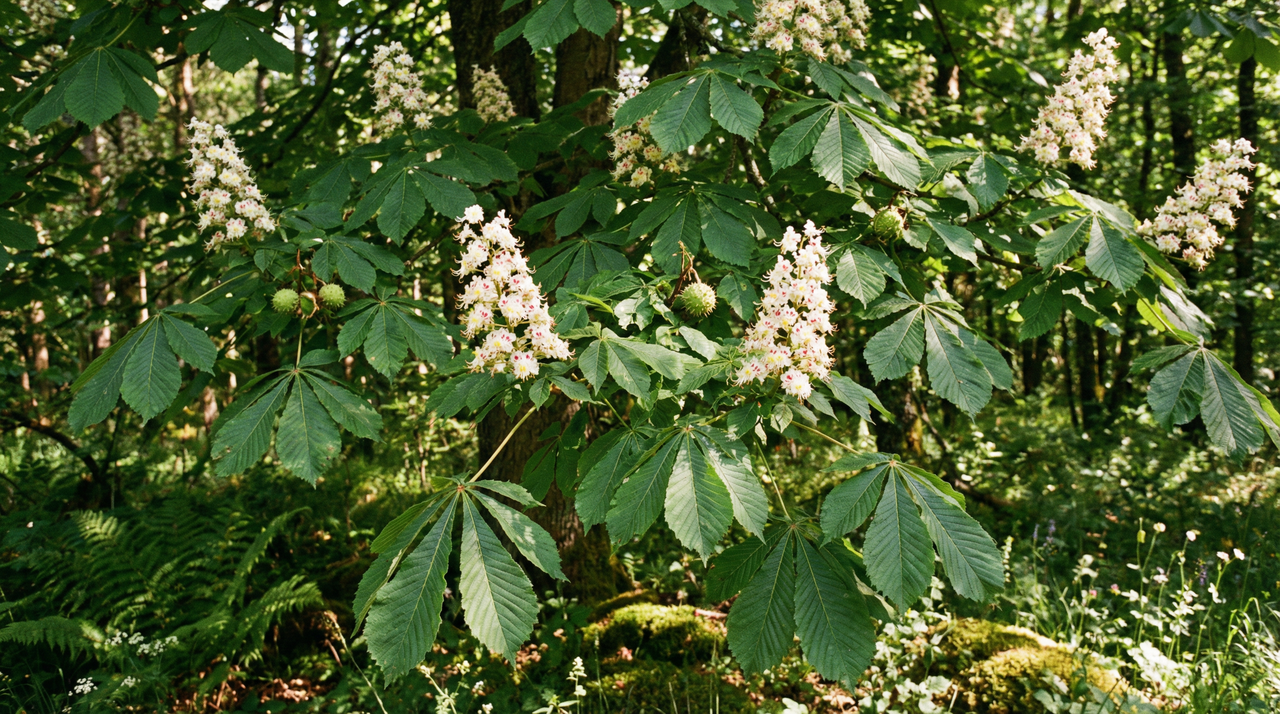
I've stood under mature horse chestnuts in three different countries, and the tree commands a kind of presence that's hard to overstate. Those white flower panicles in May, six to twelve inches tall, rising from a canopy that can spread forty feet, are legitimately one of the great ornamental spectacles of the temperate world.[1] But this is a tree that demands respect long before you ever get to the conkers. The toxicity, the scale, the disease pressures, the design constraints: none of them show up in the nostalgic version of the story. That's exactly what we're going to get into.
Horse Chestnut Origin and History
Botanical Background and Native Range of Horse Chestnut
Before anything else, you need to understand the sheer scale of what you're working with. Aesculus hippocastanum is native to the mountainous regions of the Balkan Peninsula, growing wild across Greece, Albania, Bulgaria, Serbia, North Macedonia, and parts of Turkey at elevations between 200 and 1,200 meters.[2][3][4] In that native habitat it's a forest-edge and valley tree, not some delicate ornamental coddled in a garden. It grows to 15 to 35 meters tall with a spread of 12 to 21 meters, carrying enormous palmately compound leaves with 5 to 7 serrated leaflets, dramatic white-to-pink flower panicles in late spring, and those instantly recognizable spiny green capsules that split open to reveal glossy brown seeds.[5][6] I always describe the spring flowering to clients who aren't familiar with it by saying imagine your largest buckeye species, then make it bigger and more upright, and put the flowers in candelabra-style panicles that you can see from a hundred feet away. That's roughly the picture.
Under good conditions a horse chestnut can live 200 to 250 years, with a typical range of 100 to 150 years, but urban stress and disease frequently cut that to 50 to 80.[7][8] I've assessed specimens at both ends of that range, and the difference almost always comes down to siting. Young trees grow quickly, putting on a meter or two in their first years, with a deep taproot that eventually matures into a broad fibrous system. First flowering comes at 5 to 7 years from seed, but reliable seed production takes 7 to 15 years.[7] This is not a tree that rewards impatience. By 1576 it had reached Vienna, brought west by the botanist Carolus Clusius from Constantinople, and English gardens had it by 1611 through John Tradescant. North American plantings followed by the late 18th century.[9][8] Its adoption was rapid everywhere it landed, which tells you something about how visually commanding it is even to people encountering it for the first time.
Traditional and Cultural Uses of Horse Chestnut
Long before it became a park-row staple in London or Vienna, horse chestnut had meaning in its homeland. Slavic and Balkan traditions held that planting one near the home would ward off evil spirits and misfortune.[10] That protective status probably helped the tree move so readily from folk yard planting to formal cultivation. On the medicinal side, Greek, Roman, and later European herbalists used astringent preparations from the seeds and bark topically for wounds, hemorrhoids, varicose veins, and rheumatism.[11][12] Those uses aren't entirely dismissed by modern science, though the path from folk remedy to safe application is not a straight line. Every part of this tree, and especially the seeds, contains toxic saponins and aesculin; any traditional internal or topical medicinal use required significant processing to reduce toxicity, and today standardized aescin extracts for venous conditions are pharmaceutical products requiring professional oversight, not something you make at home.[13][14] I respect the historical record here, but I'm unambiguous with anyone who asks: this is not a plant to experiment with.
The cultural tradition that has proved most durable is entirely non-medicinal. The conkers game, which involves stringing the glossy seeds and swinging them against an opponent's, took hold in Britain in the early 19th century and never let go.[15] I keep a jar of polished seeds on my desk partly as a conversation starter and partly as a reminder of how one tree can root itself so deeply in childhood memory that it becomes inseparable from a culture's seasonal rhythm.
Fun Facts About Horse Chestnut
The seeds that make such satisfying conkers are genuinely toxic to humans and most animals, causing severe gastrointestinal distress if ingested raw.[16][17] I've had to explain this to more than one worried parent whose child pocketed a handful of beautifully polished conkers and thought "nut" meant edible. Squirrels and rodents handle them, deer occasionally browse the foliage, and the spring flowers bring in bees enthusiastically, so the tree isn't an ecological dead end, it's just selectively available to wildlife in ways it isn't to us.[16]
The tree tolerates urban pollution and compacted soils better than many large ornamentals, which explains its long run as a park and street tree across temperate Europe and North America.[18][5] But that tolerance has limits. After watching horse chestnut leaf miner turn entire avenues of street trees brown by midsummer across multiple sites I've worked on, I now open that conversation with clients early rather than letting it become a disappointment later. The leaf miner (Cameraria ohridella) has spread widely and degrades aesthetics significantly, while bleeding canker (Pseudomonas syringae pv. aesculi) can kill an established tree within 10 to 20 years of infection.[19][20] For all its beauty and historical weight, this is a tree that asks something of you. Go in knowing that, and you'll make a much better decision about where and whether to plant it.
Horse Chestnut Varieties and Where to Buy Them
Notable Cultivars of Aesculus hippocastanum
The species itself earns its keep on ornamental merit alone. Aesculus hippocastanum holds the Royal Horticultural Society's Award of Garden Merit, and those towering spring panicles of white flowers are genuinely hard to match in the temperate garden.[6][5] But the species form is a 25-meter tree with a serious conker problem, and most of my residential clients don't have the space or the appetite for autumn cleanup. That's where cultivar selection becomes the first real design decision.
The one I specify most often for family gardens is 'Baumannii,' a sterile double-flowered form that produces no conkers whatsoever.[21] I always discuss conker toxicity with clients before recommending any horse chestnut, and 'Baumannii' genuinely removes the hazard for households with young children or dogs. You still get the full spring flower show; you just skip the spiny litter. For tighter suburban lots, 'Fastigiata' (narrow columnar) and 'Pyramidalis' give you vertical presence without the spreading canopy, and in my experience these get specified far more often in suburban settings than the straight species, which I tend to reserve for large estates or parkland.[22][23] 'Pendula' (weeping, typically 10 to 15 meters), 'Variegata' (yellow-green variegated foliage, 8 to 12 meters), and 'Frisby's Dwarf' (a genuinely compact 3 to 5 meters) round out the portfolio for gardeners who want something more contained or visually distinct.[21] There's also a naturally occurring smaller variety, Aesculus hippocastanum var. pyrenaica, native to the Pyrenees, though you won't find this one at most nurseries.[21]
Sourcing and Purchasing Horse Chestnut Trees and Seeds
Despite being a European native rather than an American one, horse chestnut is genuinely easy to find in the US nursery trade.[24][25] Nature Hills Nursery, FastGrowingTrees.com, the Arbor Day Foundation, and Sheffield's Seed Company all carry it regularly, with seeds also available through TreeSeeds.com and various Amazon sellers.[26][27][28] Price follows size in a pretty predictable ladder: seed packets run $5 to $15, small 1 to 3-foot saplings $15 to $40, and from there it climbs fast: a 10-foot specimen runs $150 to $300, 15-foot trees $300 to $500, and 20-foot trees $500 to $800 or more, with mature specimen-sized trees reaching $1,500.[29][26][30] For larger projects I order wholesale, where bulk pricing typically runs 20 to 40 percent below retail with minimum quantity requirements; spring and fall offer the best selection.[31] My honest advice: if you have patience and a few years, start with a whip. If you want impact this season and have the budget, buy up.
The tree is hardy in USDA zones 3 through 7 or 8, so it performs well across most of temperate North America.[32] There are no federal restrictions on sale or planting, but if you're in Washington State, check local ordinances before you order since it's monitored for invasiveness in parts of the Pacific Northwest.[32][33] Two other things worth asking before you buy: leaf miner damage (present in eastern and midwestern US since 1989) can look alarming in mid-summer, with leaves going papery and brown well before autumn, but it's rarely fatal to an otherwise healthy tree;[34][35] and all parts of the tree, especially the nuts, are toxic to humans and pets. That second point is the one I never skip with clients. It's a beautiful tree, and it's also one that demands a clear-eyed decision about where it goes and who has access to the ground beneath it.
How to Propagate and Plant Horse Chestnut (Aesculus hippocastanum)
There's a particular moment in autumn that I look forward to every year: the spiny green husks of horse chestnut splitting open along their seams to reveal those impossibly glossy mahogany-brown seeds inside. If you've never held a fresh one, they're substantial things, 2-4 cm across and weighing anywhere from 10 to 25 grams, with a smoothness that almost feels polished.[36][18] That visual beauty is genuinely seductive. What catches most gardeners off guard is what comes next: you cannot set them on a shelf and deal with them later.
Seed Characteristics and Collection
Horse chestnut seeds are what botanists call recalcitrant, meaning they can't tolerate drying out. Let them drop below 20-30% moisture content and viability collapses fast.[37][38] Compare that to an oak or a maple, where you can air-dry the seed, tuck it in a paper bag, and revisit it in spring. Horse chestnut seeds demand immediate attention. Fresh seeds carry 80-90% initial viability, which is excellent, but that window closes quickly if you leave them sitting in a warm garage.[37][39]
I always label my stratification bags the moment I pack them. Fresh horse chestnut seeds look remarkably similar to other large temperate seeds once they're nestled into damp vermiculite or sphagnum, and mixing up a batch is a real risk. Store them sealed with moist medium at 4-5°C and 90-100% relative humidity; they'll stay viable for 6-18 months this way, though I'd never push that limit intentionally.[40] I also wear gloves throughout collection and stratification. The seeds contain aesculin and saponins, and keeping them well away from children and pets while stored is non-negotiable.
Propagation Methods: From Seed to Grafting
Seed is the practical route for most home growers and the one I'd recommend first. The seeds need 90-120 days of cold stratification at 4-5°C in moist sand or peat before they'll germinate reliably.[41][42] Sow them 2-3 cm deep in well-drained loamy soil with a pH between 6.0 and 7.5, and germination rates can reach 80% under the right temperature conditions.[5][43] Direct autumn sowing outdoors is completely valid if your winters provide reliable cold; the natural freeze-thaw cycle does the stratification work for you. For indoor starts, begin stratification in November and sow in late February or March.
One thing worth understanding early: seedlings from horse chestnut are not true to type. The species is self-incompatible and relies on bees for cross-pollination, so every seedling is genetically unique.[44] For named cultivars, grafting is the only reliable path. Cleft or whip-and-tongue grafting onto seedling rootstock in late winter delivers 60-80% success rates, which is solid for a large tree species.[45][46] Softwood cuttings, by contrast, rarely exceed 10-30% success even with IBA hormone treatment and mist, so I don't bother recommending that route to clients unless they're very patient experimenters.[44] Horse chestnut is not considered invasive in the United States, and collecting seed on private property with the owner's permission is perfectly legal, though your local extension service is always worth consulting for any regional nuances.[8][47]
Soil, Site Selection, and Planting Technique
Horse chestnut is native to Balkan mountain slopes at 800-1800 meters elevation, where it receives 800-1200 mm of annual rainfall on well-structured soils that drain freely between rain events.[48] That ecological origin tells you almost everything you need to know about its preferences: deep, fertile, moist but impeccably drained loamy or clay-loam soil with a pH of 6.0-7.5.[5][49] Drainage is the non-negotiable factor. I learned this the hard way with a young tree I sited in a low-lying spot that seemed fine in summer but pooled in wet winters. By the following spring I was seeing wilting, yellowing leaves, and the beginnings of a canker. Root rot from Phytophthora or Armillaria in waterlogged ground can take a tree down faster than any pest.[50] I now run a simple drainage test on every intended site before I dig a planting hole.
Full sun to partial shade suits this species well, with 6-8 hours of direct light preferred for good flowering and vigor.[51] Young saplings tolerate more shade than mature specimens, but deep shade reduces both flowering and long-term health. Keep pH within range: above 7.5, you'll see interveinal chlorosis as iron becomes less available; below 5.5, aluminum toxicity and magnesium deficiency become real risks.[52] Maintain sterile conditions when propagating, too, because a seedling tray that develops fungal issues can wipe out an entire batch before the first true leaves appear.[53]
Spacing, Timeline, and Establishment
The mature size of this species shapes every planting decision, and it's where I see gardeners most routinely underestimate what they're committing to. A mature horse chestnut reaches 50-80 feet tall with a canopy spread of 40-70 feet, underpinned by a taproot that can descend 10-20 feet and a wide-spreading lateral root system.[54][55] In lawn or parkland settings, I recommend spacing of 40-60 feet between trees; avenue plantings can come in a bit tighter at 30-40 feet, but generous airflow between canopies meaningfully reduces fungal disease pressure and root competition as the trees mature.[56][57] When planting bareroot stock or a horse chestnut sapling, dig wide and deep enough to accommodate the taproot without bending it. A cramped hole sets up years of struggle that become very hard to correct.
Plant in fall after leaf drop or in spring after the last frost, within USDA zones 3-7.[51][8] Water new plantings 1-2 inches per week through the first growing season while the deep root system establishes itself.[44] Then comes the honest conversation I have with every client about timeline. Trees grown from seed typically take 5-10 years to produce their first conkers, with around year seven being a realistic expectation.[24][58] Grafted trees shorten that considerably, typically flowering and fruiting within 3-5 years.[51] For anyone with a specific cultivar in mind or limited patience, I now always steer them toward grafted stock. I've grown both from the start, and the first year I finally saw a seedling-grown tree drop its spiny capsules in autumn, around year seven, it felt genuinely earned. But my clients who wanted flowers by year four made the right call choosing grafts.
Horse Chestnut Care Guide
If I had to summarize horse chestnut tree care in a single sentence, it would be this: get the site right, then mostly leave it alone. I've planted these trees in suburban landscapes and woodland-edge guilds, and the ones that thrive with the least intervention are always the ones I spent the most time siting carefully before a single hole was dug. The care itself isn't complicated. It's the tree's particular temperament, cold-hardy to a degree that staggers the imagination yet genuinely uncomfortable in a hot, humid summer, that demands you understand what it wants before you commit.
Sunlight Requirements
Horse chestnut wants at least six to eight hours of direct sun daily for reliable flowering and strong growth.[5][59] Push it into too much shade and you get reduced flowering, smaller and paler leaves, leggy structure, and increased leaf drop.[60] Young trees tolerate a bit more shade than mature specimens, which is useful during establishment in a woodland-edge setting. On warmer sites, I routinely position these trees where they catch full morning sun but get some relief from intense afternoon heat. The symptom overlap between shade stress and heat stress, both produce chlorosis and scorch, means diagnosis requires context rather than a quick visual inspection alone.
Water Needs
Young trees need deep, consistent moisture for the first one to three years, soil kept evenly moist but never waterlogged, while established trees are moderately drought-tolerant and mainly need supplemental irrigation during prolonged dry spells.[61][62] I learned this the slightly painful way: I was giving a newly planted horse chestnut frequent, shallow sprinkles all season and wondering why it looked sulky. Switching to weekly deep soaks transformed it within a few weeks. Deep, infrequent watering builds a stronger root system; overwatering invites Phytophthora root rot, while underwatering triggers the leaf scorch and premature drop that are so easy to misread as disease.[63][64] The tree prefers well-drained, fertile loamy soil in the pH 6.0–7.5 range, and mulching three to four inches deep does more work than most gardeners expect: it retains moisture, moderates soil temperature, and meaningfully cuts how often you need to water.[62][5] Ramp irrigation up through spring and summer growth, then back it off as the tree enters fall dormancy.[61]
Feeding and Soil Fertility
Horse chestnut is a moderate feeder, and in genuinely good garden loam I rarely fertilize established trees past year five or so. For young trees or those on poor sites, a balanced slow-release 10-10-10 applied in early spring at roughly one to two pounds per inch of trunk diameter is the practical standard.[65][5] After about year ten in reasonable soil, supplemental fertilizer often isn't necessary at all. What I do before feeding any new planting site is soil test, every time. Deficiencies in iron, nitrogen, potassium, or magnesium each produce distinct chlorosis patterns that tell you exactly what to correct, and avoiding that diagnosis is how growers end up pushing excess nitrogen that creates lush, soft, pest-susceptible growth or, worse, applying fertilizer late in the season and reducing winter hardiness.[66][67] Iron chlorosis is particularly common on limestone-heavy soils. A test every three to five years keeps you honest and saves money.
Frost Tolerance and Winter Protection
The cold hardiness here is genuinely remarkable. Horse chestnut is rated to USDA zone 3, with a minimum survival temperature around -40°F.[5][68] For contrast, California buckeye (Aesculus californica) manages zones 7–9 and drops out well above that threshold.[69] The catch is the spring buds. They're vulnerable below about -2°C, and I've lost early flowers to late frosts when I planted in low-lying frost pockets, the kind of cold-air drainage trap that reads fine on a zone map but kills blooms reliably. The damage looks like water-soaked buds that turn black, wilted or browned young leaves, and sunken stem lesions.[70] It's almost the same temperature threshold that damages early dogwood blossoms, which gives gardeners familiar with that species an instant calibration point. Protect young trees with three to four inches of mulch over the root zone, trunk wraps, and a wind-sheltered, well-drained site.[71]
Heat Tolerance and Summer Care
This is where horse chestnut's limits show most clearly. It's native to cooler Balkan mountain slopes and performs best where summers stay in the 50–75°F range, with AHS heat zones 4–7 being its real comfort band.[72] Above 85–90°F the tree begins to show leaf scorch, wilting, and reduced photosynthesis; sustained heat above roughly 28–30°C impairs flowering and fruit set.[73] Mature trees can partially compensate through stomatal closure and antioxidant responses, but seedlings and young trees are far more vulnerable.[74][75] I watch for marginal scorch starting in June on warmer sites, and the moment I see it I deep-water and apply extra mulch. That timing matters. Waiting until the leaves look crispy means the stress has already compounded. My rule for this species: if summer highs regularly push past 85°F without reliable afternoon shade and irrigation, choose a different tree or prepare to manage heat stress every single year.
Pruning, Maintenance, and Seasonal Rhythm
Mature horse chestnut trees reach imposing sizes and are not tidy.[5] The leaf litter is substantial, the nut drop is significant, and the susceptibility to leaf blotch means you're regularly looking at damaged foliage by late summer. I always tell clients clearly: every part of this tree is toxic to children and livestock if ingested, and the annual nut drop makes it a genuinely poor choice near play areas or high-traffic walkways. Site selection is the most important maintenance decision you'll ever make with this tree.
Prune in late winter or late summer, specifically July through August, to remove dead, diseased, or crossing branches, suckers, and water sprouts.[76][77] The late-summer window matters: heavy pruning at the wrong time causes significant bleeding, and keeping cuts light on established trees is always the right call. The tree does tolerate urban pollution reasonably well, which makes it workable in city parks where the litter can be managed.[78] Apply that three-to-four-inch mulch layer each winter not just for moisture retention but specifically to protect young trunks from frost cracking and sunscald, two problems I had to learn about firsthand before I made mulching a non-negotiable autumn task.[71] Past the establishment phase, horse chestnut rewards patience far more than intervention.
Harvesting Horse Chestnut Seeds (Conkers)
If you're planting a horse chestnut from seed, pack your patience. Trees grown from conkers typically take 8-12 years before fruiting reliably, and occasionally up to 20 years; grafted cultivars can shorten that wait to 3-5 years, but even then you're committing to a long-horizon tree. I've collected hundreds of conkers over the years for propagation and craft purposes, and I still find it humbling how slowly this species moves toward maturity compared to something like a walnut.
When and How to Harvest Horse Chestnut
Once a tree does settle into its productive rhythm, the phenological calendar is reassuringly predictable. Bloom runs from late April through early June depending on latitude,[5][79] and the seeds follow 120 to 150 days behind that, putting the harvest window squarely in September and October, sometimes stretching into early November.[80][81] The spiny green capsules brown, dry, and split open on their own, dropping those familiar glossy mahogany seeds onto the ground below. Collect them promptly; wildlife and rot move fast once the capsules open.[82] Fair warning: those burs are unpleasant to kneel on, and I say that from experience.
Post-Harvest Handling and Storage
Gather fallen capsules or loose seeds from the ground, remove the seeds from their leathery burs, wash off any debris, and surface-dry them in a shaded, ventilated spot for a day or two before doing anything further with them.[83] Skipping that drying step invites mold, especially in a warm autumn. From there, what you do with the seeds depends entirely on your purpose. For propagation details, the earlier section covers cold stratification; for medicinal extraction, that's professional territory addressed later.
Important Safety Note: Toxicity and Distinction from Edible Chestnuts
I want to be direct here because I've seen clients make dangerous assumptions based on the common name alone. Raw horse chestnut seeds are highly toxic to humans and pets. Aesculin, aescin, and related saponins cause severe gastrointestinal distress, neurological effects, and potential kidney or liver damage; these are not a food crop in any meaningful sense.[84][85] The seeds contain 3-10% saponins by dry weight, with concentrations rising as seeds mature.[86]
Historically, Balkan and Turkish communities did leach and grind horse chestnut seeds into a bitter flour during famines,[87] but those were acts of desperation, not culinary tradition. Even after repeated boiling, leaching, or roasting at high temperatures, saponin content drops by 50-70% at best, and the bitterness, astringency, and unpleasant mousy aroma remain.[88] I've read enough of the processing literature to know that "reduced" doesn't mean "safe," and home kitchens don't offer the controls needed to make this remotely reliable.
The confusion with sweet chestnut (Castanea sativa) is the most common and most consequential mistake I encounter. The two are botanically unrelated; sweet chestnut belongs to family Fagaceae, horse chestnut to Sapindaceae. The nuts look superficially similar to an untrained eye, which is exactly why I started labeling my plantings clearly after a client nearly pocketed a handful of conkers thinking they'd scored a free snack. Harvest horse chestnut seeds for propagation, for crafts, or for supply to professional extraction operations. Not for the kitchen.
Horse Chestnut Preparation, Uses, and Safety
Toxicity and Why Raw Horse Chestnut Is Dangerous
Let me be direct here: every part of Aesculus hippocastanum is toxic to humans and animals when consumed raw or improperly prepared.[17][13] The culprit compounds are aesculin (a coumarin glycoside that interferes with blood clotting), saponins including aescin, and tannins.[89][13] Ingestion can cause nausea, vomiting, dizziness, and severe gastrointestinal distress, with serious cases involving kidney damage, paralysis, and confusion.[13][90]
When I'm walking a property with clients and we're standing under one of these trees, I always point out the spiny green husks and those gorgeous mahogany conkers, then immediately compare them to the edible sweet chestnut (Castanea sativa), which has narrower serrated leaves and sharply spined husks rather than the bluntly bumpy ones here.[91] The two are completely unrelated. The visual confusion between them is real, and it has consequences.
Historical Processing and Traditional Food Uses
Balkan and Turkish communities did use horse chestnut seeds as famine food, and California tribes processed related buckeye species into starchy meal, but the techniques required were extraordinarily labor-intensive: soaking for 48 to 72 hours with repeated water changes, boiling, roasting at 150 to 200 degrees Celsius, then leaching in running water for up to a week.[92][93] The resulting product was reportedly bland, slightly bitter, and not particularly palatable even after all that work.[92][94] These were people with generations of accumulated knowledge processing a survival food under conditions of real scarcity. It is cultural and historical record, not a recipe. Toxin levels vary unpredictably between individual trees and seasons, which means home processing carries genuine risk regardless of how carefully you follow historical methods.[13][95] There are no mainstream culinary applications for this tree, and I'd keep it that way.
Medicinal Preparations and Modern Applications
Here's where the story gets genuinely interesting. Standardized horse chestnut seed extract, delivering typically 50 to 150 mg of aescin daily, has solid clinical evidence behind it for chronic venous insufficiency, varicose veins, and hemorrhoids, with European folk medicine use going back to at least the 16th century.[96][13] When clients ask me about using horse chestnut for circulatory support, I always direct them toward regulated, pharmaceutical-grade extracts rather than anything DIY. The Cochrane review data is solid, but it's built on standardized preparations, not backyard tinctures. Topical aescin preparations are approved in some countries for venous conditions and inflammation.[97] For this tree, the medicine comes from the bottle, not the branch. Any internal use should be supervised by a qualified practitioner.
Non-Food Uses and Practical Applications
What I genuinely enjoy about specifying horse chestnut in larger landscapes is that its non-food utility is real and varied. The conkers themselves have given generations of British children the game of the same name, strung on strings and swung competitively, which is a charming piece of cultural heritage that makes the tree feel like more than just a liability.[97] The timber, while soft and prone to splintering (I wouldn't spec it for anything that needs durability), suits crates, boxes, and firewood well enough.[97][98] The leaf drop from a mature specimen is substantial; I've seen it overwhelm unprepared clients who wanted the shade but didn't anticipate the seasonal cleanup. That litter is usable as mulch and biomass,[99] but the fallen conkers need careful management around livestock, children, and anywhere people walk, because they're both toxic and a genuine slip hazard.[100] Plant it for the shade, the spectacular spring candles, and the pollinator value. Just go in with clear eyes about what lands on the ground every autumn.
Horse Chestnut Health Benefits and Medicinal Uses
Let me be direct before anything else: horse chestnut is a powerfully toxic plant in its raw form, and that fact shapes everything about how its medicinal value should be understood. I specify this tree regularly in therapeutic and sensory gardens, but every client gets the same conversation first: no handling seeds near children or pets, no experimenting with homemade preparations, full stop. The genuine health story here is a fascinating one, but it only makes sense through the lens of professionally processed, standardized extracts rather than anything you'd attempt at home.
Phytochemical Profile: Aescin and Supporting Compounds
The star compound is aescin (also written as escin), a mixture of triterpene saponins that makes up 3 to 10% of the seed by dry weight.[101][102][103][104] It exists as two main isomers: alpha-aescin, which is more water-soluble, and beta-aescin, which is more lipid-soluble. Together they are responsible for the venotonic and anti-inflammatory effects that have made this plant medicinally significant for centuries. Beyond aescin, the plant contains a rich supporting cast spread unevenly across its parts. Leaves are particularly rich in flavonoids like quercetin, kaempferol, rutin, astragalin, and hyperoside; phenolic acids including gallic, protocatechuic, and p-coumaric acid appear throughout; and the bark holds condensed and hydrolyzable tannins alongside coumarins such as aesculin, fraxetin, and scopolin.[101][104][105]
Aescin concentration isn't static. It varies by plant part, season, geography, soil pH, and the age of the tree, with summer leaves showing higher aescin and phenolic levels than those harvested at other times of year.[106][107][108] I think about this every autumn when the conkers drop and children start collecting them -- that's exactly when seed toxicity is at its seasonal peak, making the visual temptation and the chemical reality run in frustrating opposition. This variability is also precisely why home-prepared tinctures or decoctions are so dangerous: you cannot know what concentration of aesculin (a toxic coumarin) or aescin you're working with, which is why commercial extraction processes that remove aesculin are non-negotiable for safe use.
Clinical Evidence for Chronic Venous Insufficiency
European herbalists have used horse chestnut seeds, bark, and leaves in decoctions and poultices for venous disorders, hemorrhoids, rheumatism, and swelling for centuries.[14][109] What sets horse chestnut apart from most traditional remedies is that the modern clinical evidence actually holds up. Standardized horse chestnut seed extract (HCSE) has been rigorously studied for chronic venous insufficiency (CVI), with Cochrane review-level evidence showing meaningful improvements in leg pain, edema, heaviness, itching, and cramping.[110][111] Aescin appears to work by reducing vascular permeability, stabilizing endothelial cell junctions, inhibiting the enzymes hyaluronidase and elastase, and suppressing inflammatory signaling through the NF-κB pathway with measurable reductions in cytokines like TNF-α and IL-6.[112][113]
Preclinical research also shows antioxidant activity, including reduced oxidative stress markers and increased superoxide dismutase activity, alongside antimicrobial, analgesic, and wound-healing effects,[114][115][87] but these remain laboratory findings rather than established clinical applications. The CVI data is where the evidence is strong; everything else is promising but preliminary. Therapeutic HCSE is standardized to 16 to 21% aescin and typically dosed at 100 to 300 mg of extract daily, providing 20 to 60 mg aescin.[14][103] Aescin absorbs poorly on its own, which is exactly why pharmaceutical-grade formulations exist rather than simple teas or tinctures.
Nutrition Profile and Food Safety Concerns
Horse chestnut is not a food. It does not appear in the USDA FoodData Central database because of its inherent toxicity, and for good reason.[116][117] Chemical analysis shows the seeds contain roughly 40 to 50% carbohydrates, 10 to 15% protein, and 2 to 5% fat on a dry-weight basis, but those numbers are analytical data, not dietary guidance. Some European cultures did use traditional boiling and leaching methods to reduce seed toxicity during famines,[118] but modern guidance is unambiguous: inconsistent detoxification and the risk of residual toxins make home consumption genuinely unsafe regardless of processing method.[13] Those were desperate-times measures, not culinary traditions worth reviving. The seeds look plump and nutritious. They are not.
Safety, Toxicity, and Contraindications
All parts of horse chestnut -- seeds, leaves, bark, flowers -- are toxic to humans, pets, and livestock.[13][17][85][119] Raw ingestion causes nausea, vomiting, diarrhea, headache, dizziness, confusion, weakness, and tremors, with severe cases potentially involving kidney or cardiac complications. The culprits are aesculin and the high saponin load from aescin. A particular hazard is misidentification: horse chestnut is routinely confused with edible sweet chestnut (Castanea sativa), but the two are completely unrelated botanically.[7][120] In my plant ID workshops I teach people to look at two things immediately: horse chestnut husks are spiny and thick with blunt spines, while sweet chestnut husks are covered in long, hair-like spines; and horse chestnut leaves are large and palmate with five to seven leaflets radiating from a central point, while sweet chestnut leaves are long and serrated on a single blade. Once you see those differences, you don't forget them.
Properly processed, standardized HCSE has a much more favorable safety record. Clinical trials found mild side effects -- gastrointestinal upset, headache, dizziness, skin reactions -- in fewer than 3% of participants over short-term use of up to 12 weeks.[110][121] Even so, the contraindications are serious: if you are pregnant, breastfeeding, have liver or kidney disease, a bleeding disorder, or take anticoagulants or antidiabetic medications, do not use horse chestnut extract without direct medical supervision. The EMA guidance and clinical research are clear on the bleeding and hypoglycemia risks.[13] Allergic reactions including contact dermatitis, rhinitis, and asthma occur in a small percentage of people with sensitization,[122][123][124] so wear gloves when handling any plant material and keep seeds and leaves out of reach of children and animals. In the landscape, placement matters as much as plant selection: I would not put this tree where fallen conkers become a ground-level temptation.
Horse Chestnut Pests and Diseases
Horse chestnut sits in a peculiar position: a tree with genuine chemical defenses, including saponins like aescin that disrupt insect digestion and phenolic compounds that toughen leaf tissue,[125][126] yet remains stubbornly susceptible to a handful of pests and diseases that have reshaped how it's used in urban and designed landscapes. Most of these pressures won't kill a healthy, well-sited tree. But some absolutely can, and knowing which is which changes how you manage them.
The Horse Chestnut Leaf Miner: Biology, Impact, and Management
The horse chestnut leaf miner (Cameraria ohridella) is the pest most growers will encounter first. First detected in Macedonia in 1984, it has since spread across Europe and into North America, affecting up to 90% of trees in some European locations.[127][128] The larvae mine through leaf tissue, causing that familiar browning and crinkling that turns a lush canopy ragged by midsummer, and heavy infestations can reduce photosynthesis by 20-30%.[127][129] I learned to monitor for the first tiny serpentine mines on lower leaves in May, after an early infestation caused noticeable premature defoliation on a specimen tree I'd designed around. Catching it early matters.
The good news is that established trees rarely die from leaf miner pressure alone.[130] Much like the boxwood leafminer many gardeners already battle, Cameraria is more about chronic aesthetic damage than mortality. I've watched parasitoid wasps (Minotetrastichus spp. and Pnigalio agraules) move into established plantings within two seasons and cut populations dramatically, achieving 30-50% natural control on their own.[131][132] Protecting those beneficials by skipping broad-spectrum sprays is one of the first things I tell clients. For high populations, targeted applications of Bt or spinosad during the May-June egg-laying window are your next tool.[133] Systemic insecticides like imidacloprid can reduce damage by up to 80% but carry real risks to pollinators and should stay a last resort.[134]
Major Diseases: Bleeding Canker, Leaf Blotch, and Anthracnose
Horse chestnut bleeding canker, caused by Pseudomonas syringae pv. aesculi, is the one disease I take seriously as a potential mortality event. It produces weeping, rust-colored patches on bark that can progress to stem cankers, branch dieback, and in severe cases, death of the tree.[135][35] In fifteen years of specifying horse chestnuts for clients, I've seen that consistent soil moisture and avoiding compaction do far more than any chemical treatment once oozing starts, because there are no effective chemical controls for this disease.[136][137] Where bleeding canker pressure is high, I routinely reach for the hybrid Aesculus × carnea, which shows improved disease tolerance and noticeably less foliar disease pressure in humid landscapes. The cultivars 'Hivna' and 'Charles Deuter' also carry enhanced resistance, though no selection is fully immune.[138][139]
The foliar diseases, leaf blotch (Guignardia aesculi), anthracnose, and powdery mildew, are common but considerably less alarming.[139][137] They cause cosmetic defoliation and some vigor loss, not death. Powdery mildew in particular surges when temperatures sit around 20-25°C with humidity above 70%, while soil that stays waterlogged invites Phytophthora and other root diseases.[140] Keeping pH in the 6.0-7.5 range and avoiding the wet-dry moisture swings covered in the care guide goes a long way toward suppressing these outbreaks.[141]
Cultural and Integrated Pest Management Strategies
The real foundation of managing both pests and diseases in horse chestnut is tree vigor. A well-watered, properly mulched, uncompacted specimen can weather leaf miner seasons and minor fungal pressure without much intervention. When problems do escalate, the IPM ladder is straightforward: start with biological agents and cultural hygiene, move to targeted organic options like Bt or spinosad for insects and improved air circulation for fungal issues, and only reach for synthetic systemics when you've exhausted everything else. The damage can look alarming, a fully browned canopy by August is not a pretty sight, but a healthy, established horse chestnut almost always pushes through. Breeding for stronger resistance is ongoing, and the data on cultivar immunity is still thinner than we'd like, so site selection and consistent maintenance remain the most reliable tools any grower has.
Horse Chestnut in Permaculture Design
Standing under a mature horse chestnut in late May, with those enormous upright flower panicles catching the light, it's easy to understand why people fall hard for this tree. It's genuinely spectacular. But designing around it requires a clear head, because its gifts come bundled with constraints that shape every placement decision from the start.
Climate and Hardiness Zones for Horse Chestnut
Horse chestnut originated in the mixed deciduous forests of the Balkans, ranging from northern Greece up through Albania and into Bulgaria at elevations between 200 and 1,000 meters, where the climate is cool, reliably moist, and without brutal summer heat.[18][142] That native biography tells you almost everything you need to know about where it will thrive. In cultivation it's reliably hardy in USDA zones 4 through 7, with zone 3 workable in sheltered spots, and it performs best in the cooler end of that range.[5][25] If your summers regularly push above 30°C (86°F) or you garden in zone 8 and above, horse chestnut will disappoint; heat stress sets in quickly at those temperatures, and the tree never quite recovers its composure for the rest of the season.[143] The northeastern and mid-Atlantic US, maritime Pacific Northwest, and comparable European climates are where it really settles in and performs; humid southeastern zones are simply too hot.[144][145]
Moisture requirements are real but not extreme: this tree wants 760 to 1,270 mm of annual rainfall and a moist, well-drained loamy soil in the pH 6.0 to 7.5 range.[5] It can handle moderate drought once established, but sustained dry summers compound heat stress and make it susceptible to every disease it carries. Young trees and tender spring growth are also vulnerable to late frost, which can scorch new leaves and kill shoot tips, so marginal-zone plantings benefit from a sheltered position and good snow cover for root insulation.[80] One thing I always tell clients who want this tree in a tricky zone: choose the microclimate first, then worry about everything else.
On the positive side, horse chestnut shrugs off urban pollution, salt exposure, and compacted soils with impressive resilience, which is why it's been planted in parks and along boulevards for centuries.[146][147] That urban toughness is genuinely useful in permaculture designs that bump up against roads or suburban infrastructure.
Forest Layer, Guilds, and Ecosystem Functions
Horse chestnut occupies the canopy layer, full stop. It reaches 15 to 30 meters tall with a spread of 12 to 23 meters, forming a broad, dense, rounded crown that casts shade comparable to a large silver maple but with more presence.[5][148] Those massive palmately compound leaves, sometimes thirty centimeters long, emerge reddish in spring and become a deep, almost tropical green before dropping in autumn. And then there are the flowers. The upright panicles, ten to thirty centimeters of creamy-white with yellow and red nectar guides, are genuinely one of the showiest spring displays in temperate horticulture.
The pollinator value of those flowers is substantial. Honeybees and bumblebees are the primary visitors, drawn by abundant nectar and pollen at the ovary base, with hoverflies and beetles rounding out the guest list.[149][150] The tree is largely self-incompatible, so cross-pollination is needed for reliable seed set, which means a single isolated specimen will produce far fewer conkers than one planted within range of another tree.[151] In an urban food forest where bees need early-season forage, a well-sited horse chestnut earns its square footage on pollinator value alone.
Beyond pollinators, the deep taproot provides genuine erosion control on slopes, and the broad canopy functions as a windbreak, intercepts significant rainfall, and moderates soil moisture for anything growing beneath it.[75] Leaf litter contributes organic matter as it breaks down, though it decomposes slowly due to high tannin content and may have mild allelopathic effects on some understory plants, so you won't get the fast, rich humus-building you'd see under a nitrogen-fixer.[152] Horse chestnut is not a nitrogen fixer, not a dynamic accumulator in any meaningful functional sense, and carries some invasive potential in parts of the eastern US where it can outcompete native understory plants.[142][153] Design it as a structural element, not a guild workhorse.
The toxicity caveat cannot be soft-pedaled. Every part of this tree, especially the seeds, contains aesculin, aescin, and saponins that are genuinely hazardous to humans, livestock, and most mammals.[7][5] I never plant horse chestnut where children or livestock could reach the conkers; the research on gastrointestinal and neurological effects is unambiguous, and there's no margin for casual contact with the fruit. A mature tree can produce 20 to 50 kilograms of seeds annually, and those spiny husks split open across whatever ground is below them.[154][155] That's a serious siting consideration.
For guild placement, allow 9 to 12 meters from structures and companions to accommodate the spreading root system and canopy.[156] Shade-tolerant perennials like ferns, hostas, and spring bulbs work well in its understory, and comfrey can fill the nitrogen-fixing gap that horse chestnut leaves open, but keep edible crop zones well clear of the seed-drop radius. I also select nursery specimens with strong, well-defined central leaders; a wide-spreading crown with co-dominant stems is an invitation to storm damage over time, and the structural integrity of the canopy matters in a tree this large.
One practical reality I've learned to anticipate: horse chestnut leaf miner (Cameraria ohridella) can turn a beautiful canopy brown by late July in humid years, reducing photosynthesis and dimming the tree's overall vigor.[157][158] Siting with good air circulation and pairing with understory plants that tolerate partial summer shade loss helps manage the cosmetic impact. Supporting pollinator corridors with native wildflowers nearby also compensates for the periods when the tree's own nectar production is under pressure from pest damage or phenological shifts.[159][160] Horse chestnut rewards thoughtful, informed siting far more than intensive care after the fact.
The Tree I Keep Planting Despite Every Caveat
I've stood under horse chestnuts in city parks, in old estate gardens, in the middle of nowhere in the Balkans, and every single time I feel something close to reverence. It's not a tree I recommend carelessly; the toxicity, the scale, the leaf miner, the canker, none of it is trivial. But there's something about a tree that has been stopping people in their tracks for four hundred years that earns a kind of trust, and I've never regretted planting one where it had the room to become what it actually is.
Sources 160
- RHS: Horse Chestnut ↩
- Aesculus hippocastanum ↩
- Aesculus hippocastanum ↩
- Flora of Europe - Horse Chestnut Distribution ↩
- Aesculus hippocastanum ↩
- Horse chestnut ↩
- Aesculus hippocastanum ↩
- Aesculus hippocastanum L. ↩
- Introduction History of Ornamental Trees in Europe ↩
- Trees in Slavic Folklore ↩
- Historical Uses of Horse Chestnut in European Folk Medicine ↩
- Phytochemistry and Traditional Uses of Horse Chestnut ↩
- Horse Chestnut - Aesculus hippocastanum ↩
- Assessment Report Aesculi Semen ↩
- The Conker Tree: Aesculus hippocastanum ↩
- Horse Chestnut ↩
- Horse Chestnut Poisoning ↩
- Aesculus hippocastanum (Horse-chestnut) ↩
- Horse Chestnut Leaf Miner and Bleeding Canker ↩
- Bleeding Canker of Horse Chestnut ↩
- Aesculus hippocastanum ↩
- Horse Chestnut Cultivars ↩
- Aesculus hippocastanum - Missouri Botanical Garden ↩
- Aesculus hippocastanum (Horse Chestnut) ↩
- Aesculus hippocastanum ↩
- Horse Chestnut Tree ↩
- Aesculus hippocastanum (Horse Chestnut) Seeds ↩
- Horse Chestnut Tree for Sale ↩
- Horse Chestnut Seeds - Aesculus hippocastanum ↩
- Aesculus hippocastanum (Horse Chestnut) ↩
- Wholesale Ornamental Trees Catalog ↩
- Aesculus hippocastanum ↩
- Horse Chestnut ↩
- Horse-chestnut Leaf Miner ↩
- Bleeding Canker of Horse Chestnut ↩
- Aesculus hippocastanum ↩
- Seed Storage of Temperate Tree Species ↩
- Recalcitrant Seeds: Ecology and Storage ↩
- Propagation of Woody Plants ↩
- Seed Storage of Horticultural Crops ↩
- Seed Dormancy and Germination in Aesculus hippocastanum ↩
- Aesculus hippocastanum Seed Dormancy and Germination ↩
- Horse chestnut ↩
- Propagation of Horse Chestnut ↩
- Grafting and Budding Nursery Crop Plants ↩
- Propagation of Trees and Shrubs ↩
- Invasive Plant Atlas ↩
- Distribution and Habitat of Aesculus hippocastanum ↩
- Horse chestnut ↩
- Horse Chestnut (Aesculus hippocastanum) - Problems ↩
- Aesculus hippocastanum - Horse Chestnut ↩
- Growing Horse Chestnut Trees ↩
- Pests and Diseases of Aesculus ↩
- Horse Chestnut (Aesculus hippocastanum) ↩
- Horse Chestnut Tree Care - Royal Horticultural Society ↩
- Urban Tree Planting: Spacing and Site Considerations ↩
- Aesculus hippocastanum Plant Profile ↩
- Propagation of Aesculus hippocastanum ↩
- Aesculus hippocastanum ↩
- Leaf Scorch of Trees and Shrubs ↩
- Horse Chestnut Tree Care Guide ↩
- Horse chestnut ↩
- Horse Chestnut (Aesculus hippocastanum) ↩
- Phytophthora Root Rot in Trees ↩
- Fertilizing Trees and Shrubs ↩
- Managing Nutrient Deficiencies in Trees: Iron Chlorosis ↩
- Nutrient Deficiencies in Trees ↩
- USDA Plant Hardiness Zone Map ↩
- Aesculus californica - USDA Plants Database ↩
- Frost Damage in Trees ↩
- Winter Protection for Trees ↩
- Aesculus hippocastanum ↩
- Physiological Responses of Aesculus hippocastanum to Drought and Heat Stress ↩
- Horse Chestnut Tree Care in Warm Climates ↩
- Aesculus hippocastanum ↩
- Aesculus hippocastanum ↩
- Aesculus hippocastanum ↩
- RHS Gardening - Aesculus hippocastanum ↩
- Phenology of Horse Chestnut (Aesculus hippocastanum L.) ↩
- Aesculus hippocastanum ↩
- Aesculus hippocastanum ↩
- Aesculus hippocastanum - Horse Chestnut ↩
- Horse Chestnut (Aesculus hippocastanum) Propagation ↩
- Horse Chestnut Toxicity ↩
- Toxicity of Horse Chestnut Seeds ↩
- Variation in Aescin Content in Horse Chestnut: Maturity and Geographic Effects ↩
- Traditional Uses of Horse Chestnut in Europe ↩
- Processing Methods to Reduce Saponins in Horse Chestnut Seeds ↩
- Toxicity of Horse Chestnut Seeds ↩
- Buckeye Toxicity - California Poison Control System ↩
- Castanea sativa - Plants Database ↩
- Traditional Uses of Horse Chestnut in Europe ↩
- Native American Ethnobotany: Buckeye Uses ↩
- Ethnobotany of California Buckeye - Native American Uses ↩
- California Buckeye Toxicity - USDA Forest Service ↩
- Horse Chestnut Seed Extract for Chronic Venous Insufficiency ↩
- Aesculus hippocastanum ↩
- Aesculus hippocastanum - USDA PLANTS Profile ↩
- Plant Finder: Aesculus hippocastanum - Missouri Botanical Garden ↩
- Aesculus hippocastanum ↩
- Phytochemical and Pharmacological Aspects of Aesculus hippocastanum ↩
- Chemical Composition of Aesculus hippocastanum Seeds ↩
- Aescin: Pharmacology, Pharmacokinetics and Therapeutic Profile ↩
- Phytochemical and Pharmacological Profile of Horse Chestnut (Aesculus hippocastanum L.) ↩
- Secondary Metabolites of Horse Chestnut: Saponins and Flavonoids ↩
- Chemical Constituents of Aesculus hippocastanum Plant Parts ↩
- Seasonal Variation of Secondary Metabolites in Aesculus hippocastanum Leaves ↩
- Geographic Variation in Flavonoids of Aesculus hippocastanum ↩
- Medicinal Plants of Europe ↩
- Efficacy and safety of horse chestnut seed extract in chronic venous insufficiency ↩
- Horse chestnut seed extract for chronic venous insufficiency: A criteria-based systematic review ↩
- Aescin: Pharmacology, pharmacokinetics and therapeutic profile ↩
- Mechanisms of action of aescin on endothelial permeability ↩
- Antioxidant properties of Aesculus hippocastanum extracts ↩
- Anti-inflammatory and antioxidant effects of aescin ↩
- Chemical Composition and Nutritional Value of Horse Chestnut Seeds ↩
- USDA Plant Profile for Aesculus hippocastanum ↩
- Traditional Uses of Horse Chestnut in Europe and Asia ↩
- Veterinary Toxicology of Aesculus spp. ↩
- Sweet Chestnut ↩
- Assessment report on Aesculus hippocastanum L., seminis extractum siccum normatum et quantificatum ↩
- Allergic Reactions to Tree Pollens: Focus on Lesser-Known Allergens ↩
- Contact Dermatitis from Horse Chestnut (Aesculus hippocastanum) ↩
- WHO Monograph on Medicinal Plant Safety: Aesculus hippocastanum ↩
- Secondary Metabolites in Horse Chestnut: Role in Insect Defense ↩
- Leaf Morphology and Defense in Aesculus Species ↩
- Horse-chestnut Leaf Miner ↩
- Invasive Alien Plant Pests Threatening Europe ↩
- Susceptibility of Horse Chestnut to Cameraria ohridella ↩
- Integrated Pest Management for Horse Chestnut ↩
- Biological Control of Cameraria ohridella ↩
- Biological Control of the Horse Chestnut Leafminer in the UK ↩
- Horse Chestnut Leaf Miner ↩
- Control of Horse Chestnut Leaf Miner Cameraria ohridella Using Systemic Insecticides ↩
- Pseudomonas syringae pv. aesculi: The Causal Agent of Bleeding Canker ↩
- Managing Horse Chestnut Pests and Diseases ↩
- Horse Chestnut (Aesculus hippocastanum) - Diseases and Pests ↩
- Horse Chestnut Diseases ↩
- Diseases of Aesculus hippocastanum: A Review ↩
- Fungal Diseases of Aesculus spp.: Influence of Temperature and Humidity ↩
- Soil pH and Disease Management in Ornamental Trees ↩
- Flora Europaea: Aesculus hippocastanum ↩
- Environmental Stresses on Trees: Heat and Drought ↩
- Horsechestnut (Aesculus hippocastanum) ↩
- Horse Chestnut ↩
- Tree Selection for Urban Areas ↩
- Aesculus hippocastanum ↩
- Aesculus hippocastanum - Horse Chestnut ↩
- Pollination Ecology of Horse Chestnut (Aesculus hippocastanum) ↩
- Insect Visitors and Pollination of Aesculus hippocastanum ↩
- Pollination Biology of Aesculus hippocastanum ↩
- Invasive Potential and Biodiversity Impacts of Introduced Trees ↩
- Agroforestry Species: Horse Chestnut ↩
- Medicinal Uses of Horse Chestnut ↩
- Horse Chestnut: Edible Uses and Toxicity ↩
- Ecological Role of Horse Chestnut ↩
- Horse Chestnut Leaf Miner ↩
- Impact of Cameraria ohridella on Horse Chestnut Reproduction ↩
- Pollination Ecology of Horse Chestnut (Aesculus hippocastanum) in Urban Environments ↩
- Enhancing Pollinator Habitats for European Trees ↩