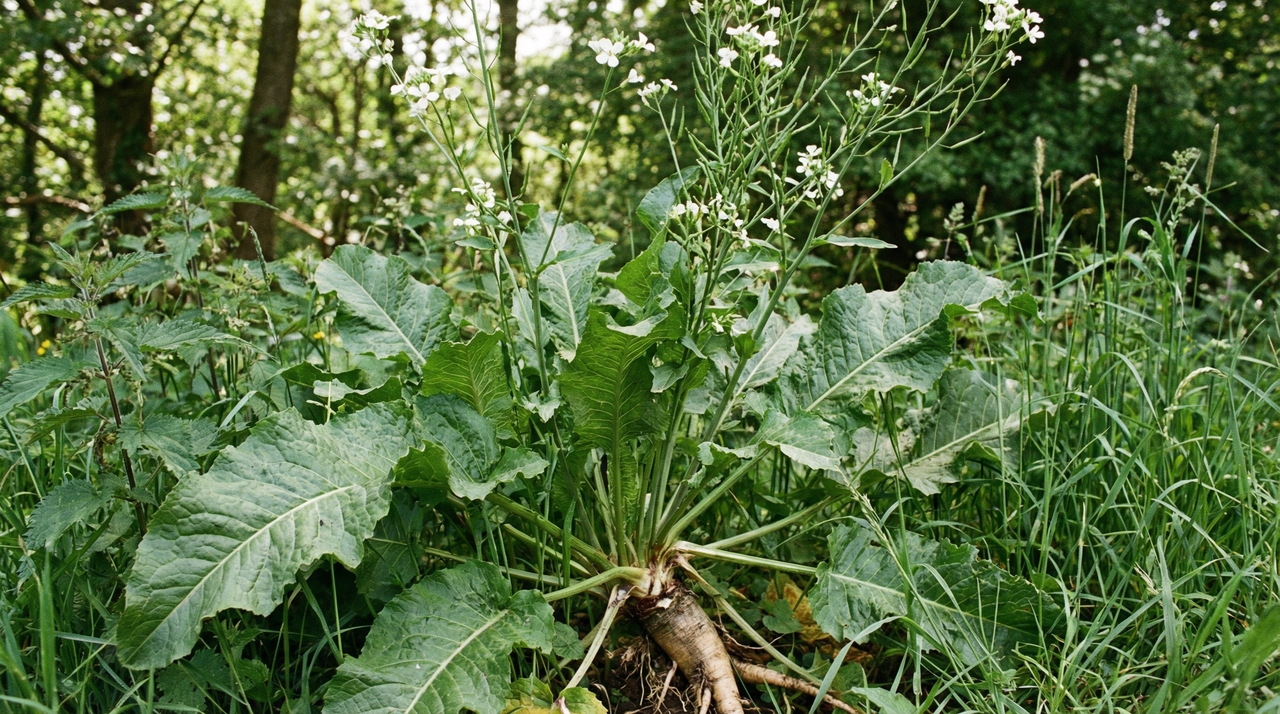
Most people who grow horseradish don't actually know what they're getting into until it's too late. I planted a single root cutting in the corner of a raised bed once, thought I was being clever about placement, and came back two seasons later to find it had tunneled under the cedar boards and set up roots in the neighboring strawberry patch. The thing is, I wasn't even surprised. Horseradish has been doing exactly this for centuries: arriving somewhere as a useful, invited guest and then quietly renegotiating the terms. It's one of the few plants I've grown that I'd describe as genuinely confident in itself.
What gets me, though, is how completely that reputation overshadows the more interesting story. Because the same chemistry that makes horseradish pungent enough to clear your sinuses from across the table, the glucosinolate system that fires up the moment you damage the root tissue, is also what makes this plant a legitimate powerhouse in a designed system. It repels certain pests, suppresses weeds through allelopathy, and pulls up minerals from deep in the subsoil that shallower plants can't reach. The flavor and the ecology run on the same engine. Once I understood that, I stopped fighting horseradish and started learning how to actually work with it.
Horseradish Origin, History, and Botany
Some plants are polite guests. Horseradish is not one of them. I have grown a lot of vigorous perennials over the years, and this one has more personality per square foot than almost anything else in my garden. Understanding where it comes from goes a long way toward understanding why it behaves the way it does.
Native Range and Early Cultivation
Horseradish (Armoracia rusticana) originated in the temperate, damp meadows and riverbanks of southeastern Europe and western Asia, particularly the Black Sea region encompassing southern Russia, Ukraine, and the Balkans, where annual rainfall runs 600-800 mm and the soils stay reliably moist.[1][2][3] Those cool, humid origins explain a lot about why it sulks in hot, dry summers. It's a hardy perennial in the Brassicaceae family, thriving across USDA zones 3-9 (best in 4-7) in moist, well-drained loamy soils at pH 6.0-7.5, with surprising adaptability from sea level up to 1,500 meters elevation.[4][2] Given the right conditions, it's a long-lived polycarpic perennial that can persist 10-20 years or more, becoming harvestable in its first or second year and flowering reliably from year two onward.[5][6]
Here's the thing that catches new growers off guard: horseradish reproduces almost entirely through its rhizomes and root fragments, with seed production being rare and unreliable.[7][8] Every tiny piece of root left in the ground becomes a new plant. It has naturalized widely across temperate North America and is commercially grown primarily in Illinois and Wisconsin, but in parts of North America and New Zealand it's outright considered invasive because of that aggressive rhizomatous spread.[2][7][9] I've seen it escape into neighboring beds when a harvest left even small root fragments behind. Now I grow mine in large bottomless containers sunk into the ground, and I'd recommend that approach to anyone in North America who doesn't want a permanent horseradish colony.
Traditional and Cultural Significance
Dioscorides and Pliny the Elder both documented horseradish in the first century AD, and it has been used for culinary and medicinal purposes since ancient Greek and Roman times, spreading through medieval Europe and arriving in North America with European settlers in the 17th century.[10][11] That's a long track record for a root that most people today only encounter as a condiment alongside prime rib.
In Jewish tradition, horseradish is the bitter herb (maror) of the Passover Seder, representing the bitterness of slavery in Egypt, and it carries symbolic weight around strength, perseverance, and protection in Eastern European folklore.[12][13] There's something fitting about that symbolism. Anyone who has grated a fresh root knows the plant doesn't offer its gifts gently. Across Europe, Persia, Turkey, and eventually among Native American groups, it was used as a digestive stimulant, diuretic, expectorant, respiratory remedy, and treatment for scurvy, with its vitamin C content earning genuine practical respect long before anyone had isolated a single compound.[14][15][16]
Physical Characteristics and Growth Habit
The wild horseradish plant grows as a coarse, bold perennial reaching 2-5 feet tall, with a basal rosette of enormous, broadly ovate, coarsely toothed leaves that can stretch 50-60 cm long, plus erect flowering stems bearing small white cruciform flowers in racemes.[4][2][17] In my garden the basal leaves reach dinner-plate size by midsummer of year one, and the plant looks almost stately. The first-year rosette peaks in summer, then yellows and dies back in autumn; flowering starts reliably in year two, with drought stress capable of reducing leaf size by 20-40%.[5][2] Below ground, a deep central taproot 12-24 inches long (sometimes reaching 3-5 feet in loose soil) serves as the primary storage organ, with root size varying by cultivar; commercial types like 'Maliner Kren' produce notably larger roots than older 'Common' or 'Bohemian' selections.[4][2][17][5] I learned the hard way to wait until year two to harvest; first-year roots are technically present, but they're thin and lack the energy the plant needs to establish itself properly.
Fascinating Facts About Horseradish
The chemistry behind where horseradish grows its reputation is genuinely elegant. When root tissue is damaged, a glucosinolate-myrosinase system kicks in, hydrolyzing sinigrin into allyl isothiocyanate (AITC), the compound responsible for the sinus-clearing blast of a freshly grated root.[18][19] The same mechanism drives allelopathy; the plant releases these compounds into the surrounding soil to suppress competing vegetation, and gardeners have long observed that aphids and carrot fly seem to give it a wide berth.[18][19] I occasionally tuck pieces of root into the compost, but I'm careful not to add large quantities since the effects of those allelopathic compounds on soil microbial communities are still being studied. Beyond the chemistry, the plant has genuine ornamental value; those bold, crinkled leaves earn it a place in the landscape even when you're not planning to eat it, and commercial propagation runs almost entirely on root cuttings planted in early spring rather than seed.[4][5] Respect its vigor and give it a firm boundary, and it will reward you for decades.
Horseradish Varieties and Sourcing
Notable Horseradish Cultivars
Here's the honest truth about horseradish variety shopping: you're not really choosing from a broad, actively bred catalog. Cultivated Armoracia rusticana shows remarkably low genetic diversity because almost everything grown commercially or in home gardens traces back to a small set of clonal European selections propagated vegetatively for centuries, with very little formal breeding work behind them.[2][20] The list is short for a reason. That said, the distinctions within it are real and worth understanding, because your decision basically comes down to one question: what problem are you trying to solve?
If you want the reliable workhorse, 'Common' (sometimes listed as Broadleaf or Maliner Kren) is what fills the commercial fields around Collinsville, Illinois. It's valued for vigorous growth and consistent root production, with medium-sized branched roots that process well.[21][22] If maximum heat is your goal, 'Poland' carries elevated glucosinolate levels and is considered one of the hottest selections available, used primarily for prepared condiments.[23] 'Bohemian' sits in a similar camp: large roots, strong pungency, and notably faster establishment than Common.[24][21] I've grown both Common and Bohemian side by side, and the Bohemian did establish faster with noticeably sharper flavor in year one, though it was more prone to bolting in year two. Worth knowing before you commit a whole bed to it.
'Saxon' is another high-pungency selection worth considering,[24] while 'Hoffmann's' is the pick for heavier clay soils or gardens with disease pressure, given its noted resistance.[24] For straight-rooted types, 'Oxford' yields impressively uniform roots that can reach up to 2 kg per plant under good conditions[23] and 'Oregon' is adapted to cooler, wetter climates in zones 4-8, producing long straight roots favored for export.[23] I find the straight-rooted selections considerably easier to grate cleanly in the kitchen, which matters more than you'd think at 11pm when you're prepping for a dinner party. Among newer releases, 'Cushing' matures earlier at 10 to 12 months and performs well in Midwestern trials, while 'Big Top' brings improved root size and disease resistance; the RHS recommends 'Maggie's' for home gardens in the UK.[25][22][26]
Whatever you choose, go in with eyes open about containment. Horseradish is hardy across USDA zones 3 to 9 and its rhizomatous growth is genuinely aggressive; it's listed as a noxious weed in some states.[27][2][28] I have personally spent an entire afternoon excavating a rogue patch that crept under a raised-bed wall into a neighboring bed. Deep edging, root barrier, or dedicated container growing are not overcautions. They are the price of admission for whichever clone you plant.
Where to Buy Horseradish Plants and Roots
Seed packets of horseradish exist, but don't bother. Seeds have low viability and won't produce true-to-type plants, so root divisions and crowns are the only practical route to a named cultivar.[21][4] Reliable US suppliers include Johnny's Selected Seeds, Burpee, High Mowing Organic Seeds, Park Seed, Southern Exposure Seed Exchange, and Baker Creek Heirloom Seeds; expect to pay roughly $5 to $15 for small root pieces, $20 to $40 for larger crowns, and $10 to $25 for young plants.
The most important purchasing decision, though, is sourcing certified clean stock. After losing an entire bed to Verticillium in an early planting, I now buy only from suppliers offering tissue-culture or National Clean Plant Network-affiliated stock. Fusarium and Verticillium both move in on contaminated root material, and once you've got them in your soil, they linger for years.[29][21][30] Nurseries affiliated with USDA or state extension programs are your safest bet. If you're importing stock from outside the US, USDA APHIS permits and phytosanitary certificates are required, and state-level restrictions may apply given the plant's invasive status in some regions.[31][21] Label every root division the day it arrives. One unlabeled bag of cuttings and you lose track of what you planted faster than you'd think.
How to Propagate and Plant Horseradish
After my first attempt at growing horseradish from seed, I learned quickly why almost nobody does it that way twice. The plants that actually germinated were weak, variable, and delivered nothing close to the heat I expected. The issue is biological: horseradish seeds don't breed true because of high genetic heterozygosity and a sporophytic self-incompatibility system that guarantees variable offspring.[5][32][33] Germination from fresh seed can hit 80-90%, but viability drops fast, and even healthy seedlings take 2-3 years to produce a harvestable root while yielding inconsistent pungency and disease resistance throughout.[5][34] Now I save pencil-thick root pieces from the fall harvest and replant them every spring. It's the simplest propagation I do all season.
Choosing the Right Propagation Method
Root cuttings are what you want. Select pieces that are 4-6 inches long and roughly half to one inch in diameter, with at least one visible bud or eye, and plant them horizontally about 2-3 inches deep with the bud end facing up.[5][35][36] No rooting hormone needed. Under good conditions, shoots emerge within 2-4 weeks and success rates run 80-90%.[5][36] Plant during the dormant season, from fall through early spring, and you're working with the plant's natural rhythm rather than against it.
Crown division is a solid alternative when you're dividing an established clump at transplanting time in spring or fall; just separate offsets cleanly from the main crown and treat them like root cuttings from that point on.[37][4] Commercial operations sometimes use tissue culture for certified disease-free stock, but that's not something a home grower needs to worry about.[32] For anyone curious about seed, the few conditions where it's relevant are breeding programs; stored properly at 0-5°C with low moisture content in airtight containers, seeds remain viable for 2-5 years,[34] but that's academic knowledge for most of us reaching for last year's roots.
Soil, Site Selection, and Planting Technique
I learned the hard way that shallow tillage produces forked, gnarled roots that are almost impossible to grate cleanly. Horseradish needs deep, loose, fertile loam worked to at least 24 inches, and it rewards that effort with long, straight, harvestable roots.[5][35][38] Think of it the same way you'd prepare a bed for carrots or parsnips: drainage and depth are everything. Incorporate 2-4 inches of compost or well-rotted manure before planting,[35] and if you have a gentle slope of 2-5%, that's actually ideal for moving water away from the crown without letting the roots dry out.[38]
Get a soil test before you plant. The target pH range is 6.0-7.5, with the sweet spot sitting between 6.2 and 7.0.[5][35] Drop below 6.0 and you risk nutrient lockout; push above 7.5 and iron chlorosis becomes a real problem.[5][38] Use lime to raise pH or elemental sulfur to bring it down, and do that work in the fall before a spring planting if you can. The plant wants full sun, at least 6-8 hours daily, for the best root development, though it'll tolerate partial shade.[5][2] During establishment, aim for consistent moisture around 1 inch per week without letting the soil sit waterlogged.[7]
Spacing, Timeline, and Establishment Tips
Space root cuttings 18-24 inches apart within rows, with rows 30-36 inches apart.[5][35] Mature plants reach 2-3 feet tall and can spread 18-36 inches wide, and they don't stop there. I've watched horseradish escape from a neighbor's bed and colonize 10 feet of a garden path in two seasons. The rhizomes are relentless. I now either install a root barrier at least 12-18 inches deep around any new planting or grow it in a large bottomless container sunk into the ground.[4] Getting containment right at planting time is far less work than trying to reclaim a bed that horseradish has decided belongs to it.
On timeline: be patient. The first year is mostly foliage and the beginnings of a root system, which is perfectly normal. Year two is when things get real. That vigorous spring flush of big, bold leaves in the second season is your signal that the roots below are finally worth digging.[5][38][35] It's the same rhythm I've noticed with salsify and parsnips: cool-season perennial roots need that full growing cycle to build the depth and girth that make harvest worthwhile. Plant it right, contain it early, and let it do its thing.
Horseradish Care Guide
Horseradish is one of those plants that will grow whether you pay attention to it or not, but the quality of the roots you pull from that scraggly, neglected patch and the roots you pull from a well-managed one are night and day. Give it consistently moist, fertile, well-drained soil and cool temperatures, and it delivers crisp, fiercely pungent roots season after season. Push any single factor too far, and you'll know it.
Watering and Soil Moisture Needs
Consistent moisture is the foundation of everything with horseradish. The goal is soil that stays evenly moist without ever sitting waterlogged, because deep, steady moisture drives the taproot down and keeps it plump.[39][40] A first-year plant wants more frequent, moderate watering to get established; a three-year clump with deep roots can handle waiting until the top two to three inches of soil are dry before you water again.[40][5]
During active spring and summer growth, aim for about an inch of water per week. Come late summer and fall when the roots are actively bulking, bump that up to one and a half to two inches weekly.[5][20] Horseradish tolerates a short dry stretch of seven to fourteen days without major damage, but prolonged drought beyond ten days will cost you root size and quality.[41] A two- to three-inch layer of organic mulch does a lot of the work here, moderating soil temperature and slowing surface evaporation so you're not playing catch-up every hot afternoon.[5]
Sunlight Requirements
Horseradish wants six to eight hours of full sun for the best root production.[26] In cooler zones that's straightforward. In hotter climates, afternoon shade becomes genuinely useful, because leaf scorch and wilting in full summer sun isn't just cosmetic; it signals that the plant is under stress and directing energy away from root development. I've seen the same look on my basil in those conditions, that sudden midday droop that recovers by evening but quietly costs you productivity. For southern growers, siting horseradish on the east side of a tall crop or a fence gives it morning sun and afternoon relief without any special infrastructure.
Feeding and Soil Fertility
Horseradish is a heavy feeder, and the time to start feeding it is before you plant.[42] Working two to four inches of compost or well-rotted manure into the bed gives the roots the organic-rich, deeply loose soil they need to push straight down rather than forking around compaction.[43] Target a pH of 6.5 to 7.0; outside that window, nutrient availability starts to slip even if your fertilizer is perfectly applied.[44][45]
A balanced 10-10-10 fertilizer at one to two pounds per hundred square feet at planting or in early spring is a reliable starting point.[42][35] The trap most home gardeners fall into is overloading nitrogen, which produces lush, impressive foliage but soft, pithy roots with muted pungency. I know because I made that mistake in my early years and ended up with roots that had a woody, almost fibrous texture instead of the crisp, fiery snap I was expecting. Once I switched to modest, balanced feeding and started doing a soil test every two to three years, the difference in root quality was immediate.[45] Phosphorus matters most for root development, and potassium improves storage quality and size[46]; after years of growing root crops, I now add bone meal or rock phosphate to the pre-plant mix as a matter of habit and consistently pull thicker, smoother roots for it.
Frost Tolerance and Winter Protection
Few edible perennials are as cold-hardy as horseradish. Mature roots survive temperatures down to -30°F to -40°F, and the plant is reliably hardy across USDA zones 3 to 9.[5][47] Leaves are the vulnerable part; the roots themselves shrug off hard freezes and send up fresh growth in spring with little encouragement.[48] I actually leave the dead foliage in place after a hard freeze rather than cutting it back immediately, because it acts as a light natural mulch over the crown until I clean up in early spring. In zones 3 to 6, lay four to six inches of organic mulch after the ground freezes to prevent heaving; zones 7 to 9 only need light coverage.[5] There's also a real flavor bonus here: moderate frost exposure increases glucosinolate concentration in the roots, which means a little cold stress translates directly to more pungency at harvest.[5]
Heat Tolerance and Summer Management
Horseradish grows best between 45°F and 75°F and is rated for AHS Heat Zones 1 to 7.[49][5] Above 86°F, you'll see leaf scorch, wilting, and reduced photosynthesis, and the roots that follow are smaller and lower quality. The plant does produce more glucosinolates under heat stress as a protective response, but that doesn't translate to better-tasting roots overall.[49]
Where summers reliably push past that threshold, the practical toolkit includes 30 to 50 percent shade cloth during peak heat, two to four inches of mulch, and consistent deep irrigation.[5][21] I've never needed shade cloth myself because my patch sits in a spot with morning sun and afternoon dappled shade from a mature pear tree, and that microclimate alone keeps it happy through summer. If your summers are consistently and intensely hot, some Eastern European cultivars show modestly better heat tolerance and may be worth seeking out.[50]
Pruning, Maintenance, and Seasonal Rhythm
There's no formal pruning schedule with horseradish, which surprises a lot of new growers who expect a more demanding perennial.[5] What actually matters is staying on top of two things: keeping excessive foliage from shading out companions or signaling to the plant that it should prioritize top growth over roots, and dividing the clump every three to four years to maintain vigor and keep the planting from collapsing in on itself.[35]
Horseradish can persist for ten to twenty years or more as a polycarpic perennial, flowering each season from year two onward and spreading steadily by rhizome.[5] That longevity is genuinely useful in a permaculture guild, but it demands respect. I learned the hard way one season when a clump escaped into a neighboring bed; a single rhizome fragment left in the ground after I thought I'd dug it out came back and colonized the area the following spring. The containment strategy you put in place at planting isn't just a nice idea; it's the reason your guild stays a guild instead of a horseradish monoculture.
Harvesting Horseradish for Peak Flavor and Pungency
There is a moment every fall when I walk out to the horseradish bed after the first hard frost, fork in hand, and I already know the roots waiting underground are better than anything I could have dug in August. That sinus-clearing, eye-watering rush when I grate a late-fall root is a completely different experience from a summer-dug one, and the difference is real chemistry, not imagination.
When to Harvest Horseradish Roots
Patience is the main ingredient here. Root cuttings planted in spring won't deliver a proper harvest until their second fall, typically 12 to 18 months after planting.[51][35] Watch for the leaves to yellow and begin dying back, and let the first frost do its work before you reach for the fork. That cold exposure concentrates the essential oils responsible for pungency, and roots harvested at 1 to 2 inches in diameter or larger deliver serious heat.[26][52] I've observed this in my own patch year after year: roots pulled before frost are noticeably milder. The October to November window across zones 3 through 9 is your sweet spot.[5]
How to Harvest Horseradish Without Damaging Roots
I learned the hard way that simply grabbing the crown and pulling is a fast way to end up with a fistful of leaves and a broken stub still buried two feet down. Horseradish roots are brittle, and any fragment left in the soil will overwinter and regrow, which is either a bonus or a headache depending on your containment strategy. Start by probing around the plant with a garden fork, feeling for where the soil grips the root, then work the fork in deep and lever gently upward to lift the whole mass.[5][53] Go slow. A clean, unbruised root stores far better and grates cleaner than one you've wrestled out of the ground.
Flavor, Yield, and Storage of Fresh Horseradish
The thick taproot is what you're after, and the chemistry behind its heat is worth understanding. When you cut or grate the root, myrosinase enzymes contact glucosinolates and hydrolyze them into allyl isothiocyanate, the compound behind that sharp, sulfurous, mustard-like aroma and the lingering sinus burn that follows.[54][55] A root I'd compare to a crisp, fibrous carrot in texture becomes something genuinely aggressive the moment a grater touches it. Roots at the 1.5-inch diameter sweet spot snap cleanly and deliver that intensity; over-mature woody specimens can be stringy and harder to work with.
As a secondary bonus, the leaves are edible throughout the growing season, lending a milder horseradish flavor to salads or as a wrap.[56] They'll never replace the root, but it's a satisfying harvest while you wait out that second year.
For storage, keep unwashed roots at 0 to 4°C, either in the refrigerator or a cool root cellar, ideally wrapped in slightly damp paper or packed in damp sand.[57] Harvest timing, root maturity, and your soil conditions all shape the final glucosinolate levels, so a well-timed late-fall dig from a deep, loamy bed will always outperform a hurried early harvest in heavy clay.[54] Set aside a few pencil-thick lateral roots to replant immediately; the rest go into storage or straight to the grater.
Horseradish Preparation and Uses
Culinary Uses and Flavor Profile
The thick taproot is where the action is. Grated and stirred into vinegar, it becomes the pungent condiment that German, Polish, and medieval European cooks built entire sauce traditions around, pairing it with fatty meats and rich sausages to cut through the heaviness.[4][2] What makes horseradish so singular is the chemistry behind that heat: the root is innocuous until you cut or bruise it, at which point glucosinolates meet myrosinase enzymes and release allyl isothiocyanate, the volatile compound responsible for that sinus-clearing blast and mustard-like aroma.[58] There's an initial sweetness, then the biting heat arrives, then it fades faster than you expect. Fresh preparations maximize that whole sequence; storage and cooking let the volatile compounds evaporate or oxidize, mellowing the punch considerably.[58][59]
I learned to grate horseradish outdoors after one ill-advised indoor session that had me crying at the kitchen counter within thirty seconds. The volatile oils are no joke.[5] My go-to prepared horseradish sauce recipe is simple: freshly grated root, apple-cider vinegar, and a pinch of salt, stirred together and refrigerated. The vinegar stops enzymatic activity and locks in the heat at whatever level you prefer; add it quickly for maximum fire, wait a few minutes for something milder. Pickled horseradish follows the same logic, submerging grated root in an acidic brine to preserve flavor while taming the rawness.[60] Roasting or folding it into a cooked cream sauce softens the edge further into something more subtle.[5] Fermentation takes it somewhere else entirely, building complexity in exchange for some of the sharpness.
The leaves and flowers do have supporting roles in the kitchen. I harvest only the youngest inner leaves for salads because the older ones get too fibrous and pungent to enjoy raw. Even the young ones can irritate sensitive skin and sinuses given their mustard-oil content, so I mention that to anyone I hand them to.[2] The flowers make a pretty, mildly spicy garnish. Seeds, though, aren't on the menu and can be toxic in quantity, so leave those alone.
Traditional Medicinal Preparations
The same pungency that makes horseradish so useful in the kitchen drove centuries of European folk medicine. Traditional healers reached for it consistently for respiratory complaints, using grated root mixed with honey as a cough syrup for bronchitis, sinusitis, and colds, a preparation that makes intuitive sense given what we now know about allyl isothiocyanate's expectorant and antimicrobial properties.[61][62] Anti-inflammatory poultices made from the root were applied to sore joints and muscles for rheumatism and arthritis, while teas from the leaves served as mild diuretics and digestive aids.[61][12]
Pharmacopoeial guidance suggests tinctures at 2 to 5 mL up to three times daily, or an infusion of 1 to 2 grams of dried root per cup of water, up to three cups daily.[63] I respect these traditional applications, but I'm also honest that the clinical evidence for many of them is thin. These are folk practices with long cultural roots, not validated therapeutic protocols, and I always recommend consulting a qualified practitioner before using horseradish medicinally.
Non-Food and Garden Uses
In a regenerative garden, horseradish earns its keep beyond the condiment jar. I chop roots and leaves into my compost piles and have consistently noticed faster heat-up in those batches, which lines up with the plant's reputation as a compost activator given its high mineral content and antimicrobial compounds.[64] That said, I add it in moderation rather than overwhelming the pile.
On sustainability: always source from nurseries or established cultivated stock rather than wild-dug plants. Wild populations can suffer localized depletion from overharvesting, and cultivated horseradish is readily available and far more reliable anyway.[64][65] The same vigorous rhizomes that make horseradish a genuinely useful dynamic accumulator and garden companion can push it into disturbed soils and outcompete native plants if it escapes cultivation. That isn't a reason to avoid growing it, but it is a reason to be intentional about where it goes and to harvest regularly so it stays where you want it.
Horseradish Health Benefits and Medicinal Uses
That eye-watering punch you get the moment you grate a fresh horseradish root isn't just flavor. It's chemistry in action, and the same reaction that clears your sinuses in seconds is responsible for nearly every meaningful health property this plant has to offer. Understanding the mechanism makes the rest of it click.
Key Phytochemicals in Horseradish: Glucosinolates, Allyl Isothiocyanate, and Phenolics
Glucosinolates are horseradish's primary bioactive secondary metabolites, and sinigrin dominates the profile, making up 70-90% of total glucosinolates in the root at concentrations of roughly 50-150 mg per gram dry weight.[66][67][68] Sinigrin itself is fairly inert until you damage the plant tissue. That's when the enzyme myrosinase, stored separately in specialized cells, comes into contact with sinigrin and hydrolyzes it into allyl isothiocyanate (AITC), the volatile compound responsible for that sinus-clearing blast and, it turns out, most of horseradish's pharmacological activity.[69][70] It's an elegant ecological defense system, essentially a mustard bomb the plant detonates when attacked, one that we happen to co-opt beautifully in the kitchen and the medicine cabinet.[71]
The supporting cast matters too. Horseradish roots contain significant phenolic acids (ferulic, sinapic, p-coumaric) and flavonoids (quercetin, kaempferol, rutin) with total phenolic content running 10-20 mg/g dry weight, contributing meaningfully to overall antioxidant activity.[72][73] Minor metabolites including saponins, tannins, and the coumarin scopoletin round out the profile.[71]
One thing I've noticed growing my own is that freshly grated roots from my garden are noticeably more pungent than anything from the grocery store. That tracks with the research: cultivar, growth stage, and environmental conditions all influence glucosinolate levels significantly, with stress conditions and cooler soil temperatures (around 15-20°C) potentially pushing concentrations 20-50% higher, and the 'Bohemian' type tends to run hotter than 'Saxon.'[67][74] Leaves are higher in flavonoids while the root wins for sinigrin concentration, so how and where you harvest shapes what you actually get.[75]
Pharmacological Research and Traditional Medicinal Applications
European folk medicine used horseradish for centuries to treat bronchitis, sinusitis, urinary tract infections, and inflammatory conditions. The clinical evidence base for those uses is honestly limited, with most support coming from in-vitro studies, animal models, and small human trials rather than large randomized controlled trials.[76][77] That said, the preclinical data is robust, and the consistent alignment between traditional use and mechanistic research gives me real confidence that this isn't folklore without foundation. When I use it in fire cider every fall, I'm not just following a tradition; I'm working with a plant whose chemistry we increasingly understand.
AITC is the workhorse here. It delivers anti-inflammatory effects by inhibiting the NF-κB signaling pathway and downregulating pro-inflammatory cytokines including TNF-α and IL-6, activates the antioxidant Nrf2 pathway, and disrupts bacterial membranes effectively against E. coli, S. aureus, and Salmonella.[78][79][80][81] Preclinical studies also document mucolytic and expectorant effects (quantified as a 20-30% increase in urine output in rat models), analgesic action via TRPA1 receptor engagement, potential ACE inhibitory activity relevant to blood pressure, and topical wound-healing acceleration.[82][83][84][85] And on the anticancer side, AITC has shown the ability to induce apoptosis in colon and bladder cancer cell lines via caspase and mitochondrial pathways and to modulate phase II detoxification enzymes, though this remains firmly in preclinical territory.[86][87]
Nutritional Profile of Horseradish
The health benefits of eating horseradish extend beyond its medicinal chemistry into a genuinely solid everyday nutrition profile. Per 100g of raw root, you get 24.9 mg of vitamin C (28% DV), 246 mg potassium, 57 µg folate (14% DV), 56 mg calcium, 31 mg phosphorus, 23 mg magnesium, and a surprisingly decent 2.7 µg selenium for a root vegetable.[88][89] Iron, zinc, and B vitamins (thiamin, riboflavin) contribute to energy metabolism and DNA synthesis, all while sodium stays negligible at 7 mg.[88] Those values are for raw unprepared root; cooking degrades the vitamin C significantly,[90] which is another reason I almost always use mine fresh-grated rather than cooked down into something.
Safety Considerations and Contraindications
For most adults using horseradish as a condiment, the safety picture is reassuring. The FDA classifies it as Generally Recognized as Safe (GRAS) at typical culinary amounts up to 10-20g per serving, and moderate use carries low toxicity risk.[91] Push past 100g daily, though, and the GI system tends to object loudly: nausea, vomiting, diarrhea, and abdominal pain are documented at excessive intakes.[92] The root is the safe culinary part; leaves, stems, and sap carry higher concentrations of AITC and sinigrin, and direct contact or inhalation can cause allergic contact dermatitis, blistering, or asthma-like respiratory symptoms in sensitized individuals.[93][94]
A few populations need real caution. Horseradish contains goitrogens that can interfere with iodine uptake and thyroid function, and if you have hypothyroidism or take levothyroxine, I keep it to occasional culinary amounts rather than daily medicinal doses because the goitrogenic effect is real even at normal levels.[92][95] Large amounts are contraindicated during pregnancy due to potential uterine stimulation, and mustard oils can pass into breast milk during nursing.[96] Cross-reactivity with other Brassicaceae (mustard, in particular) is worth knowing if you have those allergies.[97] Medicinal doses typically run 2-6g fresh root daily standardized to 0.5-1% isothiocyanates, and glucosinolate levels shift meaningfully with soil pH, growth stage, and nitrogen availability, so potency isn't static.[96][98]
Finally, if you're foraging rather than growing your own, correct identification is non-negotiable. The coarse, heart-shaped, deeply toothed basal leaves and the unmistakable sharp aroma when you scratch the root are what I rely on to distinguish horseradish from toxic look-alikes like poison hemlock and wild parsnip. No other plant in my experience smells quite like that when you nick the skin.[99] If the root doesn't make your eyes water on the spot, put it down and look again.
Horseradish Pests and Diseases
Horseradish earns a reputation as a tough, self-sufficient plant, and its glucosinolate chemistry genuinely backs that up. When leaf tissue is damaged, sinigrin and related compounds hydrolyze into allyl isothiocyanates with real insecticidal and deterrent properties, which is why crushing a horseradish leaf in the garden releases that sharp, pungent burst almost instantly. That chemical armor, combined with some physical defense from leaf pubescence, puts horseradish toward the resilient end of the Brassicaceae spectrum.[100][101] But "resilient" is not the same as bulletproof, and I'd rather tell you that plainly now than have you discover it the hard way mid-season.
Common Pests of Horseradish
Flea beetles are the pest I scout for first, every single time. I've watched Phyllotreta flea beetles turn a new planting into lace in under a week during a warm spring, and that experience permanently changed how I manage establishment. Row covers go on immediately after transplanting now, before I see a single beetle, not after.[102] Beyond flea beetles, the pest list is longer than most gardeners expect: diamondback moth larvae, aphids, leaf miners, cabbage root fly maggots, cutworms, cabbage loopers, imported cabbageworms, and root lesion nematodes can all find their way to horseradish given the right conditions.[102][103] Root maggot damage looks exactly like what you'd expect from broccoli or cabbage beds: tunneled, unmarketable roots that rot fast in storage.
The management framework that actually works over the long term is IPM, and for a perennial root crop that may sit in the same ground for years, that matters more here than in most annual vegetable beds.[104] Cultural controls lead because they address root causes rather than symptoms: rotating to non-Brassicaceae hosts every three to four years, planting certified clean rootstock, maintaining adequate spacing, and pulling plant debris at season's end removes the conditions pests need to thrive.[105] From there, biological options (Bacillus thuringiensis for caterpillars, beneficial nematodes for root pests) fill the gap before you reach for anything synthetic.[106] Targeted insecticides like spinosad or neem oil stay on the shelf unless scouting confirms thresholds are actually exceeded.[107] Pressure is generally heavier in humid Midwest and Northeast growing regions, and susceptibility does vary by cultivar and season.[107]
Major Diseases and Their Management
On the disease side, clubroot (Plasmodiophora brassicae) and white rust (Albugo candida) are the threats I take most seriously, and both deserve that respect. Clubroot is particularly unforgiving because once the pathogen establishes in a soil it can persist for years, waiting for the next susceptible host. That's why I'm fanatical about planting certified disease-free stock and holding to long rotations even in small gardens where shortcuts are tempting.[108][109] Verticillium wilt and bacterial leaf spot (Xanthomonas campestris pv. armoraciae) sit at moderate risk, while the fungal roster extends further to Rhizoctonia root rot, Alternaria leaf spot, downy mildew, Fusarium root rot, and Phytophthora root rot, with Alternaria and downy mildew flaring hardest in warm, humid stretches.[108][110]
Good drainage is the single most effective disease prevention tool available, because Phytophthora, Fusarium, and Rhizoctonia all exploit waterlogged roots. Well-drained loamy soil at pH 6.0-7.5 and temperatures between 50-75°F genuinely suppresses the conditions these pathogens need.[111] Beyond site selection, the disease management toolkit mirrors the pest side: three-to-four year rotation with non-hosts, sanitation through debris removal, and clean starting stock are non-negotiable foundations.[112] Cultivar choice matters more than most gardeners realize. 'Maliner Kren' carries meaningful tolerance to both clubroot and Verticillium, 'Bohemian' shows moderate white rust resistance, and 'Sasquatch' offers broader multi-disease tolerance, though none of them eliminate the need for vigilance.[21][113] Copper-based bactericides and fungicides like mancozeb or azoxystrobin remain available when disease pressure overwhelms cultural controls, but they're a supplement, never a substitute for the site and rotation decisions made at planting time.[114][115]
Horseradish in Permaculture Design
Horseradish is one of those plants that rewards you generously for understanding what it actually is before you put it in the ground. It's a long-lived herbaceous perennial in the Brassicaceae family, native to the damp riverbanks and meadows of southeastern Europe, and it carries that riparian vigor with it wherever it lands. The same deep roots and pungent glucosinolate chemistry that made it a useful hedgerow plant for centuries translate directly into ecosystem services in a modern permaculture system. The trick is knowing how to capture those services without letting the plant rewrite your entire garden design in the process.
Climate Adaptability and Hardiness Zones
Few perennial food plants match horseradish for cold hardiness. It's rated for USDA zones 3 through 9, tolerating winter lows down to -30°F to -40°F with proper mulching.[2][5][35] That range is broad, but the plant genuinely performs best in zones 4 through 7, where temperatures sit between 50°F and 65°F for much of the growing season. Root development suffers above 75°F, and prolonged heat over 85°F causes real stress.[5][116] The Northeast, Midwest, and Pacific Northwest are where this plant is most at home in North America, and that's not a coincidence given that its native Köppen range spans temperate oceanic and humid continental climates.[2][26]
In zones 8 and 9, horseradish can still be grown, but the placement decision matters more. I've had success in warmer edges of its range by siting plants on the north side of taller perennials, letting afternoon shade do the work that cooler temperatures can't. Supplemental mulch and consistent moisture are non-negotiable in those conditions.[5][117] The plant wants 25 to 40 inches of annual precipitation or equivalent irrigation, moist but well-drained soil, and a pH between 6.0 and 7.5. In the humid Southeast, poor drainage tips quickly into root rot; in arid regions, drought stress and bolting become the problem instead.[35][118] Climate drives placement, and placement drives how much management you'll need down the road.
Ecological Functions and Guild Roles
The glucosinolates that give horseradish its signature heat are the same compounds that make it ecologically interesting. As those compounds break down in the soil, they act as a natural biofumigant, suppressing soil-borne pathogens and inhibiting weed germination through allelopathic chemistry.[119][120] Think of it as a slow-release soil amendment with attitude.
Below ground, the taproot can reach one to two meters deep, and that's where the dynamic accumulator story really starts.[2] I often compare horseradish to comfrey in this regard: both mine the subsoil for nutrients that shallower-rooted plants can't access, and both cycle those minerals back to the surface through leaf drop and decomposition. Horseradish pulls up nitrogen, sulfur, and potassium, improves aeration, and stabilizes soil on slopes where erosion would otherwise be a problem.[121][122] Comfrey gets more press in permaculture circles, but horseradish earns the same respect once you see what its root architecture actually does to a compacted bed.
The small white flowers it produces in late spring offer a pollinator bonus that gardeners often overlook. Honeybees, bumblebees, and solitary bees work them reliably, along with hoverflies and the occasional butterfly.[2][123] I've watched my local bees light up those flower racemes every spring, and it's a reliable early-season resource when not everything else is blooming yet. The flowers are self-incompatible, so seed set in cultivation is low and inconsistent, which is why virtually all propagation happens through root cuttings rather than seed.[124][125]
On the pest-deterrence side, intercropping horseradish near brassicas, strawberries, and apples can reduce cabbage root maggot pressure by up to 50%, while also discouraging aphids, potato beetles, and nematodes.[58][36] I've noticed fewer flea-beetle issues on brassicas growing near an established horseradish patch, though I'll admit I'm working with garden observation rather than a controlled trial. The practical upside is real. That said, the same rhizomatous vigor that makes it valuable means unchecked plants can spread aggressively through disturbed areas and forest edges, forming dense monocultures that crowd out everything else.[2][126] Early in my design work, I let a horseradish patch expand unchecked for two seasons. The time I spent digging out volunteers the third year convinced me to install root barriers on day one. Root barriers, isolated beds, or planned division every three to four years aren't optional maintenance; they're the price of admission for keeping this plant as a collaborator rather than a problem.[127]
Forest Layer Placement and Companion Planting
In a food forest, horseradish belongs in the herbaceous perennial layer. It reaches 60 to 150 cm in height, with large, coarse, dark-green basal leaves that cast meaningful shade and a thick rhizomatous taproot that anchors it firmly in place.[2][128][129] Its native habitat along stream banks and meadow edges tells you exactly what kind of niche it wants to fill: the productive, slightly wild margin between cultivated beds and the wilder parts of a system.
Classic horseradish companion plant combinations center on apples, berries, and brassicas, where its pest-deterring chemistry and deep nutrient mining provide indirect benefits across the guild.[122][36] Its deep roots improve soil structure, aeration, and water infiltration in ways that benefit nearby nitrogen-fixers even without forming direct symbiotic relationships. Worth noting on that point: horseradish, like other Brassicaceae, does not form mycorrhizal associations, so it's working as a mechanical and chemical contributor to soil health rather than a fungal network participant.[130]
The practical design implication is to give it a defined edge. Spacing of two to three feet from primary companions, combined with a root barrier or a dedicated raised bed, lets you capture what a good horseradish companion plant can offer without surrendering the surrounding design to it. The plants that ask the most of you in terms of management tend to be the ones offering the most in return, and horseradish fits that pattern squarely. Respect its vigor, give it clear boundaries, and it will do real work in your system for decades.
The Root I've Never Once Regretted Planting
I still remember the first time I grated fresh horseradish straight from the ground, eyes streaming before I even finished the pile, wondering why anyone would bother with a jar from the grocery store again. That was twenty years ago, and I haven't since. It's a demanding plant, yes; it'll wander if you let it, and it doesn't forget a moment of neglect. But every autumn when I dig those roots, I'm reminded that some plants earn their keep so completely you stop questioning whether they belong.
Sources 130
- Horseradish (Armoracia rusticana) ↩
- Armoracia rusticana ↩
- Armoracia rusticana ↩
- Horseradish (Armoracia rusticana) ↩
- Growing Horseradish - University of Minnesota Extension ↩
- Horseradish: Botany, Horticulture, and Industrial Uses ↩
- Horseradish Production ↩
- Armoracia rusticana (Horseradish) ↩
- Horseradish: An Invasive Species in New Zealand ↩
- Horseradish: A Neglected Medical Plant with Potential ↩
- Horseradish in Medieval Medicine ↩
- Folklore and Medicinal Uses of Horseradish ↩
- Cultural Role of Horseradish in Jewish Tradition - My Jewish Learning ↩
- Horseradish (Armoracia rusticana) - Traditional Uses and Phytochemistry ↩
- Russian Folk Medicine: Use of Armoracia rusticana ↩
- Ethnobotany of Horseradish (Armoracia rusticana) ↩
- Horseradish (Armoracia rusticana) - RHS Gardening ↩
- Glucosinolates in horseradish (Armoracia rusticana) leaves and roots ↩
- The Glucosinolate-Myrosinase System in Defense in Brassicaceae ↩
- Horseradish Production in the United States ↩
- Commercial Horseradish Production - Illinois Extension ↩
- Horseradish Production and Management - University of Illinois Extension ↩
- Cultivars of Horseradish ↩
- Horseradish Varieties - University of Wisconsin Extension ↩
- Horseradish: Planting, Growing, and Harvesting ↩
- Royal Horticultural Society - Horseradish Growing Guide ↩
- Horseradish - Wikipedia ↩
- Invasive Plant Atlas - Armoracia rusticana ↩
- USDA Clean Plant Program ↩
- Diseases of Horseradish ↩
- Plants for Planting Manual ↩
- Horseradish Production ↩
- Self-Incompatibility in the Brassicaceae ↩
- Seed Storage of Horseradish (Armoracia rusticana) ↩
- Horseradish Production ↩
- Propagating Horseradish from Root Cuttings ↩
- Horseradish Production ↩
- Horseradish Production ↩
- Missouri Botanical Garden Plant Finder: Armoracia rusticana ↩
- Penn State Extension: Growing Horseradish ↩
- University of Wisconsin Extension: Horseradish Production Guide ↩
- Horseradish Production Guide ↩
- Growing Horseradish in the Home Garden ↩
- Horseradish Production Guide ↩
- Horseradish Production ↩
- Fertilizer Needs for Root Vegetables ↩
- Armoracia rusticana ↩
- Horseradish ↩
- Physiological Responses of Horseradish (Armoracia rusticana) to Heat Stress ↩
- Thermotolerance in Eastern European Cultivars of Armoracia rusticana ↩
- Growing Horseradish in the Home Garden ↩
- Influence of Harvest Time on Horseradish Pungency ↩
- Horseradish: The Ultimate Guide to Growing and Harvesting ↩
- Glucosinolates in Horseradish: Biosynthesis and Flavor Impact ↩
- Volatile Compounds in Horseradish (Armoracia rusticana) Roots ↩
- Edible Parts of Horseradish Plant ↩
- Post-Harvest Storage Effects on Root Vegetables Flavor ↩
- USDA Agricultural Research Service - Horseradish Flavor Analysis ↩
- Horseradish Production and Processing ↩
- USDA Food Safety Guidelines for Pickling Vegetables ↩
- Horseradish: A Review of Its Medicinal Uses ↩
- Horseradish (Armoracia rusticana) - Traditional Uses and Pharmacology ↩
- European Pharmacopoeia - Herbal Monographs ↩
- Sustainability of Wild-Harvested Herbs ↩
- Invasive Plants in North America ↩
- Phytochemical Profile of Horseradish (Armoracia rusticana) Roots ↩
- Glucosinolates in Horseradish Roots and Leaves ↩
- Glucosinolates in Brassicaceae: A Review ↩
- Glucosinolates and Isothiocyanates in Horseradish: Biosynthesis and Bioactivity ↩
- Phytochemical Composition and Health Benefits of Horseradish (Armoracia rusticana) ↩
- Secondary Metabolites of Horseradish (Armoracia rusticana) and Their Bioactive Potential ↩
- Phenolic Compounds in Horseradish: Identification and Antioxidant Activity ↩
- Phenolic Compounds and Antioxidant Activity in Armoracia rusticana ↩
- Effects of Abiotic Stress on Secondary Metabolites in Armoracia rusticana ↩
- Distribution of Phenolics in Horseradish Plant Parts ↩
- Armoracia rusticana (Horseradish) - Medicinal Uses ↩
- Efficacy of a nasal spray containing Armoracia rusticana extract in allergic rhinitis ↩
- Anti-inflammatory effects of allyl isothiocyanate from horseradish ↩
- Anti-inflammatory Effects of Allyl Isothiocyanate via NF-κB Inhibition ↩
- Nrf2 Activation by Horseradish Extracts ↩
- Antimicrobial Activity of Allyl Isothiocyanate ↩
- Horseradish (Armoracia rusticana) - Health Benefits ↩
- Diuretic and expectorant effects of horseradish: A review ↩
- Analgesic and anti-inflammatory properties of horseradish in rodents ↩
- ACE Inhibitory Peptides from Horseradish ↩
- Anticarcinogenic Mechanisms of Isothiocyanates ↩
- Isothiocyanates from Cruciferous Plants: A Review of Their Anticancer Potential ↩
- Horseradish, raw - USDA FoodData Central ↩
- USDA National Nutrient Database for Standard Reference Legacy Release ↩
- Health Benefits and Risks of Horseradish - Healthline ↩
- GRAS Notice 403: Horseradish ↩
- Horseradish Overview - WebMD Vitamins ↩
- Occupational Allergy to Horseradish ↩
- Allergic Contact Dermatitis from Horseradish ↩
- Horseradish Side Effects and Precautions - RxList ↩
- Horseradish (Armoracia rusticana) ↩
- Cross-Reactivity in Brassicaceae Allergens ↩
- Environmental Influences on Secondary Metabolites in Armoracia rusticana ↩
- Foraging Horseradish: Identification and Look-Alikes ↩
- Missouri Botanical Garden Plant Finder - Horseradish ↩
- Journal of Chemical Ecology, 'Glucosinolate Diversity and Insect Resistance in Brassicaceae' (Van Dam et al., 2008) ↩
- Horseradish Insect Pests - University of Illinois Extension ↩
- Horseradish Diseases and Insect Pests - Wisconsin Horticulture ↩
- Integrated Pest Management for Horseradish - USDA ARS ↩
- Horseradish Production and Pest Management - University of Illinois Extension ↩
- Biological Control Options for Vegetable Crops Including Horseradish ↩
- Horseradish Pest Management - University of Minnesota Extension ↩
- Horseradish Diseases and Pests ↩
- Managing Clubroot in Brassicaceae ↩
- Diseases of Horseradish ↩
- Horseradish Production in Wisconsin ↩
- Horseradish Production and Pest Management ↩
- Breeding for Disease Resistance in Horseradish ↩
- Managing Diseases of Horseradish ↩
- Horseradish: Diseases and Insect Pests ↩
- Horseradish ↩
- Armoracia rusticana (Horseradish) ↩
- Growing Horseradish ↩
- Lee et al. (2012). PLOS ONE 7(11): e49890 ↩
- Glucosinolates and Allelopathy in Brassicaceae - Journal of Agricultural Science ↩
- Ecological Role of Brassicaceae in Soil Health ↩
- Horseradish in Permaculture Guilds - Permaculture Research Institute ↩
- Insect Pollinators of Armoracia rusticana ↩
- Pollination Ecology of Brassicaceae ↩
- Horseradish Production ↩
- Invasive Plant Atlas: Horseradish ↩
- Horseradish ↩
- Missouri Botanical Garden - Armoracia rusticana ↩
- Kew Science - Plants of the World Online - Armoracia rusticana ↩
- Kew Royal Botanic Gardens ↩