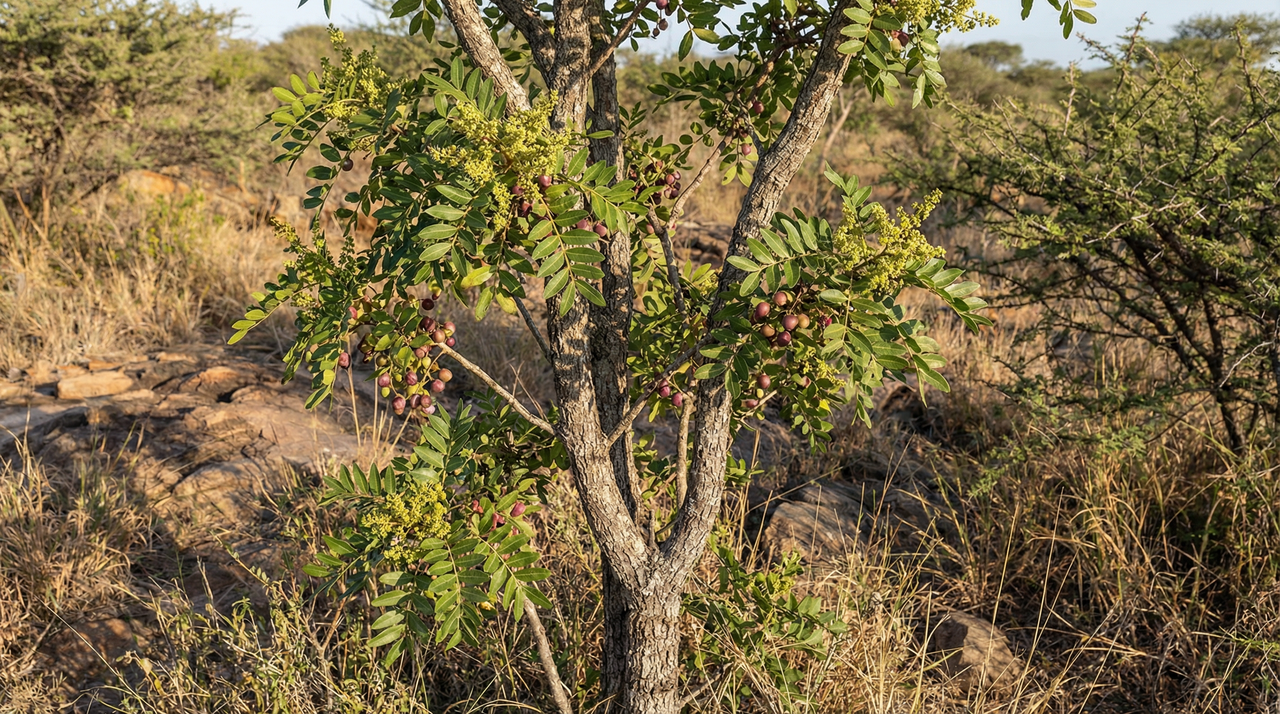
The Indian Ash Tree (Lannea afzelii) delivers a surprising crop of sweet-sour fruits that taste remarkably like wild grapes, stopping foragers in their tracks the first time they try them, small, dark, and clustered in a way that already hints at the comparison before the flavor confirms it. It's not a subtle resemblance, either. The sweet-sour pulp is close enough that local communities across West and Central Africa have called this tree African Grapes for generations, and elephants and baboons apparently agree, because they'll strip a fruiting tree faster than any human forager. I find that kind of ecological endorsement more convincing than most laboratory analyses.
What makes this tree genuinely fascinating, though, isn't the fruit. It's the contradiction buried in the name most English speakers encounter first: Indian Ash Tree. This is a tree with no meaningful connection to India, native to African savannas from Senegal down through East Africa and into northern South Africa.[1] The name stuck anyway, one of those colonial-era taxonomic accidents that followed the tree into the botanical record and never quite left. Peel that back, and what you find is a resilient, drought-hardened savanna giant with centuries of documented human use behind it, bark medicines, red dyes, cork-like timber, and fruits that feed both wildlife and people through the dry season. That's the tree worth knowing.
Origin and History of the Indian Ash Tree (Lannea afzelii)
Botanical Background and Native Range
Lannea afzelii is a deciduous tree in the Anacardiaceae family. It has one of the most impressive footprints of any African savanna species: its native range sweeps from Senegal in the west across to Ethiopia in the east, then south through Tanzania, Zambia, Mozambique, and into northern South Africa.[2][3][4] That's a continental span that tells you a lot about the tree's character before you've even touched a leaf. It favors savannas, dry woodlands, Miombo woodlands, and Acacia-Commiphora bushlands, doing particularly well in well-drained sandy, loamy, or lateritic soils on termite mound areas and riverine margins.[2][4] Most of that distribution sits below 1,000 meters, though the species can climb to around 1,500 meters, so it's fundamentally a lowland tree with some upland tolerance.[2][5] For anyone designing permaculture systems, I'd treat these native habitat parameters as valuable clues about drainage and seasonal drought tolerance rather than hard guarantees of behavior elsewhere. Compare that with its critically endangered genus relative, Amani grape (Lannea amaniensis), which is restricted to montane rainforests in the East Usambara Mountains of northeastern Tanzania[6][7], and you start to appreciate just how geographically generous Lannea afzelii's range really is.
Visual Characteristics
In the field, this is an unmistakable tree. It grows 10 to 25 meters tall with a broad, rounded canopy reaching 8 to 15 meters across, and its bark is rough, flaky, and a striking dark gray to black. The compound pinnate leaves carry 7 to 13 leaflets, each one oblong to elliptic, and if you flip a leaflet over you'll find a soft, distinctly velvety pubescence that gives the species one of its most evocative common names: African velvet-leaf.[8] After working with various Anacardiaceae species in landscape contexts, I've found that velvety underside texture is one of the most reliable field-identification cues, easy to check even when you're not carrying a hand lens. As the dry season approaches, the leaves shift to red before the tree drops them entirely, so there's a brief, fiery display before it goes bare. It's one of those seasonal moments that reminds you why deciduous savanna trees earn their keep in a food forest.
Traditional and Cultural Uses
Across West, Central, and East Africa, communities from Yoruba and Igbo to Hausa and Maasai have turned to this tree for generations. Bark decoctions are the workhorse preparation: used for diarrhea, dysentery, malaria, wounds, coughs, fevers, and venereal diseases, among other conditions. Roots address malaria and toothaches, while leaf poultices go directly onto wounds, sores, boils, and skin rashes.[9][10][11] I have deep respect for that depth of recorded ethnobotanical knowledge, even while acknowledging that clinical validation in humans is still limited. Beyond medicine, the sweet, grape-like fruits are eaten fresh, processed into beverages, and fermented, and they've served as a famine food in lean seasons.[12][13] Culturally, the tree appears in African folklore as a symbol of resilience and fertility, woven into rituals for protection and initiation, and used in some Tanzanian communities as a boundary marker.[14][15] The Makonde people of Tanzania have their own related ritual tradition through Amani grape, using it in initiation ceremonies and protective amulets[15], which speaks to how deeply this genus is embedded in East African cultural life. Despite a global IUCN status of Least Concern, Lannea afzelii faces local vulnerability from overharvesting in parts of Nigeria, Ghana, and Tanzania.[16][17] In my own practice, I always source from ethical nurseries and avoid stripping bark from living specimens; in any permaculture context, that kind of thoughtful stewardship isn't optional, it's foundational.
Fun Facts About the Indian Ash Tree
This tree goes by a wonderful collection of common names: African velvet-leaf, wild grape, sesame tree, and corkwood tree, each one pointing to a different facet of its character. The corkwood name comes from the bark itself, which can be processed into a cork-like material and also yields a red dye, two uses from one rough, flaky surface. The fruits live up to the wild grape name; published accounts consistently describe them as sweet and grape-like, and my experience with other Anacardiaceae relatives suggests that tangy, resinous-sweet quality that makes you want another handful. Elephants, baboons, and birds all take advantage of those fruits in savanna ecosystems, making the tree a genuine wildlife hub.[18]
The genus contrast with Amani grape is worth a moment. Where Lannea afzelii carries compound pinnate leaves across a continent, Amani grape has simple, palmately lobed leaves (usually 5 to 7 lobes) and resprouts from underground lignotubers after fire[19], a radically different strategy for surviving the same broad savanna-to-forest spectrum. Fewer than 50 mature individuals of Amani grape remain in the wild, making it Critically Endangered.[20] Working in restoration contexts, I find these narrowly endemic relatives clarifying: when a cousin occupies a single mountain range and is nearly gone, it sharpens your sense of why protecting the broader genus matters, and why every Lannea afzelii you establish in a food forest or agroforestry planting carries a little extra weight.
Indian Ash Tree Varieties and Sourcing
Lack of Formal Cultivars in Lannea afzelii
If you're coming to the Indian Ash Tree from a background in domesticated fruit trees, set aside any expectation of named cultivars or improved selections. Lannea afzelii has no widely recognized botanical varieties, subspecies, or formal horticultural cultivars; authoritative taxonomic databases list no accepted infraspecific taxa, and any local selections reflect traditional use rather than systematic breeding.[21][22][23] In my experience working with lesser-known Anacardiaceae species in agroforestry contexts, this is completely typical. Wild-type genetics are what make these trees ecologically valuable, and provenance and local adaptation matter far more than any branded selection ever would.
The pattern holds across close relatives too. The critically endangered Amani grape (Lannea amaniensis) similarly carries no recognized cultivars, varieties, or subspecies.[24][25] The one interesting exception within the genus is Lannea ambigua, sometimes called African copal tree, which does have two documented botanical varieties: L. ambigua var. ambigua and L. ambigua var. microcarpa, the latter distinguished by smaller fruits.[26] That species also produces a gum-like bark resin called "false copal," which sets it apart morphologically from afzelii. The variation within Lannea as a genus is real and interesting, but it doesn't translate into shopping options for the grower. What you're working with here is a wild tree, and that's genuinely a good thing.
Sourcing Indian Ash Tree Seeds and Plants
Lannea afzelii is not carried by mainstream nurseries or garden centers in the US, and I haven't found any reputable retail seed bank routinely stocking it.[2][27][28] Availability fluctuates, and the most reliable route I know is direct contact with African botanical institutions, conservation nurseries, or specialist networks. In Kenya and South Africa, some native tree nurseries do offer seeds at roughly $2 to $5 each and seedlings at $10 to $20, often packaged for reforestation buyers.[29][30][28] Think of it the same way I approach sourcing other under-commercialized tropical trees like certain wild tamarind relatives: building a direct relationship with an institution usually beats waiting for a retail option that may never materialize.
The import process is more straightforward than people fear. Lannea afzelii is not listed on any CITES appendix, is not considered a noxious weed or invasive species in the United States, and typically requires only a phytosanitary certificate from the exporting country rather than a specific USDA import permit.[31][32][33] In my work navigating import paperwork for similar African species, a phytosanitary certificate has consistently been sufficient.
A word of caution on one close relative: if you ever encounter Amani grape (Lannea amaniensis) seed through any commercial channel, approach with real skepticism. Since it is a critically endangered species, any material available through conservation organizations or botanical gardens should be treated as exactly that: conservation material, not a landscaping purchase.[34][35] Seed banks and botanical garden networks are the only ethically defensible sources, full stop.
Indian Ash Tree Propagation and Planting
The Indian Ash Tree is one of those species that teaches you something fundamental about working with wild tropical trees: the rules you learned from temperate crops don't apply here. Everything about propagating Lannea afzelii flows from a single biological reality, and the sooner you understand it, the better your results will be.
Seed Morphology and Recalcitrant Storage Behavior
The fruits are small ellipsoid drupes, only 1 to 1.5 cm long, each containing a single monoembryonic seed with a thin but impressively hard reddish-brown coat, a straight embryo, minimal endosperm, and one fleshy oily cotyledon.[2][36] That oily cotyledon is a clue. Seeds that store fat rather than starch tend to be recalcitrant, meaning they cannot tolerate drying. Drop moisture content below 20 to 30% and the seed dies.[37][38][39] That rules out every standard seed-bank protocol. No paper envelopes, no silica gel, no freezer. Instead, seeds must be held at 30 to 50% moisture at 10 to 20°C in moist sand or vermiculite, and even then viability falls below 50% within 12 to 24 months.[37][39][40] Field gene banks or immediate sowing are strongly preferred over any attempt at orthodox banking.[39] I treat every batch as if the clock started the moment the fruit left the tree, because in practice it has.
The hard coat creates a second obstacle. Physical dormancy from that impermeable seed coat means water simply can't reach the embryo without intervention.[2][41] In my nursery trials, mechanical nicking followed by an 80°C hot-water soak for 24 hours, then a 24 to 48-hour rest in warm 30°C water, has consistently delivered 70 to 80% germination with fresh seed. The coat reminds me of mango stones and other Anacardiaceae I work with; the family runs thick-skinned. Chemical scarification with sulfuric acid for 10 to 15 minutes is an alternative, though I find it less forgiving for small batches.[42][41] Processing immediately after collection is non-negotiable; freezing below 5°C kills the seed outright.[37]
When seeds are unavailable or collection timing is uncertain, vegetative propagation is a reliable path. Semi-hardwood cuttings 10 to 15 cm long, taken during the rainy season, treated with 2000 to 5000 ppm IBA, and rooted under mist at 80 to 90% humidity and 25 to 30°C achieve 30 to 70% success in 4 to 8 weeks.[43][44] Air layering with IBA and moist sphagnum moss can hit 60 to 80%.[45] Grafting using cleft or whip techniques onto related Lannea coromandelica rootstock is possible but rarely practiced, and tissue culture has no documented success for the genus.[46] The closely related L. amaniensis, critically endangered and restricted to Tanzanian forest patches, shows cutting success rates below 30%, a reminder that wild-sourced Lannea material is precious and worth treating with conservation-minded care.[47][48] I only source ethically collected seed or cuttings, and I'd encourage anyone propagating these trees to do the same.
Germination Timeline and Pre-Treatments
With fresh pretreated seed, germination comes quickly: 2 to 4 weeks at 25 to 30°C in moist, well-drained sandy loam sown 1 to 2 cm deep, with success rates of 60 to 90%.[2][49][50] That success rate drops sharply after six months of storage, which circles back to why sowing within days of collection matters so much. Once the seedlings emerge, you're looking at the beginning of a tree that may eventually reach 10 to 25 meters, so it's worth labeling your rows carefully. Young Lannea afzelii seedlings can look deceptively similar to other savanna trees in the first season, and I've learned from experience that unlabeled nursery rows create identification headaches later.
Soil Requirements and Site Selection
Optimal soil pH sits between 5.5 and 7.5, with the sweet spot at 6.0 to 7.0.[51][52] Stray above 7.5 and you'll see iron and manganese chlorosis; drop below 5.5 and aluminum toxicity becomes a real problem.[51] I always test my nursery mix and aim for 6.0 to 6.5, because I once lost a promising batch to iron deficiency after using a slightly alkaline potting component. It's a one-time mistake that sticks with you. The tree tolerates low fertility reasonably well but responds to 2 to 5% organic matter, and inoculating with mycorrhizal fungi when planting into poor lateritic soils gives seedlings a measurable advantage.[53]
Drainage is the non-negotiable. Lannea afzelii demands sandy loam, lateritic, or gravelly soils and will not tolerate prolonged waterlogging or heavy clay.[2][54] The deep taproot that gives mature trees their remarkable drought resilience needs soil depth to develop fully, ideally 1.5 to 2 meters or more.[52] Compact or shallow soils frustrate this root system from the start.
Light requirements shift with age. Seedlings tolerate partial shade during establishment, and providing 50% shade cloth in the nursery is standard practice.[55] Once in the ground, though, this is fundamentally a full-sun species, a savanna tree that expects at least six hours of direct light daily and performs poorly in deep shade.[2] Plan your planting site with the mature canopy in mind, not the small seedling you're putting in the ground today.
Spacing, Planting Technique, and Nursery Practices
Mature Indian Ash Trees reach 10 to 25 meters tall with a canopy spreading 8 to 20 meters wide, backed by a deep taproot that anchors them against drought and wind.[2][56] Spacing depends entirely on the system. Agroforestry integration typically calls for 4 to 6 meters between trees; orchards need 8 to 12 meters; restoration plantings benefit from 10 to 15 meters to let canopies develop fully without crowding.[57] In my landscape design work, I space these trees at least 8 meters apart in mixed guilds. The deep taproot keeps competition with neighboring plants minimal, and once established, the broad canopy creates excellent dappled conditions for understory species beneath it.
In the nursery, raise seedlings to 30 to 50 cm height under 50% shade in well-drained growing mix before outplanting, which typically takes 6 to 12 months.[58] Time planting to the start of the rainy season so young roots have moisture during establishment, and protect new transplants from termites, which find stressed young trees attractive.[43] Container cultivation works well provided drainage is excellent. The decisions made at this stage, spacing, pH, drainage, sourcing of ethical seed, set the trajectory for a tree that will be in your landscape for generations.
Indian Ash Tree Care Guide
Caring for the Indian Ash Tree is largely a matter of getting out of its way once it's established. Lannea afzelii evolved in the seasonal rhythms of African savanna, where rainfall arrives in pulses and dry months are genuinely dry. That background shapes almost every care decision you'll make.
Watering Needs and Drought Tolerance
Few trees make their drought strategy as visible as this one. During the dry season, it sheds its leaves, cutting transpiration by up to 90%,[59] while a deep taproot reaching 0.9 to 1.8 meters pulls moisture from well below the surface.[59][60] Mature specimens thrive on just 500 to 800 mm of annual rainfall[61][62] and even bounce back after dry-season fires.[61] In my experience growing related savanna trees, once the root system is established, you can step back considerably. The tree has already figured out drought; your job is mostly the first two years.
During establishment, water every two to three days to keep soil moisture consistent and encourage deep root development.[63] After that, switch to infrequent deep watering only during prolonged dry spells, applying water to a depth of 30 to 60 cm when stress symptoms appear.[61] The tree prefers well-drained sandy or loamy soils with a pH of 5.5 to 7.5 and has low salinity tolerance, so site drainage matters as much as irrigation frequency.[61]
Know the symptoms of both failure modes. Overwatering shows as yellowing, wilting despite moist soil, and mushy roots.[64] Drought stress presents as wilting, leaf scorch, or premature drop, especially in young plants.[53] If you're growing the closely related Amani grape (Lannea amaniensis) nearby, note that it's a very different beast, needing 1200 to 2500 mm of rainfall annually and ambient humidity above 70%.[65][66] Label your seedlings carefully if you're propagating multiple Lannea species; I've made that mix-up before.
Sunlight Requirements and Light Adaptations
Full sun is non-negotiable for adult trees. Lannea afzelii has adapted to the intense overhead light of open savannas, developing pubescent leaf surfaces and a deciduous habit that together buffer against heat and moisture loss.[55][67] Aim for at least six hours of direct sun daily. Young plants moved abruptly into full exposure, though, can suffer leaf margin browning, photoinhibition, and early drop.[2][53] I've seen this most in juveniles shifted from a nursery bench into unobstructed afternoon sun. Acclimate them gradually, and that problem largely disappears.
Heat Tolerance
Optimal growth falls between 20 and 30°C, with reduced vigor kicking in below 15°C or during prolonged periods above 35°C.[68][69] The tree can push through temperatures up to 38 to 45°C using heat shock proteins and antioxidant defenses,[70][71] but flowering is a different story. Heat above 30 to 32°C during bloom can reduce flower viability and lead to aborted fruit set,[72] and seedlings under combined heat and drought stress see survival rates drop to just 20 to 30% at 38°C.[73] For young plants in particularly brutal summers, partial afternoon shade buys meaningful protection without compromising the tree's long-term light needs.
Frost Tolerance
This is where the Indian Ash Tree's tropical origins become a hard constraint. The tree needs minimum temperatures above 10°C for healthy growth and suffers real damage below 5°C, with exposure to -2°C potentially lethal without protection.[2][53][74] It fits best in USDA zones 10 to 12, with zone 9b possible only in warm microclimates with reliable frost protection.[2][75] Cold damage shows as wilting, blackened or brown patches on leaves, necrosis, and dieback of young shoots.[76][77] I only recommend this tree where frost protection is reliable or where you can grow it in a large container that moves indoors, because the research on cold sensitivity is unambiguous and I've personally seen tender growth blacken quickly in unexpected temperature dips on other Anacardiaceae.
Fertilizer and Feeding
Lannea afzelii is a moderate feeder from moderately fertile savanna soils, so resist the urge to push it with heavy inputs. A balanced slow-release fertilizer at NPK 10-10-10, applied sparingly at 50 to 100 grams per tree once in early spring, is sufficient during the first two to three years of establishment; well-composted organic matter works just as well and carries less risk of root burn.[78][79] Over-fertilizing savanna natives tends to backfire, a pattern I've noticed with citrus and other Anacardiaceae relatives too. On soils above pH 7.0, watch for iron chlorosis, which presents as interveinal yellowing on the leaves and signals the need for pH correction rather than more fertilizer. Zinc deficiency can appear where phosphorus is high, and boron may be limiting on sandy, low-organic soils with high leaching. A soil test before planting is the most practical prevention; keeping pH in the 5.5 to 7.0 range avoids most of these issues from the start.
Pruning, Maintenance, and Seasonal Care
These are naturally well-shaped trees in the landscape, and heavy pruning does more harm than good. Prune during the dry season to shape young trees, remove dead or diseased wood, and improve airflow through the canopy; avoid taking large amounts of live growth at once.[80][52] I learned this the hard way years ago with a heavy cut on a related species that responded with a surge of weak water sprouts I spent the next season removing. Light and purposeful is the rule.
On the pest and disease side, termites (Macrotermes spp.), wood borers, caterpillars, and aphids are the main insect threats, while fungal issues including leaf spot (Cercospora spp.), root rot (Armillaria spp.), and powdery mildew round out the disease picture.[81][82][83] Most of these problems intensify when drainage is poor or the canopy is overcrowded. Good site selection, adequate spacing, and seasonal monitoring during the wet season when fungal pressure peaks will handle the majority of it. The tree's flower, which appears before new leaf flush, is worth watching closely for signs of insect damage during that brief vulnerable window.
Harvesting Indian Ash Tree (Lannea afzelii)
What I find genuinely instructive about Lannea afzelii is how traditional communities in its native range have developed a multi-layered harvest approach that most permaculture designers would recognize as elegant resource management. Harvesting practices include sustainable bark stripping, selective fruit picking, and the felling of mature trees for timber, all guided by generations of traditional selection knowledge. No single part of the tree is strip-mined; different products come from different life stages, and the system perpetuates itself. That kind of community-stewarded extraction is exactly what well-designed food forests should emulate, whether you're in West Africa or trying to integrate African tree species into a zone 10 planting in a hot, dry climate elsewhere.
When and How to Harvest Lannea afzelii Fruits, Bark, and Timber
Patience is the first skill this tree teaches. Based on closely related species like Lannea amaniensis and L. welwitschii, seedlings typically begin fruiting somewhere between 4 and 10 years from seed, with grafted specimens potentially producing in 3 to 5 years and full maturity arriving around 8 to 20 years depending on growing conditions.[49][84][85] Those figures are extrapolated from congeners rather than direct studies on this species, so treat them as informed estimates rather than guarantees. I've planted trees knowing I was gardening for the next person to tend that land, and slow-maturing savanna species ask for that same mindset. The wait is baked into the design.
Once the tree is bearing, timing fruit harvest gets more precise. Related Lannea species ripen fruit roughly 4 to 6 weeks after flowering, with the primary season falling in the dry months of June through September in East Africa, peaking around July and August.[86][87][88] That dry-season peak isn't accidental; it keeps fungal pressure low at exactly the moment fruit sugar is concentrating on the branch. I mark calendar windows like this for similar deciduous woodland species I manage in guild plantings, watching for color deepening and the moment fruit releases cleanly with gentle pressure rather than requiring a tug.
Flavor Profile and Yield of Harvested Indian Ash Tree Fruits
The ripe pulp is where the payoff lives. Lannea afzelii fruit develops a sweet-sour, tangy flavor with acidic notes that people compare variously to berries, mango, or pineapple, though the profile shifts with ripeness, the individual tree, and where it's growing.[89][90][91] That variability reminds me of Surinam cherry, another Anacardiaceae relative I grow in Central Florida where the flavor ranges from cloyingly sweet to bracingly tart depending on the clone and the season.
The unripe fruit, though, is a different experience entirely. Unripe fruits of related Lannea ambigua carry significant bitterness and astringency from elevated tannin content, softening only as the fruit matures.[92] My experience with other Anacardiaceae members tells me that harvesting too early leads to an astringent mouthful that processing can only partially rescue; it's worth waiting for color to fully develop and aroma to come forward before picking. The tannin shift is the tree's own signal that it's ready. Once established and fruiting, these trees offer low-input, seasonal yields that genuinely reward the patience of the long establishment phase. How to process and prepare what you harvest is a whole other conversation covered ahead.
Indian Ash Tree Preparation and Uses
Culinary Uses of Indian Ash Tree Fruits, Leaves, and Seeds
The fruits are the easiest entry point into the Indian Ash Tree's edible potential. Ripe Lannea afzelii fruits turn a deep reddish-brown and offer a sweet-sour, juicy pulp that reminds me of a milder tamarind crossed with an unripe mango. Eaten fresh off the tree, they're genuinely pleasant, and traditional communities also press them into beverages, stir them into porridges, and ferment them into drinks.[93][94][95] The fruits run about 80-85% moisture with 5-10% sugars, and carry useful amounts of vitamin C, potassium, iron, and antioxidants alongside their carbohydrates.[96][97] I've also noticed with similar savanna fruits that drier growing conditions seem to concentrate that sweet-sour tang, which likely reflects higher sugar and antioxidant density when the plant is under mild water stress.
Young leaves require more attention before eating. Boiling them for 10-15 minutes removes bitterness and neutralizes tannins and other anti-nutritional compounds, after which they fold beautifully into soups and stews, much like amaranth or hibiscus leaves behave once heat breaks down their sharper edges.[98][99] The nutritional payoff is substantial: leaves deliver 15-20% crude protein, 45 mg/100g vitamin C, 8.5 mg/100g iron, vitamin A, and calcium.[96][100] Those iron and protein numbers rival moringa and compare favorably to commercial amaranth greens, which tells you something about why this indian ash tree species matters so much in food security contexts across arid West Africa.
Seeds add another dimension entirely. They can be roasted and eaten directly, or cold-pressed into an edible oil with 30-40% fat content that serves both cooking and traditional cosmetic purposes; the seed meal left behind still contains 25-30% protein.[101] A critical contrast worth knowing: the closely related Lannea acuminata has seeds that are toxic and can cause serious illness.[102] Species identification matters here. Having worked with other Anacardiaceae relatives, I always remind people that the sap of these trees can irritate skin much like poison ivy; wear gloves when processing, and never skip the traditional boiling step for leaves. The processing methods communities developed over generations weren't arbitrary; they were solving a real problem with tannins and urushiol-like compounds.[103][104]
Non-Food Uses of Indian Ash Tree
Beyond the kitchen, Lannea afzelii supports entire livelihoods. The timber is hard, heavy, and naturally termite-resistant, making it reliable for construction, furniture, and tool handles in exactly the settings where chemical wood treatments aren't available or affordable.[105][106] In my own landscape work, when I need a tropical hardwood for tool handles or fence posts, termite resistance is the first thing I look for; it's the difference between infrastructure that lasts a decade and infrastructure that lasts a season.
The bark yields a reddish-brown dye used traditionally across West Africa for coloring fabrics and leather,[107] and the same bark fibers can be twisted into ropes for household use.[43] Leaves serve as livestock fodder, fuelwood and charcoal production rounds out the energy contribution, and in savanna agroforestry the tree essentially covers food, fuel, fiber, and dye from a single planting.[43][108] Harvesting any of these resources sustainably, taking bark in strips rather than girdling, selecting mature timber only, and leaving enough fruit for wildlife, is what keeps this wild resource productive across generations rather than stripping it out in a single season.
Indian Ash Tree Health Benefits and Medicinal Uses
What I find genuinely compelling about the Indian Ash Tree is that its medicinal reputation across West African communities isn't just folklore waiting to be disproven. Increasingly, it's folklore being explained. The phytochemistry of Lannea afzelii is rich enough that researchers keep finding chemical reasons for traditional uses that healers figured out centuries ago through careful observation.
Key Phytochemicals in Indian Ash Tree
The bark, leaves, and fruits of this tree contain a dense library of bioactive compounds. Flavonoids including quercetin, kaempferol, rutin, and catechin share space with phenolics like gallic and ellagic acid, condensed and hydrolyzable tannins, and terpenoids including lupeol, β-amyrin, and β-sitosterol, along with saponins, steroids, cardiac glycosides, coumarins, and trace alkaloids.[109][110][111] These aren't evenly distributed. The bark concentrates tannins and terpenoids, leaves run higher in flavonoids and phenolics, and fruits carry more saponins and steroids.[112] That distribution matters if you're thinking about which part to use for what purpose.
Concentration also shifts with conditions. Dry-season harvests tend to produce higher phenolic levels because drought stress pushes the plant to ramp up its chemical defenses.[113] Mature trees, five to ten years old, generally show greater diversity and quantity of secondary metabolites than younger specimens.[109] Ethanol and methanol extractions recover phenolics more completely than water-based preparations, which is something herbalists working with bark decoctions should keep in mind.[114]
Measured against laboratory standards, these compounds deliver meaningful free-radical scavenging activity with DPPH IC50 values in the 20 to 50 μg/mL range, comparable to ascorbic acid.[115] They inhibit pro-inflammatory cytokines including COX-2, TNF-α, and IL-6, and show antimicrobial activity against common pathogens like Staphylococcus aureus, E. coli, and Candida albicans.[116][117] Related species like Lannea acuminata add alkaloids and essential oils including oleic acid and α-pinene to the genus profile, which hints at just how much chemical diversity this group has to offer.[118]
Traditional Medicinal Uses and Modern Research
Ethnobotanical surveys across Nigeria, Ghana, Senegal, and Tanzania document a consistent pattern: bark, leaf, root, and gum preparations used to treat wounds, diarrhea, skin infections, rheumatism, fever, and intestinal parasites.[119][120] Reading through West African ethnobotany literature, I've been struck by how specifically these traditional preparations map onto the plant's phytochemistry. Tannin-rich bark poultices for wounds, anti-inflammatory leaf decoctions for rheumatism: the cultural knowledge and the lab data keep pointing at the same mechanisms.
The preclinical research is most compelling in three areas. Antimicrobial activity comes through clearly, with methanol stem bark extracts achieving MIC values as low as 15 mg/mL against S. aureus and E. coli.[121] Wound healing in rat models showed a 25% faster closure rate with 10% stem bark gel compared to controls, alongside reduced bacterial load and inflammation, which aligns closely with the traditional use of bark preparations on fresh wounds that I've read about repeatedly in the ethnobotanical record.[122] Antidiabetic potential is also emerging, with blood glucose lowering and alpha-glucosidase inhibition observed in diabetic rat models.[123] Related species add further texture: Lannea amaniensis ethanolic extracts show analgesic activity, and Lannea ambigua gum copal has documented astringent and antiseptic properties used in wound care and oral health.[124][125]
There's an important caveat here that I think deserves honesty rather than a footnote. No clinical trials, meta-analyses, or systematic human studies on Lannea afzelii have been published.[126] The preclinical data are promising and they do validate the direction of traditional knowledge, but until human studies exist I'd recommend treating this plant in culinary amounts rather than reaching for concentrated extracts. That's not dismissing what traditional practitioners have known for generations; it's just acknowledging where the evidence currently sits.
Nutritional Profile of Fruits and Leaves
Beyond its medicinal potential, the Indian Ash Tree earns its place as a food-security resource across Sahel and savanna communities. Fruits are eaten fresh, dried, or processed into beverages and porridges, while young leaves get boiled as a potherb in soups and stews, much like spinach.[93][108] The boiling step isn't just tradition; it reduces bitterness from tannins and improves digestibility.
Per 100g of fresh fruit, you're looking at 45 to 80 calories, 10 to 20g of carbohydrates, modest protein, and meaningful micronutrients: vitamin C in the range of 20 to 80 mg (genuinely comparable to the citrus I grow in zone 9b), beta-carotene at 200 to 500 μg, potassium around 450 mg, calcium near 120 mg, and iron at roughly 2.5 mg.[127][128] The leaves actually outperform the fruit in several respects: 10 to 15% protein by dry weight, calcium up to 800 mg per 100g dry, iron between 5 and 10 mg, and 20 to 25% dietary fiber.[129] That's a leaf worth taking seriously as a nutritional contributor in food forest design.
Values shift with ripeness, preparation method, and growing conditions, so treat these figures as useful estimates rather than fixed constants.[130] Related Lannea amaniensis leaves have been reported to hit 80 mg vitamin C per 100g in some analyses, exceeding the fruit in that species.[131] Edible parts are generally safe when properly prepared; seeds and raw bark are a different story.
Safety Considerations and Potential Side Effects
The Anacardiaceae connection is the first thing I bring up with any client interested in using this tree medicinally. As a family member of mango, cashew, and poison ivy relatives, Lannea afzelii sap contains urushiol-like compounds capable of causing contact dermatitis: redness, itching, blistering on skin that touches bark, leaves, or fresh sap.[2][132] If you react to cashews or get a rash from poison ivy, wear gloves every time you handle this plant. I always have, with every Anacardiaceae species I've worked with, and I'd strongly recommend anyone with sensitive skin do the same.
Internal overuse has its own risks. High tannin content from excessive consumption can cause nausea, vomiting, or diarrhea, and may interfere with nutrient absorption over time.[133] Livestock can show mild gastrointestinal symptoms from overconsumption.[134] That said, acute toxicity is genuinely low: LD50 values above 2000 mg/kg in animal models for leaf and stem bark extracts, and severe human poisoning cases are rare in the traditional use record.[135][74]
I always advise clients who are pregnant, nursing, or managing liver conditions to consult a physician before using any part of this tree medicinally. Limited animal studies have flagged potential hepatotoxicity signals, and while traditional bark and root preparations are generally considered the safer form, pregnancy warrants real caution rather than reassurance by default.[107] Plants stressed by drought may also elevate their defensive compound levels, which is worth noting for foragers harvesting during dry seasons.[114] Lannea amaniensis firewood smoke carries theoretical cautions for respiratory irritation and potential interactions with anticoagulant or antidiabetic drugs. Lannea ambigua, by contrast, shows no documented toxicity to humans, pets, or livestock across major databases.[136] The genus isn't uniform on this, which is exactly why species-level precision matters here.
Pests and Diseases of the Indian Ash Tree (Lannea afzelii)
Natural Resistance and Chemical Defenses
The indian ash tree is, by and large, a tough customer. In its native West and Central African savannas, Lannea afzelii has co-evolved alongside local pathogens and herbivores long enough to develop meaningful chemical armor: tannins and flavonoids concentrated in the leaves and bark make the foliage genuinely unpalatable, interfering with insect digestion and deterring feeding before it escalates.[137][138] I've seen similar chemistry at work in other Anacardiaceae I grow, mango and cashew especially, where the same phenolic compounds that make bark extracts medicinally potent also seem to keep pest pressure lower than you'd expect on a fruiting tree. The wood itself shows durable resistance to termites and fungi, and major sources report few significant outbreak events under natural conditions.[93] Specific data on bacterial or viral diseases is thin in the literature, so I'd treat that as a gap to observe rather than proof of immunity.[139]
Common Pests
Young trees are where you'll see the most action. Field studies in West Africa have documented insect herbivory rates up to 30% on saplings,[140] and the cast of characters includes termites, wood-boring beetles from Scarabaeidae and Curculionidae, leaf miners (Phyllonorycter spp.), aphids, scale insects, caterpillars, and fruit borers.[141][142] Termites and borers are worth watching most carefully because their damage creates entry points for secondary fungal infection. The closely related Amani grape (Lannea amaniensis) faces similar pressures including the African mahogany shoot borer and Cerambycid beetles, though its data is limited by its rarity and Vulnerable IUCN status.[143][138] With under-documented African natives like these, I've learned to simply watch young trees closely and treat any observations as your own field data.
Fungal and Other Diseases
Anthracnose, powdery mildew, Fusarium dieback, and Phytophthora root rot are the fungal threats most likely to appear, and humidity above 70% or waterlogged soil are the conditions that invite them.[144][145] Leaf spot fungi (Colletotrichum, Phyllosticta, Cercospora) also show up occasionally, though the tree's phytochemicals generally hold them in check under good conditions.[146] What undermines that resistance is stress: drought, compacted soil, poor drainage, and frost exposure all chip away at the tree's defenses and give pathogens an opening.[147] Early in my tropical planting work, I lost a young Anacardiaceae specimen to root rot that I'm nearly certain was preventable; the site had heavier clay than I realized, and the first wet season did it in. That lesson stuck.
Prevention and Integrated Management
No pest-resistant cultivars or breeding programs exist for this species,[142] so everything depends on cultural practice. Proper site selection with well-drained sandy loam or clay loam, good air circulation, and temperatures in the 20-35°C range does more to prevent problems than any spray schedule.[148][149] Organic mulching has shown 40-50% reductions in insect infestations in greenhouse trials,[150] and I use neem-based sprays regularly on aphids and caterpillars across similar species in my own setups with genuinely good results. For severe fungal cases, targeted copper-based fungicides are the established option.[151] In a permaculture system, pruning for airflow, removing debris, and avoiding both drought stress and overwatering form the real defense. Get the site right, and this tree mostly takes care of itself.
Permaculture Design with Indian Ash Tree (Lannea afzelii)
If you're designing a food forest or agroforestry system in a hot, seasonally dry climate, the Indian ash tree is the kind of anchor species worth planning a whole guild around. It's not a plant you squeeze into a design as an afterthought. It's the one you place first and build outward from.
Climate Suitability and Hardiness Zones
Lannea afzelii is a tropical savanna specialist through and through. It's built for Köppen Aw and As climates: distinct wet and dry seasons, annual rainfall somewhere in the 500 to 1,500 mm range (with 1,000 to 1,500 mm being the sweet spot), temperatures that can swing from a 10-15°C cool-season low up to a scorching 35-40°C peak, and long dry spells that would stress most fruit trees into oblivion.[2][152] That drought adaptation is real and deep-rooted, literally.
For placement purposes, think USDA zones 10a through 12b.[2][153] I've trialed enough tender tropical trees to know that even one hard freeze below 5°C can set a Lannea back for years, and that's not a risk worth taking with a canopy tree you've spent time establishing. This one is for reliably warm climates only. It does show some tolerance to saline coastal soils, but it tends to perform better inland, and its fire and drought resilience, including the ability to regenerate via coppicing after disturbance, makes it a genuinely tough plant in its comfort zone.[5][153] Since most of these tolerances are derived from native ecology rather than extensive cultivation trials, I'd treat them as solid starting points and refine them through your own site observations over time.
The related Amani grape (Lannea amaniensis) sits at the opposite end of this moisture spectrum, needing 1,200 to 2,500 mm of annual rainfall and the consistently humid conditions of lowland to submontane rainforest.[25] In marginal climates outside its native range, it would need greenhouse protection or serious microclimate engineering. Same genus, very different conversation.
Ecosystem Functions and Guild Roles
What I find compelling about the Indian ash tree in a designed system is how many ecosystem services it layers on top of each other. The small greenish-yellow flowers, arranged in panicles and opening in the dry season, attract bees and flies at exactly the moment when most other forage plants have shut down.[53][154] Strategically, that's exactly when you want a pollinator magnet. Then the fruits ripen and feed monkeys, birds, and elephants, all of which become seed dispersers in the process.[154] The wildlife food web and the human food system are running in parallel here.
Below ground, this tree earns its keep in ways that are easy to underestimate. The root system typically reaches 2 to 5 meters deep, binding soil and preventing erosion on slopes where shallow-rooted crops would leave the ground vulnerable.[59] I've noticed with similar deep-rooted Anacardiaceae trees in restoration plantings that the leaf litter accumulation alone can visibly improve soil structure on slopes within a single growing season. Decomposing leaves contribute organic matter, nitrogen, and phosphorus, and when used as mulch, the tree can function as a dynamic accumulator, pulling minerals up from deeper layers and cycling them into the surface zone.[155]
Lannea afzelii does not fix nitrogen the way a legume does.[59] That's a gap in its resume, but in my experience designing with non-fixing trees, dynamic accumulation and reliable coppicing regrowth can do a lot of the same soil-building work over time, just through different mechanisms. The related Lannea acuminata acts as a pioneer that actively improves soil fertility in disturbed habitats,[156] which gives you a sense of where the genus sits in terms of ecological succession value.
Forest Layer and Companion Planting
At 10 to 30 meters tall with a spreading canopy reaching up to 20 meters wide, Lannea afzelii occupies the canopy or emergent layer depending on habitat conditions.[157] That height range reflects real habitat-driven flexibility; a savanna specimen in an open, fire-prone landscape won't grow the same as one established in a sheltered agroforestry planting with consistent water. Its pioneer and early-successional behavior means it can colonize degraded land and contribute to forest succession even before the system matures around it.[158]
In a food forest guild, the design logic is fairly intuitive. The deep taproot reduces belowground competition with shallow-rooted understory crops, the broad canopy creates dappled shade beneath it, and the tree integrates cleanly into silvopastoral systems or intercropping arrangements with maize or legumes.[157] I think of it the same way I think about placing a large shade tree over smaller perennials in a food forest: the vertical layering does real work, and once you have a canopy anchor that also cycles nutrients and supports pollinators, you've got the scaffolding for a productive polyculture.
The genus as a whole shows interesting layer flexibility worth noting for design inspiration. Amani grape sits in the understory to mid-canopy of humid lowland rainforest at elevations up to 1,000 meters,[159] while African copal tree (Lannea ambigua) fills mid-story roles in open woodlands.[160] These are different moisture regimes and canopy positions entirely, but they illustrate that if you're working across climate analogs, the Lannea genus offers models for multiple layers. For zone 10-12 savanna food forests with a distinct dry season, the Indian ash tree belongs at the top of the structure, and it earns that position.
The Tree That Made Me Rethink What "Useful" Means
I came to Lannea afzelii through a bark sample in a West African ethnobotany paper, skeptical that anything this obscure could earn space in a designed system. Then I looked up from the research and realized I'd been sitting with it for three hours. It's not flashy. It doesn't fix nitrogen or fruit prolifically by temperate standards. It just quietly holds land together, feeds elephants, and has kept people healthy for centuries without anyone domesticating it. That felt like enough.
Sources 160
- Lannea afzelii - GBIF Species Page ↩
- Lannea afzelii - Useful Tropical Plants ↩
- Lannea afzelii - Kew Science Plants of the World Online ↩
- Anacardiaceae Resource Center - Lannea afzelii ↩
- Ecological Distribution of Lannea afzelii in Africa - IUCN Red List ↩
- Lannea amaniensis Engl. ↩
- IUCN Red List: Lannea amaniensis ↩
- Lannea afzelii ↩
- Ethnobotanical Survey of Medicinal Plants Used by the People of Ningo-Prampram District, Ghana ↩
- Ethnobotanical Survey of Medicinal Plants Used by the Hausa Communities in Northern Nigeria ↩
- Pharmacognostic and pharmacological profile of Lannea afzelii ↩
- Useful Trees and Shrubs for Uganda ↩
- Nutritional and Ethnobotanical Potential of Lannea afzelii Fruits ↩
- Cultural Symbolism of Trees in African Folklore ↩
- Makonde Herbals: Traditional Medicine ↩
- IUCN Red List: Lannea afzelii ↩
- Lannea afzelii: Uses and Conservation in African Savannas ↩
- Lannea afzelii ↩
- Adaptations of East African Trees to Drought and Fire ↩
- IUCN Red List: Lannea amaniensis ↩
- Plants of the World Online: Lannea afzelii ↩
- United States Department of Agriculture (USDA) PLANTS Database: Lannea afzelii ↩
- Flora Zambesiaca: Lannea afzelii ↩
- Lannea amaniensis Engl. ↩
- Flora of Tropical East Africa, Anacardiaceae ↩
- Plants of the World Online, Royal Botanic Gardens, Kew ↩
- Missouri Botanical Garden Plant Finder ↩
- Millennium Seed Bank Partnership ↩
- Lannea afzelii Seeds for Sale ↩
- Native Tree Seedlings Catalog ↩
- CITES Appendices ↩
- Federal Noxious Weeds List ↩
- Importation of Plants and Plant Products into the United States ↩
- Lannea amaniensis ↩
- Millennium Seed Bank - Accessions List ↩
- Seed Morphology and Embryology in Anacardiaceae ↩
- Recalcitrant Seeds and Seedlings ↩
- Seed Storage of Horticultural Crops ↩
- Tropical Tree Seed Manual ↩
- Seed Storage of Tropical Tree Species ↩
- Germination Protocols for African Indigenous Trees ↩
- Seed Dormancy and Germination in Lannea afzelii ↩
- Vegetative Propagation Techniques for Lannea Species ↩
- Vegetative Propagation of Indigenous Trees in West Africa ↩
- Propagation of Lannea Species: A Review ↩
- Propagation of Indigenous Fruit Trees in Southern Africa ↩
- Lannea amaniensis ↩
- Vegetative Propagation of Lannea welwitschii ↩
- Propagation and Cultivation of Tanzanian Endemic Trees ↩
- Germination and Storage of Lannea afzelii Seeds ↩
- Physiological Responses of Lannea Species to Soil pH ↩
- Soil Requirements for African Indigenous Trees ↩
- Lannea afzelii: Ecology and Uses ↩
- Soil Conditions and Root Physiology in Anacardiaceae ↩
- Ecological Adaptations of Savanna Trees ↩
- Agroforestry Species - Lannea afzelii ↩
- Propagation of Indigenous Trees in Agroforestry Systems ↩
- Propagation of Indigenous Tree Species in West Africa ↩
- Root systems and water relations of Lannea species in semi-arid environments ↩
- Soil and Water Requirements of Indigenous African Trees ↩
- Lannea afzelii: Distribution, Ecology, and Silviculture ↩
- Phenology and drought tolerance of savanna trees in West Africa ↩
- Propagation and Cultivation of Indigenous Trees in Southern Africa ↩
- Overwatering Signs in Trees: Root Rot and Prevention ↩
- Cultivation of Indigenous African Trees ↩
- Lannea amaniensis: A Rare East African Tree ↩
- Lannea afzelii: Distribution and Habitat ↩
- Lannea afzelii (Baker) Skeels ↩
- Physiological Responses of Tropical Trees to Drought and Heat Stress ↩
- Morphological and Physiological Adaptations of Lannea afzelii to Drought Stress ↩
- Heat Stress Responses in Tropical Trees: A Case Study of Anacardiaceae ↩
- Impact of Climate Stress on Flowering and Fruiting in West African Savanna Trees ↩
- Physiological Responses of Lannea afzelii Seedlings to Drought and Heat Stress ↩
- PROTA | Lannea afzelii ↩
- USDA Plant Hardiness Zone Map ↩
- Plants of the World Online (Kew Gardens) ↩
- Frost Damage in Plants ↩
- Cultivation and Propagation of Indigenous Fruit Trees in East Africa ↩
- Nutrient Management for Tropical Trees: Case Studies from Anacardiaceae ↩
- Flora of Tropical East Africa ↩
- Pests and Diseases of Tropical Trees ↩
- Anacardiaceae: Ecology and Management in African Savannas ↩
- Pests and Diseases of Tropical Trees in East Africa ↩
- Lannea welwitschii: Growth and Fruiting Studies ↩
- Vegetative Propagation of Indigenous Fruit Trees in Southern Africa ↩
- Phenology and Growth of Lannea Species in East Africa ↩
- The Flora of Tropical East Africa: Anacardiaceae ↩
- Phenology of Woody Plants in Miombo Woodlands ↩
- Ethnobotany of Lannea afzelii in Africa ↩
- Nutritional and Sensory Properties of Lannea afzelii Fruit ↩
- Lannea amaniensis Engl. ↩
- Useful Trees and Shrubs for Africa. CTA & IITA. ↩
- Lannea afzelii - Useful Tropical Plants ↩
- Nutritional Potential of Underutilized Fruits in Africa - Journal Article ↩
- Food and medicinal uses of wild plants in East African drylands ↩
- Nutritional Composition of Lannea afzelii Leaves and Fruits ↩
- Proximate Analysis of Wild Edible Fruits in West Africa ↩
- Ethnobotanical Survey of Lannea afzelii in West Africa ↩
- Wild Edible Plants in Tanzanian Diets ↩
- Ethnobotanical Uses and Nutrient Content of African Indigenous Vegetables ↩
- Biochemical Analysis of Lannea afzelii Seeds ↩
- Medicinal Plants of West Tropical Africa ↩
- Anacardiaceae Family: Phytochemistry and Pharmacology ↩
- Toxicity of Some Medicinal Plants Used in Traditional Medicine in Cameroon ↩
- Lannea afzelii - Useful Tropical Plants Database ↩
- Traditional Uses of Anacardiaceae in Tropical Africa ↩
- Ethnobotanical Uses of Lannea afzelii in West Africa ↩
- Ethnobotanical Survey of Medicinal Plants in the Usambara Mountains, Tanzania ↩
- Phytochemical Analysis and Antioxidant Activity of Lannea afzelii Leaves ↩
- Flavonoids and Tannins in Lannea afzelii: Traditional Uses and Phytochemistry ↩
- Chemical Composition and Biological Activities of Lannea afzelii Bark Extract ↩
- Isolation of Cytotoxic Terpenoids from Lannea afzelii Stem Bark ↩
- Seasonal variation in secondary metabolites of Lannea species ↩
- Phytochemical Composition and Biological Activities of Lannea amaniensis ↩
- Antioxidant Phenolics from Lannea afzelii ↩
- Anti-inflammatory Flavonoids from Lannea afzelii Leaves ↩
- Antioxidant and Antimicrobial Activities of Lannea afzelii Extracts ↩
- Phytochemical and pharmacological profile of Lannea acuminata ↩
- Ethnomedicinal Uses of Lannea afzelii in African Traditional Medicine ↩
- Ethnobotanical Survey of Medicinal Plants in Nigeria with Emphasis on Lannea afzelii ↩
- Antimicrobial and Antioxidant Properties of Lannea afzelii Extracts ↩
- Antioxidant and wound healing potential of Lannea afzelii stem bark extract in rats ↩
- Antidiabetic and Toxicity Evaluation of Lannea afzelii ↩
- Traditional Uses and Bioactivity of Lannea amaniensis in Tanzanian Folk Medicine ↩
- Chemical Composition of Gum Copal from Lannea Species ↩
- Lannea ambigua: A Review of Its Phytochemistry and Pharmacology ↩
- Nutritional Composition of Lannea afzelii Fruit ↩
- Vitamin Content of Indigenous Fruits in Nigeria ↩
- Nutritional and Phytochemical Composition of Lannea afzelii Fruits and Leaves ↩
- Safety Assessment of Edible Wild Plants: Lannea afzelii Case Study ↩
- Vitamin Content in Indigenous African Plants ↩
- Anacardiaceae Family and Contact Dermatitis - PubMed ↩
- Toxicity of Anacardiaceae Family Plants - PubMed Review ↩
- Plant Poisoning in Livestock: Anacardiaceae Species ↩
- Toxicity Studies on Lannea afzelii Leaf Extract ↩
- Anacardiaceae Family: Toxicity and Therapeutic Potential ↩
- Royal Botanic Gardens Kew - Plants of the World Online ↩
- Phytochemical Composition and Bioactivity of Lannea afzelii ↩
- Lannea afzelii: Uses, Phytochemistry and Pharmacology ↩
- Insect Pests of Lannea afzelii in West Africa ↩
- Insect Pests of Anacardiaceae in Africa ↩
- Integrated Pest Management for African Timber Species ↩
- Conservation Status of Lannea amaniensis ↩
- Forest Pathology in West African Savannas ↩
- Diseases of Tropical Trees in Africa ↩
- Diseases of Tropical Trees: Focus on Anacardiaceae Family ↩
- Diseases of Tropical Trees in Africa ↩
- Lannea afzelii: Ecology and Uses ↩
- Integrated Pest Management for Agroforestry Species ↩
- Integrated Pest Management for African Woody Plants ↩
- Pest and Disease Management in Tropical Trees ↩
- PROTA - Lannea afzelii ↩
- Lannea afzelii - PlantZAfrica ↩
- Ecological Roles of Savanna Trees in Africa ↩
- Lannea afzelii: A Review of Its Uses and Ecology ↩
- Ecological Roles of Lannea acuminata in African Savannas - IUCN Red List ↩
- Ecology and Management of Lannea afzelii in Agroforestry Systems ↩
- Forest Succession in Ghana's Semi-Deciduous Forests ↩
- Flora of Tropical East Africa: Anacardiaceae ↩
- The Red List of Plants of Tanzania ↩