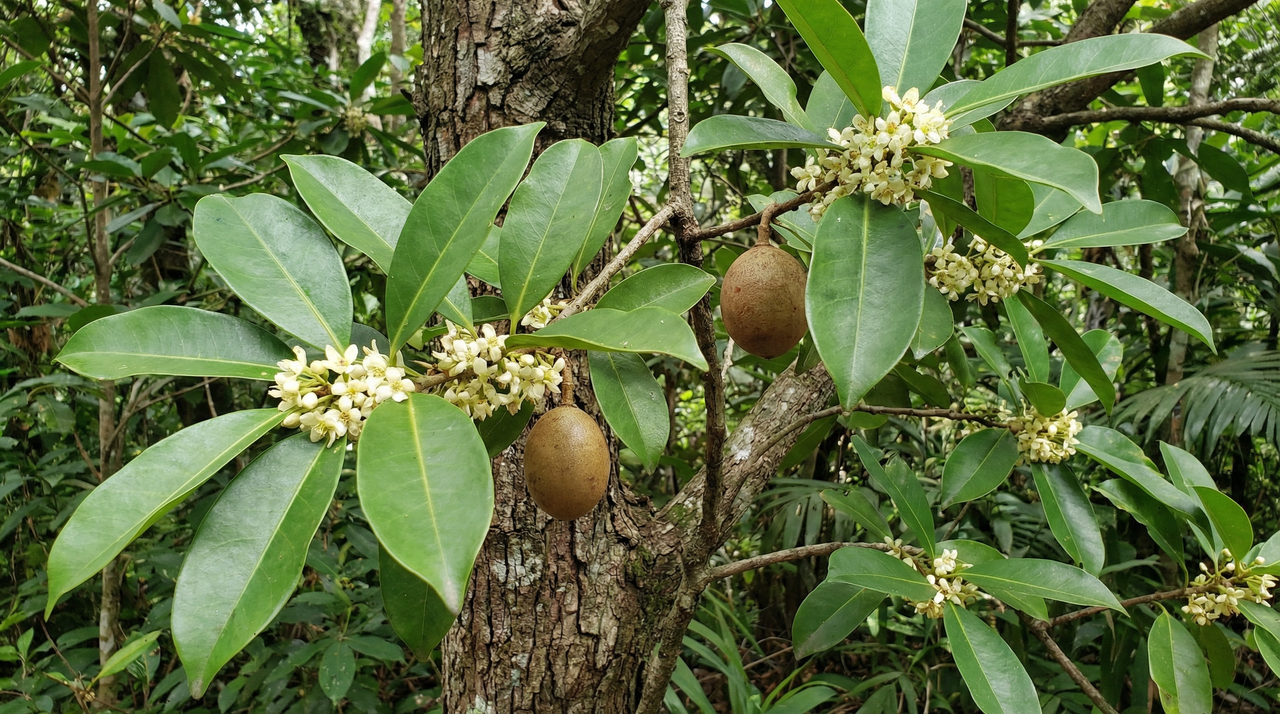
The first time I held a handful of butter from the Indian butter tree, still slightly warm from the press, I assumed I was holding something exotic and obscure. Turns out I was holding something that has quietly kept entire communities fed, medicated, and economically solvent across the Himalayan foothills for centuries, and almost nobody outside that region has heard of it. That's the contradiction at the center of the Indian butter tree: a species so deeply essential to the Chepang, Lepcha, and Limbu peoples of Nepal, India, and Bhutan that losing it would unravel food systems and cultural practices simultaneously, yet it barely registers in Western permaculture literature.[1] We know shea butter. We know cocoa butter. We don't know chiuri, and that gap says more about what gets documented than about what matters.
Diploknema butyracea is the correct name, and getting that right actually matters because the taxonomic muddle around this tree has slowed serious horticultural attention for years. What I find genuinely surprising is that the seed yields up to 50 to 60 percent oil by weight[2] and the resulting fat has a fatty acid profile that competes with some of the most prized food-grade oils in the world. A tree that feeds pollinators, stabilizes eroding slopes, provides cooking fat, heals skin, and generates household income, growing largely without human intervention once established, sounds almost too good. So let's find out what's actually going on with this slow-burning giant from the foothills.
Origin and History of the Indian Butter Tree (Diploknema butyracea)
Botanical Background and Physical Characteristics
The accepted scientific name is Diploknema butyracea (Roxb.) H.J.Lam, placed firmly in the Sapotaceae family.[3][4] You'll also encounter Diploknema butyraceoides scattered through older literature and regional forestry reports; that's a synonym or variant spelling, not a separate species.[5] Common names include Indian butter tree, chiuri, cheura, and phulwara, depending on which community and which valley you're in. The Sapotaceae family will be familiar to anyone who has worked with mahua (Madhuca longifolia) or khirni (Manilkara hexandra), and the family resemblance shows: milky white latex, leathery leaves, and that characteristic combination of generous oil production and impressive longevity.[6][4]
Diploknema butyracea is a medium to large semi-evergreen tree reaching 10 to 25 meters, occasionally 30 meters in ideal conditions, with a straight bole 30 to 60 centimeters across and rough, longitudinally fissured grey-brown bark.[4][7] The leaves are alternate, elliptical to obovate, leathery, and dark green above with a noticeably paler underside. Small yellowish-white flowers appear in axillary clusters and ripen into ovoid drupes 2 to 5 centimeters long, turning yellow-orange at maturity with a sweet, distinctly buttery aroma.[4][8] That scent is distinctive, something like overripe mango with a warm, fatty undertone. It's the kind of sensory detail that stays with you and makes the common name feel completely earned rather than just poetic.
The tree matures slowly, typically reaching its first seed harvest in 7 to 15 years, and then lives for somewhere between 80 and 150 years, fruiting repeatedly throughout that long lifespan.[9][10] Having worked with other long-maturing Sapotaceae relatives in subtropical food forest designs, I recognize that 7 to 15 year production window as typical for the family rather than exceptional. It means this is a tree you plant for your children as much as yourself, which is exactly how indigenous communities in its native range have always thought about it. One propagation note worth flagging here: like many of its Sapotaceae relatives, the Indian butter tree develops a deep taproot that makes transplanting genuinely difficult after the seedling stage.[6][4] I'll get into the implications of that in the propagation section, but it's worth planting the idea early.
Native Range and Habitat in the Eastern Himalayas
The Indian butter tree is native to the eastern Himalayan foothills and the subtropical forests stretching across northeastern India (Assam, Meghalaya, Arunachal Pradesh, Sikkim), Nepal, Bhutan, Bangladesh, northern Myanmar, and into Yunnan province in China, generally at elevations between 500 and 1,500 meters, though it tolerates a broader band from around 200 to 2,000 meters.[3][11][8] It occupies mixed deciduous and semi-evergreen subtropical forests, riverine zones, and well-drained slopes, thriving under warm humid conditions with 1,000 to 2,500 millimeters of annual rainfall and temperatures between 10 and 35 degrees Celsius.[12][13] Seeds are dispersed by birds and mammals, and fruiting is episodic rather than annual, occurring in cycles roughly every 2 to 3 years.[14] Globally, the IUCN lists it as Least Concern, but that broad status masks localized declines caused by habitat loss and unsustainable harvesting.[15][16]
Traditional, Cultural, and Economic Importance
What makes the Indian butter tree remarkable is the depth of its relationship with the people who have lived alongside it for generations. For indigenous communities including the Chepang, Lepcha, and Limbu, chiuri is genuinely woven into the fabric of daily life and ceremony. The seeds yield a fat-rich butter (50 to 70 percent fat content) used as a cooking oil and ghee substitute, a base for cosmetics and soap, lamp fuel, and medicine, and also as a ritual substance for anointing and ceremonial offerings.[17][18][5] The tree is revered in folklore as a life-sustaining gift from the divine, and that reverence translates into practical protection. Communities have long maintained chiuri trees with a care that anticipates modern agroforestry thinking by centuries.
The economics are just as significant. A mature tree produces 20 to 50 kilograms of seeds annually in good years, and for rural Himalayan households, the sale of chiuri butter and seeds represents a critical income stream from the forest.[17][19] The flowers also support significant honey production, adding another layer of value from the same tree.[20] In my reading of successful agroforestry projects, trees that carry this kind of layered economic and cultural weight tend to fare better in the long run than those valued for a single commodity. The chiuri's problem isn't a lack of value; it's that high demand has outpaced sustainable supply in many areas.
Overharvesting, deforestation, and agricultural expansion have pushed some local populations into genuine decline even while the global assessment remains stable.[21][17] The response, increasingly, is community-based management, regulated harvesting, and integration into agroforestry systems that give the tree space to regenerate while keeping it economically viable for the communities who depend on it.[13] That kind of systems thinking, where the tree's survival and the community's welfare are treated as inseparable, is exactly what regenerative land stewardship looks like in practice.
Fun Facts and Conservation Status
Beyond its human uses, the Indian butter tree holds an important place in the forest ecosystem itself. It occupies the middle to upper canopy as a mid-successional species, provides critical food for wildlife, stabilizes erosion-prone slopes with its deep root system, and supports mycorrhizal associations that contribute to overall soil health in Himalayan forest communities.[14][22] Its episodic heavy fruiting every 2 to 3 years creates predictable boom cycles for seed dispersers, a boom-bust rhythm tied to both its own reproductive strategy and the climate variability of its montane habitat.[14][23]
The conservation picture requires a bit of nuance. Globally, Diploknema butyracea sits at Least Concern on the IUCN Red List, but some regional assessments categorize it as Endangered due to habitat fragmentation from deforestation, agricultural expansion, and logging.[24][15] That gap between global and regional status is a familiar story in multipurpose forest trees, and it's a reminder that aggregate data can obscure real local urgency. The trees that thrive going forward will likely be those protected within community-managed forests and well-designed agroforestry systems where their cultural and ecological value keeps them standing rather than felled for short-term gain.
Indian Butter Tree Varieties and Sourcing
Absence of Named Cultivars and Informal Local Selections
Diploknema butyracea (you may also see the spelling butyraceoides floating around, but that's just an orthographic variant of the same species) has no recognized subspecies, no named varieties, and no formally registered cultivars anywhere in the botanical record.[25][26] After researching Himalayan NTFP species for clients interested in high-value oil crops, I've come to understand that this is completely typical. When a tree has stayed in community-based traditional systems rather than entering commercial breeding pipelines, formal cultivar development just doesn't happen. That doesn't mean selection hasn't occurred, only that nobody filed the paperwork.
What does exist is centuries of quiet farmer knowledge. Communities in India and Nepal have long favored individual trees that produce seeds with higher butter content, and agroforestry initiatives in both countries now build on that informal selection by propagating material from proven mother trees.[27][28] I see the same dynamic with moringa and neem: the real breeding work happened in village fields over generations, not in labs. Those selected trees typically begin bearing seeds productively somewhere between 7 and 10 years of age, which is a timeline any grower considering this species needs to sit with before they commit.[27][28] The straight species from a well-chosen mother tree is simply the best material available, and that's fine. Finding even that is the first real challenge for anyone growing outside the Himalayas.
Sourcing Indian Butter Tree Seeds and Plants
Don't expect to find this at your local nursery, or honestly at most online specialty nurseries either. Outside its native range, the Indian butter tree is essentially absent from commercial channels; your realistic options are research institutions, botanical gardens with living collections, specialty seed importers, or conservation programs like the Millennium Seed Bank.[29][30][31] The good news on the regulatory side: this species isn't listed in any CITES appendices, so there's no permit required under international trade law for importing seeds.[32] That said, USDA APHIS quarantine rules for plant material of Asian origin still apply, and I'd encourage anyone importing seeds to work through proper channels rather than trying to shortcut the process.[33][34] I've helped clients navigate plant import permits before, and it's genuinely manageable if you know what you're doing.
In the Himalayan foothills where chiuri is a familiar forest tree, seeds move through regional markets at roughly $2 to $5 per kilogram,[35] which tells you both how accessible it is locally and how far removed that reality is from what a grower in California or Florida faces. For anyone outside the native range, seeds and plants are most reliably obtained through conservation-focused organizations like ICIMOD, which I'd recommend not just for practical reasons but because purchasing through those channels actually supports Himalayan community agroforestry rather than extracting material with no benefit flowing back.[36][37] That ethos matters to me in every rare-species project I design.
If you do manage to source seed, the climate fit is the next honest conversation to have. The species suits USDA zones 9 through 11 and is genuinely frost-sensitive, which rules out most of the continental United States from the start. Germination requires scarification followed by warm stratification, with fresh seeds sown in well-drained sandy loam at 25 to 30°C offering the best results; under those conditions, germination rates of 70 to 90 percent are achievable.[38] The full picture on siting, seedling care, and propagation method choices is covered in the sections ahead. What I'll say here is that sourcing this tree has taught me patience is genuinely step one of any Himalayan species project, and that patience is entirely worth it for the right grower in the right climate.
Indian Butter Tree Propagation and Planting
If you've ever worked with shea or another recalcitrant Sapotaceae, you already have a head start with the Indian butter tree. The propagation logic is similar: fresh seed, moist conditions, patience, and a healthy respect for how quickly things go wrong when you deviate from those basics. What catches people off guard is just how unforgiving this tree is about seed handling before it even touches soil.
Seed Characteristics, Viability, and Storage
The seeds of Diploknema butyracea are recalcitrant, meaning they carry high moisture content (around 40-50%) and cannot tolerate conventional drying or cold storage.[39][40] Drop moisture below 20-30% or store seeds below 15 °C and viability collapses; you can expect it to fall below 50% in as little as 3-6 months under those conditions.[41] The seeds themselves are ellipsoid, anywhere from 1.2 to 3 cm long, and encased in a hard, thick endocarp that imposes physical dormancy; fresh seeds weigh 15-25 g and should go into the ground as soon as they're extracted.[42][43]
If you must hold seed for any period, traditional Himalayan methods work better than anything high-tech: store in moist sand, vermiculite, or even earthen pots packed with ash or cow dung, kept at 15-25 °C and 60-90% relative humidity for up to 6-12 months.[44][45] Long-term orthodox drying or freezing simply isn't viable; field gene banks or cryopreservation of embryonic axes are the research-grade alternatives for conservation purposes.[46] The practical takeaway: source fresh, sow immediately, and treat every day of delay as a cost you're paying in germination percentage.
Germination Requirements and Timeline
Because the hard endocarp imposes physical dormancy, scarification or soaking in warm water (40-50 °C) is non-negotiable before sowing.[39] I learned this with a closely related species when I skipped the hot soak to save time. The germination was embarrassingly patchy. With proper pretreatment and temperatures held at 25-30 °C under consistently moist conditions, fresh seed germinates in 15-30 days with 50-80% success rates.[41][47] Skip the pretreatment with stored seed and you're looking at 2-6 months of sporadic, unreliable emergence.[39]
The long game starts here. Seed-grown trees typically begin fruiting at 7-10 years, with full production not arriving until 10-15 years.[39][48] I always tell readers who want chiuri butter production in their lifetime: seedlings are for reforestation and patient homesteaders. Grafted plants are for everyone else.
Vegetative Propagation Methods
Grafting onto seedling rootstock is the reliable path to earlier yields; grafted trees can fruit in 3-5 years, sometimes as early as three with good management.[48] Beyond the timeline advantage, grafting lets you clone elite, high-butter-yielding genotypes that random seedlings simply cannot guarantee. Softwood or semi-hardwood cuttings treated with IBA under mist or high humidity achieve 40-60% rooting success, and grafting onto seedling rootstock hits similar rates, though this is largely the domain of research stations and commercial nurseries for now.[49][41] Tissue culture from shoot tips has been explored for mass multiplication but remains experimental.[39][49] Seed propagation remains the primary method for large-scale planting and conservation work, with vegetative methods reserved for where genetic quality really matters.
Soil, Site Selection, and Planting Technique
Native to subtropical Himalayan foothills at 600-2,000 m elevation with 1,000-2,500 mm of annual monsoon rainfall,[42][4] this tree evolved on forest edges and slopes where drainage is naturally excellent. Replicate that in cultivation. It prefers well-drained loamy or sandy-loam soils with good organic matter, a pH of 5.5-7.5 (best yields closer to 6.0-7.0), and will tolerate poorer rocky or lateritic soils only if drainage is genuinely excellent.[50][4] Compaction above 1.4 g/cm³ bulk density, waterlogging, and salinity are all non-starters.[51]
I test soil pH every two years in my own plantings, and I've watched interveinal chlorosis disappear within a season after a light sulfur application on a planting that had drifted above 7.5. Below 5.5, aluminum and manganese toxicity become the problem; above 7.5, phosphorus and iron lock up, leading to chlorosis, necrosis, and stunted growth.[51][52] Amending with lime (1-2 t/acre per unit increase needed) or elemental sulfur (0.2-0.5 t/acre per unit decrease) after soil testing keeps you in the productive range.[53] Young plants need 30-50% shade to prevent scorching; once mature, they want full sun.[54] The deep taproot, which can reach 2-3 m, eventually confers impressive drought tolerance, but seedlings are genuinely sensitive to transplant shock.[4] Get past the first two establishment years and the tree shifts character entirely.
Spacing, Timing, and Establishment
Given a mature height of 15-25 m, canopy spread of 6-12 m, and lateral roots that extend 8-12 m out from the trunk, spacing at 8-10 m (or roughly 6x6 m to 10x10 m) is the practical range, giving 100-250 trees per hectare.[55][56] That wide spacing isn't wasted space during the slow 1-2 year establishment phase; I interplant with ginger, millet, or nitrogen-fixing legumes, turning the juvenile period into a productive polyculture while the trees quietly develop their taproots.
Sow fresh seeds 1-2 cm deep in raised nursery beds or polybags at the start of the rainy season, typically June-July, then transplant seedlings at 30-50 cm height (6-12 months old) into 50x50x50 cm pits amended with 10-20 kg of manure, topsoil, and sand.[41][57] Early growth averages only 0.5-1 m per year, so manage expectations accordingly.[41] Wide spacing and excellent drainage are your best defenses against the two vulnerabilities that end most plantings early: transplant shock and waterlogged roots. Get those two right and you're building toward a tree that will outlive you.
Indian Butter Tree Care Guide
Everything about caring for the indian butter tree makes more sense once you picture where it actually comes from. Native to subtropical dry deciduous forests of the Eastern Himalayas at 600–2,000 m elevation, it evolved in a world of monsoon-dominated rainfall between 800–2,000 mm annually, well-drained loamy soils, and winters that are cool but rarely punishing.[58][59] Keep that ecological picture in your head. Every watering and feeding decision flows from it.
Water Requirements and Drought Tolerance
The biggest shift in caring for this tree is the transition between life stages. Young plants in their first year or two need genuine attention: consistent moisture of about 1–2 inches per week, letting the top 2 inches of soil dry between waterings, and strict avoidance of waterlogging at all times.[58][60] I've found that a generous layer of mulch around the base does most of the work here, keeping moisture consistent without creating the soggy conditions that will rot young roots far faster than drought would. Once that taproot gets established and reaches 2–3 m down into the soil profile, the tree's whole relationship with water changes.[61][62] Mature specimens are genuinely drought-tolerant and rarely need supplemental irrigation except during a prolonged dry spell. Wet feet remain the one thing this tree never forgives, regardless of age.
Sunlight and Light Exposure Needs
Young Indian butter tree seedlings prefer 50–70% shade, something I compare to the way young avocado or citrus react badly to full summer sun before they've developed any canopy mass of their own.[63][54] Shade cloth does double duty here, reducing both light intensity and heat load. As the tree matures, though, light becomes essential to productivity. Fruiting trees need at least 6 hours of direct sun daily, and inadequate light shows up fast as pale, chlorotic foliage and poor fruit set.[29][64] Too much direct sun on a seedling in hot, arid conditions produces the opposite problem: necrotic leaf spots and wilting. Site selection matters more with this species than most.
Soil, Fertilization, and Nutrient Management
The tree tolerates poor and rocky soils, but it rewards good preparation. At planting, incorporate 10–20 kg of well-decomposed compost or FYM plus 100–200 g of single superphosphate into the pit.[65][66] Soil pH should sit between 5.5 and 7.5. For young trees in years one through three, keep feeding modest: 5–10 kg FYM annually combined with 100–200 g N, 50–100 g P, and 50–100 g K.[67] Mature trees from year four onward need more: 200–500 g N, 150–300 g P, and 150–300 g K per tree per year, with potassium weighted higher once fruiting begins.[68] Split applications between pre-monsoon and post-monsoon, timed to support flowering and then fruit set.[69][70]
I've seen firsthand what excess nitrogen does to a fruiting tree: lush, beautiful foliage and almost nothing in the way of seeds. Pushing nitrogen beyond recommended rates is one of the fastest ways to reduce next season's butter yield, and it increases pest susceptibility as a bonus.[71][72] Deficiency symptoms to watch for include yellowing of older leaves (nitrogen), purplish foliage and poor fruit set (phosphorus), marginal browning with reduced fruit quality (potassium), and interveinal chlorosis on young leaves signaling iron issues.[73][74] I always soil-test before adjusting micronutrients, especially if flowering seems off, since zinc and boron deficiencies can quietly undercut fruit set without dramatic visible symptoms. Testing every 2–3 years keeps you ahead of problems rather than chasing them.[75]
Frost Tolerance and Cold Protection
The Indian butter tree is frost-tender. Established plants in USDA zones 9b–11 can survive brief dips to -4 °C or -5 °C, but young trees, new growth, and flower buds are far more vulnerable, with meaningful damage beginning around -1 °C.[4][76] I've grown young plants from seed in protected conditions and watched fresh leaves blacken after a single unexpected light frost. It happens faster than you'd expect. In marginal climates, frost cloth, heavy mulch over the root zone, and a sheltered south-facing position aren't optional extras; they're the difference between a tree that survives winter and one that doesn't.[77][78] Frost damage presents as wilting, blackened leaf margins, shoot dieback, and in severe cases bark splitting. Growers in zone 9b should seriously consider conservatory or greenhouse culture for at least the first two winters.
Heat Tolerance and Summer Care
Optimal growth happens between 20–35 °C, and the tree handles moderate heat up to about 40–42 °C before showing stress.[79][80] Above 38 °C, especially under low humidity or drought conditions, you'll see leaf scorch, wilting, and slowed growth. In conditions similar to Central Florida summers, the tree tends to slow noticeably in peak heat but bounces back once temperatures ease and irrigation is consistent. The same 50–70% shade cloth that protects seedlings from sun exposure also helps buffer heat stress, making it genuinely dual-purpose in hot subtropical gardens.[63]
Pruning, Maintenance, and Seasonal Rhythm
Understanding this tree's phenological calendar makes maintenance intuitive. It drops leaves between November and February, flowers from February through May, and fruits from May through October during the monsoon; new leaf flush arrives in March and April.[81][82] That leaf-drop window, December through April, is your pruning season. Keep cuts light: remove dead, diseased, or crossing branches to improve airflow, but resist the urge to do more.[83][84] Heavy pruning directly reduces seed yield and butter quality; I avoid winter pruning in frost-prone spots specifically because fresh cuts add stress exactly when the tree is least equipped to handle it. The most important structural decision you'll make is early: train young trees to 3–5 main scaffold branches, targeting a manageable height of 6–8 m for harvest access.[85] Get that architecture right in the first few years and the tree largely takes care of itself from there.
Harvesting Indian Butter Tree Fruits and Seeds
The indian butter tree, correctly named Diploknema butyracea, is a tree whose harvest rewards patience twice: once when you eat the sweet pulp straight from the fruit, and again months later when you render that creamy, nutty butter from the dried seeds. Getting either reward right depends on understanding that "harvest time" is not a single date on the calendar.
When to Harvest: Timing, Altitude, and Maturity Cues
Fruit development from flowering to full physiological maturity takes 150 to 210 days, and flowering itself shifts with altitude and region, occurring anywhere from November through February at lower elevations to May and June higher up.[86][87] That's why peak harvest in the Eastern Himalayas can fall anywhere from April through June at lower elevations around 600 to 1,200 meters, or as late as August and September above 1,500 meters.[88][89] This isn't inconsistency in the literature; it's genuine ecological variation that experienced harvesters read from the tree itself rather than the calendar.
The maturity cues are the same ones I use for subtropical fruits like mango or persimmon: color shift from green to yellowish-orange or reddish-brown, noticeable softening of the flesh, natural drop from the branch, occasional splitting of the fruit, and a rising sweet aroma that announces ripeness before you even touch the fruit.[4][90][86] For butter production specifically, you want seeds at full maturity, when oil content peaks at 50 to 60 percent.[86][91] Harvesting even a week or two early translates directly into lower yields and a thinner, less creamy final product. When your first harvest finally arrives after years of cultivation, you want to time it precisely.
How to Harvest: Traditional Techniques and Sustainable Practices
The actual collection method is refreshingly low-tech. Himalayan communities walk the forest floor gathering fallen fruits, occasionally shaking branches to dislodge mature ones, or picking directly from accessible limbs by hand.[92][86] What I find compelling about this tradition is the discipline built into it. Experienced harvesters deliberately leave 70 to 80 percent of the fruit on the tree, ensuring continued vigor, next year's flowering, and enough food for the wildlife that depends on it.[86][93] In my experience with other long-lived oilseed trees, this kind of restraint is exactly what keeps a planting productive for generations rather than declining after a decade of heavy extraction. It fits naturally into a food forest guild where the tree pulls double duty as ecosystem anchor and human resource.
Yield, Flavor, and Post-Harvest Handling
A quick note on nomenclature: the accepted scientific name is Diploknema butyracea; you'll see "butyraceoides" appear in older literature as a synonym or variant, but it's not the current standard.[94][7] The fresh pulp itself is worth eating on the spot: sweet, juicy, with a flavor somewhere between ripe mango, persimmon, and apricot.[7][4] The seeds, though, are where the real value lives. At peak maturity those kernels yield chiuri butter that is pale yellow, semi-solid at room temperature, with a mild nutty character somewhere between hazelnuts and ghee and a melting point of 30 to 40 degrees Celsius.[95][96] That melting point is almost identical to cocoa butter, which tells you something useful about how it will perform in a kitchen.
Post-harvest handling is where a lot of small-scale efforts go wrong. Seeds must be cleaned and dried rapidly down to 20 to 30 percent moisture content, stored in breathable containers like jute bags in a cool, shaded space and kept away from pests.[97][45] I treat this the same way I treat post-harvest curing for macadamia or coffee: slow down on that drying step and you invite mold, rancidity, and off-flavors that no amount of processing will fix. Done correctly, the butter keeps up to a year.[97] A mature tree in good forest conditions can supply meaningful quantities for a family or small community when it's harvested sustainably, which is part of what makes this species so compelling for agroforestry contexts where long-term food security matters.
Indian Butter Tree Preparation and Uses
Culinary Uses and Traditional Processing of Fruit and Seeds
There are actually two edible offerings here, and I think the simpler one gets overlooked. The fresh fruit pulp is sweet and eaten directly by communities across the Himalayan foothills, [7][98] but the seeds are where the real culinary tradition lives. Those kernels yield chiuri butter, a semi-solid fat that functions as a direct ghee substitute and solidifies at room temperature much like cocoa butter. [7][99] The texture is genuinely creamy, the roasted aroma is nutty and warm, and the butter carries natural preservative qualities that made it invaluable for food storage in mountain communities without refrigeration. [100]
Getting there requires proper processing, and I want to be direct about this: raw seeds contain saponins and other anti-nutritional compounds that cause bitterness, astringency, and potential digestive upset if you skip the prep. [101][102] In my experience working with underutilized oilseeds, skipping the roasting or thorough drying step is a mistake that always shows up in the final product. Traditional extraction starts with cleaned seeds that are briefly boiled, then sun-dried for one to two weeks at temperatures that stay below 40°C to prevent mold while reducing moisture to a stable 10-15%. [103][104] From there, kernels are roasted or boiled, then churned or pressed to separate the fat, yielding 40 to 60% oil by kernel weight. [101][103] The resulting butter goes into curries, stews, halwa, and laddus, and its high smoke point makes it equally practical for deep-frying. [19][105]
Medicinal Preparations from Different Plant Parts
Himalayan healers have long drawn on almost every part of this tree, and the preparations are straightforward in principle even if the dosages remain traditionally guided rather than clinically validated. Topical application of the seed oil, typically around 5 to 10 ml applied two or three times daily, addresses eczema, wounds, burns, joint pain, and rheumatism, while poultices made from ground seeds, bark, or leaves handle surface-level wound care. [106][107] For internal complaints, bark, leaf, and root decoctions of around 50 to 100 ml twice daily have traditionally addressed fever, diarrhea, dysentery, and respiratory problems, while fruit pulp preparations have been used where malnutrition and gastrointestinal stress overlap. [108][109] The same careful drying process that protects culinary butter quality also matters here: seeds dried below 40°C with moisture controlled to 10-15% retain the compounds that make the oil effective as a topical. [103] I'd treat the topical uses as well-supported by consistent traditional practice; internal use is a different conversation and warrants professional guidance before anyone experiments on their own.
Non-Food Applications and Multipurpose Value
What strikes me every time I study a well-integrated traditional agroforestry species is how few parts get wasted, and this tree exemplifies that. Indian butter tree oil moves naturally into soap making, lamp fuel, and cosmetic formulations, where its emollient character, comparable to shea or other Sapotaceae butters I've worked with, makes it a legitimate moisturizer and hair conditioner. [110][111] Seeds can yield 40 to 70% butter rich in oleic and stearic acids, and the traditional extraction by boiling and skimming closely parallels shea processing. [112][113] Beyond the seeds, leaves and bark go to livestock as fodder, branches supply fuelwood, and the flowers sustain pollinators for honey production. [19][114] Watching how indigenous Himalayan communities have organized their lives around a single tree like this one is exactly the kind of systems thinking that shapes how I approach polyculture design. Every use flows from the same resource without depleting any part unnecessarily, and that model deserves far more attention than this tree currently receives outside its native range.
Indian Butter Tree Health Benefits
Every benefit attributed to the indian butter tree traces back to its chemistry, and that chemistry is genuinely impressive. The plant concentrates different compound classes across different tissues: leaves tend to be highest in flavonoids like quercetin, kaempferol, and rutin alongside phenolics like gallic and ellagic acid; bark carries phenolics, saponins, and minor alkaloids; fruit pulp holds sugars, organic acids, and vitamins; and the seed kernel delivers the triterpenoids (β-sitosterol, lupeol, betulinic acid) alongside the fatty acids that make chiuri butter so medicinally and culinarily distinctive.[115][116][117] These aren't incidental compounds; in a Himalayan forest environment where the tree faces intense herbivore pressure and fungal challenge, producing them is a survival strategy.
Key Phytochemicals and Composition
The seed kernel oil is where most of the research has focused, and for good reason. It runs 40 to 52% oleic acid with stearic and palmitic acids making up much of the remainder and linoleic acid contributing a smaller fraction, plus phytosterols in the range of 200 to 400 mg per 100 g, measurable tocopherols, and squalene.[118][119] Leaf extracts measured in formal studies have shown total phenolic content of 50 to 150 mg gallic acid equivalents per gram, which is a respectable number for a temperate-adjacent species.[118] Fruit pulp adds vitamin C (20 to 30 mg per 100 g), vitamin A, and a suite of organic acids that give the fresh fruit its mango-like character.[117]
I've noticed similar patterns with other high-altitude oil trees: specimens from more stressed environments, higher elevations with thinner soils and stronger UV, tend to produce more pungent, phenolic-dense material. The research reflects this too. Himalayan specimens often show elevated phenolics, dry-season collections tend to be flavonoid-rich, and the extraction solvent matters significantly, with methanol pulling more polar compounds than water.[120] When I source chiuri butter from different Himalayan elevations I notice real differences in aroma intensity and oxidative stability, which tracks with that biochemistry.
Medicinal Research and Traditional Uses
The strongest scientific evidence centers on antioxidant and antimicrobial activity. Seed kernel oil tested in DPPH assays showed an IC50 of 25.3 µg/mL alongside measurable inhibition of lipid peroxidation, while antimicrobial testing against bacteria and fungi returned minimum inhibitory concentrations of 62.5 to 500 µg/mL, likely through membrane disruption by the phenolic and fatty acid fraction.[121][118] Anti-inflammatory data from a rodent study found that methanol stem extract at 200 mg/kg produced 52.3% inhibition of carrageenan-induced paw edema, a result described as comparable to indomethacin.[122][123] These are in-vitro and rodent results; human clinical trials simply don't exist yet, so I read them as directionally promising rather than confirmed.
The emollient effect, though, I can speak to directly. Chiuri butter rubbed into skin has a richness and staying power that reminds me immediately of shea butter, another Sapotaceae oil I've worked with extensively in garden and personal formulations. The oleic acid content explains it: oleic acid penetrates skin readily and reinforces the lipid barrier.[124] Himalayan communities have applied it to burns, wounds, eczema, and arthritic joints for generations, with bark and leaf decoctions used for fever and cough.[125][19] Preliminary in-vitro data also hint at antidiabetic and neuroprotective potential through enzyme inhibition, but those findings need much more investigation before anyone should treat them as actionable.[126]
Nutritional Profile
Seed kernels clock in at 45 to 70% oil by weight, which puts the caloric density somewhere between 650 and 900 kcal per 100 g dry weight. That's a serious energy source, and it's why chiuri butter has long served as a ghee substitute in communities where dairy fat is scarce or expensive. Beyond calories, the kernels deliver 10 to 15 g of protein and meaningful minerals:
- 240 to 280 mg calcium
- 140 to 160 mg magnesium
- 550 to 650 mg potassium
- 4 to 6 mg iron per 100 g
Vitamins A and E are present in the butter itself alongside phytosterols and phenolic antioxidants.[129] The fruit pulp rounds out the nutritional picture with vitamin C and natural sugars, making it a genuinely different kind of contribution to the diet than the seed. Composition does shift with altitude, region, and how the kernels are processed, so the numbers above reflect ranges rather than fixed values.[130]
Safety and Precautions
The safety record here is reassuring. Ripe fruit pulp is eaten fresh across Nepal, India, and Bhutan, and properly processed chiuri butter has centuries of use as a cooking fat and cosmetic without widespread reports of poisoning in humans or livestock.[4][131] The key word is "processed." Raw seeds contain saponins at roughly 10% of defatted flour, and those compounds cause real bitterness and can produce mild gastrointestinal discomfort if you eat them in quantity.[132][133] The traditional roasting and boiling steps aren't just cultural habit; they're functional, heat-labile saponins partition into the aqueous phase and get discarded, leaving the butter safe. I always advise anyone working with raw kernels to follow traditional processing because the saponin risk is real but easily managed once you understand it. A reliable sensory cue: the bitterness disappears completely after proper roasting and boiling, which tells you the process has done its job.
Since the indian butter tree belongs to the Sapotaceae family, there's a theoretical latex-fruit syndrome cross-reactivity risk for people with latex allergies, though specific clinical evidence for this species is limited and patch testing has shown the butter to be low-irritancy and non-comedogenic.[134][135] If you have a known latex allergy, start with a small patch test regardless. Environmental stress can nudge secondary metabolite profiles in unpredictable directions,[123] which is another reason to source from reliable, well-identified material and trust the processing steps that generations of Himalayan communities have already worked out.
Indian Butter Tree Pests and Diseases
The Indian butter tree sits in an interesting middle ground as species go: genuinely susceptible to a handful of serious threats, yet equipped with its own arsenal of defenses that keeps it from being the kind of high-maintenance nightmare some subtropical trees can become. In its native Himalayan range, it experiences only moderate overall pest pressure with no major epidemics on record.[136][137] That changes somewhat in cultivation, and knowing why helps you design your way out of most problems before they start.
Common Insect Pests of the Indian Butter Tree
The pest list is long if you read the entomology literature: aphids, scale insects, leaf miners, stem borers in the Cerambycidae family, fruit borers in the genus Anarsia, fruit flies, leaf beetles, and several defoliating caterpillars including Spodoptera litura and Eupterote undulata.[138][139] Severe caterpillar outbreaks can strip 30 to 50 percent of the leaf canopy and cut fruit yields by 20 to 40 percent.[140] In my experience growing subtropical trees, you catch those outbreaks early by walking the canopy during the humid season and looking for skeletal leaves or frass at the branch axils before the damage compounds. One useful aside: the seed oil itself has demonstrated insecticidal properties in preliminary research,[141] which is a satisfying reminder that this tree's own chemistry is working quietly in its favor.
Major Diseases and Their Triggers
Fungal pathogens are where the real risk concentrates. Anthracnose from Colletotrichum gloeosporioides and related species hits leaves, young shoots, and fruit:
- Alternaria and Cercospora cause leaf spots
- powdery mildew shows up in drier periods
- Phytophthora root rot lurks wherever drainage is poor or soils stay waterlogged
Natural Defenses and Integrated Pest Management
The tree's phytochemical profile, covered in more depth in the health benefits section, does real work here too. Phenolic compounds, flavonoids, terpenoids, tannins, latex, and glandular trichomes that exude sticky secretions all deter feeding insects and suppress microbial colonization.[147][148] It's a decent baseline, but cultivation strips away the wild-stand biodiversity that buffers stress, so you need to rebuild it intentionally through your guild design.
Practical IPM here leans hard on cultural controls: good drainage, proper spacing of 5 to 12 meters between trees for airflow, regular pruning of infected material, and organic mulching kept a safe distance from the trunk.[142][149] Biological allies like parasitoid wasps, ladybirds, and insectivorous birds do the heavy lifting once your food forest has some structural diversity. I never reach for copper fungicides until I've first corrected drainage and spacing; healthy, unstressed trees rarely need them. Neem-based biopesticides are a reasonable threshold-based intervention when caterpillar pressure climbs.
No commercially standardized resistant cultivars exist, and breeding efforts remain limited to selection from wild germplasm.[150] I always recommend starting from seed of locally adapted or particularly robust mother trees rather than waiting for a named variety that may never arrive. Wild ecotypes often show better tolerance to soil-borne pathogens,[151] and in non-native settings, your biggest job is simply replicating the drainage and airflow the tree evolved with.
Indian Butter Tree in Permaculture Design
There's a particular kind of tree that permaculture designers get excited about, and it's not always the flashiest one in the guild. The Indian butter tree is that quiet anchor species: a keystone of Himalayan montane forests that does a staggering amount of ecological work before you even get to the human yields. Its deep taproot stabilizes erodible slopes and pulls minerals up into leaf litter that genuinely enriches the soil over time, functioning as a dynamic accumulator in the canopy layer.[23][152] The wildlife connections run deep too: birds, squirrels, deer, and a surprisingly diverse guild of insect pollinators all depend on it.[153]
Ecosystem Functions and Wildlife Support
I always tell people to think about the underground half of a tree before planting it, and this one rewards that thinking. Diploknema butyracea forms ectomycorrhizal associations that improve phosphorus uptake in the kind of poor, leached hillside soils where it naturally thrives, which means it's building its own fertility network from day one.[154] There are no reported allelopathic effects, so you can interplant freely without worrying about chemical interference with neighbors.[155] I've worked with enough allelopathic species to appreciate how rare that quality is in a large tree.
The pollinator picture is where things get really interesting from a guild-design standpoint. The flowers are small and creamy-white, clustered in terminal panicles with a mild fragrance, and they draw bees (Apis cerana, Halictus spp.), nitidulid beetles, flies, and butterflies.[156][157] On trees I've grown in the Sapotaceae family, I've noticed that morning hours at moderate temperatures generate the highest bee activity, and the research on this species confirms exactly that: peak visitation happens between 20 and 30 °C, roughly 8 to 11 a.m., during the February-to-May flowering window.[158] The tree is protogynous and self-incompatible, meaning you need cross-pollination between individuals to get fruit, and fruiting runs May through August with birds and mammals handling dispersal.[159] In fragmented or disturbed settings, pollinator pressure can drop enough to significantly reduce fruit set, so planting in groups and designing for staggered bloom companions is genuinely important here, not just a nice idea.[160][161] In a pinch, hand pollination can improve yields when bee populations are low.[160]
Climate and Growing Zones
In its native range, this tree grows at 600 to 2,000 m elevation across the Himalayan foothills of India, Nepal, Bhutan, and Myanmar, typically in moist deciduous and semi-evergreen mixed forests on slopes and river valleys.[62][4] Those slopes matter because drainage is baked into the habitat. The climate envelope runs from 5 to 40 °C overall, with an optimal daytime range of 21 to 29 °C, nighttime lows around 10 to 15 °C, humidity between 70 and 90 percent, and 1,000 to 2,500 mm of annual rainfall concentrated in a distinct monsoon season.[7][162]
Frost is the hard wall. Damage starts at 0 °C, and anything below -1 °C for any sustained period causes serious harm.[4][163] I never plant Sapotaceae relatives unprotected below zone 9b; even a brief dip to 28 °F has caused significant leaf scorch on other family members I've grown, and I treat this species with the same caution. USDA zones 9b to 11 are the realistic target, with best performance in 10b and warmer.[76][163] Some sources reference successful trials in zone 7 to 10 with protection, and there are specimens at Fairchild Tropical Botanic Garden and San Diego Botanic Garden, plus trials in the UK, New Zealand, and Canada.[164] That's encouraging, but long-term performance data outside its native range is still thin. My honest advice: choose a wind-sheltered microclimate with excellent drainage, plan for winter protection in marginal zones, and go in with realistic expectations.
Forest Layer and Guild Companions
At 10 to 15 meters (occasionally reaching 20), this semi-evergreen to deciduous tree occupies the understory to sub-canopy layer in its native Himalayan forests, which translates neatly into the middle canopy of a warm-climate food forest design.[4][165] Think of it the way I think about a well-placed loquat or a mature mulberry: a tree that justifies its footprint through stacked yields rather than a single function. In this case those yields are chiuri butter from the seeds, browse and fodder, fuelwood, pollinator forage, and a deep root system that's doing slope-stabilization work even when you're not looking at it.[114][166]
It's not a nitrogen-fixer, so be clear-eyed about that when you're sketching out guild roles. Its fertility contribution comes from leaf drop and those mycorrhizal networks, which is a slower but genuinely meaningful pathway to soil health. In my zone 9b designs I'd position it where summer irrigation or natural rainfall can mimic monsoon conditions, sheltered from cold winter winds, with lower-layer companions chosen to support its pollinator community across the season. The absence of allelopathy gives you real flexibility there. This is a tree that rewards being part of a thought-out system rather than planted as a specimen, and communities across the Himalayas have been proving that point for centuries.
The Tree That Made Me Rethink What "Useful" Actually Means
I keep coming back to something a Nepali agroforestry researcher told me: that a family with a few mature chiuri trees on their land doesn't really go without. Cooking fat, medicine, soap, fodder, soil, and income from a single canopy layer. I've designed a lot of food forests, but I've rarely encountered a plant that makes me feel like I've been thinking too small.
Sources 166
- FAO: Non-Wood Forest Products in Nepal ↩
- Industrial Crops and Products: Chiuri butter characterization ↩
- Plants of the World Online - Kew Science ↩
- Diploknema butyracea - Useful Tropical Plants Database ↩
- The Cheura (Diploknema butyracea) Tree: A Review ↩
- Sapotaceae Family - Kew Science ↩
- Diploknema butyracea - Wikipedia ↩
- Flora of China - Sapotaceae ↩
- Diploknema butyracea: A Potential Tree Species of the Central Himalaya ↩
- Diploknema butyracea: A Potential Tree-borne Oil Seed Species ↩
- Flora of Nepal: Diploknema butyracea ↩
- Diploknema butyraceoides: A multipurpose tree of the eastern Himalayas ↩
- The Cheura Tree: Ecology and Utilization in the Eastern Himalayas ↩
- Ecology and conservation of Indian butter tree (Diploknema butyraceoides) ↩
- Diploknema butyracea - IUCN Red List ↩
- Diploknema butyracea (Roxb.) H.J.Lam - IUCN Red List ↩
- Cultural and Economic Importance of Non-Timber Forest Products in the Himalayas ↩
- Ethnobotany of Diploknema butyracea in Tribal Communities of Northeast India ↩
- Ethnobotanical Study of Diploknema butyracea in Eastern Himalaya ↩
- Traditional Uses of Chiuri (Diploknema butyracea) by Indigenous Communities in Nepal ↩
- Overexploitation and Sustainability of Non-Timber Forest Products: Case of Cheura Butter in Nepal ↩
- Diploknema butyracea: Ecology and Distribution - ResearchGate ↩
- Diploknema butyracea: A multipurpose tree of the Central Himalaya ↩
- Diploknema butyraceoides - IUCN Red List ↩
- Diploknema butyracea (Roxb.) H.J.Lam ↩
- Diploknema butyracea ↩
- Cheura (Diploknema butyracea): An Underutilized Oil Seed Tree ↩
- Cheura (Diploknema butyracea) Cultivation Guide ↩
- Diploknema butyracea - Useful Tropical Plants ↩
- Millennium Seed Bank Partnership ↩
- Diploknema butyracea - Plant Finder ↩
- CITES Species+ Checklist ↩
- Federal Register: Importation of Plants and Plant Products ↩
- Plants for Planting Manual ↩
- Chiuri (Diploknema butyracea) : The Multi-Purpose Tree of the Himalayas ↩
- Chiuri (Diploknema butyracea) - Conservation and Propagation ↩
- National Plant Germplasm System ↩
- Seed Germination Protocols for Indigenous Trees of the Himalaya ↩
- Diploknema butyracea: A Potential Multi-purpose Tree for the Humid Foothills of the Eastern Himalayas ↩
- Seed Information Database ↩
- Propagation Techniques for Cheura (Diploknema butyracea): A Guide for Farmers ↩
- Diploknema butyracea: A Multipurpose Tree of the Himalayas ↩
- Fruit and Seed Morphology of Sapotaceae Family ↩
- Recalcitrant Seeds: Biology, Ecology and Conservation ↩
- Chiuri (Diploknema butyracea) in Nepal: Ecology and Utilization ↩
- Seed Storage Behaviour of Forest Tree Seeds in India ↩
- Diploknema butyracea (Chiuri) ↩
- Propagation and Cultivation of Cheura (Diploknema butyracea) ↩
- Vegetative Propagation of Diploknema butyracea by Cuttings and Grafting ↩
- Cheura (Diploknema butyracea): An Underutilized Oil-Bearing Tree ↩
- Diploknema butyracea: A Potential Tree Species for Temperate Forest Restoration ↩
- FAO: Non-Wood Forest Products - Cheura (Diploknema butyracea) ↩
- Soil pH Management for Fruit Trees ↩
- Silviculture of Indian Butter Tree ↩
- Cultivation and Utilization of Chiuri (Diploknema butyracea) in Nepal ↩
- Agroforestry Practices for Non-Timber Forest Products: Chiuri Tree Management ↩
- Silviculture of Non-Timber Forest Products in the Indian Himalaya ↩
- Diploknema butyracea: Ecology and Cultivation ↩
- Diploknema butyracea: A Multipurpose Tree of the Central Himalaya ↩
- Chiuri (Diploknema butyracea): A Potential Non-Timber Forest Product of Nepal ↩
- Diploknema butyracea: A multipurpose tree of the Eastern Himalayas ↩
- Cultivation of Cheura (Diploknema butyracea) in the Indian Himalayas ↩
- Propagation and Cultivation of Diploknema butyracea ↩
- Light Stress in Woody Plants: A Review ↩
- Agroforestry Practices in the Indian Himalayas: Diploknema butyracea ↩
- Cheura (Diploknema butyracea): Propagation and Cultivation ↩
- Cultivation and Management of Cheura (Diploknema butyracea) ↩
- Cultivation of Phulwara (Diploknema butyracea) ↩
- Cultivation Practices for Chiuri (Diploknema butyracea) in Nepal ↩
- Soil and Nutrient Management for Subtropical Fruit Trees ↩
- Signs of Over-Fertilization in Woody Perennials ↩
- Cultivation Practices for Cheura (Diploknema butyracea) in the Himalayas ↩
- Nutrient Deficiencies in Tropical Fruit Trees ↩
- Micronutrient Deficiencies in Sapotaceae Species ↩
- Cultivation of Cheura (Diploknema butyracea): A Review ↩
- USDA Hardiness Zone Map and Plant Tolerances ↩
- Frost Damage in Trees ↩
- Cultivation of Cheura Tree in Nepal ↩
- Heat Stress Effects on Subtropical Trees: Case of Diploknema ↩
- Heat Stress Responses in Subtropical Trees: Case of Cheura ↩
- Phenology and Life Cycle of Cheura Tree ↩
- Phenology of Chiuri (Diploknema butyracea) in Eastern Himalaya ↩
- Management of Cheura (Diploknema butyracea) for Sustainable Livelihoods ↩
- Diploknema butyracea: A multipurpose tree of the Himalayas ↩
- Pruning Techniques for Fruit Trees in Subtropical Regions ↩
- Diploknema butyracea (Roxb.) H.J.Lam: A promising multipurpose tree of the Himalaya ↩
- Phenology and Harvesting of Chiuri (Diploknema butyracea) in Nepal ↩
- Ethnobotanical knowledge and utilization of wild plants in Kanchenjunga Conservation Area, Eastern Himalayas ↩
- Diploknema butyracea: A multipurpose tree of the Himalayas ↩
- Phenology and Harvesting of Phulwara (Diploknema butyracea) in Indian Himalaya ↩
- Phyto-chemical analysis and oil content determination in Diploknema butyracea seeds ↩
- Diploknema butyraceoides: A multipurpose tree of the Indian Eastern Himalaya ↩
- Chiuri (Diploknema butyracea): Harvesting and Processing ↩
- Chiuri (Diploknema butyracea): A multipurpose tree of the Central Himalaya ↩
- Volatile Compounds in Diploknema butyracea Kernel Oil ↩
- Physicochemical properties of Phulwara butter ↩
- Post-Harvest Management of Non-Timber Forest Products ↩
- Chiuri (Diploknema butyracea) - Traditional Uses and Benefits ↩
- Edible Oils from Underutilized Plants - Diploknema butyracea ↩
- Diploknema butyraceoides: An emerging oilseed crop from the Himalaya ↩
- Ethnobotany of Diploknema butyraceoides in Northeast India ↩
- Chiuri (Diploknema butyracea): A multipurpose endangered wild species in Nepal ↩
- Chiuri (Diploknema butyracea): A potential source of oil for the rural economy in Nepal ↩
- Post-harvest handling and processing of chiuri fruits ↩
- Processing and utilization of Phulsun (Diploknema butyracea) butter ↩
- Ethnobotanical Uses of Diploknema butyracea in Northeast India ↩
- Ayurvedic Properties of Phulwara (Diploknema butyracea) ↩
- Pharmacological Properties of Chiuri Butter (Diploknema butyracea) ↩
- Ethnobotanical Knowledge of Chepang People: Plants Used in Treatment of Gastro-Intestinal Disorders ↩
- Diploknema butyracea: A promising source of butter ↩
- Traditional uses and commercial potential of chiuri butter ↩
- Ethnobotanical study of chiuri (Diploknema butyracea) in Nepal ↩
- Diploknema butyracea: The Chiuri Butter Tree of the Eastern Himalayas ↩
- Agroforestry Potential of Cheura (Diploknema butyracea) in Mid-hills of Nepal ↩
- Phytochemical Screening of Diploknema butyracea Leaves and Bark ↩
- Secondary Metabolites from Diploknema butyraceoides: A Review ↩
- Bioactive Compounds in Diploknema butyracea Fruit and Bark ↩
- Seed Oil Composition and Antioxidant Activity of Diploknema butyraceoides ↩
- Chemical Composition and Bioactivity of Diploknema butyracea Seed Oil ↩
- Environmental Factors Affecting Plant Metabolites ↩
- Antimicrobial and Antioxidant Properties of Palisader Butter (Diploknema butyraceoides) Kernel Oil ↩
- Anti-inflammatory Activity of Stem Extracts of Diploknema butyraceoides ↩
- Phytochemical Screening and Pharmacological Evaluation of Diploknema butyracea ↩
- Pharmacognostical and Phytochemical Standardization of Diploknema butyracea (Roxb.) H. J. Lam Seed Butter ↩
- Traditional Uses and Pharmacological Activities of Chiuri (Diploknema butyracea) in Nepal ↩
- Traditional Uses and Pharmacological Properties of Diploknema butyracea ↩
- Chemical Composition and Nutritive Value of Indian Butter Tree (Diploknema butyracea) Seeds ↩
- Fatty Acid Composition of Chiuri (Diploknema butyracea) Seed Oil ↩
- Traditional Uses and Nutritional Composition of Diploknema butyracea Seed Oil ↩
- Nutritional and Therapeutic Potential of Diploknema butyracea ↩
- Chiuri (Diploknema butyracea): A multipurpose tree of the Nepal Himalaya ↩
- Nematicidal activity and functional interpretations of Diploknema butyracea saponins ↩
- Triterpenic Saponins from Diploknema butyracea ↩
- Latex Allergy and Cross-Reactivity with Fruits ↩
- Illipe Butter ↩
- Secondary Metabolites in Sapotaceae: Role in Insect Defense ↩
- Cultivation Challenges of Diploknema butyracea in Eastern India ↩
- Pests and Diseases of Chiuri (Diploknema butyracea) in the Eastern Himalayas ↩
- Pests and Diseases of Diploknema butyracea in the Indian Subcontinent ↩
- Entomological Challenges in Chiuri Cultivation and Management ↩
- Insecticidal Properties of Vegetable Oils Including Phulwara Butter ↩
- Diseases of Cheura (Diploknema butyracea): A Review ↩
- Fungal Pathogens in Sapotaceae: Focus on Diploknema ↩
- Diseases of Sapotaceae Family Trees ↩
- Diseases and Pests Affecting Butter Trees in Northeast India ↩
- Pests and Diseases of Cheura (Diploknema butyracea) in Northeast India ↩
- Morphological and Chemical Defense in Diploknema butyraceoides Against Insect Herbivores ↩
- Phytochemical Screening and Antioxidant Activity of Diploknema butyracea ↩
- Integrated Pest Management in Agroforestry Systems of the Eastern Himalayas ↩
- Genetic Diversity and Conservation of Diploknema butyracea ↩
- Biodiversity and Conservation of Diploknema butyraceoides ↩
- Diploknema butyracea: A multipurpose tree of the Himalaya ↩
- Ecological and Economic Importance of Chiuri (Diploknema butyracea) in Nepal ↩
- Agroforestry Species: Diploknema butyracea ↩
- Reproductive Biology of Diploknema butyracea ↩
- Pollination Ecology of Diploknema butyracea in Eastern Himalaya ↩
- Floral Biology and Pollination Ecology of Diploknema butyracea ↩
- Reproductive Biology and Conservation of Chiuri (Diploknema butyracea) in Nepal ↩
- Phenology and Ecology of the Chiuri Tree ↩
- Insect Pollinators of Butter Tree in Sikkim, India ↩
- ICIMOD publication on Cheura ↩
- ICIMOD Chiuri publication ↩
- Missouri Botanical Garden Plant Finder ↩
- Fairchild Tropical Botanic Garden - Plant Profile ↩
- Chiuri (Diploknema butyracea) - Plant Resources of South-East Asia ↩
- ICIMOD: Cheura (Diploknema butyracea): Habitat and Uses in Nepal ↩