Somewhere in the mid-1950s, a pharmaceutical chemist named Nathan Kline gave reserpine, an alkaloid pulled straight from the roots of a scrubby Indian forest shrub, to patients in a New York psychiatric ward and watched something extraordinary happen: people who had been locked inside severe mental illness for years began to calm.[1] The drug became one of the first true antipsychotics in Western medicine. What strikes me every time I think about this is that Ayurvedic physicians had been using that same root, Sarpagandha, for exactly that purpose for over two thousand years before anyone in a lab coat thought to look at it.[2] The plant didn't change. The knowledge was always there. Western science just needed a few centuries to catch up.
I grow Indian Snakeroot in a shaded guild in my own garden, and I'll tell you, it's one of those plants that earns a kind of quiet respect. It doesn't perform. It doesn't sprawl or demand attention. It just persists, slowly thickening those roots underground, doing its chemical work in the dark. But what most people don't realize when they first encounter it is how close we've already come to losing it entirely, not from indifference, but from wanting too much of it, too fast, from the wild.
Origin and History of Indian Snakeroot
There are plants you grow for their flavor, plants you grow for their beauty, and then there are plants that carry the weight of entire medical traditions in their roots. Indian Snakeroot is the third kind. Before I ever encountered Rauvolfia serpentina in a botanical collection, I'd read enough Ayurvedic pharmacopeia to know that this modest little shrub was something genuinely unusual, a plant whose story runs from ancient Sanskrit texts to mid-century cardiology wards.
Botanical Background and Native Habitat
Indian Snakeroot is a long-lived woody perennial native to the tropical and subtropical forests of South and Southeast Asia, with its center of origin on the Indian subcontinent: the Himalayan foothills, the moist deciduous forests of Assam and Bihar, the humid slopes of the Western Ghats.[3][4] Its natural range extends across Sri Lanka, Nepal, Bhutan, Bangladesh, Myanmar, Thailand, Malaysia, Indonesia, and parts of China, with introduced populations in Africa and the Americas.[5] In those forests, it occupies the shaded understory from sea level up to roughly 1,500 meters, favoring moderate to dense canopy cover, warm humid conditions, and the kind of reliable annual rainfall (1,500 to 2,500 mm) that keeps moist deciduous and evergreen forests lush.[6] The conditions describe a world quite different from my Central Florida garden, but they closely mirror what I've found works for other Apocynaceae understory species I've grown: filtered light, consistent moisture, and soil that drains without drying out.
As a polycarpic perennial, it takes two to three years from seed to first flowering.[7] Natural lifespan in the wild generally runs fifteen to thirty years, though cultivated plants in protected settings may push forty to fifty years, a figure the literature treats with appropriate caution given limited long-term observational data.[8] That slow-building, long-lived quality shapes everything about how you grow it and why it's worth the patience.
Visual Characteristics
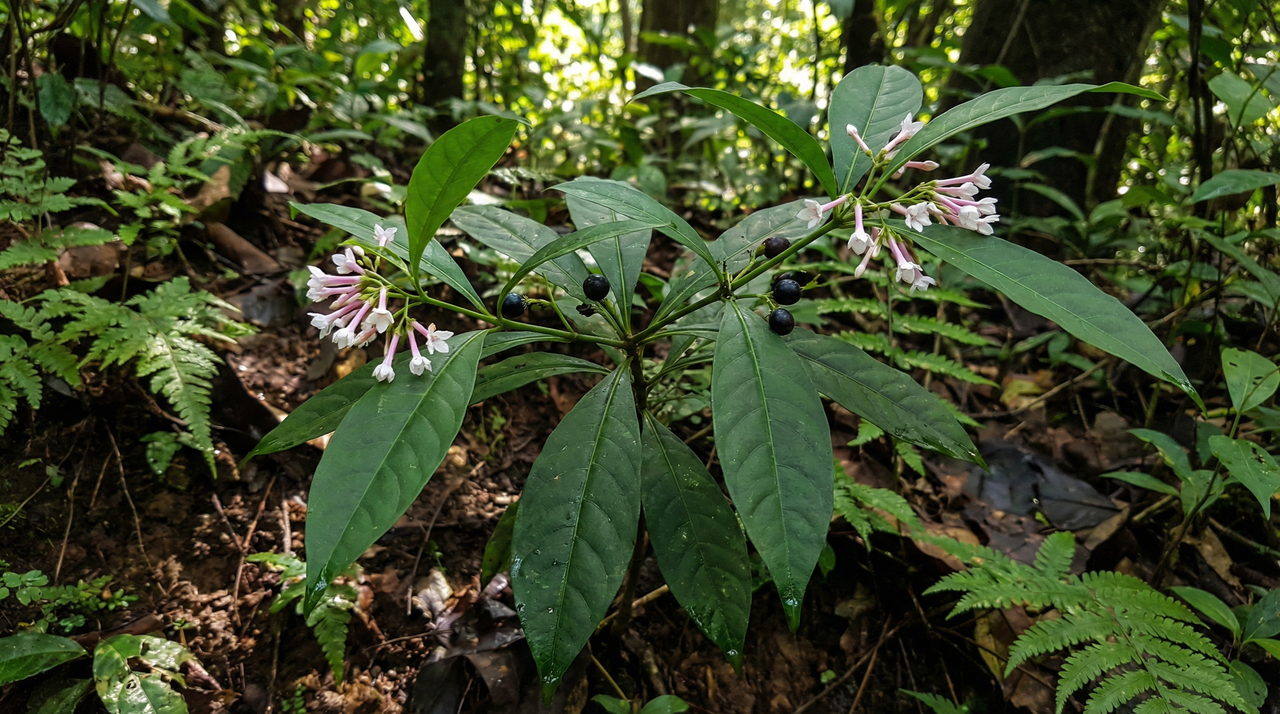
In the forest, Indian Snakeroot reads as a tidy, upright shrub, typically 0.5 to 2 meters tall, with cylindrical stems that start green and smooth before aging to brownish bark pocked with lenticels.[9] The leaves are glossy and elliptic to lanceolate, arranged in a distinctive whorled pattern of threes that I've found to be one of the most reliable field marks when sorting through a botanical collection alongside similar-looking tropical shrubs.[10] The flowers are small, tubular, white to pinkish-white, carried in clustered terminal cymes, subtle enough that you might miss them if you weren't looking.[11] The fruit is easier to spot: small drupes that shift from green through red to a deep purple-black as they ripen, a color progression that reminds me of coffee cherries in their final stage.[12] Plants growing at higher elevations or in drier conditions tend to be shorter with smaller leaves, a reminder that the species accommodates itself to its microclimate rather than presenting a single fixed form.[13]
Traditional and Cultural Uses
The Sanskrit name is Sarpagandha, meaning "serpent root" or "serpent's smell," and it tells you two things at once: the root was used to treat snakebite, and it carries a distinctive odor that earned it its reptilian name.[14] References to Sarpagandha appear in both the Charaka Samhita and the Sushruta Samhita, placing its documented medicinal use well over two thousand years ago.[15] Ayurvedic practitioners classified it as a remedy for hypertension, insomnia, anxiety, and mental unrest, categorizing it as a pacifier of vata dosha, the governing principle associated with movement and the nervous system. Centuries of careful clinical observation in India, Nepal, and across the region built a detailed picture of what this root could do, long before anyone isolated a single molecule.
European botanical science caught up in the 18th century, when Linnaeus classified the plant as Ophioxylon serpentinum in 1753 before it was later renamed Rauvolfia in honor of the 16th-century German botanist Leonhard Rauwolf.[16][17] India has historically supplied over 90% of the global reserpine trade, a statistic that underscores just how deeply this one plant's range shaped the global pharmacopeia.[16]
Fun Facts and Modern Discoveries
The 1950s brought the moment Ayurveda and Western pharmacology finally shook hands. Ciba chemists isolated reserpine from the root, and it became one of the first pharmaceutical agents for both hypertension and certain psychiatric conditions, validating what traditional practitioners had documented for two millennia.[18] I think about that sequence a lot in my work: traditional knowledge leading science by centuries, with the laboratory eventually arriving to confirm what careful observation had already established. The plant's alkaloids also serve a less celebrated purpose in the wild, deterring herbivores by causing hypotension, bradycardia, and digestive distress in anything that chews on the roots.[19] The chemistry that makes it medicinally valuable is the same chemistry that protects it in its Himalayan habitat.
The conservation picture, though, is sobering. Rauvolfia serpentina is listed as Endangered on the IUCN Red List, with some Indian wild populations having declined by over 90% due to habitat loss and relentless overharvesting for pharmaceutical alkaloids.[20] It's also regulated under CITES Appendix II, and wild plants tend to have higher alkaloid concentrations than cultivated ones, which perversely increases the pressure on wild stands.[21] I've watched this pattern play out with other wild medicinals: demand outpaces regeneration before anyone intervenes. That's why I'll only recommend cultivated stock from reputable sources, and why growing this plant in a thoughtful permaculture system isn't just a design choice, it's a small act of ecological repair.
Indian Snakeroot Varieties and Sourcing
Taxonomic Varieties, Subspecies, and Chemotypes of Rauvolfia serpentina
If you're expecting a seed catalog's worth of named cultivars, this is the species that will reset those expectations fast. Rauvolfia serpentina var. serpentina is the primary recognized variety, and while a handful of other varietal names float around botanical literature, including var. glabrescens, var. indica, and var. macrophylla, most taxonomists treat them as synonyms or regional morphs rather than distinct taxa with meaningful differences.[22][23] Two subspecies have firmer standing: subsp. serpentina, which is the widespread form, and subsp. hamiltoniana, found in parts of India.[24] A few other subspecific names appear in regional floras but are either poorly documented or potentially synonymous, so I wouldn't hang sourcing decisions on them.
The near-absence of named cultivars isn't an oversight; it reflects the plant's history as a wild-harvested species with almost no formal breeding program behind it.[22] What actually matters to a grower is chemotypic variation: plants from different elevations, soil types, and climates show measurable differences in alkaloid content, particularly reserpine yield.[25][26] I've noticed this firsthand handling root material sourced from different regions; the variation isn't subtle when you're paying attention. It's the same reason I always want to know where and how material was grown, the same caution I apply to goldenseal or black cohosh. Knowing your source isn't just an ethical preference here; it has direct bearing on potency.
Where to Buy Indian Snakeroot: Legal Considerations and Reputable Sources
The regulatory picture is genuinely worth understanding before you start clicking around for seeds. Reserpine, the isolated alkaloid, is an FDA-regulated prescription drug. The dried root used as a botanical supplement follows standard dietary supplement rules, not DEA scheduling; the plant itself is not a controlled substance.[27][28][29][30] You can legally grow it and use the root in the US, provided you source cultivated material through proper channels. The CITES piece is where it gets more involved: Rauvolfia serpentina sits on CITES Appendix II, so importing wild-collected plants, roots, or derivatives into the US requires a permit from the US Fish and Wildlife Service. Cultivated material traded domestically doesn't trigger that requirement.[31][32][33] I always double-check CITES status before ordering any tropical medicinal internationally; it's a habit that's saved me from more than one headache.
Mainstream nurseries almost never carry this species, a combination of its tropical climate requirements and medicinal plant regulatory complexity.[34][35] Over the years I've built a short list of trusted ethnobotanical suppliers: Strictly Medicinal Seeds, Horizon Herbs, Sheffield's Seed Company, and Mountain Rose Herbs have all carried related stock, though availability fluctuates. Seeds typically run $5 to $15 per packet, live plants $10 to $50, and bulk dried root $0.50 to $2 per gram commercially. Always verify current stock and ask suppliers directly about cultivation origin and documentation before ordering.
Propagating and Planting Indian Snakeroot (Rauvolfia serpentina)
Of all the medicinal shrubs I've worked with over the years, Indian Snakeroot is the one that most rewards patience at every stage, starting right from the seed. Before you even think about soil prep or spacing, you need to understand what you're actually holding when you pick up a Rauvolfia serpentina seed, because it's not quite like anything else in the forest garden.
Understanding the Seeds: Polyembryony, Morphology, Dormancy, and Storage
These seeds are polyembryonic, meaning each one can contain multiple embryos, both zygotic (sexually produced) and nucellar (cloned from maternal tissue).[36][37] That sounds promising, and in theory it is, but in practice it means germination results are often erratic and hard to predict. The seeds themselves are small, elliptical to obovoid, only 2 to 5 mm long, though the persistent style (a narrow beak) stretches the total length to a striking 15 to 20 mm.[38][39] Inside, there's a straight axial embryo with two heart-shaped cotyledons surrounded by a thin endosperm layer that's already loaded with alkaloids.[40][41] I learned to label every cell flat the hard way, because the first true leaves look remarkably similar to other Apocynaceae seedlings sitting on my propagation bench, and a mix-up at that stage is impossible to fix later.
The bigger practical challenge is dormancy. The seed coat is hard and impermeable, so without intervention, germination rates sit at only 20 to 40%. Scarification, sulfuric acid treatment, or soaking in gibberellic acid (GA3) can push that to 50 to 70% or better.[42][43] Fresh seed starts with 60 to 80% viability, but storage matters enormously. Sources disagree on whether these seeds are orthodox or recalcitrant, with some literature indicating they tolerate dry, cold storage for years and others suggesting they're quite sensitive to temperature fluctuations.[44][45][46] In practice, I'd plan on viability lasting one to two years when kept cool (4 to 10°C), dry, and dark in an airtight container.[47] If you're sourcing rauvolfia serpentina seeds through a specialty supplier, ask about harvest date and storage conditions before you buy.
Choosing Your Propagation Method: Seeds, Cuttings, Tissue Culture, and Beyond
Indian Snakeroot can be propagated by seed, semi-hardwood cuttings, air layering, grafting, and tissue culture.[48][49] Seeds introduce genetic variability, which sounds appealing from a biodiversity angle, but for a medicinal plant where root alkaloid content is the whole point, that variability is actually a problem. Vegetative methods preserve the chemistry of a known parent plant, which is why serious growers almost always gravitate toward them.
Tissue culture on MS medium with NAA and BAP delivers 80 to 90% shoot multiplication and similar acclimatization success, and it's the commercial gold standard for producing disease-free, chemically consistent plants at scale.[50][51] Most of us don't have a tissue-culture lab at home, though, and that's fine. Semi-hardwood cuttings of 10 to 15 cm with two to three nodes, treated with 1000 to 2000 ppm IBA and stuck in a sand/soil/vermiculite mix, achieve 40 to 80% rooting under high humidity.[52][53][54] I've found the best results come from taking cuttings during the active monsoon-season flush rather than in drier periods; the wood seems to root faster and fungal issues are easier to manage when the plant is in active growth mode. A simple humidity dome and a heat mat hold the conditions cuttings need without any lab equipment. Air layering with 500 ppm IBA is even more reliable at 70 to 90% success in four to six weeks, if you'd rather not sever material until roots are confirmed.[52][54]
Slow growth and fungal susceptibility are the two biggest challenges regardless of which method you choose.[55] Keep propagation media well-draining and sterile, and don't let water sit on the foliage. Every cultivated plant you successfully establish is also a small act of conservation: wild populations of Indian Snakeroot are under serious pressure from overharvesting, and home and farm propagation directly reduces the demand that drives that collection.
Soil, Site, and Light Requirements for Successful Establishment
This plant evolved in tropical deciduous forest understories, and you have to respect that heritage if you want it to thrive. The ideal soil is a well-drained, loamy or sandy-loam with strong organic matter content (2 to 5%) and at least 45 to 60 cm of depth to accommodate the taproot, because compaction or shallow hardpan will arrest development entirely.[56][57][58] pH should sit between 6.0 and 7.0 for optimal reserpine yield; outside that range, growth visibly slows and medicinal potency drops.[59] I always test and amend before planting, using sulfur to bring an alkaline soil down or lime to lift an acid one, because getting this right at the start is far easier than correcting it around an established taproot. Waterlogging is a death sentence for these plants; even one week of saturated soil can invite root rot that no amount of intervention will reverse.
Light is where a lot of growers make their biggest mistake. Indian Snakeroot wants 50 to 70% shade (roughly 1000 to 2500 lux, or four to six hours of filtered sun), high humidity around 70 to 80%, and temperatures in the 25 to 30°C range.[60][61][62] Full sun causes leaf scorch, chlorosis, and reduced alkaloid content, and the difference is visible. Plants I've sited under a taller canopy look noticeably more vibrant, with deeper green foliage and steadier growth, compared to ones I've tried in brighter spots. That shade canopy doesn't just protect the leaves; research supports what I've observed, that partial shade actually increases reserpine yield. A food forest guilded with taller nitrogen-fixers or fruit trees overhead is genuinely the right home for this plant, not just an accommodation.
Spacing, Transplanting, and Early Growth Techniques
Indian Snakeroot is a slow-growing perennial shrub that reaches 1 to 2 m in height with a pronounced taproot and takes three to five years to reach medicinal maturity.[3][63] Crowding plants shortcuts neither timeline nor root quality; it invites the fungal issues that already lurk at this species' heels. Standard spacing is 45 to 60 cm between plants and 60 to 90 cm between rows, which works out to roughly 20,000 to 30,000 plants per hectare at commercial scale.[55][56][64] For a home food forest bed, erring on the wider end of that range will serve you better in the long run.
Before transplanting, till the bed 30 to 45 cm deep and incorporate 10 to 15 tonnes per hectare of well-composted farmyard manure to build the organic matter profile those roots need.[55] Move seedlings to the field when they've reached 10 to 15 cm tall, which happens after roughly six to twelve months in the nursery (or eight to twelve weeks in controlled conditions with four to six true leaves present). The monsoon window of June to July is ideal in tropical climates; late spring in subtropical zones works if irrigation is consistent.[56][64] Maintain 60 to 70% field capacity moisture, water every seven to ten days, and mulch generously to hold that moisture and suppress weeds. Partial shade in year one isn't optional; it's where root-quality investment begins.
Germination and Establishment Timelines
With scarified or GA3-treated indian snakeroot seeds at 25 to 30°C in moist, shaded, well-draining conditions, emergence typically begins somewhere between 20 and 60 days, though erratic germination across that whole range is normal rather than a sign something went wrong.[65][66][7] Germination is hypogeal, meaning the cotyledons stay below soil, so the first visible sign is a single shoot arching upward. If you're not consistently achieving the upper end of the 50 to 70% range with pretreated seed, check bottom heat first; I started keeping a seedling heat mat under my flats and moved my own germination rates noticeably toward the higher end of what the literature reports.
Plan on a six-to-twelve-month nursery period before your seedlings are ready for the field. That timeline is, honestly, the clearest argument for choosing cuttings or tissue-culture starts over seed when you want a plant in the ground this season. Vegetative propagules root and establish faster, skip the germination lottery entirely, and carry the alkaloid profile of a known parent. Seed-grown plants offer genetic diversity, and there's real value in that from a conservation standpoint, but if your goal is productive medicinal roots on a defined timeline, vegetative is the pragmatic path. Label everything from day one, keep germination medium consistently moist but never soggy, and treat patience less like a virtue and more like a core growing requirement for this plant.
Indian Snakeroot Care Guide
Growing Indian Snakeroot successfully means accepting that it has strong opinions about its conditions. Too cold, too dry, too much sun, too much fertilizer -- any of these will show up quickly in the plant's appearance, and some will do lasting damage. Once you understand what its native humid forest understory demands, the care routine becomes intuitive.
Water Needs
In its native range, this plant receives 2000-3000 mm of rainfall annually, so consistent soil moisture isn't optional -- it's foundational. A deep, thorough watering every 7-10 days during dry periods, targeting about 1 to 1.5 inches per week and adjusting for any rainfall, keeps the roots happy without creating the waterlogged conditions that invite rot.[67][68][69] A thick layer of organic mulch is one of the most useful things you can do to buffer soil moisture between waterings. In my experience with tropical understory species, I watch the top inch of soil and adjust rather than sticking to a rigid calendar -- sandy soils dry out faster, heavier soils hold longer, and the plant will tell you when it's stressed long before the roots actually dry out.
Sunlight and Heat Tolerance
Indian Snakeroot evolved beneath a forest canopy, and that lineage matters. Its temperature sweet spot sits between 20-30°C (68-86°F), with some tolerance up to 35°C (95°F) if humidity stays high -- think AHS Heat Zones 10-12.[70][71][72] Without adequate shade and moisture together, heat tolerance drops sharply. Under real heat and drought stress, leaves scorch and wilt, and stomatal conductance falls -- though mild stress can reverse within 24-48 hours once temperatures return to range.[73][74] I've found that installing 30-50% shade cloth with afternoon coverage prevents the leaf scorch I used to see on plants getting unfiltered midday sun in hot summers. Think of its light needs the way you'd think of gardenia -- bright indirect, protected from the harshest hours.
Feeding and Soil Fertility
This is a moderate feeder adapted to low-fertility forest soils, and that distinction matters enormously if you're growing it for medicinal roots. Before planting, incorporating 10-15 tons per hectare of well-decomposed compost or farmyard manure builds the organic foundation it prefers, with modest balanced NPK additions applied in split doses through the season.[75][76][77] Soil nutrient targets to aim for are roughly 120-180 ppm N, 40-80 ppm P, and 150-250 ppm K, within a pH range of 6.0-7.5.[78][79] Excess nitrogen produces beautiful foliage but disappointingly low-alkaloid roots -- something I learned the hard way in early medicinal-bed trials where I'd fertilized too generously. Keep micronutrients in mind too: iron deficiency shows as interveinal chlorosis in young leaves, manganese on older leaves, and zinc deficiency produces a mottled, rosetted appearance; chelated foliar sprays correct these, but soil testing before application is strongly advised.[80][81] I've seen interveinal chlorosis appear on Apocynaceae shrubs almost immediately when pH drifts above 7.5, locking out iron even when it's present in the soil.
Frost Tolerance and Cold Protection
There is no frost tolerance here. Growth slows and new leaves begin to show damage at 10°C (50°F), and sustained exposure below 4°C (40°F) can kill the plant outright through ice crystal formation in its cells.[82][9] The RHS rates it H1c, meaning it needs heated greenhouse protection in any temperate climate, and it's suitable for open ground only in USDA zones 9b-11.[83] Cold damage looks like blackened leaf edges, wilting, bud drop, and scorched foliage, with young growth hit hardest.[84][85] Because even a brief dip below 10°C can blacken new growth, I move my container plants inside at the first forecast of cold -- the research on cellular ice damage matches exactly what I've seen. Frost cloth and heavy mulching can help at the margins, but in a genuine hard freeze they won't be enough. This is not a plant for outdoor trials in zone 8 without serious infrastructure.
Pruning and Maintenance
Indian Snakeroot is a tropical evergreen that grows 1-2 meters tall with an erect habit and no true dormancy -- in humid conditions it simply keeps growing year-round, slowing only during dry spells.[86][87] Light pruning after flowering -- late winter into early spring -- removes dead, diseased, or overcrowded branches and pinching tips encourages a bushier, denser form; annual maintenance along these lines is standard practice from the second year onward.[67][88] I wait until the plant is well-established before any significant pruning, which aligns naturally with the multi-year timeline needed before roots are ready anyway. Prune only during warm periods; cold-season cuts add stress the plant doesn't need. A refreshed mulch layer applied after pruning handles moisture retention with minimal ongoing effort.
Seasonal Growth Rhythm
Flowers appear from May through August, triggered by rising temperature and humidity, followed by berries that ripen from green to black through September and November.[86][89][90] Outside of dry-season slowdowns, this plant never truly rests, which makes it rewarding in a greenhouse or consistently warm climate but means your attention doesn't get a winter break. The alkaloids provide some defense against herbivory, so browsing pressure tends to be lower than on neighboring non-toxic shrubs -- a quiet benefit in a diverse food forest setting. For greenhouse growers especially, that year-round vegetative activity means routine checks on moisture, micronutrients, and light quality stay relevant through every month of the year.
How and When to Harvest Indian Snakeroot Roots
Timing and Maturity Indicators for Optimal Alkaloid Content
Indian snakeroot is not a plant for impatient growers. The roots reach genuine medicinal maturity at 3 to 5 years after planting, even though the plant will flower for the first time somewhere around 12 to 18 months in.[91][92] That flowering is encouraging, but it's not a green light to dig. I think of it the way I think about growing ginseng: the plant tells you it's reproducing well before it tells you it's ready to harvest. The roots you want are the roots that have had years to accumulate alkaloids, not just seasons.
Visually, you're looking for plants that have reached 60 to 150 cm in height with root diameters in the 1 to 2 cm range.[93][94] Traditional Indian growers sometimes harvest at 2 to 3 years, commercial plantations typically wait until year 4, and in Himalayan cultivation the timeline can stretch to 5 years; reserpine content peaks somewhere in that 1.5 to 5 year window at 0.1 to 0.2%.[13][95] I mark my beds carefully at planting because Rauvolfia serpentina looks deceptively similar to other Apocynaceae shrubs until those distinctive sinuous roots emerge at harvest, and an accidental early dig sacrifices years of alkaloid accumulation you can't get back.
In tropical climates, the dry season window of November through February, after the monsoon has passed, is when alkaloid concentration peaks.[96][97] Rainfall suppression appears to drive the plant to concentrate its chemistry. Roots dug after a pronounced dry spell tend to show thicker, more resinous bark and a deeper bitterness on a small test chew, a sensory signal that aligns with what the research on seasonal alkaloid variation shows. Greenhouse-grown plants in temperate regions can be harvested after 1 to 2 years, with late summer to early autumn (July through September) as the preferred window, though visual cues remain a guide rather than a guarantee; alkaloid testing ultimately confirms whether potency is where it needs to be.[98]
Harvesting Technique, Post-Harvest Handling, and Quality Factors
When the time comes, dig the entire root system carefully during the dormant season, preferably in the third or fourth year for the best balance of root biomass and alkaloid density, and always after the plant has completed at least one flowering cycle.[91][99] This is a whole-root harvest; the medicinal value lives in the root, and mechanical damage during digging creates entry points for degradation before the material even reaches the drying rack.
Post-harvest handling is where many growers undermine years of careful cultivation. Gently wash the roots to remove soil, then shade-dry at 35 to 40°C until moisture content reaches approximately 10%, and store in cool, dry conditions to protect the alkaloids from breakdown.[100][101][102] In Florida summers I monitor that temperature closely because going over 40°C has cost me measurable potency in test batches. The window is precise, and the chemistry does not forgive shortcuts. Roots harvested at peak dry-season potency and dried correctly carry a strong, earthy-bitter aroma that signals bioactivity rather than degradation; that scent is the grower's reward for waiting and processing with care. The emphasis here is always on quality over quantity, with any questions about dosage or medicinal preparation belonging to a qualified practitioner rather than the harvest bed.
Indian Snakeroot Preparation and Uses
Safety First: Why Indian Snakeroot Is Not a Food Plant
I grow a lot of medicinal plants, and I have tasted most of them at some point, usually out of curiosity or to understand what I'm working with. Indian Snakeroot is the exception. I would never put it in my mouth, and I'd strongly discourage anyone else from doing so. This is not a culinary herb, not a food plant, and not something to experiment with casually. Every part carries alkaloids, and the root, the only part used medicinally, contains over 80 of them, with reserpine making up roughly 0.1 to 0.2 percent of dried root material.[3][103][104] The root's flavor, if you can call it that, is described in Ayurveda as Tikta, meaning intensely bitter, backed by a woody, fibrous texture and a pungent medicinal smell once dried.[105][106] If you've ever handled dried gentian root and thought that was assertively bitter, rauvolfia roots are in a different category entirely, and the bitterness is the least of your problems. The roots carry almost nothing in the way of protein, fat, or carbohydrates, and while the leaves contain trace calcium, potassium, and vitamin C, none of that matters because you're not eating them.[107][108] The risks are serious: hypotension, severe depression, gastrointestinal distress, nasal congestion, and at high doses, potentially fatal toxicity.[109][110][111] Anyone who is pregnant, dealing with depression, managing Parkinson's disease, has a peptic ulcer, or takes CNS depressants or antihypertensives should not use this plant at all. The depression and hypotension risks alone are well-documented enough that I always direct clients toward licensed practitioners rather than any home experimentation.
Traditional Medicinal Preparations and Dosages
Traditional preparation begins at harvest: roots are dug after two to five years of growth, then cleaned and shade-dried, a step that preserves more reserpine than sun drying does.[112][113] The dried root is ground to powder and traditionally mixed with milk or honey to make it more tolerable, though decoctions, tinctures, and solvent extractions are also documented, with solvent methods yielding higher alkaloid concentrations than water-based preparations.[114][115] Growing conditions shift the alkaloid picture considerably: plants from higher altitudes and leaner soils tend toward higher reserpine content, while richer, lower-elevation conditions can produce milder roots. That variability is exactly why dosage precision matters so much here.
Ayurvedic practice has traditionally applied sarpagandha root for hypertension, insomnia, anxiety, schizophrenia, and snakebite.[116][117] Typical Ayurvedic dosing runs from 125 mg to 2 g of dried root powder daily, often split into twice-daily doses, while pharmaceutical reserpine is dosed at a much narrower 0.1 to 0.5 mg per day.[118][119] That gap illustrates the problem with crude preparations: you don't know exactly what you're getting. Reserpine content in roots can range from 0.1 to 2.0 percent dry weight depending on population, altitude, and processing.[116] Indian snakeroot extract and standardized preparations exist precisely to control for that variability, and they still require professional supervision. A rauvolfia serpentina mother tincture or any other home preparation carries the same narrow therapeutic window and serious risk profile as the crude root. This is a plant whose modern use belongs with clinicians and regulated products, not kitchen herbalism.
Non-Food Applications and Biomass Uses
Outside of its medicinal roots, Indian Snakeroot does have a minor practical role in the permaculture system. The plant produces roughly two to five tons of dry biomass per hectare, material that can go back into the garden as mulch or green manure to support soil fertility.[120] It won't anchor a guild the way a nitrogen-fixer does, but as a support element in the understory it contributes to the system even between harvests. The permaculture value here is really about the medicinal root yield; the biomass use is a sensible secondary benefit rather than a reason to grow it on its own.
Indian Snakeroot Health Benefits and Medicinal Uses
Few medicinal plants sit at such a precise intersection of ancient practice and hard pharmacology as Indian Snakeroot. Ayurvedic physicians were prescribing Rauvolfia serpentina root for hypertension, insomnia, psychosis, snakebite, fever, and wound care as far back as the 4th century BCE.[121][122] That's not folk tradition to be explained away. That's 2,300 years of clinical observation that modern pharmacology eventually caught up with. I find that history genuinely humbling whenever I look at a young plant in my medicinal guild and remember what's slowly developing in those roots.
Key Phytochemicals: Reserpine, Ajmaline, and the Indole-Alkaloid Complex
The roots contain more than 50 distinct indole alkaloids, with total alkaloid content running 1 to 3 percent in dried root bark.[123][124] Two of those alkaloids do most of the clinical heavy lifting. Reserpine, present at roughly 0.1 to 0.5 percent in dried root bark, is the primary antihypertensive and sedative agent. Ajmaline is the main antiarrhythmic compound.[125] Reserpine works by irreversibly inhibiting VMAT2, the vesicular monoamine transporter that shuttles norepinephrine, dopamine, and serotonin into synaptic vesicles, essentially draining the nervous system's neurotransmitter reserves.[126][127] Ajmaline takes a different route, blocking voltage-gated sodium channels in cardiac tissue to stabilize membranes and prolong action potential duration; it's still used clinically for tachyarrhythmias and diagnostically for Brugada syndrome.[128]
Alkaloid concentration isn't fixed. It varies by geography, elevation, soil conditions, and harvest timing, with wild Himalayan specimens and roots harvested at two to three years of maturity consistently testing highest.[123] I think of it the way I think about thymol content in thyme under drought stress: the plant concentrates its chemistry in response to growing conditions, and wild material from high-stress environments tends to punch harder than pampered cultivated stock. That variability matters enormously when we're talking about a compound with a narrow therapeutic window.
Traditional and Modern Medicinal Research
Because reserpine depletes norepinephrine, the cardiovascular effect is predictable: blood pressure drops. Meta-analyses of clinical trials show reserpine-containing Rauvolfia extracts reduce systolic blood pressure by 5 to 10 mmHg, a modest but real reduction documented in randomized controlled trials from the 1950s and 1960s, often in combination with diuretics.[129][130][131] Indian Snakeroot's use for high blood pressure wasn't guesswork; it was working through a mechanism we simply hadn't named yet. Its historical use in psychosis is equally striking, predating chlorpromazine as an antipsychotic by decades, again explained entirely by central catecholamine depletion.[130]
Beyond those headline applications, reserpine shows dose-dependent sedative, anxiolytic, anti-inflammatory, analgesic, antimicrobial, and antispasmodic activity in animal models, findings that lend some pharmacological support to traditional wound-care and snakebite uses even if large human trials don't yet exist.[132][133] Those are promising signals, not established indications. I'm careful not to blur that line with clients.
Safety Profile, Dosage, and Contraindications
Here's where I get direct, because the pharmacology demands it. Reserpine's side effect profile flows logically from its mechanism: deplete monoamines systemically and you can produce depression (sometimes severe), bradycardia, nasal congestion, gastrointestinal upset, and extrapyramidal symptoms.[134][135] Overdose produces profound hypotension, heavy sedation, and potentially coma. I always tell clients that if you have any history of mood disorders, this is not a plant to experiment with at home; the pharmacology is simply too potent.
Absolute contraindications include pregnancy, any history of depression or suicidal ideation, peptic ulcer, Parkinson's disease, and concurrent use of MAO inhibitors.[136][137] If you're already on blood-pressure medication or antidepressants, do not add Indian Snakeroot without medical supervision; the additive hypotensive effects can be genuinely dangerous. Pharmaceutical reserpine is dosed at 0.1 to 0.5 mg per day; traditional Ayurvedic root powder doses run 100 to 200 mg twice daily, and all use requires physician oversight because of that narrow therapeutic window.[138][139] Modern medicine has largely moved to safer antihypertensives for good reason. The medicinal uses of Rauwolfia serpentina are real, but so are the risks.
Nutritional Profile (and Why It Isn't a Food Plant)
Indian Snakeroot is not a food plant, full stop. No nutritional database lists it as edible, and regular dietary consumption is contraindicated because of alkaloid toxicity.[140][141] Proximate analyses done in phytochemical research contexts show the dried root contains roughly 60 to 70 percent carbohydrates, 2 to 4 percent crude protein, notable potassium, calcium, and magnesium, and less than 1 percent fat.[142] Those numbers exist as laboratory observations from alkaloid studies, not as a nutrition label. The same roots carrying those minerals carry reserpine. That context is everything.
Pests and Diseases of Indian Snakeroot (Rauvolfia serpentina)
Natural Defenses and Pest Resistance
Indian Snakeroot comes to the garden with its own chemical bodyguard. The same reserpine, ajmaline, and related alkaloids that make its roots medicinally powerful also deter a broad range of generalist feeders, and glandular trichomes plus milky latex reinforce those defenses at the leaf surface.[143][144] Like oleander and periwinkle (fellow Apocynaceae), that milky sap puts off a lot of would-be chewers before they even get started. Field observations in India confirm noticeably lower overall pest incidence compared with more susceptible crops, but I'd caution against reading that as "low maintenance" — unprotected cultivation can still produce 20–30% yield losses when pest and disease pressure combine.[81] Lab work on leaf and root extracts shows larvicidal and feeding-deterrent activity against mosquitoes, armyworms, and stored-product insects, which is promising, but robust field trials for commercial biopesticide use still haven't caught up with the early results.[145]
Common Pests and Their Management
Above ground, the main culprits are aphids (Aphis craccivora), leaf beetles, caterpillars in the Noctuidae family, and root weevils (Myllocerus discolor), causing leaf curling, skeletonization, and stem boring that reduce both biomass and the alkaloid content you're growing for.[146] I still watch closely for aphid colonies even on well-established plants; they can vector viruses and establish fast in humid weather. Below ground, root-knot nematodes (Meloidogyne spp.) are the more serious threat, forming galls that impair nutrient uptake and capable of pushing yield losses past 50% in unmanaged plots.[147][148] In my trials, interplanting with marigolds and incorporating chitin-rich amendments has visibly reduced galling, which fits the permaculture toolkit well and keeps things residue-free.
Fungal and Other Diseases
Alkaloid chemistry gives Indian Snakeroot moderate baseline disease resistance, but that protection has real limits when conditions slip.[144] Humidity above optimal levels, waterlogged soil, overhead irrigation, and temperatures below 15°C all open the door to a range of fungal pathogens: root and collar rots from Fusarium, Rhizoctonia, Pythium, and Phytophthora; leaf spots from Cercospora and Alternaria; powdery mildew, rust (Uredo serpentinae), anthracnose, and damping-off in seedlings.[149][150] After losing several young transplants to damping-off in a particularly wet spring, I now solarize seed trays and use a Trichoderma-enriched potting mix as standard practice. Most of these problems disappear once soil stays well aerated and foliage dries quickly after rain, which means site selection does more disease management work than any spray.[149][151]
Integrated Pest and Disease Management
There's no cultivar to rescue you here. Improved lines like 'CIM-Pitta' and 'CIM-Atee' were bred for higher alkaloid yield, not biotic stress tolerance, so pest and disease management falls entirely on cultural practice.[152][153] The approach I use follows the layered IPM model recommended by CIMAP and FAO: start with spacing and crop rotation to improve airflow and break pest cycles, mulch organically to buffer soil moisture, and avoid overhead watering entirely.[154][155] Trichoderma soil drenches, neem-based foliar sprays, and ladybug habitat handle most of the biological control layer. When growing Rauvolfia for medicinal use, I avoid systemic neonicotinoids entirely; the case for neem and beneficial insects is strong on its own, and alkaloid purity matters too much to risk residue contamination. With attentive soil health and a well-chosen microclimate, this plant rewards you more than it tests you.
Indian Snakeroot in Permaculture Design
Few medicinal shrubs fit as neatly into a subtropical food forest as Indian Snakeroot does, and yet most permaculture designers in North America have never grown one. That's starting to change, partly because of renewed interest in Ayurvedic plants and partly because the conservation picture around wild-harvested Rauvolfia serpentina has made cultivated sources a genuine ethical priority. Understanding where this plant fits in a designed system starts with the climate question, because get that wrong and nothing else matters.
Suitable Climate and Hardiness Zones
Indian Snakeroot is reliably hardy in USDA zones 10-11, though it can be pushed into zone 9b with the right site management.[9][156] It tolerates a brief dip to around 25°F (-4°C) but growth slows noticeably below 59°F (15°C), and it really hits its stride in that 68-86°F sweet spot with high humidity and 40-100 inches of annual rainfall.[157][158] Those conditions map directly onto the Köppen Aw and Am tropical savanna and monsoon climates where the species evolved, and also describe Central Florida, coastal South Florida, and similar subtropical pockets in North America reasonably well.
I've grown a handful of tender medicinal shrubs in zone 9b, and Indian Snakeroot behaves a lot like a marginally cold-hardy ginger or turmeric when a light frost rolls in: the foliage takes the hit, but a heavily mulched root zone on a south-facing microclimate can pull the plant through a mild winter without bringing it indoors.[159][160] That said, I wouldn't gamble on a zone 9b planting without that protection dialed in first. In consistently colder climates, growing it in a large container and overwintering it under glass is the practical path. The closely related Rauvolfia kamarora is slightly more cold-sensitive, preferring zones 10-12 and sulking below 41°F (5°C), which gives you a sense of the genus range if you're exploring alternatives.[161] Frost management specifics and heat-stress tactics are covered in the care guide, but the site-selection decision starts here.
Ecosystem Functions and Ecological Roles
Indian Snakeroot does a surprising amount of quiet ecological work for a plant that tops out at two meters. Its extensive taproot system binds and stabilizes soil, its leaf litter builds organic matter in the understory, and it participates in arbuscular mycorrhizal networks that move nutrients between plants in ways we're still learning to fully appreciate.[162][163] It doesn't fix nitrogen, so it won't do everything, but it's a genuine contributor to soil biology rather than a passive passenger.[164]
Above ground, its small tubular flowers attract bees and flies, while the dark red berries that follow are eaten and dispersed by birds like bulbuls and mynas, weaving the shrub into a broader food web even in a designed garden.[164] The flowers are tiny (4-5 mm), white to pinkish, mildly fragrant, and structurally protandrous, which promotes outcrossing but also means fruit set can be low when pollinators are scarce.[165] In my experience, small native bees are the most reliable visitors to these flowers. I've improved berry set noticeably by planting a pollinator strip of other Apocynaceae nearby, which seems to keep the right insects cycling through the area.[166] Flowering peaks April through October in subtropical conditions, coinciding with warm and humid weather, though plants in true tropical climates can flower year-round.[167] Hand-pollinating a few clusters during the early peak is a simple tactic that makes a real difference in seed production.
The plant's alkaloid profile gives it natural pest-deterrent properties and some allelopathic activity that seems to suppress weeds in the immediate root zone.[168] I've observed less foliar pest pressure on neighboring herbs when Indian Snakeroot is interplanted among them, and I've come to trust that effect. It's not a silver bullet, but it's a real benefit you don't need synthetic inputs to access. The conservation dimension here is equally important: wild populations in India are listed as Endangered from root overharvesting, even though the species is globally Least Concern.[169][170] Every plant grown in a home or farm system is a small act of pressure-relief on those wild populations, and I'd always choose verified cultivated stock over anything wild-harvested.
Forest Layer Placement and Companion Guilds
In forest-garden terms, Indian Snakeroot belongs firmly in the shrub layer. At 0.5 to 2 meters tall with a woody, branching habit and evergreen foliage, it fills the classic understory medicinal niche: productive, persistent, and perfectly scaled for beneath a canopy without competing with it.[171][172] It wants 40-60% shade, roughly 2000-5000 lux, which mirrors the dappled light conditions of its native tropical forest understory.[173] I've seen similar Apocynaceae shrubs thrive under established citrus or mango canopies in zone 9b gardens, and the light levels in those situations track closely with what Indian Snakeroot prefers.
For guild design, the most productive companions I've seen paired with it are ginger, turmeric, and gotu kola in the ground layer, with nitrogen-fixing trees like Gliricidia sepium serving as the canopy anchor.[173][174] The rhizomatous crops handle the same moist, loamy soil conditions, create a living mulch that retains moisture, and don't compete with Indian Snakeroot's deep taproot. Gliricidia contributes nitrogen the shrub can't fix itself while generating the partial shade it requires, so the structural logic of the guild follows naturally from each plant's ecological role.
Over the longer arc of system development, Indian Snakeroot also has value as a pioneer in secondary succession, stabilizing soil and suppressing weeds while a food forest canopy is still establishing.[175][174] Roots reach harvestable size at 2-3 years in traditional agroforestry practice, which means even a modest planting begins yielding medicinal material within a reasonable time frame while the rest of the system matures around it.[175] The key is harvesting selectively rather than clearing whole plants, so the shrub layer remains intact and the conservation value of the planting persists over multiple production cycles.
The Plant That Taught Me to Sit With Discomfort
I've grown hundreds of medicinal plants, and most of them let me feel useful, productive, generous. Indian Snakeroot doesn't do that. It grows slowly, it won't be eaten, it can't be freely shared, and every time I look at those dark roots I'm reminded that potency and danger aren't opposites here, they're the same thing. I keep it anyway, partly for the conservation math, but mostly because some plants deserve to exist in tended ground rather than disappearing quietly from the forests that made them.
Sources 175
- The Discovery of Antipsychotic Drugs ↩
- Rauvolfia serpentina: A Review of its Ethnobotanical Uses ↩
- Rauvolfia serpentina - Wikipedia ↩
- Rauvolfia serpentina - Kew Science ↩
- Plants of the World Online (Kew Science) ↩
- Distribution and Habitat of Rauvolfia serpentina ↩
- Cultivation and Propagation of Rauvolfia serpentina ↩
- Medicinal Plants of India: Ecology and Conservation ↩
- Rauvolfia serpentina - Missouri Botanical Garden ↩
- Rauvolfia serpentina (L.) Benth. ex Kurz ↩
- Flora of China - Rauvolfia serpentina ↩
- Rauvolfia serpentina - Missouri Botanical Garden Plant Finder ↩
- Reserpine Content in Rauvolfia serpentina ↩
- Rauvolfia serpentina in Ayurvedic Classics ↩
- Ayurvedic Uses and Pharmacology of Sarpagandha (Rauvolfia serpentina) ↩
- Reserpine: A gift from Rauwolfia serpentina - NCBI ↩
- Species Plantarum by Carl Linnaeus ↩
- The History of Reserpine: From Ayurveda to Modern Hypertension Treatment ↩
- Rauwolfia serpentina: A review on its phytochemicals and pharmacological attributes ↩
- IUCN Red List: Rauvolfia serpentina ↩
- IUCN Red List: Rauvolfia serpentina ↩
- Rauvolfia serpentina: Botany, Ethnopharmacology and Phytochemistry ↩
- The Genus Rauvolfia in India ↩
- The Rauvolfia serpentina species complex ↩
- Variation in Alkaloid Content of Rauvolfia serpentina ↩
- Variation in Alkaloid Content and Reserpine Yield of Rauvolfia serpentina ↩
- Reserpine Drug Information ↩
- Herbal Supplements Regulation ↩
- Rauvolfia serpentina: A Medicinal Plant with Multiple Pharmacological Actions ↩
- Controlled Substances List ↩
- CITES Species Database: Rauvolfia serpentina ↩
- CITES Appendices ↩
- How to Get a CITES Permit ↩
- Rauvolfia serpentina ↩
- Rauvolfia serpentina ↩
- Polyembryony in Rauvolfia serpentina ↩
- Seed Development and Embryology of Apocynaceae Family ↩
- Rauvolfia serpentina ↩
- Seed Morphology and Germination Studies in Rauvolfia serpentina ↩
- Embryology and Seed Biology of Apocynaceae Family ↩
- Seed Morphology and Germination in Apocynaceae: Rauvolfia serpentina ↩
- Seed Germination of Rauvolfia serpentina ↩
- Ecological Adaptations and Seed Dormancy in Tropical Medicinal Plants ↩
- Seed Storage of Rauvolfia serpentina: Orthodox Behavior and Longevity ↩
- Recalcitrant Seeds: Biology and Storage ↩
- Cultivation, Conservation and Trade of Medicinal Plants in India - A Practical Guide for Growers and Farmers ↩
- Medicinal Plant Cultivation: Rauvolfia serpentina ↩
- Propagation of Rauvolfia serpentina: A Review ↩
- Genetic Diversity in Rauvolfia serpentina Seedlings ↩
- Micropropagation of Rauvolfia serpentina through Tissue Culture ↩
- Micropropagation of Rauvolfia serpentina through Tissue Culture ↩
- Effect of IBA on Rooting of Rauvolfia serpentina Cuttings ↩
- Horticultural Propagation Protocol for Rauvolfia serpentina ↩
- Propagation Techniques for Rauvolfia serpentina ↩
- Cultivation of Rauvolfia serpentina ↩
- Cultivation of Rauvolfia serpentina ↩
- Soil Requirements for Rauvolfia serpentina ↩
- Cultivation of Rauvolfia serpentina: A Review ↩
- Rauvolfia serpentina: Habitat and Ecology ↩
- Effect of Shade on Growth and Yield of Rauvolfia serpentina ↩
- Cultivation of Rauvolfia serpentina: Light and Shade Effects ↩
- Rauvolfia serpentina - Kew Science ↩
- Rauvolfia serpentina (L.) Benth. ex Kurz ↩
- Medicinal Plant Cultivation Guidelines: Sarpagandha ↩
- Seed Germination and Nursery Raising of Rauvolfia serpentina ↩
- Seed Germination and Storage in Rauvolfia serpentina ↩
- Cultivation Practices of Rauvolfia serpentina ↩
- Rauvolfia serpentina ↩
- Rauvolfia serpentina - Plant Finder ↩
- Rauvolfia serpentina (L.) Benth. ex Kurz ↩
- Rauvolfia serpentina ↩
- Cultivation of Rauvolfia serpentina: A Review ↩
- Physiological Responses of Rauvolfia serpentina to Abiotic Stresses ↩
- Heat and Drought Stress Effects on Medicinal Plants ↩
- Cultivation of Rauvolfia serpentina: A Review ↩
- Nutrient Management in Medicinal Plants ↩
- Cultivation Practices of Rauvolfia serpentina ↩
- Cultivation of Rauvolfia serpentina: A Review ↩
- Soil and Nutrient Management for Sarpagandha ↩
- Micronutrient Deficiencies in Medicinal Plants: Symptoms and Correction ↩
- Effect of Fertilizers on Growth and Alkaloid Yield in Sarpagandha ↩
- Rauvolfia serpentina ↩
- Frost Damage in Tropical Ornamentals ↩
- Cultivation of Rauvolfia serpentina: Challenges in Temperate Climates ↩
- Growing Rauvolfia serpentina: Care and Cultivation ↩
- Rauvolfia serpentina: Botany, Ethnopharmacology and Phytochemistry ↩
- Medicinal Plants of India: Rauvolfia serpentina ↩
- Cultivation of Rauvolfia serpentina: A Medicinal Plant ↩
- Phenological Studies on Rauvolfia serpentina in Western Ghats ↩
- Rauvolfia serpentina Profile ↩
- Cultivation of Rauvolfia serpentina ↩
- Rauvolfia serpentina: Botany, Agronomy and Biotechnology ↩
- Harvesting and Maturity of Sarpagandha Roots ↩
- Cultivation and Utilization of Rauvolfia serpentina (L.) Benth. ex Kurz ↩
- Rauvolfia serpentina Cultivation Guide ↩
- Seasonal Variation in Alkaloid Content of Rauvolfia serpentina ↩
- Sarpagandha Cultivation Guide ↩
- Cultivation of Rauvolfia serpentina in Temperate Greenhouses ↩
- Agronomy of Rauvolfia serpentina ↩
- Harvesting and Post-Harvest Management of Medicinal Plants: Rauvolfia serpentina ↩
- ICAR Guidelines for Medicinal Plant Cultivation: Rauvolfia serpentina ↩
- Good Agricultural Practices for Medicinal Plants ↩
- Rauwolfia serpentina: A Systematic Review of Traditional Uses, Phytochemistry and Pharmacology ↩
- Rauwolfia serpentina: A Systematic Review of its Medicinal Properties and Phytochemistry ↩
- Rauvolfia serpentina profile ↩
- Volatile Constituents of Rauvolfia serpentina Roots ↩
- Nutritional Composition of Medicinal Plants: Rauvolfia serpentina ↩
- Mineral Content in Leaves of Rauvolfia serpentina ↩
- Reserpine: Old but Still Present in the Management of Hypertension in India? An Updated Review ↩
- Rauwolfia serpentina and other Rauwolfia species: an update on their pharmacological and toxicological aspects ↩
- Toxicological Profile of Rauvolfia serpentina ↩
- Traditional Preparation Methods of Sarpagandha (Rauvolfia serpentina) ↩
- Influence of Growing Conditions and Drying on Reserpine Content in Rauvolfia serpentina ↩
- Processing and Toxicity Management of Rauvolfia Alkaloids ↩
- Traditional Uses and Pharmacology of Rauvolfia serpentina ↩
- Traditional Uses of Rauvolfia serpentina in Ayurveda ↩
- Ayurvedic Uses of Sarpagandha ↩
- Reserpine - StatPearls - NCBI Bookshelf ↩
- Rauvolfia serpentina: A Systematic Review of its Traditional Uses, Phytochemistry and Pharmacology ↩
- Ecological and Medicinal Importance of Rauvolfia serpentina in Indian Forests ↩
- Rauvolfia serpentina: A Systematic Review of Ethnopharmacological Uses ↩
- Ayurvedic Pharmacopoeia of India ↩
- Phytochemical and Pharmacological Profile of Rauwolfia serpentina ↩
- Systematic Review of Rauvolfia Serpentina Alkaloids ↩
- Alkaloids of Rauwolfia serpentina: A Review ↩
- Reserpine: A Review of Its Pharmacology and Clinical Use ↩
- Reserpine: Inhibition of Vesicular Monoamine Transport and Depletion of Catecholamines and Indoleamine ↩
- Ajmaline: A Review of Its Profile and Approach to Therapy ↩
- Reserpine in the treatment of hypertension: A review ↩
- Meta-analysis of Rauwolfia serpentina for hypertension ↩
- Reserpine in the Treatment of Hypertension: A Review ↩
- Pharmacological Profile of Rauvolfia serpentina: A Review ↩
- Evaluation of Antioxidant and Renal Protective Activity of Methanolic Extract of Rauvolfia serpentina Leaves ↩
- Reserpine - StatPearls - NCBI Bookshelf ↩
- Side Effects and Contraindications of Reserpine Therapy ↩
- WHO Monographs on Selected Medicinal Plants - Volume 1: Rauwolfia serpentina ↩
- Rauwolfia serpentina: A Systematic Review ↩
- Rauvolfia serpentina: A Systematic Review of Its Therapeutic Potential and Safety ↩
- Reserpine - StatPearls - NCBI Bookshelf ↩
- Missouri Botanical Garden PlantFinder ↩
- U.S. Food and Drug Administration (FDA) - Botanical Drug Development Guidance ↩
- Proximate and Mineral Composition of Rauvolfia serpentina Roots ↩
- Trichomes and Secondary Metabolites in Rauvolfia species ↩
- Insect Pest Resistance of Rauvolfia serpentina ↩
- Larvicidal Activity of Rauvolfia serpentina Leaf Extracts Against Aedes aegypti ↩
- Insect Pests of Rauvolfia serpentina and Their Management ↩
- Pests and Diseases of Rauvolfia serpentina ↩
- Nematode Problems in Tropical Crops Including Rauvolfia ↩
- Diseases of Rauvolfia serpentina and Management ↩
- Diseases of Rauvolfia serpentina ↩
- Rauvolfia serpentina: Cultivation and Medicinal Uses ↩
- Breeding of Rauvolfia serpentina for Alkaloid Content and Yield ↩
- CIMAP Developed Varieties of Medicinal Plants ↩
- Cultivation and Disease Management of Rauvolfia serpentina ↩
- Integrated Pest Management in Aromatic and Medicinal Plants ↩
- Rauvolfia serpentina - USDA PLANTS Database ↩
- Rauvolfia serpentina - Useful Tropical Plants ↩
- Cultivation of Rauvolfia serpentina in different agroclimatic zones of India ↩
- Rauvolfia serpentina (Indian Snakeroot) ↩
- Rauvolfia serpentina (L.) Benth. ex Kurz ↩
- Missouri Botanical Garden Plant Finder ↩
- Forest Ecology and Management: Understory Plants in Tropical Asia ↩
- Mycorrhizal Associations in Rauvolfia serpentina ↩
- Rauvolfia serpentina: A Medicinal Plant with Multiple Ecological Roles ↩
- Pollination Biology of Rauvolfia serpentina ↩
- Pollination Ecology of Rauvolfia serpentina ↩
- Flora of China - Rauvolfia serpentina ↩
- Agroforestry Potential of Understory Plants like Rauvolfia serpentina ↩
- IUCN Red List: Rauvolfia serpentina ↩
- Ecological and Economic Importance of Rauvolfia serpentina in India ↩
- Rauvolfia serpentina ↩
- Rauvolfia serpentina ↩
- Agroforestry Systems in Tropical Regions ↩
- Ecological Role of Rauvolfia in Tropical Forests ↩
- Agroforestry Guidelines for Rauvolfia serpentina ↩