Growing true indigo provides home gardeners with a resilient, nitrogen-fixing shrub that produces a legendary natural dye. I started there too, flipping through natural dye books, drawn in by those deep, fermented vat colors that synthetic dyes have never quite managed to replicate. What I didn't expect was learning that the blue isn't actually in the plant. Not exactly. What Indigofera tinctoria stores in its leaves is a colorless glucoside called indican. It only becomes the pigment we recognize after harvest, through a wet, anaerobic, borderline-alchemical fermentation process that humans figured out roughly four thousand years ago.[1] The blue doesn't exist in the living plant. You have to coax it out.
That detail stopped me cold the first time I really sat with it. A crop that shaped trade empires, colonial labor systems, and independence movements across three continents, a crop that clothed the world in blue for millennia, is, at its core, a modest nitrogen-fixing shrub with small pink flowers and feathery leaves that betray almost nothing about what they contain. Grow it for the dye, absolutely. But stay for the ecology, the history, and the surprisingly complicated question of what this plant actually is and what it actually does.
Origin and History of Indigo (Indigofera tinctoria)
Botanical Background and Native Range
Few plants carry as much human history in their leaves as Indigofera tinctoria, true indigo. Native to the subtropical and tropical regions of South Asia, including India, Pakistan, and Myanmar, it has naturalized so thoroughly across Africa, Australia, and the southeastern United States (Florida, Texas, Louisiana, Georgia, and South Carolina) that pinning down its original wild boundaries is genuinely tricky.[2][3] The related Guatemalan indigo, Indigofera suffruticosa, follows a parallel story on the other side of the Atlantic, native to tropical and subtropical Americas from Mexico through Central America into northern South America, and naturalized into Florida and southern Texas.[4][5] Long-cultivated plants blur the line between wild and domesticated in ways that keep botanists arguing, and indigo is a perfect example.
In its preferred subtropical habitat, I. tinctoria grows as a bushy perennial shrub reaching 1 to 2 meters tall, with a fibrous, extensively branched root system that forms nitrogen-fixing nodules as you'd expect from any card-carrying member of the Fabaceae family.[6][7] The growth rate of this shrub is surprisingly rapid: seed germinates in 7 to 10 days, first flowers appear 90 to 150 days later, and it can reach full canopy height of 1 to 2 meters within three to four months of sowing.[6] In warmer climates it behaves as a polycarpic perennial, living anywhere from 5 to 20 years and flowering repeatedly.[6] In frost-prone areas, most growers treat it as a fast annual, which honestly still gives you a full harvest cycle. Its leaves, fermented to extract the famous blue dye, are the reason every major civilization eventually came looking for it.[8]
Visual Characteristics of True Indigo
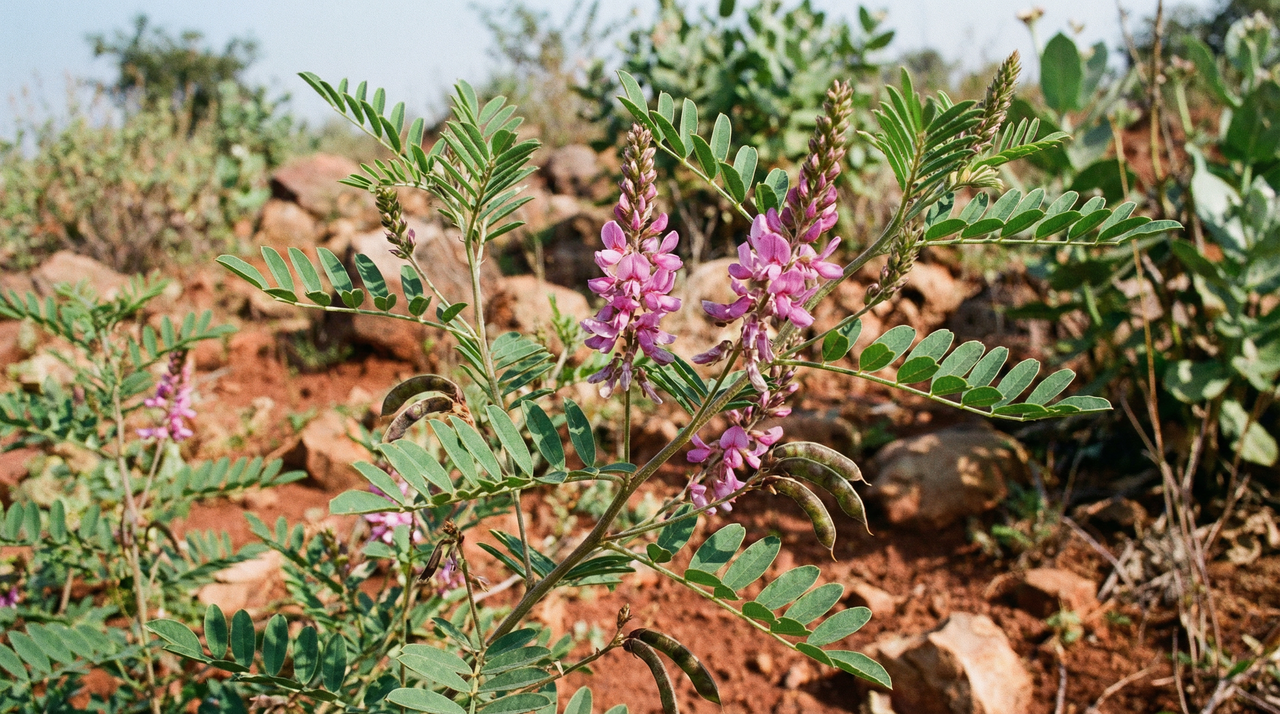
In the garden, true indigo reads as a soft-textured, upright shrub with a rounded form at maturity, typically 0.9 to 2 meters tall and equally wide.[6] Stems emerge green and finely hairy when young, branching freely from the base and gradually becoming woody and reddish-brown with age.[9] The leaves are pinnately compound, each carrying 7 to 13 oblong leaflets about 1 to 2.5 centimeters long with neat, entire margins and a tiny mucronate tip.[10] I've noticed that the foliage has a pleasant gray-green softness that reads similarly to other fine-leaved legumes, like a slightly smaller-leafed cousin of pigeon pea. Shade amplifies that effect: leaf size can increase up to 40% in lower light conditions, which is worth knowing if you're siting it at the edge of a food forest canopy rather than in full sun.[11]
The flowers are the detail that always gets people. These small, pea-shaped blooms (papilionaceous, same structure as a bean or sweet pea blossom) are rosy pink to violet, clustered into dense axillary racemes of 10 to 25 flowers each.[12][6] They're followed by slender, slightly curved pods 1 to 3 centimeters long holding 4 to 12 small yellowish-brown seeds.[13] The ornamental Kirilow's indigo (I. kirilowii) offers a useful comparison point: slightly larger rose-pink to purple flowers on longer racemes, a similar arching shrub form, and brown reniform seeds at maturity.[6][14] The family resemblance is clear; the dye chemistry is not.
Traditional, Cultural, and Historical Uses
Evidence of indigo dye production from I. tinctoria traces back to ancient India somewhere between 2500 and 4000 BCE, with domestication occurring around 3000 to 2000 BCE; by around 1500 BCE, Mesopotamian dyers were already using it.[15] From there it moved steadily outward along Silk Road trade networks, reaching Persia, Egypt, the Mediterranean, and China during the Han Dynasty by the first millennium BCE.[16] The fermentation-based extraction process that transformed green leaves into a concentrated blue pigment was one of ancient chemistry's more remarkable achievements, and cultures everywhere recognized they had something irreplaceable.
By the 15th through 19th centuries, that recognition had curdled into exploitation. Indigo became a major colonial cash crop in Bengal, Bihar, Uttar Pradesh, and Tamil Nadu under British East India Company control, and in the American South, particularly South Carolina and Alabama, where its cultivation was built on enslaved African labor.[17][18] Meanwhile in West Africa, Yoruba communities were developing their own deep traditions of fermentation and resist dyeing with indigo that exist independently of colonial trade routes.[19] Throughout Ayurvedic practice, the plant (known as Nili) was also valued medicinally for treating skin conditions, inflammation, and fever, long before European traders arrived.[20]
The whole apparatus of natural indigo farming collapsed almost overnight in 1897 when synthetic indigo was invented, displacing over 95% of natural production within a generation.[21] What's happening now in Bihar, Uttar Pradesh, and Tamil Nadu is a slow, thoughtful reversal: small-scale artisanal farmers and dyers are rebuilding the knowledge base around sustainable indigo cultivation, though concerns about soil depletion from intensive production and allelopathic compounds are real and worth watching.[22] As someone who thinks about the ethics of what we grow alongside the ecology, I find this revival genuinely moving. The plant itself hasn't changed. We're the ones who are finally asking better questions about how to grow it.
Fun Facts and Cultural Significance
The blue that I. tinctoria produces became shorthand across cultures for status, permanence, and resistance. In India, indigo's role in the Indigo Revolt of 1859 and later in Gandhi's independence movement connects a dye plant to some of the most consequential political events in modern history.[23] The same shrub that colored ceremonial textiles across Hindu and African spiritual practices was also worn daily by laborers and farmers, durable and practical in a way that synthetic dyes still struggle to replicate.
What strikes me every time I look at indigo growing in a garden bed is how much of that history lives in the roots. Those nitrogen-fixing nodules were improving soil long before anyone thought to call it regenerative agriculture.[24][25] And the origin story itself remains genuinely open: exact native range is still contested because humans have been moving this plant around for so long that wild and cultivated populations are nearly impossible to disentangle.[24] For a plant with this much documented history, a little botanical mystery feels entirely appropriate.
Indigo Varieties and Where to Buy Them
If you come to true indigo expecting a catalog's worth of named cultivars, you're going to be surprised. Because breeding priorities for Indigofera tinctoria have historically centered on dye yield rather than garden performance, the list of formally recognized horticultural selections is remarkably short compared to most cultivated plants with a 4,000-year relationship with humans.[2][26] What you find instead is a set of botanical varieties and agriculturally selected strains, each tuned for specific climates or processing outcomes.
Botanical Varieties and Dye Production Cultivars of Indigofera tinctoria
The botanical varieties are where things get genuinely useful for dyers. Var. tinctoria is the standard purple-flowered form and the one with the highest indican content, typically 0.5–1% dry weight, which translates directly into deeper, more saturated blues.[2][27] Var. indica, with its narrower leaflets and strong adaptation to Indian growing conditions, runs 20–30% lower in dye content but ferments faster, which can matter a lot when you're processing large leaf volumes.[2][28] I've grown seed batches from Indian suppliers and noticed the leaflets are distinctly narrower and the overall habit a bit more slender than what I get from domestically grown tinctoria stock, which tracks with those variety descriptions.
On the production side, cultivars like Bengal and Java were selected for tropical and subtropical output, Punjab for drought resistance, and Rani specifically for foliar dye extraction efficiency.[29][30] Current U.S. breeding programs are pushing toward higher glycoside content alongside better tolerance for non-tropical and saline soils, which hints at a future where the plant becomes more accessible to growers outside zones 9–11.[31] None of these are garden cultivars in the ornamental sense; they're workhorses bred for the dye vat.
Ornamental Varieties of Chinese Indigo (Indigofera kirilowii)
For cold-climate gardeners who want something from the Indigofera genus that actually survives zone 5 winters, I. kirilowii is the realistic option. Its cultivars have been selected entirely for garden performance: Alba offers white flowers, Nana stays compact at 2–4 feet, and Pink Pixie tops out around 2–3 feet with bright pink spikes in late summer.[32][33] I keep Pink Pixie in my front border because those late-summer spikes earn their space even though I grow it purely for aesthetics. Yes, the leaves can produce dye through fermentation, but yield is lower and it's not what these cultivars were bred for.[34][6] If your heart is set on blue dye from the source, true indigo is the plant; if you just want the genus in a colder garden, kirilowii delivers.
Sourcing Indigo Plants and Seeds
True indigo is most commonly available as seed in the U.S., with packets running roughly $3–8 for 10–50 seeds, and live plants in the $10–25 range from specialty suppliers.[35][36] Strictly Medicinal Seeds, Plant Delights Nursery, and Woodlanders are names worth bookmarking. Seed availability tends to peak in fall, following post-monsoon harvests in India and Southeast Asia.[37] After receiving one weak batch with low germination early in my growing experiments, I now insist on seeds that are dark, uniform, and completely mold-free; anything pale or clumped goes back. Look for seeds that have been scarified or that come with scarification instructions, since germination rates above 80% depend on it.[37]
Indigo is not listed as a federal noxious weed in the U.S., so domestic purchase is straightforward.[38][39] Importing live material from overseas is a different matter; a USDA APHIS permit is required under 7 CFR 319/330, and the process takes time.[40] I order domestically whenever possible for exactly that reason. If you're in Florida or Southern California, you may find live plants at local specialty nurseries since the species does best in zones 9–11 and growers in those states sometimes stock it.[37] For everyone else, seed is the practical starting point, and the propagation details for making those seeds succeed are coming up next.
Indigo Propagation and Planting Guide
Getting indigo established is genuinely satisfying once you understand what the plant is asking for. The whole process hinges on two things: convincing a stubborn seed to germinate, and then giving the resulting taproot somewhere to go that isn't waterlogged. Nail those two points and you'll have a productive, nitrogen-fixing shrub ready for its first dye harvest in about three to four months.
Understanding Indigo Seeds and Overcoming Dormancy
The seeds are small, roughly 2-4 mm long, oval to kidney-shaped, and nearly black with a faint curved scar where they attached to the pod.[41][42] They're orthodox seeds, meaning they tolerate drying and long-term storage well; kept at 0-5°C in an airtight container with silica gel, they can remain viable for a decade or more, and at -18°C viability can extend to fifty years or beyond.[43][44] I keep small lots in labeled foil packets in the back of my refrigerator and have had perfectly viable germination from three-year-old seed at well over 80%.
The catch is physical dormancy. That hard seed coat is what protects viability over those long storage timelines, but it also blocks water uptake and keeps the embryo from germinating without intervention.[45] Scarify before sowing and you'll see 70-90% germination; skip that step and results are frustratingly erratic.[46] The most accessible method for home growers is a hot water soak: bring water to 80-90°C, drop the seeds in, and let them soak for 12-24 hours as the water cools.[45] Scarification sounds fussy until you do it once. The giveaway that it's working is visual: scarified seeds swell noticeably within the first few hours of soaking, while untreated seeds just sit there looking smug. Light sandpaper or careful nicking with a file works just as well if you prefer a mechanical approach.
Propagation Methods: Seeds, Cuttings, and Beyond
Scarified seed sown 0.5-1 cm deep in well-drained sandy loam at 25-30°C germinates in 7-14 days with high genetic consistency, since indigo is predominantly self-pollinating.[47][48] If you want faster results or need to clone a specific plant, semi-hardwood cuttings taken during the growing season (10-15 cm long) root in 10-20 days at 21-24°C under high humidity with IBA rooting hormone in a perlite-vermiculite mix.[47] Cuttings reach first harvest 60-90 days after rooting, beating the seed route by a month or more. Tissue culture, air layering, and grafting onto compatible rootstocks are all established techniques but belong in a commercial propagation program rather than a home garden.[49]
For cold-climate growers who can't reliably grow I. tinctoria (which wants USDA zones 8-11), Indigofera kirilowii follows similar seed dormancy and scarification protocols and tolerates zone 5 winters, though its dye yield is quite different.[50][51] Good to know the genus handles seed biology consistently even when the cold hardiness differs.
Soil, Site Selection, and Sun Requirements
The single most reliable predictor of failure with indigo is poor drainage. Root rot in waterlogged or compacted soil kills plants that would otherwise be remarkably forgiving.[52] Sandy loam with pH 6.0-7.5 and at least six hours of direct sun is the target; the plant tolerates a wider range (5.5-8.0) but performance suffers at the extremes.[6] When my soil test came back at 7.8, new leaves started yellowing between the veins. Dropping the pH with elemental sulfur restored deep green growth and better nodulation within a few weeks. A simple test before planting saves a season of frustration.
Because indigo fixes its own nitrogen, keep supplemental N light and focus instead on moderate phosphorus and potassium.[53] Compost improves soil structure without causing problems, though I'd keep organic matter under 5-6% in heavier soils to avoid moisture retention issues. The taproot can reach 1-2 meters deep in good conditions, so loosening soil to at least 30-40 cm before planting matters more than fertilizer.[37] For container growing, a mix of 50-60% potting soil, 20-30% coarse perlite, and 10-20% organic matter in a pot no smaller than 30 cm diameter gives the roots room to work.[54]
Spacing, Transplanting, and Initial Establishment
Mature plants reach 1.2-1.8 m tall with a spread of roughly 0.9-1.5 m, which means spacing decisions have real consequences for harvest access and disease pressure.[55] For dye production, rows spaced 30-45 cm apart with 15-25 cm between plants maximizes leaf yield per square meter.[56] For ornamental or polyculture use, 60-90 cm between plants gives you walking room and better air circulation. I've run both configurations and genuinely prefer the wider spacing in humid subtropical conditions; the airflow alone reduces the minor fungal issues that crop up in tight plantings.[57]
Transplant seedlings outdoors at 10-15 cm tall (around 4-6 weeks from sowing) after the last frost date.[6] Early seedlings look remarkably like small acacias; I've learned the hard way to label rows carefully to avoid mixing them up with other legumes starting at the same time. Stake plants in exposed or windy sites until the taproot anchors them, and give a light prune after establishment to encourage a bushier habit rather than a lanky single stem.[57]
Timeline from Seed to First Harvest
The headline number is 90-120 days from sowing to first leaf harvest.[45] Within that arc: germination in 7-14 days, transplant-ready seedlings at 4-6 weeks, and first cutting once plants hit roughly 0.3-0.6 m tall.[48] The cutting route compresses this; cuttings root in 10-20 days and can reach first harvest 60-90 days later.[47] Treat these numbers as a flexible guide rather than a strict calendar. Warm soil and consistent moisture shave days off; a cool spell or a bout of poor drainage adds them back. The plant itself tells you more than any date: watch height, watch leaf color, watch how vigorously it's pushing new growth. Once it clears the first four to six weeks of establishment, the drought-tolerant, nitrogen-fixing nature of the thing takes over and the hard work is largely behind you.
Indigo Care Guide: Growing Indigofera tinctoria
Caring for an Indigofera tinctoria plant is largely a matter of working with its subtropical nature rather than against it. This is a plant shaped by the heat and seasonality of South Asia and East Africa, and once you internalize that, most care decisions become obvious. Give it conditions that approximate home, and it rewards you with fast growth, nitrogen-fixed soil, and leaves loaded with indigo precursor. Fight those instincts with too much shade, too much water, or too much fertilizer, and you'll have a leggy, pale shrub that barely fills a vat.
Sunlight Requirements for Indigo
Full sun is non-negotiable. Indigofera tinctoria needs six to eight hours of direct light daily for compact growth, consistent flowering, and the highest leaf indigo content I've seen in my own dye trials.[6][58][59] Plants I've kept in partial shade consistently produce paler foliage and a thinner vat; not worth it. The one exception is extreme heat: above 35 °C (95 °F), some afternoon shade prevents leaf scorch, especially when soil moisture is also low.[6][60] Think of it as a safety valve for a desert summer, not a general growing philosophy.
Watering Needs and Drought Tolerance
Once established, indigo is impressively drought-tolerant. Deep roots and physiological adaptations like leaf rolling and reduced transpiration mean a mature plant can survive on natural rainfall and needs roughly one inch of water per week during active growth at most.[61][62] After year two, I rarely water mine except during a genuine dry spell. Getting there, though, requires patience: young plants in years one and two need consistent deep watering of one to two inches per week to push roots two to three feet down.[63][64] Early in my indigo-growing years I lost several seedlings to root rot in heavy clay by watering too often before drainage was sorted; switching to raised beds with coarse sand worked in solved that problem entirely. Yellowing older leaves and sudden leaf drop are your warning signs of overwatering.[65] The plant prefers well-drained sandy or loamy soils with a pH of 6.0 to 7.5.[64][66]
Feeding and Soil Fertility for Indigo
Here's where the legume identity really pays off. Indigofera tinctoria fixes its own nitrogen through root nodules hosting rhizobia, so added nitrogen is not just unnecessary, it's counterproductive; excess nitrogen suppresses dye content in the leaves.[6][67] I stopped buying nitrogen fertilizer for my indigo bed years ago and now use the plant itself as a soil builder for neighboring dye crops; what it fixes goes into the wider system. What it does want is phosphorus and potassium, applied in low-nitrogen blends (something like 5-10-10) at planting, around 30 to 45 days in, and again at 90 days.[68][69] For organic growers, five to ten tonnes per hectare of compost or well-rotted manure improves soil structure and supports nodulation without nitrogen overload.[69] A soil test every few years is the simplest way to avoid micronutrient lockout of iron, zinc, and molybdenum, which can quietly undermine both plant health and dye yield.[60]
Frost Tolerance and Winter Protection
Marginally hardy in zone 8 with some help, true indigo requires winter protection outside the deep subtropics.[6][59] It can survive brief dips to 20 to 25 °F in a sheltered spot, but anything below 30 °F starts damaging young leaves, growing tips, and flower buds.[6][38] Frost injury shows up as wilting, browning or blackening of leaves, and stem tip dieback; plants can recover from root level after light damage if the crown is protected.[70][71] I once successfully overwintered a container specimen through a zone-8 dip to 22 °F by piling two inches of mulch over the crown and moving it against a south-facing wall; it resprouted vigorously in March. For in-ground plants in colder zones, two to four inches of mulch kept clear of the stems, a frost blanket on hard-freeze nights, and a wind-sheltered position are your best tools.[72] Zone 7 and colder: grow it as a fast annual or bring containers inside.
Heat Tolerance
The sweet spot for indigo is 20 to 35 °C (68 to 95 °F), which maps neatly onto AHS Heat Zones 8 through 1.[6][60] It can push through 40 °C (104 °F) without dying, but above 35 °C a bit of afternoon shade and a layer of reflective mulch make a real difference to both stress and dye output.[73] Southern gardeners can relax; this plant is not going to sulk through a Florida or Texas summer provided drainage is sound and watering keeps pace with the heat.
Pruning, Maintenance, and Seasonal Rhythm
For Indigofera pruning, timing matters more than technique. The most useful cut comes just after a flush of flowers or in late winter before new growth starts; remove no more than one-third of the oldest stems to keep the plant shapely, encourage bushy regrowth from the base, and maximize leaf production for dye.[74][75] Left unpruned, plants reach two to three meters; regular pruning holds them at one to two meters and keeps the stems thick enough to harvest from without a ladder.[76] I go harder every other year, cutting back to about one to one and a half meters, and the regrowth is always the most productive foliage of the season. Avoid heavy autumn pruning since fresh cuts entering winter are the most frost-vulnerable tissue on the plant.[37] Stake young flexible stems in windy sites to build good early structure. A two to three inch mulch layer kept away from the stem base ties everything together: moisture retention, weed suppression, and temperature moderation through the seasons.[74]
The seasonal calendar for zones 9 through 11 is straightforward: active spring growth kicks off as temperatures climb, summer brings flowering and peak leaf production, and autumn is when a light cleanup prune sets up the following year. Reduce watering once the plant slows for winter.[6][38] In colder gardens, the rhythm compresses: start seeds early indoors, plant out after last frost, harvest through summer, and either compost the plant or dig the container before temperatures drop. Either way, full sun and consistent moisture early in the season reliably produce the most dye-rich foliage.
Harvesting Indigo (Indigofera tinctoria)
The first harvest of Indigofera tinctoria begins once plants have reached 30-60 cm and are actively growing into the onset of flowering.[47][77] That timeline compresses to 80-100 days with improved cultivars, though honestly I've stopped counting days altogether.[47][78] The calendar is a rough guide at best. What matters is the plant's own signals, and learning to read them is the whole game with indigo.
When to Harvest Indigo: Timing, Phenological Cues, and Regional Seasons
The reason timing is so critical comes down to indican, the precursor compound that eventually becomes the blue dye. It peaks at the onset of flowering and in leaves aged 4-8 weeks, and the optimal window can be as narrow as a day or two after anthesis begins.[79][80] In my early seasons I missed that peak by a day or two more than once, and the dye I got was noticeably paler. That experience taught me to mark flowering onset on my calendar and then go out and check the leaves with my hands, not just my eyes.
The visual cue is a shift from light green to a distinctly bluish-green once 60-80% of the leaves are fully expanded.[80] Now I watch for that specific hue on the newest growth every morning during flowering. The tactile cue is equally telling: a ready indigo leaf snaps cleanly, firm and a little succulent, the way a perfectly ripe basil leaf does when you pinch it.[80] Brittle or limp, and you've either missed it or the plant is stressed.
Regionally, growers in India target September through November with peak harvest in October, while Southeast Asian growers extend through August to December, both patterns tied to post-monsoon growth flushes.[55][81] Those rhythms are useful reference points, but wherever you're growing, the phenological cues remain more reliable than any calendar date.[78]
How to Harvest Indigo Leaves for Best Dye Quality
The method itself is gentle and deliberately so. You can hand-pluck young leaves or cut the tops with shears, but the non-negotiable rule is to leave the main stem undamaged.[77][82] Protect that stem and you'll get 3-5 successive harvests every 40-60 days through the season.[55] Hack into the base carelessly and you lose weeks of regrowth, sometimes the plant entirely. From a design perspective, that repeated light cutting also keeps the shrub compact and productive, which fits beautifully into the mid-layer of a permaculture guild where you want manageable, productive shrubs rather than sprawling ones competing with neighbors.
Expected Yields, Storage, and Post-Harvest Handling
Indican content in the leaves runs 0.2-0.5% of dry weight, peaking at 0.4-0.6% in 6-8 week old leaves, which translates to roughly 10-50 kg of extracted indigo per hectare depending on how efficiently you process the harvest.[80][79] A well-managed crop can produce 2-4 tons of dry matter per hectare overall, with dense-planted varieties like microphylla pushing that figure higher.[83] By industrial standards, that's modest. For a home-scale dye garden where indigo is also fixing nitrogen and feeding pollinators, those numbers feel exactly right.
Fresh leaves store best at 10-15°C in humid conditions; dried leaves or extracted powder need airtight, light-proof containers kept below 25°C.[84] I've kept my own dried powder in dark glass jars in a cool cupboard and found it still vibrant a full year later, which matches what the research recommends. The extraction and dyeing steps that turn that powder into actual color are a whole separate process covered later in this article, but getting the harvest timing right is what makes any of that worthwhile.
Indigo Preparation, Uses, and Safety
Culinary Uses and Toxicity Concerns
Indigo is fundamentally a dye plant and a medicinal herb, not a food crop. Indigofera tinctoria is cultivated for natural dye production, and I. kirilowii for traditional medicine; neither is considered an edible plant in any meaningful culinary tradition.[85][86] The plants contain alkaloids and cyanogenic glycosides that make regular consumption genuinely risky, with seeds and roots carrying the highest concentrations.[87][88] These compounds trigger the significant toxicity risks and absolute pregnancy contraindications detailed in the medicinal safety overview.[89]
That said, famine records and ethnobotanical literature from parts of India and Africa do document occasional use of young leaves and tender shoots, prepared by boiling or stir-frying to reduce bitterness before being folded into curries or soups.[90][91] The leaves do carry a reasonable nutritional profile on paper: roughly 18-25% crude protein, meaningful calcium and iron, and beta-carotene up to 5000 IU per 100g dry weight.[92] I can see why people in lean times would experiment. But the same bioactive compounds that give the plant its medicinal punch, indirubin, tannins, alkaloids, flavonoids like quercetin and kaempferol, are precisely what drive both the potential benefits and the real risks.[93] When I work with other intensely bitter medicinal herbs like wormwood, that sharp astringency is the plant's way of communicating something. Indigo's flavor, described consistently as bitter, acrid, and earthy, with a soft mucilaginous texture when cooked, gives you the same message.[94][85] No widespread culinary recipes exist for good reason. These are expert-only, last-resort preparations, not something to experiment with casually.
Accurate identification matters too. True indigo is sometimes confused with false indigo (Baptisia australis, highly toxic), woad (Isatis tinctoria, mildly toxic), and hairy indigo (Indigofera hirta, which carries its own alkaloid load).[95][96][97] In my landscape design work, mistaking Baptisia for indigo is a scenario I take seriously. Positive ID before any harvest is non-negotiable.
Traditional Medicinal Preparations
Where indigo does have a legitimate and well-documented role is traditional medicine, though even here the guidance is clear: work with a qualified practitioner, not a recipe you found online. In Ayurvedic practice, leaves are prepared as decoctions, powders, or infused oils, applied to skin conditions, fevers, and wounds, with internal use typically limited to 1-3 g of powdered leaf per day, often blended with other herbs to buffer its intensity.[98] In TCM, I. kirilowii as Da Qing Ye is used for heat-related illness, sores, and swelling, with decoctions running 3-15 g of dried material per day, or 0.3-1 g as powder, always under practitioner supervision.[86] I've made herbal pastes from related medicinal species for topical garden-burn and wound applications, and the preparation logic here is similar: aqueous or alcoholic leaf extraction, kept to modest quantities, used with intention. The health benefits section covers the underlying pharmacology in more depth. What matters practically is that traditional use over centuries doesn't substitute for modern clinical validation, and the research gaps are real. Pregnancy, liver conditions, and kidney problems are hard contraindications.[89]
Non-Food Uses: Natural Dye and Permaculture Biomass
This is where indigo truly belongs, and honestly, it's a far more compelling story than anything a kitchen could offer. The dye extraction process is one of the oldest biotechnologies humans ever developed: fresh leaves are submerged and fermented in water at 25-30°C for 10-24 hours, then vigorously aerated to oxidize the dissolved indican into indigotin, which precipitates out as that iconic blue pigment.[99][100] I've watched the vat go from murky green to that unmistakable blue during the aeration stage and it still surprises me every time. The fermented smell is pungent and earthy, not at all romantic, but the moment that sediment settles and you see the blue at the bottom of the bucket, it clicks why this plant moved empires.
Beyond the dye vat, indigo earns its place in a permaculture system the way comfrey or pigeon pea does: through what it gives back to the soil. As a nitrogen-fixing legume, it improves soil fertility while generating substantial biomass suitable for mulch, green manure, and compost; I've chopped and dropped indigo stems into garden beds and seen the same fertility response I get from other dynamic accumulators.[101][102] Its dense, low growth also suppresses weeds and controls erosion on slopes where you need living cover fast. And compared to synthetic indigo production, which generates 5-10 kg CO2 per kilogram of pigment alongside toxic wastewater, the natural process produces 1-3 kg CO2 per kilogram and avoids the pollutants entirely, though it is water-intensive.[103][104] For anyone thinking regeneratively about where their materials come from, growing your own indigo plant dye while simultaneously building soil is a hard combination to argue with.
Indigo Health Benefits and Medicinal Uses
Most people who grow indigo come to it for the dye. I certainly did. But after years of harvesting those feathery leaves and watching the blue bleed into everything it touches, including my hands, my gloves, and apparently my favorite pruning shears, I got curious about what the chemistry was actually doing. The same compounds that make indigo such a tenacious colorant underpin a medicinal reputation that spans Ayurveda, Traditional Chinese Medicine, and African ethnobotany going back thousands of years.
Key Phytochemicals and Bioactive Compounds in Indigo
The signature compound is indigotin (the dye itself), present in dried leaves at roughly 0.1 to 1.5% of dry weight, with concentrations climbing toward the upper end during flowering and in dry-season harvests.[105][106] Timing and stress conditions dynamically shift the chemistry, much the same way drought-stressed basil carries more volatile oils. Indigotin itself forms through a tidy biosynthetic sequence starting from L-tryptophan, moving through the precursor indican stored in the leaf vacuoles, then oxidizing and dimerizing on contact with air once the cell walls are disrupted.[107][108]
But indigotin is really just the headline. The fuller phytochemical picture includes indirubin, tryptanthrin, a substantial flavonoid suite (quercetin, kaempferol, rutin, vitexin, isovitexin, orientin), isoflavones such as genistein and formononetin, plus phenolic acids, alkaloids, saponins, and tannins.[109][110] Distribution varies by plant part: leaves carry the highest indigo precursors, roots are richest in anti-inflammatory compounds, and seeds concentrate isoflavones. Total phenolics in extracts reach 50 to 150 mg GAE per gram, which translates to strong free-radical scavenging capacity, with DPPH IC50 values typically landing between 20 and 50 μg/mL.[111] That antioxidant density is the foundation every downstream benefit claim rests on.
Traditional Medicinal Uses Across Cultures
Ayurvedic texts classify indigo as Nilini, a cooling herb used to pacify pitta disorders, applied as a poultice for wounds and ulcers, and taken internally as a blood purifier and liver tonic.[112][20] TCM knows the processed preparation as Qing Dai, used to cool heat, detoxify the blood, and treat fevers, carbuncles, sore throat, and convulsions. African traditional medicine reaches for it in fevers, respiratory complaints, and inflammatory conditions.[113] What's striking across all three systems is the consistency: the plant is read as cooling, detoxifying, and antimicrobial regardless of cultural context. Different plant parts carry different roles: leaves go onto skin as poultices for wounds, bruises, and insect bites; bark decoctions serve as febrifuges; roots address joint pain, liver disorders, and venomous bites; seeds act as laxatives and anthelmintics.[114][115] When I apply a fresh leaf poultice to a minor skin irritation in the garden, the cooling sensation genuinely reminds me of comfrey or broadleaf plantain, plants I'd reach for without a second thought for the same purpose.
Modern Pharmacological Research and Potential Benefits
Preclinical research has largely validated what traditional practitioners described. The strongest, most replicated findings center on antioxidant activity through Nrf2 pathway activation (upregulating protective enzymes HO-1 and NQO1) and anti-inflammatory activity through NF-κB inhibition with measurable reductions in TNF-α and IL-6.[116][117] Antimicrobial activity against both gram-positive and gram-negative bacteria, including S. aureus and E. coli, and against Candida species, has been demonstrated with MIC values as low as 50 μg/mL.[118] Pharmacological reviews note enhanced collagen synthesis in wound-healing models, while analgesic effects in animal models have been described as comparable to mild aspirin-range activity.[98]
More exploratory signals include α-glucosidase inhibition suggesting antidiabetic potential, hepatoprotective normalization of liver enzymes in toxicity models, and neuroprotective reduction of dopaminergic neuron loss.[109][119] Indirubin specifically inhibits CDK/cyclin complexes, has shown anti-leukemic potential in CML models, and induces apoptosis in cancer cell lines including HeLa and MCF-7.[120][121] The mechanistic work is genuinely compelling. But while the animal and lab data on indirubin and NF-κB inhibition are compelling, there are no robust published human clinical trials specifically on Indigofera tinctoria, only limited trials on related Qing Dai preparations, and indirubin's oral bioavailability is poor at just 5 to 10%.[122][116] I always remind people that this is why consulting a knowledgeable practitioner matters far more than reading a plant profile, however thorough.
Nutritional Profile and Considerations
The leaves pack a surprisingly high protein content of roughly 18 to 25% dry weight, alongside calcium in the 1,200 to 1,500 mg per 100g range, meaningful iron and magnesium levels, vitamin A, and vitamin C.[123] Seeds carry 25 to 35% crude protein with lysine and isoflavones.[124] Those numbers look impressive until you look at the other side of the ledger. The same leaves contain condensed tannins up to 5%, trypsin inhibitors, saponins, and cyanogenic glycosides, plus indican at 2 to 4% of leaf dry weight.[90] As livestock forage, the recommendation is to keep it under 30% of diet to avoid diarrhea or hemolytic anemia.[125] Not every high-protein leaf belongs in the salad bowl, and indigo is a clear example of a plant where the antinutritional and toxic fraction makes the raw nutritional data almost beside the point for human dietary purposes. The antioxidant density is real, but it's best accessed through properly prepared medicinal extracts rather than raw leaves.
Safety, Toxicity, and Contraindications
The reassuring baseline is that Indigofera tinctoria has low acute toxicity, with LD50 values above 2,000 mg/kg in animal models, no significant pyrrolizidine alkaloids or indospicine (the compounds that make several related species genuinely dangerous to livestock), and low allergenicity with no urushiol.[126][38][127] The FDA regards indigo as safe for external cosmetic and hair-dye applications. Proper identification matters here because some Indigofera relatives carry toxicity profiles that look nothing like this species.
Internal use requires more care. High doses or raw ingestion in quantity can cause gastrointestinal upset, nausea, and vomiting. The cyanogenic glycosides present a theoretical hydrogen-cyanide risk if raw plant material is consumed in large amounts.[128] Unprocessed Qing Dai (Indigo naturalis) preparations have documented hepatotoxicity risk and are contraindicated in anyone with liver disease.[129] The plant is contraindicated during pregnancy due to potential uterine-stimulant and embryotoxic effects, and it may interact with anticoagulants or drugs metabolized by CYP450 enzymes.[116][130] Traditional adult dosage sits at 1 to 3 g of dried leaf powder daily, and I never use more than that teaspoon-range myself when experimenting with home preparations.[131] Properly dried, properly prepared, and within traditional dosage bounds, moderate use appears reasonable for healthy adults, but this is genuinely a plant where working with a qualified practitioner rather than going it alone makes sense.
Indigo Pests and Diseases
Natural Pest Resistance in Indigofera tinctoria
True indigo comes equipped with its own robust pest deterrent system. The alkaloids (including indirubin), flavonoids, and phenolic compounds in the leaves actively discourage herbivores,[132][133] and fine trichomes on the leaf surface add a physical layer of protection.[134] Leaf extracts have even shown insecticidal activity against aphids and stored grain pests in controlled settings.[135] The nitrogen-fixing habit quietly adds another layer of resilience too, keeping the plant vigorous enough that minor pest pressure rarely becomes catastrophic. Think of it like a well-fed bean plant versus a struggling one; the chemistry and the vigor work together. This pattern holds across the genus, including the ornamental I. kirilowii, though pressure from aphids and leaf beetles still shows up under poor conditions for that species too.[136]
Common Pests of Indigo
That said, no plant is immune, and aphids are the pest I watch for most closely on my indigo. They almost always appear first on the tender new growth in early summer, and I've made a habit of checking the shoot tips every week during that flush. Aphids (Aphis craccivora and related species) are the most prevalent pest in field conditions, causing leaf curl, yellowing, and reduced photosynthesis.[137][138] Leaf beetles, whiteflies, leafhoppers, pod borers, and occasional leaf miners round out the cast,[137] though none of these have ever overwhelmed a well-sited plant in my beds the way they can in a crowded monoculture. Studies from India put unmanaged pest damage at 20-30% in field conditions,[137] which sounds alarming but really just underscores why early monitoring and good guild design matter so much. Ladybugs and parasitic wasps will do a lot of the heavy lifting if you're not spraying indiscriminately nearby.[139]
Disease Resistance Profile
True indigo has moderate baseline disease resistance, including some natural tolerance to bacterial wilt, but that resilience erodes fast in humid, stagnant conditions.[140] In my experience growing subtropical plants, this is a familiar story: a plant that thrives in warm, breezy, well-drained spots becomes a disease magnet the moment airflow is restricted or water sits around the roots. Resistance also varies by cultivar, which matters if you're sourcing seed from different regions.[140]
Major Diseases and Environmental Triggers
Cercospora leaf spot is the fungal disease I'd call most common in cultivation, producing necrotic lesions that worsen sharply in humid weather.[141] Rust caused by Uromyces indigoferae follows a similar pattern, showing up as orange pustules on leaves and stems that tank photosynthesis if left unchecked.[142] The more serious threat is Fusarium wilt: Fusarium oxysporum, Rhizoctonia solani, and Phytophthora species all target the root and vascular system, and poorly drained soil is essentially an open invitation.[143][141] I lost a batch of young plants in a heavy clay bed one wet season before I understood how unforgiving indigo is about drainage; raised beds and compost amendment fixed the problem the following year. Powdery mildew can also appear in high-humidity conditions,[141] though I find it less damaging than the root diseases if caught early. On the cultivar front, Indian breeding programs have developed RCI-1 and Indigo Select with 60-80% resistance to Fusarium wilt,[144][145] though home growers outside India may have limited access to these specific lines.
Integrated Pest and Disease Management
In my experience, healthy soil biology and good airflow handle about 80% of the work. Proper spacing, full sun exposure, and genuinely well-drained soil eliminate the conditions that most pathogens need to get established.[146] I rotate indigo out of the same bed every two to three seasons, remove any infected debris promptly, and keep my tools clean -- basic sanitation that prevents a lot of grief down the road.[146] For biological support, I routinely drench new beds with Trichoderma and apply Bacillus subtilis when humidity spikes, and I've had excellent results with neem-based biopesticides for both pest and fungal pressure.[147] Beneficial insects -- ladybugs, parasitic wasps, predatory mites -- do real work on aphid populations when the garden isn't being disrupted by broad-spectrum sprays.[148][139] Copper-based fungicides and insecticidal soaps stay in the cabinet as genuine last resorts.[149] Grown in the right conditions, this false indigo plant stays remarkably clean with remarkably little intervention -- which is exactly what you want from a plant pulling double duty as a dye crop and a soil builder.
Indigo in Permaculture Design
Before you commit a bed or a guild slot to true indigo, the first question is always the same: can it survive your winters? That gates everything else. Indigofera tinctoria is reliably perennial in USDA zones 9-11, and in my zone 9B garden it overwinters without any fuss at all.[150][59] Once you push into zone 8, the calculus changes; it may die back to the roots in a hard freeze but often rebounds if you mulch it heavily and tuck it into a south-facing microclimate, as detailed in the care guide.[6][38] Zone 7 is marginal at best, and I wouldn't stake a design on it there without serious protection infrastructure.
Climate Adaptation and Hardiness Zones for Indigofera tinctoria
True indigo is a child of the monsoon. It wants temperatures between 20-35°C (68-95°F) for strong growth, starts looking unhappy below 10°C (50°F), and takes real frost damage at anything under 5°C (41°F).[6][151] Even on the hot end, sustained temperatures above 40°C can stress it and reduce leaf yield, so the sweet spot is a warm but not brutal summer. Rainfall-wise, it's adaptable across a wide range, performing in 500-1500 mm of annual precipitation, with solid drought tolerance once it's established.[2][152] That last point mirrors what I've seen in pigeon pea and other subtropical legumes I grow: they're thirsty when young, then genuinely forgiving once the roots are anchored. Indigo follows the same pattern exactly. It classifies under Koppen climates like tropical savanna (Aw) and humid subtropical (Cwa), places where there's a distinct wet and dry seasonal rhythm.[153] Humidity in that 50-80% range suits it well, and it performs best below 1000 m elevation, though it can push to around 1700 m.[3]
If you're gardening in a cooler zone and feeling left out, the genus has you covered. Indigofera kirilowii handles cold down to -34°C (-30°F) and is solid in zones 5-8, which is a completely different design universe from the tropical anchor species.[154][6][155] I've trialed it further north and watched it shrug off snaps that would have killed true indigo outright. It won't give you dye in any meaningful quantity, but its ecological role in the guild is strikingly similar, which I'll get into below.
Ecosystem Functions and Soil-Building Benefits
Here's where indigo earns its keep in a designed system, regardless of whether you ever touch a dye vat. As a legume in the Fabaceae family, Indigofera tinctoria fixes atmospheric nitrogen through Rhizobium bacteria in its root nodules at rates of 50-200 kg N per hectare annually.[156][157] That's a range comparable to pigeon pea, which I've long used as a fast nitrogen-banking shrub under young fruit trees in my southern guilds. Indigo slots into the same role with the added bonus of dye yield as a harvest. I find it more elegant than importing fertilizer when a legume shrub will do the same work while feeding pollinators and suppressing weeds.
Beyond nitrogen, it acts as a dynamic accumulator, pulling phosphorus and potassium up from deeper soil layers, improving structure, increasing microbial activity, and reducing erosion with its fibrous-to-taproot root system.[99][101][102] Chopped and dropped or used as green manure, the biomass feeds the soil food web right where you need it. The plant also contains compounds with insect-repellent properties, which may partly explain the reduced pest pressure I've noticed in plantings where it's woven through vegetable beds.[99]
The pollinator draw is real and worth designing around. The small pinkish-red papilionaceous flowers attract honeybees, bumblebees, and native bees from the Megachilidae and Halictidae families, which use buzz pollination to collect pollen.[158][159] Watching honeybees work those flowers and seeing how cross-pollination increased seed set in my trials made me wish I'd planted it closer to the vegetable zones sooner. It's self-compatible, but the bees clearly improve the outcome significantly.[160] I. kirilowii delivers these same nitrogen-fixing and pollinator functions in temperate zones, including genuine value for slope stabilization and degraded-site restoration, fixing 50-100 kg N/ha/year.[161][162]
Forest Layer Placement and Guild Companions
In a tropical or subtropical food forest, indigo belongs in the shrub layer. It grows 0.5-2 m tall with a similar spread, tolerates 30-50% shade though it prefers full sun, and sends roots 0.5-1.5 m deep, which is far enough to draw up resources without competing aggressively with shallow-rooted neighbors.[59][163] Its native haunts are dry deciduous forests, scrublands, and savannas, often growing alongside other legumes and acacias, which tells you something useful about its natural guild relationships.[164] It's already accustomed to sharing space and building soil in community.
For practical placement, I use it in alley-cropping arrangements with maize, as a hedgerow companion to fruit trees, and as a nitrogen-fixing mid-layer shrub adjacent to brassicas and fruiting perennials.[101][165] The allelopathic effects are minimal, which matters when you're stacking species tightly.[74] One hard-won lesson: because it can reach 2 m, I now map sun patterns before placing it near low herbs like basil. Early in my design career I shaded out a whole basil patch and didn't understand why yields dropped until I stood in that bed at midday in August. Give sun-hungry companions a generous buffer to the south.
Gardeners in warm coastal regions should actively monitor self-seeding, as indigo can naturalize in southern areas, and I treat it the way I treat any vigorous legume, harvesting before seeds fully ripen if I don't want volunteers spreading beyond the intended zone. Contained and managed, it's a powerhouse. Left entirely to its own agenda in a mild climate, it can get ahead of you fast. For temperate designers who want the guild functions without the frost anxiety, I. kirilowii fills the same understory slot in zones 5-8 as a tidy 1-2 m mound-shaped deciduous shrub, with the same nitrogen, pollinator, and soil-building contributions, just without any meaningful dye yield.[166][167]
The Vat That Changed How I See a Garden
The first time I fermented a vat of indigo leaves and lifted a pale yellow skein of wool out of that murky liquid, watching it turn green and then impossibly blue as oxygen hit the fiber, I stopped thinking about this plant as a crop. Something older than food forests or nitrogen budgets was happening in that bucket. I grow indigo now because I want that moment in my garden, every season, without apology.
Sources 167
- Indigo and indirubin: History, chemistry, and application ↩
- Indigofera tinctoria ↩
- Indigofera tinctoria L. ↩
- Indigofera suffruticosa - Plants of the World Online (Kew Science) ↩
- Flora of North America: Indigofera suffruticosa ↩
- Indigofera tinctoria ↩
- Royal Horticultural Society - Indigofera tinctoria ↩
- Indigofera tinctoria ↩
- Indigofera tinctoria ↩
- Flora of China: Indigofera tinctoria ↩
- Environmental Adaptations and Morphological Plasticity in Indigofera tinctoria ↩
- Flora of China - Indigofera tinctoria ↩
- Indigofera tinctoria - Kew Science Plants of the World Online ↩
- Indigofera kirilowii - RHS Gardening ↩
- The History of Indigo Dyeing in India ↩
- Silk Road and the Spread of Indigo ↩
- The Indigo Legends of South Carolina ↩
- Colonial Trade ↩
- Yoruba Indigo Dyeing Traditions ↩
- Ayurvedic Uses of Indigofera tinctoria ↩
- The History of Synthetic Dyes ↩
- Reviving Natural Indigo in India ↩
- True Indigo ↩
- Indigofera tinctoria L. ↩
- Indigofera tinctoria ↩
- The Plant List: Indigofera tinctoria ↩
- Indigofera tinctoria L.: A Review of Its Botany, Cultivation, and Dye Production ↩
- Botanical Description of Indigofera tinctoria Varieties ↩
- Indigo Production and Varieties ↩
- Cultivation of Indigofera tinctoria ↩
- Breeding for Improved Indigo Dye Production ↩
- Indigofera kirilowii Alba - RHS Gardening ↩
- Monrovia - Indigofera kirilowii Pink Pixie ↩
- Indigofera kirilowii ↩
- Indigofera tinctoria - Missouri Botanical Garden Plant Finder ↩
- Indigofera tinctoria - RHS Plant Finder ↩
- Indigofera tinctoria Cultivation Guide ↩
- Indigofera tinctoria (INTI) ↩
- Federal Noxious Weeds ↩
- Importation of Plants and Plant Products ↩
- Missouri Botanical Garden: Indigofera tinctoria ↩
- Seed Structure and Germination in Indigofera tinctoria ↩
- Viability of Indigofera tinctoria Seeds Under Different Storage Conditions ↩
- Millennium Seed Bank: Storage Protocols ↩
- Cultivation of Indigo (Indigofera tinctoria L.) ↩
- Seed Germination of Indigofera tinctoria: Effects of Scarification ↩
- Cultivation of Indigofera tinctoria ↩
- Indigo Production: A Guide to Growing and Harvesting ↩
- Micropropagation of Indigofera tinctoria ↩
- Germination Studies on Indigofera Species ↩
- Indigofera kirilowii - Royal Horticultural Society ↩
- Indigofera tinctoria: Cultivation and Propagation Techniques ↩
- Agrotechniques of Selected Medicinal Plants ↩
- RHS Gardening: Indigofera ↩
- Indigofera tinctoria Cultivation Guide - ICAR ↩
- FAO Guidelines on Indigo Production ↩
- Horticultural Practices for Indigo Plant ↩
- Indigofera tinctoria (True Indigo) ↩
- Indigofera tinctoria ↩
- Indigo Cultivation Manual ↩
- True Indigo (Indigofera tinctoria) ↩
- Indigofera tinctoria (True Indigo) ↩
- Indigofera tinctoria - Missouri Botanical Garden Plant Finder ↩
- Water and Soil Requirements for Indigo Cultivation ↩
- Indigofera tinctoria (True Indigo) ↩
- USDA PLANTS Database: Indigofera tinctoria ↩
- Role of Phosphorus in Legume Nitrogen Fixation ↩
- Indigofera tinctoria: Cultivation and Utilization ↩
- Agrotechniques for Cultivation of Indigo (Indigofera tinctoria L.) ↩
- Indigofera tinctoria Plant Profile ↩
- Frost Damage in Tropical Plants ↩
- Protecting Plants from Frost ↩
- Drought and Heat Tolerance in Legumes ↩
- Indigofera tinctoria ↩
- How to Prune Indigofera ↩
- Indigofera tinctoria: Cultivation and Pruning Guide ↩
- Indigofera tinctoria (True Indigo) ↩
- Phenology and Cultivation of Indigofera tinctoria ↩
- Phenological and Biochemical Changes in Indigofera tinctoria Leaves ↩
- Cultivation of Indigofera tinctoria for Natural Dye Production ↩
- Indigo Production in Southeast Asia: Historical and Modern Practices ↩
- Indigo Production and Processing ↩
- Varieties and Cultivation of Indigofera tinctoria ↩
- Cultivation of Indigofera tinctoria for Natural Dye ↩
- Indigofera tinctoria - Useful Tropical Plants ↩
- Traditional Uses of Indigofera Species in Chinese Medicine - NCBI ↩
- Toxicity of Indigofera Species ↩
- Cyanogenic Glycosides in Legumes - Journal of Agricultural and Food Chemistry ↩
- Journal of Ethnopharmacology: Evaluation of Toxicological Properties of Indigofera Species ↩
- Ethnobotany of Indigofera tinctoria in India ↩
- Culinary Uses of Wild Plants in Traditional Indian Diets ↩
- Nutritional Composition and Phytochemical Analysis of Indigofera tinctoria Leaves ↩
- Bioactive Compounds in Indigofera Species: A Review ↩
- Indigofera tinctoria in Traditional Medicine ↩
- False Indigo (Baptisia australis) Facts ↩
- Woad (Isatis tinctoria) Chemistry and Toxicology ↩
- Indigofera hirta Phytotoxicity Report ↩
- Traditional Uses of Indigofera tinctoria ↩
- Indigofera tinctoria: A Review on Phytochemistry and Pharmacology ↩
- Fermentation Processes for Natural Indigo Dye ↩
- Indigofera tinctoria as a Multipurpose Plant in Permaculture ↩
- Ecological Role of Legumes in Agroecosystems ↩
- Environmental Impact of Natural vs Synthetic Indigo Production ↩
- Life Cycle Assessment of Indigo Dye Production ↩
- Phytochemical and Pharmacological Review of Indigofera tinctoria ↩
- Secondary Metabolites from Indigofera kirilowii and Their Bioactivities ↩
- Indigo Biosynthesis in Plants: A Review ↩
- Seasonal Dynamics of Indigo Content in Indigofera Species ↩
- An Overview of the Phytochemicals and Pharmacological Activities of Indigofera tinctoria L. ↩
- Bioactive Compounds in Indigofera tinctoria: A Review ↩
- Antioxidant and Antimicrobial Activities of Indigofera tinctoria Extracts ↩
- Indigofera tinctoria in Traditional Medicine ↩
- Traditional Uses and Pharmacology of Indigofera Species ↩
- Traditional Medicinal Uses and Clinical Studies on Indigofera tinctoria ↩
- Indigofera tinctoria in Ayurveda ↩
- Anti-inflammatory and Antioxidant Activities of Indigofera tinctoria ↩
- Indirubin Suppresses Inflammation via NF-κB and Nrf2 Pathways ↩
- Antimicrobial Properties of Indigofera tinctoria Leaf Extracts ↩
- Hepatoprotective Activity of Indigofera tinctoria Against CCl4 Toxicity ↩
- Indirubin, a constituent of the Chinese herbal medicine Qing-dai, inhibits the kinase activity of cyclin-dependent kinase ↩
- Cytotoxic Effects of Indigofera tinctoria on Cancer Cell Lines ↩
- PubMed Search Results - Indigofera tinctoria clinical trials ↩
- Nutritional Composition of Indigofera tinctoria Leaves ↩
- Isoflavones in Seeds of Indigofera tinctoria ↩
- Nutritional Evaluation of Indigofera tinctoria Leaves as a Protein Source for Ruminants ↩
- Safety and Toxicity of Indigofera tinctoria in Traditional Medicine ↩
- Indigo (Indigofera tinctoria) - RHS Gardening ↩
- Indigofera tinctoria - Toxicity and Safety ↩
- Toxicity and contraindications of Qing Dai (Indigo naturalis) ↩
- Ayurvedic Monograph on Nil (Indigofera tinctoria) ↩
- Safety Assessment of Indigofera tinctoria Leaf Extract ↩
- Chemical Defenses in Indigofera tinctoria Against Insect Herbivores ↩
- Phytochemistry of Indigofera Species: Alkaloids and Flavonoids ↩
- Leaf Chemistry and Herbivory in Tropical Legumes Including I. tinctoria ↩
- Insecticidal Activity of Leaf Extracts of Indigofera tinctoria Linn. ↩
- Indigofera kirilowii - Pest and Disease Information ↩
- Insect Pests of Indigofera tinctoria and Their Management ↩
- Pest Incidence on Indigo Plants in Tropical Agriculture ↩
- Indigofera Pest Management - University of California IPM ↩
- Diseases of Legumes: Focus on Indigofera Species ↩
- Fungal Diseases of Indigofera tinctoria ↩
- Diseases of Leguminous Plants ↩
- Fungal Pathogens of Legumes ↩
- Breeding for Fusarium Wilt Resistance in Indigofera tinctoria ↩
- Resistant Cultivars of Indigofera tinctoria in Indian Agroecosystems ↩
- Diseases of Indigofera tinctoria and Their Management ↩
- Disease Management in Medicinal Plants: Focus on Indigo ↩
- Integrated Pest Management for Legume Crops ↩
- Pest Management in Indigo Cultivation ↩
- Indigofera tinctoria ↩
- Growing Indigo (Indigofera tinctoria) ↩
- Indigofera tinctoria (true indigo) ↩
- Distribution and Habitat of Indigofera tinctoria ↩
- USDA Plants Database - Indigofera kirilowii ↩
- Indigofera kirilowii - RHS Plant Finder ↩
- Nitrogen Fixation in Indigofera tinctoria ↩
- Nitrogen Fixation by Legumes in Agroforestry Systems ↩
- Pollination Biology of Indigofera tinctoria L. ↩
- Bee Pollination and Seed Set in Indigofera Species ↩
- Indigofera tinctoria - Kew Science ↩
- Nitrogen Fixation in Legumes: Indigofera Species ↩
- Erosion Control Plants ↩
- Indigofera tinctoria L. | Species ↩
- Indigofera tinctoria - CABI Compendium ↩
- Indigo in Agroforestry: Potential and Challenges ↩
- Missouri Botanical Garden Plant Finder - Indigofera kirilowii ↩
- Plants of the World Online - Indigofera kirilowii ↩