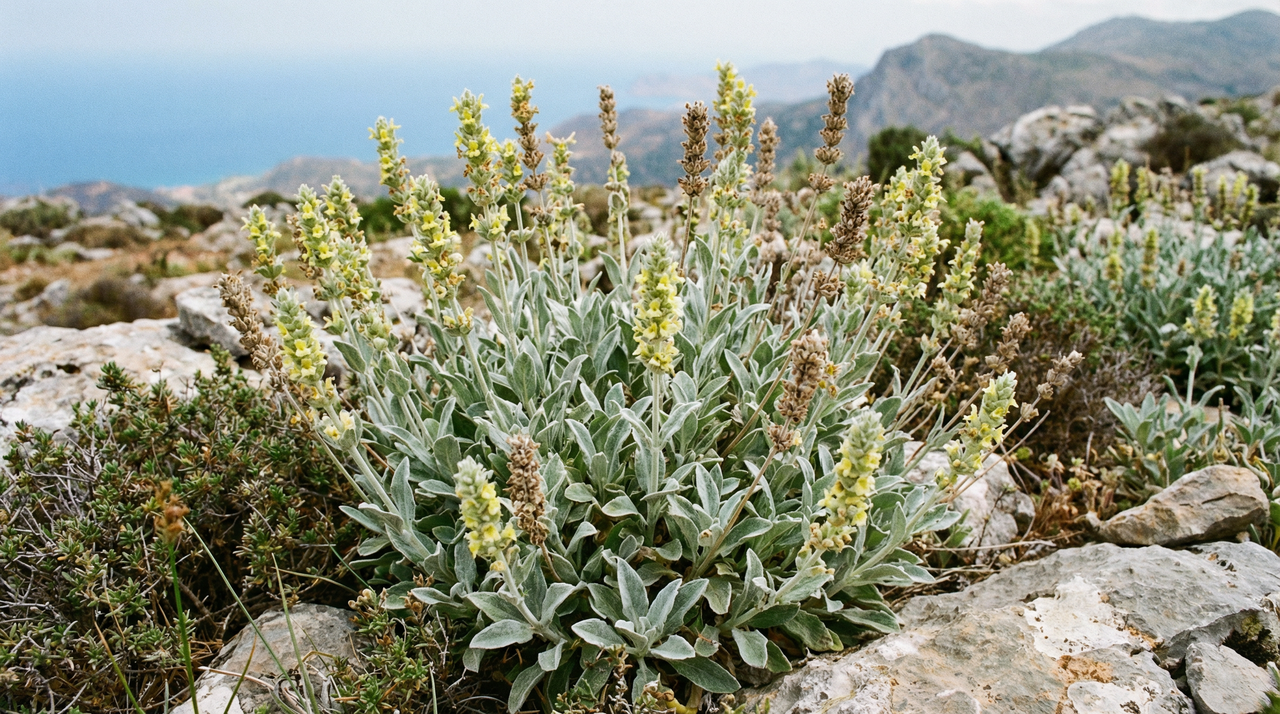
Most herbs that get labeled "medicinal" come with a flavor you have to make peace with. Ironwort doesn't. The first time I brewed a proper cup of Sideritis syriaca, whole dried stems still on, I expected something medicinal and slightly grim. What I got was something close to chamomile crossed with lemon balm, with a kind of warm, honey-adjacent sweetness underneath. I actually checked the jar to make sure I hadn't grabbed the wrong plant. Greeks drink this daily, the way other cultures drink breakfast tea, and once you taste it you understand why it doesn't require convincing.[1]
What nobody tells you is that this plant has been doing serious ecological and ethnobotanical work for a very long time before anyone in the English-speaking permaculture world noticed it. Dioscorides was writing about it for wound healing around the first century CE. Mountain communities across Greece and Turkey have been harvesting it wild for generations, which is exactly why wild populations are now under real pressure.[2] That gap between ancient use and modern garden adoption is where things get interesting, and where I think this plant has a genuinely underappreciated role to play in drought-tolerant, productive landscapes well outside the Mediterranean.
Ironwort Origin, History, and Cultural Significance
Botanical Background and Native Habitat of Sideritis syriaca
Ironwort is a polycarpic perennial in the Lamiaceae family, meaning it flowers and sets seed repeatedly across its lifetime rather than dying after a single flowering season like a biennial would.[3][4] Under good conditions, a well-placed plant can persist for three to ten years, though most growers find five or six years more realistic before vigor starts to decline.[5] It's not immortal, but it's impressively long-lived for an herb this size.
In the wild, Sideritis syriaca stakes out rocky, calcareous slopes, scrublands, and open habitats across the eastern Mediterranean. It is commonly found in Greece (especially the Pindus Mountains), Turkey, Cyprus, and parts of the Levant and Balkans, typically at elevations between 300 and 2,000 meters.[6][7] The genus as a whole has colonized these harsh montane niches throughout the Mediterranean basin. A close relative, Sideritis alcarazii, is restricted to limestone slopes at 800 to 1,500 meters in southeastern Spain's Sierra de Alcaraz, where it's listed as Endangered due to grazing pressure, fragmentation, and climate change.[8] Sideritis albiflora, endemic to Crete and the Greek Aegean islands, climbs even higher, reaching 2,500 meters on rocky calcareous ground, and faces its own pressure from overharvesting.[9] These rarer relatives show how specialized and geographically precise the genus can be, which makes the adaptability of S. syriaca in cultivation all the more remarkable.
Visual Characteristics of Ironwort and Related Species
In the garden, ironwort forms upright, clumping mounds typically 30 to 60 cm tall with a spread of 30 to 45 cm, sometimes more compact when grown at higher elevations.[3][10] The stems are square in cross-section (typical for the mint family) and densely coated in white woolly hairs, a trait botanists call tomentose.[3][11] The narrow, lanceolate leaves carry the same silvery-gray pubescence, which both reflects intense Mediterranean sun and slows water loss. I've found that this woolly texture is one of the clearest visual signals of drought adaptation in the Lamiaceae I grow; in my full-sun plantings, ironwort stays composed on hot afternoons when nearby sage and thyme start to look stressed.
Flowers appear from June through August in dense whorled clusters called verticillasters along terminal spikes. They're small, 8 to 12 mm, tubular, two-lipped (bilabiate), and white to pale yellow, sometimes with faint purplish markings.[3][12] The persistent, ribbed calyces aid seed dispersal once flowering is done. Underground, a robust woody taproot anchors the plant in rocky, nutrient-poor soil while fibrous laterals gather what moisture is available.[13] Brush the foliage and it releases a warm, herbal, slightly minty scent that immediately situates it in the same aromatic world as lavender and oregano. Related species like S. alcarazii and S. albiflora follow the same template but scaled down, often reaching only 15 to 40 cm with smaller leaves and comparable woolly pubescence.[14] Plants grown at higher altitudes within the species tend toward denser indumentum and more compact form, a phenotypic plasticity the whole genus shares.[15]
Traditional and Cultural Uses of Ironwort
The recorded history of ironwort in medicine is long. Dioscorides described Sideritis in the 1st century AD in De Materia Medica, citing it for wound healing and as a general tonic.[16] Avicenna referenced related species a millennium later in his Canon of Medicine for diuretic and anti-inflammatory applications.[17] Ottoman herbal traditions carried similar uses forward, and by the time modern ethnobotanists began documenting Greek mountain communities, the plant was deeply embedded in everyday life as tsai tou vounou, mountain tea, drunk for colds, respiratory complaints, digestive trouble, fatigue, and general wellbeing.[18][19] My work designing low-water gardens often leads me back to these classical texts when I'm selecting resilient perennials, and I find ironwort consistently positioned as a plant people genuinely relied on, not just a ceremonial curiosity.
Beyond medicine, ironwort carries real cultural weight in Greek and Balkan mountain communities. Sharing a pot of mountain tea is an act of hospitality, a signal of welcome, and a quiet nod to shared heritage and resilience.[20] There's something I find genuinely moving about a plant that bridges ancient pharmacy and community ritual, and I think that's part of why it translates so naturally into the sharing culture of permaculture gardens, where passing along a harvested bundle to a neighbor feels just as meaningful as any medicinal property.
Wild populations have been harvested since antiquity, and commercial pressure has only intensified that strain. Sustainable practices, expanded cultivation, and regulated harvesting are now recommended to protect both S. syriaca and rarer endemic relatives like S. alcarazii and S. albiflora from overcollection.[21][22] I've seen wild populations stressed by overcollection in popular foraging areas, which is exactly why I source cultivated plants and encourage others to do the same.
Fun Facts and Etymology
The name Sideritis comes from the Greek sideros, meaning iron, most likely a reference to the plant's tough stems or its traditional reputation for healing wounds and pains associated with iron implements.[22] When you're pruning established plants, the stems really do feel surprisingly sturdy for an herbaceous perennial, and I can see why early herbalists reached for that metaphor. It's not poetic license so much as an accurate tactile observation.
The adaptations behind that toughness are practical and ecologically sensible. A deep taproot accesses groundwater that shallow-rooted neighbors can't reach. In addition, its preference for full sun keeps photosynthesis efficient under conditions that stress other plants, and its need for gritty, alkaline, well-drained soil directly mirrors the limestone scree it calls home.[23] On slopes, those roots also do quiet ecosystem work by stabilizing soil and reducing erosion, a function that fits naturally into any sloped guild design. For gardeners interested in plants with a genuine story and real ecological grounding, ironwort connects 2,000 years of human use to a still-living mountain landscape, and that lineage shows in every woolly silver leaf.
Ironwort Varieties and Sourcing
Ecotypic Variation in Sideritis syriaca
There are no named cultivars of ironwort. No breeder has selected 'Minty Mountain Supreme' or 'Cretan Gold.' What you're working with instead is a species shaped over millennia by altitude, microclimate, and soil chemistry, and those natural pressures have produced something arguably more interesting than any formal selection program. Sideritis syriaca shows significant ecotypic variation across Greek regions, with Cretan populations in particular tending toward stronger minty notes and measurably higher antioxidant levels than mainland plants.[24][25] Higher-altitude ecotypes across the board tend to accumulate a wider diversity of phenolic compounds, which tracks neatly with the extra UV exposure and thermal stress those plants experience.[26]
I noticed this firsthand when I grew two batches side by side: one from mainland Greek seed, one Cretan-sourced. The dried tea from the Cretan plants was noticeably more pungent and mint-forward, the kind of cup that actually makes you pause. The research on antioxidant differences between populations suddenly felt very real. What this means practically is that asking a seed supplier about the origin of their stock isn't nitpicking; it's the only way to know what you're actually getting.[27][28]
Related Sideritis Species
The genus-wide pattern holds: none of the close relatives have commercial selections either. Sideritis albiflora, a monotypic Iberian endemic with white flowers and silvery-green leaves growing to around 30-50 cm, exists only as the straight species, no cultivars recognized anywhere.[28][29] Sideritis alcarazii, restricted to a narrow band of the Sierra de Alcaraz in southeastern Spain between 800 and 2,500 meters, is similarly uncultivated in any formal sense and carries a vulnerable conservation designation.[30][31] Then there's Sideritis ajpetriana, a woolly little Crimean mountain endemic forming compact 20-40 cm clumps with pale purple or white flowers, equally beautiful and equally unavailable in any selected form.[32][33] These are plants worth appreciating from a distance. For the home grower who wants mountain tea in the garden, S. syriaca is the practical entry point, and it's a good one.
Where to Buy Ironwort Plants and Seeds
Ironwort is not a big-box nursery plant. You won't find it between the petunias and the basil. In the US and UK, sourcing means going through specialty suppliers like Strictly Medicinal Seeds, Horizon Herbs, or Mountain Valley Growers.[34][35][36] Seed packets of 20-50 seeds typically run $3.50 to $8.00, live plants land between $10 and $20 each, and cuttings occasionally appear for $5 to $15.[34][35] Stock fluctuates seasonally, so checking current listings before you plan is essential. I've ordered from Strictly Medicinal Seeds several times and always label my pots immediately because first-year seedlings bear a suspicious resemblance to other Lamiaceae volunteers; losing track of which flat is which is an easy mistake to make.
If you're tempted to import plants directly from Greece, know that live material requires USDA APHIS permits and phytosanitary certificates; seeds face fewer restrictions but still need to be declared and may be inspected.[37][38] I always budget extra time for the APHIS paperwork when bringing in Mediterranean herbs. It's not complicated, but skipping it can cost you the whole shipment. The related species are even harder to track down: S. alcarazii seed occasionally surfaces from European sources at $8 to $15, but live plants are scarce and expensive when they appear at all, given the species' protected status.[39][40] S. albiflora turns up occasionally at specialty nurseries around $10 to $25 per plant, seeds rarely.[35]
I was once offered wild-collected Greek seed through an informal network and turned it down. Wild populations of Sideritis syriaca are already under pressure from overharvesting, and buying cultivated stock from reputable nurseries is both the smarter and more responsible choice. The plants are worth the extra effort to source properly.
Ironwort Propagation and Planting (Sideritis syriaca)
Ironwort is not a plant that rewards impatience. Set your expectations at the door: you are coaxing a rugged limestone-mountain perennial into a garden setting, and it will spend its first season building roots before it gives you much to show for it. That first-year modesty is actually a good sign. The plant is doing exactly what it needs to do.
Propagation Methods for Ironwort
Before you can talk about how to start ironwort, it helps to understand the seed itself. Sideritis syriaca seeds are tiny nutlets, just 0.6-1.2 mm long, brownish, with a finely ridged, pitted surface.[41][42] Internally they are monoembryonic and exalbuminous, meaning there is no nutritive endosperm tissue, just a straight embryo packed into a very small package.[43][44] That structure means the embryo has limited energy reserves and is particularly sensitive to how long the seed has been sitting around. Fresh seed is not a preference; it's a requirement.
The good news on genetic fidelity: Sideritis syriaca is predominantly outcrossing with gametophytic self-incompatibility, so open-pollinated seeds are generally true to type.[45] You can save seed from healthy plants without worrying much about off-types, though genetic diversity across a seed batch is actually an asset for conservation plantings.
Both seed and semi-hardwood cuttings are viable paths, and commercially, cuttings are preferred for uniformity and trait preservation; seed is chosen where genetic diversity matters.[46][47][48] In my own garden I have used both, and I will say honestly that cuttings are more reliable, especially in my zone 9b-adjacent conditions where spring soil temperatures shift fast and germination timing gets awkward.
For seed, surface-sow on well-drained gritty compost because these seeds require light for germination. Expect 10-21 days at 15-25°C, with success rates of 30-70% from fresh untreated seed.[49][50] Cold stratification at 4-10°C for four to six weeks, mechanical scarification, or a GA3 treatment (100-500 ppm) can push those rates to 50-90%.[51] If you are storing seed before sowing, dry it to 3-7% moisture and keep it at -18 to -20°C in an airtight container; viability can last 3-10 years under those conditions, though I always treat any seed over two years old with healthy skepticism.[52][53]
Semi-hardwood cuttings taken from non-flowering stems in spring or late summer, around 4-6 inches long, root in four to six weeks under high humidity or mist with rooting hormone at 1000-2000 ppm IBA and bottom heat around 22-25°C.[46][54] Skip the hormone and success rates drop noticeably, so don't skip it. Layering is another option with 60-80% success under humid conditions.[48] Tissue culture via shoot tips on MS medium with cytokinins and auxins achieves around 90% multiplication rates, which is territory for conservation programs working with species like the endangered Sideritis alcarazii rather than the home garden.[55] Grafting is rarely used and success rates are low enough that it's not worth pursuing.[56]
One thing I wish someone had told me early on: label your rows. The first-year rosettes from seed can look remarkably similar to other small-leaved Lamiaceae volunteers, or even to young carrot seedlings, before the characteristic silver-green woolly pubescence becomes obvious. I have pulled ironwort seedlings thinking they were weeds. I have also left weeds thinking they were ironwort. Labels solve both problems.
Soil, Site Selection, and Planting Guidelines
Think rocky limestone slope at 500-2000 meters elevation, and you have the mental model for this plant's ideal home: calcareous or stony soil, neutral to alkaline pH between 6.5 and 8.5, low organic matter, and drainage that removes water fast.[3][57][58] The plant is highly drought tolerant once established, adapted to 400-800 mm of annual precipitation concentrated in winter, but it is extremely vulnerable to waterlogging and will rot in heavy or compacted soil. I lost several young plants in my first season before I understood how serious that susceptibility is. Once I switched to a 70% inorganic mix of sand, perlite, and limestone chips with about 30% low-nutrient potting soil, I stopped losing them entirely.
If you are growing in containers, that 50-70% inorganic ratio is your baseline.[59][60] In the ground, amend acidic soils with lime at roughly 0.5-2 lb per 100 square feet to reach the target pH range; if your pH runs too low you will see chlorosis, and if it climbs too high you risk micronutrient lockout. I find it useful to think of ironwort as a lavender or rosemary in this regard: same general soil profile, same intolerance of soggy feet, same reward for getting the drainage right. Most gardeners who know those plants can transfer that understanding directly.
Full sun is non-negotiable. The plant wants 6-8 hours of direct sunlight daily.[61] Partial shade is a reluctant concession in extreme heat climates, but expect leggier, less floriferous plants with reduced vigor. Related species follow the same pattern: Sideritis albiflora on its shallow rocky Greek soils (15-30 cm deep) actually shows lower shade tolerance than S. syriaca, while S. alcarazii on Iberian dolomitic limestone at pH 7.5-8.2 demands the same full-sun, excellent-drainage conditions.[62][63] The genus is consistent on this front.
Spacing, Timing, and Acclimatization
Mature ironwort reaches 30-60 cm tall with a bushy spread of 30-45 cm, so space plants 30-45 cm apart with 60-80 cm between rows.[64][65] That spacing is not just about room to grow; it promotes the air circulation these Mediterranean plants depend on to stay disease-free. Commercial plantings run 20,000-30,000 plants per hectare, but in a home garden or permaculture guild setting, the row spacing gives you access for harvesting and keeps humidity from building around the base. Sideritis alcarazii is smaller and cushion-forming at 20-40 cm, a nice detail if you are comparing them for a rock-garden planting.[66]
Plant in spring after the last frost date, once soil temperature has climbed above 60°F (15°C).[59] Harden off any propagated plants gradually before transplanting; they need time to adjust from the protected humidity of a propagation setup to the drier, windier conditions they will live in permanently. In my heavier garden beds I plant on a slight mound or raised berm so water actively moves away from the crown. It's a simple trick but it replicates the native scree drainage the plant evolved in and has saved me from more than a few losses.[67]
Germination and Establishment Timeline
Resist any temptation to harvest in the first year. That whole season belongs to root development, and raiding the plant early compromises the woody base it needs to become drought tolerant and long-lived. First harvest typically happens in the second growing season, 1-2 years after propagation; cuttings may get you there slightly faster than seed.[68][46] Those first yields are modest, perhaps 10-50 g of dried leaf, so managing expectations honestly is part of good design.[69]
I mark my propagation rows and leave them alone for that first full season. It is genuinely hard to do because the soft silvery foliage is appealing from the start, but every time I've pinched a leaf or two early I can see the plants take longer to bush out. The patience pays off. A well-established ironwort in its second or third year is a different plant entirely from the tentative first-year seedling, fuller, more aromatic, and far more resilient to the dry summers it was born for.
Ironwort Care and Growing Guide
The single biggest mistake I see with ironwort, and honestly one I made myself early on with Mediterranean herbs, is treating it kindly. By which I mean watering it generously, feeding it regularly, and generally trying to give it the same attentive care you'd lavish on a tomato. Ironwort is not a tomato. It's a plant that evolved on rocky limestone slopes at elevation, baked by sun, starved of nutrients, and left to fend for itself between winter rains. Once you accept that, it becomes one of the most reliable perennials you can grow. Fight it, and you'll end up with a leggy, floppy, mildew-prone plant that smells faintly of nothing.
Sunlight Requirements for Ironwort
Full sun is non-negotiable. Ironwort needs 6 to 8 hours of direct sunlight daily, and that requirement comes straight from its native habitat on open, sunny slopes between 800 and 2,000 meters in the eastern Mediterranean.[70][71] That sun exposure isn't just about growth, it's what drives the essential oil production that makes the plant medicinally valuable. Put it in partial shade and you'll get etiolation, weak flowering, and diminished vigor.[47][72] In climates with genuinely brutal afternoon heat, some afternoon shade can prevent leaf scorch in closely related species like S. albiflora, but the genus as a whole really does want the sun. Think of it as a precondition for everything that follows.
Watering Needs and Drought Tolerance
Ironwort is native to habitats receiving 300 to 600 mm of annual rainfall, mostly concentrated in winter, and it develops a deep taproot precisely to seek out moisture between those dry periods.[73][74] Once established, it can go several weeks without water. I've watched mine through summer droughts that would have finished off a basil plant and come back to find it perfectly fine, perhaps even a little more aromatic for the stress.
That said, young plants need a bit more consistency: deep watering every 2 to 3 weeks through the first year helps root development without creating the soggy conditions that cause problems.[75] After establishment, water sparingly every one to two weeks during the growing season, only when the top inch or two of soil is genuinely dry, and reduce further in high summer. The diagnostics here are useful: overwatered ironwort shows yellowing leaves (chlorosis), softening stems, and sometimes a white powder developing at the base -- all signs that root rot has started or is starting.[76] A slightly dry and crispy plant will usually bounce back. A waterlogged one usually won't. With ironwort, a little dry is almost always the better bet.
Feeding and Fertility Management
Ironwort's native soils are nutrient-poor, rocky, and calcareous. The plant has adapted to thrive in exactly those conditions, which means that fertilizing it heavily is counterproductive in almost every way. Excess nitrogen in particular produces the kind of lush, fast, leggy growth that looks productive but dilutes essential oils and bioactive compounds, the very things that make the plant worth growing for tea.[61][77] It also increases pest susceptibility.[78] This pattern holds across the genus, every Sideritis species we know of is adapted to low-fertility substrates, and all of them respond poorly to overfeeding.[47][79]
For purely ornamental plants, I often skip fertilization entirely. For medicinal harvests, a single light application of a low-nitrogen formula (something like 5-10-10 at half strength, or a small amount of worm castings) in early spring is plenty.[80] If you're growing in alkaline soil and notice interveinal yellowing, that's likely iron or manganese deficiency; I've used chelated iron foliar sprays on similar Lamiaceae in my own garden with good results, and I'd recommend testing soil pH before you plant rather than troubleshooting it afterward.[81][82]
Heat Tolerance and Summer Care
Ironwort handles summer temperatures up to 35 to 40°C (95 to 104°F) reasonably well, though its sweet spot for active growth sits between 15 and 25°C.[83][84] What makes it survive where many herbs fail is a remarkable set of physiological adaptations: stomatal closure to limit water loss, antioxidant enzymes that mop up heat-induced cellular damage, proline accumulation for osmotic adjustment, and elevated polyphenols and flavonoids that double as heat-protective compounds.[72][85] It's the same suite of responses I've observed in rosemary and lavender through hot summers: the plants look like they're struggling, the oils become noticeably more intense, and then they come back when temperatures ease. Moderate heat stress can actually boost protective terpenes in the essential oil.[86]
Seedlings are the vulnerable point, they can show leaf scorch and wilting above 35°C.[87] For established plants during extreme heat events, 30 to 50% shade cloth, deep watering every 7 to 10 days in the early morning, and a layer of gravel mulch will carry them through without much drama.[88] Expect some leaf drop in peak summer. That's normal dormancy behavior, not distress.
Frost Tolerance and Winter Protection
Ironwort is reliably hardy in USDA zones 7 to 10, with best performance in zones 8 and 9, and established plants can tolerate temperatures down to around -12°C (10°F) in dry cold conditions.[5][89] The word "dry" matters enormously here. Like most of its mountain relatives, ironwort is far more threatened by wet cold than by dry cold; waterlogged soil in freezing temperatures is the real killer, not the temperature reading alone.[90]
My own experience with plants on the edge of zone 9b has taught me one specific lesson on winter protection: use gravel mulch around the crown, not bark or wood chips. Organic mulches hold moisture against the stem through wet winters, and that's exactly how I lost a couple of Sideritis relatives before I switched. Gravel insulates the roots without trapping the water.[91][47] A south-facing sheltered site and good drainage do most of the work. In zone 7 or colder, either treat the plant as an annual or bring it indoors in a container before the first hard freeze. Most established plants that take minor frost damage will show browning or dieback above ground but recover well come spring.
Pruning, Maintenance, and Seasonal Rhythm
Ironwort stays compact at roughly 30 to 60 cm tall, but without occasional pruning it can get a bit woody and straggly over time. I tip back shoots by about one-third in late winter or early spring, before new growth pushes, and the difference by flowering time is clear: bushier plants, more flowering stems, better yields.[92][61] A light trim after flowering achieves the same thing if you prefer to wait. What you want to avoid is hard cutting into old wood, which can reduce essential oil production and stress the plant unnecessarily.[68] A gravel top-dressing around the base handles the rest: moisture retention during dry spells, weed suppression, and that all-important sharp drainage at the crown.
Understanding ironwort's seasonal rhythm makes all of this easier to time. Active vegetative growth begins in late spring, flowering runs from roughly May through July with small tubular flowers that bees visit consistently, and then the plant settles into a quiet summer rest during peak heat and drought.[93] When autumn rains arrive, growth resumes. This cycle mirrors what happens on its native slopes, and once you internalize it, the plant stops seeming mysterious. It's a polycarpic perennial with a lifespan of 3 to 10 years;[94] give it sun, drainage, and the occasional light prune, and it will be a reliable presence in the garden for years.
Ironwort Harvesting Guide: Timing, Technique, Yield, and Flavor
After a season or two growing ironwort, you start to read the plant rather than the calendar. The window is May through July, but the real cue is the flowers themselves: wait until roughly half to two-thirds of those pale white-to-yellow inflorescences are open before you cut anything.
When to Harvest Ironwort for Peak Flavor and Medicinal Quality
The research backs up what the plant is telling you visually. Harvesting Sideritis syriaca at 50-70% bloom, roughly 10-15 days after anthesis, is when essential oil content peaks at 1-2% dry weight and phenolic and flavonoid concentrations hit their highest levels.[95][96][97] Cut too early and the chemistry hasn't fully developed; wait too long past full bloom and those same compounds start to decline.[98]
Beyond the flowers, I've learned to check the stems. Harvest-ready shoots are soft and slightly pliable, not crisp or woody, and the leaves should be a full, vibrant green with no yellowing.[99][100] If a stem crushes easily under gentle pressure and the flower heads are mostly open but not browning, you're in the window. That moment consistently delivers the brightest lemon-honey aroma in the dried tea. Miss it by a week in either direction and you'll notice the difference in the cup.
Always harvest in the morning after the dew has dried. Volatile compounds are most concentrated and intact before the heat of the day, and wet foliage invites degradation during drying.[97][101] Related species like S. albiflora peak a little later, June into July at higher altitudes, while S. alcarazii follows a similar May-July pattern; across the genus, elevation consistently delays bloom.[102] For experienced growers, a late-summer cut can coax more aromatic depth from S. syriaca, but it must be paired with low-temperature drying to protect compounds like β-caryophyllene.[103]
How to Harvest Ironwort Properly
The cut is simple and intentional: take the top 10-15 cm of each flowering stem, either by hand or with a light scythe, leaving the perennial root system and lower stems completely intact.[97][104][105] Traditional Greek practice emphasizes hand-harvesting precisely because it protects the root; a bruised or damaged crown often won't regrow cleanly, and this plant is slow enough to establish that it's not worth the risk.[106] Done right, you can take multiple cuts in a single season as side shoots develop after the first harvest.
Once cut, dry the stems in loose bundles, shade side, at temperatures below 40°C for three to seven days.[107][108] I learned this the hard way: one season I tried faster oven-drying to get ahead of some humid weather, and the resulting tea was noticeably more bitter and flat. The research confirms it, keeping heat low preserves the flavonoids and aromatic volatiles that make the difference between a pleasant cup and an exceptional one.[103] Sun-drying can actually enhance brighter volatile notes if humidity is low, but shade-drying is the safer, more consistent method for most gardens.
Ironwort Yield, Flavor Profile, and Post-Harvest Handling
Set realistic expectations for your first established plants: mature Sideritis syriaca typically yields 50-150 g of dry herb per season, with the spread reflecting soil fertility, spacing, and whether you're irrigating at all.[109][95] For a household that drinks mountain tea regularly, five or six well-established plants goes a long way.
The flavor reward for timing your harvest well is distinctive: a mild, slightly sweet infusion with prominent lemon and honey notes, a clean herbal finish, and a smooth, slightly viscous mouthfeel that comes from natural polysaccharides in the plant tissue.[22][110] Think of it as sitting somewhere between a light chamomile and a linden flower infusion, herbaceous without being sharp. The aroma profile is built around carvacrol, thymol, and β-caryophyllene, the same compounds the plant uses to protect itself on hot limestone hillsides.[111]
Where the plant grew shapes what ends up in your cup. I label my harvests by microclimate and date because I've noticed real differences between batches from different spots in my garden; the terroir data supports this. Cretan-origin material tends toward citrusy and minty, while Peloponnese plants run earthier and slightly more bitter, a difference driven by calcareous soil chemistry and altitude.[112][113] The related species follow their own patterns: S. albiflora produces a milder, earthy-sweet cup with chamomile and hay notes and a clean camphoraceous aroma driven by linalool,[114][115] while S. alcarazii runs earthier and more resinous, with mint and lemon notes framed by pinene and limonene.[116][103] Across the genus, harvest timing and drying method shape these flavors as much as the plant's genetics do.[117]
Ironwort Preparation and Uses
Almost everything interesting that happens with ironwort happens in a cup. Sideritis syriaca has been steeped as a daily herbal infusion across Greece and the broader Mediterranean for centuries, valued as much for its flavor as for the comfort it offers to tired lungs and restless digestion.[118][119] Knowing how to go from dried plant to a good cup is, honestly, most of what you need to know.
Brewing Greek Mountain Tea from Sideritis syriaca
When appropriately steeped, the resulting tea develops a smooth, deeply comforting profile.[120][110] Traditional recipes add a spoon of honey, a squeeze of lemon, or a few fresh mint leaves, and it pairs naturally alongside yogurt-based meze, light salads, or a simple seafood meal. I like mine plain most evenings, which lets the citrus notes come forward.
Preparation is straightforward. Dry the aerial parts -- stems, leaves, and flowers together -- in a cool, shaded spot away from direct light to hold onto the essential oils that make the difference between a bright cup and a flat one.[121][122] Once dried, steep 1 to 2 teaspoons of the herb in hot water for 5 to 10 minutes, then store the remainder in an airtight, opaque container somewhere cool and dark. I label my ironwort separately from the other Lamiaceae on my shelf because its delicate citrus-mint balance is easily buried by something assertive like sage left open nearby. The difference between fresh-season dried herb and material that's sat unlabeled for a year is immediately obvious when you crush a pinch -- the first smells like mountain air, the second like dust.
If you grow S. albiflora alongside S. syriaca, you'll notice the cups are meaningfully different. The albiflora infusion is milder, more chamomile-like, with a delicate floral quality and soft bitterness rather than that characteristic honeyed warmth.[123] Solid-food uses across the genus are limited and honestly a bit speculative -- the plants can theoretically flavor simple syrups or marinades[124] -- but the tea is where ironwort actually lives.
Medicinal Infusions and Safe Use
The good news for anyone growing mountain tea sideritis at home is that the medicinal preparation and the daily cup are essentially the same thing. The standard guidance is 1 to 2 teaspoons (roughly 2 to 3 grams) of dried herb per 200 to 250 ml of boiling water, steeped for 5 to 10 minutes, with adults typically consuming 1 to 3 cups a day.[125][126][127] No special tinctures or extracts are needed; the infusion covers both purposes.
For most healthy adults, moderate daily consumption has a long track record of safe use, and no evidence of toxicity exists at typical amounts.[22] That said, anyone with sensitivities to the Lamiaceae family should approach with caution, since mild allergic reactions are possible. On sideritis tea during pregnancy: I don't use it, and I don't recommend it. The traditional use history is reassuring in a general sense, but specific safety data for pregnancy and breastfeeding simply isn't there, and that absence is reason enough to wait. Sourcing matters too -- plants grown in contaminated environments can carry pesticide residue or heavy metals into the cup.[128] If you're buying rather than growing your own, verify the origin and buy from suppliers who test their material.
Ironwort Health Benefits and Medicinal Uses
Traditional Uses in Mediterranean Folk Medicine
Walk into a mountain village in Greece, Turkey, or Crete and you're likely to find ironwort tea on the stove. For centuries, Greek mountain tea made from Sideritis syriaca has been the first thing prepared when someone comes home with a cold, a cough, or a sore throat, valued for its expectorant and soothing properties that made it the Mediterranean equivalent of chicken soup.[18][129] The same respiratory applications appear in Spanish folk medicine around Sideritis alcarazii and in Cretan traditions centered on Sideritis albiflora, suggesting that this pattern of use isn't coincidence but accumulated, multigenerational observation.[130][131]
Beyond respiratory support, traditional healers across the region reached for ironwort to ease indigestion and stomach upset, and as a gentle anxiolytic when nerves were frayed.[18][132] That triad of respiratory, digestive, and calming uses is what caught modern pharmacologists' attention and sent them looking for mechanisms. What they're finding is genuinely interesting, even if the research is still early.
The preclinical evidence to date shows anti-inflammatory activity through inhibition of the NF-κB pathway and reduction of pro-inflammatory cytokines including TNF-α and IL-6, alongside antioxidant effects mediated through Nrf2 pathway activation and direct free-radical scavenging.[133][134] Antimicrobial activity against Staphylococcus aureus has been documented with methanol extracts showing minimum inhibitory concentrations of 0.5 to 2 mg/mL, a range consistent with meaningful antibacterial activity,[135] and similar results have been found in Sideritis albiflora.[136] There are also early signals around neuroprotection through acetylcholinesterase inhibition and potential GABA receptor modulation that would help explain the traditional calming use.[137]
The honest caveat is that virtually all of this data comes from in-vitro and animal studies. There are no robust human randomized controlled trials yet.[138][139] Research on S. alcarazii and S. albiflora is even thinner, with most findings extrapolated from S. syriaca work. The preliminary data on diuretic, antispasmodic, analgesic, and adaptogenic effects in related species is intriguing,[140] but I'd call it a research frontier rather than a settled body of evidence.
Key Phytochemical Compounds
What ironwort puts into that cup is genuinely complex. The aerial parts contain flavonoids (apigenin, luteolin, quercetin, and their glycosides including luteolin 7-O-glucoside and apigenin-7-O-glucoside), phenolic acids (rosmarinic acid, caffeic acid, chlorogenic acid), and a structurally distinct set of diterpenes that set Sideritis apart from other Lamiaceae.[141][142] Rosmarinic acid alone can reach 5 to 10 percent of aerial-part dry weight, which is exceptional for any herb.[143]
The terpenoid fraction adds another layer: monoterpenes like α-pinene and β-pinene, sesquiterpenes including β-caryophyllene and germacrene D, and the signature ent-kaurene and labdane-type diterpenes (siderol, ent-16-kaurene) found across the genus.[144][145] Essential oil yields vary considerably by plant part: leaves run 1 to 2 percent, stems about 0.5 to 1 percent, flowers around 1.5 percent, and roots approximately 0.8 percent.[146]
Quantitatively, leaves are where the action is. Total phenolics in S. syriaca leaves run 25 to 45 mg/g dry weight (averaging around 35 mg/g), flavonoids contribute 10 to 20 mg/g, and diterpene concentrations reach 5 to 10 mg/g in leaves versus roughly 15 mg/g in roots.[147][148] Related species like S. alcarazii and S. albiflora show similar compound classes with total phenolics sometimes reaching 50 to 100 mg GAE/g.[136]
Those numbers aren't fixed. Geography creates real chemotypes: plants from Western Macedonia show higher total phenolics and antioxidant activity, and higher altitude consistently correlates with greater production of defensive compounds including rosmarinic acid and flavonoids.[149][150] I've noticed something parallel growing other Mediterranean Lamiaceae: plants pushed a little harder by lean soil, strong UV, and temperature swings tend to produce noticeably more pungent, aromatic material than the same species lounging in a rich, irrigated bed. The stress signals the plant to protect itself, and those protective compounds are largely what we're after. Harvest timing matters too; peak concentrations occur during early flowering, typically July and August in Greece, and wild high-altitude plants often outperform cultivated material on compound complexity.[151][152] I label my harvest batches by date specifically because early-flowering cuttings are noticeably more aromatic, and that observation tracks with the research.
Scientific Evidence for Health Benefits
The anti-inflammatory, antioxidant, and antimicrobial activities described in traditional use have genuine mechanistic backing at the preclinical level. NF-κB suppression, Nrf2 activation, free-radical scavenging by flavonoids and phenolics, and measurable MIC values against Staphylococcus aureus are all documented in laboratory and animal work.[153][154] As outlined earlier, translating these laboratory anti-inflammatory and antimicrobial signals to a living human teacup remains a research frontier. That gap between bench research and the teacup is real, and it's worth being clear about.
Nutritional Profile and Antioxidant Capacity
A cup of ironwort tea is not a nutritional powerhouse in the caloric sense, coming in around 5 to 10 kcal per cup,[155] but what it does deliver is a meaningful polyphenol load of 50 to 200 mg per liter of infusion alongside modest mineral contributions, including roughly 10 to 20 mg potassium per cup.[156] The dried aerial parts themselves are mineral-rich by herb standards: approximately 1,250 mg calcium, 1,100 mg potassium, 320 mg magnesium, and 15 mg iron per 100g dry weight.[157] That iron figure is striking for an herb, though the iron from a tea infusion isn't the same as from a bioavailable food source, so I wouldn't frame this as a substitute for dietary iron. Think of the mineral content as a pleasant bonus rather than a selling point.
The antioxidant capacity, measured by DPPH and ABTS assays, correlates strongly with the flavonoid and phenolic content covered above.[158] Bioavailability of these phenolic compounds from the infusion is moderate at 10 to 30 percent absorption, and adding a squeeze of lemon appears to improve uptake.[159] Drying method makes a real difference here too: low-temperature oven drying at 40°C or shade drying preserves up to 90 percent of phenolics compared to sun drying.[156] I've seen this first hand with rosemary and other Lamiaceae relatives; careful low-temperature drying keeps the aromatics noticeably more intense, which tracks with what the research shows about preserving volatile and phenolic content.
Safety Profile and Considerations
Centuries of daily tea consumption across Greece, Turkey, and Spain are the strongest argument for ironwort's safety, and the laboratory data backs that up: animal studies show an LD50 exceeding 2,000 mg/kg, no mutagenic or genotoxic activity has been identified, and the European Medicines Agency's assessments on related Sideritis species support a well-tolerated profile for adults consuming 1 to 3 cups daily.[160][161][162] No documented poisoning cases exist for S. alcarazii or S. albiflora, and the ASPCA classifies Sideritis species as non-toxic to pets.[163]
That said, a few cautions deserve straight talk. Anyone sensitive to Lamiaceae family plants (lavender, oregano, sage) should start cautiously, since allergic reactions including contact dermatitis and respiratory symptoms are possible.[164] The flavonoid content creates a theoretical mild CNS-depressant effect, so people taking sedatives or anxiolytics should flag it with their prescriber.[165] Mild hypotensive effects and potential weak CYP3A4 inhibition from flavonoids suggest similar caution if you're on antihypertensives or certain other medications.[166][167] Pregnancy is a firm caution: possible mild uterine stimulant properties and simply insufficient safety data mean I always advise consulting a healthcare provider before using it medicinally during pregnancy, whatever a traditional grandmother might say to the contrary.[168] Children under 12 should also avoid it due to absent pediatric studies.[163] For most healthy adults, though, a daily cup or two is a gentle, time-tested ritual with a genuinely reassuring safety record.
Ironwort Pests and Diseases
Ironwort comes to the garden with a built-in defense system, and understanding it changes how you approach pest management entirely. Those dense, woolly leaves aren't just for drought tolerance; the glandular trichomes packed across the stems and foliage are essentially tiny chemical factories producing carvacrol, thymol, and a suite of terpenoids that make the plant genuinely unappealing to many insects.[169][170] I've noticed across my Mediterranean Lamiaceae that the plants with the heaviest, stickiest leaf texture tend to show the least aphid damage, and field studies on wild populations back this up: trichome density correlates directly with insect resistance in wild Sideritis populations.[170][171] When a plant feels sparse or looks dull, I start paying closer attention.
Ironwort's Natural Resistance and Susceptibility to Pests
The resilience is real, but it's moderate, not absolute. In cultivated settings, aphids (particularly Aphis gossypii and Myzus persicae), spider mites, whiteflies, thrips, and the occasional leaf beetle or caterpillar can all find their way in, especially when plants are crowded or stressed.[172][173] Root-knot nematodes have also been documented in related species under greenhouse conditions, so container and tunnel growers should keep that in mind.[174] Wild plants in native Mediterranean ecosystems generally face much lower pressure than anything we grow in a garden bed, where proximity, reduced airflow, and amended soils shift the balance.[172]
Because I grow ironwort specifically for tea, synthetic pesticides aren't even on the table. My approach is straightforward IPM: encourage ladybugs, lacewings, and parasitic wasps by maintaining diverse plantings nearby, and if pressure escalates, neem oil or insecticidal soap handles it without contaminating the harvest.[175][176] I've kept healthy stands for multiple seasons this way without ever reaching for anything stronger. On the cultivar question: there are no recognized pest-resistant selections in commerce, and most of what's known about variability in resistance comes from comparing wild ecotypes and landraces rather than any formal breeding program.[177] For rarer relatives like S. alcarazii and S. ajpetriana, specific pest documentation is essentially absent; I rely on genus-level patterns from Kew and extension resources when I'm trialing those species and note that their biggest cultivation challenge is habitat replication, not pest pressure per se.[178]
Common Diseases of Ironwort and Prevention Strategies
Ironwort's essential oils bring some antimicrobial benefit here too, giving it moderate disease resistance when grown in conditions that mirror its native rocky slopes.[179] The two diseases I'd warn any grower about first are root rot and powdery mildew, and both are almost entirely preventable through cultural choices. Root rot from Fusarium, Rhizoctonia, Phytophthora, and Pythium hits hard in waterlogged or heavy soils; I've watched beautiful plants collapse within weeks when drainage was inadequate.[180][181] In my experience with Mediterranean herbs broadly, plants grown in gritty, sharply drained mixes stay healthy season after season, while those in heavier garden soil almost always struggle. Keeping soil pH between 6.0 and 7.5 also matters; drop below 6.0 and soil-borne pathogen vulnerability climbs noticeably.[182]
Powdery mildew (Erysiphe spp.) shows up as the familiar white dusty patches when humidity climbs above 70% and airflow is poor, with risk compounding when high temperatures combine with that moisture.[180][183] Greenhouse growers should also watch for Verticillium wilt and Botrytis, both of which find more opportunity in enclosed humid conditions than in open beds.[184] Bacterial leaf spot and mosaic viruses can occur but are less common and less well-documented; most of what we know is extrapolated from the wider Lamiaceae family rather than Ironwort-specific studies.[180][181]
In my experience, once drainage and airflow are genuinely sorted, about 90% of disease problems disappear on their own. Good spacing, avoiding overhead irrigation, full sun, and occasional sanitation pruning do more than any spray program.[185][186] Sulfur-based fungicides can address powdery mildew if you need a reactive option, but given that these leaves end up in someone's cup, I keep that as a genuine last resort.[187]
Ironwort in Permaculture Design
Picture the south-facing limestone screes above a Greek mountain village: thin, chalky soil, full sun all day, barely a drop of rain from June through September. That's the habitat ironwort calls home, and understanding that helps explain exactly why it earns a place in a well-designed xeriscape or drought-tolerant food forest guild. If you've worked with lavender or rosemary as design anchors, you already have a mental model for this plant. Same silvery, woolly foliage. Same sun-worshipping, drainage-obsessed personality. Just with a distinctly Greek mountain character layered on top.
Ecosystem Functions and Ecological Role
Sideritis syriaca is native to the rocky, mountainous terrains of Greece, Turkey, and Cyprus, growing at elevations from 300 to 2,000 meters on calcareous, slightly alkaline soils with hot arid summers and mild wet winters.[188][5] Once established, it handles extended dry periods on minimal irrigation, and its root system does real work on slopes, binding loose, rocky soil and reducing runoff and erosion in the process.[189] On poor calcareous ground where most plants struggle, ironwort functions as a dynamic accumulator, drawing up potassium and calcium through deep roots and cycling those minerals back into the soil system.[190]
The pollinator value is where I get genuinely enthusiastic. Those dense whorls of tubular bilabiate flowers, blooming from May through July, are bee magnets, particularly for bumblebees that match perfectly to the flower's shape.[191][192] I've watched nearly identical Lamiaceae in my client landscapes draw heavy bee traffic during the scorching late-June period when lavender has gone over and rosemary is just holding steady. Ironwort fills that gap, providing nectar when summer heat has shut most other forage down. The essential oils in the foliage carry a modest pest-deterrent effect against mosquitoes and aphids, which is a quiet bonus rather than a reason to plant it, but in a polyculture setting those subtle chemical signals add up.[190]
Several Sideritis species are under serious conservation pressure. S. syriaca is listed under CITES Appendix II due to overharvesting for the herbal tea trade, while related species like S. alcarazii are Endangered on the IUCN Red List and S. albiflora is considered vulnerable.[193][194] I only source nursery-propagated plants from reputable growers. It protects wild populations and, frankly, nursery-grown stock establishes better anyway.
Climate and Hardiness Zones
Ironwort is reliably hardy in USDA zones 7 through 10, tolerating brief dips to around 10°F (-12°C) with some protection, and handles summer heat up to 35-40°C (95-104°F) without complaint.[195][196] It thrives where annual rainfall runs 300 to 600 mm, which is to say it's built for the kind of low-to-moderate precipitation that has California, the Mediterranean coast, and parts of the Southeast looking like suitable ground.[197]
The non-negotiable is drainage. Ironwort demands full sun and gritty, sandy, or rocky soils with a pH of 6.0 to 8.0, leaning toward alkaline.[198][47] High humidity combined with poor drainage is where this plant dies, and it dies quickly. In heavy clay regions or genuinely humid climates, raised beds or containers are the sensible answer. In zone 9 gravel gardens or a southwest-facing slope with decomposed granite, ironwort performs beautifully as a perennial. In zone 8 with wet winters, a 2-4 inch mulch layer around the base buys meaningful cold protection without trapping moisture against the crown.[196][199] For gardeners pushing the cooler edge, S. ajpetriana reportedly tolerates down to -10°C to -15°C with protection (zones 6-9), though all Sideritis species share the same sensitivity to winter wet that makes drainage more important than any cold-hardiness number.[200]
Forest Layer and Guild Design
At 30 to 60 centimeters tall with its erect, clump-forming habit and woolly silver-grey foliage, ironwort sits squarely in the herbaceous to low-shrub layer of any Mediterranean-style design.[3][201] In its native maquis, phryganic, and garrigue communities it grows alongside Salvia fruticosa, Thymus vulgaris, Rosmarinus officinalis, and Cistus species at elevations from 300 to 1,800 meters, which is essentially a ready-made guild blueprint.[202][203]
In practice, I treat ironwort the same way I treat thyme in a sunny border design: as a front-of-guild anchor that provides structure, pollinator support, and aromatic deterrence without aggressive spreading or heavy root competition. Paired with lavender, rosemary, or sage in a water-wise guild, it:
- enhances overall biodiversity
- bridges the summer nectar gap when other Lamiaceae have already peaked
- contributes soil stabilization with minimal allelopathic effect
If you want visual textural variety within the same functional niche, the related S. albiflora is a shorter, cushion-forming plant reaching 15 to 50 cm with dense silvery-white foliage and white flowers from June through August, while the compact S. alcarazii occupies a similar 20 to 50 cm footprint on calcareous slopes.[206][207] Both associate with mycorrhizal fungi for nutrient uptake in poor soils, a trait shared across the genus that makes overfeeding counterproductive in all of them.[208] Given the conservation pressures on those rarer species, S. syriaca remains the practical and responsible choice for garden use, and as a design element it's doing quiet, meaningful ecological work every season.
The Plant That Taught Me to Slow Down Over Tea
I still remember the first time I actually sat down with a cup of ironwort instead of just growing it. It was late afternoon, the plants had that dusty silver look they get in summer heat, and I thought: this is the whole point. Not the harvest weight, not the guild design. Just this quiet, slightly medicinal cup that shepherds in the Greek mountains have been brewing for centuries. It reminded me why I started doing this work at all.
Sources 208
- EMA Assessment Report: Sideritis scardica ↩
- IUCN Red List: Sideritis species ↩
- Sideritis syriaca - Wikipedia ↩
- Sideritis syriaca - Kew Science Plants of the World Online ↩
- Missouri Botanical Garden Plant Finder ↩
- Plants of the World Online - Kew Science ↩
- Flora of Greece - Sideritis syriaca ↩
- IUCN Red List: Sideritis alcarazii ↩
- IUCN Red List: Sideritis albiflora ↩
- Sideritis syriaca - RHS Gardening ↩
- Royal Horticultural Society - Sideritis syriaca ↩
- Sideritis syriaca - Plants For A Future ↩
- Flora of Greece - Sideritis syriaca ↩
- Flora Iberica: Sideritis alcarazii ↩
- Morphological Variability in Sideritis syriaca ↩
- De Materia Medica by Pedanius Dioscorides ↩
- The Canon of Medicine by Avicenna ↩
- Ethnobotanical Survey of Sideritis Species in Greece ↩
- Sideritis syriaca: Ethnobotanical and Pharmacological Review ↩
- Greek Herbal Medicine: Traditions and Folklore ↩
- Greek Mountain Tea: Sustainability Challenges ↩
- Sideritis: The Greek Mountain Tea ↩
- Sideritis syriaca - RHS Gardening ↩
- Genetic Diversity and Population Structure of Sideritis syriaca from Greece ↩
- Regional Differences in Medicinal Properties of Sideritis syriaca Ecotypes ↩
- Adaptation of Greek Mountain Tea (Sideritis syriaca) to Climate Gradients ↩
- Sideritis Species Cultivation Guide - Mediterranean Plants ↩
- Plants of the World Online - Kew Science ↩
- Sideritis albiflora ↩
- Sideritis alcarazii - Flora Iberica ↩
- IUCN Red List - Sideritis alcarazii ↩
- Plants of the World Online - Kew Science ↩
- Sideritis ajpetriana - Flora of Crimea ↩
- Sideritis syriaca Seeds ↩
- Ironwort Plant (Sideritis syriaca) ↩
- Sideritis syriaca ↩
- Importing Plant Material into the US ↩
- Federal Plant Protection and Quarantine Regulations ↩
- IUCN Red List - Sideritis alcarazii ↩
- Sideritis alcarazii Seeds ↩
- Seed Morphology of Selected Lamiaceae Species ↩
- Flora Europaea: Sideritis ↩
- Seed Anatomy and Embryology of Sideritis (Lamiaceae) ↩
- Seed Morphology and Anatomy in the Genus Sideritis (Lamiaceae) ↩
- Breeding System and Pollination Biology of Sideritis syriaca ↩
- Cultivation and Propagation of Sideritis syriaca ↩
- Propagation of Sideritis Species ↩
- Propagation of Medicinal and Aromatic Plants in the Mediterranean Region ↩
- Growing Greek Mountain Tea from Seed ↩
- Seed Germination and Vegetative Propagation of Sideritis syriaca ↩
- Seed Germination and Vegetative Propagation of Greek Mountain Tea (Sideritis syriaca) ↩
- Seed Information Database (Kew Science) ↩
- Seed Storage Behaviour of Sideritis Species ↩
- Propagation of Sideritis syriaca: A Guide to Cuttings and Seeds ↩
- Micropropagation of Sideritis syriaca through Shoot Tip Culture ↩
- Propagation of Sideritis syriaca: A Review ↩
- Sideritis syriaca (Greek Mountain Tea) ↩
- Sideritis syriaca - Plants For A Future ↩
- Sideritis syriaca - Greek Mountain Tea ↩
- How to Grow Greek Mountain Tea | UC Master Gardeners of Contra Costa County ↩
- Sideritis syriaca: General Cultivation Requirements ↩
- Conservation Biology of Sideritis alcarazii: Propagation and Habitat Restoration ↩
- Flora of Greece: Sideritis albiflora ↩
- Cultivation of Sideritis syriaca ↩
- Sideritis syriaca - Plant Profile ↩
- Sideritis alcarazii - RHS Gardening ↩
- Propagation Guidelines for Sideritis syriaca ↩
- Sideritis syriaca L.: A Review of Its Phytochemical Profile and Biological Activities ↩
- Phenological Stages and Harvest Timing for Sideritis syriaca ↩
- Sideritis syriaca ↩
- Flora of Israel Online: Sideritis syriaca ↩
- Abiotic Stress in Mediterranean Herbs: Sideritis ↩
- Drought Tolerance in Endemic Sideritis Species ↩
- Sideritis syriaca Profile ↩
- Sideritis syriaca - UC Master Gardener Program ↩
- Cultivation Guide for Ironwort (Sideritis syriaca) ↩
- Fertilization Effects on Greek Mountain Tea (Sideritis syriaca) ↩
- Cultivation and Agronomic Practices of Sideritis spp. ↩
- Nutrient Requirements of Aromatic Lamiaceae Plants ↩
- Cultivation of Sideritis syriaca: A Guide to Growing Greek Mountain Tea ↩
- Identifying Plant Nutrient Disorders ↩
- Nutrient Requirements for Medicinal Herbs in Mediterranean Regions ↩
- Physiological Responses of Sideritis syriaca to Drought and Heat Stress ↩
- Sideritis syriaca ↩
- Antioxidant Defense Mechanisms in Sideritis under Abiotic Stress ↩
- Cultivation of Aromatic and Medicinal Plants in the Mediterranean ↩
- Heat Stress Responses in Endemic Sideritis Species ↩
- Mediterranean Plants Under Climate Change: Heat and Drought Tolerance ↩
- Frost Tolerance in Mediterranean Herbs ↩
- Growing Sideritis syriaca: Cold Tolerance Guide ↩
- Frost Protection for Mediterranean Plants ↩
- Cultivation of Sideritis syriaca: Pruning and Care ↩
- Sideritis syriaca - Missouri Botanical Garden Plant Finder ↩
- Phenology of Mediterranean Shrubs ↩
- Phenolic Profile and Antioxidant Activity of Sideritis syriaca from Different Harvest Times ↩
- Phenology of Sideritis syriaca L. ↩
- Cultivation and Harvesting of Sideritis syriaca in Greece ↩
- Phenological Stages and Yield Optimization for Mountain Teas ↩
- Essential Oils of Greek Sideritis Species: Composition and Bioactivity ↩
- Harvesting Practices for Medicinal Plants: Greek Mountain Tea ↩
- Phenology and Harvesting of Medicinal Plants in the Mediterranean ↩
- Sideritis albiflora: Distribution and Ecology ↩
- Influence of Harvest Time and Drying on the Aroma of Greek Mountain Tea ↩
- Greek Mountain Tea: Production and Harvest Practices ↩
- Agronomy of Greek Mountain Tea (Sideritis spp.) ↩
- Cultivation and Harvesting of Sideritis syriaca ↩
- Traditional Drying Techniques for Aromatic Herbs in the Mediterranean ↩
- Harvesting and Processing of Mountain Tea (Sideritis spp.) ↩
- Cultivation and Harvesting of Sideritis syriaca in Greece ↩
- Greek Mountain Tea (Sideritis spp.): A Review on the Botanical, Phytochemical, and Pharmacological Aspects ↩
- Sideritis syriaca: A Review of Its Phytochemical Profile and Biological Activities ↩
- Phytochemical Variation in Sideritis syriaca from Different Greek Regions ↩
- Terroir Effects on Flavor Compounds in Endemic Herbs of the Mediterranean ↩
- Phytochemical Profile and Sensory Attributes of Sideritis albiflora ↩
- Chemical composition and antioxidant activity of essential oils from wild and cultivated Sideritis albiflora ↩
- Phenolic Composition and Antioxidant Activity of Sideritis alcarazii ↩
- Sensory Evaluation of Herbal Teas from Sideritis Species ↩
- Sideritis syriaca: Ethnopharmacology and Phytochemical Profile ↩
- Sideritis syriaca - Phytohub ↩
- Sensory Evaluation of Herbal Teas: Sideritis Species ↩
- Guidelines for the Storage of Dried Herbs ↩
- Post-Harvest Handling of Medicinal Plants ↩
- Sideritis alcarazii: Botanical Characterization ↩
- Culinary Applications of Mediterranean Herbs ↩
- Ethnobotanical Survey of Sideritis syriaca in Traditional Mediterranean Medicine ↩
- Greek Mountain Tea (Sideritis spp.): Traditional Uses and Health Benefits ↩
- Sideritis spp. in Traditional Medicine ↩
- Nutritional and Mineral Composition of Herbal Teas Including Sideritis ↩
- Mountain Tea Traditions in Greece and Turkey ↩
- Ethnobotanical Uses of Endemic Sideritis Species in Spain ↩
- Phytochemical and Pharmacological Profile of Ironwort (Sideritis spp.) ↩
- Traditional Uses of Sideritis syriaca in Turkey and Greece ↩
- Anti-inflammatory potential of Sideritis syriaca subsp. syriaca extracts ↩
- Anti-Inflammatory Properties of Sideritis Extracts ↩
- Antioxidant and antimicrobial activities of Sideritis syriaca essential oil and extracts ↩
- Anti-inflammatory and Antimicrobial Properties of Endemic Sideritis Species ↩
- Neuroprotective potential of Sideritis species via AChE inhibition ↩
- Phytochemical and Pharmacological Overview of Sideritis Species ↩
- Greek Mountain Tea: Traditional Uses and Modern Evidence ↩
- Phytochemical and Pharmacological Review of the Genus Sideritis ↩
- Phytochemical Profile and Antioxidant Activity of Sideritis syriaca ↩
- Secondary Metabolites from Sideritis Species: A Review ↩
- Phytochemical Profile and Antioxidant Activity of Sideritis syriaca ↩
- Essential Oil Composition of Sideritis syriaca from Greece ↩
- Diterpenoids from Sideritis alcarazii and Their Biological Activities ↩
- Chemical Composition of Essential Oils from Sideritis syriaca ↩
- Phenolic Profile and Antioxidant Properties of Sideritis syriaca ↩
- Secondary Metabolites in Sideritis Species: Quantitative Analysis ↩
- Phytochemical variation and antioxidant activity of Sideritis syriaca L. from different regions of Greece ↩
- Influence of Altitude on the Chemical Composition of Sideritis syriaca L. ↩
- Effects of Harvesting Time on the Phytochemical Content and Antioxidant Activity of Sideritis syriaca L. ↩
- Environmental Influences on Secondary Metabolites in Endemic Sideritis Species of the Iberian Peninsula ↩
- Phenolic profile and biological activities of Sideritis syriaca ↩
- Flavonoids from Sideritis syriaca: Role in Nrf2 activation ↩
- Nutritional Profile and Infusion Optimization of Spanish Mountain Teas ↩
- Nutritional Profile and Preparation of Greek Mountain Tea (Sideritis spp.) ↩
- Mineral content of selected wild-growing medicinal plants from Greece ↩
- Phenolic Compounds and Antioxidant Capacity of Sideritis syriaca from Greece ↩
- Health Benefits and Bioavailability of Phenolics in Herbal Teas ↩
- Safety Assessment of Sideritis scardica Preparations ↩
- Assessment of the Acute and Subchronic Toxicity and Mutagenicity of Sideritis scardica Griseb. Extracts - PMC ↩
- EMA Addendum Assessment Report on Sideritis spp. including S. syriaca ↩
- Sideritis L. (Lamiaceae): A review of its ethnopharmacology and chemical diversity ↩
- Allergic Contact Dermatitis to Plants in the Family Lamiaceae ↩
- Pharmacological Properties of Sideritis Species ↩
- CYP450 Inhibition by Flavonoids in Herbal Teas ↩
- Antioxidant and Anti-inflammatory Effects of Sideritis ↩
- Sideritis spp.: From Important Medicinal Herbs to Effective Delivery Forms ↩
- Chemical Composition and Insecticidal Activity of Essential Oils from Sideritis syriaca ↩
- Glandular Trichomes and Secondary Metabolites in Sideritis syriaca: Defense Against Herbivores ↩
- Trichomes and Glandular Structures in the Genus Sideritis: Morphology and Function ↩
- Insect Pests of Aromatic and Medicinal Plants in the Mediterranean Region ↩
- Pest Interactions in Mediterranean Lamiaceae: A Review ↩
- Pest Management for Aromatic Herbs including Sideritis syriaca ↩
- Integrated Pest Management for Herbal Crops ↩
- Integrated Pest Management for Herbs ↩
- Genetic Diversity and Resistance Traits in Sideritis syriaca Populations ↩
- Ironwort (Sideritis spp.) - Kew Royal Botanic Gardens ↩
- Antimicrobial Activity of Sideritis Species Essential Oils ↩
- Fungal Diseases of Lamiaceae Plants ↩
- Pathogens and Pests of Mediterranean Lamiaceae ↩
- Cultivation of Sideritis syriaca: Agronomic Practices and Challenges ↩
- Powdery Mildew Management in Mediterranean Crops ↩
- Diseases of Greek Mountain Tea (Sideritis syriaca) ↩
- Greek Mountain Tea (Sideritis spp.) Production Guide ↩
- Cultivation and Conservation of Endemic Sideritis Species ↩
- Diseases of Herbs in the Lamiaceae Family ↩
- Plants of the World Online: Sideritis syriaca ↩
- Drought Tolerance in Mediterranean Herbs ↩
- Insect Repellent Properties of Essential Oils from Lamiaceae Family ↩
- Pollinators and Plant Diversity in Greek Maquis (Gregoropoulos et al., 2016) ↩
- Royal Horticultural Society. Herbs: Sideritis syriaca ↩
- IUCN Red List Assessment: Sideritis alcarazii ↩
- Conservation Status of Endemic Sideritis Species in Greece ↩
- Sideritis syriaca ↩
- Ironwort (Sideritis syriaca) ↩
- Sideritis syriaca - Greek Mountain Tea ↩
- Sideritis syriaca - Greek Mountain Tea ↩
- Ironwort (Sideritis syriaca) - North Carolina Extension Gardener Plant Toolbox ↩
- RHS Gardening - Sideritis ↩
- Sideritis syriaca - RHS Gardening ↩
- Mediterranean Vegetation Types - Maquis and Phrygana ↩
- Ecological Role of Sideritis in Phryganic Communities ↩
- Companion Planting with Ironwort - Permaculture Research Institute ↩
- Attractiveness of Native Plants to Pollinators in Mediterranean Ecosystems ↩
- Sideritis albiflora - Description and Distribution ↩
- Sideritis alcarazii Pau ↩
- Symbiotic Fungi in Endemic Lamiaceae of the Aegean Region ↩