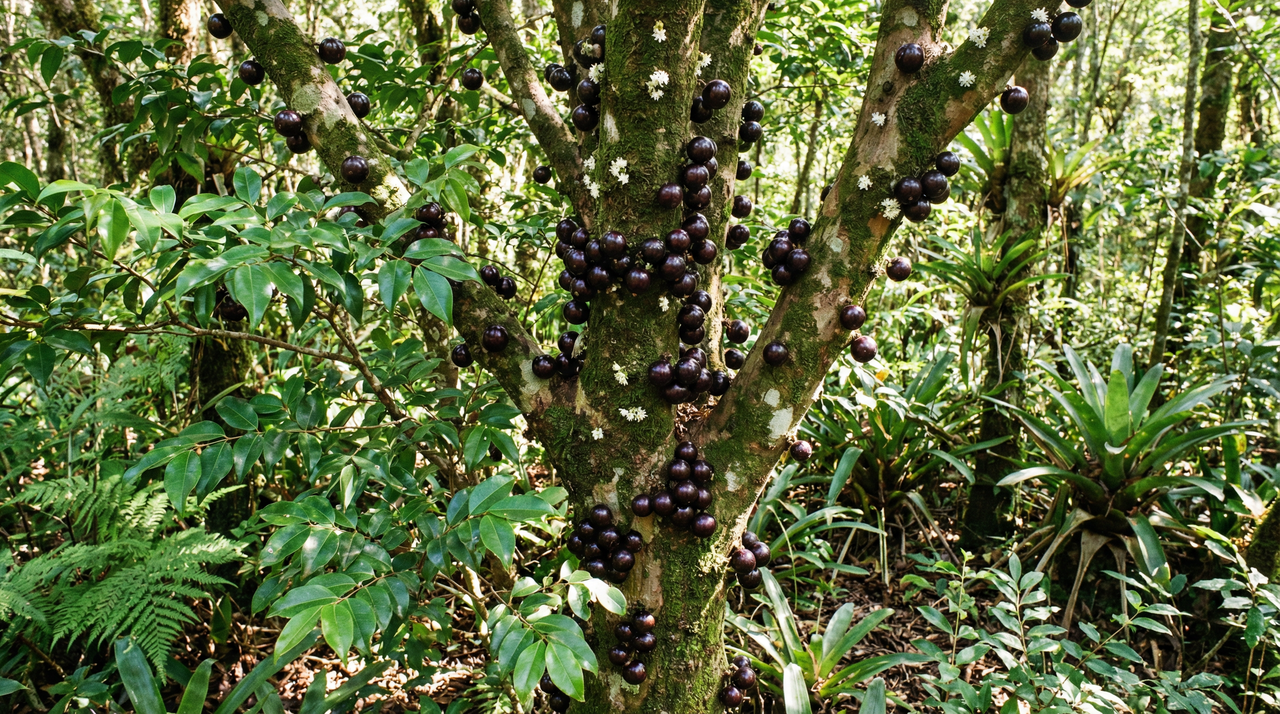
The first time I saw a jaboticaba tree in fruit, I genuinely thought something had gone wrong with it. The trunk was studded, almost encrusted, with dark purple spheres the size of large grapes, growing directly from the bark with no stems, no branches, no visual logic I recognized. It looked less like a fruiting tree and more like a special effect. I reached out and pressed one between my fingers, felt the skin give with a soft pop, and ate it right there. Sweet, a little tannic, somewhere between a Concord grape and a lychee, and absolutely nothing like what the tree's strange exterior had prepared me for.
What gets me every time I bring this plant up is that most people in North America have never heard of it, while in Brazil it's the kind of fruit that stops traffic. Vendors sell it by the bag on roadsides during season, families make wine from it, and the trees themselves live for generations, fruiting dozens of times a year on the same scarred, beautiful bark.[1] That gap between its obscurity here and its cultural weight there tells you almost everything you need to know about why it deserves a much longer look.
Jaboticaba Origin, History, and Botanical Background
If you've ever searched for jaboticaba online and ended up confused by conflicting scientific names, you're not alone. Older nursery tags and references still list this tree as Myrciaria cauliflora, but modern taxonomic databases have settled on Plinia cauliflora as the accepted name, a reclassification that pulls it from the Myrciaria genus it occupied for most of the 20th century.[2][3] The name has a longer trail still: Heinrich Adolph Schrader first described it scientifically in 1822, and it passed through Eugenia jaboticaba (Velloso, 1829) and O. Berg's 1856 classification before Otto Kuntze established the modern binomial in 1891.[2] When you're sourcing trees or seeds today, always verify which name a vendor is using; it can signal whether their botanical information is current.
Taxonomy and Botanical Background
Jaboticaba is native to the Atlantic Forest of southeastern Brazil, specifically the states of Minas Gerais, São Paulo, Rio de Janeiro, Espírito Santo, and Paraná, at elevations ranging from sea level up to around 1,000 meters.[4][5] The Atlantic Forest is one of the world's most biodiverse and most threatened biomes, which gives the jaboticaba tree an origin story with real ecological weight. Wild populations occur at low densities, and habitat fragmentation has reduced genetic diversity in southern Brazilian populations more severely than in northern ones.[6]
What makes this tree unmistakable from the moment you encounter it is cauliflory: flowers and fruit erupt directly from the trunk and older branches rather than from new growth.[4] I've watched native bees congregate on those trunk flowers in a way that simply doesn't happen with terminal-flowering fruit trees; there's something about the low, accessible clusters that seems to invite a whole different pollinator community into the garden. The tree is polycarpic, meaning it fruits multiple times across its lifespan rather than senescing after a single reproductive event, and that lifespan is substantial: cultivated specimens commonly live 50 to 100 years, with some exceeding 150.[5][7]
Relatives within the genus extend across South America's varied biomes. Yellow Jaboticaba (Myrciaria glazioviana) shares the Atlantic Forest range; Myrciaria aspera (Hivapuru) spans the Atlantic Forest, Cerrado, and Paraguay; and Myrciaria dubia, the Camu Camu, grows in a completely different world altogether, the floodplain wetlands of the western Amazon basin in Peru, Brazil, Colombia, Ecuador, and Bolivia.[8][9] That contrast matters for gardeners: understanding where jaboticaba evolved tells you it wants humid subtropical conditions with well-drained soil, not periodic inundation like its Amazonian cousin.
Visual Characteristics and Morphology
The fruit itself is the first thing people notice: dark purple to black, grape-like berries, 2.5 to 4 cm across, clustered directly against the bark of the trunk and branches.[10] The skin is tough and leathery; inside, the pulp is translucent white or pinkish, gelatinous, sweet-tart, and often compared to a muscat grape. Each fruit holds one to four hard, brown seeds.[10][11] Seeing a mature tree in full fruit, its trunk spangled with hundreds of these dark spheres, is genuinely startling the first time. Even after years of growing them, it still feels slightly improbable.
Beyond the fruit, the tree itself is a handsome evergreen reaching 9 to 15 meters with a dense, rounded canopy.[5] The leaves are opposite, glossy, and leathery, a deep green that reminds me of bay laurel but slightly more supple, measuring 3 to 7 cm long. Flowers are small, white to cream, and mildly fragrant, emerging in clusters straight from the bark.[12] The bark is smooth and light gray to brown with prominent lenticels, becoming slightly fissured on older trees. Beneath the surface, the root system is shallow and fibrous, concentrated in the top 12 to 18 inches of soil, which is why compaction, drought, and careless transplanting can set a young tree back severely.[10] Heavy mulching isn't optional with this species; it's the closest thing to replicating the leaf-litter floor of its native forest.
Relatives in the genus show how much variation the Myrtaceae family can pack into a single lineage. Yellow Jaboticaba is a smaller tree (4 to 10 m) bearing bright yellow fruit 1.5 to 2.5 cm across. Camu Camu is a multi-stemmed shrub adapted to seasonal flooding, with small red-to-purplish berries of intense sourness. Hivapuru and Cambucá are compact shrubs to small trees with dark purple or yellowish-orange fruits under 2 cm.[13][14] I've grown both Plinia cauliflora and Yellow Jaboticaba from seed, and the yellow-fruited form ripened earlier in my subtropical garden and attracted a noticeably different assemblage of birds, smaller species that seemed to prefer the paler color. The cauliflorous habit they share is ecologically brilliant: by fruiting on the main trunk, the tree makes its fruit accessible to a broader range of frugivores, including those that can't navigate a canopy.
Traditional and Cultural Uses
The Tupi-Guarani peoples of Brazil's Atlantic Forest region used jaboticaba long before any European set eyes on it. Their word "yabuticaba" or "jabuticaba" translates roughly to "fruit that grows like a tortoise," a description that makes perfect sense when you see the rounded fruit pressed against the bark.[15][16] Bark decoctions were used for diarrhea, dysentery, asthma, wound healing, and as an astringent; leaves were brewed into teas for respiratory complaints, inflammation, and diabetes management.[17] Growing this tree connects a modern gardener directly to that knowledge tradition, which is something I don't take lightly.
The first European documentation appears in Willem Piso and Georg Marcgrave's Historia Naturalis Brasiliensis (1648), and Portuguese colonizers moved quickly to adopt and propagate the fruit.[18] Wine production from jaboticaba fruit dates to colonial times in Minas Gerais and São Paulo, a tradition very much alive today.[19] Among Guarani and Kaingang peoples the fruit carries dietary and spiritual significance; regional harvest festivals, the Festa da Jabuticaba, still celebrate the tree as a symbol of abundance and collective memory.[20][21]
Globally, Plinia cauliflora is listed as Least Concern on the IUCN Red List, but that broad designation obscures real local pressures: habitat loss, deforestation, and overharvesting for commercial demand continue to threaten wild populations.[22] Cultivation, agroforestry, and ex-situ propagation are the tools that can relieve that pressure while keeping the cultural knowledge alive.[23] Planting a jaboticaba tree in a food forest isn't just about fruit; it's one tangible way to reduce demand on wild Atlantic Forest populations while anchoring a living connection to a tradition that predates European contact by centuries.
Fun Facts About Jaboticaba
A mature jaboticaba tree supports an entire community of wildlife: frugivorous birds, bats, and mammals are drawn to the cauliflorous clusters, while bees handle most of the pollination at flower level on the trunk.[10][24] The fruit itself provides 45 to 50 calories per 100 grams of pulp, about 12 grams of carbohydrates, 2 to 3 grams of fiber, and 15 to 20 mg of vitamin C, modest but genuinely useful nutrition for a fruit this flavorful.[10] For contrast, Camu Camu from the same botanical family delivers 2,000 to 3,000 mg of vitamin C per 100 grams; the difference is a bit like comparing a fresh lemon to a raw acerola cherry.[25] Same family, completely different nutritional profile.
Outside Brazil, jaboticaba has found footing in Florida, southern California, Hawaii, and parts of Europe, introduced mostly through botanical garden networks beginning in the mid-19th century.[10][26] My first grafted tree took eight years to begin cropping reliably, which taught me more about thinking in decades than any design course ever did. That patience is part of what makes a producing jaboticaba tree feel like something genuinely worth celebrating, and worth protecting.
Jaboticaba Varieties and Cultivars
Before you can choose a cultivar, you have to reckon with one fundamental reality: jaboticaba grown from seed can take 8 to 15 years to produce its first fruit, while a grafted tree typically fruits in 3 to 5 years.[27][10] When clients ask me which to plant, I tell them: choosing the right starting material is the difference between enjoying fruit in your lifetime and leaving it for the next owner. For almost everyone, that means starting with grafted stock and picking your cultivar carefully.
Key Jaboticaba Cultivars: Sabará, Imperial, Ponhema and Others
For growers at the colder edge of the hardiness range, cultivar choice matters even more. Sabará, Rajadinha, and a few others labeled "Early" and "Late Brett" show measurably better cold tolerance than unnamed seedling trees, making them the practical picks at the zone 9b limit.[28] I've watched Sabará and Rajadinha take brief dips to 26°F in a sheltered microclimate and come back without significant damage while younger, ungrafted plants nearby were set back hard. That kind of specificity matters when you're planting something that will outlive your mortgage.
Sabará remains the gold standard for most home orchards. Its small berries, just 1 to 2 centimeters across, have thin skins and exceptional sweetness, with a rich aromatic quality that reminds me of a muscadine grape crossed with something more tropical.[27][10] If you want bigger fruit, Ponhema delivers berries in the 3 to 4 centimeter range with thicker skins, an earlier ripening window, and a flavor that's slightly milder and less acidic.[27][29] Imperial sits between the two in size but leans toward enhanced sweetness and noticeably reduced astringency compared to wild types, which can be a real advantage for fresh eating.[30] Other selections worth knowing include Paulista (larger fruit, less sweet), Rajada (greenish-bronze thick skin), Branca (an unusual large greenish-white fruited form), and Brittany, a disease-resistant hybrid worth seeking out in humid climates.[27][31]
The wider Myrciaria genus offers curious contrasts worth knowing so you're not confused by what you see in specialty catalogs. Myrciaria glazioviana bears yellow-orange fruit and comes into production a bit faster; camu camu (Myrciaria dubia) is intensely sour and extremely frost-sensitive; Myrciaria aspera is a smaller shrubby tree.[32][33] None of them are what most growers mean when they say jaboticaba, and none of them match Plinia cauliflora for ease of growing, fruit quality, or sheer spectacle.
Where to Buy Jaboticaba Trees and Seeds in the US
Jaboticaba is still firmly in specialty territory. You won't find it at a box store, and even many independent nurseries don't carry it.[34][10] The nurseries I send people to include Logee's Plants, Top Tropicals, Eureka Farms, Just Fruits and Exotics, and California Tropical Fruit Tree Nursery.[35][36][37] Budget roughly $25 to $80 for a young 1 to 3 foot plant, and $50 to $200 or more for a grafted, fruiting-size specimen; seed packets run $5 to $25 but remember that timeline problem.[38][39] Shipping live tropical plants isn't cheap either, often $50 to $150 with insulated boxes and moist sphagnum packing, so factor that in when comparing prices between vendors.[40]
For research rather than purchasing, UF/IFAS, CRFG, Missouri Botanical Garden, and Kew Gardens all have solid cultivation profiles, but none of them sell plants.[10][41][42][43] One practical tip I pass along: search both "Plinia cauliflora" and "Myrciaria cauliflora" when hunting online, because nursery listings frequently use the older synonym and you'll miss inventory otherwise.[44] USDA APHIS regulates importation of live plants strictly, requiring phytosanitary certificates and often limiting imports to tissue-cultured material.[45] I once received a plant that arrived with scale insects hiding in the root ball, so I now always ask for phytosanitary documentation and inspect roots before anything goes in the ground. A clean grafted tree on healthy rootstock from a reputable tropical specialist is worth every penny compared to the gamble of an uncertified import.
Jaboticaba Propagation and Planting Guide
Every jaboticaba grower eventually confronts the same fork in the road: do you start from seed and accept a decade-plus wait, or do you invest in a grafted tree and see fruit in a few years? The answer depends on what you're after, but knowing the biology upfront saves a lot of heartbreak.
Propagation Methods for Jaboticaba
Jaboticaba seeds are recalcitrant, meaning they cannot be dried and stored like most seeds without losing viability rapidly.[46][10] If you scoop seeds from ripe fruit and leave them sitting in a bag for a week, you've already lost most of your germination potential. Sow them fresh, straight into warm, moist media at 25-30°C, and germination rates of 80-95% within 20-40 days are absolutely achievable.[5][47] No stratification, no scarification. Just don't let them dry out.
The catch is that seed-grown jaboticaba plants aren't true-to-type.[10] The species has high heterozygosity and outcrosses freely, so you're essentially rolling the dice on fruit quality. Camu camu, a close Myrtaceae relative, has a handy workaround built in: its polyembryonic seeds can produce clonal nucellar seedlings alongside variable zygotic ones.[48] Jaboticaba doesn't share that convenience, which is exactly why named cultivars are propagated vegetatively.
Grafting is the gold standard. Cleft or whip-and-tongue grafts onto seedling rootstock performed in late spring to early summer, when the plant is in active growth, deliver 70-90% success rates.[10][49] I've done this numerous times in Central Florida landscape projects, and the single biggest variable isn't technique, it's timing and humidity. Once I started using a mist system to keep humidity above 80%, success rates climbed noticeably. Air-layering is a solid home-scale alternative: with rooting hormone applied and a moist sphagnum moss sleeve wrapped around a semi-hardwood stem, roots typically appear within 2-3 months during late spring or summer.[5][50] Semi-hardwood cuttings treated with IBA at 3000-5000 ppm under 80-90% humidity and warm temperatures (24-29°C) can root at 50-70%, though results are more variable than grafting.[10][51] Grafted or air-layered material fruits in 2-5 years; seed-grown trees require 8-15 years.[10][52] That gap is why I almost always steer clients toward vegetative propagation unless they specifically want to breed new selections.
Soil and Site Requirements for Jaboticaba
Get the soil wrong and nothing else matters. Jaboticaba wants well-drained, acidic soil, with an optimal pH of 5.5-6.5 and a broader tolerance range of 4.0-7.5 before vigor meaningfully declines.[10][53] I've seen iron chlorosis light up across otherwise healthy trees when a client's native soil tested above 7.0; elemental sulfur applications over two seasons brought that back into range, but it's a slow fix. Starting in properly amended, acidic soil is far easier than correcting alkalinity after the tree is in the ground.
Drainage is non-negotiable. Jaboticaba's root system is shallow and fibrous, concentrated mostly in the top 30-60 cm of soil, and that makes it acutely vulnerable to Phytophthora root rot in poorly draining sites.[10] Unlike camu camu, which is genuinely flood-tolerant in its Amazonian habitat, jaboticaba needs the opposite condition: free-draining sandy loam or amended loam, and raised beds in any heavy clay situation.[54] A 5-10 cm layer of organic mulch, pine bark or leaves kept a few inches clear of the trunk, helps retain moisture, moderate root zone temperature, and keep weeds down without creating the wet-collar conditions that invite disease.[10]
Young plants are more sensitive to direct sun than mature trees. I shade new plantings at about 50% for the first year or two to prevent leaf scorch, then gradually open them up.[10] Mature trees fruit best with 6-8 hours of direct sun, so site selection with the long view in mind matters more than it might seem at transplant time.
Spacing, Planting Technique, and Establishment
Jaboticaba can reach 9-15 meters at maturity, which surprises people who see young specimens looking tidy and compact. In home landscapes, spacing trees 4.5-6 meters apart gives them room to develop while keeping airflow reasonable; orchard plantings need 6-7.5 meters between trees.[10][55] Tighter spacing is workable with regular pruning, but in humid subtropical gardens that means more disease pressure and more maintenance, neither of which I'd choose voluntarily.
Spring planting, after any meaningful frost risk has passed, gives the root system a full warm season to establish before its first winter. Dig the hole two to three times wider than the root ball but no deeper, which respects that shallow fibrous root architecture and avoids the drainage trap of a sunken planting pocket.[10] Stake young trees for the first year or two while roots anchor; once the tree starts carrying heavy cauliflorous fruit loads, temporary branch support during peak season is worth the effort. From a guild-design perspective, choose companions that share the same preference for acidic, free-draining soil without becoming aggressive spreaders at root level.
Germination and Time to Fruiting Timeline
Fresh seed germinates in 20-40 days at the right temperature and consistent moisture.[5][52] Watching a jaboticaba seedling emerge, with those small opposite leaves and the surprisingly early development of a woody stem, is genuinely charming. The problem is everything that comes next. Seed-grown trees average 10-12 years to first fruit, with the outer range stretching to 15 years under suboptimal conditions. Grafted stock compresses that juvenile phase to 2-4 years.[10]
I've watched clients hit year five with a healthy, beautiful seed-grown jaboticaba seedling and no fruit in sight, feeling genuinely deflated. Switching them to grafted material of a named cultivar solved that problem immediately. Unless you're specifically interested in generating new genetic diversity or you simply enjoy the meditative slowness of growing from seed, a grafted jaboticaba tree is almost always the more satisfying choice. Plant it knowing the timeline, and the wait becomes part of the reward rather than a source of frustration.
Jaboticaba Care Guide: Watering, Feeding, Climate, and Maintenance
Every care decision you make with jaboticaba traces back to one fact about its origins: this is a tree from Brazil's humid Atlantic Forest, where rainfall is steady, soils are acidic and well-drained, and fruit erupts directly from the trunk and older wood. That cauliflory is also your biggest constraint as a caretaker. Heavy-handed pruning, drought stress during fruit swell, or waterlogged roots don't just set the tree back; they can cost you an entire season's crop from wood that took years to mature.
Watering Needs for Jaboticaba Trees
Jaboticaba prefers slightly acidic, well-drained soil and consistent moisture, with low-salinity water; rainwater is genuinely preferred if you can collect it.[10][56] Once established, mature trees handle short dry spells reasonably well, but they absolutely punish inconsistency during fruit swell. Target 1-2 inches per week with deep watering every 7-10 days in dry periods, stepping that up to every 3-4 days while fruit is sizing.[10][5] Young trees need more attention; keep the top inch or two evenly moist rather than cycling between wet and dry.
Container plants dry out far faster, sometimes needing water every 2-3 days, and daily above 38°C.[10][28] Those containers also accumulate salt from irrigation, so periodic flushing matters. A 2-4 inch layer of organic mulch helps enormously for both in-ground and potted specimens, moderating root-zone temperature and reducing how often you need to irrigate.[10] For context within the Myrtaceae family, camu camu (Myrciaria dubia) sits at the opposite extreme, tolerating full seasonal flooding and thriving at 2000-3000 mm annual rainfall;[57] jaboticaba wants reliable moisture but will rot in standing water. Yellow leaves and mushy roots signal overwatering; wilting and cracking soil tell you the tree is thirsty. In USDA zones 9-11, a rough seasonal schedule runs 1-2 deep waterings weekly in spring and fall, 2-3 weekly through summer heat, and a pull-back to every 2-4 weeks in winter.[10]
Feeding and Nutrient Management for Jaboticaba
Jaboticaba is a moderate feeder. Three to four applications of a balanced fertilizer from spring through fall is a reliable rhythm, starting with something like 10-10-10 for young trees and shifting toward a potassium-emphasized blend such as 8-3-9 or 10-20-20 once the tree begins fruiting.[10] Young trees take 0.25-0.5 lb per application; mature trees can handle 1-3 lb, totaling roughly 5-10 lb annually.[10] I soil-test every other year because a $20 test tells me far more than guessing ever could, and roots are sensitive enough that over-fertilizing causes real damage.
Deficiency symptoms are worth learning to read early. Uniform yellowing on older leaves usually points to nitrogen; purplish-red foliage with poor root development suggests phosphorus. Marginal leaf scorch and small fruit often mean potassium is short, which directly affects fruit quality. Interveinal chlorosis on new growth is typically iron, and rosetted leaves with reduced fruit set point to zinc.[10][58] I always take photos of leaf changes because a foliar spray of chelated iron has saved young trees from chlorosis more than once when soil applications were too slow to correct the problem. Compost, well-rotted manure, or fish emulsion at 5-10 lb per tree annually feeds the soil biology rather than just the tree, and mycorrhizal inoculants genuinely help uptake in poor soils.[10][59] Keep soil pH in the 5.5-6.5 range; camu camu actually prefers more acidic conditions down to pH 4.5, which shows how even close relatives diverge in their nutrient requirements.[60]
Sunlight Requirements for Healthy Jaboticaba Growth
Jaboticaba is native to forest understory, which gives the genus genuine adaptability to dappled light, but don't let that mislead you into planting it in a shady corner. Mature trees fruit best with 6-8 hours of direct sun daily.[10][52] Too little light and you'll see leggy, etiolated growth, yellowing foliage, and poor fruit set long before the tree looks obviously unhealthy. Young plants and newly flushing growth, however, are genuinely vulnerable to intense afternoon sun; 30-50% shade cloth during establishment prevents leaf scorch and the kind of photoinhibition stress that sets a slow-growing tree back by months.
Frost Tolerance and Cold Protection for Jaboticaba
Jaboticaba sits comfortably in USDA zones 9b-11, and mature trees can shrug off brief dips to 25-28°F (-4 to -2°C) without lasting damage.[10][61] Sustained temperatures below 30°F, or any extended hard freeze, cause defoliation, branch dieback, and damage to the fruiting buds you've spent years developing. Young plants and new flush are much more vulnerable; protect anything under 30-40°F.[10] The RHS rates it H1c, meaning it needs frost-free protection in temperate climates.[61]
In my experience, a 4-6 inch mulch layer over the root zone buys you several meaningful degrees on a cold night, and it's the first thing I lay down in fall for any borderline-hardy subtropical.[10] Frost cloth or burlap wraps, a south-facing sheltered position, and windbreaks round out the protection toolkit. For gardeners in zone 9a or colder, container growing is genuinely worth it; I've overwintered a jaboticaba in a bright sunroom by keeping nights no cooler than 50°F and running a humidity tray underneath, and the tree came through perfectly.[62] Camu camu is stricter, showing damage at 32°F and needing protection below 50°F, so jaboticaba is genuinely the hardier choice within the Myrtaceae group.[10]
Heat Tolerance and Summer Stress Management
Jaboticaba grows best between 70-85°F (21-29°C) with cooler nights in the 55-65°F range, corresponding to AHS Heat Zones 9-11.[10] When daytime highs hold above 95°F, I notice flower drop within a few days unless I step up irrigation and add afternoon shade. Sustained heat above that threshold triggers leaf scorch, wilting, reduced photosynthesis, and fruit abortion, especially during flowering and on young plants with less established root systems.[63][64] The tree has some built-in coping mechanisms including stomatal closure and antioxidant responses, but those only go so far without your help.[10]
Mulching with local pine bark in my subtropical summers keeps root-zone temperatures noticeably cooler and cuts how often I need to run irrigation.[28] For young trees or those in their first summer in the ground, 30-50% shade cloth over afternoon exposure plus supplementing to 1-2 inches of water weekly during heat events covers most of the risk.[28] High ambient humidity (60-80%) helps considerably, and the 'Sabara' cultivar shows better recovery after heat stress than some others.[65]
Pruning, Maintenance, and Seasonal Care for Jaboticaba
Jaboticaba is a slow-growing evergreen that can reach 10-15 m in the wild but is easily kept to 4-6 m in gardens, with a lifespan that can stretch 50-100 years or more when the tree is well cared for.[10][11] It doesn't go truly dormant; growth simply slows in cooler or drier months, which is your cue to reduce watering and hold off on fertilizer until things warm up again.[66]
Pruning requires a lighter hand than you'd use on almost any other fruit tree. Because fruit forms on mature trunk and branch wood, removing too much doesn't just reduce canopy; it eliminates the very spurs you need for future crops. I prune lightly after the main harvest flush to clean out dead, diseased, or crossing wood and improve airflow, but I keep removal under 10-20% of the canopy total.[10][56] Heavy cuts can delay fruiting for years; I've seen people lose a full crop cycle by going too hard with loppers in a single afternoon. Train young trees to a central leader or 3-5 scaffold branches, remove basal suckers as they appear, and stake for the first year or two.[10]
The flowering and fruiting rhythm follows rain rather than a fixed calendar; flowering peaks in spring and summer after good rainfall, with fruit ripening 2-3 months later.[5] Multiple cycles are possible in humid subtropical climates when moisture is consistent. It took one of my grafted Sabara trees seven years to give me a real crop, but steady potassium feeding through years four to six made a clear difference in how quickly the tree settled into production. The long timeline is the whole bargain with this species; the trade is decades of reliable, low-input fruiting from a tree that rewards patience with the kind of trunk-studded abundance that stops every visitor cold.[66][10]
Jaboticaba Harvesting: Timing, Technique, and Flavor
When to Harvest Jaboticaba
After several seasons of watching my jaboticaba trees, I've come to rely on two cues above all others: color and touch. The fruit is ready when the skin has deepened to that unmistakable deep purple-black, often developing a faint whitish bloom, and when a gentle press meets the slightest give rather than firm resistance.[67][68] A ripe jaboticaba berry practically asks to be picked; it detaches from the trunk with almost no effort at all.
From bloom to harvest typically runs 90 to 120 days, influenced by temperature (the tree prefers 70-85°F during development), humidity, irrigation, and fertility.[10][69] In Florida, the main harvest window runs late summer through early winter, with the peak falling roughly October through December after summer rains have triggered flowering.[10][70] I've found that flush after a good soaking rain is the most reliable signal I have; the tree sets fruit almost rhythmically once it matures. Compare that to California growers who harvest in spring (March through June) or Brazilian orchards peaking in March to May, and you see how much regional climate shapes the calendar. The related camu camu offers a useful contrast: it requires measuring soluble solids at 8-12° Brix and vitamin C content to confirm maturity, a level of analytical attention jaboticaba simply doesn't demand.[71] For most home growers, the jaboticaba fruit announces itself without a refractometer.
How to Harvest Jaboticaba Without Damaging the Tree
Because jaboticaba is cauliflorous, with flowers and fruit growing directly on the trunk and main branches, harvesting isn't like picking from a typical fruit tree.[52][72] You're working directly against bark that needs to stay intact and healthy to keep fruiting for decades. I learned this the hard way early on: yanking fruit instead of gently twisting or clipping leaves small scars that accumulate over time. The correct method is a soft twist or a clean clip, never a pull.[5]
Earlier in the season, when berries are still pea-sized, thinning clusters down to roughly 4 to 6 fruits each makes a real difference in the final harvest quality.[56][10] Done gradually over two to three weeks post-bloom and targeting 50 to 70 percent of the set fruit, thinning prevents branch stress and pushes the remaining fruit to size up with better flavor. The year I skipped this on a young tree, the branches sagged under the load and the fruit was smaller and noticeably more astringent than I expected. It's a bit counterintuitive to remove fruit you've waited months for, but the tree rewards the discipline.
Jaboticaba Yield, Flavor, and Post-Harvest Storage
Mature trees produce 10 to 25 kg of fruit annually under good conditions, with peak production cycling roughly every two to three years and exceptional trees hitting 50 to 100 kg in strong years.[73] My own grafted tree, now ten years old, delivers over 40 pounds in a good year. Seed-grown specimens take much longer to reach that kind of production, which is a conversation for the propagation section, but the point is that patience eventually pays in volume.
Each fruit runs 1 to 4 cm in diameter, with edible purple-black skin surrounding sweet white pulp and one to four small, hard seeds that are not eaten.[74][75] The pulp is gelatinous, juicy, and carries an aroma that I'd describe as muscadine grape: sweet and floral with occasional tropical undertones.[76][77] Flavor shifts noticeably with ripeness: underripe jaboticaba fruit is tannic and sour in a way that disappoints first-time tasters, while fully ripe fruit opens into a lychee-meets-blueberry sweetness with a lingering mild tartness on the finish.[78][79] It's the same lesson I give people about muscadines: wait until the fruit is fully colored and slightly soft before you judge it. Guavaberry (Myrciaria floribunda) adds a spicier floral note, cambucá leans toward guava and pineapple, and camu camu is so intensely sour from its extreme vitamin C levels that it reads as a completely different culinary ingredient.[80][81] Flavor perception does vary with growing conditions and individual palate, but the jaboticaba berry's sweetness at full ripeness is far more accessible than any of its cousins.
Post-harvest, move quickly. Refrigerate at 45 to 50°F with high humidity and you'll get two to three weeks of good quality; drop below 40°F and the fruit develops off-flavors almost overnight.[10][82] At room temperature, that window shrinks to three to seven days. Processing into jams, juices, or wine is the practical answer for large harvests, and the preparation section covers those options in depth.
Jaboticaba Preparation and Uses
Culinary Uses and Flavor in the Kitchen
The first time I ate a jaboticaba straight off the trunk, I understood immediately why Brazilians have been eating this fruit for centuries without much ceremony. You pop the whole thing in your mouth, squeeze gently, and the white pulp slides free with a flavor that sits somewhere between a Concord grape and a lychee, sweet and aromatic with just a whisper of blueberry in the finish.[74][75] The thick, tannin-rich skin is eaten rather than discarded, though I'll admit it leaves a noticeable astringency on the palate when you eat a handful straight. Blend that skin into jam, though, and it transforms entirely: the pectin in it sets beautifully, and the astringency mellows into a rich, deeply flavored preserve with almost no added pectin needed. I've made jaboticaba jam for several seasons in my Central Florida food forest, and it's consistently one of the most complex fruit spreads I produce.
Cooking or fermenting jaboticaba softens its acidity into something jam-like and round, which is why the fruit's Brazilian culinary tradition runs so deep through preserves, wines, liqueurs, juices, and desserts like doce de jabuticaba.[74][83][84] Across the Myrciaria genus, this sweet-tart profile repeats with regional variations: yellow jaboticaba, cambucá, and hivapuru all yield similar grape-like flavors for jams and juices,[85][86] while camu camu sits at the extreme opposite end of palatability, so sour that it's virtually never eaten fresh and needs banana or honey just to be drinkable.[87] I grow both, and the contrast is stark. Guavaberry, meanwhile, splits the difference in a different direction entirely: its Caribbean tradition involves infusing ripe fruit into rum with sugar and spices for the holiday liqueur that defines Christmas on many islands.[88] Those same fermentation principles translate well to jaboticaba wine, which I've found produces a fruity, deeply colored red that surprises people who expect something thin.
One step I never skip when processing jaboticaba: straining out the seeds early. The seeds contain cyanogenic glycosides across several species in this genus,[89] and while cooking does help neutralize potential concerns,[90] I've processed enough pounds of this fruit over the years that it's simply become automatic habit. The pulp is safe and delicious; the seeds aren't worth the question mark.
Traditional Medicinal Preparations
Beyond the kitchen, jaboticaba has a long ethnobotanical history in Brazil that centers on the leaves and bark rather than the fruit. Leaf teas and infusions address digestive complaints, inflammation, respiratory issues, and diarrhea, while bark decoctions carry more astringent, wound-healing properties and have been used traditionally for dysentery and asthma.[91][92] Traditional dosages from ethnobotanical records suggest 10-20 grams of dried leaves per liter of water, taken two to three times daily for leaf infusions, and 5-10 grams of bark simmered in 500 milliliters of water for decoctions.[91][93] I've made small experimental batches of the leaf infusion myself; at that concentration, it has a mild, slightly earthy character reminiscent of a light green tea with a faint tannic finish. These preparations are decidedly medicinal rather than culinary, and the clinical evidence behind them remains limited. They carry real traditional weight, but I'd treat them as such rather than as proven therapeutics.
Non-Food and Craft Uses
The leaves and bark represent one layer of whole-plant use, but jaboticaba's utility extends further still. Local communities in Brazil have long used the dense, fine-grained wood of related species like Myrciaria aspera for crafting tools and utensils.[94] For most home growers, this is mainly a point of appreciation rather than practice. Knowing that indigenous communities found use in nearly every part of this tree deepens what it means to grow one: not a single-purpose fruit tree but a genuinely integrated resource. That kind of whole-plant thinking sits at the heart of permaculture design, and jaboticaba, slow as it is to mature, delivers on every layer.
Jaboticaba Health Benefits and Medicinal Uses
Every conversation about jaboticaba's health benefits has to start in the same place: that deep purple-black skin. After years of growing and harvesting these trees, I've noticed that the most intensely colored, slightly astringent fruits consistently produce the darkest, most complex preparations, whether I'm making a quick juice or simmering a small batch of jam. That instinct turns out to be well-grounded in the research.
Key Phytochemicals and Antioxidant Capacity
Jaboticaba's peel is where most of the chemical action happens. The fruit is rich in phenolic compounds including gallic acid, ellagic acid, protocatechuic acid, and ferulic acid, with concentrations reaching 5-10 mg/g fresh weight concentrated in the skin and pulp.[95][96] The dominant anthocyanins, cyanidin-3-glucoside and delphinidin-3-glucoside, account for up to 80 percent of total anthocyanin content in the skin, reaching around 100-500 mg/kg.[97][98] Flavonoids including quercetin, rutin, myricetin, and kaempferol derivatives round out a profile that delivers serious DPPH radical scavenging activity.[95][97]
The whole-fruit antioxidant capacity (ORAC) exceeds 20,000 μmol TE/100g, which puts it in the same conversation as acai.[99] For comparison, camu camu from the same Myrtaceae family operates at an almost absurd extreme: ORAC values topping 100,000 μmol TE/100g, driven largely by vitamin C levels of 2,000-3,000 mg per 100g.[100] Jaboticaba's vitamin C is moderate, 15-30 mg per 100g, but its unique phenolic fingerprint is what makes it stand apart within the genus.
Ripeness and growing conditions matter more here than with most fruits. Unripe jaboticaba skews toward tannins and chlorogenic acid; ripe fruit shifts toward higher anthocyanins and total phenolics.[101][102] Soil pH between 4.5-5.5 appears to optimize secondary metabolite synthesis, which partly explains why fruits from trees growing in properly acidic, organic-matter-rich ground just seem more vibrant.[103][104] If your batches vary dramatically in color depth and astringency, that variability is real and chemically meaningful.
Medicinal Research and Traditional Uses
Tupi-Guarani communities were using jaboticaba long before any laboratory assay confirmed what they observed. Indigenous Brazilian traditions document the fruit, bark, and leaves for treating diarrhea, dysentery, asthma, and respiratory conditions, with the astringent properties applied to mouth ulcers, sore throats, and as a gargle.[105][92] That astringency is unmistakable in a leaf tea, and it aligns immediately with those traditional applications for digestive complaints. I've made bark and leaf preparations for minor stomach upsets, and while I stay modest with amounts and defer to clinical evidence where it's sparse, the sensory experience makes the historical use feel credible.
The modern pharmacological picture is promising but honest about its limits. Antioxidant capacity is the best-documented property, with peel and leaf extracts activating the Nrf2 pathway and upregulating enzymes like SOD and catalase, demonstrated in both in vitro assays and animal models.[106][107] Anti-inflammatory effects include inhibition of TNF-α and IL-6, downregulation of COX-2 and NF-κB pathways, and reduced paw edema in rodent models.[108][109] Antidiabetic potential shows up through α-glucosidase and α-amylase inhibition and improved glucose uptake in diabetic animal models, with small-scale human pilots suggesting modest blood glucose effects.[101][110]
The critical caveat is that most of this research is preclinical. No large-scale randomized controlled trials validate therapeutic applications, and the human pilot studies that do exist are small.[93][111] Treat jaboticaba as a deeply nutritious food with a rich ethnobotanical history, not a proven clinical medicine.
Nutritional Profile
At roughly 45-50 kcal per 100g, jaboticaba is a low-calorie fruit with a useful fiber contribution of 2-4g per serving and 84-90g water content.[112][113] A typical serving of 10-20 fruits (about 100g of pulp and skin) also delivers potassium in the range of 150-300 mg, along with moderate calcium, magnesium, and phosphorus.[114][115] Vitamin C sits at 15-30 mg per 100g, modest compared to camu camu's extraordinary 2,000-3,000 mg, but the phenolic profile more than compensates as the primary nutritional story here.[116][117]
The phytonutrient density is where jaboticaba earns its reputation. Total phenolics range from 200-1,000 mg GAE/100g, with anthocyanin concentrations in the peel reaching up to 1,000 mg/100g, an antioxidant load comparable to or exceeding blueberries.[118][119] I rarely strain the skin out of fresh juice for exactly this reason. Processing like cooking or drying can reduce vitamin C by 20-50%, though breaking down cell walls may improve bioavailability of some antioxidants.[120] Fresh or minimally processed fruit captures the most.
Safety and Considerations
Ripe jaboticaba pulp and skin are generally recognized as safe, backed by a long traditional use record and animal studies showing no acute toxicity at doses up to 2,000 mg/kg of fruit extract.[121][122] The seeds are a different matter. Hard, bitter, and high in tannins, they can cause gastrointestinal irritation if chewed in quantity and should simply be discarded.[123][112]
Overconsumption of fruit, especially unripe fruit, can cause mild digestive discomfort from tannins rather than true toxicity.[96] Allergic reactions are rare, but cross-reactivity within Myrtaceae is possible, so if you have a guava sensitivity, start with a small amount and pay attention.[124] The plant is not listed as toxic for pets, though large quantities could cause mild stomach upset.[125]
If you're on diabetes medication or blood thinners, talk with your doctor before using concentrated jaboticaba extracts. The animal data on hypoglycemic effects and mild anticoagulant activity from seed extracts is consistent enough that I don't treat high-dose preparations as casual supplements.[126] As fresh fruit in normal dietary amounts, it's a pleasure with a genuinely impressive phytochemical resume. As a therapeutic agent, the clinical data just isn't there yet.
Jaboticaba Pests and Diseases
As a Myrtaceae native to the humid Atlantic Forest, jaboticaba carries the pest and disease profile you'd expect from a subtropical fruiting tree: real pressure from a handful of persistent threats, but also a remarkable suite of built-in defenses that make reactive spraying largely unnecessary on a well-grown specimen. I've found that understanding both sides of that equation changes how you manage the tree entirely.
Major Pests of Jaboticaba Trees
Fruit flies are the headline pest. Anastrepha sororcula and Anastrepha obliqua both target developing fruit, laying eggs that hatch into larvae and cause drop before harvest.[127][128] Pressure spikes during wet seasons and in humid subtropical settings like Florida compared to the more diverse native habitat where natural enemies keep populations in check.[129][10] Secondary pests add to the picture: green and black scale colonize stems and leaves, triggering sooty mold that further reduces vigor;[130][129] Phyllocnistis leaf miners carve serpentine galleries that cut photosynthetic capacity;[127] Conotrachelus jaboticabae weevils bore into both fruit and wood;[127] and leafhoppers can transmit phytoplasma while causing stippling damage.[131]
What keeps this list manageable in practice is the tree itself. Jaboticaba produces a concentrated mix of flavonoids, tannins, quercetin, and rutin that function as feeding deterrents, while the leaf essential oils (rich in monoterpenes and sesquiterpenes) have documented insecticidal properties.[132][133] Rub a fresh leaf and you get that sharp, aromatic release, the same compounds that seem to reduce aphid pressure in my garden and that connect directly to the polyphenol profile discussed in the health section. Thick cuticles, glandular trichomes, and mycorrhizal associations with arbuscular fungi add structural and microbial layers to that chemical armor.[134][135] Sabará, with its thicker fruit skin, shows noticeably better tolerance to fruit fly infestation and anthracnose than thinner-skinned selections, and Ponhema carries moderate resistance to fungal diseases, though no cultivar is immune.[136] When I can source Sabará grafted stock, I do.
For IPM, cultural steps come first: remove fallen fruit promptly, prune for airflow, and boost soil biology with compost and mycorrhizal inoculants rather than reaching for a spray.[10][128] Where biologicals are needed, Bacillus thuringiensis targets caterpillars, and releasing predatory lacewings has helped me keep scale in check without disrupting the stingless bee pollinators that jaboticaba depends on. Neem oil and horticultural oils are reasonable escalation options when populations get ahead of you.[137]
Common Diseases and Their Management
Anthracnose, caused by Colletotrichum gloeosporioides and related species, is the disease to watch. It attacks leaves, flowers, and fruit, producing dark lesions and significant drop, and in persistently wet, humid conditions incidence can reach 80 percent.[10][138] The tree shows moderate resistance to fungal diseases generally but low resistance to bacterial pathogens like Xanthomonas axonopodis, and Myrtaceae family members also face myrtle rust (Austropuccinia psidii) and Botryosphaeria dieback where those pathogens are present.[139][140] The supporting cast of diseases includes Alternaria and Cercospora leaf spots, powdery mildew, sooty mold (usually secondary to scale), and post-harvest fruit rots from Colletotrichum and Botryosphaeria.[49]
Phytophthora root rot is the other serious concern, with P. cinnamomi causing wilting, yellowing, and decline whenever drainage is inadequate.[10][141] In my experience, a well-prepared raised bed or a site with naturally fast drainage has prevented root rot even through heavy Florida summers, reliably outperforming any fungicide I've trialed. High humidity above 80 percent, temperatures in the 25-30°C range, and alkaline or waterlogged soils all amplify disease risk significantly.[10][142] Again, Sabará's thicker bark and fruit skin offer practical advantages against both anthracnose and root rot, while Ponhema performs better against bacterial diseases and leaf spot.[136]
Management starts with the same cultural foundations that govern pest control: good drainage, pruning to open the canopy, avoiding overhead irrigation, and removing infected material promptly.[10] Grafting onto resistant rootstocks reduces Phytophthora vulnerability in marginal sites. Copper-based fungicides and biologicals like Trichoderma and Bacillus subtilis serve as supplements when cultural measures aren't sufficient, not replacements for them.[143][141] Embrapa's ongoing breeding work on anthracnose and Phytophthora resistance is worth following; wild populations tend to carry higher baseline resistance than commercial cultivars, and disease incidence is consistently worse in monoculture plantings than in diverse food forest settings.[136][144] That alone is a strong argument for polyculture.
Jaboticaba in Permaculture Design
There's a moment I keep coming back to, standing in my food forest on a humid July morning, watching a dozen small stingless bees work the trunk of my jaboticaba like it's the most important job in the world. They weren't visiting flowers held up in a canopy somewhere out of sight. They were right there, at eye level, working clusters of tiny cream-white flowers pressed directly against the bark. That's cauliflory in action, and once you see it you understand immediately why this tree earns its place in a subtropical food forest design.
Ecosystem Functions and Wildlife Support
Jaboticaba (Plinia cauliflora) flowers directly on its trunk and older branches, a strategy that positions the blooms right where ground-foraging and low-flying pollinators can reach them most efficiently.[145][146] Primary pollinators are native stingless bees in the tribe Meliponini, particularly Tetragonisca angustula, though honeybees and other insects contribute too.[145][147] The tree is self-compatible, so a single specimen will fruit, but plant two or more cultivars close together and cross-pollination noticeably improves fruit set and quality.[148]
Beyond pollination, jaboticaba contributes meaningfully to nutrient cycling in its native Atlantic Forest habitat. It's an evergreen from that biodiverse coastal biome of southeastern Brazil, reaching 3 to 12 meters in the wild, and its leaf litter decomposition combined with mycorrhizal associations actively improves phosphorus availability in the poor, weathered soils typical of that region.[149][150] The fibrous shallow root system helps anchor soil against erosion, which matters in any sloped or disturbed site you might be restoring.[151] One critical design note, though: jaboticaba does not fix nitrogen.[151] That means you need to plan around it, not assume it will build its own fertility. The birds, mammals, and microbes will come; the nitrogen has to come from your guild companions.
Wildlife value here is substantial. Tanagers, thrushes, toucans, and several mammals including monkeys and rodents disperse the seeds, supporting forest regeneration in ways that extend well beyond the tree itself.[152][153] The dense, peeling bark and layered canopy structure also shelter epiphytes, insects, and small mammals.[5][154] In a designed food forest, all of that biodiversity translates directly into beneficial insect habitat, pest suppression, and a more resilient system overall.
Climate Adaptation and USDA Hardiness Zones
Jaboticaba is solidly at home in USDA zones 9b through 11, preferring average temperatures of 18 to 28 °C and annual rainfall in the range of 1500 to 2500 mm.[10][155] Mature trees can handle brief dips to around 25 to 28 °F with relatively minor damage, which I can confirm from experience. A few winters ago my established trees came through a quick 27 °F event with nothing worse than some leaf scorch on the most exposed tips. The seedlings I'd left unprotected in the same area weren't so lucky; they lost all their top growth and had to push new shoots from the base. That gap between mature-tree resilience and juvenile vulnerability is real, and it should drive your protection decisions.
Florida is where jaboticaba has its longest cultivation history outside Brazil, introduced in the 19th century and performing best in zones 10 and 11.[10] In zone 9 and cooler pockets, container culture with frost cloth or the option to move plants indoors becomes the practical path.[10] I've moved young trees to a bright, humid corner of my greenhouse during cold snaps and found that maintaining humidity indoors prevents the leaf drop that hits them hard when temperatures swing fast. Contrast this with camu camu (Myrciaria dubia), which is strictly zones 10 to 11, can't survive any freezing exposure, and needs two to four times the rainfall; jaboticaba is meaningfully more adaptable even within this warm-climate genus.[81]
Forest Layer Placement and Guild Design
In cultivation jaboticaba typically tops out at 3 to 8 meters, making it a natural fit for the shrub-to-low-tree layer in a food forest stack.[75] Its moderate to high shade tolerance is an adaptation to living in the Atlantic Forest understory, where it evolved under 30 to 50 percent canopy shade and developed cauliflory precisely because trunk-level light is more reliable than canopy light in that environment.[156][157] That said, it produces more prolifically in a position with morning sun and afternoon dapple, rather than deep shade throughout the day.
Because jaboticaba doesn't fix nitrogen, guild design should compensate deliberately. I've had good results interplanting with pigeon pea; within two seasons the soil around my jaboticabas had noticeably improved structure and the trees seemed to push more consistent growth flushes without supplemental fertilizer.[158] Moringa works as a fast-growing chop-and-drop companion at the taller end, and shade-tolerant understory herbs like ginger and turmeric fill the ground layer productively while the jaboticaba matures.[159] The shallow fibrous roots do compete for surface moisture and nutrients, so generous mulching and a bit of extra spacing relative to what you might give a deep-rooted tree will save you headaches later.[160] Planting multiple cultivars also pays dividends for cross-pollination and extends your fruiting window across varieties with slightly different timing.[159]
The Tree I Planted for Someone I'll Never Meet
I put my first jaboticaba in the ground knowing I might wait a decade for fruit. There's something clarifying about that, honestly. Most of what I plant, I plant for myself. This one I planted for whoever lives here after me, and for the Atlantic Forest it came from, and for the stingless bees that will find it long after I'm gone. It's the slowest thing in my food forest, and somehow the one I feel most certain about.
Sources 160
- Jaboticaba: A Brazilian Fruit with Potential for the American Market - HortScience ↩
- Plinia cauliflora (Mart.) Kuntze ↩
- Myrciaria, eine neue Gattung der Myrteengewächse ↩
- Plinia cauliflora - Missouri Botanical Garden Plant Finder ↩
- Jaboticaba: A Unique Brazilian Fruit Tree ↩
- Demographic Structure of Atlantic Forest Trees: Case Study of Jaboticaba ↩
- Growing Jaboticaba Trees ↩
- Plants of the World Online - Myrciaria glazioviana ↩
- Camu camu - Wikipedia ↩
- Jabuticaba (Plinia cauliflora): Morphology and Fruiting Habits ↩
- Plinia cauliflora ↩
- Jaboticaba (Myrciaria cauliflora) ↩
- Camu-camu (Myrciaria dubia) ↩
- Myrciaria aspera - Useful Tropical Plants ↩
- The Jabuticaba, Brazilian Grape Tree ↩
- Native Fruits of Brazil: Historical Cultivation and Use ↩
- Ethnobotanical Survey of Jaboticaba (Plinia cauliflora) in Brazilian Atlantic Forest Communities ↩
- Historia Naturalis Brasiliensis ↩
- Ethnobotany of Jabuticaba in Brazil ↩
- Cultural Significance of Native Fruits in Indigenous Brazilian Societies ↩
- Cultural and Economic Importance of Native Fruits in São Paulo ↩
- Conservation Status of Plinia cauliflora in Brazil ↩
- Traditional Uses and Sustainability of Brazilian Forest Fruits ↩
- Cauliflory in Tropical Trees: Ecological and Evolutionary Perspectives ↩
- Vitamin C Content of Camu Camu ↩
- The Brazilian Connection: The History of the Jaboticaba in Europe ↩
- Jaboticaba (Plinia cauliflora) - UC Davis Fruit & Nut Research & Information Center ↩
- California Rare Fruit Growers - Jaboticaba ↩
- BRS Jaboticaba Cultivar Description - Embrapa ↩
- Morphological and Chemical Characterization of Jabuticaba Cultivars ↩
- Jaboticaba: Botany, Production and Uses ↩
- Myrciaria glazioviana - Wikipedia ↩
- Camu-camu (Myrciaria dubia (Kunth) Sobral, Myrtaceae): History, Cultivation, and Future Prospects ↩
- Plinia cauliflora (Jaboticaba) ↩
- Jaboticaba - Plinia cauliflora ↩
- Plinia cauliflora - Jaboticaba ↩
- Jaboticaba Tree for Sale ↩
- Jaboticaba Tree - Fast Growing Trees ↩
- Buying and Shipping Tropical Plants ↩
- Jaboticaba Plant ↩
- Plinia cauliflora ↩
- Myrciaria cauliflora ↩
- Jaboticaba ↩
- Importing Plants and Plant Products into the United States ↩
- Fruits and Vegetables Import Requirements (FAVIR) Database ↩
- Seed Storage Behaviour of Jabuticaba (Plinia cauliflora) ↩
- Germination and Viability Assessment in Plinia cauliflora ↩
- Polyembryony in Camu Camu (Myrciaria dubia): Implications for Propagation ↩
- Grafting Techniques for Tropical Fruit Trees in the Myrtaceae Family ↩
- Air Layering and Grafting Techniques for Myrtaceae ↩
- Vegetative Propagation of Myrciaria cauliflora (Jaboticaba) ↩
- Jaboticaba ↩
- Plinia cauliflora ↩
- Flood Tolerance in Amazonian Fruit Trees: Case of Myrciaria dubia ↩
- Jaboticaba – Gardening Solutions ↩
- Plinia cauliflora - Missouri Botanical Garden ↩
- Camu Camu Cultivation Guide ↩
- Nutrient Deficiencies in Fruit Trees ↩
- Soil Management for Subtropical Fruits - USDA ARS ↩
- Nutrient Management for Myrciaria dubia ↩
- Plinia cauliflora - Royal Horticultural Society ↩
- Frost Tolerance of Tropical Fruit Trees - University of Florida IFAS Extension ↩
- Physiological Responses of Jaboticaba to Temperature Stress ↩
- Heat Stress Effects on Tropical Fruit Trees: A Review ↩
- Physiological Responses of Jaboticaba to Heat Stress ↩
- Cultivation of Jabuticaba (Plinia spp.) ↩
- Jaboticaba (Plinia jaboticaba) Royal Horticultural Society ↩
- Plinia jaboticaba (O.Berg) Kausel - Missouri Botanical Garden ↩
- Jabuticaba - Plinia cauliflora ↩
- Growing Jaboticaba in California ↩
- Camu-Camu (Myrciaria dubia): Cultivation and Post-Harvest Handling ↩
- Royal Horticultural Society - Jaboticaba ↩
- Jabuticaba Cultivo ↩
- Jabuticaba - Wikipedia ↩
- Plinia cauliflora - Useful Tropical Plants ↩
- Jabuticaba (Plinia cauliflora): Chemical Composition and Aromatic Profile ↩
- Volatile Compounds and Sensory Characteristics of Jaboticaba Fruits ↩
- Jaboticaba (Plinia cauliflora): Nutritional Value and Bioactive Compounds ↩
- Flavor Profile of Tropical Fruits: Jaboticaba ↩
- Myrciaria floribunda - Useful Tropical Plants ↩
- Camu-Camu Cultivation - Purdue University ↩
- Postharvest Biology and Technology of Jaboticaba Fruit ↩
- Brazilian Jaboticaba Wine Recipe - Practical Self Reliance ↩
- Jaboticaba ↩
- Myrciaria glazioviana - Useful Tropical Plants Database ↩
- Myrciaria edulis - Useful Tropical Plants ↩
- Camu Camu: Health Benefits, Nutrients, Preparation Information, and More ↩
- Guavaberry Liqueur: A Caribbean Tradition - Caribbean Beat Magazine ↩
- Ethnobotany of Myrciaria Species in Brazil ↩
- Ethnobotany of Jabuticaba (Plinia cauliflora) in Brazil ↩
- Journal of Ethnopharmacology Study on Leaf Infusions ↩
- Ethnobotany of Jabuticaba (Plinia spp.) in Brazil ↩
- Jabuticaba (Plinia cauliflora) - A Review of Its Phytochemicals and Pharmacological Activities ↩
- Ethnobotany of Myrtaceae in the Brazilian Atlantic Forest ↩
- Phenolic Compounds and Antioxidant Activity of Jaboticaba (Plinia cauliflora) Fruit ↩
- Phytochemical Composition of Jaboticaba (Plinia cauliflora) Fruits ↩
- Anthocyanins and Flavonoids in Plinia cauliflora: Identification and Quantification ↩
- Anthocyanins in Myrtaceae Fruits Including Jaboticaba ↩
- Bioactive Compounds in Brazilian Native Fruits: Jaboticaba Review ↩
- Bioactive Compounds and Health Benefits of Camu-Camu (Myrciaria dubia) ↩
- Phytochemical Profile of Jaboticaba Fruit (Plinia cauliflora) During Ripening ↩
- Seasonal and Environmental Influences on Jaboticaba Composition ↩
- Soil Management Effects on Secondary Metabolites in Tropical Fruits ↩
- Phenolic Composition and Antioxidant Capacity of Jaboticaba (Plinia cauliflora) Fruits from Different Regions in Brazil ↩
- Ethnobotanical Survey of Medicinal Plants Used by the 'Pataxó' Indigenous People in the Atlantic Forest ↩
- Antioxidant and Anti-Inflammatory Properties of Jaboticaba (Plinia jaboticaba) Peel ↩
- Nrf2 Activation by Jaboticaba Anthocyanins ↩
- Antioxidant and Anti-Inflammatory Properties of Jaboticaba Peel ↩
- Bicudo et al. (2020) Journal of Ethnopharmacology ↩
- Hypoglycemic Effects of Jaboticaba in Diabetic Rats ↩
- Jaboticaba: A Review on its Phytochemicals and Pharmacological Activities ↩
- Nutritional Composition of Jaboticaba Fruit (Myrciaria cauliflora) ↩
- Nutritional Composition of Jaboticaba Fruit ↩
- Jaboticaba Fruit Composition - Nutritional Profile ↩
- Mineral Content in Brazilian Native Fruits Including Jaboticaba ↩
- Nutritional Composition of Jaboticaba Fruit ↩
- Nutritional Composition of Camu-Camu (Myrciaria dubia) ↩
- Antioxidant capacity and polyphenolic composition of Jaboticaba (Plinia cauliflora) peel ↩
- Health-promoting effects of Jaboticaba: A review on bioactive compounds and potential benefits ↩
- Effect of Processing on Bioactive Compounds in Jaboticaba Fruit ↩
- Toxicity Study of Jaboticaba Fruit Extract ↩
- Plinia cauliflora - USDA Plants Database ↩
- USDA FoodData Central - Jaboticaba, raw ↩
- Allergenic Potential of Myrtaceae Fruits ↩
- Toxicity of Fruits and Plants in Pets - ASPCA ↩
- Antioxidant and Hypoglycemic Effects of Jaboticaba ↩
- Insect Pests of Jabuticaba in Brazil ↩
- Management of Fruit Flies in Jaboticaba ↩
- Pests and Diseases of Jaboticaba in Brazil ↩
- Jaboticaba (Plinia jaboticaba) ↩
- Pests and Diseases of Tropical Fruit Trees ↩
- Secondary Metabolites from Leaves of Plinia cauliflora ↩
- Essential Oils from Leaves of Plinia cauliflora: Chemical Composition and Antimicrobial Activity ↩
- Structural Defenses in Tropical Trees: Bark and Leaf Morphology in Myrtaceae ↩
- Mycorrhizal Associations in Tropical Trees: Plinia species ↩
- Cultivares de Jabuticaba: Características e Resistência a Doenças ↩
- Integrated Pest Management for Jaboticaba Orchards ↩
- Anthracnose of Tropical Fruits: Colletotrichum Species on Jaboticaba ↩
- University of Florida IFAS Extension: Jaboticaba Production ↩
- Botryosphaeriaceae on Jaboticaba: Pathogenicity and Management ↩
- Phytophthora Root Rot in Myrtaceae Fruit Trees ↩
- Disease resistance to Colletotrichum spp. in Brazilian genotypes of jaboticaba ↩
- UC IPM: Jabuticaba (Plinia jaboticaba) ↩
- Fungal Diseases of Myrtaceae in Brazil ↩
- Pollination Biology of Jaboticaba (Plinia cauliflora) ↩
- Cauliflory and Pollination Strategies in Tropical Trees ↩
- Pollination biology of Plinia jaboticaba (Myrtaceae) native to the Atlantic Forest, Brazil ↩
- Insect Pollinators of Myrtaceae in Brazil ↩
- Nutrient Cycling in Neotropical Forests: Myrtaceae Contributions ↩
- Mycorrhizal Associations in Tropical Trees ↩
- Jaboticaba in Permaculture ↩
- Pollination and Dispersal in Atlantic Forest Trees ↩
- Fruit Dispersal by Birds in Brazilian Atlantic Forest ↩
- Epiphyte Diversity on Atlantic Forest Trees ↩
- Growing Jaboticaba in Your Home Garden ↩
- Cauliflory in Tropical Trees: Adaptive Significance ↩
- Shade Tolerance in Understory Species ↩
- Agroforestry Systems in Brazil: Jaboticaba Integration ↩
- Jaboticaba in Permaculture ↩
- Agroforestry Systems for Camu-camu (Myrciaria dubia) in the Peruvian Amazon ↩