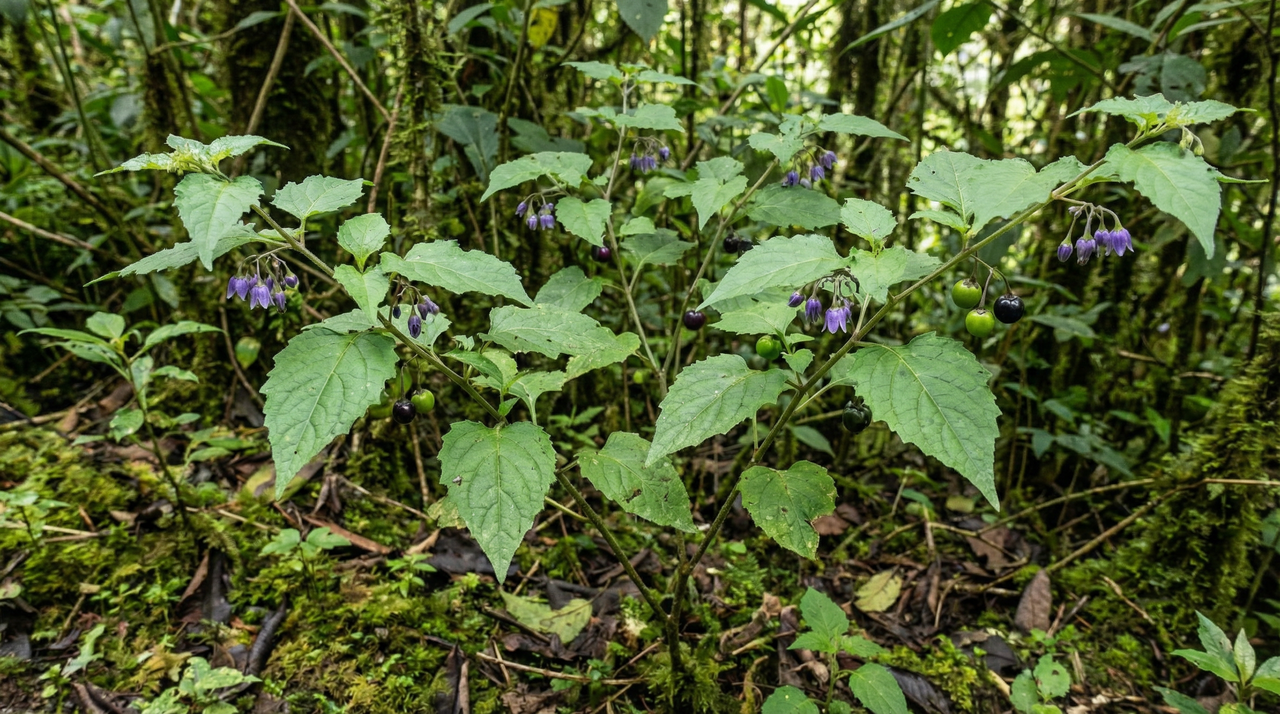
The first time I tasted a ripe jaltomato berry, I stood there for a second genuinely confused. It tastes like someone crossed a cherry tomato with a pineapple Jolly Rancher, which shouldn't work, but somehow absolutely does. And yet here's the thing that bothers me every time I mention this plant: almost nobody in the English-speaking gardening world has heard of it, and the few who have are often thinking of the wrong species entirely. Jaltomata procumbens, the weedy Mexican relative, has collected most of the ethnobotanical literature, and that attribution fog has followed Jaltomata umbellata around like a bad rumor.[1] The plant from the Peruvian lomas, the one with the parasol-like flower clusters and jewel-bright berries, has mostly been lumped in, misidentified, or quietly ignored.
What makes that frustrating is how genuinely beautiful and useful this plant is once you find the right information. It comes from one of the strangest ecosystems on earth: coastal desert fog communities in Lima's hills, where moisture arrives not as rain but as low cloud, and plants have adapted to thrive in that ambiguous dampness.[2] That origin explains almost everything about how it grows, what it needs, and why it rewards patient gardeners who pay attention to drainage and humidity rather than just sun and heat. Get those conditions right and you've got a perennial shrub that pulls in bees, hummingbirds, and curious dinner guests in equal measure.
Jaltomato Origin and History
Botanical Background and Native Habitat
If you've searched for jaltomato online and come away more confused than when you started, you're not alone. A significant chunk of the information floating around conflates Jaltomata umbellata with its far more widely distributed relative Jaltomata procumbens, a species native to Mexico and Central America with a much longer ethnobotanical paper trail. Getting the taxonomy straight matters, because these plants have different native ranges, different growing conditions, and different documented histories. Jaltomata umbellata, the plant we're talking about here, is a Peruvian endemic, native exclusively to the Lima Department on Peru's Pacific coast.[3][4] Full stop. Not Ecuador, not Colombia, not Mexico.
Its native home is the lomas, those remarkable fog-desert communities that cling to Peru's coastal hillsides where rainfall is almost nonexistent but sea fog rolls in seasonally and makes life possible. It's one of the more unusual plant habitats on the planet, and understanding it explains a lot about how this plant behaves in cultivation. Think moderate moisture delivered intermittently, excellent drainage, and never waterlogged roots. I've found that gardeners who understand a plant's origin habitat skip a lot of trial and error. In the lomas, jaltomata grows across a surprisingly wide elevation range, from rocky coastal slopes near sea level up through scrublands and disturbed areas to somewhere around 2,000 to 3,500 meters in montane zones.[5][6] That elevation span hints at real adaptability, which is part of what makes it interesting to grow.
In the Solanaceae (nightshade) family, it behaves as a polycarpic perennial, meaning it flowers and fruits across multiple seasons rather than dying after one reproductive cycle like an annual. In the wild, plants typically persist three to seven years, sometimes longer under favorable conditions.[7] Outside its native range, it's grown mostly as an ornamental curiosity rather than a food crop,[8][9] though I think that undersells what it brings to a productive garden.
Visual Characteristics
Jaltomata umbellata grows as a perennial subshrub or herb, reaching anywhere from 30 to 200 cm tall with an erect to ascending, branching habit that becomes noticeably woody at the base as it matures.[10][11] One of the first things you notice when handling young plants is the texture of the stems: they're covered in simple and glandular hairs that give them a slightly sticky, almost tacky feel. That's the glandular trichomes doing their job, a sensory cue I always take as confirmation that I've got a genuine Solanaceae in my hands. The leaves are simple and ovate to elliptic, 2 to 7 cm long, alternately arranged with slightly pubescent surfaces.[12][13] That leaf pubescence isn't accidental; in the fog desert, conserving every bit of available moisture matters, and the fine hairs help do exactly that.[14]
The flowers are where this plant really earns its keep in a garden. They're borne in axillary umbellate cymes, those parasol-like clusters of one to three blooms that give the species its name, with a bell-shaped (campanulate) fused corolla ranging from white to pale lavender, yellow, orange, or even red depending on the population.[15][12] Fruits are small globose berries, roughly 5 to 10 mm across, ripening through a range of colors, including yellow, orange, red, purple, and nearly black, depending on which population the seed came from.[16][3] I'd hedge any berry color prediction until you see your specific plant in fruit; there's real variability across collections. Flowering in the native range peaks December through April in the wet season, though in warm garden conditions it can stretch from spring through autumn or carry on year-round.[12][17]
Traditional and Cultural Uses
John Gilbert Baker formally described Jaltomata umbellata in 1886,[18] but like most plants with indigenous cultural relevance, the knowledge predates the Latin binomial by generations. Here's where the taxonomy confusion matters again: the well-documented ethnobotanical uses attributed to jaltomata in the literature, treatments for digestive complaints, inflammation, respiratory conditions, and use as a diuretic by Zapotec, Maya, and Nahua communities in Mexico and Oaxaca,[19][20] most likely belong to J. procumbens rather than to our Peruvian J. umbellata, which has much more limited documented traditional use in its native range. Ripe fruits of various Jaltomata species have been eaten fresh or worked into salsas as wild-tomato substitutes, though consumption tends to be sparing.[21] In the nightshade family, I always err on the side of caution with unripe fruit and green tissue; waiting until berries are fully colored reduces bitterness and avoids the solanine-like compounds present earlier in development.
Whatever traditional knowledge exists for J. umbellata specifically was largely transmitted orally among communities in its Lima range,[22] and that knowledge now sits under some pressure. Habitat loss in the lomas communities, combined with the risk of overharvesting for ornamental or medicinal purposes, has made cultivation rather than wild collection the responsible path forward.[23] Growing it in your own garden is, in a small way, a conservation act.
Fun Facts About Jaltomato
Pollination falls primarily to small bees and flies, which are well-matched to those compact bell-shaped flowers,[24] and seed dispersal gets a boost from birds that eat the colorful berries and carry seeds beyond the parent plant's drip line. Ecologically, the plant supports pollinators, lepidopteran larvae, and soil microbial communities while tolerating the disturbed-edge habitats, roadsides, and forest margins that many natives avoid.[24] I've used it in pollinator borders as an underutilized Solanaceae that earns its space without demanding much; the umbellate flower clusters are both visually lovely and functionally efficient for native bees working through a planting.
Its soil preferences reflect its fog-desert origins: well-drained sandy or loamy soils with neutral to slightly acidic pH, and moderate drought tolerance that comes from those pubescent leaves and a fibrous, spreading root system adapted to seasonal dry spells.[25][6][14] When I grew multiple Jaltomata species from seed and learned the hard way that sourcing accuracy matters, the one consistent lesson was this: get your seed from a reputable specialist, confirm the species name, and let the plant's fog-adapted heritage guide your drainage decisions from day one.
Jaltomato Varieties and Sourcing
Notable Varieties of Jaltomato (Jaltomata umbellata)
Jaltomato doesn't come in named cultivars. What you're growing when you plant Jaltomata umbellata is the straight species, a perennial herb or subshrub in the Solanaceae family[26] that tops out somewhere between one and three feet with a semi-erect to sprawling habit and stems that gradually go woody at the base.[27] For a plant with no breeding program behind it, that's not a limitation. It's just the deal.
The feature that stops people in my garden is the flowering. Clusters of small white to purple blooms arranged in those distinctive umbellate, parasol-like sprays appear from spring through fall,[27] and to me they look like a tidier, more refined version of what you'd see on a groundcherry. The berries that follow are spherical, 6-12 mm across, and cycle through green to yellow, orange, and finally red as they ripen.[27] In USDA zones 8-10, fruit typically comes in from July through September, and I've noticed that second-year plants produce noticeably heavier flushes once they've had a season to establish a proper root system.[28]
The plant is grown primarily for its ornamental appeal and has no widely recognized named selections, though it does show up occasionally in Solanaceae breeding research as a wild relative of crop interest.[29] The ripe berries are edible in moderation, but the plant contains solanine and other alkaloids, and unripe parts or large quantities can be toxic.[30] In my experience the fully ripe ones are pleasantly sweet-tart eaten sparingly, but I never experiment with unripe fruit from any nightshade. Hardy in zones 8-10, it tolerates some drought and grows well in full sun to partial shade with decent drainage; in cooler climates it's perfectly manageable as an annual.[27]
Where to Buy Jaltomato Plants and Seeds
Seed is the realistic path for most growers. Live plants do come up occasionally through specialty nurseries, but they're seasonal, harder to find, and can run anywhere from $10 to $50 depending on source and size. Seeds are a much simpler proposition at $3-5 a packet, and germination has been consistently reliable for me when I start them indoors. I've ordered from Baker Creek Heirloom Seeds and Trade Winds Fruit specifically, and both have come through. Plant Delights Nursery, Select Seeds, and Mountain Valley Growers are also worth checking if you want a live start. None of these are mainstream garden center finds; this is niche-vendor territory, full stop.
There are zero regulatory hurdles here. Jaltomata umbellata doesn't appear on the USDA APHIS federal noxious weed list or any state noxious weed lists I've been able to find,[31][32] so ordering seeds through the mail is straightforward. For a permaculture grower who already keeps Missouri Botanical Garden and RHS plant records bookmarked, cross-referencing before you buy takes five minutes and saves you from the occasional vendor who conflates it with other Jaltomata species. This is a low-risk, high-curiosity addition to any food forest understory or edible curiosity garden once you've done that basic homework.
Jaltomato Propagation and Planting Guide
Jaltomato is genuinely easy to propagate once you understand its rhythms. The seeds, cuttings, even the occasional rooted layer -- all of it behaves predictably, like the tomato cousin it is. The main thing that catches new growers off guard isn't the method; it's the timeline. Patience matters here in a way it doesn't with a quick annual crop.
Seed Characteristics and Collection
Hold a pinch of jaltomato seeds over your palm and you're looking at something between a poppy seed and a tiny kidney bean: 1-2 mm long, dark brown to nearly black, with a finely reticulate surface of ridges and pits.[33][34] I've started keeping a white paper plate under my seed tray when surface-sowing these -- they disappear into potting mix instantly, but against white you can actually see where they've landed. Small trick, big difference.
Each ripe berry contains 20-50 seeds,[35] and the plant is self-compatible, so even a single specimen can produce a healthy seed crop. To collect, scoop pulp from overripe fruits, ferment loosely for 2-3 days to break down the gel coating, rinse well, and dry thoroughly before storing. Fresh seed is where you want to be: viability runs 80-95% when seed is genuinely fresh, and while orthodox storage at cool, dry conditions can maintain it for 1-3 years, those numbers drop noticeably as seed ages.[36][37] If you're working with older stored seed, light scarification or a gibberellic acid soak can help nudge germination rates back up.
Germination and Timeline
The honest conversation about jaltomato from seed starts with the timeline: first fruit typically arrives 6-12 months after germination, and genuinely profuse flowering usually kicks in during the second year.[38] My first year growing it from seed, I kept second-guessing myself around month four, wondering if something had gone wrong. Nothing had. I just had to let the plant build itself before it was ready to perform.
For germination itself, the conditions are straightforward: surface-sow into warm, moist, well-draining mix and maintain 70-80°F (21-27°C). Expect sprouts in 10-28 days, with fresh seed hitting 70-90% germination under those conditions.[39][40] Start seeds indoors 6-8 weeks before your last frost date so transplants are ready when conditions are right outside.
Vegetative Propagation Methods
If that 6-12 month seed-to-fruit window sounds like too much waiting -- and honestly, I understand -- cuttings are a genuinely excellent alternative. Take 4-6 inch semi-ripe, non-flowering stem tips in early summer, strip the lower leaves, and root them in a sterile perlite-based mix with bottom heat around 70-75°F. Success rates run 80-90% under those conditions.[41][42] In my humid subtropical garden, I skip rooting hormone entirely for summer cuttings and just use a simple humidity dome; I'm consistently getting near that 90% mark.
The fastest route to fruit, though, is grafting onto tomato rootstock. Cleft or whip-and-tongue grafts onto Solanum lycopersicum in spring can compress that timeline down to just 2-4 months to first fruit, and you gain the rootstock's disease resistance and vigor as a bonus.[43][44] I switched to grafting the second season I grew jaltomata cajacayensis and similar material, and harvesting in three months versus waiting a year was a revelation. For gardeners with established tomato-grafting skills, this is the move. Layering -- pegging flexible stems to the soil surface in late spring -- also works reliably, producing roots in 4-6 weeks,[41] though it's less commonly used than cuttings for obvious reasons of convenience.
Soil, Site Selection, and Planting Technique
Jaltomata umbellata grows wild across a sweeping elevational range from Mexico through Central America down into Bolivia and Peru, colonizing disturbed slopes, roadsides, and forest edges at 500-2000 m in soils that lean sandy, loamy, or rocky -- often limestone-derived -- and never waterlogged.[45][46] That native range tells you what the plant expects: drainage above everything else, a pH between 6.0 and 7.5, and consistent moisture that never sits.
I lost three young plants my first season to root rot in a bed I hadn't amended properly. Heavy garden loam with no grit, decent irrigation, and a week of rain -- that was enough to kill them at the roots while the top growth still looked fine. After I raised the beds and worked in a generous amount of perlite alongside compost, survival rate jumped dramatically. The fibrous root system only reaches 20-60 cm deep,[6] so it can't compensate for poor drainage by going deep. Get the soil structure right before you plant. Acclimate transplants to outdoor light gradually; moving seedlings from a grow light directly into full summer sun will scorch them.
Spacing and Support
Mature jaltomato plants reach 3-6 ft tall with a 2-3 ft spread and an erect-to-spreading habit that sprawls significantly under fruit load.[36] I think of it like an indeterminate cherry tomato: if you give it space and a stake at planting, it rewards you with airflow and easy harvest. If you crowd it and add support only once it's flopped, you're just wrestling tangled stems. Space plants 18-24 inches apart with rows 2-3 ft apart, and sink your stake or trellis on planting day.[47]
Transplant seedlings outdoors once frost risk has passed and they carry 2-3 true leaves -- not before. Good spacing isn't just about room to grow; it's your first line of defense against the fungal pressure and pest buildup that thrive in dense canopy. For container growing, go at least 12-18 inches deep to accommodate the root system and choose a mix heavy on drainage amendment.[29]
Jaltomato Care Guide
Jaltomato sits in that satisfying sweet spot where a plant is genuinely forgiving but still rewards attentive growers. Its needs track closely with other Solanaceae I've worked with for years, which means a lot of this will feel familiar if you've grown tomatoes or ground cherries. The key difference is that jaltomato is a tender perennial with a tropical pedigree, and that shapes every decision from where you put it to how you treat it come November.
Sunlight Requirements for Jaltomato
Jaltomata umbellata prefers full sun to partial shade and shows the heliotropic leaf movements typical of Solanaceae family members, orienting itself to capture light while moderating exposure.[6][48] I've watched similar Solanaceae do this in my garden and always find it a little endearing. That said, too much intense afternoon sun causes photoinhibition: you'll start to see brown crispy leaf edges, chlorosis, or outright wilting before the plant can recover.[49][6] In hot climates, a position with morning sun and dappled afternoon shade tends to keep it happiest.
Watering Needs and Soil Moisture Management
Once established, jaltomato handles short dry stretches reasonably well, but it isn't a desert plant. It wants consistent moisture, moderate to high humidity (50-70% is ideal), and drainage that never lets roots sit wet.[50][51] My practical rule: water when the top inch of soil is dry, which usually works out to every five to seven days during the growing season. Back off significantly in winter.[52] Overwatering is the more common mistake; it shows as yellowing leaves and, eventually, root rot. Underwatering announces itself with leaf curl, drooping, and yellowing starting at the base.[53]
Soil texture matters here. Sandy-loam at a pH of 6.0-7.0 gives you the drainage and slight acidity this plant wants.[50] In my experience with tender Solanaceae in humid subtropical conditions, two to three inches of mulch around the base is the single biggest lever for stabilizing moisture through hot spells and reducing how often you need to water.[54]
Feeding and Nutrient Management for Jaltomato
Think of jaltomato's fertility needs the way you'd think about tomatoes, but start conservative. A balanced 10-10-10 fertilizer every four to six weeks during the growing season covers the basics.[55][56] During heavy flowering and fruiting, a lower-nitrogen formula like 5-10-15 encourages fruit set over excessive leafy growth.[55][57] Nitrogen excess is the classic pitfall: lush, dark green leaves at the expense of flowers and berries is your signal to ease up.[27] Stop fertilizing entirely during winter dormancy.
Deficiency symptoms mirror what I see in my tomato beds: iron chlorosis shows as interveinal yellowing on young leaves, nitrogen deficiency as uniform yellowing on older leaves with stunted growth, and potassium deficiency as brown scorched margins and curling edges.[58][59] Purplish leaves usually point to phosphorus deficiency and poor root development. I prevent iron chlorosis by keeping soil pH from creeping alkaline and, where needed, applying chelated iron rather than waiting for the problem to worsen.[60]
Heat and Frost Tolerance
Jaltomato is reliably perennial in USDA zones 9-11.[61][62] In my zone 9b garden in Central Florida, it behaves as a dependable short-lived perennial with mulch and a frost cloth ready for cold snaps. Optimal growth falls between 60-85°F (15-29°C), and it genuinely tolerates heat up to 95°F with good mulching and airflow.[63][64] Research on wild relatives shows it maintains photosynthetic efficiency up to 40°C through antioxidant responses and stomatal regulation, which is one reason it's being studied as a genetic resource for heat-tolerant crop breeding.[65] During peak summer afternoons, I use 30% shade cloth on similar plants to reduce leaf scorch while keeping fruit set on track. Above 35°C for extended periods, expect some scorching, wilting, and flower drop.[66]
On the cold end, I don't wait for a forecast to act. Once nights approach 50°F (10°C), I bring potted plants inside.[67] Frost is lethal; even a light freeze will blacken stems and cause rapid dieback.[68] Overwinter indoors in a bright, cool spot around 50-60°F with reduced watering -- enough to keep the root zone from completely drying out, but nowhere near summer frequency. In marginal zones, frost cloth and heavy mulching can sometimes get you through a mild cold snap, but don't bet the plant on it.
Pruning, Maintenance, and Seasonal Rhythm
Jaltomato has a naturally compact, bushy habit that doesn't demand much intervention.[69][28] What I've learned, sometimes the hard way, is that heavy pruning cuts flower production because blooms form on older wood. Keep that in mind before you get shear-happy.[47] The approach I've settled on: pinch young shoots at six to eight inches to encourage bushiness early in the season, then do a light cleanup in early spring to remove dead or weak wood and open the center for airflow.[70] Plants reaching one to three meters may need light staking, especially container specimens in exposed spots.[69]
Seasonally, flowering runs from late spring through early fall, peaking during the wet season in its native range and carrying on year-round in true tropical climates.[71] Fruit sets on new growth, so a healthy plant can deliver multiple harvests across a single season in perennial cultivation.[72] As temperatures cool toward the lower end of its range (below about 60°F at night), ease up on water and stop feeding entirely, letting the plant slow its metabolism in preparation for either a cool indoor winter or a mild outdoor dormancy.[3]
Jaltomato Harvesting: Timing, Technique, and Flavor
After a few seasons with jaltomato, I learned the hard way that these fruits don't announce themselves. They hide in the foliage, small and easy to miss until they've already started dropping. Now I check the plant every other day once flowering kicks off, and that one small habit has made an enormous difference in how much I actually harvest.
When to Harvest Jaltomato – Reading the Ripeness Cues
Skip the calendar and read the plant. Fruits ripen from green to a bright orange or red, and the real signal is a slight give when you press them gently, the same soft-but-not-mushy feel you'd check on a ripe cherry tomato.[73][74] That moment typically arrives 40 to 60 days after flowering, or roughly 60 to 90 days from planting.[75][76] In the Northern Hemisphere, flowering generally runs May through June with fruit following from July into October, though a cooler microsite or a late planting will push everything toward the tail of that range.[77] Don't rush it. A berry that's mostly orange but still firm is not there yet.
How to Harvest and Handle Jaltomato Fruits
Pick on a dry day. A gentle twist at the stem or a clean clip with small scissors is all it takes, and harvesting in dry conditions keeps fungal trouble from getting a foothold on any stem wounds.[73][36] Come back every two or three days once the plant starts producing; regular picking keeps fruit set rolling and prevents overripe berries from dropping and going to waste. These are thin-skinned fruits, so handle them like you mean it.
For short-term storage, I've had good results keeping small batches in the crisper around 50 to 55°F with high humidity, where they'll hold for close to three weeks without much quality loss, provided I picked them dry and didn't bruise them on the way in.[78] Avoid going colder than 50°F; chilling injury sets in below that threshold. If you have more than you can use fresh, drying at 40 to 50°C in a shaded, well-ventilated spot for two to four days brings moisture down to the 10 to 12 percent range and gives you a shelf-stable pantry option worth exploring.[78][79]
Jaltomato Flavor, Texture, and Yield
Ripe jaltomato fruits are small spherical berries, roughly 1 to 2 cm across, with thin waxy skin and a juicy interior that behaves exactly like a cherry tomato when you bite into it.[6][13] The flavor is sweet-tart with a distinct pineapple-like aroma and softer undertones of strawberry or citrus, all coming from the esters and terpenes that make this genus stand out among its nightshade relatives.[6][80] My first perfectly ripe berry off the vine tasted like someone crossed a tiny wild tomato with a strawberry and forgot to tell either one. Hotter, drier seasons seem to concentrate those tropical notes noticeably.
Traditionally, ripe fruits have been eaten fresh or used in sauces, beverages, and desserts across Mexico, Central America, and the Andean region.[81][82] The key word there is ripe. Unripe fruits and other plant parts carry the glycoalkaloids typical of the nightshade family, covered in the health and safety section of this profile; harvest only fully colored, softened berries. Outside traditional contexts the plant is grown mostly as an ornamental, and culinary use is still pretty niche, but that's part of what makes having a productive plant in your own garden so satisfying.
Jaltomato Preparation and Uses
Jaltomato has always struck me as a plant that asks something of you before it gives anything back. As a member of the Solanaceae family native to the Peruvian lomas, it carries that classic nightshade proviso: pay attention, know your plant, and wait for full ripeness. Indigenous communities living alongside these plants understood this, working the ripe fruit into their food traditions as a fresh snack, a salsa ingredient, and a minor seasoning.[83][84] It never became a commercial crop, and that obscurity feels oddly appropriate for a plant that rewards the curious and patient gardener rather than the impatient one.
Culinary Uses of Jaltomato Fruit
The first time I tasted a fully ripe jaltomato straight off the plant, I was genuinely surprised. The flavor sits somewhere between pineapple and tomato, mildly tangy rather than sharp, with a faint tropical sweetness that hangs on the palate.[85] It reminded me a little of a sweet ground cherry, except less husked-candy and more genuinely savory-fruity. Fresh eating is honestly where this fruit shines. The berries are small, the flavor is subtle, and cooking tends to mute the very qualities that make them appealing.
I've tossed a handful into a garden-fresh salsa alongside cilantro, lime, and a serrano, and the pineapple notes played beautifully against the acid and heat. Beyond that kind of casual fresh use, culinary possibilities include salads, garnishes, or small-batch preserves, though the modest fruit size and mild intensity mean you'll need patience and a generous harvest to make anything substantial.[82] I always tell clients: think of jaltomato the way you'd think of a wood strawberry. Worth eating as you walk through the garden; not something to plan a recipe around until you've got more plants producing.
Traditional Medicinal Preparations
Indigenous communities across Mexico and Central America have long prepared Jaltomata umbellata leaves as teas and poultices for stomach complaints, diarrhea, dysentery, and wound care, while the fruits have been consumed as a digestive tonic and for respiratory support.[21][86] These are documented traditional practices, and I hold them with genuine respect. That said, the clinical research simply hasn't caught up to the ethnobotany yet, and the health benefits section covers the current state of the science in detail. What I'll say here is that I don't personally prepare medicinal infusions from my plants, because the gap between traditional knowledge and validated dosing guidance is wide enough that I'd rather let that wisdom sit with people who carry it culturally. The traditional knowledge deserves careful study, not casual replication.
Jaltomato Health Benefits and Medicinal Uses
Jaltomato sits in that genuinely fascinating category of plants where centuries of indigenous knowledge and modern phytochemistry are circling the same territory but haven't fully met yet. What we know points somewhere interesting. What we don't know should keep anyone from reaching for it as a self-prescribed remedy.
Traditional Ethnobotanical Uses of Jaltomato
As a Solanaceae native to the tropical Andes, Jaltomata umbellata has a long relationship with the communities who live alongside it. Quechua and Mesoamerican peoples have used leaf decoctions, teas, and crushed-leaf poultices to treat inflammation, pain, wounds, gastrointestinal complaints, respiratory ailments, and skin infections.[87][88][89] That's a broad therapeutic repertoire, and I find it genuinely compelling as a record of observational knowledge accumulated over generations. But I'd be doing readers a disservice if I dressed that up as proof of clinical efficacy. No human trials have been published to validate these uses, establish safe dosages, or document long-term effects. Everything current rests on ethnobotanical reports, in-vitro assays, and limited animal models. That's a starting point, not a finish line.
Phytochemical Profile of Jaltomato
The chemistry is where things get genuinely interesting, and also where the caution lives. Jaltomato produces tropane alkaloids including hyoscyamine and scopolamine derivatives, withanolides similar to those found in ashwagandha (Withania somnifera), glycoalkaloids including solasodine glycosides, and a solid complement of flavonoids (quercetin and kaempferol derivatives) and phenolics including chlorogenic acid and rutin.[90][91][92] The ripe fruits also contain ascorbic acid, beta-carotene, sugars, and organic acids, while leaves typically carry higher alkaloid and phenolic loads than the fruit. Environmental stressors like drought, UV, and altitude push the plant to produce more of these compounds as chemical defenses.[92] I'd note that the structural similarity to ashwagandha's withanolides is genuinely intriguing, but the adaptogenic parallels are speculative at best. Much of what we know is extrapolated from closely related Jaltomata species rather than from direct studies on J. umbellata itself, and specific concentrations remain poorly characterized.[93]
Documented Pharmacological Activities
The preclinical picture that emerges from in-vitro and animal research is modest but real. Extracts show antioxidant activity via DPPH and ABTS free-radical scavenging, anti-inflammatory action through inhibition of TNF-α, IL-6, and COX-2, and moderate antimicrobial effects against Staphylococcus aureus, E. coli, and Candida albicans, with MIC values roughly in the 100-500 μg/mL range.[94][95][96] There's also preliminary in-vitro evidence of cytotoxic activity against certain cancer cell lines, attributed primarily to alkaloid constituents, though I'd stress that "cytotoxic in a petri dish" and "useful cancer treatment" are separated by an enormous amount of research that hasn't happened yet.[86] I've grown enough Solanaceae relatives to have real respect for this family's chemistry, and I'd never recommend a plant for medicinal use without human trial data to back it up. The traditional Mesoamerican and Andean uses deserve respect as observational wisdom; they don't substitute for evidence.
Nutritional Value of Jaltomato Fruits
The ripe fruits are where most gardeners will engage with this plant, and the nutritional profile is modest but genuinely appealing for a wild edible. They run roughly 20-30 kcal per 100 g with 80-85% water content, providing about 4-10 g carbohydrates, dietary fiber, vitamin C in the 10-25 mg range, beta-carotene around 0.8 mg, and meaningful potassium (200-300 mg), calcium (50-100 mg), and magnesium (30-50 mg).[6][97][98] Think groundcherry or wild tomatillo territory rather than nutritional powerhouse. The phenolic and flavonoid content (around 150-200 mg GAE/100 g) contributes real antioxidant activity that connects back to the DPPH results from lab studies, which I find satisfying as a grower: the chemistry you read about in research papers is actually sitting there in the fruit you're picking.[99] I've noticed the flavor shifts noticeably as fruits fully color up, becoming sweeter and dropping the initial astringency, which likely tracks with declining glycoalkaloid levels. All these numbers come from small-scale studies rather than comprehensive USDA analyses, so treat them as informed approximations that vary with ripeness and growing conditions.[100][101] Only fully ripe fruits should be eaten; leaves, stems, and unripe fruits carry glycoalkaloid loads up to 0.1-0.5% dry weight that make them genuinely unsafe to consume.[102][103]
Safety Considerations and Contraindications
Here's where I want to be direct, because I've grown enough nightshade relatives to know this family's risks aren't hypothetical. Jaltomato's steroidal alkaloids, glycoalkaloids, and tropane compounds create real toxicity potential, especially in unripe fruit, leaves, stems, and roots.[104][105][102] Ingestion of toxic parts can cause nausea, vomiting, abdominal pain, dizziness, and neurological effects; the plant is documented to poison livestock in its native range. Compared to Atropa belladonna it sits at moderate-to-low toxicity, but no species-specific LD50 data exists -- everything is extrapolated from the broader Solanaceae family, and alkaloid levels shift significantly with stress, soil, plant part, and maturity.[106][102] Because of that variability, I treat every wild Solanaceae the way I treat wild mushrooms: positive ID first, small tastes only, and never from a plant I can't name with certainty.
Pregnancy and breastfeeding are standard contraindications across the nightshade family due to potential uterine stimulation and alkaloid transfer, and theoretical interactions with CNS medications or cholinesterase-affecting drugs are possible, though nothing is clinically documented specifically for this species.[107][108] Some individuals may also experience contact dermatitis from handling the foliage.[109] In my seedling trays, young jaltomato, tomatillo, and groundcherry look remarkably alike, which is exactly why I label everything compulsively and why proper identification matters so much before harvest. Confusion with Solanum nigrum or Solanum americanum is a real possibility for anyone unfamiliar with the genus.[110][111] Keep this plant away from areas accessible to children and pets, and consult a qualified expert before any medicinal use. The traditional knowledge is genuinely worth studying further; it's just not worth experimenting with on yourself.
Jaltomato Pests and Diseases
No formal disease resistance ratings exist for jaltomato in any major botanical database, not at Missouri Botanical Garden, USDA, or Kew.[112][113] That's typical for understudied wild relatives, and it means most of what we know about its vulnerabilities comes from family-level Solanaceae research rather than species-specific trials. What I can tell you from growing it is that it behaves more forgivingly than domesticated tomatoes when conditions are right, especially drainage.
Common Pests of Jaltomato
The usual Solanaceae suspects show up on jaltomato: aphids (Myzus persicae), whiteflies (Bemisia tabaci), spider mites (Tetranychus urticae), leaf miners (Liriomyza spp.), and flea beetles.[114][86] Young transplants are especially flea-beetle magnets, so I keep a close eye on seedlings until they've hardened off. Aphids and whiteflies vector viruses and leave behind honeydew that turns into sooty mold fast in humid conditions.[115][114] Spider mites announce themselves with fine webbing and small yellow stippling, particularly during hot, dry spells.[114] Leaf miners leave winding pale tunnels that look worse than they are, though they do reduce photosynthetic capacity.[86]
Here's where jaltomato earns some respect: wild relatives like this one show roughly 30-50% lower whitefly susceptibility than cultivated tomatoes and recover from pest pressure faster.[116][86] The leaves feel slightly tacky, and that's not accidental. Type IV and VI glandular trichomes physically trap and chemically disable small insects with sticky exudates and secondary metabolites.[48] Underneath that surface defense sits a full arsenal of tropane alkaloids, withanolides, phenolics, and terpenoids that deter feeding, and the plant can ramp up production of those compounds after herbivore damage.[117][86][118] Those same compounds, incidentally, are part of what makes this plant interesting from a medicinal standpoint. In my experience, jaltomato bounces back from aphid pressure faster than my cherry tomatoes once the ladybugs arrive, and I think those trichomes deserve most of the credit.
Diseases Affecting Jaltomato
The disease picture looks a lot like the rest of the nightshade family. As a wild tomato relative, jaltomato is susceptible to Fusarium wilt, Verticillium wilt, early blight, powdery mildew, root rots from Phytophthora, bacterial wilt, bacterial spot, and both tomato mosaic virus and tomato spotted wilt virus.[119][120] It may show somewhat lower susceptibility to late blight and certain bacterial wilts than domesticated tomatoes, though I'd phrase that as an encouraging signal rather than a guarantee. The most common practical problem I've seen is root rot and damping-off in seedlings from overwatering or compacted, poorly draining soil, followed by leaf spot diseases in humid conditions.[121][122] Interestingly, germplasm from Mexican and Central American accessions shows enough variability in susceptibility that breeders are actively studying it for introgressing Fusarium and Verticillium resistance into cultivated tomatoes.[86][119]
Integrated Pest and Disease Management
My first line of defense is always cultural: good airflow between plants, watering at the base to keep foliage dry, and never planting in the same spot two seasons running.[123][122] I plant marigolds at the base of every jaltomato and rotate locations each season; that pair of habits has kept Fusarium and root-rot issues almost nonexistent in my garden. For pest pressure, releasing ladybugs, predatory mites, and lacewings addresses aphids, whiteflies, and spider mites without disrupting the plant's own trichome defenses.[124] When I do need to intervene directly, neem oil, insecticidal soap, or a firm water spray are my go-tos; broad-spectrum pesticides undermine the beneficial insect populations that do most of the real work.[124][115] Hot, humid summers do push spider mite and whitefly populations up, and fungal diseases thrive when humidity sits high for extended periods.[125][86] The saving grace is that wild vigor: a stressed jaltomato with good drainage will rally in a way that a cultivated tomato usually won't.
Jaltomato in Permaculture Design
Most of the edible Solanaceae we grow in temperate food forests are lowland plants: tomatoes, peppers, ground-cherries. Jaltomato is something different. Jaltomata umbellata is native to the coastal fog deserts and montane scrublands of Peru, occurring from near sea level to around 3,500 meters in disturbed forest edges, rocky slopes, and highland thickets.[126][127] That origin story matters enormously for design. This is a plant that evolved in cool, misty, high-humidity conditions, and understanding that ecology is the fastest path to placing it well.
Ecosystem Functions and Wildlife Benefits
As a pioneer colonizer of disturbed sites, jaltomato fills a structural gap in young food forests by providing habitat for insects and small vertebrates while its roots help stabilize eroding or newly worked soil.[126] Its small fleshy berries are eaten by birds and mammals, which then disperse the seeds, and the flowers produce nectar that draws in bees and occasional hummingbirds.[128] I've spent a lot of time watching native solitary bees work those tubular flowers with that rapid, sonorous buzz pollination, shaking pollen loose from the poricidal anthers. It's one of those moments in the garden where you feel like you're seeing a perfectly calibrated relationship.
The Solanaceae alkaloids present in this plant serve a gentler ecological role than people sometimes expect. Rather than being overtly toxic to neighbors, they appear to confer mild pest-deterrent properties that can benefit surrounding guild members. I think of jaltomato as a quiet guardian in that respect. On nutrient cycling, the data on exact mineral accumulation is thin for this species specifically, but as a leafy perennial Solanaceae growing in mineral-rich montane soils, it's reasonable to expect some potassium and phosphorus uptake returned to the system through leaf-litter decomposition.[126] I've observed noticeably better soil tilth in beds where I've left the leaf drop in place over a season rather than cleaning it up, which is consistent with that logic. On top of all this, jaltomato is not listed as invasive anywhere in the United States and presents very low naturalization risk.[129] After several seasons of growing it in my zone 9B garden, I've never once seen it spread beyond where I planted it.
Suitable Climate and USDA Zones
The cloud-forest origin tells you almost everything you need to know about climate fit. Native conditions run daytime temperatures of roughly 15-25°C with nighttime lows around 10-20°C, high humidity above 70%, and consistent rainfall between 1,000 and 2,500 mm annually.[130] Grown as a perennial, this plant is realistically suited to USDA zones 9-11. The RHS rates it H1c, meaning tender and in need of frost protection, and it cannot handle extended periods below 10°C.[131][13] A mature plant in a protected microsite may shrug off a brief dip to around -4°C, but I wouldn't count on it.
In Central Florida, where I work, brief winter cold snaps are the main threat. A layer of row cover or moving container plants onto a covered lanai is usually enough to bridge those nights below 50°F. What jaltomato also wants is consistent moisture without waterlogging; it has some moderate drought adaptation but prefers never to dry out completely.[132] Siting it near a pond edge, under the canopy drip zone of a larger tree, or setting up overhead micro-irrigation that mimics cloud-forest mist all help enormously in drier subtropical settings.
Forest Layer and Guild Placement
Jaltomato occupies the understory to shrub layer, typically reaching 0.5 to 1.5 meters with a scrambling to upright habit and small orange-to-red berries on umbellate clusters.[133][134] If you're familiar with ground-cherries (Physalis spp.) in a food forest context, jaltomato fills a similar vertical niche but with a looser, more scrambling character that benefits from something to lean into. I like placing it against the lower trunk zone of a taller nitrogen-fixer or dwarf fruit tree, where it gets dappled shade through the hottest part of the day and the leaf litter from above feeds the guild.
Its tolerance of partial shade to full sun and well-drained to moderately rocky soils gives it real flexibility across different food-forest microclimates.[135] As a pioneer species, it contributes nectar, fruit, and shelter from the moment it establishes, making it useful in early-succession guilds where you're still waiting for canopy trees to size up.[136] Pair it with taller understory companions that cast soft afternoon shade, keep lower ground covers underneath to retain moisture around its roots, and let the birds do the biodiversity work that this plant was born to support.
The Plant That Taught Me to Slow Down and Look Closer
I almost passed on Jaltomato twice before I finally grew it. The sparse sourcing, the taxonomic confusion, the "edible with caution" footnotes. But the first time I watched a bumblebee work those little bell flowers like she knew exactly what she was doing, I understood why this plant has survived in the margins so quietly and so well. Some plants don't need our attention to be worth our attention.
Sources 136
- Mione & Olmstead: Jaltomata Taxonomy ↩
- Dillon et al.: Lomas Formations of Coastal Peru ↩
- Plants of the World Online - Jaltomata umbellata ↩
- Missouri Botanical Garden - Tropicos: Jaltomata umbellata ↩
- Jaltomata umbellata Habitat and Distribution ↩
- Jaltomata umbellata - Useful Tropical Plants Database ↩
- The Genus Jaltomata (Solanaceae): Systematic and Infrageneric Taxonomy ↩
- Missouri Botanical Garden Plant Finder ↩
- Royal Horticultural Society ↩
- Flora of North America: Jaltomata ↩
- Jaltomata umbellata - Solanaceae Source ↩
- Missouri Botanical Garden Plant Finder ↩
- Jaltomata umbellata - Wikipedia ↩
- Jaltomata umbellata - Kew Science Plants of the World Online ↩
- Royal Botanic Gardens, Kew - Plants of the World Online ↩
- Jaltomata umbellata - Missouri Botanical Garden Plant Finder ↩
- Jaltomata umbellata - RHS Gardening ↩
- Annals of the Royal Botanic Garden, Peradeniya ↩
- Ethnobotany of the Solanaceae in Mexico ↩
- Medicinal Plants of Oaxaca: Traditional Uses and Phytochemistry ↩
- Ethnobotany of the Solanaceae in Mexico ↩
- Wild Relatives of Tomato: Traditional Uses and Conservation in Mexico ↩
- Conservation of Wild Tomato Relatives ↩
- Jaltomata umbellata ↩
- Kew Royal Botanic Gardens ↩
- Jaltomata umbellata (Benth.) Miers - Plants of the World Online ↩
- Jaltomata umbellata - Missouri Botanical Garden ↩
- Jaltomata umbellata ↩
- Jaltomata - Royal Horticultural Society ↩
- False Groundcherry Tomato Care - Royal Horticultural Society ↩
- Federal Noxious Weeds List ↩
- State Noxious Weeds ↩
- Morphology and Anatomy of Jaltomata procumbens and Jaltomata umbellata Seeds ↩
- Seed Morphology of Solanaceae: A Comparative Study ↩
- Pollination Biology in the Solanaceae: Jaltomata Species ↩
- Jaltomata umbellata (Parasol Tomato) ↩
- Royal Horticultural Society (RHS) Plant Finder - Jaltomata umbellata ↩
- Jaltomata umbellata Cultivation Guide ↩
- Jaltomata umbellata - Propagation Guide ↩
- Seed Germination Guide for Solanaceae ↩
- Propagation of Jaltomata Species ↩
- Vegetative Propagation Techniques for Solanaceae ↩
- Grafting Techniques for Wild Tomatoes ↩
- Interspecific Grafting in Solanaceae: Opportunities for Tomato Improvement ↩
- Jaltomata umbellata - Plants of the World Online ↩
- Jaltomata umbellata - Solanaceae Source ↩
- Jaltomata Species Horticulture Guide ↩
- Leaf Morphology and Pubescence in Jaltomata (Solanaceae) ↩
- Photoinhibition in Plants: Effects of High Light Intensity ↩
- Jaltomata umbellata - Missouri Botanical Garden ↩
- Jaltomata umbellata - RHS Gardening ↩
- Jaltomata umbellata - Missouri Botanical Garden ↩
- Cultivation of Jaltomata Species ↩
- Jaltomata umbellata (False Nightshade) ↩
- RHS Plant Finder - Jaltomata umbellata ↩
- USDA PLANTS Database - Jaltomata umbellata ↩
- Growing Solanaceae Ornamentals - University of California Agriculture ↩
- Micronutrient Deficiencies in Solanaceae Crops ↩
- Nutrient Deficiencies in Tomato Plants ↩
- Iron Chlorosis in Fruit Trees and Vines ↩
- Jaltomata umbellata - Missouri Botanical Garden ↩
- USDA Plant Hardiness Zone Map ↩
- Thermotolerance in Wild Relatives of Tomato: Insights from Jaltomata umbellata ↩
- Drought and Heat Stress Responses in Jaltomata Species ↩
- Environmental Physiology of Jaltomata umbellata in Andean Habitats ↩
- Heat Stress Responses in Solanaceae: Implications for Jaltomata Cultivation ↩
- Jaltomata umbellata - Plant Profile ↩
- Frost Damage in Tropical Plants - University of Florida IFAS Extension ↩
- Jaltomata umbellata - Growing Guide ↩
- Jaltomata umbellata ↩
- Jaltomata umbellata - Missouri Botanical Garden Plant Finder ↩
- Jaltomata umbellata Care Guide ↩
- Jaltomata umbellata (Parasol Wild Tomato) ↩
- Reproductive Biology and Phenology of Jaltomata (Solanaceae) ↩
- Jaltomata umbellata: Morphology, Distribution and Uses ↩
- Jaltomata umbellata ↩
- Phenological Observations of Jaltomata umbellata in Mexico ↩
- Postharvest Handling of Minor Fruit Crops ↩
- Storage and Drying Techniques for Andean Fruits ↩
- Fruit Aroma in Solanaceae: Volatile Compounds ↩
- Ethnobotanical Study of Jaltomata in Mesoamerica (Davis et al., 2002) ↩
- Ethnobotany of the Solanaceae: Jaltomata Species ↩
- Jaltomata - Wikipedia ↩
- Wild Edible Plants of Central America ↩
- Jaltomata umbellata - Eat The Weeds ↩
- Ethnobotany of Jaltomata Species in Mexico ↩
- Ethnobotanical Survey of Medicinal Plants in Central America ↩
- Ethnobotany of Jaltomata Species in Mexico ↩
- Ethnobotany of Jaltomata umbellata in Andean Regions ↩
- Phytochemical Investigation of Jaltomata procumbens and Its Related Species ↩
- Secondary Metabolites of Jaltomata umbellata: Alkaloids and Withanolides ↩
- Secondary Metabolites of Jaltomata Species: A Review ↩
- Phytochemical Investigation of Jaltomata umbellata ↩
- Antioxidant and Anti-inflammatory Activities of Solanaceae Species ↩
- Phytochemical and Pharmacological Profile of Jaltomata umbellata ↩
- Antimicrobial and Cytotoxic Properties of Solanaceae Leaf Extracts Including Jaltomata ↩
- Nutritional Potential of Jaltomata umbellata Fruits ↩
- Phytochemical and Pharmacological Review of Jaltomata Species ↩
- Antioxidant Activity of Jaltomata umbellata Extracts ↩
- USDA FoodData Central Search Results ↩
- Nutritional Potential of Underutilized Solanaceae Fruits ↩
- Glycoalkaloids in Wild Solanum and Jaltomata Species ↩
- Solanaceous Alkaloids in Edible Fruits ↩
- Solanaceae Toxicity Overview - Missouri Botanical Garden ↩
- Poisonous Plants of the Solanaceae Family ↩
- Alkaloids in Solanaceae - NCBI ↩
- Missouri Botanical Garden Plant Finder ↩
- USDA PLANTS Database ↩
- Solanaceae Allergenicity and Dermatitis ↩
- Solanaceae: Jaltomata umbellata - Solanaceae Source ↩
- Royal Horticultural Society - Solanum nigrum ↩
- Missouri Botanical Garden Plant Finder ↩
- USDA PLANTS Database ↩
- Insect Pests of Solanaceous Crops ↩
- Aphid Management in Vegetable Crops ↩
- Comparative Pest Susceptibility in Solanaceae Family ↩
- Chemical ecology of Jaltomata species ↩
- Herbivory-induced responses in wild tomatoes ↩
- Wild Relatives of Tomato as Sources of Disease Resistance ↩
- Bacterial Wilt Resistance in Solanum and Jaltomata ↩
- Jaltomata umbellata - Plant Profile ↩
- Pests and Diseases of Ornamental Nightshades ↩
- Integrated Pest Management for Solanaceous Crops ↩
- Integrated Pest Management for Tomato and Related Solanaceae Crops ↩
- Herbivory in Jaltomata Species ↩
- Jaltomata umbellata - Plants of the World Online (Kew Science) ↩
- Flora de Bolivia ↩
- Breeding Systems in Neotropical Solanaceae: Jaltomata umbellata ↩
- Invasive Plant Atlas of the United States ↩
- WorldClim - Koppen-Geiger Climate Classification ↩
- RHS Plant Finder - Jaltomata umbellata ↩
- Jaltomata umbellata (Benth.) Holub - Plants of the World Online | Kew Science ↩
- Jaltomata umbellata - Plants of the World Online | Kew Science ↩
- Missouri Botanical Garden Plant Finder - Jaltomata umbellata ↩
- Flora of Nicaragua - Jaltomata umbellata ↩
- Solaceae Source: Jaltomata Ecology ↩