Nobody believes me when I tell them a fruit tree can go from seed to harvest in under a year. Most people have been burned enough times by optimistic nursery tags and YouTube thumbnails that they've learned to discount bold claims, and honestly, fair enough. But Jamaican cherry doesn't care about your skepticism. I've watched seedlings hit fruit-bearing size faster than some of my tomato plants finish their season, and the tree doesn't stop once it starts. Not seasonally, not really ever. It just flowers and fruits in overlapping waves, month after month, like it missed the memo about dormancy.[1]
Here's the contradiction that keeps pulling me back to this plant: the same quality that makes it a permaculture dream is the exact thing that's gotten it flagged as invasive across Hawaii and parts of Florida. That relentless productivity, the bird-dispersed seeds, the ability to colonize disturbed ground before anything else gets a foothold, those aren't bugs. They're the whole design. Understanding that tension is, I'd argue, the only honest way to decide whether Jamaican cherry belongs in your food forest or your containment plan.
Origin and History of Jamaican Cherry (Muntingia calabura)
Botanical Background and Native Range
Muntingia calabura is a plant that seems designed to colonize. Native to the tropical lowlands stretching from southern Mexico down through Central America and into northern South America, including Colombia, Venezuela, Ecuador, Peru, Bolivia, and Brazil, it's a true pioneer species that thrives in exactly the kind of disturbed, marginal ground that other trees avoid.[2][3] It roots into forest edges, roadsides, abandoned fields, and secondary forest gaps, mostly below 1,000 meters, though it can push up to 1,500 m under favorable conditions.[2][4]
The speed at which it does all this is genuinely startling. Juvenile trees can push 2 to 3 meters of growth in a single year, reach reproductive maturity within one to two years from seed, and then flower and fruit nearly continuously in consistently warm climates.[5][6] Seeds germinate in as little as 7 to 14 days when soil temperatures stay between 25 and 30°C.[6][7] I've grown Jamaican cherry from seed in Central Florida and watched sprouts emerge in under two weeks during a warm, humid summer, which still surprises me even knowing the data. The tree is self-compatible, pollinated by insects, and the real engine of its spread is birds, which swallow the small fruits whole and deposit seeds across wide areas.[8] That combination of rapid germination, early fruiting, and avian dispersal is why the jamaican cherry tree is now naturalized across tropical Southeast Asia, the Pacific Islands, Africa, and parts of the southern United States, and considered invasive in Hawaii and parts of Florida.[9][10][3] Its lifespan is relatively short at 15 to 20 years,[5] which is worth knowing when you're planning a long-range food forest design.
Visual Characteristics
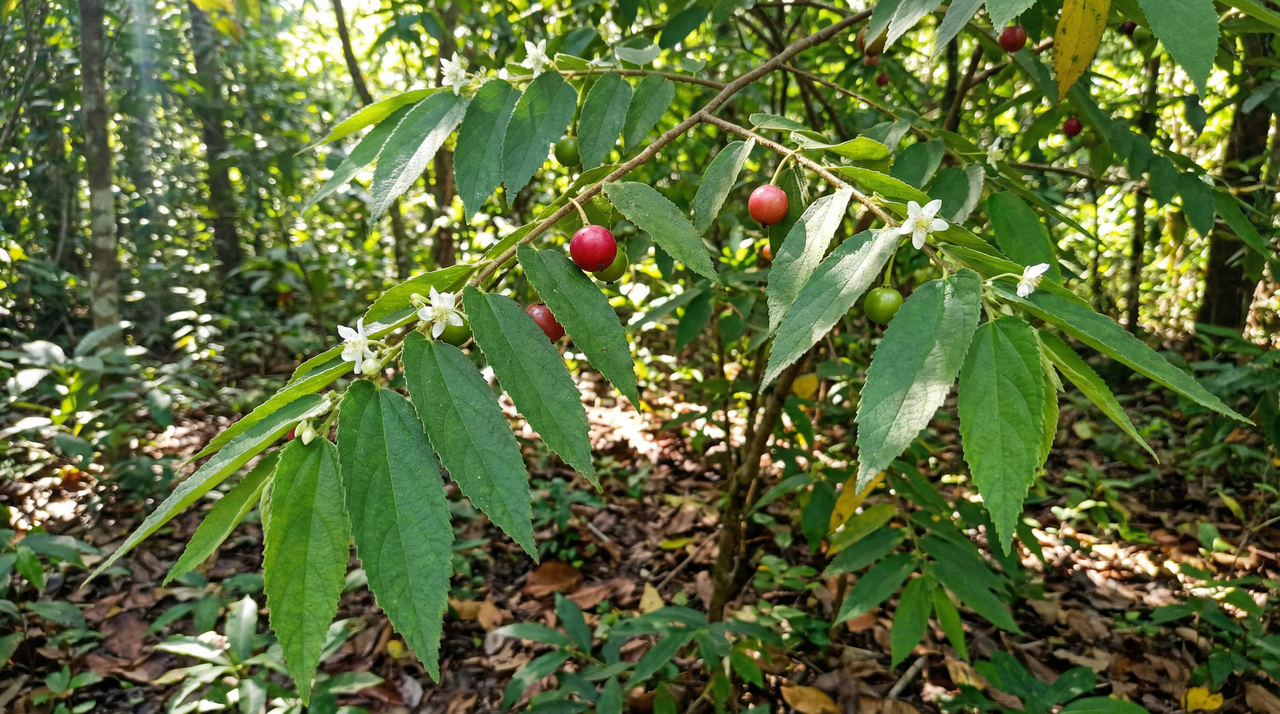
Once you know what to look for, the jamaican cherry tree is hard to mistake. It typically reaches 6 to 12 meters tall with a slender trunk and a broad, spreading, rounded crown that gives it an almost umbrella-like silhouette from a distance.[11][12] The leaves are simple and alternate, ovate to elliptic with finely serrated margins, dark green on top and noticeably paler underneath with a slightly fuzzy texture.[13][14] I'll admit that when I first encountered young seedlings in vacant lots near my Central Florida home, I had to look twice because the leaf shape can mimic other weedy pioneers at the juvenile stage. The serrated edges and soft pubescence are the quickest visual clues.
The flowers are what really give it away. Small, white, and star-shaped with five petals, about 8 to 12 mm across, they appear almost continuously from the leaf axils in warm climates, which means a mature tree looks perpetually decorated.[11] The fruits are small round to slightly oval berries, 1 to 2.5 cm in diameter, ripening from green to bright red, while the bark is thin and light gray to brown, becoming rougher and more cracked as the tree ages.[15][12]
Traditional and Cultural Uses
Linnaeus formally described Muntingia calabura in 1753 in Species Plantarum from specimens collected in the tropical Americas,[16] but the tree was already well on its way around the world by then. Spanish and Portuguese colonizers introduced it to the Philippines, India, and the Pacific Islands somewhere between the 16th and 19th centuries,[16][17] and it integrated into local food systems and medicine traditions with remarkable speed.
The fruit was eaten fresh wherever the tree took hold, and still is, but the ethnobotanical depth goes much further. In the Philippines and Malaysia, leaf decoctions have long been used to treat fever, headaches, colds, coughs, hypertension, and diabetes, while bark preparations address diarrhea, wounds, and inflammation.[18][19] I have deep respect for this kind of place-based knowledge; it's the same way many cultures work with aromatic and medicinal herbs, using the whole plant across multiple body systems. Indigenous groups in its native Neotropical range, including the Miskito, Kichwa, and Arawak, have their own long traditions with the tree as well, and in the Philippines leafy branches are used as offerings in religious ceremonies, with the tree itself regarded as a symbol of abundance and protection near the home.[20]
Fun Facts About Jamaican Cherry
The flavor is the thing that hooks people first. Ripe jamaican cherry fruits taste somewhere between cotton candy and strawberry with a hint of fig, which sounds like an exaggeration until you eat one straight off the branch. The tree produces them almost without stopping in warm, frost-free climates, which makes it a reliable food source for both people and wildlife in a way that seasonal fruiting trees simply can't match.
Ecologically, Muntingia calabura is an overachiever. It's a classic pioneer that colonizes disturbed ground, improves soil with its fast-decomposing leaf litter, and supports high bird diversity through prolific fruiting, which then creates the exact seed dispersal pressure that drives its spread further afield.[21] In my Central Florida neighborhood, I've watched it appear in vacant lots and along roadsides within a single growing season, spread there by mockingbirds and thrushes. That's impressive and a little sobering.
Florida lists it as a Category II invasive under FLEPPC, meaning it's naturalized but not yet causing severe ecological disruption,[22] while Hawaii treats it as a noxious weed outright.[9] The same traits that make this tree so valuable in a managed permaculture system -- its speed, its bird magnetism, its seed output -- become a genuine liability when they operate outside controlled boundaries. For anyone designing in sensitive tropical or subtropical ecosystems, that tension is the first thing worth sitting with before you plant a single seed.
Jamaican Cherry Varieties and Sourcing
Absence of Named Cultivars
Here's something that surprises a lot of people when they go looking: there are no named cultivars of Jamaican cherry. No 'Sweet Red,' no dwarf selections, no trademarked superfruits. Muntingia calabura has no formally recognized varieties, subspecies, or horticultural selections in botanical literature.[23][24][25] What you find online marketed as "red Jamaican cherry" or "yellow muntingia" are just fruit color descriptions from individual trees, not distinct cultivars. Nobody has needed to breed this plant into something better because it already does a remarkable job on its own.
I think about it the way I think about certain fast-growing tropicals like moringa or chaya: when a plant thrives in poor soils, shrugs off drought and flooding alike, tolerates everything from pH 4.5 to 7.5, and handles pollution without complaint,[26][27] breeders have no commercial incentive to tinker. The inherent genetics already cover most garden scenarios. On top of that, the tree is self-fertile and produces fruit year-round in frost-free climates, with mature specimens capable of yielding 20 to 50 kg of fruit annually.[26][28] The fruit feeds people fresh, goes into jams and juices, the flowers attract pollinators, the canopy brings birds, and the bark and leaves have a long history of traditional medicinal use.[11][29] In the US, it's grown primarily as an ornamental or home-garden fruit tree in Florida and Hawaii.[30][31] You're working with the species. That's the variety.
Where to Buy Jamaican Cherry
Finding Jamaican cherry for sale in the US takes some hunting. It shows up occasionally at specialty tropical nurseries in Florida, Hawaii, and Southern California, sold as a novelty specimen tree,[32][33] but no major nursery databases list consistent retail sources for plants or seeds.[34][35] When I'm sourcing an obscure tropical like this, I usually check with local rare fruit grower groups before ordering online. Those communities often have seeds or cuttings floating around for far less than retail, and you get local provenance too.
If you do go the online route, seed packets from specialty vendors typically run $5 to $15, small plants in one-gallon pots range from $15 to $30, and larger specimen trees can cost $50 to $150 or more.[36][37] For seeds especially, I'd look for recent harvest dates before ordering. Old tropical seeds lose viability fast.
Before you order anything, check your state rules. Muntingia calabura is considered invasive in Hawaii and is flagged in Florida, with state-level restrictions on sale and propagation in those areas.[38][39] It's not listed as a federally prohibited noxious weed, but USDA APHIS import rules still apply to any plants or seeds crossing international borders.[31] California is a different story; it doesn't carry the same invasive designation there.[40][41] Gardeners in Florida especially should check current county guidelines before planting any fruit tree this productive with bird-dispersed seeds. I always do.
How to Propagate and Plant Jamaican Cherry (Muntingia calabura)
Few tropical fruit trees deliver a payoff as fast as Jamaican cherry. From fresh seed sown in warm, moist soil, you can expect germination in as little as two to four weeks and your first flowers and fruit in as few as nine to twelve months under ideal conditions, with a meaningful harvest typically arriving within one to three years.[42][43][44] If you go the vegetative route with grafted material, that window can shrink to six to twelve months because you're starting with a mature scion rather than a juvenile seedling.[45] In my Central Florida garden, the difference between a nine-month wait and a three-year wait almost always comes down to one decision made at the very beginning: choosing a sunny, well-drained microsite. Get that right and everything else follows quickly.
Seed Characteristics and Germination
What makes Jamaican cherry such an enthusiastic self-spreader is right there inside each fruit: anywhere from one hundred to three hundred tiny, dark seeds, each barely a millimeter long, packed with oily reserves and a well-developed radicle ready to go.[46][47] These seeds are polyembryonic, meaning a single seed can carry multiple embryos, and they show virtually no dormancy.[48][49] Fresh seed germinates at seventy to ninety percent, epigeal, meaning the cotyledons push up above the soil surface where you can see them.[48] One thing I wish someone had told me early on: label your rows. Those first seedlings look deceptively similar to dozens of other tropical weeds until the true leaves emerge, and by week two you'll have forgotten which tray is which.
If you're saving seed across seasons rather than sowing fresh, the good news is that Jamaican cherry seed is orthodox. Dried to five to ten percent moisture content and stored below ten degrees Celsius with low humidity, it can remain viable for one to five years.[50][51] Tetrazolium staining or X-ray radiography can confirm viability before you commit to a whole sowing season, though with fresh seed at those germination rates, you rarely need to test.
Propagation Methods: Seeds, Cuttings, Air Layering, and Grafting
Seed propagation is the default for most home growers, and for good reason. Sow shallowly, about half a centimeter deep, in a well-drained sandy loam or peat-perlite mix, keep the temperature between twenty and thirty degrees Celsius, and give seeds a twenty-four-hour warm-water soak if you want to push germination rates toward the top of that seventy to ninety percent range. No scarification, no stratification, no fussing.[52][31][15] I usually start with seed when I want a batch of trees for genetic diversity or when I have an abundance of fresh fruit from a neighbor's tree.
When I want to replicate a specific tree I know produces exceptionally sweet fruit, I reach for air layering instead. Pencil-thick branches selected during the growing season, wrapped with IBA-treated sphagnum moss under plastic, root at sixty to eighty percent within four to eight weeks in humid conditions.[53][54] Semi-hardwood cuttings are another solid option: four to six inch sections taken in late spring through summer, dipped in IBA at one thousand to three thousand parts per million, and kept in a one-to-one peat-perlite mix under high humidity and indirect light root in four to six weeks at fifty to seventy percent success, sometimes reaching ninety percent with good hormone application.[55][56]
Grafting, specifically cleft or veneer on same-species rootstock in spring or early summer, works at forty to sixty percent and is mainly worth the effort when you need to lock in a specific trait or accelerate fruiting on a named selection.[56][57] It's similar to the logic behind grafted papaya or passionfruit: you're trading the simplicity of direct sowing for a shorter path to production. Documented protocols for this species are still limited, though, so expect some trial and error.
Soil, Site Selection, and Planting Technique
Jamaican cherry will grow in a remarkable range of soil types: sandy, loamy, clay, rocky, compacted, volcanic, alluvial, even actively disturbed ground.[58][59] It tolerates pH anywhere from 4.5 to 8.0, though it performs best between 5.5 and 7.5, with the sweet spot around 6.0 to 7.0. Push above pH 7.5 and you may start seeing iron chlorosis.[58][60] Think of it like a faster, more forgiving guava with the same fundamental obsessions: full sun and excellent drainage.
Full sun is non-negotiable. As a pioneer species of forest edges and disturbed tropical sites, it needs a minimum of six to eight hours of direct sunlight daily for strong flowering and fruiting.[58][61] Partial shade reduces vigor and yield; deep shade is effectively fatal over time. Drainage is equally non-negotiable. The tree has a shallow, wide-spreading fibrous root system that benefits from at least sixty to ninety centimeters of workable soil depth, and young plants need consistent moisture of about one to two inches per week until established.[11][43] I learned this the hard way: I lost a young tree in my Central Florida garden to root rot after a particularly wet summer. Now I amend every new planting hole generously with perlite and coarse sand before anything goes in the ground.
For container culture, a mix of fifty percent loamy garden soil, thirty percent compost, and twenty percent perlite or coarse sand provides the drainage and organic matter the tree needs.[62][63] Aim for three to four percent organic matter content in the soil; a moderate application of balanced NPK supports early vigor without pushing the tree into excess vegetative growth at the expense of fruit.
Spacing, Training, and Establishment
Before you set spacing, be clear-eyed about what this tree will become. Mature Jamaican cherry reaches ten to fifteen meters tall with a canopy six to ten meters wide, growing one to two meters per year during its twenty to thirty year lifespan.[64][65] In an orchard planting, five to six meters between trees within rows and six to seven meters between rows gives you roughly two hundred fifty to three hundred thirty trees per hectare with room for equipment and canopy development. Landscape specimens want at least three to five meters of clearance; closer spacing works for hedging with regular pruning.[53][66]
Plant during the warmest, wettest months, May through August in zones 9 through 11, after all frost risk has passed. Transplant seedlings at one to two feet tall, and stake every juvenile tree for its first two seasons.[53][64] I stake without exception now, because the wood is soft and that one-to-two meter annual growth makes un-staked juveniles genuinely vulnerable to wind throw. Early training pays dividends fast: favor a central leader or open-center form, remove suckers and water sprouts as they appear, and prioritize thinning cuts over heading cuts to keep structure strong. The goal is an open, well-lit canopy, not a dense thicket. And if you're gardening anywhere in Florida, watch your property edges every season. Bird-dispersed seed germinates readily in disturbed ground, and it's far easier to pull a two-inch volunteer than to manage an established tree you didn't intend to grow.
Jamaican Cherry Care Guide: Growing Muntingia calabura Successfully
If you're looking for a high-maintenance tree, Jamaican cherry isn't it. What strikes me every time I work with this species is how much it gives back relative to what you put in. It's a fast-establishing pioneer that wants the basics done right, and once you nail those basics, it rewards you with near-continuous flowering and fruiting through the warm months. Get drainage wrong, over-fertilize out of enthusiasm, or ignore a frost warning and you'll have problems. But follow its natural cues and this tree practically takes care of itself.
Sunlight Requirements for Optimal Growth and Fruiting
Jamaican cherry wants full sun, ideally six to eight hours or more per day, to fruit heavily.[11][67] It will survive in partial shade, but expect leggier growth and noticeably smaller harvests. The tradeoff isn't worth it if you have any sunny real estate available. Where I do see new growers get tripped up is with seedlings. I start mine under 30% shade cloth for the first four to six weeks because sudden full Florida sun will wilt them fast, exactly as the literature describes.[68][69] Yellowing leaves, sluggish growth, and leaf drop in a young plant under full sun are usually a sign it hasn't hardened off yet, not that something is wrong with the soil. Gradually pull back the shade cloth over two to three weeks and the tree acclimates without a setback.
Water Needs and Irrigation Best Practices
The rule I follow is "moist but never waterlogged." Young trees need water every two to three days during establishment, but once they're settled in, Jamaican cherry develops solid drought tolerance and you can back off considerably.[55][70] I've watched root rot take young trees in poorly drained spots during heavy Florida summer rains, so drainage is non-negotiable. The symptoms tell you quickly which direction you've erred: overwatering shows as yellowing leaves starting at the bottom and eventual leaf drop, while underwatering gives you wilting, browning edges, dry-looking foliage, and reduced fruit set.[71][72] The species naturally thrives on 40 to 80 inches of annual rainfall,[73] so in drier stretches, especially during flowering and fruiting, supplement if weekly rainfall drops below an inch. A thick layer of organic mulch cut my watering chores significantly; research supports that mulch can reduce irrigation frequency by up to 30%.[55][74]
Feeding and Soil Fertility for Jamaican Cherry
Here's where I've seen the most well-intentioned mistakes. Jamaican cherry can genuinely thrive in poor, sandy, nutrient-deficient soils,[68] which means it doesn't need much pushing. If you do want to feed it, a balanced NPK fertilizer applied two to four times during the growing season is plenty.[68][75] Young trees appreciate a bit more nitrogen to push vegetative growth, while mature, fruiting trees respond better to phosphorus and potassium.[76][6] I've seen leaf-tip burn on trees that were fed too aggressively, and the species is genuinely sensitive to both over-fertilization and soil salinity, which show up as scorched leaf margins, wilting, and root damage.[76] My default is compost top-dressing twice a year plus one light balanced feed in early summer, which improves soil structure slowly over time without pushing the tree past its comfort zone. Less really is more with this one.
Pruning, Maintenance, and Seasonal Rhythm
Light annual pruning after harvest is all this tree needs: remove dead or diseased wood, thin any overcrowded branches, and open up the canopy for airflow.[53][77] Heavy cutting will set back fruiting, similar to what you'd see with an overpruned mulberry, so resist the urge to hack it into shape. In true tropical climates, Jamaican cherry flowers and fruits continuously with no real dormancy.[4] In Central Florida, what I observe is near-continuous production from spring through fall, with a noticeable slowdown in winter rather than a full stop. The tree's polycarpic nature means there's almost always something happening on the branches at any given time during warm months, which also means pruning windows are few. I time mine for late winter before spring growth kicks off.
Heat and Frost Tolerance: Protecting Your Trees
As a lowland tropical species native to Central and South American elevations under 1,000 meters, Jamaican cherry is right at home in heat.[4] It grows optimally around 77 to 86°F (25 to 30°C), handles routine highs of 95 to 104°F (35 to 40°C) without complaint, and can briefly tolerate even higher temperatures.[78] Mature trees take Florida's humid summers far better than seedlings do, and I keep 30 to 50% shade cloth on new plantings through their first summer precisely because heat stress above 35°C can cause wilting, leaf scorch, and fruit sunscald.[79] The tree has moderate drought tolerance through stomatal closure, but combine heat with prolonged dryness and defoliation follows quickly.[53] Deep watering every two to three days and five to ten centimeters of organic mulch are your best mitigation tools.
While Jamaican cherry laughs at our summers, it has essentially zero tolerance for cold. Frost damage begins at 32°F (0°C), and the tree is reliably suited only to USDA zones 9b through 11.[80][81] Established trees can tolerate a brief dip to around 28°F (-2°C), but young plants are far more vulnerable. Frost symptoms move fast: wilting gives way to discoloration, necrosis, stem dieback, and flower and fruit drop.[82][83] After losing a young tree to a 26°F night, I now plant everything near the house or a fence wall for radiant heat, and I cover anything under four feet tall with frost cloth when temperatures are forecast below 32°F. If temperatures are forecast below 28°F, even established trees appreciate protection. I've seen flower drop and tip dieback set fruiting back by weeks when I didn't bother to cover them. With smart siting and a frost cloth kept close at hand through December and January, this otherwise carefree tree can produce abundantly for its full 15 to 20-year lifespan in a zone 9b garden.
Harvesting Jamaican Cherry: Timing, Technique, and Flavor at Peak
When to Harvest: Ripeness Cues and Seasonal Patterns
From flower to ripe fruit in 60-90 days, Jamaican cherry cycles through fruiting faster than almost any other tree I grow.[84][85] In my zone 9b garden, that compressed timeline means multiple fruiting flushes per year, with production ramping up through the wet season from roughly May into October.[86][85] During peak season I check the tree every single morning. Not out of habit -- out of necessity. The window between perfect and overripe can close within hours on a hot Florida day.
Reading ripeness is straightforward once you've done it a few times. You're looking for fruits that have shifted from green to bright red or orange-red, yield gently to finger pressure the way a ripe strawberry does, and detach from the stem without any resistance at all.[84][87][88] The aroma is the real tell, though. I can smell when a branch is ready from several feet away -- that sweet, almost floral fragrance intensifies noticeably in the last day or two before peak ripeness, and once you know it, you stop needing to look as carefully.
Yield, Flavor Profile, and Post-Harvest Handling
Ripe fruits are juicy with a mealy, pulpy texture and a crisp outer skin, packed with tiny edible seeds -- around 30-40 per fruit.[89][15] I love pointing this out to kids who visit my garden: no spitting required, unlike stone fruits. They eat them straight off the branch and come back for more. The flavor lands somewhere between strawberry, cotton candy, and a hint of caramel, driven by volatile esters including ethyl butanoate and linalool.[90][91] The aftertaste is mild and sweet with no bitterness or astringency whatsoever.[92] Green fruit is a different story: firmer, sharply acidic, and not worth eating raw when the red stage is just days away.[88]
A mature tree can realistically produce 20-50 kg of fruit per year,[93][94] which sounds wonderful until you confront the 2-3 day shelf life at room temperature.[94] I never refrigerate for more than a day because the flavor flattens noticeably; instead, I freeze extras immediately for smoothies. The harvest discipline this tree demands is actually one of its best teaching tools: pick only what you can use today, process the rest fast, and enjoy the abundance on its own terms.
Jamaican Cherry Preparation and Uses
Culinary Uses and Nutritional Value of Jamaican Cherry Fruit
The first time I bit into a ripe jamaican cherry fruit straight off the branch, I thought someone had crossed a strawberry with cotton candy and added a whisper of caramel. That flavor is the tree's best marketing tool, and it's backed by genuine nutrition. At around 57 kcal per 100 g with up to 100 mg of vitamin C, meaningful potassium, calcium, and 2.5 g of dietary fiber, these little fruits are doing real work.[95][96] The phenolic content runs roughly 10 to 15 mg GAE per gram, giving the fruit high antioxidant activity that puts it firmly in functional-food territory rather than just a pretty snack.[97][98]
Fresh eating is the most common use, and honestly the most satisfying, but the culinary range stretches much further: jams, jellies, juices, wines, ice creams, and regional desserts like Philippine halo-halo all have legitimate claims on these fruits.[98][99] My jamaican cherry juice recipe is barely a recipe: blend ripe fruits, strain through a fine-mesh sieve, and add a squeeze of lime. The result tastes like a tropical strawberry lemonade, and the juicing step genuinely reduces any skin astringency while intensifying the sweet notes.[88] For a quick jamaican cherry jam recipe, just simmer the strained pulp with sugar and a little lemon juice until it gels; the natural pectin in the skins does most of the work. I always harvest in the early morning here in central Florida before the heat softens the fruit too much, then refrigerate what I'm not using immediately since quality drops fast after two to three days.[100]
Young leaves, flowers, and seeds also see traditional culinary use: leaves eaten as a mild, slightly bitter cooked green or steeped into tea; flowers tossed raw into salads; seeds consumed whole or ground into flour.[101][102] The fruits themselves are safe, with no significant toxicity on record, but I always tell people to start with a small handful because the mild laxative effect can sneak up on you if you treat them like ordinary cherries. Allergic reactions are possible in sensitive individuals, and you want to harvest from trees well away from roadsides or contaminated ground.[103]
Traditional Medicinal Preparations
Across Southeast Asia and Latin America, the leaves, bark, and flowers of this tree have a long history in the medicine cabinet alongside the fruit bowl. Leaf infusions using 5 to 10 g of dried leaves steeped into one or two daily cups are the most common traditional preparation, used historically for fever, colds, diarrhea, and hypertension; bark decoctions carry a reputation for analgesic and antidiarrheal effects.[104][102] The dosages come from folk practice, not standardized clinical guidelines, so treat them as ethnobotanical starting points rather than prescriptions. As covered in the health benefits section, preclinical research is genuinely promising, but human trial data doesn't yet exist. I blend the leaf tea with fresh mint or lemongrass from my garden to soften its earthy flavor, and I think of it the way I think of most traditional plant medicines: something worth respecting and researching, not self-medicating with at high doses.
Non-Food and Practical Uses
The utility of this tree doesn't stop at the kitchen. The lightweight timber has traditional applications in small crafts, boxes, and fuelwood; the bark fiber has long been processed into rope, cordage, and thatching material; and the fruits and flowers yield natural red and purple dyes.[105] In the permaculture landscape, it earns its place as a fast-growing shade provider, living fence component, windbreak, and bird magnet, with leaf litter that breaks down rapidly into usable mulch.[106][105] The year-round white flowers and the constant flush of red fruit also give it genuine ornamental value as a specimen tree or privacy screen in any tropical or subtropical garden.[107] It's the kind of plant that earns its ground space several times over before you've even thought about the fruit.
Health Benefits of Jamaican Cherry (Muntingia calabura)
Traditional Medicinal Uses and Phytochemical Profile
Long before researchers started running DPPH assays on Jamaican cherry extracts, healers across South Asia, Southeast Asia, and Latin America had already mapped out much of what the plant can do. Different parts of Muntingia calabura address a wide range of complaints: leaves prepared as decoctions or infusions for fever, headaches, abdominal pain, and diabetes;[108] fruits consumed fresh or as tonics for cough, diarrhea, and hypertension;[108][109] bark applied as poultices for wounds and skin conditions;[110][111] and even the roots documented for fever treatment in some traditions.[112] That's an impressive portfolio for a tree most people in temperate climates have never heard of.
The honest caveat, and I always lead with this when clients ask me about using jamaican cherry medicinally, is that no human clinical trials have yet validated these therapeutic uses.[113] The preclinical evidence is consistent and comes from multiple independent labs, which is genuinely encouraging, but it still isn't the same as a randomized controlled trial in humans. This is a classic case of a traditional tropical medicinal awaiting rigorous human study, and that distinction matters when you're deciding whether to brew a leaf tea or consult a physician.
Key Bioactive Compounds: Flavonoids, Phenolics, and More
What drives all this biological activity is a dense and varied phytochemical profile. The dominant players are flavonoids (quercetin, rutin, kaempferol, myricetin glycosides) and phenolic acids (gallic, chlorogenic, ellagic), supplemented by terpenoids like lupeol and beta-sitosterol, saponins, tannins, anthocyanins in the fruits, and a unique alkaloid called muntingiamine.[114][115]
The leaves are far and away the richest source, with total phenolic content measured at 124 to 250 mg GAE per gram of extract, while bark runs 50 to 100 mg GAE/g and fruit sits in the 30 to 80 mg GAE/g range.[116][117] In my Central Florida food forest, I've noticed that fruits harvested after a good rainy stretch taste noticeably more complex and tangy, which tracks with research showing phytochemical content peaks during rainy seasons, when young leaves are also at their highest flavonoid concentrations.[118] If you're growing this tree and want the most from a leaf tea, harvest the young growth during active flushing.
Research-Backed Pharmacological Activities
The preclinical research paints a broad picture. Leaf and fruit extracts show potent antioxidant activity through radical scavenging (DPPH IC50 of 20 to 50 µg/mL for leaves) and upregulation of protective enzymes like SOD and CAT.[119] Anti-inflammatory effects work through inhibition of TNF-α, IL-6, NF-κB, COX-2, and LOX pathways, with demonstrated reduction of paw edema in rodent models.[120] I use a similar lens when I recommend moringa or tulsi leaf teas to clients managing chronic inflammation, and the jamaican cherry leaf tea I've tried has a milder, more pleasant flavor than either, which makes consistent daily use genuinely easy.
Beyond the broad antioxidant and anti-inflammatory actions, the research reaches into some specific and impressive territories. Analgesic and antipyretic effects tested in mouse models proved comparable to aspirin at 200 to 400 mg/kg.[121] Antimicrobial activity targets both gram-positive bacteria like Staphylococcus aureus and gram-negative strains like E. coli, with minimum inhibitory concentrations as low as 0.5 mg/mL.[122] Antidiabetic potential includes alpha-glucosidase and alpha-amylase inhibition and improved insulin sensitivity in diabetic rat models,[123][124] which aligns neatly with its widespread traditional use in managing blood sugar. Additional preclinical work documents hepatoprotective, wound-healing, neuroprotective, anticancer, anti-hypertensive, and anti-obesity activities.[125][126] The breadth is striking. None of it yet constitutes clinical proof, but the consistency across independent laboratories is the kind of signal that earns a plant a place in serious ethnopharmacological conversation.
Nutritional Value of the Fruit
Set aside the medicinal leaf research for a moment, because the fruit earns its place in a permaculture garden on nutritional merit alone. Jamaican cherry fruit comes in at just 36 to 58 calories per 100 grams, with 85 to 90% moisture, modest natural sugars, and about 1.8 to 2.5 grams of fiber per serving.[127] Vitamin C runs 16.7 to 30 mg per 100 grams, covering up to 28% of the daily recommended value,[128] and potassium comes in at a useful 191 mg per 100 grams alongside meaningful phosphorus, calcium, and iron with very low sodium.[129] The fruits also carry 20 to 50 mg GAE/g of phenolic compounds and 10 to 30 mg QE/g of flavonoids, with strong DPPH and FRAP antioxidant results.[130][131] A mature tree can produce thousands of fruits per season, so boosting dietary vitamin C and antioxidants in a subtropical garden really does require almost no extra effort beyond walking to the tree. The entire fleshy aril around the seeds is edible, no major allergens have been documented, and the fruit can be eaten fresh, juiced, jammed, or steeped as tea.[132]
Safety Profile and Considerations
Jamaican cherry fruit is generally regarded as safe for healthy adults eating ripe fruit in normal amounts, backed by long traditional use across the tropics and an absence from major poisonous plant databases.[43][133] Toxicology studies on leaf extracts report LD50 values above 2000 to 5000 mg/kg in rodents, with no mortality, genotoxicity, or significant organ damage in sub-chronic studies.[134][135] In my experience and according to that toxicology data, eating ripe fruit fresh off the tree is the safest and most enjoyable way to engage with this plant.
A few caveats are worth keeping clear. Excessive intake can cause mild gastrointestinal upset, likely linked to saponin content, and rare individual sensitivities have been reported.[43][136] Safety data for pregnancy and lactation is limited, with some traditional sources suggesting possible emmenagogue effects, so I avoid recommending high-dose leaf extracts in those contexts simply because the data isn't there to support it.[137] Anyone on anticoagulant or antiplatelet medications should be aware that the plant's flavonoid content carries theoretical antiplatelet activity, and additive hypoglycemic effects are possible for those on antidiabetic drugs.[137][110] As with any plant used medicinally, a conversation with a qualified health professional is worth having before moving beyond culinary use.
Jamaican Cherry Pests and Diseases
Natural Resistance and Common Pests
One of the things I genuinely appreciate about Jamaican cherry in a permaculture context is that the tree shows up to its own defense. The leaves, bark, and fruits contain a suite of flavonoids, phenolics, alkaloids, and tannins that act as feeding deterrents and toxins against many insects.[138][139] Physical defenses are minimal, just a slight fuzziness on young growth and no thorns whatsoever, so the chemical arsenal is doing most of the work.
That said, a humid Florida summer will test any tree. Scale insects are the pest I watch for most closely; they cause leaf yellowing, reduced vigor, and the telltale black coating of sooty mold that follows their honeydew. Aphids show up similarly, clustering on tender new growth and causing leaf curl. Leaf beetles can be a real problem on juvenile trees, occasionally causing significant defoliation, though established trees shrug off the same pressure with barely a pause. Fruit flies, leafhoppers, and thrips round out the usual suspects, with leafhoppers capable of infecting up to 30% of foliage in persistently humid conditions and fruit flies causing some fruit scarring and drop.[140][141] In well-managed specimens, though, most pressure stays occasional rather than chronic.[11]
I've actually experimented with brewing a simple leaf extract tea and spraying it on aphid-prone new growth with decent results, which makes sense given that laboratory studies show Muntingia leaf extracts have measurable insecticidal and antifeedant activity against pests like Spodoptera litura and even mosquito larvae.[142] The tree's fast growth rate is its own form of resilience; minor pest damage that would set back a slower tree barely registers here.[143]
Disease Profile and Environmental Triggers
The disease picture follows the same mixed pattern: real chemical resistance to some fungal pathogens, but clear vulnerability to anthracnose (Colletotrichum spp.), Cercospora leaf spot, powdery mildew, bacterial leaf spot, and root rot when drainage is poor or soil pH drops below 5.5.[144][145] The triggering conditions are humidity above 80% combined with temperatures between 25 and 30°C, which is essentially a description of Central Florida from June through September.[145] I learned the root rot lesson the hard way after losing a young tree in a poorly drained guild corner; now I check drainage before I plant anything and amend generously with organic matter. Viral infections are rarely documented, which is one less thing to worry about.[145]
Jamaican cherry is generally valued in agroforestry systems for its resilience when properly sited,[146] and I'd add that it performs far better in zone 9b heat and humidity than Arbutus unedo, the Mediterranean "strawberry tree" it's sometimes confused with. Arbutus struggles badly with Phytophthora in our conditions; Muntingia, when the drainage is right, doesn't carry that same liability.
Integrated Management Strategies
Everything in a good pest and disease management approach for this tree flows from cultural fundamentals: proper spacing for airflow, routine sanitation of fallen fruit and diseased leaves, pruning to open the canopy, and maintaining neutral soil pH with excellent drainage.[140][141][147] I prioritize morning watering to keep foliage dry through the day, and I've found that wider spacing than feels necessary at planting time pays real dividends once the rainy season humidity sets in. Young trees deserve the most attention; once established, the same fast growth that makes this species a prolific fruiter also means it bounces back from setbacks quickly.[148] When something does get through, neem oil handles aphids and scale well, and copper-based sprays applied judiciously address fungal and bacterial outbreaks without disrupting the beneficial insect community you want working in a food forest. Reach for either only after cultural options have been tried, and lean hard on natural predators as your first biological line of defense.
Jamaican Cherry in Permaculture Design
Few trees do as much ecological work as Jamaican cherry while simultaneously producing food you can eat straight off the branch. It's a genuine pioneer species with real design utility, and I've spent enough time working with it in subtropical food forests to say that with confidence. But it demands honest placement decisions upfront, not as an afterthought once it's already seeding your neighbor's yard.
Climate Suitability and Hardiness Zones
Jamaican cherry belongs in USDA zones 9b through 11, with a hard frost threshold right around 28°F (-2°C).[11][52] Young trees are especially vulnerable, and I've seen established specimens recover from a brief cold snap that took out new transplants entirely. If you're in zone 9b, site selection becomes your main frost-protection strategy. The tree thrives at 68-86°F with high humidity above 50-60% and annual rainfall in the range of 1,500-3,000 mm.[43][149] It tolerates drought once established but doesn't want prolonged dry seasons if you're expecting consistent fruiting. Soil flexibility is real: it handles pH 5.5-7.5 and manages on sandy or acidic ground, though it rewards better-drained fertile soil with faster growth.[43]
On invasiveness: the picture is nuanced, and you deserve a straight answer. It's not currently listed as invasive in Florida by UF/IFAS or in California by Cal-IPC, but it's considered potentially invasive in Hawaii and other tropical regions due to how aggressively it colonizes disturbed ground.[150][151] Check your local regulations before planting. Growers in southern Florida, southern California, and Texas are successfully using it as both an ornamental and edible tree,[150][152] but that success comes with eyes open to the self-seeding habit. More on that below.
Ecosystem Functions and Guild Roles
Jamaican cherry is native to the tropical Americas, from southern Mexico down through Bolivia, Brazil, and into the Caribbean, where it evolved as a classic pioneer of disturbed and degraded land.[153] That ecological identity is exactly what makes it useful in a designed system. It colonizes bare, tired ground, gets the succession started, and in doing so generates enormous ecological capital for everything planted around it.
The soil-building story is impressive. Though it doesn't fix nitrogen, its leaf litter decomposes rapidly, cycling nitrogen, phosphorus, and minerals back into the profile while mycorrhizal associations support broader soil health.[29] Fibrous roots hold slopes and reduce erosion. Add in a growth rate of 3-5 meters per year reaching eventual heights of 5-12 meters,[154] and you have a chop-and-drop mulch producer that outpaces almost anything else in a tropical guild. I coppice select individuals annually in my designs, which converts the same fast growth that could become a headache into consistent biomass for feeding the surrounding soil. The tree doesn't seem to mind at all.
The pollinator and wildlife support is relentless. Small white flowers open in the morning, last only a day or two, and produce nectar and pollen that attract bees, flies, butterflies, wasps, and hummingbirds through much of the year.[155] In my own designs I've noticed that the near-continuous bloom makes it a dependable anchor for stingless bees and hoverflies even during the shoulder seasons when other flowering trees pause. I typically recommend underplanting with basil and marigolds to push pollinator populations even higher.[155] Then the fruits kick in: sweet red berries that attract more than 50 bird species, plus bats and other wildlife, creating a seed dispersal network that accelerates regeneration across the wider landscape.[156] That same network, of course, is what you need to manage. Use the vigor; don't let it use you.
Forest Layer Placement in Food Forests
Jamaican cherry sits in the canopy or subcanopy layer and is unambiguously light-demanding. It does not tolerate dense shade and belongs at forest edges, clearings, and successional gaps rather than tucked under an existing closed canopy.[157] That placement preference is a design asset: it means you're putting it where you need pioneer work done, and it will do that work fast.
As a nurse tree, it's genuinely impressive. Intercropped with bananas, papayas, legumes, coffee, or cacao, it moderates temperature and humidity for the understory while its fruit and leaf drop steadily builds the soil layer beneath.[158] I've watched young citrus planted in its filtered shade come through their first Florida summer with noticeably less heat stress than exposed specimens in the same guild. The canopy can be pruned to a multi-stemmed open form for better light distribution and easier harvest access, which I prefer over letting it grow into a full rounded dome that shades out everything underneath.
The self-seeding behavior is the management piece that needs honest attention. Seeds germinate readily in two to four weeks, and birds disperse them widely,[31] which means volunteers will appear beyond your intended planting zone if you're not harvesting regularly. In a Central Florida food forest I design with, I found that aggressive fruit harvesting combined with annual pruning kept the tree firmly inside guild boundaries while producing reliable biomass and reliable fruit. That combination, regular harvest and regular pruning, turns the pioneer habit from a liability into one of the highest-yielding elements on the site.
The Tree That Taught Me to Slow Down and Just Eat Something
I remember the first time I tasted a ripe Jamaican cherry straight off the branch, still warm from the afternoon sun, and thought: why isn't everyone growing this? Then I remembered the spreadsheet I'd made trying to contain it. There's something humbling about a tree that produces abundantly, asks for almost nothing, and still manages to remind you that not everything in the food forest needs to be optimized; sometimes it just needs to be eaten.
Sources 158
- Jamaican Cherry - Purdue University New Crop Resource Online Program ↩
- Muntingia calabura L. ↩
- Muntingia calabura (Panama berry) ↩
- Muntingia calabura ↩
- Muntingia calabura L. A Review ↩
- Propagation of Panama Cherry ↩
- Germination and Early Growth of Muntingia calabura Seeds ↩
- Reproductive Biology of Muntingia calabura ↩
- Global Invasive Species Database - Muntingia calabura ↩
- Florida's Invasive Species ↩
- Muntingia calabura ↩
- Muntingia calabura L. ↩
- Muntingia calabura ↩
- Muntingia calabura L. ↩
- Muntingia calabura ↩
- Species Plantarum ↩
- Manual of the Flowering Plants of Hawaii ↩
- Ethnobotanical Survey of Medicinal Plants in the Philippines ↩
- Traditional Uses of Muntingia calabura in Malaysian Folk Medicine ↩
- Cultural Significance of Plants in Southeast Asian Rituals ↩
- Panama Berry (Muntingia calabura) ↩
- Invasive Potential of Muntingia calabura in Florida ↩
- Muntingia calabura ↩
- Muntingia calabura L. ↩
- Panama Berry (Muntingia calabura) ↩
- Muntingia calabura L. - Strawberry Tree ↩
- Tropical Fruit Trees: Muntingia calabura Cultivation Guide ↩
- The Panama Berry (Muntingia calabura): A Fast-Growing Tropical Tree ↩
- Muntingia calabura: A Review of Its Phytochemistry and Pharmacological Activities ↩
- Muntingia calabura ↩
- Muntingia calabura L. ↩
- USDA PLANTS Profile for Muntingia calabura ↩
- Invasive Species Note: Muntingia calabura ↩
- PlantFinder - Muntingia calabura ↩
- Muntingia calabura - Royal Horticultural Society ↩
- Muntingia calabura Seeds ↩
- Muntingia calabura - Strawberry Tree ↩
- Florida Invasive Species List ↩
- Hawaii Invasive Species ↩
- Muntingia calabura L. ↩
- Muntingia calabura ↩
- UF/IFAS Horticultural Sciences - Muntingia calabura ↩
- Muntingia calabura - Useful Tropical Plants ↩
- Muntingia calabura: A Rapidly Growing Fruit Tree ↩
- Strawberry Tree (Muntingia calabura) Cultivation Guide ↩
- Muntingia calabura ↩
- Flora Malesiana: Muntingia calabura ↩
- Seed Morphology and Germination of Muntingia calabura L. ↩
- Seed Propagation and Germination of Tropical Trees: Case Study on Muntingia calabura ↩
- Seed Information Database - Kew Science ↩
- Seed Storage Behaviour: A Compendium ↩
- Propagation of Tropical Fruit Trees: Muntingia calabura ↩
- Propagation of Tropical Fruit Trees ↩
- Air Layering for Home Gardeners ↩
- Propagation Techniques for Tropical Fruit Trees: Muntingia calabura ↩
- Singapore Botanic Gardens - Plant Propagation Guidelines ↩
- Muntingia calabura L. ↩
- Jamaican Cherry - Muntingia calabura - Fact Sheet ↩
- Muntingia calabura L. ↩
- Soil Adaptation of Tropical Trees: Muntingia calabura ↩
- Muntingia calabura L. ↩
- Growing Muntingia calabura in Containers ↩
- Propagation and Cultivation of Muntingia calabura ↩
- Panama Cherry - Muntingia calabura ↩
- Muntingia calabura (Panama Berry) Plant Profile ↩
- Muntingia calabura: Cultivation and Propagation ↩
- Muntingia calabura - Royal Horticultural Society ↩
- Muntingia calabura - Useful Tropical Plants ↩
- Muntingia calabura - University of Florida IFAS Extension ↩
- Muntingia calabura - Royal Horticultural Society ↩
- Muntingia calabura Care Guide - University of Florida IFAS Extension ↩
- Muntingia calabura Care Guide - University of Florida IFAS Extension ↩
- Muntingia calabura L. - Plants of the World Online ↩
- Muntingia calabura: A Tropical Fruit Tree for Home Gardens - University of Florida IFAS Extension ↩
- Cultivation and Utilization of Muntingia calabura L. - ResearchGate ↩
- Fertilization of Tropical Fruit Trees - University of Florida IFAS Extension ↩
- Horticulture of Panama Berry (Muntingia calabura) ↩
- Muntingia calabura L.: A Review of Botanical, Phytochemical, Pharmacological and Nutritional Properties ↩
- Physiological Responses of Muntingia calabura to Abiotic Stresses ↩
- Muntingia calabura - Plant Finder - Missouri Botanical Garden ↩
- Muntingia calabura - North Carolina Extension Gardener Plant Toolbox ↩
- Tropical Fruit Trees: Cold Tolerance Guide - University of Florida IFAS Extension ↩
- Muntingia calabura - Panama Berry - Royal Horticultural Society ↩
- UF/IFAS Featured Plant - Strawberry Madeira ↩
- Panama Berry (Muntingia calabura) ↩
- Muntingia calabura L. - Strawberry Tree ↩
- Plant Finder - Muntingia calabura ↩
- Physicochemical characteristics of Muntingia calabura L. fruit at different maturity stages ↩
- Muntingia calabura ↩
- Volatile Compounds and Sensory Characteristics of Muntingia calabura Fruit ↩
- Aroma Profile of Panama Berry (Muntingia calabura L.) ↩
- Muntingia calabura L. (Tiliaceae): A Review of Its Traditional Uses, Phytochemistry, Pharmacology and Toxicology ↩
- Panama Berry (Muntingia calabura) Cultivation Guide ↩
- Harvesting and Post-Harvest Management of Tropical Fruits ↩
- Nutritional Composition and Antioxidant Properties of Muntingia calabura Fruits ↩
- Mineral Content and Bioactive Compounds in Cherry of the Rio Grande (Muntingia calabura L.) ↩
- Antioxidant Activity and Phenolic Content of Muntingia calabura ↩
- Nutritional Composition and Antioxidant Properties of Muntingia calabura Fruits ↩
- Muntingia calabura L. (Tiliaceae): A Review of Ethnobotanical Uses, Phytochemistry, and Pharmacology ↩
- Missouri Botanical Garden - Muntingia calabura ↩
- Traditional Uses and Phytochemical Profile of Muntingia calabura ↩
- Muntingia calabura L. (Tiliaceae): A Review of Its Traditional Uses, Phytochemistry and Pharmacology ↩
- Muntingia calabura L. (Tiliaceae): A Review of Its Traditional Uses, Chemical Constituents and Pharmacological Activities ↩
- Muntingia calabura L. (Eliu): A Review of Its Phytochemistry, Pharmacology, Toxicology, and Ethnomedicinal Uses ↩
- Traditional and Economic Uses of Tropical Trees: Muntingia calabura ↩
- Traditional Agricultural Practices with M. calabura in Latin America ↩
- Muntingia calabura ↩
- Ethnopharmacological Review of Muntingia calabura ↩
- Traditional Uses and Pharmacological Activities of Muntingia calabura: A Review ↩
- Phytochemical Screening and Bioactivity of Muntingia calabura Bark ↩
- Traditional Medicinal Uses and Phytochemistry of Muntingia calabura ↩
- Muntingia calabura ↩
- Boateng et al. (2021) - Journal of Ethnopharmacology ↩
- Phytochemical and Pharmacological Review of Muntingia calabura ↩
- Flavonoids from Stem Bark of Muntingia calabura ↩
- Phytochemical and Pharmacological Review of Muntingia calabura ↩
- Antioxidant Activity and Phenolic Content of Muntingia calabura Leaves and Fruits ↩
- Variation in Secondary Metabolites of Muntingia calabura from Different Regions ↩
- Antioxidant and Anti-inflammatory Activities of Muntingia calabura Leaves ↩
- Pharmacological Activities of Muntingia calabura: A Review ↩
- Analgesic and Antipyretic Effects of Muntingia calabura ↩
- Antimicrobial Properties of Muntingia calabura Leaf Extract ↩
- Antidiabetic Potential of Muntingia calabura Leaves ↩
- Antidiabetic Activity of Muntingia calabura Leaves in Streptozotocin-Induced Diabetic Rats ↩
- Anticancer Potential of Muntingia calabura Flavonoids ↩
- Pharmacological Activities of Muntingia calabura: A Review ↩
- Nutritional Composition of Muntingia calabura L. Fruit ↩
- Nutritional Composition of Muntingia calabura L. Fruit ↩
- Nutritional Composition of Muntingia calabura L. Fruit ↩
- Phenolic Compounds and Antioxidant Properties of Muntingia calabura L. Fruits ↩
- Flavonoid Composition and Antioxidant Activity in Muntingia calabura Fruit Extracts ↩
- Ethnobotanical Uses and Preparation of Muntingia calabura ↩
- Phytochemical Constituents and Pharmacological Activities of Muntingia calabura L. - A Review ↩
- Safety evaluation of orally-administered methanol extract of Muntingia calabura Linn. leaves: A sub-chronic toxicity study ↩
- Antidiabetic Activity and Acute Oral Toxicity Test of Muntingia calabura Leaves ↩
- Muntingia calabura L. (Tiliaceae): A Review of Its Traditional Uses, Chemical Constituents, and Pharmacological Properties ↩
- Safety and Efficacy of Herbal Medicines: Muntingia calabura ↩
- Bioactive Compounds in Muntingia calabura and Their Insecticidal Potential ↩
- Muntingia calabura L. (Muntingiaceae): A Review of Its Traditional Uses, Chemical Constituents, and Pharmacological Properties ↩
- Diseases and Pests of Tropical Fruit Trees ↩
- Integrated Pest Management for Tropical Fruit Trees ↩
- Antifeedant and Insecticidal Activities of Muntingia calabura Leaf Extracts Against Spodoptera litura ↩
- Muntingia calabura: The Singapore Cherry ↩
- Fungal Pathogens of Muntingia calabura in Malaysia ↩
- Diseases of Tropical Fruit Trees in Southeast Asia ↩
- Muntingia calabura: Panama Cherry ↩
- Horticultural Management of Singapore Cherry ↩
- Agroforestry Species: Muntingia calabura ↩
- Muntingia calabura (Panama Berry) ↩
- Muntingia calabura - Panama Berry ↩
- California Invasive Plant Council Lists ↩
- Muntingia calabura for Texas Landscapes ↩
- Muntingia calabura L. ↩
- Muntingia calabura ↩
- Phenology and Reproductive Biology of Panama Cherry (Muntingia calabura) ↩
- Ecological roles of invasive tree species in the Caribbean ↩
- Muntingia calabura ↩
- Panama Berry (Muntingia calabura) in Permaculture ↩