There's a village in Guizhou Province where elderly residents were living well past ninety at rates so unusual that a Japanese researcher in the 1970s started asking what they were drinking.[1] The answer was a tea brewed from jiaogulan, a weedy climbing vine that most of the botanical world had never heard of. That vine was jiaogulan, and the story of how it went from an obscure forest-edge herb in southern China to a subject of serious phytochemical research is genuinely strange and worth knowing before you ever put a cutting in the ground.
What I find most disorienting about jiaogulan is the gap between how it looks and what it apparently does. It's a slight, tendril-grabbing vine with leaves that smell faintly of cucumber and a flavor somewhere between green tea and mild ginseng. Nothing about it announces itself. Grow it up a trellis in dappled shade and most visitors will walk right past it. But that unassuming exterior hides a phytochemical profile so structurally similar to ginseng's active compounds that researchers started calling it "southern ginseng," a nickname that undersells how interesting it actually is on its own terms.
Jiaogulan Origin, History, and Botany
Botanical Background and Visual Characteristics
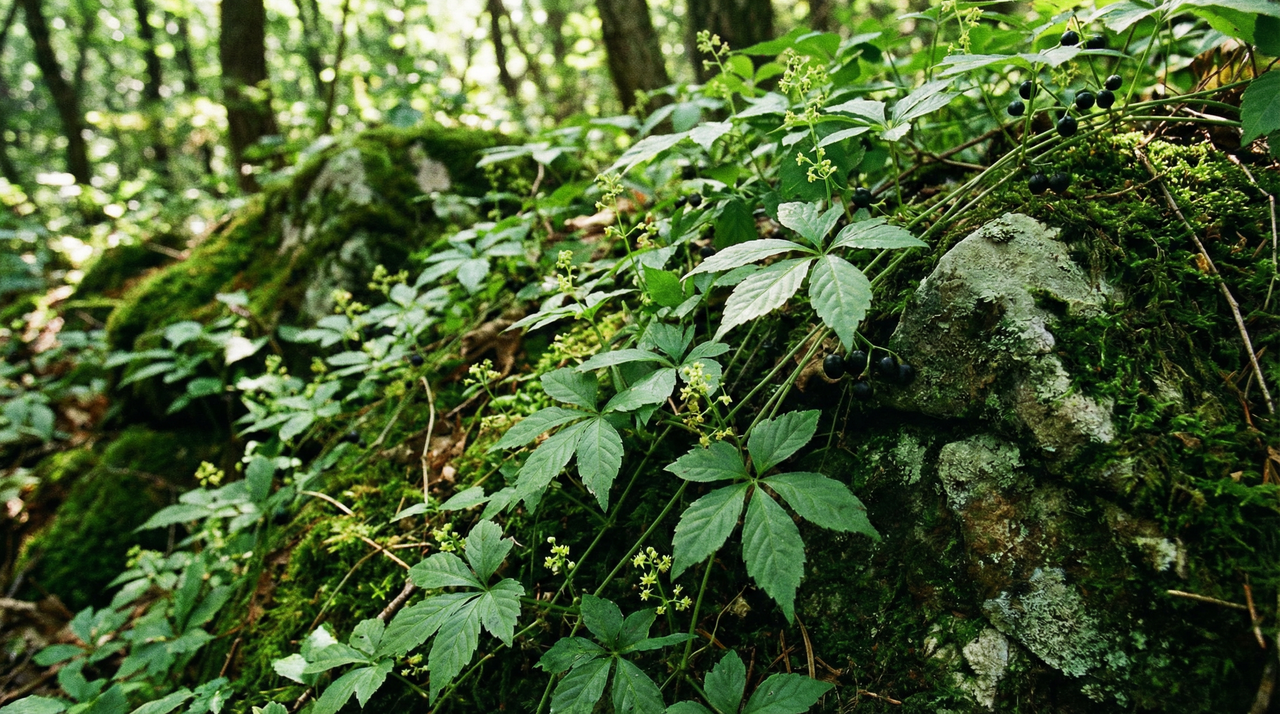
Gynostemma pentaphyllum sits in the Cucurbitaceae family, which surprises most people who first encounter it, because nothing about this delicate forest vine screams "cucumber relative." Native to the shaded limestone forests, rocky streamsides, and moist understories stretching from central and southern China through the Himalayan foothills, Japan, Korea, Vietnam, and India, it's adapted to a wide band of elevations from roughly 300 to 3200 meters, though it's happiest somewhere in the 500 to 2000 meter sweet spot.[2][3][4] That preference for humus-rich, well-drained loamy soils and dappled canopy light makes it a natural fit for forest garden understories, something I noticed immediately the first time I placed it beneath a persimmon guild.
The vine itself is a fast-growing climber. It can reach 6 to 9 meters in length, adding several meters of growth in a single season with adequate support.[5][6] It climbs with wiry axillary tendrils, and the stems are slender, slightly angular in cross-section, and either smooth or finely hairy depending on growing conditions. What stops me every time is the foliage: palmately compound leaves typically composed of five ovate to lanceolate leaflets with serrated margins, each leaflet a couple of centimeters wide and up to five centimeters long.[7] After growing this plant for several seasons, I've learned to watch for the way young leaves emerge with a subtle bronze tint that gradually deepens to a rich, clean green; that color shift is one of my quickest cues for distinguishing seedlings from other vines volunteering in the same bed. The flowers are small and inconspicuous, greenish-white, appearing in loose axillary clusters from June through September, followed by small black berries just a few millimeters across containing one to four seeds.[8] The plant is dioecious, meaning you'll need both male and female plants nearby for fruit set, and flowering typically begins in the second year from seed.[9]
A close relative worth knowing is Gynostemma aggregatum, sometimes called Southern Ginseng, a similar perennial climber native to Guangxi, Guizhou, and Yunnan with slightly larger leaflets.[10] You'll occasionally see Gynostemma cardiospermum listed as a distinct species in older sources, but Kew and Flora of China both treat it as a taxonomic confusion referencing G. pentaphyllum.[11][12] I always cross-check any new Gynostemma plant against those two sources before adding it to a guild, precisely because of name confusion like that circulating in the trade.
Traditional and Cultural Uses Across Asia
The earliest written record we have of jiaogulan appears in Li Shizhen's monumental Bencao Gangmu, the Compendium of Materia Medica, published in 1596 during the Ming Dynasty. Li describes it as a qi tonic that supports the heart and lungs and addresses fatigue, cough, and respiratory complaints, though it doesn't appear in the much older Shennong Bencao Jing, which suggests it occupied a regional rather than imperial role in early Chinese medicine.[13][14] In Traditional Chinese Medicine, it's classified as an adaptogenic tonic for longevity, stress resilience, cardiovascular health, blood sugar and cholesterol regulation, and the treatment of hypertension and bronchitis.[15] The plant earned the nickname "southern ginseng" despite being completely unrelated botanically.[16] When I've brewed fresh-leaf jiaogulan tea alongside a mild ginseng preparation, the family resemblance in flavor is genuinely there: earthy, slightly sweet, less aggressively bitter than true ginseng.
The folk tradition runs deeper than any single text. The Yao, Miao, Zhuang, and Dai peoples of Guangxi, Guizhou, and Yunnan have used jiaogulan tea for generations to address high blood pressure, fatigue, gastrointestinal complaints, and respiratory issues, and parallel uses appear across Vietnam, where it's known as sâm dây, and Korea, where it goes by Dunsulme.[17][18] It's brewed daily in household gardens across southern China, sometimes called "Difficult-to-Swallow Tea," though that name never quite matched my own experience of it.[19]
The plant is currently listed as Least Concern on the IUCN Red List, but that status doesn't tell the whole story. Wild populations face real pressure from overharvesting, and the global supplement boom has raised legitimate concerns about fair benefit-sharing with the indigenous communities who developed and preserved these uses over centuries.[20][21] I source my own plants from reputable cultivated stock rather than wild-collected material, and I think any serious grower should do the same. Cultivation is the right answer here, both ecologically and ethically.
Fun Facts and Folklore of the Immortality Herb
The "herb of immortality" reputation has a grounded origin. In Guizhou and Guangxi provinces, local villagers who drank jiaogulan tea daily were observed, repeatedly and across generations, to live to exceptional ages, often past 100.[15] Correlation is not causation, as any scientist will remind you, but seeing a thriving jiaogulan vine weaving through a shaded garden guild makes it easy to understand why a culture might notice the health of the people growing it. There's something almost magnetic about the plant's vitality.
One thing I find genuinely fascinating is how much the medicinal quality of cultivated material can vary. Gypenoside concentrations shift with genetics, growing environment, plant age, and processing, and plants raised in full sun tend to produce lower saponin levels than traditionally shade-grown Chinese stock.[16] That's not a footnote; it's a reason to grow this plant the way it evolved: in dappled light with good organic matter underfoot. In its native habitat, jiaogulan occupies understory and subcanopy positions in mixed deciduous forests, contributing to biodiversity and soil stability, and with proper conditions it can persist in cultivation for a decade or more from a woody perennial base in USDA zones 7 through 10.[22][8] Here in the United States, it's been introduced for horticultural and medicinal use without becoming invasive, though it can spread gently through seeds and wandering vines in warm climates.[23] Mythic reputation, manageable behavior: a fair trade.
Jiaogulan Varieties and Sourcing
Taxonomy and Natural Variations in Jiaogulan
If you're expecting a seed catalog's worth of named cultivars here, I'll save you some scrolling: there aren't any. According to major botanical databases including Missouri Botanical Garden, Plants of the World Online, and the USDA PLANTS Database, Gynostemma pentaphyllum is a single species with no formally recognized botanical varieties or subspecies.[24][25][4] That doesn't mean all jiaogulan plants are identical, though. What actually exists across its native range in southern and central China, Japan, Korea, and parts of Southeast Asia is natural ecotypic variation: populations that have adapted over generations to local elevation, temperature, and rainfall patterns.
That variation matters medically. Plants from mountainous areas in southern China carry gypenoside concentrations of 5 to 12 percent dry weight, meaningfully higher than lowland populations, because environmental stress triggers increased saponin production.[26][27] I've grown plants from several different suppliers over the years and noticed the same pattern playing out in my own garden: seedlings raised in more stressful conditions, hotter summers, drier spells, or lean soil tend to produce leaves that are noticeably more bitter and more pungent in tea. That bitterness is the gypenosides talking.
Commercial Selections and Related Species
The one selection you'll actually encounter in commerce is sometimes labeled "Big Leaf Jiaogulan," chosen for larger leaflets that make harvesting and processing significantly easier.[26][28] For a home grower producing leaf for daily tea, that's a practical advantage worth seeking out. Chinese-origin material also tends to test richer in medicinally active gypenosides than Japanese sources, though both are fundamentally the same species.[29]
Within the genus, Gynostemma aggregatum occasionally comes up as a related species, a shorter vine reaching 6 to 10 feet with glossy 3-to-5-leaflet compound leaves on slender reddish-brown stems.[30][27] You'll rarely find it in commerce, and what you see sold as jiaogulan in the US is almost universally G. pentaphyllum. If you ever come across "Gynostemma cardiospermum" listed somewhere, treat it skeptically; that name appears to represent taxonomic confusion with the entirely unrelated genus Cardiospermum.[31]
How to Source Jiaogulan Plants and Seeds
Reliable sources for fiveleaf gynostemma in the US include Strictly Medicinal Seeds, Horizon Herbs, and Mountain Rose Herbs, all of which carry seeds and sometimes live plants.[32][33] I order from Strictly Medicinal and Mountain Rose Herbs myself because both are transparent about their sourcing, which matters to me when I'm growing something for medicinal use. Seed packets typically run $5 to $10 for 100 seeds, while bulk seed can range from $50 to $150 per pound; live plants wholesale at roughly $2 to $5 each in quantity, though all of these prices shift with availability.[33][34]
A few things to know before you buy. Jiaogulan is listed as an introduced species in the US and has shown invasive tendencies in some southern states, though it's not on the federal noxious weed list.[35][36] Check with your local extension office before planting; don't just take my word for it, because regulations change at the county and state level. If you're importing seed or live material directly from Asia, an APHIS PPQ 526 permit may be required along with a phytosanitary certificate from the country of origin.[37] Sticking with domestic suppliers is simpler and sidestepped that paperwork entirely in my experience.
Finally, please buy cultivated material. Wild harvesting in China has pushed some populations into serious decline,[38] and anyone growing jiaogulan through a permaculture lens should be sourcing from growers who are actively cultivating the plant rather than stripping it from its native habitat. There's enough demand now to support good suppliers; use them.
Jiaogulan Propagation and Planting Techniques
Jiaogulan has a two-track personality when it comes to propagation, and understanding which track you're on saves a lot of frustration. Seeds are possible, but they come with enough biological quirks to make cuttings the smarter starting point for most home growers.
Seed Characteristics and Germination Requirements
The seeds themselves are tiny, 1.5 to 2.5 mm long, ellipsoid to ovoid with a smooth brown or black seed coat, and they exhibit nucellar polyembryony, typically generating two to five embryos per seed.[39][40] That polyembryony partly explains why seedlings are so variable in leaf vigor and chemical profile. The seeds also have physiological dormancy, and without breaking it you'll get dismal results. I learned this the hard way my first season when I scattered seeds on a tray, set it on a shelf, and got almost nothing. The fix is a 4 to 6 week cold stratification at around 4°C, followed by surface sowing at 20 to 25°C with consistent light exposure, since the seeds need light to germinate.[41][42] Now I use a heat mat set to 70 to 75°F and keep flats directly under grow lights. With proper pretreatment, germination rates climb from the untreated 10 to 30% range up to 50 to 70%, which is finally workable.[41] If you're saving seed for future seasons, jiaogulan seeds store well under cool, dry conditions (4 to 10°C, low humidity) for one to two years, or several years longer at colder temperatures with low moisture content.[43][44]
Vegetative Propagation Methods
Here's the thing about growing jiaogulan from seed: even when germination succeeds, you get significant phenotypic variability. Seedlings show roughly 20 to 30% variation in both growth habit and chemical profiles, which matters a lot if consistent gypenoside levels are the point of growing it.[45][46] My early seed-grown batches were noticeably inconsistent in leaf bitterness and vigor; once I switched to vegetative propagation, the plants became uniform and the tea quality stabilized year over year.
Stem cuttings are the method I'd demonstrate at any workshop on growing gynostemma pentaphyllum. Take 4 to 6 inch cuttings from non-flowering shoots in spring or summer, dip them in IBA rooting hormone at 1,000 to 3,000 ppm, and stick them into a 1:1 perlite-to-peat mix.[45][47] Keep humidity at 80 to 90% and bottom heat steady at 70 to 75°F. Roots develop in two to four weeks, sometimes up to six, and success rates run 70 to 90%.[45] Layering works beautifully too, particularly if you have an established vine already in the ground. Wound the stem lightly, apply rooting hormone, pin the stem against moist medium, and expect roots in four to eight weeks with the same genetic fidelity as cuttings.[42][45] Tissue culture achieves similar acclimatization rates at commercial scale, but for home growers cuttings are the obvious path.[48]
On the timeline front: seeds germinate in two to four weeks after stratification, seedlings are ready to transplant around six to eight weeks, and you can expect a first small leaf harvest in three to six months.[8] Cuttings root in two to four weeks and reach that same first-harvest window just as quickly, but skip the two to three years it can take seed-grown plants to produce a reliable yield.[49][50] For zone 7 to 10 gardeners who want consistent leaf harvests for tea, cuttings are simply the forgiving entry point.
Soil, Site Selection, and Planting Technique
Jiaogulan evolved in shady, humus-rich forest understories across central and southern Asia, often on limestone-derived soils at elevations between 100 and 2,000 meters.[51] That origin story tells you exactly what to give it: partial shade (four to six hours of direct sun, preferably morning sun with afternoon shade), well-drained loamy or sandy-loam soil with good organic matter content (aim for 4 to 6%), and a pH in the 6.0 to 7.0 range, though it tolerates 5.5 to 7.5 without serious complaint.[8][45] I think of the site conditions the same way I'd site hostas or native ferns: dappled light, loose woodsy soil, never waterlogged.
Drainage is non-negotiable. Poor drainage leads rapidly to Fusarium and Pythium root rot; healthy roots should be firm and white, and waterlogged roots go mushy and start to smell.[51][4] I've lost vines to overwatering in heavy clay before I learned to raise beds six to eight inches. The difference in plant health was dramatic. My standard pre-planting practice for new woodland-edge beds is a simple percolation test: dig a hole, fill it with water, and watch how long drainage takes. If it's still sitting there after 30 minutes, I amend heavily with compost and perlite before I plant anything. For container growing, a mix of 40 to 50% peat or coir, 30 to 40% perlite or vermiculite, and 20% compost in a pot at least 12 to 18 inches wide handles the drainage and moisture needs well.[45][8]
Spacing and Training for Healthy Vines
A supported jiaogulan vine can reach 20 to 30 feet, so give it something to climb from day one and plant it about 20 to 24 inches from the support structure.[52] For in-ground production plantings, space plants 12 to 24 inches apart within rows and rows three to six feet apart.[49][45] If you're using it as groundcover rather than a climber, tighter spacing around 20 by 20 centimeters fills in quickly; for leaf production, err toward the wider end to maximize airflow.[52][53]
In humid subtropical gardens, those wider rows aren't just about yield; they're about keeping foliage drier and reducing fungal pressure. I've found that bumping spacing to the generous end of the range in Florida summers keeps the canopy open enough that leaves dry after rain rather than staying wet for hours. That one habit has been more effective than any spray treatment I've tried.[45][54]
Jiaogulan Care Guide: Growing Gynostemma pentaphyllum
Every care decision I make for jiaogulan traces back to the same mental image: a vine threading itself through dappled light on a humid East Asian mountain slope. That native habitat is the template. Get close to it, and the plant rewards you generously. Stray too far, and it tells you quickly.
Sunlight Requirements for Jiaogulan
Jiaogulan evolved in the shaded understory of mountain forests, and that lineage shows in its light preferences. It wants partial shade, ideally 4-6 hours of morning sun with afternoon shelter from intense heat.[55][56] In my garden, an east-facing arbor is the sweet spot. Full southern exposure in summer turns the leaves pale and scorched within a few weeks. Deep shade is no better: growth slows, stems get leggy, and leaves yellow and shrink.[57] For container growing indoors, bright indirect light for 4-6 hours keeps the plant healthy; a grow light helps through winter when natural light drops off.
Watering Needs
Consistent moisture is the non-negotiable for this gynostemma plant. It comes from humid mountain forests at 200-3000 meters elevation, and its roots expect reliability.[8] I check the top inch of soil with my finger rather than watching a calendar, especially in summer when containers can dry faster than you'd expect. During active growth, that usually works out to watering every 5-7 days, roughly an inch per week; seedlings need more frequency, every 2-3 days to stay consistently moist.[58] The vine tolerates short dry spells of 7-10 days without disaster, but prolonged dryness triggers wilting, leaf drop, and stunted growth. Overwatering is equally punishing: yellowing leaves, drooping stems, and eventual root rot.[59] Reduce watering significantly through winter dormancy. Rainwater or dechlorinated tap water is ideal; high chlorine and high salinity both stress the roots.[60]
Feeding and Fertility Management
Here's where jiaogulan plant care diverges from what most vine growers expect. This is a moderate feeder, and more fertilizer is not better. Over-fertilization produces fast, leggy growth while actively reducing gypenoside content -- the very compounds that make the plant worth growing for tea.[61] In my own trials, switching from a high-nitrogen formula to a balanced 10-10-10 at half strength noticeably increased the bitterness and perceived strength of the dried leaf tea, which is exactly what the research on gypenosides predicts. Think of it the way you'd think about cucumbers: push nitrogen hard and you get big green growth with diluted flavor. Same family, same principle.[45] Apply a balanced fertilizer every 4-6 weeks from spring through fall, and avoid high-nitrogen formulas entirely.[62] Organic options -- compost, worm castings, seaweed extract, fish emulsion -- work beautifully and are harder to overdo. Watch for deficiency signs: yellowing older leaves signal nitrogen shortage, purplish leaves indicate phosphorus stress, and interveinal yellowing on young leaves points to iron.[63] Regular leaf harvests do increase nutrient demand, so adjust feeding frequency upward slightly if you're cutting often.
Frost Tolerance and Winter Protection
Jiaogulan is reliably hardy in USDA zones 7-10, with zone 7 requiring winter protection.[56] Leaf and stem damage begins below 28°F (-2°C), and young shoots are the most vulnerable. Established plants can survive brief dips to around 20-25°F with the crown protected, and the roots themselves can tolerate short exposures down to about 10°F if well insulated.[5] After losing my first planting to a late frost I didn't take seriously, I now apply 4-6 inches of straw mulch over the crown every November and keep frost cloth ready for any night forecast below 28°F. That combination has protected roots through every winter since. Top growth will die back in cold zones, but the plant reliably regrows from roots in spring as long as the crown stays insulated.[64] In zones 6 and colder, container growing with indoor overwintering is the practical path.
Heat Tolerance and Summer Care
The gynostemma plant performs best between 59-86°F (15-30°C), and prolonged heat above 95°F stresses the vine noticeably, particularly during flowering.[65] It does activate internal heat-shock proteins and antioxidant enzymes under stress, which gives it some resilience, but I wouldn't count on that chemistry to substitute for good cultural practice.[66] In my hottest summers, I rely on 30-40% shade cloth and deep morning irrigation to keep vines looking lush. Vines grown under that shade cloth maintain darker, richer green leaves and a noticeably stronger saponin aroma compared to those baking in full sun -- a sensory cue that tracks with the research on heat stress reducing antioxidant activity.[67] A 2-4 inch layer of organic mulch keeps root zone temperatures down and moisture stable through the worst of summer.[68]
Pruning, Maintenance, and Seasonal Rhythm
Jiaogulan is a vigorous climber that reaches 20-30 feet when it's happy, so give it a sturdy trellis, fence, or arbor from the start.[8] The seasonal arc is predictable once you've grown it a season or two: rapid vegetative growth from March through May, flowering through summer, fruiting in early autumn, then dormancy and dieback through winter. Prune dead and damaged stems in late winter before new growth emerges, then prune lightly every 4-6 weeks during the growing season to encourage bushy, productive lateral growth rather than one long reaching stem.[69] When harvesting, cut stems 10-15 cm above the ground and the plant regrows quickly. That regrowth is also where air circulation improves, which matters for keeping powdery mildew at bay (something the pests and diseases section covers in more depth). If you're growing from seed and have both sexes, I'd recommend marking your male and female plants early -- only females fruit, and knowing which is which saves confusion later when you're managing the vine. Cultivated plants typically live 3-5 years, but attentive care -- mimicking those native humid-shade conditions and avoiding drought or fertility stress -- can extend that comfortably.[17]
Harvesting Jiaogulan (Gynostemma pentaphyllum)
Patience is the real first step with jiaogulan. The vine typically needs 6 to 12 months from sowing before you'll see a meaningful harvest, and honestly, peak quality doesn't arrive until the second season.[70][71][72] I'll admit my first year I got impatient and started picking too early. The leaves were weak-flavored and thin, which taught me more than any guide could have about what "established" actually means for this plant. The second-season vine that has had time to push deep roots and build real biomass is a completely different proposition.
When to Harvest Jiaogulan for Peak Quality and Saponin Content
For most temperate gardeners, the practical harvest window runs from late June through September, with the July-August peak being the sweet spot in zone 7 climates where temperatures hold reliably above 60°F (15°C).[73][74] Growers in warmer subtropical zones can extend that window into October. The flowering period from late spring through summer is worth noting mostly as a calendar anchor, because the leaves themselves are the target, not the blossoms.[49]
What you're watching for is color. Harvest leaves when they've expanded fully and shifted from that bright, almost chartreuse early-green into a deeper, darker green, roughly 5 to 10 cm long, but before any yellowing or senescence sets in.[75][76] After several seasons of growing this vine, I've started watching the fifth and sixth leaves down the stem in particular. When they deepen without any hint of yellowing, that's my personal cue. Gypenoside levels peak at 4 to 10 percent dry weight during these late-summer mature-leaf harvests, which is the chemistry confirming what your eyes are already seeing.[75][76]
How to Harvest Jiaogulan Leaves and Stems
Morning cuts on dry days are the standard I always come back to. I work through the vine during my regular garden walk when the dew has lifted but before afternoon heat sets in, and I only harvest when the foliage is dry to reduce the risk of mold during handling. The method itself is simple: cut stems 5 to 10 cm above ground, taking the top two or three tender leaves and their attached stem without stripping the plant bare.[77] Think of it the way you'd cut back basil or mint -- enough to encourage a flush of new growth rather than stressing the crown.
That regrowth is genuinely impressive in a warm, humid summer. A well-established vine bounces back fast, and multiple harvests through the season are entirely feasible once the plant has hit its stride.[78][74] Leaving adequate stem each time is what keeps that cycle going.
Expected Yield, Flavor, and Post-Harvest Considerations
A mature vine can realistically supply a household's tea needs from two or three well-timed cuttings per season. Jiaogulan fresh leaves harvested at that deep-green stage before any yellowing have a mild, slightly sweet flavor with a subtle bitter-herbal and grassy-cucumber finish.[79][76] That balance is worth chasing. Leaves picked too young lack depth; leaves left too long veer into a sharpness that makes for a less pleasant cup. The late-summer harvest window threads that needle neatly, giving you both the flavor balance and the saponin peak in the same cut.
Jiaogulan Preparation, Culinary Uses, and Medicinal Applications
Identifying and Preparing Jiaogulan for Consumption
The leaves and young stems are what you're after. Roots carry medicinal compounds too, but they're not a culinary ingredient worth pursuing.[4][80] Early in my growing career I made the mistake of harvesting a climbing vine before it fully leafed out, before I could confirm the distinctive five-leaflet pattern that makes Gynostemma pentaphyllum recognizable. Now every trellis in my garden gets a labeled stake, and I wait for those palmate leaves to develop fully before tasting anything. That caution matters because balloon vine (Cardiospermum halicacabum) is sometimes confused with jiaogulan, and it can cause contact dermatitis or gastrointestinal upset in some people.[26][81] Positive ID first, always.
Culinary Uses and Flavor Profile
Fresh young leaves have a texture close to baby spinach with a faint cucumber crispness, and that grassy-cucumber quality in the aroma comes from volatile compounds including (Z)-3-hexenal.[82][83] Dried leaves shift toward a sweet-bitter profile with low astringency and a velvety mouthfeel that honestly reminds me more of a gentle green tea than anything else.[84] Spring and early summer harvests tend to be sweeter and more tender; leaves picked later in the season carry more bitterness, which isn't necessarily bad but changes how you'd use them. I shade-dry mine to preserve those sweeter notes.[85]
Tea is the most approachable starting point for most people, but the culinary range goes further.
- Quick-sautéed leaves work well in stir-fries
- Raw young leaves hold their own in salads
- Powdered leaf blends nicely into smoothies with ginger or honey
Traditional and Modern Medicinal Preparations
For medicinal use, the dried aerial parts -- leaves and stems harvested in summer -- are prepared as hot-water tea, tinctures, powders, or standardized gypenoside extracts.[89] A practical daily range is 6 to 12 g of dried leaf steeped at 80 to 90°C for five to ten minutes, which avoids scorching the more delicate volatile compounds.[90][91][92] I've settled into 6 to 8 g of my own dried leaves as a daily gynostemma tea and find that plenty for general wellness. If you're working with standardized extracts, the researched range runs 100 to 400 mg; tinctures typically come in at 1 to 2 ml two or three times daily. If you're on blood-pressure or blood-sugar medications, start at the lower end and check with a practitioner first -- the interactions documented in the health literature are real and worth taking seriously.
Non-Food and Sustainability Considerations
Jiaogulan was historically wild-harvested across southern China, but commercial cultivation expanded significantly from the 1970s onward to meet supplement and tea demand, and overharvesting of wild populations has become a genuine concern.[27] Growing your own or buying from cultivated sources is the responsible call, and from a permaculture standpoint it's also the most logical one: this vine is generous when given a decent trellis and dappled shade. Related Gynostemma species have even been used traditionally for fiber and cordage,[93] which underscores how deeply woven into subsistence culture this genus has been. For most of us, though, the real value is in walking out to the garden, cutting a few stems, and brewing a cup of organic jiaogulan tea that we watched grow from a rooted cutting. That's hard to put a supplement label on.
Jiaogulan Health Benefits and Medicinal Uses
The nickname "immortality herb" is a lot to live up to, but Gynostemma pentaphyllum has been quietly earning it for centuries. What I find compelling about jiaogulan isn't the folklore—it's the chemistry underneath it.
Phytochemical Profile: Gypenosides and Supporting Compounds
Jiaogulan's leaves contain over 170 distinct bioactive gypenosides, a class of dammarane-type saponins structurally similar to the ginsenosides in ginseng, along with flavonoids like rutin, quercetin, and kaempferol, plus polysaccharides and phenolic compounds.[94][95] Gypenosides make up roughly 2 to 10 percent of dry leaf weight, with the highest concentrations in the leaves rather than stems or roots.[96] These compounds drive most of the plant's antioxidant action: they scavenge free radicals, boost protective enzymes like SOD and glutathione peroxidase, reduce oxidative markers, and activate the Nrf2 pathway.[97][98]
Here's where the grower's perspective actually matters: gypenoside and flavonoid content shifts meaningfully depending on altitude, soil quality, season, and how you handle the leaves after harvest.[99][100] I grow mine in dappled shade in zone 9B, and my late-summer harvests reliably yield leaves that are noticeably more bitter than the mild spring flush. That bitterness is a reasonable proxy for gypenoside richness. Partial shade, acid-leaning fertile soil, and harvesting in summer or autumn aren't just aesthetic preferences—they're practical tools for getting more out of the same plant. The closely related Gynostemma aggregatum shows a comparable phytochemical profile, while data for G. cardiospermum remain sparse and are largely inferred from G. pentaphyllum research.[99]
Evidence from Medicinal Research
Traditional Chinese Medicine has used jiaogulan leaf tea for centuries as an adaptogen to reduce fatigue, support cardiovascular and respiratory health, regulate blood sugar and pressure, and promote longevity.[101][102] Modern research has started catching up to that reputation, though the evidence varies considerably by indication.
The strongest clinical ground is metabolic. A meta-analysis of 14 trials covering 1,120 participants found statistically significant reductions in fasting blood glucose, HbA1c, LDL cholesterol, and triglycerides in people with type-2 diabetes or hyperlipidemia using 6 to 12 g of dried leaf daily or 225 to 450 mg extract over 8 to 12 weeks.[103][104][105] That connection to ginseng's structural relatives isn't purely historical—both plants share saponin chemistry that appears to influence glucose and lipid metabolism, though jiaogulan's gentler flavor makes growing and using your own supply considerably more practical for anyone in a warm climate.
Preclinical research paints a broader picture. Lab and animal studies show anti-inflammatory effects through inhibition of NF-κB, COX-2, and pro-inflammatory cytokines like TNF-α and IL-6, along with cardioprotective AMPK activation and neuroprotective reduction of oxidative stress and amyloid-beta.[106][107][108] There are also preclinical findings on immunomodulation (enhanced NK-cell activity, balanced Th1/Th2 response), increased BDNF for neuroprotection, HPA-axis adaptogenic activity, and anti-cancer apoptosis induction in liver and lung cell models.[109][110] These are genuinely exciting signals, but they're preclinical. Most human clinical evidence remains focused on metabolic syndrome, derives primarily from Asian populations, and is limited by study heterogeneity—larger, well-designed trials are still needed before broader clinical claims can be made with confidence.[95]
Nutritional Value of Jiaogulan Leaves
Beyond its medicinal compounds, the leaves themselves are genuinely nutritious. Dried jiaogulan leaves contain roughly 12 to 23 g of protein and 15 to 25 g of fiber per 100 g, with notably high mineral density: 800 to 1,500 mg calcium, 1,200 to 2,200 mg potassium, 10 to 15 mg iron, and 200 to 350 mg magnesium.[111][112] A typical tea uses 2 to 3 g of dried leaf per cup, with daily medicinal use running up to 6 to 12 g; brewing at 80 to 90°C extracts 50 to 70% of gypenosides with good bioavailability.[113][114] Low-temperature or shade drying better preserves flavonoids while still concentrating saponins, which is worth knowing if you're processing your own harvest.
There's no USDA nutrient database entry for jiaogulan, so every published value comes from independent studies and shifts with cultivar, soil fertility, season, and processing method.[115][116] I've started tracking my own harvests after amending my beds with wood-chip compost and noticed what seems like a bitterness shift between seasons, though I'm not running a lab—it's observational. The point is that your home-grown, shade-harvested leaves may differ meaningfully from commercial products, and that variability is worth acknowledging rather than glossing over.
Safety Profile and Contraindications
The good news on safety is that jiaogulan has a well-documented low-toxicity profile. Rodent studies put the LD50 above 10 g/kg, and human use shows no significant hepatotoxicity; mild, dose-dependent side effects like nausea, dry mouth, or dizziness occur in fewer than 5% of users.[117][17]
That said, certain situations call for real caution. Jiaogulan is contraindicated during pregnancy and lactation due to insufficient safety data and possible uterine stimulant effects, and it requires careful handling in autoimmune conditions, bleeding disorders, and pre-surgical windows due to its immune-modulating and antiplatelet activity.[91][118] I always tell friends on blood thinners or diabetes medications to talk with their doctor before using jiaogulan medicinally. The antiplatelet synergy with anticoagulants and the hypoglycemic synergy with antidiabetic drugs are real clinical concerns, not theoretical ones; there are also potential interactions with antihypertensives and CYP2D6-metabolized drugs like certain antidepressants.[119][120] Studied medicinal doses range from 6 to 15 g dried leaf or 225 to 450 mg extract daily for 4 to 12 weeks, and even at those levels, long-term human safety data remain limited.[103][107]
One final practical note: all Gynostemma species contain trace cucurbitacins, and while concentrations in G. pentaphyllum are low, accurate identification matters because toxic look-alikes exist within the broader cucumber family.[121] I learned to identify the five-leaflet vine carefully before I ever harvested a leaf—the palmate compound structure is distinctive once you know it, but the cucumber family has some convincingly similar climbers that you really don't want in your tea. For G. aggregatum and G. cardiospermum, safety data are sparse and largely inferred from what we know about G. pentaphyllum, so extra caution applies until more direct research appears.[122]
Jiaogulan Pests and Diseases
Because formal pest and disease research on jiaogulan is thin, most of what we know about its vulnerabilities is inferred from related cucurbits.[123][124] Because so few university trials exist for this species, I rely on the same cultural toolkit that works for my other cucurbits while watching closely for deviations. That practical cross-checking has given me a lot of confidence in the prevention steps below.
Common Diseases and Prevention for Jiaogulan
Powdery mildew is the disease I watch for most closely, and it's highly susceptible to the Podosphaera-type pathogens that thrive in warm, humid air.[125][63] In my garden, the first sign is a faint white dusting on the undersides of older leaves after three or four consecutive days above 85% humidity. Catching it that early means I can knock it back with a baking-soda spray (one tablespoon per gallon of water with a drop of dish soap) rather than losing whole sections of foliage.[126]
Beyond powdery mildew, the disease risk list includes downy mildew, Cercospora and Alternaria leaf spots, bacterial wilt, and root rot from Fusarium and Pythium in waterlogged soils.[123][124] Viral threats, particularly cucumber mosaic virus and watermelon mosaic virus, round out the picture.[123] The traditional claim that jiaogulan's adaptogenic chemistry confers strong all-around disease resistance is a bit optimistic; in humid or poorly drained situations, it can struggle as much as any cucumber.[127] Gypenoside extracts do show in vitro antifungal activity, which is promising for future breeding,[128] but that's not something you can bank on in the field today. If you can source the 'Sweetheart' selection or mountain-grown accessions, those tend to shrug off leaf-spot pressure better than standard lowland plants, which matches what limited breeding literature suggests.[125][129]
Prevention really comes down to conditions. Keeping the environment between 15 and 30°C with humidity in the 50–80% range and giving roots well-drained loamy soil cuts disease pressure dramatically.[45] Space vines generously for air circulation, water at the base rather than overhead, and scout weekly for early signs. When you do need to intervene, copper-based products, sulfur, or neem oil are your organic-first options before anything stronger becomes necessary.[63][130]
Pest Resistance and Integrated Pest Management
Aphids, spider mites, whiteflies, thrips, leaf beetles, and cucumber beetles are the insects most likely to show up, especially in humid or greenhouse settings where infestations can lead to leaf distortion, stunted growth, and virus transmission via aphid vectors.[131][132] That said, jiaogulan holds up noticeably better than cucumbers or squash under similar pest pressure.[133] I've had spider mites hit my cucumber bed hard while the jiaogulan on the neighboring trellis stayed manageable with a weekly neem spray once I learned to keep humidity below 80% around the vines.
The reason for that relative resilience is the plant's chemistry. The same bitter gypenosides, flavonoids, and cucurbitacins that give the tea its characteristic flavor act as antifeedants and interfere with insect digestion.[134][135] I've come to think of the harvest timing and the pest resistance as two sides of the same coin; harvesting before flowering seems to keep both the plant's defenses and the medicinal potency at their peak. The caveat is that a stressed vine loses much of that advantage fast. Poor drainage, overcrowding, or drought bring aphids on quickly, while a well-grown plant in partial shade stays remarkably clean through most of the season.
An integrated approach works best here. Space plants well, keep the area around the base clear of debris, and do weekly visual checks on new growth and leaf undersides. Biological allies like ladybugs and lacewings handle aphid flare-ups without any intervention from you.[136] When pressure escalates, insecticidal soap or neem oil are the first tools to reach for; broad-spectrum chemical sprays are worth avoiding both for the beneficial insects and because you're likely harvesting this vine regularly for tea.[130][132]
Jiaogulan in Permaculture Design
If you've spent any time studying East Asian forest structures, jiaogulan starts to make intuitive sense the moment you see it growing. This is a vine that evolved to do exactly what permaculture designers are always trying to replicate: fill vertical space in the mid-story, move nutrients through rapid leaf turnover, and produce something medicinally useful without monopolizing soil resources. Getting to know it on its own ecological terms makes placing it in a guild feel less like guesswork and more like reading a map.
Native Habitat, Forest Layer, and Guild Placement
Gynostemma pentaphyllum is a perennial herbaceous climber in the cucumber family that uses tendrils and twining petioles to reach 3 to 8 meters, dying back to its rootstock each winter and sending up fresh growth in spring.[137][138] In the wild, it inhabits moist, shaded understories of temperate and subtropical montane forests across China, Japan, Korea, and Southeast Asia, typically at elevations between 200 and 3,000 meters, colonizing forest edges, thickets, and stream banks where light filters through a canopy above.[139][140]
That habitat profile translates almost directly into a design role. In my Central Florida zone 9B garden, I've run jiaogulan up a north-facing chain-link fence and along the underside of a shade cloth structure, and it covers a trellis with remarkable speed during the humid summer months while staying completely manageable with light pruning. It behaves less like a cucumber vine racing across the ground and more like a well-mannered passionflower: reaching for structure, filling space vertically, and leaving the understory below largely undisturbed for lower herbs and ground covers.
In permaculture guilds, it adds a productive shrub-layer climber that contributes medicinal biomass without crowding out companions through heavy shading or aggressive root competition.[141][142] Jiaogulan does not fix nitrogen.[4] I've seen it grouped with leguminous vines in some design templates, which sets up wrong expectations. Pair it with a nitrogen-fixer like Siberian pea shrub or a dynamic accumulator like comfrey nearby, and treat jiaogulan as the medicinal vertical layer rather than the soil-building workhorse. The closely related Southern Ginseng (Gynostemma aggregatum) fills a parallel role in karst limestone forests of southern China and Southeast Asia, providing ground cover and erosion control on steep, rocky terrain where few other vines establish reliably.[138]
Ecosystem Functions and Biodiversity Contributions
Because jiaogulan is dioecious, its small pale greenish-white flowers on male and female plants each pull in their own suite of pollinators, mostly bees and flies working the axillary clusters.[139][143] I started noticing a real uptick in butterfly activity once I had both sexes established in the same area, and after a particularly rainy stretch where insect visits were scarce, I tried hand-pollinating to ensure seed set. That experience gave me a genuine appreciation for how much the plant depends on insect partnerships, and why planting bee-friendly companions nearby isn't optional if you want seeds.
Below ground and on the soil surface, jiaogulan earns its keep through rapid biomass cycling. Its thin leaves decompose quickly after pruning or seasonal die-back, feeding soil organisms and building organic matter faster than woodier vines with tougher tissue.[144] The extensive root system also stabilizes slopes, which makes it genuinely useful on erosion-prone banks in food forest designs where you'd otherwise be fighting gravity. On top of that, it shows mild allelopathic effects that gently suppress certain weeds without becoming a problem for neighboring cultivated plants.[145]
The saponin content that makes the leaves medicinally interesting also seems to reduce pest pressure on the vine itself. I've compared it to the deterrence I see from lemon balm and society garlic nearby, and while jiaogulan isn't a silver bullet against chewing insects, it noticeably holds its own in mixed plantings without becoming the slug magnet that some tender-leafed herbs turn into during humid months. Secondary species like Gynostemma aggregatum extend this support network into subtropical systems, serving as larval hosts for certain Lepidoptera while providing nectar for hawkmoths and butterflies.[138]
Climate Preferences and USDA Hardiness Zones
Jiaogulan is reliably hardy in USDA zones 7 through 10, with zones 8 and 9 representing its sweet spot; some sources extend the range to zone 6 with protection, and zone 11 with heat management.[8][49] Established plants are generally tougher than young vines at either end of that spectrum. The honest way to frame it is this: jiaogulan wants the moist, mild summers of its Chinese mountain home more than any particular winter low. Its native climate brings 1,000 to 2,000 mm of annual rainfall, 50 to 70 percent or higher humidity, and summer temperatures hovering in the 15 to 25°C range.[8][146] Sustained heat above 35°C, drought, or strongly alkaline soils stress it more reliably than a cold snap does.
For gardeners in zone 7, the practical plan is 4 to 6 inches of straw or leaf mulch over the root zone, row covers during hard freezes, and the expectation that top growth will die back and regrow from roots each spring.[147][30] I've used that same approach during Florida cold snaps that dip into the low 30s, and the plant has resprout reliably every time. In zone 9B, it behaves close to a true subtropical perennial through most winters, which makes it a low-stress inclusion in long-term food forest plantings. Gardeners in zones 5 and 6 who want to try it should plan on container growing with indoor overwintering rather than banking on in-ground survival.
Southern Ginseng follows a similar zone range (roughly 7 to 10, with protection to zone 7) but demands somewhat higher ambient humidity, 70 to 90 percent, reflecting its origins in humid subtropical karst forests at 500 to 2,500 meters elevation.[148][149] If you're in the drier parts of zone 8 or 9, Gynostemma pentaphyllum will be easier to establish than its close relative without supplemental humidity management.
The Vine That Made Me Rethink What a "Productive" Plant Looks Like
I still remember the first time I harvested enough leaves for a real cup of tea, just sitting with it in the garden and thinking: this tastes like something that's been waiting for me to slow down. Jiaogulan doesn't demand much. It climbs quietly, it gives generously, and somewhere in that understory patience, it changed how I think about what a food forest is actually for.
Sources 149
- Jiaogulan: China's 'Immortality' Herb - PMC ↩
- Kew Science Plants of the World Online: Gynostemma pentaphyllum ↩
- Flora of China - Gynostemma ↩
- USDA PLANTS Database - Gynostemma pentaphyllum ↩
- Missouri Botanical Garden - Gynostemma pentaphyllum ↩
- Gynostemma pentaphyllum (Thunb.) Makino ↩
- Gynostemma pentaphyllum - Jiaogulan ↩
- Gynostemma pentaphyllum ↩
- Flora of China: Gynostemma pentaphyllum ↩
- Flora of China: Gynostemma aggregatum ↩
- Plants of the World Online (POWO) by Kew - Gynostemma cardiospermum ↩
- Plants of the World Online - Gynostemma ↩
- Historical Review of Gynostemma in TCM ↩
- Jiaogulan: The Chinese Herb of Immortality ↩
- Jiaogulan (Gynostemma pentaphyllum) in Traditional Chinese Medicine ↩
- Gynostemma pentaphyllum: A Review of Its Phytochemistry and Pharmacology ↩
- Ethnobotanical Survey of Gynostemma pentaphyllum in China ↩
- Traditional Uses of Jiaogulan by Yao People ↩
- Jiaogulan: The Chinese Herb of Immortality ↩
- Gynostemma pentaphyllum: Ethnobotanical Uses and Conservation Status ↩
- IUCN Red List of Threatened Species: Gynostemma pentaphyllum ↩
- Gynostemma pentaphyllum - Flora of China ↩
- Invasive Plant Atlas: Gynostemma pentaphyllum ↩
- Gynostemma pentaphyllum - Missouri Botanical Garden ↩
- Gynostemma pentaphyllum - Plants of the World Online (Kew Science) ↩
- Gynostemma pentaphyllum - Wikipedia ↩
- Gynostemma pentaphyllum: Botanical and Pharmacological Profile ↩
- Breeding and Varieties of Gynostemma pentaphyllum - ResearchGate ↩
- Variation in Gypenosides Among Gynostemma Species ↩
- Gynostemma Species Overview ↩
- The Genus Gynostemma (Cucurbitaceae): Ethnobotany, Biochemistry, and Potential Applications ↩
- Jiaogulan Seeds (Gynostemma pentaphyllum) ↩
- Gynostemma pentaphyllum Seeds ↩
- Jiaogulan Seeds - Organic ↩
- Gynostemma pentaphyllum ↩
- Federal Noxious Weeds List ↩
- Importing Plants and Plant Products ↩
- Gynostemma pentaphyllum ↩
- Flora of China: Gynostemma ↩
- Polyembryony in Cucurbitaceae: Implications for Seed Development in Gynostemma pentaphyllum ↩
- Seed Germination and Dormancy in Cucurbitaceae Family (including Gynostemma) ↩
- Propagation of Gynostemma pentaphyllum: A Review ↩
- Seed Information Database ↩
- Orthodox Seed Storage Guidelines ↩
- Propagation of Gynostemma pentaphyllum (Jiaogulan) ↩
- Vegetative vs. Sexual Propagation in Herbal Plants ↩
- Hormone Treatments for Softwood Cuttings in Gynostemma ↩
- Micropropagation of Jiaogulan (Gynostemma pentaphyllum) ↩
- Gynostemma pentaphyllum ↩
- Propagation of Jiaogulan (Gynostemma pentaphyllum) ↩
- Gynostemma pentaphyllum - Flora of China ↩
- Gynostemma pentaphyllum Plant Profile ↩
- Cultivation of Gynostemma pentaphyllum ↩
- Gynostemma pentaphyllum Cultivation Guidelines ↩
- Gynostemma pentaphyllum Plant Profile ↩
- Gynostemma pentaphyllum ↩
- Photosynthetic Responses of Gynostemma pentaphyllum to Light Intensity ↩
- Cultivation Guide for Jiaogulan (Gynostemma pentaphyllum) ↩
- Gynostemma pentaphyllum ↩
- Effects of Water Quality on Medicinal Plants ↩
- Effect of Nitrogen, Phosphorus, and Potassium on Secondary Metabolites in Gynostemma pentaphyllum (Li et al., 2012) ↩
- Growing Jiaogulan (Gynostemma pentaphyllum) ↩
- Growing Jiaogulan: Soil and Nutrient Management ↩
- Gynostemma ↩
- Physiological responses of Gynostemma pentaphyllum to high temperature stress in tropical environment ↩
- Heat Tolerance in Medicinal Vines: Gynostemma spp. ↩
- Physiological Responses of Gynostemma pentaphyllum to Heat Stress ↩
- Shade Cloth Recommendations for Heat Stress ↩
- Pruning and Training Climbing Vines ↩
- Gynostemma pentaphyllum - Missouri Botanical Garden ↩
- Cultivation of Gynostemma pentaphyllum: Growth and Harvest Practices ↩
- Cultivation and Harvest of Gynostemma pentaphyllum ↩
- USDA Plant Hardiness Zone Map and Herb Cultivation ↩
- Cultivating Jiaogulan in North American Gardens ↩
- Saponin Content Variation in Gynostemma pentaphyllum Leaves at Different Maturity Stages ↩
- Bioactive Compounds in Jiaogulan: Harvest Optimization ↩
- Guidelines for Harvesting Medicinal Herbs: Focus on Jiaogulan ↩
- Gynostemma pentaphyllum Cultivation Guide ↩
- Cultivation and Harvesting of Jiaogulan (Gynostemma pentaphyllum) ↩
- Gynostemma pentaphyllum: A Review of Botany, Traditional Uses, Phytochemistry and Pharmacological Activities ↩
- Cardiospermum halicacabum - Kew Science Plants of the World Online ↩
- Volatile Compounds of Gynostemma pentaphyllum and Their Contribution to Aroma ↩
- Edible and Medicinal Plants: Gynostemma - PFaf.org ↩
- Gynostemma pentaphyllum: A Review of Its Taste and Health Properties ↩
- Gynostemma pentaphyllum: A Review of Its Phytochemistry and Pharmacology ↩
- Advances in the Knowledge of a Multi-Faceted Herb from Asia: Gynostemma pentaphyllum ↩
- Culinary Uses of Gynostemma pentaphyllum in Asian Traditions ↩
- Gynostemma pentaphyllum (Thunb.) Makino ↩
- Gynostemma pentaphyllum: A Review of its Phytochemistry and Pharmacology ↩
- Jiaogulan benefits, dosage, and side effects ↩
- JIAOGULAN: Overview, Uses, Side Effects, Precautions, Interactions, Dosing and Reviews ↩
- Jiaogulan Uses, Benefits & Dosage - Drugs.com ↩
- Fiber Plants of Vietnam Including Gynostemma ↩
- Phytochemical and Pharmacological Progress on the Genus Gynostemma ↩
- Gynostemma pentaphyllum: A Review of Its Phytochemistry, Pharmacology, and Clinical Applications ↩
- Distribution of Dammarane-type Triterpene Saponins in Gynostemma pentaphyllum ↩
- Gypenosides from Gynostemma pentaphyllum: A Review of Their Pharmacology ↩
- Gypenosides Activate Nrf2 Signaling in Vitro ↩
- Effects of Altitude on Secondary Metabolites in Gynostemma pentaphyllum ↩
- Seasonal Variation in Chemical Composition of Gynostemma pentaphyllum ↩
- Gynostemma pentaphyllum: A review on its traditional uses and pharmacological effects ↩
- Jiaogulan: The Chinese Herb of Immortality ↩
- Efficacy and safety of Gynostemma pentaphyllum in type 2 diabetes: A systematic review and meta-analysis ↩
- Clinical Trial of Gynostemma pentaphyllum on Blood Glucose Control in Type 2 Diabetes ↩
- Meta-Analysis of Gynostemma pentaphyllum in Cardiovascular Health ↩
- Anti-Inflammatory and Antioxidant Activities of Gynostemma pentaphyllum ↩
- Pharmacological Effects of Gynostemma pentaphyllum: A Review ↩
- Nrf2 Activation by Gynostemma pentaphyllum in Cardioprotection ↩
- Neuroprotective and Immunomodulatory Effects of G. pentaphyllum ↩
- Anti-cancer Effects of Jiaogulan via Apoptosis Induction ↩
- Nutritional Composition and Phytochemical Analysis of Gynostemma pentaphyllum Leaves ↩
- Chemical Composition and Nutritional Value of Gynostemma pentaphyllum ↩
- Nutritional Composition of Gynostemma pentaphyllum Leaves ↩
- Bioactive Compounds in Gynostemma pentaphyllum Tea: Extraction and Bioavailability ↩
- Nutritional and phytochemical characterization of Gynostemma pentaphyllum ↩
- USDA FoodData Central Search for Gynostemma ↩
- Safety and tolerability of Jiaogulan in healthy volunteers ↩
- Herbal monograph: Gynostemma pentaphyllum (Jiaogulan) ↩
- Potential Interactions of Jiaogulan with Cardiovascular and Antidiabetic Drugs ↩
- Jiaogulan (Gynostemma pentaphyllum): Potential Interactions with Medications ↩
- Cucurbitacins in Gynostemma Species: Chemistry and Bioactivity ↩
- Plants of the World Online - Gynostemma cardiospermum ↩
- Cucurbitaceae Disease Management ↩
- Diseases of Cucurbit Crops ↩
- Cultivation practices for Jiaogulan in subtropical climates ↩
- Organic Management of Powdery Mildew on Herbs ↩
- Horticultural Management of Adaptogenic Herbs ↩
- Phytochemical properties and disease resistance mechanisms of Gynostemma pentaphyllum ↩
- Cultivar Development in Herbal Vines: Focus on Resistance Traits ↩
- Pests and Diseases of Jiaogulan (Gynostemma pentaphyllum) ↩
- Integrated Pest Management for Gynostemma pentaphyllum ↩
- Integrated Pest Management for Cucurbits - University of California Agriculture ↩
- Comparative Pest Resistance in Cucurbitaceae Family ↩
- Phytochemical analysis of Gynostemma pentaphyllum: saponins and flavonoids - Flora of China ↩
- PMC Study: Bioactive Compounds in Jiaogulan ↩
- Integrated Pest Management for Gynostemma pentaphyllum Cultivation ↩
- Jiaogulan (Gynostemma pentaphyllum) Plant Profile ↩
- Flora of China - Gynostemma pentaphyllum ↩
- Gynostemma pentaphyllum: Distribution, Ecology, and Conservation ↩
- Gynostemma pentaphyllum - Flora of China ↩
- Agroforestry Potential of Gynostemma in China ↩
- Ecological Niche of Climbing Vines in Asian Forests ↩
- Pollination Biology of Cucurbitaceae ↩
- Soil Stabilization and Nutrient Cycling by Understory Vines in China ↩
- Ecological Roles of Gynostemma pentaphyllum in Agroecosystems ↩
- Cultivation Guide for Jiaogulan (Gynostemma pentaphyllum) ↩
- Jiaogulan (Gynostemma pentaphyllum) Plant Profile ↩
- Plants of the World Online - Kew Science ↩
- Flora of China - Gynostemma aggregatum ↩