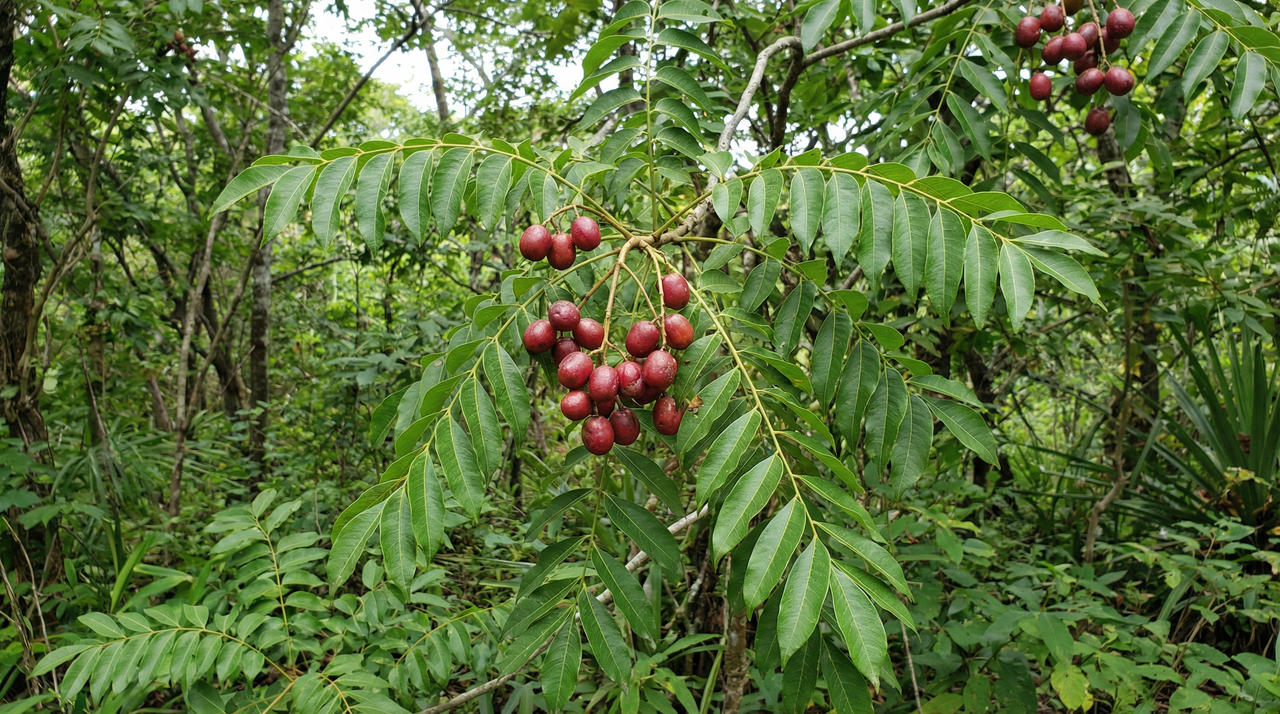
Most fruits have one moment of perfection. Jocote has two, and they taste almost nothing like each other. I first encountered this in a market stall in Oaxaca, where a woman was selling the same tree's fruit in two separate piles: rock-hard green ones dusted with chili salt, and soft, almost translucent purple ones in a small heap that smelled faintly of pineapple and plum. I thought they were different species, but they weren't; same tree, same branch, just weeks apart, and the gap between them, sour-crisp and bracing versus sweet-juicy and warm, is so wide that entire culinary traditions have formed around each stage independently.
That's the thing about jocote (Spondias purpurea) that catches most growers off guard. You're not just managing a fruit tree; you're managing a fruit with two distinct identities, each with its own harvest window, its own culinary logic, and its own devoted fans. In Central America and Mexico, people don't wait for ripeness the way we're conditioned to. They pick green on purpose. And the ripe fruit, when it finally arrives, carries that short-season urgency that makes people genuinely emotional about it. I've heard Salvadorans talk about jocote the way Italians talk about a grandmother's tomato sauce. That kind of attachment doesn't happen by accident.
Origin and History of Jocote (Spondias purpurea)
Botanical Background and Native Range
Jocote, known scientifically as Spondias purpurea, is native to a sweeping arc of the Americas, from southern Mexico through every country in Central America and down into northern South America, including Colombia, Venezuela, Peru, and Brazil.[1][2] That's a big footprint, and it speaks to a plant that evolved across a genuinely diverse range of tropical and subtropical climates. Classified as Least Concern on the IUCN Red List, it's holding its own in the wild, which is more than can be said for some of its relatives.[1] Umbu (Spondias tuberosa), native exclusively to the semi-arid Caatinga of northeastern Brazil, carries a Vulnerable listing due to habitat loss and overharvesting.[3] June plum (Spondias dulcis), by contrast, hails from the opposite side of the world entirely, native to Melanesia and Polynesia.[4] Together, these three cousins show just how widely the Spondias genus has managed to find ecological footholds, from Pacific archipelagos to thorn-scrub deserts to humid tropical forests. Jocote sits squarely in that last category, a polycarpic perennial that, under good conditions, will fruit repeatedly for 20 to 50 years.[5][6] Plant one well, and you're investing in something that can outlast a mortgage.
Visual Characteristics of Jocote Trees and Fruit
After growing several Spondias species in Central Florida, I've come to appreciate how distinctive the jocote tree looks even before it fruits. It's a small to medium-sized deciduous tree, typically reaching 6 to 20 meters, with a spreading, rounded crown and low branching that throws wide lateral limbs at loose angles.[5][7] I learned the hard way to account for that canopy spread early in design; in an early food forest project, I underestimated it badly and ended up with shade competition I hadn't planned for. The growth rate is moderate to fast, up to 2 to 3 feet per year, so it fills its space quickly.[8]
The leaves are pinnately compound with 7 to 11 elliptic leaflets, dark green above and lighter below, with new growth that often flushes a warm reddish color.[9][10] Flowers are small and whitish to pale yellow, appearing in large terminal panicles during the dry season, typically February through April in subtropical settings.[9][11] The fruit is where the visual drama happens: oval drupes, 2 to 4 centimeters long, ripening from green through orange to deep red or purplish-red, with juicy yellow-orange flesh wrapped around a single large seed.[12][13] Compared to June plum's larger golden-yellow fruits, jocote's vivid reds and purples have a jewel-like quality on the branch that makes it genuinely ornamental, not just productive.[14] That color progression also serves an ecological function, attracting the frugivores that disperse the seeds.[15]
Traditional and Cultural Uses Across the Americas
The relationship between people and jocote goes back a long time. Among Maya and Nahua communities in Mexico, Guatemala, and throughout Central America, the fruit has long been eaten fresh and fermented into beverages like atoles for digestive support, while the bark, roots, and leaves found their way into treatments for diarrhea, dysentery, fever, wounds, and respiratory problems.[16][17] What strikes me reading through the ethnobotanical literature is how consistent the digestive and wound-healing applications are across completely different cultures and ecosystems. That kind of cross-cultural convergence usually tells you something real about a plant's pharmacological potential.
Colonial Spanish records from the 16th through 18th centuries document the fruit's use as a laxative and wound treatment, confirming this wasn't a post-contact discovery but a continuation of existing indigenous knowledge.[18] In the Caribbean, bark decoctions became staples of folk medicine for hypertension, skin conditions, and inflammation, while in Honduras, root preparations were used specifically for respiratory ailments.[19][20] Today, jocote has spread well beyond its original range into India, West and East Africa, and across the Pacific through trade and agricultural movement, carrying those culinary traditions with it.[2] In Chiapas, Yucatán, and Oaxaca, it remains woven into local food identity and seasonal festivals.[21]
Across the genus, these deep community ties show up differently by region. June plum holds ceremonial significance in Polynesia, symbolizing abundance.[22] Umbu is central to festivals and rural identity in Brazil's Caatinga, though its Vulnerable conservation status is a serious warning about what happens when cultural use outpaces ecological stewardship.[23][24] That contrast matters to me as a permaculture practitioner; jocote's Least Concern status is good news, but it's no reason to be careless about how we source and grow it.
Fun Facts About Jocote and Its Relatives
A few things about jocote that tend to surprise people. It goes by a lot of names, red mombin and Spanish plum among the most common in English-speaking markets, and the regional naming variation across Central America and the Caribbean reflects just how locally embedded this fruit is.[2] The fruit is also non-climacteric, meaning it won't continue ripening once picked, so what you harvest is what you get.[25] That's a detail that matters a lot at harvest time, and I'll leave the full implications of it for the harvesting section.
On the relative side, umbu's adaptation to Brazil's brutal Caatinga deserves a mention: it develops prominent tuberous roots that store water and nutrients, a completely different survival strategy from jocote's deciduous drought tolerance.[26] Archaeological evidence puts human use of umbu back centuries, including in 17th and 18th century Quilombo dos Palmares deposits.[27] These are old, old relationships between people and plants, which is part of what makes the Spondias genus so compelling to grow.
Jocote Varieties and Where to Buy Them
Botanical Varieties, Named Selections, and Regional Landraces of Jocote
Botanists recognize two formal varieties of Spondias purpurea: var. purpurea, which produces small red to purple fruits, and var. lutea, with yellow fruits.[9][28] That tidy split tells you something about fruit color and a bit about flavor -- red-fruited types develop pronounced sweetness at full ripeness while yellow-fruited selections tend to hold higher acidity throughout[29] -- but it doesn't begin to capture what you'll actually encounter in cultivation. Most jocote is traded and grown as regional landraces, shaped by generations of informal selection across Central and South America, and the genetic diversity is remarkable: fruit color, size, sweetness, and acid balance vary considerably from one locality to the next.[30] I label my grafted plants carefully for exactly this reason. Seedlings from the same harvest can produce fruit that's noticeably different in both color and sweetness, which is genuinely fascinating but also frustrating if you're trying to replicate a specific flavor.
Typical fruit runs 1-2 inches (2.5-5 cm) as an oval drupe, though standout selections like 'Gulupa' can reach up to 8 cm.[31] The USDA germplasm collection captures this range with accessions like PI 165581 (red-fruited, from Mexico) and PI 41678 (yellow, from Guatemala).[32] Beyond the germplasm bank, named selections you might actually encounter include 'Olo' (a large-fruited Honduran type), 'Mapote' (a Mexican landrace), 'Gulupa' (a sweeter Central American selection), and 'Don Collins,' a Florida-selected clone that's shown solid performance in subtropical conditions and is one I've had good results with in zone 9B.[32][33] This informal-selection pattern isn't unique to jocote; Spondias dulcis (june plum) follows the same path with a longer roster of named types -- 'Ceylon,' 'Golden Apple,' 'Myers,' and others -- prized for juicy flesh with pineapple-like notes,[34] while umbu selections in Brazil focus on fruit size and drought tolerance rather than flavor refinement.[35] The absence of a tidy international cultivar list isn't a shortcoming; it's a reflection of how deeply embedded these fruits are in local food culture. That diversity is also worth preserving, since regional landraces carry adapted genetics that no seed bank fully replaces.
Sourcing Jocote Trees and Related Spondias Species in the US
Jocote is a specialty item in US trade, full stop. You won't find it at a big-box garden center. What you will find, if you look in the right places, are tropical fruit nurseries like Miami Fruit, Logee's Greenhouses, Rare Fruit Trees, and Florida Hill Nursery carrying stock when it's available.[36][37][38] Always call ahead or check current inventory before ordering; tropical fruit stock rotates seasonally and a tree listed online one month may be gone the next.
When you do find stock, buy grafted. I learned this the hard way: the first time I grew jocote from seed I waited four years only to harvest fruit that was far more acidic than the parent tree. Seed-grown trees take longer to bear and won't reliably reproduce the parent's traits,[39] so paying the premium for grafted stock is worth it every time. Climate-wise, jocote is viable in southern Florida (zones 9b-11) with microclimate selection, and experimental in zone 9b-10a areas of southern Texas.[7][40] If you're tempted to source trees internationally, know that importation of Spondias purpurea into the US is permitted but strictly regulated by USDA APHIS;[41] buying from an established domestic nursery sidesteps that paperwork entirely and generally gives you stock that's already acclimated to US conditions. For related species, Top Tropicals, One Green World, and Everglades Farm carry june plum and occasionally umbu, and seeds of both can be found through Trade Winds Fruit or Sheffield's Seed Company for roughly $5-15 a packet[42][43][44] -- though the same grafts-preferred logic applies across the genus.
Jocote Propagation and Planting Guide
If you want to grow jocote from seed, the first thing to understand is that these seeds will not forgive you for setting them aside. Jocote seeds are recalcitrant, meaning they cannot be dried or frozen like typical vegetable seeds without destroying viability. Fresh seeds straight from the fruit show 70-90% germination potential, but that number collapses fast if moisture content drops below roughly 30-50% or temperatures fall outside the 10-25°C range.[45][46][47] I learned this the hard way with a related Spondias species: left a handful of seeds on a paper towel in my greenhouse for two days during a particularly dry stretch, and not a single one came up, so now I plant immediately after cleaning the pulp off, and I don't look back.
Propagation Methods for Jocote
If you're planting fresh seed, aim for 25-30°C soil temperature and expect sprouts in 10-20 days under good conditions.[48][49] Seeds planted the day they're harvested usually don't need any pretreatment. If you're working with seeds that have been sitting even briefly, mechanical scarification or a 20-30 minute sulfuric acid soak can break the hard coat and improve germination rates.[48][50] Even under optimal tropical conditions, seed germination success ranges from 50-90%,[51][39] so the math still works in your favor if you're planting a handful of seeds for rootstock or genetic diversity purposes. What seed propagation doesn't give you is consistency. Offspring are genetically variable, which is fine if you want rootstock or you're breeding for interesting new selections, but it's not how you reliably reproduce the sweet red variety you loved at a market.
For true-to-type jocote trees, grafting is the way to go. Cleft, veneer, or whip-and-tongue grafts onto Spondias mombin rootstock show 60-90% success when done during the rainy season at 20-30°C with high ambient humidity.[7][52] I prefer S. mombin as a rootstock specifically because it handles marginal, drier soils better than some alternatives, which gives me more flexibility on site. Air layering is a solid middle-ground option for home gardeners, with 60-80% success in 2-3 months and no grafting skills required.[53][54] Semi-hardwood cuttings treated with IBA in a perlite-sand medium under 80-90% humidity root at only 30-50% after 4-8 weeks,[53] so I wouldn't bother with cuttings unless I had material to spare. Whatever method you choose, use sterile media, keep young plants shaded, and treat proactively for damping-off, which can wipe out a whole nursery flat faster than almost any other problem.[39][55] Tissue culture exists for Spondias species but remains in the research phase and isn't a realistic option for most growers yet. For long-term conservation of recalcitrant seeds, embryo cryopreservation at -196°C is the standard,[56][57] but that's a genebank conversation, not a backyard one.
Soil, Site Selection, and Sun Requirements
Jocote is genuinely adaptable to poor, rocky, and thin soils in ways that surprise people, but it has one absolute non-negotiable: drainage. The tree's native dry-forest habitat involves seasonal rainfall of 500-2000 mm followed by dry periods,[58][10] and roots sitting in saturated soil above 80% moisture will rot.[58] A well-drained loamy or sandy loam is ideal. pH can range 5.5-7.5, with 6.0-7.0 being the sweet spot.[59][60] Push below 5.0 and you risk aluminum and manganese toxicity; go above 7.5 and iron and zinc become unavailable, causing the distinctive interveinal yellowing I've seen on over-limed trees. A simple sulfur amendment and a season of patience usually pulls them back, but it's much easier to get the pH right before planting. Get a soil test. It's worth the thirty dollars.
Full sun is non-negotiable for good fruit production, at least 6-8 hours of direct light daily.[61][62] I've seen jocote tolerate partial shade in the hottest part of the day without visible stress, but yields drop noticeably and the trees become lanky. For container growing, use at minimum a 15-20 gallon pot with a mix of roughly 40-50% potting soil, 30-40% compost or organic matter, and 20-30% perlite or coarse sand.[63][64] Roots need at least 1-1.5 m of soil depth to anchor properly. Compare that with umbu (S. tuberosa), which manages on shallow, nutrient-poor Caatinga soils, or June plum (S. dulcis), which actually wants deeper, more fertile profiles of 1.5-2 m,[65][66] and jocote lands somewhere comfortably in the middle.
Spacing, Planting Technique, and Time to First Fruit
Mature jocote trees can reach 6-20 m tall with a canopy spread of 8-12 m,[67][68] which should shape your spacing decisions from day one. Commercial orchards typically run 6-8 m within rows and 8-10 m between rows, landing at 150-250 trees per hectare, though intensive management can push that toward 300 and extensive planting can drop it to 80.[67][68] In humid climates, wider spacing is worth it: better airflow reduces anthracnose pressure and improves fruit quality in ways that tight plantings can't compensate for with sprays alone.[69][70] For my own small-garden trees I keep them pruned to 5-6 m after each harvest season, which lets me plant at 6-7 m spacing while still getting good airflow and being able to reach the fruit without a ladder.
The question of how long until you're actually eating fruit brings us back to the propagation decision. Seed-grown jocote trees spend their first year or two focused almost entirely on root and vegetative establishment, and most won't flower until years 3-5.[54][51][39] Grafted trees can bear in 2-4 years under good conditions, and I've seen mine start setting fruit by year three with decent growth.[54][51] The canopy fill difference between grafted and seed-grown trees is visible by year two, and so is the fruiting gap. Ultimately, growing jocote from seed is a choice about patience as much as anything else, and grafting is a choice about certainty. Most growers who want fruit sooner rather than later already know which way that decision falls.
Jocote Care Guide: Water, Fertility, Climate, and Maintenance
Caring for jocote well means understanding that you're working with a tree shaped by tropical wet-dry seasonality, not the even, year-round moisture of a temperate climate. Get that rhythm right, and it's a remarkably forgiving tree. Fight it, and you'll spend a lot of time puzzling over leaf drop and poor fruit set.
Water Needs for Jocote Trees
Young jocote trees need consistent moisture during their first two to three years, roughly one to two inches of water per week, applied whenever the top inch of soil dries out, which in warm weather means checking every two to three days.[7][71] I learned this the hard way my first summer growing one: the tree dropped nearly all its leaves within two weeks of me deciding to water "by the look of things" rather than actually checking the soil. Young jocote will tell you it's thirsty dramatically and suddenly. Now I check two to three inches down and water when it's dry there, full stop.
Mature trees are a different story. Once established, they handle dry spells reasonably well, though deep, infrequent irrigation every one to two weeks during dry periods keeps them productive, especially through flowering and fruit development.[7][72] In zones 9 through 11, natural rainfall of 1,000 to 2,000 mm often carries a tree through the season, but anything below that lower threshold calls for supplemental irrigation.[54] For comparison, the related umbu (Spondias tuberosa) survives on 300 to 800 mm annually thanks to a tuberous root system that stores water through three to four months of drought[73] -- jocote hasn't developed those extremes, so don't push it quite that far.
Drainage is non-negotiable. Jocote prefers well-drained sandy or loamy soils, and waterlogging even briefly can invite root rot and fungal problems that are much harder to manage than a dry spell.[7][72] A two-to-four-inch layer of organic mulch pulled back from the trunk helps retain moisture, moderate soil temperature, and reduce how often you need to irrigate.[7][70] Underwatering shows as wilting, brown leaf margins, premature defoliation, and fruit drop[74]; overwatering shows as soft, mushy root tissue and fungal lesions near the soil line.[7][70] Both are avoidable if you actually check the soil rather than guessing.
Fertility and Feeding Requirements
Jocote is a moderate to heavy feeder among tropical fruit trees, and it rewards consistent nutrition with noticeably better yields.[7] A balanced NPK fertilizer in the range of 8-3-9 or 10-10-10 covers the main bases: nitrogen for vegetative growth, phosphorus for root development and flowering, potassium for fruit quality and disease resistance.[7][75] Young trees (one to three years) need about half a pound to two pounds of fertilizer annually, split into two to three applications from spring through summer; mature trees scale up to two to five pounds per year.[7][76] Always water after applying to prevent root burn, and hold off on late-season applications in cooler subtropical areas where pushing growth before a cold snap can cause real damage.[7][77]
Soil pH between 5.5 and 6.5 is the sweet spot for nutrient uptake, with the wider tolerance range extending to 7.5.[7] After years of working with tropical fruit plantings, I always start with a soil test rather than guessing from visual symptoms, because deficiency signs overlap in frustrating ways. Uniform yellowing on older leaves points to nitrogen; purplish discoloration and poor root development suggests phosphorus is short; marginal leaf necrosis and declining fruit quality usually means potassium. Interveinal chlorosis on young leaves is typically iron, and small, puckered, mottled leaves point to zinc.[78][79] Annual soil testing combined with occasional tissue testing gives you a cleaner diagnostic picture than visual symptoms alone.[7] On sandy soils especially, micronutrient sprays using chelated iron, zinc, and manganese have been the fix I've reached for when interveinal chlorosis kept appearing despite reasonable soil applications.[7][80] On the flip side, excess nitrogen produces lush, leafy growth with poor fruit set and sometimes leaf burn at the margins.[76][79] More fertilizer is not better; more accurate fertilizer is.
Heat and Frost Tolerance
Jocote is genuinely heat-adapted. It handles AHS heat zones 9 through 12, meaning summers with 90 to 120-plus days above 86°F are well within its comfort zone.[81] Its physiological toolkit includes deep root systems that access groundwater, slightly waxy and pubescent leaf surfaces that reduce water loss, and efficient stomatal control under heat stress.[82] That said, heat combined with drought will push it to its limits: the first signs I notice are leaf scorch appearing on south-facing leaves before spreading, followed by wilting shoots and premature fruit drop.[83] Catching those early scorch patches matters.
The practical mitigations are simple. Keep two to four inches of organic mulch around the base (replenished annually, kept away from the trunk)[7][84], deep-water every one to two weeks during dry hot periods[7], and consider afternoon shade or shade cloth during exceptional heat waves.[7] Mulch in particular has been a game-changer in my hotter subtropical plantings, doing more work per dollar than almost any other single input.
Frost Protection and Cold Sensitivity
This is where jocote's tropical origins become a hard boundary. The tree is reliably hardy in USDA zones 10 through 11 and survives in protected zone 9b microclimates, but sustained temperatures below 30°F (-1°C) cause serious damage, and anything around 28°F (-2°C) even briefly will hurt it.[39][85] Growth slows noticeably below 50°F (10°C).[39] Like mango or avocado in a zone 9b winter, the flower buds and open flowers are the most vulnerable tissues, damaged at 28 to 32°F, which translates directly into reduced fruit set that season.[39] Young trees have essentially no cold buffer; mature, established specimens can recover from a light frost event, but repeated cold exposure will eventually weaken even a big tree.[85]
Cold damage looks like blackened stem tips, wilting and browning of leaves, bark cracking, and in severe cases widespread dieback.[51][86] For growers in marginal zones, the strategy is layered: four to six inches of mulch over the root zone, frost cloth over the canopy, and trunk wrapping during freezes. Container-grown specimens should come indoors or into a greenhouse whenever temperatures are forecast to drop below 50°F.[87][88] If you're in a zone with regular freezes, this is simply not the right tree for an unprotected spot.
Pruning, Maintenance, and Seasonal Rhythm
Jocote is deciduous to semi-evergreen depending on your climate, with more pronounced leaf drop in subtropical winters.[5] In its native Mesoamerican range it flowers through the dry season (January through April) and fruits into the early rains, peaking roughly March to June.[89] That seasonal rhythm shapes when you prune: dry season after leaf drop, or right after harvest, not in the flush of spring growth.
For young trees, the goal in years one through three is to establish three to five strong scaffold branches in an open-center or modified vase shape, removing competing leaders as they appear.[60][87] On mature trees, I've learned to prune lightly after fruiting rather than going heavy in spring. A hard spring cut delays the next season's fruiting noticeably -- the tree puts its energy into regrowing structure instead of setting fruit. Post-harvest cleanup (removing dead wood, crossing branches, water sprouts, and suckers) combined with thinning the canopy by about 20 to 30% for light penetration and airflow is the right rhythm.[60][87] Keeping the tree to four to six meters also makes harvest practical without ladders in a home garden setting. Work with the tree's phenology rather than imposing an arbitrary schedule, and it will stay productive and manageable for decades.
Harvesting Jocote (Spondias purpurea)
Timing your harvest is everything with jocote. Pick too early and you're dealing with astringent, rock-hard fruit that'll pucker your mouth; wait for the right moment and you get something genuinely wonderful. I've learned to check my trees daily once color break begins, because after a good summer rain, these fruits can go from mostly green to a deep red or purplish-red almost overnight.
When to Harvest: Maturity Indicators and Seasonal Timing
The cues you're looking for are a full color transition to red or purplish-red, a slight give when you press gently, easy separation from the stem without tugging, and a fruit that's reached roughly 2-4 cm in diameter.[90][91][92] Brix levels rise from around 8-10° at physiological maturity to 12-15° or higher at full ripeness, and that swing tracks almost perfectly with the color and firmness changes you can observe by eye and by hand.[90] In subtropical settings like Florida, jocote season typically runs May through October, with peak production landing in July and August.[39] From flower to ripe fruit is roughly 60-90 days, noticeably faster than June plum's 90-120 day cycle, which is handy context if you're growing both in the same food forest.[93][60][94] Peak productivity typically holds through the first 10-15 bearing years, so plan to enjoy heavy harvests while your trees are young and vigorous.[95]
How to Harvest and Handle Jocote Fruit
I always pick by hand and get the fruit cooled within an hour of harvest. Skip that step and you'll notice the aroma fading and bruising showing up within a day, especially in a humid subtropical summer. Prompt cooling to 10-13°C, stored in ventilated containers at 85-90% relative humidity, will keep ripe fruit in good shape for up to two weeks.[39][96][97] Jocote is climacteric, meaning it will continue ripening off the tree, so picking at 80-90% color with some firmness still intact gives you a bit of flexibility. Umbu follows nearly the same post-harvest protocol, which tells you this gentle, cool-and-ventilate approach is just standard practice for the genus.[96]
Flavor, Texture, Yield, and Culinary Applications by Ripeness Stage
The flavor transformation here is dramatic. Brix can climb from below 5° on a hard green fruit to above 18° at peak ripeness, while titratable acidity drops from over 1.5% down to 0.4-1.2%.[98][99] Fruits allowed to ripen fully on the tree develop noticeably richer citrus-pineapple-mango esters than those picked early and left to ripen on a counter indoors, a difference I find unmistakable after tasting both side by side repeatedly.[100][101] Texturally, the shift is just as pronounced: hard and astringent when green, soft, juicy, and only mildly fibrous around the central stone when ripe.[13] That distinction translates directly to the kitchen; ripe fruit is for fresh eating, juicing, and sweet preparations, while firm unripe fruit needs to be cooked or pickled to tame its astringency.[9] One tree, two completely different ingredients depending solely on when you pick it. That kind of built-in versatility is exactly the efficiency a permaculture design rewards you for noticing.
Jocote Preparation, Uses, and Recipes
Culinary Uses and Flavor of Jocote Fruit
Ripe jocote is one of those fruits that stops you mid-bite. The flavor hits as sweet-tart plum up front, then opens into pineapple and a bright citrus finish, with the flesh going from firm and fibrous when green to genuinely juicy and soft at peak ripeness.[39][102] I'd describe the aroma to someone who's never smelled one as a slightly underripe plum crossed with fresh pineapple juice. The closest texture comparison for unripe fruit is green mango: dense, a little squeaky, extremely tart, and not something most people want to eat straight off the tree.[39] That green fruit is exactly what you want for pickles and salsas, though, where high acidity is an asset rather than a problem.
Across Central America and Mexico, ripe jocote is eaten fresh with a little salt, lime juice, and dried chili, and it slides beautifully into juices, jams, preserves, and fruit desserts.[15][103][21] Dried jocote concentrates the sugars and acids down into something chewy and intensely flavored; pickled versions hold onto that sour tang with fermented depth.[104] The fruit carries solid vitamin C, potassium, magnesium, and fiber, plus phenolics and flavonoids with preliminary anti-inflammatory activity in lab and animal studies, though clinical data in humans is still thin.[105][106]
Here's the safety point I never skip: the seeds are toxic if ingested.[15][107] I learned early on to pit every single fruit before chopping for salsa or jam, and I mean every single one. Even fragments left in the mix can add bitterness at minimum and pose a real health risk at worst. Relatives like June plum and umbu share the same seed toxicity concern across the genus, and Spondias sap or leaves can trigger contact dermatitis in sensitive individuals.[108][109] I've seen that sap sensitivity firsthand in friends who handle mango trees without gloves, and I give the same warning for jocote.
Traditional Medicinal Preparations
Jocote leaves and bark have a long documented history as digestive medicine across Mesoamerica. The traditional preparation I've seen recorded across multiple ethnobotanical sources involves simmering 10 to 20 grams of dried leaves or bark in one liter of water, then drinking one to two cups per day for short-term gastrointestinal complaints, typically for no more than three to five days.[10][110] Leaf infusions and decoctions are used specifically for diarrhea and inflammation, though the leaves themselves aren't a food source.[25][111] Exact formulations vary by region and community, and this is traditional practice with limited clinical validation, so I always recommend talking to a healthcare provider before using any plant-based preparation medicinally.
Non-Food Uses of Jocote
The tree's usefulness extends well beyond the kitchen. Fruit, leaves, and bark all appear in traditional medicine for wounds, urinary complaints, and as an anthelmintic, with the ripe fruit used in remedies for anemia and as a gentle laxative.[17][112] The timber itself is durable enough for furniture, tool handles, construction, and firewood, with June plum and umbu filling similar roles in their respective regions.[113][114] Pruned jocote branches have real heft to them; I've repurposed sections as garden tool handles and they hold up surprisingly well.
The fruit's purple pigment yields a natural dye used by indigenous communities to color fabrics, and bark fibers have traditionally been twisted into cordage and used in crafts.[115][113] I've experimented with the dye on undyed cotton using overripe fruit and a simple alum mordant; the result is a soft rosy-mauve rather than a deep purple, but it's a genuinely lovely color and a satisfying way to use fruit that's past its fresh-eating prime. For a tree that's often planted purely for the fruit, the full picture of what jocote can contribute to a household or smallholding is quietly remarkable.
Jocote Health and Nutritional Benefits
What I find so compelling about jocote from a plant-health standpoint isn't one dramatic compound but rather the sheer breadth of its phytochemical toolkit. The more I've read the research on Spondias purpurea and its relatives, the more I appreciate that this fruit has been quietly earning its traditional medicinal reputation across Central America for centuries.
Jocote Phytochemical Profile and Antioxidant Activity
Phytochemical analyses across the Spondias genus have identified a wide array of bioactive compounds: alkaloids, flavonoids including quercetin, rutin, and kaempferol, tannins, terpenoids, phenolic acids like gallic, ellagic, and chlorogenic acid, saponins, triterpenoids such as β-amyrin and lupeol, β-sitosterol, and vitamin C.[116][117][118] Concentrations shift depending on which plant part you're analyzing, what solvent was used for extraction, the season, and where the tree was grown.[119] I've noticed this in my own garden too: fruits harvested after consistent summer rains have noticeably deeper color and more complex flavor, which aligns with research showing jocote phenolic levels peak during rainy seasons.[120]
These compounds aren't there for our benefit, strictly speaking. They serve the plant: tannins bind proteins to deter herbivores, flavonoids inhibit insect feeding, carotenoids attract seed dispersers, and phenolics help the tree tolerate UV stress.[121][122] That those same survival compounds translate into health-relevant activity for us is one of those plant-world bonuses I never get tired of. Genus-wide data supports the pattern: June plum leaves carry 100-200 mg GAE/g dry weight phenolics, and umbu fruits have been measured at up to 81 mg/100g ascorbic acid in some reports.[123][124]
Medicinal Research on Jocote
The antioxidant activity is where most of the research anchors. Extracts tested via DPPH, FRAP, and ABTS assays show IC50 values comparable to ascorbic acid, with mechanisms including upregulation of superoxide dismutase, catalase, and HO-1 through the Nrf2 pathway.[116][125] That antioxidant foundation underpins most of the downstream effects you'll see in the literature. Anti-inflammatory studies show inhibition of cytokine production, paw edema reduction, and interference with MAPK and NF-κB signaling; preclinical analgesic tests found activity comparable to aspirin.[126][116]
Antimicrobial work shows extracts active against both gram-positive bacteria like Staphylococcus aureus and gram-negative organisms like E. coli, plus the fungus Candida albicans, with MIC values in the 0.5-2 mg/mL range via cell membrane disruption and quorum sensing inhibition.[127][115] For blood sugar support, alpha-glucosidase and alpha-amylase inhibition (IC50 50-100 μg/mL) and blood glucose reductions up to 30-50% have been demonstrated in diabetic rat models.[126][128] Hepatoprotective studies show reduced ALT/AST and prevention of lipid peroxidation against chemical toxicity, while cytotoxicity research has found apoptosis induction in MCF-7 and HeLa cancer cell lines with IC50 values as low as 20-50 µg/mL.[129][130] Preliminary anxiolytic effects, gastroprotective activity, ACE inhibition for cardiovascular support, and acetylcholinesterase inhibition round out a genuinely striking preclinical picture.[115][131]
The vast majority of this research is in vitro or animal-based, with very few human clinical trials to back it up.[116][132] My own approach: I focus on jocote as a genuinely delicious, nutritious food first, and I always recommend anyone interested in concentrated extracts or medicinal preparations talk to a healthcare provider before going that route.
Jocote Nutrition Facts
Per 100 grams of raw jocote fruit, you're looking at about 63 kcal, 15.75g carbohydrates, 2.4g fiber, 0.64g protein, and roughly 83.5g water.[133] Vitamin C lands between 20.8 and 36.4 mg per 100g, with unripe fruit running higher; potassium comes in at 172-189 mg, and you also get calcium, iron, magnesium, and trace zinc.[133][134] On the phytochemical side, total phenolics in fresh fruit can reach 20-50 mg GAE/g (concentrated in the peel), with DPPH scavenging up to 80-90% from compounds like gallic acid, ellagic acid, and catechins.[21] That phenolic density puts jocote in the same neighborhood as guava for antioxidant punch per bite, at a fraction of the calories.
Processing matters here. Cooking or drying degrades vitamin C and some phenolics, while juicing improves bioaccessibility but strips out fiber; allowing fruit to fully ripen on the tree reduces tannins noticeably, which is something I've seen play out in my own harvests.[135] The same pattern holds genus-wide: June plum clocks in at 60-73 kcal/100g with 20-50 mg vitamin C, while umbu can reach up to 300 mg vitamin C per 100g in some measurements, reinforcing the Spondias pattern of hydrating, antioxidant-rich tropical fruits.[136][137]
Jocote Safety and Precautions
Ripe jocote pulp is generally low-risk. Animal studies on related species show LD50 values above 2000 mg/kg, no severe poisoning cases from moderate consumption are documented, and traditional Mayan use of the fruit reports no major issues when eaten appropriately.[9][138] The key word is ripe: unripe fruit is high in tannins and phenolics that can cause real gastrointestinal irritation and astringency, so giving fruit time to fully develop on the tree isn't just about flavor.[139]
The seeds are a different matter. They contain cyanogenic glycosides, including taxiphyllin, which can release hydrogen cyanide; fermentation or roasting is required before any intentional seed consumption, and for most people the practical answer is simply to avoid eating them.[140][141] Because jocote belongs to the Anacardiaceae family alongside mango, cashew, and poison ivy, the sap, leaves, and bark can cause contact dermatitis in sensitive individuals.[141] In my years working with Anacardiaceae plants, I've found that wearing gloves when pruning or working with fresh sap is the simplest way to avoid the skin irritation that catches some people off guard.
For medicinal preparations specifically, pregnant women should avoid bark and leaf extracts due to potential oxytocic effects, and anyone on diabetes or blood pressure medications should use caution given the documented hypoglycemic and hypotensive properties of leaf and bark extracts.[142][143] No standardized medicinal dosages exist for any part of the plant, and saponins in large doses carry gastrointestinal and hemolytic risk.[142] Eating ripe fruit is one thing; preparing concentrated extracts is another, and that distinction matters.
Jocote Pests and Diseases
Growing jocote in a humid tropical or subtropical setting means accepting a simple reality: the same warm, wet conditions that coax those glossy purple fruits to ripeness also create ideal conditions for fungi, flies, and borers. In my experience designing tropical food forests, this isn't a reason to avoid the tree, but it does mean going in with your eyes open. Unmanaged orchards in humid zones can lose 20 to 50 percent of their yield or more to disease and pest pressure combined.[144][145] Thoughtful siting, consistent sanitation, and a layered IPM approach can keep losses manageable without turning your food forest into a spray schedule.
Major Diseases of Jocote and Related Species
Anthracnose caused by Colletotrichum species is the disease you'll fight hardest. It shows up as dark, sunken lesions on leaves, flowers, and developing fruits, and in a severe humid-season outbreak it can cause 50 to 70 percent yield loss through rot and premature drop.[146][147][148] I've seen that when jocote is spaced at least 6 to 7 meters from neighbors and pruned for an open center, anthracnose lesions tend to stay confined to a few leaves rather than running across the canopy. That difference becomes very visible within a single rainy season.
Leaf spot pathogens including Cercospora, Alternaria, and Phyllosticta follow a similar seasonal rhythm, producing circular brown spots with yellow halos that rob the tree of photosynthetic area and can trigger premature defoliation during prolonged wet spells.[149][150] Powdery mildew (Oidium spp.) is a different kind of problem: it thrives in poor airflow rather than constant wetness, coating leaves and young shoots in a white film that weakens new growth and reduces fruit quality.[146][148] Sulfur sprays knock it back effectively when caught early.
The disease I worry about most at planting time is Phytophthora root and collar rot. Species including P. cinnamomi and P. palmivora cause wilting, decline, gummosis, and soft water-soaked decay of both roots and fruit, and they explode in waterlogged soil.[70][151] This is exactly why siting on elevated, well-drained ground with a soil pH of 5.5 to 7.5 isn't optional, and why drip irrigation beats overhead watering every time. Bacterial wilt caused by Ralstonia solanacearum and fungal dieback linked to Fusarium or Lasiodiplodia are real but secondary concerns, and root-knot nematodes (Meloidogyne spp.) can quietly stress trees without obvious above-ground symptoms.[146][152]
The cultural backbone for all of these threats is the same: annual post-harvest pruning to open the canopy and remove diseased wood, strict removal of fallen fruit and infected debris, and drip irrigation to keep foliage dry.[7][153] Where fungicide is warranted, copper-based products address both bacterial and fungal issues; mancozeb and sulfur round out the toolkit for high-risk humid periods, applied preventively on 7 to 14 day intervals.[154][155] On cultivar resistance: while breeding programs are identifying promising tolerant seedlings, and selections like 'Nana' and certain Brazilian ecotypes show moderate anthracnose tolerance, no widely available commercial variety offers high resistance.[152][156] I always advise clients to source from reputable regional nurseries and then layer IPM on top, rather than expecting any single variety to solve the disease puzzle. Always consult your local extension service, because disease profiles shift significantly by geography.[39]
Common Pests and Integrated Management
Fruit flies are the headline pest, and the first time I grew jocote I found that out the hard way. Anastrepha species (including A. obliqua, A. ludens, and A. sororcula) along with Ceratitis capitata can infest ripening and overripe fruit at rates exceeding 75 percent, causing premature drop, direct larval damage, and convenient entry points for the fungal rots discussed above.[157][158] I lost nearly an entire crop before I started using baited traps and picking up dropped fruit every week. That simple sanitation step, combined with neem at petal fall, has since kept losses under 15 percent in client plantings. Fruit weevils (Conotrachelus spp. and related Curculionidae) cause equally devastating internal damage and pre-harvest drop that can render whole crops unmarketable.[159]
Stem and branch borers from the Cerambycidae family tunnel into woody tissue, girdling branches and opening secondary infection sites for the fungi already in residence.[160] Young trees are especially exposed here; a borer working through a two-year-old trunk can set back establishment by a full season. Defoliating caterpillars (Noctuidae, Spodoptera spp.) and leaf miners (Liriomyza spp.) reduce photosynthetic capacity and pile additional stress onto trees already coping with fungal pressure.[158] Scale insects, mealybugs, and aphids round out the sap-feeding guild, producing honeydew that fosters sooty mold across up to 70 percent of the canopy in heavy infestations.[70]
Jocote leaves are noticeably resinous and astringent when crushed, and that tannin and phenolic load does deter some feeding insects.[161][162] It clearly isn't enough when fruit-fly pressure peaks in July and August. Umbu's semi-arid ecotypes carry higher concentrations of these secondary metabolites and face lower fungal and insect pressure by virtue of their native habitat, but humid-climate jocote doesn't inherit that advantage.[163]
The pest complex also shifts by region: Veracruz orchards contend most with Anastrepha, stink bugs, and caterpillars; Florida plantings face Ceratitis, whiteflies, and fruit-rot pathogens; semi-arid Brazil deals with weevils and fruit flies causing 20 to 50 percent losses in unmanaged stands.[158][164] No commercially resistant cultivars exist for any of these pressures, though local selections and wild accessions show partial tolerance in some programs.[165] A solid IPM program combining pruning, weekly fallen-fruit removal, trap monitoring, biological controls like Trichogramma parasitoids and Bacillus thuringiensis, and low-toxicity options like neem and spinosad can cut pesticide use by up to 50 percent while protecting yields.[7][166] I don't recommend calendar-based spraying; instead, yellow sticky traps and threshold monitoring let you treat only when pressure warrants it, which also protects the beneficial insects keeping scale and aphid populations in check.
Permaculture Design with Jocote
Jocote occupies a genuinely useful niche in tropical and subtropical food forests: fast-growing enough to establish a canopy quickly, multipurpose enough to earn its space, and ecologically connected enough to support the broader system rather than just sit there producing fruit. Getting that value, though, starts with an honest reckoning about where it can actually grow.
Climate and Growing Zones for Jocote
Native from southern Mexico through Central America into northern South America and the Caribbean, jocote is a lowland tropical species first and foremost.[9][167] It thrives in tropical savanna, monsoon, and rainforest climates (Köppen Aw, Am, and Af), places where temperatures rarely dip and humidity is a constant companion.[9][10] The sweet spot for growth and reliable fruiting is 20–35 °C (68–95 °F), with nighttime lows staying comfortably above 60 °F.[54]
Frost is the hard boundary. Young foliage takes damage at 32 °F, and prolonged exposure below 28–30 °F can kill a plant outright.[10][54] I've covered a young jocote with a hoop house during a rare 28 °F night in my zone 9b garden; the tree came back from the rootstock the following spring, but that kind of survival is not the same as thriving. For reliable crops without heroics, think USDA zones 10a–11, with some cautious possibilities in 9b only when you have a genuinely warm microclimate, a south-facing wall, or you're prepared to protect every winter.[167][168] In the continental US, that narrows the map to southern Florida, Hawaii, and the Rio Grande Valley.
Rainfall requirements are broad enough to be forgiving: 800–2,500 mm annually works, with optimal fruiting in the 1,200–2,000 mm range.[10] What's genuinely useful for permaculture design is the tree's deciduous habit during dry seasons, a natural adaptation that reduces water demand before rains return.[15] Jocote's strategy is more moderate and much better suited to the subtropical and humid-tropical gardens most of us are working with.[169] Moderate salt tolerance is a quiet bonus that opens up coastal planting options most tropical fruit trees don't have.[10]
Ecosystem Functions and Pollination
Jocote is genuinely a pioneer. In secondary forests and disturbed habitats across its native range, it moves in early, stabilizes soil with an extensive root system, and starts cycling nutrients back through rapid leaf-litter decomposition.[170][171] That pioneer character translates directly into permaculture value: it establishes fast, covers ground quickly, and starts doing ecological work while slower canopy trees are still getting their feet under them. In my own plantings, jocote's first-year growth consistently outpaces young mangos, which means it's shading out weeds and building organic matter on a timeline that actually helps the rest of the system.
Pollination is where jocote demands your attention as a designer. The flowers are small and whitish, produced mainly in the dry season, and they're surprisingly fragrant in the morning hours; I've watched clouds of native bees work them before the heat of the day sets in.[172] Bees, both honeybees and stingless bees, are the primary pollinators, with flies as secondary support.[172] The catch is that many jocote populations show functional self-incompatibility, meaning a lone tree often sets almost no fruit at all.[173] I always plant at least three trees for this reason, and I keep flowering companions nearby to support pollinator traffic. That's not just theory; single trees I've observed in isolation produced sparse, scattered fruit even in otherwise good conditions.
Beyond pollination, jocote contributes to the broader food web. Birds and mammals, including monkeys and coatis in its native range, disperse the seeds, and in a home food forest that wildlife magnetism matters.[174] It's not a nitrogen fixer, so don't expect that function, but it may help cycle potassium and calcium through leaf litter; the evidence there is observational rather than rigorously measured, so I treat it as a plausible benefit rather than a design guarantee.[174][175] One note worth keeping in mind: June plum (S. dulcis), a related Spondias, has become weedy in parts of Florida, Hawaii, and Pacific islands, so if you're gardening near sensitive tropical ecosystems, monitor any Spondias for spread.[176] Jocote itself hasn't earned the same invasive reputation, but neighboring-ecosystem awareness is just good practice.
Forest Layer, Guilds, and Companions
In a multi-strata food forest, jocote occupies the intermediate canopy. It typically grows to 6–15 m with a canopy spread of 4.5–7.5 m, which puts it comfortably in the sub-canopy to intermediate layer, casting dappled rather than dense shade and creating conditions that suit coffee, cacao, and shade-tolerant understory crops below it.[177][178] Its deciduous habit in the dry season actually works in your favor here: the canopy opens up just when you might want more light reaching the understory, then fills back in as rains return.
Because jocote doesn't fix nitrogen, pairing it with nitrogen-fixing companions is the obvious design move. Pigeon pea (Cajanus cajan) works well at the shrub layer, and Inga species are excellent choices if you have the space for a larger leguminous companion.[179] Sweet potato as a ground cover, passionfruit on a trellis at the forest edge, and any flowering plants that actively support pollinators all have roles in a functional jocote guild.[179] One caution I've incorporated from experience: jocote's leaf litter contains mild allelopathic phenolics that can inhibit sensitive understory plants, so I keep delicate herbs at least 2–3 m out from the drip line and stick to more robust companions closer in.[180]
The biomass argument for jocote is real. Mature trees produce 20–50 kg of fruit per year, and beyond that harvest, the rapid spring flush of new growth gives you genuine chop-and-drop material on a schedule that feeds the system throughout the growing season.[39] It also pulls double duty as a windbreak and provides enough ornamental presence that it doesn't look out of place in a home garden setting. Once you have that frost-free site secured and the right companions in place, jocote becomes one of the more reliably productive canopy contributors a subtropical food forest can include.
The Tree That Made Me Rethink What "Ready" Means
I almost harvested my first jocote a week too soon. It looked right, smelled right, and I was impatient. A neighbor who grew up in Guatemala watched me reach for it and just shook her head. She was right. I waited, the fruit dropped into my hand on its own two days later, and I finally understood what all those centuries of careful, attentive cultivation actually produced. Some plants teach patience better than any book can.
Sources 180
- Spondias purpurea ↩
- Spondias purpurea L. ↩
- Spondias tuberosa: IUCN Red List Assessment ↩
- Spondias dulcis ↩
- Spondias purpurea ↩
- Spondias purpurea (Purple Mombin) ↩
- Tropical Fruit Trees: Jocote (Spondias purpurea) ↩
- Spondias purpurea - Missouri Botanical Garden ↩
- Spondias purpurea - Wikipedia ↩
- Useful Tropical Plants - Spondias purpurea ↩
- Flora of North America: Spondias purpurea ↩
- Spondias purpurea - Missouri Botanical Garden ↩
- Spondias purpurea L.: A Review of Its Fruits, Traditional Uses, Phytochemistry, and Pharmacology ↩
- Spondias dulcis - Royal Horticultural Society ↩
- Red Mombin Fruit Description - Useful Tropical Plants ↩
- Ethnobotany of Spondias purpurea in Mexico - Journal of Ethnopharmacology ↩
- Spondias purpurea L. (Anacardiaceae): Botany, Traditional Uses, Phytochemistry, and Biological Activities ↩
- Colonial Records of New World Plants: Spondias Species in Spanish America ↩
- Folk Medicine in the Caribbean: Uses of Red Mombin ↩
- Honduran Ethnobotany: Medicinal Plants of the Mosquitia Region ↩
- Traditional Uses of Jocote in Mexican Cuisine ↩
- Traditional Uses of Spondias dulcis in Polynesian Societies ↩
- Spondias tuberosa Arruda a threatened tree of the Brazilian caatinga: ethnobotany and conservation ↩
- Ethnobotany of Spondias tuberosa Arruda in the Semi-arid Region of Pernambuco State ↩
- Ethnobotany of Spondias species in Mesoamerica ↩
- Spondias tuberosa Arruda (Anacardiaceae): A Review ↩
- Archaeological evidence of Spondias tuberosa in Quilombo dos Palmares ↩
- Fruits of Warm Climates ↩
- Spondias purpurea L. ↩
- Genetic Diversity in Spondias purpurea ↩
- Spondias purpurea ↩
- Spondias purpurea L. - Purple Mombin ↩
- Fruits of Warm Climates ↩
- June Plum (Spondias dulcis) ↩
- Fruit quality and yield performance of umbu (Spondias tuberosa) cultivars in semi-arid conditions ↩
- Miami Fruit - Jocote Trees ↩
- Logee's Greenhouses - Spondias purpurea ↩
- Rare Fruit Trees - Tropical Fruit Plants ↩
- University of Florida IFAS Extension - Jocote ↩
- Growing Tropical Fruits in Texas ↩
- International Movement of Plants and Plant Products: Plants for Planting ↩
- Spondias dulcis - Otaheite Apple ↩
- Spondias tuberosa - Umbu ↩
- Spondias dulcis - Ambarella, Otaheite Apple Seeds ↩
- Seed Storage Behaviour of Spondias purpurea ↩
- Recalcitrant Seeds: Biology and Storage ↩
- Germination and Storage of Spondias dulcis Seeds ↩
- Germination of Tropical Fruits: Spondias Species ↩
- Seed Dormancy and Germination in Spondias tuberosa Arruda ↩
- Germination and Storage of Tropical Tree Seeds ↩
- Propagation and Culture of Jocote (Spondias purpurea) ↩
- Grafting Techniques for Tropical Fruits Including Red Mombin ↩
- Vegetative Propagation of Spondias purpurea ↩
- Propagation of Tropical Fruit Trees Including Spondias Species ↩
- Diseases and Pests of Jocote (Spondias purpurea) ↩
- Tetrazolium Testing for Tree Seeds ↩
- Viability Assessment of Umbu (Spondias tuberosa) Seeds Using Tetrazolium and X-ray Tests ↩
- Spondias purpurea - Red Mombin ↩
- Spondias purpurea: Red Mombin ↩
- Spondias purpurea - Jocote ↩
- Jocote (Spondias purpurea) ↩
- Spondias purpurea ↩
- Commercial Production and Postharvest Technology of Red Mombin (Spondias purpurea L.) ↩
- Tropical Fruit Trees: Soil and Site Requirements ↩
- Spondias tuberosa Arruda (Anacardiaceae), a new crop for the semiarid region of northeastern Brazil ↩
- Spondias dulcis (Ambarella) ↩
- Jocote (Spondias purpurea) Production in the Tropics ↩
- Orchard Management of Spondias purpurea ↩
- Spondias purpurea Cultivation Guide ↩
- Pruning and Training Tropical Fruit Trees ↩
- Jocote (Spondias purpurea) Production and Handling Manual ↩
- Cultivation of Red Mombin - Purdue University Horticulture ↩
- Cultivation of Umbu (Spondias tuberosa Arruda) in the Brazilian Northeast ↩
- Missouri Botanical Garden Plant Finder - Spondias purpurea ↩
- Cultivation of Red Mombin (Spondias purpurea) ↩
- June Plum Growing in the Florida Home Landscape ↩
- Fertilizer Recommendations for Tropical Fruit Trees ↩
- Nutrient Management for Tropical Fruit Trees ↩
- Nutrient Deficiencies and Toxicities in Fruit Trees ↩
- Nutrient Management for Tropical Fruits ↩
- AHS Heat Zone Map and Plant Tolerances ↩
- Physiological responses of Spondias purpurea Lam. to high temperature stress in Kenya ↩
- Heat Stress Effects on Tropical Fruit Trees ↩
- Mulching and Irrigation for Fruit Trees ↩
- Spondias purpurea (Red Mombin, Jocote) ↩
- Cold Injury in Tropical and Subtropical Plants ↩
- Tropical Fruit Trees: Overwintering Guide - University of Florida IFAS Extension ↩
- Tropical Fruit Trees: Cold Tolerance and Protection ↩
- Phenology and Reproductive Ecology of Spondias purpurea in Mesoamerica ↩
- Spondias purpurea L.: botany, post-harvest physiology and uses ↩
- Fruit Quality and Postharvest Physiology of Red Mombin (Spondias purpurea L.) ↩
- Tropical Fruits: Postharvest Management ↩
- Morphological Characterization and Evaluation of Red and Purple Jocote (Spondias purpurea L.) Genotypes ↩
- Fruit Development and Maturity Indices in Ambarella (Spondias dulcis) ↩
- Spondias purpurea: A Promising Underutilized Fruit Species ↩
- Post-harvest physiology of umbu (Spondias tuberosa Arruda) fruits ↩
- Ripening and Storage of Red Mombin ↩
- Journal of Fruit Science: Chemical Characterization of Spondias purpurea Fruit during Ripening ↩
- Physicochemical and Sensory Characteristics of Spondias purpurea L. Fruit ↩
- Volatile Composition and Sensory Properties of Hog Plum (Spondias mombin L.) and Red Mombin (Spondias purpurea L.) Fruits ↩
- Chemical Characterization of the Fruit Aroma of Spondias purpurea L. ↩
- Flavor Profiles of Underutilized Tropical Fruits ↩
- Culinary and Medicinal Applications of Jocote in Latin America ↩
- FAO Food and Nutrition Paper 92: Traditional Dried Fruits and Nuts ↩
- Nutritional Composition and Antioxidant Properties of Spondias purpurea Fruit ↩
- Health Benefits and Bioactive Compounds in Spondias Species ↩
- Spondias purpurea: A Review of Its Traditional Uses, Phytochemistry and Pharmacology ↩
- Spondias dulcis - Useful Tropical Plants ↩
- Anacardiaceae Family Allergies ↩
- Ethnobotanical Uses of Spondias Species - Journal of Ethnopharmacology ↩
- Ethnobotany of Spondias Species in Central America ↩
- Ethnobotanical Survey of Medicinal Plants Used in Traditional Medicine in Latin America ↩
- Spondias purpurea L. ↩
- Spondias dulcis - Wikipedia ↩
- Ethnobotany of Spondias Species ↩
- Pharmacological potential of Spondias purpurea L.: An overview ↩
- Phytochemical and Pharmacological Review of Spondias purpurea ↩
- Chemical Composition and Antioxidant/Antimicrobial Activities of Spondias tuberosa Arruda (Anacardiaceae) Fruits ↩
- Seasonal Variation of Phenolic Compounds in Spondias purpurea Fruits ↩
- Seasonal variation in bioactive compounds of umbu (Spondias tuberosa) from semi-arid Brazil ↩
- Pharmacological Properties of Jocote (Spondias purpurea) Fruit Extracts ↩
- Ecological Role of Secondary Metabolites in Spondias tuberosa in the Caatinga Biome ↩
- Phytochemical Screening and Antioxidant Activity of Spondias dulcis Fruits ↩
- Phytochemical composition and antioxidant activity of Spondias tuberosa Arruda fruits ↩
- Antioxidant and anti-inflammatory activities of Spondias purpurea fruit extracts ↩
- Analgesic and anti-diabetic effects of Spondias purpurea in experimental models ↩
- Antimicrobial and phytochemical screening of Spondias purpurea leaves ↩
- Antidiabetic Potential of Spondias purpurea Fruit Extract ↩
- Hepatoprotective activity of Spondias purpurea against CCl4-induced toxicity ↩
- Cytotoxic and Apoptotic Effects of Spondias purpurea on Cancer Cells ↩
- Antioxidant and ACE inhibitory effects of Spondias pinnata ↩
- Pharmacological Properties of Spondias tuberosa Arruda: A Review ↩
- USDA FoodData Central - Jocote, raw ↩
- Nutritional Composition of Spondias purpurea ↩
- Characterization of Processed Spondias purpurea Fruit and the Effect of Processing on the Bioactive Components of the Fruit ↩
- USDA FoodData Central - Ambarella (Spondias dulcis) ↩
- Bioactive Compounds and Antioxidant Activity of Spondias tuberosa Fruits ↩
- Tropical Fruits: Safety and Nutritional Profile - FAO ↩
- Toxicity of Unripe Hog Plum (Spondias purpurea) Fruits ↩
- Plants Poisonous to Humans Database (PMC6014842) ↩
- Irritant Properties of Spondias Species Sap ↩
- Pharmacological Activities of Spondias purpurea - PubMed ↩
- Phytochemical and Pharmacological Review of Spondias mombin ↩
- Pathogens Affecting Hog Plum in Latin America ↩
- Diseases of Spondias Species - Plant Pathology Journal ↩
- Diseases of Spondias purpurea ↩
- Anthracnose Management in Tropical Fruits ↩
- Diseases of Tropical Fruit Trees - University of Florida IFAS Extension ↩
- Diseases of Tropical Fruit Trees ↩
- Fungal Diseases of Tropical Fruits: Focus on Anacardiaceae ↩
- Phytophthora species associated with root and collar rot of Spondias tuberosa Arruda (Anacardiaceae) in the semiarid region of Pernambuco, Brazil ↩
- Cultivar Evaluation for Pathogen Resistance in Spondias spp. ↩
- Cultivation Guide for Purple Mombin ↩
- Integrated Pest Management for Spondias purpurea ↩
- Anthracnose Management in Fruit Crops - University of Florida IFAS Extension ↩
- Genetic Diversity and Disease Resistance in Hog Plum (Spondias mombin) ↩
- Pests and Diseases of Spondias Species in the Neotropics ↩
- Pest complex and culling rates in commercial 'jocote' (Spondias purpurea L.) orchards in Veracruz, Mexico ↩
- Insect Pests of Tropical Fruits: Focus on Spondias spp. ↩
- Insect Pests of Tropical Fruits ↩
- Phytochemical Screening and Insecticidal Activity of Spondias purpurea ↩
- Secondary Metabolites and Pest Resistance in Anacardiaceae ↩
- Polyphenol composition and antioxidant activity of Spondias tuberosa leaves ↩
- Pragas do Umbuzeiro (Spondias tuberosa) ↩
- Integrated Pest Management for Tropical Fruits ↩
- Integrated Pest Management for Umbu Orchards ↩
- Spondias purpurea - USDA Germplasm Resources Information Network (GRIN) ↩
- Growing Tropical Fruit Trees in Florida ↩
- Umbu (Spondias tuberosa Arruda): A Review ↩
- Jocote (Spondias purpurea) - Cultivation and Ecology ↩
- Spondias purpurea in Agroforestry Systems ↩
- Pollination Ecology of Spondias purpurea in Tropical Dry Forests ↩
- Reproductive Biology of Red Mombin (Spondias purpurea L.) ↩
- Fruit Biology and Dispersal of Spondias Species in Neotropical Forests ↩
- Ecological Roles of Spondias Species in Tropical Forests ↩
- CABI Compendium - Spondias dulcis (Invasiveness) ↩
- Spondias purpurea - Purple Mombin ↩
- Fruit Trees in Agroforestry Systems ↩
- Permaculture Plants: Spondias Species ↩
- Ecological Interactions in Tropical Multistrata Systems ↩