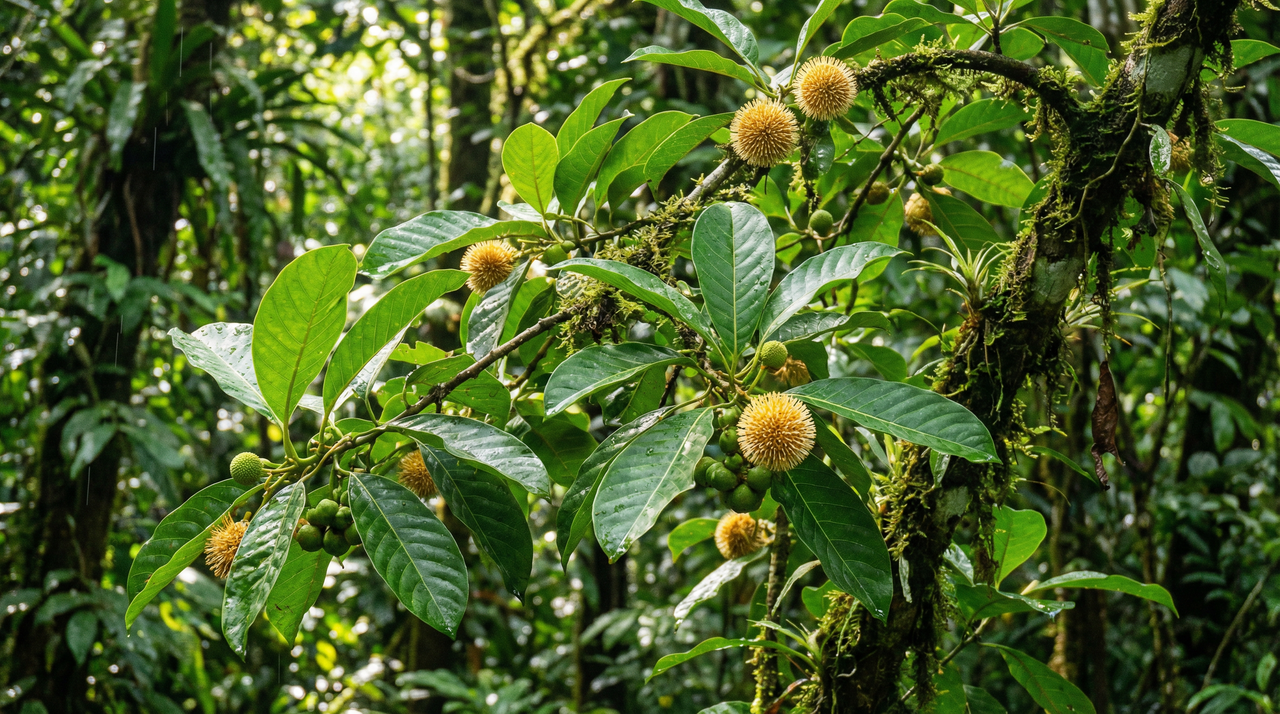
Few canopy trees can offer the ecological ambition, edible fruit, and intensely fragrant flowers of Kadam. It isn't just the golden-orange globes themselves, but the smell: something between orange blossom and fresh rain, drifting across a botanical garden path before I could even see the source. When I finally spotted those round, golden-orange flower heads sitting in the canopy like something a botanical illustrator would invent, I assumed I was looking at an ornamental curiosity. I had no idea I was standing under a tree that Hindu tradition associates with Krishna himself, a tree described in the Ramayana, a tree whose bark has been decocted for fevers and dysentery across India, Myanmar, Thailand, and China for at least two millennia.[1]
What gets me about Kadam is the gap between how little most Western gardeners know about it and how deeply embedded it is everywhere else. It's not a botanical footnote; it's a cultural cornerstone that also happens to grow one to two meters per year,[2] produces edible fruit, and pulls serious ecological weight in a food forest canopy. That combination of sacred story, practical function, and sheer biological ambition is exactly why I think it deserves a much longer look.
Kadam Origin, History, and Cultural Significance
Botanical Background and Taxonomy of Anthocephalus chinensis
If you've gone looking for kadam at a specialty nursery or in botanical literature, you've probably encountered at least three different names on the same plant. The name most widely circulated in older references, Anthocephalus chinensis, is actually considered outdated by current authorities; the accepted name for this tree is Neolamarckia cadamba (Roxb.) Bosser & J. Lebrun, with Anthocephalus cadamba and Nauclea cadamba among its earlier synonyms.[3][4] True Anthocephalus chinensis has since been moved to the genus Breonia entirely.[5] I always double-check POWO or Kew before ordering anything in this genus because mislabeling in the nursery trade is genuinely common, and unexpected behavior in the garden is nobody's idea of a good time.
Whatever name it travels under, the tree itself is native to a broad sweep of South and Southeast Asia: southern China (particularly Yunnan), northeast India and Assam, Bangladesh, Myanmar, Thailand, Vietnam, Laos, Sri Lanka, Malaysia, Indonesia, the Philippines, and Papua New Guinea. Its precise wild status in parts of the Indian subcontinent remains somewhat ambiguous, and it has been widely introduced elsewhere.[6][7] In the wild it gravitates toward forest edges, riverbanks, and secondary forests up to around 1,500 m elevation, thriving where disturbance has opened the canopy and moisture is reliable.[8] It's a genuine pioneer, reaching reproductive maturity in just 4 to 6 years from seed, and achieving full stature in 10 to 15 years.[9][10] Having grown a handful of fast-moving tropical pioneers over the years, I can tell you that kadam's early establishment speed is striking even by that standard. The IUCN lists it as Least Concern globally,[11] though it has been introduced to Africa, Australia, Pacific Islands, and parts of the Americas, where it can behave invasively in places like Hawaii and Florida.[12]
Visual Characteristics of the Kadam Tree
Kadam is a medium to large tree, typically reaching 15 to 30 meters, occasionally taller under ideal conditions, with a straight trunk up to 1.5 meters in diameter, a broad spreading crown, and buttresses developing in older specimens.[13][7] The bark starts smooth and light gray when young, becoming rough, flaky, and grayish-brown as the tree ages. Opposite, ovate to elliptic leaves run 5 to 15 cm long, dark green and leathery above, paler and finely hairy beneath when young.[14] The tree belongs to the Rubiaceae family and exudes a milky latex when cut or broken; young plants develop a deep taproot while mature specimens spread extensive lateral roots.[15]
The flowers are what stop people in their tracks. Small, white to creamy-yellow, they pack densely into terminal globular heads roughly 1 to 5 cm across, and their sweet honey fragrance carries several meters in humid air, especially after rain.[15][16] If you've ever stood under a flowering buttonbush or caught the scent of a mimosa in bloom, you have a rough approximation of the experience, though kadam's globes are denser and the fragrance richer. The fruits follow as fleshy globose syncarps, 1 to 2 cm across, composed of many tiny drupelets ripening to yellowish-orange or reddish-brown, each containing numerous minute seeds about 1 to 2 mm long.[7]
Traditional and Cultural Uses of Kadam
Few trees carry as much spiritual weight in South Asia as kadam. In Hinduism it's inseparable from Lord Krishna, symbolizing love, fertility, and divine playfulness; the romantic stories of Krishna and Radha are set beneath its canopy, temples plant it in their courtyards, and its fragrant flowers are offered in pujas, weddings, and celebrations like Janmashtami.[17][18] It also appears in the Ramayana's Aranya Kanda, the Mahabharata's Vana Parva, and in the Charaka Samhita, dating to roughly 300 BCE to 200 CE, where it sits within the Nyagrodhadi Gana, valued for cooling and astringent properties and applied to wounds, fevers, dysentery, and skin and gastrointestinal complaints.[19][20]
Across the broader region the medicinal tradition is just as deep. In traditional Chinese medicine, including documentation in the Bencao Gangmu, and in Vietnamese and Tibetan practices centered on Yunnan and Himalayan communities, bark decoctions and leaf infusions treat inflammation, fevers, and gastrointestinal ailments.[21] The Kachin people of Myanmar eat young leaves as a vegetable and use them for diarrhea and toothache; Karen and Lao communities in Thailand, as well as groups in Sri Lanka and Indian tribal communities such as the Gonds and Baigas, draw on it for fever, cough, wounds, and urinary disorders, and the fruits are edible across these cultures.[22][23] In Buddhist tradition it appears in Jataka tales and is associated with sacred groves including Deer Park at Sarnath.[24]
Modern phytochemical research has begun to validate what these traditions accumulated over millennia, identifying anthraquinones, flavonoids, and other bioactive compounds responsible for antimicrobial, antioxidant, anti-inflammatory, and antidiabetic activity, though clinical trials in humans are still limited.[23] That scientific momentum, though, comes with a caution I think about whenever I see kadamba extracts appearing in wellness products: the risks of localized overharvesting, biopiracy, and inadequate benefit-sharing with the indigenous communities who developed this knowledge over generations are real.[25] When I encounter Kadamba marketed for herbal use, I look for suppliers working directly with source communities in India or Southeast Asia. Ethical sourcing isn't a footnote here; it's the whole story.
Fun Facts and Ecological Notes
Known in Chinese folklore as the "Tree of Joy,"[21] kadam earns that name ecologically as much as culturally. Its fragrant globular flower heads draw diverse insect pollinators, its ripening fruit feeds birds and other wildlife, and its rapidly decomposing leaf litter cycles nutrients back through the soil with an efficiency you'd expect from a pioneer species evolved to rebuild disturbed ecosystems.[26] The tree achieves this colonizing role partly through clever seed biology: its tiny seeds are buoyant, dispersed by seasonal floodwaters through the riverine monsoon forests it calls home, and the tree itself is drought-deciduous, tolerating seasonal water stress before flushing back to life when rains return.[27] For a grower used to slower hardwoods, seeing kadam put on that kind of growth while simultaneously supporting a whole community of insects and birds is a reminder of what a well-placed pioneer can do for a young food forest system.
Kadam Varieties and Sourcing
Notable Varieties and Wild Forms of Kadam
There are no named commercial cultivars of kadam. What you're working with when you grow Anthocephalus chinensis is essentially wild-type material, selected by nobody, shaped by the forests of South and Southeast Asia over millennia.[28] That's actually part of the appeal for those of us drawn to unimproved species, but it does mean there's no 'dwarf' or 'compact' form, no disease-resistant selection, no variety bred for container culture. What you get is the full-size tree, and you either have the climate for it or you don't.
The USDA hardiness range of zones 9b to 11 sounds hopeful on paper, but I'd be cautious about that 9b designation.[29] In my experience, even brief dips near 5 °C cause noticeable leaf drop and sluggish recovery. I'd treat this as a zone 10+ plant for anyone without reliable frost protection infrastructure.
Set against those limitations, the wild-type kadam is genuinely striking. Those 2 to 5 inch globose flower heads, each built from dozens of tiny pale yellow-white florets, are the tree's showstopper feature.[30][31] I first caught the fragrance before I saw the tree, visiting a botanical collection in Florida. It's intense and sweet in a way that stops you mid-path. The fruits that follow are small drupes, only 0.3 to 0.6 inches across, ripening from green through red to near-black, with a sweet-tart edible pulp that rewards patient foragers.[32] All of this comes from unselected genetics, which is a reminder that wild trees don't need human improvement to be extraordinary. That said, wild seed collection puts pressure on native populations facing habitat loss, so I always ask vendors to document their sourcing practices before I buy.
How to Source Kadam Trees and Seeds
You will not find kadam at a standard US nursery.[33][34] Seeds are your most realistic entry point, available through Indian forestry and medicinal plant suppliers, the Millennium Seed Bank at Kew, and occasional Etsy or eBay listings, typically running $5 to $15 per 100 to 500 seeds.[35][36] From my experience with similar tropical species, fresh seed from a reputable Indian supplier germinates far more reliably than older imported stock, so recency matters.
Live plants exist, but only through specialty tropical nurseries concentrated in Florida, Hawaii, and coastal California, generally priced between $10 and $50 depending on size.[37] Any live import requires phytosanitary certificates through APHIS-approved ports; kadam is not currently listed as a prohibited or invasive organism, but the paperwork still applies.[38][39]
Low commercial availability, combined with the tree's strict warmth and humidity requirements, makes procurement genuinely challenging.[40] My advice to anyone who has fallen hard for this tree: start with botanical gardens or university tropical agriculture programs, and vet any online vendor carefully for plant health guarantees and current stock before committing. Vendor availability shifts fast in the rare-plant world, so confirm before you order.
Kadam Propagation and Planting
Seed Characteristics and Viability
Kadam seeds are tiny things: 2-6 mm long, 2-3 mm wide, irregularly oblong, light to dark brown, with a smooth coat and a straight or slightly curved embryo tucked inside.[41][42] Each seed is monoembryonic, meaning one seed, one seedling, no polyembryonic backup like you'd get with mango or citrus. The bigger issue, though, is that Kadam seeds are recalcitrant. They cannot be dried below roughly 20% moisture content without killing them, and they aren't candidates for conventional seed-bank storage at all.[43][44] Even under ideal moist storage at 5-20°C in sand or vermiculite, they hold viability for only 6-9 months at best.[45][46]
I keep a small supply of fresh anthocephalus cadamba seeds in moist vermiculite in the back of my refrigerator and never let them sit more than six months. Before sowing a new batch, I run a quick tetrazolium test if I'm not sure about age. It sounds fussy, but recalcitrant seeds punish the "sow it whenever" approach that works fine for tomatoes or even most tropical annuals.
Propagation Methods
Seed is the go-to for large-scale work. Fresh seed germinates at 60-90%, it's economical, and it scales easily for nursery production.[47][48] The catch is that Kadam is insect-pollinated and naturally cross-pollinating, so seedlings aren't true-to-type. In my own nursery rows I've seen real variation in leaf shape, vigor, and early branching habit between seedlings from the same collection. It's not a problem if you're planting a forest or windbreak, but it matters a lot if you've found an exceptional specimen and want copies of it.
That's where vegetative methods come in. Semi-hardwood stem cuttings of 10-15 cm treated with IBA at 1000-2000 ppm root in 4-6 weeks under mist with 60-80% success, with the monsoon season giving the best results.[49][50] I always use IBA at the lower end of that range because higher concentrations can burn the soft tropical tissue in a humid greenhouse. Air layering works too, achieving success in 4-8 weeks. For the most reliable fruiting performance, cleft or veneer grafting onto 6-12 month seedling rootstock in spring or summer achieves 60-80% success.[51] Tissue culture using nodal explants on MS medium with BAP and NAA is the frontier for mass clonal multiplication of elite genotypes, though that's squarely in the realm of research stations rather than the home grower.[52]
Germination Timeline and Techniques
Sow into warm, moist, well-drained media at 25-30°C (75-85°F). A 24-hour presoak before sowing softens the testa and speeds Early uptake. Germination typically begins between 7 and 21 days, with fresh, healthy batches reaching 70-90% success within 10-20 days.[53][47][54] Seedlings are ready for transplanting after 6-8 months, or once they've reached 6-12 inches with a decent root ball filling the container.[55]
On the long game: seed-grown trees typically begin fruiting in 3-5 years under good tropical conditions, while grafted trees take a bit longer at 5-7 years after grafting but deliver true-to-type performance and more predictable harvests.[56][57] My practical takeaway is to use seed for restoration or canopy work where variation is fine, and reach for grafted stock when fruiting reliability actually matters to you.
Soil, Site Selection, and Light Requirements
Kadam is a pioneer species from moist deciduous and semi-evergreen forests, riverbanks, and disturbed edges across South and Southeast Asia.[58] That ecology tells you exactly what it wants: full sun for 6-8 or more hours daily for best canopy development and flowering, with some tolerance of partial shade during establishment or particularly hot, wet stretches.[59] Plants pushed into deep shade get leggy and rarely flower well, a pattern I see with frangipani and shade-intolerant figs in similar subtropical settings.
For soil, think deep (1-1.5 m), fertile, well-drained loamy or sandy-loam with good organic matter content (2-5%) and a pH of 5.5-7.5.[60][61] It tolerates sandy loam, clay loam, and laterite reasonably well but struggles badly in heavy clay or compacted, waterlogged conditions where Phytophthora and Fusarium root rots take hold.[62] Annual rainfall of 1000-2500 mm with consistent moisture for seedlings is ideal; established trees have moderate drought tolerance. In my Central Florida context, that means choosing a site with natural drainage rather than a low spot that collects water after heavy rain. Leaf scorch or premature drop usually signals the soil is either too dry or, more commonly, sitting too wet.
Planting Technique, Spacing, and Initial Care
Commercial timber plantations use a 3 m × 3 m spacing, fitting roughly 1,111 trees per hectare, while agroforestry and intercropping systems typically open that up to 4 m × 4 m to accommodate understory crops and reduce competition.[63][64][62] For home gardens, 10-15 feet (3-5 m) between trees is a sensible minimum given the rapid growth and 10-15 m canopy spread at maturity.[65] I made the mistake early on of planting two young kadam seedlings about 5 feet apart, thinking I had time to move one later. Within two growing seasons they were competing for the same vertical space, developing crossing leaders that needed corrective pruning. Save yourself that headache and give them room from day one.
Timing matters. Plant at the onset of the rainy season or in spring when soil temperatures are reliably above 60°F, transplanting seedlings or grafted stock once they're 6-12 inches tall with roots filling the container.[66][67] For containers, a mix of roughly 40-50% loam, 20-30% sand or perlite, 20% compost, and 10% vermiculite or coir keeps drainage and moisture in the right balance.[68] Once planted out, mulch generously to mimic the moist leaf-litter floor of its native forest habitat, stake on the windward side with soft ties if your site gets wind, and keep air circulation generous around the base to reduce fungal pressure during humid periods.
Kadam Tree Care Guide
If you're growing kadam outside USDA zones 10a–12, I'd gently suggest reconsidering. This tree's entire care logic flows from its origins in the warm, humid forest edges of South and Southeast Asia, and nearly every decision you make, from how often you water to when you pull out the pruning saw, should trace back to that fact. Get the climate right first, and the rest becomes much easier.
Watering Needs for Kadam Trees
Young kadam trees are thirsty. Seedlings and first-year plants need soil that stays consistently moist, which in practice means about 1–2 inches of water per week or irrigation every one to three days in warm weather.[69][70] Once established, the tree handles short dry spells reasonably well, managing four to six weeks without rain but still appreciating a deep soak every week or two during extended drought.[71] The goal is evenly moist, well-drained loamy soil with a pH somewhere in the 5.5–7.5 range; it can stretch to 5.0–8.0, but those extremes invite problems.[72] Kadam has low salt tolerance, so if you're on municipal water, letting it sit or running it through a filter before irrigating is worth the small effort.
In my humid subtropical garden, drip irrigation combined with a generous mulch layer has almost eliminated the root rot problems I used to see when I was overhead-watering fast-growing tropicals. I also label my young kadam rows obsessively because in their first month, the seedlings look strikingly similar to other fast-growing tropicals I grow nearby, and accidentally over-watering the wrong plants is an easy mistake. Water at the drip line in the early morning, keep that moisture at root depth rather than wetting the crown, and let the mulch do the heavy lifting on evaporation.[71][69] Wilting, leaf scorch, and stunted growth are your signals that moisture is too low; soft, discolored roots with a sour smell mean you've gone too far the other way.[73]
Sunlight, Heat, and Frost Tolerance
Kadam's sweet spot is 20–35°C (68–95°F) with relative humidity between 70 and 90 percent, in full sun to the light partial shade you'd find at a forest edge.[74][59] It can technically tolerate temperatures up to 45°C when humidity stays high, but above 40–42°C the tree starts wilting and photosynthesis slows noticeably.[75] The tree does have physiological tricks for coping, including antioxidant enzyme production and heat-shock proteins, but in my experience the single biggest lever is consistent soil moisture.[76] Mist the understory or position the tree where humidity naturally concentrates, and the wilting that looks alarming at 40°C in a dry spot barely registers in a moist one.
On the cold end, kadam is unambiguously frost-tender. Temperatures below 10–15°C (50–59°F) already stress the tree, and anything prolonged below 5°C brings leaf scorch, browning, bark cracking, and branch dieback, with young specimens the most vulnerable.[77][78] I check my young kadam trees the morning after any unexpected cold snap and look exactly for those symptoms. Young trees I've protected with heavy mulch and frost cloth have come through brief dips to around 7°C with only minor leaf scorch, which is encouraging. That said, if your site sees regular frost, this tree isn't the right fit without serious mitigation: sheltered microclimates, frost covers, and container growing with indoor overwintering are your options.[77][79]
Feeding and Soil Management
Young kadam trees respond well to light, frequent feeding during the growing season, something in the range of 5–10 g of balanced NPK monthly rather than heavy applications.[80] Once established, I scale back to 200–500 g of a balanced NPK formula split across two or three applications per year, supplemented with 10–20 kg of well-rotted organic manure.[81] I never apply that upper rate without a recent soil test. My local soils often run low on zinc and iron, and I'd rather address a specific deficiency than dump a full synthetic load onto a tree that doesn't need it.[82] Over-fertilizing shows up as leaf burn, excessive soft growth that's vulnerable to pests, and, frustratingly, reduced flowering.[83] Uniform yellowing of older leaves points to nitrogen shortage; dark or purplish foliage suggests phosphorus; marginal leaf scorch is often potassium.[84] A soil test before the first feeding cycle is non-negotiable for me.
Pruning, Maintenance, and Seasonal Rhythm
Kadam flowers from June through September in its native monsoon range, and that phenology should govern your maintenance calendar.[7] I prune immediately after the monsoon flush wraps up, typically October or November, using sharp sterilized tools to remove crossing branches, suckers, and any diseased wood, keeping cuts to no more than 20–25% of the canopy at one go.[85] Early in my experience with this tree I made the mistake of aggressive cuts on a young specimen outside the ideal window, and the resulting dieback taught me to respect both the timing and the limit. The bark is genuinely susceptible to infection at wound sites, so sterilized tools aren't optional. On young trees, light tip pruning encourages branching and a good open-center form without sacrificing the following season's blooms.
Year-round, 2–3 inches of organic mulch at the drip line (kept well clear of the trunk itself) handles moisture retention, temperature moderation, weed suppression, and soil biology in one go. Replenish it annually and you're building the soil while you're managing the tree. Kadam is semi-deciduous in cooler or drier climates, shedding some leaves outside the wet season, and that brief rest period is a natural signal to ease back on irrigation and hold off on fertilizing until the growth flush returns.[86] Match your inputs to the tree's rhythm and it rewards you with the fast, vigorous growth kadam is genuinely known for.
Harvesting Kadam Flowers, Fruits, and Timber
Kadam is one of those trees where the harvest calendar is written by the monsoon, not by the gardener. Once you understand that rhythm, everything else falls into place pretty naturally.
When to Harvest Kadam: Seasonal Timing and Ripeness Cues
Flowers are typically the first harvest of the year. In India they appear from March through May; growers in Southeast Asia may see them stretching into June as the monsoon arrives later.[87][88] Pick them when the globes are bright white, firm to the touch, 5 to 7 cm across, and releasing that distinctive sweet fragrance. I've learned with similar fast-growing tropicals to check daily once the first buds start opening, because a heavy overnight rain can knock ripe flowers and cause rapid browning if you've missed the window.
Fruits follow 2 to 6 months after flowering, which puts the main harvest window in tropical Asia between July and October, right inside the rainy season.[89][90][91] Direct Kadam data on exact fruit development days is limited, and I'm drawing partly on what I've observed with closely related Rubiaceae species that show 60 to 120 day development periods.[92] The practical ripeness cues are clear enough to work from, though. Watch for the color shift from green to yellowish-orange (and sometimes reddish or purplish depending on the individual tree), a softening texture, and the emergence of a sweet, acidic aroma.[92][90] Think of the way a mulberry shifts from red to deep purple just before it drops into your palm. Kadam tells a similar story, just in orange.
How to Harvest and Handle Kadam Produce
Hand-pick fruits in the early morning while temperatures are cool, which slows the respiration that starts breaking down ripe tropical produce almost immediately.[93][94] Leaves can be selectively pruned without harming the tree, and that selective approach matters: a well-managed Kadam stays productive rather than stressed. Timber harvesting is a different commitment entirely, reserved for mature trees at 20 to 30 years, and that decision belongs to long-term landscape planning rather than seasonal maintenance.[95]
Post-harvest handling is where I've seen people lose a good crop. Refrigerate fruit quickly at 4 to 8°C with 85 to 90% relative humidity in perforated bags; even under those conditions you're looking at a 7 to 14 day window before quality drops.[96] I once lost a small harvest of similar tropical fruits because I left them in an unventilated bag on the counter overnight in humid subtropical heat. Rapid cooling right after picking is non-negotiable.
Expected Yields and Flavor Profile of Kadam Fruits
The kadam tree fruit is a small, fleshy syncarp that looks a lot like a raspberry: an aggregate of drupes maturing in a tight cluster, edible with a sour-sweet taste that shifts noticeably depending on how ripe the fruit is when you pick it.[97] I'd encourage first-time harvesters to taste at a few stages, because the difference between slightly underripe and fully ripe is significant. A mature tree in good health can yield 50 to 100 kg of fruit in a season, which is a respectable return for a canopy tree.[94] When I design with Kadam, I'm always thinking in two timescales: the seasonal flower and fruit harvests that arrive within a few years of establishment, and the eventual timber yield decades down the line when selective felling becomes an option. Both are part of the same long conversation with the tree.
Kadam Preparation and Uses
Culinary Uses of Kadam Fruits and Seeds
The fruit is the part most home gardeners will care about, and ripe kadam fruit is genuinely good eating. The globular structures hold sweet-sour pulp around small seeds, and that flavor lands somewhere between a tamarind and a mild tropical berry when the fruit is fully ripe.[7][98] I judge ripeness the same way I judge figs or mulberries in my Central Florida landscapes: when the fruit turns fully orange-yellow and yields gently to thumb pressure, the astringency is gone. Before that point, bitterness dominates and you'll regret it. Ripe fruit can be eaten raw or processed into jams, juices, or chutneys, and in Ayurvedic tradition it's been used to support digestion.[97] Shelf life is short: three to five days at room temperature, one to two weeks refrigerated, so plan to process any large harvest quickly.[97]
The seeds are edible too, but they need processing first. I treat them the same way I handle fresh acorns or certain foraged wild nuts: boil or roast them to knock back the astringency before eating, and if you want seed oil for cooking or topical use, press the dried seeds after that initial heat treatment.[98] Skipping that step is a mistake you only make once. Leaves and flowers, by contrast, don't really belong in the kitchen. The leaves are too bitter and fibrous to be worth trying as a potherb in my experience, and the flowers are primarily valued for their extraordinary fragrance and as a source of dye rather than for eating.[99][100]
Traditional Medicinal Preparations
In Ayurvedic and regional ethnobotanical practice, bark decoctions are prepared by simmering 20 to 30 grams of bark in 200 ml of water until the liquid reduces by half, producing a concentrated extract used traditionally for fever and dysentery.[101][102] Leaf infusions and poultices applied topically to wounds and skin ailments appear across multiple regional traditions as well.[99] I share these specifics because they're documented and historically grounded, but I never recommend self-dosing bark or leaf preparations without working alongside a qualified Ayurvedic practitioner. These are potent preparations with real physiological effects, and the phytochemical rationale behind them is covered in the health benefits section above.
Non-Food Uses and Cultural Applications
Beyond the kitchen and the medicine cabinet, kadam has a remarkably broad utility profile organized neatly by plant part. Fruits and seeds have been used as tonics and for urinary complaints; flowers yield both dye and fragrance and feature prominently in ritual offerings.[103][104] The wood is a separate story entirely: fast-growing, straight-grained, and historically used for paper pulp, light construction, and carving. Even if the fruit harvest turns out to be modest in a given year, those intensely fragrant globular kadam flower heads alone make the tree worth growing in a warm-climate permaculture system. The scent carries on warm evenings in a way that few tropical trees can match.
Kadam Health Benefits and Medicinal Uses
What strikes me every time I dig into kadam's ethnobotanical record is just how thoroughly this tree has been used. Bark, leaves, flowers, fruit: Ayurveda, Siddha, Traditional Chinese Medicine, and folk healers across India and Southeast Asia have found a role for every part of it, treating everything from fever and dysentery to wounds, diabetes, joint pain, and urinary complaints over many centuries.[105][106] That breadth of traditional application is the first thing worth appreciating, and the second is how specifically those traditions were applied: bark decoctions for fever and dysentery, leaf poultices on wounds, flower infusions for diabetes management and urinary disorders.[105][107] In Traditional Chinese Medicine the tree appears as "Mu guai zi," used for its anti-inflammatory, analgesic, and antimicrobial actions against rheumatoid arthritis and gastrointestinal complaints.[42]
Traditional Medicinal Applications and Modern Research
Modern preclinical science has spent the last couple of decades testing whether those traditional applications hold up. In cell and animal models, kadam extracts perform impressively across several fronts. Leaf extracts reduce inflammation in carrageenan-induced rat paw edema at levels comparable to indomethacin, working through NF-κB pathway inhibition and suppression of TNF-α, IL-6, COX-1, and COX-2.[108] Antioxidant assays show IC50 values of 50 to 100 μg/mL in DPPH testing, with bark extracts outperforming other plant parts and Nrf2 activation and HO-1 upregulation as proposed mechanisms.[109] Ethanol extracts inhibit Staphylococcus aureus, E. coli, and Candida albicans at MIC values of 100 to 500 μg/mL, apparently via membrane disruption and efflux-pump interference.[110] On the metabolic side, preclinical work documents AMPK activation, enhanced glucose uptake, α-glucosidase inhibition, possible pancreatic β-cell regeneration, hepatoprotective effects, and even caspase-3/9-mediated apoptosis in cancer cell lines.[111][112][113]
None of this has been tested in robust human clinical trials.[114] I grow and study a lot of tropical medicinals that are in exactly this position, where centuries of traditional use gave researchers something real to investigate, and the preclinical data looks genuinely promising, but therapeutic doses for humans remain unknown. Traditional knowledge pointing the way is not the same thing as clinical proof, and kadam sits firmly in that in-between space right now.
Key Phytochemicals in Kadam
These activities are driven by several chemical classes: alkaloids including cadambine, dihydrocadambine, ajmalicine, and isocadambine; flavonoids such as quercetin, rutin, and kaempferol derivatives; terpenoids; phenolics; tannins; saponins; coumarins like scopoletin and umbelliferone; glycosides; and anthraquinones including alizarin.[115][116] Leaves and stem bark are the most thoroughly studied plant parts, which tracks with how the tree has historically been used medicinally. What I find particularly relevant from a grower's perspective is that concentrations shift considerably depending on season, geography, soil pH, and tree age: alkaloid levels in leaves climb during the monsoon, flavonoids tend to be higher in Southeast Asian populations, and younger trees carry more saponins and volatiles.[42][117] My monsoon-harvested cuttings have always tasted noticeably more bitter than late-dry-season material, and now I understand why.
Nutritional Profile of Edible Parts
Ripe kadam fruit is sweet and genuinely edible, delivering roughly 60 kcal per 100 g alongside 14.5 g carbohydrates, 2.1 g fiber, potassium in the 200 to 300 mg range, calcium, iron, and vitamin C somewhere between 50 and 100 mg.[118][119] The flowers contribute similarly on the vitamin C front (50 to 60 mg per 100 g) plus 15 to 20 mg/g of phenolic compounds, and they make a genuinely pleasant herbal tea when harvested from properly identified, organically grown trees.[120] Leaves supply substantial dietary fiber but are used medicinally, not culinarily. Those same flavonoids and alkaloids that show up in the phytochemical profile are present in the edible portions too, connecting the nutritional value to the anti-inflammatory and antioxidant activity already documented.[121] That said, these figures come from limited regional studies with meaningful variability by cultivar, soil, and ripeness; no standardized nutrient database currently covers kadam.[122]
Safety and Toxicity Considerations
Acute oral LD50 values exceed 5000 mg/kg for bark extract and 2000 mg/kg for fruit extract in mice, putting both in the practically non-toxic category. Additionally, major botanical authorities including Missouri Botanical Garden and Kew do not list kadam as poisonous.[123][70] For comparison, that's a safety margin in the same territory as ginger root, which most people handle without a second thought. The caveats are specific but real. Pregnancy is a contraindication because of possible emmenagogue activity and insufficient safety data.[124] Anyone on antidiabetic or antihypertensive medication should consult their doctor before using kadam medicinally; the hypoglycemic activity documented in animal models is significant enough that drug interactions are a genuine concern.[125] Unripe fruit, high in tannins, can cause mild gastrointestinal upset. And because kadam shares tropical habitats with genuinely toxic look-alikes including Strychnos nux-vomica and Melia azedarach, correct identification is non-negotiable.[126][127] I always teach people to key out kadam's distinctive globose flower heads and straight-trunk growth form before experimenting with any part of the plant, because "looks similar from a distance" is not an identification standard.
Kadam Pests and Diseases
Kadam brings a respectable chemical defense to the table. Crush a young leaf and that distinctly bitter, astringent smell tells you something real: the tree loads its tissues with alkaloids like cadambine, tannins, and flavonoids that actively deter a lot of would-be herbivores.[128][129] Mature, well-established trees in their native tropical Asian range genuinely do shrug off most pressure.[130] The vulnerability window is the first few years, and that's when I pay the most attention.
Major Insect Pests of Kadam
The insect guild that causes the most visible damage breaks down into two tiers. First come the defoliators and borers, which can genuinely compromise a young tree's structure. The beetle Mytheia semihyalina skeletonizes leaves, the teak defoliator Hyblaea puera occasionally crosses over, and various leaf beetles and bagworm larvae (Psychidae) strip foliage in flushes.[130][131] Stem and shoot borers are the ones I worry about most with fast-growing tropical timber species generally: cerambycid borers like Celosterna scabrator and Xylotrechus spp. tunnel into stems, and bark-eating caterpillars such as Indarbela quadrinotata can girdle and kill branches outright.[130][132] Plantation pressure from these species is reported most heavily in India.[133]
Secondary in structural impact but still worth monitoring: aphids, scale insects, mealybugs, and leafhoppers cluster on new growth, produce honeydew, and create entry points for fungal infection.[134][135] Termites (particularly Coptotermes spp.) target roots and lower stems of any tree that's already stressed, so they're more a symptom of a problem than the problem itself.[130] There are no formally bred pest-resistant cultivars to reach for, though wild populations do show meaningful genetic variability, and I always select seed from the most vigorous local specimens I can find rather than treating all stock as equivalent.[136][137]
Common Fungal Diseases
Kadam's fungal disease roster reads predictably for a fast-growing Rubiaceae in the humid tropics: leaf spot (from Cercospora, Colletotrichum, and Pestalotiopsis spp.), anthracnose driven by Colletotrichum gloeosporioides causing necrotic lesions on leaves, flowers, and fruits along with shoot dieback, powdery mildew from Oidium or Erysiphe quercicola, and root rot from Phytophthora and Fusarium in waterlogged soils.[138][139][140] Every one of these is amplified by the same conditions: poor drainage, dense planting, overhead irrigation, and the sustained humidity of monsoon season.[141][142] I've lost young Kadam to Phytophthora root rot in Florida's heavy summer rains when they were sitting in dense, poorly-draining soil; in properly mounded, well-drained sites, I've never had the same problem. The tree does show variability in field tolerance to leaf spot across different genetic accessions, but no formally disease-resistant cultivars have been bred, and the species overall is considered resilient in its native Southeast Asian and South Asian range when given appropriate conditions.[138][143]
Integrated Management and Natural Resistance
My approach with kadam starts with spacing. After watching leaf-skeletonizing damage move through a humid guild planting where trees were too close, I now give them 12 to 15 meters and pair them with understory companions that keep air moving rather than trapping moisture. That single cultural fix addresses anthracnose, powdery mildew, and defoliator pressure simultaneously. The research supports exactly this: well-drained loamy soil, full sun, generous spacing, removal of infected material, and avoiding overhead irrigation form the backbone of any effective management strategy.[84][144]
For biological and organic intervention, neem oil handles sap-suckers and early fungal pressure well, Trichoderma spp. soil drenches are useful at planting to outcompete Fusarium and Phytophthora, and I encourage parasitic wasps and other predatory insects as a matter of course in any guild I design.[145][140] Broad-spectrum chemical applications are the last option I'd reach for; they knock out the beneficial insects that are already doing real work in the system. Copper-based fungicides or targeted systemic treatments stay on the shelf unless a severe outbreak leaves no other path.[146] The reassuring reality is that mature kadam in USDA zones 9 through 11, given decent drainage and airflow, tends to outgrow the problems that plague stressed or crowded young trees.[29] Get the site right from the start, and this tree rewards the patience.
Kadam Permaculture Design and Ecosystem Roles
Before you fall in love with this tree, let's talk climate, because kadam is unforgiving on that front. Anthocephalus chinensis is a creature of humid subtropical to tropical monsoon conditions, thriving between 20 and 35°C with a workable range of 10 to 40°C and a preference for 70 to 90% relative humidity.[147][6][148] It wants 1000 to 2500 mm of annual rainfall distributed fairly evenly across the year, and it's most at home in wet lowland forests from sea level up to about 1200 meters.[6][149] The moment temperatures dip below 5°C, you're looking at frost damage, and it doesn't shrug that off the way some subtropical plants do.[148]
In the US, that puts kadam squarely in USDA zones 10 to 11, with some protected zone 9b sites in southern Florida, Hawaii, Puerto Rico, and southernmost Texas potentially workable.[148][150][151] I garden in Central Florida zone 9B, and I can tell you firsthand that fast-growing tropical pioneers like this one need careful siting away from exposed areas. Wind sensitivity and salt spray intolerance are real concerns here, so sheltered inland positions with a windbreak to the north and east are the smart move if you're pushing the envelope on hardiness.[150]
Pollination Ecology and Ecosystem Functions of Kadam
Kadam earns its place in a food forest through ecological service, not just yield. As a pioneer species in the Rubiaceae family, it colonizes disturbed and degraded land, kickstarting forest succession and accumulating biomass quickly enough to make a meaningful contribution to carbon sequestration.[152][153] Trees that put on close to 2 meters of growth in a single season are powerful carbon allies while also generating abundant chopped-and-dropped biomass for mulching understory beds. Kadam does not fix nitrogen. I've seen conflicting claims float around online, but the ecological literature is consistent on this point, it's not a legume, and you shouldn't plan your guild around it performing that function.[153][154] What it does contribute is rapid leaf litter decomposition that cycles nutrients back into the soil efficiently, along with a substantial root system that anchors slopes and reduces erosion.[154]
The pollination story is genuinely impressive. Those dense globular flower heads are insect magnets, drawing honeybees, carpenter bees, butterflies, moths, flies, and beetles with sucrose-rich nectar and a fragrance that carries several meters on a warm humid morning.[9][74] I've stood near subtropical Buddleja in full bloom and thought that was intense pollinator activity, but the kind of insect traffic a kadam draws during peak flowering is on a different level. Flowering peaks during the monsoon season, roughly June through September, and the flowers themselves are protogynous, meaning female parts mature before male ones, which pushes the tree toward outcrossing and genetic diversity.[155][156] Optimal pollination happens between 25 and 35°C at 70 to 90% humidity, and habitat fragmentation or pesticide use can cut pollination success by 30 to 50%.[157] That's a reminder that supporting kadam's ecosystem contributions means maintaining a garden-wide environment hospitable to native pollinators. The fruits that follow attract hornbills, bulbuls, and other wildlife, extending its habitat value well beyond the flowering season.[158]
Forest Layer, Guilds, and Agroforestry Applications
Young kadam trees start in the understory, but don't let that fool you. Growth rates up to 2 meters per year in early life push them rapidly into the canopy or emergent layer, where mature specimens typically reach 15 to 30 meters with a broad spreading crown.[159][59] Plan for it as an upper-canopy anchor, not a mid-story filler.
In agroforestry systems, kadam earns its footprint as a shade tree, windbreak component, and biomass producer. It thrives over fertile, well-drained loamy soil at pH 5.5 to 7.5.[59][160] My favorite guild application for a tree like this is shading out summer heat stress for ginger and turmeric beds underneath. The dappled light from a spreading canopy mimics the filtered forest light these rhizome crops love, and the fast-decomposing leaf litter does real mulching work between harvests.[160][154] Coffee and cocoa fit the same logic, shade-tolerant understory crops that benefit from the protection and soil conditioning kadam provides.[161] Factor in watershed protection, biodiversity support, and the tree's traditional medicinal value as secondary returns, and the guild calculus looks very favorable in the right climate.[153][162]
One honest caveat before you plant: kadam has demonstrated invasive potential in some Pacific Island contexts, and responsible growers should take that seriously.[163] In my experience with non-native pioneer species in permaculture systems generally, I start small and observe before scaling. Kadam in a well-managed Florida landscape carries low invasive risk, but monitoring seedling spread is the same cautious practice I apply to any fast-growing exotic, regardless of how ecologically useful it looks on paper.
Kadam's Place in Western Horticulture
I grew up learning Latin names before common ones, so it took me embarrassingly long to connect the Kadamba in ancient Sanskrit poetry to the seedling I was hardening off on my back porch. Once I made that connection, something shifted. This isn't just a fast canopy tree for zone 10 food forests; it's a tree people have been singing about, sheltering under, and healing with for thousands of years, and that history feels worth honoring every time I water it.
Sources 163
- Pharmacological and phytochemical properties of Anthocephalus cadamba ↩
- Agroforestry Species Profile: Anthocephalus chinensis ↩
- Kew Plants of the World Online - Neolamarckia cadamba ↩
- GBIF - Neolamarckia cadamba (Roxb.) Bosser ↩
- Plants of the World Online - Neolamarckia chinensis ↩
- Flora of China - Anthocephalus chinensis ↩
- Neolamarckia cadamba - Wikipedia ↩
- Flora of China - Anthocephalus chinensis ↩
- Kadamba Tree - Missouri Botanical Garden ↩
- Neolamarckia cadamba - Useful Tropical Plants Database ↩
- IUCN Red List: Anthocephalus chinensis ↩
- Global Invasive Species Database - Anthocephalus chinensis ↩
- Flora of China - Anthocephalus chinensis ↩
- Flora of China ↩
- Flora of China - Anthocephalus chinensis ↩
- Kadamba Tree: Fruits and Flowers ↩
- Kadamba: The Tree of Krishna ↩
- The Sacred Trees of India: A Guide to Folklore and Religion ↩
- Charaka Samhita ↩
- Ayurvedic Uses of Kadamba (Anthocephalus cadamba) ↩
- Kadamba Tree in Traditional Medicine - NCBI ↩
- Oo, Y. M. M. & Lin, L. (2004). Ethnomedicinal uses among the Kachin people of Myanmar ↩
- Neolamarckia cadamba - Traditional Uses and Phytochemistry ↩
- Buddhist Symbolism in Flora ↩
- Sustainability Report on Tropical Timber Species ↩
- Ethnobotany of Anthocephalus species - Kew Science ↩
- Kadamba Conservation Assessment ↩
- Regional Varieties of Kadamba in India ↩
- Kadamba Tree Cultivation Guide - University of Florida IFAS Extension ↩
- Royal Botanic Gardens, Kew - Plant Profile ↩
- Flora of China, Vol. 7: Rubiaceae ↩
- Pei D. (1990). Rubiaceae in Flora of China ↩
- Anthocephalus chinensis (Chinese kadam) ↩
- Anthocephalus chinensis ↩
- Kadamba Tree Seeds for Sale ↩
- Millennium Seed Bank: Anthocephalus chinensis ↩
- Tropical Trees for Sale - Exotic Plant Nurseries in the US ↩
- USDA NRCS PLANTS Database: Anthacephalus chinensis ↩
- APHIS - Import Requirements for Live Plants ↩
- Kadamba Tree (Anthocephalus chinensis) Plant Assessment ↩
- Kadamba Tree: Morphology and Uses ↩
- Seed Morphology of Rubiaceae Family ↩
- Seed Information Database - Anthocephalus chinensis ↩
- Recalcitrant Seeds: Biology and Storage ↩
- Seed Storage Behaviour of Neolamarckia cadamba ↩
- Tropical Tree Seed Manual: Neolamarckia cadamba ↩
- Propagation of Kadamba (Anthocephalus cadamba) ↩
- Propagation Techniques of Kadamba (Anthocephalus chinensis) ↩
- Propagation of Anthocephalus chinensis by Stem Cuttings ↩
- Vegetative Propagation Techniques for Kadamba Tree ↩
- Kadamba Tree Cultivation and Grafting Methods ↩
- Micropropagation of Anthocephalus cadamba through Tissue Culture ↩
- Seed Germination of Anthocephalus chinensis ↩
- Seed germination and viability of Anthocephalus chinensis ↩
- Kadamba Tree Cultivation Guide ↩
- Kadamba Tree Cultivation ↩
- Fruit Trees of India: Kadamba ↩
- Plants of the World Online ↩
- Anthocephalus chinensis - Useful Tropical Plants Database ↩
- Kadamba Tree Cultivation Guide ↩
- Neolamarckia cadamba (Kadamba) - CABI Compendium ↩
- Soil Requirements for Tropical Trees - FAO ↩
- Kadamba Tree Cultivation - TNAU Agritech Portal ↩
- Neolamarckia cadamba (Kadamba) - CABI Compendium ↩
- Kadamba Tree Description - World Agroforestry Centre ↩
- Kadamba Cultivation Guide ↩
- Kadamba Tree Cultivation Guide ↩
- Potting Mix for Tropical Trees ↩
- Royal Horticultural Society - Kadamba Tree Care ↩
- Missouri Botanical Garden - Anthocephalus chinensis ↩
- Drought Tolerance in Tropical Trees: A Review ↩
- Kew Royal Botanic Gardens - Anthocephalus chinensis ↩
- Root Rot in Woody Plants ↩
- Neolamarckia cadamba (Kadamba) - Plant Profile ↩
- Neolamarckia cadamba (Kadamba) - Tropical Tree Characteristics ↩
- Heat Stress Responses in Tropical Trees: A Focus on Rubiaceae ↩
- Cold Tolerance of Tropical Trees - University of Florida IFAS Extension ↩
- Anthocephalus chinensis - Useful Tropical Plants ↩
- Growing Tropical Trees in the USA - USDA Guidelines ↩
- Neolamarckia cadamba Fertilization Practices ↩
- Fertilizer Management for Tropical Trees - FAO Guidelines ↩
- Soil and Nutrient Management for Tropical Trees - FAO ↩
- Nutrient Management in Kadamba (Neolamarckia cadamba) ↩
- Nutrient Management for Tropical Trees ↩
- Pruning Techniques for Tropical Trees like Anthocephalus ↩
- Kadamba Tree: Flowering and Phenology - Useful Tropical Plants ↩
- Plants of the World Online ↩
- Kadamba Tree Horticulture Guide ↩
- Phenology of Cadamba Tree in Tropical Asia ↩
- Fruit Maturity Indices for Anthocephalus chinensis ↩
- Phenology of Kadamba (Anthocephalus cadamba) in Tropical Forests - ResearchGate ↩
- Flora of China ↩
- Kadamba Tree Cultivation and Harvesting ↩
- Horticultural Practices for Kadamba ↩
- Anthocephalus chinensis: Uses and Management ↩
- Postharvest Management of Horticultural Crops ↩
- Kadamba Tree: Cultivation and Uses ↩
- Kadamba Tree: Uses, Benefits, and Traditional Preparation ↩
- Kadamba Tree: Medicinal Uses and Benefits ↩
- Kadamba Tree - Uses and Benefits ↩
- Kadamba (Neolamarckia cadamba): A Tree with Potent Therapeutic Potential ↩
- Pharmacognostic and Phytochemical Studies on Anthocephalus chinensis ↩
- Neolamarckia cadamba (Kadamba) - Traditional Uses ↩
- Medicinal Plants of Southeast Asia ↩
- Ethnobotany of Anthocephalus chinensis in Indian traditional medicine ↩
- Traditional Medicinal Uses of Kadamba (Anthocephalus cadamba) and Related Species ↩
- Ayurvedic Uses of Kadamba Tree ↩
- Anti-inflammatory Effects of Kadamba Leaf Extract via NF-κB Inhibition ↩
- Antioxidant and Anti-inflammatory Properties of Anthocephalus chinensis Leaf Extract ↩
- Antimicrobial Screening of Rubiaceae Family Plants Including Anthocephalus chinensis ↩
- AMPK-Mediated Antidiabetic Activity of Kadamba Extracts ↩
- Hepatoprotective Mechanisms of Anthocephalus chinensis ↩
- Apoptosis Induction in Cancer Cells by A. chinensis Flavonoids ↩
- Anthocephalus chinensis (Rubiaceae): A Comprehensive Review on Traditional Uses, Phytochemistry and Pharmacology ↩
- Phytochemical and Pharmacological Profile of Anthocephalus chinensis ↩
- Phytochemical and pharmacological review of Kadamba (Anthocephalus chinensis) ↩
- Environmental factors affecting phytochemical composition in tropical trees ↩
- Nutritional Evaluation of Wild Edible Fruits in India ↩
- Biochemical Composition of Neolamarckia cadamba Fruit ↩
- Kadamba Tree: Uses and Benefits ↩
- Bioactive Compounds in Anthocephalus chinensis Fruits ↩
- Nutritional Composition of Kadamba (Neolamarckia cadamba) Flowers and Fruits ↩
- Toxicity study of the bark and fruits of Anthocephalus chinensis (Rich.) A. Rich. ex Walp. from Bangladesh ↩
- Traditional uses, phytochemistry and pharmacological properties of Neolamarckia cadamba: A review ↩
- Antidiabetic activity of Neolamarckia cadamba flower extract in alloxan-induced diabetic rats ↩
- Kew Plants of the World Online ↩
- WHO Checklist of Poisonous Plants ↩
- Phytochemical Investigation of Anthocephalus chinensis ↩
- Chemical Ecology of Insect Resistance in Kadamba Trees ↩
- Insect Pests of Cadamba (Anthocephalus cadamba) ↩
- Insect Pests of Forest Trees in India ↩
- Pests and Diseases of Anthocephalus chinensis ↩
- Pests and Diseases of Kadamba (Anthocephalus chinensis) ↩
- Kadamba Tree Cultivation Guide ↩
- Pests and Diseases of Tropical Trees ↩
- Cultivars and Genetic Improvement of Rubiaceae Trees - FAO Report ↩
- Anthocephalus cadamba - Useful Tropical Plants Database ↩
- Diseases of Anthocephalus chinensis (Kadamba Tree): A Review ↩
- Fungal Pathogens Affecting Rubiaceae Family Plants ↩
- Diseases of Kadamba (Neolamarckia cadamba) ↩
- Anthocephalus chinensis: Ecological Requirements and Diseases ↩
- Fungal Diseases of Rubiaceae Species ↩
- Kew Science - World Checklist of Vascular Plants - Anthocephalus chinensis ↩
- Kadamba Tree Cultivation and Disease Management ↩
- Pest and Disease Management in Tropical Trees ↩
- Integrated Pest Management for Ornamental Trees ↩
- Koppen-Geiger Climate Classification Map - WorldClim ↩
- Neolamarckia cadamba (Kadamba) ↩
- Anthocephalus chinensis - Tropicos | Missouri Botanical Garden ↩
- Anthocephalus chinensis (Chinese Kadam) | North Carolina Extension Gardener Plant Toolbox ↩
- Horticulture of Tropical Trees in Florida - University of Florida IFAS ↩
- Carbon Sequestration Potential of Kadamba Trees ↩
- Ecological Role of Anthocephalus chinensis in Tropical Forests ↩
- Nutrient Cycling in Kadamba-Dominated Ecosystems ↩
- Kadamba Tree: Ecology and Reproduction - Indian Forester ↩
- Climate and Flowering Phenology of Indian Trees ↩
- Impact of Habitat Fragmentation on Insect Pollinators in Tropical Forests ↩
- Missouri Botanical Garden - Anthocephalus chinensis ↩
- Plants of the World Online - Kew Science ↩
- Agroforestry Uses of Kadamba - ICRAF World Agroforestry ↩
- Agroforestry Applications of Anthocephalus chinensis ↩
- Understory Dynamics Under Anthocephalus chinensis Canopy ↩
- CABI Invasive Species Database ↩