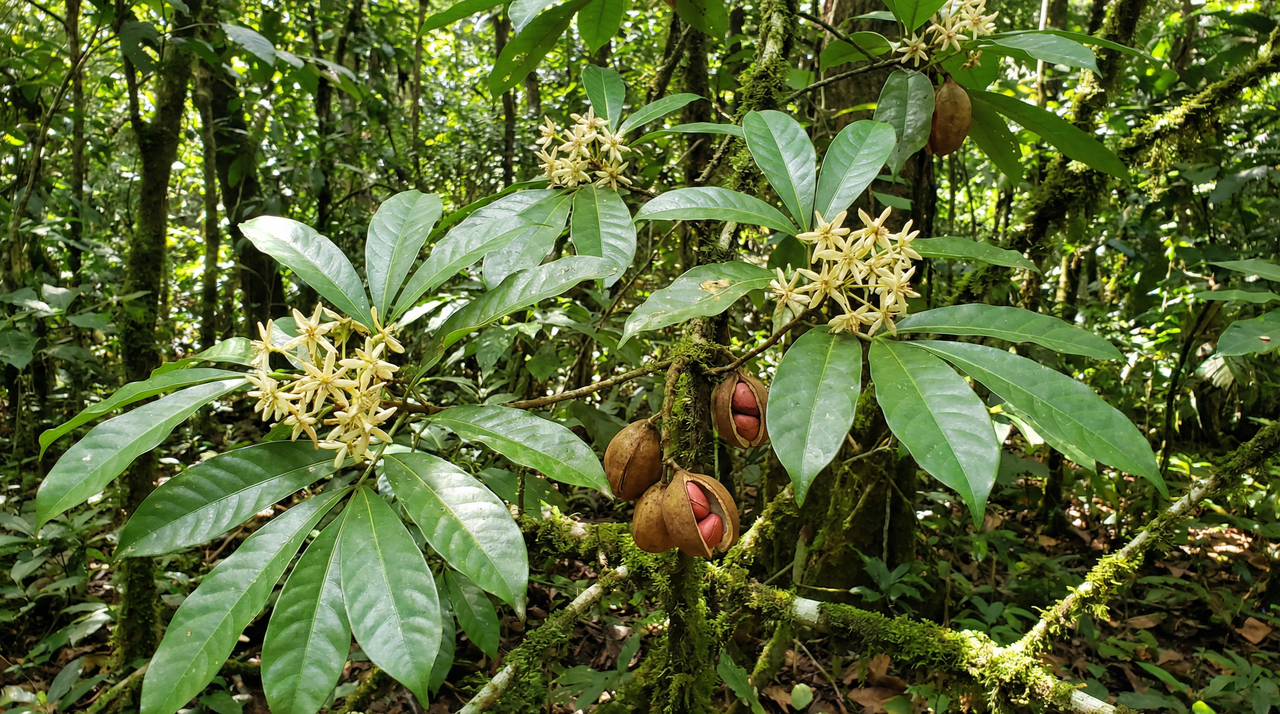
Here's what gets me every time I tell someone I'm growing kola nut: their eyes light up and they say, "Oh, like Coca-Cola?" And yes, technically, that's true. The original formula drew on kola nut extract for both its caffeine kick and its flavor, before the company quietly swapped in synthetic substitutes sometime in the early twentieth century.[1] But reducing this tree to a footnote in soda history is like describing a cathedral as a pile of old rocks. Long before any chemist got involved, kola nut was the seed at the center of West African life: offered at births, funerals, weddings, and negotiations, passed between hands as a gesture that meant something closer to "I see you and I respect you" than anything a can of soda has ever communicated.
What I find genuinely fascinating is that the bitterness is the whole point. People don't eat kola nut despite the intensity; they eat it because of it. That sharp, astringent chew that most Western palates instinctively recoil from is exactly what signals meaning in a ritual context, and it's also what delivers a slow, clean stimulant lift that serious growers in humid tropical climates have relied on for centuries. I've tasted it fresh off a split pod, and it stopped me cold. Not unpleasant, just demanding, like the plant was asking whether I was paying attention.
Kola Nut Origin, History, and Cultural Significance
Long before the first can of cola rolled off a production line, and long before European botanists gave it a Latin name, the kola nut was already doing the most important work a plant can do: holding people together. In Igbo, Yoruba, Akan, and countless other West African societies, Cola acuminata is not simply a seed you chew. It's a declaration of goodwill, a bridge between the living and the ancestral, and the thing without which a wedding, a funeral, or a simple greeting between respected elders feels somehow incomplete. Understanding where kola nut comes from means starting there, with that cultural heartbeat, before we ever get to taxonomy or trade routes.
Botanical Background and Native Habitat
Cola acuminata is native to the lowland tropical rainforests of West and Central Africa, ranging from Sierra Leone through Nigeria and Cameroon south to the Democratic Republic of Congo and Angola, typically growing at elevations below 300 meters under the consistently wet, hot conditions of the humid tropics.[2][3][4] It's an understory to sub-canopy tree when young, showing real shade tolerance in its early years before maturing into a full-sun canopy specimen; ecologists classify it as an early to mid-successional species that readily colonizes forest gaps and edges.[3][5] Given the right conditions, the tree is extraordinarily long-lived, with lifespans of 50-100 years or more documented under optimal conditions, and related species Cola altissima and Cola reticulata follow a similar pattern.[6][7][8]
Having grown other Malvaceae relatives in zone 9B landscapes, I've seen firsthand how quickly genetic diversity erodes when a species is reduced to a handful of clones, and that concern is very real for Cola acuminata in its native range. The IUCN currently lists it as Least Concern overall, but localized populations face serious pressure from deforestation, agricultural expansion, and overharvesting.[9] Closely related Cola altissima is already assessed as Near Threatened, and Cola stelechantha has reached Endangered status under the same pressures.[10][11] That gradient from Least Concern to Endangered across sister species is a warning worth taking seriously. The genus is wider than most people realize: Cola altissima spans from Senegal to Sudan and south to Angola, often cultivated for its higher seed yields, while Cola reticulata occupies the understory of Nigerian, Cameroonian, and Gabonese forests with seeds wrapped in a distinctive white aril.[12][13] These are not interchangeable plants, and sourcing from genetically diverse seed stock matters enormously for their long-term viability. It's also worth acknowledging that the taxonomy itself is still unsettled: Cola acuminata carries some unresolved synonymy with Cola glabra, possible hybridization with Cola nitida, and a history of mislabeled herbarium specimens, with its first formal scientific description attributed to Aublet in 1775.[14][15]
Visual Characteristics of the Kola Nut Tree
In its native forest, Cola acuminata is unmistakably a tree of presence. It typically reaches 15-30 meters, occasionally touching 40 meters in undisturbed rainforest, with a spread of 10-15 meters and a broad, rounded to pyramidal crown.[16][17][3] The trunk is straight and buttressed, clad in rough, longitudinally fissured grayish-brown bark that weeps milky latex when cut. After years of designing tropical food forests and watching how mature trees respond to storm wind, I've come to appreciate just how much those buttressed roots contribute to structural stability; it's one of the reasons kola trees remain standing when more shallow-rooted neighbors come down in high winds, and it's something I think about when recommending species for upper-canopy guild positions.
The leaves are alternate, simple, leathery, and dark green, typically 10-20 cm long with an elliptic to ovate shape, an acuminate apex, and entire margins; young leaves may show some fuzz along the veins, but mature foliage is smooth and glossy.[18][3] Flowers are small (1-1.5 cm), cream-white to pale yellow, bell-shaped, and borne in axillary panicles; in truly tropical climates they can appear nearly year-round.[6][19] The fruit that follows is the thing that sets this tree apart commercially and ceremonially: a woody, leathery dehiscent capsule typically 10-25 cm long, green when young and ripening to yellowish- or reddish-brown, splitting open to reveal 3-8 large ovoid seeds with reddish-brown seed coats and white to pinkish cotyledons inside.[20][21][22] Those seeds are the kola nuts themselves.
The related species tell their own visual stories. Cola altissima goes taller still, 20-50 meters with more prominent buttress roots, larger fruits, and obovate leaves reaching 30 cm.[12][23][24] Cola reticulata stays considerably more modest at 10-20 meters, with distinctively reticulate leaf venation and seeds embedded in that sweet white aril. Cola stelechantha typically runs 15-30 meters with a straight bole, a dense canopy 8-12 m wide, and star-shaped woody follicles 8-15 cm long enclosing 3-7 seeds.[11][25] Each species is distinct once you know what to look for, which matters a great deal when you're trying to identify what you're actually growing.
Traditional and Cultural Uses Across West Africa
The Igbo say "He who brings kola brings life." That phrase alone tells you more about what this nut means than any botanical description could. Across Igbo, Yoruba, Akan, and numerous other West African societies, the kola nut is the physical embodiment of hospitality, respect, and communal solidarity. The ritual breaking and sharing of the nut anchors greetings between elders, conflict resolution councils, marriages, funerals, naming ceremonies, initiations, and offerings to ancestral spirits.[26][27][28] If you've read Chinua Achebe's "Things Fall Apart," you'll remember how carefully and precisely the kola nut ceremony is described; that wasn't embellishment for literary effect, it was accurate ethnography. The ceremony carries real weight in ways that I think about when I consider how other plants I grow, like ginger or turmeric, carry their own quiet cultural resonance in the kitchens and practices they belong to. The kola nut ceremony belongs, with full cultural gravity, to people whose ancestors have been performing it for centuries.
This was never only a local tradition. Kola nuts were a cornerstone of trans-Saharan, regional, and Atlantic trade networks from at least the 15th and 16th centuries, used as currency and barter by Portuguese explorers and later absorbed into colonial cocoa and cola commerce.[29][30][31] The earliest European written record appears in Leo Africanus around 1513-1526, though archaeological evidence of Cola use in Nigeria pushes back to at least 1000 CE at the Igbo-Ukwu site, and oral traditions predate both by generations.[32][33][34] That depth of documented use is not something most plants in the Western food forest canon can match.
Medicinally, traditional practice across the genus has long valued chewing the raw seeds as a stimulant that suppresses hunger and delays fatigue, with preparations from seeds, bark, and leaves used for headaches, indigestion, coughs, diarrhea, infections, and hypertension.[35][36] Cola stelechantha and Cola reticulata enter traditional practice similarly, sometimes preferred for milder flavor or additional antimicrobial properties depending on the community.[37] In African diaspora communities today, the nut continues to anchor cultural identity, with the emphasis firmly on ritual hospitality rather than commercial transaction.[38] The tree and the ceremony it sustains are inseparable; which is precisely why deforestation is never just an ecological loss here, it's a cultural one.
Fun Facts and Historical Notes
The detail that tends to stop people cold in conversation: kola nuts, specifically Cola acuminata and Cola nitida, anchored the early years of the global soda industry before being swapped out for modern artificial alternatives.[39] The "cola" in the drink's name is not a coincidence; it's a direct botanical reference that most people consuming the beverage have no idea about. I find that gap quietly fascinating, the distance between a sacred ceremonial seed and a mass-market soft drink ingredient.
Cola acuminata made its way into European botanical knowledge in the 19th century via Kew Gardens, which introduced living collections and maintains herbarium specimens for ongoing research.[40] Botanical gardens like Kew have done genuinely important work safeguarding both germplasm and cultural knowledge around plants like this one, and their living collections remain one of the few places outside West Africa where you can study mature trees with confidence about their species identity. For a genus still sorting out its own taxonomy, that matters more than it might seem.
Kola Nut Varieties and Sourcing
Notable Varieties and Landraces of Cola acuminata
The taxonomy here is cleaner than the on-the-ground reality. Kew recognizes two formal botanical varieties: Cola acuminata var. acuminata from west-central tropical Africa, and var. nitida from Central Africa, distinguished by differences in leaf shape and nut size.[41][42] When I've germinated seeds from different sources, those leaf-shape differences are often visible in the first year's growth, which helps explain why two trees from supposedly the same species can look and perform so differently in the nursery.
Below those botanical varieties, the real diversity lives in the hands of West African farmers. Regional landraces like 'Ogoja,' 'Njane,' 'Lugada,' 'Ebwe,' and 'Adansi' have been selected over generations for differences in nut size, caffeine content, yield, and flavor. And provenance really does matter: trials comparing trees from different source populations show height and nut yield varying by 20 to 50%, with selections from southwestern Nigeria consistently outperforming material of uncertain origin.[43][44] I've seen that 50% figure manifest as something concrete: trees from a documented southwestern Nigerian source reached reproductive age noticeably faster in my trials than material from a vague "West Africa" label.
Formally registered commercial cultivars are essentially nonexistent across the whole genus.[45] The closely related Cola reticulata includes red-fruited types that sometimes get called red kola nut, with breeding programs exploring hybrids for improved caffeine or disease resistance,[46][47] while Cola altissima shows provenance differences between upland and lowland ecotypes with no standardized cultivars to speak of.[48][49] Cola stelechantha produces smaller, notably bitter nuts on trees up to 30 meters tall and remains essentially wild, with no documented cultivars at all.[50][25][51] For a permaculture designer, I'd argue that's not a weakness. Working with diverse, locally adapted landraces has produced more resilient food forest guilds in my experience than any single uniform clone ever could.
How to Source Kola Nut Trees, Seeds, and Dried Nuts in the US
For US growers, Cola acuminata is available from a handful of specialty tropical nurseries: Florida Hill Nursery, Logee's, Top Tropicals, and Rare Plants Nursery all carry plants or seeds periodically.[52][53][54][55] Since these are slow-growing tropicals, I'd encourage buyers to look closely at root health before purchasing rather than grabbing the cheapest option. Seeds typically run $5 to $15 each or $10 to $25 for a packet; seedlings fall in the $15 to $40 range; mature container specimens can reach $50 to $100 or more. Dried nuts come through ethnic grocery stores and online retailers at roughly $10 to $30 per pound.[54][56][57]
If you're sourcing directly from overseas, know that USDA APHIS plant quarantine regulations apply and an import permit may be required.[58][59] I always request proper documentation when importing seed myself, and I learned the hard way with another tropical species that skipping that step risks losing the whole shipment and potentially introducing new pests. The good news is that Cola acuminata isn't listed in any CITES Appendix, so international trade isn't restricted under that framework.[60][61] The other Cola species are harder to find domestically and best sought through specialty nurseries focusing on rare African tropicals. One important note: Cola stelechantha is listed as Vulnerable by the IUCN,[62] and I've only ever seen it in botanical garden collections. I wouldn't pursue wild-collected material under any circumstances, and I'd encourage you to verify sourcing carefully if you ever encounter it for sale.
Kola Nut Propagation and Planting Guide
Growing kola nut from scratch is less like starting a tomato and more like working against the clock. The seeds are alive in the most urgent sense of the word, and every decision you make in the first 24 hours after a pod splits will shape your germination outcome. I've worked with enough recalcitrant tropical seeds to know that hesitation is the enemy, and kola nut will punish it faster than almost anything else I've handled.
Understanding Kola Nut Seeds: Morphology, Viability, and Germination
Fresh kola seeds are genuinely striking up close. They're large, ovoid to ellipsoidal, often angular or lobed, measuring 2 to 5 cm long and 1.5 to 3 cm wide, with a hard reddish-brown to dark brown woody seed coat and a prominent elliptical hilum.[17][63] Split one open and you'll find two large, pale, starchy cotyledons that remind me of an oversized coffee bean crossed with a small chestnut. They look robust. Don't let that fool you.
Cola acuminata seeds are recalcitrant, which means they can't be dried down for storage without losing viability. They'll die within 2 to 3 weeks if desiccated or left sitting improperly, and they cannot tolerate moisture content dropping below 20 to 30%.[64][17] When I first started experimenting with recalcitrant tropicals, I learned this the hard way by leaving a handful of seeds on my potting bench overnight while I finished labeling pots. By the next afternoon, germination had already dropped noticeably. Sow them the day the pod opens. That's not a suggestion.
Seeds fresh from the pod can still show physical dormancy from their hard impermeable coat, so a 24 to 48 hour warm water soak or light scarification will meaningfully speed things up.[65] Germination runs best at 25 to 30°C with humidity above 60%, in a well-drained, humus-rich, slightly acidic to neutral growing medium (pH 5.5 to 7.0), and under partial shade rather than direct sun.[17][66] Under those conditions, you're looking at germination in 2 to 6 weeks and success rates of 70 to 90%.[64]
Once sprouted, Cola acuminata shows epigeal germination, meaning the cotyledons push up above the soil surface where you can actually watch them emerge.[67] Related species including Cola altissima, Cola reticulata, and Cola stelechantha take the opposite approach with hypogeal germination, keeping the cotyledons underground.[67][68] Knowing which type you're working with matters for setting expectations: acuminata seedlings are slow regardless, gaining only 30 to 50 cm in that first year,[67] so don't panic when growth feels glacial in year one.
Vegetative Propagation Techniques: Cuttings, Layering, Grafting, and Tissue Culture
If you want genetic diversity and have patience to spare, fresh seeds are your method. If you want fruit before the end of the decade, get comfortable with vegetative propagation. That's the honest summary, and it's the same advice I give every gardener I consult with on long-maturing tropicals.
Semi-hardwood stem cuttings of 10 to 15 cm treated with IBA at 1,000 to 5,000 ppm can achieve 40 to 70% rooting success in 4 to 8 weeks when held at 25 to 30°C under 80 to 90% humidity.[69][70] Air layering is a solid alternative with a wider success range of 40 to 90% over 4 to 12 weeks, and it's often more forgiving for home growers who don't have a humidity chamber set up.[69] Sterile conditions matter for both; fungal problems are the primary way these methods fail.
Grafting is where the real time savings happen. Cleft, whip-and-tongue, and veneer grafts onto Cola acuminata or Cola nitida rootstock achieve 30 to 90% success, with the highest rates during the rainy season when the plant is in active growth.[71][72] Cola altissima can also serve as a hardy rootstock where appropriate.[71] The payoff: grafted trees fruit in 3 to 5 years versus the 5 to 8 year wait for seedlings.[73] I now graft almost exclusively for home-scale plantings I design. Telling a client they might wait eight years for their first nut tends to cool enthusiasm fast, and the grafting success rates are reliable enough that it's worth the extra skill investment. One note for those exploring related species: Garcinia kola (bitter kola) is not graft-compatible with Cola acuminata despite the name overlap, so don't be tempted to try.[74]
Tissue culture using Murashige and Skoog medium with BAP and NAA can achieve up to 90% success for clonal propagation of elite material.[75][76] That's a compelling number, but it requires a sterile lab environment that puts it firmly out of reach for most home growers. File it under "useful to know if you're scaling up."
Soil, Site Selection, and Planting Requirements for Kola Nut
The kola nut tree evolved in a West African rainforest understory, and its soil preferences reflect that origin completely. It wants deep, fertile, well-drained loamy soil with plenty of organic matter, a pH of 5.5 to 7.0 (the sweet spot being 6.0 to 6.5), and a minimum depth of 1.5 to 2 m to accommodate the taproot it develops.[7][77] Compaction and waterlogging are genuinely damaging; this plant has no tolerance for either. Soils should be loose and well-aerated, with a bulk density ideally below 1.6 g/cm³ and organic matter content somewhere in the 2 to 5% range.[77]
I always recommend a soil test before planting. If pH is off, you'll see it in the seedlings quickly: interveinal yellowing (chlorosis) is the telltale sign that pH is too high and nutrients are locking out.[78] I've corrected this on young kola seedlings by working elemental sulfur into the root zone and watering it in, watching the new growth come back green within a few weeks. It's satisfying when the fix is that visible. Lime goes in the other direction if you're working with an unusually acidic site.[77]
Light requirements shift with age. Young kola plants prefer partial shade or dappled light, something in the range of 4 to 8 hours of bright indirect or morning sun, with protection from intense afternoon exposure that can scorch the leaves.[17][79] Nursery seedlings should stay in shaded conditions for 6 to 12 months before transitioning to brighter light.[80] I've grown cacao seedlings alongside kola starts, and the two have nearly identical light needs in that juvenile phase: 30 to 50% shade cloth works well for the first year before gradual acclimation to more sun. Mature trees handle full sun if soil moisture is consistent, but they get there slowly.[17]
All of this assumes the baseline tropical conditions the kola nut plant genuinely requires: temperatures between 20 and 30°C, humidity above 60%, and annual rainfall of 1,500 to 2,500 mm.[17][64] Outdoor cultivation is realistic only in USDA zones 10 to 12. For zone 9 gardeners I work with, the conversation usually goes like this: treat it like a large citrus, keep it in a container that can come inside, run humidity trays, and don't let temperatures dip.[81] It's doable, but it's a commitment. For nursery containers and raised beds, a well-drained mix of loam, compost, and perlite in roughly equal parts gives good results until the roots need more room.
Spacing, Planting Technique, and Timeline to First Harvest
Cola acuminata reaches 20 to 40 m tall at maturity with a canopy spread of 6 to 12 m, and that ultimate size demands respect at planting time.[73] Standard orchard spacing of 8 to 10 m between trees with rows 9 to 12 m apart gives you 100 to 150 trees per hectare and keeps light, airflow, and harvest access workable as the canopy fills in.[82][83] In agroforestry systems, you can push densities up to 200 to 400 trees per hectare, but that requires consistent pruning to prevent the canopy from closing entirely and creating disease-prone stagnant air pockets.[73]
Plant during the rainy season. Warm, consistently moist soil gives roots the best possible establishment window, and the lower transplant stress at this time of year is measurable in early growth rates.[72][84] During the first 3 to 5 years before canopy closure, interplant with shade-tolerant companions like banana, which provide useful ground cover and some economic return while the kola trees establish.[85] This kind of layered planting also mirrors the forest structure kola occupies naturally, which tends to produce calmer, more stable microclimate conditions for young trees.
The timeline question is the one every grower asks first, and the honest answer is: it depends on how you propagate. Because vegetative propagation dramatically shortens the wait to first harvest, it remains the preferred method for anyone prioritizing yield timeline.[72][84] Full production potential doesn't peak until 10 to 15 years in.[72] That's a long horizon, and it's why the propagation choice you make at the beginning genuinely matters. Fresh seeds for volume and genetic diversity; grafted material when a specific yield timeline is the priority.
Kola Nut Care Guide: Growing Cola acuminata
Kola nut is not a plant you can squeeze into a marginally warm corner and hope for the best. Every care decision you make for Cola acuminata flows from a single biological fact — this tree evolved in the humid West African rainforest understory, and it has absolutely no memory of hardship. It expects consistent warmth, reliable moisture, filtered light, and rich organic soil. Give it those things and you have a tree that can live and fruit for well over 50 years. Shortchange it on any one of them and the consequences show up fast.
Watering Needs for Kola Nut Trees
Kola nut wants to live in the equivalent of a perpetually damp forest floor. The ideal setup is well-drained, fertile, slightly acidic soil (pH 5.5–6.5) with high organic matter and annual water input equivalent to 1,500–2,500 mm of rainfall.[86][87] Humidity between 60–80% is the baseline; higher is better. I think of the watering needs here similarly to young cacao: the goal is never wet, never dry, always just right.
Seedlings and young trees need about 1–2 inches of water per week, keeping the top inch or two of soil evenly moist without saturation.[88] Mature trees are a bit more forgiving in between waterings, but during dry periods they still need deep irrigation every 5–10 days, roughly 20–40 liters per tree per week.[88][89] In containers, I use a moisture meter rather than guessing; the top inch drying out slightly between waterings is fine, but anything deeper than that spells trouble.
Overwatering shows as yellowing leaves, root rot, and fungal problems. Underwatering produces wilting, leaf curl, and premature drop — and over time, noticeably reduced nut production.[89][90] A thick 2–3 inch mulch layer does a lot of the heavy lifting here, moderating soil temperature, retaining moisture, and suppressing weeds.[87] Use rainwater or filtered water when possible; this tree is sensitive to salinity and prefers irrigation with an EC below 1 dS/m.[91]
Sunlight and Light Requirements
Young kola nut trees need 50–70% shade, which mirrors their natural position as understory juveniles beneath a dense rainforest canopy.[92] I've found the parallel to young coffee plants useful here — both want dappled, indirect light and will tell you immediately when they're getting too much direct sun by crisping at the leaf margins. As trees mature, they can handle more ambient light and partial sun, but they still appreciate protection from intense afternoon exposure and drying winds.[93]
Too little light produces etiolated stems, pale or chlorotic leaves, and weak growth that sets back fruiting potential for years. Too much results in scorch, photoinhibition, wilting, and leaf drop.[94] The sweet spot for juveniles is genuinely filtered shade, not just light shadow from a fence.
Feeding and Soil Fertility for Kola Nut
Start with a soil test. Annual or biannual testing in high-rainfall growing conditions is not optional — leaching happens fast in tropical soils, and over-correcting with fertilizer is as damaging as deficiency.[95] The tree wants pH 5.5–6.5, fertile conditions, and a strong organic foundation.
Young trees in their first three years do well with 100–300 g of a balanced NPK (10-10-10 or 15-15-15), split into two to four applications during the growing season.[96] Once a tree reaches bearing age, shift toward a higher-potassium formula like 10-10-20, with annual applications of 300 g to 1 kg or more depending on tree size and yield.[96][97] Always apply in split doses during the rainy season to maximize uptake and minimize what gets washed straight through the root zone.[98]
I've caught potassium deficiency early on container-grown kola seedlings by watching for marginal leaf necrosis after heavy rains leached the potting mix — catching it before the damage progressed prevented significant stunting. Nitrogen deficiency reads as chlorosis on older leaves and sluggish growth. Phosphorus deficiency shows as purplish foliage and poor root development. Micronutrient gaps, especially iron, zinc, and boron, are common in acidic tropical soils and produce interveinal chlorosis, rosetting, or hollow nuts.[99] Working in 5–20 kg of compost or well-rotted manure per tree annually addresses multiple deficiencies at once and mimics the nutrient cycling of the forest floor far better than synthetic fertilizer alone.[98]
Frost Tolerance and Cold Protection
There is no frost tolerance to speak of. Cola acuminata is a lowland rainforest species native to elevations below 300 m, and established trees may survive a brief dip to 4–5°C (39–41°F), but prolonged exposure below 10–15°C causes real damage.[100] The species is rated USDA zones 10–11, sometimes extended to zone 10b–12, and RHS H1c (heated glass).[101][102]
Young leaves, flower buds, and new growth are the most vulnerable tissues. Cold symptoms progress from wilting and yellowing through browning, scorch, and premature drop, and a hard frost will kill a mature tree outright. Even in my zone 9B setting in Florida, I move container kola indoors as soon as nighttime temperatures approach 50°F (10°C). The brief-dip tolerance is real, but it is not a buffer I'd gamble on with a tree that takes a decade to reach bearing age. Outside zones 10–11, container culture with winter greenhouse or indoor protection is the only realistic approach.
Heat Tolerance and Temperature Management
Optimal growth happens between 24–30°C (75–86°F) with humidity above 80%.[103] Brief spikes to 35°C are tolerated, but sustained heat above 30–32°C stresses seedlings and disrupts flowering and fruit set significantly.[103][104] Related Cola species can handle brief spikes toward 38–40°C but see reduced pollination above 35°C during bloom, which is a useful warning threshold for all growers.[92]
Heat stress shows as wilting, chlorosis, flower drop, and poor fruit set.[105] Mitigation is straightforward: maintain the 50–70% shade cloth for juveniles, mulch heavily, keep irrigation consistent, and use companion planting with taller species to raise local humidity around the canopy. This mirrors the rainforest floor dynamic and is an approach I apply across many of my tropical designs. In Florida's humid summers I've seen misting and shade cloth keep similar understory trees fruiting through peak heat where unprotected specimens dropped their flowers entirely.
Pruning, Maintenance, and Seasonal Care
Training structure early matters enormously with a long-lived tree. In years one through three, remove lower branches and suckers to establish four to six well-spaced scaffold branches on a central leader or open-center form.[106] Do any significant pruning during the dry season, when disease pressure is lower and wounds heal more cleanly.[107] As the canopy fills in, the crown should eventually be raised to 1.5–2 m to maintain access for harvest below.[108]
For mature trees, a light post-harvest pruning removes 20–30% of older wood, stimulates fresh flowering wood, and opens the canopy for air circulation — an approach that has been shown to improve orchard yields by 20–30% while also reducing fungal pressure.[108][109] I've found that a light hand after harvest on trees like this redirects energy into next season's flowers far better than heavy cuts, which shock the tree and invite disease. Think of it as regenerative rather than corrective. Sanitation cuts to remove diseased or crossing wood can happen as needed throughout the year.
Seasonal Growth Rhythm of the Kola Nut Tree
Cola acuminata is polycarpic, meaning it flowers and fruits repeatedly across a lifespan that can exceed 50 years.[110] Trees grown from seed reach reproductive maturity around 8–10 years, which is a long commitment. Flowering peaks in the dry season (roughly December–April), with bimodal peaks in March–May and August–October depending on the local climate, and fruit matures 5–6 months after pollination, bringing harvest to September–December at the close of the rainy season.[110]
In ideal conditions, some flowering occurs year-round, but the tree still follows the wet-dry rhythm of its West African homeland.[111] Understanding that rhythm helps time fertilization and pruning correctly. I align heavy feeding with the start of the wet season and do any structural pruning in the dry season before the next flowering push begins. There's no true dormancy here — this is an evergreen tree, growth simply slows during dry or cool periods — but container-grown specimens in cooler climates should be kept above 10–15°C throughout their indoor overwintering period to avoid setting back next season's flowering cycle.[6] For contrast, the closely related Cola stelechantha follows a monocarpic pattern — flowering and fruiting once after 5–15 years before declining — which makes Cola acuminata's reliable bimodal annual fruiting all the more worth the patient wait.[111]
Harvesting Kola Nuts: Timing, Technique, and Yield
Growing any long-maturing perennial teaches you patience in ways that annual gardening simply doesn't, and kola nut is an extreme example. From the moment a flower is pollinated, you're looking at roughly 5 to 6 months before the pod reaches physiological maturity.[112][103] I've started labeling flowering events on my long-maturing tropicals and tracking them through several seasons just to internalize these rhythms, and kola has reinforced that habit more than anything else in my food forest. Add to that the wait for trees to begin fruiting at all: traditional propagation leaves growers waiting years for a meaningful return, with full yield potential not realized until the tree is 10 to 15 years old.[113][114] This is a decades-long investment, and the harvest experience reflects that.
When to Harvest: Maturity Indicators and Seasonal Windows
The visual cue for harvest readiness is unmistakable once you've seen it. Pods shift from deep green to pinkish-red, reddish-brown, or yellowish-brown depending on the individual tree, and many will begin splitting naturally at full maturity.[115][116] In my subtropical climate that color change reads clearly, but I've learned to watch the pods rather than the calendar. Traditional West African cultivation concentrates harvest between October and January during the dry season,[117][118] and that seasonal timing matters for a reason: lower humidity at harvest dramatically reduces fungal risk during post-harvest handling. In humid subtropical conditions, that logic applies doubly.
How to Harvest and Handle Kola Nuts
Once pods are harvested, the real work begins. Seeds must be extracted from the pods, washed, and sun-dried for 3 to 7 days until moisture content drops to 10 to 15 percent.[119][120] Hit that target and you've got a storable seed; miss it and mold will find you fast. I've experimented with straight sun-drying versus a short controlled fermentation period before drying, and the ferment consistently produces a cleaner result in Florida's variable humidity, both for storage life and for what happens to the flavor. Monitoring closely during those first few days is non-negotiable.
Expected Yields and Flavor Notes
A mature Cola acuminata can yield 200 to 300 pods annually, with each pod carrying 2 to 5 seeds.[121][119] That's the ceiling under good management on a tree at full maturity. Home growers should expect meaningfully lower numbers through the first productive years, and I'd rather set that expectation honestly than have someone feel like they've failed when a young tree delivers a modest first harvest. Fresh seeds are intensely bitter and astringent from the caffeine, theobromine, tannins, and polyphenols packed into them.[122] Drying and light fermentation begin softening that bitterness through Maillard reactions, developing earthy, nutty, and faintly chocolate-like notes.[120][123] Think of the gap between a raw cacao bean and a fermented, dried one: the dried kola nut is a different sensory experience than what you pulled straight from the pod, and that transformation is the point of the whole post-harvest process.
Kola Nut Preparation and Uses
Traditional Culinary Uses and Flavor Profile of Kola Nuts
Before a single seed reaches anyone's mouth, the kola nut has already done its most important work. Presenting the seeds at a gathering signals welcome, respect, and shared purpose before any culinary event begins.[124][125] The seed is the primary edible part, chewed for its stimulant properties or prepared as a beverage, with leaves occasionally brewed into a light tea.[7][126] What's driving that stimulant effect is a solid 2-3.5% caffeine and 0.05-0.1% theobromine by dry weight, putting it in the same conversation as coffee for sheer biochemical punch.[127][128]
The flavor is a genuine challenge the first time. I'd describe it as somewhere between chewing a raw cacao bean and biting into a very strong espresso, with a bitterness that comes from tannins running 8-10% alongside significant polyphenol content — catechins, epicatechins, procyanidins — that builds and lingers for several minutes after you swallow.[129][130] There's a brief opening moment, slightly sweet or nutty, before the astringency takes over completely. Processing changes the picture significantly. Roasting at around 150°C triggers Maillard reactions that develop coffee-like and faintly chocolatey aromas and noticeably reduce that punishing bitterness, and boiling for 30-60 minutes softens both the texture and the harshness enough to make the seed far more approachable.[131][132] In West African culinary tradition, chewing raw or roasted seeds with lime, ginger, sugar, or cinnamon is a long-established way to balance the bitterness, and ground kola powder turns up in cocoa-based drinks, porridges, and marinades where sweetness from honey or starchy yams does the same balancing work.[17][133] Modern cola soft drinks originally used kola extracts to achieve that characteristic flavor, though synthetic alternatives have since replaced them in commercial production.[17]
Related species follow similar patterns with subtle variations worth knowing. Cola altissima leans more intensely bitter with chestnut-like undertones; Cola reticulata's bitterness fades relatively quickly into mild nutty-sweet notes; Cola stelechantha is notably harsher than Cola acuminata, though it carries fruity, woody, and faint chocolate aromas from volatiles including linalool.[132][134] The seeds also carry decent nutritional value: 10-15% protein, high carbohydrates, meaningful fiber, B vitamins, and minerals including potassium, magnesium, and calcium, along with polyphenol antioxidants running around 50-100 mg/g in seed extracts.[135][136] From a seed-saving perspective, these are recalcitrant seeds that change bitterness profile rapidly as they dry, so seeds kept for eating rather than planting should be stored fresh and cool, ideally in the refrigerator, and used relatively quickly.
Medicinal Preparations from Kola
Traditional medicinal use overlaps directly with culinary practice: chewing 1-3 seeds daily is the most common approach for fatigue, digestive complaints, and appetite management, with decoctions (roughly 5-10 g of seeds boiled in 500 mL water) and infusions steeped for 10-15 minutes used where the bitter intensity of chewing raw seeds isn't practical.[137][138] Powdered kola mixed with food or water and topical poultices from seed material also appear in the ethnobotanical record. These dosages are empirical, passed down through generations of practical use rather than derived from standardized clinical trials, and they vary considerably across communities and species.[139] The intensity of the bitterness itself is a sensory signal of potency. Anyone exploring these preparations should read the health benefits section for the full safety picture, particularly around caffeine loads and contraindications.
Non-Food Uses of the Kola Tree
The seed is only one part of the story. Bark extracts from Cola acuminata yield red dyes used in traditional cloth coloring, and the leaves provide fiber woven into ropes, mats, and baskets.[3][140] The timber itself is dense, durable, and termite-resistant, valued for construction, furniture, and fuel, and the same properties hold across related species including Cola altissima and Cola reticulata.[112][141] This is the kind of whole-system value I look for when I'm designing a food forest. Ghana alone produces 20,000-30,000 metric tons of kola nuts annually, supporting significant rural livelihoods, but that scale also brings real concerns around biodiversity loss, land rights, and equitable trade.[142] Choosing ethically sourced kola — fair-trade certified where possible, or from smallholder producers who maintain diverse, multi-canopy systems — aligns directly with the same permaculture ethics that should guide how we source any long-lived tropical crop. The tree gives generously across timber, fiber, dye, and seed; that generosity deserves a supply chain that gives something back.
Kola Nut Health Benefits and Medicinal Uses
Traditional and Cultural Significance of Kola Nut
Long before pharmacologists took an interest, West African healers and communities had already mapped out what Cola acuminata seeds could do. Across Nigeria, Ghana, Cameroon, and neighboring regions, chewing kola was the practical medicine of daily life: a reliable way to push through fatigue, quiet hunger on long journeys, and ease digestive complaints including dysentery and diarrhea.[143][144] The seeds also had a role in treating headaches, asthma, and whooping cough, attributed directly to their caffeine and theobromine content.[145] Traditional preparations ranged from simply chewing a raw piece to bark decoctions for wound healing and skin ailments, while leaves were applied for pain, fever, and infections.[146] Related species including Cola altissima, Cola reticulata, and Cola stelechantha share strikingly similar applications for respiratory conditions, malaria, and fatigue, which tells you something about how consistent these alkaloids are across the genus.[144]
The ceremonial dimension runs just as deep. This ceremonial hospitality complements the plant's physiological effects, acting as a social anchor well before any medicinal benefit is felt.[145][147] I find it useful to hold both of these contexts simultaneously: the pragmatic, fatigue-fighting chew and the profoundly social, sacred object. They're not separate things. The same bitter seed does both.
Key Phytochemicals in Kola Nut: Caffeine, Theobromine, and Polyphenols
The bitter, buzzy experience of chewing a piece of kola nut makes immediate chemical sense once you look at what's inside. Seeds contain 1.5 to 3.5% caffeine by dry weight, with most samples landing around 2 to 3%, alongside theobromine at 0.1 to 0.5% and trace theophylline.[148][149] The first time I tasted a small piece, the sensation reminded me of a very strong espresso shot layered over bitter unsweetened cocoa: stimulating almost immediately, with an astringency that lingers. That astringency comes from the polyphenol fraction, which is substantial: tannins at 2 to 12%, flavonoids including catechin, epicatechin, quercetin, and kaempferol derivatives, all contributing to antioxidant activity measured at DPPH IC50 values of 20 to 100 μg/mL.[150][151] Leaves carry 50 to 150 mg/g total phenolics; bark is especially tannin-rich, reaching 5 to 10% in some species.[152]
These concentrations aren't fixed. In my experience growing other tropical stimulant plants, warmer, drier conditions consistently produce more pungent, alkaloid-rich harvests, and the research on kola bears this out: dry-season nuts yield 30 to 40% higher alkaloids than rainy-season harvests. Furthermore, warmer humid climates and slightly acidic, organic-matter-rich soils enhance both alkaloids and phenolics, and geographic origin alone can shift flavonoid levels by up to 15%.[153][154] Roasting may decrease caffeine by 5 to 20%, while alkaloid content peaks at seed maturity (4 to 6 months post-flowering) and is highest in seeds compared to leaves or bark.[155] None of this is accidental: caffeine evolved in these seeds as a natural pesticide and antimicrobial deterrent, and centuries of human selection in Cola acuminata have favored higher caffeine concentrations precisely for their stimulant and beverage value.[156] Cola altissima, Cola reticulata, and Cola stelechantha show comparable alkaloid profiles, though stelechantha and tessmannii sometimes run slightly lower at 1 to 2% caffeine.[157]
Pharmacological Research and Potential Health Benefits
The preclinical research on Cola acuminata is genuinely interesting, and I want to be honest about what that means: interesting, promising, and not yet proven in humans. The anti-inflammatory data is probably the strongest mechanistic story. Seed extracts inhibit COX-2 enzymes, suppress NF-kappaB activation, and reduce pro-inflammatory cytokines including TNF-alpha, IL-6, and IL-1beta, with animal models showing 40 to 60% reduction in paw edema.[158][159] Similar results appear across Cola altissima and Cola stelechantha at 200 mg/kg doses.[160] Antimicrobial activity is documented against E. coli and S. aureus at MIC values of 0.5 to 2 mg/mL, attributed to the alkaloid and tannin fraction.[161][162] Preliminary in vitro work shows activity against Plasmodium falciparum, suggesting antimalarial potential linked to alkaloid interference with parasite growth, with Cola reticulata and Cola stelechantha showing similar results.[163] There's also antidiabetic potential: seed extracts inhibit α-glucosidase by 30 to 50% and improve glucose tolerance in animal models, while caffeine drives preliminary antiobesity effects through thermogenesis and appetite suppression.[164][165]
I deeply respect the centuries of West African knowledge embedded in these traditional uses, and I'm genuinely curious where the human trials will land. But as someone who values evidence when making planting and medicinal choices, the honest summary is that virtually all of this remains in vitro or animal-based.[166][167] Systematic reviews are sparse, clinical trials are limited, and that applies equally to the related species.[168] The traditional uses deserve respect, and the phytochemistry is compelling. The clinical proof needs to follow.
Nutritional Profile of Kola Nut
Kola nut is best understood as a functional stimulant chew rather than a nutrient-dense food, and the numbers reflect that. A typical serving is 1 to 5 g of dried seed, delivering roughly 15 to 20 kcal, about 0.5 g protein, and 4 g carbohydrates.[169] Per 100 g dry weight, the macro picture broadens to 370 to 400 kcal, 9 to 16 g protein, 50 to 78 g carbohydrates, and 3 to 14 g fiber, with Cola reticulata running higher in energy and fat and Cola stelechantha tending toward the upper end of fiber.[170][171] Minerals are where Cola acuminata genuinely stands out: potassium hits 1,200 to 3,500 mg per 100 g dry weight, with meaningful calcium, magnesium, and phosphorus alongside modest iron and zinc.[172][173] Vitamins, though, are minimal: low vitamin C, modest B vitamins, and negligible A, E, K, or folate.[174]
At a traditional 5 g serving, you're getting roughly 10 to 20 mg caffeine alongside a meaningful hit of tannins that bind iron and contribute to that arresting astringency.[150][175] That tannin load also means regular high-volume use could interfere with iron and protein absorption, an interaction that anyone treating kola as a regular supplement needs to account for. I value the antioxidant contribution of those polyphenols, but I don't think of this as a nutritional powerhouse in the way leafy greens are. It's more like coffee: you're not eating it for vitamins.
Safety Considerations, Side Effects, and Contraindications
The side effect profile of kola nut is essentially the side effect profile of caffeine, because that's the primary driver. At moderate doses, expect the familiar stimulant effects: insomnia, restlessness, elevated heart rate, anxiety, and gastrointestinal upset.[176] Traditional moderate use involves chewing one or two small pieces daily, keeping caffeine well under 200 mg. Exceeding 400 mg per day consistently increases the risks of cardiovascular strain and exacerbated hypertension, and high-dose animal studies have flagged hepatotoxicity at levels far above anything traditional use would produce.[177][178]
Pregnancy is a firm contraindication. The research on caffeine's effects during pregnancy is clear enough that I always tell pregnant readers to avoid kola nut entirely or speak to their doctor first: the guidance is under 200 mg caffeine per day, and a concentrated kola supplement makes that limit very easy to breach.[179][177] Individuals with hypertension, arrhythmias, anxiety disorders, peptic ulcers, glaucoma, or caffeine sensitivity should approach kola with real caution.[139] These cautions extend across Cola altissima, Cola reticulata, Cola stelechantha, and Cola tessmannii.
If you're on blood thinners, antidepressants metabolized via CYP1A2 like fluvoxamine or clozapine, MAOIs, or other stimulants, talk to your doctor before using kola medicinally: the drug interaction data is specific and real.[180][177] The tannins also reduce iron absorption, worth considering for anyone with borderline iron status who's chewing kola regularly. Acute toxicity is low overall (LD50 above 2,000 mg/kg in rodent studies), which supports the long safety record of traditional moderate use.[181] One practical note that applies to any high-caffeine plant I've worked with: if you're growing kola or experimenting with it, keep the seedlings clearly labeled. The young trees can look deceptively like other tropical species, and you want everyone in the household to know what they're handling before the seeds start appearing. And keep it away from dogs and cats entirely: caffeine and theobromine are genuinely toxic to pets at low doses.[182][183] The traditional moderate use of this plant has a long and generally safe record. Modern concentrated extracts and supplements are a different matter, and for those, professional guidance is the right starting point.
Kola Nut Pests and Diseases
Natural Defenses and Disease Susceptibility
Cola acuminata carries real chemical armor: its caffeine, theobromine, tannins, and kolaviron act as feeding deterrents and inhibit insect development, while glandular trichomes and thick bark provide physical barriers.[184][185] Those defenses matter. They just don't matter enough when humidity sits between 70 and 90 percent, temperatures hover around 24-30°C, and drainage is poor. Under those conditions, fungal pathogens thrive, and Cola acuminata is highly susceptible to a discouraging roster of them: black pod rot (Phytophthora spp.), anthracnose (Colletotrichum gloeosporioides), leaf spots from Cercospora and Pestalotiopsis, root rot from Fusarium and Armillaria, vascular wilt, and powdery mildew.[186][187][188] Yield losses of 30-50% are common in affected plantings, and young trees or those stressed by phosphorus or boron deficiencies are especially exposed.[186] I lost a young stand to Phytophthora after an unusually wet season in poorly drained clay soil, and watching that happen reshaped how I think about site prep entirely. Raised planting beds and generous spacing aren't optional for this tree.
Bacterial threats exist too. Xanthomonas spp. causes leaf blight across the genus, and Cola reticulata is additionally vulnerable to bacterial wilt from Ralstonia solanacearum.[189] Viral diseases like mosaic and cocoa swollen shoot virus have been reported but remain poorly documented, so I wouldn't lose sleep over them specifically, just keep the bigger fungal picture front of mind. Some hope exists in breeding: Ghana's Cocoa Research Institute has developed tolerant lines including 'Akuapem' with better resistance to Fusarium wilt and anthracnose, and wild relatives like Cola stelechantha and Cola tessmannii carry genes worth exploring.[190][191] But most of us are still managing with cultural practices, because dedicated disease-resistant kola cultivars remain rare in the nursery trade.
Major Insect Pests
The insect pressure on kola nut is broad. The kola weevil (Sophrorhinus/Lamprocyphus kolae) damages seeds directly; the kola gall midge (Resseliella chalybii) deforms young shoots; mirids (Helopeltis spp.), ambrosia beetles, aphids, scales, mealybugs, stem borers, and leaf-eating caterpillars round out the main cast.[186][188] Across the wider Cola genus, spider mites, fruit flies, bark borers, and Lepidopteran defoliators also show up, and post-harvest weevil damage can be severe without proper storage treatment.[192] What makes insect damage particularly costly is that it rarely stays isolated: borer wounds and mirid feeding create open entry points for the same fungal pathogens discussed above, so a pest problem accelerates a disease problem.
The phytochemical armor does help with some of them. I've noticed that Cola altissima seedlings I've grown have an almost face-puckering bitterness compared to standard Cola acuminata; that extra intensity correlates with stronger natural resistance to certain insects.[193] Cola stelechantha shows better resistance to kola weevils specifically, thanks to thicker seed coats.[194] No widely available commercial cultivar has been bred specifically for strong pest resistance, though, so species diversity in the planting guild remains the most accessible tool a grower has.
Integrated Pest and Disease Management
Because dedicated IPM cultivars are still largely unavailable, the daily decisions matter most. Integrated pest management for kola nut leans on cultural practices first: proper spacing for airflow, regular pruning of crowded or diseased material, thorough sanitation of fallen pods and leaf litter, improved drainage, balanced nutrition, and partial shade that moderates the microclimate without eliminating it.[195] These are exactly the same levers the care guide covers, and they're worth treating as non-negotiable rather than optional maintenance. In my experience growing other long-lived tropical perennials in complex food forest guilds, consistent sanitation and structural diversity reduce outbreak frequency more reliably than any spray schedule.
Biological controls fit naturally into this approach. I rely on the lady beetles and parasitic wasps already present in a diverse planting rather than introducing exotics. Neem-based biopesticides are a practical option when biological pressure needs supplementing, and entomopathogenic fungi have shown promise.[196] Targeted fungicides or insecticides have their place when economic thresholds are clearly exceeded, but they're a last resort rather than a calendar event. For growers attempting kola nut outside its native West African range, the pressure calculus shifts: natural predator communities will be thinner, and controlled growing environments or stricter monitoring become necessary to compensate.[197]
Kola Nut in Permaculture Design
If you're designing a tropical food forest and you want a tree that does the heavy atmospheric lifting, kola nut deserves a long, serious look. It's not a plant you slot into a design casually, but for growers in the right climate, it fills a role that few other trees can match: a dense, long-lived evergreen canopy anchor rooted in the rhythms of West African rainforest ecology.
Climate and Growing Zones for Kola Nut
Cola acuminata is native to the humid tropical rainforests of Nigeria, Ghana, and Ivory Coast, and while it has naturalized across the Caribbean, Central and South America, India, Sri Lanka, Indonesia, and parts of Florida and Hawaii, those introductions all share one thing: relentlessly warm, wet conditions.[81][6] The tree wants 1,200 to 3,000 mm (47 to 118 inches) of annual rainfall, ideally distributed evenly rather than dumped in one brutal season, with humidity consistently above 70 to 80 percent and temperatures in the 20 to 30°C (68 to 86°F) range.[4][3] It tolerates a stretch between 15 and 35°C (59 and 95°F), but above 35 to 40°C it starts showing stress.
Frost is simply not an option. Prolonged exposure below 10°C (50°F) causes damage, and anything approaching freezing is lethal for extended periods, though mature trees have been reported to briefly survive a dip to around -2°C (28°F) with protection.[198][81] Realistically, outdoor cultivation in the US means USDA zones 10 to 12, primarily southern Florida and Hawaii, often with supplemental irrigation and humidity management on top of that.[199] I work in zone 9B and grow other tropical trees in containers or protected microclimates, but kola nut is one I would not attempt outdoors without a serious greenhouse buffer. The rest of the Cola genus follows essentially the same script: Cola reticulata, Cola altissima, Cola stelechantha, and Cola tessmannii all demand zones 10 to 12, high humidity, and similar rainfall volumes.[200][12][25] The genus is remarkably consistent on its non-negotiables.
Forest Layer and Guild Roles
Cola acuminata is a medium to large evergreen tree, typically reaching 12 to 25 meters in cultivation and up to 40 meters in ideal rainforest conditions, with a dense, rounded canopy and glossy dark green leaves.[3][201] It's shade-tolerant when young, which is actually a design gift, but it grows at a slow to moderate rate and takes four to seven years to reach maturity. You're planting for the long game here.
In agroforestry and permaculture systems, it slots into the upper canopy or emergent layer, casting 70 to 90 percent shade and functioning as a windbreak and structural anchor.[202][118] That shade is not a liability. Cocoa, coffee, and bananas all thrive in the understory beneath it, and I've seen similar guild logic work beautifully under large mango and avocado canopies in Florida landscapes. The kola creates the same kind of closed, humid microclimate that makes you feel like you've stepped into a different ecosystem. Related species give you some flexibility in layering: Cola reticulata fits more of an understory to mid-story role at 5 to 25 meters, Cola altissima pushes into the emergent layer at 20 to 40 meters, and Cola stelechantha occupies a reliable canopy position at 15 to 30 meters.[203][204][23] Most Cola species also form mycorrhizal associations that improve phosphorus uptake in the acidic soils typical of humid tropical environments.[205] I always amend planting holes for tropical trees like this with native forest compost or a scoop of established forest soil to give those fungal partnerships a head start.
Ecosystem Functions and Services
One thing growers sometimes underestimate is how much kola nut's low natural fruit set is a pollinator story, not just a botanical quirk. The flowers are small, fragrant, and often cauliflorous, appearing in multiple flushes during the rainy season and relying on small flies, beetles, bees, and butterflies.[201][206] The tree is largely self-incompatible, pollination peaks in the early morning, and without sufficient pollinator activity, fruit set stays frustratingly low.[111][207] In my experience with other insect-pollinated tropical trees, maintaining diverse flowering plants nearby and keeping broad-spectrum sprays out of the system dramatically improves pollinator visitation. Hand pollination is also viable and worth learning if you're serious about yields.
Beyond pollination, the tree sustains a whole web of wildlife. Monkeys, squirrels, birds, and larger mammals including primates and elephants feed on the fruits and disperse seeds via endozoochory.[208] The leaf litter decomposes to cycle potassium, magnesium, phosphorus, calcium, and nitrogen back into the soil, and the deep root system stabilizes slopes and reduces erosion.[209] I want to be direct here because it's a point that gets muddled: kola nut does not fix nitrogen.[210] It's not a legume. If you're building a guild around it, you'll want to pair it with actual nitrogen-fixers like pigeon pea or gliricidia in the understory layers rather than assuming the canopy anchor covers that function.
The conservation dimension is real and worth sitting with. While global populations remain stable for now, localized pressure from habitat loss heavily impacts these trees and their complex pollinator networks.[211][11] Pesticide use and climate variability are also degrading pollinator populations that the trees depend on.[212] When I'm sourcing any tree with wild population concerns, I prioritize nurseries or community propagation programs focused on cultivated stock rather than wild-collected material. Growing kola nut in a food forest isn't just about the nuts; it's a small act in a much larger effort to keep these trees and their ecological relationships intact.
The Tree That Made Me Rethink What a Food Forest Is For
I grow food, but kola reminded me that plants carry more than nutrition. Every time I handle those seeds, still warm from the pod, I think about the elder somewhere in Igbo country who probably did the same thing that morning, for reasons that had nothing to do with caffeine and everything to do with keeping people together. That's a kind of yield I don't know how to measure, but I've stopped pretending it doesn't matter.
Sources 212
- Smithsonian Magazine: What Was in the Original Formula for Coca-Cola? ↩
- Kew Science - Plants of the World Online: Cola acuminata ↩
- Cola acuminata - Useful Tropical Plants ↩
- FAO - Kola Nut Production and Habitat in West Africa ↩
- Cola acuminata - Plants of the World Online | Kew Science ↩
- Cola acuminata - Wikipedia ↩
- Cola acuminata - Useful Tropical Plants ↩
- Kola Nut Tree (Cola acuminata) - Plant Profile ↩
- Cola acuminata ↩
- Cola altissima - IUCN Red List of Threatened Species ↩
- Cola stelechantha ↩
- Cola altissima - Useful Tropical Plants Database ↩
- Cola reticulata Engl. ↩
- Cola acuminata ↩
- Cola acuminata (DC.) Schott. ↩
- Cola acuminata Plant Profile ↩
- Cola acuminata ↩
- Flora of West Tropical Africa ↩
- Kew Science - Plants of the World Online ↩
- Cola acuminata - Plants of the World Online (Kew Science) ↩
- Cola acuminata - Missouri Botanical Garden Plant Finder ↩
- Cola acuminata - USDA Forest Service International Programs ↩
- Cola reticulata ↩
- Flora of West Tropical Africa ↩
- Cola stelechantha Engl. - Useful Tropical Plants Database ↩
- Kola is God's Gift: The Use of the Kola Nut in Igbo Culture ↩
- The Cultural Significance of the Kola Nut in Yoruba Society ↩
- Ethnobotany of Cola acuminata in West Africa ↩
- Historical Trade of Kola Nuts in Pre-Colonial West Africa ↩
- History of Kola in West African Trade ↩
- Portuguese Trade in West Africa: Kola and Slaves ↩
- Description of Africa ↩
- The Kola Nut: Botanical and Historical Notes ↩
- Archaeology of Trade in West Africa ↩
- Phytochemical composition and pharmacological activities of Cola acuminata: A review ↩
- Ethnobotanical Survey of Medicinal Plants in Nigeria ↩
- Traditional Uses of Cola stelechantha in Ghana ↩
- Kola Nut in the African Diaspora: Cultural Preservation ↩
- Cola altissima - Kew Science ↩
- Historical Introduction of Cola acuminata to Kew Gardens ↩
- Cola acuminata var. acuminata - Royal Botanic Gardens, Kew ↩
- Cola acuminata var. nitida - Royal Botanic Gardens, Kew ↩
- Provenance trial of kola nut (Cola acuminata and Cola nitida) in Nigeria ↩
- Genetic diversity and provenance variation in kola (Cola spp.) ↩
- Kola Nut Production in West Africa - FAO ↩
- The Kola Nut: Botany, Cultivation, and Utilization ↩
- Breeding Cola Nitida and Relatives for Improved Varieties ↩
- Variation in Cola Species: Provenance and Strain Selection ↩
- Domestication and Conservation of Cola altissima in West Africa ↩
- Growth Performance and Yield of Bitter Cola (Cola stelechantha) ↩
- Cola stelechantha (K.Schum.) Hallier f. — Kew Science ↩
- Cola acuminata - Kola Nut Tree ↩
- Cola Acuminata - Kola Nut Tree ↩
- Cola acuminata ↩
- Kola Nut Tree (Cola acuminata) ↩
- Importing African Foods to the US: Kola Nut Market Analysis ↩
- Ethnic Groceries and Specialty Imports in the US ↩
- USDA APHIS Import Requirements for Plants and Plant Products ↩
- Plant Import Permits and Phytosanitary Certificates ↩
- CITES Species+ Database ↩
- CITES Appendices ↩
- Cola stelechantha - IUCN Red List ↩
- Cola acuminata - PROTA4U ↩
- Propagation of Kola (Cola spp.) ↩
- Propagation of Tropical Trees - Kola Nut ↩
- Cultivation Methodology for Cola Species ↩
- Seed Morphology and Germination in West African Cola Species ↩
- Germination and Seedling Growth of Cola altissima ↩
- Propagation of Tropical Fruit Trees ↩
- Vegetative Propagation Techniques for Tropical Trees ↩
- Grafting Practices for Kola Tree (Cola acuminata) ↩
- Propagation of Cola acuminata: Grafting Techniques and Fruiting Timelines ↩
- Kola Nut Production and Marketing in Nigeria ↩
- Cola stelechantha: Propagation and Cultivation ↩
- Micropropagation of Cola acuminata ↩
- Micropropagation of Cola nitida and Cola stelechantha ↩
- Kola (Cola nitida and Cola acuminata) Production ↩
- pH Preferences for Tropical Fruit Trees ↩
- Cola acuminata - Missouri Botanical Garden ↩
- Agroforestry Uses of Kola Tree in West Africa ↩
- Growing Exotic Fruit Trees in Florida: Kola ↩
- Kola Nut Production Guide - FAO ↩
- Tropical Tree Crops: Kola Nut Spacing - ICRAF ↩
- The Kola Nut (Cola spp.) ↩
- Agroforestry Practices for Cola acuminata in West Africa ↩
- Kola Nut Tree (Cola acuminata) Plant Care & Growing Guide ↩
- Kola Nut Tree Care and Cultivation ↩
- Tropical Fruit Trees: Cultivation Guide ↩
- Cola acuminata Care and Cultivation ↩
- Kola Nut Tree Watering Guide ↩
- Salinity Tolerance of Tropical Fruit Trees ↩
- Cultivation of Cola acuminata: Shade and Water Management ↩
- Kola Nut (Cola spp.) Production in West Africa ↩
- Plant Stress Symptoms ↩
- Kola Nut Production Guide - FAO ↩
- Kola Nut Production Guide - FAO ↩
- Fertilizer Recommendations for Tropical Fruit Trees ↩
- Influence of Organic and Inorganic Fertilizers on Growth and Yield of Kola Nut ↩
- Nutrient Deficiencies in Cola acuminata ↩
- Cola acuminata - Missouri Botanical Garden ↩
- USDA Plant Hardiness Zone Map ↩
- Cola acuminata - Royal Horticultural Society ↩
- Cola acuminata: Cultivation and Uses ↩
- Climate Requirements for Kola Nut Production ↩
- Heat Stress Effects on Tropical Tree Seedlings ↩
- Pruning Techniques for Tropical Fruit Trees Including Kola ↩
- Kola Nut Production Guide ↩
- Kola Nut Production Guide ↩
- Pruning Tropical Trees ↩
- Phenology of Cola acuminata in West Africa ↩
- Reproductive Biology of Cola acuminata ↩
- Kola Nut Production and Processing in West Africa ↩
- Cultivation and Production of Kola Nut in Nigeria ↩
- Cola Nitida and Cola Acuminata Cultivation Guide ↩
- Kola Nut Production and Processing ↩
- Cola nitida and Cola acuminata: Trees for the production of vegetable chocolate and stimulants ↩
- Kola Nut (Cola spp.) Production in Nigeria ↩
- Kola Nut Production in West Africa ↩
- Kola Nut Production and Utilization - FAO ↩
- Post-Harvest Handling of Kola Nuts ↩
- Kola Tree Cultivation and Biology - FAO ↩
- Biochemical Composition of Kola Nuts ↩
- Biochemical Changes During Fruit Development in Cola nitida and Cola stelechantha ↩
- Journal of Ethnopharmacology: Ethnobotanical Survey of Kolanut Use in Nigeria ↩
- Cultural Significance of Kola Nuts in African Societies ↩
- PROTA4U - Cola acuminata ↩
- Phytochemical and Nutritional Composition of Kola Nut (Cola acuminata) - Journal of Food Composition and Analysis ↩
- Comparative Analysis of Caffeine in Cola nitida and Cola altissima ↩
- The Flavor of Kola Nuts - ScienceDirect ↩
- Chemical Composition and Sensory Properties of Kola Nuts ↩
- Processing of Kola Nuts: Bitterness Reduction Techniques ↩
- Flavor Chemistry of Kola Nut: Geographic and Processing Variations ↩
- Kola Nut in West African Culture and Cuisine ↩
- Cola stelechantha: The Bitter Kola Nut ↩
- Nutritional Composition and Bioactive Compounds of Kola Nuts (Cola spp.) ↩
- Phytochemical and Antioxidant Properties of Cola altissima Seeds ↩
- Medicinal Plants of Nigeria ↩
- The Genus Cola: Ethnobotany and Uses in West Africa ↩
- WHO Monographs on Selected Medicinal Plants ↩
- Ethnobotanical Uses of Cola acuminata in West Africa - ScienceDirect ↩
- Cola altissima (A. Chev.) Schott & Endl. ↩
- Kola Nut Production and Trade in Ghana ↩
- Traditional Medicinal Uses of Cola acuminata in Africa ↩
- Ethnobotanical Survey and Traditional Uses of Cola Species in West Africa ↩
- Kola nut - Wikipedia ↩
- Pharmacological Activities of the Genus Cola (Sterculiaceae): A Review ↩
- Traditional Uses of Kola Nut in Nigerian Cultures ↩
- Chemical Composition of Cola acuminata Seeds ↩
- Alkaloids in Cola Nuts: Caffeine and Theobromine Content ↩
- Chemical Composition and Bioactive Compounds of Kola Nut (Cola nitida and Cola acuminata) ↩
- Phytochemical and Pharmacological Review of Cola acuminata and Cola nitida ↩
- Phytochemical constituents and biological activities of Cola altissima ↩
- Influence of Soil and Climate on Kola Nut Metabolites ↩
- Phytochemical Screening and Seasonal Variation of Secondary Metabolites in Cola nitida and Cola acuminata ↩
- Caffeine Content and Pharmacological Properties of Kola Species ↩
- Plants of the World Online - Cola acuminata ↩
- Kola Nut (Cola spp.) - Phytochemistry and Pharmacology ↩
- Anti-Inflammatory Effects of Theobromine from Cola acuminata ↩
- Anti-inflammatory and Antioxidant Activities of Cola altissima Extracts ↩
- Phytotherapy Research: Pharmacological Evaluation of Cola altissima in Rodent Models (2017) ↩
- Antioxidant and Antimicrobial Activities of Kola Nut ↩
- Antimicrobial Activity of Cola stelechantha Extracts ↩
- Neuroprotective and Anti-malarial Properties of West African Cola Species ↩
- Anti-inflammatory and Antidiabetic Effects of Cola acuminata ↩
- Pharmacological Activities of Kola Nut (Cola nitida and Cola acuminata) ↩
- Kola nut (Cola nitida and Cola acuminata): A review of its pharmacology ↩
- Kola Nut (Cola nitida and Cola acuminata) ↩
- Pharmacological Review of Kola Nut (Cola nitida and Cola acuminata) ↩
- Kola Nut Nutrition Facts - NutritionValue.org ↩
- Chemical Composition of Kola Nuts (Cola nitida and Cola acuminata) ↩
- Nutritional Composition of Kola Nuts (Cola nitida and Related Species) ↩
- Nutritional and chemical composition of kola nuts ↩
- USDA FoodData Central - Kola Nut ↩
- Nutritional Composition of Bitter Kola (Cola spp.) Seeds ↩
- Antioxidant Properties of Kola Nut Extracts ↩
- Kola Nut: Uses, Side Effects, and More ↩
- Cola acuminata - An overview ↩
- Caffeine Toxicity - StatPearls - NCBI Bookshelf ↩
- Caffeine and Pregnancy: What You Need to Know ↩
- Herbal Medicinal Products: Kola Monograph ↩
- Kola Nut Side Effects and Precautions ↩
- Theobromine Poisoning in Dogs - Pet Poison Helpline ↩
- Caffeine Poisoning in Animals ↩
- Chemical Defense in Plants: Alkaloids in Cola acuminata ↩
- Caffeine as an Antiherbivore Defense in Kola Nuts ↩
- Pests and Diseases of Kola (Cola spp.) ↩
- Phytophthora Diseases of Cola acuminata ↩
- Pests and Diseases of Cola acuminata in West Africa ↩
- Diseases and Pests of Cola (Cola spp.) ↩
- Breeding for Disease Resistance in Kola Nut (Cola spp.) ↩
- CRIG Report on Cola acuminata Varieties ↩
- Pest and Disease Management in Kola Nut (Cola spp.) Production ↩
- Natural Resistance Mechanisms in Bitter Kola (Cola altissima) Against Insect Pests ↩
- Genetic Variability and Pest Resistance in Kola Nut Cultivars ↩
- Integrated Pest Management for Cola Trees ↩
- Pest Management in Kola Nut Production ↩
- Plants of the World Online ↩
- Kola Nut (Cola spp.) - Purdue University Horticulture ↩
- USDA PLANTS Database ↩
- Cola reticulata - Useful Tropical Plants ↩
- Kola (Cola acuminata) ↩
- Permaculture Plants: Kola Tree ↩
- Cola reticulata (PROTA) ↩
- Plants of the World Online - Cola altissima ↩
- Mycorrhizal Symbioses in Cola Species ↩
- Pollination Ecology in Cola Species (Sterculiaceae) ↩
- Hand Pollination Techniques in Tropical Fruit Trees - FAO Publications ↩
- Biodiversity and Dispersal Mechanisms of Cola spp. ↩
- Tree species of the Upper Guinean forests ↩
- Ecological Role of Cola acuminata in West African Agroforestry ↩
- IUCN Red List: Cola acuminata ↩
- Conservation Status and Sustainable Use of Cola Species in Africa ↩