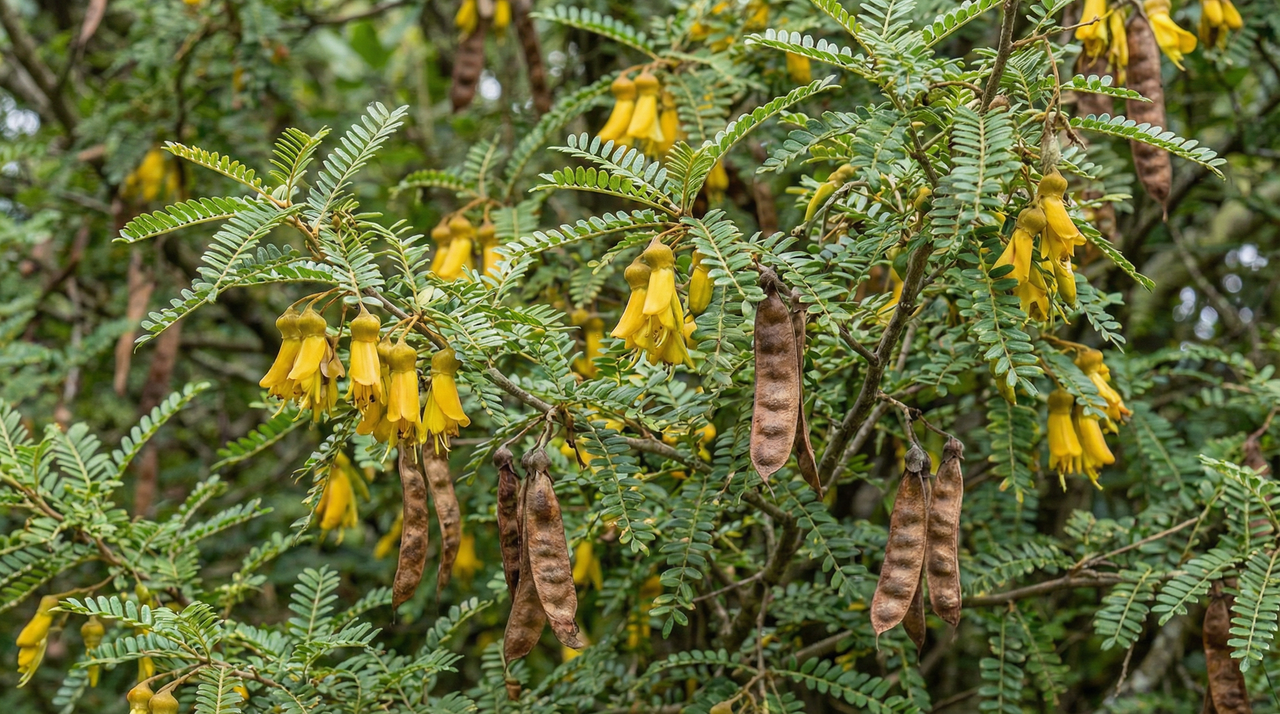
Every spring in New Zealand, tūī tear into kōwhai flowers with such focused aggression that the trees visibly shake. The birds aren't being chaotic; they're doing exactly what the tree evolved for. Sophora microphylla produces those famous pendant clusters of yellow before the leaves fully flush, a deliberate timing that puts the nectar on full display with nothing in the way. Most nitrogen-fixing pioneer trees are, let's be honest, fairly forgettable. Kōwhai is not. It's the kind of plant that makes ecologists and gardeners and Māori elders and passing tourists all stop for different reasons, which is a rare thing for any species to pull off.
What stopped me the first time wasn't the flowers. It was the seeds. Those amber, almost lacquered pods rattling in the wind, each one carrying enough cytisine to cause serious harm, sitting on a tree that Māori healers have worked with for centuries through intimate, hard-won knowledge of exactly where the line is. There's real tension in that, and it tells you something important: kōwhai isn't a plant you can understand casually. The beauty is genuine, the ecology is fascinating, and the toxicity is not a footnote. Getting to know this tree properly means holding all three of those things at once.[1]
Kowhai Origin, History, and Cultural Significance
Botanical Background and Native Habitat of Sophora microphylla
Sophora microphylla, the weeping kōwhai, is one of those plants that feels rooted in place in a way few others do. Endemic to New Zealand, it grows naturally along riverbanks, coastal dunes, and lowland forest edges, primarily across the North Island and the northern reaches of the South Island.[2][3] It thrives in well-drained, often nutrient-poor soils under full sun, tolerating annual rainfall anywhere from 800 to 2000 mm and the mild, temperate oceanic conditions New Zealand is known for.[2] Young trees are frost-sensitive, though established specimens gain reasonable hardiness; poor drainage, on the other hand, is the chronic weakness you need to respect from day one.[4]
What draws me to this tree from a restoration standpoint is its longevity combined with its ecological generosity. It's a polycarpic woody perennial that typically lives 50 to 100 years in cultivation and potentially over 200 years in the right natural habitat, all while fixing atmospheric nitrogen through rhizobial partnerships in its root nodules.[5][6] A tree that improves its own soil for two centuries is exactly the kind of patient investment permaculture thinking rewards. It typically reaches reproductive maturity in 3 to 6 years from seed, flowering from late winter through spring with pods maturing by midsummer.[2][7]
European science first met kōwhai when Joseph Banks and Daniel Solander documented it during Cook's 1769 to 1770 voyage, and the tree made its way to European gardens in the 1770s, with Kew Gardens playing a central role in its propagation and wider distribution through the colonial era.[8][9] The genus extends beyond New Zealand, too: Southern kōwhai (Sophora fulvida) clings to the West Coast of the South Island, limestone kōwhai (Sophora longicarinata) appears on coastal North Island sites, and across the Pacific the Asian relative shrubby sophora (Sophora flavescens) grows as a compact deciduous shrub across China, Japan, and Korea.[10][11]
Visual Characteristics and Identification
In the garden, kōwhai announces itself before you even see the leaves. It's a small tree or large shrub, typically reaching 5 to 10 metres tall with a spread of 3 to 6 metres, and its habit can range from upright and vase-shaped to a looser, multi-stemmed irregular form.[2][12] Because it's deciduous to semi-evergreen, it often flowers on bare branches, which is exactly the quality I reach for when I want strong winter-to-spring interest in a structural planting. Those bare limbs hung with pendulous clusters of golden yellow are genuinely one of the best garden moments I know.
The foliage, when it arrives, is fine-textured and delicate: alternate pinnate leaves 5 to 15 centimetres long, each carrying 10 to 20 pairs of small, oblong grey-green leaflets just 5 to 15 millimetres long.[2] The young stems have a slightly fuzzy, zigzag quality that smooths out with age as bark transitions from pale grey to rough grey-brown.[13] That zigzag branching is a useful ID clue when the tree is young and leafless. The flowers themselves are bright yellow, pea-shaped, 1.5 to 2 centimetres long, and carried in drooping racemes of 5 to 20 blooms; slender pods follow, maturing to brown-black and containing 1 to 6 hard, shiny dark seeds.[5][2] Those seeds need scarification to germinate, something I always do with a brief hot-water soak, and they'll typically sprout within two to four weeks after that treatment.
Comparing S. microphylla to its relatives helps sharpen identification. Its leaflets are much smaller than those of S. tetraptera (under 15 mm versus over 20 mm), and the bark tends to be smoother.[2] Southern kōwhai (S. fulvida) has a distinctly divaricate, almost tangled juvenile growth habit, fewer leaflets per leaf, smaller flowers, and silvery-grey pubescence on the leaf undersides, giving it a cooler, more muted look suited to its windswept West Coast home.[14][10] The Asian shrubby sophora (S. flavescens), by contrast, is a compact deciduous shrub under 1.8 metres with noticeably larger leaflets and upright rather than pendulous flower racemes, a completely different silhouette once you know what to look for.[15]
Traditional Māori Uses and Cultural Importance
Kōwhai's story can't be told without spending real time here. The tree is a taonga, a treasure, to Māori, carrying deep associations with renewal, the arrival of spring, and Tāne Mahuta, the forest deity.[13][16] In some iwi it carries tapu status, and its planting near marae served as a living symbol of welcome and of the enduring connection between community and whenua. That's not decorative sentiment; it's a layered cultural relationship that shapes how any of us should approach this plant.
Medicinally, bark infusions and poultices were applied for skin conditions, wounds, and as purgatives and antiseptics, while flowers were steeped for teas to address colds and fevers and provided yellow dye for flax weaving.[17][18] These uses are documented across iwi including Ngāpuhi, Waikato-Tainui, Ngāti Porou, and Ngāi Tahu, with traditional harvesting protocols that emphasize small harvests from healthy trees and proper permission.[19] I'd encourage anyone wanting to engage with kōwhai medicinally to seek guidance directly from iwi practitioners and consult current tikanga guidelines; the knowledge is specific, layered, and not ours to generalize or commercialize casually.
Fun Facts and Ecological Insights
One of my favorite things about kōwhai in a bird-rich garden is watching what happens when the flowers open. Tūī and bellbirds are the tree's primary pollinators, drawn to the high-nectar tubular flowers, and they disperse the seeds too, making kōwhai as ecologically connected as it is culturally significant.[20] Add that to its nitrogen-fixing root nodules and its role as a pioneer species in regenerating forest and riparian zones, and you have a tree doing serious ecological work while looking spectacular.[6]
While most cultivated kōwhai stay in that 5 to 10 metre range, exceptional wild specimens can reach 25 metres tall, a reminder of what this tree becomes when given centuries and the right conditions.[2] And if you ever find yourself confused between leafless Southern kōwhai and kanuka in winter, remember: kōwhai brings pendulous yellow flowers while kanuka produces small white clusters, a reliable distinction once you've been burned by the mistake once.[10]
Kowhai Varieties and Where to Buy Them
Sophora microphylla is a naturally plastic species. Across New Zealand's varied landscapes it shifts noticeably in leaf size, foliage density, and growth habit, yet despite all that variation, no botanical varieties or subspecies have ever been formally recognized.[2][21] What the horticultural world has done instead is select particularly useful forms and name them. So when you're shopping for kowhai, you're really choosing among selections of one highly variable species rather than anything approaching a modern cultivar program.
Notable Cultivars of Sophora microphylla
The selection most gardeners will actually find is 'Little Queen', a dwarf form that tops out around 1 to 1.5 meters tall and wide.[22][21] I've grown it in a large ceramic container through a zone 9b winter and it handled the cold far better than I expected for something so compact. The weeping habit is still there, the flowering is generous, and the scale suits smaller gardens or courtyard plantings where the full-sized tree would simply be too much.
Beyond 'Little Queen', the named selections broaden considerably: 'Sunset', 'Goldie', 'Sun King', 'Dragon's Blood', the willow-leaved 'Viminalifolia', and 'Downland', among others, have been selected for traits like heavier flowering, foliage color, or resilience to drier lowland conditions.[23][9][2] 'Downland' in particular interests me for drier sites; foliage density in these selections does seem to correlate with how well they handle moisture stress, which is something I look at when matching a cultivar to a specific microclimate.
Southern Kowhai (Sophora fulvida) tells a different story. No named cultivars exist in mainstream horticulture, but the species shows its own useful natural variation: coastal forms are typically smaller and denser, shaped by salt spray and wind, while inland forms run more open and upright, with varying flower abundance.[10][24][25] These natural forms are even harder to source than microphylla selections, which brings us to the practical reality of finding any of this genus in the US market.
Sourcing Kowhai in the United States
Your best starting points are specialty nurseries with a New Zealand or Southern Hemisphere native focus. One Green World in Oregon, Plant Delights in North Carolina, Sheffield's Seed Company, and the occasional Etsy or eBay seller are your most realistic options for Sophora microphylla.[26][27][28][29] Seeds tend to be more consistently available than live plants, and honestly, for the price difference, starting from seed is often the smarter call if you have the patience. Expect to pay roughly $10 to $15 for a seed packet, $20 to $50 for starter plants, and $100 to $300 or more for a mature specimen if you can even find one.[30] Spring is when stock peaks, so that's when I recommend placing orders.
If you're considering importing directly from New Zealand, the paperwork is real but manageable. Live plants, cuttings, and roots require a USDA APHIS import permit and a phytosanitary certificate, and may involve post-entry quarantine; properly declared seeds can often enter without a permit if they meet general import requirements.[31][32][33] I've navigated similar processes for other New Zealand natives and the process is non-negotiable but not particularly mysterious if you plan ahead. The good news is that Sophora microphylla is not on the federal noxious weed list, though checking your state's own regulations is always worth doing.[34] Frankly, after going through import paperwork a few times, I now default to reputable US nurseries whenever possible.
For Southern Kowhai (Sophora fulvida), availability in the US is close to zero. The species carries protected status in New Zealand, commercial propagation there is tightly controlled, and import demand is minimal.[10][35] If you do encounter something labeled as Southern Kowhai, double-check it carefully. Kanuka (Kunzea ericoides) is far more common in US trade and gets confused with Sophora fulvida more often than it should.[36] I've learned to scrutinize labels on New Zealand natives closely, and that habit has saved me from more than one mistaken purchase. Seeds from New Zealand suppliers run around NZD 8 to 15 per packet; US plant prices, on the rare occasions they appear, start around $25 for a one-gallon and climb from there.[37]
Kowhai (Sophora microphylla) Propagation and Planting
Kowhai is not a plant that hands itself to you easily. That hard, black seed coat is a feature, not a flaw: it's the plant's way of waiting for exactly the right conditions before committing. Once you understand that, propagating kowhai shifts from frustrating to genuinely satisfying.
Propagation Methods: Seeds, Cuttings, Grafting, and More
The seed coat on Sophora microphylla is impermeable without help. Untreated germination rates sit below 20%, but scarify first and you're looking at 60-90%.[2][38][39] I've used all three methods: nicking with a sharp knife, sanding with 80-grit, and hot water at around 80-90°C poured over seeds and left to soak for up to 24 hours. The hot-water soak is easiest for large batches. You'll know it's working when the seeds swell visibly overnight. From there, germination at 15-25°C on a moist, well-drained seed mix takes two to four weeks, sometimes six, and optional cold stratification at around 4-5°C for four to six weeks beforehand improves uniformity noticeably.[40][41] That first radicle appearing at ten to fourteen days after sowing is one of those small grower victories I still find genuinely exciting.
Kowhai seeds are polyembryonic, meaning a single seed can produce two to five seedlings.[42][2] The seeds themselves are small, 4-6 mm long, kidney-shaped, black, and smooth.[43] Fresh seed is the best seed: viability runs 80-90% when the seed is fresh, and you can preserve that quality by drying to 3-7% moisture and storing airtight at 5-10°C for several years, or at -18°C to -20°C for decades in proper seed bank conditions.[2][44] I always wear gloves when handling the seeds and keep them well away from children and pets: they're toxic if ingested, and collection should follow DOC guidelines, prioritizing healthy, non-threatened populations.[45][46]
If seed isn't your path, semi-hardwood cuttings taken in late summer (10-15 cm from non-flowering shoots) will root in four to eight weeks with IBA rooting hormone, mist, and bottom heat around 20-25°C.[38][47] Grafting onto rootstocks like S. tetraptera using whip-and-tongue or cleft grafts in late winter achieves 70-80% success and is the route to take when you want to preserve a specific cultivar or accelerate fruiting.[40][48] Tissue culture exists but stays firmly in the commercial realm. For Southern Kowhai (S. fulvida), germination is hypogeal rather than epigeal, seeds are slightly smaller, and cold stratification for four to six weeks is especially worthwhile, pushing germination to 50-80%.[10][49]
Soil, Site Selection, and Light Requirements
Drainage is everything. I've killed young kowhai by underestimating how quickly even a few hours of standing water can rot that developing taproot. S. microphylla wants sandy to loamy, well-aerated soil with a pH between 6.0 and 7.5, and it tolerates up to around 7-8 in native downland conditions.[2][13] This mirrors its native riverbank and forest-edge habitats, places with sharp drainage and low fertility, which also explains why it fixes its own nitrogen through root nodules and genuinely thrives in poor soil.
For containers or nursery work, a mix of 50% potting soil, 30% coarse sand or grit, and 20% perlite or pumice does the job.[50] Compost helps structure, lime corrects pH below 6.0, and gypsum breaks up heavy clay. What to avoid: excess fertility. Rich soil pushes lush vegetative growth at the direct expense of flowers.[51] The taproot in established trees reaches 60-120 cm in cultivation (occasionally deeper in nature), so compaction becomes a problem over time; poor drainage sends early warning signals through wilting, yellowing, and dieback that are easy to misread as drought stress.[52][53]
For light, aim for at least six hours of direct sun daily. Below that threshold, plants get leggy and bloom poorly.[54] Southern Kowhai is a bit more flexible, native to both open coastal scrub and shadier forest margins, but S. microphylla genuinely rewards a sunny, open position.[10]
Spacing, Planting Technique, and Establishment Timelines
Before you pick up a shovel, it helps to know what you're planning for. The weeping, open habit of S. microphylla reaches 5-10 m tall with a 4-8 m spread at a rate of 30-60 cm per year, so garden spacing of 3-5 m gives it room to breathe.[2][55] Tighter at 1.5-3 m works for hedging; revegetation plantings typically run 2-4 m. S. fulvida grows more upright and multi-stemmed, so its spacing runs 2-3 m in gardens and up to 4-6 m for full canopy development,[10] a structural distinction worth thinking through if you're deciding between them for a tight urban site.
Transplant in early spring or autumn, disturbing the roots as little as possible given that developing taproot. Stake young trees for the first year or two if your site is exposed, and water consistently, around 2-5 cm per week, until the plant is established and drought tolerance kicks in.[56][19] I've found that adding mycorrhizal inoculant to the planting hole makes a real difference in poor soils, speeding up establishment in ways you can actually see by mid-season.
On timelines: seed-grown plants flower in three to five years and set viable seed five to ten years from sowing.[2][40] Grafted plants begin light pod production by year three and fill out properly by year five. If those golden spring flowers are the whole point for you, grafting shortens the wait considerably.
Kowhai Tree Care and Growing Guide
Getting kowhai right comes down to reading the plant early and building resilience from the ground up. Once established, Sophora microphylla is remarkably self-sufficient, but the first two years ask for real attention. Here's how I think about it season by season.
Sunlight Requirements for Kowhai
Kowhai needs at least six hours of direct sun daily for the dense flowering and vigorous growth that makes it worth planting.[57][58] Shade is the enemy of the floral display. Insufficient light shows up as leggy, elongated stems, smaller leaves than usual, chlorosis, and frustratingly sparse spring bloom.[58][59] The small, ferny leaflets evolved for exposed coastal and riverbank sites, which makes young plants more wind-tolerant than you'd expect from something that looks so delicate. That said, intense afternoon sun combined with drought or poor soil can tip things the other way into leaf scorch and browning edges.[57][60] In hotter climates, a spot with morning sun and filtered afternoon shade threads the needle well. Acclimatize new plants gradually, keep drainage sharp, and maintain consistent moisture until roots are settled.[57][61]
Watering Needs
Kowhai hates wet feet. Sandy or gravelly soil with sharp drainage is non-negotiable; waterlogging invites Phytophthora root rot fast.[10][62] I learned this the hard way with early plantings in heavy clay, and now drainage is the first thing I fix before any tree goes in the ground. During the first year or two, deep water every seven to ten days through dry periods.[10][62][63] After that, established trees handle drought well, needing supplemental water only every two to four weeks during prolonged dry spells. A 5–10 cm mulch layer over the root zone conserves moisture, moderates soil temperature, and keeps drainage from working against you.[10][62] Keep moisture consistent through flowering; drought stress at that stage directly compromises bloom quality.[10][62]
Frost Tolerance and Winter Protection
Mature S. microphylla sits at USDA zones 8a–10b and tolerates down to around –12 °C once fully established.[64][65] Young plants are a different story: buds and soft stems show browning and dieback below –5 °C, especially on exposed or poorly drained sites.[2] I treat young kowhai the way I treat a new citrus or avocado — protective fleece when frost threatens, and I avoid planting in hollows where cold air pools. Site selection, good drainage, and that same 5–10 cm mulch over the root zone are your best tools.[2][9] Container growing lets you bring borderline specimens in for the first winter or two. Plants do recover from moderate frost damage with patient follow-up care, so don't give up on a scorched youngster too quickly. If you're working with Southern Kowhai (S. fulvida), note it's slightly less cold-hardy and naturally grows alongside kānuka in its native habitat; pairing it with a taller native windbreak replicates that protection neatly in a design planting.[10][66]
Pruning, Maintenance, and Pest Management
Timing is everything with pruning a kowhai tree. Prune right after flowering in late spring to remove dead, diseased, or crossing branches and open up the structure a little.[2][19][67] I mark my calendar to do it the day the last flowers drop so I never accidentally cut off next year's buds. Heavy pruning is a mistake; it sacrifices bloom and fights the natural weeping habit rather than working with it. Avoid cutting into old wood in winter, when fresh wounds are vulnerable to frost damage.[68] On the pest side, watch for aphids (which bring sooty mould), kōwhai moth caterpillars that can defoliate young trees, and scale insects on new growth.[69][70] Phytophthora root rot and myrtle rust are the main disease concerns; good airflow and sharp drainage do more preventive work than any spray.[71][72] Keep your eye on all of this through the growing season, and the reward is real: a healthy kowhai draws bees and, in the right region, honeyeaters like tūī in numbers that make every bit of the care feel worthwhile.[73]
Seasonal Growth Rhythm
S. microphylla is deciduous to semi-deciduous, with the main vegetative push coming in spring and summer after flowering ends.[2][7] That pattern neatly aligns the whole care calendar: water consistently through the spring and summer growth flush, prune immediately after bloom, then ease off through autumn as the tree winds down. Southern Kowhai (S. fulvida) stays evergreen year-round, which is worth knowing if you need winter structure in a planting.[10][74] Follow the plant's natural rhythm rather than imposing a generic tree-care schedule, and kowhai tree growth rate and long-term health tend to look after themselves.
Kowhai Harvesting and Seed Collection Guide
When to Harvest Kowhai Flowers and Seed Pods
I've come to mark the kowhai season less by the calendar and more by the first tūī calls of the year. Those birds know. Sophora microphylla flowers from October through December in New Zealand, and once the blooms fall, the pods begin their long development, taking roughly 60 to 90 days to reach physiological maturity, with peak harvest typically landing in March and April.[2][75] The visual cues are unmistakable when you know what to look for: pods shift from green to a dry yellowish-brown, turn brittle, and begin to split open on their own.[76][75] I've made the mistake of harvesting too early, pulled pods that looked close enough, and ended up with seed that germinated poorly. The dehiscent stage isn't a suggestion.
That timing shifts depending on where you are. Warmer coastal microclimates accelerate the whole cycle; cooler inland sites or a dry summer can push maturity back by weeks or reduce yield considerably.[77] If you're growing Southern kowhai (Sophora fulvida) alongside S. microphylla, note that it flowers earlier, from August to October, so your observation windows for the two species won't overlap.[78] These phenological markers were developed under New Zealand conditions; confirm them locally rather than assuming they'll translate perfectly to your garden.
Flavor, Yield, and Important Safety Notes
The flowers are where the real pleasure is. Fresh kowhai blooms carry a sweet, nectar-rich flavor and a honey-like fragrance that I can only compare to sweet peas, that same warm, slightly floral scent that stops you mid-garden-walk.[13][79] Related species like Sophora fulvida and S. longicarinata share a similarly soft texture and mild, clean flavor with no harsh aftertaste, suitable as a raw garnish or in a light infusion.[13][80] Traditional Māori use did extend occasionally to very young, immature kowhai seed pods after extensive processing to remove toxins, though pod walls tend to be fibrous and the seeds themselves were typically discarded.[12][81]
Here's where I get direct: having grown several Sophora species over the years, I treat the flowers as the only part worth tasting, and even then only after positive identification and in small amounts. Seeds, bark, leaves, and roots contain cytisine and other bitter alkaloids that can cause nausea, vomiting, and more serious effects if ingested raw, and cooking or roasting doesn't reliably make them safe.[82][81][83] Toxin levels vary across the genus, and species-specific safety data is limited, so modern foragers genuinely need expert local guidance before consuming anything beyond a confirmed flower.[12][82] Think of kowhai as a sensory delight rather than a pantry staple, and respect the plant enough to know its limits.
Kowhai Preparation and Uses
Culinary Uses: Flowers, Seeds, and Safety Considerations
The flowers are where the edible story begins and, for most people, where it should stay. Māori traditionally harvested Sophora microphylla blooms as a vegetable, adding them to stews or preparing them as standalone food, with one preparation rule that isn't optional: boil them for 10 to 15 minutes before eating.[84][85] That boil drives off the bitter alkaloids that make raw flowers an unpleasant and potentially risky choice. What you're left with has a genuinely lovely sweet, honey-like flavor and measurable nutritional value, including vitamin C and antioxidant compounds at levels that may rival a small serve of citrus.[86] I've worked with a lot of native New Zealand plants in landscape designs, and I always stress to clients that the boiling step isn't a suggestion; it's the difference between a pleasant wild edible and an unpleasant afternoon.
The seeds are a completely different matter. They contain cytisine, a quinolizidine alkaloid , making raw consumption highly dangerous and potentially fatal.[87][88][13] Traditional Māori methods for detoxifying seeds involved soaking, prolonged boiling, roasting, parching over fire, grinding, and extended leaching, with seeds historically consumed only during scarcity.[85][10] Southern Kowhai (Sophora fulvida) traditions also included running-water leaching and fermented flower beverages like syrups and beers,[13] but those are species-specific practices, not a blanket guide for S. microphylla. I've advised clients directly against experimenting with kowhai seeds without deep specialist knowledge, because the cytisine risks are well-documented and simply not worth the gamble.[2] Leaves, stems, bark, and roots are not edible and carry similar toxicity risks for people, children, and livestock alike.[84][89]
Traditional Medicinal Preparations
In rongoā Māori, kowhai's healing applications ran to bark decoctions, leaf infusions, poultices of mashed plant material, and alcohol tinctures, all used medicinally rather than as food.[90][91] The related Sophora flavescens in Traditional Chinese Medicine uses root decoctions at 6 to 15g daily,[92][93] which gives useful ethnobotanical context for the genus but shouldn't be read as a recipe for S. microphylla. These are historical and cultural records, not instructions. Given that the same alkaloids behind any therapeutic interest are also responsible for significant toxicity risks, this is firmly a space for expert practitioners, not home experimentation. I'd always rather point someone toward lemon balm or elderflower for a kitchen medicine project and leave kowhai's medicinal heritage where it belongs: respected, documented, and handled by those with the knowledge to do it safely.
Non-Food Applications: Dyes, Wood, and Other Traditional Uses
Māori found extraordinary utility in kowhai's wood and flowers beyond the table. The timber is lightweight but genuinely tough, and traditional craftspeople turned it into fish hooks, carving tools, walking sticks, weapons, and the flexible branches into basketry and fish traps.[94][95] Not suitable for heavy construction, but for small, precise, durable objects it was highly valued. The bark and seeds also served as fishing poisons, a use that ties directly back to the cytisine content doing exactly what you'd expect in water.[96][97]
The flowers yielded a warm yellow dye used to color harakeke (flax) fibers for weaving, body adornment, and patterned traditional crafts.[95][94] That vivid golden hue is one I find genuinely inspiring from a design perspective; it's the kind of color that makes you think about building whole planting guilds around it. From a purely practical permaculture angle, kowhai's willingness to coppice hard and regrow quickly also makes it a useful biomass and mulch source in regenerative systems.[98] I've seen projects overlook this completely, leaving years of free biomass cycles on the table. A plant that fixes nitrogen, coppices readily, dyes fiber, and builds tools deserves more than just a spot in the ornamental border.
Kowhai Health Benefits and Medicinal Uses
Kōwhai sits in an unusual position in the plant world: genuinely significant in traditional medicine, genuinely interesting to pharmacologists, and genuinely dangerous if you don't know what you're doing. That combination demands a careful read, so let's work through what's actually established, what's still speculative, and where the hard lines are.
Traditional Māori Medicinal Uses of Kōwhai
The medicinal story of Sophora microphylla begins with rongoā Māori, where it held a well-established role as antiseptic, astringent, purgative, and general tonic.[19][99][100] Bark was the primary working material: prepared as decoctions or poultices and applied externally for wounds, boils, ringworm, and eye infections, or taken internally for diarrhea, dysentery, and sore throats.[101] I want to be clear that I'm drawing on ethnobotanical records here rather than any personal experience with rongoā practice. This is a knowledge system developed over generations by skilled practitioners, and it deserves to be understood on those terms rather than flattened into a supplement recommendation.
Preclinical research gives us some biochemical footing for why these preparations worked. In vitro and limited animal studies on S. microphylla and closely related species show anti-inflammatory activity via COX-2, TNF-α, and NF-κB inhibition, antioxidant effects comparable to established standards in DPPH radical scavenging assays, and antimicrobial action with MIC values of 0.5 to 2 mg/mL against S. aureus and E. coli, including some resistant strains.[102][103][104] Those findings support the traditional wound and skin applications reasonably well. Cytisine, the dominant alkaloid, also shows nicotine-like receptor activity with some interest for smoking cessation research, plus cytotoxicity against certain leukemia and breast cancer cell lines in laboratory conditions.[105] Human clinical trials directly on kōwhai are scarce, so none of this translates to treatment claims.
The related Southern kōwhai (Sophora fulvida) adds some useful genus depth: its extracts accelerate wound closure in animal models, and its essential oils show strong antimicrobial activity against S. aureus driven largely by α-pinene and viridiflorol.[106][107] The shrubby sophora (S. flavescens, or Ku Shen in Traditional Chinese Medicine) has a long documented history treating heat, dampness, skin conditions, and parasites, providing broader genus context, though extrapolating directly to New Zealand kōwhai species requires caution.[108]
Key Phytochemicals in Kowhai: Alkaloids, Flavonoids, and Phenolics
Direct phytochemical studies on Sophora microphylla are limited, and some of the compound profiles we attribute to it are reasonably inferred from related Sophora species rather than confirmed by dedicated analysis.[109][110] With that caveat on the table: the plant contains quinolizidine alkaloids, primarily cytisine at up to 2 to 3% dry weight in seeds and bark, alongside matrine, oxymatrine, sparteine, and lupanine. Its flavonoid suite includes quercetin, rutin, kaempferol, sophoraflavanone G, and genistein, plus phenolics and saponins.[111][112]
What those compounds do depends enormously on where they are in the plant and when you're measuring them. Alkaloids concentrate in seeds, pods, and bark; flavonoids are richer in leaves and flowers. Alkaloid levels peak during spring vegetative growth, while flavonoids climb during flowering. Geography matters too: North Island populations tend to run higher in alkaloids than plants from the Southern Alps, and growing conditions shift the balance further, with acidic or low-phosphorus soils and pruning pushing alkaloids up, while high solar radiation, drought, or nitrogen fertilization boosts flavonoid production.[113][114][115] Māori traditional knowledge actually recognized these regional chemotypes, understanding that potency varied by location and season.[116] The functional split follows a pattern you see across the genus: alkaloids drive antimicrobial properties while flavonoids account for antioxidant and anti-inflammatory actions.[117] For me, the most important practical takeaway is that growing conditions dramatically affect potency, which is precisely why identification and sourcing context matter so much more here than with most plants I work with.
Preclinical Research on Anti-Inflammatory, Antioxidant, and Antimicrobial Effects
Regarding the anti-inflammatory, antioxidant, and antimicrobial findings discussed earlier, the primary thread worth pulling is that the evidence base, while genuinely interesting, sits firmly in the preclinical category. In vitro studies and animal models suggest real mechanisms, but they don't reliably predict outcomes in humans, and kōwhai-specific clinical trials remain scarce. Researchers working with the broader Sophora genus, particularly S. flavescens in TCM contexts, provide the most robust pharmacological data, and the translation to S. microphylla is plausible but not confirmed. Any medicinal interest in kōwhai should be filtered through that limitation.
Nutritional Profile and Edible Uses of Kowhai Flowers
The flowers are where the edible story lives, and it's a modest one. Traditionally, Māori ate kōwhai flowers raw, sucked the nectar directly, or infused them into sweet drinks, syrups, and jellies.[13] Nutritionally, fresh flowers provide around 10 to 15 grams of carbohydrates per 100 grams, roughly 20 to 30 mg of vitamin C per 100 grams, low protein and fat, and a modest contribution of antioxidants and flavonoids.[118] Nothing dramatic, but pleasantly functional for a wild edible. I've worked with a lot of edible flowers over the years, elderflower, honeysuckle, borage, calendula, and the kōwhai flower sits in that same category of delicate and worthwhile, with one critical difference: you have to stay away from everything green. No stems, no leaves, no pods, and absolutely no seeds.
The seeds are where the cytisine concentration climbs to 1 to 3% dry weight, which is a serious number.[119] Traditional Māori processing of seeds into kāhwā involved prolonged soaking, cooking, and leaching to reduce alkaloids to safer levels, but this demands expert knowledge and is rarely practiced today.[120] Young leaves offer some vitamin C and minerals but carry enough alkaloids that their traditional use is limited.[121] The nutritional upside of kōwhai is real but narrow, practically limited to fresh flowers in season, and self-experimentation beyond that is genuinely unwise.
Important Safety Considerations and Toxicity of Kowhai
I'll be direct here because the data supports it: all parts of Sophora microphylla contain toxic quinolizidine alkaloids, with cytisine concentrations ranging from 1 to 3% dry weight in seeds and pods down to 0.1 to 0.5% in bark and leaves.[122][123] These alkaloids act as nicotinic acetylcholine receptor agonists, much like nicotine, and ingestion can cause nausea, vomiting, abdominal pain, diarrhea, tremors, convulsions, respiratory failure, or death in severe cases. There is no specific antidote. Treatment is supportive care only.[124]
Livestock risk is well documented in New Zealand veterinary records, with cattle, sheep, and horses showing weight loss, birth defects, and fatalities after exposure.[125] Human poisonings are less common but tend to involve children mistaking seeds for peas, producing gastrointestinal and neurological symptoms.[126] In any permaculture system that includes livestock, this is a serious siting consideration. Having reviewed both the veterinary case records and the phytochemical literature, I don't recommend any internal use of kōwhai; the cytisine concentration in seeds is too variable and potent for safe home experimentation, full stop.
Toxicity isn't static, either. Alkaloid levels can increase 20 to 50% under drought, poor soils, or plant stress, and spring, when the plant is flowering and developing seeds, represents the peak risk window.[127] Pollen can also trigger hay fever and asthma in sensitive individuals, and sap or leaf contact occasionally causes dermatitis.[128] In my landscape design work, I flag the early spring bloom as a significant allergen consideration and keep kōwhai away from primary seating areas for clients with respiratory sensitivities.
Traditional Māori application was primarily external, with bark poultices and decoctions applied topically to wounds, skin infections, and ringworm.[129] Internal use under trained rongoā practitioners is a different matter from self-medication, and the latter is contraindicated, particularly in pregnancy, for children, and at anything above very low doses given genotoxicity and liver risks.[130] Southern kōwhai (S. fulvida) shares the same alkaloid profile despite showing somewhat lower cytotoxicity in cell studies at therapeutic doses; it should not be confused with low-toxicity kanuka.[2] If you suspect ingestion of any part of this plant beyond a fresh flower or two, contact Poison Control immediately. This is not a plant for casual herbal experimentation.
Kowhai Pests and Diseases
Natural Defenses and Pest Resistance in Sophora microphylla
What I appreciate about kowhai, having grown it alongside other native legumes, is how much it does to protect itself. Sophora microphylla carries quinolizidine alkaloids in its foliage that make it genuinely unpalatable to many insects, backs that up with tough, sclerophyllous leaves that resist chewing, and then runs a clever third layer through extrafloral nectaries that recruit ants as living bodyguards.[131][132][133] In my plantings, I've noticed that the young growth on kowhai is often busy with ants, and the aphid pressure on those specimens is noticeably lower than on nearby unprotected shrubs. It's a genuine ecological partnership you can observe if you spend any time watching the plant.
Common Insect Pests and Management Strategies
These defenses hold up well, but they're not absolute. The kowhai moth caterpillar (Uresiphita polygonalis) is the pest I'd flag first; it can defoliate branches in a hurry if populations build unchecked. Aphids (Myzus persicae), scale insects, leafrollers (Ctenopseustis obliquana), and the kowhai weevil (Listroderes costirostris) round out the regulars on Sophora microphylla.[19][134] The related Southern Kowhai, Sophora fulvida, faces a broader cast of characters including gall midges, psyllids, sawflies, additional weevil species, and borers, which gives a sense of genus-level vulnerability even if precise susceptibility data for S. microphylla specifically is still largely based on ecological observation rather than rigorous quantification.[135][136][2]
On cultivar choice, 'Sunset' and 'Dragon's Claw' show better tolerance due to their growth habits, while 'Aurea', 'Crispus', and 'Variegata' track closer to wild-type susceptibility; no selection offers complete resistance.[137] For management, I've had better long-term results building a habitat for ladybirds and parasitic wasps than running repeated oil spray cycles on scale. It protects kowhai's role as a pollinator and bird plant, and it actually works.[138][139] For aphids or scale that do require intervention, insecticidal soaps or horticultural oils are the least disruptive options; for a kowhai moth caterpillar outbreak specifically, targeted Bacillus thuringiensis (Bt) spray hits the larvae without collateral damage to beneficials.[140] Early monitoring is what makes any of this work; look for leaf distortion, fine webbing, or unexpected defoliation and act while populations are still small.
Disease Susceptibilities and Prevention
In its native environment, a healthy, well-sited kowhai has solid general disease resistance. Bacterial and viral problems are rarely reported, and established trees shrug off quite a lot.[2][12] The exception that overrides everything else is Phytophthora root rot, particularly Phytophthora cinnamomi. Put kowhai in waterlogged or poorly drained soil and you will likely lose it; the first sign is sudden wilting, then dieback, then death.[141] I lost a young tree in my early years to exactly this after planting into heavy clay without enough grit amendment. The soil looked fine. It wasn't. I now plant kowhai on a slight mound wherever drainage is uncertain, full stop.[142]
Fungal rust from Uromyces and Uredo species can appear as orange pustules on leaves in humid or crowded conditions, sapping photosynthetic capacity over time without being immediately dramatic.[143][144] Leaf spot fungi, including Mycosphaerella and Ascochyta species, show up in horticultural settings more than in natural stands.[145] Bacterial wilt from Ralstonia solanacearum is documented in Sophora species but uncommon in kowhai.[146] Pest pressure can compound all of this by encouraging sooty mold through aphid honeydew, so the two threat categories aren't entirely separate.
Prevention is genuinely straightforward: good drainage, full sun, and honest air circulation. The fine pinnate foliage actually helps here, as the small leaflets reduce spore retention and let air move through the canopy more freely than a broader-leaved tree would.[147][148] The cultivars 'Sunset' and 'Goldie' have been selected partly for better Phytophthora tolerance and are worth choosing when drainage is marginal.[149] Get a kowhai through its first few seasons without waterlogging it, and the plant you end up with is genuinely tough.
Kowhai in Permaculture Design
Few trees pack as many ecological roles into one planting as kowhai does. It fixes nitrogen, stabilizes eroding banks, flowers before almost anything else in the garden, and pulls in pollinators that every other plant in your guild quietly depends on. If you're designing a restoration planting, a food forest edge, or a native windbreak in a temperate climate, kowhai belongs on your shortlist.
Forest Layer and Guild Roles
Sophora microphylla is a deciduous canopy or overstorey tree, typically reaching 5-10 metres at maturity with an upright to spreading rounded form that can occasionally be multi-stemmed or weeping.[2][12] It's a confirmed sun-lover; it performs best in the canopy or overstorey of open shrublands and regenerating communities, and it will persist but not thrive in sub-canopy shade.[2][150] When I'm laying out a guild, that shade intolerance settles the question immediately: kowhai goes on the sunny edge, where it can do double duty as canopy cover and a windbreak without being crowded out by faster-growing neighbours.
If you want kowhai-type functionality in a denser or more structured planting, Southern Kowhai (Sophora fulvida) is worth knowing. It's a smaller evergreen tree or shrub, 3-8 metres with a slender upright habit, suited to sub-canopy and understory positions in podocarp-broadleaf forests and kānuka scrubs, where it acts as a mid-successional species rather than a pioneer.[151][152] The genus gives you options across multiple layers; the anchor species just needs to be the one catching the sun.
Climate and Hardiness Zones
Kowhai is native to New Zealand's temperate oceanic climate and is rated for USDA zones 8a-10b, tolerating temperatures down to around -10°C for established trees, though young plants are genuinely frost-sensitive.[153][154] I learned that second point the hard way: I lost two first-year seedlings to an unexpected late frost before I started providing cloches and a sheltered windbreak position for the first two winters. After that, the survivors turned into remarkably unfussy trees.
Mature plants handle short dry spells and coastal salt spray well, preferring well-drained soils and annual rainfall in the 600-1500 mm range, though they can cope with as little as 500 mm once established.[2][19] The RHS has grown it at Kew, and it's been cultivated successfully in the US Pacific Northwest and California, wherever mild wet winters mimic its native range.[155][9] In humid subtropical areas, I'd give it extra airflow to head off fungal problems. If you're in a colder zone, shrubby sophora (Sophora flavescens) is the cold-hardiness standout at zones 5-9 down to -29°C, while Southern Kowhai is more tender and starts to struggle above 25-30°C.[65][10]
Ecosystem Functions and Guild Companions
The nitrogen fixation is where kowhai earns its place in any regenerative design. As a pioneer species on disturbed sites, it forms symbiotic rhizobia nodules that can support 50-100 kg of nitrogen per hectare per year in related species, while its extensive root system stabilizes eroding soils and is particularly valuable in riparian plantings.[156][157][19] Think of it the way you'd think about alder in a temperate food forest guild, a tree that builds the soil conditions for everything around it, except kowhai does it while also feeding every pollinator in the neighbourhood.
Those pendulous flower racemes, produced in late winter to early spring, are primarily pollinated by tūī and bellbirds, with bees and hoverflies playing a secondary role.[41][19] I've watched tūī work a kowhai in full bloom, and the way the flowers hang creates a natural landing strip that makes the whole interaction look almost choreographed. In gardens outside New Zealand where native honeyeaters aren't present, bees become the critical allies, and that's where companion planting really pays dividends. Pair kowhai with early-flowering plants that draw in pollinators from the moment it blooms, and the whole guild benefits. Seeds are bird-dispersed too, which aids natural regeneration in fragmented habitats, though the species has some self-incompatibility and hand pollination can improve seed set where pollinators are scarce.[41][19]
In practice, kowhai slots naturally into restoration guilds alongside flax, ferns, mānuka, and kānuka, serving as windbreak, dynamic accumulator, and fertility builder simultaneously.[98] Climate change is already advancing flowering dates in some regions, which raises a real concern about phenological mismatch with pollinators over time.[158] That's one more reason to source locally adapted plants where possible. Southern Kowhai is Nationally Critical due to habitat fragmentation and pollinator decline, and for threatened species like Limestone kowhai, companion planting can boost pollinator activity by 60-80% while hand pollination increases fertilization rates by 30-50%.[10][159] If you're working with any of the rarer species, ethically sourced, locally provenance stock isn't a nice-to-have; it's the whole point.
The Tree That Taught Me to Slow Down in Spring
I planted my first kōwhai on a cold July afternoon, convinced it would struggle, and spent the next three years watching it quietly prove me wrong. What got me wasn't the nitrogen fixing or the guild dynamics, though those matter; it was the morning I stood under it while a tūī worked every single flower, and realized I'd built something that belonged somewhere, even here, far from the Waikato. Some plants anchor a design. Kōwhai anchored me to mine.
Sources 159
- Quinolizidine alkaloids in Sophora species: Phytochemistry and pharmacology ↩
- Sophora microphylla - Kowhai ↩
- Flora of New Zealand - Sophora microphylla ↩
- Flora of New Zealand - Sophora microphylla ↩
- Sophora microphylla - Wikipedia ↩
- Nitrogen Fixation in New Zealand Kowhai Trees ↩
- Kowhai (Sophora species) | Te Ara Encyclopedia of New Zealand ↩
- Banks' Florilegium: The Plants of James Cook's Voyages ↩
- Sophora microphylla ↩
- Sophora fulvida (West Coast kowhai) ↩
- Flora of China - Sophora flavescens ↩
- Kowhai (Sophora species) ↩
- Kōwhai (Sophora species) - Te Ara Encyclopedia of New Zealand ↩
- Sophora fulvida - Flora of New Zealand ↩
- Sophora flavescens - Wikipedia ↩
- Mātauranga Māori: Indigenous Knowledge, Science and Kōwhai Symbolism ↩
- Traditional Māori Medicinal Plants: Kowhai ↩
- Māori Medicinal Plants ↩
- Kōwhai: Traditional Uses and Conservation ↩
- Department of Conservation, New Zealand - Kowhai Pollination ↩
- Sophora microphylla ↩
- Sophora microphylla 'Little Queen' ↩
- Kowhai Cultivars and Varieties ↩
- RHS Plant Finder - Royal Horticultural Society ↩
- Auckland Botanic Gardens: Growing Guide - Kanuka (Sophora fulvida) ↩
- Sophora microphylla - Small Leaved Kowhai ↩
- Kowhai Tree Seeds (Sophora microphylla) ↩
- Sophora microphylla ↩
- Sophora microphylla Seeds ↩
- Missouri Botanical Garden Plant Finder ↩
- International Trade - Plants ↩
- Plants for Planting Manual ↩
- Importing Plants and Plant Products into the United States ↩
- Federal Noxious Weed List ↩
- CITES Appendices ↩
- New Zealand Natives in US Nurseries ↩
- Sophora fulvida Seeds ↩
- Propagation of Kōwhai (Sophora species) ↩
- Propagation of Kowhai (Sophora microphylla) from Seed ↩
- Propagation of Kowhai (Sophora microphylla) ↩
- Germination and Storage of Kowhai (Sophora spp.) Seeds ↩
- Polyembryony in Seed Plants ↩
- The Kowhai: Sophora Species in New Zealand ↩
- Seed Storage Guidelines for New Zealand Native Plants ↩
- Seed Storage of Kowhai (Sophora spp.) ↩
- Growing New Zealand Native Plants: Kōwhai ↩
- Propagation of New Zealand Native Plants ↩
- Grafting Native Trees in New Zealand ↩
- Propagation of Native Kowhai Species ↩
- Growing Kowhai in Containers - New Zealand Garden Guide ↩
- Native Plant Potting Mix Recommendations - Landcare Research NZ ↩
- Root Systems of Native New Zealand Trees ↩
- Sophora microphylla ↩
- Sophora microphylla - Royal Horticultural Society ↩
- Native Tree Planting Guide - Department of Conservation NZ ↩
- Sophora microphylla Growing Guide ↩
- Sophora microphylla - RHS Gardening ↩
- Sophora microphylla | New Zealand Plant Conservation Network ↩
- Native Plants for New Zealand Gardens: Light Requirements ↩
- New Zealand Plant Conservation Network ↩
- Photoinhibition and Leaf Scorch in Native Plants ↩
- Native Plant Watering Guidelines ↩
- Sophora fulvida - Plant Finder ↩
- Sophora microphylla ↩
- Kowhai (Sophora spp.) ↩
- Climate and Distribution of Sophora Species in New Zealand ↩
- Cultivation of Native Trees: Kowhai ↩
- Pruning Deciduous Shrubs and Trees ↩
- Kowhai pests and diseases ↩
- Common pests of native trees in NZ ↩
- Phytophthora in kōwhai ↩
- Myrtle Rust in New Zealand ↩
- Sophora microphylla - Kowhai ↩
- Sophora fulvida - Landcare Research Manaaki Whenua ↩
- Native Seed Collection Guidelines for New Zealand ↩
- Propagation of Kōwhai (Sophora species) ↩
- Sophora microphylla - RHS Plants ↩
- Flowering Times of New Zealand Native Plants ↩
- Māori Plant Use Database - Kōwhai ↩
- Edible Native Plants of New Zealand: Kanuka and Kowhai ↩
- Edible and Poisonous Plants of New Zealand ↩
- Toxicity of Kowhai (Sophora spp.) - New Zealand Poison Centre ↩
- Toxicity of Sophora species: Alkaloids and Cytisine ↩
- Ethnobotany of Sophora microphylla ↩
- Kōwhai - Traditional Māori Uses ↩
- Nutritional Composition of Kōwhai Flowers ↩
- Toxicity and Edible Processing of Sophora Seeds ↩
- Cytisine and Other Alkaloids from Sophora microphylla ↩
- Toxicity of Fabaceae Plants in New Zealand ↩
- Rongoā Māori: Healing Plants of New Zealand ↩
- Ethnobotany of Kanuka and Kowhai ↩
- Chinese Pharmacopoeia 2020 Edition ↩
- Sophora flavescens: A Review of Its Phytochemistry and Pharmacology ↩
- Ethnobotany of New Zealand Kowhai ↩
- Kowhai: Sophora Species in New Zealand ↩
- Māori Uses of Plants ↩
- Māori Plant Use Database ↩
- Kowhai (Sophora spp.) in Permaculture ↩
- Traditional Uses of Kowhai (Sophora microphylla) in Maori Medicine ↩
- Māori Medicinal Plants: Kōwhai Uses ↩
- Māori Medicinal Plants ↩
- Anti-inflammatory Activity of Sophora microphylla Extracts ↩
- Antioxidant and Antimicrobial Activities of Sophora microphylla Extracts ↩
- Pharmacological Activities of Sophora Species: A Review ↩
- Cytisine: Pharmacology and Therapeutic Potential ↩
- Flavonoids from Sophora fulvida and Anti-inflammatory Effects ↩
- Essential Oils of New Zealand Native Plants: Composition and Antimicrobial Properties ↩
- Ethnobotany of Sophora flavescens in East Asia ↩
- Phytochemical and Pharmacological Review of Sophora Genus ↩
- Phytochemical Screening and Biological Activities of New Zealand Kowhai (Sophora microphylla) ↩
- Phytochemical and Pharmacological Review of Sophora Genus ↩
- Alkaloids from Sophora species: A review ↩
- Phytochemical Studies on New Zealand Sophora Species ↩
- Seasonal Variation of Alkaloids in Sophora species ↩
- Secondary metabolites of New Zealand native plants ↩
- Māori Traditional Knowledge inventory on New Zealand plant chemotypes ↩
- Antioxidant and antimicrobial activities of kōwhai (Sophora spp.) extracts ↩
- Nutritional Composition of Native New Zealand Plants ↩
- Alkaloids of Kowhai (Sophora microphylla) Seeds ↩
- Edible and Poisonous Plants of New Zealand ↩
- Nutritional Composition of Sophora flavescens ↩
- Toxicity of Kowhai (Sophora microphylla) ↩
- Cytisine: Pharmacology and Toxicology ↩
- Kowhai (Sophora species) Poisoning in Animals ↩
- Toxic Plants for Livestock in New Zealand ↩
- Plant Poisoning in Humans: Kowhai ↩
- Seasonal Dynamics of Toxins in New Zealand Native Plants ↩
- Kowhai Pollen and Allergy in New Zealand ↩
- Traditional Uses of New Zealand Native Plants ↩
- Toxicity of Sophora species: A review ↩
- Chemical and Structural Defenses in Sophora microphylla ↩
- Extrafloral Nectaries and Ant-Plant Interactions in Kowhai ↩
- Herbivory and Defense Mechanisms in New Zealand Shrubs ↩
- Kowhai Moth - Uresiphita polygonalis ↩
- Insect Pests of Native New Zealand Trees ↩
- Pests and Diseases of Kowhai (Sophora spp.) ↩
- Kowhai Pests and Management ↩
- Kowhai Pests and Diseases - Te Ara Encyclopedia of New Zealand ↩
- Pest Management for Native Plants - New Zealand Plant Conservation Network ↩
- Integrated Pest Management for Ornamentals ↩
- Pests and Diseases of Native Trees in New Zealand ↩
- Frampton et al. (2004) - Australasian Plant Pathology ↩
- Fungal Diseases of Fabaceae Including Rusts ↩
- Kowhai Rust - New Zealand Forest Pathology ↩
- Diseases of Kowhai and Native Trees in New Zealand ↩
- Legume Tree Pathogens: Bacterial Wilt in Sophora ↩
- RHS Gardening - How to Grow Sophora microphylla ↩
- Phytophthora Management in Ornamental Plants ↩
- Kowhai Cultivation and Varieties ↩
- Natural Cover Type Maps of New Zealand ↩
- Flora of New Zealand: Sophora fulvida ↩
- Sophora fulvida - Flora of New Zealand ↩
- Sophora microphylla - Royal Horticultural Society ↩
- Sophora microphylla - Missouri Botanical Garden ↩
- Sophora microphylla - Royal Horticultural Society ↩
- Nitrogen fixation in New Zealand kowhai ↩
- Ecological Role of Sophora microphylla in New Zealand Forests ↩
- Climate change effects on kowhai phenology ↩
- New Zealand Plant Conservation Network - Sophora longicarinata ↩