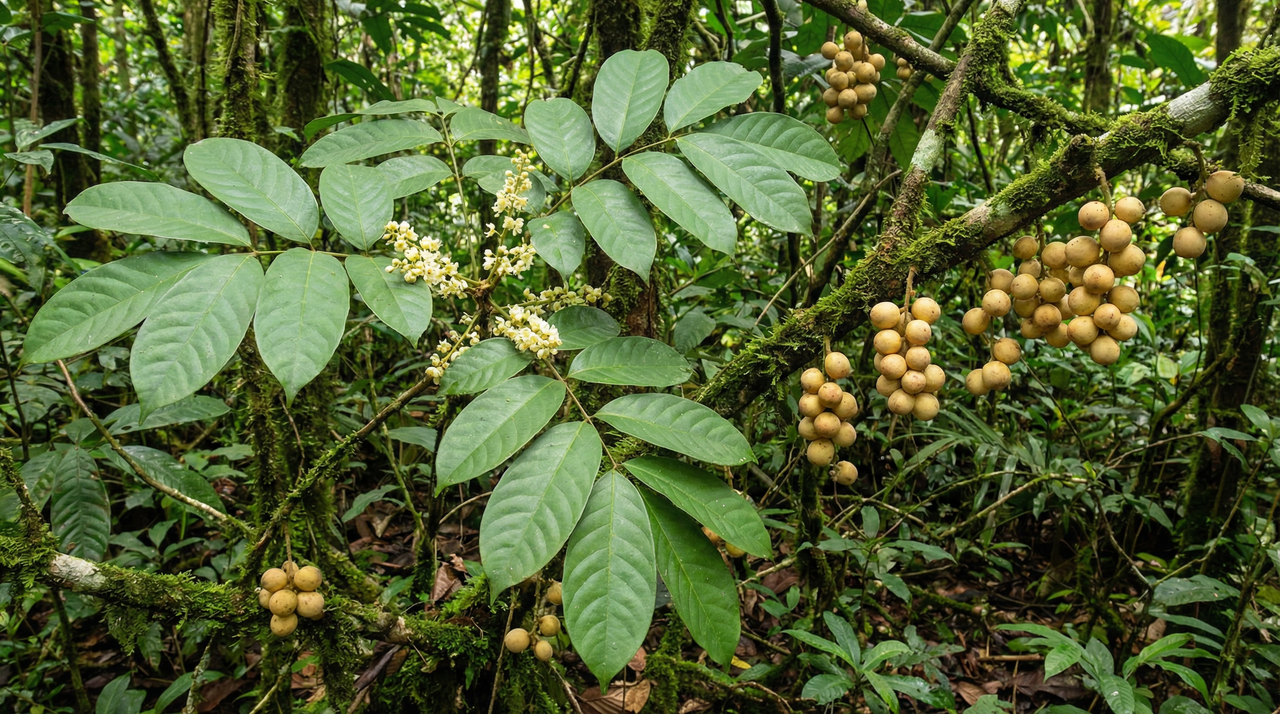
The first time I peeled a langsat, I did it wrong. I squeezed too hard, the latex from the unripe-ish skin hit my fingertips, and by the time I'd worked through the cluster my hands were tacky and slightly stained. The fruit inside, though, stopped me cold: translucent, cool, somewhere between a grape and a lychee with this faint citrus-floral thing happening at the back of the throat that I genuinely couldn't place. I've eaten a lot of tropical fruit. I stood there in a market in Mindanao eating segment after segment until the vendor laughed at me. That's the contradiction at the heart of langsat: an occasionally difficult, latex-weeping exterior protecting one of the most quietly elegant fruits in the entire rainforest canopy.[1]
What strikes me most, after years of working with tropical food forests, is how thoroughly this tree has been overlooked outside Southeast Asia. It's been cultivated there for centuries, woven into wedding ceremonies and harvest festivals, deployed in traditional medicine from bark to seed, and yet most serious tropical growers I talk to have never tasted a fresh one. That gap between cultural depth and global obscurity is exactly what makes langsat worth understanding properly, not just as a curiosity, but as a productive, ecologically meaningful tree with a very specific set of needs and a very real payoff for anyone willing to meet them.
Langsat Origin, History, and Cultural Significance
Botanical Background and Visual Characteristics of Lansium domesticum
Langsat, known scientifically as Lansium domesticum (sometimes listed under the synonym Lansium parasiticum), belongs to the mahogany family Meliaceae and is native to the humid lowland rainforests of the Malesian region, spanning southern Thailand, Malaysia, Indonesia, the Philippines, and parts of Vietnam.[2][3][4] In its native forest, this tree is genuinely impressive: mature specimens reach 10 to 30 meters tall with trunks up to 75 cm in diameter, a dense rounded crown, and a polycarpic lifespan of 80 to 100 years in the wild, though cultivated trees typically live 30 to 50 years with fruiting productivity peaking somewhere between years 10 and 20.[2][5]
The bark is grayish-brown, becoming fissured with age, and exudes a milky white latex when cut. If you've ever nicked a fig branch or pruned a papaya, you'll recognize the look immediately; it's that same sticky, slightly alarming weep that tells you the plant is very much alive and not pleased about being wounded. Leaves are alternate and pinnate, running 20 to 50 cm long with 5 to 9 elliptic leaflets that are dark green above and notably pale beneath, with prominent looping venation that catches the eye once you know to look for it.[6][7] Flowers are small, white, and fragrant, borne in panicles directly on the trunk and older branches; roots are fibrous and spreading rather than deep, which matters a great deal for placement in any designed system.[8]
One practical note worth making early: seed-grown trees take 5 to 15 years to fruit, while grafted or air-layered stock fruits in 2 to 4 years.[9][10] I've learned that lesson repeatedly with slow-fruiting tropicals: starting from seed is a commitment that grafted material simply isn't. The tree wants well-drained, fertile soil in the pH 5.5 to 6.5 range, consistent temperatures between 25 and 32°C, and 1500 to 2500 mm of annual rainfall.[9] Those numbers reflect genuine rainforest origins, not casual tropical tolerance.
Traditional and Cultural Uses of Langsat
The earliest European botanical record of langsat comes from Georg Eberhard Rumphius's Herbarium Amboinense, published between 1741 and 1750, though the tree had been woven into human life across the archipelago long before any European set eyes on it.[11] Austronesian maritime migrations carried it across the region, and the colonial era later introduced it to the Caribbean and other tropical zones.[12] What strikes me reading the ethnobotanical literature is how consistently the tree appears as a symbol of abundance, fertility, and prosperity rather than just a food crop.[13][14] The annual Lanzones Festival in Camiguin, Philippines, is the most vivid expression of that relationship; seeing the photographs of street celebrations with the fruit piled high is a good reminder that a tree and a community can become genuinely inseparable.
Indigenous communities throughout the range, including the Philippine Lumad, Malaysian Orang Asli, Indonesian Dayak, and Javanese peoples, have long used bark, leaves, and fruit to treat fever, diarrhea, dysentery, and intestinal parasites.[15][16] These aren't incidental uses; they reflect generations of careful observation of a plant that grows in the same forests where these communities live. The sweeter, often lower-seed duku cultivar was deliberately selected over time for fresh eating, which tells you something about how long and how intentionally people have been shaping this species to serve them.[15] The phytochemical science behind those traditional applications gets its own treatment later in this profile.
The IUCN currently lists Lansium domesticum as Least Concern, but that designation sits alongside real pressures: deforestation, land conversion to commodity crops, overharvesting, and the steady erosion of its rainforest habitat by climate change.[17][18] I always tell clients that planting a langsat is a small act of cultural and ecological stewardship. The tree carries centuries of human knowledge in its genetics and its history, and growing it outside its native range keeps that knowledge alive.
Fun Facts About Langsat
The fruit itself is what most people first encounter, and it's worth describing properly. Each langsat is a small berry with a thin, leathery, yellowish-brown rind covered in fine lenticels; inside, five or six translucent, juicy arils surround one to three seeds, and the flavor lands somewhere between lychee and grapefruit, sweet and tangy with a complexity that fresh descriptions never quite capture.[19] The first time I tasted one at a tropical botanic garden market, I immediately understood why an entire festival exists in its honor. There's a kind of clean brightness to it that's unlike anything in the temperate fruit canon, and once you've had a good ripe cluster, you get why people in Camiguin consider it worth celebrating.
Langsat Varieties and Sourcing
Notable Langsat Varieties: Duku, Langsat, and Longkong
What most people don't realize is that "langsat," "duku," and "longkong" aren't separate species. They're all Lansium domesticum, maintained as distinct commercial forms through vegetative propagation because seedling offspring are far too variable to rely on for consistent fruit quality.[20][21] Think of them less as cultivars in the classic sense and more as stable horticultural selections that growers fight hard to keep true to type.
Duku (var. duku) is the market favorite for good reason: larger fruit, thicker skin, fewer seeds, a milder sweetness, and considerably less of that sticky latex on the peel.[20][22] I've tasted both side by side at Asian market tastings, and duku is simply more approachable for fresh eating. The skin peels cleanly, the aroma is pleasant without being assertive, and there's no bitter aftertaste. The classic langsat variety (var. pubescens), by contrast, has smaller fuzzy fruits, multiple seeds per segment, a thinner skin that bites back with bitterness, and an intensely aromatic, acidic flavor that I find captivating but that many Western palates find surprising.[20][21] From a design standpoint, choosing duku over langsat for a slightly drier microclimate can make the difference between consistent production and constant struggle, since langsat is more pest-susceptible and demands higher humidity.
Longkong, the rising star of Southeast Asian orchards, threads the needle between those two. Rounder fruits, often seedless, reliably sweet and juicy, with the highest yields of the three forms and peak production reaching 50-200 kg per mature tree.[20][23] Grafted longkong trees can begin fruiting in three to five years versus the seven to ten years a seedling might demand, with grafting success rates up to 80%.[20][23] I always label plantings carefully for this reason; seedling-grown trees can spend a decade disappointing you before you realize the flavor was never going to be what you hoped for. Breeding programs continue refining toward seedless, high-yield selections, though no cold-hardy forms exist and none are coming anytime soon.[20][24]
Sourcing Langsat Trees and Fruit in the US
In my experience helping clients source rare tropicals in zones 9B through 10, grafted langsat trees are almost never available locally. The plant is strictly limited to USDA zones 10-12, which means South Florida and Hawaii in practice, and commercial interest in those regions remains thin enough that most botanical gardens treat it as a specimen curiosity rather than a production crop.[25][26] Fresh fruit is even harder to encounter: the USDA prohibits fresh langsat imports due to fruit fly risk, and the prohibition isn't bureaucratic overreach. Fruit flies can devastate orchards, which is why starting with clean domestic material matters.[27][28]
The realistic starting point for most US growers is seeds purchased online, typically $5-15 per packet, planted immediately since langsat seeds are recalcitrant and lose viability fast.[29][30] Grafted material does occasionally surface through specialist tropical nurseries at $40-100 for larger specimens, but supply is inconsistent.[31] Go in with clear eyes: this is a passionate collector's tree, one that rewards years of patient, attentive care in exactly the right climate.
How to Propagate and Plant Langsat (Lansium domesticum)
If you're serious about growing a langsat fruit tree that actually fruits within your lifetime, the propagation decision you make at the very beginning determines everything. Seed-grown trees can take 5-10 years to bear fruit; grafted or air-layered plants can produce in as little as 2-4 years.[32][33] In my work with clients designing edible landscapes, I almost always specify grafted langsat. The multi-year wait for seedlings is simply too long when space and patience are limited.
Seed Characteristics and Germination
Langsat seeds are ellipsoid to ovoid, roughly 1.5-2.5 cm long, and weigh 2-4 grams each.[34] You'll recognize them immediately when you eat the fruit: they're surrounded by the sweet, edible aril but are sharply bitter if you bite into them. The seed coat is thin and brown, with a well-developed embryo and two prominent cotyledons inside.[35]
The defining biological fact about langsat seeds is that they're recalcitrant. They cannot be dried, stored, or shipped without collapsing; viability drops to near zero once moisture content falls below 20-30%, and the window from extraction to sowing is only 2-6 weeks at best.[36][37][38] After losing batches to a delayed planting window, I've learned to extract and sow langsat seeds the same day the fruit is eaten. The difference in germination rate is dramatic, and it has saved me from buying more grafted stock than necessary.
No pretreatment is required beyond an optional 24-hour water soak. Sow fresh seeds shallowly, about 1-2 cm deep, in well-drained sandy loam at 25-30°C with humidity around 80-90%. Germination takes 10-30 days and fresh seeds succeed at 50-90%.[39][36] Aim to sow during June through August, aligned with the natural fruiting season, in shaded nursery beds kept consistently moist.[40]
Some langsat cultivars exhibit polyembryony, producing 2-5 embryos per seed, a mix of sexually produced seedlings and nucellar clones that are genetically identical to the mother plant.[41][42] The species is predominantly monoembryonic, though, so you can't count on getting true-to-type offspring reliably from seed. Combined with the cross-pollination requirement that introduces genetic variability, seed propagation is really only useful for producing rootstocks or for breeding work.[43][44]
Vegetative Propagation Methods
Air layering, or marcotting, is the most accessible vegetative option for home growers. Done during the rainy season on healthy, semi-mature branches in warm humid conditions, it succeeds at 70-85%.[33][32] Grafting on 1-2 year old Lansium domesticum rootstocks using cleft, veneer side, or chip budding achieves 50-90% success and delivers that 2-4 year fruiting timeline rather than the 5-10 year seedling alternative.[33][39] Softwood cuttings treated with IBA rooting hormone at 1000-3000 ppm in a perlite-peat mix are possible, but success rates sit at only 30-50%, which makes them more of a last resort than a reliable method.[40]
Soil and Site Requirements
Langsat is native to humid Southeast Asian rainforest understories, and its site requirements reflect that origin directly. It needs high humidity, 2000-3000 mm of annual rainfall, temperatures consistently between 24-30°C, and protection from wind and frost, putting it firmly in USDA zones 10-11 or carefully chosen sheltered microclimates.[9][45] I've sited young langsat under the partial canopy of taller trees in borderline subtropical conditions, and the dappled light genuinely prevents leaf scorch while improved airflow from thoughtful spacing reduces fungal pressure on developing clusters.
Soil drainage is the issue I feel most strongly about. Langsat is highly intolerant of waterlogging, heavy clay, and compaction; Phytophthora root rot sets in fast when drainage is poor, and in my experience with humid subtropical soils, even one season of standing water can introduce that pathogen in ways that linger for years.[40][18] Choose fertile loamy or sandy loam soil with organic matter around 3-4%, or build toward that with amendments before planting.[40] Gentle slopes of 5-15% and at least 1-1.5 m of soil depth support the drainage and root development the tree needs.[9]
Soil pH should sit between 5.5 and 6.5; outside that range you'll see problems. Above pH 7.0, iron and manganese become unavailable and interveinal chlorosis appears; below 5.0, aluminum toxicity causes leaf necrosis.[29][46] Test before planting and adjust with lime or sulfur accordingly. As an understory-adapted species, langsat also tolerates and often prefers morning sun with afternoon shade or dappled light, especially while young; its higher chlorophyll production in lower light is a physiological adaptation that full-sun exposure can override quickly.[47]
Planting Technique, Spacing, and Timeline to Fruit
Transplant seedlings or grafted plants when they reach 30-50 cm tall, after 1-2 years in a nursery under 30-50% shade, and do it at the start of the rainy season to let roots establish without drought stress.[48] For container growing during the nursery phase, a mix of 40% loam, 30% compost, 20% perlite or sand, and 10% peat or coir at pH 5.5-6.5 works well, with mulch to retain moisture.[40]
Young langsat plants look deceptively small in the nursery, but these become 6-12 m trees with canopy spreads of 6-9 m. Spacing generously from the start avoids the airflow problems and crowding that invite disease later. In orchard settings, 8-10 m between trees within rows and 10-12 m between rows gives roughly 80-125 trees per hectare, with adequate room for intercropping and access.[49][50] After planting, an open-center training system and selective post-harvest pruning keep the canopy manageable at 3-5 m height without sacrificing productivity.[48]
Then comes the waiting. Seed-grown trees take 5-8 years to first fruit under optimal tropical conditions, sometimes stretching to 10.[32][51] Grafted or air-layered plants cut that to 2-4 years, depending on rootstock vigor, site conditions, and management.[33] The urgency around fresh seeds, careful site selection, and vegetative propagation all flow toward the same end: giving this slow-maturing tree the best possible start so that when it finally fruits, the wait feels earned rather than wasted.
Langsat Care Guide
Langsat rewards attentive growers, but it doesn't forgive neglect the way a fig or citrus tree might. Every care decision, from how often you water to when you reach for the pruning saw, traces back to a single reality: this tree evolved in humid Southeast Asian monsoon forests and has never made peace with conditions outside that envelope.
Water Needs for Langsat Trees
Langsat's native range spans humid lowland rainforests receiving 1,500 to 4,000 mm of annual rainfall with relative humidity consistently above 70%.[52][53] That context matters because established trees begin showing stress, reduced flowering, and declining fruit quality after just three to four weeks of soil moisture deficit, and seedlings can wilt within two to three weeks.[54][55] If you're used to growing citrus, which tolerates a dry spell with little more than a protest, langsat will feel like a different discipline entirely.
Young trees need light irrigation every two to three days to keep the soil evenly moist without waterlogging. Mature trees respond better to deep watering, reaching 60 to 90 cm down, every five to seven days at roughly 50 to 100 liters per tree, bumped toward the higher end during flowering and fruiting.[44][56] Overwatering announces itself as yellowing on older langsat leaves, wilting despite wet soil, and eventually root rot with dark, mushy roots. Too little water flips the picture: curling leaves, marginal chlorosis, premature drop, and stunted growth.[57][5] Drip or basin irrigation beats overhead watering every time, and keeping 10 to 15 cm of organic mulch over the root zone is the single best habit you can develop, retaining moisture, suppressing weeds, and building long-term soil resilience without any additional inputs.[44][58]
Feeding and Soil Management
The langsat tree is a moderate to heavy feeder that prefers fertile, well-drained loamy soil with a slightly acidic pH of 5.5 to 6.5.[18] Young trees in their first three years need higher nitrogen inputs, something like NPK 15-15-15 at 200 to 300 grams per tree per year, to support canopy development. Once a tree crosses into its fourth year, the formula shifts toward potassium-rich blends, NPK 12-24-12 in the range of 5 to 8 kg annually, to push reproductive rather than vegetative growth.[59][60]
I switched from a calendar-based feeding schedule to annual leaf-tissue testing after watching multiple langsat plants put out lush, glossy growth year after year with almost no fruit to show for it. The culprit, consistently, was excess nitrogen. Optimal leaf levels sit at 2 to 3% N, 0.2 to 0.3% P, and 1 to 1.5% K; testing tells you what the tree is actually getting rather than what you assume it needs.[18] Apply fertilizer two to four times per year, timing roughly 30% post-harvest, 40% pre-flowering, and 30% at fruit set, and incorporate 5 to 10 kg of compost or aged manure per tree annually to keep soil biology active.[18] Excess potassium can trigger magnesium deficiency; phosphorus shortfalls show up as reddish-purple leaves and poor flowering, and nitrogen deficiency produces uniform chlorosis on older foliage.[61][62] Feed with precision, not generosity.
Frost and Heat Tolerance
Langsat is a strictly tropical species, suited only to USDA zones 10 to 11, and it does not negotiate with cold.[63][44] Temperatures below 10°C (50°F) trigger leaf drop and branch dieback; anything below 5°C (41°F), or a sustained dip to -1 or -2°C (28 to 30°F), can kill the tree outright.[63][64] Young trees are the most vulnerable point in any guild; after losing one to an unexpected overnight dip in an unheated greenhouse, I now keep a soil thermometer near every tender tropical and throw frost cloth over any langsat plant at the first forecast below 12°C. Mature trees may survive a brief dip to -2°C with damage, but I wouldn't bet a year's growth on it.[65] For growers in marginal subtropical climates, containers that can be moved indoors above 15°C (59°F), frost cloth, and a heated greenhouse are the realistic options.[40]
On the heat side, the langsat plant grows optimally between 24 and 30°C (75 to 86°F) and can handle brief spikes to 40°C (104°F), but sustained temperatures above 32°C impair flowering by up to 50% and cause fruit drop, smaller clusters, and yield losses of 20 to 40%.[58][66] I've noticed firsthand that fruit harvested after a prolonged hot spell tastes measurably less sweet and the segments are smaller, which tracks with the research on reduced sugar accumulation under heat stress. Seedlings suffer most, with survival rates dropping sharply above 35°C.[67] Strategic shade, consistent irrigation, and deep organic mulch do real work here, and duku varieties show slightly better heat resilience due to their denser canopy structure.[68]
Pruning, Maintenance, and Seasonal Rhythm
The goal with pruning a langsat tree isn't dramatic reshaping; it's steady, light management. Train young trees to an open-center or vase shape with three to five primary branches, using tip-pinching to encourage lateral branching early on.[4] For mature trees, remove no more than 10 to 20% of the canopy annually, right after harvest, targeting dead, crossing, and water-sprout wood to improve light penetration and airflow.[69][18] I over-pruned in my first serious attempt and spent the following year watching the tree push vigorous new wood instead of flowers. Keeping cuts conservative, below that 20% threshold, is what I'd call the single most important lesson from that season. Maintain orchard trees at 6 to 8 meters for practical hand-harvesting, and always use sharp, clean tools with fungicide applied to larger cuts.[69]
Remove root suckers promptly and refresh that 10 to 15 cm organic mulch layer, coconut husk and rice straw both work well, keeping it clear of the trunk to avoid rot.[70] Good pruning and consistent mulch also reduce the humid, crowded conditions that invite the fungal problems covered elsewhere in this article. The seasonal rhythm ties everything together: flowering is triggered by a dry period or brief humidity dip, and fruit follows two to three months later, with mature trees capable of one to two crops per year where conditions cooperate.[71][40] In non-tropical settings, maintaining greenhouse conditions of 24 to 30°C during the day and 18 to 22°C at night mimics that natural rhythm and keeps the tree on track.[4]
Langsat Harvesting: Timing, Technique, and Post-Harvest Care
When to Harvest Langsat: Maturity Indicators and Seasonal Timing
From flower to fruit, langsat takes 100 to 120 days to reach harvest maturity, with flowering triggered by the dry season and fruits typically ready 15 to 18 weeks later.[72][73] That puts the harvest window squarely in the rainy or monsoon season: July through October in the Philippines, July through September in Thailand, and August through November for Indonesian duku varieties, with some regions coaxing two harvests per year.[74][75] After multiple seasons working with this fruit, I've learned to watch the color shift from green toward pale yellow on the shoulder of each fruit first -- that subtle change precedes easy detachment and, for me, has reliably prevented bringing in an astringent early batch.
The full suite of maturity cues: skin turning pale yellow across 70 to 80 percent of its surface, diameter reaching 3 to 5 cm with a gentle give under the fingers, a sweet aroma, and the fruit pulling cleanly from the cluster with minimal force.[76][40] Green, rubbery, and resisting your pull means leave it. Split skin and that fermented tang means you've waited too long; overripe fruits crack and deteriorate quickly, while harvesting too early gives you sour, astringent flesh that wastes the whole season's wait.[77] Duku cultivars tend to ripen a bit earlier than standard langsat and, thanks to their thicker skin, give you more flexibility on hang time before quality drops.[78][40]
Harvesting Techniques for Langsat: From Tree to Basket
I'd start this process weeks before anyone touches a fruit. Thinning clusters down to one or two fruits each, done four to six weeks after bloom, pays off noticeably in size and quality, and it helps keep the tree from swinging into biennial bearing.[79][80] It's one of those tedious tasks that feels worth every minute come harvest day.
I always harvest in the early morning. The latex that runs from cut stems and damaged skin is far more manageable in cooler temperatures, and the sticky residue that builds up on hands and tools in midday heat is genuinely frustrating to work around.[77][51] Sharp clippers make clean cuts on the stalk, which protects the thin skin and lets you select only mature clusters while leaving immature ones to ripen on.[77][81] Cover the harvested fruit immediately to hold humidity and shield against sun damage.[77]
Post-harvest handling is where a lot of growers lose ground. Rinse fruits gently to remove dirt and latex residue, sort by size and maturity, and cure at 25 to 30°C for two to three days to let minor skin injuries heal before storage.[82][83] Pack into ventilated cartons or perforated bags with newspaper cushioning to prevent bruising and allow ethylene to disperse.[82][76] The whole sequence, from clean cut to packed box, is a deliberate act of care for a fruit that doesn't forgive rough handling.
Langsat Yield, Flavor at Harvest, and Storage
A mature, well-managed tree typically yields 50 to 150 kg per season, with optimal conditions pushing toward 200 kg.[56] In my experience, trees that have been consistently thinned and well-maintained tend to sit toward the upper end of that range once they hit full maturity. Good thinning earlier in the season is probably the single biggest variable within a grower's control.
What you're pulling off the tree at peak ripeness is genuinely one of the more complex fruit flavors in the tropical canon. The translucent white aril around those bitter seeds hits a sugar-acid ratio around 15:1 at full ripeness, with Brix reaching 15 to 20 degrees -- a long way from the sharp, astringent 8 to 10 Brix of an unripe fruit.[84] The aroma compounds (gamma-decalactone, ethyl butanoate, alpha-terpineol among them) produce something between mango, pineapple, and pear with a faint jasmine edge.[85][86] Nothing about that description fully prepares you for tasting a ripe cluster straight from the tree, but it's a fair approximation.
Storage is where this fruit tests your patience. At room temperature you have three to five days before quality drops sharply.[82] Refrigerate at 13 to 15°C with 85 to 95% relative humidity and you extend that to two to four weeks, but go below 10°C and chilling injury becomes a real problem.[82][83] I've seen the same narrow temperature window cause headaches with longan, and langsat is if anything less forgiving. Set your refrigerator accordingly, and don't gamble on a degree or two of margin.
Langsat Preparation and Uses
The best way to eat fresh langsat is also the simplest: peel it with your fingers right where you stand. The aril inside is sweet-tart and juicy, somewhere between citrus and grape with a floral lift that's genuinely hard to describe until you've had it.[87][88] Discard the seed and, generally, the skin. The skin carries both bitterness and a milky latex that leaves a sticky film on your hands. I've learned to rinse the fruit cluster under running water before peeling, which reduces that residue considerably. Gloves aren't overkill if you're working through a large harvest.
Culinary Uses and Processing Methods
Beyond eating it straight, langsat turns up throughout Southeast Asian cuisine in ways that suit its flavor well. Fruit salads, desserts, rujak, som tam, pickles, even occasional seafood garnishes; the sweet-tart profile pairs naturally with coconut, lime, and chili.[89] The fruit can be juiced, jammed, candied, or fermented into wine, and the bitter seeds are occasionally roasted and eaten in some regions.[9][90] I don't use the seeds or unripe skin in food myself because the bitterness and potential irritation are real.
Fresh consumption is most common simply because langsat doesn't wait around. For extending the harvest, drying is the most rewarding method. Dehydrating at 50-60°C preserves roughly 70% of the fruit's aromatic volatiles while concentrating sugars and developing caramel-like furaneol notes that make dried langsat taste almost confectionery.[91][92] My experience with other delicate tropical fruits suggests that staying closer to 50°C preserves more of those citrus top notes than pushing hotter. Canning in syrup, pickling, and juice extraction are all viable options too. Freezing at -18°C works as a stopgap, but expect significant softening once thawed; it's more useful for smoothies than for eating out of hand.[93][94]
Traditional Medicinal Preparations
I grow langsat primarily for the fruit, but it carries a long parallel history in Southeast Asian folk medicine. Bark and fruit-rind decoctions have been used traditionally for diarrhea and dysentery, while leaf extracts and powders were applied to fever and skin complaints.[95][96] These are ethnobotanical practices with significant regional variation and no standardized clinical validation. The phytochemical research supporting some of these uses is covered in the health-benefits section; I won't repeat it here beyond saying: approach them as folk tradition, not prescription.
Non-Food and Economic Applications
Leaves can be harvested year-round from non-fruiting branches without affecting production, and crushed langsat foliage has a traditional reputation as an insect repellent.[97] It's not as potent as neem or lemongrass in my experience, but in a permaculture planting where you're already managing those companions nearby, the leaves make useful mulch with some added deterrent value. Peel, seed, and bark extracts show confirmed antimicrobial and antioxidant activity in laboratory studies, reinforcing why so many cultures found uses for every part of this tree.[98][15] Economically, a mature tree yields 50-100 kg of fruit annually,[90] with harvest running July through September in most of its native range.[18] In small-scale plantings I've seen these trees become the backbone of a backyard orchard's seasonal productivity, which is a lot to ask of a tree that most people outside the tropics have never tasted.
Langsat Health Benefits and Medicinal Uses
Every part of this tree has earned its place in Southeast Asian folk medicine. That's not hyperbole; it's ethnobotanical record. Across Malaysia, Indonesia, Thailand, the Philippines, and Vietnam, healers have reached for different parts of Lansium domesticum depending on what needed treating: bark decoctions for malaria and fever, fruit peel applied topically to skin ulcers or swallowed for stomachaches, leaves and bark for gastrointestinal complaints, and root preparations used as an anthelmintic in the Philippines.[99][100][101] That breadth of use across independent cultures and centuries of practice signals something real. Modern labs are beginning to see why.
Traditional Medicinal Uses Across Southeast Asia
What strikes me about langsat's traditional pharmacopoeia is how consistent it is across such geographically spread communities. The bark-for-fever connection shows up repeatedly, and it maps neatly onto what we now know about the tree's anti-inflammatory chemistry. These aren't coincidences; they're generations of careful observation. I always remind myself, and readers, that traditional use isn't proof of clinical efficacy, but it is a serious research hypothesis worth taking seriously. While the lab results are exciting, traditional use and modern evidence must be weighed together until we have robust clinical data to lean on.
Key Phytochemicals: Phenolics, Flavonoids, Terpenoids, and Onoceranoids
The chemical complexity here is genuinely striking. Langsat contains phenolic compounds including gallic acid, ellagic acid, catechin, and epicatechin (total phenolic content around 147 mg GAE per 100 g fresh weight), alongside flavonoids like quercetin, kaempferol, myricetin glycosides, and rutin.[102][103] The seeds and bark carry the more unusual compounds: onoceranoids such as lansioside A, cycloartane triterpenoids, and alkaloids including lansiumamide.[104][105]
These compounds don't distribute evenly. The peel is richest in phenolics, the leaves concentrate flavonoids (around 78.5 mg QE per 100 g dry weight), and the seeds hold the highest concentrations of alkaloids and onoceranoids.[106] Maturity matters too: unripe fruit skews toward hydrolysable tannins, while ripe fruit builds out its antioxidant flavonoid profile.[107] From a permaculture perspective, it's worth appreciating that these same compounds serve ecological functions: ellagic acid and flavonoids deter pathogens and herbivores, and the tree's limonoids are documented insecticidal agents.[108]
Scientific Evidence from Preclinical Studies
The preclinical data for langsat benefits covers a lot of ground. Fruit, peel, leaf, and bark extracts all show antioxidant activity comparable to ascorbic acid in standard DPPH and ABTS assays. Anti-inflammatory effects have been documented through inhibition of TNF-α, IL-6, and COX-2, with NF-κB suppression and Nrf2 activation identified as key molecular pathways.[109][110] Peel and leaf extracts show antimicrobial activity against Staphylococcus aureus, E. coli, and Candida albicans.[111] For anyone curious about duku langsat benefits relating to blood sugar, there are animal model studies showing alpha-glucosidase and alpha-amylase inhibition alongside blood-glucose reduction in diabetic rats.[112][113]
That said, no large-scale randomized controlled human trials exist for any therapeutic use of this plant.[114][115] All of the pharmacological claims above are preclinical findings, mostly from cell cultures and animal models. Promising? Absolutely. Proven for human therapeutic use? Not yet.
Nutritional Profile of Langsat Fruit
The edible portion is just the pulp; seeds and peel go straight to the compost. Per 100 g of fresh pulp you're looking at roughly 71 kcal, 82-85 g water, about 16-18 g carbohydrates with 14-15 g of that as natural sugars, 0.8 g protein, and 0.5-1.2 g dietary fiber.[116][117] Mineral values vary with cultivar and growing conditions, but potassium runs 42-263 mg, phosphorus around 31 mg, calcium 10-25 mg, and iron 0.5-0.6 mg. Vitamin C is modest at 10-30 mg per 100 g.[118]
I've tasted both lanzones-type fruit at Southeast Asian markets and duku at specialty importers, and the difference is noticeable. Lanzones tends sweeter and more delicate; duku carries a slight phenolic edge that actually aligns with its documented higher secondary-metabolite profile. The antioxidant phenolics in the pulp (quercetin, catechin, gallic acid) are what give langsat its edge over the raw macronutrient numbers, which are honestly unremarkable. Cooking degrades heat-sensitive vitamin C and phenolics, and peeling obviously removes the fiber and fat-soluble antioxidants concentrated in the skin.[118] This is a fruit best eaten fresh, straight from the hand.
Safety Considerations and Contraindications
The pulp is widely consumed across Southeast Asia and considered safe in normal amounts; a typical adult serving of 5-10 fruits (100-200 g) poses no known risk.[119] The seeds are a different matter. They contain bitter latex, cycloartane triterpenoids, and alkaloids that can cause nausea, vomiting, dizziness, and abdominal pain if ingested in quantity.[120] In my experience working with tropical fruit trees, the bitterness is so pronounced that most people spit the seeds out instinctively. The bitter taste is nature's warning, and it's a loud one. Still, every few years a curious child decides to test it, and while symptoms are unpleasant, they're generally short-lived when medical care is sought promptly.
The latex in the sap and peel can cause contact dermatitis in sensitive individuals. I've noticed that the white sap oxidizes and turns sticky on the hands almost immediately after peeling, which is a practical reminder to handle the fruit quickly and wash up afterward. People with sensitivities to other Sapindaceae fruits like rambutan or lychee may want to approach langsat with some caution given the possibility of allergic cross-reactivity.[121]
For those on medication, two interactions are worth flagging. Extracts can lower blood glucose, so anyone on antidiabetic medications should be cautious about concentrated preparations.[122] Certain triterpenoids may also potentiate anticoagulants like warfarin.[123] These concerns apply primarily to medicinal extracts, not casual consumption of the fresh pulp. Pregnancy is another area for caution: moderate pulp consumption is generally regarded as safe, but bark and leaf preparations carry traditional contraindications during pregnancy, and seeds must be strictly avoided.[124][121] Because no established therapeutic dosage exists for any part of this plant, anyone considering medicinal use beyond eating the ripe fruit should consult a healthcare provider first.
Langsat Pests and Diseases
Langsat is a genuinely rewarding tree to grow, but it doesn't get off easy in the pest and disease department. The same humid tropical conditions it loves are exactly what its pathogens love too, and in a wet season without good airflow or drainage, things can go sideways fast.
Major Diseases of Langsat and Prevention Strategies
The two diseases that keep langsat growers up at night are anthracnose, caused by Colletotrichum gloeosporioides, and Phytophthora rot, primarily from P. palmivora.[125][45] Anthracnose shows up as dark, spreading lesions on leaves, flowers, and developing fruit, and during a prolonged rainy spell it can destroy up to 50% of a crop before you've had a chance to react.[125][126] Phytophthora takes a different route, attacking roots and fruit simultaneously, causing brown rot, wilting, and slow tree decline, with comparable yield losses when soils stay waterlogged.[127][128] I watched anthracnose move through a poorly spaced planting in under two weeks during a long rainy period, and that experience changed how I think about canopy structure permanently. I now treat wider spacing and annual structural pruning as non-negotiables, not optional refinements.
Secondary fungal problems, including leaf spots from Cercospora lansii and Pestalotiopsis species, powdery mildew, and Fusarium-associated stem cankers, add to the load but rarely cause the catastrophic losses that anthracnose and Phytophthora can.[125][45] The prevention logic runs through the same principles covered in site selection and care: excellent drainage, appropriate soil pH, and consistent airflow through the canopy reduce humidity at the leaf surface where spores germinate.[45][128] No widely available cultivar carries strong resistance across the board, though Duku types show moderately better tolerance to anthracnose than standard langsat seedlings, which is part of why I routinely recommend them to clients in humid climates.[125][126] When cultural methods aren't enough, copper-based fungicides or mancozeb applied at flowering offer a targeted backup, but in my experience, consistent sanitation and pruning outlast any spray calendar over the long term.[129]
Common Pests of Langsat and Integrated Management
The pest list for langsat is long: fruit flies (Bactrocera spp.), fruit-piercing moths (Gonodonta spp.), scale insects, leafhoppers, aphids, mealybugs, stink bugs, stem borers, seed borers (Conopomorpha cranmeri), root borers, and mites all show up in the literature and in real orchards.[130][131] Each does something different: fruit flies cause premature drop, piercing moths wound ripening fruit, scales and mealybugs coat stems in honeydew that invites sooty mold, and borers weaken structural wood over time. Unmanaged, the combined pressure can account for 30-50% yield losses.[132][130] I've learned to recognize fruit fly sting marks on developing clusters during wet years, and I now harvest slightly earlier when conditions favor infestation, which makes a real difference in recoverable yield.
The tree isn't defenseless. Its leaves and fruit contain lansiumamides, alkaloids, terpenoids, and other bioactive compounds that deter feeding insects, including demonstrated activity against Spodoptera litura.[133][134] Crush a leaf and you'll notice a sharp, bitter smell immediately; that's the antifeedant chemistry doing its job. Cultivar selection builds on this natural baseline: Duku resists fruit fly infestation more reliably than standard forms, while Longkong's thicker skin and earlier maturation result in 20-30% less damage from Bactrocera dorsalis.[135][136]
I always start with cultural and biological tools before reaching for any spray. Good orchard sanitation, pruning for airflow, and supporting parasitoid wasps like Trichogrammatids form the core of an effective IPM approach.[137][138] The data on resistant cultivars reducing chemical inputs by up to 50% matches what I observe when comparing managed versus unmanaged blocks, and it's compelling enough that cultivar choice should come before any spray decision.[139] One wrinkle worth knowing: high humidity and waterlogging amplify both pest pressure and the fungal interactions that follow insect wounds, but moving trees into greenhouse protection trades some pests for elevated mite problems.[140] Your environment will shift the balance; the strategy that works is the one calibrated to what your site actually does in a wet year.
Langsat in Permaculture Design
Langsat earns its place in a food forest the way some plants simply do: by doing exactly what its native ecology already trained it to do, just in a designed system rather than a wild one. In Southeast Asian rainforests it fills the mid-to-upper canopy, feeds hornbills and squirrels, cycles nutrients through deep leaf litter, and partners with mycorrhizal fungi to pull phosphorus from soils that would starve most temperate fruit trees. That ecological résumé translates well into permaculture thinking. The catch, and it's a real one, is that nearly all of those benefits are locked behind a strict climate gate that only opens in the humid tropics.
Climate Requirements and Suitable Zones for Langsat
Langsat is a true zones 10a through 12 plant, and unlike some trees that technically survive at the cooler edge of their range, this one needs the warmer end to fruit reliably. It demands consistent warmth between 24 and 30°C for optimal growth and fruiting, tolerates brief spikes toward 40°C if humidity stays high, but suffers visibly below 60% relative humidity, showing leaf scorch and reduced fruit set as early warning signs.[141][142] Juvenile plants are especially sensitive to low humidity, which matters enormously for anyone establishing new trees in a marginal microclimate.
The frost story is unambiguous. Prolonged exposure below 15°C causes leaf drop, inhibited flowering, and reduced vigor; anything below 10°C or freezing can do irreversible damage.[44][143] In my experience working on zone 10 properties, even a single cold night dipping below 15°C stresses young trees dramatically. I now recommend heavy mulching, windbreaks, and choosing the warmest microclimate available rather than hoping for the best. A south-facing courtyard wall or the protected interior of an established guild can make the difference between a struggling sapling and a genuinely productive tree.
Rainfall requirements sit between 1,500 and 3,000 mm annually, ideally distributed throughout the year; up to a three-month dry season is tolerable in monsoon climates, but extended drought without irrigation is punishing.[144][145] Successful cultivation outside Southeast Asia is possible, with documented trials in Hawaii, the Caribbean, and southern Florida (zones 10b and 11, generally experimental with frost protection), though these remain at the ambitious edge of what's achievable.[61][40] For growers in those marginal zones, I'd encourage trialing locally adapted stock rather than banking on a single source.
Ecosystem Functions of Langsat
The flowers are small, fragrant, greenish-white to creamy-yellow clusters that open in the early morning, roughly between 6 and 8 AM during the rainy season.[146] The tree is protandrous, meaning pollen is shed before the stigma becomes receptive, which promotes cross-pollination even though the plant is generally self-compatible. Honeybees (Apis cerana and Apis dorsata), flies, and beetles do most of the pollination work, attracted by nectar, pollen, and that faint floral scent; there's some suggestion of nocturnal moth involvement, but the evidence for it is thin enough that I wouldn't design around it.[147]
Here's the part that trips up a lot of growers, including me early on: natural fruit set is often only 10 to 30%, and pollinator scarcity from habitat fragmentation, bad weather, or pest management timing can reduce pollination efficiency by up to 40%.[148][149] I lost patience with sparse crops for a season before learning to supplement with a soft brush during those early-morning hours when the flowers are freshest. Manual pollination in low-pollinator settings can boost fruit set by 20 to 50%, which is a meaningful difference on a tree that may otherwise look productive but deliver frustratingly little fruit.[150]
For ongoing support, pollinator conservation strategies matter as much as any single intervention: diverse flowering borders and cover crops at the orchard edge, water and nesting sites for native bees, and strict timing of any pest management to avoid the two-to-three-week bloom window.[151] Broad-spectrum insecticides during flowering are essentially self-sabotage. Beyond pollination, the tree delivers broader ecological returns: birds including hornbills, squirrels, and bats disperse the fruit, supporting avian and mammalian biodiversity well beyond the food forest boundary.[152] Its leaf litter actively contributes to nutrient cycling, and it forms arbuscular mycorrhizal associations that improve phosphorus uptake in the nutrient-poor tropical soils where it naturally thrives.[153] I recommend inoculating transplants with native mycorrhizal fungi and maintaining a thick mulch layer that mimics the forest floor; in my experience this visibly accelerates establishment compared to planting into bare or compacted ground.
Forest Layer and Guild Companions for Langsat
In its native lowland rainforests, langsat occupies the understory to mid-canopy of dipterocarp forests, though in secondary growth it can reach the full canopy.[9] In a designed food forest that maps neatly onto the canopy or sub-canopy layer, reaching 10 to 20 meters unpruned but manageable to 6 to 12 meters with consistent shaping.[154] I find that manageable pruned height to be one of its real practical advantages compared to larger canopy species I've worked with; a tree you can actually reach into is a tree you'll actually harvest.
Its shallow, spreading fibrous root system is worth understanding before you choose companions.[9] It plays well with other shallow-rooted plants rather than competing aggressively downward, which means a well-mulched guild with ground covers and herbaceous understory plants can coexist comfortably beneath it. I often guild langsat with pigeon pea or gliricidia positioned at the drip line, where they fix nitrogen and improve soil moisture retention without crowding the root zone. The difference in vigor and fruit quality between langsat growing alongside active nitrogen-fixers versus solitary specimens has been noticeable enough in my design work that I now consider it non-negotiable in the guild plan.
As a centerpiece canopy tree in a protected courtyard food forest, langsat creates the kind of filtered shade that suits a productive tropical understory beautifully; gingers, taro, and shade-tolerant herbs all establish well beneath it, and the seasonal fruit clusters become a focal point for both the people harvesting and the wildlife feeding above. It also contributes to soil stabilization along riverbanks and disturbed edges, adding structural value beyond its fruit.[155] For growers within the right climate window, a mature specimen yielding 50 to 100 kg of fruit while simultaneously sheltering understory crops, feeding pollinators, and building soil is exactly the kind of layered productivity that makes the long wait worthwhile.
The Fruit That Made Me Reconsider What "Worth It" Means
I still remember the first cluster I pulled from a tree in Mindanao, latex on my fingers, fruit barely holding together by the time I got it inside. It was perishable and fussy and nothing like the crops I'd built easy systems around. But one segment in, I understood completely why generations of people across the archipelago had kept this tree. Some plants don't fit the checklist. They just fit something harder to name.
Sources 155
- Phytochemical and biological activities of Lansium domesticum ↩
- Lansium domesticum - Wikipedia ↩
- Plants of the World Online - Lansium domesticum ↩
- Langsat (Lansium domesticum Corr.) - Agroforestry ↩
- Langsat (Lansium domesticum) Production Guide - University of the Philippines Los Baños ↩
- Flora of China - Lansium domesticum ↩
- Plants of the World Online - Lansium domesticum ↩
- Lansium domesticum - USDA Plants Database ↩
- Lansium domesticum - Useful Tropical Plants ↩
- Propagation of Lanzones - PCAARRD ↩
- Herbarum Amboinensium ↩
- Introduction of Lansium domesticum to the Caribbean ↩
- Lanzones Festival ↩
- Cultural Significance of Tropical Fruits in Malaysia ↩
- Biological Activities of Genus Lansium ↩
- Traditional Uses of Langsat by Orang Asli in Malaysia ↩
- Lansium domesticum - IUCN Red List ↩
- Langsat (Lansium domesticum): Cultivation and Sustainability - FAO ↩
- Langsat Production Guide - PCAARRD ↩
- Langsat - Lansium domesticum ↩
- Lansium domesticum: Botany, Horticulture, and Utilization ↩
- Langsat – Lansium domesticum ↩
- Performance of Grafted vs. Seedling Longkong Trees in Thailand ↩
- Lansium domesticum - Langsat ↩
- Plant Finder ↩
- Growing Tropical Fruit Trees in Florida ↩
- Fruits and Vegetables Import Requirements (FAVIR) ↩
- Prohibited and Restricted Plants and Plant Products ↩
- Growing Langsat Fruit Trees ↩
- Lansium domesticum Seeds - Langsat Tree ↩
- Buy Lanzones Fruit Tree - 1 Gallon Pot ↩
- Langsat (Lansium domesticum) Production and Marketing in the Pacific ↩
- Propagation and Cultivation of Langsat (Lansium domesticum) ↩
- Morphological Characteristics of Lansium domesticum Seeds ↩
- The Botany of Lansium domesticum ↩
- Seed Germination of Tropical Fruits: Langsat ↩
- Seed Storage Behaviour of Lansium domesticum ↩
- Recalcitrant Seeds: Biology and Storage ↩
- Propagation of Lansium domesticum ↩
- Growing Langsat in Containers: Soil and Care Guide ↩
- Polyembryony in Tropical Fruits: A Review ↩
- Embryology and Polyembryony in Lansium domesticum ↩
- An Evaluation File on Southeast Asian Fruit Crops. 16. Lansium Domesticum ↩
- Langsat Propagation Guide - University of Florida IFAS Extension ↩
- Cultivation of Exotic Tropical Fruits in Florida ↩
- Tropical Fruit Trees: Soil Requirements for Duku and Langsat ↩
- Journal of Tropical Ecology - Light Adaptation in Understory Fruits ↩
- Cultivation of Langsat (Lansium domesticum) ↩
- Lanzones Production Guide ↩
- Cultivation of Tropical Fruit Trees: Langsat and Duku ↩
- Tropical Fruits: Langsat ↩
- Growing Duku and Langsat Trees ↩
- Plants of the World Online: Lansium domesticum ↩
- USDA PLANTS Profile: Lansium domesticum ↩
- FAO Production Manual for Duku/Langsat ↩
- Langsat (Lansium domesticum) Production Guide ↩
- Lansium domesticum Profile ↩
- Lansium domesticum: A Review of Its Cultivation ↩
- Fertilizer Recommendations for Tropical Fruit Crops ↩
- Langsat Production Guide ↩
- Nutrient Management for Tropical Fruit Trees ↩
- Nutrient Deficiencies and Fertilizer Recommendations for Tropical Fruit Crops ↩
- Lansium domesticum (Langsat) ↩
- Langsat (Lansium domesticum) ↩
- Lansium domesticum ↩
- Langsat (Lansium domesticum) Production Guide ↩
- Physiological Responses of Lansium domesticum to Heat Stress in Tropical Conditions ↩
- Response of Lansium domesticum to Abiotic Stresses in Tropical Environments ↩
- Lansium domesticum (Langsat) Production Guide ↩
- Langsat Cultivation Guide ↩
- Langsat (Lansium domesticum) ↩
- Langsat (Lansium domesticum): Production and Postharvest Management ↩
- Phenology and Fruit Development of Lansium domesticum ↩
- Lanzones Production Guide ↩
- Langsat and Duku Cultivation in Southeast Asia ↩
- Postharvest Biology and Technology of Tropical and Subtropical Fruits: Langsat ↩
- Langsat Production Guide ↩
- Production and Harvesting of Langsat in Southeast Asia ↩
- Lansium domesticum Production and Management ↩
- Langsat Cultivation Guide ↩
- Harvesting and Post-Harvest Handling of Lanzones ↩
- Postharvest Biology and Handling of Tropical and Subtropical Fruits ↩
- Post-Harvest Management of Fruits in Southeast Asia: Lansium domesticum ↩
- Physicochemical Changes During Ripening of Langsat ↩
- Characterization of aroma compounds in langsat (Lansium domesticum) fruit pulp ↩
- Volatile compounds and antioxidant activities of duku (Lansium domesticum) fruits ↩
- Lansium domesticum ↩
- Langsat (Lansium domesticum) ↩
- Traditional Uses of Lansium domesticum in Southeast Asia ↩
- Horticulture of Duku and Langsat ↩
- Effect of Drying on Flavor of Tropical Fruits Including Duku ↩
- Traditional Processing of Tropical Fruits: Lanzones ↩
- Postharvest Handling of Tropical Fruits ↩
- Chilling Injury in Tropical Fruits ↩
- Ethnobotanical Uses of Lansium domesticum in Southeast Asia ↩
- Traditional Medicinal Plants of Malaysia ↩
- Medicinal Uses of Lansium domesticum Leaves ↩
- Medicinal Uses of Lansium domesticum ↩
- Ethnopharmacological Review of Lansium domesticum ↩
- Traditional Ethnobotany of Malay Archipelago Plants ↩
- Ethnobotanical Survey of Lansium domesticum in the Philippines ↩
- Phytochemical and Pharmacological Review of Lansium domesticum ↩
- Antioxidant Activity and Phenolic Content of Lansium domesticum ↩
- Phytochemical Constituents of Lansium domesticum Fruits ↩
- Phytochemical Constituents and Pharmacological Activities of Lansium domesticum ↩
- Flavonoids from Leaves of Lansium domesticum ↩
- Impact of Maturity and Climate on Secondary Metabolites in Tropical Fruits ↩
- Journal of Agricultural and Food Chemistry - Study on Lansium domesticum Metabolites ↩
- Antioxidant and Anti-inflammatory Properties of Langsat Fruit Extract ↩
- Anti-inflammatory Activity of Lansium domesticum Extracts ↩
- Antimicrobial Activity of Lansium domesticum Peel Extracts ↩
- Anti-diabetic Potential of Lansium domesticum Phenolics ↩
- Antioxidant and Antidiabetic Effects of Duku (Lansium domesticum) Fruit Extract in Diabetic Rats ↩
- Pharmacological Activities of Lansium domesticum: A Review ↩
- Bioactive Compounds in Lanzones (Lansium domesticum) and Their Health Benefits ↩
- Nutritional Composition of Tropical Fruits: Lansium domesticum ↩
- FoodData Central - Lansium domesticum ↩
- Nutritional Composition and Bioactive Compounds of Duku (Lansium domesticum) Fruit at Different Maturity Stages ↩
- Langsat (Lansium domesticum Corr.): A Comprehensive Review on Nutritional Values, Phytochemistry and Therapeutic Applications ↩
- Toxicity of Langsat (Lansium domesticum) Seeds in Rats ↩
- Lansium domesticum - A Fruit with Multi-Benefits: Traditional Uses, Phytochemicals, Nutritional Value, and Bioactivities - PMC ↩
- Effects of Langsat Cortex Infusion on Blood Glucose in Diabetic Rats ↩
- Phytochemical and Pharmacological Review of Lansium domesticum - PubMed ↩
- Pharmacological Activities of Lansium domesticum: A Review ↩
- Diseases of Langsat (Lansium domesticum Corr.) ↩
- Management of Fruit Rot in Duku and Lansium ↩
- Phytophthora Diseases in Tropical Fruits ↩
- Phytophthora Diseases of Tropical Fruit Trees ↩
- Diseases of Lansium domesticum in the Philippines ↩
- Insect Pests of Lansium domesticum ↩
- CABI Crop Protection Compendium: Lansium domesticum ↩
- Insect Pests of Lansium domesticum in Southeast Asia ↩
- Bioactive Compounds in Langsat for Pest Deterrence ↩
- Insecticidal Activity of Lansium domesticum Leaf Extracts Against Spodoptera litura ↩
- Breeding for Pest-Resistant Duku and Longkong Varieties in Indonesia ↩
- Fruit Fly Resistance in Philippine Lanzones Cultivars ↩
- Pest Management in Lanzones Orchards ↩
- Integrated Pest Management for Duku and Langsat ↩
- Pest Management in Lansium domesticum: Cultivar Resistance Overview ↩
- Common Diseases in Lansium domesticum Cultivation ↩
- Langsat (Lansium domesticum): A Tropical Fruit Crop ↩
- Langsat (Lansium domesticum Corr.) ↩
- Langsat (Lansium domesticum) ↩
- Langsat (Lansium domesticum Corr.) ↩
- Tropical Fruits: Langsat ↩
- The Botany of Lansium domesticum ↩
- Insect Pollinators of Tropical Fruit Trees ↩
- Impact of Habitat Fragmentation on Pollination Services for Tropical Fruits ↩
- Insect Pollinators and Fruit Set in Langsat (Lansium domesticum) ↩
- Pollination in Tropical Fruit Trees: Focus on Lansium domesticum ↩
- Cultivation of Duku and Langsat in Southeast Asia ↩
- Seed Dispersal by Vertebrates in Tropical Rainforests ↩
- Mycorrhizal Associations in Tropical Trees ↩
- Langsat (Lansium domesticum) in Agroforestry ↩
- Agroforestry Systems in Indonesia ↩