Leafflower (Phyllanthus emblica), more commonly known as amla, produces a fruit so intensely sour and astringent that Ayurvedic texts document its complex flavor arc as a diagnostic tool., astringent, bitter, and then, about thirty seconds later, this strange sweet rebound that washes up from nowhere. That aftertaste is so characteristic that Ayurvedic texts describe it specifically as one of the five flavors amla expresses sequentially on the palate. A fruit with a documented flavor arc spanning thousands of years of written medicine is not a plant you stumble into casually.
Phyllanthus emblica, sold in American nurseries under the far gentler name "leafflower," has been a cornerstone of South Asian healing traditions longer than most of the world's cultivated crops have existed. The Charaka Samhita, one of the foundational Ayurvedic texts, names it as a primary Rasayana, a category of plant reserved for tonics believed to extend lifespan itself.[1] That's a serious claim for a small, unremarkable-looking deciduous tree that drops its leaves every winter and fruits in colors ranging from pale green to dusty gold. What it's hiding inside those fruits, and why that matters for your garden, is worth slowing down for.
Origin and History of Leafflower (Phyllanthus emblica)
Botanical Background and Native Range
Phyllanthus emblica, the plant most of the world knows as amla or Indian gooseberry, is a tree with deep roots in tropical and subtropical Asia. Its native range stretches from India, Pakistan, Bangladesh, Sri Lanka, and Nepal through Myanmar, Thailand, Malaysia, and Indonesia all the way to southern China.[2][3][4] In the wild it favors dry deciduous forests, scrublands, open woodlands, and disturbed forest edges, from lowland plains up to about 2,000 meters elevation.[5][6] Those habitat cues matter practically: amla does best on well-drained slopes and forest edges rather than soggy lowlands. I've grown mine on a gentle east-facing slope, and the difference in vigor compared to a poorly draining flat bed is stark. The tree occupies mid-canopy and understory positions in intact forest but colonizes open ground readily, a genus-wide adaptability you also see in its weedy cousin Phyllanthus fraternus, which originated in tropical Africa and Asia and is now essentially pantropical.[7]
Visual Characteristics
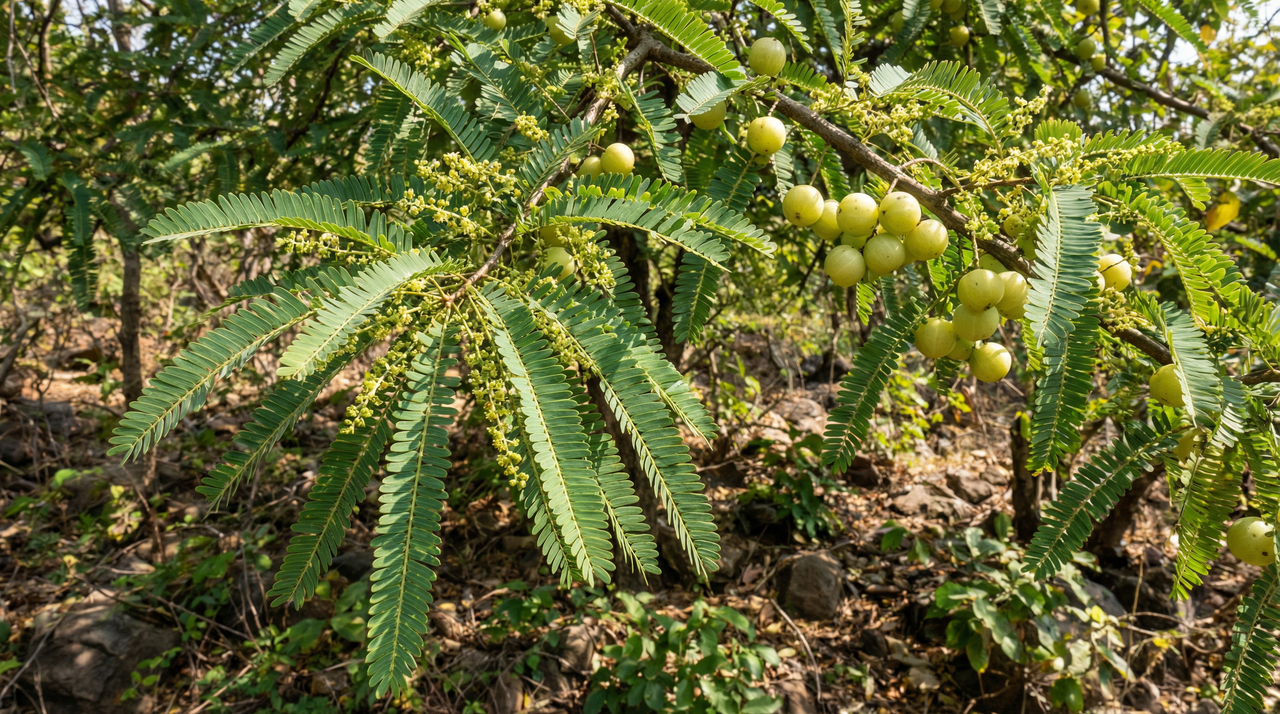
Amla grows into a small to medium deciduous tree, typically 8–18 meters tall, with a rounded, bushy crown, dense irregular branching, and rough grayish-brown furrowed bark that gives older specimens a dignified, craggy look.[2][8] The leaves are one of its most distinctive features: tiny, oblong, light green, and arranged distichously along the branchlets in a way that makes each branch look convincingly like a pinnate compound leaf at first glance.[2][6] It's genuinely confusing to newcomers, and I've had more than one garden visitor insist it couldn't possibly be a single-leaf species. Flowers are small (2–3 mm), greenish-yellow, and borne in axillary clusters; the tree has a polygamous flowering system, meaning a single specimen carries unisexual and bisexual flowers simultaneously.[2][9] The fruit is a fleshy, globose drupe 1–3 cm across, pale green to yellowish when ripe, with six internal locules holding small trigonal seeds.[2][10] Underground, a deep taproot anchors the tree and pulls moisture from well below the surface, which is a big part of why young amla trees handle their first dry season far better than shallow-rooted orchard species I've grown alongside them.
Traditional and Cultural Uses
The human relationship with amla is ancient and remarkably consistent. Classical Indian medical texts compiled roughly between 300 BCE and 200 CE consistently classify the species as a premier rejuvenative herb, meaning a rejuvenative that supports vitality and longevity. It's also one of the three fruits in Triphala, arguably the most famous Ayurvedic formulation still in widespread use today.[11][12] I think of amla the way I think of elderberry in European tradition: simultaneously food, medicine, and ritual object, with a cultural footprint that no single modern use category quite captures.
In Hinduism the tree symbolizes longevity, immortality, and prosperity, appearing in Diwali rituals and traditional hair-care formulations that are still commercially dominant in South Asia today.[11][13] Its medicinal reach extends well beyond Ayurveda into Siddha, Unani, Tibetan, and Chinese systems (where it's known as Yu Gan Zi), showing up across Asia in formulations for liver, kidney, and respiratory conditions.[13] Related species carry some of that tradition too; Phyllanthus fraternus shares overlapping uses in Ayurveda and African ethnomedicine for liver support, fever, and urinary complaints.[14] The tree is listed as Least Concern by the IUCN and formally recognized in the Ayurvedic Pharmacopoeia of India, but wild populations face real pressure from commercial overharvesting.[15][16] Because of that, I only source my trees from certified nurseries now; the wild populations have paid the price for our enthusiasm.
Interesting Facts About Amla
Amla is a patient permaculture investment. Mature trees grow at a moderate 0.5–1 meter per year, reach 10–18 meters with a canopy spread of 8–12 meters, and routinely live past 100 years, sometimes exceeding 150.[2][17] You're planting something that could outlive you by several generations, which puts the Charaka Samhita's reverence for it in a new light. Those inconspicuous greenish-yellow flowers attract honeybees and butterflies, and the fruits, which pack an extraordinary vitamin C concentration, are dispersed by frugivorous birds like bulbuls and mynas.[9][18] I watched a flock of mynas strip a loaded tree in under twenty minutes once, which is a dramatic illustration of why this species spreads so effectively across disturbed landscapes. The tree easily handles temperatures from 5–40°C, relying on its deciduous habit to ride out seasonal drought without losing productivity.[19][20] For a subtropical food forest, that combination of resilience and generous yield is hard to match.
Leafflower (Phyllanthus emblica) Varieties and Cultivars
The fruits of Phyllanthus emblica are small, spherical drupes, usually somewhere between half an inch and an inch across, ripening from bright green to yellowish-green. They're predominantly sour and astringent, though some cultivars edge toward subtle sweetness. That flavor intensity is part of what makes this species so medicinally significant, but it also means cultivar selection shapes your experience of the plant more than it would with, say, a sweet cherry or a fig. Choosing the right variety for your site and your intended use is genuinely worth the research time.
Notable Cultivars of Indian Gooseberry
Most of the serious cultivar work on phyllanthus emblica has come out of India's ICAR research system, and the NA series is where most growers start their comparison.[21][22] NA-7 produces large fruits in the 25-30 gram range with vitamin C levels of 600-700 mg per 100 grams and yields of 20-25 kg per tree.[23] I've grown NA-7 from a nursery start in Central Florida and watched it put on vigorous early growth, reaching close to 4-5 meters in three years. If you're drying fruit for powder or maximizing the vitamin C story, this is the one I'd reach for first. NA-10 pushes fruit size slightly larger and tolerates pH from 5.5 to 8.0 with heat endurance up to 45°C, which makes it the more adaptable option for clients with challenging soils or relentlessly hot summers.[21]
Chakaiya is the cultivar I recommend when water access is limited. The fruits are smaller (15-20 grams) and the vitamin C content is lower at 400-500 mg per 100 grams, but its semi-arid tolerance and earlier October harvest make it a practical fit for drier microclimates where NA-7 would need coddling.[23] Other named cultivars worth knowing: Suraksha for disease resistance, Bharat and Hunab for drought tolerance, and Gulab if you want something with enough sweetness to eat fresh off the tree.[21] Harvest timing also varies significantly across the group, from Chakaiya in October to late types like Francis stretching into February or March.[23]
Botanically, the species splits into two varieties: P. emblica var. emblica, the common Indian type with rounder fruits, and var. cochinchinensis from Southeast Asia, which has elongated fruits and notably better salt tolerance.[24] For coastal Florida and California gardens, that salt tolerance difference is worth paying attention to. The tree itself grows to 20-30 feet with a spreading habit and suits USDA zones 9-11; most US cultivation is still in home gardens rather than commercial operations, though that's slowly shifting as the subtropical food forest community discovers it.[25][26] I'll note honestly that very few of these cultivars have been systematically trialed in the southeastern US, so apply the ICAR yield data as a benchmark rather than a guarantee.
Sourcing Leafflower Plants and Seeds in the US
Sourcing has improved considerably in recent years. Young trees (1-3 feet tall) are available from specialty tropical nurseries including Miami Fruit, Eureka Farms, California Tropical Fruit, and Logee's, typically running $25-$75 per tree.[27][28][29][30] Seeds are also available from multiple US suppliers for $5-$15 per packet with germination rates of 60-80% under good conditions, though seed viability drops off after a year or two in storage.[31]
Grafted plants are worth the price premium. Propagation from cuttings runs 70-90% success with rooting hormone, but a grafted nursery tree gets you fruit in 2-3 years versus the 4-6 year wait from seedlings.[32][33] In my experience, that two- to three-year head start is worth the extra cost if you want fruit before the end of the decade. If you're importing stock from outside the US, be aware that USDA APHIS permits and phytosanitary certificates are required for plants, seeds, and fresh fruit; I always secure that documentation before ordering anything internationally, and it's genuinely not complicated once you know the process.[34] The species is not listed as a federally noxious weed, so there's no legal barrier to growing it, just the regulatory paperwork for international sources.[35] Match your cultivar choice to the goals your site demands, and the sourcing question answers itself.
Leafflower Propagation and Planting (Phyllanthus emblica)
Of all the fruit trees I've helped clients establish in subtropical food forests, phyllanthus emblica is the one that most rewards a little upfront study of its biology. The way you propagate it shapes everything downstream: when you'll eat fruit, how uniform your trees will be, and whether your nursery stock actually survives the transition to the ground. Start with the seed, because even if you end up grafting, understanding what's inside that little pit changes how you think about the whole species.
Seed Characteristics and Viability
The seeds of Phyllanthus emblica are small, trigonous things, three-angled and 4-6 mm long, brown to dark brown with thin membranous wings along the angles and a genuinely hard woody testa.[36][37][38] That hard coat is part of why soaking matters so much before sowing. What really gets interesting, though, is that these seeds are polyembryonic: a single seed can contain multiple embryos from both zygotic and nucellar origins, meaning one seed can sprout into several distinct seedlings.[39][40] I've learned to label those rows obsessively in the nursery, because the seedlings look identical at first and you genuinely cannot tell which are the nucellar clones (more genetically stable) and which carry the genetic shuffle of cross-pollination.
On the topic of viability: these seeds are orthodox and can be stored 2-5 years under the right conditions, specifically 5-10% moisture content held at 4-10°C for medium-term storage or -18°C for the long haul, in airtight containers with desiccant.[41][42] But in practical terms, freshness is everything. Fresh seeds achieve 50-70% germination; let a batch sit more than six months at room temperature and you'll watch that number drop significantly.[43][44] A 24-48 hour water soak or a gibberellic acid pretreatment can push germination up to 70-80% even with fresher seed, and when I have any doubt about a stored lot, I run a quick TZ test using a 1% tetrazolium solution, checking for the red staining that signals viable, respiring embryo tissue before committing a whole flat to uncertain seed.[43][45]
Propagation Methods: From Seed to Grafting
If you're designing a production food forest or an edible landscape for a client who wants to actually taste fruit within a reasonable timeframe, grafting is the method to use. Grafted trees, using cleft, veneer, or whip-and-tongue techniques onto seedling rootstocks of P. emblica or compatible Phyllanthus species, achieve 70-90% success when done during the active growth season between June and August at temperatures around 21-35°C.[46][47] The payoff is measurable: grafted trees begin bearing fruit in 2-3 years, while seedling-grown trees take 4-6 years to reach the same milestone.[46][48] For clients who've invested real money in site preparation, that two-to-three year difference is often the deciding factor. I make it a point to discuss this tradeoff early in any design conversation.
Other methods exist and some work well for home gardeners. Semi-hardwood cuttings at 15-20 cm deliver 40-70% rooting success with hormone treatment; air layering performs even better at 80-90%; and tissue culture from shoot tips on MS medium with BAP and NAA achieves over 90% efficiency in a lab setting.[45][49][50] Cuttings are worth trying on a small scale, but I'd be honest with anyone attempting them that skipping the rooting hormone almost guarantees failure. Whatever method you use, young plants need about 50% shade for the first 3-6 months, consistent moisture without waterlogging, and a balanced fertilizer introduced after about two months.[43] Nursery pests and the rapid viability loss of unprepped seeds are the two challenges I see trip up beginners most often.
As a quick contrast: Gulf leafflower (P. fraternus) is almost a weed in poor sandy soils and can be direct-sown as a quick-growing annual ground cover with almost no fuss.[51][52] I grow both and the contrast is instructive for clients who want quick versus long-term yields. Same genus, completely different demands.
Soil, Site Selection, and Site Preparation
Before I put a single grafted tree in the ground, I dig a test hole about 30 cm deep, fill it with water, and watch how fast it drains. Even one day of standing water has killed young trees in my garden, so this step is non-negotiable. Phyllanthus emblica wants well-drained sandy loam or loamy sand, a pH between 6.0-7.5 (though it tolerates a wider range from 5.0-8.5 in a pinch), solid aeration to prevent root hypoxia, and at least 1% organic matter in the soil profile.[53][54][55] Heavy clay or compacted soil above roughly 10 psi will simply stop the roots. The tree develops a strong taproot reaching 2-3 m in loose soils, plus extensive laterals that spread 10-15 m horizontally with 60-70% of root mass concentrated in the top meter.[56][57] That lateral spread is worth keeping in mind when siting near paths, walls, or other trees.
Poor soil conditions show up fast: chlorosis signals iron or nitrogen deficiency, stunting and premature leaf drop are early stress indicators, and root rot (dark, mushy, foul-smelling roots) usually means waterlogging has opened the door to Phytophthora spp.[58][59] If you're working with a heavier soil, amend generously with coarse sand and gypsum before planting and build a slight raised planting mound. For container growing, a mix of equal parts loam, compost, and perlite or coarse sand does the job; keep soil moisture around 50-60% of field capacity and provide 50% shade in the first season.[26][44] The annual rainfall sweet spot is 600-1500 mm or equivalent irrigation, though once established this is a genuinely tough tree.
Spacing, Planting Technique, and Timeline to Fruit
Standard orchard spacing runs 8 m × 8 m to 10 m × 10 m, which works out to roughly 100-156 trees per hectare, and the rationale ties directly to the tree's mature size of 4.5-9 m tall with a canopy spread of 3-6 m or larger.[60][55][61] Adequate spacing ensures airflow, light penetration, and minimal root competition. In my own Central Florida food forests, I lean toward the wider end of that range; it allows room for an understory guild and makes pruning access far less frustrating as the canopy fills in. High-density planting at 5-6 m intervals is possible with dwarf cultivars and intensive pruning, but that's a management-intensive system that I'd only recommend to someone who genuinely wants to put in the ongoing labor.[62]
If you're starting from seed indoors, sow 8-12 weeks before the last frost at 21-27°C and expect germination in 2-4 weeks.[63][64] Transplant into a full-sun location (minimum 6-8 hours) once the soil has climbed above 15°C and seedlings are 15-30 cm tall.[65] Stake young trees for the first 2-3 years; the root system takes time to anchor, and a tree that rocks in its hole during early growth is a tree that's struggling to establish. Grafted transplants get to fruit in 2-3 years from planting; seedling transplants put you at 4-6 years from that same starting point. Both routes work. One just requires more patience.
Leafflower Care Guide: Growing Indian Gooseberry (Phyllanthus emblica)
Everything about caring for phyllanthus emblica makes more sense once you accept one foundational truth: this is a tropical tree that evolved in frost-free Asian forests, and it wants to live in USDA Zones 9-11.[66] Get the climate match right and you've solved most of the puzzle. Push it too far outside that range and you'll spend your energy managing stress rather than harvesting fruit. I think of it a little like the mangoes and citrus I grow in Central Florida: the basic care rhythms aren't complicated, but the margin for cold-weather mistakes is thin.
Sunlight Requirements for Optimal Growth and Fruiting
Mature Indian gooseberry trees are sun-hungry, full stop. They need 6-8 hours of direct light daily for good fruit production, and unlike young transplants, established trees don't forgive shady placement.[67][68] Insufficient light shows up fast: chlorosis, leggy stems reaching toward any available brightness, and eventually little to no fruit.[68][69] Young trees in their first year can handle some afternoon shade during extreme heat, but site the tree in full sun from the start and let it grow into that position.
Watering Needs by Growth Stage
Young trees need consistent moisture during establishment, roughly 20-30 liters per week, keeping the soil evenly moist without letting it sit wet.[70] Deep, infrequent watering is better than shallow daily doses because it drives the taproot downward, and a deep taproot is exactly what makes mature trees so drought-resilient.[71] The tree wants about 500-800 mm of water annually, and a 8-10 cm organic mulch layer helps retain that without waterlogging the root zone.[71] Overwatering is a real trap: yellowing leaves and wilting despite visibly wet soil usually means the roots are already compromised.[72] In my Central Florida garden, trees past year three handle dry spells that would stress most of my other subtropical fruit without much complaint. The herbaceous relatives, Gulf leafflower and Stonebreaker, follow similar logic but on a smaller scale: well-drained soil and about an inch of water weekly during active growth.[73]
Feeding and Fertilization Schedule
Start with a soil test in early spring before you add anything; the tree prefers a pH of 6.0-7.5, and correcting that before you fertilize prevents a lot of wasted effort.[2][74] For a tree in the 5-10 year range, 10-20 kg of well-rotted manure annually plus split NPK applications (roughly 400-600 g N, 200-400 g P₂O₅, and 300-600 g K₂O per tree) timed to pre-monsoon, monsoon, and post-monsoon cycles covers the nutritional base.[75][76] Young trees get half those rates.
The mistake I see most often is pushing nitrogen too hard, and I've made it myself. One year I gave my young trees a generous synthetic nitrogen boost and got lush, beautiful foliage with almost no fruit set. The lesson stuck. Excess or late-season nitrogen pushes vegetative growth at the expense of fruiting and can also reduce the medicinal quality of the fruit you do get.[75] Organic compost and well-rotted manure are the right tools here, especially for a tree you're growing for its vitamin C payload.[77] The weedy herb relatives, Gulf leafflower in particular, thrive on poor soils with barely any feeding; over-fertilize them and you get foliage and very little medicine.[78]
Frost Tolerance and Winter Protection
Indian gooseberry is cold-sensitive in a way that catches subtropical gardeners off guard. Temperatures below 5°C (41°F) stress the tree, and anything near -1 to -2°C (28-30°F) can kill it outright, especially young specimens.[66][79] Cold damage shows as membrane disruption, leaf scorch, twig dieback, and in bad cases, death from the crown down.[69] I treat young amla trees exactly like I treat young citrus: south-facing wall placement, a heavy organic mulch layer kept a hand's width clear of the trunk to prevent collar rot, and frost cloth ready to deploy when temperatures threaten.[79] In truly marginal zones, container growing with plants moved indoors above 10°C (50°F) is the safest option.[80]
Heat Tolerance and Summer Management
On the other end of the spectrum, this tree handles heat very well. It's adapted to 25-35°C (77-95°F) daytime temperatures and can tolerate brief spikes to 45°C (113°F), though sustained heat above 42°C starts reducing photosynthesis, pollen viability, and fruit quality.[81][17] The tree has genuine physiological tools for coping, including antioxidant enzymes, proline accumulation, and heat-shock proteins, and certain cultivars handle prolonged high temperatures better than others.[82] In my experience, NA-7 and Chakaiya hold fruit quality noticeably better during extended 95°F+ summers than older seedling trees.[83]
Practically speaking, the combination that makes the biggest difference in hot, humid summers is drip irrigation (40-60 liters per tree every 4-5 days) paired with that same 8-10 cm mulch layer.[70] For younger trees in extreme heat, 50% shade netting can drop ambient temperature by 5-7°C without the light deprivation problems that would stress a mature fruiting tree.[84]
Pruning, Maintenance, and Seasonal Rhythm
Prune in late winter or early spring, after harvest and before new growth pushes out. On young trees the goal is a strong central leader with 4-6 well-spaced scaffold branches; remove competing leaders, water sprouts, and anything growing back toward the center.[85][86] On mature trees, focus on removing dead, diseased, crossing, or rubbing wood and thinning the interior for light and airflow; keeping height under 4-5 meters makes harvest dramatically easier.[85] Sharp, sterilized tools and a strict no-pruning rule during flowering and fruiting are non-negotiable. The herb-form relatives, Gulf leafflower and its kin, need almost nothing: tip pinching for bushiness and removal of dead stems is about it.[51]
Keep 5-8 cm of organic mulch over the root zone year-round, away from the trunk, and thin fruit if the tree is overloaded in a heavy year.[85] The tree's seasonal rhythm is worth understanding as a whole: leaf flush and flowering come with the monsoon or rainy season, full foliage and fruit development fill the summer, and a dry-season leaf drop follows in winter.[87][88] In non-tropical gardens, reduce watering through that dormant period and keep temperatures above 10°C. Once you've seen the full cycle two or three times, the care calendar almost writes itself, and by year three or four, you'll find this is one of the least demanding productive trees in the warm-climate garden.
Leafflower Harvesting: Timing, Technique, and Yield
Patience is the main skill this tree demands of you, and nowhere is that more obvious than in the harvest calendar. Phyllanthus emblica flowers during the monsoon (June through August in its native range), and those flowers take 150 to 200 days to become fruit worth picking.[89][90] That math puts the harvest window squarely in the post-monsoon cool season, October through March, with the sweetest flush of production arriving November through January when dry weather concentrates flavor and reduces rot pressure.[91][92]
When to Harvest Phyllanthus emblica
The fruit won't tell you it's ready with a dramatic color change the way a tomato does. After several seasons growing amla, the cue I've come to trust most is a subtle shift from matte deep green to a slightly glossy light green or pale yellowish-brown. Fruit also reaches 1.5 to 3 cm across, firms up to a slight give without going soft, and the seeds inside harden fully.[93][94] That gloss is easy to miss if you're not watching for it, and microclimate shifts the timing slightly, so I'd rather check the seeds than trust the calendar alone.
On the question of when your tree will produce at all: seed-grown trees typically fruit at three to four years and hit full stride around year ten, while grafted trees often deliver their first crop a year or two earlier.[48] The Indian research base on all of this is solid; data for other Phyllanthus species is considerably thinner, so these timelines are specific to the anchor species.
How to Harvest and Handle Amla Fruit
Hand-pick on sunny mornings after the dew has dried, starting at the lower branches and working up. Leaving a short stem attached extends shelf life noticeably. Small clippers work well, and gentle shaking over a tarp can speed things up once you get the feel for it.[95][96] I learned the hard way that vigorous shaking bruises a shockingly large portion of the crop; bruised phyllanthus emblica fruit deteriorates fast and loses that vitamin-C potency before you can use it. Gentle really does matter here.
Skip harvesting during rain or high humidity, and move quickly once fruit is off the tree: clean, sort, and either refrigerate or dry promptly.[97] For fresh storage, I keep mine in the crisper drawer around 45°F / 7°C and consistently get close to four weeks of usable fruit, which lines up with the research showing 21 to 28 days at 7 to 10°C with 85 to 90% relative humidity.[98] If you're drying instead, sun-dry for three to five days or use a dehydrator at 40 to 60°C until moisture drops to 10 to 15%.[97]
Expected Yields and Flavor at Harvest
Mature trees in full production deliver 50 to 200 kg of fruit per year, with ten-year-old trees averaging around 100 kg; younger trees in the five to seven year range typically yield 25 to 50 kg.[99] My seven-year-old grafted tree has been consistently landing in the 40 to 60 kg range, which feels like a realistic home-garden expectation rather than the high end of commercial orchard data. The pruning and feeding practices covered in the care guide make a real difference in where on that spectrum your tree falls.
At harvest, the fruit reads 8 to 12 °Brix, but that low number is misleading.[93][94] High acidity dominates, not low sugar, and the result is a sharp, mouth-puckering tartness I'd compare to a green crabapple crossed with an unripe persimmon. That astringency is exactly what signals the medicinal potency Ayurvedic tradition has valued for centuries, and it's worth embracing rather than waiting out.
Leafflower (Phyllanthus emblica) Preparation and Uses
Culinary Uses and Sensory Profile of Indian Gooseberry
The first time you bite into a fresh amla fruit, the experience is genuinely surprising. It hits you with a sharp, astringent pucker driven by high tannin and organic acid content, then lingers with a faint sweetness and a clean, green-apple-like aroma from volatile compounds like hexanal.[100][101] The crisp, juicy pulp is appealing; the intensity is not. That sensory profile is precisely why traditional cultures developed such a rich toolkit for processing it. The fruit is the main edible part, consumed fresh, dried, juiced, powdered, pickled, candied, fermented, and stirred into chutneys and jams.[2][102] Young leaves can be boiled and eaten as a vegetable, and they make a serviceable herbal tea, though the boiling step is important for reducing oxalic acid and bitterness.[2][103] Seeds are not eaten directly due to bitterness and potential toxicity, though their pressed oil does appear in culinary and medicinal contexts.[2] Roots, flowers, and sap stay firmly in the traditional medicine cabinet.[2]
Amla pickle (amla achar) and murabba are the classic North Indian answers to that tannic bite, and for good reason.[104] I learned this the hard way after my first batch of chutney came out face-puckering enough to use as a cleaning product. A preliminary salt soak dramatically reduces the astringency by drawing out surface tannins before cooking, and that single step transforms the fruit from aggressive to genuinely delicious. One quick identification note: if you're sourcing fruit from an unfamiliar tree, confirm the species. Phyllanthus acidus, the Otaheite gooseberry, produces similar-looking sour fruits and is edible, but Phyllanthus amarus (stonebreaker) is a small herbaceous plant with tiny, non-edible capsules that can cause mild toxicity in quantity.[105][6] Good labeling matters, especially with genus members that look similar as young plants.
Traditional and Modern Medicinal Preparations
Within Ayurvedic traditions, the fruit is considered one of the few medicinal herbs capable of balancing all three doshas simultaneously, valued for longevity, immunity, digestion, and hair health.[104] Preparations span the full spectrum from simple fresh fruit (10-20g daily) to churna powder mixed into honey or milk (3-6g daily) to water decoctions brewed at roughly a 1:5 fruit-to-water ratio.[106][107] Those same principles translate into modern standardized forms: capsules or tablets at 500-1000mg doses, ethanol tinctures at a 1:5 herb-to-solvent ratio, and topical oil infusions for hair and scalp.[106] Clinical trials for blood sugar management have specifically used 500mg extract twice daily, which gives you a concrete anchor if you're working with the supplement form.[104]
The hair-oil tradition is one I find genuinely beautiful in practice. Dried amla fruits infused into coconut or sesame oil take on a warm golden hue and a subtle earthy aroma over several weeks, and that oil has been used for centuries to nourish the scalp, address dandruff, and support hair growth, all attributed to the fruit's vitamin C content and cooling properties in Ayurvedic terms.[108] Ancient formulation, simple method, still sitting on my counter.
Non-Food Uses and Safety Considerations
The same fruit that pickles beautifully also appears across Unani medicine as a treatment for hyperacidity and a blood purifier, in Siddha texts as a complexion and vitality tonic, in Nepalese traditional practice as a respiratory tonic, and in Traditional Chinese Medicine as a liver protectant known as Yu Gan Zi.[109][104][110][111] Growing this tree has given me a deeper respect for how independently different cultures converged on the same plant for overlapping reasons. When something shows up in Ayurveda, Unani, Siddha, Nepalese folk medicine, and Chinese medicine simultaneously, that's a signal worth paying attention to.
On safety: amla is generally well-tolerated across all these forms and has a long record of use without serious adverse events. That said, if you're taking blood-sugar-lowering medications or anticoagulants, start at a conservative dose and monitor closely. The additive effects with antidiabetic drugs are documented clearly enough in the research that I always flag it with clients who are managing those conditions. Work with your prescribing clinician, adjust incrementally, and the fruit's therapeutic value and your medication can usually coexist without incident.
Leafflower Health Benefits and Medicinal Uses
Spend any time in Ayurvedic medicine and you'll encounter phyllanthus emblica everywhere. Known as amla, it sits at the center of Rasayana practice as a rejuvenative tonic that Ayurvedic texts describe as balancing all three doshas while improving digestive fire, relieving constipation and acidity, and serving as a cornerstone ingredient in Chyawanprash, the classic longevity formulation.[112] What's striking is how thoroughly the modern science has caught up with that traditional reputation. The phytochemistry turns out to be extraordinarily deep, and understanding it helps explain why this fruit has stayed relevant across three millennia.
Phytochemical Profile of Leafflower
The headline number is vitamin C: fresh amla fruit contains somewhere between 600 and 1800 mg per 100 grams, depending on variety and growing conditions, putting it 10 to 20 times above oranges.[113][114] But the vitamin C is only part of the story. Hydrolyzable tannins, including emblicanin A and B, corilagin, chebulagic acid, and punicalagin, can make up 40 to 60 percent of total phenolics and 20 to 30 percent of dry weight.[113] Layered on top of those are gallic and ellagic acids plus flavonoids including quercetin, rutin, kaempferol, and catechin.[104] That combination is what gives amla its remarkable biological depth.
After growing these trees for several seasons, I've noticed something maturity stage studies confirm: fruits harvested slightly under-ripe carry noticeably higher astringency and a sharper, more intense character. That tracks with the data showing antioxidant capacity peaks in immature green fruit and declines as ripening progresses, and that cooler, drier growing seasons push phenolic and flavonoid content higher.[115][116] Different parts of the plant also carry distinct profiles: the fruit drives most of the phenolic and antioxidant action, leaves hold 10 to 15 percent tannins, seeds contain fixed oil rich in linoleic and oleic acids, and roots emphasize lignans and alkaloids.[117][118] For most wellness applications, it's the fruit doing the heavy lifting.
Medicinal Actions and Clinical Research
The mechanism behind amla's broad therapeutic reach starts with two interlocking pathways. The polyphenols and vitamin C together activate Nrf2, upregulating the body's own antioxidant enzymes, including SOD, catalase, and GPx, while simultaneously suppressing NF-κB to reduce inflammatory cytokines like TNF-α and IL-6.[119][120][121] That dual action explains why the clinical results span so many seemingly unrelated conditions.
The strongest evidence sits in metabolic health. Systematic reviews and randomized controlled trials show P. emblica reducing fasting blood glucose and HbA1c by 10 to 20 percent in type 2 diabetes patients, while also improving lipid profiles by lowering LDL and triglycerides.[122][123][124] I have a few garden friends who've incorporated daily amla powder into their routines and whose bloodwork has shifted in exactly those directions, which always gives me a kind of quiet satisfaction when I see their numbers. It's not a substitute for medical care, but the clinical data here is genuinely robust. Beyond glycemic and cardiovascular support, demonstrated actions include:
- antimicrobial activity against S. aureus and E. coli
- adaptogenic stress mitigation through HPA axis modulation
- wound healing through enhanced collagen synthesis
Gulf leafflower, P. fraternus, rounds out the picture for anyone curious about the broader genus. Its hepatoprotective effects compare favorably to silymarin in reducing liver enzymes against CCl4-induced toxicity, it inhibits calcium oxalate crystallization by 50 to 60 percent, and it shows antiviral activity against hepatitis B.[128][129][130] I grow P. emblica for general daily wellness, but if I were specifically addressing hepatic concerns I'd reach for P. fraternus. The genus-wide pattern of liver protection and urinary tract support is real, even if most of the deep clinical work centers on emblica.
Nutritional Value of Indian Gooseberry
The raw fruit comes in at around 44 calories per 100 grams, with modest protein and fat, 10 grams of carbohydrates, and 4.3 grams of fiber.[131][114] Total phenolics run between 3,000 and 5,000 mg GAE per 100 grams fresh weight, and the vitamin C present appears to enhance polyphenol bioavailability, so the nutrients work synergistically rather than independently.[132][133] That's worth keeping in mind when you're choosing between fresh fruit and processed forms.
Drying is where you lose the most ground: sun-drying causes 70 to 90 percent vitamin C loss, and even gentle pasteurization of juice loses another 20 to 50 percent during room-temperature storage.[104] I prefer fresh fruit when I can get it from my own trees. For daily supplementation, the practical recommendation is 1 to 2 fresh fruits (10 to 20 grams) or 1 to 3 grams of dried powder, stored in an airtight container below 25°C for up to a year.[134][135] Oxalates are present at 200 to 300 mg per 100 grams, so anyone managing kidney stones should keep that in mind, but for most people it's a minor consideration rather than a barrier.[104]
Safety, Dosage, and Side Effects
P. emblica has a generous safety margin. Animal studies put the LD50 above 2,000 mg/kg, and at dietary levels no human toxicity has been reported.[136][137] I use 1 to 2 grams of amla powder in my morning smoothie most days and have never experienced any digestive issues at that level. Going past 5 grams is where I've personally run into loose stools, and pharmacological reviews indicate that loose stools and hyperacidity are the primary complaints at higher doses.[136]
The interactions worth knowing about are concrete, not theoretical. Amla can potentiate antidiabetic medications, creating hypoglycemia risk; it may increase bleeding risk alongside anticoagulants; and it can interfere with drugs metabolized by cytochrome P450 enzymes.[138][139] When I recommend amla to friends who are managing blood sugar or taking blood thinners, I'm direct about suggesting they talk with their prescriber first. Rare allergic reactions, including contact dermatitis and oral allergy syndrome, can occur in sensitive individuals, and while culinary amounts are considered safe during pregnancy in Ayurvedic tradition, high-dose supplementation during pregnancy lacks sufficient clinical data and should wait for medical guidance.[140][141] Gulf leafflower carries a similarly low toxicity profile, with aqueous extracts showing an LD50 above 5,000 mg/kg, though the same cautions around hypoglycemia apply across the genus.[142] One practical note I'd add from my own sourcing experience: if you're buying bulk powder rather than growing your own, look for suppliers who document heavy-metal testing. The tree bioaccumulates from its soil, and clean source material matters more than most people realize.
Leafflower Pests and Diseases
One thing I appreciate about growing phyllanthus emblica in a food forest is that it arrives with its own chemical defense kit. The same gallic acid, ellagic acid, emblicanins, tannins, and alkaloids that make this fruit medicinally interesting also function as natural antifeedants, making the tree noticeably more pest-resistant than many subtropical fruit species I grow alongside it.[143][144] Leaf and fruit extracts have demonstrated insecticidal and repellent activity in field studies,[145] and tiny trichomes on the leaf surface add a physical layer of defense against small insect herbivores.[146] It's almost as if the tree manufactures its own neem-like protection from the inside out.
Natural Pest Resistance in Phyllanthus emblica
That built-in resilience is real, but it's not unconditional. Stressed or nutrient-deficient trees drop their guard, and humid monsoon conditions create exactly the window that sap-suckers and borers are waiting for.[147] I've found that a well-fed, well-watered but not waterlogged tree in a diverse planting genuinely sees less pest pressure than an isolated, stressed specimen. That's a permaculture observation as much as it is a horticultural one.
Key Insect Pests and Management
The pest list for Indian gooseberry includes mealybugs, leafhoppers, aphids, and stem borers,[148][149] but fruit flies in the Bactrocera genus are the headline threat. In unmanaged orchards they can destroy 30 to 50 percent of a crop by laying eggs directly into developing fruits, triggering premature drop.[147][150] I've grown NA-7 and NA-10 side by side with other cultivars in Central Florida, and the thicker-skinned fruits on those varieties really do show fewer fly stings during summer. Chakaiya shows similar tolerance to leaf-eating caterpillars from its denser canopy structure,[151][152] so cultivar selection is genuinely your first line of defense.[152]
For fruit fly monitoring, I hang simple pheromone traps each season and check them weekly once the fruits start sizing up.[148][153] Catching a population spike early means I can usually skip sprays entirely. For aphids and leafhoppers, a 2% neem oil solution disrupts feeding and reproduction without harming the beneficial insects working the canopy,[154] and it's widely approved for organic programs.
Major Diseases of Indian Gooseberry
Fungal diseases are where I've had to stay most attentive. Anthracnose from Colletotrichum gloeosporioides and fruit rot from Aspergillus niger hit hardest during rainy seasons and post-harvest,[155][156] and I've learned the hard way that skipping post-harvest pruning in a humid year will show up as gummosis the following season. Lasiodiplodia theobromae is the culprit behind that sticky trunk oozing,[155] and improved airflow through the canopy has been more effective for me than any spray. Leaf spot from Pestalotiopsis and Phyllosticta shows as circular dark-margined spots,[155] while powdery mildew (Oidium spp.) and rust (Ravenelia spp.) round out the common fungal threats.[155] Bacterial problems do occur but they're considerably less frequent.[155] In the nursery stage, damping-off from Pythium or Fusarium can wipe out up to half a seedling flat,[157][43] which is why I now drench all new seedlings with Trichoderma as standard practice rather than waiting to see a problem develop.
Integrated Pest and Disease Management Strategies
A solid IPM program here leans heavily on culture first: remove fallen fruit promptly, prune for airflow, and keep spacing honest so canopies don't crowd.[158][149] Biologicals including Bacillus thuringiensis for caterpillars and Trichoderma for soil-borne pathogens fill most of the remaining gaps, and combining these approaches with resistant cultivars and regular scouting can cut chemical pesticide use by 40 to 60 percent compared to conventional spray schedules.[158] When chemical intervention becomes unavoidable, copper-based fungicides and mancozeb address the fungal diseases, while malathion is used for fruit flies in conventional programs.[159][160] Susceptibility does shift with local climate and rainfall patterns, so checking with your regional extension service is worth the time if you're outside tropical South Asia.
Leafflower in Permaculture Design
Phyllanthus emblica sits in a sweet spot that not many productive trees occupy: genuinely tough, ecologically generous, and deeply useful once you get it into the right climate. Figuring out whether that climate is yours is the starting point for any honest design conversation about this tree.
Climate Suitability and USDA Zones
If you're gardening in USDA zones 9 through 11, amla deserves serious consideration.[161][69] The frost tolerance runs out fast, though. Damage starts around 32°F and the tree can survive down to about 25-30°F. I treat that lower number the way I treat citrus cold-hardiness claims: useful as a rough guide, not a guarantee you want to test with a young specimen.[162] Once established, though, the heat and drought performance is genuinely impressive. Optimal growth happens in that 77-95°F range, and the deep root system lets it shrug off dry spells that would stress a lot of other subtropical fruit trees, handling as little as 10 inches of annual rainfall in a pinch.[35][162] The sweet spot for fruiting is 30-60 inches of rain, which lines up well with central and south Florida. One hard lesson I've taken from watching young trees decline in heavy clay zones: this species does not forgive waterlogged soil. I lost a first-year tree to root rot in a low spot that collected water after heavy rains, and it never recovered.
For US growers, central and southern Florida in zones 9b-11 are the most practical fit, with supplemental irrigation during the dry season.[26] Coastal and inland valley California in zones 9-10 can work with frost protection during cold snaps, and South Texas around Brownsville is marginal but doable with good drainage.[163][164] For anyone sitting right on the edge of that cold tolerance, a large container that can be moved under cover during cold fronts is a reasonable workaround rather than a concession.
Ecosystem Functions and Pollination Role
This is where amla earns its keep in a food forest beyond the fruit itself. The flowers are small and greenish-yellow, easy to overlook, but they're a pollinator magnet. Honeybees (both Apis cerana and Apis mellifera) account for up to 70% of flower visits, with wild bees, flies, ants, and butterflies filling out the rest of the activity.[165] That pollinator traffic isn't just good for the amla; it spills over to benefit everything flowering nearby during that same February-to-May window.[165]
The cross-pollination requirement is the most important thing to understand at the design stage. Pollination studies confirm the species is largely dioecious, meaning you need male and female trees to get reliable fruit set.[166] Without pollinators, fruit set can limp along at 10-20%; with good bee activity and cross-pollination, that number can reach 80%.[167] I've seen this play out in my own designs. After I introduced a hive near a small grouping of amla trees in a Florida food forest, the yield difference over the following season was noticeable. It turned the trees from modest producers into genuinely productive ones. Optimal pollination happens at 25-35°C with 50-70% humidity, so Florida summers during flowering can actually be ideal if you're not fighting drought or pesticide drift.[165]
Forest Layer and Guild Companions
In a food forest layout, Phyllanthus emblica belongs in the upper canopy or tall shrub layer. It reaches 8-18 meters at maturity, native to the dry deciduous forests of South Asia where it naturally occupies a canopy role.[168][6] The deep roots that make it drought tolerant do double duty by stabilizing soil and accessing subsoil nutrients, and the deciduous leaf drop contributes a steady supply of nitrogen-rich organic matter to the soil below. Its arbuscular mycorrhizal associations extend its phosphorus uptake even in poor soils, and those same fungal networks benefit neighboring plants over time.[169][170] In the guilds I've designed around mature amla trees, the plants in the understory seem to hit their stride faster after year three or four, and I'm convinced the leaf litter and root activity have something to do with it.
Intercropping with legumes is the most reliable guild combination in the research and in practice. The legume fixes nitrogen, the amla's light canopy lets enough sun through to keep the legume productive, and the whole system builds fertility incrementally.[26] Frugivorous birds are drawn to the fruit and add another layer of ecological activity. The tree hasn't shown invasive tendencies in Hawaiian or Florida trials, so the biodiversity it supports stays asset rather than liability.[26][171]
For a quick note on genus diversity: the Gulf leafflower (Phyllanthus fraternus) occupies a completely different niche as a short annual groundcover reaching just 10-60 cm, popping up in disturbed ground as a pioneer.[51] It can serve as a dynamic accumulator or temporary ground cover in moist tropical designs where you want something low in the annual layer while canopy species establish, a nice companion in function if not in scale.
The Tree That Made Me Rethink What "Useful" Really Means
I've grown a lot of productive trees, but amla is the one I find myself standing under just to think. There's something about a plant that has fed, healed, and held spiritual meaning for three thousand years that puts my little food forest in perspective. It's not the most forgiving tree I've worked with, and some seasons it has humbled me completely. But every October, when those pale green fruits start to weigh the branches down, I remember exactly why I gave it the space.
Sources 171
- Rasayana in Ayurveda: A Review ↩
- Phyllanthus emblica - Wikipedia ↩
- Kew Science Plants of the World Online ↩
- Phyllanthus emblica - Flora of China ↩
- Phyllanthus emblica L. - FAO ↩
- Phyllanthus emblica - Useful Tropical Plants Database ↩
- Phyllanthus fraternus - Wikipedia ↩
- Phyllanthus emblica - Royal Botanic Gardens, Kew ↩
- Phyllanthus emblica: Botany and Horticulture ↩
- Phyllanthus emblica - Botanical Description ↩
- Amla (Phyllanthus emblica) in Ancient Indian Literature ↩
- Triphala: Current Pharmacology and Future Research ↩
- Phyllanthus emblica: Ethnomedicinal Uses and Cultural Significance ↩
- Traditional uses and bioactive compounds of Phyllanthus fraternus ↩
- Phyllanthus emblica ↩
- Overharvesting and Sustainability of Amla in Indian Forests ↩
- Phyllanthus emblica - An Overview ↩
- Pollinators of Phyllanthus emblica in Native Habitats ↩
- Amla Cultivation Guide ↩
- Phyllanthus emblica ↩
- Indian Gooseberry (Amla) Varieties and Their Characteristics ↩
- Amla Cultivation - ICAR-Central Institute for Subtropical Horticulture ↩
- Cultivars of Amla (Phyllanthus emblica L.): A Review ↩
- Phyllanthus emblica - Royal Botanic Gardens, Kew ↩
- Phyllanthus emblica - Missouri Botanical Garden Plant Finder ↩
- Growing Amla in Florida - University of Florida IFAS Extension ↩
- Amla Tree - Phyllanthus emblica ↩
- Phyllanthus emblica - Amla ↩
- Indian Gooseberry (Amla) Tree ↩
- Phyllanthus emblica - Amla ↩
- Phyllanthus Emblica Seeds - Indian Gooseberry ↩
- Propagation of Phyllanthus emblica ↩
- Amla Cultivation Guide ↩
- Importing Fruits and Vegetables into the United States ↩
- Phyllanthus emblica - USDA PLANTS Database ↩
- Phyllanthus emblica - Morphology and Anatomy ↩
- Seed Characteristics of Indian Gooseberry (Phyllanthus emblica L.) ↩
- Flora of India: Volume 5 - Euphorbiaceae ↩
- Embryology of Phyllanthus emblica Linn. ↩
- Polyembryony in Indian Gooseberry (Phyllanthus emblica) ↩
- Seed Storage Behaviour: Data for Genetic Resources at the Genebank of the Royal Botanic Gardens, Kew ↩
- IPGRI Technical Bulletin on Seed Storage ↩
- Propagation Techniques for Amla (Phyllanthus emblica) ↩
- Seed Germination and Nursery Management in Fruit Crops ↩
- Propagation of Indian Gooseberry (Phyllanthus emblica L.) ↩
- Propagation of Amla (Phyllanthus emblica) through Grafting ↩
- Indian Gooseberry (Phyllanthus emblica) - UF/IFAS Assessment ↩
- Amla (Phyllanthus emblica) Cultivation Guide ↩
- Studies on Vegetative Propagation of Amla (Emblica officinalis Gaertn.) ↩
- Micropropagation of Phyllanthus emblica ↩
- Phyllanthus fraternus - Useful Tropical Plants ↩
- USDA PLANTS Database - Phyllanthus fraternus ↩
- Missouri Botanical Garden Plant Finder ↩
- Amla (Phyllanthus emblica) Cultivation Guide ↩
- Soil Requirements for Indian Gooseberry ↩
- Phyllanthus emblica - Horticulture ↩
- Indian Gooseberry (Amla) Cultivation ↩
- Missouri Botanical Garden Plant Finder ↩
- Royal Horticultural Society: Amla (Phyllanthus emblica) Care Guide ↩
- Amla Cultivation Practices - ICAR ↩
- Phyllanthus emblica Orchard Management - FAO Guidelines ↩
- Planting Density and Spacing in Fruit Orchards - ResearchGate Study ↩
- Seed Starting Guide for Tropical Fruits - University of Florida IFAS ↩
- Missouri Botanical Garden - Phyllanthus emblica ↩
- Growing Amla (Indian Gooseberry) - Gardening Know How ↩
- USDA Plant Hardiness Zone Map ↩
- Missouri Botanical Garden Plant Finder ↩
- Royal Horticultural Society Growing Guide ↩
- University of Florida IFAS Extension ↩
- ICAR Amla Cultivation Practices ↩
- ICAR Indian Gooseberry Cultivation Guide ↩
- Missouri Botanical Garden - Phyllanthus emblica ↩
- Missouri Botanical Garden - Phyllanthus amarus ↩
- AgriFarming - Amla Cultivation Guide ↩
- ICAR Nutrient Management in Amla ↩
- NHB Horticultural Guide for Amla ↩
- NCBI - Nutrient Requirements for Medicinal Plants: Phyllanthus spp. ↩
- TNAU Organic Farming Guide for Bhuiamla ↩
- Royal Horticultural Society Plant Profile ↩
- Tropical Plants Expert - Amla in Temperate Climates ↩
- AHS Heat Zone Map ↩
- Heat Stress Induced Alterations in the Physiology of Amla ↩
- Proline Accumulation and Thermotolerance in Indian Gooseberry Varieties ↩
- NHB Guidelines for Shade Net Houses ↩
- California Master Gardeners - Phyllanthus emblica Fruit Tree Fact Sheet ↩
- ICAR Amla Production Technology ↩
- ResearchGate - Morphology and Phenology of Amla ↩
- Royal Horticultural Society - Phyllanthus emblica ↩
- Phyllanthus emblica L. (Amla): A Review on Nutritional, Medicinal and Multipurpose Usage ↩
- Phenology and Fruit Development in Indian Gooseberry (Emblica officinalis Gaertn.) ↩
- Amla Cultivation in India ↩
- Harvest Management of Phyllanthus emblica ↩
- Indian Gooseberry (Amla) Production Technology ↩
- Maturity Indices for Harvesting of Aonla (Emblica officinalis) Fruits ↩
- Physicochemical Properties of Amla Fruits and Harvest Effects ↩
- Phyllanthus emblica - FAO Fruit Trees Database ↩
- Post-Harvest Management of Amla ↩
- Amla: Production, Post-Harvest Handling and Processing ↩
- Amla Production Guide - Indian Council of Agricultural Research (ICAR) ↩
- Chemical Composition and Antioxidant Activity of Amla (Emblica officinalis) Fruit ↩
- Sensory Evaluation of Indian Gooseberry (Phyllanthus emblica L.) ↩
- Indian Gooseberry (Emblica officinalis): Biological Actions and Utilization in Health and Disease ↩
- Amla (Indian Gooseberry) Benefits and Uses ↩
- Amla (Indian Gooseberry) - Health Benefits and Traditional Uses ↩
- Phyllanthus - Wikipedia ↩
- Modern Advances in Amla (Phyllanthus emblica L.) Research, Journal of Pharmacology and Pharmacotherapeutics ↩
- Phyllanthus emblica - Drugs and Lactation Database (LactMed) - NCBI Bookshelf ↩
- Traditional Uses of Amla in Hair Care ↩
- Amla's Role in Unani and Siddha Medicine ↩
- Ethnobotany of Phyllanthus emblica in India and Nepal ↩
- Traditional Chinese Medicine Uses of Phyllanthus emblica ↩
- Amla (Phyllanthus emblica L.): A Review of Its Traditional Uses, Phytochemistry, and Pharmacology ↩
- Phytochemical and Pharmacological Properties of Phyllanthus emblica ↩
- Nutritional composition of Indian gooseberry (Phyllanthus emblica L.) ↩
- Antioxidant Activity at Different Maturity Stages of Phyllanthus emblica ↩
- Seasonal Variation in Polyphenols of Indian Gooseberry Fruits ↩
- Phytochemical Screening of Leaf, Seed and Fruit Extracts of Phyllanthus emblica ↩
- Chemical Composition of Indian Gooseberry (Phyllanthus emblica L.) Seed Oil ↩
- Antioxidant and Anti-inflammatory Properties of Phyllanthus emblica: A Review ↩
- Phyllanthus emblica Linn. fruit extract up-regulates antioxidant enzymes under oxidative stress conditions ↩
- Modulatory effects of Emblica officinalis against NF-κB and Nrf2 pathways in inflammation ↩
- Efficacy and Safety of Phyllanthus emblica in Type 2 Diabetes: A Systematic Review and Meta-Analysis ↩
- Phyllanthus emblica as a Therapeutic Agent in Non-Communicable Diseases: Evidence from Clinical Trials ↩
- Efficacy of Phyllanthus emblica L. (Amla) in Type 2 Diabetes: Randomized Controlled Trial ↩
- Meta-Analysis of Antimicrobial Activity of Phyllanthus Species ↩
- Antistress and antioxidant effects of Phyllanthus emblica in animal models ↩
- Antioxidant and Wound Healing Properties of Emblica ↩
- Hepatoprotective Activity of Phyllanthus fraternus Against CCl4-Induced Toxicity ↩
- Phyllanthus fraternus Webster inhibits the crystallization of calcium oxalate ↩
- Antiviral effects of Phyllanthus fraternus against hepatitis B ↩
- USDA FoodData Central - Indian Gooseberry (Amla), Raw ↩
- Phytochemical Profile of Phyllanthus emblica - Journal of Food Science and Technology ↩
- Bioavailability of Polyphenols from Amla Fruit ↩
- Ayurveda Dosage Guidelines for Amla ↩
- Storage Stability of Dried Amla Products ↩
- Phyllanthus Emblica: A Review of Its Phytochemistry and Pharmacological Activity ↩
- Safety and Efficacy of Phyllanthus emblica Extract in Healthy Volunteers ↩
- Drug Interactions with Amla ↩
- Herbal Medicine: Biomolecular and Clinical Aspects - Amla ↩
- Herbal Medicine in Pregnancy: A Review of Amla Use ↩
- Phyllanthus emblica: A comprehensive review on its ethnopharmacological uses, phytochemistry and pharmacological properties ↩
- Protective effect of Phyllanthus fraternus against mitochondrial dysfunction ↩
- Phytochemical Basis of Pest Resistance in Phyllanthus Species ↩
- Tannins in Indian Gooseberry: Role in Insect Resistance ↩
- Insecticidal Properties of Phyllanthus emblica ↩
- Plant Defense Mechanisms Against Herbivores in Tropical Fruits ↩
- Pests and Diseases of Aonla (Phyllanthus emblica) and Their Management ↩
- UC IPM: Pests of Fruit Trees - Amla ↩
- FAO: Integrated Pest Management for Tropical Fruits ↩
- Insect Pests of Amla and Their Management ↩
- Varietal Performance of Amla (Emblica officinalis) in Eastern Uttar Pradesh ↩
- Breeding for Pest Resistance in Phyllanthus emblica ↩
- National IPM Database - Phyllanthus emblica Pest Management (University of California) ↩
- ICAR Extension Bulletin: Amla (Indian Gooseberry) Cultivation (India) ↩
- Diseases of Amla (Phyllanthus emblica) - Management Strategies ↩
- Anthracnose and Fruit Rot in Amla ↩
- Disease Management in Amla Nurseries ↩
- Integrated Pest Management in Fruit Crops: Focus on Indian Gooseberry ↩
- Management of Fruit Fly in Indian Gooseberry ↩
- Organic Pest Management for Amla Cultivation ↩
- USDA PLANTS Database ↩
- Missouri Botanical Garden Plant Finder - Phyllanthus emblica ↩
- Growing Amla in California - UCCE ↩
- Subtropical Fruits in Texas - AgriLife Extension ↩
- Pollination Biology of Amla (Emblica officinalis Gaertn.) ↩
- Phyllanthus emblica L. (Euphorbiaceae): A review of its botany, uses, and phytochemistry ↩
- Pollination and fruit set in Phyllanthus emblica L. ↩
- Plants of the World Online (Kew Gardens) ↩
- Mycorrhizal Associations in Indian Gooseberry ↩
- Impact of Amla Leaf Litter on Soil Fertility ↩
- Phyllanthus emblica in Food Forests ↩