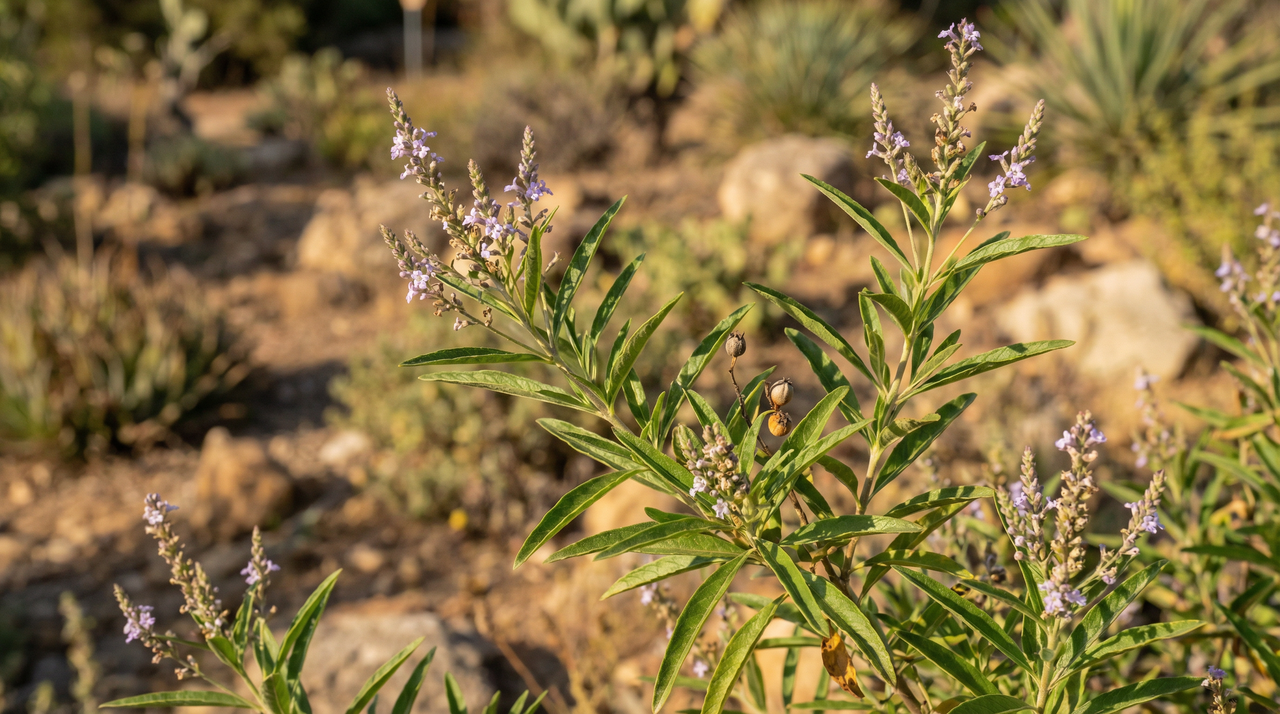
No one warned me that brushing past a lemon verbena plant in the morning would ruin every lemon-scented candle, cleaning product, and "herbal" tea bag I'd ever bought. The first time I crushed a leaf between my fingers, I actually stopped walking. That smell is not subtle. It's not a suggestion of lemon. It hits you clean and bright and almost shockingly real, the way a just-cut citrus peel does, and it lasts on your hands for a good ten minutes afterward. The volatile oils responsible for that experience, primarily citral and related terpenes, are present in concentrations that make this one of the most intensely lemon-scented plants you can actually grow in a garden bed.[1]
Here's the contradiction that keeps this plant interesting to me after all these years: something this fragrant, this sensory, this immediately arresting, somehow remains a footnote in most herb gardens. People grow lemon balm, which smells pleasant enough. They grow lemongrass. They squeeze actual lemons. And lemon verbena, a woody perennial shrub that would give them all of that and then some, sits quietly in the specialty section of a nursery catalog, waiting. Most gardeners have heard of it. Far fewer have grown it. And almost nobody knows its actual botanical name has been revised, or that what's sold under that label often represents a plant with centuries of misidentification behind it.
The Origins and History of Lemon Verbena
There's a particular moment every summer when I brush past a mature lemon verbena in a client's garden and get hit by that clean, impossibly bright citrus scent. It's unlike anything else I grow, sharper and more tenacious than lemon balm, more complex than lemon thyme. That fragrance is actually central to this plant's whole story, because it's exactly what caught the attention of Spanish and Portuguese explorers centuries ago and set off a botanical journey from South America to the gardens of Europe and eventually into herb collections around the world.
Native Range and Traditional Uses in South America
Lemon verbena is native to the temperate and subtropical slopes of South America, particularly Argentina and Chile, where it grows in sunny, well-drained conditions that explain a lot about its cultivation needs. In those native landscapes, related Aloysia species have a long history of use in folk medicine, particularly as digestive aids and remedies for respiratory complaints, brewed as simple herbal teas much the way we'd reach for chamomile today. What strikes me about plants from this kind of habitat is how well their growing conditions predict their garden personality. The well-drained slopes, the reliable sun, the periodic dry spells: you can see all of that encoded in how poorly lemon verbena handles wet feet and how little it complains during a dry summer.
Introduction to Europe and Cultural Significance
Spanish explorers brought the plant back to Europe in the 17th and 18th centuries, and it found immediate enthusiastic audiences in both Spanish and French gardens. In Spanish, it's commonly known as hierba luisa, a name still used widely in Latin American households where it never really left the kitchen. European herbalists and perfumers seized on its essential oils almost immediately, incorporating it into teas, digestive liqueurs, and early eau de cologne formulas. It became a fixture in Victorian herb gardens and was frequently tucked into potpourri, nosegays, and linen sachets. What I find fascinating is how quickly a plant can go from "foreign curiosity" to "garden staple" when its scent is this compelling. The fragrance sells itself.
Taxonomic History and Naming Confusion
Here's where things get a little messy, and where I've personally had to navigate some confusion when sourcing plants for clients. The scientific name has shifted over time, and the plant most commonly sold under the label "lemon verbena" in nurseries is Aloysia citrodora, a closely related and far more widely cultivated species. The accepted scientific name for the plant profiled here is Aloysia ovatifolia, and while the two are botanical cousins with overlapping aromatic profiles, they're distinct. This matters practically because if you're specifying plants for a design or ordering from a specialty grower, using the correct name saves you from receiving something different than intended. Taxonomic confusion in the nursery trade is genuinely common with this genus, so it's worth being specific.
Fun Facts and Botanical Legacy
One thing that never gets old about lemon verbena is how the leaves intensify their scent when brushed, pressed, or dried. Victorian gardeners planted it deliberately along garden paths so visitors would release the fragrance just by walking by. I've done the same thing in sensory garden designs, tucking it at the edge of a path where people can't help but make contact. The scent has inspired perfumers, poets, and pastry chefs alike, and it's held onto a devoted following across centuries despite relatively modest medicinal fanfare compared to some herbs. There's something satisfying about growing a plant with that kind of unbroken cultural thread, a piece of South American botanical heritage that quietly found its way into French perfume bottles, Spanish grandmothers' kitchens, and now permaculture food forests in climates it was never native to.
Lemon Verbena Varieties and Sourcing Guide
When shopping for lemon verbena, you're not going to find a long roster of named cultivars. Unlike basil or lavender, where breeders have spent decades producing dozens of distinct selections, Aloysia ovatifolia has seen relatively little commercial development. Most gardeners encounter simply the straight species, and honestly, that's not a problem. The plant's natural aromatic intensity and graceful, upright habit already deliver everything you'd want from a fragrant shrub in a sensory garden or food forest edge. The species doesn't need improvement so much as it needs more gardeners willing to grow it.
One thing worth knowing when you're at the nursery is that lemon verbena shows up under several scientific names that have shifted over the years, including Aloysia citrodora, aloysia triphylla, and the older lippia citriodora. Labels don't always keep up with taxonomy, so don't get too hung up on which name appears on the tag. What you're looking for is the plant itself. The leaves of Aloysia ovatifolia tend to be slightly broader and more egg-shaped than the narrower, almost grass-like leaves of common lemon verbena selections, which can help you distinguish between related species when you're standing in a crowded herb section. My best advice is simpler than any taxonomy lesson: rely on its scent. A genuine specimen will immediately release intense lemon fragrance when gently brushed. I learned this the hard way after bringing home a weak-scented specimen from a big-box garden center years ago. It grew fine but lacked the aromatic punch that makes this herb worth the space. Since then, I don't buy without sniffing first.
In ten years of specifying this plant for sensory gardens and pollinator hedges, I've found that asking the grower for the straight species, rather than unnamed selections or anything marketed purely as ornamental, consistently gives the strongest scent and most vigorous growth. Your best sourcing options are small specialty herb nurseries, online growers who focus on medicinal and aromatic plants, and regional plant swaps where someone with an established shrub is generous with cuttings. It takes a bit more effort to track down than lemon balm, but the payoff in garden fragrance is well worth the hunt.
Lemon Verbena Propagation and Planting
I've rooted dozens of lemon verbena cuttings over the years, and I'll tell you honestly: this plant is one of the more obliging shrubs to propagate once you understand what it wants. Seeds are possible, but I've moved away from them almost entirely. Germination requires soil temperatures between 70-75°F, takes anywhere from 14 to 30 days, and produces seedlings that grow frustratingly slowly before they're ready to transplant.[2] Cuttings give you a known plant, a faster result, and far less heartbreak.
Propagation Methods for Lemon Verbena
Softwood cuttings taken in late spring or early summer are the most reliable route into this plant.[3] I take 4 to 6 inch stems from non-flowering shoots, strip the lower leaves, dip the cut end in rooting hormone, and nestle them into a well-draining propagation mix. A clear plastic bag or humidity dome over the top keeps moisture around the cutting while roots develop. Under warm conditions, you'll typically see roots in 2 to 4 weeks.[4] My personal sweet spot is when the plant is actively pushing new growth but hasn't yet thrown flower buds; that seems to give the highest strike rate, in my experience. Think of it like taking rosemary cuttings, but give lemon verbena a bit more warmth and it rewards you generously.
Soil, Site Selection, Spacing, and Planting Technique
Root rot is the number one killer of newly planted lemon verbena, and it's almost entirely preventable. This plant wants well-drained, fertile soil with a pH between 6.0 and 7.5 and will not tolerate sitting in wet ground.[5] In my Central Florida gardens, where summer rain can be relentless, I default to raised beds or containers with a gritty mix that moves water fast. Full sun, at least 6 hours a day, is where this plant earns its keep; shade-grown plants are visibly less vigorous and noticeably less fragrant.[3] Those aromatic oils you're growing it for depend on light intensity, so don't shortchange it.
Space plants 3 to 4 feet apart in the ground, or allow about 2 feet if you're growing in a large container, since these shrubs can reach 4 to 6 feet in both height and spread once established.[4] Plant at the same depth as the cutting or nursery pot, water in gently, and then resist the urge to keep the soil constantly moist. Containers are also useful if you're in a borderline climate and need to move plants under cover when temperatures drop.
Germination and Establishment Timeline
Whether you're transplanting rooted cuttings or seedlings, timing the move outdoors matters enormously. Wait until after your last frost date and until night temperatures are holding reliably above 50°F.[5] I've learned this the hard way; I once lost a flush of early transplants to a surprise cool spell in late March and now I wait until nights are consistently above 55°F before committing anything to the garden. In warmer zones like 9B, the growing window runs roughly March through October.[5]
Once your plant is in the ground and settling in, start pinching the growing tips early. It encourages a bushier habit rather than one leggy central stem, and you get a bonus: those pinched tips are perfectly usable leaves you can dry right away.[4] A plant that's been pinched consistently through its first season will be fuller, more productive, and frankly more useful by fall than one left to its own devices.
Lemon Verbena Care Guide
After placing lemon verbena in dozens of client gardens across Central Florida, I can tell you that this plant has a very clear set of preferences, and it lets you know immediately when those preferences aren't being met. The leaves go dull, the scent fades, and the whole shrub takes on a vaguely defeated look. Get the basics right, though, and it rewards you with armloads of intensely fragrant foliage from spring through late fall.
Water, Sunlight, and Temperature Needs for Lemon Verbena
Drainage is non-negotiable. Lemon verbena will tolerate a missed watering far better than it tolerates wet feet, and in humid subtropical climates especially, soggy soil is a fast road to root rot. I aim for consistently moist but well-draining conditions, watering deeply and then letting the top inch or two dry out before watering again. One thing I've noticed repeatedly in garden settings is that a drought-stressed plant loses much of its citrus punch; the leaves still look serviceable but that signature sharp lemon hit is noticeably muted. Consistent moisture, without waterlogging, is what keeps the volatile oils potent.
Full sun is where this plant thrives, ideally six or more hours per day. In zone 9B and warmer, some afternoon shade can prevent leaf scorch during peak summer heat, but too much shade and you'll end up with leggy, less aromatic growth. On temperature, lemon verbena is tender. Anything below about 25 to 30°F causes serious damage, and a hard freeze can kill it to the ground entirely. If you're growing in a container in a marginal zone, I've learned the hard way that mulching alone isn't enough; move the pot to a sheltered spot before temperatures drop rather than hoping for the best.
Feeding, Pruning, and Seasonal Care
I keep feeding simple: one application of a balanced organic fertilizer in early spring gets the season started, and I might add a light compost top-dressing mid-summer if the plant looks like it's flagging. Avoid going heavy on nitrogen. Over-fertilized lemon verbena produces lush, dark foliage that looks impressive until you crush a leaf and realize the scent is half what it should be. The plant's aromatic intensity comes partly from a degree of productive stress, not from being pampered.
Pruning is where many beginners go wrong, usually by doing too little. Lemon verbena responds the way rosemary does to regular trimming: cut it back and it bushes out; ignore it and it gets tall, floppy, and woody at the base. Regular harvesting throughout the growing season functions as continuous light pruning, which is one of the things I love about integrating this plant into kitchen gardens and mixed borders. You're maintaining the shape every time you snip a stem for tea.
Expect a genuine growth slowdown in winter. The plant may drop most or all of its leaves even in mild climates, which alarms new growers every single time. It's semi-dormant, not dead. In early spring, once new growth begins to show, I do a more significant cutback, removing old woody stems down to where fresh growth is emerging. That hard prune is what drives the flush of tender, intensely scented new foliage that makes the whole season worthwhile. Mark the spot, be patient, and don't pull it out in February.
How to Harvest Lemon Verbena
When to Harvest Lemon Verbena Leaves
The best time to harvest lemon verbena is early morning, after the dew has dried but before the heat of the day sets in. Volatile oils are at their peak concentration then, and if you've ever rubbed a leaf at 8am versus noon, you'll know exactly what I mean: that cool-morning lemon burst is noticeably sharper and cleaner than what you get from the same plant a few hours later. Leaf age matters too. Younger, tender leaves carry a bright, almost candied lemon scent, while older leaves shift toward something more herbal and slightly camphoraceous, with a tougher texture. I watch for flower buds as my signal to harvest more aggressively; once the plant redirects energy toward blooming, the aromatic peak starts to pass. In the humid subtropical climate where I garden, that transition can happen fast once summer heat builds, so I don't wait on the calendar.
Harvesting Techniques for Maximum Flavor
I use clean, sharp scissors or pruning shears and cut stems back to just above a leaf node. This doubles as light shaping (the care guide covers the broader pruning picture), and it's what keeps the plant bushy and productive rather than leggy. The one-third rule is non-negotiable in my garden: never remove more than a third of the plant's foliage in a single session. I learned that lesson the hard way early on, stripping a young verbena down too enthusiastically and watching it sulk for nearly a month before it recovered. A stressed shrub is a slow shrub, and it's not worth the short-term yield loss.
Expected Yield and Flavor Profile
A well-established plant, three or four years old and growing in a warm zone 9-type garden, can yield somewhere around one to two pounds of fresh leaves from a major cutting, with lighter harvests possible throughout the season. That's a meaningful quantity, and the flavor payoff is real. Home-harvested lemon verbena is dramatically more intense than anything you'll find in a store's dried herb section; the difference is honestly startling the first time you compare them side by side. Dried leaves hold that fragrance well for six to twelve months when stored in an airtight jar away from light and heat. I write the harvest date on every jar and rotate stock accordingly, which takes about ten seconds and means I'm never accidentally brewing tea from leaves that have lost their character.
Lemon Verbena Preparation and Uses
A single leaf demonstrates immediately why I consider this an essential herb. The fragrance is pure, bright lemon, more vivid than any zest I've ever grated, and it lingers on your hands for a good ten minutes. That intensity is the whole story with this plant. A little goes a long way, which means one productive shrub genuinely covers all your kitchen needs and still has plenty left over for everything else.
Culinary Uses of Lemon Verbena
The most obvious move is tea, and it's a good one. A few fresh leaves steeped in just-boiled water for five or six minutes gives you something clean and genuinely refreshing, far more interesting than anything from a commercial herb sachet. I pair mine with mint from the garden in summer and serve it iced. Dried leaves work just as well through winter, and this is where storage really matters. I learned the hard way after over-drying a batch on a warm windowsill that the volatile oils responsible for that lemon flavor are fragile. Now I dry small bundles in a dark, well-ventilated spot at low heat, then store them whole in glass jars and crumble them only when I'm ready to use them. The difference in aroma is dramatic.
Beyond tea, lemon verbena is genuinely useful as a cooking herb. Finely chopped fresh leaves folded into butter with a little salt make a compound butter I use constantly on fish and roasted vegetables. I've stirred it into salad dressings, blended it into a loose pesto with almonds, and used the dried, crumbled leaf as a flavoring in shortbread cookies that people always ask about. Lemon verbena sugar is another one I keep stocked: just layer leaves with granulated sugar in a jar for a week and use it anywhere you'd want a floral citrus note. Because the flavor is so concentrated, start with less than you think you need and adjust from there.
After stripping leaves for any of these uses, I toss the spent stems straight into the compost or scatter them as aromatic mulch under nearby plants. Nothing goes to waste.
Medicinal and Non-Food Applications
I enjoy lemon verbena tea daily during the growing season partly because it tastes wonderful and partly because, like lemon balm (which I also grow in abundance), it has a long folk reputation for settling a restless stomach and easing the kind of low-level tension that builds up after a long day in a client's garden. I want to be clear that I'm a horticulturist, not a medical practitioner, and these are traditional uses rather than clinical prescriptions. If you're exploring medicinal applications more seriously, an experienced herbalist is the right person to consult. I do avoid larger therapeutic quantities during pregnancy as a simple precaution, and I only ever brew from plants I know haven't been sprayed.
The non-food applications are where lemon verbena quietly earns its keep as a true multi-function plant. Dried leaves stuffed into small fabric sachets and tucked into drawers and closets act as a natural freshener with a subtle moth-deterring quality that I appreciate in a chemical-free home. Simmering a handful of leaves in water and decanting the cooled liquid into a spray bottle gives you a genuinely pleasant room spray. I've also infused the leaves into white vinegar for a surface cleaner that smells far better than anything under my kitchen sink and leaves no residue I'd worry about. For anyone interested in simple skincare, a cooled lemon verbena infusion makes a mild, fragrant facial toner worth experimenting with. Between the kitchen, the medicine cabinet, and the cleaning cupboard, one generous shrub stacks more functions than most plants twice its size.
Lemon Verbena Health Benefits and Medicinal Uses
The formal clinical literature on lemon verbena as a medicinal herb is thin, and most of what exists focuses on Aloysia citrodora rather than Aloysia ovatifolia specifically. That taxonomic muddiness I mentioned carries real consequences here. What we can draw on is a long tradition of use across South America and Europe, consistent reports from herbalists and home growers, and a growing body of laboratory work on the volatile compounds the two species share. That's where the real story lives.
Traditional and Evidence-Based Benefits of Lemon Verbena
Generations of South American and European herbalists turned to lemon verbena for stomach complaints, mild anxiety, and general nervous tension. In my experience growing and drying these leaves, the tea lives up to that reputation in a quiet, unspectacular way. It's not a fix-everything tonic. What it does is settle the stomach after a heavy meal with a gentleness that reminds me of chamomile or peppermint, two herbs most readers already trust for the same purpose. Traditional herbal monographs describe it as calming without being sedating, which makes it a pleasant evening cup rather than a functional challenge to your afternoon.
Key Phytochemicals in Lemon Verbena
The sensory punch of this herb comes directly from its volatile oils, a bright, clean citrus blast that's unmistakably more intense than any lemon zest you've used in the kitchen. That fragrance is citral and a suite of related volatile terpenes talking directly to your nose. Recent pharmacological analyses verify these compounds contribute to the herb's carminative and mildly relaxing properties, and the sensory punch is your signal that they're present in real concentration. No lab test required.
Nutritional Profile
Like most aromatic culinary herbs, lemon verbena doesn't move the needle nutritionally. You're using a few leaves to flavor a cup of tea or a batch of shortbread, not eating it by the bowlful. Think of it the way you'd think of a rosemary sprig or a bay leaf: the value is in what it does to a dish, not in its macronutrient contribution. That's not a knock on the plant; it's just an honest framing of what kind of herb this is.
Lemon Verbena Safety and Usage Notes
For most people using this herb in culinary amounts or as an occasional herbal tea, the safety profile looks solid. Formal toxicity data for Aloysia ovatifolia specifically is scarce, and I think it's responsible to say that plainly rather than paper over the gap. I avoid using strongly aromatic herbs in larger medicinal doses during pregnancy simply because the studies aren't there to tell us it's safe, and that caution applies here. If you're pregnant, treat this the way you'd treat any potent herb: a small amount in food is probably fine, but medicinal-strength preparations are worth discussing with your healthcare provider. The same goes if you're on any prescription medication. As a garden tea enjoyed in normal quantities, though, lemon verbena has been a gentle, trustworthy presence in my herbal rotation for years.
Lemon Verbena Pests and Diseases
No plant is completely immune to pest pressure, but in my years designing gardens across a range of climates, lemon verbena has been about as close to trouble-free as any aromatic herb I've worked with. I've watched caterpillars and beetles tear through nearby basil and citrus without so much as landing on a lemon verbena stem. My working theory is that the same potent volatile oils that make this plant smell incredible in the garden actively repel a lot of common insects. There's a reason lemon verbena occasionally gets mentioned alongside other lemon-scented herbs for their natural pest-repellent qualities; the scent is not subtle, and neither is its deterrent effect.
That said, stressed plants can attract the usual opportunists. Aphids, spider mites, and whiteflies will occasionally show up on specimens that are drought-stressed or crowded without good airflow. I've never needed to reach for a spray bottle in any of my gardens. A strong blast of water from the hose, or simply improving conditions, has always been enough. If I ever saw a persistent infestation, I'd lean on a diluted neem oil application or encourage beneficial insects before considering anything else. This is a plant that practically invites low-intervention management.
Fungal issues like powdery mildew are the one thing I'd flag as a real possibility, and I learned that lesson early. I had a few overcrowded specimens in a partly shaded spot that developed mildew by midsummer. The fix wasn't a fungicide; it was better spacing and a hard prune to open up airflow. Since then, proper siting has prevented the problem entirely. Compared to basil, which I treat almost like an ICU patient through humid summers, lemon verbena feels positively stoic. Choose resilient plants, site them well, and give them room to breathe. That's the whole disease prevention strategy here.
Lemon Verbena in Permaculture Design
There's a moment in every good garden design where fragrance stops being decorative and starts being functional. Lemon verbena is one of the plants I reach for when I want that crossover. It earns its space in a food forest not just because it smells incredible, but because that scent does actual work: disorienting pest insects, drawing beneficial ones, and masking the chemical signals of nearby crops that would otherwise act as a dinner invitation for moths and aphids.
Ecosystem Functions and Guild Roles
I've used lemon verbena as a fragrant border plant along client garden paths more times than I can count, and every single time someone brushes past it, they stop and look around like they've walked into something special. That scent release isn't just sensory delight; it's a design tool. The strong lemon volatile compounds that make it so appealing to us seem to confuse a lot of soft-bodied pest insects, particularly aphids and whiteflies that navigate by smell. I've had luck planting it near brassicas to help mask the sulfur compounds that cabbage moths are so good at tracking down.
Once it flowers, typically in late summer in central Florida, the small, clustered blossoms draw an impressive parade of beneficial insects. Predatory wasps are regulars, and that's not something I take lightly. In one client's food forest, I positioned lemon verbena in the understory near a young citrus tree, and within a season I was watching those wasps patrol the citrus leaves for aphids. That kind of observed ecological interaction is exactly what I want from a guild plant. Beyond pest dynamics, the leafy stems make excellent chop-and-drop material. The leaves break down relatively quickly, adding aromatic biomass to the soil surface that I suspect (from the earthworm activity I see afterward) is pretty well-received by the soil food web.
Placement in Forest Layers
In a subtropical food forest, I slot lemon verbena into the herbaceous-shrub layer, sometimes nudging into the low-shrub layer depending on how aggressively I'm pruning it. Left to its own devices it'll reach 1.5 to 2.5 meters with a somewhat open, upright habit that can look leggy if you're not managing it. Regular harvesting keeps it bushier, and in warmer zones it can be coppiced hard after any freeze damage and come back vigorously from the base, which honestly makes it a better biomass producer over time than many people realize.
My favorite guild combination pairs it with citrus and an understory of pineapple or ginger. I also include a taller nitrogen-fixing overstory tree like Leucaena to provide that light dapple lemon verbena really appreciates. It's a stacking that makes sense spatially and ecologically: the citrus benefits from the predatory insect activity, the ginger and pineapple enjoy the filtered light and moisture retention from the lemon verbena's chop-and-drop, and the whole guild smells extraordinary when you walk through it in the morning.
Climate Adaptation and Hardiness Zones
In my zone 9B gardens, lemon verbena is one of the most reliable tender perennials once you learn its winter limits. It handles Florida's heat and humidity with zero complaint, which cannot be said for a lot of Mediterranean herbs that limp through August looking defeated. The long subtropical growing season suits it perfectly, and it often continues putting on growth well into November when many plants are winding down.
The caveat is a hard freeze. When temperatures drop into the mid-20s Fahrenheit, the top growth dies back, sometimes dramatically. I've learned to treat this not as a failure but as a coppicing event the plant does for me. The roots almost always survive if they're in well-drained soil, and the spring flush after a cold-killed top can be vigorous and lush. That said, I made early mistakes with siting: I planted one in full all-day Florida sun where it cooked and wilted through July, looking miserable despite consistent watering. Now I position it where it gets good morning sun and some afternoon shade, or backed up against a south-facing wall where it picks up radiant heat on cold nights. That combination of warmth in winter and some light protection in summer is the sweet spot, and once you find it, this plant essentially takes care of itself through the warm months.
The Plant I Come Back To For a Reset
I have a habit of brushing my hand across the lemon verbena every time I pass it, the way some people reach for their phone. Something about that burst of clean, cold lemon in the middle of a Florida summer just reorients me. It's not the most productive plant in my food forest, not the most dramatic. But it's the one I'd miss first.