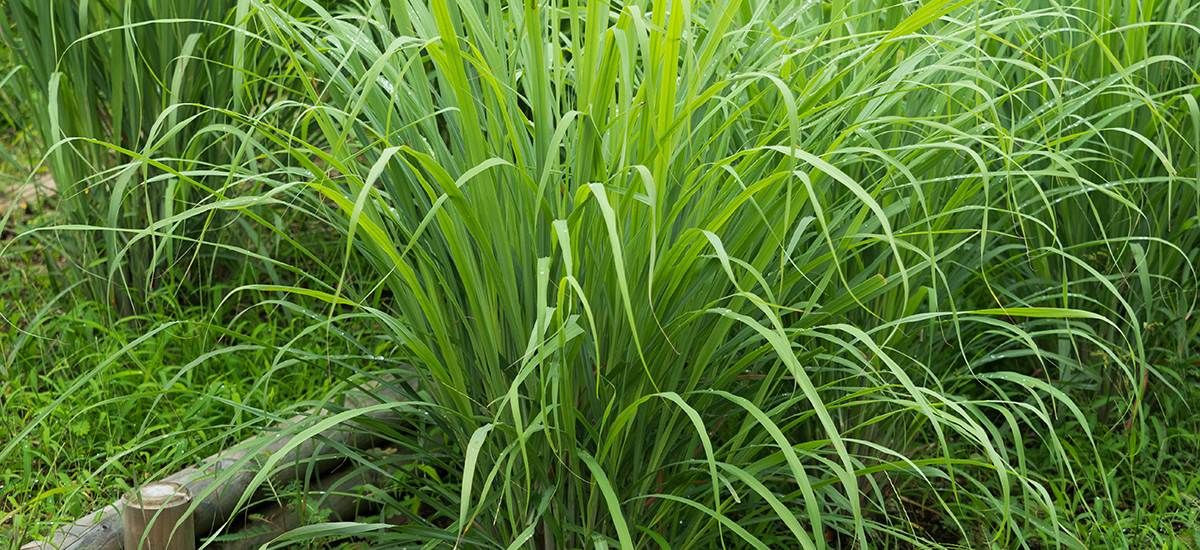
Nobody warned me that lemongrass would make me rethink what a grass is supposed to do. I was working on a food forest design in Central Florida, and my client pointed to a scraggly, overgrown clump near the fence line and said, almost apologetically, "that old thing." That old thing was over four feet tall, pushing out new growth from a dozen tillers, and when I dragged a thumbnail across a leaf, the smell that came off it was cleaner and more intensely citrus than any lemon I'd ever cut open. No fruit. No flower. Just a grass, doing that.
Here's the part that still gets me: citral, the compound responsible for that scent, makes up somewhere between 65 and 85 percent of lemongrass essential oil.[1] A lemon's peel, by contrast, is mostly limonene, a completely different molecule. So lemongrass doesn't actually smell like lemon, not chemically. It smells like the idea of lemon, distilled into something almost implausibly vivid. That distinction matters more than it sounds, and it shapes everything from how you cook with this plant to what it actually does in your garden.
Origin and History of Lemongrass (Cymbopogon citratus)
Botanical Background and Native Habitat
Lemongrass belongs to the Poaceae family under the genus Cymbopogon, and its full scientific name, Cymbopogon citratus, tells you something important right away: this is a grass, not an herb in the culinary sense, even if we treat it like one.[2] It's native to the open sunny grasslands, savannas, and river edges of tropical Southeast Asia, with its strongest native presence across India, Sri Lanka, Indonesia, Malaysia, Thailand, and the Philippines, where it colonizes weathered basalt soils and alluvial deposits with equal enthusiasm.[2][3][4][5] One thing I find genuinely fascinating about this plant is that Cymbopogon citratus is a sterile triploid (2n=40), meaning it produces no viable seed in cultivation and exists almost entirely through human hands.[6] Every clump in every garden traces back to a division from another clump. There are no truly wild populations separate from cultivated stock. That's a plant that has thrown its lot in entirely with people, and the relationship has clearly worked out for both parties.
It's frost-sensitive and performs as a perennial only in USDA zones 9 through 11, though gardeners in cooler climates grow it as an annual with good results.[7][8] In my Central Florida garden it returns reliably year after year as long as I give it a little protection during our occasional cold snaps. The broader Cymbopogon genus stretches this range further: Cymbopogon nardus (citronella grass) is a tropical perennial in its own right, while the Australian Cymbopogon ambiguus has evolved genuine drought tolerance for arid conditions.[9][10]
Visual Characteristics
In a good growing season, lemongrass becomes genuinely imposing. The clumps reach 0.9 to 2.5 meters tall and about 0.6 to 0.9 meters wide, with long arching leaves rising from a dense base of overlapping sheaths that form pseudostems rather than true woody stalks.[7] After several seasons growing mine in Central Florida, I've found those clumps reliably hit five to six feet by midsummer once the soil stays consistently warm and moist, which puts the low end of published estimates in a more realistic light for most gardeners. The leaves themselves are linear, 50 to 100 cm long and roughly a centimeter wide, with edges sharp enough to earn some respect when you're harvesting without gloves.[7][11] Crush one between your fingers, though, and any annoyance evaporates immediately. That burst of clean, bright citrus is unmistakable.
Flowers do appear occasionally, small pale violet spikelets in loose panicles, but in most garden settings you'll rarely see them.[7][12] After growing this plant for years, I've watched it flower in late summer without ever setting a single seed, which confirms the sterility point in a very practical way.[6] Morphology does vary by cultivar and environment; East Indian types tend toward finer, narrower foliage than West Indian types, so clumps can look slightly different depending on where your division originated.[13] The related citronella grass (C. nardus) is worth knowing by sight since it shows up in gardens too: broader, taller leaves with a glaucous blue-green tint and scabrous margins, spreading by tillering rather than rhizomes.[14][15]
Traditional and Cultural Uses
The relationship between humans and lemongrass is old. Domestication in ancient India likely happened 2,000 to 3,000 years ago, and by around 500 BCE the Charaka Samhita, a foundational Ayurvedic text, was documenting its use for digestive complaints, fever, and respiratory problems.[16][17] The same citral-rich leaves that flavor a Thai tom yum were, for millennia before that dish existed, a medicine and a ritual object. Traditional Chinese Medicine incorporated the plant during the Tang Dynasty (618–907 CE) for digestive harmony and pain relief, and across Southeast Asia, communities in Thailand, Indonesia, Malaysia, and the Philippines were using it as a diuretic, a stomach remedy, and a ceremonial herb.[18][19]
Its ritual significance runs just as deep. Across Thai Songkran festivals, Indian Hindu ceremonies, Philippine Ifugao practices, and Caribbean spiritual traditions including Vodou and Santeria, lemongrass has served as a symbol of purification and protection, burned, infused in baths, or woven into ceremony.[20][21][22] I grow a clump near my garden entrance partly for that reason, a nod to those traditions I find meaningful even as I acknowledge that this knowledge belongs to communities I'm not part of. Global spread came through ancient Indian Ocean trade networks from around 500 CE onward, then accelerated under European colonialism, with Dutch traders carrying it to Suriname and British interests introducing it to the Caribbean in the 17th and 18th centuries.[23] Commercial cultivation has since reduced pressure on remaining native stands, though the Western wellness industry's enthusiasm for lemongrass doesn't always credit the indigenous communities whose knowledge made that value visible in the first place.
Fun Facts About Lemongrass
That signature scent comes from citral, a compound that makes up 70 to 85 percent of lemongrass essential oil and is itself a mixture of two isomers, neral and geranial.[24] Alongside citral, the oil contains citronellal, geraniol, and citronellol, compounds that contribute to its fragrance, its antimicrobial qualities, and its ecological defense against insects produced through glandular trichomes on the leaf surface. On a humid Florida evening, rubbing a crushed leaf on your arms genuinely keeps mosquitoes at bay for a while, which is a satisfying thing to experience firsthand.
It's also worth knowing the difference between this plant and its close relative Cymbopogon flexuosus, East Indian lemongrass: C. citratus is sterile with broader leaves and is the culinary standard, while C. flexuosus produces viable seeds and is grown primarily for essential oil extraction.[6] Ethnobotanical records document over 50 traditional applications for lemongrass spanning digestive relief, anxiety, fever, and infections across Asian, African, and Caribbean traditions.[25][26] Ecologically, the plant's dense fibrous root system stabilizes soil and controls erosion, making it useful in rain garden designs where banks need anchoring, and a 2018 peer-reviewed analysis confirmed it has genuine phytoremediation potential for extracting heavy metals like lead and cadmium from contaminated soils.[27] The perfume industry has used its citral content since the 19th century as a cost-effective substitute for other citrus sources.[28] And if you're in Florida or Hawaii, be aware that escaped plants have naturalized in some tropical and subtropical areas with potential invasive behavior, so strategic placement in your design matters.[29]
Lemongrass Varieties and Where to Buy
Notable Varieties of Lemongrass and Citronella Grass
The species most of us grow and cook with is Cymbopogon citratus, West Indian lemongrass, a dense-clumping tropical perennial with narrow, arching leaves that reach 60-100 cm long.[30][31] The whole clump can push 1-2 m tall in a single season once it's happy.[30] In Central Florida mine basically never stops growing, but for anyone in a marginal zone, knowing it's reliably perennial only in USDA zones 9-11 shapes every other decision you make about it.[30][32]
Within the species, the named cultivars sort themselves pretty neatly by purpose. For cooking and essential oil, 'Madras' and 'Gulf' are both selected for high citral content, with standard types hitting up to 85% citral from a dry-weight essential-oil yield of 0.5-1.5%.[33][34] I've noticed that my hot, humid Florida summers push the plants toward noticeably more pungent stalks than the same clumps produce when they're just getting started in cooler spring weather, which lines up with what we know about heat-driven citral synthesis. For ornamental effect, 'Variegatus' and 'Lemon Glow' both carry yellow-striped foliage that reads like a more fragrant cousin of the variegated miscanthus grasses many gardeners already know.[35] 'Broad Leaf' offers larger foliage that some cooks prefer for wrapping. For anyone growing in a container, 'Maui Lemon Grass' is the dwarf form worth seeking out; I've brought the same one indoors three winters running and it bounces back vigorously each spring.[35][36]
If you see 'Rumbai' listed somewhere, treat it with caution. It lacks clear documentation as a formal cultivar and may just be a regional strain or a reference to C. flexuosus forms sold under a local name.[35] Most lemongrass "varieties" are really just locally selected forms that have been passed around by division over generations, which explains why the lineup varies so much between nurseries and seed catalogs.[37][38]
Worth mentioning in the same breath: citronella grass (Cymbopogon nardus) gets lumped in with lemongrass constantly, and they do share the same tall, aromatic-clumping look. The chemistry is where they part ways. Citronella's essential oil is dominated by citronellal rather than citral (60-80% depending on origin), which is what gives it insect-repellent properties rather than culinary ones.[39][40] It comes in two botanical varieties: var. nardus (Ceylon type, reddish stems) and var. confertiflorus (Java type, whitish stems, different oil balance).[41] Both reach a bit taller than culinary lemongrass and thrive in the same zones 9-11, but they're not interchangeable in the kitchen.
Sourcing Lemongrass Plants and Seeds
The fastest way to get started is also the most overlooked: the produce section. Fresh Cymbopogon citratus stalks are sold at Whole Foods, Trader Joe's, Kroger, Publix, and most Asian grocery stores, and a healthy stalk with its base intact can be rooted in water to produce a new plant. For those ready to commit to a proper garden plant, I always start with a healthy 1-gallon container from a local nursery rather than mail-order seedlings; they establish faster in Florida's heat and you immediately see what you're getting. Logee's Plants, Richters Herbs, Burpee, and The Growers Exchange all carry live plants, usually in 4-inch pots ($4-8) up to gallon containers ($15-25).[42][43]
If you want to start from Cymbopogon citratus seeds, Johnny's Selected Seeds, Park Seed, and Baker Creek are reliable domestic sources.[44][45] After trying both seed-grown and division-propagated plants over the years, I now label every clump by source because seedlings can look surprisingly variable in that first season. If you want consistent citral intensity in your cooking, divisions from a proven clump beat the seed lottery. Spring is the right time to shop regardless of method; nurseries restock then and planting after last frost gives marginal-zone growers the full warm season to establish a root system before cold arrives. Stick to domestic nurseries and catalogs too; importing live plants or seed from overseas can require USDA APHIS permits to clear quarantine, and it's simply not worth the hassle when excellent material is already available stateside.[46]
Lemongrass Propagation and Planting Guide
Here's something that trips up a lot of first-time growers: lemongrass is a sterile hybrid, which means the seeds you find in catalogs aren't going to give you a reliable plant.[7][47] Even when seeds do germinate, germination rates hover between 20 and 50 percent, and what sprouts won't necessarily carry the citral-rich oil profile you're actually after.[48][49] I've experimented with seed starts out of curiosity, and every time I end up back at the shovel. The genetics are just too variable to stake a garden on.
Best Propagation Methods for Lemongrass
Division is the method I reach for almost every time. Pull a clump apart in spring or early summer, make sure each section carries at least three or four shoots and a decent root mass, and you're looking at an 80 to 90 percent success rate.[47] I've divided the same mother clump four seasons running, and I've gotten good at reading when the outer shoots are ready: they separate cleanly from the center without much resistance, and the roots have that pale, actively-growing look rather than the dark, spent look of an older section. Taking divisions on a cloudy morning helps too; the cut ends don't desiccate before they're in the ground.
If all you have is a grocery-store stalk, stem cuttings work reasonably well. Basal portions about four to six inches long, dipped in a rooting hormone like IBA at 1,000 to 3,000 ppm, root at 60 to 70 percent success under the right conditions.[50] Those conditions matter: soil temperatures between 77 and 86°F, humidity around 70 to 80 percent, and consistent moisture without sogginess.[47] In a Florida summer that's essentially ambient; in spring it takes a bit more attention. I've seen cuttings root in two weeks during July and drag out to four weeks in a cooler April. Commercial operations skip all of this and use tissue culture to produce uniform, disease-free stock at scale,[51][52] but for anyone growing a home planting or a modest food forest edge, division is quicker, cheaper, and nearly foolproof.
Soil and Site Requirements for Planting Lemongrass
Drainage is the thing I care about most before I put a single plant in the ground. I learned this the uncomfortable way: one clay-heavy pocket in an otherwise decent bed rotted out an entire row before I even got a harvest. Lemongrass wants loamy or sandy-loam soil with two to four percent organic matter and a pH between 5.5 and 7.5, with the sweet spot sitting right around 6.0 to 7.0.[47][53] If your soil runs heavy, mound the planting area or work in compost and coarse sand before you start; don't assume the roots will adapt.
For in-ground beds, I work compost or well-rotted manure six to eight inches deep before planting.[47] For containers, a mix of roughly 40 percent potting soil, 30 percent compost, and 30 percent perlite or coarse sand in a pot at least ten to twelve inches deep gives the roots the drainage they need without drying out too fast.[47][54] Growing lemongrass in a pot is genuinely practical for gardeners in cooler climates who need to bring it in for winter. Full sun, six to eight hours minimum, is non-negotiable for the fragrant, oil-rich growth that makes this plant worth growing.[47][7]
Spacing, Planting Technique, and Timeline
Give each plant more room than you think it needs. I aim for 24 to 36 inches between plants, and in humid summers I push toward the wider end because air circulation directly reduces the fungal problems that love dense, damp foliage.[7][47] A mature clump will spread two to three feet wide and reach three to six feet tall; that's a substantial presence in a food forest edge or kitchen garden bed, and cramping it from the start just means more work later. Plan to divide clumps every two to three years anyway to keep the center from going woody and unproductive.[47]
When planting, set the crown right at soil level with roots buried two to three inches down. My personal rule is that I don't put anything in the ground until my soil thermometer reads at least 55°F; the published minimum is 50°F,[7] but I've lost plants to cool, wet soil sitting just at that threshold and I'd rather wait another week than replant. Spring to early summer is the window in warm climates.
On the timeline: divisions and rooted cuttings are ready to harvest in four to eight months under good conditions, with rooting itself taking just two to four weeks.[47] Seed-grown plants, on the rare occasions someone attempts them, take ten to twenty-one days just to germinate and won't be harvest-ready for six to twelve months.[47] That gap alone makes the case for vegetative propagation every single time.
Lemongrass Care Guide: Sunlight, Water, Feeding, and Seasonal Maintenance
Every care decision you make for lemongrass traces back to a single fact: this plant evolved in monsoonal tropical Asia, and it's happiest when your garden approximates those conditions. That doesn't mean it's fussy. It means the logic behind full sun, consistent moisture, and warm temperatures isn't arbitrary. Once you understand what the plant is reaching for, the whole care routine clicks into place.
Sunlight Requirements for Healthy Growth and Essential Oil Production
Lemongrass needs at least 6 to 8 hours of direct sun daily to produce the leafy biomass and citral-rich oils that make it worth growing.[7][55][56] Partial shade is tolerable, but the plant tells you about it: pale, chlorotic foliage and leggy, etiolated stems are the visible signs that it's reaching for light it isn't getting, and fragrance suffers right along with structure.[7][55] My west-facing beds in Central Florida get brutal afternoon exposure in July and August. A 30% shade cloth stretched over those beds has noticeably cut tip burn while still giving the plants the full-sun hours they need for strong citral levels.[57] If you're gardening somewhere with intense summer heat, that simple intervention is worth the trouble.
Watering Needs and Drought Tolerance
The native monsoonal habitat explains the watering rule perfectly: evenly moist but never waterlogged. Lemongrass performs best with rainfall or irrigation equivalent to 40 to 100 inches annually.[58][59] In practice, I water deeply once or twice a week in the ground, letting the top inch or two dry before the next session; containers need water every two to three days during summer heat.[47] Underwatering shows up as wilting and browning leaf tips; overwatering produces yellowing and that paradoxical wilt-despite-wet-soil combination that usually means root rot is already underway.[60][61] Once established, C. citratus has moderate drought tolerance through its C4 photosynthesis, but it's not a cactus. Gardeners in truly arid climates might find Australian lemongrass (Cymbopogon ambiguus) a better fit; once settled in, it needs deep irrigation only every two to four weeks.[62][63]
Feeding and Nutrient Management
Lemongrass is a moderate feeder that responds enthusiastically to balanced nutrition, with nitrogen doing the heavy lifting for both leaf growth and essential-oil production. Too much, though, and you get weak stems that lodge under their own weight with diminished oil quality.[64][47] For home gardens, a balanced 10-10-10 fertilizer every four to six weeks during active growth, at roughly one to two pounds per hundred square feet, keeps things moving without overdoing it.[47][7] I run a soil test every March before the first application; it's caught magnesium shortages before they expressed as weak stems, which is a much easier fix at the soil stage than after the damage is visible. Soil pH should sit between 5.5 and 7.5.[47] Learn the deficiency signatures and you can read your plants directly: uniform yellowing on older leaves points to nitrogen; purplish undersides suggest phosphorus; marginal chlorosis and leaf-edge necrosis indicate potassium; interveinal chlorosis on older leaves is magnesium, on new growth it's iron. Excess nitrogen or boron shows as lodging or leaf-tip burn.[65][66] Compost works beautifully as a base, often with less fuss than synthetic programs.
Heat and Frost Tolerance
Lemongrass is happiest between 68 and 86°F.[47] It can handle brief spikes to 104°F, but sustained heat above 95°F stresses the plant visibly: scorched tips, wilting, chlorosis, and eventually reduced oil yield.[67][68] In my Florida beds, two inches of organic mulch plus early-morning irrigation handles most of it; the shade cloth I mentioned for sun scorch does double duty by dropping canopy temperature five to ten degrees on the worst days.[69][70]
On the cold end, lemongrass is a true tropical. It's perennial in USDA zones 9 through 11 and reliably damaged by frost; brief dips to 30°F can be survived with heavy mulch over the root crown, but prolonged exposure below about 19°F is typically lethal.[7][47] Browning or blackening foliage after a cold snap doesn't always mean you've lost the plant; if the crown is protected, recovery is possible.[71] In zones cooler than 9, it's grown as an annual or moved indoors for winter. Australian lemongrass (C. ambiguus) handles brief lows to around 23°F once established, a useful option for gardeners in cooler microclimates.[62]
Seasonal Rhythm, Pruning, and Overwintering
In the tropics, lemongrass just keeps growing, forming clumps that reach three to six feet and persist for four to eight years with little fuss.[7][47] In temperate gardens it follows the seasons: dormant through cold months, then surging from late spring through fall. Flowering is rare in cultivation because regular harvesting keeps the plant in a vegetative state. Prune back to six inches above ground in late winter or after light frost to clear dead material and encourage fresh spring growth; divide mature clumps every two to three years in spring or early summer to prevent the center from dying out and to maintain the vigor you had in year one.[72][47] I've watched neglected clumps in my own beds go hollow at the center by year three; division is the fix and it costs nothing.
For overwintering in marginal zones, container plants move indoors to a bright spot that stays above 55°F; the plants slow down significantly but come back strong when returned outside in spring.[73][7] I bring my containers into a sunny Florida sunroom and they resume growth with real enthusiasm once the nights warm back up in April. For in-ground plants in marginal climates, cut tops back and pile on six to twelve inches of mulch over the crown. With those simple seasonal adjustments, lemongrass is far less temperamental than its tropical reputation suggests.
Lemongrass Harvesting: Timing, Technique, and Yield
When to Harvest Lemongrass for Peak Flavor and Oil Content
One thing I love about growing lemongrass as a perennial is that once it's established, it keeps giving. In frost-free subtropical conditions, you can expect multiple harvests a year from the same clump.[47] The first cut usually comes 75 to 120 days after planting when stalks reach roughly 12 to 18 inches tall and about half an inch in diameter.[74][47] After that, you can return every 40 to 60 days through the warm season.[47] In my Central Florida beds, that usually works out to three or four cuts between spring and fall.
My most reliable readiness cue isn't a calendar. It's the scent. When I brush against a mature stalk and get that sharp, bright lemon hit, I know the citral content is where I want it. Young growth smells faint and grassy by comparison; I've learned to wait. Harvest before the plant flowers, which can start around 120 to 180 days after planting, because regular cutting actually suppresses flowering and pushes the plant to tiller instead.[74][75] Early morning is the best time to cut; oil content peaks then.[47]
How to Harvest and Handle Lemongrass Stalks
The sustainable cut is simple: take the outer stalks at the base, leave the central growth completely intact.[47][76] Think of it like harvesting basil or mint where you leave the growing heart alone. I've watched a big Florida clump bounce back and tiller visibly within two weeks of a good outer harvest. The crown is everything; don't damage it. Stalks and leaves are both usable, whether fresh for cooking, dried for tea, or headed to a still.[77]
Post-harvest handling matters more than most people expect. Trim stalks, pull off any damaged leaves, then give everything a quick rinse rather than a soak. I soaked a batch once during a humid August and lost half of it to mold before it even dried. Now I rinse fast and move straight to shade drying at around 70 to 80°F for three to seven days until moisture drops to 10 to 12%.[78][79] A short wilt in the shade before bundling reduces mold risk considerably in humid climates.
Expected Yield, Storage, and Preserving Lemongrass Flavor
A single mature clump yields roughly 1 to 2 pounds of usable stalks and leaves per season, with up to four harvests possible in warm subtropical conditions.[47] That sounds modest, but one productive clump genuinely supplies a household for months. Fresh stalks hold well for 10 to 14 days refrigerated, wrapped in damp paper towels without washing them first; for longer storage, blanch for a minute or two and freeze for up to 12 months.[80][81] Dried lemongrass keeps 6 to 12 months in an airtight opaque container away from heat and light.[81] Personally, I blanch and freeze most of my surplus because the citral pop survives the freeze cycle better than it survives drying, at least in my own side-by-side taste tests over several seasons.
Lemongrass Preparation and Uses
Culinary Uses and Flavor Profile
Before you start chopping, make sure you have the right plant. Cymbopogon nardus and C. winterianus, both grown as citronella grass, look similar enough to cause real confusion at the nursery, but they're not culinary plants and can cause mild toxicity if eaten.[43][82] I learned to tell them apart by nose and by leaf: culinary lemongrass features a distinctly clean, bright citrus aroma, whereas citronella carries an unpleasantly pungent, soapy finish.[83] After a few seasons growing labeled nursery starts, the difference became obvious, but I wouldn't have trusted my nose that first year.
Once you're confident in your plant, the edible parts are the tender inner stalks, specifically the lower one to two inches of the culm base, and the young leaves.[33][84] That lower white-to-pale-green bulbous base is where the flavor concentrates, and every time I peel a freshly harvested stalk and bruise it with the side of my knife, it releases something almost perfume-like. That brightness comes from citral, which makes up 70 to 80 percent of the essential oil, layered with geraniol and myrcene for floral and herbal undertones.[85][86] The outer fibrous layers are too tough to eat raw; peel them back, bruise the stalk, and add it whole to soups and curries to infuse, then fish it out before serving. For stir-fries and marinades, finely chop the tender core and use it directly. Across Thai, Vietnamese, Filipino, and Indonesian kitchens, lemongrass goes into tom yum, curries, pho, sinigang, adobo, and herbal teas, which gives you a sense of how adaptable it is once you understand the prep.[87][88]
For the lemongrass plant tea specifically, the leaves are your best source. Steep them fresh or dried, and the flavor is lighter and more citrus-herbal than the stalks, which lean woody-lemon. If you want to keep a harvest going through winter, freezing beats drying: fresh chopped stalks in water-filled ice-cube trays hold their aroma for up to six months, and you can drop a cube straight into a pot of soup.[33] Dried lemongrass works, but the volatile oils responsible for that signature brightness dissipate faster than you'd like. Refrigerated fresh stalks will keep about two weeks if you wrap them loosely.
Worth a quick note: Australian lemongrass, Cymbopogon ambiguus, occupies its own flavor space entirely, with a lemon base folded into mint and eucalyptus notes.[89] Indigenous Australians have long used it in teas, damper, and stews, often paired with lemon myrtle or finger lime, making it a fascinating native parallel to the Southeast Asian culinary tradition.[90][91]
Medicinal and Herbal Preparations
The most accessible preparation for home gardeners is a simple hot-water infusion. Traditional practice calls for one to two teaspoons of dried leaf per cup, steeped five to ten minutes, up to three cups daily; human studies have generally used 300 to 900 mg of extract per day.[92] When I make lemongrass tea from my own garden I usually steep a loose handful of fresh stalks and leaves for eight to ten minutes, and the result is genuinely lovely, warming and citrusy without any bitterness. Beyond infusions, traditional preparations include decoctions, tinctures, poultices, and steam-distilled essential oil drawn primarily from the leaves.[56][93] For topical use, the essential oil is typically two to three drops diluted well in a carrier oil; I've made a simple salve for minor skin irritation that way, and the dilution step is not optional. Concentrated lemongrass oil applied neat can irritate skin, and internal use of the oil should only happen under professional guidance.[92] Australian lemongrass has its own parallel tradition: Cymbopogon ambiguus leaves were burned for smoke therapy and applied as poultices for wounds by Aboriginal communities, a reminder that this aromatic genus carries medicinal knowledge across more than one continent.[94]
Traditional Non-Food Applications
The fibrous outer stalks and leaves that get peeled away in the kitchen aren't waste. In the Philippines, Indonesia, and Vietnam, those same leaves have been woven into mats, baskets, hats, and roofing thatch for generations, and the plant has served as a source for natural dyes and sustainable fiber.[95][96] I toss mine into the compost or use them as a coarse mulch around the base of the clump, but keeping a few for small weaving projects is a satisfying way to close the loop on a harvest. The same citral-rich chemistry that gives the plant its culinary appeal also drives its commercial value: steam-distilled lemongrass essential oil ends up in insect repellents, perfumes, soaps, skincare products, pharmaceuticals, and natural pesticide formulations.[97] From flavoring a chicken with lemongrass recipe to scenting a luxury soap, the same volatile molecules doing the work in your kitchen are driving a global fragrance and biocontrol industry. That breadth of use, kitchen to factory, is a rare quality in any garden plant.
Lemongrass Health Benefits and Medicinal Uses
Most people discover lemongrass through a bowl of tom kha or a cup of tea, and the question that follows is always the same: does this actually do anything for you, or is the health reputation just good marketing? After years of growing it and using it, I'd say the chemistry earns the reputation, with a few honest caveats about what the science does and doesn't yet confirm.
Phytochemical Profile of Lemongrass
The phytochemical yield is driven by citral, a mixture of two isomers called geranial and neral that together make up 65-85% of the essential oil, supported by myrcene at 5-15%, geraniol at 3-10%, and limonene at 2-5%.[98][99] The leaves also carry flavonoids including luteolin, quercetin, and orientin, alongside phenolic acids like chlorogenic and caffeic acid, with total phenolics running 20-50 mg GAE per gram of dry leaf.[100][101] Those numbers aren't fixed. Citral peaks at 60-90 days of leaf age and rises through dry, warm conditions, which explains something I've noticed in my Central Florida beds: after a dry spell in summer, the stalks smell noticeably more pungent. Growing conditions you can influence, like soil pH in the 5.5-7.0 range and full sun exposure, directly shape how bioactive-rich your harvest will be.[102][103]
These compounds aren't just useful to us; they're the plant's own defense system. Citral disrupts microbial cell membranes, geraniol suppresses inflammatory signaling, the flavonoids scavenge free radicals with up to 80% DPPH activity in lab assays, and the volatile blend deters insects while the root chemistry inhibits competing plants by 50-70%.[104][105] I've leaned on that allelopathic effect in guild plantings to keep grass weeds suppressed, which is one of those happy overlaps where the plant's chemistry serves the garden and the gardener simultaneously.
Medicinal Research and Traditional Uses
The pharmacological list is genuinely impressive. Lemongrass extracts show anti-inflammatory activity through COX-2 inhibition and cytokine suppression, broad antimicrobial action against E. coli and Staphylococcus aureus, and antioxidant capacity from that dense phenolic pool.[106][107] The analgesic effects in pain models are comparable to standard reference drugs, anxiolytic effects appear to work through GABAergic pathways, citral inhibits smooth muscle contractions, and wound-healing improvements have been documented in animal models.[106][108][109]
Traditional healers across Southeast Asia, Africa, and Latin America arrived at many of these same applications long before the lab work began: tea for digestive complaints and fevers in Asia, diuretic and antimalarial preparations in Africa, respiratory support across multiple traditions.[110][111] That convergence across unconnected cultures tells its own story. However, the majority of pharmacological evidence comes from in vitro and animal studies, and human clinical trials remain limited.[112] I keep lemongrass tea in regular rotation for digestive comfort and I've found it genuinely helpful, but while we wait for more clinical data, I'd say centuries of traditional use across multiple continents gives reasonable grounds for moderate, everyday use rather than treating it as medicine for serious conditions.
Nutritional Value
The edible lower stalk contributes modestly but meaningfully to your diet. A 100g serving of raw lemongrass delivers roughly 25-99 kcal, 25g carbohydrates with up to 5g fiber, 75 µg folate (19% DV), 723 mg potassium, 8.2 mg iron, and 60 mg calcium.[113] Dried lemongrass concentrates the minerals dramatically (calcium climbs to 3002 mg and potassium to 3787 mg per 100g), though drying also reduces water-soluble vitamins by 20-50%.[114] Citral from a typical serving absorbs with moderate bioavailability around 50-70%, peaks in the bloodstream within 1-2 hours, and clears fairly quickly with a 1-3 hour half-life, so you're getting a real dose of the active compound when you drink the tea.[115] Think of it as a flavorful, fiber-rich herb that adds useful micronutrients alongside its bioactives, rather than a single-nutrient standout. One important note: nutritional profiles from citronella grass (C. nardus) are sometimes conflated with culinary lemongrass in database searches, but citronella is not food-safe and lacks GRAS status for ingestion.[116][117]
Safety Considerations
Culinary lemongrass has a clean safety record. The FDA classifies it as GRAS, the WHO recognizes it for traditional medicinal use, and feeding studies confirm it's non-toxic to humans, dogs, cats, and livestock at normal amounts.[118][119] I have it growing in a yard shared with dogs and use it in the kitchen regularly without concern.
The essential oil is a different story. With 65-85% citral, it requires dilution to 0.7% or below for topical use to avoid sensitization or allergic contact dermatitis, and large ingested doses can cause nausea and GI upset.[120] The acute toxicity is actually quite low (LD50 of roughly 4960 mg/kg in rats), but "low acute toxicity" doesn't mean "use it undiluted."[121] I treat it with respect. Pregnancy is a clear contraindication for the concentrated oil due to potential uterine stimulant effects from high citral content; herbal tea in culinary amounts is considered likely safe, but I'd check with a healthcare provider.[122][123] Anyone on warfarin, antidiabetics, or blood pressure medications should be aware of theoretical interactions (antiplatelet activity, blood-sugar-lowering effects, possible CYP3A4 involvement), mostly based on animal data but worth flagging with your doctor.[124]
On identification: I once helped a client untangle her sensory garden where culinary lemongrass and citronella grass had been planted side by side with no labels. The tell is the base color. True culinary lemongrass (C. citratus) has pale green to white bases; citronella grass (C. nardus) shows a distinctly reddish tint and has a sharper, less pleasant scent.[125][126] Citronella is not GRAS for ingestion and carries higher irritation risk. If it's going in the soup, check the base first.
Lemongrass Pests and Diseases
One of the things I appreciate most about growing lemongrass is how often I walk through my beds and find it completely unbothered while the basil three feet away is hosting an aphid convention. That's not luck. There's real chemistry behind it.
Natural Pest Resistance and Common Insect Pests
Citral makes up 70-85% of lemongrass essential oil and is the primary driver of its insect-repellent properties, supported by myrcene, limonene, and citronellal.[127][128] These monoterpenes interfere with insect octopaminergic neurotransmission, a neurological pathway invertebrates rely on that mammals simply don't have, while also masking the carbon dioxide and lactic acid signals that draw mosquitoes toward humans.[128] On top of that, the plant builds physical defenses: silica deposits that make tissue abrasive and difficult to chew, a thick waxy cuticle, and those sharp leaf margins that can genuinely injure soft-bodied herbivores.[129][130] I've watched grasshoppers approach a mature clump, bump into those edges, and pivot toward something softer. It's a small thing, but it sticks with you.
The research backs this up across several pest categories. Concentrations exceeding 2.5% of the essential oil provide meaningful biting deterrence against Aedes aegypti and Culex quinquefasciatus mosquitoes, with demonstrated larvicidal effects as well, though field performance tends to be lower than lab bioassays suggest.[131] Vapor-phase exposure repels German and American cockroaches in controlled settings,[132] and fumigation with the oil provides significant protection against stored-product pests like maize weevils and red flour beetles.[133] Even aphid settling and reproduction are reduced by lemongrass leaf extracts, through deterrence rather than outright toxicity.[134] Field studies confirm lower incidence of aphids, mites, and grasshoppers on lemongrass compared to non-aromatic neighboring crops, a pattern also seen in Cymbopogon nardus.[135][136]
Still, "resistant" doesn't mean "immune." Lemongrass can host aphids, spider mites, leafhoppers, mealybugs, root-knot nematodes (Meloidogyne spp.), stem borers, and grasshoppers, particularly when plants are stressed or crowded.[47][137][7] No named cultivars have been bred specifically for enhanced insect resistance; what resistance exists is tied to essential oil content, not selective genetics.[138][139] My approach is to monitor the new growth regularly, since that's where mites and aphids appear first, and reach for neem only after improving airflow and clearing debris. That sequence has kept any outbreaks in my beds from ever getting ahead of me.[47][137]
Disease Susceptibility, Resistance, and Integrated Management
The same essential oils that deter insects give lemongrass moderate natural resistance to several diseases, a pattern shared by Cymbopogon nardus across the genus.[140][141] But "moderate" has real limits, especially in humid subtropical climates where conditions routinely favor pathogens. Curvularia leaf blight, Bipolaris and Cercospora leaf spots, Puccinia rust, and smut from Ustilago are all documented fungal threats, while waterlogged soils invite root rot from Phytophthora, Fusarium solani, Rhizoctonia, and Pythium, showing up as yellowing foliage and mushy root tissue.[142][143][47] Bacterial issues like Xanthomonas leaf streak and pith necrosis can appear in persistently humid conditions, though viral infections are far less common and less documented than fungal or bacterial problems.[144]
Environmental conditions are honestly the bigger variable than the pathogen itself. Humidity above 80%, temperatures between 25-30 °C, and poor drainage form a near-perfect combination for disease escalation.[47][145] Nematodes, aphids, and leafhoppers make things worse by wounding tissue and opening entry points for secondary infection.[142][47] In my heavy Central Florida soils, I always plant on a slight berm, and I have genuinely never lost a clump to root rot doing that. Drainage is prevention.
If you want cultivar-level protection against rust, named selections like 'Sugandhi', 'OD-409', 'Cauvery', and 'Krishna' have shown improved fungal tolerance through targeted breeding, and lines from Jamaican citronella carry moderate resistance to Puccinia erianthi specifically.[146][147] I start most of my plants from divisions and don't often see those cultivar names at local nurseries. However, when trialing seed-grown material, I watch for early rust symptoms and rogue anything that shows them quickly. Integrated management brings it all together: start with clean planting material, space generously for airflow, skip overhead irrigation where possible, mulch the soil surface, and bring in Trichoderma-based biocontrols or neem for mild infections before reaching for conventional fungicides.[47][148] The cultural steps do most of the work; the chemistry is a backup, not a crutch.
Lemongrass in Permaculture Design
Few plants earn their keep in a permaculture system quite as quickly as lemongrass. In a single growing season you get aromatic biomass, pest deterrence, soil stabilization, and a plant that keeps working year after year in the right climate. The design question isn't really whether to include it; it's where, and how much.
Climate Suitability and USDA Hardiness Zones
Lemongrass is a tropical perennial at heart, happiest in USDA zones 9-11 where it settles in as a permanent fixture rather than a seasonal experiment.[47][7] Its sweet spot is daytime temperatures between 70-85°F, though I've watched established clumps push through 104°F summer heat in Central Florida as long as they had consistent moisture at the roots.[7][11] What it can't tolerate is a hard freeze. Prolonged exposure below 20-25°F will kill it outright.[7][47]
For growers in the zone 8-9a margins, there are real options. I've kept potted clumps alive through Central Florida cold snaps by dragging them into the garage for a week; in-ground plants respond well to 12-18 inches of heavy mulch over the crown, frost cloth on freezing nights, and placement against a south-facing wall that holds daytime warmth.[47][149] It's more work than in a true zone 10, but it's doable. If you're in a drier, semi-arid climate, the Australian Cymbopogon ambiguus is worth considering as a drought-tolerant genus relative that handles lower rainfall where C. citratus would struggle.[150]
Ecological Functions and Services
The function that gets the most attention is pest repellency, and honestly it deserves it. The citronella compounds in lemongrass's essential oils actively deter mosquitoes, aphids, and nematodes.[151][152] After several seasons growing it in and around my vegetable beds, I've noticed a real reduction in aphid pressure on nearby tomatoes and peppers. The flowers also attract bees and butterflies, so you're repelling pests and supporting beneficials with the same plant.[151]
Beneath ground, the fibrous root system grips slopes and stream edges, making lemongrass genuinely useful for erosion control in ways that ornamentals like muhly grass can't match, because when those roots break down they're cycling potassium, calcium, iron, and silica back into the soil profile.[153][151] It doesn't fix nitrogen, so don't let anyone tell you otherwise, but the sheer volume of biomass it produces (up to 20-30 tons per hectare per year) means it's a serious mulch factory if you're willing to chop and drop.[154][153] Its allelopathic chemistry also suppresses weed seed germination around the crown, which means less hand-weeding in established clumps.[154]
In humid subtropical climates like Florida or Hawaii, lemongrass can form dense rhizomatous stands that crowd out native vegetation if it escapes managed areas.[155] I site mine away from natural areas and do a perimeter check every season. The benefits are real when the plant is managed; unchecked, it can become a problem.
Role in Forest Layers, Guilds, and Companion Planting
Lemongrass is a creature of open ground. Its native habitat is tropical grasslands, savannas, and disturbed edges rather than shaded forest understory, which means it slots into the herbaceous layer of a food forest on the sunny south side rather than tucked beneath a canopy.[7][156] Think of it as the aromatic perimeter of a guild rather than a ground-layer filler.
In that position, it does a lot of quiet work. Its citral compounds suppress weeds by up to 70% and deter pests, while its decomposing material builds organic matter and promotes soil microbial diversity over time.[157][158][159] Paired with tomatoes, peppers, or beans, it functions as lemon grass's best role in the kitchen garden: aromatic insect deterrent planted at the bed's edge where its scent disperses across the planting.[160]
The caveat I share with every grower who asks me about companion planting with lemongrass is this: watch the spacing. An unmanaged clump can suppress the growth of shallow-rooted neighbors by up to 40%.[161] I've had to go in and divide clumps that were quietly winning a territory war with my basil. Regular division every couple of years keeps the vigor in check and gives you divisions to spread elsewhere in the system. Its relative Cymbopogon nardus, citronella grass, grows taller (up to 1.8 m) and functions similarly as rhizomatous groundcover for erosion control and weed suppression in tropical agroforestry, though it's not the culinary herb you're after.[162] Together, the genus offers enough functional range to build genuinely resilient, aromatic polycultures in warm-climate systems.
The Plant That Made Me Stop and Actually Smell Something
I've handed a freshly cut lemongrass stalk to probably a hundred people over the years, and the reaction is almost always the same: they go quiet for a second. That pause, that small interruption of whatever they were talking about, is why I keep dividing clumps and pressing them into visitors' hands. Some plants earn their space through function alone. This one earns it by making people briefly, genuinely present.
Sources
- Lemongrass essential oil components and its potential applications ↩
- Kew Royal Botanic Gardens ↩
- Plants of the World Online (Kew Science) ↩
- Missouri Botanical Garden Plant Finder - Cymbopogon citratus ↩
- USDA PLANTS Database - Cymbopogon citratus ↩
- Cymbopogon Species: Differences Between citratus and flexuosus ↩
- Missouri Botanical Garden Plant Finder - Cymbopogon citratus ↩
- USDA PLANTS Database - Cymbopogon citratus ↩
- Missouri Botanical Garden - Cymbopogon nardus ↩
- Plants of the World Online - Cymbopogon ambiguus ↩
- Royal Botanic Gardens, Kew - Lemongrass ↩
- Flora of China - Cymbopogon citratus ↩
- Missouri Botanical Garden - Cymbopogon citratus ↩
- Plants of the World Online - Cymbopogon nardus ↩
- North Carolina Extension Gardener Plant Toolbox - Citronella Grass ↩
- History and Traditional Uses of Lemongrass (Cymbopogon citratus) ↩
- Lemongrass: Botany, Ethnopharmacology and Phytochemistry ↩
- Historical Ethnopharmacology of Lemongrass in Southeast Asia ↩
- Medicinal Plants in Philippine Indigenous Communities ↩
- Ethnobotanical Uses of Cymbopogon citratus in Southeast Asia ↩
- Lemongrass in Ayurvedic and Cultural Practices of India ↩
- Caribbean Ethnobotany: Plants in Spiritual Traditions ↩
- Ethnobotany of Aromatic Plants in Southeast Asia ↩
- Chemical Composition of Lemongrass Essential Oil and Its Applications ↩
- Lemongrass: Botany, Ethnopharmacology and Phytochemistry ↩
- Ethnobotanical Uses of Lemongrass (Cymbopogon citratus) in Traditional Medicine ↩
- Phytoremediation Potential of Cymbopogon citratus for Heavy Metal Contamination ↩
- Citral and Perfumery: Historical Uses of Lemongrass Oil ↩
- Lemongrass (Cymbopogon citratus) - Invasive Species ↩
- Cymbopogon citratus - Missouri Botanical Garden ↩
- Cymbopogon citratus - Plants of the World Online (Kew Science) ↩
- CYCI3: Cymbopogon citratus - USDA PLANTS Database ↩
- Cymbopogon citratus - Wikipedia ↩
- Lemongrass Cultivation and Essential Oil Yield ↩
- Lemongrass Varieties and Cultivars ↩
- Lemongrass Varieties - ECHO Community ↩
- Cymbopogon citratus Cultivation Guide ↩
- Lemongrass Production and Utilization - UF/IFAS Extension ↩
- Essential Oils of Cymbopogon Species - ResearchGate ↩
- Essential Oils of Cymbopogon nardus - ResearchGate ↩
- Citronella Grass Varieties - Purdue University Extension ↩
- Lemongrass Plants ↩
- Cymbopogon citratus - Lemongrass ↩
- Lemongrass Seeds ↩
- West Indian Lemongrass Seeds ↩
- Importation of Plants and Plant Products ↩
- Growing Lemongrass from Seed ↩
- Seed Germination and Viability in Cymbopogon Species ↩
- Propagation of Lemongrass (Cymbopogon citratus) ↩
- Vegetative Propagation Techniques for Herbs ↩
- Commercial Cultivation of Lemongrass ↩
- In Vitro Propagation of Cymbopogon Species ↩
- USDA Plant Guide - Lemongrass ↩
- Royal Horticultural Society - Lemongrass ↩
- Royal Horticultural Society - Lemongrass Growing Guide ↩
- Kew Gardens - Lemongrass Cultivation ↩
- Lemongrass Cultivation and Stress Management ↩
- Cymbopogon citratus - Useful Tropical Plants ↩
- Lemongrass Production Guide - University of Hawaii ↩
- Missouri Botanical Garden Plant Finder ↩
- Root Rot in Cymbopogon citratus: Prevention and Treatment ↩
- Cymbopogon ambiguus - Australian Native Plants Society ↩
- Kew Gardens - Cymbopogon ambiguus ↩
- FAO Guide to Tropical Grass Cultivation ↩
- Royal Botanic Gardens Kew - Cymbopogon citratus Fact Sheet ↩
- Deficiency Symptoms in Tropical Grasses ↩
- Physiological Responses of Lemongrass to High Temperature Stress ↩
- Impact of Abiotic Stresses on Essential Oil Yield in Lemongrass ↩
- Heat Stress Management in Lemongrass Cultivation ↩
- Agronomic Practices for Cymbopogon spp. in Tropical Climates ↩
- Overwintering Tropical Plants ↩
- Missouri Botanical Garden Plant Finder ↩
- Lemongrass: A Warm-Season Annual ↩
- Lemongrass Production and Utilization ↩
- Cultivation of Cymbopogon Species ↩
- Lemongrass Cultivation Guide ↩
- Cymbopogon citratus - Plant Finder ↩
- Post-Harvest Management of Lemongrass ↩
- Drying Techniques for Aromatic Plants ↩
- Postharvest Handling of Lemongrass ↩
- Preservation of Aromatic Plants: Freezing and Drying Lemongrass ↩
- Citronella Grass (Cymbopogon nardus) Toxicity - ASPCA ↩
- Distinguishing Lemongrass from Similar Grasses - Missouri Botanical Garden ↩
- Cymbopogon citratus - Missouri Botanical Garden ↩
- Chemical composition and biological activities of lemongrass (Cymbopogon citratus) essential oil ↩
- Chemical Composition and Flavor of Lemongrass - ScienceDirect ↩
- Traditional Culinary and Medicinal Uses of Lemongrass in Southeast Asia ↩
- Medicinal and Culinary Uses of Lemongrass in Vietnam ↩
- Cymbopogon ambiguus - Wikipedia ↩
- Bush Tucker Plant Profile: Lemon-scented Grass ↩
- Traditional Uses of Native Grasses in Australian Aboriginal Culture ↩
- PubMed - Lemongrass Extract in Anxiety Trial ↩
- Review of Therapeutic Applications of Lemongrass Oil ↩
- Traditional Uses of Native Australian Plants: Lemon-Scented Grass ↩
- Ethnobotany of Lemongrass: Traditional Uses in Southeast Asia ↩
- Ethnobotanical Uses of Cymbopogon citratus in the Philippines ↩
- Industrial Applications of Lemongrass Essential Oil ↩
- Chemical Composition of Lemongrass Essential Oil ↩
- Essential Oil Composition of Lemongrass ↩
- Phytochemical Analysis of Cymbopogon citratus Leaves ↩
- Antioxidant and Anti-inflammatory Properties of Cymbopogon citratus ↩
- Essential Oil Variability in Lemongrass Parts ↩
- Seasonal Variations in Lemongrass Essential Oil Composition ↩
- Chemical Composition and Antimicrobial Activity of the Essential Oil of Cymbopogon citratus ↩
- Ecological Roles of Secondary Metabolites in Lemongrass (Cymbopogon citratus) ↩
- Anti-inflammatory and analgesic activities of lemongrass (Cymbopogon citratus) in rodents ↩
- Anti-Inflammatory and Antioxidant Properties of Cymbopogon citratus ↩
- Anxiolytic and antidepressant-like effects of the hydroalcoholic extract from the leaves of Cymbopogon citratus in mice ↩
- Wound healing potential of lemongrass extracts ↩
- Traditional and medicinal uses of lemongrass in Asia ↩
- Ethnobotany of Cymbopogon citratus in Africa and Asia - FAO ↩
- Pharmacological Activities of Cymbopogon citratus: A Review ↩
- USDA FoodData Central - Lemongrass, raw ↩
- USDA FoodData Central: Herbs, lemongrass, dried, cooked, boiled, drained, without salt ↩
- Bioavailability and Pharmacokinetics of Citral - Journal of Agricultural and Food Chemistry ↩
- USDA FoodData Central - Lemongrass (citronella) ↩
- Toxicity of Citronella Oil ↩
- FDA GRAS Status for Lemongrass Oil ↩
- ASPCA Toxic and Non-Toxic Plants List ↩
- Safety Guidelines - Tisserand Institute ↩
- Toxicity of Lemongrass Oil and Citral ↩
- Safety of Essential Oils During Pregnancy ↩
- LactMed Database - NCBI ↩
- Lemongrass - Warfarin Sodium Interaction Details | HelloPharmacist ↩
- Lemongrass Look-Alikes: Identification and Safety ↩
- Cymbopogon nardus - Wikipedia ↩
- Chemical Composition and Insecticidal Properties of Cymbopogon citratus Essential Oil ↩
- Lemongrass Essential Oil as Potential Insect Repellent: Mechanisms of Action ↩
- Plant Defense Mechanisms Against Herbivores ↩
- Physical and Chemical Defenses in Plants ↩
- Insect repellency of Cymbopogon citratus essential oil against Aedes aegypti and Culex quinquefasciatus ↩
- Repellency of essential oils against German cockroach (Blattella germanica) and American cockroach (Periplaneta americana) ↩
- Effect of lemongrass oil (Cymbopogon citratus) as a bio-fumigant for stored product protection ↩
- Deterrent effect of Cymbopogon citratus leaf extract on Aphis gossypii on cucumber plants ↩
- Comparative study of pest resistance in aromatic grasses under field conditions ↩
- Insecticidal properties of Cymbopogon citratus essential oil and its effect on agricultural pests ↩
- Management of Lemongrass Insects and Diseases ↩
- USDA PLANTS Database ↩
- Missouri Botanical Garden Plant Finder ↩
- Fungal Pathogens in Tropical Grasses: Resistance Mechanisms ↩
- Cymbopogon citratus: Cultivation and Pest Management ↩
- Diseases of Lemongrass: A Review ↩
- Diseases of Lemongrass and Citronella ↩
- Bacterial and Viral Pathogens of Tropical Grasses ↩
- Missouri Botanical Garden - Cymbopogon citratus ↩
- Breeding for Disease Resistance in Aromatic Grasses ↩
- Diseases of Lemongrass (Cymbopogon citratus) and Their Management ↩
- Lemongrass Disease Resistance Studies ↩
- Lemongrass Production - Texas A&M AgriLife Extension ↩
- Cymbopogon ambiguus - Missouri Botanical Garden Plant Finder ↩
- Cymbopogon citratus: Botanical and Ecological Overview ↩
- Insect Repellent Properties of Lemongrass ↩
- Soil Conservation Using Tropical Grasses ↩
- Permaculture Plants: Lemongrass ↩
- Invasive.org ↩
- Cymbopogon citratus - Kew Science Plants of the World Online ↩
- Role of Lemongrass in Sustainable Soil Management ↩
- Allelopathic Effects of Cymbopogon citratus on Weed Suppression ↩
- Lemongrass as a Natural Companion Plant for Pest Control ↩
- Companion Planting with Herbs - The Old Farmer's Almanac ↩
- Competitive Interactions of Cymbopogon citratus in Agroecosystems ↩
- Cymbopogon nardus - USDA PLANTS Database ↩
About the Author
Timothee is a 28-year-old Naturalist, Agricultural Specialist, and Author. He believes that environmental writing provides the information necessary for the cultural transformation needed to stabilize the climate.