Somewhere in the ruins of a Neolithic village in what is now Syria, archaeologists sifted through charred debris and pulled out something unmistakable: tiny, flat, lens-shaped seeds, nearly identical to the ones I grew in my Maryland garden fifteen years ago.[1] Ten thousand years of agriculture, and the seed hasn't changed enough to fool anyone. That's the thing about lentils that stops me cold every time I think about it: you're not just growing a legume. You're growing the same plant that fed Egyptian laborers who built the pyramids, Roman soldiers who crossed the Alps, and generations of farmers in the Fertile Crescent who were, quite literally, inventing the idea of a cultivated landscape.
And yet somehow this ancient, world-shaping crop gets shelved in the "boring pantry staple" category, overshadowed by flashier beans and celebrity greens. I've watched gardeners spend thirty minutes debating which tomato variety to plant while completely ignoring a crop that fixes nitrogen, feeds beneficial insects, tolerates light frost, grows knee-high in about ninety days, and produces protein-dense seeds that store for years without refrigeration. The lentil doesn't ask for much attention. That's probably why it doesn't get any.
Origin and History of Lentils
Botanical Background and Native Habitat
Few plants have accompanied humans as long as the lentil. Lens culinaris was domesticated in the Fertile Crescent somewhere around 10,000 to 11,000 years ago, during the Pre-Pottery Neolithic period, making it one of the eight founder crops that set agriculture in motion.[2][3] Archaeological seeds from sites in modern-day Syria and Turkey, including Tell Abu Hureyra and Mureybet, document the shift from the wild progenitor, Lens culinaris subsp. orientalis, to the cultivated form we grow today, as early farmers selected for non-shattering pods and larger seeds.[4] The species is a diploid annual (2n=14), with subsp. culinaris as the cultivated type and subsp. orientalis as its wild ancestor, though some authorities treat the latter as a separate species entirely.[5][6]
The plant's native range spans the Near East and Mediterranean, from Turkey and Syria through Iraq, Jordan, Lebanon, Israel, and Palestine, in climates characterized by hot, dry summers and mild, wet winters.[7][8] In the wild, lentils occupy open disturbed sites, sub-Mediterranean steppic communities, and oak woodland edges in the herbaceous ground layer, always in full sun.[9] That preference for sunny, disturbed ground is exactly why the plant took so naturally to early agricultural fields, and why it still fits neatly into garden edges and polyculture beds today. As a monocarpic annual completing its cycle in 90 to 150 days, it commits everything to seed production and then it's done, no deadheading or winter coddling required.[10][11]
Visual Characteristics
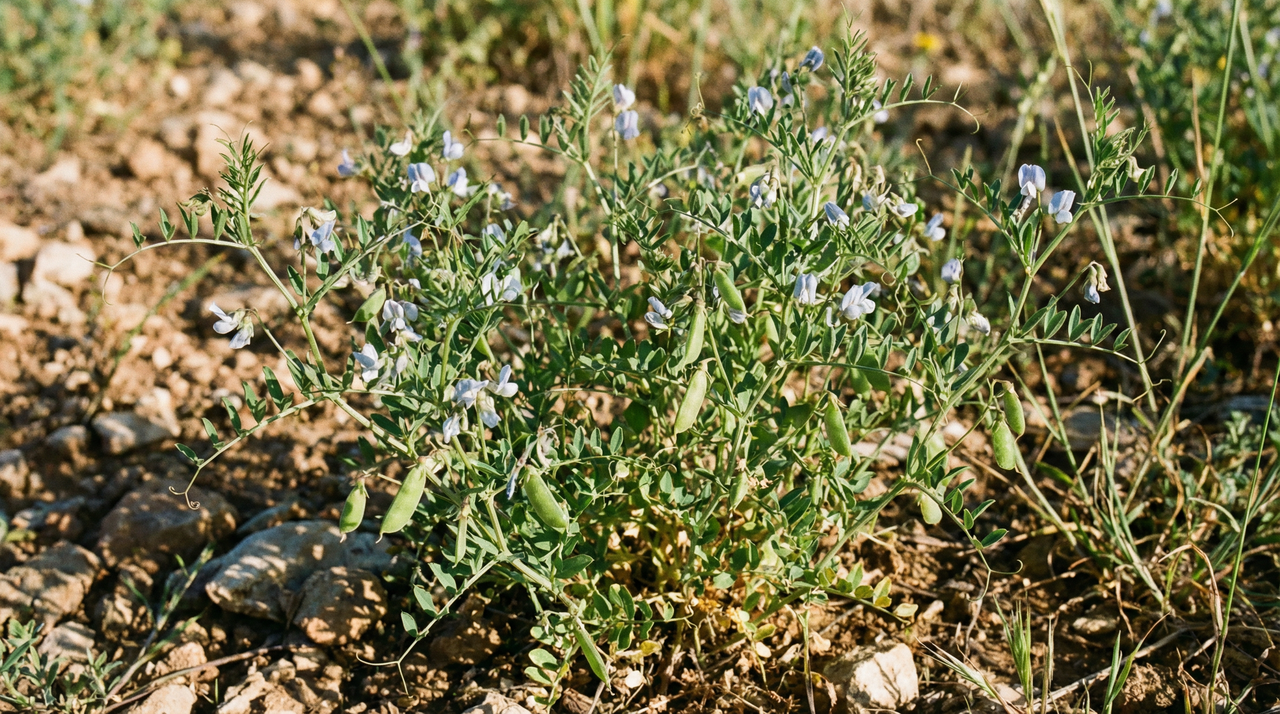
When lentil seedlings first push through the soil they look almost identical to young peas, and I've learned to mark my rows carefully for exactly that reason. The mature plant is a low, bushy annual, typically 30 to 50 centimeters tall in cultivated forms, with slender pubescent stems that are square or ribbed in cross-section and alternate pinnately compound leaves carrying 4 to 10 pairs of small oval leaflets that often end in delicate tendrils.[7][12] The taproot pushes 30 to 100 centimeters deep, which is part of why lentils handle dry spells as well as they do and why, after harvest, the beds they occupied feel noticeably more friable.[10]
The flowers are small, pea-like, and easy to overlook until you're right beside the plant: white or pale violet blossoms borne in clusters of one to four, appearing roughly 50 to 70 days after planting.[13] The pods that follow are short and straw-colored, holding one or two seeds apiece.[14] Those seeds are the giveaway: flat, round, and perfectly discoidal in a way that no other common legume quite matches.[10] Seed coat colors range across green, brown, black, red, yellow, beige, and purple depending on variety, a palette that reflects thousands of years of regional selection.[15] Unlike the wild progenitor, cultivated forms don't shatter their pods at maturity, a quiet evolutionary bargain struck between the plant and the humans who saved its seed.[10]
Traditional and Cultural Uses
From the Fertile Crescent, lentils followed trade routes outward across the ancient world. By 3000 BCE they were a staple in Egyptian kitchens, and Roman cooks recorded recipes for them in Apicius, the empire's most famous culinary text.[16] They fed Greek armies and Mesopotamian households, appearing in Sumerian, Akkadian, and Babylonian records long before they arrived in the Americas via European colonists.[16] That's a striking distance for a small annual to travel on the strength of good nutrition and easy storage.
The symbolic weight accumulated along the way. In Jewish tradition, lentils appear at mourning meals as a round food signifying the cycle of life. Hindu celebrations including Diwali incorporate them in ritual offerings. Biblical and Mesopotamian texts reference them in ways that suggest they were never simply background calories but carried genuine cultural meaning.[17] I think about that when I teach lentil preparation workshops: there's something that feels genuinely connective about a dish that links a modern home kitchen to Neolithic farmers in Syria. Medicinally, European herbalists used them to treat scurvy, and Ayurvedic practice incorporated them for digestive support and skin care.[18] The same nitrogen-fixing roots that quietly improved ancient fields still reduce fertilizer needs in regenerative systems today, a functional continuity across ten millennia of farming.[19]
Fun Facts About Lentils
The genus name Lens comes directly from the seed's shape: early botanists looked at those flat, biconvex discs and named the plant after the optical lens, which was itself named after the seed.[7] I find that genuinely delightful every time I sort seeds at the end of the season, turning a little pile of them in my palm and thinking about how many generations of farmers made this exact same observation. Global production now runs around 6.5 million metric tons annually, with India, Canada, and Turkey leading the way, and the crop appears in harvest festivals across cultures wherever it has taken root.[20][21] One thing worth keeping in mind: commercial breeding programs, for all the yield and disease resistance they've delivered, have narrowed the genetic base considerably compared to the rich diversity still held in landrace collections.[19][22] Whenever I can source seeds from smaller specialty suppliers or seed libraries rather than commodity packets, I do. It's a small act, but it keeps more of that ancient diversity in circulation, which feels like the right way to honor a crop that's been feeding humans since before writing existed.
Lentil Varieties and Where to Buy Seeds
Popular Lentil Seed Types by Size and Color
The first thing to understand about lentil varieties is that there's an actual classification system underneath all those colors, and it shapes everything from how far apart you space your plants to how long they sit on the stove. Botanically, lentils split into two main groups: macrosperma (large-seeded, over 12g per 100 seeds) and microsperma (small-seeded, under 12g).[23][24] Choosing between them reminds me of picking bush versus pole beans; the size category changes maturation timing, yield potential, and notably how the cooked seed behaves in a bowl. Large green types like Laird hold their shape beautifully in salads, while the smaller red varieties break down fast into a creamy soup or dal. Not identical crops in different colors; genuinely different plants with different purposes.
Green lentils tend to come from large-seeded macrosperma types, while most brown lentils are small-seeded microsperma, and color itself influences more than aesthetics: green lentils retain higher antioxidant levels compared to other color classes, and the variation affects cooking properties and consumer preference across markets.[23][25] Within that spectrum, a few named cultivars are worth knowing by name.
Eston is a small green lentil well suited to North American production and consistently yields around 2,000 to 2,500 lbs per acre under good conditions.[26][27] Laird runs larger and greener, popular in Pacific Northwest fields, though its yield ceiling of 1,500 to 2,000 lbs per acre is a bit lower.[28] For gardeners in cool, wet climates like western Oregon or Washington, Pardus is worth seeking out; it's a white-seeded medium type with documented resistance to Ascochyta blight, which cuts losses significantly in humid conditions where older heirlooms struggle.[29][28] I've trialed a few modern releases from the USDA breeding program out of Pullman, Washington, which has released over 20 cultivars since the 1980s specifically for North American adaptability, disease resistance, and improved nutrition.[30] Crimson and Brewer are two you may encounter; both reflect that deliberate breeding toward anthracnose resistance that reduces the need for intervention in a low-spray garden.[29]
On the specialty end, black Beluga lentils are worth growing if you have the market or kitchen demand for them; they command a higher price premium than either green ($0.30 to $0.40/lb) or red ($0.20 to $0.30/lb) lentils,[31] and their dramatic color makes them a standout in any salad. Redberry and Crimson round out the red lentil plant options for home growers who want that quick-cooking, soup-ready type in the garden.
Sourcing Lentil Seeds for Your Garden
The good news about sourcing is that lentils are a domestically strong crop, with the Pacific Northwest (Washington, Oregon, and Idaho) handling most US production, so supply is reliable and the seed quality coming out of that region is excellent.[6][32] They're adaptable across USDA zones 4 through 9,[32] which covers the vast majority of gardens where someone might be reading this.
For everyday garden packets, Johnny's Selected Seeds, Burpee, High Mowing Organic, Territorial Seed Company, and Fedco are all solid options with seed typically running $3 to $6 per packet.[33][34] I tend to order from Johnny's or Seed Savers Exchange because their organic and non-GMO lines align with how I think about seed sourcing in a permaculture context, and Seed Savers carries some heirloom types you won't find at a big-box garden center.[35] Organic seed by the pound runs roughly $4 to $10, with bulk pricing dropping toward $3 to $6 per pound, which is where the math gets interesting: because processed lentils hold viable for one to three years without meaningful quality loss,[36] I buy a pound or two at a time and have reliable seed across multiple seasons without reordering every spring.
If you're hunting heirloom and specialty types, Timeless Seeds and Palouse Brand carry Spanish Pardina (a nutty brown heirloom), Petite Crimson, and black beluga lentils as both eating and planting stock.[37][38] Baker Creek is another reliable source for uncommon types if you want to trial something beyond the standard brown lentil that dominates grocery store shelves.[39] The US doesn't impose significant trade barriers on processed lentil imports, so supply stays consistent year-round even between domestic harvest windows.[40] Whatever variety you're after, you can almost certainly find it, and find it without a lot of hunting.
How to Propagate and Plant Lentils
Seed Characteristics and Storage
Pick up a handful of lentil seeds and you're holding one of the most recognizable seeds in the plant world. Each one is distinctly lens-shaped or ovoid, flattened to biconvex, typically 3–7 mm long and just 2–3 mm thick, with a small pale hilum scar on one side.[41][42] Color varies by cultivar from yellow and green to brown, red, and near-black. There's a reason the word "lens" comes from this plant, not the other way around.
Lentils are almost exclusively propagated by direct seeding, and honestly, that's the only method most gardeners will ever need. The plant is a self-pollinating annual with a self-pollination rate exceeding 99 percent,[43][44] which means seed saved from a stable variety will come back true year after year. Vegetative propagation, grafting, and tissue culture exist as laboratory methods but have no practical place in a kitchen garden or farm.[45] Save your seed, label it carefully, and you're set. Leftover seed stores remarkably well: under cold, dry, hermetically sealed conditions (below 5% moisture, -18°C or lower), lentil seeds can remain viable for 20–50 years.[46][47] Even in a cool, dry pantry, well-stored seeds from last season germinate fine. I label my seed packets with both year and variety because young lentil seedlings can look surprisingly similar to tiny carrot or parsley seedlings in a crowded spring bed.
Germination and Timeline
The single most useful tool I've added to my spring planting routine is a soil thermometer. Lentils will germinate at soil temperatures as low as 5°C, but don't be fooled by that number. Optimal germination happens between 15–20°C (59–68°F), and at that range seedlings emerge in 6–10 days with strong, even stands.[48][45] I've sowed a week too early into cold soil and watched patchy emergence drag on for nearly three weeks. Waiting until soil consistently hits 15°C is the difference between a uniform stand and a frustrating one.
Once established, the journey from seed to harvest runs 80–130 days depending on cultivar and conditions, with early types capable of finishing around 90 days and flowering to physiological maturity taking 30–50 days of that total.[49][50] Heat above 25°C accelerates the cycle but can compress the flowering window and reduce pod set. Water stress during grain fill shortens it further. For garden planning purposes, lentil fits neatly as a cool-season spring crop in most temperate zones, slotting into rotation before summer heat crops take over.
Soil and Site Requirements for Lentils
Drainage is non-negotiable. Lentils want well-drained loam or sandy-loam soil; heavy clay and compacted or waterlogged beds will cause root rot and shut down the nitrogen-fixing nodule activity that makes this crop worth growing.[51][52] I think of lentil's drainage needs as similar to chickpeas: both are Mediterranean-origin crops that evolved in well-aerated, freely draining soils and genuinely sulk in wet feet.
Soil pH matters more than most gardeners expect. The sweet spot is 6.5–7.0, with an acceptable range of 6.0–7.5. Below 5.5, aluminum toxicity becomes a real problem and phosphorus availability drops; above 8.0, iron, zinc, and manganese become scarce.[53][54] I do a simple jar-and-water texture test plus a proper lab soil test before planting anything in a new bed, because I once lost most of a lentil patch to what turned out to be undiagnosed aluminum toxicity on a slightly acidic raised bed. Lime the previous fall if your pH is low; gypsum helps on sodic soils. Compost additions improve both texture and buffering capacity in one pass.
Give them full sun, at least 6–8 hours daily and ideally 8–10.[55] The taproot can penetrate 60–120 cm deep in well-aerated soil with a bulk density below 1.3–1.4 g/cm³, which is why deep, loose beds repay the preparation effort.[56] That depth is meaningfully greater than what a bush bean needs, so if you've had luck with beans in a bed but never tried lentils, think about whether you've loosened the soil another 15–20 cm deeper.
Spacing, Density, and Planting Technique
For direct seeding, aim for rows 15–30 cm (6–12 inches) apart with plants spaced 2–5 cm within the row, targeting roughly 250,000–400,000 plants per acre (or about 40–60 lbs of seed per acre at field scale).[57][58] I've experimented with both ends of that range and now settle on 20–25 cm rows in my no-till beds. Narrower spacing pushes yield but can create the humid canopy conditions that invite fungal disease; wider rows improve airflow and make mechanical cultivation easier if you're working at scale.
Before seeding, inoculate with the appropriate Mesorhizobium strain, particularly if lentils haven't grown in that ground before.[59] I inoculate every season regardless of crop history, because I've consistently seen better pod set in inoculated beds than in controls where I skipped it. The inoculant is inexpensive and takes about five minutes to apply. Sow seeds 2–3 cm deep, water in gently, and wait. With soil at 15–20°C and consistent moisture, those little lens-shaped seeds will push up the first cotyledons in less than two weeks, followed quickly by the first true leaves, which look like miniature pea leaves rather than the grass-like cotyledons. Knowing that distinction saves a lot of accidental weeding.
Lentil Care Guide: Sunlight, Water, Feeding, Temperature Tolerance, and Maintenance
The whole care story for lentils runs through a single lens: you're managing a cool-season annual with a 100–130 day window, and every decision you make either protects or undermines a handful of critical reproductive weeks. Get the conditions right during flowering and pod fill and you get a harvest. Miss them, and the plant tells you immediately. I've grown lentils in rows beside carrots and learned, the hard way, to label everything before it emerges, because the seedlings are nearly indistinguishable in the first two weeks. That kind of close attention is exactly what lentils reward.
Sunlight Requirements for Healthy Lentil Growth
Lentils want full sun, full stop. I've never seen respectable yields from a planting that got less than six solid hours of direct light, and the research backs that up: partial shade can cut yields 20–30% and raises disease pressure by reducing airflow and slowing drying after rain.[60][16] Plants grown in inadequate light go leggy and pale, produce fewer pods, and are more vulnerable to the fungal diseases I'll cover in the next section.[61] The one nuance worth knowing: in very hot climates, intense afternoon sun combined with temperatures above 30°C can cause photoinhibition, scorching, and wilting.[62] In those cases, a little afternoon shade is a heat-management tool, not a light compromise.
Water Needs and Irrigation Strategies
Over a 90–120 day season, lentils need 300–500 mm (12–20 inches) of total water, and yields drop sharply if moisture falls below 250 mm, especially during flowering and pod fill.[63][64] The target is 50–60% of field capacity for most of the season, bumping to 70% during those reproductive stages.[63][65] During flowering, I irrigate with roughly 25–50 mm every 7–10 days, adjusting for how hot the week has been.[66][67]
During vegetative growth, lentils tolerate 10–21 days without irrigation before stress sets in, and a modest deficit at that stage can actually sharpen water-use efficiency without hurting final yield.[68][63] Once flowering starts, though, drought stress causes flower and pod abortion fast. Know the distress signals: wilting despite wet soil and chlorosis on older leaves means you've overwatered; marginal leaf browning and premature flower drop means you've underwatered.[10][69] Good drainage is the real foundation here; waterlogging opens the door to root rot, which I'll cover in pests and diseases.
Fertility and Nutrient Management
Once I started inoculating with the right Rhizobium strain, I stopped adding any nitrogen at all and the plants still produced heavy pod sets. That's the lentil's great gift: as a nitrogen-fixing legume it can fix 50–150 kg N/ha from the atmosphere, and high soil nitrate levels (above 20–30 ppm) actually suppress nodulation by signaling the plant that nitrogen is already available.[70][71] A small starter dose of 10–20 lb/acre may make sense if soil nitrate is very low, but I always do a soil test first.[72]
Target a pH of 6.5–7.0, Olsen-P around 15–30 ppm, and potassium above 150 ppm; apply phosphorus and potassium according to your test results, typically banded at planting.[73][74] Excess nitrogen causes lush dark-green growth and delayed maturity; excess phosphorus can trigger iron chlorosis. I've corrected interveinal chlorosis on young leaves (the telltale sign of iron deficiency on alkaline soils) with a chelated iron foliar spray, and it clears up within a week. Pale older leaves signal nitrogen deficiency; purplish-red leaves point to phosphorus; scorched leaf margins are a potassium flag.[75][76]
Frost Tolerance and Cold Protection
Lentils grow across USDA zones 3–9, sown in early spring as soon as soil hits 41°F (5°C), which is also the minimum for reliable germination.[77][78] Seedlings tolerate brief dips to 25–28°F (–4 to –2°C), and roots, insulated by soil, can survive down to about 17°F (–8°C).[78][79] Flowers are a different story entirely: they abort below –0.5°C (31°F), and young pods drop below –2°C (28°F), which is why timing the planting window carefully matters more than almost anything else.[78] I mark my rows carefully at planting because young lentil seedlings look startlingly similar to carrot seedlings, and you don't want to misidentify what you're covering with row cloth on a cold night. Floating row covers raise ambient temperature by 2–5°F, and 2–4 inches of organic mulch moderates soil temperature swings; both are worth having on hand for late-spring surprises.[80][81]
Heat Tolerance and Summer Stress Management
Lentils are happiest between 64–77°F (18–25°C) with cool nights, and they fall apart fast above that range during reproduction. Sustained temperatures above 80–86°F (27–30°C) during flowering cause pollen sterility, flower drop, and yield losses of 20–50%.[82][83] I watched it happen firsthand: a two-day spike to 95°F in late spring and the flowers were gone within 48 hours. High nighttime temperatures above 68°F (20°C) prevent recovery and compound the damage.[84] The practical moves I make when a heat dome is forecast: run a 30% shade cloth on the south-facing side of the bed, time any irrigation for early morning so the canopy is dry and cooler at peak afternoon heat, and consider pulling the harvest slightly early rather than letting pods cook on the vine. Choosing heat-tolerant cultivars and planting as early as the frost window allows are the best long-term strategies.[85]
Pruning, Maintenance, and Seasonal Rhythm
Unlike the pole beans growing nearby, lentils need zero trellising. These bushy plants reach 12–24 inches (30–60 cm) tall and hold themselves upright without any structural help from me.[86] Maintenance is mostly about keeping the bed honest: timely weed control in the first few weeks before the canopy closes, and removing lower leaves that show early signs of infection to improve airflow and slow the spread of fungal pathogens.[87] I pull Ascochyta-spotted leaves the moment I see them; waiting even a few days gives the spores time to move in wet weather.
The seasonal arc is straightforward: sow in March or April after the last frost, watch 40–60 days of vegetative growth, then flowering from around day 50 onward (optimal at 59–68°F / 15–20°C), followed by 30–50 days of pod fill before harvest in late summer when the lower pods turn yellow-brown and the seeds audibly rattle inside.[88][89] Once you have the planting timing and moisture right, the actual day-to-day maintenance is mostly observation. Walk the rows, watch for wilting or discoloration, and pull weeds before they compete. That's genuinely most of it.
Lentil Harvesting: Timing, Technique, and Post-Harvest Handling
Recognizing Harvest Maturity in Lentils
Every season I make the same slow walk down my lentil rows in late summer, and I'm looking for the same cluster of signs every time. Pods shift from green to yellow, tan, or papery brown; lower leaves yellow and fall; stems dry out; and when you shake a pod near your ear, the seeds rattle.[90][91][92] That rattle is genuinely satisfying in a way that never gets old. I also press a thumbnail into a seed pulled from a questionable pod; if it dents easily, wait another few days.
The actionable target is roughly 80-90% of pods showing those maturity signs, with seed moisture somewhere in the 14-18% range.[91][93][90] Think of it as the same "dry but not bone-dry" feel you'd recognize in a home-grown pea or bean ready for storage. Calendar days are a rough guide at best; varieties generally mature somewhere between 80 and 110 days from planting, with large-seeded types running longer than small-seeded ones.[94][95] Temperature swings, water stress, and day length all push that window around, so trust your eyes and your thumbnail more than the seed packet.
Harvesting and Post-Harvest Practices
Once you've confirmed maturity, harvest on a dry day. Wet conditions drive up moisture content and invite mold; waiting for 14-18% seed moisture minimizes shattering and sets you up for safe storage.[90][91] My first harvest I pulled plants too early and lost a frustrating amount of seed to shattered pods on the way to the shed. Patience matters here. At garden scale, I cut plants at the base and handle them gently, bundling a few stems together rather than dragging armloads.
From there, the process is simple: hang small bundles in a well-ventilated shed or spread plants on a tarp with a fan moving air across them until seeds reach 12-14% moisture, then thresh by hand or by rolling a rolling pin across pods laid on a sheet, and winnow or pick through to clean out debris.[96] It's slower than running a combine, obviously, but you end up with clean, dry lentils and a very clear sense of how much food one short row actually produces.
Lentil Culinary Uses, Preparation, and Non-Food Applications
Edible Parts and Global Culinary Traditions
Most Western cooks know lentils only as dried seeds, and that's understandable given how central the mature seed is to soups, stews, dals, curries, and salads worldwide.[10][97] But if you grow them yourself, you have options that grocery shoppers don't. Young pods can be eaten fresh or cooked like snap peas, the greens turn up in salads and simple vegetable dishes in parts of South Asia and the Middle East, and sprouts are genuinely easy to raise on a countertop and eat raw.[98][99] I've eaten the greens tossed with olive oil and I was pleasantly surprised -- slightly earthy, not bitter, a little like mild pea shoots.
Flavor, Texture, and Cooking Techniques
The baseline flavor of cooked lentils is earthy, nutty, and subtly savory with real umami depth from free glutamates.[100][101] A raw phenolic bitterness fades considerably with heat.[102] Think of the varietal differences the way you'd think about kale versus spinach: green and brown types are nuttier, peppery, and hold their shape well -- ideal for lentil salads and grain bowls[29] -- while red lentils are milder and sweeter, disintegrating into silky purees and soups with no effort at all.[100][103] Boiling mellows flavor, while roasting coaxes out caramelized, toasty notes through Maillard reactions.[104] They pair beautifully with cumin, coriander, turmeric, garlic, lemon, onion, and tomato -- the pantry backbone of South Asian, North African, and Mediterranean cooking.[105][106] Dry lentils store in airtight containers for two to three years with no fuss,[107] which makes them one of the most pantry-reliable crops a home grower can put up.
Medicinal and Nutritional Preparation
The health benefits of lentils come from eating them regularly as food, not from extracts or supplements -- a half cup to one cup of cooked lentils daily as part of a varied diet is how they've been used medicinally across cultures for centuries.[108] Proper preparation is non-negotiable. Boiling for 10 to 20 minutes at a full rolling boil, sprouting, or fermenting all significantly reduce lectins, phytic acid, trypsin inhibitors, tannins, and saponins.[109][110] Early on I made the mistake of pulling lentils off the heat too soon in a quick lentil meal, thinking "close enough." The lingering bitterness and uncomfortable digestion that followed taught me to give them the full 15 to 20 minutes every time. I also pre-soak and discard the soaking water before cooking, which I find noticeably improves digestibility. If you're on blood thinners, the vitamin K content is something to track; I always tell clients to keep portions consistent and flag the change to their doctor when increasing legume intake.
Non-Food and Regenerative Uses
Beyond the kitchen, lentils earn their square footage as nitrogen-fixing cover crops that improve soil fertility without purchased inputs[111] -- and in my own garden, tucking them beneath taller perennials as a living mulch has visibly improved soil structure within a single season. The nodules do real work. Pigmented seed coats have also been used historically for natural dyes, and the plants themselves are tidy enough to serve an ornamental function in an edible landscape. It's a quiet plant that keeps giving even after harvest.
Lentil Health Benefits and Medicinal Uses
There's something quietly profound about eating a food that healers across dozens of cultures independently decided was medicine. Lentils don't get the superfood marketing treatment that acai or moringa enjoy, but the evidence for their health value runs deeper and older than almost anything else in the edible plant world. What I find most compelling is how consistently traditional systems converged on the same plant for problems that modern science is only now explaining mechanistically.
Traditional Medicinal Uses Across Cultures
Ayurvedic practitioners used lentils as a blood purifier and prescribed them topically for scabies and eczema; Pliny the Elder recommended them as an expectorant for respiratory conditions; Persian traditional medicine employed them as a diuretic; Traditional Chinese Medicine used them to strengthen the spleen, reduce edema, and support detoxification; and ancient Egyptian and European medieval healers reached for them to address gastrointestinal complaints and as a laxative agent.[112][113][114][115][116] Unani medicine used seed poultices for wound healing, citing astringent and cooling properties, and as antimicrobial agents against skin infections.[117][118] That's not one culture stumbling onto a folk remedy. That's a global consensus spanning millennia, and it deserves to be taken seriously.
Key Phytochemicals and Their Bioactivities
The chemistry behind those traditional uses is becoming clearer. Lentil seeds contain catechins, epicatechins, proanthocyanidins, and flavonoids including quercetin, kaempferol, and myricetin, and the leaves actually carry even richer phenolic diversity, with chlorogenic acid, rutin, and total polyphenol content often exceeding 15 mg/g dry weight.[119][120] That helps explain the leaf-poultice tradition: the leaves were delivering a concentrated hit of anti-inflammatory phenolics directly to the skin. In the seeds we actually eat, total phenolic content ranges from 5 to 15 mg GAE/g, with seed coats and sprouts registering the highest concentrations, and these compounds demonstrate antioxidant, anti-inflammatory, and antimicrobial activity.[121][122]
One thing I find fascinating is how much growing conditions shift the phytochemical picture. Drought stress can increase total phenolics by up to 30% in tolerant cultivars, and alkaline soils tend to promote higher flavonoid accumulation.[123][124] I've noticed something similar with other legumes I grow under stress conditions: the plant essentially cranks up its own defenses, and we get the benefit. Fermentation can enhance bioavailability of those compounds, while heavy heat treatment tends to reduce phenolic content.[125] Sprouting at home is a practical way to capture more of those bioactives. I use a simple wide-mouth jar with a mesh lid, rinsing twice daily for two or three days, and the difference in taste and texture alone is worth it, before you even factor in what's happening at the molecular level.
Nutritional Profile of Lentils
A cup of cooked lentils delivers around 9 grams of protein, nearly 8 grams of fiber, 181 micrograms of folate, 3.33 mg of iron, 369 mg of potassium, and meaningful amounts of magnesium and zinc, all at roughly 116 calories per 100 grams.[107][126] That folate number matters a lot. I've recommended lentils enthusiastically to gardening friends who are expecting, because 181 micrograms per serving is a significant contribution toward the 600-microgram daily target that supports healthy fetal development, and it comes packaged with protein, iron, and fiber that any pregnant person needs anyway.
The catch, and it's a manageable one, is that raw lentils contain compounds that partially block absorption of those minerals. Soaking for 12 to 24 hours can reduce phytic acid by 20 to 50%, meaningfully improving iron and zinc uptake, and sprouting reduces lectins by up to 90% while boosting GABA and phenolic content.[127][128] In my kitchen I soak or sprout lentils before cooking as a matter of habit, not because the unsoaked version is dangerous but because why leave nutrition on the table?
Evidence from Modern Research
The preclinical picture is strong. In vitro and animal studies show lentil polyphenol extracts scavenge free radicals, inhibit pro-inflammatory cytokines, reduce blood glucose and improve insulin sensitivity in diabetic mouse models, and demonstrate antihypertensive effects through ACE inhibition by bioactive peptides.[129][130][131] Human trials are more limited but promising: lentil consumption has been shown to reduce C-reactive protein in overweight adults, and meta-analyses on legume consumption broadly associate it with a 10 to 15 percent reduction in cardiovascular disease risk.[132][133] My honest read of this evidence is that lentils are a reliable, steady contributor to a heart-healthy diet. They're not going to replace medication for someone with serious cardiovascular disease, but a regular bowl of dal is doing something real and measurable for most people eating it consistently.
Safety Considerations and Preparation
Raw lentils contain lectins, trypsin inhibitors, saponins, tannins, and phytic acid, all of which sound alarming until you understand that the lectins and trypsin inhibitors are heat-sensitive and neutralized by boiling for at least 10 to 15 minutes.[134][135] Phytic acid and tannins bind minerals but are meaningfully reduced by soaking, sprouting, or fermentation. Eating raw lentils may cause nausea, vomiting, and significant gastrointestinal upset, but no fatal poisoning cases from lentils have been documented in humans, and rat toxicity studies confirm a low-toxicity profile at therapeutic doses.[136][137] Cook them properly, and lentils are genuinely safe for most people.
A few specific groups deserve a mention. People with IBS may find lentils challenging because of their FODMAP content; I usually suggest starting with small servings of well-rinsed canned lentils for sensitive individuals, since the canning and rinsing process removes some of the fermentable carbohydrates that trigger symptoms.[138] Legume allergies are uncommon but real.[135] Lentils can also accumulate cadmium, lead, and arsenic from contaminated soils, so sourcing from clean ground matters if you're growing your own.[139] And one thing I want to say directly: always sort your dried lentils before soaking or cooking. Seeds from common vetch (Vicia sativa) and grass pea (Lathyrus sativus) can look remarkably similar to lentil seeds, and both are toxic.[140] It takes thirty seconds to spread them on a light-colored plate and pull out anything that looks off. That's a habit I've never skipped, and I'd encourage every home grower to adopt it.
Lentil Pests and Diseases
Lentils are generally tougher than they look, but they're not bulletproof. Disease incidence in any given lentil planting can range from 10% to 50% depending on region, year, and how the crop is managed.[141] That's a wide spread, and it's almost entirely explained by three things: cultivar choice, drainage, and rotation. Get those right, and most of the scary statistics on the fact sheets stay just that.
Major Diseases of Lentils and Management Strategies
Ascochyta blight is the one that keeps lentil growers up at night. Caused by Ascochyta lentis, it spreads through infected debris that can persist in the soil for one to two years, moving onto leaves, stems, and pods until the plant essentially collapses.[142][143] Yield losses can hit 20% in mild years or wipe out a stand entirely in bad ones.[144] Fusarium wilt is the other heavyweight, capable of causing losses up to 80% in susceptible varieties, and it gets worse when soil pH dips below 6.0.[145][146] I've noticed this firsthand: stands in my slightly alkaline raised beds tend to look considerably healthier than plants I've seen struggling in more acidic garden soils nearby. Keeping pH in the 6.0–7.5 range genuinely shifts the odds.[147]
Root rots round out the disease picture. Aphanomyces and Rhizoctonia both thrive in waterlogged conditions, so poor drainage isn't just a crop-quality issue, it's an open invitation.[148][149] Sclerotinia stem rot and Botrytis gray mold appear in cool, moist conditions, especially in dense plantings where airflow is limited, while lentil mosaic virus is seed-borne and causes stunting with high susceptibility in unprotected planting stock.[150][151] Rotating lentils with non-legumes for three to four years breaks the cycle for nearly all these soil-borne pathogens at once.[151][152] For cultivar selection, I prioritize multi-disease resistant lines like CDC Maxim, which carries resistance to both Ascochyta and rust, and CDC Imvincible, which covers anthracnose and some Fusarium pressure.[153][154] Much of that resistance traces back to wild relatives and ICARDA germplasm collections, which is worth appreciating the next time you drop seeds in the ground.
Common Insect Pests and Resistance Mechanisms
Pea aphids (Acyrthosiphon pisum) are the most consistent insect pressure I've dealt with on lentils. They colonize early, transmit viruses, and can explode in population before you realize there's a problem.[155] After losing an entire spring planting to them one year, I started scouting seedlings daily and interplanting with alliums along lentil rows. It's become one of my non-negotiable spring garden habits. Pea leaf weevil is the other consistent threat, and in tropical climates, pod borer pressure can also be serious.[156] Compared to chickpeas or faba beans, lentils sit somewhere in the middle of the pest-resistance spectrum, but they're notably susceptible to aphids, thrips, and cyst nematodes.[157]
The plant isn't defenseless, though. Lentils produce phenolic compounds and phytoalexins that deter feeding, and their trichomes hinder insect movement and egg-laying; there's even evidence they release volatile compounds that attract natural enemies.[158][159] On the cultivar side, Blaze and Digger offer moderate to high aphid resistance, AAC Proclaim and AAC Carver carry pea leaf weevil tolerance, and CDC Viceroy is worth a look if root lesion nematodes are a known issue in your soil.[160][161] For IPM, the sequence that works is cultural first (rotation, drainage, timely planting), then biological (preserving lady beetles and parasitic wasps, habitat for beneficials), and chemical intervention only as a last resort.[162][163] Honestly, once rotation and drainage are dialed in, I rarely see pressure that the natural enemy populations can't handle on their own, given adequate habitat.
Lentil in Permaculture Design
There's a quiet efficiency to lentils that I find genuinely satisfying in a designed landscape. They don't demand much, they give back more than they take, and they do it all in a tidy, unassuming package that fits almost anywhere in a temperate garden system. Understanding where they thrive and where they struggle starts with their climate envelope, because lentils are not a plant you can bully into the wrong season.
Climate Adaptation and Growing Zones for Lentil
Lentils are cool-season annuals suited to USDA zones 3-9, though they tend to perform best in zones 4-7 where moderate rainfall and cooler summers align with their preferences.[10][162][32] Seeds germinate at soil temperatures as low as 5°C (41°F), with the sweet spot between 15-20°C (59-68°F), and vegetative growth hits its stride somewhere in that 15-25°C (59-77°F) range.[80][164] Young vegetative plants can shrug off a light frost down to around -2 to -4°C (25-28°F), but once flowers appear that frost tolerance essentially evaporates.[80][165]
Heat is the other hard boundary. Temperatures above 28-30°C (82-86°F) begin stressing the plant, and anything above 25°C during flowering and pod fill noticeably reduces yield.[165][56] In my zone 9B garden, summer arrives aggressively enough that lentils are strictly a winter and very early spring crop; by the time April heats up, the flowering window has already slammed shut. That experience taught me to take those temperature thresholds seriously rather than optimistically. Gardeners in hotter zones need to treat this as a cold-season vegetable in the same category as spinach or peas, not a spring-through-fall producer.
Rainfall-wise, lentils are impressively drought-tolerant once established, needing only 250-300 mm (10-12 in) as a minimum, with optimal production around 380-500 mm (15-20 in).[166][167] What they cannot tolerate is waterlogging or sustained high humidity above roughly 70%, which sets the stage for Ascochyta blight.[168] The world's major lentil-producing regions, from the semi-arid northern plains of North America to the high-elevation fields of the Indian subcontinent and the Middle East, reflect this preference for dry air and well-drained soils.[169][170] Full sun is non-negotiable, and in milder zones 7-9, fall planting for an early spring harvest is a genuinely useful option that extends the productive season without fighting the heat.[16]
Ecosystem Functions and Pollination of Lentil
The most important thing lentils do in a permaculture system is something you can't see: they fix atmospheric nitrogen through symbiotic root nodules with Rhizobium bacteria, quietly building soil fertility with every plant.[6] I've interplanted them with heavy-feeding brassicas over several seasons and the difference in soil structure over time is real and visible. They earn their space before you even harvest a single pod.
Above ground, the plant has more charm than it gets credit for. Plants reach 30-70 cm with a tidy bushy habit, their glaucous gray-green compound leaves catching the light differently than most garden foliage around them.[171][13] The flowers are tiny, only 3-6 mm, white to pale blue or soft purple, papilionaceous in structure with the stigma tucked inside the keel to ensure selfing happens reliably.[172] Autogamy rates run 95-99%, meaning lentils set seed without any pollinator assistance in the vast majority of cases.[173][89] Unlike some legumes I've grown that seem to stall without adequate bee activity, lentils reliably set seed even in low-pollinator conditions, which matters in early spring gardens before populations peak. A small amount of cross-pollination (typically 0.1-5%) does occur via honeybees, bumblebees, and syrphid flies when temperatures stay between 15-25°C, though pollen viability drops off above 30°C.[172]
When the flowers fade, cylindrical pods of 10-20 mm dry down to a translucent tan that genuinely looks lovely in arrangements and adds late-season architectural texture to the garden bed.[171] In mixed edible borders they blend well with grasses, ornamental kale, and culinary herbs; the fine gray-green texture contrasts beautifully against bolder-leafed neighbors in spring, and those dried pods carry interest into winter.[174][175] It's one of those plants where the seasonal progression itself tells a visual story, from soft spring greens and pale flowers to warm tan seedheads rattling in November air.
Lentil in Forest Layers and Guilds
In permaculture terms, lentils occupy the herbaceous and ground-cover layer. Their self-supporting erect to semi-erect habit tops out at 15-70 cm, and the fine compound leaves and modest spread mean they simply don't compete for light with anything above them.[10][176] I think of them in the same visual bracket as bush cilantro or a compact bush bean: fine-textured, knee-height or lower, a filler that defines space rather than dominates it. That stature makes them ideal interplants between young perennials or tucked into gaps in a vegetable guild where you want fertility building without canopy competition.
As a nitrogen-fixing rotation or understory companion in temperate polycultures, they serve the soil while the season runs, then leave the ground better than they found it.[176][6] Pair them with cool-season brassicas, alliums, or root crops in a guild and you've got a companion that's feeding the system underground while remaining well-behaved above. Their annual nature is actually an advantage here: no long-term competition to manage, no dividing or relocating. They do their work, you harvest, and the root zone left behind carries nitrogen into the next planting without any extra intervention from you.
The Crop That Taught Me to Respect the Annuals
I'll be honest: I came to lentils late, too focused for years on my perennial layers to give much thought to something that dies at the end of the season. Then I pulled my first home-grown handful, still rattling in their papery pods, and cooked them that same evening into something so quietly satisfying it felt almost unfair. There's a humility to this plant that I find myself thinking about often; it fixes nitrogen, feeds you well, and asks for almost nothing in return.
Sources 176
- Origin and Spread of Lentil, Vegetation History and Archaeobotany ↩
- The Origin of the Cultivated Lentil ↩
- Domestication of Lentil (Lens culinaris) in the Near East ↩
- Domestication of Plants in the Old World ↩
- Plants of the World Online ↩
- USDA PLANTS Database ↩
- Lens culinaris - Wikipedia ↩
- Lens culinaris Medik. - Lentil ↩
- Lens culinaris, Mediterranean Annual Subshrub ↩
- Lens culinaris - USDA PLANTS Database ↩
- Botanical Description of Lentil ↩
- Lentil Plant Description - FAO ↩
- Lens culinaris - Flora of North America ↩
- Missouri Botanical Garden Plant Finder ↩
- Diversity in Seed Coat Color of Lentil (Lens culinaris Medik.) ↩
- Lentils: history and cultivation ↩
- The Domestication of Lentils (Lens culinaris) in the Near East ↩
- Ethnobotany of Lentils: Traditional Medicine Uses Worldwide ↩
- FAO: Genetic Diversity of Pulses ↩
- Lentil Production Data ↩
- Pulses and Food Security ↩
- Lentil Crop Wild Relatives and Genetic Resources ↩
- Lentil Seed Characteristics and Classification ↩
- FAO Guidelines on Pulses Classification ↩
- Lentil Varieties: Seed Size and Color Traits ↩
- Lentil Production Guide ↩
- Canadian Lentil Varieties ↩
- Lentil Varieties for the Pacific Northwest ↩
- Lentil Production Handbook ↩
- USDA ARS Lentil Breeding Program Overview ↩
- Dry Bean and Pulse Crops Statistics ↩
- Growing Lentils in the Home Garden ↩
- Lentil Seeds ↩
- Lentil Seeds ↩
- Lentil Seeds ↩
- By-Products and Forage Value of Lentils ↩
- Heirloom and Specialty Lentils ↩
- Organic Lentil Varieties ↩
- Organic Lentil Seeds ↩
- Lens culinaris (lentil) Plant Guide ↩
- Lens culinaris Medik. ↩
- Morphological Traits of Lentil (Lens culinaris Medik.) Seeds ↩
- Genetic Uniformity in Self-Pollinated Crops ↩
- Breeding Methods in Lentil ↩
- Lentil Production Guide ↩
- Genebank Standards ↩
- Lentil Seed Viability and Longevity in Genebank Storage ↩
- Germination and Growth Requirements for Lentils - University of Idaho Extension ↩
- Lentil Crop Management Guide ↩
- Phenology and Maturity in Lentil Cultivars ↩
- Lentil Production Guide - North Dakota State University ↩
- FAO: Lentil Production Guidelines ↩
- Soil Requirements for Lentils - FAO ↩
- Lentil Production Guide - University of Saskatchewan ↩
- Plant Finder - Lens culinaris ↩
- Agronomy of Lentils: Rooting Depth Studies ↩
- Lentil Production in North Dakota ↩
- Lentil Production Guide - University of Idaho ↩
- Inoculation of Legume Seeds ↩
- Lens culinaris ↩
- Light Requirements and Deficiency Symptoms in Lentil (Lens culinaris) ↩
- Light Stress Effects on Photosynthesis in Lentil (Lens culinaris Medik.) ↩
- Lentil Production Guidelines ↩
- Lentil Production Guide ↩
- Irrigation Management for Pulses ↩
- Irrigation Management for Pulses ↩
- Water Requirements for Lentils ↩
- Drought Tolerance Mechanisms in Lentil (Lens culinaris Medik.) ↩
- Plant Finder - Lens culinaris ↩
- Nutrient Management for Pulses ↩
- Fertilizer Guidelines for Pulses: Lentils ↩
- Nutrient Management in Lentils ↩
- Lentil Fertilizer Guidelines ↩
- Soil Fertility Recommendations for Lentils ↩
- Nutrient Deficiency Symptoms in Lentil (Lens culinaris) ↩
- Diagnosing Nutrient Deficiencies in Pulses ↩
- Lentil Production in the Pacific Northwest ↩
- Frost Tolerance in Grain Legumes ↩
- Effects of Frost on Legume Crops ↩
- Lentil Production Guide: Managing Abiotic Stresses ↩
- Frost Protection Techniques for Vegetables ↩
- Heat Stress in Cool-Season Legumes ↩
- Heat Stress in Lentil (Lens culinaris Medik.): Effects on Growth and Development ↩
- Physiological Responses of Lentil to Heat Stress during Reproductive Stages ↩
- Heat Stress in Lentil: Mitigation Strategies ↩
- Lentil Production in the Pacific Northwest ↩
- Ascochyta Blight of Lentil ↩
- Lentil Production Handbook ↩
- Biology of Lentil (Lens culinaris Medik.) - A Review ↩
- Lentil Production Handbook ↩
- Lentil Production in the Pacific Northwest ↩
- Harvesting Lentils ↩
- Dry Bean and Pulse Harvest Management ↩
- Lentil Production Guide ↩
- Lentils in the Cropping Systems of the Northern Great Plains ↩
- Post-Harvest Management of Pulses ↩
- Lentil - FAO Crop Production Guidelines ↩
- Edible Parts of Lentils ↩
- Penn State Extension: Growing Lentils ↩
- Umami Taste in Legumes: Focus on Lentils ↩
- Sensory Evaluation of Cooked Pulses ↩
- Sensory Characteristics of Pulses Including Lentils ↩
- Effects of Cooking Methods on Phenolic Compounds and Antioxidant Activity in Lentils ↩
- Volatile Compounds in Roasted Lentils: Sensory and Chemical Analysis ↩
- FAO Rome Lentil Culinary Guide ↩
- Journal of Ethnic Foods: Global Lentil Consumption Patterns ↩
- FoodData Central - Lentils, mature seeds, cooked, boiled ↩
- Lens culinaris - Lentil ↩
- Processing Methods for Lentils ↩
- Anti-Nutritional Factors in Lentils: Reduction by Sprouting and Fermentation ↩
- Non-Food Uses of Pulses: Lentils as Cover Crops and Dyes ↩
- Herbal Pharmacopoeia of India: Part I ↩
- Journal of Ethnobiology and Ethnomedicine ↩
- Natural History ↩
- Traditional Chinese Medicine: Legumes in Practice ↩
- Ethnobotany of Lentils: Traditional Uses in Global Medicine ↩
- Ethnobotany of Lentils in Traditional Medicine ↩
- Unani Medicinal Uses of Lentils ↩
- Phenolic Composition and Antioxidant Properties of Lentil (Lens culinaris) Seeds and Leaves ↩
- Flavonoid and Phenolic Acid Profiles of Lentil Cultivars ↩
- Phytochemical Composition and Health Benefits of Lentils (Lens culinaris): A Review ↩
- Phenolic Compounds in Lentil (Lens culinaris) Seeds: Composition and Functionality ↩
- Effects of Drought Stress on Phenolic Compounds in Lentil ↩
- Soil Type Influences on Lentil Flavonoid Content ↩
- Postharvest Processing Impacts on Lentil Secondary Metabolites ↩
- Lentil (Lens culinaris L.): A Review of Nutritional Value and Health Benefits ↩
- Effects of sprouting on nutritional composition of lentils - Journal of Food Science and Technology ↩
- Anti-nutritional factors in legumes: lectins and phytates - Critical Reviews in Food Science and Nutrition ↩
- Antioxidant and Anti-inflammatory Activities of Lentil (Lens culinaris) Extracts ↩
- Anti-diabetic Effects of Lens culinaris in Streptozotocin-induced Diabetic Mice ↩
- Antihypertensive Bioactive Peptides in Lentils ↩
- Lentil Consumption and Cardiometabolic Risk Factors: A Randomized Controlled Crossover Trial ↩
- Legume Consumption and Risk of Coronary Heart Disease: A Meta-Analysis ↩
- Anti-nutritional Factors in Lentils (Lens culinaris) ↩
- Lectins in Legumes: Properties, Analysis and Toxicity ↩
- Saponins and Other Anti-nutritional Components in Pulses ↩
- Toxicity Evaluation of Lens culinaris Seed Extracts in Rats ↩
- FODMAPs in Lentils - THE IBS DIETITIAN ↩
- Legumes (Edible Seeds): Contaminant Accumulation ↩
- Weed Seeds in Grain and Pulse Crops ↩
- Lentil Diseases and Management ↩
- Ascochyta Blight of Lentil ↩
- Ascochyta Blight of Lentil - Saskatchewan Ministry of Agriculture ↩
- Lentil Diseases and Their Management - University of Idaho Extension ↩
- Fusarium Wilt Resistance in Lentil ↩
- Soil pH and Disease Management in Pulses - University of Saskatchewan ↩
- Lentil Production Guide - FAO ↩
- Root Rots in Pulse Crops ↩
- Diseases of Pulse Crops: Root Rots ↩
- Sclerotinia in Legumes ↩
- Crop Rotation for Disease Control in Lentils - Saskatchewan Pulse Growers ↩
- Lentil Production Guide ↩
- Lentil Improvement for Disease Resistance: Rust and Anthracnose ↩
- Ascochyta Blight Resistance in Lentils ↩
- Insect Pests of Lentils ↩
- Insect Pests of Pulses ↩
- Lentil Production in Minnesota - University of Minnesota Extension ↩
- Phenolic compounds in lentil (Lens culinaris) seeds and their role in insect resistance ↩
- Trichomes and insect resistance in lentils ↩
- Lentil Cultivar Descriptions and Resistance Profiles ↩
- ICARDA Lentil Breeding for Biotic Stress Resistance ↩
- Lentil Production Guide ↩
- Integrated Pest Management for Pulses ↩
- Cool Season Legumes: Lentils ↩
- Heat Stress Effects on Lentil (Lens culinaris Medik.) ↩
- Lentil Production Guide ↩
- Agronomic Practices for Lentil ↩
- Lentil Production in the Pacific Northwest ↩
- Lentil Production Statistics ↩
- Lentil Abiotic Stress Tolerance ↩
- Missouri Botanical Garden Plant Finder - Lens culinaris ↩
- Autogamy and Outcrossing in Lens culinaris ↩
- Pollination Ecology of Grain Legumes Including Lentils ↩
- Royal Horticultural Society Handbook of Edible Gardening ↩
- Insect Pollinators and Cross-Pollination in Cool Season Legumes ↩
- Kew Science - Plants of the World Online - Lens culinaris ↩