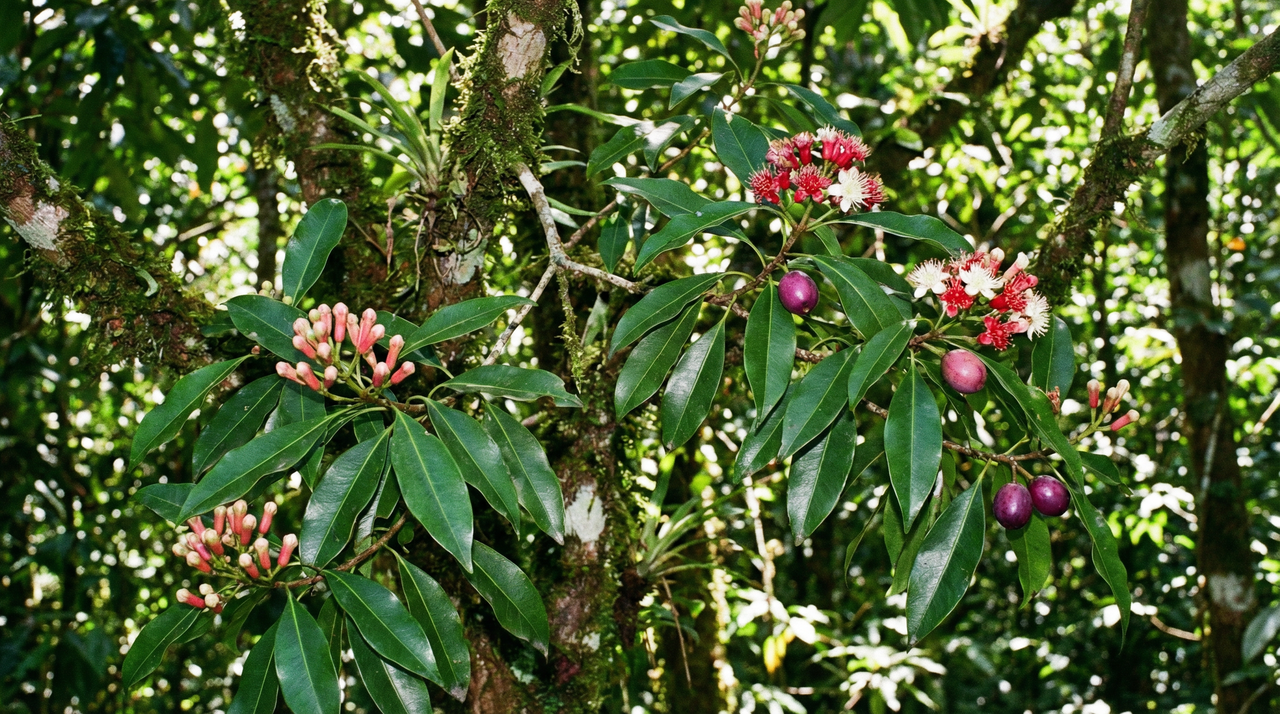
Most people who grow Lilly Pilly in their yards are thinking about hedges. Maybe some pretty red new growth, a tidy screen between properties, a bird-attracting shrub that stays manageable. What they're usually not thinking about is that they might be cultivating a tree with over two thousand years of documented medical use, one that Ayurvedic practitioners have employed for blood sugar management long before pharmaceutical companies started running clinical trials on its seed compounds. I've stood in front of Syzygium cumini trees in Central Florida that were planted as ornamentals by people who had absolutely no idea they were looking at jamun, a fruit so culturally embedded across South Asia that it shows up in Hindu scripture and gives an entire region of India its ancient name.
That gap between what this plant is and how it's perceived in the Western garden world is, honestly, what makes it so worth understanding properly. The fruit is extraordinary: glossy purple-black, sweet-tart, somewhere between a grape and a plum with a faint almond whisper underneath. But get one that's not quite ripe and the tannins will make your mouth feel like it's been coated in chalk. That contrast, generous abundance right next to serious astringency, turns out to be a pretty good metaphor for the whole plant. Because Syzygium cumini is generous to a fault, and in certain ecosystems, that generosity becomes a problem.
Lilly Pilly Origin and History
Botanical Background and Native Range of Java Plum
The lilly pilly family is a big, sprawling genus, and understanding which species you're actually working with matters enormously in the garden. The anchor of this profile is Syzygium cumini, commonly known as Java plum or Jamun, a large evergreen tree native to tropical and subtropical South Asia, with its heart in India, Sri Lanka, Malaysia, and Indonesia.[1][2][3] From there it has been introduced across the Caribbean, parts of Africa, northern Australia, and South America wherever the climate cooperates. Globally, it holds an IUCN Least Concern status, though local pressures from timber harvesting and habitat loss do threaten populations in parts of its native range.[4][1]
In its home forests it occupies canopy and sub-canopy positions in moist deciduous, semi-evergreen, and evergreen forest types.[4] This is a genuinely long-lived tree; expect 50 to 100 years in cultivation and potentially over 200 in the wild, with seedlings taking a patient 5 to 10 years before bearing their first fruits.[5][6] Seed dispersal happens primarily through birds, and that biological partnership is a big part of why it colonizes new territory so effectively once introduced.[7] When I'm recommending Syzygium species to clients in cooler subtropical zones, I think about this contrast constantly: Java plum is strictly tropical, while relatives like Waterberry (Syzygium cordatum), which ranges across humid forests and riverine zones from tropical to subtropical Africa,[8] and Weeping Lilly Pilly (Syzygium floribundum) from Australia's east coast rainforests[9] handle more marginal conditions. Knowing which species is actually in the ground tells you almost everything about its chances on your site.
Visual Characteristics of Syzygium cumini
Standing under a mature Java plum is a genuine experience. The tree typically reaches 10 to 30 meters in the wild, occasionally pushing 35 meters, with a dense, rounded crown that casts serious shade.[10][11] The trunk is straight and cylindrical, up to 60 cm across, often buttressed at the base, with grayish-brown bark that flakes away in thin irregular sheets.[10] Young stems are noticeably four-angled before rounding out with age, a detail I find useful for confirming ID on juveniles.
The leaves are opposite, elliptic to oblong, 5 to 15 cm long, dark glossy green above and paler beneath, with a leathery texture and clean smooth margins.[12][13] Flowering brings dense panicles of small creamy-white blossoms, each just 5 to 6 mm wide and bristling with stamens, which are highly attractive to pollinators.[10][14] Then come the fruits: small ovoid berries that travel from green through red before arriving at a deep, glossy purple-black at full ripeness.[15][10] That color progression is one of the most reliable visual cues I track when designing edible landscapes with this species. You don't rush a Java plum harvest; you watch the color and wait for that near-black finish. The tree also develops a deep taproot with extensive lateral fibrous roots, and it shows some morphological variability between regions and seasons, so don't be surprised if trees from different seed sources look slightly different side by side.[15]
Traditional and Cultural Uses Across Continents
Few food trees carry this kind of cultural weight. Syzygium cumini has been woven into Ayurvedic and Unani medicine for over 2,000 years, with uses documented in the Charaka Samhita and Sushruta Samhita dating to around 1500 BCE.[16][17] Bark, leaves, and seeds appear repeatedly in formulations targeting diarrhea, dysentery, asthma, wound healing, oral health, and most prominently, blood sugar regulation. Traditional healers identified the antidiabetic properties of the seed long before any laboratory confirmed the mechanism, and I find that kind of observational precision humbling.
In Hindu tradition the tree holds sacred status, planted near temples and bound up with the mythology of Lord Krishna, who is said to have loved the tart fruit so much it stained his lips blue.[18] Its leaves and fruits feature in Janmashtami and Diwali celebrations and carry symbolism of prosperity, fertility, and protection. Beyond India, indigenous communities across Southeast Asia and the Philippines use it for fever, hypertension, and skin conditions; Gond and Irular tribes in India rely on the powdered seed for blood sugar control; East African communities turn to the bark and leaves for malaria and respiratory ailments.[19][20][21] The breadth of independent discovery across continents says something real about this plant's potency. When I see companies patenting extracts from plants with millennia of traditional use behind them, I believe fair benefit-sharing with source communities under frameworks like the Nagoya Protocol isn't optional; it's essential.[22][23]
Interesting Facts and Ecological Role
The Java plum earns its place in any well-designed food forest through sheer ecological generosity. Its dense canopy feeds birds, bats, monkeys, and squirrels, which in turn become the seed dispersal network that keeps the species spreading.[24][25] The deep taproot stabilizes slopes and riverbanks, and the sustained shade from that broad crown moderates soil temperatures in ways that benefit the whole system around it. Couple that with a lifespan measured in centuries and you're looking at a serious canopy investment.
It's also worth being honest about where this tree gets complicated. In Florida, where I work, Syzygium cumini carries a Category I invasive species classification, meaning it spreads aggressively in wetlands and displaces native plants.[26][24] That bird-dispersal efficiency that makes it such a good wildlife tree is exactly what makes containment difficult here. I monitor seedlings carefully and would not plant this species near natural wetland systems in our region. In California and other warm areas it's watched but not yet widely invasive, and in its appropriate tropical zones (USDA zones 10 to 12, with average temperatures above 18°C) it performs as the generous, productive canopy tree it was always meant to be.[25][27] Named selections like 'Black Myall' (a dwarf form) and 'Jambol' with its larger fruit give gardeners options for fitting the species into tighter spaces or prioritizing harvest quality.[28] The plant is generous, ancient, and deeply useful; it just asks you to know your context before you plant it.
Lilly Pilly Varieties and Where to Buy Them
Notable Varieties of Syzygium cumini
Syzygium cumini anchors the edible end of the broader lilly pilly group, and getting a sense of its baseline habit is the first step before chasing named selections.[29] It is a moderate-growing evergreen putting on roughly one to two feet of growth per year.[29][30] In my experience designing subtropical edible landscapes, clients routinely underestimate that eventual scale, so I flag it early: this is a canopy tree, not a shrub you can tuck into a tight corner and forget about.
Two botanical varieties exist within the species. Syzygium cumini var. cumini is the standard form; var. malaccense produces noticeably larger, more rounded fruits.[31] Beyond that split, a handful of named selections developed through Indian research programs offer the most actionable improvements for home growers. Cultivars like 'Rajendra Jamun-1', 'Rajendra Jamun-2', 'Goma Priyanka', 'Giant Mysore', and the seedless types 'Mono' and 'Black Gem' have been selected for larger fruit, higher yields, and better disease resistance.[32][30] I prioritize the seedless and low-astringency selections for client gardens because the standard fruit's tannic finish genuinely disappoints first-time tasters. It's a sweet-tart flavor with a grape-plum quality, but that astringent aftertaste can be persistent enough to put people off entirely.[29] The difference between a tree that feeds your family and one that mostly feeds the birds often comes down to whether you sourced a selected form.
The honest reality, though, is that these Indian cultivars are rarely what you'll find in US nurseries. Most commercial and home plantings still rely on seedlings or locally adapted selections, and seed-grown trees produce variable offspring.[31] Growers in Florida and Queensland have informally selected for frost tolerance and fruit quality over generations,[30][1] and a well-established Florida-grown seedling from a productive parent tree can absolutely perform well; you just won't know exactly what you're getting until it fruits.
Sourcing Syzygium cumini Plants
In the US, Syzygium cumini occupies a genuine niche, available primarily through specialty nurseries concentrated in Florida and California.[33][34] Nurseries worth knowing include TreeWorld Wholesale, Eureka Farms, Moon Valley Nurseries, Florida Hill Nursery, Everglades Farm, One Green World, and Plant Delights Nursery.[35][36][37][38][39][40][41] Stock typically runs from seeds and small seedlings up through one-gallon and three-gallon potted plants, with larger field-grown specimens available from some wholesale operations. Prices generally span $10 for seeds or small starts to $100 or more for established trees.[42][41]
I've ordered from both large wholesale nurseries and smaller online tropical specialists over the years, and one thing I always ask for is "fruiting grade" material, ideally vegetatively propagated, so I know I'm getting a tree with a track record rather than a lottery ticket. Florida-based nurseries are often a smart first call; their stock is already conditioned to humid subtropical conditions similar to zones 9 and 10. For seeds and occasional live plants, Etsy and Amazon carry listings,[43][44] though quality varies more than with dedicated tropical nurseries. Stock fluctuates seasonally, so contacting nurseries directly before placing an order saves frustration, and if you're ordering across state lines, confirm current agricultural regulations first because some states restrict movement of certain Myrtaceae material.
Lilly Pilly Propagation and Planting Guide
Every propagation decision you make with Java plum flows directly from the biology of its seeds. Get familiar with that biology first and the rest follows logically.
Seed Characteristics and Propagation Methods
The seeds themselves are distinctive: ovoid to ellipsoid, roughly 1-2 cm long, with a hard woody testa that ranges from dark brown to nearly black, and inside, a single large cotyledon packed with oil and starch reserves.[45][34] When you extract them fresh from ripe fruit, they feel almost substantial in your hand, more like a small stone than a typical garden seed. That lignified, suberized coat also creates physical dormancy, which means sowing without any pretreatment can slow germination significantly. A 24-48 hour soak in warm water (or light scarification for stubborn batches) typically gets you to 60-80% germination within 10-30 days at 25-30°C under consistently moist conditions.[46][47]
These seeds are polyembryonic, meaning a single seed can produce multiple embryos from nucellar tissue.[48] I've opened planting holes expecting one seedling and found two or three vigorous shoots competing for the same spot. It's an easy fix once you know to watch for it, but it catches new growers off guard. Despite that partial genetic uniformity, seedling offspring are still quite variable in fruit quality and morphology, which is exactly why vegetative propagation becomes important if you're growing for fruit rather than just shade or experiment.[49] Semi-hardwood cuttings of 10-15 cm treated with 0.5% IBA root at 60-70% success in 4-8 weeks under 80-90% humidity and warm temperatures, and air layering achieves similar results.[50][51] My own cleft grafting trials onto seedling rootstocks during the rainy season have consistently come in around 70-80% take, which I find more reliable than cuttings for preserving a named selection.
Germination Timeline and Viability
The single most important thing I've learned about Syzygium cumini seeds is that they are recalcitrant. They cannot be dried and stored like orthodox seeds; drop the moisture content below roughly 20-30% and viability collapses fast.[52][53] I lost several batches early in my practice by drying seeds on a paper towel and tucking them away for later. Now I treat every Java plum seed as something to sow within days of harvest, full stop. Fresh seeds germinate at 60-95% under warm, moist conditions; wait even a few weeks and those numbers slide.[52] If short-term storage is unavoidable, keep seeds in moist sand or vermiculite at high humidity (80-90% RH) and cool temperatures; maintained at 40-50% moisture content, viability can stretch to 6-12 months, though fungal pressure in airtight containers is a real risk.[54][55]
The other honest conversation about seed propagation is the juvenile phase. Seedling trees typically take anywhere from 5-10 years to first fruit. Grafted trees can shorten that to 2-4 years. For anyone growing lilly pilly in a backyard food forest with fruit in mind, that difference matters, and grafting is almost always the pragmatic call.
Soil, Site Selection, and Sun Requirements
Java plum is native to moist, well-drained alluvial and lateritic soils, and those origins tell you everything about what to provide: deep fertile loam, excellent drainage above all else, a soil pH somewhere between 6.0 and 7.5 (it tolerates as wide as 5.0-8.5, but chlorosis and stunted growth appear above 7.5 in alkaline conditions), and organic matter around 1.5-3%. I test every new bed before planting and amend with elemental sulfur or lime accordingly rather than waiting for deficiency symptoms to appear in the canopy. For light, full sun with at least 6 hours of direct exposure maximizes fruit production. I've grown related Syzygium species under dappled light and they survive fine, but the fruiting vigor drops noticeably. Java plum specifically wants sun. A generous layer of mulch (5-10 cm) at planting locks in moisture, moderates soil temperature, and builds organic matter over time. Get those fundamentals right and the tree does a lot of the work itself.
Spacing, Planting Technique, and Establishment
Mature Java plums reach 9-15 m in cultivation with a canopy spread of 6-12 m, and the root system follows suit with a deep taproot and lateral roots extending 6-8 m out. Standard orchard spacing is 10 m × 10 m, and I'd respect that if you're planting for long-term fruit production. Tighter spacing at 5-6 m works for managed trees you plan to prune regularly, and 2-3 m suits a lilly pilly hedge situation where canopy spread isn't the goal. The spacing decision you make now determines your pruning workload and disease pressure 10 years from now; I've seen crowded plantings turn into anthracnose nurseries when airflow disappears.
Timing planting to the onset of the rainy season (or spring in subtropical climates) gives young transplants the best establishment window. Dig a wide planting hole, amend the backfill with compost or well-rotted manure, and transplant seedlings once they've reached 10-15 cm with 2-4 true leaves. Stake young trees in exposed or windy spots until the root system can anchor them. Water in well and maintain consistent moisture through the first dry season. After that, an established Java plum is a remarkably forgiving tree.
Lilly Pilly Care and Growing Guide
Syzygium cumini is native to tropical and subtropical Asia and adapted to 1000-2000 mm of annual rainfall, yet once established it handles surprisingly long dry spells with minimal complaint.[56][57] The catch is that the first two to three years are genuinely demanding. Get the tree through establishment and most of the calendar takes care of itself.
Water and Soil Moisture Needs
Young plants need water every two to three days, or whenever the top inch or two of soil feels dry to the touch.[10] Mature trees shift to deep, infrequent irrigation every one to two weeks during dry periods, letting the top two to three inches dry between sessions and soaking down to twelve to eighteen inches when you do water.[58] Drip irrigation combined with two to four inches of organic mulch kept clear of the trunk is the setup I come back to every time; it holds moisture, suppresses weeds, and keeps foliage dry enough to reduce fungal pressure.[10] After several seasons growing these trees in Central Florida, I can say that consistent deep mulch in the first two years does more to reduce irrigation frequency than almost anything else. The young trees I skipped mulching showed classic underwatering symptoms: leaf scorch, browning tips, early leaf drop.[59] Overwatering is the other trap; yellowing leaves and wilting despite wet soil usually mean roots are sitting in too much moisture, and if you pull one up you may find blackened, mushy tissue.[60] The tree performs best in well-drained loamy soil at pH 5.5-7.5 with salinity kept below 2 dS/m.[61]
Fertilization and Nutrient Management
Lilly pilly is a moderate feeder that forms arbuscular mycorrhizal associations, which help it pull phosphorus and zinc from the soil without heavy inputs.[62] In a permaculture system that already has active soil biology, this matters. I soil-test every other year and adjust by feel; more compost in wet seasons, a touch more potassium when fruit set looks thin. Target ranges to keep in mind are N 50-100 ppm, P 20-40 ppm, and K 100-200 ppm, with organic matter above one percent.[63] Young trees start with 50-100 g of balanced NPK at planting and scale up to around half a pound of nitrogen per year; mature trees need roughly 200-600 g N, 100-400 g P₂O₅, and 200-600 g K₂O annually.[61][64] Split that across two to three applications: roughly half at spring or monsoon onset, a quarter post-monsoon, and the remainder before flowering, spreading it in a ring one to one-and-a-half meters from the trunk and watering it in.[65] Back nitrogen off during flowering and fruiting or you'll push leafy growth at the expense of fruit. Nutrient symptoms worth recognizing: uniform yellowing on older leaves signals nitrogen shortage; a purplish tint on leaves (similar to what I see on my phosphorus-stressed citrus) points to a phosphorus problem; scorched, necrotic leaf margins are potassium deficiency. Iron chlorosis is common on alkaline soils and responds to chelated foliar sprays.[62]
Sunlight Requirements
Full sun, at least six hours of direct light daily, is what maximizes both growth rate and fruit production.[66] Young trees will tolerate moderate shade but flowering and fruiting drop off noticeably without adequate light.[67] I treat new transplants the way I treat young citrus: full sun siting from day one, but I'll rig a bit of afternoon shade through the first summer if the heat is punishing. Once roots are established and the canopy starts filling out, shade is the last thing this tree needs.
Heat and Cold Tolerance
Syzygium cumini is most productive in USDA zones 10-12, with daytime temperatures of 20-35°C and nighttime minimums comfortably above 15°C.[68][69] It can push through short spikes to 45°C once established, but prolonged heat above 38°C causes real problems: leaf scorch, wilting, and flower and fruit drop, with flowering and fruiting stages the most sensitive.[70] I've noticed that trees given thirty percent shade during the worst July weeks set noticeably more fruit the following season than those left in full sun through the heat spikes, which lines up with what the research says about flower drop. Practically, five to ten centimeters of mulch, early-morning drip irrigation at twenty to thirty liters per tree every seven to ten days, and cultivar selection matter most for managing heat stress.[71]
Frost Protection
S. cumini sustains damage below -1°C (30°F) and prolonged exposure below -4°C (25°F) is usually fatal.[72] If you're growing the Australian S. smithii, you get a bit more breathing room; that species tolerates short dips to -6.7°C (20°F) and is viable in zones 9-11.[73] Frost symptoms show up as wilting, browning or blackening of leaves and shoot tips, and in hard freezes, branch dieback.[33] Young plants and new growth are always the most vulnerable. My go-to for rare hard freezes in zone 9B is wrapping young trunks with old towels under a layer of breathable frost cloth; it sounds low-tech because it is, but it's kept my trees alive through nights that dropped into the mid-twenties. Deep mulch to four to six inches insulates the root zone, and if damage does occur, hold off on pruning until spring so you can see exactly where the recovery is happening.[74]
Pruning and Maintenance
Training starts early. Pinch terminal buds at thirty to fifty centimeters to push lateral branching, then select three to five scaffold branches to build either an open-vase or central-leader structure.[75] I do this with nursery stock before it goes in the ground, which saves a lot of corrective work later. Through the growing season I pull water sprouts and basal suckers whenever I see them; leaving them on just bleeds energy from fruiting wood. The main annual pruning happens after harvest in the dry season, which removes crossing or diseased branches and opens the canopy for airflow and light penetration without triggering a flush of vegetative regrowth.[76] Speaking of airflow, a well-pruned open canopy is one of the better defenses against the fungal diseases that thrive in humid subtropical summers; I'll leave the specifics to the pests and diseases section, but the pruning connection is real. Mulch at two to four inches year-round (bumped to four to six inches heading into winter) and weed regularly so the tree isn't competing for moisture and nutrients during establishment.[66]
Seasonal Growth Rhythm
Lilly pilly is evergreen with no true dormancy, but it pulses with the wet-dry cycle rather than running at a constant tempo.[77] In its native Indian range, flowering peaks in the dry season (February through May), followed by fruiting through the wet months of June to November.[78] In subtropical Florida that calendar shifts toward spring flowering and summer to fall fruiting. I use phenological cues more than the calendar: the first flush of new growth after spring rains tells me to fertilize, post-harvest is my signal to prune, and the moment fruit color deepens and clusters start softening tells me harvest is open. These cues have proven more reliable than any date on a spreadsheet. The tree progresses through a seedling establishment phase from zero to two years, a vegetative shaping phase from two to five, then consistent fruiting from year five onward, with mature trees capable of producing a hundred kilograms of fruit in a good season.[75] Once you understand that rhythm, the whole care calendar snaps into place.
Harvesting Lilly Pilly (Syzygium cumini)
When to Harvest: Timing, Ripeness Cues, and Seasonal Windows
In subtropical US gardens (zones 9-11), the harvest window runs June through September with peak production landing in July and August.[79][80] From bloom to ripe fruit takes 90 to 120 days depending on conditions,[81][82] so once you see flowers fading and tiny green berries set, you know you're roughly three to four months from your first pick. The color shift tells the story: green to pinkish-red to that unmistakable glossy purple-black.[83][84] After a few seasons of picking too early and ending up with mouth-puckering, tannic fruit, I can tell you that waiting for the full glossy purple-black is non-negotiable. A ripe berry also lifts off with a gentle twist and yields easily; any resistance means it needs more time. Brix of 12-16, a lignified brown-to-black seed, and slight softening near the stem end are useful confirming cues.[85][86][87] Because fruits across the same tree ripen asynchronously, plan on multiple visits to the tree rather than one big harvest day.
How to Harvest: Technique, Thinning, and Post-Harvest Handling
Thinning crowded clusters to three or four fruits per panicle two to three weeks after fruit set is one of those steps I now do every single year without debate.[75][88] The jump in final fruit size is noticeable, and the reduction in pest pressure makes the fifteen minutes of work entirely worth it. At picking time, use the same upward-lift-and-slight-twist motion you'd use on a ripe fig or mulberry; it's gentle, fast, and the fruit pops right off.[83][87] For higher branches, secateurs work fine. Pick in the early morning, avoid harvesting for a day or two after heavy rain to reduce fungal transfer,[89][90] and make selective passes over two to four weeks to catch each fruit at its peak.[90] In my Central Florida garden, washing, sorting, and refrigerating at 8-12°C the same day I pick extends usability to two to three weeks; skip that step and you're looking at a few days before the fruit declines significantly.[91][92]
What to Expect: Yield, Flavor, and Fruit Characteristics
A mature tree (ten years and beyond) produces 50 to 200 kg of fruit per year,[93] which is a serious quantity to plan for. Each berry is a small oval, 1 to 2.5 centimeters long with thin glossy skin and a single hard woody seed inside.[94][87] Flavor-wise, ripe fruit is about 80-85% water with Brix ranging from 12 to 18 degrees and a pleasant sweet-tart balance with grape, blueberry, and plum notes, mild astringency, and a faint musky-wine aroma in the background.[95][96] I've noticed that fruit from hot, dry inland summers tends to hit the higher end of that Brix range; cooler, wetter growing seasons pull sweetness back down noticeably. All of which is why the ripeness cues covered above matter so much: unripe fruit is aggressively sour and astringent,[1] and one extra day of patience on the tree is the difference between fruit worth preserving and fruit that goes to the compost.
Lilly Pilly Preparation and Uses
Culinary Uses and Flavor of Java Plum Fruit
After years of growing Syzygium cumini, the single most important thing I tell new foragers is this: wait. The unripe fruit is green, firm, and punishingly astringent,[10][97] and that transition to glossy purple-black ripeness is not subtle. Fully ripe fruit tastes like a grape and a plum had a tart, slightly smoky collaboration with a faint almond note at the finish.[98] I think of it a bit like the jump from a young persimmon to a dead-ripe one: completely different fruit, same tree.
At that ripe stage, the uses open up considerably. Fresh eating is the obvious starting point, but the fruit also shines in jams, jellies, juices, wines, chutneys, syrups, and traditional South Asian sweets like halwa.[10][99] Fermentation yields something genuinely wine-like with plum and spice notes, while heating concentrates those deep caramelized flavors through Maillard reactions.[100] In the Caribbean, Philippines, and across Africa, similar culinary traditions have developed independently, from fermented drinks and herbal teas to preserves and folk remedies.[101][102] Sun-drying or oven-drying extends the harvest window nicely if you have more fruit than you can process fresh.[103]
The fruit carries a respectable nutritional load: roughly 14-20 mg/100g of vitamin C, meaningful potassium and dietary fiber, and a genuinely impressive concentration of anthocyanins and phenolics that gives it that near-black color.[104][105] Related Australian species like Syzygium acuminatissimum are similarly eaten for nutrition and occasionally used to address dysentery in bush food traditions,[106] a nice reminder that edible and medicinal use within this genus runs deep across continents. One note on seeds: the seed kernel is edible after roasting or powdering, but its bitterness makes clear it's primarily a medicinal ingredient rather than a culinary one.[107] Raw seeds in significant quantities cause gastrointestinal upset due to their heavy tannin load, so roasting before powdering or pressing for oil is non-negotiable.[10][103] I roast mine until fragrant, let them cool, then powder them in a dedicated spice grinder. The bitterness that persists is a good sensory reminder that this is medicine, not snack food.
Traditional Medicinal Preparations and Dosages
Ayurvedic practitioners have been using every part of this tree for centuries, and the specificity of the traditional dosage guidance is worth taking seriously.[99] Seed powder for blood-sugar support is typically 1-3g daily, bark decoction for diarrhea or oral ulcers runs about 20-30g of bark simmered in water, leaf tea for cough or asthma uses 10-20 leaves per cup, and a tincture made at a 1:5 alcohol ratio is dosed at 5-10ml.[108][109] In my practice I always start on the lower end of those seed powder ranges; 1g is a reasonable entry point before working up. Leaves applied topically as a decoction have traditional use for wounds and infections in both Indian and Filipino folk practice.[102]
Australian lilly pilly species like Syzygium smithii and S. acuminatissimum share a similar tradition of leaf and bark infusions for digestive complaints, typically 1-2 teaspoons of dried leaves steeped 10-15 minutes for a cup or two daily,[110][111] though the clinical research backing those uses doesn't come close to what exists for S. cumini. That distinction matters when you're deciding how to use them.
Non-Food Uses and Safety Considerations
Beyond the kitchen and medicine cabinet, Java plum carries real cultural weight. Leaves and fruit are offered in Hindu worship as symbols of fertility and health,[112] and the tree itself is planted near temples across South Asia. In my own landscape work, the pruning biomass has become one of my favorite mulch sources; the leaf litter breaks down at a steady, manageable pace and builds soil organic matter without creating the fermentation mess you get from heavy fruit drops.[83] Mature, fully expanded leaves are also the right harvest for medicinal preparations; skip the young shoots, which tend to be lower in the active compounds and higher in astringency.[85]
On safety: I've seen the blood-sugar-lowering effect of this fruit play out in real time when combining it with other hypoglycemic herbs in smoothies, which is exactly why I caution anyone on diabetes medication to monitor their levels closely and loop in their doctor before using it medicinally beyond occasional fresh fruit.[113][114] People with Myrtaceae sensitivities should also be aware of possible allergic reactions, and excessive intake of the fruit itself can cause gastrointestinal upset.[115] One more thing worth knowing for foragers: the tree has look-alikes in subtropical landscapes, including the toxic Brazilian peppertree (Schinus terebinthifolia) and common myrtle (Myrtus communis).[116] Most other Syzygium relatives you're likely to encounter, rose apple and wax apple among them, are edible,[117] but confirming identification before foraging anything in this family is just good practice.
Lilly Pilly Health Benefits and Medicinal Uses
The health story of lilly pilly is really two stories running in parallel. The first belongs to Syzygium cumini, Java plum, whose fruits, seeds, leaves, and bark carry centuries of documented therapeutic use and a genuinely impressive body of modern research. The second belongs to the Australian species, Syzygium smithii and Syzygium acuminatissimum, whose traditional Indigenous uses and early laboratory findings are compelling but haven't yet been validated in human trials. I think it's worth holding both stories at once, because together they point to a genus with real medicinal depth, as long as we're honest about what the evidence actually shows.
Medicinal Research and Traditional Uses of Lilly Pilly
The most researched benefit, by a significant margin, is blood sugar management. Clinical studies show that Syzygium cumini extracts effectively lower blood glucose with minimal adverse events in people with type 2 diabetes.[118][119][120] What makes this particularly interesting is the mechanism, or rather the mechanisms, plural. The plant appears to work on blood sugar through several pathways simultaneously: promoting insulin secretion from pancreatic beta cells, activating AMPK to enhance glucose uptake, upregulating GLUT4 translocation, inhibiting alpha-glucosidase to slow carbohydrate digestion, and protecting beta cells from oxidative damage.[121][122][123] I'm not a physician, but when clients ask me about growing plants that support metabolic health, I feel confident suggesting Java plum as a meaningful addition to a food forest, always with the caveat to loop in their healthcare provider before treating it as a supplement.
Ayurveda and Unani practitioners have used Syzygium cumini for centuries to manage diabetes, diarrhea, digestive disorders, and skin conditions. Modern research has validated much of that tradition, particularly around the antidiabetic alkaloid jamboline.[124][17] Beyond blood sugar, preclinical research has documented antioxidant activity in fruits, seeds, and bark;[125][126] anti-inflammatory effects in rat models comparable to standard drugs like indomethacin;[126][127] antimicrobial activity against both gram-positive and gram-negative bacteria as well as Candida;[128] dose-dependent analgesic activity in rodent models;[129][130] diuretic effects comparable to furosemide;[129] and sedative and anxiolytic effects potentially via GABAergic modulation.[131][132] Those last findings are intriguing, but they're all animal or in vitro. The clinical evidence base lives primarily in the antidiabetic literature, and that's where the honest conversation starts.
For the Australian lilly pilly species, the picture is more modest. Indigenous Australians have traditionally used Syzygium smithii leaves as poultices for wounds and bark preparations for digestive complaints, and laboratory extracts show genuine antioxidant and antimicrobial activity.[133][134][135] Syzygium acuminatissimum carries a similar ethnobotanical record, with crushed leaf poultices for skin infections and leaf tea for diarrhea, plus preliminary in vitro antioxidant, antimicrobial, and anti-inflammatory support.[106][136][137] No human clinical trials have been conducted on either species. That's a meaningful gap, and it means treating the Australian lilly pilly primarily as a nourishing, flavorful food plant is the responsible framing for now.
Key Phytochemical Compounds in Lilly Pilly
One thing that helps explain why different plant parts have such different traditional roles is that the chemistry is genuinely compartmentalized. The seeds are rich in jambosine, tannins up to 20% by weight, quercetin, rutin, and ellagic acid. Leaves concentrate quercetin, kaempferol, myricetin, gallic acid, and more tannins. The ripe fruit carries the anthocyanins, primarily cyanidin-3-glucoside and related compounds at 100 to 200 mg per 100 g. Bark is dominated by ellagitannins, triterpenoids like betulinic acid, and saponins.[138][139][140] Knowing that, it's easier to understand why a seed extract studied for blood sugar won't behave like a fruit jam eaten for antioxidants.
The environmental context matters more than most people realize. Phenolic content tends to be higher in fruit harvested during or after rainy seasons, in trees from Indian origins, and in less-ripe fruit.[141][142][143] I've grown several Syzygium species in my Central Florida garden, and I've noticed that after our heavy summer monsoon rains, the fruit color deepens noticeably and the flavor gets more complex. That fits squarely with the research showing optimal phytochemical development in humid subtropical climates around 25 to 30°C with high rainfall.[144] For the Australian species, Syzygium smithii fruit shows total phenolic content often exceeding 10 mg GAE per gram fresh weight, with quercetin and kaempferol derivatives alongside anthocyanins, while Syzygium acuminatissimum leaves carry high ellagic acid, rutin, and essential oils rich in alpha-pinene.[145][146] These same compounds underpin the antioxidant, anti-inflammatory, and antimicrobial actions covered above.
Nutrition in Lilly Pilly Fruit
What you're actually eating when you bite into a ripe lilly pilly berry is the fleshy pulp surrounding the seed. For Java plum, a 100 g serving of that pulp delivers roughly 60 to 62 kcal, about 15 g of carbohydrate, 1.5 to 2.5 g of fiber, 14 mg of vitamin C, and modest but useful amounts of potassium, calcium, and magnesium.[147][148] Syzygium smithii berries are estimated to carry 30 to 60 kcal, 20 to 50 mg of vitamin C, meaningful beta-carotene, and reasonable iron and calcium, though I'd treat those numbers as working estimates rather than certified data since analytical coverage of Australian native fruits is still catching up.[149][150]
Where lilly pilly fruit really earns its place is in the phytonutrient column. My clients are often surprised to hear that Syzygium smithii berries can match or beat blueberries in DPPH and FRAP antioxidant assays, correlating with their high total phenolic content.[145][151] That slightly puckery quality in near-ripe fruit? That's the tannins and phenolics telling you the antioxidant load is still high. Once you understand that, a fruit that seemed too astringent starts making more sense to work with. Processing does cost you something: cooking reduces vitamin C by 20 to 50% and phenolics by 10 to 30%, while drying concentrates polyphenols but strips vitamin C significantly; anthocyanins hold up best, retaining 60 to 80% depending on method.[145][152] Fresh or minimally processed is the way to go if you want both the vitamin C and the full anthocyanin benefit.
Safety and Precautions for Lilly Pilly
Ripe lilly pilly fruit is safe, and the overall acute toxicity profile for both Java plum and Syzygium smithii is low, with no well-documented cases of poisoning from normal consumption and animal studies showing an LD50 above 2000 mg/kg for seed extracts.[153][154] No cyanogenic glycosides have been documented in Syzygium cumini, so that concern doesn't apply here.[155]
The nuances are in the seeds and leaves. Seeds contain jamboline, significant tannins, and ellagic acid that can cause gastrointestinal upset in larger quantities, and leaves carry enough tannins to cause digestive issues if consumed heavily.[156][157] I keep seeds away from my chickens for exactly this reason since the tannin load can reduce nutrient absorption in livestock, and large quantities of unripe fruit carry the same risk.[155] Drought stress can also push tannin concentrations higher in leaves and unripe fruit, which is worth noting for anyone foraging during dry spells.[158]
Two cautions deserve direct attention. First, if you or someone you grow for is on antidiabetic or blood-thinning medication, the plant's demonstrated blood-glucose-lowering and antiplatelet effects create a real interaction risk that warrants a conversation with a physician before using extracts or seed preparations therapeutically.[159][160] Second, pregnancy safety hasn't been adequately studied, so caution is the right call there.[120] Allergies are rare but possible, with some potential cross-reactivity to other Myrtaceae like eucalyptus and clove worth flagging for anyone who reacts to that plant family.[161] There are no highly toxic lookalikes commonly confused with Java plum or the garden lilly pilly species,[162] which makes responsible backyard foraging of the ripe fruit genuinely low-risk for most people.
Lilly Pilly Pests and Diseases
Syzygium cumini has decent natural defenses for a subtropical fruit tree, but "moderate disease resistance" is one of those phrases that only tells part of the story.[163][164] The other part is that lilly pilly thrives in exactly the conditions where fungal diseases thrive too. Hot, humid, poorly drained sites don't just stress the tree; they roll out the welcome mat for everything that wants to attack it.
Diseases of Java Plum (Syzygium cumini)
The fungal complex is where most growers run into real trouble. Anthracnose, caused by Colletotrichum gloeosporioides, is the ringleader: it hits leaves, flowers, and developing fruit, leaving dark lesions and causing premature drop, and it absolutely loves the 25-30°C temperatures with humidity above 80% that describe a Central Florida summer perfectly.[163][165] I've watched it flare after weeks of summer rain and done the frustrated grower walk around the tree afterward. Fruit rots from Phytophthora, Fusarium, Colletotrichum, and Rhizopus pile on during those same humid windows, with some orchards seeing 20-30% losses in bad years.[163][166]
Leaf spot diseases from Cercospora, Pestalotiopsis, and Phyllosticta show up as necrotic spots with yellow halos and can push a stressed tree toward defoliation when temperatures sit between 25-32°C and humidity stays above 70%.[164][167] Powdery mildew appears as a white coating on young foliage under similarly humid conditions, particularly when temperatures cool slightly into the 20-28°C range.[167] Phytophthora root rot is the one I take most seriously. I lost two young trees early in my career to waterlogging; I didn't know to mound the planting site or choose raised ground, and I paid for it with wilted, collapsing trees that looked mysteriously sick right up until they weren't.[168] Bacterial issues like Xanthomonas leaf spot and Ralstonia wilt do occur but are far less common than the fungal suite.[163] Viral infections are poorly documented and not considered a meaningful production concern.[163]
Major Pests of Lilly Pilly
Pest pressure on lilly pilly is mild compared to the disease picture. Occasional scale insects and fruit flies can appear, particularly on trees under stress, but neither tends to be limiting on a well-sited tree. I share a lot of growing space with guava and other Myrtaceae in my zone 9B garden, and I've found that the same environmental stress that invites fungal disease also makes trees more attractive to opportunistic insects. Keep the tree healthy and the bugs mostly move on to easier targets.
Integrated Disease Management
The most effective disease management I've done has involved almost no sprays. Proper spacing for airflow, pruning out crossing or congested branches after a wet season, and cleaning up fallen fruit and infected leaves removes the inoculum before it can cycle back into the canopy.[169] In Florida, anthracnose prevention with copper-based fungicides during sustained humid periods, drainage-first Phytophthora management, and sulfur for powdery mildew when cultural fixes aren't quite enough are the standard extension recommendations.[170][171] That first intervention, pruning for airflow the season after an anthracnose outbreak, made a genuine difference in my garden. Azoxystrobin and mancozeb are options for high-pressure wet seasons, but I reach for them reluctantly and only at susceptible growth stages.[170]
No formal disease-resistance ratings exist for any S. cumini cultivar from authoritative sources, though growers occasionally report better tolerance in selections like 'Black Ruby' and 'Moha' based on observation rather than replicated trials.[172][173] Given that, I don't spend much energy cultivar-shopping for disease resistance. Site selection, drainage, and sanitation are the real levers here, and no variety is going to bail you out of a chronically waterlogged or overcrowded planting.
Lilly Pilly and Java Plum in Permaculture Design
Before Java plum became a fruit tree in anyone's backyard, it was doing serious ecological work in tropical forests from the Indian subcontinent to northern Australia. Syzygium cumini is a large evergreen canopy tree, typically reaching 30 to 60 feet in cultivation and considerably more in the wild,[5][174] and in its native habitat it functions as a mid-successional species that helps tip disturbed ground back toward mature forest.[175][176] That's not incidental context. In permaculture terms, it tells you exactly the kind of energy you're working with: a tree built to occupy, stabilize, and enrich.
Ecological Functions and Guild Roles
The purple-black fruits are a magnet for frugivores. Birds like bulbuls, mynas, and hornbills eat them alongside fruit bats and primates, all of which carry seeds away from the parent tree and deposit them across the landscape.[177][98] In a food forest context, that wildlife magnetism translates to a tree that pulls beneficial animals into your system and supports biodiversity well beyond the canopy it shades. Meanwhile, falling leaves and spent fruit decompose into the soil and feed nutrient cycling year-round,[175] so the tree is feeding the ground beneath it whether you're paying attention or not.
Its deep, extensive root system draws up potassium and nitrogen from layers most shallow-rooted plants can't access, making it a genuine dynamic accumulator rather than just a label permaculture growers apply generously.[178] Those same roots make it worth considering on slopes where erosion is a problem, and the dense canopy can anchor a windbreak planting or living fence along a property edge. On the pollinator side, the fragrant white flowers draw bees reliably, with honeybees (particularly Apis cerana indica and Apis dorsata) serving as primary pollinators.[179][180] I've found with other Myrtaceae that fruit set improves noticeably when you either have multiple trees nearby or you're deliberately planting bee-attracting companions like basil or alliums around the base; the same logic applies here, since Java plum is generally self-incompatible and really does produce better with cross-pollination.
As previously noted, its invasive tendencies in humid subtropical zones mean anyone designing in Florida must commit to managing fruit drop to prevent naturalization.[181][182] I've seen it myself in disturbed edges near wetlands. I don't recommend planting it in Florida unless you can commit to managing fruit drop and preventing naturalization, and I'd always ask first whether a native species or smaller, less aggressive Syzygium couldn't meet the same design goals. Enthusiasm for a productive tree doesn't override responsibility to local ecology.
Forest Layer Placement and Guild Companions
In forest garden terms, Syzygium cumini belongs in the canopy. In tropical forests it commonly reaches 50 feet or more and shapes the structure everything beneath it depends on.[5][98] That dense shade is a real design factor, not a footnote: it creates a cool, humid microclimate underneath that favors shade-adapted plants while making most sun-hungry fruiting shrubs unhappy. Plan the understory accordingly.
What I've found works well is pairing it with pigeon pea or sesbania as nitrogen-fixers in the sub-canopy layer, since Java plum doesn't fix nitrogen itself but partners readily with species that do.[178] Drop comfrey at the base to accumulate minerals at root level and you've got the foundation of a self-feeding guild. The tree's root exudates also support beneficial soil microbial communities and mycorrhizal associations that help with phosphorus uptake,[183][184] so there's biological payoff happening underground that the leaf litter cycling reinforces above it. One thing I tell my clients: the first year, Java plum seedlings can look almost suspiciously slow. Then they take off. Give them the space they'll eventually need from day one, and use ground-cover companions to protect the soil while you wait.
If canopy scale isn't what your design calls for, the broader Syzygium genus offers real flexibility. The Lilliput cultivar of Syzygium smithii tops out at roughly 10 to 13 feet,[185][186] which makes it a sub-canopy or large shrub layer option for urban guilds where a full-size Java plum would simply overwhelm the space. I reach for the dwarf forms in tighter residential designs and save the true canopy species for larger food forest projects where vertical stratification is the goal.
Climate Requirements and Hardiness Zones
Syzygium cumini is reliably hardy in USDA zones 10 through 12. It can survive in protected spots in zone 9b, but frost below 10°C (50°F) will damage it, and temperatures that dip below freezing are likely to be fatal without significant protection.[10][72] Once established in an appropriate climate, the heat tolerance is impressive: it handles temperatures up to 40 to 45°C without serious stress.[10][98] Rainfall between 1,000 and 2,500 mm annually is the sweet spot, though it can persist in drier conditions down to 600 mm where it has adapted to distinct wet and dry seasons, and it appreciates the high humidity typical of tropical and subtropical climates.[34]
In practical terms, South Florida, Hawaii, coastal Queensland, and much of tropical Southeast Asia and Brazil are well within its comfort zone.[187][188] It will tolerate some coastal influence but salt spray without wind protection tends to cause real damage. The Waterberry (Syzygium cordatum) of Africa shows how far this genus can stretch climatically, growing in everything from tropical savanna to warm-temperate oceanic conditions, always with a consistent preference for moisture access[8] — which tells you something useful about the genus as a whole: get the water right, and Syzygium tends to reward you.
The Tree That Made Me Slow Down at Harvest Time
I still catch myself reaching for a cluster too early, wanting that glossy purple-black before it's actually there. Every season this tree teaches me the same lesson: waiting is the skill. There's something about a plant that won't be rushed, that holds its best qualities just one more day beyond your impatience, that I find genuinely humbling. That's the tree I want in a food forest.
Sources 188
- Syzygium cumini - Useful Tropical Plants Database ↩
- Plants of the World Online - Syzygium cumini ↩
- Syzygium cumini - Jambolan ↩
- IUCN Red List Assessment: Syzygium cumini ↩
- Syzygium cumini - Wikipedia ↩
- Missouri Botanical Garden Plant Finder ↩
- Australia's Biosecurity Alert on Syzygium cumini ↩
- Kew – Plants of the World Online – Syzygium cordatum distribution & habitat notes ↩
- Plants of the World Online - Syzygium floribundum ↩
- Missouri Botanical Garden Plant Finder ↩
- Syzygium cumini ↩
- Royal Horticultural Society: Syzygium cumini ↩
- Missouri Botanical Garden Plant Finder ↩
- Syzygium cumini - RHS Gardening ↩
- Syzygium cumini (L.) Skeels ↩
- Traditional uses, phytochemistry and pharmacology of Syzygium cumini (L.) Skeels: A review ↩
- Ethnobotanical and pharmacological review of Syzygium cumini ↩
- The Cultural and Religious Significance of Syzygium cumini in India ↩
- Ethnobotanical Survey of Syzygium cumini Among Tribal Communities in India ↩
- Indigenous Uses of Jambolan in the Philippines ↩
- Traditional uses of Syzygium cumini in African folk medicine ↩
- Biopiracy and Cultural Appropriation in Traditional Medicine ↩
- Nagoya Protocol: Implications for Plant Genetic Resources ↩
- Syzygium cumini: Jambolan ↩
- Java Plum - Syzygium cumini ↩
- Florida Invasive Species: Syzygium cumini ↩
- Tropical Fruit Production in Hawaii: Java Plum ↩
- Missouri Botanical Garden Plant Finder ↩
- Syzygium cumini - Missouri Botanical Garden ↩
- Java Plum Cultivars - University of Florida IFAS Extension ↩
- Syzygium cumini - Missouri Botanical Garden Plant Finder ↩
- Jamun (Syzygium cumini) Varieties - ICAR ↩
- Tropical Fruit Trees in US Market ↩
- Syzygium cumini - USDA PLANTS Database ↩
- Syzygium cumini - Java Plum ↩
- Jamun Tree (Syzygium cumini) ↩
- Syzygium cumini Availability ↩
- Syzygium cumini - Java Plum Tree ↩
- Tropical Fruit Trees for Sale ↩
- Syzygium cumini - Java Plum ↩
- Java Plum Tree - Syzygium cumini ↩
- Java Plum Seeds (Syzygium cumini) ↩
- Syzygium Cumini Seeds - Java Plum - 10 Seeds ↩
- Buy Syzygium cumini Seeds Online ↩
- Flora of India: Syzygium cumini ↩
- Seed Dormancy and Germination in Syzygium cumini ↩
- Germination Protocols for Jambolan (Syzygium cumini) ↩
- Embryology and Polyembryony in Syzygium cumini ↩
- Seed Structure and Development in Jambolan (Syzygium cumini) ↩
- Rooting Response of Syzygium cumini Cuttings to IBA Concentrations ↩
- Propagation Techniques for Jamun (Syzygium cumini) ↩
- Desiccation Sensitivity and Storage of Jamun (Syzygium cumini) Seeds ↩
- Recalcitrant Seeds in Tropical Trees ↩
- Seed Storage Behaviour of Syzygium cumini ↩
- Recalcitrant Seeds: Syzygium cumini Storage and Germination ↩
- Syzygium cumini - USDA Plants Database ↩
- Drought Tolerance in Tropical Fruit Trees - FAO ↩
- Syzygium cumini (Java Plum) - Cultivation and Care ↩
- Drought Stress in Tropical Trees ↩
- Watering Requirements for Syzygium Species ↩
- Syzygium cumini Cultivation Guide ↩
- Nutrient Deficiencies in Tropical Fruit Trees - University of Florida IFAS Extension ↩
- Jambolan - Syzygium cumini ↩
- Fertilization of Tropical Fruit Trees in Florida ↩
- Cultivation of Jamun (Syzygium cumini) ↩
- Syzygium cumini (Jambolan) Plant Profile ↩
- Java Plum - Royal Horticultural Society ↩
- Syzygium cumini - Java Plum ↩
- Growing Jambolan (Syzygium cumini) ↩
- Heat Stress Effects on Tropical Fruit Trees ↩
- Mitigation Strategies for Heat Stress in Fruit Trees ↩
- University of Florida IFAS Extension - Java Plum (Syzygium cumini) Growing Guide ↩
- Australian Native Plants Society ↩
- Syzygium smithii (Lilly Pilly) - Frost Tolerance ↩
- Syzygium cumini: Cultivation and Management ↩
- Pruning and Training of Tropical Fruit Trees ↩
- Missouri Botanical Garden Plant Finder ↩
- Flora of Peninsular India ↩
- Jambolan - Syzygium cumini ↩
- Tropical and Subtropical Fruit Crops ↩
- Fruit Development and Ripening in Syzygium cumini ↩
- Phenology of Jamun (Syzygium cumini) in North India ↩
- Cultivation of Jamun (Syzygium cumini) ↩
- Impact of Harvest Date on Fruit Quality Attributes of Jambolan (Syzygium cumini (L.) Skeels) ↩
- Syzygium cumini: Botany, Horticulture, and Utilization ↩
- Harvesting and Post-Harvest Management of Jamun Fruits ↩
- California Rare Fruit Growers - Jamboll (Java Plum, Myrtaceae) ↩
- Tropical Fruit Trees: Pollination and Thinning Practices ↩
- Cultivation and Harvesting of Jamun (Syzygium cumini) ↩
- Harvesting Techniques for Tropical Fruits: Syzygium cumini ↩
- Post-Harvest Management of Fruits: Jamun (Syzygium cumini) ↩
- Storage Physiology of Java Plum ↩
- Syzygium cumini - Jambolan ↩
- Plants of the World Online - Kew Science ↩
- Physicochemical and Sensory Characteristics of Syzygium cumini Fruit ↩
- Postharvest Biology and Technology of Tropical and Subtropical Fruits: Syzygium cumini ↩
- Sensory Evaluation of Syzygium cumini Fruit ↩
- Syzygium cumini - Kew Royal Botanic Gardens ↩
- Syzygium cumini - Traditional Uses and Culinary Applications ↩
- UC Agriculture & Natural Resources - Fruit and Nut Research PhD Study (2020) ↩
- Ethnobotany of Syzygium cumini in Africa and Caribbean ↩
- Ethnobotanical Survey of Medicinal Plants in the Philippines ↩
- Traditional Preservation of Java Plum - ResearchGate ↩
- Nutritional Composition and Phytochemical Analysis of Syzygium cumini Fruit ↩
- Antioxidant Activity and Phenolic Content in Jambolan Fruit ↩
- Syzygium acuminatissimum - Australian Native Plants Society ↩
- Syzygium cumini - Missouri Botanical Garden ↩
- Medicinal uses of Syzygium cumini in Ayurveda and Siddha ↩
- Syzygium cumini (L.) Skeels: A review of its phytochemical constituents and traditional uses ↩
- Syzygium smithii - Traditional Uses ↩
- Medicinal Plants of Australia - traditional uses of lilly pilly ↩
- Syzygium cumini (L.) Skeels: A review of its phytochemistry pharmacological and traditional uses ↩
- Syzygium cumini: A Review of Its Phytochemistry Pharmacology and Toxicology ↩
- Jambolan (Syzygium cumini) - Uses Benefits & Dosage ↩
- Syzygium cumini (L.) Skeels: A review of its phytochemistry pharmacology and toxicology ↩
- Schinus terebinthifolia Toxicity - Poison Control ↩
- Psidium guajava - USDA Plants Database ↩
- Clinical Study on Syzygium cumini Seeds in Type 2 Diabetes Mellitus ↩
- Clinical evaluation of Syzygium cumini fruit extract on oxidative stress in type 2 diabetes patients ↩
- Safety and efficacy of Syzygium cumini in diabetes management: A systematic review ↩
- Antidiabetic Activity of Syzygium cumini: A Review ↩
- Mechanisms of Action of Syzygium cumini in Diabetes Management ↩
- Clinical Trial on Syzygium cumini Seed Extract in Type 2 Diabetes ↩
- Syzygium cumini (L.) Skeels: A review of its phytochemistry, pharmacological and traditional uses ↩
- Pharmacological Activities of Syzygium cumini: A Review ↩
- Antioxidant and Anti-inflammatory Properties of Syzygium cumini Seed Extract in Rats ↩
- Anti-inflammatory and analgesic activities of the leaf extracts of Syzygium cumini (L.) Skeels ↩
- Antimicrobial Activity of Syzygium cumini Extracts Against Pathogenic Microorganisms ↩
- Analgesic and Diuretic Effects of Syzygium cumini in Animal Models ↩
- Analgesic and Anti-inflammatory Activities of Syzygium cumini ↩
- Sedative and Anxiolytic Effects of Syzygium cumini Seed Extract ↩
- GABAergic Modulation by Syzygium cumini Extracts ↩
- Bush Tucker Plants of South East Australia ↩
- Phytochemical screening, antioxidant and antimicrobial properties of Acmena smithii (Myrtaceae) leaf extracts ↩
- Anti-inflammatory activity of Acmena smithii seed oil in rats ↩
- Journal of Ethnopharmacology (2013) - Study on Syzygium acuminatissimum antioxidant activity ↩
- Phytochemistry (2015) - Antimicrobial properties of S. acuminatissimum ↩
- Phytochemical and Pharmacological Importance of Syzygium cumini ↩
- Anthocyanins from Syzygium cumini fruits ↩
- Seed phytochemistry of Syzygium cumini ↩
- Seasonal Variation in Phenolic Content of Java Plum ↩
- Geographical Impact on Flavonoids in Syzygium cumini ↩
- Effect of Maturity Stage on Fruit Metabolites ↩
- Environmental Factors Affecting Phytochemicals in Syzygium cumini ↩
- Antioxidant Activity and Phenolic Compounds in Acmena smithii Fruits ↩
- Essential Oils of Lilly Pilly (Acmena acuminatissima) ↩
- USDA FoodData Central - Java-plum, raw ↩
- USDA FoodData Central - Jambolan (Java plum), raw ↩
- Nutritional Analysis of Australian Bush Foods - CSIRO Report ↩
- Nutritional Composition of Australian Native Fruits ↩
- Nutritional Composition and Bioactive Compounds in Native Australian Fruits ↩
- Effect of drying on antioxidant activity of Syzygium cumini ↩
- Pharmacological Activities of Syzygium cumini: A Review ↩
- Toxicity Studies of Syzygium cumini Seed Extract ↩
- Phytochemical and Pharmacological Importance of Syzygium cumini ↩
- Bioactive Compounds and Toxicity in Jambolan (Syzygium cumini) ↩
- Antinutritional Factors in Tropical Fruits Including Syzygium cumini ↩
- Environmental Influences on Secondary Metabolites in Syzygium cumini ↩
- Safety and efficacy of Syzygium cumini in diabetes: A review ↩
- Interactions of Syzygium cumini with Conventional Drugs ↩
- Cross-Reactivity Among Myrtaceae Allergens: A Review ↩
- Toxicity of Myrtaceae Fruits - Poison Control ↩
- Diseases of Syzygium cumini: A Review ↩
- Diseases of Syzygium cumini ↩
- Fungal Pathogens of Syzygium Species ↩
- Management of Fruit Rot in Tropical Trees ↩
- Environmental Factors Affecting Disease Resistance in Syzygium cumini ↩
- Managing Phytophthora Root Rot in Florida Landscapes ↩
- Diseases of Jamun (Syzygium cumini) and Their Management ↩
- Syzygium cumini - Java Apple ↩
- Anthracnose of Woody Ornamentals ↩
- Project Coconut Data Plantguide for Syzygium cumini ↩
- University of Florida IFAS Extension: Growing Jambul ↩
- Syzygium cumini - Missouri Botanical Garden ↩
- Nutrient Cycling in Jamun (Syzygium cumini) Plantations ↩
- Role in Forest Succession and Biodiversity ↩
- Seed Dispersal by Frugivores in Syzygium cumini ↩
- Syzygium cumini in Permaculture ↩
- Pollination Biology of Syzygium cumini (L.) Skeels ↩
- Floral Biology and Pollination in Myrtaceae ↩
- Syzygium cumini - Florida Invasive Species ↩
- University of Florida IFAS Extension - Java Plum ↩
- Rhizosphere Microbiology of Jambolan ↩
- Mycorrhizal Associations in Syzygium Species ↩
- Syzygium acuminatissimum 'Lilliput' - Australian Native Plants Society ↩
- Lilly Pilly Lilliput - Gardening Australia ↩
- Missouri Botanical Garden Plant Finder ↩
- World Agroforestry Centre (CIFOR-ICRAF) ↩