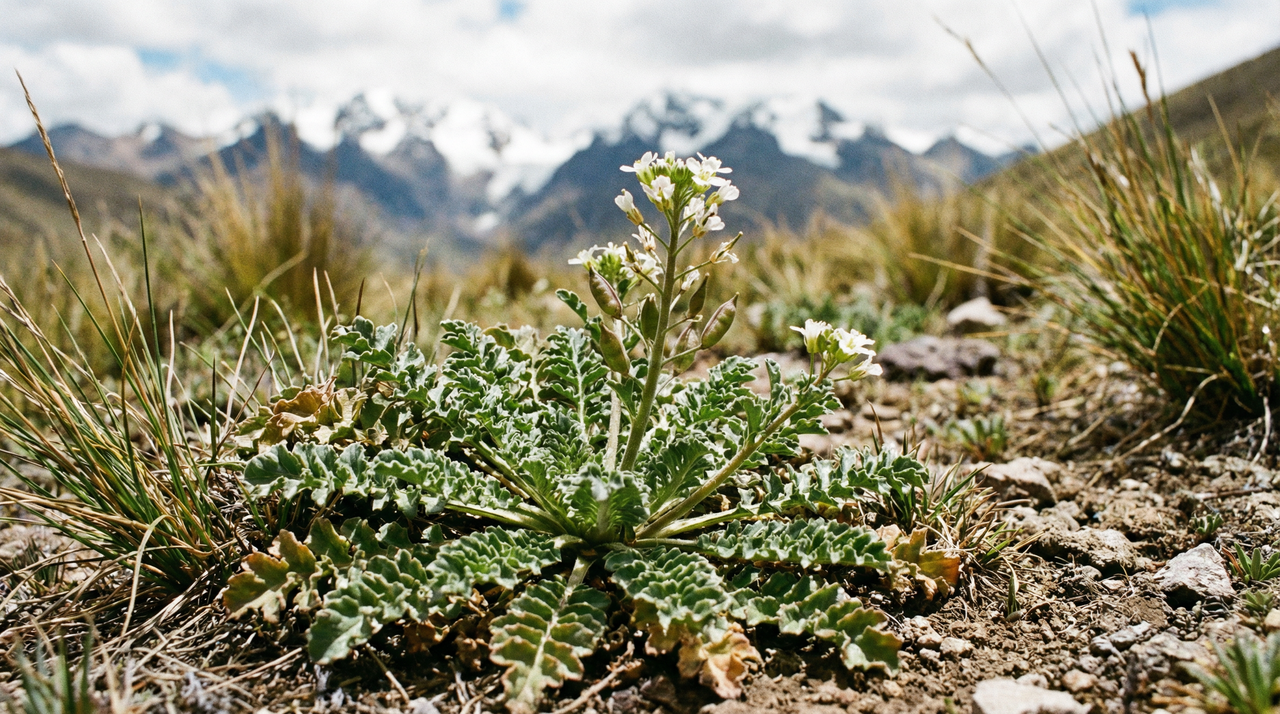
Maca grows where almost nothing else will. Not as a quirky adaptation, but as a plant so narrowly fitted to one of the harshest environments on earth that transplanting it to a normal garden feels a little like asking a polar bear to live in Miami. At 3,500 to 4,500 meters on the Peruvian and Bolivian altiplano, it endures freezing nights, near-desert dryness, and UV radiation intense enough to damage most plant tissue, and it does this while producing a root dense enough in nutrients and bioactive compounds that Andean communities have traded it as currency.[1] That tension, between fragility outside its native range and near-indestructibility within it, is what makes maca genuinely strange and worth understanding before you buy the powder or attempt the seeds.
Most people encounter maca as a beige scoop in a smoothie, which is about as far from the plant's reality as you can get. What I find endlessly compelling is that its reputation for stamina, fertility, and resilience isn't marketing invented for a wellness trend; it traces back to pre-Inca cultivation documented archaeologically to at least 1200 BC.[2] The extreme environment that makes it difficult to grow outside Peru is exactly the environment that shaped every compound inside it. That's the thread worth following.
Maca Origin, History, and Botanical Background
Few food plants have a biography as shaped by adversity as maca. Formally known by the Lepidium meyenii scientific name, assigned by Wilhelm Gerhard Walpers in 1843, this member of the Brassicaceae family is native to a narrow band of high Andean plateau in Peru's Junín and Pasco provinces and into Bolivia, growing at elevations between 3,500 and 4,500 meters where most food crops simply refuse to exist.[3][1][4] I remember the first time I saw photographs of maca growing on those near-barren, rocky Andean slopes and thinking: how does anything edible come out of that? Thin air, intense UV, freezing nights, near-desert precipitation. The fact that the plant responds by packing a dense, nutrient-rich root feels almost stubborn in the best possible way.
Botanical Description and High-Altitude Adaptations
In the wild, maca behaves as a polycarpic perennial, capable of persisting for five to ten years or more.[1][5] Understanding that lifespan is actually what helped me make sense of the root's nutritional density. When a plant is investing for a decade rather than a season, it stores differently. Cultivated plants are typically grown as annuals or biennials for harvest. Meanwhile, wild populations carry far greater genetic diversity than the commercial cultivars selected for bigger, faster-maturing roots. That difference matters, and it connects directly to the sustainability concerns now facing wild Andean populations, where overharvesting and genetic erosion are real problems driving a push toward certified organic cultivation in rotated fields.[6] Having watched the boom-and-bust cycles of other Andean crops, I now prioritize organically grown Peruvian maca from cooperatives that avoid wild harvesting entirely; the quality difference is noticeable, and the ethics aren't complicated.
When it finally does bolt, maca sends up a branched stem that can reach 1.5 meters, carrying small hermaphroditic flowers in terminal racemes. It is capable of both self-pollination and insect cross-pollination, producing 100 to 200 seeds per inflorescence.[3][7] That reproductive flexibility makes sense when you consider the puna's unpredictable insect populations. Newcomers to the plant sometimes confuse it with wild radish, field pennycress, or shepherd's purse, all fellow Brassicaceae; the safest distinction is habitat and root form, since maca's enlarged, turnip-like hypocotyl looks nothing like the finger-like tubers of oca or the airy structure of its weedy relatives.[8]
Visual Characteristics of the Maca Plant
In its vegetative stage, maca forms a compact basal rosette 30 to 60 centimeters across and rarely taller than 50 centimeters, with gray-green, softly pubescent, pinnatisect leaves bearing three to seven pairs of toothed lobes.[3][1] It's the kind of plant that reads as unremarkable at ground level, which is exactly the point: everything is happening underground. The hypocotyl root, three to fifteen centimeters long and up to fifteen centimeters across, is where maca makes its argument.[9][10] I find the color range genuinely striking: cream or yellow is the most widely available and the form I reach for in culinary use, since its flavor is milder than the black or red types I've sampled from various suppliers. The darker roots aren't unpleasant, just more assertive.
If allowed to bolt, those flowering stems reach 0.5 to 1.5 meters and carry the small, two to three millimeter, white to pale yellow cruciform flowers typical of the mustard family, followed by four to eight millimeter siliques with tiny dark brown seeds.[3][1] Garden cress (Lepidium sativum) shares those pinnatisect leaves, white raceme flowers, and siliques with maca, but completes its full cycle in 40 to 60 days at a tidy 15 to 60 centimeters tall.[11][12] Same family, radically different pace of life.
Traditional and Cultural Uses in the Andes
Archaeological evidence places maca cultivation on the Junín plateau as early as 1600 to 1200 BC, predating the Inca by centuries.[13][14] By the time the Inca Empire took shape around 1438, maca had become a nutritional staple, a form of currency, and a ritual offering tied to fertility for both humans and livestock.[13] The first European record comes from Pedro Cieza de León's Crónica del Perú in 1553, where he described a nourishing, energizing crop; Walpers' scientific description followed in 1843.[15][16]
Quechua and Aymara peoples have drawn on maca for over two thousand years as a dietary staple, an aphrodisiac, a treatment for anemia and menstrual disorders, and a general support for stamina and hormonal balance at high altitude, with deep roots in ceremonial life.[17][18] That knowledge system is what drew global attention when researchers began investigating its adaptogenic reputation. Traditional cultivation remains labor-intensive: terraced fields, organic methods, and no shortcuts at 4,000 meters.[19] Peru still dominates global production, though cultivation trials have expanded to Chile, the United States, Europe, and China as demand outpaced what the high plateau could sustainably supply.[20]
Fun Facts About Maca
What makes maca genuinely fascinating to me, as someone who designs for resilience, is that every trait the superfood industry markets traces back to survival chemistry. Antifreeze proteins and osmoprotectants for frost resistance, thickened cuticles and flavonoids that buffer intense UV, mycorrhizal root associations for nutrient scavenging in poor soils, elevated glucosinolates that manage oxidative stress under low oxygen: these are a plant solving an extreme problem, not performing for a health food label.[21][22][23] The Inca recognized something real: legend holds that warriors consumed maca before battle, and colonial chronicler Bernabé Cobo noted in 1653 that it sustained both high-altitude populations and their livestock.[1] A root that functions as currency, military ration, and fertility medicine across multiple centuries of Andean civilization is telling you something worth paying attention to.
Maca Varieties and Where to Source Them
Yellow, Red, and Black Maca: Color Determines Function and Performance
Maca is classified by the color and shape of its hypocotyl, and the system is refreshingly straightforward: yellow, red, and black are the primary types, with yellow dominating commercial production at roughly 60-70% of the market.[24][25] I've grown all three colors in the same bed, and what strikes me every season is how indistinguishable the seedlings look at first. Once the roots size up, though, the color differences are unmistakable, and so are the size differences: my red and black roots tend to run a bit smaller and more compact than the yellows growing alongside them, which tracks with what the agronomic literature reports.
The color distinction isn't cosmetic. Red maca carries the highest anthocyanin and polyphenol content of the three, giving it standout antioxidant activity and the highest glucosinolate concentrations.[26][27] Research tends to reach for red maca when studying bone density, menopausal symptoms, and hormonal balance.[28] Black maca occupies a different niche entirely: it's the type most associated with memory, learning, and sperm production, driven largely by its unique alkaloid profile including macaene and macamides.[29][18] All three share a broadly similar nutritional foundation of 60-75% carbohydrates, 10-14% protein, calcium, and iron, though black maca often tests toward the higher end of the protein range.[25][30]
Yield is where things get interesting. Yellow maca generally produces the most reliably under standard conditions, but in my own small organic trials black maca has occasionally outperformed it, which matches Andean data showing black can yield up to 20% more than yellow under organic management, even while red and black typically run 20-30% below yellow in conventional systems.[25][31] In my experience, yellow is the most forgiving if you're still dialing in your site, while red and black reward you with better performance once the conditions are cooler and the drainage is right, which is also what the research suggests.[25][31] Breeding programs at the International Potato Center continue working toward larger roots, faster maturation, and adaptation to lower elevations.[32][33]
Buying Maca Seeds and Products in the United States
If you want to grow your own Peruvian maca plant from seed, US sources do exist. Johnny's Selected Seeds, Strictly Medicinal Seeds, and Horizon Herbs all carry maca seed packets, typically priced between $5 and $15 for 100-500 seeds, though availability fluctuates seasonally.[34][35] Domestic commercial cultivation is still limited to small operations in states like California, so the overwhelming majority of maca root powder, black maca capsules, and other products on the market are imported from Peru and sold under US dietary supplement regulations.[36][37]
That import reality comes with real quality concerns, and I say this as someone who now treats maca the same way I treat any imported root crop: I only buy products that have been independently tested for heavy metals and macamide content. The issues are well-documented: adulteration with other Brassicas, lead and cadmium uptake from Andean soils, and wide variation in glucosinolates and macamides depending on altitude, ecotype, and growing method.[38][39][40] Label claims for black maca root powder or gelatinized maca root are essentially unverifiable without third-party testing. Sourcing from certified-organic cultivated operations is both the more reliable choice for bioactive consistency and the responsible one for wild Andean populations, which face real pressure from overharvesting.[41] Whenever I can, I go with certified-organic Peruvian growers or small US trial farms, and I'd encourage anyone buying maca to do the same.
Maca Propagation and Planting Guide
Growing maca from scratch is an exercise in patience and simulation. You're not just germinating a seed; you're trying to recreate a slice of the Peruvian altiplano in your garden bed, and every step of the process reflects how specifically adapted this plant is to conditions most of us don't naturally have.
Seed Characteristics and Germination Requirements
Maca seeds are tiny, reniform to globose, dark brown to black, only 1.5–2 mm long, with a thin seed coat and physiological dormancy that won't break without some intervention.[42][43] Cold stratification for 2–4 weeks at 4–10 °C, or light scarification, is what breaks that dormancy and gets germination moving. Once stratified, seeds germinate in 7–14 days at soil temperatures of 10–20 °C, with the sweet spot around 15–18 °C.[44][45] Because I also grow garden cress, I've watched those seeds zip through germination in 3–4 days at similar temperatures while maca seedlings take their time; that slow start is completely normal and doesn't mean the seed is dead or bad.[46]
One practical note: these seeds are so small and dark that they disappear against almost any growing medium. Label your trays obsessively. From sowing to harvest you're looking at 6–9 months total, a 3–4 month vegetative phase followed by 3–5 months of root bulking.[47][48] If you have leftover seed, store it cool and dry; maca seeds are orthodox and hold viable for 3–5 years under good home storage conditions (cool basement, sealed jar, silica packets).[49] I've had reliable germination from seed stored that way up to three years out.
Propagation Methods for Maca
Seed is the primary route, whether direct-sown or nursery-started, but expect variability. Germination rates range from 20–80% depending on seed freshness, pretreatment, and conditions, with most field reports landing around 30–60%.[50][51] That spread is why I always start extra. Commercial Peruvian growers typically raise nursery starts in trays under light shade, then transplant at 5–10 cm height after 4–6 weeks.[52] I've tried both direct seeding and transplanting over multiple seasons, and transplanting consistently gives me more uniform stands, even though it's more work.
Root division of mature plants is possible and yields 60–80% survival, useful if you want to preserve a specific color type.[50] That matters more than it might seem, because maca is self-compatible but still outcrosses 50–70% of the time, meaning seed-grown plants vary in root color, size, and phytochemical profile.[53] I've learned to save seed only from my most vigorous plants and label each color type separately each year to keep some predictability in the bed. Tissue culture via axillary shoots achieves over 90% shoot formation and produces genetically uniform plants, but the cost keeps it firmly in research and elite stock production territory, not something most home growers will pursue.[54]
Soil, Site Selection, and Planting Technique
Maca will tolerate rocky, nutrient-poor volcanic or alluvial soils, which is a reflection of its Andean origins, but it performs best in well-drained, loose sandy-loam or loam with around 3–5% organic matter and a pH between 6.0 and 7.5.[55][56] Stray outside that pH range and the plant tells you: interveinal chlorosis at high pH (iron and manganese deficiency) and stunted, purplish roots with aluminum toxicity at low pH.[57] I skipped a soil test on a new bed once and ended up with exactly those purplish, stunted seedlings. Test first, amend accordingly, then retest before you plant.
Full sun is non-negotiable: maca needs at least 6–8 hours of direct light to mimic the intense high-altitude UV it evolved under, and reduced light noticeably lowers tuber quality and glucosinolate content.[58] On drainage: I double-dig my maca beds and work in a few centimeters of compost every time, because even garden soil that seems well-drained can compact enough to stunt the taproot. Consistent moisture matters too, around 20–30% soil moisture, and yield losses of 20–50% can occur if the plant is water-stressed during tuber bulking in months six through eight.[59][60]
Spacing, Timing, and Field Establishment
Mature maca forms a basal rosette 30–45 cm across, which dictates your spacing: 10–30 cm between plants in rows 50–80 cm apart.[61][62] I treat it similarly to turnip or small radish spacing when I'm thinking about root development room: too tight and the hypocotyls compete; too loose and you're wasting bed space. Direct seeding goes 1–2 cm deep in early spring, once soil temperatures are consistently in that 10–20 °C range, at a seed rate of 10–15 kg per hectare for field production.[63][64] If you're transplanting nursery starts, handle the roots gently; any disturbance at transplant can set the whole timeline back. The fundamental goal with site and timing is the same throughout: keep the plant in conditions that approximate its cool, high-light, loose-soil origins rather than asking it to adapt to a standard vegetable bed.
Maca Care Guide: Growing Lepidium meyenii Successfully
Every care decision you make with maca flows from one central fact: this plant evolved on the high-altitude Peruvian Altiplano, where soils are thin and rocky, UV radiation is punishing, and nights frequently drop below freezing, and rain comes in distinct seasonal pulses.[3][65] You are not growing a pampered greenhouse exotic. You are growing a survivor that has strong opinions about drainage, cool temperatures, and direct sun, and it will tell you clearly when you have gotten any of those wrong.
Water Requirements for Maca
Maca needs moderate, consistent water rather than frequent generous irrigation. Its deep taproot stores moisture for dry spells, but the roots will rot in a heartbeat if drainage is poor.[3][66] Across the whole growing season it wants roughly 400 to 600 mm of water total, but the first 30 to 45 days after planting are the most critical window: keep the top inch consistently moist during establishment, then let the plant tell you when it needs a drink.[67][32] Once the rosette is established, I water mine more like a root vegetable than a salad green. If you also grow garden cress, which needs almost daily moisture in containers and about an inch of water per week throughout its life,[68] the contrast is immediately obvious. Maca is far more forgiving of a dry spell; what it cannot forgive is soggy soil. Yellow-type maca shows the best drought resilience of the main ecotypes, though all of them share the same intolerance for waterlogging.[67]
Sunlight and Light Requirements
Full sun is non-negotiable for good tuber production. Maca is adapted to intense high-altitude solar radiation and needs at least 6 to 8 hours of direct sun daily.[69][70] I have watched maca seedlings grown under insufficient light become pale, stretched, and leggy, and when I finally dug those plants the hypocotyls were disappointingly small and lacked the density of sun-grown roots. Insufficient light also reduces glucosinolate content, which matters if you are growing maca for its bioactive properties rather than just as a curiosity.[69] In non-native lower-altitude settings, the day length and light intensity differ enough from the Andean highlands that supplemental lighting may be necessary in a greenhouse context.[58] Its leafy cousin garden cress is more forgiving here, tolerating partial shade in hotter climates where afternoon protection actually delays bolting,[71][72] but maca does not share that flexibility. The practical compromise in warm climates is afternoon shade to manage heat rather than light reduction, and I will cover how to implement that below.
Soil and Feeding Needs
Maca evolved in nutrient-poor rocky soils, so it is a moderate feeder at best, and overfeeding it is a real trap. The target is well-drained sandy-loam or loamy soil with a pH between 6.0 and 7.5 and low salt levels.[73][74] Excess nitrogen is the most common fertility mistake: it produces a stunning leafy rosette and a disappointing root. Emphasis goes on phosphorus for root development and potassium for tuber quality, split-applied across the season at roughly a 100-60-80 NPK ratio.[75][73] I prefer to supply fertility through compost and bone meal rather than synthetic fertilizers because the slow-release profile better mimics the gradual organic matter breakdown in Andean soils. Boron is the micronutrient I watch most carefully now. After one season of growing maca in unamended sandy soil, I watched the young leaves go brittle and curl without understanding why; a soil test confirmed boron deficiency, which can reduce yield by up to 30% by disrupting root formation.[76][77] I now do a quick soil test every spring before planting. Zinc, iron, and manganese are worth checking too, particularly in alkaline soils where deficiencies show up as chlorosis, rosetting, or purple-tinged leaves.[76][78]
Temperature, Frost, and Heat Tolerance
Maca's native range sits at elevations where daytime temperatures average just 5 to 15 °C and nights regularly touch or dip below freezing.[79][1] That explains why it tolerates light frost down to around -5 or -6 °C without significant damage, but prolonged hard freezes are another matter, and young seedlings have less resilience than mature plants.[80] The RHS rates it H3, which means half-hardy, and it can be grown as a perennial in USDA zones 8 through 11 or as an annual in zones 7 and up with adequate protection.[81] A quick snap of cold that a mature plant shrugs off is very different from several nights below -5 °C; if that is forecast, get row cover or a cloche on immediately. Visible frost damage includes leaf browning or blackening, wilting, and necrosis that can compromise root development.[81]
The heat side of the equation is actually harder to manage for most readers outside the Andes. Maca's sweet spot is 10 to 20 °C; push it above 25 °C consistently and you will see leaf scorching, curling, premature bolting, and significantly smaller roots with lower bioactive content.[21][1] If your daytime temperatures regularly exceed 25 °C, expect smaller roots and earlier bolting; I only get reliable yields when I use shade and mulch to keep the root zone cool. In my own trial beds, plants grown under 40% shade cloth stayed compact longer and produced noticeably plumper hypocotyls before heat stress set in compared to those in full, unshaded sun.[82][83] That shade cloth also lowered canopy temperature by 3 to 5 °C and visibly reduced stress symptoms. Pair it with 5 to 10 cm of organic mulch, increase irrigation by 20 to 30% on hot days, and consider windbreaks to reduce further desiccation.[82]
Seasonal Rhythm and Life Cycle
Botanically, maca is a perennial with a taproot capable of surviving cold and dry dormancy seasons, yet almost every grower treats it as an annual or biennial.[84][85] The reason is practical: harvest at 7 to 10 months, before the plant flowers, to direct all its energy into the hypocotyl rather than seed production.[84] The growth calendar runs roughly like this: seedling establishment through the first 45 days, a long vegetative rosette phase from 45 to 150 days, the start of bolting risk around 150 to 200 days, and then tuber bulking through day 270.[86][87] Commercial Peruvian harvest happens June through September. Your entire care calendar should be oriented around keeping the plant in that long vegetative rosette phase for as long as possible. Compare that to garden cress, which is ready for a leafy harvest in under two weeks;[88][89] the two plants share a genus and a preference for cool temperatures (both thriving in the 10 to 20 °C range) but represent almost opposite ends of the lifecycle spectrum.
Pruning, Maintenance, and Growing Tips
Maca needs minimal pruning, but the one task you cannot skip is removing flower stalks as soon as they emerge, usually around month four to six.[90] Once the plant commits energy to seed production, root development stalls. In my first year I waited too long, checking plants only every few weeks, and watched several of them bolt before I caught it. Now I walk the beds every 7 to 10 days from month four onward and remove any emerging stalks immediately. It becomes second nature, but it needs to be on your calendar. Beyond stalk removal, pull any damaged or yellowing leaves to improve airflow and reduce disease pressure.[91]
Mulch applied 5 to 10 cm deep with straw or shredded leaves after planting does several jobs at once: it conserves moisture, suppresses weeds, and moderates soil temperature during both cool nights and warm afternoons.[86] If you are attempting greenhouse production in a warmer climate, target 18 °C days and 10 °C nights with a 12 to 14 hour photoperiod and about 40% shading.[92] The goal in every context is identical to the goal with flower-stalk removal: keep energy flowing into the root, not upward into leaves or seeds. Garden cress growers do the opposite, pinching young tops to encourage bushy leafy regrowth,[93] which nicely illustrates how the same genus asks for completely different management depending on which part of the plant you are after.
Maca Harvesting: Timing, Technique, Yield, and Flavor
When to Harvest Maca Roots: Growth Timeline and Visual Cues
Patience is the central skill in growing maca. Roots need 180 to 270 days to reach full maturity, and the reliable signal to start digging is when the leaves begin yellowing and dying back, reaching about 70-80% senescence, with roots measuring 5-10 cm across.[94][95] In traditional Andean practice, that means sowing September through November and harvesting March through May.[96] After maca flowers (60-90 days post-planting), the root spends another 120-180 days quietly bulking up and accumulating the very nutrients and bioactives you're growing it for in the first place.[97]
I've learned from reviewing multiple Andean cultivation studies to wait for that 70% leaf die-back rather than digging early out of impatience. Under-developed roots lack the full flavor and nutritional punch that make the long wait worthwhile. Variety matters too: yellow maca comes ready around seven months, red closer to eight, and black at the full nine.[98] Black roots also tend to darken noticeably and develop a stronger malty aroma at peak maturity, which is one of those sensory cues you pick up only after watching a few plants go through their full cycle. For context within the Lepidium family, garden cress completes its entire leafy harvest in 2-4 weeks at just a few inches tall,[46][99] which illustrates just how differently two close relatives can deploy their energy.
How to Harvest, Process, and Store Maca
The actual digging requires a light hand. Use a pointed garden fork or narrow shovel, working in a gentle circular pattern about 15-20 cm out from the central rosette to avoid nicking the taproot.[100] A damaged root isn't ruined, but any gouging creates entry points for mold during drying, which matters a lot given what comes next.
After cleaning, roots need to dry down to 10-12% moisture content, either through traditional sun-drying over several days or mechanical drying at temperatures kept strictly below 40°C.[101][102] I'm emphatic about that temperature ceiling. Excess heat degrades glucosinolates and other bioactives, and those are precisely what give maca its medicinal reputation. For home growers storing dried roots, keep them at 0-5°C with 85-90% relative humidity in airtight containers, and don't let temperatures creep above 15°C or you risk sprouting, mold, and nutrient loss.[101][94]
Maca Yields and Flavor Profiles by Variety
Commercial Andean production reaches 5-20 tonnes per hectare under ideal conditions,[86] but home growers outside those high-altitude zones should expect more modest returns per plant. That's not a failure; it's just the reality of growing a high-altitude specialist in a cooler lowland microclimate.
The flavor payoff varies genuinely by ecotype. Yellow maca is mild, earthy, and gently nutty with low bitterness, which makes it the most approachable for kitchen experiments. Red runs sweeter, with fruity and almost caramel-like notes. Black is the bold one: earthy, malty, pungent, with noticeably higher glucosinolate content.[103][104] Raw roots are firm and fibrous; boiling transforms them into something tender and starchy, closer to cooked parsnip or potato, with the bitterness softening considerably.[105][106] Garden cress occupies the opposite end of the Lepidium flavor spectrum: crisp, peppery, and sharply pungent from its own glucosinolate load, with intensity ramping up as leaves mature.[107] Two plants, same genus, radically different harvests.
Maca Preparation and Culinary Uses
Culinary Uses and Flavor Profile of Maca
The hypocotyl is the part you're after. The leaves are technically edible, used occasionally as a bitter salad green or steeped into teas, but they're a minor footnote compared to the root itself.[10][108] Raw maca has a genuinely complex flavor: earthy, nutty, with an unexpected caramel-malt sweetness underneath a mild cruciferous bite.[109] I always tell people it tastes like what would happen if a parsnip and a radish had a very ambitious child. Yellow maca is the mildest, red skews sweeter and fruitier, and black is pungent enough to remind you exactly which plant family you're working with.[109]
In powdered form, that butterscotch-malt quality comes through with a smooth dispersion in liquids, though it can leave a faint grittiness if you don't blend it thoroughly.[106][105] My early experiments with raw powder in smoothies were not winning. The bitterness was pronounced enough to overpower everything else, and I quickly made gelatinized maca my default. Gelatinization breaks down the starches, neutralizes a good portion of that harsh bite, and improves how your body processes it.[110] Roasting whole dried hypocotyls does something similar in an even more satisfying way: the caramel notes intensify noticeably, and the harshness backs off.
Traditional Andean cooks have always known this. Dried, roasted, and ground maca has anchored soups, stews, porridges, and chicha fermented beverages in the high-altitude diet for generations.[111][112] Modern kitchens mostly reach for it in smoothies, energy bars, muffins, oatmeal, and lattes, pairing it with chocolate, cinnamon, vanilla, or warm spices that complement rather than fight its earthiness.[111][112] Honestly, a teaspoon in cocoa with a pinch of cinnamon is one of the better Lepidium meyenii recipes I've landed on, and it consistently wins people over who were skeptical about the flavor.
Medicinal Preparations and Traditional Forms
The same hypocotyl that goes into your smoothie is the medicinal part, and the preparation forms are familiar: gelatinized or raw powder in capsules, loose powder stirred into hot water as an infusion (typically around 5-10 g of root steeped for about 10 minutes), boiled roots, dried paste, and flour incorporated into porridges or warm drinks.[1][113][20][17] For everyday use, I prefer gelatinized powder. It disperses cleanly, is gentler on digestion, and doesn't carry the pronounced bitterness of the raw form. These preparations have sustained Andean communities at altitude for millennia, which is a stronger endorsement than any supplement label. If you're using maca at higher therapeutic doses, the health benefits section covers safety considerations worth reviewing first, particularly around thyroid and hormone-sensitive conditions.
Non-Food and Cultural Applications
Maca chicha, the fermented beverage made from the root, sits at the intersection of food, medicine, and ceremony. Maca itself has long been used in Andean ritual contexts tied to fertility and agricultural prosperity, offered as part of practices meant to secure good harvests and community wellbeing. These aren't quaint historical footnotes; they reflect a relationship between a plant and its people that developed across thousands of years of high-altitude coexistence. For anyone growing maca outside the Andes, or sourcing it as a powder in a modern kitchen, that cultural weight is worth holding alongside the recipes. The root carries a story about resilience and place that no gelatinization process can fully remove.
Maca Health Benefits and Medicinal Uses
Traditional Uses and Adaptogenic Properties
Maca has been cultivated and consumed for over 2,000 years in the high Andes, where Quechua and Aymara communities have long relied on it for fertility, stamina, and libido.[114][115] Working with adaptogenic herbs in regenerative design, I've come to see that pattern as something more than folklore. A plant that survives at 3,500 to 4,500 meters under relentless UV, oxygen scarcity, and nightly freezes develops a biochemical resilience that tends to translate meaningfully in the body.
The clinical evidence is most compelling around sexual function. Systematic reviews document positive effects on libido and erectile dysfunction in men, and meaningful alleviation of menopausal symptoms in women, though the reviewers are consistent in noting mixed results and the need for larger, higher-quality trials before strong conclusions can be drawn.[116][117][118] On the fertility side, a double-blind trial in 57 men showed measurably improved sperm count and motility after 12 weeks of supplementation.[119][120] For women navigating menopause, a 2008 randomized controlled trial found that 3.5 g daily over six weeks reduced psychological symptoms including anxiety, mood swings, and depression in postmenopausal participants.[114][121][122] Those are small samples, and I'd never overstate them, but the direction of effect is consistent enough to take seriously.
Research has also explored antioxidant and anti-inflammatory activity, potential endurance enhancement, and reduced fatigue, with early findings pointing in promising directions.[123][124] Claims around cognition, lipid modulation, and anti-cancer activity appear in the literature too, but the evidence there is even more preliminary and I'd treat those with considerably more skepticism until human trials catch up.
Maca Phytochemicals and Bioactive Compounds
What makes maca distinctive within the Brassicaceae family is not just its glucosinolate content (present in every close relative from broccoli to garden cress) but its unique suite of compounds found nowhere else: macamides, macaenes, and the minor alkaloid macaridine. The full phytochemical picture includes glucosinolates at roughly 0.5 to 2% dry weight, macamides at 0.01 to 0.1%, plus flavonoids like quercetin and kaempferol, phenolic acids, saponins, and phytosterols including beta-sitosterol.[125][126][127][128]
The highest concentrations of these compounds sit in the hypocotyl, the swollen tuber-like structure that stores the plant's reserves through harsh Andean winters.[129] Altitude matters significantly: roots grown above 4,000 meters show enhanced secondary metabolite profiles, and harvest timing at full maturity (8 to 9 months) maximizes concentration.[130][131] I see the same dynamic with heat and humidity in my zone 9b garden, where secondary compounds in related herbs shift noticeably under environmental stress. The cultivar color also signals real chemical differences: yellow roots are richest in glucosinolates, black roots carry higher macamide concentrations, and red roots accumulate more anthocyanins.[130]
Macamides are mechanistically interesting because they inhibit the FAAH enzyme, which may elevate endogenous anandamide levels and partly explain maca's mood and libido effects through the endocannabinoid system.[132] The glucosinolates evolved primarily as herbivore and pathogen deterrents (releasing isothiocyanates when tissue is damaged), while the flavonoids offer UV protection under high-altitude solar intensity.[133][134] These compounds exist because the plant needed them to survive, and that metabolic intensity is precisely what draws us to it as medicine.
Nutritional Profile of Maca
The edible part is the hypocotyl, and per 100 g of dried powder it delivers roughly 334 kcal, 12 to 14 g of protein, around 59 to 66 g of carbohydrates, 6 to 9 g of fiber, and a mineral profile that genuinely stands out: 250 mg calcium, nearly 15 mg iron, up to 200 mg magnesium, and around 2,000 mg potassium, alongside meaningful B vitamins and vitamin C at 285 mg.[135][136][137] Typical study doses run 1.5 to 6 g of dried powder, with 3 g being the most common benchmark. I generally suggest starting at the lower end of that range; it aligns with the research and with practical kitchen use.
Processing changes things in ways worth understanding. Drying preserves most of the protein but can cut vitamin C by up to 50%. Boiling reduces water-soluble vitamins and glucosinolates by 20 to 40%, though it may actually improve mineral bioavailability. Gelatinization improves starch digestibility, which is why I tend to recommend gelatinized powder for daily use, though it does degrade some heat-sensitive macamides in the process (roughly 20 to 30% loss).[138][139] If retaining glucosinolates matters, shade drying preserves around 80% compared to sun drying. None of these tradeoffs are dealbreakers, but they're worth factoring in when you're choosing a product or deciding how to prepare the root.
Maca Safety Profile and Side Effects
Maca has a solid tolerability record. Human studies at 1.5 to 5 g daily for up to four months have found no significant adverse effects on liver, kidney, or neurological function, and animal toxicology data confirms low acute toxicity with no documented poisoning cases.[1][140][141][142] When side effects do occur, they're usually mild GI symptoms (upset, cramps, loose stools) and occasionally insomnia or mood shifts from maca's mild stimulant-like properties; these are dose-dependent and typically resolve by backing off the amount.[143][144]
There are caveats that I take seriously, and so should you. The glucosinolates in maca can interfere with iodine uptake and have goitrogenic potential, which is a documented enough mechanism that I always tell clients with hypothyroidism or iodine deficiency to cook their maca or choose a lower-glucosinolate preparation, and to check with their doctor before adding it to their routine.[145][146] Cooking reduces goitrogens by 30 to 90%, so this is a manageable concern rather than a hard prohibition for most people. Maca also shows possible estrogenic activity, which means anyone with hormone-sensitive conditions (breast cancer, endometriosis) or on thyroid or estrogen therapies should approach it with medical supervision. Pregnancy and lactation are a clear no: the hormonal implications aren't well-enough characterized to consider it safe.[147][148]
One practical sourcing note that I feel strongly about: Andean volcanic soils can carry elevated lead and cadmium, and maca is a root crop that accumulates what's in the ground.[149] I apply the same standard to maca that I use when vetting soil amendments for permaculture installs: buy from suppliers who provide third-party certificates of analysis, and treat any product without heavy-metal testing data as a skip.[150] The supplement market is noisy enough that this one step filters out a significant portion of what shouldn't be in your cabinet.
Maca Pests and Diseases
Natural Defenses and Environmental Resistance
Maca's reputation for toughness is real, but it comes with an important caveat: that toughness is mostly situational. In its native high-elevation habitat, low temperatures, low humidity, and relentless UV exposure do most of the pest and pathogen control for you.[151][152] The plant also leans on glucosinolates and leaf trichomes as its own chemical and physical defenses against browsing insects.[153][154] If you've ever snacked on young maca leaves and noticed that peppery bite familiar from arugula or garden cress, those are the same glucosinolate compounds at work. I've seen noticeably less early-season insect browsing on maca than on other brassica starts, which I attribute to exactly that chemistry. But move the plant out of its native elevation and climate, and the environmental protection evaporates. Susceptibility climbs sharply in warmer, more humid, or more intensive growing systems, so the pest and disease picture shifts considerably.
Common Insect Pests and Nematodes
The main insect threats include aphids (Myzus persicae), flea beetles (Phyllotreta spp.), cutworms (Agrotis spp.), cabbage caterpillars, root maggots, wireworms, and root-knot nematodes (Meloidogyne spp.), with serious infestations capable of cutting yields by 20 to 30 percent.[155][156] Cutworms deserve special mention because despite maca's moderate overall pest resistance, vulnerability to cutworms is notably high, and monoculture plantings make it worse.[157][156] This is where diversified cropping systems earn their keep: spread maca through a guild rather than planting it in blocks and you immediately reduce pest concentration pressure.
Fungal and Soil-Borne Diseases
Root rots caused by Phytophthora, Pythium, Fusarium, and Rhizoctonia are the biggest disease risks, alongside Sclerotinia rot, Alternaria leaf spot, clubroot, downy mildew, and powdery mildew.[158][155][159] Nearly all of these thrive in exactly the conditions that maca's native habitat prevents: stagnant moisture and warm soil. I've grown enough brassicas in humid conditions to know that drainage is the single biggest lever you have against root rots, full stop. If you start with black or purple maca varieties, you get some advantage: black maca in particular shows better tolerance to soil-borne diseases, likely tied to its higher phenolic content, and purple types also outperform yellow varieties under disease pressure.[160] I'd suggest starting there when you can. The honest caveat is that formal peer-reviewed pathology research on maca specifically is sparse; most of what we know comes from Andean agronomic reports and cultivation observations rather than controlled trials.[160]
Integrated Management Strategies
Drainage comes first, always. Keep soil moisture below 60% of field capacity and maintain pH between 6.0 and 7.5 to keep damping-off and root rot at bay.[161][162] Beyond that, the IPM toolkit is familiar to any permaculturist: certified disease-free seed, proper spacing, organic amendments, physical removal of infested material, and weekly monitoring.[163][164] The rotation requirement is where maca gets genuinely demanding. As a brassica, it needs at minimum three to four years before returning to the same ground, and traditional Andean practice runs that cycle to fifteen or twenty years.[165] That's a serious commitment, and in my view it's an argument for guild thinking over monoculture. Intercrop maca with legumes, integrate it into a diverse bed rotation, and the long rest periods become manageable rather than prohibitive. For biological control, beneficial nematodes (Steinernema spp.) handle root maggots well, and neem oil combined with introduced predatory insects covers aphid and flea beetle pressure without compromising the medicinal quality of the root.[165][166] Peruvian breeding programs have been developing more resistant lines since the 2000s,[160] but until that research matures further, mimicking Andean conditions as closely as possible remains the most reliable defense you have.
Maca in Permaculture Design
Maca is not a generalist. It's a specialist shaped by one of the harshest agricultural environments on earth, and that specificity is precisely what makes it interesting from a permaculture lens. Native to the puna grasslands of central Peru, it has been cultivated historically as both food and medicine.[3][167] Understanding what it does ecologically in that native system is the key to working with it intelligently anywhere else.
Ecosystem Functions and Benefits
What I find compelling about maca from a systems design perspective is how many ecological roles one small rosette plays at once. Its glucosinolates repel aphids and cabbage worms and exert allelopathic effects that suppress competing weeds,[168][169] while its fibrous root system binds thin, wind-exposed soils and draws calcium, potassium, and iron up from deeper horizons, returning those minerals to the surface layer when leaves and stems are composted back in.[96] That's erosion control, pest deterrence, dynamic accumulation, and biomass production happening simultaneously in a plant that barely clears ankle height.
Below ground, maca builds relationships with arbuscular mycorrhizal fungi and rhizosphere bacteria including Pseudomonas and Bacillus, which improve phosphorus uptake and buffer stress in nutrient-poor soils.[170][171] Above ground, those small white to pale yellow summer flowers draw native bumblebees, sweat bees, syrphid flies, and butterflies. Maca is both self-compatible and insect-pollinated, which improves seed set and supports whatever pollinator community is already working the site.[172][173] I've seen this same dynamic in other brassicas: the understated flowers do quiet, important work for generalist insects. That's exactly what you want from a ground-layer plant in a diverse polyculture. None of these functions require maca to be the tallest or most productive thing in the guild. They just require the plant to be alive and in the right spot.
Forest Layer and Guild Design
In permaculture terms, maca sits firmly in the ground-cover and herbaceous layer. During its vegetative phase it's a low basal rosette; it only reaches 0.5 to 1 meter when it pushes up a flower stalk.[174][66] That positioning makes it a natural companion to taller root crops and grain analogues. In Andean agriculture, it grows alongside potatoes, quinoa, and fava beans, with Alliums nearby providing layered pest deterrence, and native bunchgrass like Stipa ichu offering wind protection at the margins.[175][176]
If I were designing a cool-climate guild around maca, I'd reach for that same basic combination: potatoes as the dominant tuber layer, garlic tucked in for additional brassica-pest suppression, and a nitrogen-fixer like fava or a low-growing clover to feed the understory. The root holds the ground between them, accumulates minerals, and deters the soft-bodied insects that would otherwise find the potato foliage irresistible. One thing to stay aware of: maca's allelopathic chemistry is real, and its glucosinolates can inhibit sensitive neighbors if it's planted too densely or positioned upslope from plants that don't share its Brassicaceae toughness.[177] Give it breathing room, site it thoughtfully, and it becomes a soil builder rather than a neighborhood bully.
Climate and Hardiness Zones for Maca
Here's where honesty matters more than enthusiasm. Maca's native climate sits at 3,500 to 4,500 meters elevation with daytime temperatures of 10 to 20°C, wide diurnal swings, 200 to 600 mm of annual rain in a defined wet-dry cycle, low humidity, and intense UV.[111][178] It tolerates frost down to about -5°C, though young plants can suffer under prolonged cold below freezing.[111][179] The bigger limiter for most growers isn't cold. It's heat. Temperatures above 25 to 30°C cause serious stress, and anything resembling a hot, humid summer is essentially a no-go for reliable production.[111]
USDA zones 8 through 11 are generally cited as workable for perennial growth, and there are meaningful trials in high-elevation areas of Colorado (above 8,000 feet) that show real promise.[180][181] But in my experience with cool-season root crops, replicating diurnal temperature swings and excellent drainage often matters more than latitude or zone number. I once trialed maca-adjacent brassicas in a warm-summer microclimate and watched them bolt and underperform within weeks. Moving them to an afternoon-shaded, north-facing slope with sandy amended soil made a measurable difference. For anyone outside a genuinely cool-summer climate, I'd recommend treating maca as a carefully timed cool-season annual, starting it under protection, harvesting before heat arrives, and managing expectations honestly. If you're in the Pacific Northwest at elevation, coastal northern California, or mountainous terrain anywhere in the Rockies, you have a fighting chance at genuine perennial performance. Everywhere else, microclimate engineering and a realistic mindset are your best tools.
What a Root That Survived the Andes Taught Me About Patience
I've killed maca more than once, usually by giving it too much: too much water, too much warmth, too much optimism about my coastal microclimate. What eventually got me to a harvestable root was less about skill and more about getting out of the plant's way. Something about a crop that spent millennia hardening itself against altitude and cold doesn't respond well to coddling. That lesson has quietly reorganized how I think about every difficult plant I grow.
Sources 181
- Maca: Botany, Ethnobotany, Phytochemistry and Pharmacology of an Important Andean Food Crop ↩
- The use of maca (Lepidium meyenii) in early Andean civilization ↩
- Lepidium meyenii - Wikipedia ↩
- Royal Botanic Gardens, Kew - World Checklist of Vascular Plants ↩
- Genetic Diversity in Wild and Cultivated Populations of Lepidium meyenii ↩
- Sustainability challenges in maca production in Peru ↩
- Botanical and Geographical Characterization of an Ex Situ Maca (Lepidium meyenii Walp.) Germplasm Collection ↩
- Maca Plant Identification and Cultivation - Kew Gardens ↩
- Maca (Lepidium meyenii Walp., a plant from the Andes with great potential resources for both nutrition and health claims) ↩
- Lepidium meyenii - Wikipedia ↩
- Lepidium sativum - Wikipedia ↩
- Garden Cress - USDA Plants Database ↩
- Lost Crops of the Incas ↩
- The History and Cultivation of Maca in Peru ↩
- Crónica del Perú ↩
- Maca (Lepidium meyenii Walp., Cruciferae), a review of its biological properties ↩
- Ethnobotany of Maca (Lepidium meyenii Walp.): A Review ↩
- Maca (Lepidium meyenii Walp., Syn. Lepidium peruvianum Chacon) - A Review of Its Botanical, Phytochemical, Pharmacological and Nutraceutical Properties ↩
- Traditional Uses and Cultivation of Maca in the Andes ↩
- Maca: Andean Root for Fertility and Vitality ↩
- Physiological Adaptations of Lepidium meyenii to High-Altitude Conditions ↩
- UV Radiation Responses in High-Altitude Crucifers: The Case of Maca ↩
- Glucosinolates and Stress Adaptation in Brassicaceae at High Altitudes ↩
- Maca (Lepidium meyenii Walp.), a review of its biological properties ↩
- Maca (Lepidium meyenii Walp., Syn. L. peruvianum Chacón): A Lesser-Known Food Plant with Promising Properties ↩
- Phenolic Profiles and Antioxidant Capacities of Different Color Maca (Lepidium meyenii Walp.) Cultivars ↩
- Glucosinolate Content in Black, Red, and Yellow Maca Varieties ↩
- Red Maca for Menopausal Symptoms: A Review ↩
- Therapeutic Effects of Black Maca on Memory and Learning ↩
- Lepidium meyenii (Maca) - A Review on Nutritional Composition and Health Benefits ↩
- Agronomic Performance of Maca Varieties in Organic Systems ↩
- FAO: Maca - A Little-Known Food Plant of Peru ↩
- International Potato Center (CIP) - Maca Germplasm ↩
- Maca - Lepidium meyenii ↩
- Peruvian Maca Seeds ↩
- Dietary Supplements ↩
- Maca Root Cultivation and Trade ↩
- Quality Control of Maca Products in the Peruvian Market ↩
- Heavy Metal Contamination in Peruvian Maca Root ↩
- Authentication Methods for Lepidium meyenii Supplements ↩
- Sustainability Challenges in Maca Cultivation and Harvesting ↩
- Maca (Lepidium meyenii Walp., Cruciferae): A Review of Its Botanical, Phytochemical, Pharmacological, Tissue Culture and Agronomic Research ↩
- Morphological Characterization of Maca (Lepidium meyenii Walp.) Germplasm from Peru ↩
- Germination and Planting of Maca - University of California Agriculture ↩
- Horticultural Research on Maca Root Crop ↩
- University of Minnesota Extension - Cress ↩
- Maca (Lepidium meyenii Walp), a review of its biological properties ↩
- Cultivation and Uses of Maca (Lepidium meyenii) ↩
- Long-term seed storage of maca (Lepidium meyenii Walp.) ↩
- Propagation of Maca (Lepidium meyenii Walp.): Current Status and Prospects ↩
- Germination and Propagation of Maca (Lepidium meyenii Walp.) ↩
- Maca (Lepidium meyenii Walp.): Cultivation and Uses ↩
- Genetic Diversity and Population Structure of Lepidium meyenii ↩
- Micropropagation of Lepidium meyenii (maca) through axillary shoot culture ↩
- Maca (Lepidium meyenii Walp.) Crop Management - SpringerLink ↩
- Andean Root Crops: Maca Soil Preferences ↩
- Soil pH Effects on Lepidium meyenii Growth and Nutrient Uptake ↩
- Agronomic Management of Maca (Lepidium meyenii Walp.), a Food Security Crop for High-Elevation Farms ↩
- How to Grow Maca - Cultivariable ↩
- Effects of drought stress on maca tuber yield and quality ↩
- Maca (Lepidium meyenii Walp.) Cultivation in the Peruvian Andes ↩
- Cultivation of Maca (Lepidium meyenii) ↩
- Growing Maca (Lepidium meyenii) in the United States ↩
- Andean Crops: Maca Production Manual ↩
- Lepidium meyenii - Kew Science Plants of the World Online ↩
- Maca (Lepidium meyenii Walp.) - USDA PLANTS Database ↩
- Maca (Lepidium meyenii) Production Guidelines ↩
- Garden Cress Cultivation Guide - University of Minnesota Extension ↩
- Maca (Lepidium meyenii Walp., Brassicaceae), a nutritive medicinal plant from high altitudes (Review) ↩
- Maca (Lepidium meyenii) Cultivation Guide ↩
- Missouri Botanical Garden Plant Finder - Lepidium sativum ↩
- UC Agriculture & Natural Resources - Cress, Lepidium sativum ↩
- Maca (Lepidium meyenii Walp.) Cultivation and Nutrient Management ↩
- Lepidium meyenii - Missouri Botanical Garden ↩
- Fertilizer Recommendations for Maca Crop in Peru ↩
- Micronutrient Requirements for Maca (Lepidium meyenii) Cultivation in the Andes ↩
- Boron Deficiency Effects on Root Crops Including Maca ↩
- Nutrient Deficiencies in Cruciferous Crops ↩
- Lepidium meyenii (Maca) - Kew Science ↩
- Lepidium meyenii - RHS ↩
- Maca Plant Hardiness and Overwintering Techniques ↩
- Agronomic Management of Lepidium meyenii Under Abiotic Stresses ↩
- Heat Stress Mitigation Strategies for Andean Crops: Focus on Maca ↩
- The Maca (Lepidium meyenii) Plant: A Review of its Botanical, Agronomic, and Pharmacological Properties ↩
- Lepidium meyenii (Maca): A Review on Its Botanical, Phytochemical and Pharmacological Profile ↩
- Maca (Lepidium meyenii Walp.), A review of its cultivation and use ↩
- Cultivation and Harvesting of Maca (Lepidium meyenii Walp.) in the Peruvian Andes ↩
- Growing Garden Cress Plants - Gardening Know How ↩
- Garden Cress Production Guide - University of Florida IFAS Extension ↩
- Agronomic Management of Maca (Lepidium meyenii Walp.): A Review ↩
- Maca (Lepidium meyenii Walp.) Cultivation and Uses ↩
- Greenhouse Production of High-Altitude Crops: Case of Maca ↩
- Royal Horticultural Society - How to Grow Cress ↩
- Maca (Lepidium meyenii Walp.) – An Andean crop of the Cruciferae family ↩
- Maca Cultivation Guide from Purdue University Extension ↩
- Lepidium meyenii ↩
- Phenological Stages of Maca (Lepidium meyenii Walp.) ↩
- Agronomic Characteristics of Maca (Lepidium meyenii Walp.) ↩
- Lepidium sativum Cultivation Guide ↩
- Royal Horticultural Society - Maca Cultivation Guide ↩
- Post-Harvest Management of Maca (Lepidium meyenii Walp.) ↩
- Maca (Lepidium meyenii Walp.): Cultivation and Post-Harvest Processing ↩
- Maca (Lepidium meyenii Walp.)—A Lesser-Known Food Plant with Promising Properties ↩
- Glucosinolates in Maca (Lepidium meyenii) and Their Role in Flavor and Bioactivity ↩
- Physicochemical and Sensory Properties of Maca (Lepidium meyenii Walp.) ↩
- Maca (Lepidium meyenii) and its Food Potential ↩
- Flavor Profile of Garden Cress ↩
- Lepidium meyenii - Useful Tropical Plants Database ↩
- Sensory Characteristics of Maca (Lepidium meyenii Walp.) ↩
- Effect of Gelatinization on the Functional and Nutritional Properties of Maca Root Flour ↩
- Maca (Lepidium meyenii Walp.) Its Diversity, Phytochemistry, Production and Ethnomedicinal Uses: A Review ↩
- Traditional Uses and Potential Health Benefits of Maca (Lepidium meyenii) ↩
- Lepidium meyenii (Maca) root extract for improving sexual function ↩
- Maca (Lepidium meyenii) for treatment of menopausal symptoms: A systematic review ↩
- Lepidium meyenii (Maca): a plant from the highlands of Peru - from tradition to science ↩
- Maca for Improving Sexual Function: A Systematic Review ↩
- Maca (L. meyenii) for improving sexual function: a systematic review ↩
- Systematic Review on Maca and Sexual Function ↩
- Effects of Lepidium meyenii Walp on semen parameters and serum hormone levels in healthy adult men ↩
- Ganzalez-Arnao et al. (2001) - Effect of Lepidium meyenii on semen parameters ↩
- Brooks et al. (2008) - Beneficial effects of Lepidium meyenii on psychological symptoms ↩
- Beneficial effects of Lepidium meyenii (Maca) on psychological symptoms and measures of sexual dysfunction in postmenopausal women ↩
- Antioxidant and anti-inflammatory activities of Lepidium meyenii root ↩
- Antioxidant and Antifatigue Properties of Phenolic-Enriched Extract from Lepidium meyenii ↩
- Phytochemical Analysis of Lepidium meyenii (Maca) Roots ↩
- Bioactive Compounds in Maca (Lepidium meyenii) and Their Potential Health Benefits ↩
- Macamides and Other Novel Compounds from Maca ↩
- Phytochemistry and health benefits of Lepidium meyenii (Maca) ↩
- Chemical Composition of Maca (Lepidium meyenii Walp.) ↩
- Phytochemical Variations in Maca Cultivars and Harvest Times ↩
- Effect of Altitude on Glucosinolate Content in Lepidium meyenii ↩
- Macamides and Their Mechanism of Action ↩
- Secondary Metabolites from Maca (Lepidium meyenii) and Their Biological Activities ↩
- Flavonoids and UV Protection in High-Altitude Plants ↩
- USDA FoodData Central - Food Item Details for Maca root, dried ↩
- Nutritional Composition of Lepidium meyenii in the Journal of Ethnopharmacology ↩
- Composition of Maca Root: A Review of Maca Nutritional and Health Properties ↩
- Effect of Drying Methods on the Nutrient Contents of Maca ↩
- Processing Effects on Bioactive Compounds in Lepidium meyenii ↩
- Toxicological Evaluation of Lepidium meyenii ↩
- Clinical Safety and Efficacy of Maca: A Systematic Review ↩
- Maca (Lepidium meyenii) | NCCIH ↩
- Maca (Lepidium meyenii) for treatment of menopausal symptoms: A systematic review ↩
- Adverse effects of maca supplementation: A review ↩
- Goitrogenic and estrogenic activity of Peruvian maca root (Lepidium meyenii) ↩
- Toxicity of Glucosinolates and Their Enzymatic Decomposition Products in Animals ↩
- Safety of maca (Lepidium meyenii) in pregnancy and lactation ↩
- Lepidium meyenii (Maca) - Drugs and Lactation Database ↩
- Heavy Metal Accumulation in Garden Cress (Lepidium sativum L.) Grown on Contaminated Soils ↩
- Garden cress (Lepidium sativum): A review of its traditional uses, phytochemistry, pharmacology and toxicology ↩
- Maca (Lepidium meyenii Walp.), Andean 'Miracle Crop' - Cultivation and Uses ↩
- Environmental Factors Affecting Maca Cultivation ↩
- Glucosinolates as Natural Pesticides in Brassicaceae Crops Including Lepidium meyenii ↩
- Chemical Composition of Maca (Lepidium meyenii Walp.) ↩
- Pests and Diseases of Maca (Lepidium meyenii) in Peru ↩
- Integrated Pest Management for Root Crops in the Andes ↩
- USDA PLANTS Profile for Lepidium meyenii ↩
- Pests and Diseases of Maca in the Central Andes ↩
- Fungal Pathogens Affecting Lepidium meyenii Cultivation ↩
- Breeding Strategies for Improving Disease Resistance in Maca (Lepidium meyenii) ↩
- Lepidium meyenii (Maca) Production and Management ↩
- Missouri Botanical Garden Plant Finder: Lepidium meyenii ↩
- Integrated Pest Management for Andean Crops ↩
- Agronomic Management of Maca in Peru ↩
- Cultivation and Pest Management of Maca (Lepidium meyenii Walp.) in the Peruvian Andes ↩
- Pest Management in High-Altitude Crops: Focus on Maca ↩
- Lepidium meyenii (Maca): A Review on Its Natural History, Phytochemistry, Traditional Use, and Pharmacology ↩
- Glucosinolates in Brassicaceae: Pest Deterrence ↩
- Allelopathy in Andean Crop Plants ↩
- Soil Microbial Communities Associated with the Medicinal Plant Maca (Lepidium meyenii) in the Peruvian Andes ↩
- Ecological Interactions and Herbivory in Wild Maca Populations ↩
- Pollination Biology of Lepidium meyenii (Brassicaceae) in the Peruvian Andes ↩
- Pollination and yield components of Lepidium meyenii ↩
- Lepidium meyenii - Plants of the World Online | Kew Science ↩
- Permaculture Companion Plants for Maca ↩
- Ecological Requirements of Lepidium meyenii ↩
- Cultivation of Maca in Permaculture Systems - Research Article ↩
- Agronomic requirements for the crop Lepidium meyenii Walp. (maca) ↩
- Lepidium meyenii - Royal Horticultural Society ↩
- Growing Maca in the United States - High Altitude Adaptation ↩
- Cultivation of Maca in the United States ↩