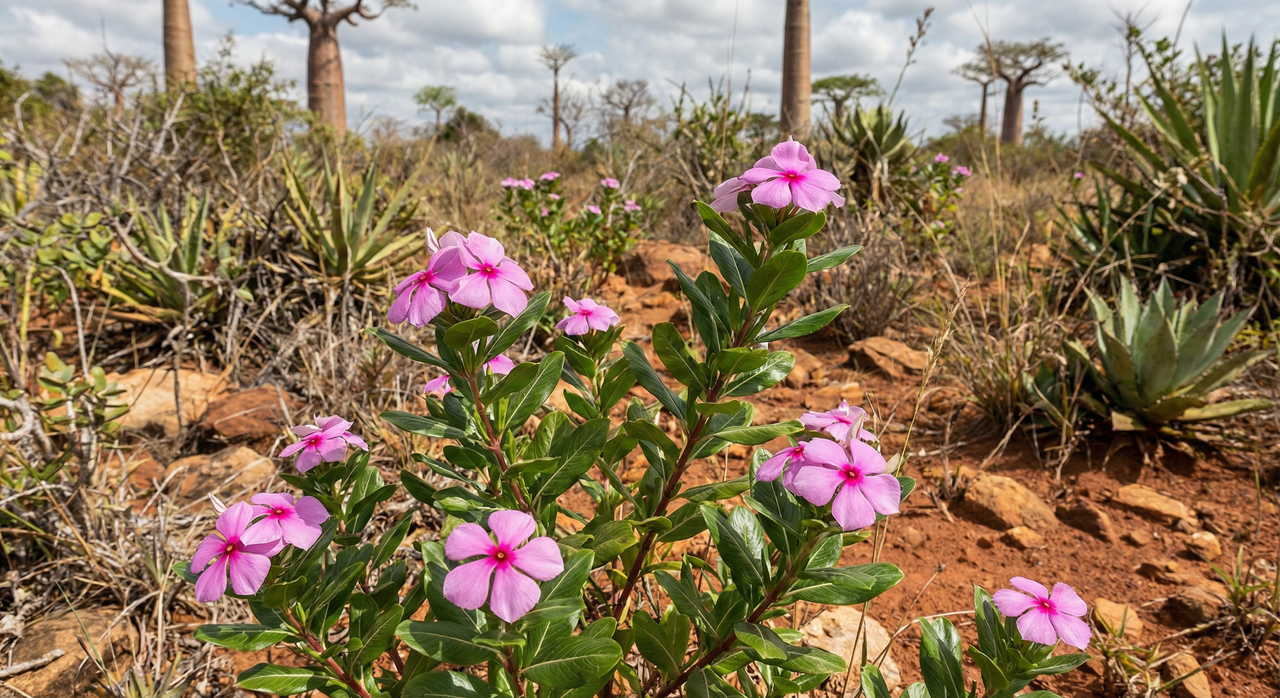
Every oncologist in the world owes something to a weedy little plant that most people grow as a bedding annual and deadhead without a second thought. Madagascar periwinkle (Catharanthus roseus) is the source of vincristine and vinblastine, two alkaloids that became cornerstones of childhood leukemia and Hodgkin's lymphoma treatment, drugs that have kept millions of people alive.[1] And yet here it is, cheerfully colonizing gas station planters and highway medians across the American South, asking nothing of us, quietly dangerous to every pet and child who might chew on it.
I've planted it in three different climates, watched it naturalize aggressively in subtropical Florida and freeze dead in a single night in coastal California, and I still find it genuinely hard to categorize. It's not a food plant. It's not a straightforward medicinal you'd brew into a tea; doing so could land you in the emergency room. It's beautiful, drought-tolerant, beloved by pollinators, and chemically armed in ways that most of us never stop to consider while we're pinching back the pink blooms. That contradiction, the cheerful annual hiding one of the most pharmacologically potent biochemistries in the plant kingdom, is exactly why it deserves a serious look before you decide where it fits in your garden.
Madagascar Periwinkle Origin and History
Botanical Background and Native Habitat
Most gardeners meet Catharanthus roseus as a cheerful bedding plant, which makes it easy to forget that the Madagascar periwinkle's scientific name points to something much older and wilder. In its homeland, this plant grows as a tender evergreen subshrub across dry, rocky scrublands, coastal dunes, and open woodlands along Madagascar's coasts and interior.[2][3] It's a plant shaped by heat, poor soil, and seasonal drought, which goes a long way toward explaining both its toughness and its deep chemical arsenal. I've grown it in Central Florida for years, and even in a climate far removed from Madagascar, that scrappy survivor instinct shows up the moment you stop watering it. It keeps going anyway.
Traditional and Cultural Uses Across the Globe
Long before Western botany noticed this plant, people in Madagascar were preparing its leaves and roots as teas and poultices for conditions ranging from diabetes and hypertension to malaria, rheumatism, and wounds.[4][5] The ethnobotanical record is geographically broad but often frustratingly thin, with accounts that are anecdotal, conflicting, or simply underdocumented. That's typical of plant knowledge that moved through oral tradition and colonial-era filters. What we do know is that similar uses appeared independently across the Philippines, parts of Africa, the Caribbean, and South Asia, each tradition arriving at this plant through its own logic.[6][7]
In India and Sri Lanka, the symbolism runs deep. Pink and white flowers appear in Hindu rituals and Diwali garlands, carrying meanings of purity, protection, and eternal love, while Malagasy healing ceremonies incorporated the plant in ways that blurred the line between medicine and spiritual practice.[8][9] When Carl Linnaeus formally described it as Vinca rosea in 1753, he was cataloguing a plant that had already accumulated centuries of human relationships.[10] From there, horticultural trade and colonial distribution carried it worldwide, until it naturalized across tropical and subtropical regions from the Caribbean to the Pacific islands, becoming invasive in several of them.[11]
From Garden Ornamental to Medical Breakthrough: The Modern Story
Here's the ecological tension I find genuinely fascinating: in its native habitat, Madagascar periwinkle is a pollinator magnet, drawing in butterflies, bees, and hoverflies with reliable nectar and pollen.[12] Transplant it beyond those shores and the story shifts. In many introduced tropical regions it forms dense monocultures that crowd out native flora and disrupt the very pollinator networks it once supported, though in the continental U.S. its invasive status is limited, appearing on watch lists in Florida and California rather than as a full-scale threat.[13][14] I still grow it in my own garden for its pollinator value, but I deadhead religiously and avoid letting it self-seed near natural areas.
The chemical defenses that help this plant outcompete its neighbors are the same alkaloids, vincristine and vinblastine, that make every part of it dangerously toxic to pets, children, and adults if ingested, causing severe gastrointestinal distress, neurological effects, and potentially worse.[15][16] And those same compounds, isolated from wild Madagascar populations in the 1950s and 1960s, transformed the treatment of leukemia and Hodgkin's lymphoma. The part that stays with me is that the knowledge enabling those discoveries traced directly to traditional use, yet Madagascar received no royalties, no benefit-sharing, and no formal acknowledgment while wild populations continued to face habitat loss from deforestation.[17] As someone who cares about the integrity of ethnobotanical knowledge, I think that context belongs in any honest account of this plant's history.
Today, commercial cultivation meets over 95% of global demand through farms producing more than 10,000 tons of dry leaves annually, and institutions like Kew Gardens, the Missouri Botanical Garden, and the Royal Horticultural Society (which gave the cultivar 'Albus' its Award of Garden Merit back in 1993) recognize it for both ornamental and medicinal merit.[18][19] In my experience, the white-flowered varieties like 'Albus' hold up beautifully in humid subtropical heat, staying crisp when pink selections sometimes fade. But that's a story for the varieties section.
Madagascar Periwinkle Varieties and Cultivars
The cultivar story of Madagascar periwinkle is richer than most gardeners expect. What started as a modestly variable wild subshrub in Madagascar's coastal scrublands became, through decades of intentional breeding, a palette of 15 to 20 widely recognized commercial series spanning pink, white, red, purple, and bicolor flower forms, upright and trailing habits, and meaningfully different disease tolerance profiles.[20][21] A lot of that genetic work traces back to pharmaceutical breeding programs from the 1960s and 70s, including research associated with Eli Lilly's push to maximize vincristine and vinblastine yields in leaf tissue.[22] The side effect of all that selection pressure was a pool of cultivars with unusually strong constitutions, which is part of why modern series perform so well in punishing summer heat.
Notable Cultivars and Commercial Series
For most gardeners, the first choice is between compact upright types and the newer trailing or mounding forms. The 'Titan' series runs 18 to 24 inches tall with large-faced blooms and a vigor that reads well in landscape beds from a distance.[23][24] The 'Soiree' series goes the opposite direction, trailing and mounding in a way that's genuinely useful for containers and hanging baskets. In my own trials, though, those trailing types needed much stricter attention to drainage. The first season I used 'Soiree' as a border filler in a humid mid-Atlantic summer, I lost several plants to root rot that the upright 'Titan' next to them shrugged off entirely.
My go-to for client beds in warm, wet climates is the 'Cora' series. Breeding programs specifically targeted aerial Phytophthora blight and root rot resistance when developing it,[25] and that matches exactly what I've seen in the field. I've lost too many standard vinca plantings to aerial blight after heavy summer rains to gamble on less resistant lines. 'Pacifica' is another early-blooming compact option worth knowing, and heat-tolerant series like 'Mediterranean' and 'Phoenix' can push through temperatures approaching 100°F without stalling.[24][26] All of these perform as perennials in zones 9 to 11 and as annuals everywhere cooler.[27]
For something with foliage interest, 'Peppermint Cooler' and 'Variegata' offer cream-margined leaves that photograph beautifully in mixed containers.[28] I love how the variegated types look paired with dark-leaved basils or coleus, but they grow noticeably slower than standard forms, so I stopped using them as solo groundcovers and treat them as accent pieces instead. Double-flowered forms like 'Pleniflora' exist for the collector-minded, though they're uncommon in standard retail.[28]
Sourcing Madagascar Periwinkle Plants and Seeds
Standard pink and white forms of this catharanthus are everywhere in spring. Big-box stores like Home Depot carry 4-inch starter pots for roughly $3 to $6, and one-gallon containers run $6 to $12 at most independent nurseries and specialty growers like Monrovia.[29][30] When I'm planting a client bed on short notice, grabbing 4-inch pots locally is perfectly practical for those common forms. For named series like 'Cora,' 'Soiree,' or 'Pacifica,' availability gets patchier depending on the region and season, and you'll often need to go catalog or online.[21]
Seeds from Burpee, Johnny's Selected Seeds, or Eden Brothers run about $2.95 to $5.95 per packet and give you more cultivar choices than most garden centers ever stock.[31][32][33] I order from Johnny's most springs when I want reliable germination timing, then supplement with pots from the hardware store when a design calls for more plants than I have time to start. If you're tracking down something rare from overseas, USDA APHIS generally permits import of properly declared seeds without issue, though live plants require phytosanitary certificates.[34]
When placing these varieties, always keep them strictly out of food gardens due to their toxicity. And if you're in a warm frost-free climate, check your local invasive species lists before putting it in the ground where it can self-seed freely into natural areas.
How to Propagate and Plant Madagascar Periwinkle (Catharanthus roseus)
I've started hundreds of these from seed over the years, and the thing I always tell new growers is that this species rewards attention to a few specific details while forgiving almost everything else. Get the warmth right for germination, get the drainage right in the ground, and you'll have a plant that practically takes care of itself.
Seed Biology, Morphology, and Germination Timeline
The seeds are small and distinctly handsome: ellipsoid, 2-4 mm long, dark brown to nearly black with a glossy waxy coat and faint longitudinal ridges.[2] They look almost like tiny peppercorns, and because the seedlings emerge looking surprisingly similar to miniature parsley, I label every flat carefully now. Learned that lesson after a very confusing spring.
Because Catharanthus roseus is primarily self-pollinating and self-compatible, seed-grown plants come out reliably true to type.[35][36] The key germination detail that trips up most beginners: these seeds need light to sprout, so surface-sow them without any covering.[37][38] Press them gently into moist medium and leave them uncovered. At 70-75°F (21-24°C), germination happens in 10-14 days.[39][40] I use a heat mat in my Central Florida setup because even dropping a few degrees slows things noticeably. First flowers follow in another 3-4 months from sowing, so plan accordingly.[39]
These are orthodox seeds, meaning they store beautifully: keep them in an airtight container at cool temperatures (5°C down to -20°C) with low humidity and viability stays high for 1-4 years.[41][42] I've saved seed from my favorite hot-pink selections and germinated them two or three seasons later with almost no drop in success. Each follicle can produce up to 100 seeds maturing 4-6 weeks after pollination, so a single healthy plant gives you plenty to save and share.[43] In warm climates, volunteers reliably appear around established plants each spring without any help from you at all.
Propagation Methods: Seeds, Cuttings, and Beyond
Stem cuttings are the fastest way to duplicate a flower color you love, and they succeed at a satisfying rate of 60-90% when you follow the technique closely.[44][45] Take 4-6 inch softwood or semi-hardwood cuttings with 2-3 nodes in late spring to early summer, strip the lower leaves, dip the cut end in IBA rooting hormone at 1000-3000 ppm, and place them under a humidity dome at 70-75°F in bright indirect light. They want warmth and moisture at this stage, not direct sun.
Variegated cultivars must come from cuttings to preserve their leaf coloration; seeds won't give you consistent results.[44][46] Grafting and layering are technically possible but sit at 30-70% success and aren't worth the trouble for most gardeners. Stick with seeds or cuttings and you'll rarely be disappointed.
Soil, Site Selection, and Planting Technique
If there's one thing I'd put in bold letters at the top of every Madagascar periwinkle care sheet, it's this: drainage is non-negotiable. In my early years I lost more of these plants to overwatering and waterlogged soil than to any disease or pest combined. Learning to let the top inch of soil dry completely between waterings, and amending any heavy beds with perlite or coarse sand, transformed my results almost overnight.[47][48] Sandy or loamy textures with modest organic matter are ideal; this plant actually performs well in relatively poor soil, which makes sense given its native habitat in Madagascar's rocky coastal scrublands.[2][39]
Soil pH should fall between 6.0 and 7.0 for best performance.[49][50] I've seen the iron-deficiency chlorosis that shows up in alkaline soils, that tell-tale yellowing between the leaf veins, and a simple soil test before planting saves a lot of frustration. For heavy clay situations, work in sand, perlite, or pine bark before anything goes in the ground.[47][51] For containers, a mix of peat or coco coir, perlite or vermiculite, and some coarse sand gives roots exactly the airy, free-draining environment they need. Choose a spot with six or more hours of sun daily; in intensely hot climates, some afternoon shade keeps flowering strong without scorching the foliage.
Spacing and Establishment for Healthy Growth
Standard-size cultivars go in at 12-18 inches apart, which matches their mature footprint and, just as importantly, keeps enough airspace between plants to discourage fungal problems in humid summers.[47][49] I've experimented with tighter 10-inch grids in larger beds when I wanted a fuller, carpet-like effect, and it works beautifully in dry weather, but I always watch for increased powdery mildew pressure when summer rains arrive. Dwarf types can go 8-12 inches apart; in row plantings, leave 18-24 inches between rows for easy access. In containers, one plant per 6-8 inch pot is comfortable, or space them 8-12 inches apart in larger planters.[52][44]
Start seeds indoors 10-12 weeks before your last frost date and transplant only after cold weather has genuinely passed, once seedlings reach 3-4 inches tall.[52][44] In temperate gardens the plant runs a 4-6 month annual cycle; in zones 9-11 it behaves as a short-lived perennial, flowering almost continuously and self-seeding to form naturalized patches over time.[47][53] That self-seeding is genuinely delightful to watch, though in Florida it's worth keeping an eye on where seedlings pop up given the plant's monitored invasive potential. In a well-prepared bed with proper drainage and the right spacing, these plants fill in beautifully without becoming aggressive or leggy, which puts them in a very different category from some of the more exuberant tropical spreaders I've worked with.
Madagascar Periwinkle Care Guide
Two things will make or break your plant: light and water. Get those right and the plant is remarkably self-sufficient. Get either one wrong and you'll be reading the symptoms sections of this guide wondering what happened. Everything else, fertility, temperature management, seasonal decisions, follows from that central pair.
Sunlight Requirements and Light Adaptation
Give Catharanthus roseus a minimum of six hours of direct sun daily, and more is almost always better.[47][54] Plants pushed into partial shade will tell you quickly: the stems elongate, flowers thin out, and the whole plant develops that hollow, apologetic look that no amount of fertilizer corrects. I've learned to evaluate a potential planting spot by watching it through the morning, because this plant actually tracks the sun throughout the day, leaves subtly reorienting to maximize light capture.[55] If I notice a spot where the leaves barely need to move because the light is consistently good, that's where the plant will earn its keep. If they're working hard by nine in the morning and losing the battle by noon, I reconsider. The only caveat is temperatures pushing above 90°F combined with intense midday sun, which can tip into leaf scorch and tip burn; I'll address that fully in the heat section.[56]
Madagascar Periwinkle Watering and Drought Tolerance
Madagascar periwinkle is adapted to semi-arid rocky soils, and its slightly succulent stems and fine leaf hairs are physical reminders that it evolved to handle dry spells, not wet ones.[57] After losing several plants to over-enthusiastic summer watering in humid conditions, I now use the finger-test religiously: if the top inch or two of soil still feels damp, I walk away.[47] About an inch per week is the right ballpark in the growing season, and in cooler weather I pull back even further.[58]
The warning signs of overwatering are unmistakable once you've seen them: lower leaves yellowing, the plant wilting even though the soil is obviously moist, and eventually the mushy blackened stem base that signals Pythium or Phytophthora rot has already taken hold.[57][59] By that point there's usually little to save. Skip overhead watering entirely to keep fungal pressure low, and if you're growing in containers or sandy soil, expect to water more frequently since both dry out faster than a good loamy bed.[60] Keep soil pH in the 6.0 to 7.0 range and the plant will thank you with consistent, uninterrupted uptake of everything it needs.[61]
Madagascar Periwinkle Fertilizing and Soil Nutrition
A balanced fertilizer, something like a 10-10-10 or 20-20-20 at half strength, applied every four to six weeks through the growing season is all this plant really needs.[62] Container plants may want feeding every two weeks since they're working with a finite soil volume.[49] The single most common mistake I see is going heavy on nitrogen: within two weeks a tidy mound can become a leggy, floppy mess with beautiful foliage and almost no flowers.[63] Phosphorus is what drives flowering and root establishment; potassium supports overall disease resistance. Keep them balanced and the plant performs. Tip the balance toward nitrogen and you're essentially growing a houseplant instead of a flowering specimen.
Micronutrients matter more than most gardeners expect. If your soil runs alkaline above 7.5, iron availability drops and you'll see that distinctive interveinal yellowing on new leaves; chelated iron corrects it faster than pH adjustment alone.[64][65] I've also noticed that plants with well-maintained iron and zinc levels show noticeably richer flower color and stronger overall vigor, as these micronutrients directly support the alkaloid biosynthesis that makes the plant medicinally significant in the first place.[66] One firm rule: never fertilize during drought or a heat spike. Salt accumulates, leaf margins scorch, and you'll create problems that take weeks to reverse.[67]
Heat and Frost Tolerance in Catharanthus roseus
This plant's sweet spot is 65 to 80°F during the day with nights that drop into the mid-60s, a temperature profile that mirrors coastal Madagascar.[68] It handles sustained heat up to about 95°F reasonably well, and short spikes toward 104°F are survivable if it has moisture and some midday relief.[39] Seedlings are the most vulnerable; germination shuts down above 95°F and young transplants can show oxidative stress and chlorophyll loss before you'd notice anything was wrong on an established plant.[69] In my experience the real recovery happens overnight. A plant that looks wrung out by four in the afternoon can bounce back completely by morning if the temperature drops into the 60s.[70] Frost is a completely different story: damage begins at 50°F and anything below freezing is lethal, showing up as dark mushy lesions and blackened foliage with no recovery path for the affected tissue.[47]
Madagascar Periwinkle Annual or Perennial: Seasonal Rhythm and Overwintering
Whether this plant comes back next year depends almost entirely on where you garden. In zones 10 and 11 it's a true polycarpic perennial, flowering continuously for multiple years without a dormant period.[47] In zones 9 it can sometimes survive a mild winter with root protection, rewarding patience in spring if the roots stayed above 50°F. In zones 8 and cooler, treat it as a three-to-six month annual and plan accordingly.[71]
If you're determined to overwinter a container plant, bring it indoors before nights consistently drop to 50°F, set it in a bright south-facing window at 60 to 75°F, and water very sparingly until spring.[72] A two-to-three inch mulch layer over in-ground roots offers marginal protection against light frost but won't save a plant from a hard freeze.[73] I always label overwintered pots clearly because by January they look exactly like dead sticks, and it's easy to assume they didn't make it before they've had a real chance to break dormancy.
Pruning, Maintenance, and Growing Tips for Madagascar Periwinkle
Pinch young plants when they reach four to six inches tall. It feels counterintuitive to remove healthy growth, but that single intervention is what separates a dense, floriferous mound from a sparse, single-stemmed plant by midsummer.[27] Deadheading spent blooms regularly keeps the flush continuous and discourages self-seeding, which matters in warm climates where this plant can naturalize aggressively.[74] If a plant goes leggy mid-season despite good light, cut it back by a third to a half; it recovers quickly and the regrowth tends to be bushier than the original form. A light mulch layer conserves moisture, moderates soil temperature, and suppresses weeds, tying all three of the plant's core needs together in one simple task.
Harvesting Madagascar Periwinkle (Catharanthus roseus)
Before anything else: every part of this plant is toxic. The alkaloids that make Madagascar periwinkle so medically significant are present throughout the stems, leaves, flowers, and seeds, and none of it is safe to eat. I keep mine clearly labeled in my landscape and away from pets and children. That reality shapes every harvest decision here.
When to Harvest Madagascar Periwinkle: Timing and Visual Cues
Under full sun and warm conditions, expect first flowers roughly 8-12 weeks from sowing.[40][47] In cooler climates or shadier spots that timeline stretches out noticeably. Here in Central Florida, plants on the warm end of that range bloom fast, but I've learned to watch the pods carefully once the rain picks up, because they don't wait.
Seed pods develop quickly once a flower is pollinated and the petals drop. From anthesis to a mature pod takes roughly 25-30 days, sometimes up to 45 under variable conditions.[75][60] That's fast compared to something like milkweed, which holds you in suspense for weeks longer. Full seed harvest is typically possible about 3-4 months after sowing.[76] For medicinal leaf collection, commercial growers target young foliage 6-10 weeks after transplanting, and time the bulk of their harvest to the peak summer heat when bisindole alkaloid content is highest.[77][78] That's a professional operation, not something most home growers are doing.
How to Harvest Madagascar Periwinkle Safely and Sustainably
For ornamental purposes, snip individual flowers when they're fully open to enjoy the color in arrangements.[79] Seed saving is where most home growers get more intentional. Watch the slender paired pods: when they shift from green to brown and dry, collect them promptly before they split.[47][80] Once they dehisce, the seeds scatter fast.
If you're growing medicinally at a research or commercial scale, sustainable leaf harvest means removing no more than 30-50% of the foliage at a time to allow vigorous regrowth.[81] I've seen firsthand that stripping too much foliage in the heat of summer causes real setback; the plant stalls, flowering drops off, and you've undermined the whole production cycle. Wear gloves regardless of what you're harvesting.
Expected Yields and Seed Pod Characteristics
The paired follicles are slender and elegant, each one holding numerous small seeds that mature reliably through that rapid 25-30 day development window.[75] A single healthy plant produces a generous number of pods across the season, so seed saving is genuinely rewarding. What you won't get is anything edible. The plant's bitter alkaloids permeate every tissue, and no part of madagascar periwinkle has culinary application. The glossy leaves and faintly sweet floral fragrance can make it seem approachable, and I always note in my garden that it can look deceptively like certain edible herbs in its juvenile stage. Positive identification and a firm non-edibility rule are the baseline here, always.
Madagascar Periwinkle Preparation and Uses
Is Madagascar Periwinkle Edible? Toxicity and Safety Warnings
No. Every single part of Madagascar periwinkle, leaves, stems, roots, flowers, fruits, seeds, and sap, is toxic to humans and animals and should never be consumed under any circumstances.[82][83][84] The alkaloids responsible are heat-stable, meaning cooking or boiling does nothing to neutralize them.[85][86] Anyone who has ever read about detoxifying bitter plants by blanching or boiling them should set that thinking aside entirely here. Ingestion can cause nausea, vomiting, abdominal pain, diarrhea, dangerously low blood pressure, neurological effects, cardiovascular complications, and in extreme cases, death.[83][87] There are no established culinary uses whatsoever, no edible parts, and no FDA-recognized food application for this plant.[88]
As a landscape designer, I specify Madagascar periwinkle regularly for hot, humid borders and pollinator beds because the glossy foliage and nonstop color are genuinely hard to beat. Every client handout I give includes an explicit safety note: strictly ornamental, keep children and pets away from the planting. The flowers carry a mild, slightly sweet fragrance with fresh green undertones that varies by cultivar,[39] and I'll admit that scent does nothing to signal danger. The underlying taste is something else entirely: intensely bitter from the more than 70 identified bioactive alkaloids concentrated throughout the plant tissue.[89][90] I've encountered that bitterness while propagating cuttings and deadheading, when sap contacts fingers that then touch the face. It's unpleasant and it lingers. Consider that a built-in warning.
One identification issue I always flag in client gardens is the potential for confusion with Vinca minor or Vinca major, which share a similar growth habit and flower form.[38] I label all periwinkle-type plants clearly and explain the difference during walkthroughs, because misidentification in a foraging context could have serious consequences. The bottom line on edibility: there isn't one. Treat this plant the same way you'd treat a beautiful but clearly hazardous shrub.
Traditional and Modern Medicinal Preparations
Traditional communities in Madagascar and within Ayurvedic practice have used Catharanthus roseus for centuries to address diabetes, hypertension, infections, and menstrual irregularities, typically through preparations that avoided direct ingestion of raw plant material.[91][92] That cultural knowledge matters, but it shouldn't be read as a green light for home experimentation. The same alkaloids that earned this plant a place in traditional medicine, particularly vincristine and vinblastine derived from precursor compounds vindoline and catharanthine, are the ones that make self-administered preparations genuinely life-threatening.[93][94] In pharmaceutical settings, controlled extraction under strict laboratory conditions yields purified compounds used in modern chemotherapy protocols. That process requires precision equipment, rigorous quality control, and medical supervision. A home decoction has none of those safeguards, regardless of dosage.
References in the ethnopharmacological literature to leaf infusions in the range of one to two cups daily from ten to twenty grams of dried leaves[55] should be understood as historical documentation, not instructions. The same alkaloids present in a tea are present in the raw leaf. Brewing them in hot water doesn't change that, and the symptoms of poisoning I described above apply equally to a homemade infusion as to a bite of the plant. I think of this similarly to other potent medicinals I grow: the precision required for safe use belongs entirely to trained practitioners and pharmacists, not to my kitchen.
The contraindications here are serious and specific. Pregnant individuals should avoid this plant completely, in any form, because the research on miscarriage risk and potential for birth defects is clear enough that I won't hedge it.[88][85] The same applies during breastfeeding, for children, and for anyone on medications with known interaction risks. If you grow Madagascar periwinkle, grow it for its ornamental beauty and its remarkable place in botanical and pharmaceutical history. Leave the medicinal applications entirely to oncologists and researchers. That's not a limitation; it's just the truth about what this plant is.
Madagascar Periwinkle Health Benefits and Medicinal Uses
Few ornamental plants carry chemistry as consequential as Catharanthus roseus. What looks like a cheerful bedding plant is, at the molecular level, a remarkably complex alkaloid factory, and understanding that chemistry is the only way to make sense of everything else about this species: why it became famous, why it saves lives, and why it can kill a child or a dog if they chew on it.
Key Phytochemicals: Indole Alkaloids and Supporting Compounds
Madagascar periwinkle synthesizes over 70 monoterpenoid indole alkaloids (MIAs), including vincristine, vinblastine, ajmalicine, serpentine, catharanthine, vindoline, and tabersonine, alongside flavonoids, phenolic acids, terpenoids, and tannins.[95][96][97] Leaves carry the highest alkaloid concentrations (0.2-1.5% dry weight), followed by roots, seeds, and flowers, with fruits containing the least.[95] The most celebrated of these, vincristine and vinblastine, are dimeric alkaloids assembled from catharanthine and vindoline precursors via the strictosidine pathway, yet they exist in only trace amounts: somewhere between 0.0002 and 0.005% of dry weight.[98][99] The plant didn't develop these compounds for our benefit; they're ecological defenses that deter herbivores and insects in its native Madagascar scrubland.[100]
I find this kind of chemical ecology genuinely fascinating, and it maps onto something I've noticed with other medicinal plants I grow. Stressed rosemary produces more essential oils; drought-hardened echinacea tends to be more phytochemically potent. The same logic applies here. Alkaloid production in C. roseus peaks under cooler or drier conditions, at temperatures of 20-30°C with full sun and well-drained, slightly acidic soils (pH 5.5-6.5).[55] For pharmaceutical cultivators, genetic selection and hydroponic systems can push yields 20-50% higher than field-grown plants,[101] but I want to be direct: none of this is information for home experimentation. Understanding it is just context for why this species became so medically important. Flavonoids like kaempferol and quercetin glycosides contribute additional antioxidant activity (leaves carry roughly 50-100 mg/g total phenolics),[102] but they're supporting players. The alkaloids are the story.
Medicinal Research and Pharmacological Actions
The clearest and most unambiguous statement in the entire pharmacological literature on this plant is this: vincristine and vinblastine are FDA-approved chemotherapeutic agents used to treat leukemia, lymphoma, and Hodgkin's lymphoma.[103][104] They work by binding to β-tubulin, blocking microtubule polymerization, and preventing the mitotic spindle from forming during cell division, essentially freezing cancer cells mid-division.[105] That mechanism is one of the most studied in oncology. The traditional leaf decoction practices documented in Ayurvedic medicine and African and Malagasy folk systems for diabetes, hypertension, and malaria are what first drew researchers to the plant,[106] and those traditional signals helped point scientists toward alkaloids that turned out to be genuinely extraordinary. That's a meaningful piece of ethnobotanical history. Attempting to replicate any of those traditional preparations at home would be dangerous, a point I'll return to below.
Beyond its oncology legacy, research has documented several secondary pharmacological actions. Extracts inhibit the NF-κB inflammatory pathway and reduce cytokines including TNF-α and IL-6, suggesting anti-inflammatory potential,[107] and flavonoids alongside alkaloids like vindoline show antioxidant activity in standard assays.[94] Antimicrobial work has found low minimum inhibitory concentrations against Staphylococcus aureus and Candida albicans.[108] Antidiabetic potential involves AMPK activation and inhibition of α-glucosidase, with hypoglycemic effects in animal models, though human clinical trials remain limited.[109] Ajmalicine contributes hypotensive effects as an alpha-adrenergic antagonist,[110] and there are preliminary signals for sedative and wound-healing effects, though the evidence is largely rodent-based and mixed.[111] Antimalarial potential has appeared in early studies but remains inconclusive.[112] Most of these secondary findings are in-vitro or small animal studies. Promising, but nowhere near the strength of evidence behind the vinca alkaloids in cancer treatment.
In my years designing medicinal-themed gardens, I've found that some of the most pharmacologically potent plants sit in that uncomfortable middle ground between genuinely therapeutic and genuinely dangerous. Madagascar periwinkle sits firmly there. Vincristine has a half-life of 24-85 hours with hepatic clearance and is administered under strict oncological supervision for good reason.[113] That controlled pharmaceutical context is everything. The raw plant is not a delivery mechanism; it's a liability.
Nutritional Profile
Madagascar periwinkle is not listed as an edible plant in USDA FoodData Central, and it is not consumed as food.[114] A handful of limited, non-standardized studies have reported vitamins (C, A, E, and some B vitamins) and minerals (including potassium, calcium, magnesium, and iron) in leaf tissue,[115][116] but those figures carry zero implication of safe dietary use. The same leaves that contain those nutrients contain the alkaloids that can cause seizures, bone marrow suppression, and death. Knowing that the leaf has some vitamin C is a phytochemical footnote, not an invitation to eat it. I include this only because the data exists and deserves honest framing rather than omission.
Safety Considerations and Toxicity
Every part of this plant is toxic to humans, dogs, cats, livestock, and children.[117][118] The vinca alkaloids, concentrated most heavily in the leaves, disrupt microtubule formation and arrest cell division throughout the body. Ingestion causes:
- severe gastrointestinal distress (nausea, vomiting, diarrhea, abdominal pain)
- neurological effects including tremors and seizures
- hypotension
- bone marrow suppression.
The plant is contraindicated in pregnancy and breastfeeding due to teratogenic and mutagenic risk, and it interacts dangerously with other chemotherapy agents and blood pressure medications.[123][124] The fact that alkaloid levels vary by season, tissue, and growing conditions doesn't reduce risk; it just means you can't reliably predict dosage from any home preparation, which makes it more dangerous, not less.
I always label toxic ornamentals in client gardens, and Madagascar periwinkle gets a clear warning marker wherever I use it. It's a beautiful plant and a genuinely important one in modern medicine, but that importance lives entirely within controlled pharmaceutical extraction of purified isolates, not in anything a home grower should attempt to replicate.[125] Wear gloves when handling it, keep it away from children and pets, and if accidental ingestion occurs, call Poison Control immediately.
Madagascar Periwinkle Pests and Diseases
Natural Defenses and Pest Resistance
Madagascar periwinkle comes to the garden with its own chemical armor already strapped on. The same alkaloids that make it medically significant also function as feeding deterrents, and the plant layers these chemical defenses alongside physical ones: glandular trichomes on leaf surfaces and the emission of volatile organic compounds that actually recruit natural predators of herbivores.[126][127] Compounds like ajmalicine contribute to leaf toughness and herbivore resistance, and certain cultivars show measurable partial resistance to aphids, with the milky sap doing a reasonable job of gumming up small mouthparts if a colony is caught early.[128] I find it similar to what I see on milkweed: the plant's chemistry buys time, but it doesn't grant immunity.
Common Pests and Management
When environmental stress tips the balance, the armor shows its gaps. Aphids, whiteflies, mealybugs, thrips, and spider mites are the usual suspects,[129] with spider mites escalating fastest in dry heat. In my Central Florida beds, the week after a summer thunderstorm dries out, the leaf undersides look dusted with fine copper grit. I've learned to hit them with a hard jet of water on alternate mornings before the population explodes. Thrips and aphids deserve extra attention because they double as virus vectors, bridging into disease territory quickly if ignored.[130] For management, I stay within an IPM framework: proper spacing and morning watering as the cultural foundation, ladybugs for aphid pressure, and insecticidal soap or neem oil for anything heavier.[131] Broad-spectrum sprays undermine the plant's own predator-recruitment signals, so they're genuinely counterproductive here.
Disease Resistance and Major Diseases
The alkaloids that deter insects do essentially nothing against fungal pathogens, so disease resistance here is entirely stress-dependent.[132] The most destructive disease I've encountered is Fusarium wilt, caused by Fusarium oxysporum f. sp. catharanthi, which moves through the vascular tissue and collapses plants rapidly in warm, humid conditions.[133] I'll say it plainly: once you see vascular yellowing with that characteristic internal browning, the plant is almost always a total loss. Solarizing problem beds and working Trichoderma into potting mixes before planting is non-negotiable prevention. Root rot from Phytophthora or Pythium follows any drainage failure, with the tell being mushy roots and yellowing catharanthus roseus leaves that wilt despite wet soil.[134] After losing a planting to this in my first season, I moved everything into raised beds with heavy perlite and haven't looked back. Powdery mildew appears as a white coating on foliage during cooler, drier stretches,[135] while leaf spot diseases from Alternaria, Cercospora, and bacterial Xanthomonas show up when air circulation is poor.[136] Viral diseases including Tomato spotted wilt and Cucumber mosaic virus, both transmitted by the insects discussed above, cause mosaic patterning and stunting that's easy to mistake for nutrient deficiency.[137]
Integrated Management and Prevention
The cultural practices that keep madagascar periwinkle healthy are genuinely simple:
- well-drained soil
- 12-18 inch spacing for airflow
- morning watering at the base rather than overhead
- removal of infected debris
- rotation away from previously affected beds.
Madagascar Periwinkle in Permaculture Design
Before you place any plant into a guild, you have to ask whether your climate will even let it live. With Madagascar periwinkle, that question carries more weight than usual, because its medicinal power, its ecological risks, and its ornamental value are all tied to the same underlying chemistry. Getting the placement right means thinking about hardiness first, then function, then the honest question of whether it belongs in your system at all.
Climate and Hardiness Zones
Catharanthus roseus is a native of Madagascar's warm, seasonally dry landscapes, and that origin tells you almost everything about where it will thrive. It's a true tender perennial in USDA zones 9-11, where mild winters let it persist year after year as a woody-based subshrub.[39][47][141] North of zone 9, it's treated as an annual, which is fine for ornamental use but changes the calculus entirely if you're designing around it as a persistent guild member.
Its sweet spot is 70-85°F; it handles heat up to 100°F in full sun as long as drainage is impeccable.[39][142] On the cold end, it starts struggling below 50°F and dies outright around 28-32°F.[39][142] I think of it the way I think about basil or angelonia: if you'd bring those in before the first frost, you'd do the same for this one. In zone 8 or the northern fringe of zone 9, overwintering with heavy mulch, cloches, or a container move indoors is possible, but success is genuinely variable, and wet soil during a cold snap is usually fatal.[142][143] For most permaculture designers outside the humid subtropics and tropics, it's a seasonal presence rather than a structural one.
Ecosystem Functions and Pollination Services
The alkaloids vincristine and vinblastine that make this plant medically famous evolved as herbivore deterrents, not pharmaceutical gifts, and they do that job well in the landscape while leaving bees and butterflies largely unaffected.[47] The deeper medicinal chemistry is covered elsewhere; what matters here is that its chemical defenses don't compromise its pollination services.
Those services are genuinely worth noting. The flowers are insect-pollinated, with a long corolla tube, exserted stamens, and nectar running at 20-30% sugar per bloom, conditions that bees and butterflies respond to strongly.[47][144][2] It flowers most heavily under day lengths of 12-14 hours and temperatures between 68-86°F, which in practice means a long, productive bloom season through warm summers.[2][145] In my Central Florida landscapes I've watched the pink-flowered cultivars reliably draw more butterflies and bees than white ones through the long humid summers, which aligns with documented pollinator preference for pink over white blooms. Pairing it with marigolds, basil, or lavender can extend those benefits by supporting a broader beneficial-insect community.[146]
It's drought-tolerant once established and forms mycorrhizal associations that improve phosphorus uptake, two traits that make it a low-input plant once settled into well-drained soil.[147] The complication is allelopathy: it produces root exudates that can inhibit germination and growth in neighboring plants, and it sets seed prolifically, with those seeds often moved by animals.[148] Both traits affect how and where you site it.
Forest Layer, Guilds, and Design Considerations
At 1-3 feet tall with a fibrous, relatively shallow root system, Madagascar periwinkle sits in the low herbaceous layer, functioning best as a groundcover or border plant in full sun.[47][149] It's native to open, disturbed habitats, not forest understories, and while it tolerates partial shade, flowering drops off significantly. That habitat preference already starts to narrow where it realistically fits in layered systems.
The harder limits are toxicity and invasiveness. It has documented invasive potential in parts of the southeastern US and other warm regions, and every part of the plant is toxic if ingested.[150][151] Early in my design career I placed it too close to edible companions and watched it spread aggressively by seed into the kitchen garden beds over a single season. That experience permanently changed how I zone medicinal plants. The same alkaloids that make this a pharmaceutical powerhouse make it one I treat with real caution around children, pets, and food crops. In most mixed food forests or family-oriented edible gardens, those risks outweigh the benefits.
Where it does work well is in dedicated ornamental or medicinal borders in warm climates, physically separated from edibles and high-traffic areas. Its intercropping potential exists,[152] but long-term guild performance data is thin, and the allelopathic pressure on neighbors is a real design constraint. If your zone, your site, and your goals align with a contained medicinal planting, it can be a beautiful and ecologically productive addition. If you have young children, free-ranging animals, or edibles nearby, keep this one in a pot or leave it out entirely.
The Plant That Taught Me Respect Isn't the Same as Affection
I've grown Madagascar periwinkle in three different gardens across two climate zones, and I still feel a complicated pull toward it. It's cheerful and tough and asks almost nothing of you. But I keep it behind a low stone border away from my food beds, and I've never once let a child wander past it unsupervised. Some plants earn their place not because they're easy to love, but because they remind you that the garden doesn't owe you simplicity.
Sources 152
- Catharanthus roseus: A Review of Its Ethnobotany, Phytochemistry and Pharmacology ↩
- Catharanthus roseus - Madagascar periwinkle ↩
- Catharanthus roseus - Plant Finder ↩
- Ethnobotany of Catharanthus roseus in Madagascar ↩
- Ethnobotany of the Madagascar Periwinkle (Catharanthus roseus) ↩
- Traditional Uses of Catharanthus roseus in Africa ↩
- Traditional Uses of Vinca rosea in Indian Medicine ↩
- Traditional Uses of Catharanthus roseus in India ↩
- Ethnobotany of Madagascar Periwinkle ↩
- The History of Catharanthus roseus ↩
- Catharanthus roseus (Madagascar Periwinkle) ↩
- Invasive Species Specialist Group - Global Invasive Species Database ↩
- Catharanthus roseus (Madagascar Periwinkle) ↩
- Catharanthus roseus ↩
- Ecological Role of Alkaloids in Catharanthus roseus ↩
- Madagascar Periwinkle ↩
- Royal Botanic Gardens, Kew: Compounds and Medicines ↩
- Catharanthus roseus (Madagascar Periwinkle) ↩
- USDA PLANTS Database Profile ↩
- Royal Horticultural Society (RHS) Cultivar Register ↩
- UF/IFAS Extension Publication: Catharanthus (Madagascar Periwinkle) ↩
- Breeding History of Catharanthus roseus for Alkaloid Production ↩
- Periwinkle (Catharanthus roseus) Varieties and Cultivation ↩
- Growing Catharanthus roseus: Varieties and Care - University of Florida IFAS Extension ↩
- Disease Management in Catharanthus - American Society for Horticultural Science ↩
- Periwinkle Cultivars: Growth and Performance - Ball Seed Company ↩
- Vinca (Catharanthus roseus) - University of Florida IFAS Extension ↩
- Royal Horticultural Society - Catharanthus roseus ↩
- Catharanthus Roseus - Madagascar Periwinkle ↩
- Periwinkle Plants for Sale ↩
- Catharanthus Roseus Seeds ↩
- Periwinkle Seeds ↩
- Periwinkle Seeds ↩
- Importation of Plants and Plant Products ↩
- Embryology of Catharanthus roseus (L.) G. Don ↩
- Mating Systems in Madagascar Periwinkle ↩
- Propagation of Madagascar Periwinkle: Seed Dormancy and Storage ↩
- Catharanthus roseus - Missouri Botanical Garden ↩
- Catharanthus roseus - North Carolina Extension Gardener Plant Toolbox ↩
- Catharanthus roseus - Growing Guide ↩
- Royal Botanic Gardens Kew - Seed Information Database ↩
- FAO Genebank Standards for Plant Genetic Resources ↩
- Reproductive Biology and Seed Viability in Catharanthus roseus from Madagascar ↩
- Propagation of Ornamental Plants: Catharanthus roseus ↩
- Horticultural Propagation Techniques for Catharanthus ↩
- Grafting Techniques for Ornamental Plants ↩
- Catharanthus roseus - Missouri Botanical Garden ↩
- Catharanthus roseus Growing Guide - University of Florida IFAS ↩
- Soil pH Effects on Catharanthus roseus ↩
- Catharanthus roseus Growing Guide - University of Florida IFAS ↩
- Nutrient Management for Vinca ↩
- Catharanthus roseus - Missouri Botanical Garden ↩
- Florida Invasive Plant Council - Species List ↩
- Royal Horticultural Society (RHS) Plant Advice ↩
- Light Adaptation in Catharanthus roseus ↩
- Heat Stress in Ornamental Plants ↩
- University of Florida IFAS Extension - Catharanthus roseus ↩
- Catharanthus roseus - RHS Gardening ↩
- Missouri Botanical Garden Plant Finder ↩
- Catharanthus roseus Production Guide ↩
- Salinity Tolerance of Ornamental Plants ↩
- Missouri Botanical Garden - Catharanthus roseus ↩
- Nutrient Management for Ornamental Plants ↩
- RHS Catharanthus roseus plant care ↩
- Micronutrient Deficiencies in Ornamental Plants ↩
- Alkaloid Biosynthesis in Catharanthus roseus: Nutrient Influences ↩
- Nutrient Management for Floriculture Crops ↩
- Catharanthus roseus (Madagascar Periwinkle) ↩
- Effects of Heat Stress on Growth and Physiology of Catharanthus roseus at Different Developmental Stages ↩
- Cultivar Evaluation for Heat Tolerance in Ornamental Periwinkle (Catharanthus roseus) ↩
- Catharanthus roseus - Missouri Botanical Garden Plant Finder ↩
- Overwintering Perennials: Catharanthus roseus - University of Minnesota Extension ↩
- Catharanthus roseus: A Review of Its Cultivation and Climate Requirements ↩
- Pinching Techniques for Annual Flowers ↩
- Phenology and Seed Production in Catharanthus roseus ↩
- Catharanthus roseus (L.) Don ↩
- Effect of Storage and Harvest Time on Alkaloid Content in Catharanthus roseus ↩
- Seasonal and ontogenic parameters for harvesting Catharanthus roseus - ScienceDirect ↩
- Catharanthus roseus (Madagascar Periwinkle) Plant Finder Details ↩
- Harvesting and Storing Periwinkle Seeds ↩
- Optimal Harvest Timing for Catharanthus roseus in Ornamental and Medicinal Use ↩
- Missouri Botanical Garden Plant Finder ↩
- Catharanthus roseus Toxicity - Poison Control ↩
- Catharanthus roseus Poisoning - Royal Horticultural Society ↩
- Catharanthus roseus: A Review on Ethnopharmacology and Pharmacology ↩
- Catharanthus roseus (Madagascar Periwinkle) - An Overview ↩
- Catharanthus roseus Toxicity and Alkaloids - PubMed ↩
- Vinca Alkaloids and Toxicity - National Center for Complementary and Integrative Health ↩
- U.S. National Library of Medicine - Alkaloids in Catharanthus roseus (PubMed) ↩
- Traditional Uses and Phytochemistry of Catharanthus roseus ↩
- Ethnobotany of Catharanthus roseus in Madagascar ↩
- Folk Remedies for Diabetes Using Periwinkle ↩
- Vinca Alkaloids - National Cancer Institute ↩
- Alkaloids in Catharanthus roseus and Their Pharmacological Importance ↩
- Catharanthus roseus: Phytochemistry and pharmacology - NCBI ↩
- Biosynthesis and regulation of alkaloids in Catharanthus roseus ↩
- Secondary Metabolites from Catharanthus roseus ↩
- Indole Alkaloids from Catharanthus roseus: Biosynthesis and Pharmacological Activities ↩
- Biosynthesis of Monoterpenoid Indole Alkaloids in Catharanthus roseus ↩
- Molecular Targets of Indole Alkaloids from Catharanthus roseus ↩
- Cultivar Variations and Hydroponic Cultivation of C. roseus ↩
- Antioxidant Flavonoids in Catharanthus roseus ↩
- Vinca Alkaloids in Cancer Therapy ↩
- Vincristine Clinical Trials Meta-Analysis ↩
- Mechanism of Action of Vincristine and Vinblastine ↩
- Review on Ethnopharmacology of Catharanthus roseus and Clinical Applications ↩
- Anti-inflammatory Activity of Catharanthus roseus ↩
- Antimicrobial Activity Review ↩
- Antidiabetic Potential of Catharanthus roseus Extracts ↩
- Catharanthus roseus: An Updated Review on Phytochemistry and Pharmacology ↩
- Analgesic Effects in Rodents ↩
- Acta Tropica: Research on Antimalarial Properties of Catharanthus roseus ↩
- Pharmacokinetics of Vincristine in Cancer Patients ↩
- USDA FoodData Central ↩
- Nutritional Composition and Phytochemical Analysis of Catharanthus roseus Leaves ↩
- Proximate Analysis of Madagascar Periwinkle (Catharanthus roseus) Leaves ↩
- Catharanthus roseus: The poisonous pretty plant ↩
- Toxic Plants: Periwinkle - ASPCA Poison Control ↩
- Human exposures to Catharanthus roseus: a case series ↩
- Vinca / Periwinkle Plant Poisoning ↩
- Toxicity of common garden plants to pets ↩
- Management of Vinca Alkaloid Poisoning ↩
- Madagascar Periwinkle - Drugs and Lactation Database (LactMed) ↩
- Catharanthus roseus (Periwinkle) - Drugs.com ↩
- Vinca Alkaloids: From Toxin to Therapy ↩
- Chemical Defense Mechanisms in Catharanthus roseus Against Herbivores ↩
- Role of Trichomes in Insect Resistance of Madagascar Periwinkle ↩
- Natural Defenses of Madagascar Periwinkle Against Aphids ↩
- Pests of Ornamental Plants: Catharanthus roseus ↩
- Insect Pests of Periwinkle ↩
- Catharanthus roseus Pest Management - University of Florida IFAS Extension ↩
- Environmental Influences on Periwinkle Resistance ↩
- Fusarium Wilt on Periwinkle (Catharanthus roseus) ↩
- Root Rot Management in Annuals - University of Florida IFAS ↩
- Powdery Mildew on Periwinkle - USDA ARS ↩
- Leaf Spot Diseases of Catharanthus roseus - Journal of Plant Pathology ↩
- Viral Diseases of Catharanthus roseus ↩
- Catharanthus roseus (Madagascar Periwinkle) - Disease Management ↩
- Integrated Disease Management for Periwinkle - Purdue University Extension ↩
- Periwinkle Varieties and Disease Resistance - UGA Extension ↩
- USDA PLANTS Database ↩
- Missouri Botanical Garden Plant Finder ↩
- USDA Plant Hardiness Zone Map ↩
- Royal Horticultural Society Plant Profile ↩
- USDA PLANTS Database ↩
- Gardening Guide: Pollinating Periwinkles ↩
- Mycorrhizal Associations in Catharanthus roseus ↩
- USDA PLANTS Database - Catharanthus roseus ↩
- Kew Science: Plants of the World Online ↩
- CABI Invasive Species Compendium ↩
- Missouri Botanical Garden Plant Finder ↩
- Intercropping Systems Involving Catharanthus roseus ↩