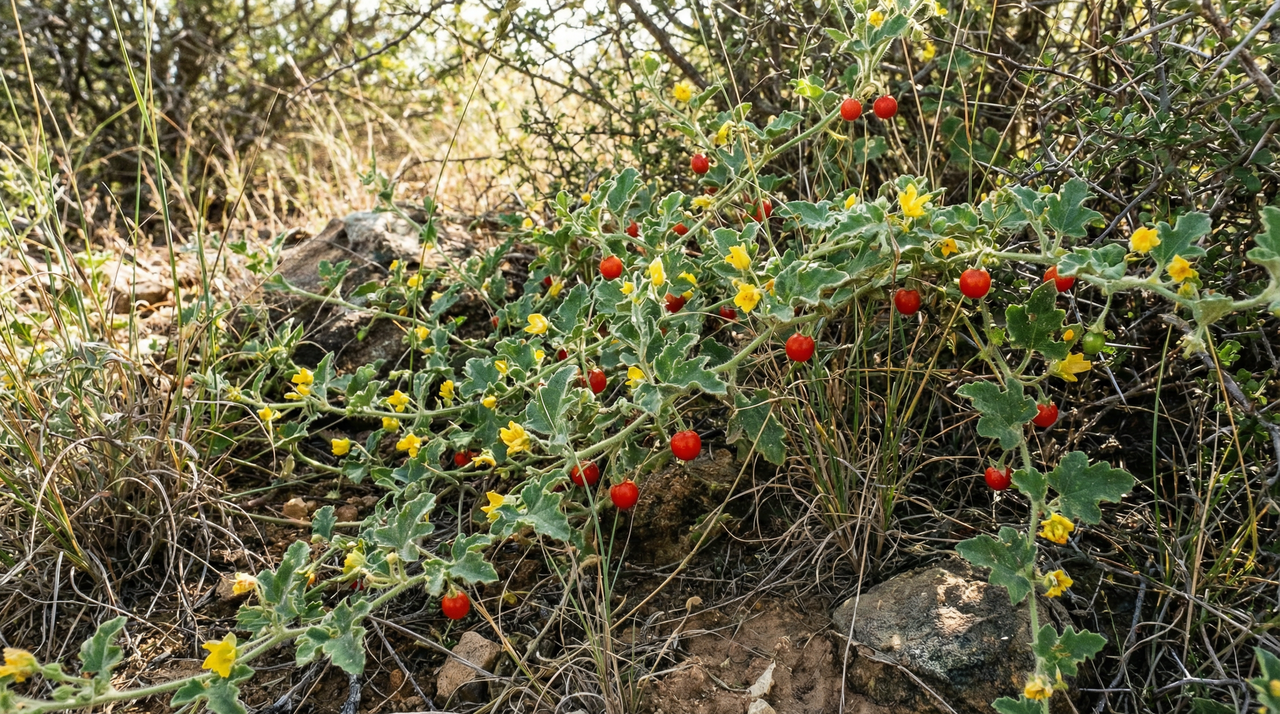
Nobody talks about this plant, and I think it's because nobody can agree on what to call it. Melothria maderaspatana, Cucumis maderaspatanus, Mukia maderaspatana, mukta sangri, Madras pea pumpkin: same scrambling little vine, half a dozen names, and a taxonomic history that's been revised so many times even the databases contradict each other. I've watched people walk right past it in south Indian kitchen gardens, assuming it was just another weedy cucurbit climbing the fence. It is weedy. It is a cucurbit. But dismissing it on those grounds is like ignoring a first-edition book because the cover's worn.
Here's the thing that stopped me cold when I first started digging into this plant: those small, jewel-bright fruits hanging off the vine like tiny ornaments aren't just edible, they're also mildly toxic if you get the timing wrong. The same cucurbitacins that make an overripe fruit bitter enough to trigger vomiting are present in concentrations that drop sharply when the fruit is young and green. Traditional cooks in Tamil Nadu have known this for generations, harvesting at exactly the right moment for pickles and curries, while the rest of the world hasn't even learned the plant's name yet. That tension between food and hazard, between weed and medicine, is exactly what makes this one worth understanding properly.
Origin and History of Madras Pea Pumpkin (Mukia althaeoides)
Botanical Background and Taxonomy
Before you can grow this plant, look it up, or even buy seeds, you need to make peace with its identity crisis. Madras pea pumpkin goes by a staggering number of scientific names: Mukia althaeoides, Mukia maderaspatana, Melothria maderaspatana, Cucumis maderaspatanus, and Mukia scabrella have all appeared in databases and literature for the same species.[1][2][3] I've spent more time than I'd like to admit cross-referencing these synonyms when searching seed catalogs or tracking down ethnobotanical research, and knowing all of them is genuinely practical, not just academic. The current accepted name in most major databases is Mukia althaeoides, but you'll still encounter Melothria maderaspatana most frequently in older medicinal literature.
The first formal scientific description came from Linnaeus the Younger in 1783, based on specimens collected in Madras, India, which explains the "maderaspatana" that follows the plant through so many of its synonyms.[4] It's a member of the Cucurbitaceae family, native across southern and eastern India (Tamil Nadu, Kerala, Andhra Pradesh, the Eastern Ghats), Sri Lanka, Bangladesh, Myanmar, and Thailand, with the USDA classifying it as non-native in regions where it has naturalized beyond that range.[1][5] In those native habitats it shows up in disturbed areas, forest edges, scrublands, and roadsides, behaving primarily as an annual but occasionally persisting as a short-lived perennial where conditions stay favorable.[6]
The vine itself is fast and vigorous, climbing by tendrils to 2-5 meters and sometimes pushing toward 10 meters on a good support structure.[2] It thrives in full sun at 20-35°C in well-drained sandy or loamy soils, and its drought tolerance is genuine rather than marketing copy: succulent stems, reduced leaf area, and a deep root system with a tuberous rootstock let it push through dry spells that would flatten a cucumber.[7] In permaculture terms, that combination of fast establishment, drought resilience, and preference for disturbed ground makes it a natural candidate for filling edges and gaps in warm-climate systems.
Visual Characteristics
The plant climbs using simple or bifid tendrils from leaf axils, with slender, pubescent young stems supporting broadly ovate to triangular, cordate leaves that are often palmately 3-5 lobed with serrated margins.[8] Flowers are tiny, only 3-5 mm, yellow, and five-petaled, appearing in axillary clusters.[4] The plant is monoecious, meaning male and female flowers appear separately on the same vine, a structure familiar to anyone who has grown cucumbers or melons.[9]
Fruits are where identification gets interesting and occasionally contradictory. Most references describe small ovoid berries in the 1-2 cm range, ripening from green to a vivid orange-red.[10] Kew's taxonomic revisions note larger helmet-shaped forms, which reflects a real pattern: this species shows significant morphological variability depending on local conditions, geography, and possibly the ecotype you're working with.[11][12] In my experience with variable cucurbits, I've learned to anchor identification to the habit and fruit color rather than leaf shape alone. The orange-red berries glowing against the rough-textured, pubescent foliage in a sunny disturbed spot are far more reliable cues than trying to match a leaf outline to a herbarium illustration.
Traditional and Cultural Uses
The fruits are eaten as a vegetable across Indian regional cuisines, where the plant is known as "mukta sangri" in Hindi and turns up in pickles and curries.[13] In Telugu-speaking regions it's called "bilva kos" or "Madras cucumber," which gives you a sense of how deeply embedded this vine is in South Indian food culture long before anyone thought to package it for a permaculture market.[14]
The medicinal history runs even deeper. Across Ayurvedic, Siddha, and tribal traditions in Maharashtra, Karnataka, Tamil Nadu, and the Eastern Ghats, virtually every part of the plant has been pressed into service: leaf decoctions for respiratory complaints like asthma and cough, fruit preparations for diabetes management, topical leaf and root extracts for wounds and skin infections, root decoctions as diuretics and blood purifiers, and fruit preparations for fever and gastrointestinal upset.[15][16] Folklore even records it as a remedy for scorpion stings and snakebite.[17] The breadth of that traditional use, spanning respiratory, metabolic, dermatological, and urinary systems across distinct cultural traditions, gives me real confidence in its place in a home apothecary, provided preparations are handled knowledgeably. The pharmacology behind those uses is a separate story, but the ethnobotanical record is substantial.
By the 19th century, British colonial botanists were growing it ornamentally in gardens including Calcutta.[6] That ornamental interest was mostly curiosity; the communities who had been using it for food and medicine for centuries were doing something far more practical. The plant's tendency to volunteer in agricultural margins and disturbed soils reminds me of the way I watch volunteer cucurbits colonize bare spots in my own food forest guilds. A plant that thrives where the soil has been disturbed and then feeds both people and local fauna is not really a weed; it's just a useful plant that hasn't been properly appreciated yet.
Madras Pea Pumpkin Varieties and Sourcing
Notable Varieties of Mukia althaeoides
There are no named cultivars here. No hybrid improvements, no market selections, no "improved" strains bred for uniform fruit size or longer shelf life. Madras pea pumpkin is the wild species as nature made it, and that's genuinely the full picture.[18] The closest thing to a related alternative is Mukia scabrella, a sister species with similar growing requirements, but it's even less documented in cultivation and harder to locate.[2] For most growers, Mukia althaeoides is the only viable option, and in the US, you're most likely to encounter it as a botanical garden specimen rather than a nursery offering.[19]
I've come to see this as a feature rather than a gap. Every plant I've grown from collected seed is essentially a wild-type individual, and I've noticed real variation across seedlings in fruit size and early vigor that you simply don't get from domesticated lines. Nothing has been smoothed out by generations of selection for market traits, which means the genetic toolkit that lets this vine thrive in punishing heat and humidity is fully intact. For permaculture systems in zones 9 through 11, that resilience is exactly what you want.[18]
How to Source Madras Pea Pumpkin Seeds and Plants
Mainstream nurseries don't carry this plant, and most won't have heard of it.[20] That's the reality, and it's worth knowing before you spend time calling local garden centers. Your best starting points are Sheffield's Seed Company and Eden Brothers for seeds online, with Etsy and eBay occasionally turning up small packets from specialty growers.[21][22] I've ordered from Sheffield's twice and gotten viable seed both times, though I learned quickly to label those seedling cells immediately, since the young plants look nearly identical to a couple of weedy cucurbits for the first few weeks. Seed packets typically run $5 to $15, and live plants from specialty growers, where available, tend to fall between $10 and $25, though prices shift.[22][23] I'd be cautious relying on live plant availability; seed is the more dependable route.
Botanical gardens are another underused option. Missouri Botanical Garden and Kew both hold or have held specimens, and seed exchange programs through these institutions occasionally surface for researchers and enthusiastic home growers willing to reach out directly.[24] If you're sourcing seed internationally, the regulatory picture is less complicated than people assume. The species isn't listed under CITES, it's not on the federal noxious weed list, and importing small seed packets under USDA APHIS rules generally requires only a phytosanitary certificate from the country of origin, with a possible import permit depending on where it's coming from.[25][26][27] I've gone that route from my zone 9b garden without issue. The paperwork sounds worse than it is.
Madras Pea Pumpkin Propagation and Planting Guide
When searching for seeds or propagation material, you will often find the plant listed as Melothria maderaspatana, Cucumis maderaspatanus, and Mukia scabrella, among others.[28][29] All of those names point to the same (or very closely related) plant. Once you know that, sourcing material becomes a lot less frustrating.
Seed Characteristics, Germination, and Storage
What I find genuinely exciting about this plant, especially compared to cucumbers or melons I've grown for years, is its polyembryony. A single seed can contain two to five embryos that develop from nucellar cells, which is unusual for the Cucurbitaceae family and means you often get multiple seedlings emerging from one sowing spot.[30][31] The seedlings emerge with that signature epigeal lift, and I've learned to thin early so the strongest one gets the space it needs rather than letting them compete from the start.
The seeds themselves are small, oval to elliptical, 3-5 mm long with a hard dark brown to black testa.[32][33] That hard coat is worth addressing before planting: a 24-hour soak in warm water, or light scarification, significantly improves germination rates. Aim for 25-30°C and expect germination in 7-14 days, with fresh seeds often hitting 70-85% within the first ten days.[34][35] This plant originates from warm disturbed habitats across tropical Africa, Madagascar, the Arabian Peninsula, India, and Southeast Asia,[36] so mimicking that warmth at germination isn't optional.
Seeds are orthodox in storage behavior, meaning they tolerate drying down and cold. Viability holds at 80-90% for two to five years in cool, dry conditions around 5-10°C with low relative humidity; seed banks extend that to a decade at -18°C with moisture content below 5%.[37][38] Seeds I've saved from my own plants and stored in cool basement jars with silica packets have stayed viable for three years, which matches this well. That said, I always run a quick tetrazolium stain on older seed batches before relying on them for a main planting; stained embryos go red and you know immediately what you're working with.[39] Since the plant requires insect pollination for seed set and seedlings grown from open-pollinated stock come true to type, saving your own seed is straightforward as long as no other Mukia species are flowering nearby.[40]
Vegetative and Advanced Propagation Methods
Seeds are the easiest route, but if you have access to a healthy established vine, stem cuttings give you a faster start and preserve whatever traits caught your eye. Take semi-hardwood cuttings of 10-15 cm with two to three nodes, dip in rooting hormone, and stick them in a perlite-peat or sand-peat mix under high humidity. Rooting takes two to four weeks with success rates of 70-80% under controlled conditions.[41][42] Ground layering works well too; pin a low-growing node to moist soil and adventitious roots form while the section is still drawing on the parent plant for support.
Where things get genuinely interesting for the experimentally minded grower is grafting. Madras Pea Pumpkin shows meaningful resistance to Fusarium wilt, and I've used it as rootstock for melons in trials where straight-seeded plants failed outright. Whip-and-tongue or cleft grafting at 25-30°C with high post-graft humidity for the first week gives clean unions.[43][44] Tissue culture propagation from nodal segments on MS medium with cytokinins and auxins is documented, though that's firmly in the advanced-lab category for most of us.[45] Whatever method you choose, keep temperature above 20°C; this is a frost-sensitive tropical vine and cold stalls everything.
Soil, Site Selection, and Planting Technique
Madras Pea Pumpkin wants well-drained sandy loam or loamy soil, pH 6.0-7.5, with good organic matter and genuine aeration.[46][47] In its native southern Indian habitat, it colonizes red sandy soils derived from laterite and granite, so it's accustomed to soil that drains fast and never sits waterlogged.[48] Heavy clay or compacted ground leads to root rot; the root system only penetrates 20-40 cm, so there's no reaching below a problem layer.[49]
In my experience, planting on a slight mound with compost worked in generously solves this in one step. The mound improves drainage after summer downpours, and the organic matter feeds the shallow roots through the season without pushing the overly lush leafy growth that invites disease. Give it full sun, ideally six to eight hours daily, though it tolerates partial shade.[50] USDA zones 9-11 are the sweet spot, with optimal growing temperatures between 20-35°C and annual rainfall of 500-1500 mm; zone 8 is possible with microclimate protection.[51]
Spacing, Support, and Establishment Timeline
Mature vines reach 3-5 m and need something solid to climb. Trellising isn't cosmetic here; without it, fruit touches the ground and rots, airflow collapses, and harvesting becomes a scramble through a tangle.[24] I space plants at about 15 inches on a 6-foot cattle-panel trellis and train to four main vines per plant, which keeps airflow strong enough to reduce powdery mildew pressure without constant tying. Row spacing of 4-6 feet between rows keeps things manageable.[52][53]
Start seeds indoors four to six weeks before last frost and transplant at the four-to-six-inch stage with two to four true leaves, or direct seed after temperatures have settled above 20°C. The full seed-to-harvest window runs 90-120 days. In a permaculture guild, legumes like beans are natural companions for their nitrogen contribution, or let corn do double duty as a living trellis. Avoid potatoes in the same bed to limit shared disease pressure.[51] In the tropics this vine is perennial; in cooler climates it runs as an annual, but it moves fast enough that the growing season is rarely limiting once you get the planting timing right.
Madras Pea Pumpkin Care Guide
When looking up cultivation details, keep in mind that the plant goes by Mukia althaeoides in current botanical databases, but you'll encounter it listed as Mukia maderaspatana, Melothria maderaspatana, and Cucumis maderaspatanus across seed catalogs and research papers.[54][55][56] They're all the same vine. A tropical Cucurbitaceae climber native to Africa, India, and parts of Asia, it behaves like a warm-climate cousin to the cucumbers and melons most of us already know, which gives you a useful mental template for its care.
Frost Tolerance and Hardiness Zones
This vine is unambiguously frost-tender. It needs protection once temperatures drop below 10°C (50°F) and will not survive freezing conditions.[57][58] The RHS rates it H1c, meaning half-hardy and typically grown under glass in cooler regions, and most hardiness references place it in USDA zones 9 through 12.[57][59] I'd treat that zone 9 inclusion as a best-case scenario, dependent on a warm microclimate and a dry winter. In zone 9b here in Central Florida, I handle it as a tender perennial, which really just means I pay attention to the forecast and have a plan. If you're below zone 9, grow it as an annual or plan on moving container plants indoors before temperatures crash.[55] Think of it like basil: nonchalant about heat, absolutely unforgiving about cold.
Heat Tolerance and Sunlight Requirements
Where this vine genuinely thrives is in the 20-35°C range, and it can push through temperatures up to 40°C when it has adequate water and root protection.[51] Full sun, six to eight hours daily, is the sweet spot, though in the hottest climates a little afternoon shade prevents the worst stress.[60] I've watched leaves scorch and fruit set drop off on plants left fully exposed during a Florida heat dome, and now I routinely drape 30% shade cloth over the trellis during the worst of midday heat in July and August.[61] A two-inch layer of organic mulch at the base makes a real difference for soil temperature. Morning irrigation rather than afternoon watering keeps the foliage dry heading into the hottest part of the day. One thing I learned quickly: install your trellis before you plant. This vine grabs and climbs fast, and you do not want to be wrestling supports into place around established tendrils. Space plants one to two meters apart so air can move through once they fill in.[62]
Water Needs
Like cucumbers, Madras Pea Pumpkin wants consistently moist soil without sitting in it. Overwatering causes yellowing, mushy roots, and that unmistakable sour-soil smell; underwatering shows up as wilting with curled, dry-edged leaves.[63] I use the same finger-test I apply to my cucumbers: press into the top two inches of soil, and if it's dry, water deeply. Roughly one to two inches per week works as a baseline, with established plants tolerating a gap of up to ten days in cooler or wetter conditions and seedlings needing more frequent attention.[64] Once a vine is established, it handles brief dry spells better than a young transplant will, but don't let drought stress accumulate during flowering. Cut back frequency significantly during the cooler months when growth slows.
Feeding and Soil Fertility
Fertile, organically rich soil is what this vine really wants.[47] In my own beds I rely on aged compost and well-rotted manure worked in before planting rather than reaching for synthetic fertilizers first, and in my experience the vine responds just as vigorously. For those who prefer numbers, Indian Council of Agricultural Research guidelines recommend higher nitrogen during vegetative growth, phosphorus to support roots and fruit development, and potassium for overall resilience, with micronutrients like zinc and iron corrected as needed in deficient soils.[65][66] A balanced organic fertilizer applied at planting and again at flower bud formation covers the critical windows without overcomplicating the program.
Pruning, Maintenance, and Seasonal Rhythm
Pruning for this vine is corrective rather than aggressive. Remove dead or crowded growth to keep air moving through the canopy, and trim lateral shoots after fruit has set to direct energy toward the developing fruits rather than endless vegetative sprawl.[67] Over-pruning stresses the plant and tanks yield, so I follow the same rule I use with melons: take out what's clearly unproductive and leave the rest alone.
The seasonal rhythm follows a tropical pattern. Flowering and fruiting peak during the warm wet months, tracking monsoon timing in India (roughly June through September) or summer rainfall periods in subtropical gardens.[68] Growth slows considerably in winter, and in zone 9b I treat that as a semi-dormant period: I reduce water, skip fertilizing, and if nighttime temperatures threaten to dip below 10°C, container-grown vines come inside. Under good conditions with consistent organic inputs, a healthy plant can yield between five and ten kilograms of fruit per season.[63][67] The vine thrives with 800 to 1500 mm of annual precipitation and tolerates brief dry spells once it's settled in.[63] For gardeners in zone 9 and colder, a four to six inch mulch layer over the root zone offers some protection, but honest advice is to have indoor space ready because survival below frost threshold is not guaranteed.[69]
Madras Pea Pumpkin Harvesting Guide
Madras Pea Pumpkin runs on a monsoon clock. In subtropical climates, the vine puts its energy into vegetative growth through spring, flowers at the onset of the rains in May or June, and then fruits hard through July into October.[4][70] Once you understand that rhythm, the harvest season becomes predictable rather than mysterious.
When to Harvest Madras Pea Pumpkin: Timing, Seasonal Cues, and Fruit Development
Based on what we know from related cucurbits, fruit development runs roughly 25 to 35 days after flowering.[71][72] I'll be honest with you: species-specific data on Mukia althaeoides is thin, and that window is inferred from close relatives. My experience with other monsoon-timed climbers tells me the calendar matters less than what the fruit is actually telling you. Watch for the color shift from green toward yellow-orange or red, a slight softening of the skin, and the fruit releasing easily from the vine with barely a tug. That easy-detachment test is the one I trust most.
Yield, Flavor, and Texture of Harvested Madras Pea Pumpkin
Catch them young and you're rewarded with something genuinely pleasant: a mild cucumber-melon flavor, crisp and juicy texture, and a fresh green aroma with faint citrus notes.[73][74] Wait too long and the cucurbitacins take over; the rind toughens, the pulp turns fibrous, and bitterness makes the fruit unpleasant and potentially problematic.[75][76] I've seen the same rapid decline in cucamelon and young bitter melon; once color starts changing, checking the vine every two or three days is not excessive.
A vigorous plant in good conditions can yield 10 to 20 kg of fruit in a season,[77] which sounds like a lot until you're picking these small fruits through a peak July flush and suddenly it makes complete sense. One more practical note: ripe fruits attract birds,[15] which I actually appreciate in a guild planting, but if you want the fruit for yourself, harvest just before peak color. Letting wildlife tell you when it's ready is one approach; staying a day ahead of them is another.
Madras Pea Pumpkin Preparation and Uses
Culinary Uses and Nutritional Value
When foraging or harvesting, keep in mind that Mukia althaeoides, Melothria maderaspatana, Cucumis maderaspatanus, and Mukia scabrella all refer to the same vine.[76][47] In markets and field guides you might see it called Madras cucumber or wild snake gourd, with the name shifting depending on which region you're in.[76][78] Sorting out that identity question upfront keeps you from accidentally picking a toxic lookalike.
The young leaves and tender shoots cook down like spinach or amaranth, with a slightly mucilaginous texture that I've learned to balance by combining them with stronger-flavored greens.[15][79] Malabar spinach works especially well; its body holds up against the slipperiness. For the fruits, harvest them small, under about two centimeters across, while they're still solidly green. At that stage they're crisp, mild, and cucumber-like eaten raw or tossed into a quick stir-fry or curry where they absorb surrounding flavors beautifully.[47][15] I learned the hard way not to wait for any color change: once yellow or scarlet appears, bitterness from cucurbitacins has already set in, and I won't serve them to anyone.[76][80] Even modest amounts of cucurbitacin can cause real digestive distress, so proper identification and strict timing are non-negotiable.[80]
Nutritionally the young parts are modest but genuinely useful: low in calories (around 25-35 kcal per 100g), with decent protein for a leafy green, and solid amounts of vitamins A, C, and B-complex alongside iron, calcium, and potassium.[81][82] For a foraged or food-forest crop, that's a reasonable return on zero inputs.
Traditional Medicinal Preparations
Across Ayurvedic and Siddha traditions, this plant shows up in several forms. Root and leaf decoctions (typically 20-50 ml taken twice daily), simple leaf infusions brewed like tea, crushed-leaf poultices applied directly to skin, and diluted tinctures at a 1:5 ratio have all been documented as preparation methods.[83][84] These preparations have historically addressed liver complaints, urinary problems, fever, skin disorders, and inflammation.[85][86] A simple leaf tea is the easiest entry point for a curious grower; a poultice for a minor skin irritation is another low-barrier application. That said, human clinical trials are sparse, so I'd treat this as a rich ethnomedicinal record worth respecting rather than a prescription to follow without professional guidance.
Non-Food and Ornamental Applications
When I'm evaluating a vigorous tropical vine for a trellis guild, I want to know what it does beyond food. Madras pea pumpkin covers most of the checklist: the foliage is attractive, the small flowers feed pollinators reliably, and the colorful fruits add seasonal interest against a fence or arbor in full sun to partial shade.[2] In the ground layer it stabilizes soil, builds biomass quickly, and creates habitat for small wildlife, though it doesn't fix nitrogen the way a legume would.[76] I'd compare its site behavior to an ivy gourd: genuinely useful, genuinely fast, and genuinely capable of running away from you in a warm, humid climate. In Central Florida that means giving it a defined structure and checking it regularly rather than planting it at a forest edge and walking away.
Madras Pea Pumpkin Health Benefits
Madras Pea Pumpkin sits in an interesting position that I find common among traditional medicinal plants: a long, credible folk record backed by genuinely promising lab work, but still waiting on the clinical trials that would let us speak about it with real pharmaceutical confidence. The research literature you'll find cites it variously as Mukia althaeoides, Melothria maderaspatana, or Cucumis maderaspatanus, all the same plant. Knowing that helps when you're digging through the studies.
Traditional Medicinal Uses and Modern Pharmacological Research
In Ayurvedic and Siddha traditions, this plant has been used for an impressive breadth of conditions: skin wounds, urinary disorders, respiratory complaints, inflammation, diabetes, jaundice, liver ailments, and fever, functioning variously as a diuretic, expectorant, antispasmodic, astringent, and vulnerary.[83][87][16] While an extensive list, this historical convergence of traditional uses across distinct cultures points to an active, clinically relevant phytochemical profile.
What they were working with, chemically, is a mix of flavonoids (quercetin, kaempferol), phenolic compounds, alkaloids, saponins, and triterpenoids including cucurbitacins, with the specific profile varying by plant part and how the extract is prepared.[88][83] The antioxidant activity from those flavonoids and phenolics is well-demonstrated in DPPH and ABTS assays, showing meaningful free-radical scavenging and oxidative stress prevention.[89][16] Anti-inflammatory effects have been confirmed in carrageenan-induced paw edema models, with ethanol extracts inhibiting TNF-α, IL-6, COX-2, and NF-κB pathways.[89][83] Extracts also show antimicrobial activity against both gram-positive and gram-negative bacteria including E. coli and S. aureus, and some activity against Candida albicans.[90]
The antidiabetic angle is probably the most intriguing to me, partly because I've spent time growing bitter melon (Momordica charantia) and watching how the whole Cucurbitaceae family keeps returning this hypoglycemic thread. Ethanol extracts of Madras Pea Pumpkin inhibit α-amylase and α-glucosidase with IC50 values in the 50-200 μg/mL range, which is a meaningful result for enzyme inhibition.[91][87] Analgesic effects have been shown in animal models, and preliminary cytotoxic activity against tumor cell lines via caspase-3 activation and G2/M cell-cycle arrest has been documented in vitro.[88]
Here's where I have to be straight with you, though: virtually all of this is in-vitro or animal-model data.[83][92] Claims like adaptogenic or sedative effects have essentially no rigorous validation. The lab results genuinely do align with centuries of traditional use, and that alignment matters, but robust human clinical trials simply don't exist yet. Treat this as a traditional remedy with a promising research profile, not a proven pharmaceutical.
Nutritional Profile of Madras Pea Pumpkin
Young fruits are the primary edible part, consumed raw or cooked in curries, salads, soups, and stir-fries across traditional Indian and some African cuisines, with tender leaves and shoots also used after preparation.[15] When I teach foraging workshops and someone asks about the nutritional value of wild cucurbits like this one, I always frame it the same way: modest but genuinely useful in context. The fruits are around 90% water, running 15-30 kcal per 100g fresh weight with 1-3g of protein; leaves are more concentrated, reaching 3-5g protein per 100g dry weight.[93]
The micronutrient picture is respectable for a wild green: fruits supply 20-30 mg vitamin C per 100g, beta-carotene, 300-500 mg potassium, 150-200 mg calcium, and 2-4 mg iron.[94][95] Take those figures as approximations. The species doesn't appear in USDA FoodData Central because it's never been commercially developed,[96] and values shift with soil quality, maturity, and regional conditions, with most data extrapolated from ethnobotanical studies or inferred from close relatives like Mukia scabrella.[75] That's the honest state of the data, and it's enough to make this a worthwhile addition to a tropical home garden's foraging rotation, particularly where fresh vegetables can be scarce in the hot season.
Safety Considerations and Toxicity
This is the part I don't gloss over, and neither should you. Madras Pea Pumpkin contains cucurbitacins, tetracyclic triterpenoids concentrated in unripe fruits, seeds, leaves, and roots, and levels can spike further when the plant is under stress.[97][98] Having grown plenty of cucurbits over the years, I've learned to pay attention to that sharp, persistent bitterness that signals high cucurbitacin levels; it's the plant's defense system, and it works.
Ingesting plant parts with significant cucurbitacin concentrations can cause acute poisoning: nausea, vomiting, diarrhea, abdominal pain, dehydration, and electrolyte imbalance, with symptoms appearing within 30 minutes to two hours of ingestion, and severe cases potentially involving organ damage.[99] That said, acute toxicity studies report LD50 values above 2000 mg/kg in animal models, suggesting that properly prepared traditional doses carry relatively low risk.[100][101] The operative phrase there is "properly prepared."
The plant is traditionally contraindicated in pregnancy due to possible emmenagogue effects, and should be used cautiously with children.[101] If you're on antidiabetic or diuretic medications, the additive hypoglycemic or diuretic effects of this plant are real; talk to your doctor before experimenting with it medicinally.[102] Contact with the plant's pubescent surfaces can also irritate sensitive skin.[103] Most of what we know about safety is inferred from the broader Cucurbitaceae family rather than species-specific clinical data, which is reason for caution rather than alarm, but caution nonetheless. Know your identification, harvest only young tender parts, and consult a qualified practitioner before any medicinal use.
Madras Pea Pumpkin Pests and Diseases
Disease Resistance and Susceptibilities
Madras Pea Pumpkin carries a genuinely useful wild toolkit that most domesticated cucurbits have had bred right out of them. Its phenolic compounds, including flavonoids, thicker leaf cuticles, and antifungal chemistry mean wild populations consistently show lower disease incidence than cultivated relatives.[104][105][106] The Ayurvedic tradition recognized this toughness long before anyone ran a lab assay on it.[105]
That said, I don't want to oversell the disease resistance. Downy mildew (Pseudoperonospora cubensis) hits hard under the kind of sustained humidity we get in Florida summers, and anthracnose, Alternaria leaf spot, bacterial wilt, and cucumber mosaic virus are all real threats in the right conditions.[104][107][108] Root rot sneaks in through poorly drained soil, and CMV leaves mosaic patterns and stunted growth that are hard to miss once established.[109][110] Wild ecotypes from drier regions tend to show better fungal tolerance, but no disease-resistant named varieties exist; this is still very much an under-researched minor crop and most of what we know is extrapolated from related cucurbits.[111][112]
Pest Profile and Natural Defenses
I've grown enough wild cucurbits to notice that the almost sandpapery trichomes on Madras Pea Pumpkin foliage genuinely slow early aphid colonization. That's not just a visual impression; higher phenolic content and cucurbitacins act as feeding deterrents, and field observations on related species confirm lower aphid (Aphis gossypii) and cucumber beetle (Diabrotica spp.) pressure than you'd see on smooth-leaved cultivated cucumbers.[113][114] Those cucurbitacins are biosynthesized in direct response to herbivory pressure, so the plant essentially turns up its own defenses when under attack.[115][116]
Fruit flies (Bactrocera cucurbitae), whiteflies, leaf miners, red pumpkin beetles, and spider mites are the more stubborn problems, particularly because whiteflies and mites vector CMV directly.[117][118] Under heavy regional pressure, yield losses can climb significantly, though how much depends heavily on local pest populations and season. No named pest-resistant cultivars exist; the species gets its resilience strictly from wild genetics, which is exactly why breeders are eyeing it as a parent line for transferring resistance traits into cultivated cucumbers.[119] I save seed from whichever plants show the least mite and mildew damage each season, which isn't a substitute for formal breeding but at least applies directional pressure over time.
Integrated Management Strategies
Because species-specific trials on Mukia althaeoides are sparse, the management approach I use is informed cucurbit IPM refined through years of growing similar tropical vines, and it works reliably. The fundamentals hold: two to three year rotations with non-cucurbit hosts, removing infected debris promptly, maintaining 30-45 cm spacing so air circulates freely through the canopy, and planting into well-drained loamy soil with pH around 6.0-7.5.[104][120] Even in Central Florida's summer downpours, planting on a slight mound has kept root rot from becoming the chronic problem it could be otherwise.
The plant's preferred conditions of 20-35°C and 60-80% humidity invite disease pressure during peak monsoon periods, so good airflow and avoiding waterlogged roots aren't optional.[47] Encourage ladybugs and other predatory insects first; reach for neem-based sprays only when monitoring shows an actual threshold problem rather than isolated damage.[121] The research gaps are real, but they don't leave you without options. And as breeding programs continue looking at this species as a resistance donor for cultivated crops, the wild genetic diversity preserved in your garden may turn out to be the most valuable thing you're stewarding.[119]
Madras Pea Pumpkin in Permaculture Design
Every design decision you make with Madras Pea Pumpkin flows from one central fact: this is a tropical vine that doesn't negotiate with cold. Understanding its climate requirements isn't just background information; it's the filter through which every other choice gets made.
Climate Suitability and USDA Hardiness Zones
Mukia althaeoides is at home in warm, humid tropical and subtropical climates, preferring annual temperatures between 20 and 35°C and rainfall exceeding 1000 mm per year.[1] In USDA terms, that translates to zones 9b through 11, with the sweet spot for vigorous, uncomplicated growth being zones 10 and 11.[122][2] The vine handles full sun heat impressively, thriving at temperatures up to 38°C or higher, with optimal growth kicking in somewhere between 21 and 35°C.[2] Cold is a different story entirely. It can survive brief dips to around -4°C, but prolonged exposure below 4°C causes real damage, and growth essentially stalls below 10°C.[2]
In my zone 9b garden in Central Florida, I've lost young plants to unexpected cold snaps in January. Now I start seeds indoors in late winter and hold transplants until nighttime temperatures are reliably above 50°F. In cooler regions, this plant is essentially an annual or a greenhouse subject; there's no cold-hardening trick that changes its fundamental tropical nature. Its U.S. distribution reflects this, appearing primarily in Florida and rarely elsewhere in the southern states.[123][124] That limited range also comes with a caution flag: the same conditions that make Florida ideal for growing it make it capable of escaping cultivation into disturbed areas.[2] I'll come back to that.
Ecosystem Functions and Pollination Support
The flowers on this vine are small, just 4 to 7 mm, yellow, mildly scented, and star-shaped, opening during daylight hours through the warm season.[125][126] Don't let the size fool you. After a summer rainstorm in my yard, the vine practically hums. Native sweat bees, honeybees, hoverflies, and a range of other hymenopterans and dipterans move through those flowers constantly.[127][128] For a permaculture system that relies on insect activity to pollinate cucumbers, melons, or squash nearby, having this vine in bloom through the height of summer is genuinely useful.
The ecological value extends beyond pollinators. Native across tropical and subtropical Africa, Asia, Australia, and parts of the Americas,[129][126] the plant has co-evolved with local wildlife across a huge range. Its small cucumber-like fruits feed birds and small mammals, and the dense scrambling vines provide cover and habitat for insects.[130][131] On slopes and disturbed sites, the spreading root system and rapid vegetative cover do real work in stabilizing soil and checking erosion.[130][132] Through fast biomass production and leaf-litter decomposition, it also cycles potassium and other minerals back into the soil, making it a dynamic accumulator in the classic permaculture sense. Unlike the legumes I often plant alongside it, though, it does not fix nitrogen, so I treat it as a biomass contributor rather than a fertility builder.
Forest Layer, Guilds, and Companion Planting
In a food forest, this vine occupies the vine layer, using axillary tendrils to scramble through the understory and into the forest edge, reaching 3 to 5 meters in a single season.[132][133] Think of it like a chayote or a bitter melon in terms of how it moves through space: it wants something to climb, and it will find whatever that is. In natural habitats it shows up in dry deciduous forests, scrublands, riverbanks, and disturbed areas, which tells you something useful about how adaptable it is as long as the temperature is right. It prefers well-drained sandy or loamy soils with a pH in the 6.0 to 7.5 range, full sun to partial shade, and consistent moisture, though it tolerates short dry spells once established.[132][2]
I've grown it on a trellis alongside pigeon pea and sweet potato, which is honestly a combination I'd recommend with caveats. The pigeon pea gives it a vertical structure to climb, the sweet potato covers the ground below, and the vine adds pollinator activity through the middle layer. What I didn't anticipate the first year was how aggressively it can spread once it sets seed. By midsummer I was cutting it back hard to keep it from smothering the pigeon pea's lower branches. That's now a regular part of my rhythm with this plant, and I don't resent it, but I want people to go in with clear eyes.
As living mulch or ground cover, it can work well in a defined bed with edges you're actively managing.[134][132] Paired with nitrogen-fixing companions like pigeon pea, leucaena, or cowpea, it gets the soil fertility support it can't provide itself. What I'd caution against is planting it in a low-maintenance zone and walking away. I keep mine in a single contained bed because I've seen how quickly it self-seeds in disturbed soil. In a permaculture system, that caution is more valuable than any single benefit the plant offers. The gardeners I've seen get the most out of it are the ones who treat it as a managed crop, not a plant-it-and-forget-it perennial.
The Vine That Made Me Rethink What "Useful" Looks Like
I'll be honest: I almost pulled it out the first season, convinced it was just another aggressive cucurbit eating my trellis. What stopped me was a conversation with an older Tamil woman at a farmers market who recognized it immediately, lit up, and started telling me how her mother pickled the young fruits. That exchange did more for my understanding of this plant than any database entry. Some plants earn their place through yield; this one earned mine through a story I'm still thinking about.
Sources 134
- Cucurbitaceae in India ↩
- Mukia althaeoides - Useful Tropical Plants ↩
- Plants of the World Online (POWO) - Mukia maderaspatana ↩
- Mukia maderaspatana - Wikipedia ↩
- USDA PLANTS Database - Mukia althaeoides ↩
- Flora of China - Mukia althaeoides ↩
- Melothria maderaspatana: A Rapidly Growing Cucurbit for Tropical Agriculture ↩
- Flora of Tropical East Africa: Cucurbitaceae ↩
- Cucurbitaceae: Mukia maderaspatana ↩
- Plants of the World Online (POWO) ↩
- Taxonomic Revision of Mukia and Related Genera ↩
- Morphological Variation in Cucurbitaceae Species ↩
- Historical Culinary Uses of Mukta Sangri ↩
- Ethnobotanical Survey of Medicinal Plants Used by Tribal People of Eastern Ghats, Andhra Pradesh, India ↩
- Ethnobotanical Survey of Medicinal Plants Used in Traditional Medicine in Southern India ↩
- Phytochemical and Pharmacological Profile of Mukia maderaspatana: A Review ↩
- Traditional Uses of Cucurbitaceae in Indian Folk Medicine ↩
- Plants of the World Online ↩
- Mukia maderaspatana ↩
- Cucurbitaceae Germplasm ↩
- Mukia althaeoides (Melothria maderaspatana) Seeds ↩
- Mukia Althaeoides Seeds - 10 Seeds ↩
- Buy Melothria maderaspatana Live Plant ↩
- Melothria maderaspatana - Plant Finder ↩
- CITES Species Database ↩
- Federal Noxious Weeds List ↩
- Importation of Plants and Plant Products ↩
- Medicinal Plants of India: Mukia maderaspatana ↩
- Mukia althaeoides (L.) Schult. - POWO ↩
- Polyembryony in Indian Wild Cucurbits ↩
- Seed Development and Polyembryony in Mukia maderaspatana ↩
- Flora of Tropical East Africa: Cucurbitaceae ↩
- Seed Morphology of Indian Cucurbitaceae ↩
- Seed Germination of Mukia Species ↩
- Germination Studies in Cucurbitaceae ↩
- Plants of the World Online - Mukia althaeoides ↩
- The Storage Behaviour of Seeds from Tropical Species ↩
- Genebank Standards ↩
- Seed Viability Testing in Cucurbitaceae: Tetrazolium Methods ↩
- Reproductive Biology of Mukia maderaspatana ↩
- Propagation of Melothria maderaspatana ↩
- Vegetative Propagation in Cucurbitaceae ↩
- Grafting of Cucurbits: Rootstocks for Disease Resistance ↩
- Wild Cucurbit Rootstocks: Mukia and Melothria Species ↩
- Vegetative Propagation in Cucurbitaceae ↩
- Flora of India - Mukia maderaspatana ↩
- Mukia maderaspatana (syn. Mukia althaeoides) - Useful Tropical Plants ↩
- Mukia althaeoides - Kew Science Plants of the World Online ↩
- Plant Ecology of Indian Cucurbitaceae - Journal Article ↩
- Mukia maderaspatana (Cucurbitaceae) Cultivation Guide ↩
- Growing Tropical Vines in Home Gardens ↩
- Cultivation Practices of Underutilized Cucurbits ↩
- Planting and Spacing for Vine Crops ↩
- Mukia althaeoides ↩
- Cucumis maderaspatanus (Mukia althaeoides) ↩
- Mukia maderaspatana (Ita bitter apple) ↩
- Mukia maderaspatana (Muskmelon Vine) ↩
- Melothria maderaspatana - Useful Tropical Plants ↩
- Hardiness Ratings ↩
- Growing Tropical Vines in Subtropical Climates ↩
- Heat Stress Mitigation in Horticulture ↩
- Growing Tropical Vines: Cucurbitaceae ↩
- Mukia althaeoides (Muskmelon Leaf) ↩
- Cucurbit Cultivation Guide - University of California Agriculture ↩
- Cultivation of Underutilized Cucurbits in India ↩
- Nutrient Management for Tropical Vines ↩
- Cultivation of Medicinal Cucurbits in India ↩
- Phenology of Wild Cucurbitaceae in India ↩
- Missouri Botanical Garden - Plant Finder for Mukia althaeoides ↩
- Cucurbitaceae in Indian Subcontinent: Cultivation and Harvest ↩
- Reproductive Biology of Melothria maderaspatana ↩
- Fruit Development in Wild Cucurbits ↩
- Melothria maderaspatana: A Review of Its Phytochemistry and Pharmacology ↩
- Cucurbitaceae - Royal Horticultural Society ↩
- Ethnobotanical Uses and Nutritional Composition of Mukia maderaspatana (Syn. Mukia althaeoides) ↩
- Melothria maderaspatana: The Indian Cucumber ↩
- Resilience and Yield Potential of Melothria maderaspatana in Extreme Conditions ↩
- Melothria maderaspatana - Wikipedia ↩
- Traditional Uses and Nutritional Value of Cucurbitaceae Family Plants ↩
- Cucurbitaceae Toxicity Overview ↩
- Nutritional Composition and Health Benefits of Wild Edible Plants: A Case Study on Mukia althaeoides ↩
- Antioxidant Properties and Mineral Content of Melothria maderaspatana (Syn. Mukia althaeoides) ↩
- Medicinal Plants of India: Mukia maderaspatana ↩
- Ayurvedic Medicinal Plants: Volume 2 ↩
- Medicinal plants of India: An overview of hepatoprotective activity ↩
- Cucurbitaceae in Indian Traditional Medicine ↩
- Pharmacological Review of Mukia maderaspatana ↩
- Bioactive Compounds and Cytotoxic Effects of Cucumis maderaspatanus ↩
- Antioxidant and Anti-inflammatory Activities of Melothria maderaspatana ↩
- Antimicrobial Screening of Melothria maderaspatana Extracts ↩
- Antidiabetic effects of Mukia maderaspatana and its phenolics: in vitro study on gluconeogenesis and glucose uptake ↩
- Medicinal Uses and Pharmacological Activities of Mukia maderaspatana - A Review ↩
- Nutritional Evaluation of Some Lesser Known Wild Edible Plants from Eastern Ghats ↩
- Nutritional Composition of Some Underutilized Green Leafy Vegetables in South-Western Nigeria ↩
- Mineral Composition of Cucurbitaceae Family Plants ↩
- USDA FoodData Central Search Results ↩
- Cucurbitacins: A Promising Target for Cancer Therapy ↩
- Toxicity of Cucurbitaceae Plants ↩
- Toxic Plants of North America, 2nd Edition ↩
- Toxicological Evaluation of Mukia althaeoides ↩
- Mukia maderaspatana (L.) M. Roem.: A Review of Its Phytochemistry and Pharmacology ↩
- Standardization and Diuretic Activity of Hydro-alcoholic Extract of Mukia maderaspatana Whole Plant ↩
- A review on pharmacological activities of Mukia maderaspatana ↩
- Diseases of Cucurbit Vegetables and Their Management ↩
- Phytochemical Screening and Antimicrobial Activity of Mukia maderaspatana ↩
- Wild Cucurbits as Sources of Disease Resistance ↩
- Downy Mildew on Cucurbits ↩
- Anthracnose of Cucurbits ↩
- Diseases of Cucurbit Vegetables ↩
- Diseases of Cucurbitaceae Family ↩
- Cultivation of Underutilized Cucurbits: Melothria and Mukia ↩
- Disease Resistance in Tropical Vegetables ↩
- Pest Resistance in Wild Cucurbits: A Review of Mukia and Melothria Species ↩
- Breeding for Aphid Resistance Using Wild Relatives of Cucumber ↩
- Trichomes and Chemical Defenses in Tropical Cucurbits ↩
- Herbivore Resistance in Mukia maderaspatana: Role of Phenolics ↩
- Pest Management in Cucurbitaceous Vegetables ↩
- Insect Pests of Wild Cucurbits in Tropical Asia ↩
- Cucurbitaceae: Diversity and Utilization ↩
- Integrated Pest Management for Cucurbit Crops ↩
- Cucurbitaceae: Cultivation and Diseases ↩
- Missouri Botanical Garden Plant Finder ↩
- USDA PLANTS Database ↩
- Growing Cucurbits in Florida - University of Florida IFAS Extension ↩
- Flora of China - Cucurbitaceae ↩
- Royal Botanic Gardens, Kew - Mukia althaeoides ↩
- Bee Visitation to Cucurbit Flowers in Tropical Regions ↩
- Pollination Biology of Cucurbitaceae ↩
- USDA PLANTS Database ↩
- Ecological Roles of Cucurbitaceae in African Savannas ↩
- Flora of India: Cucurbitaceae ↩
- Melothria maderaspatana ↩
- Plants of the World Online ↩
- Cucurbitaceae in Permaculture Systems ↩