Most people who've ever refinished an antique dresser or admired the warm reddish glow of an 18th-century writing desk have handled mahogany without knowing they were holding a tree on the edge of disappearing. West Indian mahogany, Swietenia mahagoni, was once so abundant across the Caribbean that Spanish colonizers reportedly used it as ship ballast because it was too common to bother selling. Within about two centuries of sustained exploitation, it was commercially extinct across most of its native range.[1] That particular arc, from ballast wood to globally protected species, is one of the more sobering stories in the history of how humans have used plants.
What I find remarkable is that this same tree now grows quietly along roadsides in Miami-Dade, shading suburban sidewalks while most passersby have no idea it's Florida's state tree, listed as Endangered within the state, and one of the few genuinely wild populations of the species left anywhere. I've stood under mature specimens in Biscayne Bay's coastal hammocks with that compound canopy filtering afternoon light overhead, and the thought that lingers isn't about furniture. It's about what a 200-year-old tree actually means in a landscape, and what it takes to earn that back.
Origin and History of Mahogany (Swietenia mahagoni)
Botanical Background and Taxonomy
West Indian mahogany carries one of the more storied scientific names in tropical botany. Formally described as Swietenia mahagoni by Carl Linnaeus in 1759, it belongs to the Meliaceae family and ranges across Cuba, Jamaica, Hispaniola, the Bahamas, Puerto Rico, southern Florida, the Yucatan Peninsula, and down through Central America to Panama, from sea level up to roughly 1,000 m elevation.[2][3] In the wild it's a semi-deciduous tree that can push 20 to 30 m tall with trunk diameters approaching 1 m, and under good conditions it can live two to three centuries or more.[4][5] I tell clients that a mahogany planted today will be a stately presence for their grandchildren, which reframes the wait as an investment in legacy rather than a drawback. Early diameter growth runs only about 0.5 to 1 cm per year, and peak seed production doesn't arrive until the tree is 50 to 100 years old.[4][6] That biological pace is a key part of why both this species and its larger South American relative, Bigleaf mahogany (S. macrophylla), are now listed as Vulnerable on the IUCN Red List and protected under CITES Appendix II.[7][8] Centuries of timber harvest targeted exactly the mature, slow-grown trees the species depends on for reproduction, leaving skewed age structures and sparse natural regeneration across much of its former range.[9]
Visual Characteristics of Swietenia mahagoni
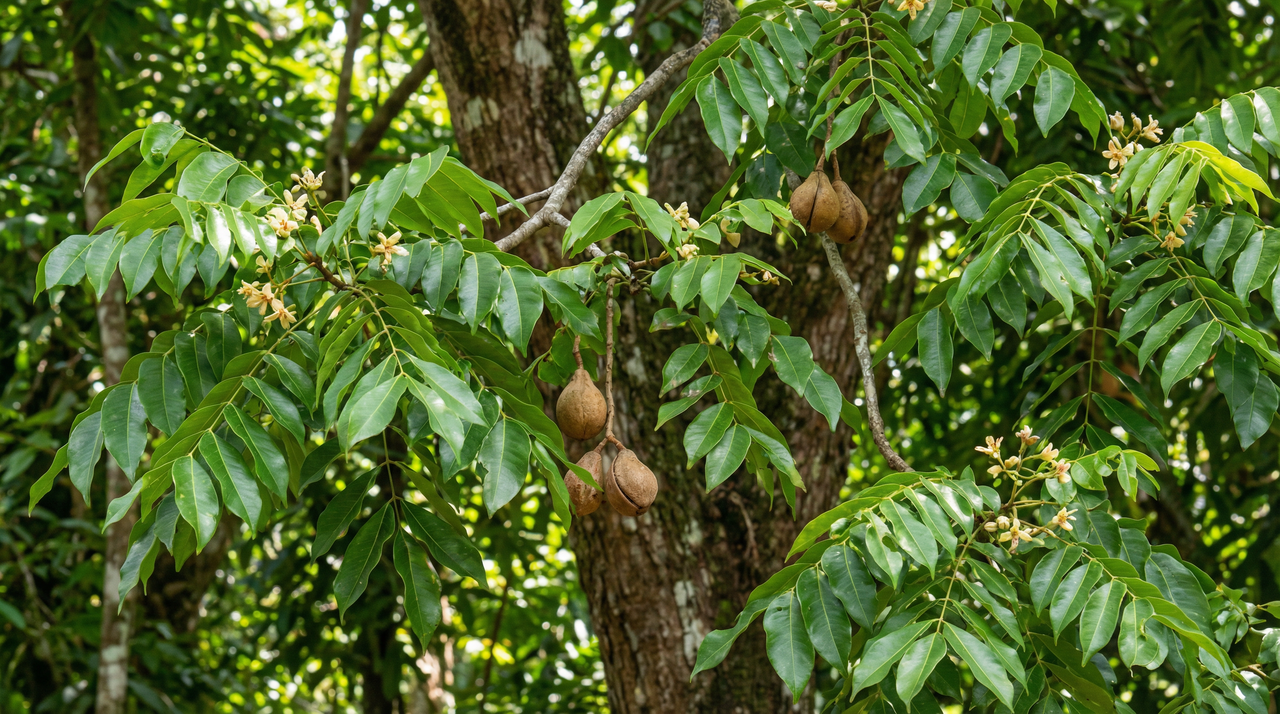
After spending time in both cultivated South Florida landscapes and remnant coastal hammocks, I've learned to read this tree from a distance by its bark alone. Young specimens have smooth, grayish trunks, but as a tree matures that bark deepens into rough, fissured plates of reddish-brown to dark brown, distinct enough that I can differentiate it from similar-looking tropical hardwoods when consulting on client properties.[3][10] The overall form is an upright tree with a straight bole and a broad, rounded crown reaching 15 to 24 m in cultivated settings, occasionally more.[11] Leaves are alternate and pinnately compound, 12 to 23 cm long, with 4 to 8 pairs of oblong-elliptic leaflets that are bright green above and paler underneath.[12] Those leaflets run 3 to 6 cm long. Put a S. macrophylla next to one in the field and the difference is immediately obvious; Bigleaf mahogany leaflets can reach 7 to 15 cm and the bark exfoliates in papery flakes to reveal orange-brown layers beneath, a visual cue the Caribbean species simply doesn't share.[13]
Flowers appear in February through April as small, fragrant, yellowish-white panicles, modest enough that most visitors don't notice them.[4] What draws attention later in the year are the woody, ellipsoid seed capsules, 5 to 15 cm long, that ripen from June through October and split open to release 50 to 70 flat, winged reddish-brown seeds into the wind.[14] Cut any branch and you'll catch a mild, pleasant scent from the heartwood, which runs reddish-brown with a fine-to-medium even grain, a density of roughly 500 to 800 kg/m³, and a resistance to decay that made it legendary in the timber trade.[15] Below ground, the tree develops a deep taproot early in life, eventually paired with extensive laterals that anchor it firmly in hurricane-prone Caribbean soils.[16]
Traditional and Cultural Uses
The word "mahogany" itself comes from the Arawak/Taíno term mahogan, and the tree was part of Caribbean life long before European contact.[17] Taíno people split logs into dugout canoes, shaped tools and shelters from the durable wood, and carved ceremonial duhos, low stools that signified chiefly rank and spiritual authority. Medicinally, bark decoctions addressed fevers and dysentery, seeds served as purgatives and anthelmintics, and leaf teas appeared in Haitian and Jamaican folk practice for diabetes and as mild sedatives.[18][19] These are strictly traditional uses; I'll save the phytochemistry discussion for the health benefits section.
Columbus's second voyage to Hispaniola in 1494 brought Europeans face-to-face with the timber, and they were not subtle about what came next. Caribbean trade, peaking in the 18th century through Jamaica and the Bahamas, supplied both Chippendale-style furniture workshops and naval shipyards with planking that was lighter, stronger, and more workable than European oak.[20] By the 1830s Caribbean stocks were largely exhausted; British Parliament had actually attempted export restrictions as early as 1721, but the commercial pressure overwhelmed those early limits.[21] Across Central and South America, the parallel story played out with S. macrophylla: Maya and Amazonian communities had long used the bark for fevers, seeds for parasites, and the wood for prestige carvings, but colonial demand stripped mature trees from the rainforest at a pace the species couldn't absorb.[22] Both species now carry that Vulnerable designation as a direct consequence.
Fun Facts and Ecological Role
Beyond its timber reputation, mahogany has an acoustic dimension that surprises most people: the genus has long been used in high-end musical instruments precisely because its density and grain produce a warm, resonant tone.[11] Ecologically, the tree's broad crown supports epiphytes, nesting birds, and mammals, while those winged samaras spinning away from capsules on a dry October day represent a finely tuned dispersal strategy that works even on open sites with moderate wind.[23] The deep taproot system I mentioned earlier also explains something I've observed firsthand after Central Florida wind events: well-sited specimens typically come through major storms with only minor branch loss, while shallower-rooted tropicals nearby sustain serious damage. That hurricane adaptation is no accident; it's baked into the species after millennia in the Caribbean.[24]
In Florida, S. mahagoni occupies coastal hammocks and dry forests, and it integrates into southern Florida gardens with relatively low invasive potential.[25][26] Because both species remain Vulnerable and require permits for international timber trade, I always recommend purchasing nursery-grown stock from reputable native-plant growers rather than imported lumber. Planting one is an act of restoration as much as horticulture, and that framing tends to resonate with permaculture designers who understand long time horizons.
Mahogany Varieties and Sourcing
Notable Varieties and Horticultural Selections of Swietenia mahagoni
West Indian mahogany, also known as American mahogany, holds the distinction of being Florida's state tree [27][3], and it's earned recognition for ornamental value in subtropical gardens too. [28] But if you come to this plant expecting a tidy list of named cultivars, you'll be disappointed. There aren't any, at least not in the traditional garden sense. [27] What exists instead are superior genotypes selected through Florida Division of Forestry progeny tests, prioritizing traits like drought tolerance, faster growth, and pest resistance from South Florida provenances. [27][29] Breeding programs are also developing disease-resistant lines specifically for conservation and restoration work. [29] After seeing restoration plantings in Florida firsthand, I now recommend seeking progeny-test stock from local native-plant nurseries whenever possible; the genetic diversity and growth rate of these Florida-selected trees are visibly superior in the first three years compared to generic seed-grown material.
Its larger relative, the Honduran mahogany tree or big-leaf mahogany (Swietenia macrophylla), follows a similar pattern. No formal horticultural cultivars exist there either; provenance selection for timber quality and disease resistance drives the breeding conversation. [30] Several botanical varieties have been proposed for the Swietenia macrophylla tree based on morphological and geographic differences, including var. macrophylla, var. macrophyllifolia, and var. macrocarpa, though that classification remains actively debated. [31] Rather than chasing those distinctions, I look for nurseries propagating from mother trees with documented pest resistance, especially given the shoot-borer pressure this genus faces. The fewer named cultivars in S. mahagoni compared to its macrophylla cousin is partly a direct consequence of its Endangered status in Florida and its CITES Appendix II protections. [32][33][27]
How to Source Legal and Sustainable Mahogany Trees
The good news for growers in Florida is that S. mahagoni is genuinely available through in-state nurseries and seed suppliers. [34] Seed packets typically run $5 to $50 for roughly 20 to 100 seeds, seedlings go for $5 to $20 each, and if you want a mature five-to-ten-foot specimen, expect to pay $100 to $500. [35][36] The Cuban mahogany tree is realistically a zones 10 to 11 plant, and Florida has the most established grower network for it in the country. [34] Bigleaf mahogany saplings from US vendors run $25 to $60 for one-to-three-foot plants, with seed packets in the $15 to $35 range. [37][38] Supply for that species is thinner; botanical gardens and research institutions are often your best bet. [39][40]
If you're importing either species or buying timber, the legal framework is non-negotiable. Both Swietenia mahagoni and Swietenia macrophylla sit on CITES Appendix II, meaning international trade requires permits. [8][41] US imports additionally require a USFWS import permit and full compliance with the Lacey Act. [42][43][44] I've helped clients navigate that permit process, and cutting corners there undermines the very conservation value we're trying to support in a permaculture system. Look for FSC-certified material or source from botanical garden consortia like Fairchild Tropical Botanic Garden, which runs an active mahogany conservation program. [45][39] Working with an endangered native tree has taught me that the best "variety" is often simply the one grown from a local, conservation-propagated source; that single sourcing decision does more for biodiversity than any breeding shortcut ever could.
Mahogany Propagation and Planting Guide
Growing West Indian mahogany from scratch is a commitment measured in decades, and every decision you make at the propagation stage either supports or undermines the tree's long-term form. I've found that understanding the seed's biology first makes every subsequent step feel logical rather than arbitrary.
Seed Morphology and Germination Requirements
Swietenia mahagoni produces winged samaras roughly 5–7 cm long, with a small seed body tucked into a thin woody capsule and a papery wing designed for wind dispersal.[10][46] What makes these seeds genuinely unusual is polyembryony: a single seed can carry anywhere from two to seven embryos, a mix of zygotic and nucellar tissue.[47] In my propagation trays, I regularly see two or even three seedlings push up from the same seed, and I always let them separate naturally before selecting the strongest for potting up. Germination is hypogeal, meaning the cotyledons stay underground while the shoot emerges, so don't be alarmed when you see only a slender stem with no obvious seed leaves above the mix.
These seeds show no true dormancy, but they're recalcitrant to intermediate in storage behavior, meaning viability drops fast after the capsules open.[48][49] Sow fresh within two to four weeks of harvest if you can. Under cool, moist storage around 5–15°C, viability can persist one to three years, but the numbers vary by lot and I've had batches fail well before that window closes.[50] Aim for 75–85°F (24–29°C) during germination, keep humidity high, and soak seeds for 24 hours before sowing; fresh seed under those conditions typically germinates in 10–21 days with 50–80% success.[49][51]
If you're sourcing seeds of Bigleaf mahogany (S. macrophylla) for comparison, note that it's monoembryonic, carries physical dormancy requiring scarification, and has a much shorter viability window, often just one to three months even with careful handling.[52][53] The two species are handled quite differently right from this first step.
Propagation Methods: Seeds, Grafting, Cuttings, and Tissue Culture
Seed sowing is the clear practical standard for home growers and small nurseries alike. Sow fresh seeds lightly covered in a well-drained medium at pH 5.5–7.5, keep the beds shaded during early germination, and plan to transplant seedlings at six to twelve months once the root system has developed enough structure to handle the move.[49][26] It's the most reliable method for getting large numbers of plants established, and for most readers, it's where the journey begins and ends.
Grafting is a different conversation entirely. Cleft, veneer, and bud grafting onto compatible Swietenia rootstocks can be used to clone trees with superior growth form or timber genetics, and some research suggests it can compress the timeline to harvest maturity down to 15–25 years.[54][55] Success rates range from 40 to 80% under controlled conditions, which is reasonable for a tropical hardwood.[56] If you're sourcing from a progeny-tested provenance and want to lock in those genetics, grafting is worth learning.
Semi-hardwood cuttings are a frustrating case study in "technically possible but rarely practical." Commercial success rates stay below 20%, and even in research settings with 3000–5000 ppm IBA, the right humidity chamber, and careful temperature control, rooting tops out around 60–70%.[57][48] I've had only limited success with cuttings myself, and I don't recommend them as a first approach. Tissue culture exists as a research tool for genetic conservation programs; it's not relevant to anyone reading a planting guide.
Two non-negotiable caveats before you get seeds in hand. Both Swietenia mahagoni and S. macrophylla are listed on CITES Appendix II, so any international movement of seeds or plant material requires documentation.[8] I only source seed from verified sustainable suppliers with proper paperwork; skipping this step risks both legal trouble and introducing poorly adapted provenances. And once your seedlings are in the nursery, the mahogany shoot borer (Hypsipyla grandella) can cause up to 90% mortality if you're not watching.[58] I lost an entire batch in my nursery once by skipping daily scouting during the first six months; the tiny larvae top-kill a seedling before you even notice the frass. Damping-off and root-rot fungi are the other early threat, particularly in humid, poorly drained conditions.[59]
Soil, Site Selection, and Light Requirements
Young mahogany plants need shade protection during their first one to two years. They react to sudden full sun much like a citrus seedling: browning, scorching, wilting.[49] I use 30–50% shade cloth for the first season and remove it gradually, exactly as I do with young avocado trees. Once established, though, this is a full-sun species that wants at least six to eight hours of direct light daily to develop its characteristic form.[27]
Soil flexibility is one of mahogany's genuine strengths. It tolerates sandy, clay, limestone, and calcareous substrates provided drainage is excellent, and it's well-suited to the shallow limestone soils of South Florida.[60] Aim for pH 5.5–7.5, a minimum soil depth of one to 1.5 meters for the taproot, and 2–5% organic matter if you can manage it.[3][4] What it absolutely will not forgive is waterlogging. If you plant in heavy clay without building raised beds or amending heavily with coarse sand, Phytophthora root rot will find you within the first two rainy seasons; I learned this firsthand on my initial planting and it's a mistake you only make once.[61] Young trees need consistent moisture during establishment (roughly one to two inches per week), but the drainage has to be there.[27]
Spacing, Planting Technique, and Early Care
Mature West Indian mahogany in cultivation typically reaches 40–50 feet tall with a canopy spread of 40–60 feet, so spacing decisions made at planting have consequences that play out over decades.[62] Plantation growers use tight initial spacing of 3×3 to 4×4 meters (roughly 625–1,111 trees per hectare) to encourage straight, competition-driven boles, then thin at ages five, ten, and fifteen years down to a final density of 400–600 trees per hectare.[63][64] For landscape or food forest plantings, I space specimens at least 25–30 feet apart to give the broad canopy room to develop without competing with neighbors.
Transplant seedlings once they've reached six to twelve inches tall and have a developed root system from potting up in stages.[49] In USDA zone 10, spring planting after any frost risk has passed gives the tree a full warm season to establish before its first cool period. Start formative pruning early, while the wood is still soft and easy to manage, removing lower branches progressively up to 4–6 meters height over the first five to ten years.[62] That structural work done in years one through ten is what determines whether you end up with a straight, high-value bole or a multi-stemmed sprawl. The tree will take 20–40 years to reach timber maturity regardless; the early pruning is the one part of that journey you control completely.
Mahogany Care Guide
West Indian mahogany evolved in Caribbean dry forests on limestone soils with 1,000 to 2,000 mm of rainfall annually, and that origin tells you almost everything you need to know about how to care for it.[65] This is a tree shaped by alternating wet and dry seasons, not constant moisture. Once you internalize that, the watering, feeding, and pruning decisions all start to make intuitive sense.
Watering Needs for West Indian Mahogany
Young trees need consistent moisture, roughly 1 to 2 inches per week, and I water mine every two to three days during active growth to keep soil moisture in that sweet spot.[66][4] Once established, the rhythm shifts entirely. Mature trees want deep, infrequent soaking to 12 to 18 inches every one to two weeks, and during Florida's dry spells I've watched properly rooted specimens go four to six weeks without irrigation and bounce back without complaint.[67] The key is always depth over frequency.
Symptoms are easy to read once you know what you're looking for. Overwatered mahogany shows persistent yellow leaves and wilting despite wet soil; underwatered trees develop crispy brown leaf tips and scorching.[17] Water when the top one to three inches of soil are dry, use rainwater where you can, and ease off during winter. The tree's well-drained, slightly acidic soil preference (pH 6.0 to 7.5) does most of the drainage work for you if you've sited it correctly.[68]
Feeding and Nutrient Management
West Indian mahogany is a moderate feeder, and that distinction matters. It needs balanced nitrogen, phosphorus, and potassium alongside micronutrients like iron, manganese, and zinc, but it doesn't demand the heavy plantation-scale inputs that Bigleaf mahogany requires.[69][70] For trees under three years, I apply a slow-release balanced fertilizer (something like 10-10-10 or 6-6-6) at about half a pound per tree, three to four times a year timed with Florida's rainy season.[71][72] Mature trees need only two applications annually, spring and fall, at two to three pounds.
I get a soil test done before I touch fertilizer on young mahoganies, especially in Florida's sandy soils where deficiencies are common and easy to misread. Nitrogen deficiency shows as uniform yellowing on older leaves; iron deficiency produces interveinal chlorosis on new growth, usually a sign of pH creeping too high; potassium deficiency shows as marginal scorch on older leaves.[4] Over-fertilizing with nitrogen is tempting when you want faster growth, but I've seen it produce lush, soft foliage that practically invites pest pressure.[69] A layer of compost and restraint during the heavy rains of summer does far less damage to local waterways than a granular dump in July.[59]
Frost Tolerance and Cold Protection
This is a strictly subtropical tree. USDA zones 10a to 11 are its comfort zone, and mature specimens may shrug off a brief dip to 28°F, but anything below 30°F will cause leaf drop and dieback, especially in young trees.[73][4] I'd compare it to citrus in that respect: both species send you the same panicked signals at similar temperatures, and both reward the same protective measures. I grow mahogany only in the warmest pocket microclimates in my landscape, where a south-facing wall or dense canopy buffer gives a few critical degrees of buffer.
If a cold night threatens, three to four inches of mulch around the base, a frost blanket over young trees, and avoiding any overhead irrigation beforehand are your best tools.[74][75] Hold off on pruning until after all frost risk has passed. Bigleaf mahogany shares a nearly identical cold threshold, so the same precautions apply to both species.
Heat Tolerance and Summer Care
Heat itself isn't the enemy once the tree is established. Mahogany is native across coastal hammocks in southern Florida, the West Indies, and into Central America, and it handles temperatures up to 40°C (104°F) with adequate moisture.[73] The seedling stage is another story. I've watched unprotected young trees show leaf scorch and wilting when temperatures climbed above 95°F without supplemental shade, so I now routinely run 30 to 40 percent shade cloth over new transplants through their first summer.[76][77] Deep weekly watering of 20 to 30 liters per established tree, a thick mulch layer, and windbreaks on exposed sites round out the summer care routine. Once roots are down, mahogany becomes a genuinely resilient tree in South Florida's brutal summers.
Pruning, Maintenance, and Seasonal Rhythm
Formative pruning is where patience pays off. Young trees need staking with bamboo or wooden stakes tied loosely to encourage a straight leader, and starting around age two or three, I remove competing lower branches to promote a single dominant bole beginning at two to three meters.[4][78] The visual difference between a tree shaped early and one left to branch low is striking: the neglected tree looks shrubby and awkward, while the trained specimen develops that tall, elegant form mahogany is known for. This formative work is most valuable through the first five to seven years, and I do mine during the dry season to reduce disease risk at the pruning wounds.[79]
Understanding the tree's natural rhythm makes timing everything easier. In drier areas, mahogany behaves as semi-deciduous, dropping leaves December through February before flushing new growth and flowering in March and April.[4] I do my most meaningful pruning right after that spring leaf flush, when the growth direction is clear and easy to read. In consistently moist sites the tree stays largely evergreen. After the formative years are behind you, maintenance becomes genuinely minimal, which is one of the real rewards of investing early attention in a long-lived specimen like this.
Harvesting Mahogany (Swietenia mahagoni)
Early in my career, I made the mistake of thinking mahogany was like other landscape trees I worked with, where you plant it and eventually get something back on a reasonable timeline. A client in Sarasota once asked me how long before their newly planted mahogany would be harvestable timber, and I fumbled the answer. Here's what I should have said: in a well-managed plantation under optimal conditions, Swietenia mahagoni reaches commercial maturity in 25 to 40 years, with natural forest trees often requiring 50 to 60 years to produce high-quality sawlogs.[80][81] I now tell every client upfront: plant mahogany only when long-term stewardship is genuinely the goal.
Timing and Maturity Indicators for Timber and Seed Harvest
The benchmark for harvest readiness is a minimum diameter at breast height of 50 to 60 cm, with optimal harvest age falling between 40 and 60 years, depending on regional guidelines and site quality.[78][82] Under good conditions the tree averages roughly 1 to 1.5 cm of diameter growth per year, so that 50 cm threshold is genuinely a multi-decade commitment.[80][53]
Seed collection follows a completely different timeline, which matters to anyone growing mahogany for propagation or restoration work. From flowering to capsule maturity takes roughly 150 to 180 days.[83] In Central Florida, I watch the mahogany seed pods through late spring and into summer: the woody capsules shift from green to yellowish-brown, and once they begin to crack open (dehisce), you have a narrow window to collect before the winged seeds scatter on the breeze. In Florida and the Caribbean that window typically runs May through August.[83] Timing timber harvest after seed dispersal is intentional, not incidental. It protects natural regeneration.
Sustainable Harvesting Techniques and Post-Harvest Processing
Sustainable mahogany harvesting is professional-scale, regulated work, not something that happens with a chainsaw on a Saturday afternoon. FAO and ITTO guidelines call for selective logging that removes no more than 10 to 20 percent of the canopy per harvesting cycle, preserving forest structure and allowing the ecosystem to recover.[82][84] In my consultations I come back to those numbers every time the conversation drifts toward more aggressive cutting, because the research and decades of tropical forestry practice both confirm that exceeding that threshold undermines the long-term health of the stand. After felling, lumber is air-dried to a moisture content of 12 to 15 percent, standard practice for tropical hardwoods that ensures dimensional stability.[82]
Yield Characteristics, Wood Quality, and Non-Edible Parts
Let me be direct about something that surprises a lot of people: mahogany has no edible parts. Bark, leaves, and seeds all taste intensely bitter and astringent because of their limonoid and tannin content, and there's no documented culinary use for any of them.[85][86] Having worked with a lot of tropical and native species, I can tell you firsthand that any attempt to use the seeds or leaves as food is a quick lesson in just how bitter a plant can get. The medicinal dimensions of those compounds are discussed elsewhere in this profile; the harvest story here is timber.
And it's genuinely excellent timber. Mature trees produce wood averaging around 585 kg/m³, with heartwood making up more than 70 percent of the bole, a proportion that increases as the tree ages.[78] That increasing heartwood proportion and density in older trees is exactly why the 40 to 60 year wait matters: the rich, stable lumber I recommend for fine furniture and regenerative woodlots simply doesn't exist in a 20-year-old tree. The mahogany seed pods themselves are woody capsules 5 to 13 cm long, holding flat, reddish-brown winged seeds 5 to 7 cm in length that are optimized for wind dispersal rather than anything else.[73][65] Knowing what those capsules look like when ripe is useful both for seed collection and for confirming that dispersal has occurred before any timber work begins.
Mahogany Preparation, Medicinal Uses, and Safety
Why Mahogany Is Not Considered Edible
I research plants for permaculture systems for a living, which means I spend a lot of time asking one foundational question before anything else: can people eat this? With Swietenia mahagoni, the answer is an unambiguous no. There are no ethnobotanical records of any part being used for nutrition, no culinary traditions anywhere in its native Caribbean range, and no evidence that indigenous communities ever ate any portion of the tree.[85][60] I would never place this species near an edible polyculture, and that position is well supported by what we know about its chemistry.
The woody seed capsules and their winged seeds are the parts most likely to tempt curious foragers, but consuming them risks real harm. The seeds contain tetranortriterpenoids and limonoids that can cause nausea, vomiting, and potential liver damage.[87][88] The leaves do contain flavonoids, tannins, and fatty acids including oleic and linoleic, but the bitter astringency from those same limonoids puts them firmly outside any food use category.[89][90] These compounds are pharmacologically active, which matters for the medicinal discussion below, but pharmacological activity is precisely what disqualifies them as food ingredients. The related Bigleaf mahogany (Swietenia macrophylla) follows the same pattern across all parts, and its wood dust adds a separate concern: respiratory irritation, skin reactions, and allergic responses in sensitive individuals.[91] If you're milling or sanding any true mahogany, wear a proper respirator; I've seen workshop visitors go without one and regret it by the end of the afternoon.
Traditional Medicinal Preparations
The traditional story of mahogany as medicine belongs to the bark and leaves of Swietenia mahagoni and, in the broader genus context, to the seeds of Swietenia macrophylla. Caribbean and Central American communities have long prepared bark and leaf preparations for anti-inflammatory, antidiabetic, and antimalarial purposes, while the Bigleaf species' seeds appear in traditions targeting respiratory complaints and parasites.[92][93] None of this crosses into food territory; these are medicinal traditions, and that distinction matters.
Typical traditional preparations involve decoctions of dried bark or leaves, with folk patterns citing roughly 2 to 5 grams of dried bark per liter of water boiled and consumed two to three times daily, or leaf infusions using around 1 to 3 grams of dried leaf per cup.[94][87] Tinctures and capsule preparations also appear in ethnobotanical literature. I study these traditions with genuine interest, but I always defer to licensed practitioners for any medicinal application, and I'd encourage anyone reading this to do the same. These are not standardized dosages, and the safety caveats are serious: traditional mahogany preparations are not appropriate for pregnant women, children, or anyone with liver conditions, and long-term use without professional supervision carries real risk.[95][96]
Non-Food Industrial Applications
Mahogany seed oil, composed primarily of oleic, linoleic, and palmitic acids, does find its way into industrial uses, just not culinary ones. It's pressed for varnishes, soaps, and cosmetic formulations.[85][90] In my restoration planting work, I've specified mahogany as a canopy species and admired the finished timber in furniture and architectural details. The grain really is extraordinary. But sourcing it responsibly means navigating CITES Appendix II restrictions, and that conservation context shapes every decision about this tree, from specification to harvest. Its value is as a long-lived, ecologically significant hardwood, and that's where mahogany earns its place.
Mahogany Health Benefits and Medicinal Uses
Most people encounter mahogany as furniture or flooring, not as a medicine cabinet staple. But across the Caribbean and Central America, Swietenia mahagoni has a deep and serious ethnopharmacological history that long predates European contact. Traditional healers used bark decoctions as anti-inflammatory, analgesic, and fever-reducing preparations, while leaf infusions served as stimulants and seeds were employed against malaria and intestinal parasites. The documented folk applications span an impressive range: fever, pain, dysentery, skin infections, anemia, diabetes, hypertension, anxiety, insomnia, wounds, rheumatism, and various gastrointestinal complaints.[97][98][99] That breadth of traditional use is exactly what tends to attract pharmacological researchers, and in mahogany's case, the chemistry gives them plenty to work with.
Key Phytochemical Compounds in Mahogany
The signature compounds here are limonoids, a class of tetranortriterpenoids concentrated in the seeds and wood. Swietenia mahagoni produces a distinctive suite including swietenine, swietenolide, gedunin, photogedunin, 3-episwietenolide, and swietemahonin.[100][101] These aren't incidental metabolites; they're defense compounds the tree produces to deter insects, fungi, and bacteria, and they happen to have significant bioactivity in mammalian systems as well. The leaves skew toward flavonoids, quercetin and kaempferol chief among them, along with phenolics like gallic and ellagic acid that drive strong antioxidant activity. Bark is where tannins and tetranortriterpenoids concentrate, which maps neatly onto the traditional use of bark decoctions as the primary medicinal preparation.[101][102]
Something I've noticed in my own landscape work in Central Florida is that mahogany grown in leaner, well-drained soils tends to produce foliage and seeds that smell noticeably more pungent than trees in richer, irrigated settings. That observation actually lines up with the research: phytochemical profiles in this genus vary significantly with soil nutrients, drought stress, season, and even tree age, with younger trees producing higher concentrations of defensive limonoids and terpenoids.[103][104] These same limonoids also explain the tree's exceptional natural resistance to fungal decay and insect herbivory, part of what makes it such a dominant canopy species in tropical forests.[105] The chemistry that makes the wood valuable is the same chemistry that makes the medicine interesting, and, as I'll get to shortly, the same chemistry that makes casual internal use inadvisable.
Scientific Research on Mahogany's Pharmacological Effects
The strongest and most consistent preclinical findings center on anti-inflammatory activity. Extracts from bark, seeds, and leaves all inhibit pro-inflammatory cytokines (TNF-α, IL-6, IL-1β), suppress COX-2 enzyme activity, and block NF-κB pathway activation, with effects confirmed in carrageenan-induced paw edema models in rodents.[106][107] Analgesic effects follow a similar pattern: rodent models using formalin and acetic acid tests show dose-dependent pain inhibition comparable to aspirin, likely through opioid receptor modulation.[108] The related Bigleaf mahogany (S. macrophylla) shows parallel results across tail-flick and writhing tests, suggesting these are genus-wide properties tied to shared limonoid chemistry rather than species-specific quirks.[109]
Antioxidant activity is well-documented, with phenolic compounds and flavonoids scavenging free radicals in DPPH and ABTS assays at IC50 values comparable to ascorbic acid, and evidence of Nrf2 upregulation linking antioxidant effects to both anti-inflammatory and antidiabetic potential.[110][111] Antimicrobial activity against Staphylococcus aureus, Escherichia coli, and Candida albicans has been demonstrated with MIC values of 50-200 μg/mL, attributed to the combined action of limonoids, flavonoids, and tannins disrupting cell membranes and inhibiting biofilm formation.[110][112] Antidiabetic potential is also emerging, with leaf extracts showing α-glucosidase inhibition via triterpenoids and saponins; in S. macrophylla, blood glucose reductions of 25-35% were observed in streptozotocin-induced diabetic rats.[113][114] More preliminary findings include sedative and anxiolytic effects comparable to diazepam via GABAergic modulation, antispasmodic action through calcium channel blockade, diuretic activity comparable to furosemide, and wound-healing properties tied to collagen synthesis and fibroblast proliferation.[115][116] Antimalarial limonoids, specifically swietenine and swietenolide from seeds, show efficacy against Plasmodium falciparum with IC50 values of 5-10 μg/mL in genus-level studies.[117]
That's an impressive list, and I understand why it generates excitement. But the preclinical research is promising, not conclusive, and I always remind clients and readers that these findings have not been confirmed in large human trials. Virtually all of this data comes from in-vitro assays and rodent models; comprehensive toxicological profiles and clinical validation don't yet exist for mahogany preparations.[118][119] The chemistry is real. The traditional use is real. The clinical proof simply isn't there yet.
Nutritional Profile of Mahogany Seeds and Leaves
Mahogany is a timber and medicine tree, not a food crop, and authoritative databases including USDA FoodData Central contain no nutritional entry for any part of the plant.[120] That said, analytical studies do show that seeds contain notable mineral concentrations (potassium 1,200-1,500 mg/100g, magnesium 200-300 mg, iron 10-15 mg), around 20-30% protein, and a seed oil rich in oleic and linoleic fatty acids.[121][122] Leaves provide useful levels of calcium, potassium, and iron alongside high flavonoid and phenolic content.[123] Occasional traditional uses, like roasting seeds as a rough coffee substitute or using leaf decoctions for digestive complaints, are medicinal gestures rather than nutritional ones.[124] The nutritional data is worth knowing as context, but it doesn't change the fundamental identity of this plant, and it doesn't make the seeds safe to eat casually.
Safety Considerations and Potential Toxicity
This is where I want to be direct. Swietenia mahagoni shows low acute toxicity at moderate doses, but the same limonoids and quassinoids that drive its medicinal potential (present at 0.2-0.5% w/w in seeds) can cause gastrointestinal upset, potential hepatotoxicity, and neurotoxicity at higher doses.[125][126] It's a similar situation to how we approach unripe persimmon or bitter melon preparations: the bioactive compounds are the point, but dose and preparation matter enormously, and seeds in particular are not generally considered safe for ingestion. If you are pregnant, on blood thinners, or have liver concerns, mahogany preparations are not appropriate, full stop. The plant has documented emmenagogue and potential abortifacient effects, possible antiplatelet activity that could compound anticoagulant drugs like warfarin, and CYP3A4/CYP2C9 enzyme inhibition that could interfere with a range of medications.[127][128] Children under 12 should avoid it entirely.
For woodworkers and landscapers handling the timber, the risks are different but real. I've done plenty of light sanding on mahogany boards and can confirm that even fine dust irritates skin quickly. Occupational exposure is associated with allergic contact dermatitis, respiratory sensitization, and asthma-like symptoms, and OSHA and NIOSH both recommend masks, gloves, and proper ventilation when working with this wood.[129][130][131] Worth noting too: Caribbean-grown specimens tend to carry higher limonoid concentrations than Florida-grown trees, juvenile foliage concentrates more defensive compounds than mature leaves, and misidentification with look-alikes like Cedrela odorata or Khaya senegalensis can complicate safe use assessments.[132][133] Consult a qualified practitioner before any internal use, and treat the dust with the same respect you'd give any potent tropical hardwood.
Mahogany Pests and Diseases
West Indian mahogany has what I'd call honest resistance: moderate overall, but highly variable depending on what pathogen you're dealing with and, more critically, where and how you've planted the tree.[48][134] In my experience, most of the serious trouble I've seen on mahogany traces back to a siting mistake, not some inherent weakness in the tree.
Major Diseases of Mahogany Trees
The most dangerous disease on the list is Phytophthora root rot, caused by Phytophthora cinnamomi, which can kill trees outright when it takes hold.[135][136] I lost several young transplants to it years ago in a low corner of a landscape that looked fine on paper but held water after heavy rain. Once I moved to raised planting areas and deep sandy substrate, I haven't seen root rot recur. The lesson stuck: drainage isn't a preference for this tree, it's a prerequisite. Close behind Phytophthora is Ceratocystis wilt, caused by Ceratocystis fimbriata, which moves through the vascular system causing cankers and progressive decline.[137] Both diseases are far more common in cultivated plantings than in natural forests,[138] and both accelerate when temperatures climb above 25-30°C paired with humidity over 80% and poorly drained, acidic soils below pH 5.5.[48][139]
Foliar diseases are less lethal but worth watching. Anthracnose from Colletotrichum gloeosporioides causes leaf spotting, twig blight, and defoliation during humid conditions,[3] and a range of leaf spot fungi including Cercospora, Pestalotiopsis, and Phomopsis species show up on stressed or crowded trees.[48] Powdery mildew appears occasionally as well, though it rarely causes serious harm on established specimens.[140] Treat these as signals that airflow or drainage needs attention rather than triggers for an immediate spray program.
There are no commercially available disease-resistant cultivars, but breeding programs have demonstrated that provenance matters considerably, with certain Central American seed sources showing stronger tolerance to Ceratocystis and related pathogens than others.[141][142] I've sourced from nurseries that emphasize provenance carefully, and the difference in vigor under humid subtropical conditions is noticeable. While that genetic work continues to develop, cultural prevention remains the most reliable tool available to growers right now.
Key Pests and Their Impact
The mahogany shoot borer (Hypsipyla grandella) is the pest that defines the genus in cultivated settings. It bores into new leader shoots, causing dieback and the forked, branchy growth form that ruins timber quality; in affected plantings, it can reduce growth by 50-70%.[140][49] What makes it particularly damaging beyond the direct structural loss is that the entry wounds invite the fungal pathogens discussed above, turning a pest problem into a disease problem simultaneously. I look for the characteristic frass and sudden wilting of a single new tip during the flush of humid summer growth; the same sign appears across the Meliaceae family, so if you've dealt with it on related species, you'll recognize it quickly on mahogany. Secondary pests including aphids, scale insects, and termites can cause localized damage, particularly on young trees or those already stressed, but they're generally manageable in home-landscape settings with regular monitoring.[140]
Prevention and Integrated Management
My consistent experience with tropical hardwoods is that well-sited trees need very little intervention. The IPM hierarchy for mahogany puts cultural practices first: well-drained soil chosen at planting, adequate spacing for airflow, and pruning timed to dry seasons to keep wound surfaces from staying wet.[143][144] Avoid overhead irrigation, which pushes humidity right where foliar fungi want it. For shoot borer, prompt removal of infested tips reduces re-infestation pressure and limits the secondary infection window.
I rarely reach for copper sprays on mahogany unless leaf spot is already widespread across the canopy; improving airflow and fixing drainage has prevented more problems than any product I've used. When chemical support is genuinely needed, copper-based fungicides or mancozeb can help manage anthracnose and leaf spots as a supplement to the cultural work, not a replacement for it.[145][146] A vigorous tree in a well-prepared site is, in practice, the best disease and pest management strategy available.
Mahogany in Permaculture Design
Every permaculture design decision for mahogany flows from one non-negotiable question: are you actually in the right climate? I've watched well-meaning gardeners in zone 9b plant Swietenia mahagoni with high hopes, and I've watched those same trees spend three winters losing and regrowing their leaders. Get the siting wrong and you're not gardening, you're nursing.
Climate Adaptation and Hardiness Zones
West Indian mahogany is native to the Caribbean, Central America, and southern Florida, and it's most comfortable in USDA zones 10b-11 with a minimum of around 30°F.[27][147] Brief dips to 25°F won't necessarily kill a healthy established tree, but sustained cold below 30°F causes real damage.[17] The sweet spot for growth is 70-85°F with 40-100 inches of annual rainfall, 70-90% humidity, full sun, and well-drained calcareous soil with a pH between 6.0 and 7.5.[148][149] Waterlogged or heavy clay soils are a hard no. In the US, you're looking at southern Florida (including the Keys), coastal hammocks, and windward sides of Hawaii as its reliable strongholds.[150][149]
I learned the hard way what cold does to a young mahogany. On a design project near the 9b-10a edge, we had a frost event that most of the landscape shrugged off. The mahogany did not. Leaf scorch, wilting, bark cracking, bud injury, and eventual branch dieback across the upper third of the tree.[151][152] Recovery took the better part of three years, because this is a slow-growing tree even under ideal conditions. Repeated cold events can be fatal. In marginal zones, you need a genuinely sheltered microclimate, solid wind protection, and a frost-cover plan for young trees. If you're on the edge, just don't plant it in an exposed position and call it hopeful. Plan for the worst night your site has seen in the last decade.
Bigleaf Mahogany (Swietenia macrophylla) extends the genus into zones 10-12 and tolerates slightly higher rainfall, but it carries its own weight as a CITES Appendix II species due to overexploitation.[153][59] I source only nursery-grown, legally propagated stock of either species. Planting mahogany is an act of stewardship. That framing matters to how you approach every decision that follows.
Ecosystem Functions and Pollination Ecology
One of the things I find genuinely fascinating about mahogany as a permaculture species is how dependent it is on its insect community, in ways most people never think about. The flowers are small, 4-6 mm, greenish-white, produced in terminal panicles, and nectar-producing.[10] They're functionally unisexual and exhibit protandry, meaning pollen is shed before the female parts are receptive, which pushes the tree toward outcrossing and makes it even more dependent on insects moving between individuals.[154] The primary pollinators are bees, flies, and beetles, with minor contributions from thrips and moths in related species.[155]
Flowering happens March through May during Florida's dry season, triggered by drought stress and increasing day length, with optimal conditions around 77-86°F and 70-90% humidity.[156] The practical implication that stops most growers cold: natural fruit set is typically below 10%.[27] Hand-pollination can push that to 50-80%, which tells you everything about how dependent reproduction is on pollinator abundance.[157]
I think of mahogany flowers the way I think about citrus or mango bloom: small, unassuming, but absolutely critical to have the right visitors at the right time. Habitat fragmentation cuts pollinator populations and suppresses fruit set dramatically.[158] In any design that includes mahogany, I always interplant nectar-rich companions that bloom in the same window, preserve forest edges as pollinator corridors, and if scale allows, consider managed bee colonies nearby. Beyond pollination, the tree forms mycorrhizal associations that improve nutrient uptake and drought tolerance, and its canopy delivers shade, carbon sequestration, and soil stabilization across tropical dry forest and semi-deciduous woodland systems.[27][159] These aren't incidental benefits. They're the core argument for including this tree in a regenerative system rather than treating it purely as a future timber asset.
Forest Layer and Guild Integration
Mahogany belongs at the top. It's an emergent to upper-canopy species, reaching 20-35 meters with a broad, spreading crown that's evergreen to semi-deciduous depending on moisture conditions.[160][159] At that scale, it provides timber, windbreak, and deep shade, but it also demands that you plan around it rather than fitting it into gaps. I treat the mature canopy radius of a mahogany the way I treat a large live oak: I want at least 30-40 feet of clear design radius if I'm expecting productive understory beneath it.
Seedlings tolerate moderate shade in their early stages, but rapid growth to canopy height requires full light, so planting position needs to account for that transition.[161] Mature trees may also exert allelopathic effects on understory plants, which makes guild design genuinely important rather than decorative. Nitrogen-fixers and shade-tolerant crops are the sensible choices below, but spacing them generously and selecting companions with documented allelopathy tolerance will save you headaches later. Bigleaf Mahogany can reach 30-50 meters and forms arbuscular mycorrhizae that enhance phosphorus uptake,[162][163] which underscores that neither Swietenia species is a compact backyard tree you can squeeze in and manage with light pruning. Specific companion plants and guild species will be covered in their own section, but the design principle here is clear: place mahogany intentionally, give it room to become what it is, and let the guild serve the tree as much as the tree serves the guild.
The Tree I Planted for Someone I'll Never Meet
I put my first West Indian mahogany in the ground knowing full well I'd never sit in its shade at full canopy, never watch it fruit in earnest, never harvest a plank from its heartwood. That's a strange act of faith for a pragmatic person. But there's something clarifying about a tree that forces you to think past yourself, past your own garden, past your own lifetime. I keep planting them anyway.
Sources 163
- Swietenia mahagoni IUCN Red List Assessment ↩
- Swietenia mahagoni (West Indian Mahogany) ↩
- Swietenia mahagoni (L.) Jacq. ↩
- Mahogany (Swietenia mahagoni) - University of Florida IFAS Extension ↩
- Swietenia mahagoni - USDA Forest Service ↩
- Germination and Seedling Ecology of Mahogany - Annals of Botany ↩
- IUCN Red List: Swietenia mahagoni ↩
- CITES Appendices ↩
- Harvesting Impacts on Mahogany Populations - IUCN Red List ↩
- Flora of North America: Swietenia mahagoni ↩
- Swietenia mahagoni - West Indian Mahogany ↩
- Swietenia mahagoni - USDA Forest Service ↩
- Swietenia macrophylla - Wikipedia ↩
- Swietenia mahagoni - Missouri Botanical Garden Plant Finder ↩
- The Wood Database: Mahogany (Swietenia spp.) ↩
- Swietenia mahagoni - USDA Forest Service ↩
- Linnaean Taxonomy of Swietenia ↩
- Traditional Uses of Swietenia mahagoni in Cuban Folk Medicine ↩
- The Taino: Indigenous Peoples of the Caribbean ↩
- Mahogany Trade in the 18th Century ↩
- The Trade in West Indian Mahogany ↩
- Ethnobotany of the Maya: Swietenia macrophylla Uses ↩
- Seed Dispersal and Pollination in Meliaceae Family ↩
- Ecological Adaptations of Caribbean Mahogany to Hurricanes ↩
- Swietenia mahagoni - Plants of the World Online ↩
- Cultivation of Mahogany in Florida ↩
- Swietenia mahagoni - USDA Forest Service ↩
- Swietenia mahagoni ↩
- Mahogany Restoration in Florida - Institute of Food and Agricultural Sciences (UF/IFAS) ↩
- Swietenia macrophylla ↩
- Taxonomy of Swietenia macrophylla Varieties ↩
- Mahogany Conservation in Florida ↩
- Swietenia mahagoni ↩
- Florida Mahogany Cultivation Guide ↩
- Mahogany Seeds for Sale ↩
- Mahogany Tree Seedlings for Sale ↩
- Mahogany Seeds - Swietenia macrophylla ↩
- Bigleaf Mahogany Tree ↩
- Mahogany Conservation Program ↩
- Swietenia macrophylla - Missouri Botanical Garden ↩
- CITES Trade in Swietenia Species ↩
- How to Get a CITES Permit ↩
- Lacey Act ↩
- Mahogany (Swietenia spp.) ↩
- FSC Certification for Tropical Hardwoods ↩
- Swietenia mahagoni (L.) Jacq. ↩
- Seed Morphology and Anatomy of Swietenia mahagoni ↩
- Propagation of Swietenia mahagoni ↩
- Swietenia mahagoni - West Indian Mahogany ↩
- Seed Storage of Tropical Tree Species ↩
- Seed Germination of Swietenia mahagoni ↩
- Germination of Big-Leaf Mahogany Seeds ↩
- Seed Morphology of Swietenia macrophylla ↩
- Propagation and Silviculture of Mahogany Species ↩
- Grafted Mahogany: Faster Growth for Plantations ↩
- Propagation of Mahogany (Swietenia spp.) by Grafting ↩
- Vegetative Propagation of Tropical Hardwoods Using IBA ↩
- Pests and Diseases of Mahogany ↩
- Propagation of Mahogany Species ↩
- Swietenia mahagoni – CAB International ↩
- Root Rot in Trees: Symptoms and Management ↩
- Silviculture of Mahogany (Swietenia spp.) ↩
- USDA Forest Service - Swietenia mahagoni ↩
- Plantation Establishment of Swietenia macrophylla and S. mahagoni - FAO ↩
- West Indian Mahogany - Swietenia mahagoni ↩
- Swietenia mahagoni - Mahogany ↩
- Missouri Botanical Garden Plant Finder ↩
- Swietenia mahagoni - USDA Forest Service Silvics Manual ↩
- FAO - Guidelines on Multipurpose Tree Species: Mahogany ↩
- Nutrient Requirements of Mahogany (Swietenia macrophylla) in Tropical Plantations ↩
- West Indies Mahogany - Gardening Solutions ↩
- Fertilization Recommendations for Trees ↩
- Swietenia mahagoni (Mahogany) ↩
- Mahogany Tree Care: Planting and Maintenance ↩
- Protecting Tropical Plants from Frost ↩
- Swietenia mahagoni (Mahogany) - Cultivation and Propagation ↩
- Tropical Hardwoods: Management Practices for Heat and Drought Tolerance ↩
- Silviculture of Mahogany - FAO Forestry Guidelines ↩
- Pruning Tropical Hardwoods - International Timber Organization ↩
- Swietenia mahagoni: West Indian Mahogany ↩
- Plantation Silviculture of Mahogany Species ↩
- FAO Guidelines for Sustainable Forest Management of Mahogany ↩
- Silvics of North America: Swietenia mahagoni ↩
- ITTO Tropical Forest Management Guidelines ↩
- Swietenia mahagoni - Useful Tropical Plants Database ↩
- Phytochemical and Pharmacological Studies on the Genus Swietenia ↩
- Mahogany (Swietenia spp.) - Traditional Uses and Phytochemistry ↩
- Mahogany (Swietenia mahagoni) - Phytochemical and Pharmacological Profile ↩
- Swietenia mahagoni: A Review of Its Phytochemistry and Pharmacological Activities ↩
- Chemical Composition of Swietenia mahagoni Seed Oil ↩
- Wood Dust Hazards - CDC NIOSH ↩
- Pharmacological Activities of Swietenia mahagoni: A Review ↩
- Ethnobotanical Uses of Swietenia mahagoni in Traditional Medicine ↩
- Dosage Guidelines for Herbal Decoctions in Latin American Folk Medicine ↩
- Ethnobotanical Uses and Safety of Swietenia Species ↩
- Traditional Uses and Pharmacological Properties of Swietenia macrophylla ↩
- Ethnobotanical uses of Swietenia mahagoni in Latin America ↩
- Traditional medicinal uses of Swietenia mahagoni in the Caribbean ↩
- Ethnobotanical Survey of Medicinal Plants Used by the Q'eqchi' Maya in Guatemala ↩
- Limonoids from Swietenia mahagoni and Their Biological Activities ↩
- Phytochemical and Pharmacological Review of Genus Swietenia ↩
- Chemical Composition and Bioactivity of Swietenia mahagoni Extracts ↩
- Limonoids from Swietenia mahagoni: Geographic and Ontogenetic Variation ↩
- Phytochemical Variation in Swietenia mahagoni Leaves: Effect of Season and Habitat ↩
- Insecticidal Compounds in Tropical Hardwoods ↩
- Anti-inflammatory activity of Swietenia mahagoni Jacq. seed extract ↩
- Limonoids from Swietenia mahagoni and Their Anti-Inflammatory Activity via NF-κB Inhibition ↩
- Analgesic and anti-inflammatory activities of Swietenia mahagoni ↩
- Analgesic and anti-inflammatory effects of Swietenia macrophylla seed extract ↩
- Antioxidant and antimicrobial activities of Swietenia mahagoni ↩
- Antioxidant and Anti-Inflammatory Activities of Swietenia mahagoni Seeds ↩
- Bioactive compounds from Swietenia mahagoni with antimicrobial activity ↩
- Antioxidant and antidiabetic activities of Swietenia mahagoni leaves ↩
- In Vivo Antidiabetic and Hepatoprotective Effects of Swietenia macrophylla ↩
- Sedative and Anxiolytic Activities of Swietenia mahagoni Extracts ↩
- Anti-inflammatory and wound healing properties of mahogany extracts ↩
- Antimalarial Limonoids from Swietenia macrophylla ↩
- Pharmacological review of Swietenia species ↩
- Swietenia macrophylla: A Review of Traditional Uses, Phytochemistry, and Pharmacology ↩
- USDA FoodData Central ↩
- Proximate Composition and Mineral Contents of Seeds from Four Species of Meliaceae Trees ↩
- Nutritional Composition and Physicochemical Properties of Mahogany (Swietenia mahagoni) Seed Oil ↩
- Phytochemical and Nutrient Evaluation of Swietenia mahagoni Leaves ↩
- Traditional Medicinal Uses of Mahogany in the Caribbean ↩
- Toxicity Studies on Swietenia Species ↩
- Toxicity and Medicinal Uses of Mahogany (Swietenia macrophylla and Swietenia mahagoni) ↩
- Toxicity Studies of Mahogany (Swietenia mahagoni) Leaf Extract ↩
- Anticoagulant Activity of Swietenia mahagoni Stem Bark ↩
- Mahogany Wood Dust and Dermatitis ↩
- Wood Dust - Occupational Safety and Health Administration ↩
- Occupational health effects of tropical hardwoods ↩
- Limonoids and Swietenia mahagoni Toxicity ↩
- Mahogany Species Identification Guide ↩
- CABI Datasheet: Pests and Diseases of Swietenia mahagoni ↩
- Phytophthora Diseases in Tropical Hardwoods ↩
- Peer-Reviewed Study: Phytophthora Root Rot in Mahogany ↩
- Ceratocystis Pathogens of Swietenia Species ↩
- Diseases of Mahogany Trees ↩
- Mahogany Diseases and Environmental Factors ↩
- Pests and Diseases of Mahogany ↩
- Swietenia mahagoni: Conservation and Sustainable Management ↩
- Genetic Improvement of Swietenia macrophylla for Disease Resistance ↩
- Mahogany (Swietenia spp.) in the Florida Landscape ↩
- Integrated Pest Management for Tropical Hardwoods ↩
- Horticultural Management of Swietenia Species ↩
- Mahogany Diseases and Pests ↩
- Mahogany (Swietenia mahagoni) - University of Florida IFAS Extension ↩
- Swietenia mahagoni - USDA Forest Service ↩
- Mahogany Habitat and Ecology - Florida Native Plant Society ↩
- Swietenia mahagoni - Missouri Botanical Garden Plant Finder ↩
- Missouri Botanical Garden Plant Finder: Swietenia mahagoni ↩
- Kew Gardens: Swietenia mahagoni fact sheet ↩
- Swietenia macrophylla - Kew Science ↩
- USDA Forest Service: Swietenia mahagoni ↩
- Pollination Biology of Meliaceae ↩
- Swietenia mahagoni - Floridata ↩
- Hand Pollination Techniques for Tropical Hardwoods: A Case Study on Mahogany ↩
- Reproductive Ecology and Conservation of Swietenia macrophylla ↩
- Mahogany in Agroforestry Systems - FAO ↩
- Swietenia mahagoni - USDA Forest Service ↩
- Swietenia macrophylla - Missouri Botanical Garden Plant Finder ↩
- Swietenia macrophylla - Missouri Botanical Garden Plant Finder ↩
- Agroforestry for Food, Fibre, Fuel and Conservation: Swietenia macrophylla (FAO) ↩