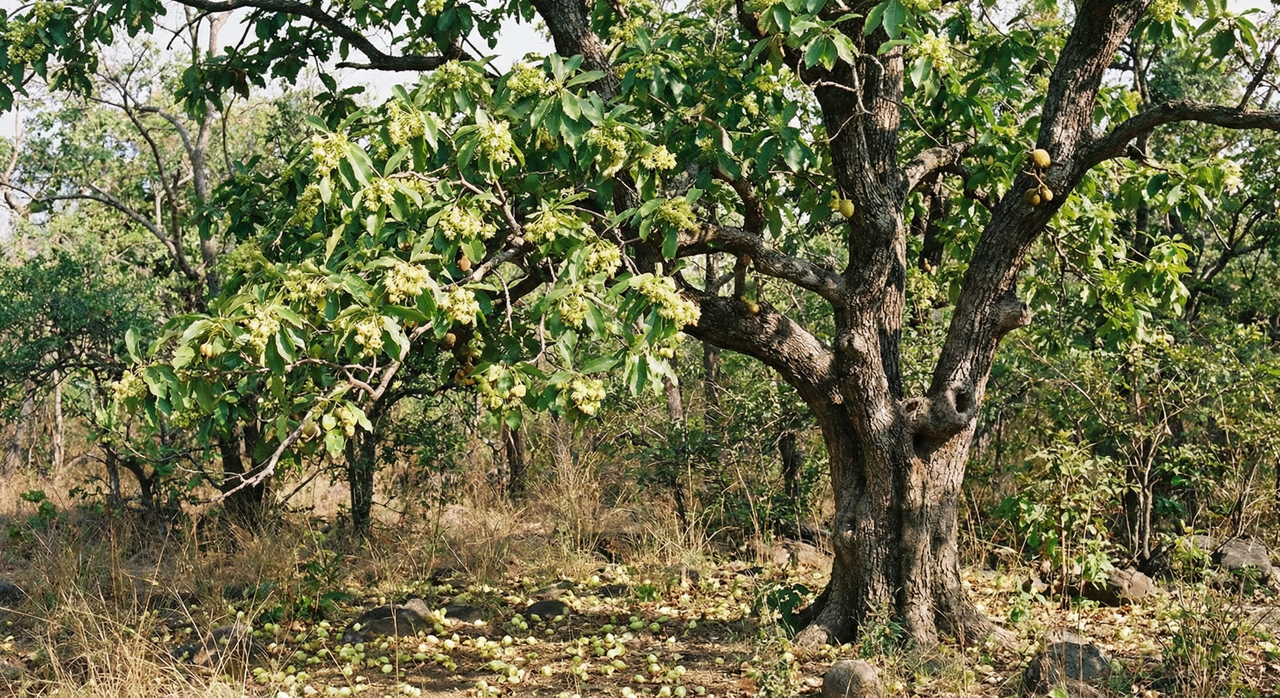
There's a tree in central India that gets people drunk, heals their wounds, feeds their children through famine, and shows up at nearly every major ritual in the tribal calendar. The same flowers. One tree. I'd been growing tropical food forests for years before I encountered Mahua (Madhuca longifolia), and my first reaction was honest skepticism: no single plant does all that. Then I started digging into the ethnobotanical record, and the skepticism flipped. The real surprise wasn't that communities across Jharkhand, Odisha, and Madhya Pradesh have relied on this tree for centuries; it was how completely most of the permaculture world has ignored it.
What stops people, I think, is the wait. Mahua grows slowly, lives for up to two hundred years, and takes over a decade from seed to first flower.[1] That timeline scares off growers who are used to thinking in annual cycles. But here's what I keep coming back to: the communities that planted these trees weren't planting for themselves. They were planting for their grandchildren, and their grandchildren's grandchildren. That's not a liability. That's exactly the kind of design thinking permaculture is supposed to be built on.
Mahua Origin, History, and Cultural Significance
Botanical Background and Native Habitat
Madhuca longifolia is the species most growers and foragers mean when they say "mahua," though the literature can be genuinely confusing: you'll see the name Madhuca indica used interchangeably in older Indian texts, and M. macrophylla and M. laurifolia appear as synonyms or regional variants depending on the flora you're consulting. I treat M. longifolia as the primary reference for growers, simply because it has the most robust research base and the broadest native distribution. Found across dry deciduous forests of India, Sri Lanka, Nepal, Bangladesh, and Myanmar, this is a medium to large deciduous tree that typically reaches 10 to 20 meters, though exceptional specimens push toward 30 m.[2][3] It grows slowly to moderately, takes 10 to 15 years to reach sexual maturity, and then fruits reliably every year for the rest of a lifespan that commonly spans 100 to 200 years in the wild.[4][2] Seedlings can seem frustratingly slow for the first three to five years, which is why I always label them carefully and interplant with faster-growing companions so the space doesn't feel idle while the Mahua is quietly building its deep root system.
Globally, M. longifolia is listed as Least Concern by the IUCN, but that headline hides a more complicated picture: populations outside protected areas are declining from habitat fragmentation, deforestation, and overexploitation.[5] Related species sharpen that concern considerably. Madhuca leucodermis is assessed as Vulnerable with fewer than 10,000 mature individuals remaining, and Madhuca moonii, endemic to the southern Western Ghats, is Critically Endangered with a population estimated below 1,000.[6][7] The genus as a whole spans a wide range of niches, from the Western Ghats endemics to the dry central plains of India where M. indica thrives, and understanding that breadth matters for anyone sourcing or stewarding these trees.[8]
Visual Characteristics of the Mahua Tree
The first thing I notice when siting a large specimen is the trunk: straight and cylindrical, anywhere from 0.6 to 2 meters in diameter, covered in greyish-brown bark that is rough, longitudinally furrowed, and corky in a way that reminds me of mature live oak, the kind of deeply insulating bark that only develops over decades of slow growth.[2][3] The canopy spreads broadly, 10 to 15 meters wide, and the deep taproot anchors the whole structure while also tapping subsoil moisture through long dry seasons. The tree also produces latex, which I've found is a useful quick-identification clue when a leaf or twig is broken.
Leaves cluster toward the branch ends and are leathery, bright green above and paler beneath, typically 10 to 25 cm long.[3] The flowers are the part most people come for: creamy-white to pale yellow, tubular, about 1.5 to 2.5 cm long, intensely fragrant, and borne in dense axillary clusters from February through April.[9] In the nursery I've also grown M. macrophylla alongside M. longifolia, and the difference is visible: macrophylla's leaves are noticeably broader and can reach 30 cm, while M. leucodermis announces itself with smooth whitish bark that's striking and distinctive in the field.[10][8] Fruits ripen from May through July as ovoid green berries turning yellow-brown, 2 to 5 cm long, each containing one or two seeds.[3]
Traditional and Cultural Uses in Tribal Communities
From the Ayurvedic texts and the modern ethnobotanical literature, it's clear that mahua is far more than a tree: it's a pillar of livelihood and ritual. Madhuca longifolia is revered as the kalpavriksha, the wish-fulfilling tree, symbolizing fertility, prosperity, and life sustenance across communities including the Gond, Santhal, Munda, and Baiga peoples of Jharkhand, Chhattisgarh, Odisha, and Madhya Pradesh.[11] Its earliest documented medicinal uses appear in the Charaka Samhita and Sushruta Samhita, placing it in continuous human use for over two thousand years.[12]
A single mature tree can yield 200 to 300 liters of fermented liquor per season from its flowers alone, and that liquor sits at the center of social gatherings, festivals like Holi and Sarhul, healing ceremonies, and tantric ritual.[13] Beyond liquor, the seeds yield 35 to 50 percent oil used for cooking, soap, cosmetics, and lighting; the bark, leaves, and flowers address ailments from rheumatism to diabetes to wounds; and the timber serves in construction and fuel.[14] Over 50 documented ethnobotanical uses have been recorded across the genus.[15] As a designer who values both biodiversity and community knowledge, I see agroforestry integration as one of the most promising ways to keep these traditions alive while easing pressure on wild stands, especially as colonial-era liquor restrictions have gradually given way to modern sustainable-harvest and Ayurvedic frameworks.[16]
Fun Facts and Ecological Importance
A mature mahua in full production is a remarkable ecological event. Yields of 20 to 100 kg of fruit, 10 to 50 kg of flowers, and 20 to 40 kg of seeds per tree per season sustain langurs, deer, hornbills, fruit bats, and a dense community of nocturnal pollinators including moths and bats that are drawn to those fragrant evening flowers.[17][18] The deep taproot prevents erosion and draws up subsoil nutrients, and the annual leaf drop enriches forest soils in a way that makes the tree a genuine pioneer in dry-forest regeneration.[19] I've seen how a few established specimens can genuinely start transforming a degraded site just through canopy shade and litter accumulation.
Climatically, mahua is adapted to 500 to 2,500 mm of annual rainfall and survives six to eight months of dry season through deep-root moisture access, flowering between February and April and fruiting through July.[3][20] It's strictly a USDA zones 10 to 12 tree with no frost tolerance, which matters for anyone in the US or Europe thinking about cultivation. The conservation picture, as noted earlier, is one of real tension: Least Concern status doesn't reflect local overexploitation pressures, and with Madhuca moonii hovering near extinction,[7] the whole genus deserves far more careful stewardship than it currently receives. When I design guild plantings that include mahua, I always emphasize leaving adequate flowers and seeds for wildlife and natural regeneration; it's a lesson that comes directly from observing over-harvested stands in dry forest landscapes where the canopy is aging with no seedlings beneath it.[21]
Mahua Varieties and Sourcing
Botanical Varieties and Elite Selections of Madhuca longifolia
If you're expecting a seed catalog full of named cultivars the way you'd find with apples or citrus, mahua will surprise you. Madhuca longifolia is formally recognized as two botanical varieties: var. longifolia with narrower leaves and var. latifolia with broader ones.[22] Beyond that, the tree is largely propagated from seed with selection happening at the landrace level rather than through formal breeding programs.[23][24] I've grown batches from Indian seed on two separate occasions and noticed real differences in leaf shape and vigor between seedlings that later tracked clearly to these two botanical forms, which told me that even without cultivar names, landrace material still carries meaningful genetic variation.
Regional selection in India has been shaped by how communities actually use the tree. North Indian types tend toward higher seed oil content, while South Indian material tends to favor higher flower sugar content, reflecting centuries of selection pressure from liquor production.[25] Indian agricultural researchers have taken this further, developing elite selections like 'KAU-MI-1', 'KAU-MI-2', 'Chhind', and 'Kaithal' that show 20 to 30 percent higher productivity and improved disease resistance compared to wild-collected material.[26][27] In my trials with ordinary wild-type seedlings, that gap is real and noticeable.
Related species like Madhuca moonii, Madhuca microphylla, and Madhuca malaccensis exist only as natural genetic variants with no named cultivars whatsoever, and several are rare or critically endangered.[28][29][30][31] The whole genus is really still in the wild-diversity phase of its horticultural story.
Buying Mahua Seeds and Plants
Seeds of Madhuca longifolia can be found through specialty tropical and Indian-plant suppliers, including Rare Exotic Seeds, Sheffield Seed Company, Logee's, and various Indian exporters on platforms like TradeIndia and IndiaMART.[32][33][34][35] Expect to pay $10 to $25 for a packet of 10 to 20 seeds from international specialty nurseries shipping to the US; seedlings run $30 to $60 and larger plants $100 to $300 when they're available at all.[36][37]
Most Madhuca species carry no CITES restrictions, so I've never needed special trade permits when importing seed.[38][39] The exception is Madhuca macrophylla, which is listed under CITES Appendix II and requires additional documentation. Regardless of species, importing seeds or plants into the US still requires a USDA APHIS import permit and a phytosanitary certificate from the country of origin, so file that paperwork early.[40][41] Delays at customs are genuinely avoidable with a little lead time.
The bigger practical challenge is seed viability. Mahua seeds stay viable for only one to two weeks, and dormancy requires specific pretreatment before they'll germinate reliably.[42][43] I learned this the hard way on my first order. Look for sellers offering seeds harvested after the March through June flowering season and ask for confirmation of freshness. I now also ask vendors for a photo of the parent tree's leaf shape before purchasing, because listings labeled simply "Mahua" sometimes arrive as Madhuca laurifolia or another close relative rather than the intended species.[44] A reliable seller won't mind the question.
Mahua Propagation and Planting Guide
If there's one thing I want every aspiring mahua grower to understand before anything else, it's this: the seeds are alive in a way most temperate gardeners aren't prepared for. Madhuca longifolia produces recalcitrant seeds that lose viability within one to three months at room temperature and cannot be dried below 20-30% moisture without irreversible cellular damage.[45][46] I've raised mahua from fresh seed multiple times, and I learned early on that even one week of dry storage on the bench drops germination from around 80% to well under 30%. If you can't sow immediately, pack the seed in moist vermiculite and refrigerate at 4-10 °C with 10-12% moisture; that buys you up to six months. Not forever. Six months, maybe.
Propagation Methods for Mahua Trees
Seed is the accessible starting point. A 24-hour water soak, or sulfuric acid scarification for 10-15 minutes for harder coats, breaks through the lignified seed coat and gets germination underway. Under 25-30 °C with consistently high humidity, fresh treated seed germinates in 15-30 days at rates of 60-90%.[47][48] I soak mine for the full 24 hours; it's easy, it works, and scarification feels like overkill unless you're dealing with especially old or stored material. Germination is hypogeal, meaning the shoot emerges while the cotyledons stay underground, so don't panic when your seedling looks like a single green spike with nothing below.
For nursery production, sow two to three seeds per 30 × 20 cm polybag filled with a 1:1:1 mix of soil, sand, and well-rotted farmyard manure at 1-2 cm depth. Keep humidity between 70-80% under partial shade and thin to the strongest seedling once germination is confirmed. Seedlings reach transplant size (30-50 cm) in six to twelve months.[49][50]
If you're serious about oil yield, flower production, or any specific trait worth preserving, skip the seed gamble and graft. Veneer, cleft, approach, and whip-and-tongue grafts onto one to two year-old M. longifolia rootstocks during the rainy season achieve 60-80% success and deliver clonal fidelity you simply cannot guarantee from seed.[51][52] Compared to the almost embarrassingly forgiving grafting on mango or citrus, mahua demands cleaner cuts and tighter timing around active growth flushes, but that 60-80% take rate is genuinely respectable for a tree of this type. Semi-hardwood cuttings treated with 1000-5000 ppm IBA and air layering during monsoon both exist as options, rooting at 20-60% and 40-70% respectively, but neither is reliable enough to be my first recommendation.[53][54] Tissue culture remains experimental for this genus.
Soil and Site Requirements
Mahua is forgiving about soil fertility but absolutely unforgiving about drainage. It thrives in well-drained loamy, sandy-loam, or lateritic soils with a pH of 5.5-7.5, and tolerates genuinely poor or rocky ground provided water moves through freely.[3][55] Plant it in heavy clay or anywhere water pools after rain and you'll lose it. In my experience, pushing past pH 7.8 with untreated alkaline irrigation water shows up quickly as iron chlorosis on the newest leaves; I correct with chelated iron and sulfur applications rather than guessing at other deficiencies.
The taproot is the other site-selection non-negotiable. Mahua sends roots 3-6 m deep, which means you need at least 1-1.5 m of workable soil beneath the planting point.[56][57] I always measure pit depth on new sites now; I lost young trees to restricted rooting in shallow laterite once and won't make that mistake again. On sun exposure, young plants need partial shade and wind protection for the first one to two years, but mature trees require a minimum of six to eight hours of direct sun daily for reliable flowering and fruiting.[3][58] The transition from sheltered nursling to full-sun canopy tree mirrors what you'd manage with young mango or lychee, so if you've navigated that before, you'll recognize the rhythm.
Spacing, Planting Technique, and Timeline
The standard orchard spacing of 10 m × 10 m (roughly 100 trees per hectare) isn't arbitrary; it's a function of the canopy spread and taproot architecture that mature trees develop.[59][60] In my designs I start with 10 m centers and plan to thin or adjust intercropping if competition shows up after year five. Agroforestry layouts often open to 8-12 m between trees specifically to leave room for legume intercrops during the long juvenile phase, which is a smart move because those ground-level nitrogen-fixers compensate for the tree's modest fertility demands while you wait.
Plant into 60-100 cm pits filled with topsoil mixed with 20-25 kg farmyard manure and 1-2 kg neem cake, timed to coincide with monsoon onset in June through August when soil moisture is reliable.[61][62] Stake young trees for the first two years, especially on any exposed site. I've seen mycorrhizal inoculation at planting make a noticeable difference in early establishment speed; the research supports it and my own landscape work confirms it's worth the small added cost.
On realistic timelines: seed-grown mahua typically fruits in seven to fifteen years, with full production not arriving until twelve to twenty years.[63][64] Grafted trees compress that to four to eight years for first fruit. If you're growing mahua for anything beyond shade and ecological function, grafted stock is the practical choice. The seed route is a long game, and it's honest to say so upfront.
Mahua Care Guide: Growing Madhuca longifolia Successfully
If there's one thing I've come to appreciate about the mahua plant, it's that it genuinely wants to take care of itself. The hard part isn't the ongoing maintenance; it's earning the tree's trust through those first few vulnerable years. Get the establishment phase right, learn to read the seasonal rhythm, and this tree will largely manage itself for decades.
Sunlight Requirements for Optimal Growth and Flowering
Full sun is non-negotiable. Mahua needs 6 to 8 hours of direct light daily for strong flowering and fruiting[65][3], and in my experience, anything less than that translates directly into leggy growth and disappointing harvests. Young seedlings are the exception; they appreciate 30 to 50 percent shade for the first six months before transitioning to full exposure.[65] Once they've hardened off and you're moving them into their permanent position, don't coddle them. Site the tree where nothing will shade it as the surrounding planting matures.
Water Needs and Drought Tolerance
Young mahua trees need consistent moisture, roughly 20 to 30 liters every 7 to 10 days during dry periods for the first two to three years.[3][20] That sounds like a lot of attention for a tree that will eventually be drought-proof, but it's the investment that builds the deep taproot. Once established, the taproot can push beyond 10 meters, giving the tree access to water reserves that most shallow-rooted crops can only dream about.[3][66] After year three or four, supplemental irrigation drops to every three to four weeks or only during prolonged dry spells; think of it as comparable to a mature mango or old citrus that's found its footing. The one exception is during flowering and fruiting, when a little extra water meaningfully improves yield.[67]
Drainage matters as much as moisture. Mahua prefers loamy to lateritic soils with a pH between 6.0 and 8.0 and is genuinely sensitive to waterlogging, which quickly leads to root rot, chlorosis, and stunted growth.[3][68] Saline conditions are also a problem; growth declines noticeably above 4 dS/m electrical conductivity, so if you're working with coastal or irrigated soils, get them tested before planting.[3]
Soil Preferences and Nutrient Management
Mahua evolved in nutrient-poor lateritic and sandy forest soils, so it doesn't need aggressive feeding.[65] An annual application of 10 to 20 kg of well-composted manure per tree, timed with the monsoon, is usually enough to keep young trees thriving.[65] Where I've seen real improvement in flower set is with a modest phosphorus boost in early spring; I apply a balanced NPK with emphasis on phosphorus before the February flowering window, and the difference in cluster density is noticeable.[69][70] What I try to avoid is excess nitrogen, particularly during Florida's hot summers; it pushes the tree into leafy vegetative growth and essentially steals resources away from the flowers you actually want.[71]
On lateritic or high-pH soils, watch for zinc and boron deficiency: rosetting, small mottled leaves, and poor flower development are the tell-tale signs.[72] A foliar spray of 0.5 percent zinc sulfate corrects this faster than soil application and is gentler on the overall balance.[73] Over-fertilizing shows up as leaf scorch and tip burn, so if you're seeing those symptoms, ease off before reaching for more inputs.
Frost Tolerance and Cold Protection
Mahua is a tropical tree and makes no pretense otherwise. Classified RHS H1c, it thrives in USDA zones 10 to 12 and wants minimum temperatures above 5°C year-round.[74][3] Chilling injury starts appearing at 10 to 15°C, causing wilting, chlorosis, and flower drop; actual frost below 0°C can kill young trees outright.[75] I grow mine in zone 9B, and I learned the hard way my first year. An unprotected seedling dropped every leaf and died back to the crown after a mild frost event. Since then, southern exposure, heavy mulch around the root zone, and frost cloth over the canopy have kept subsequent trees in good shape through marginal winters.[76][77] Mature specimens can survive a brief dip to around -1°C with minimal damage, but seedlings have no such buffer. Outside zones 10 to 12, greenhouse overwintering for the first few years is a smart hedge.
Heat Tolerance and High-Temperature Management
At the other extreme, mahua trees handle heat well up to about 45°C, with optimal growth between 20 and 40°C.[78] Beyond that threshold, heat stress causes leaf scorch, wilting, and premature flower and fruit drop, with yield losses documented at 30 to 50 percent in severe cases.[79] During the record heat spells of 2023 I watched flower clusters drop prematurely on exposed trees during Florida's hottest weeks, but the trees I had mulched heavily and irrigated through flowering held their set significantly better. The deep roots, thick cuticles, and the tree's ability to accumulate protective compounds give it remarkable physiological resilience,[80][81] but during flowering season, a deep watering every two weeks and a thick layer of organic mulch over the root zone is cheap insurance against an avoidable yield loss.
Pruning, Maintenance, and Seasonal Rhythm
Pruning mahua rewards patience and timing. The window to work is the dry season, October through March, after fruit harvest but before the February flowering flush begins.[82] On young trees I focus on training three to five scaffold branches at 60 to 90 cm height into an open-center shape, which sets up long-term light penetration.[83] On mature trees, light canopy thinning of 10 to 20 percent removal can increase flower and fruit yield by 20 to 30 percent.[84] I've found that keeping cuts light and tools sterilized prevents the weeping sap flow and fungal entry points I've seen follow overzealous pruning at the wrong time of year.
Understanding the tree's phenological calendar makes every other care decision more intuitive. Leaves drop January to February, flowers open February to April with a peak in March, fruits develop through May to July, and new leaves flush in April as rapid monsoon growth follows through September.[85][3] First flowering won't come until year 8 to 12, with commercial yields building from year 10 to 15 and peak production somewhere between 20 and 30 years.[2] That timeline demands patience, but once you've internalized the rhythm, the mahua tree growth rate and care calendar stop feeling like a maintenance schedule and start feeling like watching an old friend move through the seasons.
Harvesting Mahua Flowers, Fruits, and Seeds
Mahua runs on a remarkably dependable seasonal calendar, and learning to read it is half the harvest. Flowers open from February through April, with March being the peak most years.[86][87] Fruits follow from April through June, turning fully yellow-orange by May and June, with seeds maturing into July.[88] Watching the canopy shift from bare branches to laden flower clusters is, in my experience, the most reliable signal you have -- no calendar needed once you've seen it once.
Timing and Maturity Indicators
For mahua flowers, the window is early morning. Blossoms naturally drop overnight, so collecting before 8 AM captures them at peak nectar-sugar content before heat and insects get there first.[89] For the mahua fruit, ripeness reads like a familiar subtropical cue: watch for the skin shifting from green toward yellowish-brown or reddish-brown (think of how a loquat or a dull plum signals it's ready), and press the shell gently. When the endocarp cracks easily under hand pressure, you're there.[90] Fruits run 2 to 5 cm across and drop naturally, so gathering them from the ground each morning keeps spoilage and pest pressure low.[91]
Harvesting Techniques and Sustainable Practices
Traditional harvest is gentle by design. Flowers are handpicked or shaken loose with bamboo poles into cloth bags, always before the heat rises.[92] No machinery, no aggressive stripping. The tribal communities who have managed these trees for generations impose limits on how much any single tree gives up per season, and those limits have informed how I think about yields in any permaculture guild planting. A tree you protect this year is a tree that produces reliably for the next hundred.
Post-harvest handling is where most growers go wrong. Mahua flowers need shade-drying at 25 to 35 degrees Celsius for two to four days down to about 10 to 12 percent moisture -- direct sun triggers fermentation and destroys that sweet-floral aroma you're trying to preserve.[93] Once dry, ventilated jute bags stored below 20 degrees Celsius will hold them safely for up to six months.[94] Fruit pulp is far more perishable; depulp quickly, clean and wash the seeds, and aim to process within one to two weeks if you're storing at 10 to 15 degrees.[95] Seeds bound for oil pressing should be dried to 7 to 10 percent moisture, never exceeding 60 degrees Celsius or you'll degrade the oil quality.[96] Propagation seed is a completely different story: mahua seed is recalcitrant, meaning it must stay at 30 to 50 percent moisture and cool temperatures to remain viable. I always tell clients that one hot, dry storage mistake can drop viability from 80 percent to near zero overnight.[97]
Yield, Flavor Profiles, and Post-Harvest Handling
A mature mahua tree yields 20 to 50 kg of flowers or seeds annually, with older trees often settling into the 30 to 40 kg range depending on soil, rainfall, and age.[98] Each mahua fruit is a fleshy drupe containing one to four seeds roughly 1 to 2 cm long.[2] What the tree becomes in the kitchen or the press depends heavily on geography and how the harvest is handled. Central Indian fruits tend sweeter; eastern ones lean more acidic.[99] Fresh flowers carry a honey-like, slightly apricot-floral quality -- influenced by compounds like linalool and geraniol -- and I've noticed that dried batches carry a more concentrated, almost caramelized sweetness compared to fresh material. Fermentation pushes further still into yeasty, complex territory.[100] Seeds, once processed properly, yield a nutty, buttery oil that bears little resemblance to the raw seed. The harvest you take and the way you handle it in those first hours genuinely determines which of those products you end up with.
Mahua Preparation, Culinary Uses, and Medicinal Applications
Cultural and Culinary Significance of Mahua Flowers and Fruits
For the Santhal, Gond, and Oraon peoples of central and eastern India, mahua isn't a plant you use. It's a plant you live with. Flowers, fruits, and seeds shape festivals, fund livelihoods, and mark the rhythm of the year in ways that few trees anywhere in the world can claim.[101][102][103] Every preparation I'll describe here has that context underneath it, and I think it matters.
The flowers are the star. Fresh, they smell like someone crossed honey with ripe tropical fruit; I've noticed linalool and geraniol doing most of the heavy lifting in that aroma.[104][105] Dry them, though, and the whole flavor profile shifts toward caramel and toffee with a subtle nuttiness that I've used to coax complexity into syrups and baked goods.[3][2] Nutritionally, they're worth taking seriously: 70–80% carbohydrates, 7–19% protein, and meaningful calcium and iron.[106][107] Fermented into mahua liquor at 20–40% alcohol, they develop fruity, yeasty depth with a lingering sweetness that's become the flavor most people associate with the tree.[108][109]
The fruit pulp comes next in the seasonal sequence and deserves more attention than it typically gets outside tribal communities. Ripe, it tastes somewhere between apricot, plum, and mango; the skin carries a mild astringency, but the flesh is soft and juicy.[3][110] Fresh eating, drying, preserves, jams, and fermented mahua drinks are all well-established uses. Unripe fruits, on the other hand, can cause gastrointestinal distress, so ripeness isn't optional.[107] Across the genus, related species like Madhuca malaccensis and Madhuca microphylla follow comparable patterns with jackfruit- or plum-adjacent flavors in Southeast Asian contexts, while Madhuca indica and Madhuca macrophylla fruits run 20–30% sugars and around 100–150 kcal per 100g.[110][111]
I'd also flag proper identification as a real responsibility here. Mahua can be confused with other Sapotaceae relatives like Mimusops elengi or Manilkara hexandra, and that confusion matters when you're deciding what to eat.[112][3] Sustainable collection is equally non-negotiable. Madhuca laurifolia is listed as Vulnerable on the IUCN Red List, and the only reason the broader genus hasn't fared worse is that indigenous communities have practiced selective flower collection and regulated seed harvest for generations.[113][114] I source mahua products only from suppliers I trust to follow the same principles.
Processing and Using Mahua Seeds and Oil
Mahua butter is genuinely lovely to work with: semi-solid at room temperature, mild and nutty with creamy, earthy undertones, rich in saturated fats at around 48%.[115][116] Anyone who's worked with shea or cocoa butter in skincare formulations will recognize the texture immediately. Kernels contain 30–50% oil by weight, which makes them a serious extraction crop.[3] But I never use unprocessed mahua seeds. The raw kernels contain saponins, tannins, and phorbol esters that can cause real gastrointestinal distress, and proper roasting or boiling before extraction is non-negotiable.[117][118][119] This is one of those cases where skipping the processing step because it seems tedious can genuinely hurt someone.
Traditional Medicinal Preparations and Dosages
Ayurvedic and tribal systems have used virtually every part of this tree medicinally, with preparations ranging from flower decoctions (20–30 ml daily) and bark infusions (50–100 ml twice daily) to processed seed oil or powder and leaf extracts (3–6 g daily).[120][121] These aren't random folk dosages; they reflect centuries of refined practice across communities that understood this plant at an intimate level. That said, I always encourage people to work with a practitioner who knows both traditional knowledge and modern safety data before using mahua therapeutically, particularly given the seed toxicity realities already discussed and the contraindications covered in the health benefits section.
Non-Food Applications of Mahua Products
The same seed oil that cooks with has a robust industrial life: cosmetics, soaps, pharmaceuticals, lamp fuel, and biodiesel, with oil yields of 30–40% from seeds making it a credible renewable feedstock.[122][123] Nothing goes to waste here. The seed cake left after oil extraction feeds cattle or returns to the soil as fertilizer, and fallen leaves, spent flowers, and wood offcuts provide biomass for mulch, compost, and green manure.[14] The economic opportunity in all of this is real, but it holds only as long as the tree does. The communities who have sustained mahua for centuries understood that implicitly. Modern interest in mahua liquor, mahua oil, and mahua-based products is welcome; the extractive mindset that sometimes follows it is not.
Mahua Health Benefits and Medicinal Uses
Mahua has been a cornerstone of Ayurvedic and tribal medicine across central and eastern India for centuries, and the sheer breadth of its documented uses tells you something important before you even look at a single lab study. Different parts of the tree serve different purposes in traditional practice: bark decoctions for rheumatism and wound healing, flowers for respiratory complaints, gastrointestinal issues, and blood sugar management, leaves for skin conditions, and seed oil for external treatment of joint pain and dermatological ailments.[124][125][126] That kind of part-specific, condition-specific precision in traditional knowledge rarely develops without real observed effect over generations.
Traditional and Scientific Medicinal Actions of Mahua
Modern preclinical research has done a reasonable job of validating what traditional healers already knew. The anti-inflammatory activity is among the best-documented actions, with extracts inhibiting both COX and LOX pathways and suppressing pro-inflammatory cytokines including TNF-α and IL-6.[127][128][129] The antidiabetic research is equally solid at the preclinical level, with multiple studies showing inhibition of α-glucosidase and α-amylase enzymes alongside improved insulin sensitivity and secretion.[130][131][132] Hepatoprotective effects have been observed in toxin-induced liver damage models, where extracts reduced oxidative stress and normalized ALT and AST levels,[133][134] and antimicrobial activity against Staphylococcus aureus and Candida albicans has been reliably demonstrated across multiple extract types.[135][136] Emerging work points to anticancer potential through apoptosis induction and cell cycle arrest in breast and colon cancer lines,[137][138] and analgesic activity comparable to aspirin in animal models.[139][140]
Here's where I have to be honest with you, though: human clinical trials are very limited. Small-scale studies suggest potential for diabetes and hyperlipidemia management, but large randomized controlled trials simply don't exist yet.[141] I've seen this pattern with other traditional Ayurvedic herbs I've studied over the years, where the animal and cell data is genuinely compelling but the leap to confident therapeutic recommendation for humans hasn't been earned yet. My honest take is that these findings are best understood as scientific support for centuries of observed tribal use, not as a green light for self-medicating with bark decoctions or flower extracts. Eat the flowers, enjoy the fruit, use the refined oil on your skin, and let the rest wait for better human data.
Key Phytochemicals in Mahua
The medicinal actions above don't come from nowhere. The tree produces a dense and varied phytochemical profile that includes flavonoids (quercetin, kaempferol, rutin, myricetin), triterpenoids (α-amyrin, β-amyrin, lupeol, oleanolic acid, and the species-specific madhucic acid), phenolic acids including gallic, ferulic, and caffeic acid, tannins, saponins, and phytosterols like β-sitosterol.[142][143] The concentrations aren't uniform across the tree. Leaves tend to carry the highest phenolic load (I've always found fresh mahua leaves intensely astringent, which makes complete sense given that), bark is richest in tannins and triterpenoids, and seeds concentrate fatty acids alongside the saponins responsible for their toxicity when raw.
These compounds shift with season, geography, soil chemistry, and tree maturity. Phenolic accumulation peaks in the dry season, triterpenoids run higher during flowering, alkaline soils seem to favor flavonoid production, and mature trees over twenty years old produce measurably more triterpenoids than younger specimens.[144][145] From a permaculture perspective, that variability is worth thinking about: the same chemistry that evolved for herbivore defense, UV protection, and pollinator attraction is what makes this tree medicinally active.[146][147] The saponins I use as a mild natural surfactant and pest deterrent in my own garden are the same compounds that can cause serious toxicity if raw seeds are consumed. That dual nature deserves real respect.
Nutritional Profile of Edible Mahua Parts
Mahua's flowers, fruit pulp, seeds, and young cooked leaves are all edible, each with a distinct nutritional character.[2][148] Dried flowers are surprisingly energy-dense at around 314 kcal per 100g, with roughly 14g protein, 71g carbohydrates including substantial sugars, 6.5g fiber, and solid mineral content: 250mg calcium, 174mg phosphorus, 11mg iron, and meaningful B vitamins including thiamine, riboflavin, and niacin.[149][150] The fresh fruit pulp is a lighter, quick-energy food with 80-100 kcal, predominantly sugars, and around 18-25mg vitamin C per 100g.[151] Processed seed kernels are nutritionally intense: 600-700 kcal, 17-20g protein, a substantial fat fraction (45-50g, with oleic, stearic, and palmitic acids dominating), and high mineral density including potassium, calcium, and iron.[152][153]
Layered on top of the macronutrients, the strong antioxidant activity from quercetin, rutin, and phenolic acids (DPPH IC50 around 20-50 μg/ml in flowers and fruits) puts mahua squarely in nutraceutical territory.[154][155] The traditional practice of drinking mahua flower infusions during the hot season makes a lot of sense from that angle. The raw seeds, however, carry saponins, tannins, and phytates that make them genuinely dangerous unprocessed. Roasting, boiling, or fermentation reduces those antinutrients by 70-90%, which is exactly why indigenous communities developed those processing traditions in the first place.[156][157]
Safety Considerations and Proper Use
Mahua flowers and ripe fruit pulp are generally safe and have been consumed as staple foods for generations. The serious risks sit elsewhere. Raw seeds and unprocessed oil contain saponins at levels associated with gastrointestinal symptoms, neurological effects (headache, dizziness, drowsiness, and in severe cases seizures), and dehydration in documented human poisoning cases.[158][159] Crude saponin extract has an oral LD50 of approximately 1,000 mg/kg in mouse models.[160] There are no cardenolides involved; the toxicity picture is primarily saponin-driven with contributions from tannins and minor alkaloids, and there's no specific antidote.[161] Proper processing reduces that risk by 70-90%.[162][163]
If you're on blood-sugar medication or diabetic treatment, the documented additive hypoglycemic effects mean you need to talk to your doctor before using mahua in any therapeutic capacity. The same caution applies with CNS depressants and anticoagulants.[164][165] On pregnancy, I'm unambiguous: do not use mahua internally during pregnancy. The uterotonic and anti-implantation effects are consistent across the literature, and traditional use and modern pharmacology are in rare agreement here.[164] Skin contact with sap, unrefined oil, or pollen can cause contact dermatitis in sensitive individuals, and pollen-related respiratory allergy is possible.[166][167] Traditional Ayurvedic dosages suggest flowers at 3-6g powder per day and bark decoction at 50-100ml daily, but given limited standardization across preparations, working with a knowledgeable practitioner is the only sensible approach.[164][168] Mahua rewards respectful, knowledgeable use. It does not forgive casual experimentation.
Mahua Pests and Diseases
Mature mahua trees have a reputation for being tough, and honestly that reputation is earned. The latex, phenolic compounds, and saponins that make Madhuca longifolia so pharmacologically interesting also do real work as defenses against pathogens and chewing insects.[169][170] But "tough" is relative, and young trees grown in cultivation are a different story entirely. The research is consistent with what I've observed in other long-lived tropical species: resistance scales with age and genotype, and wild-type material generally outperforms cultivated trees by a meaningful margin.[169][171]
Natural Resistance and Disease Susceptibility
The highest-risk window for fungal disease is the monsoon. High humidity is the primary driver, and powdery mildew caused by Oidium species is typically the first problem to appear, coating young leaves with that familiar white film during the wet season.[169][171] I've seen this firsthand in nursery conditions: seedlings under humid propagation setups are among the first to show symptoms, which tracks exactly with the age-and-humidity relationship in the literature. Anthracnose (Colletotrichum gloeosporioides and related species) is the more damaging of the two major fungal threats, hitting leaves, flowers, and developing fruits and causing dieback that can seriously reduce yield in young trees.[169][172]
Leaf spot from Cercospora mahuae follows, producing necrotic spots that compromise photosynthesis without usually being fatal on established trees.[172][171] Root rot from Phytophthora or Fusarium solani is the one to watch if your site has drainage issues, because waterlogged soil can push a tree into decline fast.[169][173] Fruit rot can also cause mummification of developing fruits in susceptible seasons.[174] Bacterial issues, mainly leaf blight from Xanthomonas, are rare, and viral infections in mahua are barely documented at all.[175]
Major Insect Pests and Their Impact
Pest pressure is noticeably heavier in monoculture plantations and during the monsoon months.[176][177] The most dramatic damage comes from defoliators. The mahua caterpillar (Eupterote mollis) and hairy caterpillars (Spilarctia obliqua, Lymantria and Euproctis species) can strip a tree to bare branches; complete defoliation events of 80-100% have been documented in bad years.[176][178] On the economic side, fruit borers (Noctuidae, Dichocrosis, Conopomorpha, Anarsia species) and weevils in the Rhinocyllus and Myllocerus genera target the seeds and fruits directly, with unmanaged orchards losing 30-50% of yield in affected seasons.[178][179]
Structural damage comes from stem and bark borers, including Indarbela quadrinotata, Cerambycid species like Apriona sexguttata, bark beetles, and termites (Odontotermes). Their galleries weaken wood and, critically, create entry points for the same fungal pathogens described above.[180][181] Sap-suckers, scale insects (Aspidiotus, Rastrococcus), mealybugs (Maconellicoccus hirsutus), aphids, and leafhoppers cause yellowing and leaf curl and leave honeydew behind that feeds sooty mold colonization.[182][178]
Here's where the tree's chemistry earns its keep. The triterpenoid saponins that make raw seeds toxic also function as feeding deterrents, the thick leathery leaves and pubescent surface slow pathogen attachment, and the milky latex that oozes immediately when you prune a branch is genuinely bitter and off-putting to chewing insects.[183][184] In my own plantings I've noticed noticeably less caterpillar pressure on mahua than on neighboring trees without latex, which aligns with what the research suggests. That said, overall pest resistance is moderate, not exceptional, and genetic variability across the genus means some local genotypes handle pressure better than others.[185][60] No commercially available resistant cultivars exist yet; breeding has focused almost entirely on oil yield rather than pest tolerance, so there's no shortcut through genetics.[186] I source from local wild-type seed or Indian nurseries with a conservation focus rather than commercial selections for exactly that reason. For species like Madhuca moonii or Madhuca leucodermis, pest data is sparse and largely extrapolated from Madhuca longifolia; I'll be transparent that my direct experience is with the main species and I read the forestry literature cautiously when it comes to the rarer relatives.[187][188]
Integrated Management Strategies
The most reliable pest and disease management I've found starts long before any spray bottle comes out. Adequate spacing for airflow, prompt removal of infected material, sharp drainage, and choosing seed from locally adapted wild populations are the foundation.[174][189] A healthy, well-sited tree with good canopy structure resists both fungal and insect pressure better than one stressed by waterlogging or crowding. For biological controls, I prioritize Trichoderma soil drenches against root rot and neem-based biopesticides for foliar pests, partly because they're effective and partly because mahua's flowering period draws bats, bees, and moths that you do not want to knock back with broad-spectrum insecticides.[190][191] Beauveria bassiana, parasitic wasps like Trichogramma, and encouraging birds and ladybirds round out the ecological toolkit.[174] Copper fungicides (Bordeaux mixture or copper oxychloride) and carbendazim at 0.2% are available for severe fungal outbreaks, applied at 15-20 day intervals during vulnerable periods; chemical insecticides like imidacloprid or carbaryl should be reserved as genuine last resorts and never applied while the tree is flowering.[192][193] In my experience, growers who invest in guild diversity and soil biology around their mahua rarely need to reach for those options at all.
Mahua in Permaculture Design
If you're designing a food forest in the tropics or warm subtropics, mahua is the kind of tree that makes you rethink what a canopy anchor can do. It's not just a shade provider or a timber investment. It's a living hub for pollinators, frugivores, soil fungi, and people. The challenge is earning that payoff, because this is a tree that asks you to think in decades rather than seasons.
Climate and Growing Zones for Mahua
Madhuca longifolia is at home in the tropical savanna, monsoon, and humid subtropical climates of peninsular India and Southeast Asia, corresponding to Koppen classifications Aw, Am, and Cwa.[194] In practical terms, that means USDA zones 10 through 12,[195][196] with temperatures between 20 and 40°C (68-95°F) as the sweet spot for growth, flowering, and fruiting.[197] Anything approaching 10°C (50°F) is where the tree starts showing stress, so frost-free winters are non-negotiable.[196]
Annual rainfall of 1000 to 1500 mm supports the best flowering and fruiting, though the species tolerates a surprisingly wide range of 500 to 2500 mm once established.[197][20] That drought tolerance is real. In my landscape designs for warm subtropical zones, I treat mahua as a long-term canopy investment that rewards patience with multiple yields once its deep roots are fully settled. A mature tree can push through several months of dry conditions without irrigation support,[20] which is exactly the kind of climate resilience I want in a keystone species when designing for an uncertain future. It grows well from sea level up to about 1200 m, preferring well-drained sandy loam or lateritic soils with a pH between 6.0 and 7.5.[198][199]
Outside its native range, cultivation in the US is limited to southern Florida, Hawaii, and the most sheltered coastal California microclimates, and permits may be required depending on your county.[196][200] For designers working in wetter forest systems, the closely related Madhuca laurifolia and Madhuca leucodermis thrive where annual rainfall reaches 2000 to 4000 mm, while Madhuca indica handles drier conditions down to 500 to 750 mm once it's established.[201][202] The genus gives you options across a real range of tropical niches, which is worth knowing if your site is slightly wetter or drier than the species optimum.
Ecosystem Functions and Biodiversity Support
What makes mahua genuinely special as a design element is the nocturnal flowering window. The flowers open at night, producing 0.5 to 1 ml of nectar each at 20 to 30% sugar concentration, and that nightly pulse draws in an impressive roster: Apis dorsata, Apis cerana, stingless bees (Trigona spp.), beetles, moths, and flies all show up before dawn.[203] Bats are estimated to contribute 60 to 70% of pollination in some populations,[204] which means standing under a flowering mahua at dusk and watching the whole nocturnal ecosystem come alive is genuinely one of the more striking things I've seen on a site visit. It reframes what a "pollinator garden" can mean.
The daytime feeding guild is just as rich. Edible flowers composed of roughly 72% carbohydrates and 18% protein[205] sustain monkeys, bats, birds, and insects, and the fruits and seeds draw a similarly broad frugivore network including elephants, which serve as primary seed dispersers along with birds and bats.[206][207] Over 50 fauna species have been recorded relying on this tree in Indian dry deciduous forests, which is the definition of a keystone species.[206]
Belowground, the picture is equally compelling. Mahua is not a legume and doesn't fix nitrogen,[208] so it needs leguminous companions to cover that function. What it does provide is a deep root system that stabilizes soil, cycles minerals from depth, and delivers steady organic matter through its leaf litter. It forms both arbuscular and sometimes ectomycorrhizal associations that substantially improve phosphorus uptake in poor soils,[209] and carbon sequestration over the tree's lifespan is estimated at 20 to 30 tonnes per hectare.[208] From a human-yields perspective, the same tree delivers edible and fermentable flowers, fruits, seeds with 40 to 50% oil content (mowrah butter), medicinal bark, and termite-resistant timber.[210]
I never spray anything near a mahua during the February through May flowering window, full stop. Pesticide use during that period has been linked to fruit-set reductions of up to 40%, and hand-pollination where needed can lift fruit set from the baseline 10 to 20% up toward 40 to 50%.[211][212] Sourcing ethically matters here too. While Madhuca longifolia holds a Least Concern status globally, local populations face real pressure from habitat fragmentation, and closely related species like Madhuca moonii are critically endangered.[213][214] If you're integrating this tree, protect your local pollinator corridors and make sure you're working with responsibly propagated stock.
Mahua Forest Layer and Guild Design
In its native habitat, mahua occupies the canopy to sub-canopy layer of dry deciduous forests, typically reaching 15 to 20 m tall with a broad crown spreading up to 15 m wide.[215][3] Think of it as a spreading mango in scale and canopy density, with seasonal leaf drop that opens light to the understory during the dry months and returns it as fertility through decomposing litter. That seasonal rhythm actually makes it easier to work with than an evergreen canopy tree. I've used similar broad-crowned deciduous species in subtropical food forests in Florida to create dappled winter light for shade-tolerant understory crops like ginger and turmeric, and the same logic applies here.
For guild design, the key insight is that mahua doesn't fix nitrogen, so leguminous companions are essential rather than optional. Pairing it with Acacia catechu or Gliricidia sepium at the right spacing fills that fertility gap while avoiding excessive root competition.[216] I approach this the same way I'd space nitrogen-fixers around a moringa or pigeon pea: close enough to share the fertility benefit from leaf litter, but far enough to keep their root zones from fighting at the drip line. Mango, teak, and sal are reliable canopy companions that share similar climate and soil requirements without directly competing at the same fruiting layer,[216][217] and bamboo works well at transitional edges where you want a productive boundary between the food forest and an open zone.[218]
Across the genus, height ranges from about 15 m in Madhuca leucodermis up to 30 m in Madhuca indica and Madhuca macrophylla,[219] with Madhuca macrophylla pulling double duty as a windbreak and dynamic accumulator of potassium and calcium in wetter sites.[220] Most Madhuca species share the same design-friendly traits: moderate shade tolerance as juveniles (which eases establishment under a nurse canopy), arbuscular mycorrhizal partnerships, deep erosion-controlling roots, and slow-to-moderate litter decomposition that builds soil structure over time.[221] The wait for canopy maturity is genuinely long, but for a tree that will still be feeding bats and yielding oil for a century after you plant it, that's a trade I'd make in every warm-climate food forest I design.
The Tree That Made Me Rethink What "Mature" Means in a Food Forest
I'll be honest: I didn't fall for Mahua on a farm. I fell for it in a photograph of a woman collecting flowers at dawn, her basket already full, the ground beneath the tree white with blossoms that had dropped overnight while she slept. Something about that image, the tree doing its work quietly in the dark, the harvest arriving on its own terms, made me realize I'd been designing food forests around my patience rather than the plant's actual timeline. Mahua reset that for me.
Sources 221
- FAO: Minor Forest Products of India ↩
- Madhuca longifolia - Wikipedia ↩
- Madhuca longifolia - Useful Tropical Plants ↩
- Reproductive Ecology of Madhuca longifolia ↩
- IUCN Red List: Madhuca longifolia ↩
- IUCN Red List: Madhuca leucodermis ↩
- IUCN Red List: Madhuca moonii ↩
- Plants of the World Online - Madhuca spp. ↩
- Flora of India - Madhuca longifolia ↩
- Flora of India - Sapotaceae ↩
- Cultural Significance of Madhuca longifolia in Tribal India ↩
- Mahua: A Sacred Tree in Tribal Rituals and Livelihoods ↩
- Madhuca (Madhuca longifolia): Ethnobotanical and Cultural Perspectives ↩
- Ethnobotanical Uses of Madhuca indica Among Tribal Communities in India ↩
- Medicinal Properties of Madhuca indica Parts: A Review ↩
- Sustainable Harvesting of Mahua (Madhuca longifolia) in Central India ↩
- Mahua (Madhuca longifolia): A Review ↩
- Pollination Biology of Madhuca longifolia ↩
- Ecological Role of Mahua in Indian Forests ↩
- Cultivation of Mahua (Madhuca longifolia) in India ↩
- Deforestation impacts on Mahua (Madhuca longifolia) in Indian dry forests ↩
- Madhuca longifolia - Kew Science ↩
- Madhuca longifolia - The Indian Mahua Tree ↩
- Mahua (Madhuca spp.) : Cultivation and Uses ↩
- Madhuca indica: A Review on its Cultivation and Utilization ↩
- Varietal Improvement in Mahua (Madhuca indica) ↩
- Yield and Oil Content Variability in Madhuca indica Genotypes ↩
- Madhuca macrophylla - Flora of China ↩
- IUCN Red List - Madhuca moonii ↩
- Madhuca microphylla - Kew Science Plants of the World Online ↩
- Plants of the World Online - Madhuca malaccensis ↩
- Madhuca longifolia Seeds ↩
- Madhuca indica - Mahua Tree ↩
- Madhuca Longifolia Seeds for Sale ↩
- Madhuca longifolia Seeds for Sale ↩
- Commercial Pricing of Mahua Seeds and Plants ↩
- Mahua Seed Price in India ↩
- CITES Species+ Database ↩
- CITES Appendices ↩
- USDA APHIS Plants for Planting Manual ↩
- APHIS - Importing Plants and Plant Products ↩
- Propagation of Madhuca indica: A Review ↩
- Seed Dormancy and Germination in Madhuca species ↩
- Madhuca laurifolia ↩
- Propagation Techniques of Mahua (Madhuca longifolia) ↩
- Factors Influencing Viability in Recalcitrant Seeds ↩
- Propagation and Germination of Madhuca longifolia ↩
- Seed Germination Studies in Madhuca macrophylla ↩
- Mahua Tree Cultivation Guide - ICAR ↩
- Nursery Practices for Non-Timber Forest Products in India ↩
- Propagation Techniques for Madhuca longifolia ↩
- Vegetative Propagation Methods for Madhuca longifolia ↩
- Vegetative Propagation of Madhuca longifolia through Cuttings ↩
- Vegetative propagation of Mahua (Madhuca longifolia) by air-layering ↩
- Soil Requirements for Mahua Trees - ICAR Research ↩
- Mahua (Madhuca longifolia): Cultivation and Uses ↩
- Soil and Site Requirements for Tropical Trees ↩
- Ecological Requirements of Mahua Trees ↩
- Mahua (Madhuca longifolia) Cultivation Practices ↩
- Agroforestry Guidelines for Mahua Trees ↩
- Cultivation of Mahua (Madhuca indica) ↩
- Mahua Tree: Grafting Techniques and Orchard Management ↩
- Propagation and Cultivation of Madhuca longifolia ↩
- Phenology of Madhuca longifolia in Central India ↩
- Madhuca longifolia: Cultivation and Utilization ↩
- Drought Tolerance in Tropical Trees: Mahua Case Study ↩
- Cultivation of Mahua (Madhuca latifolia) ↩
- Soil and Climatic Requirements for Mahua Tree ↩
- Nutrient Management in Madhuca indica (Mahua) Plantations ↩
- Orchard Management Practices for Madhuca indica ↩
- Nutrient Management in Mahua Tree ↩
- Micronutrient Deficiencies in Tropical Trees Including Mahua ↩
- Nutrient Management in Mahua (Madhuca indica) ↩
- RHS Plant Finder: Madhuca longifolia ↩
- Mahua Tree Cultivation Guide - ICAR ↩
- Frost Protection for Tropical Trees - University of Florida IFAS Extension ↩
- Agroforestry Species: Madhuca longifolia ↩
- Response of Madhuca longifolia to Abiotic Stresses in Arid Regions ↩
- Drought and Heat Tolerance in Mahua (Madhuca longifolia) Trees ↩
- Physiological Responses of Madhuca Species to Abiotic Stresses ↩
- Heat and Drought Stress in Tropical Trees: Case of Sapotaceae ↩
- Mahua (Madhuca longifolia) Cultivation Guide ↩
- Mahua Tree Management and Pruning Techniques ↩
- Pruning Practices for Indigenous Fruit Trees in India ↩
- Phenology of Madhuca indica in Tropical Dry Deciduous Forests ↩
- Madhuca longifolia - ICAR Manual ↩
- Phenology of Madhuca longifolia in Central India ↩
- Mahua Flower and Fruit Harvesting Practices ↩
- Traditional Harvesting of Mahua in Tribal Areas ↩
- Mahua (Madhuca indica/K:integrifolia): Cultivation, Management and Post-harvest Practices ↩
- Phenology and Harvesting Practices of Mahua (Madhuca spp.) ↩
- Harvesting Techniques for Non-Timber Forest Products: Mahua ↩
- Mahua Fruit and Flower Processing Guidelines ↩
- Post-Harvest Management of Mahua (Madhuca longifolia) ↩
- Post-Harvest Management of Non-Timber Forest Products: Mahua ↩
- Drying and Storage Techniques for Madhuca Seeds ↩
- Storage Behavior of Mahua (Madhuca longifolia) Seeds ↩
- Mahua (Madhuca spp.): A Review of Nutritional and Therapeutic Uses ↩
- Geographical Influence on Mahua Fruit Flavors ↩
- Fruit Ripening and Quality Attributes in Madhuca Species ↩
- Cultural Significance of Madhuca longifolia among Indian Tribes ↩
- Madhuca indica: A Review of Its Traditional Uses and Phytochemistry ↩
- Mahua and Tribal Livelihoods ↩
- Aroma Compounds in Mahua Flowers: GC-MS Analysis ↩
- Volatile Constituents of Madhuca longifolia Flowers ↩
- Nutritional Composition of Madhuca longifolia Flowers ↩
- Mahua (Madhuca indica) - Traditional Uses and Nutritional Value ↩
- Traditional Fermentation of Mahua Flowers ↩
- Sensory Evaluation of Fermented Mahua Products ↩
- Nutritional Evaluation of Mahua (Madhuca indica J. F. Gmel) Flower and Fruit ↩
- Ethnobotanical Uses of Sapotaceae in Southeast Asia ↩
- Mahua Tree: Identification and Uses ↩
- Madhuca laurifolia ↩
- Sustainable Harvesting Practices of Mahua (Madhuca longifolia) in India ↩
- Physico-chemical Characteristics of Mahua (Madhuca latifolia) Seed Oil ↩
- Fatty Acid Composition of Mahua Butter ↩
- Toxicity and Processing of Mahua Seeds ↩
- Toxicity and Ethnopharmacology of Madhuca longifolia ↩
- Detoxification of Mahua Seeds for Edible Oil ↩
- Mahua (Madhuca indica) - Phytochemicals, Traditional Uses and Pharmacological Profile ↩
- Ayurvedic Uses of Mahua ↩
- Potential of Mahua (Madhuca longifolia) Seed Oil as a Biodiesel Feedstock ↩
- Chemical composition of seed oil from Madhuca leucodermis ↩
- Ethnopharmacological Review of Madhuca longifolia ↩
- Scientific validation of traditional medicinal uses of Madhuca indica ↩
- Ethnomedicinal Uses of Madhuca longifolia in Tribal Areas of India ↩
- Anti-inflammatory and Antioxidant Activities of Madhuca longifolia ↩
- Anti-inflammatory and anti-diabetic potential of Madhuca longifolia extracts ↩
- Antioxidant and Anti-inflammatory Activities of Madhuca indica ↩
- Antidiabetic Potential of Madhuca longifolia ↩
- Antidiabetic Activity of Madhuca longifolia Flowers ↩
- Antidiabetic Activity of Madhuca longifolia in Streptozotocin-Induced Diabetic Rats ↩
- Hepatoprotective and Anticancer Properties of Madhuca longifolia Extracts ↩
- Hepatoprotective activity of Madhuca indica against CCl4-induced toxicity in rats ↩
- Antimicrobial Properties of Madhuca longifolia Extracts ↩
- Antimicrobial Studies on Madhuca longifolia Extracts ↩
- Molecular targets of triterpenoids from Madhuca species in cancer therapy ↩
- Apoptosis Induction by Madhuca longifolia Flavonoids in Cancer Cells ↩
- Analgesic and Sedative Effects of Madhuca indica ↩
- Pharmacological Activities of Madhuca longifolia: A Review ↩
- Clinical Studies on Madhuca Species: Gaps and Opportunities ↩
- Phytochemical and pharmacological profile of Madhuca longifolia: A review ↩
- Secondary Metabolites from Madhuca Species and Their Bioactivities ↩
- Seasonal Dynamics of Secondary Metabolites in Mahua Flowers ↩
- Geographic and Seasonal Variation in Secondary Metabolites of Tropical Trees ↩
- Secondary Metabolites from Madhuca longifolia and Their Biological Activities ↩
- Secondary Metabolites in Sapotaceae: Ecological and Pharmacological Perspectives ↩
- Traditional uses and nutritional composition of Madhuca longifolia - Journal of Ethnopharmacology ↩
- Nutritional and phytochemical potential of Madhuca longifolia flowers - ResearchGate ↩
- Indian Food Composition Tables (NIN, 2017) ↩
- Nutritional Composition of Madhuca longifolia Fruits and Seeds ↩
- Nutritional and Anti-nutritional Factors of Madhuca indica J. F. Gmel Seeds ↩
- Fatty acid composition of Madhuca longifolia seed oil ↩
- Nutraceutical Potential of Madhuca indica ↩
- Phytochemical Investigation and Antioxidant Activity of Madhuca longifolia ↩
- Antinutritional Factors in Underutilized Oilseeds Including Mahua ↩
- Traditional Uses of Mahua Flowers and Seeds ↩
- Mahua Tree Poisoning in India: Clinical Manifestations ↩
- Gajbhiye et al., 2013 Toxicity of Madhuca indica Seeds ↩
- Saponins in Madhuca Longifolia as undesirable substances in animal feed - EFSA 2009 ↩
- Phytochemical and Pharmacological Importance of Madhuca longifolia ↩
- Traditional Processing of Mahua (Madhuca longifolia) Seeds for Oil Extraction ↩
- Saponins in Madhuca Species: Toxicity and Detoxification ↩
- Pharmacological Review of Madhuca longifolia ↩
- Ethnopharmacology and Toxicology of Mahua (Madhuca longifolia) ↩
- Allergic Potential of Madhuca longifolia Pollen ↩
- Allergic Contact Dermatitis from Mahua Oil ↩
- Madhuca indica: A Review on Nutraceutical Properties ↩
- Diseases and Pests of Madhuca longifolia ↩
- Mahua Tree: Cultivation and Disease Management ↩
- Diseases of Mahua (Madhuca spp.) and Their Management ↩
- Fungal Diseases of Madhuca longifolia ↩
- Diseases and Pests of Madhuca longifolia: A Review ↩
- Diseases of Madhuca longifolia and Their Management ↩
- Diseases and Pests of Mahua (Madhuca latifolia) ↩
- Insect Pests of Mahua (Madhuca longifolia) ↩
- Insect Pests of Madhuca longifolia and Their Management ↩
- Insect Pests of Madhuca indica: A Review ↩
- Pests and Diseases of Mahua (Madhuca longifolia) ↩
- Forestry Entomology: Pests of Economically Important Trees ↩
- Mahua Tree: Cultivation and Pest Management ↩
- Insect Pests of Madhuca longifolia: A Review ↩
- Phytochemical investigation of Madhuca longifolia leaves: Triterpenoids and their bioactivity ↩
- Insect Antifeedant Activity of Saponins from Sapotaceae ↩
- Genetic Diversity and Pest Resistance in Madhuca longifolia ↩
- Genetic Resources of Madhuca longifolia in India ↩
- IUCN Red List: Madhuca moonii ↩
- Pest and Disease Interactions in Endemic Trees of Western Ghats ↩
- National Academy of Agricultural Research Management (NAARM) - Mahua Cultivation Guidelines ↩
- Integrated Pest Management for Mahua Trees ↩
- Integrated Pest Management for Mahua (Madhuca longifolia) ↩
- Mahua Tree Cultivation and Pest Management ↩
- Diseases and Pests of Mahua (Madhuca indica) ↩
- Koppen Climate Classification Map for India ↩
- Madhuca longifolia - Plants of the World Online (Kew Science) ↩
- Madhuca longifolia - Missouri Botanical Garden Plant Finder ↩
- Mahua (Madhuca longifolia) - Ecology and Agronomy ↩
- Madhuca longifolia - Useful Tropical Plants Database ↩
- Mahua Tree Cultivation - Indian Council of Forestry Research and Education ↩
- Tropical Trees for Southern US Landscapes ↩
- Madhuca indica - Useful Tropical Plants ↩
- Madhuca laurifolia - Useful Tropical Plants ↩
- Pollination Ecology of Mahua (Madhuca longifolia) ↩
- Role of Bats in Mahua Pollination: A Quantitative Assessment ↩
- Nutritional Composition of Mahua Flowers - Journal of Food Science ↩
- Ecology and conservation of Mahua (Madhuca longifolia) ↩
- Regeneration Ecology of Mahua (Madhuca indica) in Dry Forests ↩
- FAO Agroforestry Species Profiles - Madhuca longifolia ↩
- Mycorrhiza and Nutrient Cycling in Mahua Trees ↩
- Mahua Tree: Uses and Benefits - Forest Research Institute India ↩
- Conservation Challenges for Madhuca longifolia Pollination Systems ↩
- FAO Agroforestry Species Profiles - Madhuca longifolia ↩
- IUCN Red List - Madhuca longifolia ↩
- IUCN Red List: Madhuca moonii ↩
- Madhuca longifolia - Plants of the World Online - Kew Science ↩
- Mahua (Madhuca spp.) in Agroforestry - FAO ↩
- Integrating Mahua in Food Forests ↩
- Agroforestry Systems Involving Madhuca longifolia ↩
- Ecological role of Mahua in Indian forests ↩
- Madhuca macrophylla - Useful Tropical Plants Database ↩
- Flora of India - Madhuca Species ↩
About the Author
Samiksha is a Certified Permaculture Designer and Teacher. Raised on a regenerative farm, she has over 20 years of experience learning and growing with local and indigenous communities.