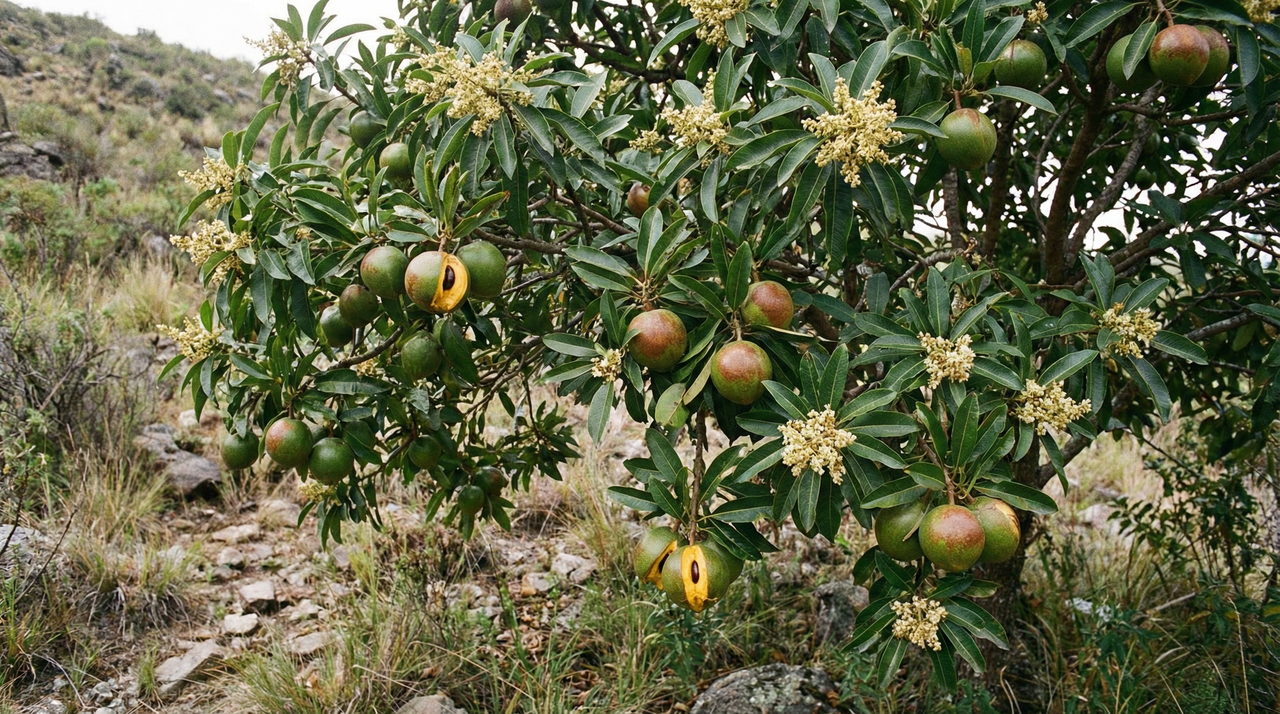
The first time I cut into a mamey sapote, I was genuinely confused. The outside looked like a russet potato crossed with a football, rough and brown and completely unassuming. Then the knife went through and I was staring at this vivid, almost alarming orange-red flesh, dense and glossy, smelling faintly of almonds and ripe peaches. I passed a spoonful to the friend standing next to me and watched her face do exactly what mine had done: pure disbelief that something so homely on the outside could be that extraordinary on the inside. She asked if I'd added something to it. I hadn't touched it.
What gets me about mamey sapote isn't just the flavor, though the sweet-potato-meets-caramel-meets-tropical-fruit thing is genuinely unlike anything else in a subtropical food forest. It's that this tree has been feeding people for at least three thousand years,[1] was considered sacred food by the Maya and Aztec civilizations, is the national fruit of Panama, and most people in temperate climates have never heard of it. For a plant with that resume, it's remarkably under-planted, under-discussed, and wildly underestimated.
Mamey Sapote Origin, History, and Botanical Background
If you've never encountered mamey sapote before, the first thing to know is that it isn't just a fruit. It's a tree with a story that stretches back thousands of years across the humid lowland forests of Mesoamerica. Pouteria sapota (that's the mamey sapote scientific name, for those who like to know what they're dealing with) is native to a broad sweep of tropical terrain, from Mexico's Yucatán Peninsula south through Belize, Guatemala, Honduras, El Salvador, Nicaragua, and Costa Rica, into northern South America as far as Colombia and Venezuela.[2][3] That's a lot of geography, and it gives you a sense of how deeply embedded this tree is in tropical America's ecological and cultural fabric.
Botanical Background and Visual Characteristics
In the wild, mamey sapote grows into an imposing presence, reaching 15 to 40 meters tall with a broad rounded crown and a trunk up to a meter in diameter.[4][5] The bark is rough and scaly, grayish-brown, and if you nick it, milky white latex seeps out immediately. I've found that latex trait useful in the field for quick identification, though it also tells you something about the tree's chemistry that becomes important when we talk about seeds and safety. Beneath the soil, a deep taproot descends 2 to 3 meters or more, often forming mycorrhizal partnerships that give established trees surprising drought tolerance.[5] In my zone 9B food forest designs, that taproot depth is one reason I place mamey sapote as a canopy anchor rather than worrying about it competing aggressively with shallower-rooted companions once it settles in.
The leaves are simple, leathery, and spirally arranged, dark green above, paler below, running 5 to 20 cm long with clean pinnate venation.[6] The flowers are easy to miss: small, greenish-white, tubular, clustered in little groups along the axils, blooming year-round with a peak in early summer.[4][5] What you're growing toward is the fruit. And it's spectacular. Each one is a hefty ellipsoid, 6 to 25 cm long, weighing anywhere from half a kilogram to 3 kilograms, with thick, rough brown skin that gives nothing away from the outside.[6][4] Slice it open and you get vibrant orange-red flesh with a creamy, custardy texture and a caramel sweetness that deepens noticeably the moment the fruit yields to gentle thumb pressure. Centered in that flesh sits a single large, shiny, axe-shaped seed, 3 to 5 cm long, brown as polished wood.[6][7] The tree is typically evergreen in tropical conditions, though it can act semi-deciduous in cooler, drier margins, with a productive lifespan of 30 to 50 years or more.[8]
If you're exploring the broader Pouteria genus, its relative lucuma (Pouteria lucuma) offers an instructive contrast. Where mamey sapote is a tropical lowland giant, lucuma is an Andean highlander, native to Peru, Ecuador, Bolivia, and northern Chile at elevations of 1,000 to 2,500 meters, topping out at 9 to 15 meters with a denser, more pyramidal form.[9][10] Its fruit flesh is dry and powdery rather than creamy, with a maple-like flavor. Lucuma also lives considerably longer, up to 100 years or more, though it fruits earlier.[11] When I help clients choose between the two, I'm essentially asking: do you have a humid subtropical yard or a cooler highland microclimate? They're the same genus, but different worlds.
Traditional and Cultural Uses
Mamey sapote's human story starts early. Archaeological evidence from sites like Joya de Cerén in El Salvador, Copán in Honduras, and various Veracruz and Yucatán sites places domestication as far back as 1000 BCE, during the Preclassic period.[12][13] The Maya and Aztecs didn't just eat it, they revered it, treating it as a food of the gods, sometimes reserved for nobility and incorporated into religious ceremonies honoring deities like Xilonen, the maize fertility goddess.[14][12] There's something powerful about planting a tree with that kind of lineage. I always mention it to clients when we're placing mamey sapote in a food forest design. These aren't just productive canopy trees; they're living continuations of one of the oldest agroforestry traditions in the Western Hemisphere.
Spanish explorers carried the tree into the Caribbean during the 16th and 17th centuries, and the USDA introduced it to Florida around 1916 specifically for subtropical fruit diversification.[15][3] Today it holds official cultural status as the national fruit of Panama, features prominently in Mexican state festivals like Hidalgo's Fiesta del Mamey, and carries strong hospitality symbolism across the Caribbean.[16] Traditional uses extend well beyond the kitchen. Bark and leaf decoctions have long been applied to gastrointestinal ailments, seeds prepared as poultices or infusions for respiratory complaints, and ethnobotanical surveys across Mexico, Costa Rica, and the Caribbean document over 50 distinct traditional applications in total.[17][18] Lucuma carries parallel significance in Andean traditions, venerated as "gold of the Incas" for food, medicine, and offerings to Pachamama.[19]
The IUCN currently lists Pouteria sapota as Least Concern globally, but wild populations face real pressure from deforestation and overharvesting.[20] I only ever source cultivated nursery stock for my projects, and I make a point of explaining why to clients. Planting a grafted mamey sapote in your backyard isn't just about fruit production; it's a small act of conservation and a way of honoring the indigenous knowledge systems that shaped this plant over millennia.
Fun Facts About Mamey Sapote
Here's one that surprises nearly everyone: that glossy axe-shaped seed at the heart of all that gorgeous flesh is toxic. It contains cyanogenic compounds that make ingestion genuinely dangerous, and the tree's latex has historically been used as a soap substitute because of its hemolytic properties. A fruit that's safe to eat wrapped around a seed you absolutely shouldn't swallow, with latex that doubles as a cleaning agent. I actually use those large seeds as propagation teaching tools with students, since they're impossible to lose in a seed tray, but I always lead with the safety reminder first.
Meanwhile, lucuma has quietly become a global pantry staple in its own right. The "gold of the Incas" is now widely sold as a dehydrated powder prized for its sweet maple-pumpkin flavor in smoothies and health foods.[21][22] Two Pouteria relatives, two ancient civilizations, and two very different ways of reaching modern kitchens. That kind of deep, branching cultural history is exactly why I keep planting members of this genus wherever the climate will allow it.
Mamey Sapote Varieties and Cultivars
Notable Mamey Sapote Cultivars
The cultivar lineup for mamey sapote isn't enormous, but each selection has a real personality. The main ones you'll encounter are Pantin, Magaña, Key West, Hartman, and Pupuna, with availability shifting depending on whether you're sourcing from Florida, Mexico, Central America, or the Caribbean.[23][24][25] If I'm walking someone through a nursery row and they ask which one to choose, I almost always point them to Pantin first.
Pantin is the dominant commercial selection for good reason. Fruits run large, typically 2 to 6 pounds, with that gorgeous creamy orange flesh and a sweet, caramel-forward flavor that's hard to beat. A mature tree can set 100 to 200 fruits per season, and it handles brief subtropical cold snaps down around 28°F without catastrophic damage.[26][5] I've grown Pantin in my Central Florida landscape and the yield on a healthy established tree is genuinely impressive. The catch is that Pantin is also fast and vigorous, and I had to start structural pruning early to keep it from taking over more space than I'd planned.
Magaña gives you a different trade-off. Fruits are smaller, 1 to 3 pounds, with flesh that's slightly more fibrous and a milder flavor profile. Yields run 50 to 150 fruits per tree, and the tree carries meaningful drought tolerance that makes it a sensible fit for smaller gardens or sites where irrigation is limited.[26] For a compact suburban yard, Magaña versus Pantin is a real conversation worth having. Key West shares Pantin's fast, vigorous growth habit, while Hartman grows slower and stays more compact, which directly affects how much pruning and long-term management you'll be signing up for.[27][28]
For context on the broader genus: the related Lucuma (Pouteria lucuma) has over 20 named Peruvian selections, including high-productivity types like Baraka, large-fruited Moc, early-maturing Racita, and drought-tolerant Zapatón, each varying in fruit size, color, and growth habit.[29][30] The depth of Andean selection work on Lucuma is remarkable, but that's a different tree for a different climate.
Sourcing Mamey Sapote Trees and Fruit
Getting your hands on a true-to-type mamey sapote means buying grafted stock, full stop. Always get grafted trees. A seedling can take 8 to 10 years to fruit and what you get is a gamble on quality; a grafted Pantin or Magaña from a reputable nursery can produce in 2 to 3 years with predictable results.[5] I learned this the slow way and I won't make that mistake again.
Specialty tropical nurseries in Florida, California, and Hawaii are your best sources, with peak availability running March through May.[5] Popular grafted cultivars sell out fast and waitlists are real. My routine is to get on nursery email lists in late winter and watch the Tropical Fruit Forum for spring shipment announcements before stock disappears. Grafted trees in 3- to 5-gallon containers typically run $50 to $150, with larger 5- to 7-foot specimens sometimes reaching $300 or more; seedlings start around $25 to $40 but I'd steer you away from them. Vendors like Logee's and Miami Fruit carry stock periodically, and the Tropical Fruit Forum community is a genuinely useful sourcing network.
If you're hoping to import fresh mamey sapote fruit rather than grow your own, USDA APHIS regulations require phytosanitary certification confirming freedom from quarantine pests, and treatments like irradiation or cold storage may apply; California has additional inspection requirements on top of federal rules.[31][32] Once you've tasted a tree-ripened Pantin from your own yard, imported fruit feels like a consolation prize. But the import route exists if you're still in the dreaming stage.
Mamey Sapote Propagation and Planting
This species rewards patient propagators, but it asks a lot in return. Getting this tree established well means understanding its seeds, its genetics, and the reality that choosing the wrong propagation method could mean waiting over a decade for your first fruit. I've grown mamey from both fresh seed and grafted nursery stock, and those two paths feel completely different from day one.
Seed Characteristics, Viability, and Germination
Here's the first thing that excites me about mamey sapote seeds: many of them are polyembryonic, producing two to six nucellar embryos that are genetically identical to the mother tree.[26][33] That's a meaningful advantage for home propagators who want to preserve the flavor of an exceptional parent. The catch is that zygotic seedlings can sneak into the same batch, and they look absolutely identical in the first year. I label everything obsessively now because there's no way to tell the true-to-type seedlings from the genetic lottery tickets until much, much later.
The seeds themselves are substantial: 25-40 mm long, woody, dark and glossy, with thick cotyledons and surprisingly high oil content, sometimes up to 60%.[34][35] When you pull a fresh one from ripe fruit, it feels heavy and almost slick compared to typical orthodox seeds. That oiliness is a clue to their biggest limitation: they're recalcitrant, meaning they cannot tolerate drying out.[5][36] At room temperature viability drops within two to four weeks. With cool, moist storage at 15-20°C in sand or vermiculite, you can stretch that to a few months, but the message is essentially: plant them fresh or lose them.[37]
Germination itself is actually straightforward once you respect those conditions. Seeds germinate hypogeal (the cotyledons stay underground) and don't need scarification or any dormancy treatment.[38] Keep them warm (25-30°C), humid (70-90%), and fresh seeds will typically sprout in two to four weeks with success rates around 50-80%. Direct seeding drops to 30-50%, so starting seeds in containers gives you better odds.[38] If you're not sure whether a stored seed is still viable, tetrazolium staining or a simple germination trial will tell you before you commit a good planting spot.[38]
Grafting and Vegetative Propagation
Grafting onto polyembryonic seedling rootstocks is the standard approach in commercial production, and honestly, it's what I'd recommend to most home growers too.[5][39] A grafted tree from a named cultivar like Pantin gives you confirmed genetics, reliable flavor, and fruit in three to five years instead of potentially thirteen. I now always start with a grafted tree if I want fruit this decade. Air-layering works as an alternative, and tissue culture is viable for larger-scale production, but for the backyard food forest, a quality grafted tree from a reputable tropical nursery is the most sensible path.
For context within the genus, lucuma (Pouteria lucuma) is mostly monoembryonic and often needs scarification to germinate reliably, partly because of its high-altitude Andean adaptation.[40][41] Mamey's polyembryony and easy germination make it more forgiving for the home propagator, which is one reason direct-seeding remains a practical starting point for rootstock production even if you graft the scion afterward.
Soil, Site Selection, and Planting Technique
Mamey sapote wants well-drained, fertile sandy loam or loamy soil in the pH range of 6.0-7.5, though it tolerates as low as 5.5 and as high as 7.5 in a pinch.[5][42] Push above 7.5 and iron chlorosis shows up, along with manganese and zinc deficiencies. Drop below 5.5 and you're into aluminum toxicity territory. I test soil before planting any Sapotaceae member, full stop. One spring I amended a bed with elemental sulfur to pull the pH down from 7.8, and by midsummer the chlorosis I'd been fighting had cleared up significantly. It's a slow correction, but it works.
In Florida's sandy soils, raising the bed, adding organic matter, or using a container mix (roughly 50% loamy soil, 30% sand or perlite, 20% compost) gives the drainage this tree's roots genuinely need.[5] Mulch generously after planting to conserve moisture and buffer soil temperature. The species is native to tropical lowland forests that receive 1000-2000 mm of rainfall annually, so adequate moisture matters, but waterlogging is fatal.[7] I lost a young tree to root rot my first year because I trusted the soil looked dry on top. Now I dig a test hole before planting to check actual drainage depth. Young trees tolerate partial shade (50-70%), but for fruiting, mature trees need six to eight hours of direct sun daily.[5] Shade-tolerant understory plants are fine beneath the canopy, but the mamey itself belongs in an open, sunny position.
Spacing, Timeline to Fruit, and Establishment Tips
A mature mamey sapote reaches 40-60 feet tall with a broad, dense canopy spanning 20-40 feet and a deep taproot that makes it very difficult to move once established.[5][26] Standard commercial spacing runs 25-30 feet between trees, supporting 100-150 trees per hectare. High-density systems with regular pruning can push trees to 15-20 feet apart, while premium production sometimes uses 35-40 feet to let canopies develop fully without competition.
Plant in spring or early summer once soil temperatures have cleared 70°F (21°C).[5] Grafted trees can begin fruiting in three to five years under good conditions; seedlings typically take five to thirteen years, with the longer end more common than growers expect.[5][33] In my experience the first two or three years feel painfully slow, but once the root system is established the canopy starts pushing noticeably. For gardeners in USDA zones 9b-11, young trees need frost protection through the first several winters; container-grown trees can be moved indoors above 50°F with reduced watering until temperatures stabilize.[5] Get the site, soil, and propagation method right from the start, and that multi-year wait becomes considerably more predictable.
Mamey Sapote Care Guide
Growing a mamey sapote tree successfully means understanding what a plant shaped by humid tropical lowlands actually needs when you transplant it into a Florida backyard or a marginal subtropical climate. The care isn't complicated, but it's unforgiving of a few specific mistakes -- poor drainage, cold exposure, and chronic nutrient imbalances being the ones I see take down promising young trees most often.
Water Requirements for Mamey Sapote
Young trees need deep watering two to three times per week during the first two to three years of establishment, targeting one to two inches per week and encouraging roots to push down one to two meters into the soil profile.[38] Once established, mature trees can go seven to fourteen days between waterings during dry periods and can handle two to three months of drought without catastrophic stress, though prolonged dry spells will shrink your fruit noticeably.[5] I lost a two-year-old tree to root rot before I internalized this rule: let the top two to four inches of soil dry between waterings, and never assume a wilting tree needs more water.[5] Yellowing leaves on a plant sitting in moist soil is Phytophthora, not drought. The other critical window is flowering and fruit development -- water stress during those stages causes flower drop and stunted fruit, so that's not the time to back off irrigation even if the tree looks fine.[5] Four inches of organic mulch pulled back from the trunk makes managing all of this dramatically easier.
Sunlight Needs and Light Management
Full sun, six to eight hours of direct light daily, is non-negotiable for fruiting.[38] Where gardeners go wrong is with newly transplanted seedlings. I've watched first-year trees look completely overwhelmed in direct summer sun -- leaf curl, bleached patches -- and the instinct is to pull them back into shade. The right move is gradual acclimation with thirty to seventy percent shade cloth for the first few months, then progressive removal.[43] Once they hit their stride, these trees want every photon available. Insufficient light shows up as lower canopy yellowing, sparse foliage, and dramatically reduced fruiting; too much heat without humidity adds leaf scorch and photoinhibition to the mix.[5][44]
Frost Tolerance and Cold Protection
The mamey sapote plant is firmly a USDA zone 10b to 11 tree.[5][45] Mature trees can shrug off a brief dip to around 28°F, but young trees show damage at 30 to 32°F, and any fruit on the tree is essentially lost below freezing.[5][46] Recovery from a hard frost event typically takes one to two seasons of lost productivity, which on a tree that already takes years to start fruiting is genuinely painful. In zone 9B I've had success keeping young trees alive through cold snaps by planting them on the south side of the house where thermal mass helps, wrapping trunks with old bed sheets on freeze nights, and choosing the highest, best-drained spot on the property -- cold air settles into low spots.[5] Don't expect 9B plantings to fruit reliably without consistent winter management.
Heat Tolerance and Stress Mitigation
Mamey sapote is native to humid tropical lowlands where temperatures run 75 to 86°F most of the year with nights staying above 64°F and humidity rarely dropping below 70%.[47][48] That context matters when you're growing it in a South Florida summer that routinely pushes past 95°F. Sustained heat above that threshold stresses the tree, and during flowering and fruit set the consequences are significant -- fruit set can drop by up to 40% during prolonged heat events.[49] I've noticed my mamey handles the same 95°F spells that cause avocado to drop fruit a bit more gracefully, but it still shows leaf scorch, wilting, and flower drop when heat and low humidity combine. Deep watering every seven to ten days, two to four inches of mulch, and wind protection are your primary tools; 'Pantin' and 'Magana' are the varieties I'd lean toward if heat is a consistent pressure in your garden.[5]
Feeding and Nutrient Management
This is where most home growers either undershoot or badly overshoot. Mamey sapote is a moderate to heavy feeder, and the program shifts as the tree ages. Young trees in years one through three need just 0.5 to 2 pounds of fertilizer annually, split across four to six applications with higher nitrogen to push vegetative growth. Mature trees need significantly more, roughly 2 to 4 pounds per inch of trunk diameter up to 30 pounds annually, spread across three to four applications with the emphasis tilting toward potassium to support fruiting.[5] A 6-6-6 or 8-3-9 formulation works well. Apply between February and September only -- winter fertilizing pushes tender growth into cold exposure.[5][50]
Soil testing every one to two years before you adjust your program isn't optional -- it's the difference between diagnosing problems and guessing at them.[5] The pH sweet spot is 6.0 to 7.0. On Florida's sandy, alkaline soils I've seen iron chlorosis develop fast -- interveinal yellowing on the new growth is the tell, and it usually means pH has crept up rather than that iron is actually absent from the soil.[33][51] Potassium deficiency shows as marginal leaf necrosis on older leaves; nitrogen deficiency shows as overall chlorosis with stunting. Zinc shows up as rosetting and mottled, undersized fruit. Excess phosphorus can lock out both zinc and iron simultaneously, which is why throwing more fertilizer at a struggling tree often makes things worse rather than better.[5] My preference is to layer in two to four inches of compost and aged mulch annually and use that as the baseline, adjusting with targeted amendments based on what the soil test actually shows.[5]
Pruning, Maintenance, and Integrated Pest Management
The pruning philosophy for mamey is minimal and intentional. When the tree is young, focus on structural training to establish a strong framework. After that, annual light maintenance to remove dead, diseased, or crossing branches and open up airflow is all you need.[52] I learned early on to prune only during dry weather with sterilized tools -- 70% alcohol between cuts. The milky latex that oozes from wounds is a magnet for pathogens, and these trees don't heal quickly. A sloppy pruning cut in wet weather has cost me more than one healthy branch to secondary infection.
Healthy cultural practices are your first line of pest management. Good drainage and canopy airflow reduce anthracnose and Phytophthora pressure significantly. Keep organic mulch away from the trunk. When fruit flies, scale, spider mites, or aphids do appear, I work through the IPM ladder -- monitoring, removing infested material, neem oil and insecticidal soap before anything heavier -- because a tree producing healthy new growth rarely becomes overwhelmed.[53][52] Two to four inches of organic mulch, kept consistent through the year, does triple duty: it retains moisture, suppresses weeds, and moderates the soil temperature swings that stress roots and invite opportunistic pathogens.[5]
When and How to Harvest Mamey Sapote
Mamey sapote doesn't announce its readiness the way a tomato does. The skin stays rough and brown whether the fruit needs another week or is already past its window, which catches a lot of first-time growers off guard. After years of working with grafted trees, I've learned to trust a very specific "give": slightly softer than a ripe avocado, but nowhere near mushy. Press your thumb gently near the stem end. If there's resistance, leave it. If it collapses, you've waited too long.
Ripeness Indicators and Optimal Timing
The standard practice is to harvest mamey sapote at the mature-green stage, once the skin has shifted from green to a uniform light brown and the fruit is still firm to the touch.[54] From there, it ripens off the tree at room temperature over several days to a week until it yields to gentle pressure like a ripe avocado, with that characteristic creamy texture developing throughout the flesh.[9][55] My rule of thumb: when the first fruits on a branch start to hint at softness, pick the whole cluster. Fruit that over-ripens on the tree turns mealy and fermented fast, and there's no recovering it. The propagation section covers the long juvenile period before you see your first harvest, so keep that timeline in mind when planning your orchard calendar.
Flavor, Texture, and Yield at Peak Ripeness
Cut open a perfectly ripe mamey and you get a thick wall of salmon-orange to reddish-brown pulp surrounding a single large, glossy seed running 5 to 8 centimeters long.[4][55][56] That seed, by the way, is a project to extract cleanly. The pulp clings to it like it means it. I find the easiest approach is to scoop the flesh away from the skin in halves and then work the seed out separately over a bowl.
The pulp itself, when timing is right, runs 10 to 20 percent sugars (sucrose, glucose, and fructose), shifting completely from the starchy, astringent quality of an immature fruit into something soft, sweet, and intensely aromatic.[54] The chemistry behind that aroma is genuinely fascinating: GC-MS analysis identifies ethyl butanoate (fruity, pineapple), γ-decalactone (peach, creamy), benzaldehyde (almond, nutty), linalool (floral), and hexanal (the green note that fades as the fruit finishes ripening).[57][58][59] In my experience, fruits ripened through a warm, humid summer tend to push those caramel and almond notes forward. Cooler finishing temperatures produce something blander.
Most people describe the flavor as sweet potato, apricot, marzipan, and caramel layered together, with a texture that's creamy and slightly granular, somewhere between avocado and baked sweet potato.[9][55][54] That said, it varies considerably by cultivar and handling. Pantin, in particular, runs noticeably sweeter than average, and fruits ripened indoors from a mature-green harvest consistently develop a better flavor balance than those left to ripen on the tree.[54][60] For comparison, lucuma, the Andean cousin in the same genus, produces a much drier, denser fruit with a grainy texture and a maple-butterscotch flavor better suited to frozen desserts than fresh eating.[61][22] I've eaten both at markets and trials, and the contrast is striking. Mamey's custard-like pulp is something you scoop and eat immediately; lucuma is something you dry and powder. Same genus, completely different relationship with ripeness.
Mamey Sapote Preparation and Uses
Culinary Uses and Flavor of Mamey Sapote
Cut into a perfectly ripe mamey sapote and you get one of those moments that makes you understand why it's been treasured since before written history. The pulp is vivid orange-red, buttery soft, and genuinely pudding-like; its deeply rich profile is dominated by aromatic notes of honey, almond, and tropical fruit.[33][62] If you've only experienced lucuma as a powder stirred into smoothies, fresh mamey will genuinely surprise you. The genus similarity stops at taxonomy; the texture and eating experience are completely different animals.
That pulp is the edible prize. In Cuban and Puerto Rican kitchens it gets blended into batidos, churned into ice cream, folded into flans and mousses, or stirred into rice pudding with cinnamon and nutmeg.[4] Across Mesoamerica it has fed people and featured in rituals symbolizing abundance for thousands of years.[63] Always peel it. The rough outer skin is technically edible but genuinely unpleasant in texture, so just remove it.[64]
The large seed deserves its own paragraph because it's where people get into trouble. Raw, it's toxic; saponins and tannins make it genuinely dangerous to consume untreated.[64][65] Thorough roasting or boiling neutralizes those compounds, after which the seed can be ground into a flour used in porridges, flatbreads, and traditional beverages. I'll admit I learned to take "thorough" seriously after a batch I didn't roast quite long enough; the bitterness was a clear enough signal to stop. On the unripe fruit itself, the latex-heavy flesh causes oral irritation, nausea, and diarrhea, and people with latex-fruit syndrome should be especially cautious.[66][65] Ripe fruit keeps 5 to 7 days at room temperature or up to two weeks refrigerated.[67] While celebrated primarily for its culinary qualities, the raw fruit also provides a meaningful daily source of fiber and potassium.[68]
One identification warning that matters most in Florida and throughout the subtropics: mamey sapote has been confused with manchineel (Hippomane mancinella), a tree whose fruit causes severe blistering and can be life-threatening.[69][70] Mamey's thick, rough, dimpled brown skin, oval shape, and distinctive ring scar at the stem are your confirmation markers. Know them before you taste anything unfamiliar.
Medicinal Preparations
In traditional practice, dried mamey sapote leaves (roughly 5 to 10 grams) are simmered in a liter of water and consumed as one or two cups daily to support digestion and ease respiratory complaints.[71] The fruit itself is considered safe for adults at one to two fruits per day. Lucuma follows similar ethnobotanical patterns within the genus, with one to two teaspoons of its dried powder or a cup of infusion as the traditional preparation.[72] These are traditional frameworks rather than clinically validated protocols, and none of this replaces a conversation with a qualified practitioner.
Non-Food and Traditional Uses
This is why I always save the seeds. Mamey sapote seed oil, known traditionally as manteca de mamey, has been used across Maya communities for generations as a topical treatment for wounds, burns, dermatitis, and rheumatism, and as a skin and hair conditioner prized for its anti-inflammatory properties.[73][74] The fruit juice has its own history in traditional Mesoamerican skin care, applied topically for softening and minor irritation healing.[17] Bark and leaves have no documented culinary use and should be left alone given the absence of safety data on internal consumption.[75]
Mamey Sapote Health Benefits and Medicinal Uses
Most tropical fruits earn their reputation on flavor alone. Mamey sapote earns it on both fronts, because underneath that remarkable sweet-potato-caramel taste is a genuinely impressive nutritional package. I've had clients dismiss it as an indulgent dessert fruit, and I always push back on that.
Nutritional Profile of Mamey Sapote
A 100-gram serving of ripe pulp delivers around 124 calories, 32 grams of carbohydrates, and 5.4 grams of dietary fiber, with just under half a gram of fat and moderate protein.[76] Those numbers shift a little depending on ripeness and cultivar, but the vitamin and mineral story is consistent: you're getting 171 mcg RAE of vitamin A (mostly from beta-carotene at 4.5 to 6.8 mg per 100g), 23 mg of vitamin C, and 2 mg of vitamin E per serving.[77][78] On the mineral side, potassium stands out at 454 mg, supported by useful amounts of magnesium, phosphorus, and iron.[79] For context, that's more potassium per serving than a medium banana. I've noticed that fully tree-ripened fruit with deeply saturated orange flesh tends to have that pronounced sweet-potato aroma I associate with high carotenoid content; the paler, harvested-early fruit never quite matches it in the kitchen.
Lucuma, the Andean genus cousin, runs lighter fresh at roughly 60 calories and 14 grams of carbohydrates per 100g, with a low glycemic index around 25.[80][81] Dried into powder it concentrates dramatically to around 310 calories, and while stable antioxidants and minerals survive the process, vitamin C takes a significant hit (50 to 90 percent loss).[82] I keep freeze-dried lucuma powder on hand as a whole-food sweetener for baking, but mamey sapote is what I reach for when I want something nutritionally substantial and fresh from the tree.
Key Phytochemicals in Mamey Sapote
The nutrition numbers are only part of the picture. The pulp contains a broad spectrum of polyphenols and phenolic compounds at 150 to 300 mg GAE per 100g,[78] including chlorogenic acid, ellagic acid, gallic acid, and proanthocyanidins alongside flavonoids like quercetin, kaempferol, catechin, and mangiferin. Layer in carotenoids (beta-carotene, lycopene, lutein), terpenoids like lupeol and beta-sitosterol, and seed oil rich in oleic acid, and you start to understand why researchers keep coming back to this species.[83][84][85] These compounds collectively drive DPPH free radical scavenging of up to 80 percent in vitro.[86]
What actually ends up in your fruit depends heavily on where and how it grew. Pulp carries the highest flavonoid and carotenoid load; seeds concentrate saponins and phenolics; bark leans toward alkaloids and tannins.[87][88] Fruit grown in acidic soils during wet seasons tends toward higher phenolic content, and Central American cultivars generally show more phytochemical diversity than Florida selections. That tracks with my own observations: fruit grown in richer, more variable conditions just seems to have more going on. Lucuma adds a genus-level note here, with significant tocopherols (vitamin E) and altitude-enhanced antioxidant levels from UV and temperature stress.[89]
Medicinal Research and Traditional Uses
The strongest preclinical evidence centers on antioxidant and anti-inflammatory activity. Mamey sapote extracts show ORAC values up to 15,000 μmol TE per 100g and DPPH IC50 values of 20 to 50 μg/mL, operating through both free radical scavenging and upregulation of the body's own protective enzymes like superoxide dismutase and catalase.[90][91] For comparison, blueberries (which I grow and genuinely love) typically register ORAC values in the 6,000 to 9,000 range. Mamey's numbers are compelling, though I always remind people that ORAC values measure test-tube activity, not what happens after digestion. The anti-inflammatory mechanism involves COX-2 and iNOS inhibition and NF-κB downregulation, and leaf extracts have reduced paw edema in rodents at levels comparable to indomethacin, which is notable for a food plant.
Antimicrobial activity against Staphylococcus aureus, E. coli, and Candida albicans has been documented in vitro, attributed mainly to saponins and flavonoids disrupting cell membranes.[92] Preclinical antidiabetic work shows alpha-amylase and alpha-glucosidase inhibition alongside improved insulin signaling in rodent models, and there is early anticancer data involving mitochondrial apoptosis pathways, though all of this remains firmly in the lab or animal study stage.[93][94]
Traditional medicine across Central America, the Caribbean, and northern South America has used nearly every part of this tree: leaf decoctions for fever, GI complaints, and respiratory issues; seed oil and poultices for skin conditions and joint pain; bark decoctions for diarrhea and hypertension; latex tinctures on wounds; and root preparations as a diuretic and fever remedy.[95][96] The antioxidant and anti-inflammatory research offers partial biological plausibility for those uses, but claims around cancer and malaria lack strong evidence. Lucuma mirrors this pattern in the Andes, with a single small pilot trial noting mild lipid profile improvements in metabolic syndrome patients, but robust human trials for either species are essentially absent.[97][98][99] I treat mamey the way I treat most nutrient-dense traditional foods: as genuinely valuable dietary support, not a pharmaceutical substitute. The long history of safe consumption across Central American communities gives me real confidence serving it to family and workshop participants, even as I'm honest about where the clinical data runs thin.
Safety Considerations for Mamey Sapote
Ripe mamey pulp is safe and well-tolerated, with a rodent LD50 above 2,000 mg/kg and recognized safe status among food authorities.[100][101] The seed is a completely different story. It contains toxic saponins and cyanogenic glycosides that can cause nausea, vomiting, abdominal pain, and cyanide poisoning symptoms within one to four hours of ingestion. Early in my tropical fruit explorations I cracked one open out of curiosity and tasted it; the intense bitterness was immediate and unmistakable, and the stomach discomfort that followed was convincing. Now I treat every mamey seed like the hazardous material it is and discard it without hesitation. I label them clearly if there are others in the kitchen.
The latex and sap from non-fruit parts can cause mild contact dermatitis in sensitive individuals.[102] Clients with known latex allergies who visit my design consults always get a clear heads-up about mamey and related Sapotaceae fruits, because cross-reactivity with latex-fruit syndrome is a real concern with this family.[103] Pregnancy and lactation data are limited, so ripe pulp in normal dietary amounts is considered fine but extracts or non-fruit preparations should stay off the table without medical guidance. The preclinical antidiabetic activity also means people on blood sugar medications should monitor carefully, as additive hypoglycemic effects are plausible.[104][105] The practical guidance is simple: choose fully ripe fruit with a fragrant, sweet aroma and yielding flesh, scoop the pulp, and discard the seed immediately.[33] Lucuma follows the same genus pattern; the fruit is safe, the non-fruit parts are not, and excessive amounts of either can cause digestive discomfort from the fiber load.[106]
Mamey Sapote Pests and Diseases
Mamey sapote has a respectable baseline toughness for a tropical fruit tree, but it's not bulletproof. The overall disease resistance is moderate, and how well any individual tree holds up depends heavily on cultivar, rootstock, and whether you've given it a site that works with its biology rather than against it.[50][107] I've found that the growers who struggle most with this tree aren't dealing with some exotic pathogen -- they're dealing with drainage problems and humidity, the same two factors that undercut most subtropical fruit trees.
Common Diseases of Mamey Sapote
The two diseases worth losing sleep over are Phytophthora root rot and anthracnose. Phytophthora is the more insidious of the two because by the time you see wilting and decline, the root system is often already severely compromised.[50][108][109] I lost two young trees to this before I stopped trusting flat, heavy Florida soil and started mounding every new planting. That single change -- building a raised planting mound with well-amended, fast-draining soil -- has been more protective than any product I've ever applied.
Anthracnose (Colletotrichum gloeosporioides) is the second major problem, causing dark sunken lesions on leaves, flowers, and ripening fruit whenever humidity climbs above 70% and temperatures stay in that warm subtropical range.[50][110][111] A range of lesser issues -- Cercospora leaf spots, powdery mildew, pink disease, and occasional Fusarium or Rhizopus fruit rots -- round out the disease picture, but most healthy, well-sited trees handle them without much intervention.[33][112] Worth knowing: lucuma, the Andean genus relative, actually tends to fare worse with Fusarium wilt and sooty mold on top of its own Phytophthora vulnerability, so mamey sapote holds a relative advantage there.[113]
Cultivar selection matters more than most people realize. 'Pantin' carries strong anthracnose resistance, and I've noticed noticeably cleaner fruit on my 'Pantin' trees compared to seedling neighbors during wet summers. 'Magana' and 'Key West' show moderate Phytophthora tolerance, though no cultivar is fully immune.[114][115] Cultural practices remain the first line of defense: good drainage, canopy pruning for airflow, drip irrigation over overhead sprinklers, and prompt removal of infected debris.[50][116] I time my first copper-based fungicide application to the onset of summer rains rather than to any calendar date -- once that humidity spikes and the rain becomes daily, that's the signal.[50][117]
Major Insect Pests and Their Impacts
The insect cast includes fruit flies (Anastrepha spp.), scale insects, red-banded whitefly, mealybugs, leaf miners, and weevils.[118][119] Fruit flies are the headliner, and every tropical-fruit grower eventually has a reckoning with them. Larvae feeding inside developing fruit can cause 50 to 70 percent yield losses in bad wet seasons,[118][120] and because the damage is internal you often don't discover it until you cut the fruit open. I run the same Anastrepha monitoring traps on my mamey sapote that I use on citrus and papaya -- that continuity across the orchard makes it easier to catch pressure spikes early rather than reacting after the fact.
Scale insects, whiteflies, and mealybugs are the slow-burn problem. They sap tree energy, coat leaves in honeydew, and that honeydew becomes a substrate for sooty mold that further cuts photosynthesis.[118][119] Leaf miners are a particular nuisance on young trees, tunneling through new flushes at the exact point when the tree needs every leaf working at full capacity. All of this pest pressure peaks during the wet season, which unfortunately overlaps with active fruiting -- so vigilance in summer is non-negotiable.
Natural Defenses and Resistance Traits
Here's what I find genuinely compelling about this tree: it's not passive. Mamey sapote's thick bark, rapid latex exudation, leaf toughness, and dense trichomes create real physical barriers, and behind those barriers sit bioactive compounds -- quercetin, kaempferol, tannins, lupeol, saponins, and the latex irritant mameyzin -- that actively deter feeding insects and suppress some pathogens.[121][122][123] You notice the latex immediately when you prune or scrape off a scale insect -- it flows within seconds, leaves a bitter, slightly astringent residue on your fingers, and clearly discourages generalist feeders who don't have a specific adaptation to handle it.
'Pantin' shows higher resistance to borers and anthracnose, while 'Jamaican Giant' demonstrates tolerance to both anthracnose and nematodes; thicker fruit skin in some selections also appears to reduce fruit-fly oviposition success.[124][26] The resistance mechanisms aren't fully genetically characterized yet, and no variety is immune -- but these are real, practical differences you can select for. By contrast, lucuma is considerably more vulnerable to Cerambycidae borers and lepidopteran shoot tunnelers, and aphid pressure causes leaf curl and sooty mold with fewer commercially available resistant selections to draw on.[125]
Integrated Pest and Disease Management Strategies
My approach starts with monitoring and cultural practices, because that's where the real leverage is. Good drainage (covered in more detail in the care guide), airflow pruning, sanitation, and consistent mulching address the conditions that invite both fungal disease and insect buildup before they escalate.[50][116] Fruit bagging during development is the single most effective intervention I've found against fruit flies -- low-tech, zero chemistry, and genuinely protective when applied before flies begin laying.
Biological support comes next: encouraging lady beetles and other natural predators handles a meaningful portion of the scale and mealybug load without any input. When monitoring shows pressure that cultural and biological methods can't contain, targeted options like neem oil, horticultural oils, spinosad for fruit flies, and copper fungicides for anthracnose are the tools I reach for -- in that order, and only when warranted.[26][126] Local extension recommendations matter here because pest complexes and spray registrations vary by region. A well-sited, established mamey sapote -- planted on a mound, pruned for airflow, and observed regularly -- needs far less intervention than a tree fighting its environment from the start.
Mamey Sapote in Permaculture Design
Spend time in the humid lowland forests of southern Mexico or Guatemala and you start to understand what mamey sapote actually is before you try to grow it. In its native habitat it occupies the mid-to-high canopy of tropical and semi-deciduous forests from sea level up to around 600-700 meters, providing fruit for monkeys, birds, and bats while shading a rich understory below.[127][128] That ecological context is the lens I always try to bring into design. When you know where a plant comes from, you stop guessing what it needs and start building toward it.
Climate and Hardiness Zones for Growing Mamey Sapote
In the US, mamey sapote is firmly a USDA zones 10a-11 plant, with the most reliable production coming out of Miami-Dade, Broward, and Monroe counties in Florida, along with parts of Hawaii and a few frost-free coastal pockets in California.[7][50] California growers face the added frustration of insufficient heat accumulation even where frost isn't the issue. This is a tree that wants 70-85°F with humidity in the 70-90% range and steady moisture; it is not a candidate for Mediterranean-dry summers without serious irrigation.[129][33]
Frost sensitivity feels familiar to anyone who has managed a mango or avocado on the edge of their hardiness zone. Mature mamey trees can handle a brief dip to 28-30°F, but young trees take damage at the freezing mark, full stop.[26][38] I've successfully carried young trees through brief 29°F dips using double-layer frost blankets and trunk wraps, but I wouldn't count on that more than once or twice a season. In zone 10a, the real design work is about microclimate: thermal mass, windbreaks on the north and west, and 4-6 inches of mulch over the root zone to hold soil warmth.[5] Site your tree against a south-facing wall or structure if you're pushing the edge.
Lucuma (Pouteria lucuma) is sometimes floated as a cooler-climate alternative, and it does tolerate zone 9b with protection, but it's an Andean highland plant adapted to elevations of 1,000-3,000 meters, lower humidity, and distinct dry seasons, which is essentially the opposite of what mamey sapote wants.[130][131] Canistel (Pouteria campechiana) mirrors mamey's lowland tropical needs more closely and can be a useful trial companion in the same guild.[132]
Ecosystem Functions and Pollination of Mamey Sapote
Here's where the design gets genuinely interesting, and also where I've watched food forests quietly underperform for years before anyone figured out why. Mamey sapote flowers are hermaphroditic but protogynous, meaning the female phase opens first and the male phase follows, which makes self-pollination nearly impossible.[127][133] Layer on top of that a gametophytic self-incompatibility system that requires cross-pollination between genetically compatible trees, and you have a plant that will bloom generously while setting very little fruit in isolation.[134] Natural fruit set can fall below 5-10%, sometimes lower.[135]
After watching fruit-set failure on an isolated mamey in a client's food forest, I now always specify at least two compatible cultivars in any design. I also hand-pollinate with a soft brush for the first few seasons while the pollinator community establishes. The pollinator story is genuinely fascinating: a full day-to-night parade of sweat bees, flies, and beetles during daylight hours, then bats (including the Jamaican fruit bat) and moths drawn in by evening fragrance.[136][33] I've started timing my evening garden walks to catch that bat-pollination window at dusk, and there's something deeply satisfying about seeing the system work the way it evolved to. Flowering peaks during the wet season and is often triggered by a preceding 2-3 month dry period, with optimal conditions around 20-30°C and 60-80% humidity.[135]
From a guild-design standpoint, this means companion planting with pollinator-attracting species isn't optional, it's load-bearing. Dense plantings of flowering understory herbs and shrubs that support native bees and flies during the day, combined with bat-friendly open flight corridors through the canopy at night, can meaningfully move the fruit-set needle. Introducing managed bee hives nearby has also shown results in higher pollination rates.[137][133]
Forest Layer, Guilds, and Companion Planting with Mamey Sapote
Mamey sapote occupies the upper canopy layer. In the wild it reaches 40-60 feet; in a managed home system, selective pruning keeps it at a workable 20-30 feet, which is still a substantial presence in any food forest.[38][138] The canopy spreads broadly, 20-30 feet wide, with large, densely packed leaves that reduce light transmission to the understory to roughly 20-40% of full sun.[38] I compare it to the shade cast by a large mango, but denser. Where a mango canopy gives you a dappled, shifting shade that sun-tolerant species can still work with, mamey casts a heavier shadow that really shapes your understory choices.
The root system compounds this. Most roots sit in the top two feet of soil and extend well beyond the dripline, which creates real competition for water and nutrients with anything planted nearby.[139][140] Space these trees at least 25-30 feet from other large trees. One thing I've observed in younger trees is that the shallow roots make them surprisingly prone to wind rock before the canopy fills out, which is another reason windbreaks belong in the guild plan from day one rather than as an afterthought.
Under that canopy, ferns, shade-tolerant gingers, and low-light herbs thrive once the tree matures.[141] Heavy mulching beneath the dripline serves double duty: it suppresses competitive weeds, retains the consistent moisture this tree demands, and insulates those shallow roots. Think of the mulch layer as the anchor of the whole guild. Build the understory with species that tolerate low light, contribute nitrogen or organic matter, and support the day-active pollinator community the tree depends on, and you've created a system where the canopy tree and its companions are genuinely working together rather than just coexisting in proximity.
The First Time I Cut One Open
I was standing in a client's South Florida garden, knife in hand, genuinely unprepared for what was inside. That color, that smell, that texture that has no good comparison in the temperate world. I've grown a lot of fruit trees, and most of them you can explain to someone who hasn't tasted them. Mamey sapote, I've learned, you just have to hand to someone and watch their face.
Sources 141
- Pouteria sapota: Nutritional and bioactive compounds, biological activity and industrial applications ↩
- Pouteria sapota - Kew Gardens Plants of the World Online ↩
- Pouteria sapota (mamey sapote) ↩
- Pouteria sapota - Wikipedia ↩
- Mamey Sapote - University of Florida IFAS Extension ↩
- Pouteria sapota - Kew Science ↩
- Pouteria sapota - USDA Plants Database ↩
- Mamey Sapote - Missouri Botanical Garden ↩
- Pouteria lucuma - Missouri Botanical Garden ↩
- Pouteria lucuma - World Checklist ↩
- Pouteria lucuma - Plant Finder ↩
- Pre-Columbian Foodways: Archaeobotanical Evidence from Mesoamerica ↩
- Domestication of Tropical Fruits in Mesoamerica ↩
- Pouteria sapota ↩
- The Mamey Sapote: A Tropical Fruit for Florida ↩
- Mamey: Símbolo Cultural de Hidalgo ↩
- Ethnobotany of Pouteria sapota in Mesoamerica ↩
- Traditional Uses and Sustainability of Mamey Sapote in Central America ↩
- Ethnobotany of the Andes: Diversity and Importance of Native Plants ↩
- IUCN Red List: Pouteria sapota ↩
- Lucuma (Pouteria lucuma) ↩
- Pouteria lucuma ↩
- Mamey Sapote Growing in the Florida Home Landscape ↩
- Pouteria sapota (Mamey Sapote) ↩
- Mamey Sapote Cultivars and Their Characteristics ↩
- Mamey Sapote Cultivars: Pantin and Magana ↩
- Pouteria sapota (Mamey Sapote) ↩
- Mamey Sapote Growing in the Florida Home Landscape ↩
- Lucuma (Pouteria lucuma) Production in Peru ↩
- Horticultural Varieties of Lucuma in Andean Countries ↩
- Fruits and Vegetables Import Requirements (FAVIR) Database ↩
- Tropical Fruit Import Regulations ↩
- The Botany of Pouteria sapota (Mamey Sapote) ↩
- Pouteria sapota (Jacq.) H.E. Moore & Stearn ↩
- Embryology and Seed Anatomy in Sapotaceae ↩
- Seed Storage of Tropical Tree Species ↩
- Recalcitrant Seeds: Biology and Storage ↩
- Propagation of Mamey Sapote ↩
- Grafting and Propagation of Tropical Fruit Trees ↩
- Germination of Pouteria lucuma Seeds ↩
- Phenology and Harvesting of Andean Fruits: Lucuma Case Study ↩
- Mamey Sapote Production Guide ↩
- Mamey Sapote Growing in the Florida Home Landscape ↩
- Tropical Fruit Trees: Sunburn and Heat Stress Management ↩
- Pouteria sapota ↩
- Cold Tolerance of Tropical Fruit Trees ↩
- Mamey Sapote Growing in the Florida Home Landscape ↩
- Pouteria sapota - Mamey Sapote ↩
- Physiological Responses of Tropical Fruit Trees to Heat Stress ↩
- Mamey Sapote Growing in the Florida Home Landscape ↩
- Tropical Fruit Nutrient Deficiencies ↩
- Pests and Diseases of Subtropical Fruit Trees ↩
- University of Florida IFAS Extension - Mamey Sapote Production ↩
- Mamey Sapote Flavor and Composition ↩
- Pouteria sapota - Royal Botanic Gardens, Kew ↩
- USDA FoodData Central - Mamey sapote ↩
- Volatile Composition of Mamey Sapote (Pouteria sapota) Fruit ↩
- Aroma Profile and Sensory Characteristics of Mamey Sapote ↩
- GC-MS Analysis of Volatile Compounds in Tropical Fruits Including Pouteria sapota ↩
- Sensory Analysis of Tropical Fruits ↩
- Lucuma (Pouteria lucuma) Production in Peru ↩
- Sensory Profile of Mamey Sapote ↩
- Ethnobotany of the Yucatan Maya: Traditional Knowledge of Plant Use ↩
- Pouteria sapota (Mamey Sapote) Profile ↩
- Toxicity of Tropical Fruits: Seeds and Unripe Parts ↩
- Mamey Sapote (Pouteria sapota): A Review of Nutritional and Phytochemical Composition ↩
- Postharvest Handling Guidelines for Mamey Sapote ↩
- Mamey sapote, raw ↩
- Mamey Sapote (Pouteria sapota) - Missouri Botanical Garden ↩
- Manchineel Tree (Hippomane mancinella) - Florida Tree Description Center ↩
- Ethnobotanical Uses and Pharmacological Properties of Pouteria sapota ↩
- Pouteria lucuma: A Review of Its Phytochemistry and Pharmacology ↩
- Traditional Uses of Mamey Sapote Seed Oil ↩
- Ethnobotany of the Maya: Pouteria sapota ↩
- Pouteria sapota (Mamey Sapote) ↩
- Mamey sapota, raw ↩
- Mamey sapota, raw ↩
- Nutritional Composition and Bioactive Compounds in Pouteria sapota Fruits ↩
- Mamey sapota, raw ↩
- Pouteria lucuma (Lucuma)_USDA FoodData Central ↩
- Lucuma, raw - USDA FoodData Central ↩
- Phytochemical Characterization of Pouteria lucuma Ruiz & Pav. ↩
- Phytochemical Composition of Pouteria sapota Fruit ↩
- Phenolic compounds and flavonoids in mamey sapote (Pouteria sapota) ↩
- Phytochemical Composition and Antioxidant Activity of Pouteria sapota ↩
- Phytochemical and Antioxidant Properties of Pouteria sapota ↩
- Phenolic Compounds in Leaves and Bark of Pouteria sapota ↩
- Phytochemical Composition of Mamey Sapote (Pouteria sapota) Fruits from Different Geographical Origins ↩
- Chemical composition and antioxidant properties of peruvian lucuma (Pouteria lucuma) fruits ↩
- Antioxidant and anti-inflammatory activities of Pouteria sapota fruit extracts ↩
- Pharmacological Activities of Pouteria sapota Leaf Extracts: Focus on Anti-inflammatory and Antioxidant Effects ↩
- Phytochemical screening and antimicrobial activity of Manilkara zapota and Pouteria sapota ↩
- Hypoglycemic Effect of Pouteria sapota Leaf Extract in Streptozotocin-Induced Diabetic Rats ↩
- Cytotoxic Effects of Pouteria lucuma Extracts ↩
- Ethnobotanical Uses of Pouteria sapota in Mexican Traditional Medicine ↩
- Ethnobotany of Pouteria sapota in Mesoamerica ↩
- Ethnobotany of the Andes: Traditional Uses of Pouteria lucuma ↩
- Pouteria lucuma (Ruiz et Pav.) Kuntze: Phytochemical Profile and Health-Promoting Effects ↩
- Phytochemical and Pharmacological Review of Pouteria Species ↩
- Pouteria sapota (mamey sapote) ↩
- Toxicity and Safety Assessment of Pouteria sapote Extracts ↩
- Allergic Contact Dermatitis to Mamey Sapote (Pouteria sapota) ↩
- Latex-Fruit Syndrome: Cross-Reactivity with Sapotaceae Fruits ↩
- Mamey Sapote: 7 Health Benefits, Nutrition & How to Eat - Tua Saude ↩
- Mamey Sapote (Pouteria sapota Jacq.) - CABI Handbook of Phytonutrients ↩
- Allergens in Tropical Fruits: Focus on Sapotaceae Family ↩
- Diseases of Tropical Fruit Crops ↩
- Phytophthora Diseases in Tropical Fruits ↩
- Phytophthora Root Rot in Tropical Fruits ↩
- Anthracnose Resistance in Sapotaceae ↩
- Anthracnose of Tropical Fruit Crops ↩
- Mamey Sapote Production Guide ↩
- Sapotaceae: Family Profile and Crop Species ↩
- Mamey Sapote Growing in the Florida Home Landscape ↩
- Pouteria sapota (mamey sapote) ↩
- Tropical Fruit Diseases in Florida ↩
- Pouteria sapota: Pest and Disease Management ↩
- Insect Pests of Tropical Fruit Crops ↩
- Mamey Sapote Production Guide ↩
- Management of Fruit Flies in Tropical Fruits ↩
- Phytochemical Screening and Antioxidant Activity of Pouteria sapota ↩
- Chemical Composition and Insecticidal Properties of Mamey Sapote Extracts ↩
- Bioactive Compounds in Sapotaceae Family: Focus on Pouteria Species ↩
- Mamey Sapote Production Manual ↩
- Insect Pests of Andean Fruits: Lucuma Case Study ↩
- Fruit Fly Management in Tropical Fruits ↩
- Pouteria sapota (Jacq.) H.E. Moore & Stearn ↩
- Pouteria sapota ↩
- Pouteria sapota - CABI Compendium ↩
- Growing Lucuma Trees ↩
- Plants of the World Online: Pouteria lucuma ↩
- USDA Plants Database - Pouteria campechiana ↩
- Pollination Biology of Pouteria sapota ↩
- Self-Incompatibility in Sapotaceae: Implications for Breeding ↩
- Mamey Sapote Growing in the Florida Home Landscape ↩
- Pollination Ecology of Mamey Sapote (Pouteria sapota) ↩
- Pollination of Tropical Fruit Trees ↩
- Mamey Sapote ↩
- Mamey Sapote Growing in the Florida Home Landscape ↩
- Pouteria sapota (Mamey Sapote) Plant Profile ↩
- Pouteria lucuma - Kew Science ↩