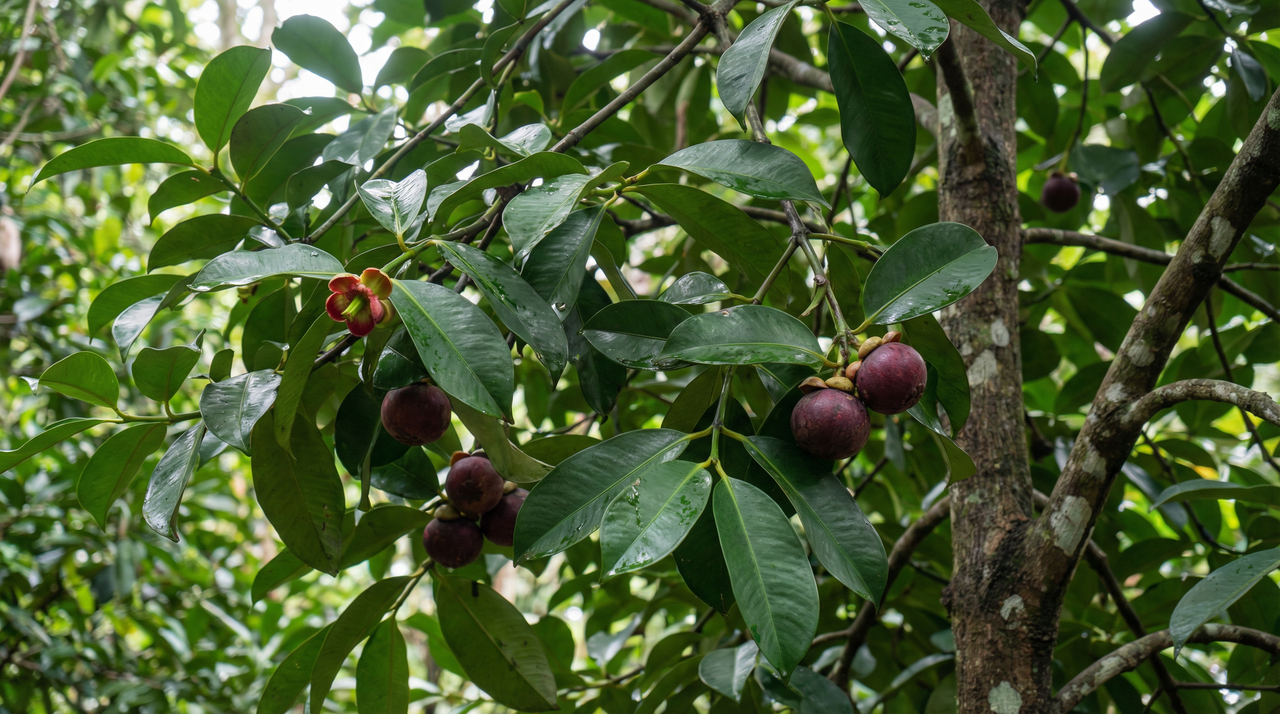
Queen Victoria supposedly offered a reward to anyone who could deliver her a fresh mangosteen.[1] I can't verify that story, and neither can most historians, but I understand the impulse completely. The first time I cracked one open with my thumbs in a market in Penang, juice running down my wrists before I even got it to my mouth, I thought: yes, someone absolutely would have offered a reward for this. What I didn't expect was the rind. That thick, purple, almost woody shell I'd just peeled away? In traditional Southeast Asian medicine, it's the part that actually does the heavy lifting, brewed into preparations for wounds, skin infections, and digestive trouble for centuries before anyone in a lab coat knew what a xanthone was.
That contradiction sits at the heart of this plant. The fruit that gets all the fame, the delicate white aril with its floral, peach-lychee sweetness, is wrapped inside what might be, gram for gram, one of the most chemically complex rinds in the plant kingdom. And then there's the tree itself: slow to the point of being almost philosophical, demanding conditions so specific that it's spent most of its existence refusing to cooperate outside a narrow band of humid equatorial lowlands. Gorgeous, generous, and deeply uncompromising. That's mangosteen.
Mangosteen Origin, History, and Botany
Botanical Background and Native Habitat
Garcinia mangostana is a long-lived perennial evergreen rooted, quite literally, in the rainforests of the Malay Archipelago. Malaysia, Indonesia, Sumatra, Java, and parts of the Philippines are its ancestral territory, and institutions like Kew Gardens and the Missouri Botanical Garden maintain specimens partly because the tree is so notoriously difficult to establish outside that native range.[2][3][4] In my experience working with slow tropical perennials, patience is the real limiting factor for home gardeners attempting this regal fruit tree. Grafted trees take 5-10 years to fruit; seedlings can take 10-20. Peak production doesn't arrive until a tree is 20-40 years old, though a well-sited specimen can live a century or more.[5][6][7]
The tree is shade-tolerant, prefers well-drained acidic soils, and flowers November through February in its native range, with fruit peaking June to September.[3][8] The IUCN lists it as Least Concern globally, though local populations face real pressure from deforestation and overharvesting.[9] Its cousins tell a related story: Garcinia atroviridis (Asam Gelugur) shares the shade-tolerant, lowland rainforest niche across Peninsular Malaysia, Sumatra, and Borneo and is also Least Concern, while Garcinia afzelii (Bitter Kola) of West and Central Africa is assessed as Vulnerable due to deforestation and heavy harvesting pressure.[10][11] Knowing those parallels helps me recognize the family's shared vulnerabilities wherever I encounter them in mixed tropical plantings.
Visual Characteristics of the Mangosteen Tree
Picture a tree with a dense, rounded to pyramidal canopy: cultivated mangosteens stay around 6-9 meters, but wild specimens climb to 24-30 meters in the forest.[12][6] The bark is dark brown to nearly black, smooth on young trees and becoming rough and fissured with age; the root system is shallow and fibrous, spreading laterally rather than driving a taproot into the soil. The leaves are what tell me I'm looking at a classic understory tree: opposite, lanceolate to elliptic, 15-20 cm long, glossy dark green, thick and leathery with a cuticle built for life in the filtered light beneath a forest canopy.[13][14] After studying living specimens at botanical gardens, I find those leaves unmistakable in a nursery collection.
Flowers are white to pale pink or reddish-purple, star-shaped, 2.5-5 cm across, blooming in axillary clusters of 1-12.[15][12] The fruit is where the tree earns its title: a globose berry 4-7 cm in diameter, its deep purple to reddish-purple rind 6-10 mm thick, enclosing 4-8 segments of white, sweet-tart aril around large bitter seeds.[16] Cut any part of the tree and you'll see the yellow latex that runs through the entire Garcinia genus, a trait that makes related species like Asam Gelugur and Bitter Kola instantly recognizable once you know what you're looking for.[17][18]
Traditional Cultural Uses and Historical Significance
Indigenous cultivation and medicinal use across the Malay Archipelago date back centuries, with records in Ayurvedic and Unani systems reaching at least the 15th century.[19][20] Willem Piso offered the first comprehensive European documentation in 1648; Carl Linnaeus formally assigned the scientific name Garcinia mangostana in Species Plantarum in 1753; Dutch and British botanists then carried the species along colonial trade routes through the 17th-19th centuries.[21][22] Throughout that spread, traditional knowledge of the plant's uses traveled with it, or rather, had already been accumulating for generations before Europeans arrived to document it.
Across Southeast Asian ethnomedicine, the rind, bark, and leaves of mangosteen have treated diarrhea, dysentery, wounds, skin infections, and fever for centuries.[23] The WHO Global Atlas documents sustained use in Traditional Thai Medicine for at least 300 years.[24] Parallel traditions exist across the genus: West African communities rely on Bitter Kola bark and seeds for fevers, wounds, and gastrointestinal complaints, while Malay, Orang Asli, and Dayak communities use Asam Gelugur rind and leaves for digestive disorders, fever, cough, and rheumatism.[25] Culturally, mangosteen carries even more symbolic weight, revered as the queen of fruits in Thailand and the Philippines, where it features in fertility rituals, ceremonial feasts, Hindu offerings, and folk protection beliefs.[26]
That centuries-deep indigenous knowledge creates an ethical obligation that's only grown more urgent recently. Slow growth and habitat loss make wild sourcing unsustainable, and the bioprospecting of xanthone compounds derived from mangosteen without fair benefit-sharing with indigenous communities sits in direct tension with the Nagoya Protocol.[27][28] For anyone hoping to grow this tree outside its native range, cultivated and ethically sourced stock isn't just a preference. It's the responsible choice.
Interesting Facts About Mangosteen and Its Relatives
That thick, leathery, deep purple rind enclosing 4-8 white, sweet-tart segments is the image that has sustained the queen of fruits reputation across Thailand and the Philippines for centuries.[16] Having encountered mangosteen at both botanical garden conservatories and tropical markets, I can say the fruit genuinely lives up to the mythology. In the forest, that same fruit feeds mammals, birds, and bats, making mangosteen a keystone resource for seed dispersal across its native ecosystem.[29]
A tree that can produce fruit for 40 years, with a potential lifespan stretching to 100 years under ideal conditions, generates enormous phenotypic diversity from seed propagation and has yielded very few formal cultivars as a result.[14][30] The broader genus shows just how wide that family range extends: while mangosteen aril is prized for its delicate sweetness, Asam Gelugur fruits are intensely sour and valued as a culinary souring agent, yet both species share zoochorous seed dispersal and the genus-wide xanthone defenses.[31] One family, remarkably different expressions.
Mangosteen Varieties and Sourcing
Notable Mangosteen Cultivars and Related Garcinia Species
Mangosteen is a cultivar breeder's nightmare, in the best possible way. Because most trees reproduce apomictically and vegetative propagation is notoriously stubborn, the overwhelming majority of plants grown worldwide come from seed, which means genetic variability is the rule rather than the exception.[32][33][34] The handful of commercially recognized selections worth knowing about come primarily from Southeast Asian research stations: 'Mahan' and 'Khao Phra' out of Thailand, 'Kepayang' from Malaysia (prized for large fruit and resistance to cracking), 'Madu' or Honey (valued for sweetness in Indonesia and Malaysia), and the premium 'Black Pearl,' which stands out for its deep purple rind, exceptionally sweet arils, and improved pest resistance.[34][35][36]
Yield is where those selections really diverge. Standard seedling trees produce 10-20 kg per tree once they finally come into bearing at 10-15 years, while improved selections like Kepayang can reach 30-50 kg, and Thai cultivars under optimal conditions approach 10-15 tons per hectare.[34][36] I've found with other long-maturing tropicals, citrus on incompatible rootstocks being my most instructive failure, that the wait from seedling to first fruit is genuinely demoralizing unless you've planned for it. Grafting mangosteen onto compatible Garcinia rootstocks like G. dulcis or G. parvifolia can cut that juvenile period to 5-7 years, and tissue culture has achieved 80-90% success with nodal explants, though both remain specialty techniques rather than anything a backyard grower is likely to tackle.[37][36] If you can find grafted stock, pay the premium. The fruit on the tree is 1.5-2 inches of thick purple rind surrounding sweet-tangy white arils that taste somewhere between peach, strawberry, and citrus.[7] It's worth protecting with good cultivar selection from the start.
The broader Garcinia genus offers a few instructive comparisons. Garcinia atroviridis, known as Asam Gelugur, has recognized botanical varieties including var. atroviridis and var. citrifolia, and produces highly acidic fruit used dried as a tamarind substitute.[17] I actually keep dried asam gelugur rinds in my kitchen and use them regularly; the sourness is sharper and more resinous than tamarind, almost bracing by comparison. Garcinia afzelii, or Bitter Kola, sits at the other end of the genus spectrum with no recognized cultivars at all, wild-collected from West and Central African rainforests, and slightly broader hardiness down to around 5-10°C once established.[38][39] Neither species makes mangosteen any easier to grow, but they show how wide the genus ranges in flavor, form, and cultivar development. The purple mangosteen remains the most demanding and, frankly, the most rewarding of the lot.
Sourcing Mangosteen and Related Species in the US
The regulatory situation around fresh mangosteen fruit in the US is straightforward: you can't get it. Fresh imports are banned due to agricultural pest concerns, including the Asian fruit fly, though irradiation has been approved as a potential phytosanitary pathway that might eventually change that picture. For now, the mangosteen market in the US runs entirely on processed forms: frozen pulp, juice, supplements, and extracts built around the pericarp's xanthone content. I generally tell readers who want to actually taste the fruit to seek out frozen pulp from reputable importers rather than banking on fresh supplies arriving anytime soon.
For growing, mangosteen is not commercially produced anywhere in the US, and live plants or seeds require sourcing through specialized tropical nurseries alongside compliance with USDA APHIS phytosanitary requirements. The tree demands USDA zones 10-11; Florida trials have suffered hurricane and cold damage, Hawaii supports only small-scale production, and California is essentially greenhouse-only.[40][41] If you're in zone 9b and dreaming, I won't discourage you entirely, but go in clear-eyed about greenhouse infrastructure and microclimate management.
Asam Gelugur is the most accessible Garcinia for US growers and turns up fairly regularly at nurseries like Top Tropicals, Everglades Farm, and Trade Winds Fruit; it still requires zones 10-11 or greenhouse protection and APHIS compliance, but it isn't a federal noxious weed or CITES-listed species, which simplifies the paperwork.[42][43][44] Bitter Kola is considerably harder to find, available mainly through African suppliers, germplasm banks, and international online vendors at roughly $5-15 per seed or $20-50 per young plant, with the same permit and phytosanitary certificate requirements.[45][46] Patience is the real variety trait across this entire genus. Plan your decade accordingly.
Mangosteen Propagation and Planting
Mangosteen is genuinely one of the most demanding plants I've ever tried to establish from scratch, and I say that having worked with durian, black sapote, and more than a few other notoriously particular tropicals. The challenge starts at the seed and doesn't really let up until the tree is years into its juvenile phase. Understanding that biology upfront saves a lot of heartbreak.
Understanding Mangosteen Seeds: Polyembryony, Recalcitrance, and Germination
Mangosteen seeds are recalcitrant, which means they can't be dried or stored. Viability drops off fast once moisture falls below 20-30%, and the window from harvest to sowing is somewhere between one and three weeks at best.[47][48][49] I've started mangosteen from fresh seed several times, and I learned through failure that seeds dried even a few days before sowing can crash from near 80% germination down to under 20%. The rule I now follow: plant the seed the same week you eat the fruit. Anything else is a gamble.
When you crack open a fresh mangosteen seed, you'll find two plump, white cotyledons inside. That's your viability check. If they look shriveled or discolored, start over. The seeds are large (1.5-3.0 cm, ellipsoid to obovoid) with a hard dark-brown testa, and germination is hypogeal, typically occurring in 20-30 days at 25-30°C with humidity above 80%.[50] Germination rates range from 10-30% under average conditions but can reach 80-90% with perfectly fresh seed and ideal nursery setup.[50] Related species like G. atroviridis follow the same recalcitrant pattern, germinating in two to six weeks under similar warm, humid conditions.[51]
There's an interesting wrinkle with mangosteen seed biology worth knowing. Most seeds are polyembryonic via nucellar polyembryony, meaning a single seed can produce multiple seedlings that are effectively clones of the mother tree.[52][53] That sounds like a propagation win, but the clonal benefit is undermined by unpredictable seedling variability in fruit quality and, more critically, a juvenile phase that stretches 8-12 years before you see significant fruit.[54] Nursery conditions need to be tight: sterile, well-aerated media, 50-70% shade, bottom heat maintained at 25-30°C, and strict fungal management to prevent damping-off from Phytophthora and Pythium.[47]
Vegetative Propagation: Grafting, Air Layering, and Cuttings
For anyone serious about actually harvesting mangosteen within a reasonable timeframe, grafting is the path worth taking. Grafted trees on compatible Garcinia rootstocks (including G. hombroniana, G. parvifolia, G. kola, and G. atroviridis) fruit in 5-7 years rather than 8-12, and they carry the superior fruit traits of the scion parent.[55][54] Approach grafting, cleft, side-veneer, and whip-and-tongue all work; success improves with fresh scions, high ambient humidity, and temperatures held at 25-30°C.[50][56] In my own Florida-adjacent work with coastal gardens, I've come to prefer G. hombroniana rootstock specifically for its salinity tolerance, which matters more than you'd expect near the coast even in what looks like a well-buffered soil.
Air layering is the most accessible option for home growers who don't want to attempt grafting. Using girdling, IBA auxin application, moist sphagnum moss, and high humidity, success rates reach 60-80%, with roots forming in two to three months.[57][58] Stem cuttings are considerably less reliable, hitting only 10-50% success even with IBA concentrations between 2000-10,000 ppm; I treat them as a low-percentage experiment rather than a production strategy.[59] Tissue culture using MS medium with BA and NAA is technically possible but plagued by contamination issues, somaclonal variation, and high costs; it's essentially a research tool, not something a home grower needs to worry about.[60]
Soil and Site Requirements for Successful Establishment
Before you think about propagation method or planting distance, get the soil right. Mangosteen needs deep, well-drained acidic loamy or sandy-loam soil with 2-5% organic matter, and pH held between 5.0 and 6.5 (ideally 5.5-6.5).[61][14] Drop below pH 5.0 and aluminum toxicity becomes a real risk; push above 6.5 and you'll start seeing iron and manganese chlorosis show up as yellowing leaves.[54] I test every batch of potting mix before planting and adjust before anything goes in the ground. Mangosteen will tell you quickly with yellow leaves if pH has drifted above 6.5, and by then you've already lost time you couldn't afford to lose on a tree this slow. Heavy clay, compaction, salinity, and any degree of waterlogging are disqualifying conditions.
The roots are shallow and sensitive, which creates a paradox: mangosteen needs consistent moisture, but saturated soil will kill it fast. In high-rainfall areas, raised beds or planting mounds are the right call.[62][61] Deep mulch helps retain moisture and suppress weeds without compromising drainage, and windbreaks matter on exposed sites. In containers, a mix of 40-50% peat or coco coir, 30% perlite or sand, and 20-30% compost gives the right balance of aeration and water retention.[63] Once you lose drainage, you lose the tree. Related species like Bitter Kola can manage poorer, deeper-rooted conditions, and Asam Gelugur handles pH near 4.5-5.0 with slightly greater drought flexibility,[64] but neither of those give mangosteen any leeway. Its requirements are its requirements.
Spacing, Planting Technique, and Early Care
Mature mangosteen trees reach 20-60 feet, typically managed at 20-40 feet, with a canopy spread to match. Orchard spacing of 10-12 meters (33-40 feet) between trees allows the canopy room to develop, reduces anthracnose pressure in humid climates, and prevents the root competition that stresses slow-maturing specimens.[61][62] The spacing decision should be made for the tree you'll have in 20-30 years, not the knee-high sapling you're planting today.
Young plants need 50-70% shade for the first one to three years. I compare them to young citrus or avocado -- they'll scorch just as easily if you rush them into full sun before they've hardened off.[65] Use shade cloth and gradually increase light exposure as the tree matures. The long juvenile phase actually creates a permaculture opportunity: interplanting with shade-tolerant short-term crops like pineapple, ginger, or nitrogen-fixing legumes for the first three to five years generates productive use of the space while the mangosteen develops, and the legume roots improve soil structure in the process.[62] Stake young trees if the site gets wind, and mulch generously around the base without piling it against the trunk.
Germination and Juvenile Timeline
Seed-grown mangosteen trees take 7-20 years to produce significant fruit, with most sources placing the typical range at 8-12 years.[66][67] Grafted trees cut that wait to 5-7 years, sometimes 4-5 under ideal conditions.[54][5] That gap is the real argument for vegetative propagation. Seeds are worth growing if you want rootstock material, genetic diversity, or you simply enjoy the biology of it, but they're not a practical path to harvest for most home growers.
For context within the genus, G. atroviridis fruits in 5-7 years from seed and 2-4 years from grafted material.[54] If your primary goal is experiencing the Garcinia genus sooner rather than later, Asam Gelugur is worth considering as a companion or starting point. But if mangosteen is the goal, the practical decision tree is simple: use fresh seed only for rootstocks or diversity trials, graft or air-layer for everything else, and buy grafted nursery stock whenever you can find it from a reputable tropical specialist. With the right start and the right site, harvesting your own mangosteen within a decade is realistic rather than aspirational.
Mangosteen Care Guide: Sunlight, Water, Feeding, Temperature, and Maintenance
Every decision you make caring for a mangosteen tree should come back to one question: does this mimic what it experiences on a humid Southeast Asian rainforest floor? That's not poetic framing; it's genuinely the most practical lens I know for a species this exacting. The tree evolved as a slow-growing understory evergreen, and it has almost no tolerance for conditions that deviate sharply from that origin. Get the foundation right, and you're building a decades-long relationship with one of the most remarkable fruit trees on the planet.
Sunlight Requirements for Mangosteen
Mangosteen grows naturally as an understory tree receiving dappled, filtered light rather than full tropical sun.[68][16] Optimal growth and fruit production happen at 4-6 hours of direct or filtered light daily, roughly 1,000-2,000 foot-candles, but young plants need significant protection: 50-70% shade cloth until they're well established, tapering to light tolerance only as mature trees.[65] I've found that when I grow grafted stock in a protected microclimate, positioning them on the east side of a structure or taller canopy tree makes an enormous difference. They get gentle morning light and afternoon protection, which is about as close to their native understory as I can manage.
The consequences of getting this wrong go in both directions. Too much direct sun causes leaf scorch, chlorosis, bleached margins, and necrotic spots; the research on photoinhibition in young mangosteen leaves is pretty clear on how damaging this is to photosynthetic capacity.[69][70] Too little light isn't the safe alternative people assume; it produces etiolated, leggy growth, sparse foliage, and trees that fruit poorly and attract pests.[71] The sweet spot is narrow. Shade cloth and gradual site acclimation aren't optional extras; they're how you keep young plants alive long enough to matter.
Water Needs and Irrigation for Mangosteen
Consistent soil moisture is non-negotiable, but mangosteen is equally intolerant of drought and waterlogging. The target is 60-80% field capacity: reliably moist but never saturated.[61] Seedlings need light watering every 2-3 days to keep the top inch or two evenly moist; mature trees want about 1-2 inches per week, with deep irrigation every 5-7 days during flowering and fruit development specifically, since moisture stress at those stages triggers premature fruit drop.[61][47] I watch for the first signs of leaf droop as an early cue to irrigate rather than waiting for the soil surface to look dry.
Soil drainage is where irrigation and growing medium intersect critically. Well-drained, slightly acidic soil (pH 5.0-6.5) is the baseline; overwatering in poorly drained conditions invites Phytophthora root rot almost immediately, showing as yellowing, wilting, and sudden decline.[6] The tree also has low salinity tolerance, so if you're using municipal water, letting it sit overnight or using a filter to reduce chlorine is worth the small effort.[72] A 2-4 inch mulch layer conserves moisture, buffers soil temperature, and reduces evaporation considerably; I maintain this year-round and supplement rainfall manually during Florida's drier winter months, though I always ease up on frequency in cooler weather without letting the soil go completely dry.[61][47]
Feeding and Nutrient Management
Soil pH controls nutrient availability before any fertilizer even enters the picture. At pH above 6.5, iron, manganese, and zinc become increasingly unavailable regardless of what you apply.[14] Start with a soil test, amend toward that 5.0-6.5 range, and incorporate 5-10 kg of compost or aged manure per tree annually as your organic foundation before thinking about synthetic inputs.
Young trees in their first three years benefit from a balanced NPK formula (10-10-10 or similar) at around 0.5-1 lb per tree annually, split into 3-4 applications timed to the wet season when roots can absorb without risk of burn.[73][14] Once trees mature and shift toward fruiting, the formula needs to shift too: potassium-heavy blends like 6-4-12 or 10-20-20, timed to pre-monsoon, peak growth, and post-harvest recovery.[14][73] I noticed a real improvement in fruit quality and a reduction in drop once I made that shift and aligned applications with rainy periods rather than fertilizing on a calendar regardless of season. Excess nitrogen, by contrast, pushes vegetative growth at the expense of fruiting and risks root burn; mangosteen is a moderate feeder and responds poorly to heavy-handed applications.[14]
Micronutrient deficiencies show up fast when pH drifts or drainage is poor. Interveinal chlorosis on young leaves usually points to iron or magnesium problems; small, mottled leaves suggest zinc; grayish-green foliage with brown spots indicates manganese.[74][75] Leaf-tissue testing revealed iron issues in my slightly alkaline-leaning site, which led me to chelated foliar sprays and acidifying amendments as the fix. Guessing at deficiencies wastes time and money; a leaf analysis is genuinely worth doing.
Frost Tolerance and Cold Protection
Mangosteen has essentially no frost tolerance. Cold damage begins anywhere between 4-10°C (40-50°F), with severe injury below 4°C; symptoms include leaf blackening, bark cracking, defoliation, and fruit abortion.[58][3] The USDA zone range is 11-12, with zone 10b as the absolute marginal edge requiring active protection every cold event.[76][77] Young tissue is always most vulnerable, which matters a lot given the 6-15 year juvenile period before first fruit.
I use the same cold-protection protocol I've refined for my more tender citrus: frost blankets over the canopy, 6-8 inches of mulch pulled close to the trunk for root insulation, and a sheltered south-facing microclimate as the first line of defense.[78] The honest truth is that the long juvenile period makes this calculation higher-stakes than for almost any other tender tropical I grow. If you're in a genuinely marginal spot, protect aggressively or grow in a container you can move. Losing a ten-year-old tree to one cold night is a genuinely painful outcome.
Heat Tolerance and Temperature Management
The optimal range is 25-30°C by day and 20-25°C at night; above 35-38°C, heat stress sets in with leaf scorch, wilting, reduced photosynthesis, and fruit drop.[79][80] Seedling establishment, flowering, and active fruit development are the three most vulnerable windows. The tree's native understory habitat buffers it with 70-90% humidity, which is a big part of why it tolerates humid tropical heat but struggles in hot, dry conditions even within its nominal range.[81]
Practically, I recreate that understory buffering through consistent misting in dry or hot periods, afternoon shade (either from a structure or a taller canopy companion), deep mulch to lower soil temperature, and early-morning irrigation so foliage dries before peak heat.[82] A 30-50% shade cloth during the hottest months has prevented the leaf scorch I saw before I started using it. Related species like Asam Gelugur show slightly broader heat tolerance but still depend heavily on humidity buffering rather than any fundamental heat hardiness; the genus as a whole is built for moist tropical heat, not dry or extreme temperatures.[83]
Pruning, Maintenance, and Seasonal Rhythm
A mangosteen tree grows 0.5-1 meter per year at best, eventually reaching anywhere from 6-20 meters, and won't produce its first fruit for 5-8 years from a grafted tree or up to 15 years from seed in Florida conditions.[14][73] That timeline should recalibrate your expectations about pruning. Heavy cuts are not how you manage a slow-growing tree with a decade-long runway to fruiting; they set the whole enterprise back.
The rule I follow now is removing no more than 10-25% of the canopy at any single time, and only when genuinely necessary.[84] I learned this the hard way: removing closer to 30% of the canopy on one of my young trees delayed fruiting by a full season. Now I focus training efforts on young plants, selecting 3-5 well-spaced scaffold branches for an open-centered framework, and save mature-tree pruning almost exclusively for sanitation: removing dead or diseased wood, improving airflow to reduce fungal pressure, and post-harvest tidying with sterilized tools.[85] Fruit thinning to 1-4 fruits per cluster when they're pea-sized improves remaining fruit size and quality without stressing the tree.
Mangosteen doesn't go truly dormant; vegetative growth simply slows during drier months, which is the window for any harder maintenance work and fertilizer rebalancing.[14] Orchard spacing runs 8-10 meters to give canopies room long-term.[73] In Florida and similar marginal zones, protected microclimates or large containers are the practical reality for most growers. Best yields come from trees 15-30 years old, so the investment horizon here is genuinely long; site selection and patient, minimal-intervention maintenance are the whole game.[86]
Harvesting Mangosteen: Timing, Technique, and Flavor
After years of careful tending, and possibly a decade or more of waiting for a seedling tree to bear at all, harvest is the moment everything has been building toward. Don't rush it.
When to Harvest Mangosteen: Color Cues, Timeline, and Season
From the moment a flower opens to the day you're holding a ripe fruit, expect 100 to 120 days, sometimes stretching to five or six months depending on your conditions.[14][87] That's a long development window compared to, say, a lemon where you're tracking weeks rather than months, so calendar patience is genuinely part of the skill here. The clearest signal that the moment has arrived is color: the pericarp shifts from hard, dark green to reddish-purple, sometimes with a slight yellowish-brown tinge, and the skin yields just a little under gentle thumb pressure.[88][61] In tropical growing regions, peak harvest typically falls between June and September, riding the rainy season when conditions favor fruit development.[86] Across the broader Garcinia genus the timing varies; Asam Gelugur fruits March through June in Southeast Asia, for instance, and Bitter Kola peaks May through October in West Africa, though the color-change principle holds across all of them.[89][90]
How to Harvest Mangosteen Without Bruising the Fruit
Of all the tropical fruiting trees I've worked with in landscape designs, mangosteen demands the most careful harvest technique. The fruit bruises almost immediately if you rush or drop it, and because the entire value of a mangosteen is that perfect, floral aril inside, a damaged harvest is genuinely a loss. The standard approach is manual picking using long poles fitted with baskets, or careful clipping with pruning shears, cutting the stem about one to two centimeters above the fruit.[91][92] Morning harvests are preferred; cooler temperatures reduce stress on the fruit and slow any microbial activity on cuts. I treat the first day of harvest on a tree I've waited years to see fruit as a slow, deliberate ceremony rather than a task to knock out quickly. The same gentle, hand-picking approach is standard across related Garcinia species where fruit quality is the goal.
Mangosteen Flavor, Aroma, and Post-Harvest Storage
What you're protecting through all that care is the white aril inside, typically four to eight segments surrounding the seeds.[76][93] The purple rind and bitter seeds aren't eaten fresh. Extensive sensory and horticultural research describes the aroma as floral with rose and jasmine undertones layered over citrus, peach, lychee, and melon notes, all produced by a complex chemistry of volatile esters, terpenes, and lactones; the flavor follows suit with sweet-tangy brightness and a clean, mildly spiced finish.[94][95] In my experience those rose-jasmine and peach-lychee notes fade noticeably within a day or two of harvest, which is why I prioritize eating the freshest fruit immediately and handle the rest with real attention to storage. That first bite of a perfectly ripe mangosteen from a tree you've grown is frankly worth whatever it took to get there. For contrast, Bitter Kola's pulp moves from tamarind-sour when unripe toward a citrus-sweet-tart profile when ripe, and Asam Gelugur is harvested specifically for an assertive sourness used like tamarind; that range illustrates how different the Garcinia genus gets from mangosteen's quiet, delicate sweetness.[10]
Fresh mangosteens keep two to three weeks at room temperature, extending to four to six weeks when held at 5 to 13°C with 85 to 95% humidity.[61][96] I've seen beautiful fruit ruined by a single banana sharing the same crate, or by refrigeration set just a few degrees too cold; below 5°C you get chilling injury, and ethylene from ripening neighbors accelerates deterioration fast. The research on this is clear and worth following exactly. Storing mangosteen well is the last act of the long patience the tree has asked of you.
Mangosteen Preparation and Uses
Culinary Uses of Mangosteen: Flavor, Texture, and Preparation Tips
That white aril is the whole reason you've been waiting a decade. It's soft and juicy in a way that sits somewhere between a ripe lychee and a peach, with a slightly firmer bite and a sweet-tangy brightness that has a hint of citrus running underneath.[77][16] Honestly, eating one fresh is the best possible use. You can press the segments into juice, fold them into a dessert, stir them into a light curry, or pack them into preserves,[77][73] but nothing beats the segment straight off the tree.
A practical note before you start: wash the exterior thoroughly, then score around the equator of the rind and twist the halves apart rather than cutting all the way through.[73] I've learned to wear nitrile gloves for this, because that deep purple pericarp contains a yellow latex that stains fingers and countertops in a way that does not come out easily. Working over a bowl also helps catch any drips. The rind itself is thick, bitter, and astringent; eating it fresh is not pleasant, and consuming it in large amounts can cause gastrointestinal discomfort.[73] The seeds are occasionally roasted but aren't widely recommended given their bitterness. My general advice: enjoy the pulp, dry your surplus slices for longer storage, and save the rind for a different purpose entirely.
For context on how differently the Garcinia genus handles flavor, consider Asam Gelugur (G. atroviridis), whose fresh fruit is so intensely sour and astringent that nobody eats it raw. Instead, the sun-dried rind becomes asam keping, a souring agent used across Southeast Asian cooking in dishes like asam pedas, rendang, and sambals as a tamarind substitute with a subtle woody bitterness.[17][97] Bitter Kola (G. afzelii) goes another direction entirely: the pulp is edible raw, tangy and citrus-like, while the seeds need roasting or fermenting before they're safe to use in soups and stews.[98] It's a good reminder of just how generous mangosteen's fresh pulp really is by comparison.
Traditional Medicinal Preparations from the Pericarp and Leaves
That bitter rind nobody wants to snack on has centuries of medicinal work behind it. Across Southeast Asia, dried pericarp decoctions and infusions have been used for diarrhea, dysentery, wounds, skin conditions, and infections, with regional specificity: Thai traditional medicine for diarrhea and skin complaints, Vietnamese practice for dysentery and inflammation, and Indonesian Dayak communities applying poultices for sores.[99][100] Bark and root infusions have served as mouthwash and antimicrobial rinses in parts of the region as well.[99] To make a simple pericarp tea, traditional practice uses roughly 10-30 grams of dried rind as a decoction; modern standardized extracts are typically dosed at 400-800 mg of xanthone-concentrated pericarp daily.[101]
After years of working with medicinal plant preparations, I always emphasize sourcing organic pericarp or drying your own from trees you've grown without synthetic inputs. Pesticide residues can concentrate in rind extracts in a way they simply don't in fresh fruit pulp, and the difference matters when you're making something intended to be therapeutic. Home drying in humid tropical climates also requires real attention; thin slices, good airflow, and low heat prevent mold, which can easily compromise a batch.
Non-Food Applications and Safety Considerations
The pericarp has one more non-medicinal trick: it yields a rich purple dye that craftspeople have used historically for natural textile coloring.[102] Mangosteen leaves can also be brewed into a gentle tea valued for digestive and anti-inflammatory support.[23] Across the genus, Asam Gelugur's dried rind doubles as a food preservative,[25] while Bitter Kola seeds are chewed as a bitter stimulant or steeped into beverages in parts of West Africa.[103] These are small extensions of value that fit naturally into a permaculture mindset of using every part of a plant thoughtfully.
That said, a clear distinction deserves to stay front of mind. Eating ripe mangosteen pulp is simply a pleasure, safe and uncomplicated. Concentrated pericarp extracts and high-dose supplements are a different category entirely, one where interactions with medications and gastrointestinal effects become real considerations. For most home growers and kitchen cooks, the best path is to appreciate the fresh aril for what it is, brew a modest cup of leaf or rind tea when the harvest allows, and treat concentrated preparations with the same respect you'd give any potent botanical extract.
Mangosteen Health Benefits and Medicinal Uses
The health story of mangosteen is really two stories running in parallel: the centuries-old folk medicine record built on the pericarp, and the modern lab science scrambling to catch up with what traditional healers across Southeast Asia already knew. I find that tension genuinely exciting, and it's worth understanding both threads before reaching for a supplement bottle.
Traditional Uses and Modern Medicinal Research
In Thailand and across the Malay Archipelago, the thick purple rind of mangosteen has been the go-to preparation for skin ailments, diarrhea, dysentery, wound care, and abdominal pain for generations, with leaves and bark called on for more specific conditions like eye infections and mouth ulcers.[104][105] What strikes me about this record is how consistent it is across the wider genus: related species like Garcinia afzelii in West Africa and Garcinia atroviridis in Malaysia turn up addressing the same cluster of complaints, infections, wounds, fever, and digestive distress, which suggests the underlying chemistry is doing real work rather than serving as placebo.[106][107]
Modern research has zeroed in on alpha-mangostin as the primary driver. Its antioxidant activity works on multiple levels: direct free radical scavenging, and activation of the Nrf2 pathway to upregulate the body's own antioxidant enzymes, including SOD, GSH, and HO-1, with improved oxidative stress markers showing up in human studies on metabolic syndrome patients.[108][109] On the inflammation side, alpha-mangostin blocks NF-κB signaling and suppresses TNF-α, IL-6, and COX-2 without the gastrointestinal side effects typical of NSAIDs.[110][111] The antioxidant and anti-inflammatory evidence is, frankly, the strongest part of the research stack.
Beyond that, preclinical work covers a lot of ground: anticancer effects via apoptosis induction and angiogenesis suppression in breast and colon cancer cell lines,[112][113] anti-diabetic activity through AMPK activation and alpha-glucosidase inhibition,[114][115] and a long tail of anti-obesity, cholesterol-lowering, antimicrobial, cardioprotective, and neuroprotective effects.[116][117] The preclinical data on alpha-mangostin is genuinely compelling, but I always temper expectations here: most of this work is in vitro or in animal models, and the handful of small human trials show only modest benefits for antioxidant status, inflammation, and obesity markers at around 600 mg per day.[118][119] Small studies rarely translate cleanly to everyday use until larger trials confirm them.
Key Phytochemicals in Mangosteen
Mangosteen has been identified with over 50 xanthones, and alpha-mangostin is the standout, comprising up to 1-2% of pericarp dry weight with gamma-mangostin also prominent.[120][121] The critical detail for anyone interested in the therapeutic end of things: xanthone concentration in the pericarp runs at 10-20 mg per gram, while the edible aril contains less than 1 mg per gram. The rind is where the action is, not the sweet white segments you eat at the table. Beyond xanthones, mangosteen also contains flavonoids, phenolic acids like protocatechuic acid, tannins, and benzophenones, with diterpenoids in the roots, sesquiterpene-rich essential oils in the flowers, and gamma-mangostin concentrated in the bark.[122][123]
The wider genus shows the same xanthone-dominant fingerprint with interesting variations: G. atroviridis is notably high in hydroxycitric acid (HCA, 10-30% of dried rind by weight), G. afzelii carries biflavonoids like kolaviron in its seeds and bark, and G. subelliptica yields additional xanthones like garcinone E.[124][125] The genus pattern of shared chemistry across dramatically different geographies is one of the things I find most fascinating about this plant family.
For growers, the environmental angle matters more than most people realize. Xanthone profiles vary significantly depending on soil pH, nutrient levels, climate, and season, and wild specimens sometimes outperform cultivated trees by 20-30% in bioactive concentration.[126][127][128] In my Central Florida design work with other tropical perennials, I've seen this principle play out directly: the trees grown in amended acidic soils with good organic matter and appropriate seasonal moisture consistently produce more aromatic, complex fruit than those in compacted or poorly drained sites. With mangosteen, the ideal conditions of acidic organic-rich soil and warm humid tropical climate appear to push xanthone accumulation higher, peaking during the fruiting season. It's a reminder that where and how you grow something shapes its chemistry, not just its yield.
Nutritional Profile of Mangosteen
The pulp itself is a refreshing, low-calorie fruit: roughly 63-73 kcal per 100g, around 80% water, and about 18g of carbohydrates, most of that as sugars.[129][130] Protein and fat are negligible. The vitamin and mineral profile is modest: vitamin C comes in at around 2.9 mg per 100g, which is only about 3-5% of daily value, a far cry from the citrus fruits many people assume it rivals. To put that in perspective, G. atroviridis rind delivers 120-200 mg of vitamin C per 100g fresh pulp.[131][132] The mangosteen aril does offer folate, manganese, B vitamins, and small amounts of copper and magnesium,[129][133] but nobody should be eating mangosteen for its micronutrient density. Its appeal is the flavor, and the medicinal value sits in the rind's xanthones, not the nutritional content of the aril itself.
Safety Considerations for Mangosteen
Here's where I want to draw a clear line, because the supplement market has blurred it considerably. The ripe fruit pulp is generally recognized as safe for normal dietary consumption, with no reported acute toxicity and low concern even for pets per ASPCA guidance.[134][135] Eat the aril. Enjoy it. That's the safe end of the spectrum.
Concentrated pericarp extracts are a different matter. Having evaluated a fair number of supplement labels and case reports over the years, my advice is to treat these with real caution. GI side effects, including nausea, vomiting, and diarrhea, are documented, and rare cases of hepatotoxicity have been linked to high-dose extracts, particularly in people with pre-existing liver conditions.[136][137] The xanthones also inhibit cytochrome P450 enzymes including CYP3A4 and CYP2C9, which means they can raise blood levels of medications like statins and antidepressants to potentially problematic levels.[138][139] Studies using pericarp extracts typically work with 500-1000 mg per day standardized for alpha-mangostin content for up to 12 weeks, but this is clinical territory, not something to self-prescribe.[140][141]
Extracts from related species like G. atroviridis and G. afzelii carry similar GI and interaction risks when concentrated, and G. afzelii seeds have antinutritional factors that require processing to reduce.[142][143] This pattern of safe culp versus riskier concentrated non-fruit preparations holds across the genus, which mirrors what I've observed with other tropical medicinal species in permaculture guilds: the whole fruit, eaten in season, is almost always the safest form of the medicine. Mangosteen, Garcinia atroviridis, and their relatives should be avoided as supplements during pregnancy, lactation, or before surgery until stronger human safety data exists.[140][141]
Mangosteen Pests and Diseases
Natural Defenses and Pest Resistance
Mangosteen isn't as defenseless as its slow growth might suggest. The same xanthones and phenolic compounds that make the pericarp medicinally interesting also function as antifeedants and insect deterrents, and that thick waxy leaf cuticle plus trichome coverage creates real physical barriers against piercing and chewing insects.[144][145][146] In food forest guilds I've designed, established mangosteen consistently shows fewer random caterpillar outbreaks than the papaya or citrus planted nearby. That relative calm is real, not imagined.
That said, fruit flies (Bactrocera and Drosophila spp.) are a different story entirely. In Southeast Asian orchards they can reach 80-90% infestation rates and cause up to 30% yield loss, which makes them the single biggest economic threat this tree faces.[147][148] For high-value individual fruits, I've had good results bagging them once they hit pea size; it drops infestation from catastrophic to near zero. The mangosteen fruit borer (Conopomorpha sinensis), leaf miners, and scale insects like Aspidiotus rigidus round out the regular cast of characters, with scale particularly troublesome because its sooty mold residue compounds the damage by cutting photosynthesis.[148][149] Mites, caterpillars, nematodes, and stem borers show up as secondary threats, hitting hardest on young or stressed plants where scale and mealybug damage can reach 20-50% in poorly managed plantings.[150][148]
Related Garcinia species share much of this chemical defense toolkit. Asam Gelugur shows intermediate pest resistance, while Bitter Kola faces notable termite, borer, and caterpillar pressure in West African settings despite its own xanthone and benzophenone arsenal.[151][152] No pest-resistant mangosteen cultivar exists commercially, so the tree's own chemistry is essentially what you're working with.[153]
Common Diseases and Environmental Triggers
Two diseases dominate: anthracnose (Colletotrichum gloeosporioides) and Phytophthora root rot (P. palmivora). Anthracnose produces dark lesions on leaves, flowers, and developing fruit; Phytophthora causes wilting, leaf yellowing, and eventual tree decline, almost always triggered by waterlogged or poorly drained soil.[154][155][156] I've watched the Phytophthora progression in tropical landscapes more times than I'd like: yellowing leaves that wilt even while the soil is still soggy around the roots. By the time that symptom appears, you're usually already behind. Checking soil moisture 4-6 inches down before watering became a rule I started teaching clients after seeing too many trees decline this way.
Bacterial leaf spot (Xanthomonas axonopodis), Fusarium wilt, powdery mildew, pink disease, gummosis, and occasionally mosaic viruses fill out the disease profile, though viral documentation remains thin.[154][157] High humidity above 80% and rainfall over 2,000 mm per year amplify nearly all of these, and without active management, key disease losses in endemic Southeast Asian areas can run 20-50%.[154][158] The Happiness Tree (G. subelliptica) shows notably better resistance to anthracnose and leaf spot under subtropical conditions, apparently thanks to thick bark and secondary metabolites, which hints at where breeding programs might eventually go.[159][160] For now, no resistant mangosteen variety exists, which means your site conditions are your best disease management tool.
Integrated Pest and Disease Management
The cultural foundation comes first: good drainage to undercut Phytophthora, pruning for airflow to keep humidity pockets from forming in the canopy, and thorough sanitation to remove infected material before it cycles back into the tree.[161][158] In food forest design, thoughtful guild placement matters here too; dense plantings that trap humidity around a young mangosteen set up both fungal and pest problems that are genuinely hard to reverse. After evaluating numerous Garcinia accessions across design projects, I've found that vigorous rootstocks combined with impeccable drainage site selection delivers more consistent results than hoping a superior variety will compensate for poor conditions.
From there, biological controls and targeted minimal chemistry can do real work. Predatory insects, parasitoids, and threshold-based use of neem oil and insecticidal soaps can reduce pesticide reliance by up to 50% compared to conventional spray programs.[162][163] When fungal pressure demands chemical intervention, copper-based fungicides or mancozeb handle anthracnose reliably without the broader disruption of synthetic programs.[35] These practices are especially critical during the 7-10 year establishment phase before fruiting, when the tree hasn't yet reached its full structural and chemical maturity.[161] Switching to this kind of integrated approach in a Southeast Asian-inspired food forest I managed cut my intervention frequency roughly in half. The tree's own defenses carry a fair share of the load once you stop working against them with waterlogged soil and crowded canopies.
Mangosteen in Permaculture Design
If you've spent any time designing tropical food forests, you've probably daydreamed about a tree that slots naturally into the mid-canopy, tolerates shade, resists most pests on its own, and produces fruit so extraordinary it practically sells itself. Mangosteen is that tree. The catch, and it's a significant one, is that it will only perform that role in conditions that genuinely mirror its native Southeast Asian rainforest understory. Get those conditions right, and you have a long-lived anchor species. Get them wrong, and you have an expensive houseplant that never fruits.
Climate Requirements and Hardiness Zones
Mangosteen is commercially cultivated across Thailand (which exports over 100,000 tons annually), the Philippines, Indonesia, Malaysia, Vietnam, India, Sri Lanka, Puerto Rico, and Costa Rica.[76][16] What all those places share is a climate profile most of North America simply can't match. The tree is rated for USDA zones 10-11, with marginal survival possible in protected zone 9b microclimates; southern Florida and Hawaii are the realistic North American benchmarks.[164][72] I'm in zone 9b, and I'll be honest: I've kept a young mangosteen alive through mild winters in a large container inside a high tunnel, but "alive" is not the same as "thriving." Even brief dips toward 40°F cause leaf damage, serious harm sets in below that threshold, and young plants can be killed outright below 28°F.[93][73] It is not a plant you push against the frost line and hope for the best.
Beyond cold tolerance, the full climate envelope is demanding. Optimal growth happens between 25-30°C with annual rainfall of 1,500-2,500 mm, 80-95% relative humidity, and protection from wind and salt spray.[14][165] It also prefers elevations below 700 meters, where yields decline as cooler nights lengthen, and it performs best in well-drained, slightly acidic soils (pH 5.0-6.5) rich in organic matter.[14][32] Saline or coastal sites are out entirely. Related species offer a glimpse of what genus-level adaptation might look like: Asam Gelugur (G. atroviridis) tolerates a similar rainfall range (2,000-3,000 mm) across zones 10a-11b, while Bitter Kola (G. afzelii) can briefly tolerate temperatures near 30°F in protected settings and handles modest coastal salt spray.[17][10] Neither is a shortcut to growing mangosteen in a challenging climate, but they point toward the genus's range if you're designing for breadth. For most growers outside the true humid tropics, the honest design answer is a large container or a dedicated greenhouse bay.
Ecosystem Functions and Guild Roles
In its native rainforest, mangosteen earns its place ecologically in several ways at once. Its root system stabilizes soil, its leaf litter feeds nutrient cycling, and the fruit feeds bats, birds, and small mammals that disperse the seeds.[166] The xanthone compounds concentrated in the bark and rind contribute to a natural pest resistance that reduces the tree's pest load compared to many other tropical fruits,[167] and the dense flowering attracts generalist insect pollinators, adding to overall ecosystem activity during bloom.
That pollination story, though, is where the design challenge gets specific. Mangosteen flowers are small, pale, and mildly musky; they're worked almost exclusively by nitidulid beetles, fruit flies (Drosophilidae), and similar short-tongued insects. Bees don't do much here, and wind does nothing at all.[168][169] The tree is self-compatible, but dichogamy (the staggering of male and female flower function in time) keeps natural fruit set stubbornly low, often just 5-10%.[170][171] Hand pollination can push that to 20-30%, and in my experience that intervention is essentially non-negotiable in the early years.[170] I do it routinely until I can see that the local beetle and fly populations have built up around the tree, which takes a few seasons of establishing companion plantings with open-faced flowers nearby. Keeping temperatures between 25-35°C and humidity above 80% during bloom also helps natural pollinator activity.[172][173] Related Asam Gelugur achieves over 70% pollination success in intact forest settings compared to under 50% in monocultures, which is a useful reminder that pollinator habitat is a real design input, not a nice-to-have.[174]
Forest Layer Placement and Companion Planting
Mangosteen is a genuine understory-to-mid-canopy species, reaching 6-25 meters at maturity and tolerating 50-75% shade, particularly as a young plant.[175][176] I've watched young seedlings scorch within a week in full tropical sun, then settle happily once tucked under a banana or cacao canopy. It also forms arbuscular mycorrhizal associations that significantly improve nutrient uptake in the acidic, low-fertility soils it often grows in; the parallel to citrus (which is similarly mycorrhizal-dependent and similarly unforgiving of poor drainage) has always struck me as a useful pattern for thinking about both species. In a food forest, mangosteen occupies the lower to middle strata, casting partial shade on ground-layer crops while delivering high-value fruit from year five or ten onward. Its longevity of 30-50 or more years makes it a structural anchor, but the xanthone-rich leaf litter can have mild allelopathic effects on seedlings placed too close.[177][178] I keep understory herbs at least 1-2 meters from the trunk and mulch heavily between them to buffer any chemical transfer.
For the canopy layer above, coconut, cacao, or banana all work well as wind-breaking overhead cover while mangosteen establishes.[179] Nitrogen-fixing companions, Inga species, pigeon pea, and Leucaena, belong nearby to supply moderate fertility without demanding the deep root space that mangosteen's shallow, sensitive root system can't share comfortably. Ginger and other low-growing herbs fit beneath the canopy drip line once the tree is established. The design logic mirrors what you see across the Garcinia genus: Bitter Kola occupies the upper canopy in African rainforest systems, Asam Gelugur fills the lower canopy role at 10-20 meters, and mangosteen slots neatly into the same middle register in Southeast Asian systems,[10][17] all of them sharing mycorrhizal partnerships and a preference for the sheltered conditions that intact multi-strata canopies naturally create. Where true humid tropics exist, mangosteen justifies its slow pace. Where they don't, it's a greenhouse project worth pursuing only if you can give it the space and conditions it actually needs.
The Decade I Waited for One Fruit
I've tasted mangosteen exactly twice from trees I grew myself, and both times I stood there quietly, a little embarrassed by how emotional it was. Not because the flavor lived up to the legend, though it did, but because I knew every decision that led to that moment: the soil pH checks, the shade cloth adjustments, the hand-pollination on a humid August morning with a tiny brush. Some plants teach you gardening. Mangosteen teaches you something closer to faith.
Sources 179
- Mangosteen | Britannica ↩
- USDA Plants Database - Garcinia mangostana ↩
- Garcinia mangostana - Kew Science ↩
- Garcinia mangostana - Missouri Botanical Garden ↩
- Mangosteen Production - FAO ↩
- Mangosteen Horticulture - Lifespan and Cultivation ↩
- Mangosteen Growing in the Florida Home Landscape ↩
- Mangosteen Cultivation in Thailand and Malaysia ↩
- IUCN Red List: Garcinia mangostana ↩
- Garcinia afzelii Engl. - Useful Tropical Plants Database ↩
- Garcinia atroviridis: A Review on Phytochemicals and Pharmacological Activities ↩
- Garcinia mangostana - Mangosteen | Kew Science ↩
- Missouri Botanical Garden - Garcinia mangostana ↩
- Mangosteen Cultivation Guide - University of Florida IFAS Extension ↩
- Missouri Botanical Garden Plant Finder ↩
- Mangosteen - Garcinia mangostana ↩
- Garcinia atroviridis - Useful Tropical Plants ↩
- Garcinia afzelii Engl. ↩
- Plants of the World Online - Garcinia mangostana ↩
- Garcinia mangostana (Mangosteen): Cultural and Medicinal Significance in Southeast Asia ↩
- Historia naturalis Brasiliae (1648) ↩
- Species Plantarum ↩
- Mangosteen: A Review of Traditional Uses and Pharmacology ↩
- WHO Global Atlas of Traditional Medicine ↩
- Ethnobotanical Uses of Garcinia atroviridis in Malaysia ↩
- Mangosteen (Garcinia mangostana L.) in Southeast Asian Folk Medicine ↩
- Conservation Status of Garcinia mangostana ↩
- Biopiracy and Traditional Knowledge: The Case of Mangosteen ↩
- Frugivory, seed dispersal and survival of seedlings of Garcinia afzelii Engl. ↩
- Mangosteen Cultivation and Variability ↩
- Garcinia Atroviridis: A Review on Phytochemical and Pharmacological Aspects ↩
- Mangosteen - Purdue University Horticulture ↩
- Mangosteen Varieties and Cultivation - University of Florida IFAS Extension ↩
- Garcinia mangostana Varieties and Breeding ↩
- Commercial Mangosteen Varieties in Southeast Asia ↩
- Cultivars and Propagation of Garcinia mangostana ↩
- Propagation of Mangosteen by Tissue Culture ↩
- Garcinia afzelii Engl. - Useful Tropical Plants Database ↩
- Garcinia afzelii ↩
- Challenges in Mangosteen Cultivation in Subtropical Regions ↩
- USDA Germplasm Resources Information Network - Garcinia mangostana ↩
- Tropical Fruit Trees for US Cultivation ↩
- Top Tropicals - Garcinia atroviridis ↩
- Plants and Plant Products Permit Information ↩
- Garcinia kola - Plants of the World Online ↩
- Plants and Plant Parts: Permits and Regulations ↩
- Mangosteen Production in Hawaii ↩
- Mangosteen (Garcinia mangostana) - Fruit & Nut Research & Information Center ↩
- Tropical Tree Seed Manual: Garcinia spp. ↩
- Propagation Techniques for Mangosteen (Garcinia mangostana L.) ↩
- Propagation of Garcinia Species in Malaysia ↩
- Polyembryony in Mangosteen (Garcinia mangostana L.) ↩
- Seed Development and Embryology in Garcinia mangostana ↩
- Propagation of Mangosteen (Garcinia mangostana L.) ↩
- Grafting Compatibility in Garcinia Species: Rootstock Selection for Mangosteen ↩
- Grafting Techniques for Tropical Fruit Trees Including Garcinia Species ↩
- Vegetative Propagation of Garcinia atroviridis by Air Layering ↩
- Propagation of Mangosteen (Garcinia mangostana) ↩
- Rooting of Garcinia mangostana Cuttings Using IBA ↩
- Micropropagation of Garcinia Species: A Review ↩
- Mangosteen Growing in the Florida Home Landscape ↩
- Mangosteen Production Guide ↩
- Mangosteen Production in Hawaii ↩
- Garcinia atroviridis Cultivation Guide - MARDI ↩
- Mangosteen Growing in the Florida Home Landscape ↩
- Garcinia mangostana Plant Profile ↩
- Mangosteen Production in Florida ↩
- Missouri Botanical Garden - Garcinia mangostana ↩
- Mangosteen Production Manual ↩
- Photoinhibition in Mangosteen Leaves ↩
- Mangosteen: Garcinia mangostana ↩
- USDA Plants Database: Garcinia mangostana ↩
- Mangosteen (Garcinia mangostana) in Florida ↩
- Nutrient Management in Mangosteen Orchards ↩
- Micronutrient Deficiencies in Garcinia mangostana ↩
- Mangosteen - Wikipedia ↩
- Missouri Botanical Garden - Garcinia mangostana ↩
- Tropical Fruit Cold Tolerance Guide ↩
- Mangosteen Cultivation: Temperature and Environmental Stress Factors ↩
- Physiological and Molecular Responses of Mangosteen to Heat Stress ↩
- Heat Stress Management in Tropical Fruit Trees ↩
- Florida University IFAS Extension: Tropical Fruit Tree Management ↩
- Cultivation of Garcinia atroviridis in Malaysia ↩
- Pruning and Training Tropical Fruit Trees ↩
- Mangosteen Production Guide ↩
- Mangosteen Production in Hawaii ↩
- Garcinia mangostana L. (Mangosteen) ↩
- Mangosteen Production and Postharvest Handling ↩
- Phenology and Fruiting Patterns of Garcinia afzelii in West Africa ↩
- Phenology and Fruit Development of Garcinia atroviridis in Peninsular Malaysia ↩
- Mangosteen Production and Postharvest Handling ↩
- Harvesting and Post-Harvest Handling of Non-Timber Forest Products in West Africa ↩
- Mangosteen Fruit Anatomy - Purdue University ↩
- University of Florida IFAS Extension (HS130: Mangosteen: A Tropical Fruit) ↩
- Sensory Evaluation of Mangosteen, Journal of Sensory Studies, 2012 ↩
- Postharvest Technology of Perishable Horticultural Commodities ↩
- Ethnobotanical Uses of Garcinia Species in Malaysia - Journal of Ethnopharmacology ↩
- Edible fruits of Garcinia species in Africa ↩
- Ethnobotanical Survey of Garcinia mangostana in Southeast Asia ↩
- Traditional Uses of Garcinia mangostana in Southeast Asia ↩
- Medicinal Properties of Mangosteen (Garcinia mangostana) ↩
- Mangosteen: Botany, Horticulture, and Food Uses ↩
- Ethnobotanical Survey of Garcinia kola in Nigeria ↩
- Mangosteen (Garcinia mangostana L.) Pericarp: A Review of Its Phytochemical and Pharmacological Properties ↩
- Traditional Medicinal Uses of Mangosteen in Thai Folk Medicine ↩
- Mangosteen (Garcinia mangostana L.) Pericarp: A Review of Its Phytochemical and Pharmacological Properties ↩
- Phytochemical and pharmacological studies on Fukugi (Garcinia subelliptica) ↩
- Antioxidant activity of mangosteen in clinical trials ↩
- Neuroprotective Mechanisms of Mangosteen Xanthones via Nrf2 ↩
- Pharmacological Activities of Garcinia mangostana Xanthones: Molecular Mechanisms ↩
- Alpha-Mangostin Inhibits NF-κB and COX-2 in Inflammation Models ↩
- Anticancer Effects of Prenylated Xanthones ↩
- Alpha-Mangostin Induces Apoptosis and Suppresses Proliferation in Human Breast Cancer Cells ↩
- Antidiabetic Effects of Mangosteen: Role of AMPK ↩
- α-Glucosidase Inhibitory Effects of Garcinia mangostana ↩
- Pharmacological Activities of Garcinia mangostana: A Review ↩
- Antimicrobial Activity of Garcinia mangostana Xanthones ↩
- Clinical Trial of Mangosteen for Obesity and Inflammation ↩
- Systematic Review of Mangosteen Health Benefits - Phytotherapy Research ↩
- Garcinia mangostana (Mangosteen): A Review of the Phytochemistry and Pharmacology ↩
- Phytochemical Composition of Garcinia mangostana and Bioactive Xanthones ↩
- Phytochemical and Pharmacological Review of Garcinia mangostana ↩
- Chemical composition of mangosteen seed oil ↩
- Phytochemical and pharmacological review on Garcinia species ↩
- Phytochemical and Pharmacological Properties of Garcinia kola ↩
- Variation of Xanthones in Garcinia mangostana Fruits from Different Geographic Origins ↩
- Influence of Soil and Climate on Secondary Metabolites in Tropical Fruits ↩
- Seasonal Dynamics of Bioactive Compounds in Mangosteen ↩
- USDA FoodData Central - Mangosteen, raw ↩
- USDA FoodData Central ↩
- Garcinia atroviridis Nutritional Analysis ↩
- Proximate and Mineral Composition of Garcinia atroviridis Fruit Rind ↩
- Nutritional Profile of Garcinia mangostana Aril - NCBI ↩
- Mangosteen Antioxidants and FDA Guidance ↩
- ASPCA Toxic and Non-Toxic Plants List ↩
- Case Report: Acute Hepatotoxicity from Mangosteen Extract ↩
- National Health Service (NHS). Health A-Z: Garcinia ↩
- Inhibition of Cytochrome P450 enzymes by mangosteen constituents (in vitro) ↩
- Toxicity and Anti-Inflammatory Effects of Garcinia mangostana ↩
- United States National Library of Medicine. Drugs and Lactation Database (LactMed) ↩
- Safety and Tolerability of Mangosteen Extract in Humans ↩
- Toxicity evaluation of Garcinia species extracts ↩
- Anti-inflammatory and Toxicity Evaluation of Garcinia afzelii Stem Bark Extract ↩
- Xanthones as Natural Insect Deterrents in Garcinia mangostana ↩
- Xanthones from the Pericarp of Garcinia mangostana as Natural Insecticides ↩
- Structural and Chemical Defenses in Tropical Trees: Insights from Garcinia mangostana ↩
- Pest Management in Mangosteen Orchards: A Review ↩
- University of Florida IFAS Extension: Mangosteen: Cultivation for Home Gardeners ↩
- Mangosteen Cultivation and Pest Management in Thailand ↩
- Pests and Diseases of Garcinia Species in West Africa ↩
- Phytochemicals and Insect Resistance in Garcinia Species ↩
- Insect Pests of Garcinia kola in Nigeria ↩
- Mangosteen Cultivation and Pest Management ↩
- Diseases of Mangosteen (Garcinia mangostana) ↩
- Anthracnose of mangosteen ↩
- Phytophthora root rot of mangosteen ↩
- Pests and Diseases of Mangosteen ↩
- Integrated Disease Management for Mangosteen ↩
- Garcinia subelliptica Merr. - Useful Tropical Plants Database ↩
- Disease Management Guidelines for Garcinia spp. ↩
- Phytophthora Diseases of Tropical Fruits - University of Florida IFAS Extension ↩
- Integrated Pest Management for Mangosteen in Thailand ↩
- Integrated Pest Management for Garcinia Species ↩
- Mangosteen Growing in the Florida Home Landscape - University of Florida IFAS Extension ↩
- Royal Horticultural Society Discovery Arboretum ↩
- Garcinia mangostana - Kew Science ↩
- Xanthones from Garcinia mangostana: Potential for Pest Management ↩
- Pollination in Mangosteen (Garcinia mangostana L.) ↩
- Insect Pollinators of Garcinia mangostana in Southeast Asia ↩
- Fruit Set and Pollinator Limitation in Garcinia mangostana ↩
- Mangosteen Growing in the Florida Home Landscape ↩
- Enhancing Pollinator Diversity in Tropical Fruit Crops ↩
- Hand Pollination Techniques for Mangosteen Orchards ↩
- Pollination Ecology of Garcinia atroviridis in Malaysian Lowlands ↩
- Arbuscular Mycorrhizal Fungi in Tropical Trees ↩
- Shade Tolerance and Growth of Garcinia mangostana ↩
- Allelopathic Potential of Garcinia Species ↩
- Agroforestry Systems for Tropical Fruits - World Agroforestry Centre ↩
- Tropical Fruit Trees in Permaculture Systems ↩
About the Author
Samiksha is a Certified Permaculture Designer and Teacher. Raised on a regenerative farm, she has over 20 years of experience learning and growing with local and indigenous communities.