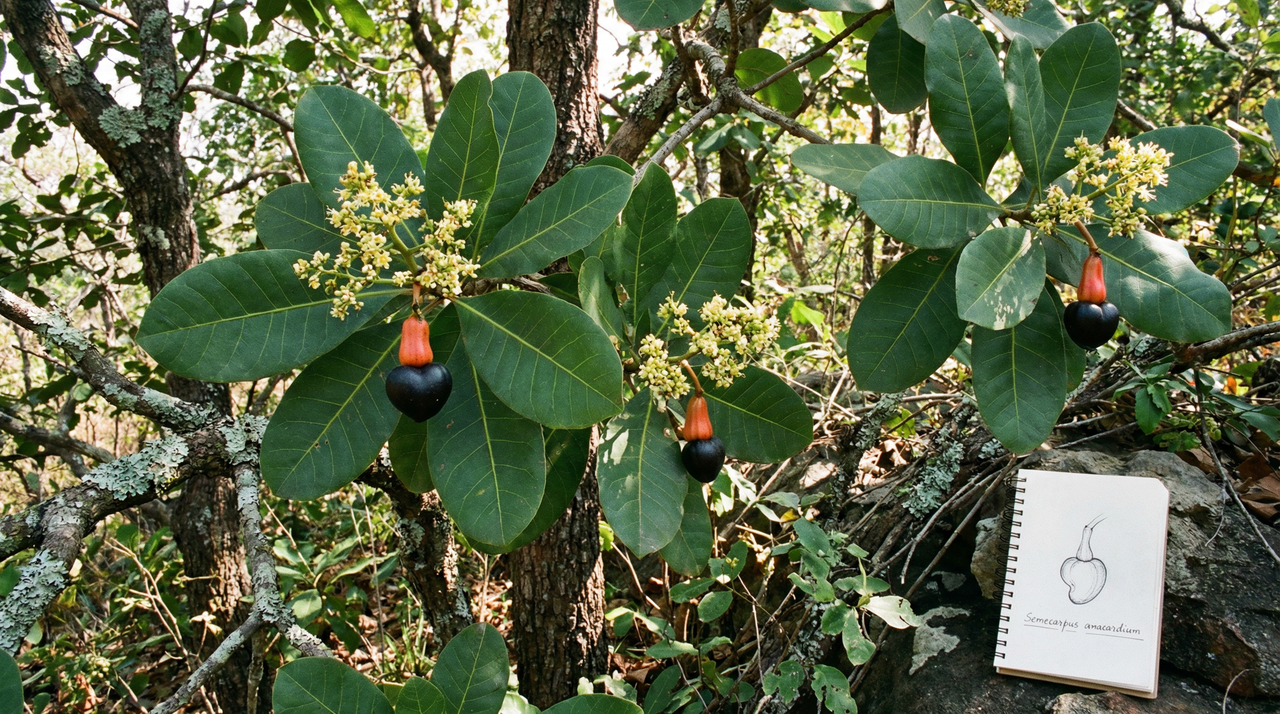
The first time I encountered Semecarpus anacardium in a field setting, my host, a retired Ayurvedic practitioner in Maharashtra, warned me before I even got close to the tree: "Don't touch the fruit. Don't touch anything that has touched the fruit." That's not a warning you usually hear before admiring a tree. But the Marking Nut earns it, because the same black, resinous sap that blisters skin on contact has been central to Indian medicine, textile trade, and ritual practice for over three thousand years.[1] That's not a contradiction the tree ever bothers to resolve. It just stands there, caustic and magnificent, doing both things at once.
Most plants that made it into ancient Ayurvedic texts as rejuvenatives are gentle adaptogens, easy to like. This one will raise welts on your forearm if you handle it carelessly. And yet practitioners have relied on it for conditions ranging from arthritis to certain cancers, precisely because of the chemistry that makes it dangerous. What I keep coming back to, after years of working with difficult plants, is that the Marking Nut doesn't hide what it is. The hazard and the medicine are the same molecule. That kind of honesty from a plant deserves your full attention.
Origin, History, and Cultural Significance of the Marking Nut Tree
Botanical Background and Distribution
The marking nut tree, Semecarpus anacardium, is native to the Indian subcontinent, ranging from India and Sri Lanka across into Bangladesh, Myanmar, Thailand, Vietnam, and parts of Malaysia and Indonesia.[2][3] It's a deciduous perennial that settles into dry deciduous forests, rocky hillsides, and scrublands anywhere from sea level up to about 1,200 meters, thriving where seasonal monsoon rains alternate with long dry periods and where soils drain freely.[2][4] It's the kind of tree that earns its keep in difficult places. Having worked with related Anacardiaceae like cashew in warm climates, I've noticed they all share that same taproot-driven stubbornness in sandy or rocky soils; Semecarpus takes that quality even further.
The tree is dioecious, meaning you need both male and female plants to get fruit, and it reaches reproductive maturity somewhere around five to eight years after germination.[3][5] Globally it holds a Least Concern status on the IUCN Red List, though populations in fragmented habitats like the Western Ghats face real regional pressure from habitat loss and overharvesting.[4] That tension between global status and local vulnerability is worth sitting with, especially in a permaculture context where sourcing ethically matters as much as growing well.
Visual Characteristics and Identification
If you want to identify this tree quickly, start with the sap. Cut or bruise the fruit, and the resinous juice turns black almost instantly on contact with air or skin, an irreversible stain that I'd describe as startling the first time you witness it.[6][3] That property is exactly what gave the tree its common name, and it's the same chemistry that demands gloves every single time you work near it.
Beyond the sap, it's a striking tree in its own right. Mature specimens reach 15 to 20 meters, with a straight cylindrical trunk often buttressed at the base and dark grey-brown bark that splits into deep vertical fissures and peels in irregular flakes.[3][7] The leaves are large, leathery, and obovate, ranging from about 6 to 25 cm long with a glossy green surface and smooth margins.[3] Flowers appear between March and June in small yellowish-green panicles, followed by fruits that ripen from December through March, timed neatly to the dry season.[8] The fruit itself is distinctive: a hard blackish nut set into a fleshy orange-red hypocarp, roughly 2 to 3 cm across, shaped somewhere between kidney and heart.[3][9]
Traditional and Cultural Uses
In Ayurvedic tradition, Semecarpus anacardium is known as Bhallataka, and its presence in ancient texts like the Charaka Samhita and Sushruta Samhita tells you everything about its standing: this is a plant that healers took seriously for millennia.[10] Classified under Visha Varga, the category of poisonous drugs, it was used as a purgative, alterative, and antipyretic and applied to conditions ranging from rheumatism and asthma to skin diseases and digestive disorders. Critically, those texts also mandated a purification process called Shodhana before any medicinal use, typically involving boiling the fruits in milk or water to reduce their toxicity.[11] From my own studies of medicinal plant processing, that boiling step isn't optional or ceremonial; it reflects genuine understanding of the plant's chemistry, built up across centuries of careful observation.
Outside the clinic, the tree has had an equally practical role in everyday Indian life. Dhobis, the traditional laundry workers, used its resinous juice to permanently mark clothing for identification, a use so common it defined the tree's common name in English.[12] The tree also carries religious weight, associated with Lord Shiva and used in tantric rituals for protection and purification, and its sap appears in festival dyeing traditions during Holi.[13] Historical trade routes carried it beyond its native range into parts of Africa, though it never found a foothold in Greek, Chinese, or other non-Indian medical traditions.[14] Today, overharvesting and destructive collection methods are eroding wild populations in some areas, a reminder that preserving traditional knowledge and preserving the plant that knowledge centers on have to go hand in hand.[15]
Interesting Facts About the Marking Nut Tree
The chemistry that defines this tree is worth understanding because it connects almost everything else about it. The nut shell oil contains anacardic acid (around 60 to 70%), cardol, and cardanol, alkyl catechols closely related to urushiol, the same compound responsible for poison ivy reactions.[16][17] Those same compounds are what makes the sap an indelible dye, what makes the raw nut hazardous to touch, and what makes the detoxified kernel medicinally potent. As someone who handles urushiol-sensitive plants in landscape work, I always emphasize: gloves, long sleeves, and keep this tree well away from paths and play areas. The chemistry does not care how experienced you are.
What I find genuinely fascinating from an ecological standpoint is that despite this formidable chemical armor, the tree relies on birds for seed dispersal. Hornbills and mynas eat the fleshy orange-red hypocarp surrounding the nut; most mammals are repelled by the caustic compounds, so the birds effectively hold the dispersal monopoly.[18] The tree essentially weaponized itself against ground-level feeders while remaining accessible to exactly the dispersers it needs. That kind of ecological specificity, shaped by the same chemistry that makes it culturally and medicinally significant, is what keeps me coming back to this species as one of the more genuinely remarkable trees in the dry tropical toolkit.
Marking Nut Tree Varieties and Sourcing
Taxonomic Status and Natural Variation
If you've come here hoping to choose between an early-fruiting dwarf form and a full-sized specimen with superior nut yield, I have to be upfront with you: that list doesn't exist. Semecarpus anacardium is a monotypic species with no recognized subspecies, varieties, or named cultivars anywhere in botanical literature.[19][20][21][22] What looks like variation across the Indian subcontinent, Sri Lanka, Myanmar, and Vietnam is ecological plasticity, the same species adapting to local rainfall and soil conditions rather than genetically distinct populations worth naming.[23]
There is real variation out there, just nothing botanists have elevated to formal status. Fruits run 1.5 to 2.5 centimeters in diameter and range in color from dark purple to near-black at maturity, and traditional users across different regions do note these differences, sometimes attributing slightly different sap potency to fruit size or provenance.[24][25] I've seen similar informal regional distinctions with wild cashew relatives, where growers swear by fruit from one valley over another, but the differences haven't been stabilized into anything a nursery could reliably sell you.
What is consistent across the species is its physical presence. A mature marking nut tree is a genuinely large deciduous tree, reaching 60 to 80 feet tall with a spreading crown 30 to 50 feet wide, obovate to elliptic glossy green leaves, and an open canopy that earns it roles as a shade tree where it's grown at all.[26] The common names, including Malacca bean tree, Dhobi nut tree, and varnish tree, tell you more about its traditional uses than about any variety distinctions, reflecting its history in Ayurvedic medicine, textile marking, and dye-making.[27][24][20] The species remains almost entirely wild-harvested and undomesticated, suited to USDA zones 10 through 12, tolerant of drought and poor soils but unforgiving of frost or waterlogging.[20][26] Its notoriously caustic sap goes a long way toward explaining why no one has rushed to breed improved garden forms.[25]
Sourcing Marking Nut Trees
Finding one in the United States is genuinely difficult. The marking nut tree has no commercial presence in mainstream nurseries, and after going through botanical garden catalogs and tropical-plant forums for this article, what I found was essentially collector-to-collector exchanges in Florida, Hawaii, and California.[28][29] Institutions like Missouri Botanical Garden hold living specimens, but they don't offer them for sale.[30] Kew's Millennium Seed Bank and USDA GRIN both conserve the species, but access from USDA NPGS is restricted to research purposes, not home growers.[31][28]
Seeds sourced from India are the most realistic option for serious collectors. Prices in the Indian market run roughly 200 to 500 INR per kilogram of seed (about $2.50 to $6 USD), 50 to 150 INR per seedling, and 500 to 1,500 INR for a grafted tree, with mature specimens reaching 2,000 to 5,000 INR or more; availability peaks post-monsoon through specialty nurseries and medicinal plant suppliers.[32] Importing any of that material requires a USDA APHIS permit and phytosanitary compliance, and while Semecarpus anacardium isn't CITES-listed or classified as a noxious weed, state-level restrictions can add further complications.[33][34]
One thing I'd tell anyone who does track down seeds or a seedling: suit up before you open the package. Because the urushiol content can cause severe blistering even from dried sap on seeds, I always recommend heavy gloves and long sleeves when unpacking any shipment, a lesson I absorbed the hard way through related Anacardiaceae. This isn't a plant for the casual tropical collector. It rewards the deeply committed grower who has the climate, the protective gear, and the patience for a tree that has never been bred for human convenience.
Marking Nut Tree Propagation and Planting
Safety Considerations Before You Start
Before you collect a single seed or touch a single branch, understand what you're dealing with. The green parts, husk, and fruit of Semecarpus anacardium contain semecarpin, anacardic acid, and cardol -- a cocktail of caustic resins that cause severe blistering and dermatitis, behaving much like poison ivy on skin contact.[35][36] I learned this the hard way in my early years, handling seeds with nothing more than thin latex gloves while preparing a nursery tray. Two weeks of contact dermatitis on my forearms cured me of that casual approach permanently. Now I treat every step with heavy nitrile gloves, long sleeves, eye protection, and I wash everything afterward. That's not optional caution -- it's the entry fee for working with this species.
Seed Morphology and Recalcitrant Storage
The seeds themselves are oblong to kidney-shaped, roughly 1.5–2.0 cm long, enclosed in a hard blackish pericarp that's saturated with the same resinous compounds as the rest of the fruit.[35][37] They're recalcitrant -- meaning they do not tolerate drying or cold storage the way orthodox seeds do. Viability crashes quickly if moisture drops below 20–30%, and low temperatures accelerate that decline.[38][39] Under ideal conditions (30–50% moisture, 5–20°C), you might get 3–6 months of viable storage, occasionally up to 18 months, but in practice I've learned to sow any surplus seed immediately.[40] Even careful cold-moist storage only buys a few months before germination rates drop sharply. Fresh seed is simply where your best odds live.
Germination and Seed Propagation Techniques
Fresh Semecarpus anacardium seeds can achieve 60–90% germination, but you have to get past that dense, impermeable endocarp first.[41] Soak seeds in water for 24–48 hours to soften the resinous coat, then follow with either mechanical scarification or a brief chemical treatment (sulfuric acid for 10–20 minutes, carefully neutralized afterward) to overcome dormancy.[42] Sow 1–2 cm deep in well-drained, shaded media, keep temperatures between 25–30°C, and germination usually appears in 2–4 weeks. A fungicide drench helps protect against damping off in the humid conditions these seeds prefer. With fresh seed and the full protocol, expect 50–70% success.[42]
Vegetative Propagation: Air Layering, Grafting, and Cuttings
If you want a meaningful shortcut on the long road to first fruit, vegetative propagation is where it's at. Air layering during the monsoon season is the most reliable option, hitting 70–80% success when you wound a branch cleanly, apply rooting hormone, and keep the medium consistently moist. My experience with related Anacardiaceae -- cashew, mango -- tells me that timing and immediate wrapping after the wound are what separate 80% take from a frustrating failure rate; marking nut responds the same way. Grafting (veneer, cleft, or approach methods) onto the same species or compatible Anacardiaceae rootstocks gives 60–80% success during the monsoon, though the caustic sap can create phytotoxicity issues at the graft union that you need to watch for.[43][44] Semi-hardwood cuttings treated with IBA at 1000–3000 ppm are possible but deliver only 20–50% success even under high humidity and bottom heat, so I'd lean toward layering unless grafting is your goal for superior clone selection. Tissue culture on MS medium with BAP and IBA produces 4–6 shoots per explant with 70–80% acclimatization survival, a method most relevant for conservation programs rather than farm-scale planting.[45][46]
Soil, Site Selection, and Planting Technique
The marking nut tree is a creature of tropical dry deciduous forest, native to elevations from sea level up to about 1,200 m across India and Sri Lanka, where it grows in lateritic and sandy loam soils with annual rainfall between 500–1,500 mm.[47][48] It tolerates a pH range of 5.5–8.0, but the sweet spot is 6.0–7.5 with 2–4% organic matter and at least 60–90 cm of depth for its taproot to run.[49] Drainage is the non-negotiable factor. This tree is susceptible to Phytophthora and Fusarium root rots in waterlogged conditions, and young trees are particularly vulnerable. In heavy or marginal soils, I always mound the planting site or work on a gentle slope to guarantee runoff. Prepare planting pits 60 cm deep and wide, amended with 5–10 kg of compost to improve aeration without creating a drainage sump.[49] Young trees will tolerate partial shade during establishment, but mature specimens want full sun, so site selection should account for that long-term light requirement from the start.
Spacing, Timeline to Fruiting, and Long-Term Expectations
This is a large tree. Mature specimens reach 15–25 m with a canopy spread of 10–15 m and a deep, anchoring taproot, so spacing of 8–10 m within rows and 10 m between rows is appropriate, supporting roughly 100–125 trees per hectare.[50][51] Plant grafted or layered material in spring, or direct-sow scarified, freshly treated seeds at the same time. Then settle in for a long wait. Seed-grown trees typically take 7–10 years to first fruit, sometimes stretching to 15 years, with full productivity not arriving until 20–25 years of age.[52][43] Vegetative propagation cuts that timeline to 3–5 years, which matters enormously in practice. After growing a seed batch that took twelve years to produce its first fruit, I now recommend grafted plants to anyone who actually wants to use the medicinal resin or nuts within a reasonable planning horizon. The tree lives 50–100 years and earns its place in a large agroforestry system, but it's a commitment that deserves honest accounting before you plant.
Marking Nut Tree Care Guide
Once established, the marking nut tree is about as demanding as a gravel driveway. It asks for heat, decent drainage, and the occasional deep soak during the worst of the dry season, and in return it can live for 50 to 100 years with minimal coaxing. Getting to that established state, though, requires understanding its rhythms and, crucially, never forgetting that this tree bites back. Every care task, from pruning to fertilizing to even pulling weeds underneath it, needs to be approached with gloves on and skin covered. That's not a disclaimer, it's the central fact of growing Semecarpus anacardium.
Sunlight Requirements
Full sun is non-negotiable for good growth and nut production. The tree wants at least 6 to 8 hours of direct light daily, and in my experience with other Anacardiaceae, it punishes shade faster than mango does: leaves yellow, growth stalls, and latex and nut yield drop noticeably with less than 4 to 6 hours.[53] In its native monsoonal forests it tolerates periods of cloud cover during the rains without complaint, but if you pair heavy shade with drought stress you'll see leaf scorch and wilting, so placement matters. Give it your sunniest, most open spot.
Watering Needs and Drought Tolerance
This tree's native range spans 500 to 1,500 mm of annual rainfall in India's dry deciduous forests, and its deep taproot system, which extends 2 to 3 feet down, means mature specimens rarely need supplemental irrigation except during extended dry spells.[49][54] Young trees, though, are thirstier than they look. I've compared the experience to establishing young cashew: the seedling appears deceptively tough while the roots are still shallow, and you can lose one quickly to drought stress in year one. For the first three years, water every 7 to 10 days, targeting roughly 20 to 30 liters per tree per session; once the tree is settled, shift to deep, infrequent irrigation every 2 to 3 weeks only during peak heat.[55][56]
Drainage is the thing you absolutely cannot compromise on. The tree thrives in well-drained sandy loam with a pH of 6.0 to 7.5, and overwatering in heavy or compacted soils leads to root rot: soft, brown, mushy roots, yellowing leaves, and dieback that can kill an otherwise healthy specimen.[57][58] If your soil drains poorly, raise the bed before you plant rather than trying to manage the problem afterward.
Soil and Feeding Requirements
One thing I've noticed growing trees in leaner, sandy soils that mimic native laterite is that they produce more pungent resin and tend toward better nut set than heavily fertilized specimens. That tracks with the literature: this tree has moderate nutrient demands and is genuinely adapted to nutrient-poor, rocky, or lateritic soils.[59][60] In practice I lean heavily on compost for micronutrients, roughly 5 to 10 kg of farmyard manure or finished compost per tree per year, rather than chasing precise NPK numbers.[61][62] For commercial or research settings, a balanced NPK fertilizer applied at 50 to 100 g per tree split between spring and early monsoon gives the phosphorus push the tree needs for March to April flowering and nut development, with potassium supporting overall vigor.[63] Whatever you apply, don't overdo it: traditional South Asian growing practice strongly favors organic inputs, and over-fertilization can actually exacerbate the tree's natural irritant compounds.[61]
Heat Tolerance and Management
The marking nut tree is at home between 20 and 45°C, with the sweet spot for flowering and fruiting sitting above 28°C, ideally 30 to 35°C in the hot dry season.[64] It can handle short spikes to 50°C, and in my selection trials, saplings from hotter, more arid seed sources showed noticeably less leaf scorch and faster recovery after extreme heat than material from wetter provenances. The tree has real structural adaptations helping it cope: thick bark, deep roots, leathery waxy semecarpus anacardium leaves, and sunken stomata that slow water loss.[65][66] In cultivation, support those natural defenses with 5 to 10 cm of organic mulch to regulate soil temperature and retain moisture, space trees 8 to 12 meters apart for airflow, and use shade cloth on young plants during the most punishing afternoons.[67]
Frost Tolerance and Cold Protection
There's no good news here if you're outside USDA zones 10a to 12. The tree starts showing damage below 10°C and can suffer severe injury or death when temperatures drop below 5°C, with young trees being the most vulnerable.[53][68][69] Cold damage looks like wilting, blackening foliage, stem cracking, and shoot dieback, sometimes moving fast enough to lose a tree in a single hard freeze.[70] I'm in zone 9B and I've lost young mangoes and avocados to late cold snaps using all the standard tricks, so I know exactly how marginal these situations get. If you're on the edge, plant in a south-facing microclimate, mound 4 to 6 inches of mulch over the root zone, keep frost cloth on hand for cold nights, and seriously consider container culture with indoor overwintering for at least the first two years. Even then, be honest with yourself about your climate.
Pruning, Maintenance, and Safety
Prune during the dry season, October through February, when sap flow is lowest and disease pressure from humidity is minimal.[71][72] Remove no more than 25% of the canopy at once, targeting dead, diseased, crossing, or overly dense branches to open up light and airflow. And wear protection every single time, no exceptions. The caustic sap will blister your skin exactly like poison ivy.[48] I learned that the hard way on my first pruning session, and now I wear long sleeves, nitrile gloves, and eye protection for every single cut. Consider this a standing rule, not a precaution for beginners. Poor drainage and high humidity also invite fungal problems like leaf spot, anthracnose, and Phytophthora root rot, while scale insects and caterpillars appear occasionally; good sanitation and airflow handle most of these before they become serious.
Seasonal Growth Rhythm
The tree runs on a clear tropical deciduous calendar. Flowering happens February through May, peaking in the dry season when temperatures consistently clear 28°C.[53] Fruits follow 4 to 6 months later, ripening June through October as the monsoon delivers moisture.[5] During the dry season, the tree sheds its leaves to conserve water, which can alarm new growers who assume something is wrong. Nothing is wrong. Your mulching, light irrigation, and dry-season pruning should all be timed to work with this rhythm rather than against it. Watching a marking nut tree drop its leaves right on cue as the dry season arrives, then flush back to life when the rains return, is one of those quietly satisfying reminders that this tree knows exactly what it's doing.
Harvesting Marking Nut Tree
Patience is the first skill this tree teaches. From flower to ripe fruit takes roughly 90 to 120 days, and the phenological calendar is tightly tied to the tropical monsoon rhythm. In the Indian subcontinent, where the strongest documentation exists, flowering runs from February through May with a March to April peak, fruit set follows in April through June, and the drupes ripen from July into October.[49][73][74][75] If you're growing the marking nut tree in a subtropical pocket outside its native range, expect those windows to shift. The core logic holds even if the calendar doesn't map perfectly: this tree flowers in the dry season and ripens with the rains.
When and How to Harvest Marking Nuts
Reading maturity takes practice, but the cues are reliable once you've watched a few seasons. The drupes start green, shift through yellowish-red and reddish-brown, then deepen to a dark brown or black at full ripeness. Shell hardening accelerates through that color progression, the fleshy receptacle swells and then begins to slacken or dry back, and a ripe drupe will release with a gentle downward tug rather than any real resistance.[75][76] I think of it like reading a cashew or a ripe mango: color alone isn't enough, but color plus a soft tug plus the texture change in the receptacle together give you a confident answer. On the safety side, there is no softening this point: gloves are non-negotiable every single time. I double-check my gloves and cover my forearms before handling any Anacardiaceae species with caustic resin, and the marking nut sits at the serious end of that family's chemistry. One lapse is enough to regret it.
Yield, Flavor, and Post-Harvest Characteristics
The fleshy pericarp surrounding the nut is edible and carries a sweet-sour flavor reminiscent of its Anacardiaceae relatives,[3] but fresh use of the pericarp is limited and the kernel is where traditional interest concentrates. Raw kernels are not safe to eat; the real harvest begins in the processing. Boiling yields a soft, semi-fibrous kernel well suited to grinding into paste or powder, while roasting drives off oil and produces something crisper and more brittle, closer to what you'd expect from a roasted nut.[77] The flavor after either treatment is complex: nutty and resinous with a spicy edge and prominent bitter, astringent notes that Ayurveda classifies as katu (pungent) and tikta (bitter), with occasional subtle sweetness that emerges post-processing.[3][78] Think cashew, but more intense and resinous, with a character that announces itself. When heated, the processed kernels release a warm, balsamic aroma that makes clear why they've held such a prominent role in traditional preparations.[79] I always defer to traditional sources and expert guidance on detoxification protocols here; this is not a plant where improvisation belongs in the process.
Marking Nut Tree Preparation and Uses
Critical Toxicity and Traditional Detoxification Methods
The marking nut tree is not a plant you casually harvest and taste. The nuts, resin, and sap of Semecarpus anacardium contain anacardic acid, cardol, cardanol, and urushiol-like compounds that cause severe contact dermatitis, blistering, and serious gastrointestinal harm if ingested raw.[80][81] No part of this tree is safely edible without extensive processing first, and that's not a soft caveat.[80][82] Anyone who has processed cashew shell liquid knows that Anacardiaceae sap demands serious respect; the marking nut's resin goes further than cashew in both potency and stubbornness, staining skin black almost on contact and producing an acrid smell that lingers as a warning. I always handle anything from this tree outdoors, in full protective gear, with soap and water standing by.
Traditional Ayurvedic practitioners developed shodhana, a rigorous multi-step purification protocol, precisely because this tree's medicinal value is genuine but locked behind its toxicity. Methods include soaking the nuts in water for three to seven days with daily changes, boiling in water or milk for one to two hours, roasting over low heat or in sand, coating in clay and drying, fermenting with buttermilk, or applying lime paste.[83][84] Often multiple cycles are used in combination rather than a single pass. After all that work, the processed kernel does offer something: roughly 52% fixed oil rich in oleic and linoleic acids, 28% protein, and 11% carbohydrates alongside calcium, phosphorus, and iron, though tannins limit how much of that protein the body can actually use.[85][86] Culinary use is narrow and regional; in parts of South India, carefully processed kernels appear in pickles, curries, or as roasted snacks, but this is not a backyard nut tree you graze from like almonds or pistachios.[87] The plant's overwhelming traditional value is medicinal, not culinary.
Medicinal Preparations and Dosages in Ayurveda and Beyond
In Ayurvedic and Siddha practice, purified marking nut preparations are used internally for digestive disorders, respiratory conditions, arthritis, tumors, parasitic infections, and fever, and applied externally as paste or oil for psoriasis, eczema, and warts.[88][89] The specific forms and doses are precise: decoction at 10 to 20 ml twice daily, purified powder (bhallataka churna) at 125 to 250 mg twice daily, Bhilawa taila oil at 1 to 2 ml internally or 5 to 10 drops topically, and tincture at 5 to 10 drops in water once or twice daily, all under supervision.[78] I would never recommend self-experimenting at those doses. The 125 to 250 mg range is not a casual supplement window; it's a narrow therapeutic corridor that sits uncomfortably close to the zone where improperly processed material can cause liver and kidney toxicity.[89] Pharmacological studies do show real anti-inflammatory, antioxidant, and potential anti-tumor activity from compounds like semecarpin and biflavonoids, but the research is mostly preclinical, and that gap between lab promise and safe human use is exactly where an Ayurvedic toxicologist belongs, not a home gardener.[89] I grow this tree for its place in the system; I defer any internal use entirely to qualified practitioners.
Non-Food Industrial and Agroforestry Applications
Here's where the story shifts a little. The same caustic resin that makes this tree so dangerous is also what earned it the names Marking Nut and Dhobi Nut; for centuries, washermen across India used the black, permanent sap to mark laundry, and it also served as natural ink, cloth dye, varnish, lacquer, and adhesive.[90] I've experimented with using diluted, aged resin as a natural ink for garden labels, and it works beautifully once you give it time to cure. Use it fresh and concentrated, though, and it will eat through paper; patience is the difference between a label that lasts years and one that disintegrates in a week.
Beyond the resin, the wood itself is hard, heavy, and termite-resistant, which makes it genuinely useful for construction, furniture, and tool handles.[48][91] Honestly, in my permaculture designs, the durable timber and the tree's function as a windbreak and live fencing pioneer are what I value most. The bark also yields tannins useful in leather preparation, and as a fuelwood source in agroforestry systems it earns its space.[48][91] For anyone considering this tree in a tropical food forest, its role is functional and structural first, medicinal under expert guidance second, and culinary almost never. Approach it with that hierarchy and it becomes a genuinely compelling, if demanding, guild member.
Marking Nut Tree Health Benefits and Medicinal Uses
There's a paradox at the heart of this tree that I find genuinely fascinating and a little humbling. The same compounds that make Semecarpus anacardium so dangerous to handle are precisely what give it its medicinal reputation. In Ayurvedic tradition, properly processed Bhallataka is considered a rasayana rejuvenative, one of the most potent restorative medicines in the classical pharmacopeia. In a modern clinical context, it sits firmly in the "use only under expert supervision" category, with preclinical data that's promising and human trial data that's almost nonexistent. Holding both of those truths at once is, I've found, the only intellectually honest way to write about this plant.
Key Compounds and Phytochemical Profile
The chemical complexity here is remarkable. Semecarpus anacardium contains anacardic acids as its dominant phenolic lipids, often comprising 60–70% of the nut shell oil, alongside cardol, cardanol, biflavonoids including amentoflavone and hinokiflavone, bhilawanols, oleanolic acid, ursolic acid, diterpenoid lactones (schkarpol A and B), flavonoids like quercetin and kaempferol derivatives, and various tannins.[14][92][93] These compounds aren't distributed evenly across the plant: the nut shell and pericarp carry the heaviest loads of anacardic acids, cardols, and cardanols; leaves concentrate biflavonoids and flavonoids; bark yields phenolic acids like gallic and ellagic acid; seeds hold terpenoids and fatty acids.[94][95]
What I've observed in closely related Anacardiaceae is that environmental stress amplifies pungency and irritancy, and the research backs that up here. Alkaline soils and monsoon-season harvests increase phenolic and anacardic acid content, with tropical equatorial populations generally yielding richer profiles than those from other regions.[96][97] These same urushiol-like compounds serve the tree ecologically as herbivore deterrents, antimicrobials, and allelopathic agents[98] — and they're also what makes traditional detoxification non-negotiable. Prolonged soaking for 7–14 days, boiling with herbal decoctions like neem or soapnut, roasting at 150–200°C, and classical shodhana purification with cow's milk are all part of reducing the irritants to workable levels while trying to preserve bioactivity.[99][100] Skipping that step isn't a shortcut; it's a serious hazard.
Traditional and Researched Medicinal Actions
In Ayurvedic, Unani, and South and Southeast Asian folk traditions, processed Bhallataka has been applied to arthritis, rheumatism, eczema, psoriasis, leprosy, tumors, diabetes, asthma, and wounds, and used as an immunomodulator, aphrodisiac, and nervine tonic.[101][102] That's a wide net, and the preclinical research does support several of those directions, though I want to be clear about what the evidence level actually is.
The anti-inflammatory data is the strongest, mechanistically speaking. Ethanol extracts at 100–200 mg/kg in rat models inhibit NF-κB, suppress COX-2, TNF-α, and IL-6, and modulate MAPK/PI3K/Akt pathways.[103][104] Antioxidant activity shows up clearly in DPPH free-radical scavenging assays, with SOD and catalase enhancement driven largely by the phenolic and flavonoid fraction.[105][78] The anticancer signals are early but intriguing: in vitro and animal studies show cytotoxicity against breast, prostate, liver, and lymphoma cell lines through caspase-mediated and mitochondrial apoptotic pathways. Anacardic acids and schkarpol A and B appear to contribute significantly, effective at around 100 mg/kg in mouse models.[106][107] Additional documented activities include analgesic effects comparable to aspirin, antimicrobial action against S. aureus and M. tuberculosis, hepatoprotection, antidiabetic effects at 250 mg/kg with improved glucose and lipid profiles, and neuroprotection in Parkinson's models at 100 mg/kg.[108][109][110]
After years of reviewing ethnobotanical literature for permaculture clients, I've learned to distinguish between plants that have crossed from traditional use into solid clinical evidence and those that haven't made that leap yet. This one firmly hasn't. Human clinical evidence remains very limited, drawn mostly from small polyherbal trials or case observations, and no robust standalone randomized controlled trials exist.[111] That doesn't erase its traditional legitimacy, but it does mean the preclinical data can't be translated directly into personal health recommendations.
Nutritional Aspects After Detoxification
After thorough detoxification, including soaking for 7–14 days followed by boiling and roasting at 150–200°C for 20–30 minutes, anacardic acid content drops by over 80%, and the resulting kernel becomes edible in traditional contexts, if not quite appropriate for everyday eating.[99][112] The processed kernel is genuinely energy-dense: approximately 50–60% fat (primarily oleic and other unsaturated fatty acids), 18–25% protein, 10–15% carbohydrates, 4–6% fiber, plus meaningful mineral content including roughly 152 mg calcium, 4.5 mg iron, 168 mg magnesium, 660 mg potassium, and 3.2 mg zinc per 100g.[113][114] That fat content does make it calorically substantial, but I'd only ever consider these kernels in very specific, professionally guided medicinal preparations. This is not a trail-mix ingredient. Vitamin data is poorly documented in major databases, and the bioactive phytochemicals responsible for its medicinal reputation are retained after processing but don't make this material safe for casual dietary use.[108]
Safety, Toxicity, and Contraindications
This is not a beginner herb or casual supplement. The Ayurvedic lineage around Bhallataka can make it sound approachable to people who haven't reckoned with its real hazards. The nut shell oil and sap contain anacardic acids, cardol, cardanol, and urushiol-like catechols that cause severe allergic contact dermatitis on skin contact, producing redness, vesicles, bullae, and intense itching that can persist for weeks.[115][116] I've handled fresh cashew hulls and mango sap without gloves before and deeply regretted it; the marking nut is considerably more aggressive than either of those, and I always treat it with the same respect I give to poison ivy.
Ingesting raw or inadequately processed material leads to nausea, vomiting, abdominal pain, oral ulceration, possible hepatotoxicity, renal effects, fever, and neurological symptoms, with no specific antidote available; treatment is supportive only.[117][118] Raw doses as low as 1–2 g can cause poisoning, even though some extracts show LD50 values above 2000 mg/kg.[119] Supervised Ayurvedic use of properly purified preparations stays within 125–500 mg/day in divided doses after shodhana processing, and even that requires qualified oversight.
The contraindications are unambiguous. This plant is strictly off-limits during pregnancy and lactation, with documented abortifacient, embryotoxic, and teratogenic risks.[111] I always refer pregnant clients to licensed professionals rather than entertaining any self-experimentation with potent herbs, and this one makes that boundary non-negotiable. It's also discouraged for children and those with known sensitivities, and internal use carries no modern regulatory approval. The plant exhibits anticoagulant and antiplatelet activity that can potentiate warfarin, aspirin, garlic, ginkgo, and antidiabetic medications, so concurrent use of any of those requires direct medical supervision.[120] Look-alikes within the Anacardiaceae family, including mango and Japanese lacquer tree, add an identification risk worth noting for anyone working in mixed tropical plantings.[121] Any medicinal use of this tree belongs in the hands of a qualified Ayurvedic practitioner or physician, full stop.
Pests and Diseases of the Marking Nut Tree
There's a reason I approach problems on this tree differently than I do with, say, cashew or mango. The marking nut tree carries its own chemical bodyguards: anacardic acid, urushiol, and cardol saturate the sap and tissues, giving it genuine insecticidal properties and making it a lousy meal for most herbivores and pathogens.[122][123] Mature specimens in particular, with their higher phenolic concentrations, tend to shrug off the pest and disease pressure that would flatten a less chemically armored tree.[124][125] Overall, it faces fewer serious cultivation problems than most of its Anacardiaceae relatives when grown in the right conditions.[126]
Natural Chemical Defenses Against Pests
The same compounds that demand gloves during pruning also keep most insects at bay. Younger trees and seedlings are the exception. I've noticed with other Anacardiaceae I've grown that tender new growth draws aphids almost immediately if airflow is poor, and marking nut seedlings behave the same way: the phenolic defenses haven't fully developed yet, so stress or crowding quickly tips the balance.[127][128] This is why establishment conditions matter so much: a thriving young tree builds its chemical armor faster than one struggling in poor drainage or compacted soil.
Common Fungal Diseases and Environmental Triggers
Fungal diseases are the main challenge, particularly in humid tropical settings. Leaf spot from Cercospora, Colletotrichum, and Pestalotiopsis species shows up as circular brown lesions; anthracnose causes dark lesions on leaves and developing nuts; powdery mildew leaves that characteristic white coating on new growth; and root rot from Phytophthora or Pythium becomes a real risk in waterlogged soils.[128][129][130] Incidence in unmanaged plantations typically runs 10-20%, rising sharply when humidity stays above 60%, drainage is poor, or trees are crowded.[124][131] Prevention really does beat cure here, especially since no named disease-resistant cultivars exist; most material is wild-sourced or grown from unselected seed.[132]
Key Insect Pests and Management Strategies
On the insect side, the main offenders are leaf-feeding caterpillars (particularly noctuids), leaf beetles, aphids, scale insects, leafhoppers, the tea mosquito bug (Helopeltis theivora), and stem borers in younger wood.[133][134] Tea mosquito bug damage shows as necrotic spots and curled leaves; borers and caterpillars can cause significant structural damage if populations build during monsoon season.[129] I've found neem-based sprays particularly effective on tea mosquito bug during humid periods, applied early before populations spike. The tree's own leaf extracts have documented insecticidal and larvicidal activity, a fact traditional Indian farmers figured out long before researchers confirmed it.[122]
The practical IPM toolkit comes down to spacing trees at 8-10 meters for airflow, maintaining drainage, pruning out dead wood, and monitoring closely during flowering, fruiting, and monsoon seasons.[49] In agroforestry guilds, this tree often shows lower pest pressure overall, and its allelopathic compounds can actively suppress pest populations on neighboring plants, a quiet systemic benefit that a well-designed polyculture captures for free.[135]
Marking Nut Tree in Permaculture Design
Placing a marking nut tree in a permaculture system is a decision that rewards careful thinking before the first shovel goes in. This is not a tree you site casually. Its chemistry, its size, and its strict climate requirements all demand that you treat it less like a productive guild member you slot in and more like a founding tree around which a system gets built. Get those fundamentals right, and you have a long-lived canopy anchor with genuine ecological value. Get them wrong, and you have a blistering problem in the wrong hardiness zone.
Climate Requirements and Hardiness Zones
The marking nut tree is a creature of tropical monsoon and savanna climates, native to the dry deciduous forests of India, Sri Lanka, and Bangladesh at elevations up to 1,200 meters, where a hard wet-dry seasonal rhythm defines the growing calendar.[136][137] It performs best between 25 and 35 °C, tolerates a range of 10 to 40 °C, and needs 600 to 1,500 mm of annual rainfall with good humidity — but will not tolerate waterlogging, relying instead on a deep taproot to ride out dry spells once it's established.[138][139][140] Below 10 to 15 °C it becomes genuinely frost-sensitive, which puts it firmly outside USDA zones 10 and below.[141]
In the U.S., realistic cultivation is limited to southern Florida, Hawaii, and protected pockets of southern California.[142] I've spent enough time working in Central Florida's zone 9B/10A transition to know that the cold edge of this tree's range is unforgiving. On protected south-Florida properties I've visited, it grows with the effortless confidence you'd expect from a species thoroughly at home. A bit further north, even a mild frost event requires microclimate selection and frost cloth, and even then you're pushing it. Think of it as having roughly the same frost sensitivity as cashew, its Anacardiaceae relative — beautiful in the right conditions, sulky or worse in the wrong ones. If your site has any meaningful cold season, this is not your tree.
Ecosystem Functions and Wildlife Support
Where climate permits, the marking nut tree pulls genuine ecological weight. Its fleshy fruits attract frugivorous birds and mammals — hornbills and macaques among them — that disperse seeds, and its broad canopy provides nesting and shelter for insects, birds, and small mammals.[143] Heavy leaf litter cycles nutrients back into the soil, and that deep taproot does real work stabilizing slopes and controlling erosion on terrain that would otherwise be difficult to revegetate.[48] In its native range it functions as a pioneer, moving into disturbed areas and facilitating forest succession. It's not considered invasive where it belongs, though it can get weedy in disturbed ground elsewhere.
The complication is its allelopathy. Phenolic compounds in the leaves and nuts actively suppress germination of competing plants.[144][145] If you know black walnut, you already have the right mental model: a tree that shapes what can grow beneath it, not through shade alone but through chemistry. That's not inherently a problem in a permaculture design, but it means you choose your understory companions deliberately rather than assuming everything will coexist happily.
Pollination Ecology for Growers
Flowers are small, greenish-yellow, and borne in terminal panicles up to 20 cm long.[146] Pollination is primarily done by generalist insects, including bees like Apis dorsata, flies, and beetles, with flowering peaking in the dry season from roughly February through June in its native India.[147][146] The problem is that nectar production is limited, which means pollinator visits are less frequent than you'd see on a more rewarding flower, and isolated trees show notably low fruit set as a result.
I've hand-pollinated a few isolated specimens in a client's food forest to improve fruit set, and it works. It's not complicated — collect pollen in the morning when it's fresh, transfer it to open flowers with a small brush, repeat over several days during the flowering window. It's an extra step, but for a tree you've committed years to growing, it's worth building into your seasonal routine. The practical takeaway for design: plant at least two trees within range of each other, support a diverse pollinator habitat in the surrounding system, and don't expect reliable fruiting from a singleton with no nearby companions.
Forest Layer, Guilds, and Agroforestry Placement
In the canopy, the marking nut tree is a commanding presence — reaching 10 to 20 meters in cultivation, with wild specimens reported to 26 meters, a straight buttressed trunk, and a broad, spreading crown that casts serious shade.[148][149] Think teak or mango in scale and habit. It occupies the upper forest layer in mature tropical dry deciduous forest, though juveniles often start in more sheltered sub-canopy positions before pushing into the light.[150][151] That succession sequence matters for design: give young trees some protection from full exposure and competition in their first few years, then let them grow into the dominant canopy role they're built for.
The combination of shade and allelopathy means the understory guild beneath a marking nut tree needs to be chosen with intention. Legumes, ginger, and turmeric have all shown good compatibility in agroforestry trials, and that tracks with what I've observed — shade-tolerant, chemically resilient plants that don't depend on full sun.[152][153] Standard orchard spacing runs 8 to 10 meters, which gives you room to work between trees without crowding the canopy. One thing I always tell clients when we're siting these: keep them at least 10 meters from any path or high-traffic area. The sap is no joke — a small skin contact is enough for a blistering reaction that sticks in your memory. That safety margin isn't caution for its own sake; it's just good design.
The Tree That Taught Me to Slow Down Before I Touch
I'll be honest: I've never grown one myself. I've handled the dried nuts with gloves, read every study I could find, and spent time with growers in Kerala who treat this tree the way you'd treat a respected elder, carefully, with full attention. That kind of plant changes how you see the others. Not every useful thing is easy, and sometimes the most important lesson a garden teaches you is when to keep your hands in your pockets.
Sources 153
- Semecarpus anacardium: An Ayurvedic drug of plant origin - Journal of Ethnopharmacology ↩
- Semecarpus anacardium - Plants of the World Online (POWO) ↩
- Semecarpus anacardium - Wikipedia ↩
- IUCN Red List: Semecarpus anacardium ↩
- Reproductive Biology and Population Structure of Semecarpus anacardium in Central India ↩
- Semecarpus anacardium L.f. ↩
- Semecarpus anacardium - Plants of the World Online (POWO) ↩
- Flora of India: Semecarpus anacardium ↩
- Flora of China: Semecarpus anacardium ↩
- Semecarpus anacardium L.: A Review on Its Phytochemistry, Pharmacology and Future Prospective ↩
- Ayurvedic Formulary of India ↩
- The Marking Nut Tree (Semecarpus anacardium): A Review of Its Traditional Uses ↩
- Ritual Uses of Plants in Indian Traditions ↩
- The Marking Nut Tree: Semecarpus anacardium in Traditional Medicine and Trade ↩
- Semecarpus anacardium - The IUCN Red List of Threatened Species 2021 ↩
- Chemical Constituents of Semecarpus anacardium Nut Shell Oil ↩
- Urushiol Analogs in Semecarpus anacardium and Their Dermatological Effects ↩
- Seed Dispersal in Indian Tropical Forests ↩
- Plants of the World Online ↩
- The Flora of India - Volume 2 ↩
- GlobalTreeSearch ↩
- GRIN Search ↩
- IUCN Red List of Threatened Species ↩
- Flora of China ↩
- India Biodiversity Portal ↩
- Marking Nut Tree (Semecarpus anacardium) - Plant Profile ↩
- Plants of the World Online ↩
- GRIN - Germplasm Resources Information Network ↩
- University of Florida IFAS Extension: Semecarpus anacardium ↩
- Living Collections Search - Missouri Botanical Garden ↩
- Millennium Seed Bank: Species Search ↩
- Sourcing Native Medicinal Plants: Availability in Indian Nurseries ↩
- Plants and Plant Products Import ↩
- Appendices I, II and III ↩
- Semecarpus anacardium ↩
- Semecarpus anacardium: Botanical and Ethnobotanical Profile ↩
- Plants of the World Online ↩
- Kew Seed Information Database ↩
- Recalcitrant Seeds: A Status Report ↩
- Seed Storage of Semecarpus anacardium: Implications for Conservation ↩
- Germination Studies of Semecarpus anacardium ↩
- Germination and Viability Studies on Marking Nut Tree Seeds ↩
- Propagation and Cultivation of Semecarpus anacardium ↩
- Horticultural Manual for Anacardiaceae Family Plants ↩
- Micropropagation of Semecarpus anacardium L.: A Multipurpose Medicinal Tree ↩
- In vitro propagation of an endangered medicinal plant Semecarpus anacardium L. ↩
- Flora of India, Volume 3 ↩
- Semecarpus anacardium - Useful Tropical Plants ↩
- Cultivation of Semecarpus anacardium: Soil and Environmental Requirements ↩
- Semecarpus anacardium - Useful Tropical Plants ↩
- Planting Guidelines for Anacardiaceae Trees in India ↩
- Cultivation of Marking Nut Tree (Semecarpus anacardium) ↩
- Semecarpus anacardium - Missouri Botanical Garden ↩
- Botanical Description and Ecology of Semecarpus anacardium ↩
- Cultivation of Semecarpus anacardium ↩
- Tropical Fruit Tree Guide ↩
- Ecological Requirements of Marking Nut Tree ↩
- Root Rot in Trees: Symptoms and Prevention ↩
- Agro-techniques of Marking Nut (Semecarpus anacardium L.) ↩
- Soil Requirements for Anacardiaceae Family Trees ↩
- Cultivation Practices of Semecarpus anacardium ↩
- Cultivation of Marking Nut Tree (Semecarpus anacardium L.) ↩
- Nutrient Management in Anacardiaceae Fruit Trees ↩
- Agro-Climatic Requirements of Semecarpus anacardium ↩
- Heat Stress Effects on Tropical Fruit Trees ↩
- Ecological Adaptation of Marking Nut Tree in Tropical Climates ↩
- Agro-techniques for Marking Nut Tree ↩
- Cultivation of Marking Nut (Semecarpus anacardium) ↩
- USDA Hardiness Zone Map and Plant Database ↩
- Frost Protection for Tropical and Subtropical Plants ↩
- Semecarpus anacardium - Cultivation and Uses ↩
- Pruning Techniques for Tropical Fruit Trees ↩
- Phenology of Tropical Trees in India ↩
- Marking Nut Tree: Ecology and Uses ↩
- Semecarpus anacardium - Flora of India ↩
- Semecarpus anacardium | Missouri Botanical Garden ↩
- Flora of Peninsular India: Semecarpus anacardium ↩
- Marking Nut Tree: Phytochemistry and Medicinal Uses - NCBI ↩
- Culinary and Medicinal Uses of Semecarpus anacardium - ResearchGate ↩
- Semecarpus anacardium L.: A Review of Traditional Uses, Phytochemistry and Pharmacology ↩
- Poisoning by Semecarpus anacardium: A Review ↩
- The Marking Nut Tree (Semecarpus anacardium): Botany, Uses, and Toxicity ↩
- Processing of Bhallataka (Semecarpus anacardium) in Ayurveda ↩
- Traditional Methods for Detoxification of Marking Nut ↩
- Chemical Composition and Pharmacological Profile of Semecarpus anacardium L. - A Review ↩
- Nutritional and Phytochemical Analysis of Semecarpus anacardium ↩
- Ethnobotanical Uses of Semecarpus anacardium in India ↩
- Ayurvedic Pharmacopoeia of India Part-I ↩
- Toxicity and Therapeutic Potential of Semecarpus anacardium ↩
- Marking Nut Tree - Kew Science ↩
- Agroforestry Potential of Anacardiaceae Species in India ↩
- Anacardic Acids from Semecarpus anacardium: Isolation and Biological Activities ↩
- Biflavonoids from Semecarpus anacardium ↩
- Phytochemical investigation of Semecarpus anacardium L. nut ↩
- Phytochemistry and Pharmacological Potential of Semecarpus anacardium Linn.: A Review ↩
- Phytochemical Variations in Semecarpus anacardium: Influence of Edaphic and Climatic Factors ↩
- Chemical Constituents of Semecarpus anacardium: Seasonal and Geographical Insights ↩
- Chemical Constituents and Biological Activities of Semecarpus anacardium ↩
- Traditional Processing Methods for Edible Seeds of Semecarpus anacardium ↩
- Ayurvedic Processing of Semecarpus anacardium: A Review ↩
- Ayurvedic Uses of Bhallataka (Semecarpus anacardium) ↩
- Traditional Medicinal Uses of Semecarpus anacardium in Ayurveda ↩
- Anti-inflammatory and anti-arthritic activities of FS through inhibition of NF-κB pathway ↩
- Anti-inflammatory activity of Semecarpus anacardium L. nut extract in rats ↩
- Antioxidant and Anti-inflammatory Activities of Semecarpus anacardium ↩
- Anticancer Activity of Semecarpus anacardium Nut Extract In Vitro ↩
- Anticancer activity of Semecarpus anacardium against Dalton's lymphoma in mice ↩
- Pharmacological Review on Semecarpus anacardium ↩
- Neuroprotective effect of Semecarpus anacardium in MPTP-induced Parkinson's disease model ↩
- Hypoglycemic and hypolipidemic effects of Semecarpus anacardium in diabetic rats ↩
- Pharmacological and Toxicological Profile of Bhallataka (Semecarpus anacardium) ↩
- Detoxification and Nutritional Evaluation of Semecarpus anacardium Nut ↩
- Nutritional Composition of Semecarpus anacardium Nuts ↩
- Nutritional and Toxicological Aspects of Marking Nut ↩
- Contact Dermatitis from Marking Nut Tree (Semecarpus anacardium) ↩
- Contact Dermatitis Caused by Semecarpus anacardium ↩
- Cases of Poisoning by Semecarpus anacardium in Rural India ↩
- Poisoning by Semecarpus anacardium: A Case Report ↩
- Toxicity and Therapeutic Potential of Semecarpus anacardium ↩
- Anticoagulant and Antiplatelet Activities of Semecarpus anacardium ↩
- Plants of the World Online ↩
- Chemical Composition and Insecticidal Activity of Semecarpus anacardium ↩
- Urushiol in Semecarpus anacardium: Role in Plant-Insect Interactions ↩
- Diseases of Semecarpus anacardium in India ↩
- Phytochemicals and Disease Resistance in Anacardiaceae ↩
- Diseases and Pests of Marking Nut Tree ↩
- Insect Pests of Semecarpus anacardium ↩
- Fungal Diseases of Semecarpus anacardium in India ↩
- Diseases of Fruit Trees in India ↩
- Disease Management in Marking Nut Tree (Semecarpus anacardium L.) ↩
- Phytopathology Research - Vol. 18, No. 1 (2020) ↩
- Breeding and Improvement of Semecarpus anacardium: A Review ↩
- Pests and Diseases of Tropical Trees ↩
- Diseases and Pests of Semecarpus anacardium ↩
- Agroforestry Practices in India: Non-Timber Forest Products ↩
- Anacardiaceae - Flora of China ↩
- Köppen Climate Classification Map ↩
- Semecarpus anacardium: Botanical Description and Ecology ↩
- Semecarpus anacardium - An Overview ↩
- Plants of the World Online ↩
- Tropical Trees for USDA Zone 10 ↩
- Marking Nut Tree: Distribution and Ecology ↩
- Plants of the World Online - Semecarpus anacardium ↩
- Semecarpus anacardium - USDA PLANTS Database ↩
- Allelopathic Potential of Semecarpus anacardium Leaf Extracts ↩
- Flora of India - Semecarpus anacardium ↩
- Royal Botanic Gardens, Kew; Plants of the World Online ↩
- Flora of China - Semecarpus anacardium ↩
- Semecarpus anacardium ↩
- Plants of the World Online: Semecarpus anacardium ↩
- Forest Types of India: Tropical Dry Deciduous ↩
- Agroforestry Potential of Semecarpus anacardium ↩
- Ecological Role of Semecarpus anacardium in Tropical Dry Forests ↩