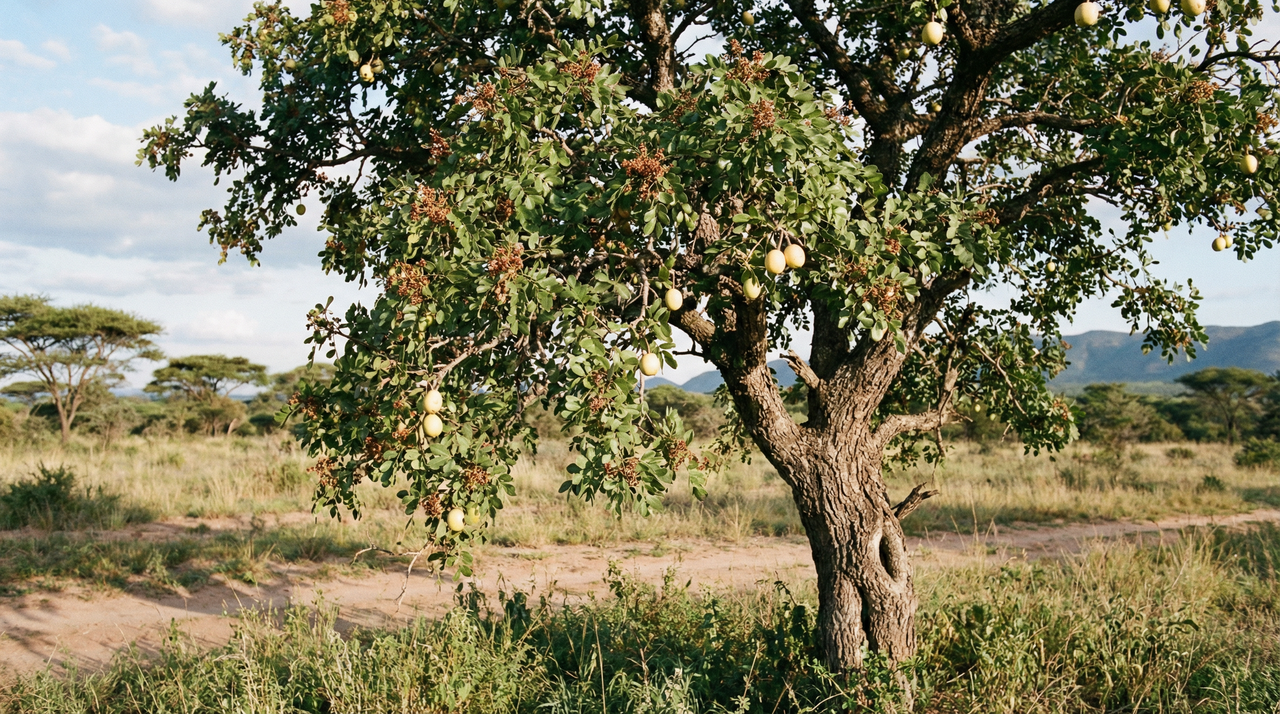
There's a persistent story that elephants seek out fermented marula fruit to get drunk, stumbling through the savanna in a boozy haze. It's vivid, it's charming, and researchers have largely debunked it.[1] An elephant would need to eat an almost physically impossible quantity of already-fermented fruit to feel anything. But the fact that this story has traveled the world for decades while the actual nutritional profile of marula has stayed quietly obscure? That tells you something. The fruit contains four to eight times the vitamin C of an orange.[2] Not a footnote. Not a modest improvement. Multiples.
I first encountered marula not in a food forest but in a small glass jar of kernel oil, passed around at a conference with the reverence usually reserved for single-origin olive oil. The smell was faintly nutty and green, almost grassy. Someone said it had been harvested by a women's cooperative in Zimbabwe. What I didn't appreciate until later was how much of this tree's story runs through exactly those kinds of hands, and what's at stake when commodity markets start paying attention to something indigenous communities have managed and depended on for thousands of years.
If you're growing in a truly frost-free climate and thinking about long-term food forest anchors, marula deserves a much longer look than it typically gets outside of southern Africa. But it asks for patience, the right site, and some honest reckoning with what it means to bring a culturally significant keystone species into a backyard design.
Origin and History of Marula (Sclerocarya birrea)
Botanical Background and Native Habitat
Marula, known scientifically as Sclerocarya birrea, is one of Africa's great botanical landmarks. Its native range sweeps across sub-Saharan Africa from Ethiopia and Sudan in the north all the way down to South Africa, spanning countries including Namibia, Botswana, Zimbabwe, Mozambique, Zambia, Malawi, Tanzania, and Kenya.[3][4][5] At home in lowland savannas and miombo woodlands, it thrives in well-drained sandy or gravelly soils from sea level up to 1,800 m, in climates that deliver somewhere between 500 and 1,500 mm of annual rainfall.[3][6] Globally it sits at Least Concern on the IUCN Red List, though local populations face real pressure from habitat loss, overgrazing, fire, and overexploitation -- a distinction worth holding onto.[7]
With a lifespan typically ranging from 100 to 300 years, with some exceptional specimens estimated to exceed 1,000 years, marula is the kind of tree you plant for your grandchildren.[3][8] Growth in the first decade is genuinely humbling: expect about 1 to 2 meters over ten years, averaging 0.5 to 1 m per year under good conditions, before the tree finds its stride and accelerates toward a mature height of 9 to 18 meters.[9] I've grown subtropical trees from seed that felt slow, but knowing marula can live for centuries makes me recalibrate my patience entirely. From a permaculture standpoint, planting one today is a genuinely long-term act of landscape thinking. It reaches reproductive maturity in 5 to 10 years from seed, with flowering triggered by warmer temperatures and early spring rains, and fruits following in the summer months.[10][11]
Visual Characteristics and Growth Habit
The marula tree announces itself before you even see the fruit. That spreading, rounded crown, the trunk up to a meter wide, and the distinctive flaky bark peeling in irregular patches to reveal a warm reddish underlayer beneath the grey-brown surface -- it's a tree you remember.[12][13] What's less visible but arguably more impressive is the deep taproot, extending 30 to 60 meters down to access groundwater, which is the real secret behind this tree's drought resilience.[14] Understanding that anatomy changes how you think about siting one in a designed landscape.
The foliage is compound and imparipinnate, with 5 to 11 pairs of dark green leaflets plus a terminal one, leathery to the touch and lighter underneath.[3][15] The deciduous habit means you get a dramatic seasonal show -- leaves drop in the dry season, then flush new growth with the first rains in a way that makes the tree feel genuinely alive and responsive to its environment.[16] My clients who grow seasonally dynamic trees always connect with them more deeply, and marula delivers that rhythm beautifully. The species is dioecious, producing small cream-to-yellow flowers, with males and females on separate trees; fruits are round to oval drupes, 2 to 5 cm across, turning bright yellow or orange when ripe, each housing a hard woody nut with an oil-rich kernel inside.[3][12] There are three subspecies, with caffra -- the dominant southern African form -- generally producing larger, sweeter fruits than its counterparts.[12][17]
Traditional, Cultural, and Historical Uses
Long before any written botanical record, marula was woven into the fabric of life across southern and eastern Africa. Its use stretches back through indigenous oral traditions for thousands of years, with continuity from pre-colonial times right through to the present.[18][19] Among the Venda, it features in initiation rites and domba dances; among the Shona, it anchors rain-making and protective rituals; in San creation myths and trance dances, it holds sacred ground.[20][21] The tree symbolizes fertility, prosperity, and protection across these communities, and planting one near a homestead is itself a spiritual act.[22]
Every part of the tree has earned its place. Fruit is eaten fresh, pressed into juice, stirred into porridges, or fermented into traditional marula beer for celebrations and ceremonies. Bark decoctions have long addressed diarrhea, dysentery, wounds, and malaria. Leaf preparations treat fevers, coughs, and skin conditions. Kernel oil is rubbed into skin and hair.[23][24] That kernel oil is now a fixture in premium cosmetics sold globally, which brings me to the harder conversation: much of this indigenous knowledge has been commercialized without equitable benefit-sharing for the communities that developed and stewarded it.[25][26] Community-based management initiatives and ex situ conservation efforts offer a more just path forward, and as someone who recommends plants with cultural weight, I think growers have a responsibility to be aware of that context.[27]
Ecological Role, Adaptations, and Fun Facts
As a keystone species in African savannas, marula has coevolved with some impressive allies. Elephants are its primary seed dispersers -- consuming fruit for high-energy nutrition in dry seasons and passing seeds with improved germination rates after gut passage, shaping herd movements and savanna regeneration in the process.[28] I find myself thinking about this whenever I'm designing a plant guild: even without megafauna, the fruit consistently attracts birds and small mammals that aid natural spread, which tells you something about the tree's ecological generosity. Its drought adaptations are equally striking -- water stored in swollen roots and underground structures, stomatal regulation, leaf shedding under extreme stress, and thick bark for heat insulation make it genuinely formidable in arid conditions.[29]
The tree also gives back to its soil. Leaf litter decomposition drives nutrient cycling and promotes understory growth, and wild stands carry high genetic diversity.[30][31] When I observe its strong antioxidant activity, I read it as a signal of powerful protective compounds forged through millions of years of ecological pressure.[32] That resilience translates to the landscape too. Managed agroforestry systems can yield 100 to 500 kg of fruit per tree annually, though water stress can slash fruit set by up to 50%, a reminder that even the toughest trees have their limits.[33][34]
Marula Varieties and Sourcing
Key Subspecies and Notable Variants of Marula
The single most important thing to understand about marula before you try to source one is that Sclerocarya birrea isn't one tree, it's two, separated at the subspecies level in ways that matter enormously to a grower. Subsp. birrea produces sweeter, juicier fruit and performs best in arid savannas; subsp. caffra leans more acidic and handles a wider temperature range across eastern and southern Africa.[3][35][36] I think of it a bit like the difference between a sweet mandarin rootstock and a more cold-tolerant sour orange rootstock; they're the same genus, but the choice shapes everything downstream.
That kernel oil content tells the story even more clearly. Subsp. birrea runs 20-30% oil; subsp. caffra yields 15-25%.[37][3] Then there's macrocarpa, a larger-fruited variant that can hit 35% oil and produce fruit up to 7 cm across.[37] When I've cracked kernels from different sources side by side, the difference in oil richness between macrocarpa and standard wild-type material is immediately obvious, more slick, heavier, almost buttery. Breeders in Namibia and South Africa have been targeting exactly that variant since the 1970s, working toward higher yield, better oil, and more reliable bearing.[38][39] After years of watching similar programs for other savanna species, I've learned to evaluate the material in front of me by fruit taste and tree vigor rather than holding out for a cultivar name on the label, because no internationally registered cultivars exist yet. It's all improved landraces and research selections.[38]
The practical challenges haven't been bred out either. Both subspecies are frost-sensitive, prone to irregular bearing, and vulnerable to waterlogging.[40][41] In the right climate, those are manageable. In the wrong one, they're dealbreakers.
Where to Buy Marula Trees and Seeds
Marula is widely grown and commercially significant across South Africa, Namibia, and Zimbabwe,[42][43] but the moment you step outside sub-Saharan Africa, availability drops sharply. In the U.S., you're looking at specialty tropical nurseries and botanical gardens in USDA zones 9b-11, mainly Florida and southern California.[44][45] Florida trials in the 1990s never scaled to commercial production, partly because of the tree's eventual 20-meter stature and the messy fruit drop that made it unpopular with conventional landscapers.[46][47] When I evaluated seedlings at a Florida nursery, their slow early growth and vulnerability to damping-off made the propagation challenge concrete in a way that no research paper fully captures.
When you do find a source, expect to pay roughly $10-25 for ten seeds or $20-60 for a small seedling. Germination from wild-type seed without pretreatment can fall below 30%, which is part of why nursery-grown stock commands a premium.[48][45] The propagation section covers the scarification process in detail, but the short version is that fresh seed properly treated at 25-30°C can hit 70-90% germination in two to four weeks.[49] If you're sourcing seed directly from southern Africa, be aware that the natural harvest window runs November through March, peaking in December-February.[50] Seed viability holds for one to two years if stored cool and dry.[49]
On the regulatory side: Sclerocarya birrea is not listed under CITES and is not a federal noxious weed, so international trade isn't restricted at the convention level.[51][52] You will still need to comply with USDA APHIS requirements, including phytosanitary certificates and possible permits for live plant material.[53] I've been through the process with other uncommon tropicals, and it's manageable if you start the paperwork early and communicate clearly with your supplier. Treat marula as a long-horizon investment: the tree is worth the effort, but only if you're genuinely in a frost-free climate and patient with the timeline.
Marula Propagation and Planting
Seed Anatomy, Viability, and Germination Timeline
If you've ever held a marula pit in your hand, you already understand the first challenge. That hard, woody endocarp is 2-3 cm across, rough-surfaced, and built like a small stone.[54][55] Inside sits a creamy-white, oil-rich kernel storing most of its energy in two large cotyledons, but getting germination started means breaching that armor first. Marula seeds exhibit physical dormancy driven by an impermeable seed coat, so you'll need to either nick the endocarp mechanically, soak it in hot water (80-90 °C for one to two minutes, then 24-48 hours in warm water), or use a sulfuric acid treatment. Get conditions right at 25-30 °C and you can expect 50-80% germination success, usually within 2-4 weeks though sometimes stretching to three months.[56][57][58]
Sow fresh. Marula seeds are recalcitrant, meaning they carry high moisture content (40-60%) and cannot tolerate drying down below 20-30% without losing viability.[56][59][60] Even under moist cool storage at 10-20 °C, viability declines sharply within 6-12 months. I've had the best results by scarifying and sowing the same week I harvest, rather than trusting even careful storage conditions. The research confirms it; my germination rates confirm it harder.
If you're sourcing Sclerocarya birrea seeds from different parts of Africa, know that subspecies matters. Subsp. caffra seeds run larger (around 14.8 mm, 4.25 g) with higher germination vigor than subsp. birrea (approximately 12.3 mm, 2.75 g), and southern African material often needs more intensive scarification because of a thicker coat.[61][62] I now label every row the day seeds go in, because first-year marula seedlings bear a striking resemblance to mango or cashew relatives, and in a mixed permaculture nursery the mix-ups are real.
Propagation Methods from Seed to Grafting
Seed is the most accessible route, but there's a catch that changes most growers' plans eventually: because marula is dioecious and highly outcrossing, seed-grown trees are genetically variable.[63][64] You won't know the sex of a seedling for years. And even if you're patient with sex, you'll need to be very patient with fruiting: seed-grown trees typically take 10-15 years to bear, sometimes beyond 20.[65][66][67] Grafted stock from a confirmed female can be fruiting in 4-5 years. That gap is why serious growers go the grafting route.
Grafting success runs 70-90% when done in the active growing season onto 1-2-year-old rootstocks, using cleft, veneer-side, or T-budding techniques.[68][63] Early on I lost a few grafts to gum exudation at the cut surface, which is common in Anacardiaceae. Applying IBA paste to the wound area after making the cut reduced that significantly, and I've stuck with that habit since. For home growers who want to try vegetative propagation without grafting, semi-hardwood cuttings of 10-15 cm treated with 3000-5000 ppm IBA can root in 4-8 weeks at 20-50% success.[69][37] Air layering and micropropagation are both viable, though the latter is really a lab operation.
Whichever method you use, don't rush the transition to full outdoor conditions. Young seedlings are prone to damping-off and root rot; I start mine under 30% shade cloth and gradually remove it over the first summer, after watching leaf scorch take out unprotected plants in hot subtropical heat.[57][70] Transplant at 10-15 cm height and acclimate gradually.
Soil, Site Selection, and Sunlight Needs
Marula is a savanna tree, and its soil preferences make sense the moment you picture that ecology: well-drained sandy to loamy soils, a taproot that drives 20-30 meters down to find moisture, and an absolute intolerance for waterlogging or heavy clay.[12][71][72] I think of it like this: the deep taproot is what makes a mature marula so drought tolerant once established, but that same architecture needs open, uncompacted soil to develop. Compacted clay is the real enemy here, more than drought ever will be. Having grown citrus in Central Florida, where you can get away with a reasonably shallow drainage profile, marula asks for something fundamentally different: two to three meters of genuinely free-draining soil.
The pH window is forgiving in theory (5.0-8.0) but optimal fruiting happens between 6.0 and 7.5, with the sweet spot around 6.5-7.0 where micronutrient availability is highest.[73][74][75] Get a soil test before you plant and amend accordingly. For container growing, a mix of 50% loam-based potting soil, 30% coarse sand or perlite, and 20% organic compost gives the drainage and structure the roots need.[76][77]
On sun: marula needs a minimum of 6-8 hours of direct light daily for productive fruiting.[78][79] Don't compromise on this for an established tree. Young plants are the one exception, where temporary shade helps during the hottest part of the first summer, then full exposure as they harden off.
Spacing, Transplanting, and Initial Establishment
Mature marula trees reach 7-18 meters, which means spacing decisions made at planting day echo for decades.[80][81][3] Commercial orchards run 8-12 meters between trees (roughly 70-125 trees per hectare), while agroforestry layouts use 15-20 meters to leave room for intercropping beneath. In a home garden, I'd lean toward the wider spacing. Those extra meters aren't wasted space; they're where your understory guilds will live once the canopy fills in.
Time your transplanting to the onset of the rainy season if you can. It's the single best thing you can do to reduce establishment stress, giving roots the moisture they need before the dry period arrives.[82][83] Mulch generously around the base to conserve that soil moisture, and if your site is exposed, rig up temporary wind protection for the first season. A young marula in a windy non-native site has enough to manage without fighting mechanical stress on top of everything else.
Marula Care Guide: Growing Sclerocarya birrea Successfully
The biggest lesson I've taken from growing marula is that this tree rewards restraint far more than attention. Its entire biology is calibrated for the African savanna, a landscape that alternates between generosity and deprivation, and once you understand that rhythm, most of the care decisions make themselves. The mistakes I've seen, and made, almost always involve giving it too much of something: too much water, too much nitrogen, too much shade. Getting out of its way is genuinely half the job.
Sunlight Requirements for Marula Trees
Marula is a full-sun species through and through. It needs 6 to 8 hours of direct sunlight daily and performs best when you place it in the brightest spot your site offers.[84][47] In my subtropical garden, the trees I planted with full western exposure consistently outperform anything tucked near a fence or building, both in vigor and fruit set. The one counterintuitive exception is the seedling stage: young plants actually benefit from 50 to 70 percent shade cloth for the first one to two years, protecting them from photoinhibition during peak summer heat.[85][68] I scorched a couple of seedlings before I learned that one. Once the root system establishes and the trunk toughens, pull the shade back and let the sun do what this tree was built for.
Watering Needs and Drought Tolerance
Mature marula is genuinely one of the more drought-hardy trees I grow. The taproot can extend 30 to 60 meters into the soil profile, which lets established specimens survive five to eight months of dry season on as little as 250 mm of annual rainfall, though performance is best in the 500 to 800 mm range.[43][86][87] Once it's tapped into deep moisture, you can largely step back. But getting to that point takes patience and consistent care.
Young trees need 20 to 40 liters per tree every seven to ten days for the first one to three years while that taproot is driving downward.[85][88] I lost two seedlings early on by watering them like I would a citrus tree: frequently and shallowly. What works is mimicking savanna rainfall, deep and infrequent, so the roots have a reason to go looking. Overwatering produces yellowing leaves, wilting, and root rot before you realize what's happening.[89] The soil needs to be well-drained sandy or loamy with a pH of 6.0 to 7.5; anything that holds water invites disease.[90][88] During flowering and fruiting, moderate consistent moisture supports development without opening the door to fungal problems.[91]
Feeding and Fertilization Guidelines
Marula evolved on nutrient-poor savanna soils, so its fertility requirements are genuinely modest. Excess nitrogen is the trap: I pushed one tree with a high-N fertilizer one season chasing faster establishment and got a flush of beautiful sclerocarya birrea leaves and almost no flowers. Nitrogen overload promotes vegetative growth at the expense of fruiting and increases pest pressure.[92][93] Keep it balanced.
Young trees in their first three years respond well to 50 to 200 grams of a balanced NPK (something like 10-10-10 or 10-20-10 to support root development), split across two or three applications during the growing season.[93][94] For mature trees, rates of 500 to 1000 grams per tree are appropriate, ideally informed by a soil test rather than guesswork.[95] On sandy soils, I prefer working in 5 to 10 kilograms of well-rotted compost or manure annually; it improves structure while releasing nutrients slowly without the burn risk of synthetics.[96] Don't overlook micronutrients: zinc, iron, and boron all support fruit development and are easily missed on low-organic sandy sites.[97]
Heat and Frost Tolerance
The marula tree growing conditions that matter most for subtropical growers are at the temperature extremes. On the heat end, this tree is genuinely impressive: optimal growth falls between 20 and 30°C, but it can push through temperatures up to 45 to 50°C using stomatal regulation, heat shock proteins, and the thick cuticles and sunken stomata that reduce water loss from the leaf surface.[15][68] During our worst summer heat waves, I watch for wilting, leaf curling, and scorching as early stress signals, but a thick mulch layer has consistently helped my trees rebound faster than unmulched neighbors.[54] The real vulnerability is during flowering and fruiting, when extreme heat can trigger flower or fruit abortion even in otherwise healthy trees.[98]
Frost is a harder limit. Established mature trees can briefly tolerate -2 to -4°C, but young trees and foliage are damaged at any temperature below zero, and prolonged freezing is simply fatal.[99][100][101] To put that in perspective for growers who already tend citrus: marula's cold tolerance is meaningfully lower than a navel orange and closer to a papaya. If you're in USDA zones 10 to 12, you're in its wheelhouse; zone 9b is a gamble best taken with a mature, well-established tree and a frost cloth on hand.[102]
Pruning, Maintenance, and Seasonal Care
The first three to five years of pruning are where your future harvest is made or lost. Young marula trees need formative work to establish a strong central leader or an open vase structure, removing competing leaders before they create weak forks.[103] I've also learned the hard way that skipping early structural pruning means dealing with wind-vulnerable branches later when removing them becomes genuinely disruptive to the canopy. Thin developing fruit clusters when they're pea-sized; it sounds counterintuitive but it promotes larger fruit and helps prevent the biennial bearing cycle.[104][37]
For mature trees, maintenance pruning belongs in the dry season, after leaf fall, removing dead, diseased, or crossing branches to improve airflow through an open canopy.[103][105] Leaf drop has become my reliable annual cue; when the tree clears itself, I clear the dead wood. Mulch generously around the root zone year-round to conserve moisture, moderate soil temperature, and protect the surface roots that feed the upper canopy.
Understanding Marula's Seasonal Rhythm
Marula is deciduous, shedding its leaves through the dry winter months as it enters dormancy to conserve water, then surging back to life with the wet season, when flowering, active growth, and fruiting all concentrate.[3][15] Once I understood that cycle, my entire care calendar snapped into place. Prune after leaf drop. Ease off water as dormancy deepens. Time fertilizer applications to coincide with the onset of the rainy season so nutrients are available when the tree is ready to use them.[92][93] A leafless marula in winter is not a struggling tree; it's a tree doing exactly what it evolved to do. Working with that cycle rather than against it is, honestly, the whole secret to where marula trees grow well in cultivation.
Marula Harvesting: Timing, Techniques, and Yields
Marula doesn't wait for you. That's honestly the most important thing I can tell you about harvesting this tree. Once you've put in the years to get a fruiting specimen, the window moves fast and the fruit makes sure you know about it.
When to Harvest Marula Fruit: Season, Phenology, and Ripeness Cues
In southern Africa, the harvest window runs December through March, with the peak landing in January and February.[106][107] Subsp. caffra in drier savanna country tends to run January to March, while subsp. birrea in moister tropical conditions often comes in a few weeks earlier, from December into February.[108][37] This tracks the 2-3 month development period from spring flowering, which happens September through November in the southern hemisphere.[109][110] If you're growing outside a truly subtropical climate, this calendar is essentially decorative; marula is a savanna species, and its fruiting rhythm belongs to that thermal environment.
Ripeness announces itself through four overlapping cues: the skin transitions from green to yellow or orange, it softens noticeably under a gentle squeeze, the aroma intensifies into something almost heady, and the fruit begins to drop on its own.[111][112] I learned from my first real harvest that when the scent under the canopy becomes almost overpowering, you have about 24 hours before half the crop is already on the ground. No calendar can tell you that; you have to smell it. On timing from planting: seedlings take 3-5 years to first fruit, but grafted stock can start bearing in as little as 1-3 years.[113] For anyone impatient to actually taste this fruit from their own tree, the grafted route is worth every extra dollar at the nursery.
How to Harvest and Handle Marula Fruit, Leaves, and Bark
The simplest and highest-quality harvest method is also the most traditional: let the fruit drop naturally, then collect from the ground by hand.[114][115] Fallen fruit is at peak ripeness, and you avoid bruising from forced picking. For fruit still clinging to higher branches, long poles with hooks or basket attachments extend your reach without ladder acrobatics. Once gathered, wash gently, sort by firmness and color, and move quickly; fresh whole fruits kept at 5-10°C with 85-95% relative humidity will hold for 2-4 weeks in ventilated containers,[116][68] but that window closes fast at room temperature. If you're processing for kernels, dry them down to 5-8% moisture at 20-25°C, then store in airtight containers at 10-15°C with humidity below 60%.[117][116] I've found those numbers aren't fussy bureaucratic precision; they're the difference between kernels that last months and kernels that go rancid.
The tree also yields leaves and bark sustainably harvested as secondary products. For leaf fodder, prune selectively during the dry season, taking no more than 20-30% of the foliage at a time.[118][114] For bark, make vertical cuts and peel strips, always leaving at least 50% of the circumference intact.[119][120] I never push past those limits on any individual tree; marula recovers beautifully when you respect them, and strips a harvest calendar down to nothing when you don't.
Expected Yields and Flavor at Harvest
The ripe fruit pulp is sweet, juicy, and faintly fibrous, with a flavor that reads something like citrus crossed with apple, grape, and a tropical pineapple note underneath.[3][121][122] The aftertaste lingers with a tart, citrus-like finish that keeps it from being cloying.[123] I usually describe it to people as a cross between mango and passionfruit with a little extra acid; that gets them close. The transformation from unripe to ripe is dramatic: green fruit is hard and lemon-sour, while ripe sclerocarya birrea fruit becomes genuinely sweet and aromatic almost overnight.[124][3]
Yields vary widely: anywhere from 5 to 150 kg per tree depending on age, subspecies, and management.[37][125] Subsp. caffra is the heavy producer, routinely hitting 50-100 kg on a mature female tree in a good season. A single tree at that output can cover fresh eating, a batch of marula fruit juice, and still leave enough kernels to press for oil, which is a genuinely useful homestead yield from one well-sited tree. Subsp. birrea tops out around 10-20 kg under optimal conditions. The gap between those numbers is mostly patience; young trees give little, established ones give generously.
Marula Preparation and Uses
Culinary Uses of Marula Fruit and Kernels
Before you eat anything from a marula, you need to be sure you're actually looking at one. As a landscape designer, one of the first things I teach clients planning an edible savanna-style planting is how to distinguish Sclerocarya birrea from its neighbors.[3][12] The African wild medlar (Vangueria infausta) and wild plum (Harpephyllum caffrum) are common sources of confusion, and positive ID really does matter before you start harvesting.[12]
Once you have the right tree, the fruit pulp is one of the more surprising things you'll taste in the edible plant world: bright, juicy, and genuinely complex, with citrus, apple, grape, and tropical notes layering into each other.[126][124] That pulp also delivers a robust protective phytochemical and antioxidant load.[127][128] The kernels sitting inside that hard endocarp are a completely different experience: rich, buttery, mildly sweet, somewhere between a pistachio and an almond, and calorically dense at 700-750 kcal per 100 g.[129][130] Stick to ripe fruit; unripe fruit can cause gastrointestinal upset and isn't worth the trouble when the ripe season is generous.[131]
The practical challenge with fresh marula is time: pulp goes off within two to five days at room temperature.[132][133] That's what makes fermentation such a beautiful solution. I've worked with short-lived tropical pulps that transform dramatically in just a few days of spontaneous fermentation, and marula is exactly that kind of ingredient: what starts as tart, vibrant fresh juice becomes an effervescent, banana-apple-laced drink with real complexity.[124] Traditional communities across southern Africa have long made fermented marula beer this way, and the commercial Amarula liqueur follows that same flavor logic.[134] Drying concentrates the flavors into preserves and powders, while the nuts can simply be roasted and eaten or pressed for oil.[135]
Harvesting and processing marula has long been women's work in many southern and eastern African communities, with traditional gatherers collecting fallen fruit rather than stripping branches.[136] Elephants serve as the wild counterpart, eating fruit whole and dispersing seeds across the savanna through their dung.[132] Commercial pressure has started to undercut both practices, so if you're buying marula products rather than growing your own, it's worth seeking out brands that work directly with community-based harvesters.[136]
Non-Food and Traditional Applications
Marula's bark has been used for centuries across the region to ease diarrhea, dysentery, wounds, and inflammatory skin conditions, and modern pharmacological studies support those anti-inflammatory and antimicrobial properties.[137][138] I always recommend consulting a qualified practitioner before using any wild-harvested bark medicine, but the ethnobotanical record here is genuinely deep and worth respecting rather than dismissing.
The kernel oil is arguably the most commercially recognizable marula product outside the fruit itself. High in oleic acid and stable against oxidation, it feels similar to macadamia or sweet almond oil on skin: lightweight, absorbs quickly, and moisturizing without heaviness.[139][23] Cosmetic formulators prize it for exactly those qualities, and it shows up in everything from serums to salves. The wood is dense and durable enough for furniture, tool handles, and construction timber, the inner bark has traditionally been stripped into rope and woven into baskets, and San communities use the tree's gum as an adhesive.[132][140] Even the leaves earn their keep as livestock fodder.[23] For anyone thinking about marula as a food forest anchor in a frost-free climate, that full stack of yields is exactly what makes it worth the long wait to maturity.
Marula Health Benefits and Medicinal Uses
Marula earns its reputation as a nutritional and medicinal powerhouse from the ground up, literally depending on which part of the tree you're looking at. The fruit pulp, the kernels, the bark, the leaves: each one carries a distinct phytochemical fingerprint, and understanding that distinction is what separates useful knowledge from vague wellness claims.
Key Phytochemicals in Marula
The bioactive foundation of Sclerocarya birrea rests on several overlapping compound classes. The flavonoid fraction includes quercetin, catechin, rutin, kaempferol, and myricetin derivatives,[141][142] while the phenolic acid pool brings gallic, protocatechuic, ellagic, and caffeic acids into the mix.[141][143] Condensed and hydrolyzable tannins, including proanthocyanidins and gallotannins, concentrate heavily in the bark.[141][144] Then there's the terpenoid fraction: triterpenes like β-amyrin appear throughout, but the real standout is the kernel oil, which contains 5-8% squalene, a level that's genuinely exceptional for a food-grade oil.[142][145]
The fruit pulp's total phenolic content lands somewhere between 20 and 1500 mg GAE per 100g depending on maturity, origin, and season,[146][147] which is a wider range than you'd expect from something like an apple. That spread reflects a meaningful biological reality: phytochemical load shifts significantly by plant part, geography, soil conditions, and seasonal stress.[141][124] I think about it the way I do with my herbs in a hot, dry summer: stress concentrates protective compounds. A marula tree on thin, dry soils during a drought year is likely producing more phenolically loaded fruit than one in comfortable conditions. That high polyphenol content is also what gives fresh marula pulp its characteristic astringent edge alongside the sweetness.
Nutritional Profile of Marula Fruit and Kernels
The pulp is mostly water (around 86%) and comes in at roughly 57-62 calories per 100g, with 11-15g of carbohydrates, modest protein, very little fat, and 1.8-3g of fiber.[148][149] What makes it nutritionally remarkable is the vitamin C: typically 57-300 mg per 100g, often three to five times higher than citrus, alongside meaningful levels of vitamin A, vitamin E, folate, and minerals including potassium (up to 629 mg), calcium, and iron.[150][151] That vitamin C is heat and oxygen sensitive, though: drying drops it from roughly 200 mg/100g down to under 50 mg, and fermentation cuts it by 50-80%.[152] I've noticed this with other high-C fruits too: the moment you dry them, that bright, almost zingy tartness fades. Fresh is where the vitamin C story lives.
The kernels are something else entirely. They're dense, oil-rich (60-70% fat, dominated by oleic acid at 65-78%, which puts it in the same league as olive oil), high in protein (30-40g per 100g), and pack around 670 calories per 100g along with impressive levels of magnesium and phosphorus.[153][154] They're essentially a nutrient-dense, calorie-dense food that sustained communities for generations, quite different from the light, juicy pulp.
Medicinal Research and Traditional Uses
Across southern and eastern Africa, marula bark has long been used for diarrhea and dysentery, leaf preparations for fever and respiratory complaints, and poultices for wound healing. The science has started catching up, at least partially. Lab assays show robust antioxidant activity across fruit, leaves, and bark[155][156] tied directly to the flavonoid and phenolic acid profile covered earlier. Leaf and bark extracts suppress NF-kB pathway signaling and reduce TNF-α and IL-6 in rodent models,[157] which maps reasonably well onto the bark's traditional use for inflammatory conditions. ACE-inhibitory activity from the flavonoids hints at antihypertensive potential.[68] Fruit and leaf extracts show broad antimicrobial activity against Staphylococcus aureus, E. coli, and Candida albicans in vitro,[18][158] and animal studies point to hypoglycemic effects through alpha-glucosidase inhibition.[159]
On skin, small human studies show that marula seed oil genuinely improves hydration and barrier function,[160] which tracks with the squalene, tocopherol, and phytosterol content. Having worked with it in skin-care formulations, I'd add that it absorbs unusually quickly for a nut oil and leaves no heavy residue, which is a meaningful practical difference from something like shea or avocado oil. The benefits of marula oil for skin come not from one magic molecule but from that layered combination of oleic acid, antioxidants, and squalene working together on the barrier. Whether it's marula oil for the face or hair, the same light, fast-absorbing quality is what makes it popular in cosmetic applications.
Nearly all the pharmacological evidence sits at the in-vitro or rodent stage. No large-scale randomized controlled trials have confirmed most of these effects in humans.[155][161] The traditional knowledge is deep and deserves respect, but claims like sedative or diuretic effects lack substantial scientific backing.[155] The honest summary: marula is a genuinely promising medicinal plant with a compelling phytochemical basis, but most of the story is still being written.
Safety Considerations for Marula
The ripe fruit pulp is safe and widely consumed with no significant concerns at normal food quantities, though very high intake may cause mild digestive upset from fiber.[162] The kernel oil, properly processed, is similarly well-tolerated, and topical application is generally safe. Rare cases of allergic contact dermatitis from the sap or oil have been reported, which isn't surprising given marula's membership in the Anacardiaceae family alongside mango and poison ivy.[163]
Raw kernels are a different matter. They contain cyanogenic glycosides, including amygdalin, that can release hydrogen cyanide when untreated.[164][165] Traditional processing methods like roasting, fermenting, or extended soaking reduce these levels significantly.[166] I always roast kernels before eating, and when I'm working with an unfamiliar African ingredient, I take the time to confirm the processing method is correct before I eat anything. This isn't overcaution; it's the kind of basic diligence that matters with wild-harvested or minimally processed foods.
Medicinal preparations from the bark, leaves, or roots show low acute toxicity in animal studies (LD50 above 2000 mg/kg), but high doses can trigger gastrointestinal irritation, nausea, or elevated liver enzymes.[167] If you take medications for blood sugar or blood pressure, the documented hypoglycemic and ACE-inhibitory activity of marula extracts is a real pharmacological concern, not a generic disclaimer. Talk with your doctor before using marula medicinally in any concentrated form.[168][169] Pregnancy and lactation data for internal medicinal preparations is limited enough that caution is warranted with bark, leaf, or root extracts, even though ripe fruit and topical seed oil are generally considered safe in those situations.[170] One more thing worth knowing: drought stress can elevate secondary metabolite concentrations in leaves and bark,[171] which means forage or preparations from stressed trees may carry higher levels of bioactive compounds than expected.
Pests and Diseases of the Marula Tree
In its native African savanna, marula has spent millennia developing a genuinely impressive set of defenses. The thick, rough bark and latex production act as physical barriers against many fungal and bacterial pathogens, and in dry, semi-arid conditions the tree shrugs off a lot of what would trouble a less-adapted species.[172][173] Move it into humid subtropical conditions, though, and the picture shifts. That's something I've had to account for growing marula in Central Florida, where the ambient moisture changes the risk profile considerably.
Common Diseases and Prevention
The most serious disease threat in humid climates is root rot, driven by Armillaria and Phytophthora species when soils stay waterlogged or drainage is poor.[172][174][175] I've successfully avoided this in Central Florida clay by planting into heavily amended raised beds at a pH between 6.5 and 7.5, keeping irrigation to around 1-2 inches per week for established trees, and backing off entirely during wet seasons.[175][176] Good drainage is genuinely non-negotiable here.
Foliar problems tend to cluster around seasonal humidity. Powdery mildew from Erysiphe or Oidium species moves in when temperatures sit in that 20-25°C range with poor airflow,[174] and anthracnose from Colletotrichum species is the rainy-season villain that can damage both leaves and fruit in storage.[174] Bacterial wilt adds moderate pressure in wetter regions but is rarely a problem in drier climates.[172] The pattern across all of these is consistent: young or stressed trees are far more susceptible than well-established ones, and cultural practices do most of the protective work. Proper spacing for airflow, dry-season pruning, and avoiding overwatering address the conditions these diseases need before they can get a foothold.[176][177] For US growers, copper-based fungicide sprays borrowed from subtropical fruit tree management can fill the gap when cultural prevention isn't enough.[175] Resistant rootstocks aren't yet commercially available, though genome sequencing work through the African Orphan Crops Consortium is moving that needle.[178]
Key Insect Pests and Natural Defenses
Fruit flies, particularly Ceratitis cosyra, are the most economically significant pest in commercial marula orchards across South Africa, Botswana, and Kenya. They lay eggs inside ripening fruit, leading to larval infestation, fruit drop, and serious pre-harvest losses.[179][180] Anyone growing mango will find the pressure familiar since some of the same Ceratitis species cycle through related Anacardiaceae. Termites (Macrotermes spp.) pose a separate structural threat, attacking roots and trunks of young or drought-stressed trees during dry seasons.[181][182] Leaf beetles, caterpillars, and leaf miners round out the pressure on juveniles; severe defoliation can cut yields significantly, though mature trees generally recover well thanks to their vigorous growth.[183][181] Bark beetles, borers, aphids, and scale insects tend to show up as secondary problems on trees already weakened by drought or poor siting.[184]
What I find genuinely fascinating about marula is how much of its own defense it carries internally. The bark, leaves, and fruit are loaded with tannins, flavonoids, terpenoids, and phenolic compounds that actively deter herbivores and insects,[185][186] with effectiveness varying across subspecies and genotypes. The extrafloral nectaries are a nice bonus: they attract predatory ants that patrol the canopy and take care of soft-bodied pests before they can establish.[187] I've watched this play out in my own plantings; young seedlings initially looked vulnerable to leaf miners, but once the trees developed thicker bark and the ant traffic picked up, pest pressure dropped noticeably without any intervention from me.
In my subtropical food forest work, I lean on sanitation, proper spacing for airflow, and actively encouraging those predatory ant guilds rather than reaching for broad-spectrum sprays. That's essentially what Integrated Pest Management frameworks recommend: cultural and biological controls first, pheromone traps and parasitic wasps where needed, targeted intervention only when pressure justifies it.[188][189] Bred resistant cultivars are still limited, so selecting from tolerant wild material remains the practical starting point for most growers.[68] A healthy, well-sited marula tree takes care of most of this itself.
Marula in Permaculture Design
Designing with marula is fundamentally a climate conversation first. Before you think about guilds or canopy layers, you need to be honest about where you garden. Sclerocarya birrea sits comfortably in USDA zones 10-12, native to tropical savanna and hot semi-arid climates where rainfall arrives seasonally and drought is simply part of the annual rhythm.[3][4] Once established, those deep taproots can sustain a tree on as little as 250 mm of annual rainfall, and mature specimens shrug off heat that would wilt most fruit trees.[3][15] Cold is the real limiting factor. The tree can take a brief dip to about -2°C (28.4°F), but anything prolonged below freezing, especially on young plants, causes real damage.[3][190]
Climate Suitability and Hardiness Zones
I learned this the hard way in a Central Florida food forest project a few years back. Two young marulas I'd placed in a low spot lost significant growth after a cold snap that barely registered as a frost event. The trees in slightly elevated, south-facing positions on the same property came through fine. Microclimate selection matters enormously with this species, especially if you're pushing into zone 9b where frost protection becomes a site-design decision rather than just a winter task. Marula prefers 500-800 mm of annual rain with a distinct wet-dry cycle, and it genuinely struggles when high humidity combines with poor drainage.[15][191] Outside Africa, experimental plantings in southern Florida, coastal California, Hawaii, Australia, and Brazil have met with limited success, largely because the frost sensitivity is unforgiving and the seasonal drought cue that triggers flowering is hard to replicate in consistently humid tropical climates.[3][192] Get the site right and you're rewarded with a tree that needs very little from you. Get it wrong and you spend years nursing a stressed specimen that never thrives.
Ecosystem Functions and Guild Roles
What I find genuinely exciting about marula from a permaculture perspective is how many ecological roles it fills simultaneously. In its native savannas and woodlands, it's a keystone species: providing canopy shade, wildlife habitat, and fruit that feeds everything from insects to elephants, who happen to be its primary seed dispersers.[67][193] Its thick bark gives it genuine fire resistance, and when fire does knock it back, it resproutes from the root system. The taproot reaches deep into subsoil, stabilizing slopes and cycling minerals, particularly potassium and phosphorus, back into the surface through leaf litter and fruit drop.[13] It doesn't fix nitrogen, which is worth flagging clearly because people sometimes assume all productive African trees do. It's a dynamic accumulator, not a nitrogen-fixer, so you'll want to pair it with leguminous species to build a fully balanced guild.[13] I've noticed that fallen marula leaves and fruit around my specimens visibly perk up the nearby passionfruit vines, which are notoriously potassium-hungry. That's the kind of functional stacking that makes a long-lived canopy tree worth its footprint.
Pollination is where marula demands real design attention. The tree is dioecious, meaning you need both male and female trees, and it depends heavily on bees for fruit set. Honeybees, carpenter bees, flies, beetles, and butterflies all visit the flowers, but bees do the heavy lifting. Exclusion experiments have shown fruit set dropping by up to 80% without them.[194][195] Temperature extremes during flowering and drought stress both reduce nectar and pollen quality, which cascades into poor pollination even when bees are present.[196] My practical response in any system where I'm growing marula is the same approach I use for citrus and mango: dense, diverse understory plantings of flowering herbs and shrubs that sustain carpenter bee populations year-round. All three species, being Anacardiaceae relatives, seem to respond to the same kind of pollinator habitat investment. In very isolated plantings, hand-pollination is a reasonable backup, but an understory that hums with bee activity is the better long-term answer.[197]
Forest Layer Placement and Companion Guilds
Marula belongs in the canopy or emergent layer of a subtropical food forest, occupying the same structural role it fills in miombo, acacia, and mopane woodlands at home.[198] If you've grown mango, the mental model transfers fairly well; marula's family relationship to Anacardiaceae means similar instincts apply for spacing, shade footprint, and root behavior.[199] The tree integrates naturally with understory staples like sorghum, millet, and maize in traditional agroforestry systems, and in a food forest context I'd add pollinator-friendly herbs, pigeon pea for nitrogen contribution, and sprawling groundcovers that benefit from the light leaf litter marula produces.[133][13] Because marula accumulates minerals rather than fixing nitrogen, it complements leguminous guild partners rather than duplicating them. One thing I've found reassuring after years of working with it in subtropical landscapes: unlike some aggressive fruit trees I've had to manage carefully, marula stays well-behaved. It has naturalized in parts of Australia and Hawaii without becoming a significant weed concern.[200] For a long-lived canopy anchor that earns its place through fruit, oil, timber, and ecological function alike, that non-invasive track record matters when you're designing for the next hundred years.
The Tree That Taught Me to Wait
I planted my first marula knowing I'd probably never harvest a fruit from it myself, and somehow that felt right. There's something clarifying about committing to a tree on a hundred-year timeline; it asks you to think past your own garden, past your own hunger. I've watched younger growers pass it by for faster payoffs, and I get it. But every time I press a little cold-pressed kernel oil into my palms, I think about everything that had to go right, over centuries of savanna ecology, just to produce that small, quiet thing.
Sources 200
- Myths and Misconceptions about the Marula (Sclerocarya birrea): A Review - PLOS ONE ↩
- Nutritional composition of marula fruit - World Agroforestry ↩
- Sclerocarya birrea - Wikipedia ↩
- Marula Tree Distribution - FAO ↩
- Kew Plants of the World Online: Sclerocarya birrea ↩
- Marula Tree (Sclerocarya birrea) - Kew Royal Botanic Gardens ↩
- IUCN Red List: Sclerocarya birrea ↩
- Marula - FAO ↩
- Growth and Survival of Sclerocarya birrea in Southern Africa ↩
- Phenology of Sclerocarya birrea in Southern Africa - ResearchGate ↩
- Marula (Sclerocarya birrea) ↩
- Marula | PlantZAfrica ↩
- Sclerocarya birrea - Useful Tropical Plants ↩
- Sclerocarya birrea (Marula) | World Agroforestry ↩
- Marula Tree (Sclerocarya birrea) - PlantZAfrica ↩
- Phenology of Sclerocarya birrea in Southern Africa - Journal of Arid Environments ↩
- Subspecies Variation in Marula - Plant Ecology ↩
- The Marula Tree: A Review of Its Ethnobotanical Uses ↩
- An ethnobotanical review of the genus Sclerocarya Jacq. (Anacardiaceae) in its native range for human and animal uses ↩
- Marula in Venda Traditions: Ceremonies and Symbolism ↩
- Sacred Trees of Zimbabwe: Folklore and Rituals ↩
- The Marula Tree: A Symbol of Life in Southern African Cultures ↩
- Marula (Sclerocarya birrea): A review of its traditional uses, nutritional value and biological activities ↩
- Medicinal Uses of Marula (Sclerocarya birrea) in Traditional African Medicine ↩
- Sclerocarya birrea: A review of its traditional uses, phytochemistry and pharmacology ↩
- Cultural appropriation of indigenous knowledge: The case of Marula tree products ↩
- Sustainable harvesting of marula (Sclerocarya birrea) fruit: Linking indigenous knowledge with scientific research ↩
- Seed Dispersal by Elephants: The Case of Marula Trees ↩
- Physiological Adaptations of Sclerocarya birrea to Arid Environments ↩
- Marula: The Indigenous Tree of Commercial Potential ↩
- Marula Tree Contributions to Savanna Biodiversity and Soil Health ↩
- Chemical Composition and Nutritional Value of Marula (Sclerocarya birrea) Fruit Pulp ↩
- World Agroforestry Guide: Marula (Sclerocarya birrea) ↩
- Marula Fruit Production and Agroforestry in Africa ↩
- Marula (Sclerocarya birrea): A Review of Its Properties and Applications ↩
- The Marula Tree: Cultivation and Uses in Southern Africa ↩
- Fruit Yield and Oil Content in Sclerocarya birrea Subspecies ↩
- Genetic Diversity and Domestication of Marula (Sclerocarya birrea) ↩
- Introduction and Cultivation of Marula in Southern Africa (Peer-reviewed article) ↩
- Sclerocarya birrea - Marula Tree ↩
- Missouri Botanical Garden - Plant Finder: Sclerocarya birrea ↩
- Plants of the World Online - Sclerocarya birrea ↩
- Sclerocarya birrea ↩
- Plants Database - Sclerocarya birrea ↩
- Plant Finder: Sclerocarya birrea ↩
- Marula Tree Trials in Florida, USA ↩
- USDA PLANTS Database - Sclerocarya birrea ↩
- Marula Tree Cultivation Guidelines ↩
- Seed Storage and Germination of Indigenous Trees ↩
- Marula Fruit Harvest and Processing in Southern Africa ↩
- CITES Species List ↩
- Federal Noxious Weed List ↩
- Importation of Plants and Plant Products ↩
- Morphology and Anatomy of Sclerocarya birrea Seeds ↩
- Seed Structure and Development in Anacardiaceae ↩
- Germination and Seed Biology of Sclerocarya birrea ↩
- Marula (Sclerocarya birrea) Propagation Guide ↩
- Propagation of Indigenous Fruit Trees: Marula ↩
- Effect of Storage Conditions on Sclerocarya birrea Seed Viability ↩
- Recalcitrant seeds of tropical tree species ↩
- A comparison of seed morphometry and germination in two African subspecies ↩
- Seed germination and seedling growth of Sclerocarya birrea subsp. caffra under different scarification treatments ↩
- Marula Tree: Cultivation and Propagation ↩
- Reproductive Biology and Genetic Diversity in Sclerocarya birrea ↩
- Marula Tree Cultivation Guide ↩
- Sclerocarya birrea ↩
- Growing Marula Trees from Seed ↩
- Propagation of Sclerocarya birrea by Grafting ↩
- Propagation of Marula (Sclerocarya birrea) by Cuttings ↩
- Sclerocarya birrea Plant Profile ↩
- Root System of Marula Trees in Southern Africa ↩
- Ecological Adaptation of Marula in Southern Africa ↩
- Marula Tree Cultivation Guide - FAO ↩
- Sclerocarya birrea ↩
- Soil Requirements for Marula Tree ↩
- Royal Horticultural Society - Growing Trees in Containers ↩
- Lime and Sulfur for Soil pH Adjustment - University of Minnesota Extension ↩
- Missouri Botanical Garden - Sclerocarya birrea ↩
- Marula Tree: Ecology and Cultivation - FAO ↩
- Marula Tree Cultivation and Utilization ↩
- Sclerocarya birrea Production Guidelines ↩
- Marula Tree Cultivation and Management ↩
- Marula in Southern Landscapes ↩
- Sclerocarya birrea - Purdue University Horticulture ↩
- Sclerocarya birrea: A Monograph ↩
- Drought Tolerance in Sclerocarya birrea: Physiological Mechanisms ↩
- FAO - Sclerocarya birrea: A Valuable Tree for Africa ↩
- Sclerocarya birrea - Missouri Botanical Garden ↩
- Overwatering Symptoms in Trees - University of Florida IFAS Extension ↩
- Cultivation of Marula Tree - FAO ↩
- RHS Gardening - Sclerocarya birrea Cultivation ↩
- Marula Tree Cultivation Guide ↩
- Fertilisation Guidelines for Marula (Sclerocarya birrea) Orchards ↩
- Fertilization of Marula Trees in Southern Africa ↩
- Marula Tree (Sclerocarya birrea): Cultivation and Uses ↩
- Nutrient Management for Indigenous Fruit Trees in Southern Africa ↩
- Marula (Sclerocarya birrea): A review of its properties and utilization ↩
- Heat Stress Effects on Flowering and Fruit Development in Tropical Trees ↩
- Sclerocarya birrea - Purdue University Horticulture ↩
- Sclerocarya birrea - Useful Tropical Plants ↩
- Sclerocarya birrea (Marula) - CABI Compendium ↩
- Sclerocarya birrea - World Agroforestry Centre ↩
- Sclerocarya birrea (Marula) - Cultivation and Propagation ↩
- Marula Orchard Management ↩
- Pruning and Training Fruit Trees - Marula Specific Guidelines ↩
- Marula: Sclerocarya birrea - A Review of Its Properties and Utilization ↩
- Phenology and Fruiting of Sclerocarya birrea in Southern Africa ↩
- The Marula Tree (Sclerocarya birrea): Cultivation and Uses ↩
- Marula Fruit Production and Utilization ↩
- Sclerocarya birrea: A Review of Its Properties and Uses ↩
- Marula Fruit: A Review of Its Nutritional and Phytochemical Composition ↩
- The Marula Tree (Sclerocarya birrea): Cultivation and Utilization ↩
- Marula - Purdue University Horticulture ↩
- Marula Tree: Cultivation and Utilization ↩
- Harvesting and Post-Harvest Handling of Marula Fruits ↩
- Post-Harvest Management of Marula Fruit ↩
- Storage and Processing of Indigenous Fruits: Marula (Sclerocarya birrea) ↩
- Sustainable Harvesting Techniques for Indigenous Trees ↩
- Sclerocarya birrea: A Review ↩
- Harvesting and Processing of Marula Fruits ↩
- Marula Fruit - PROTA ↩
- Sensory Evaluation of Marula Fruit (Sclerocarya birrea) ↩
- Sensory Evaluation of Marula Fruit ↩
- Flavor Chemistry of Marula Fruit During Ripening and Fermentation ↩
- Marula Tree (Sclerocarya birrea): A Review of Its Properties and Utilization ↩
- Marula (Sclerocarya birrea) Fruit: Physico-chemical Properties and Volatile Compounds ↩
- Nutritional Composition of Marula Fruit (Sclerocarya birrea) ↩
- Antioxidant Activity of Sclerocarya birrea ↩
- Ethnobotanical Uses of Sclerocarya birrea ↩
- Marula Nuts: Taste and Uses ↩
- Sclerocarya birrea: A review of its traditional uses, phytochemistry and pharmacology ↩
- Ethnobotany of Sclerocarya birrea (Marula) in South Africa: Food, drink, trade and traditional medicine ↩
- Marula Fruit Processing and Utilization ↩
- Marula Fruit: A Review of Its Phytochemical Composition and Bioactive Potential ↩
- Traditional African Recipes with Marula ↩
- Sustainable Harvesting of Marula in Southern Africa ↩
- Pharmacological studies of Marula (Sclerocarya birrea) part. ↩
- Traditional Uses of Marula in Southern Africa - FAO ↩
- Marula Oil in Cosmetics - ScienceDirect ↩
- Traditional knowledge and uses of indigenous plants by the San people ↩
- Phytochemical Screening and Antioxidant Activity of Sclerocarya birrea Extracts ↩
- Secondary Metabolites from Sclerocarya birrea (Anacardiaceae) and Their Pharmacological Activities ↩
- Phytochemical Composition of Marula (Sclerocarya birrea) Fruit and By-Products ↩
- Anti-inflammatory properties of marula bark (Sclerocarya birrea) proanthocyanidins ↩
- University of Johannesburg - Research on Marula Seed Oil Composition ↩
- Phytochemical Composition and Antioxidant Properties of Sclerocarya birrea ↩
- Phytochemical screening and antioxidant activity of Sclerocarya birrea fruit extracts ↩
- Nutritional Composition of Marula Fruit (Sclerocarya birrea) ↩
- USDA FoodData Central - Marula Pulp ↩
- Marula Fruit Nutritional Composition ↩
- Nutritional Composition of Marula Fruit (Sclerocarya birrea) ↩
- Processing Effects on Marula Nut Nutrition ↩
- Nutritional and Bioactive Compounds in Marula Fruit and Nuts ↩
- Fatty Acid Composition of Marula (Sclerocarya birrea) Kernel Oil ↩
- Pharmacological Properties of Sclerocarya birrea ↩
- Antioxidant Potential of Sclerocarya birrea: A Review ↩
- Anti-inflammatory effects of Sclerocarya birrea via NF-kB inhibition ↩
- Pharmacological Properties of Sclerocarya birrea ↩
- Antidiabetic Activity of Sclerocarya birrea Leaf Extract in Streptozotocin-Induced Diabetic Rats ↩
- Clinical Evaluation of Marula Oil on Skin Barrier Function ↩
- Medicinal uses of the Marula tree (Sclerocarya birrea) in Southern Africa ↩
- Sclerocarya birrea: A review of its phytochemistry and pharmacological activities ↩
- Contact Dermatitis from Plants of the Anacardiaceae Family ↩
- Cyanogenic Glycosides in Marula Kernels ↩
- South African National Biodiversity Institute (SANBI) - Sclerocarya birrea ↩
- Toxicological evaluation of marula seed extracts ↩
- Toxicity studies of Sclerocarya birrea stem bark extract ↩
- Potential Drug Interactions of Herbal Medicines: Focus on African Plants like Sclerocarya birrea ↩
- Antidiabetic effects of Sclerocarya birrea in streptozotocin-induced diabetic rats ↩
- Traditional medicinal uses and safety of marula in Africa ↩
- Environmental Stress on Plant Secondary Metabolites - NCBI ↩
- Marula Tree Diseases and Management - University of Pretoria Research ↩
- Non-Wood Forest Products: Marula - FAO Document ↩
- Diseases and Pests of Marula Trees ↩
- Subtropical Fruit Trees: Diseases and Management - University of Florida IFAS Extension ↩
- Pruning and Irrigation of Fruit Trees in Arid Regions - USDA ↩
- Cultivation Challenges of Indigenous Fruit Trees in South Africa - ARC Report ↩
- African Orphan Crops Consortium - Marula Project ↩
- Pests and Diseases of Marula (Sclerocarya birrea) in Southern Africa ↩
- Marula Fruit Fly (Ceratitis cosyra) Management ↩
- Sclerocarya birrea (marula) Datasheet ↩
- Insect pests of indigenous fruit trees in southern Africa ↩
- Pests and Diseases of Marula (Sclerocarya birrea) in Southern Africa ↩
- Marula Tree Pests and Diseases ↩
- Phytochemical defenses in Sclerocarya birrea against insect herbivores ↩
- Secondary Metabolites from Sclerocarya birrea (Anacardiaceae) and Their Insecticidal Potential ↩
- Extrafloral Nectaries in the Marula Tree (Sclerocarya birrea) and Ant-Plant Interactions ↩
- Integrated pest management for Marula fruit flies ↩
- Pest and Disease Management in Marula (Sclerocarya birrea) ↩
- Marula Tree (Sclerocarya birrea): Cultivation and Uses ↩
- Missouri Botanical Garden Plant Finder ↩
- Marula in Florida - University of Florida IFAS Extension ↩
- Seed Dispersal by Elephants in Marula Trees ↩
- Pollination Biology of Sclerocarya birrea in Southern Africa ↩
- Pollination Ecology of Marula (Sclerocarya birrea) in Southern Africa ↩
- Journal of Arid Environments (2013) - Climate extremes and reproductive phenology in African savanna trees ↩
- Enhancing Pollinator Services in Marula Orchards through Habitat Management ↩
- Sclerocarya birrea (MARULA) - Plantwise Knowledge Bank ↩
- Sclerocarya birrea - Kew Science ↩
- Invasive Potential of Marula in Non-Native Ranges - Australian Weeds Committee ↩