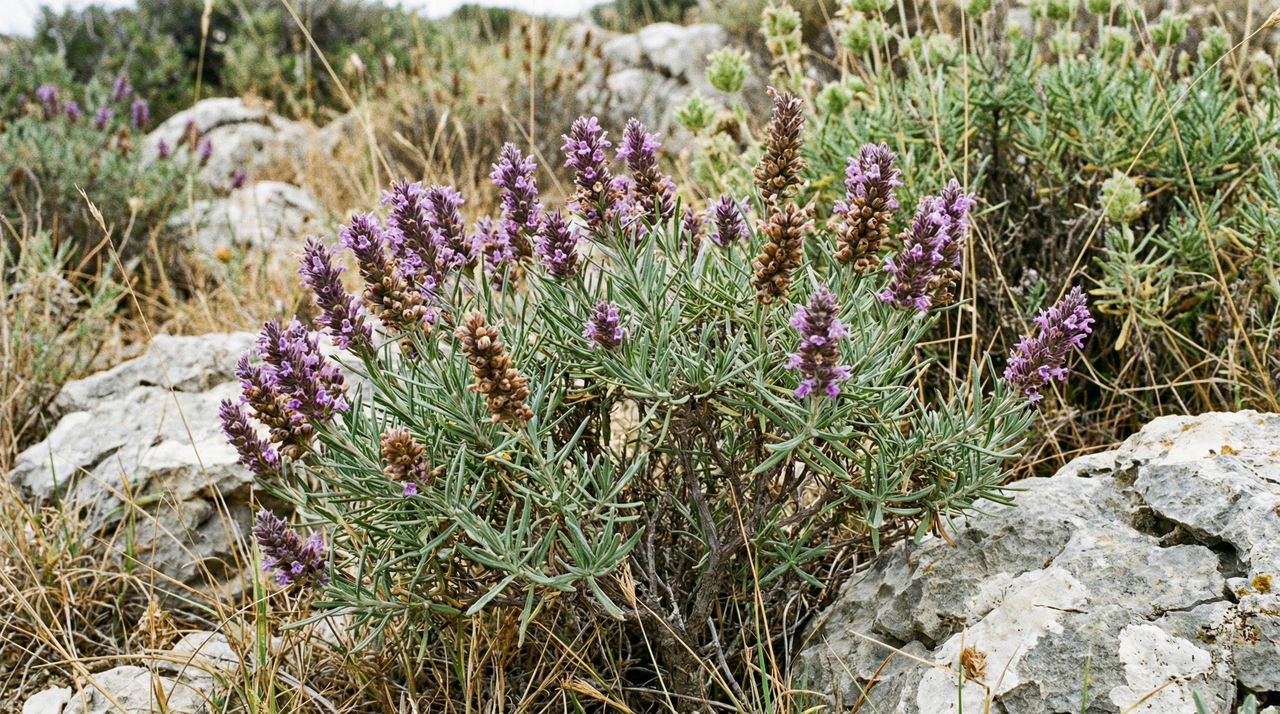
Most people who think they're cooking with thyme have never actually smelled Mediterranean thyme (Thymbra spicata). I made that mistake myself early on, rubbing a sprig of common garden thyme between my fingers and calling it close enough. Then a grower in southern Turkey handed me a stem of spiked thyme, or "kış kekik" as the locals call it, and the difference was immediate and a little shocking: sharper, almost medicinal, with a resinous warmth that sat in the back of your throat long after the leaf was gone. That's carvacrol talking, and it's not subtle.
Here's what I find genuinely strange about this plant's obscurity in North American gardens: it's been in continuous human use for over two thousand years.[1] Dioscorides wrote about it. It's the spine of za'atar. Its essential oil is being studied in pharmacology labs right now for antimicrobial and anti-inflammatory activity. And yet you can walk into most American nurseries and find forty varieties of common thyme before anyone's heard of this one. That gap between historical importance and modern awareness is exactly what pulled me in, and it's probably what brought you here too.
Origin and History of Mediterranean Thyme (Thymbra spicata)
Botanical Background and Native Range
Mediterranean thyme, known botanically as Thymbra spicata, is a perennial evergreen subshrub in the Lamiaceae family with roots (literally and figuratively) in some of the most demanding terrain the Eastern Mediterranean has to offer. Its native range stretches across Turkey, Cyprus, Syria, Lebanon, Israel, and Greece, where it colonizes rocky slopes, maquis shrublands, and open coastal woodlands anywhere from sea level up to 1,500 meters, always in favor of well-drained calcareous or sandy soils with a pH between 6.5 and 8.0.[2][3][4] Think limestone outcrops, thin alkaline soil, brutal summer sun. That's home.
The plant itself is compact and woody at the base, maturing to somewhere between 20 and 60 cm tall, and it's in no hurry.[5][6] First flowers don't appear until one to two years from seed, and a well-sited plant can persist for up to 15 years.[7] Globally it's listed as Least Concern by the IUCN given its broad distribution, though localized wild populations face real pressure from over-collection.[8][9] It reproduces by seed (with germination rates of only 20 to 40 percent) and via rhizomes, and seedling survival hovers around 30 to 50 percent compared to 80 to 90 percent for established adults.[7] That gap between seedling fragility and mature resilience explains a lot about how I approach growing it from scratch: patience at the germination flat, then confidence once it's established in the ground.
Visual Characteristics and Identification
In the garden, Mediterranean thyme forms a tidy, upright, bushy clump with distinctly quadrangular stems that are woody toward the base and finely hairy above.[5] The opposite leaves are small (5 to 15 mm), ovate to lanceolate, and glandular-punctate, meaning those tiny oil dots are visible if you hold a leaf to the light.[10] Crush one and you get a sharp, penetrating aroma that sits somewhere between oregano and thyme with its own particular edge. From late spring through summer, the plant throws up dense terminal spikes of pale pink to purplish, two-lipped tubular flowers, occasionally white, followed by four tiny oval nutlets about 1 to 1.5 mm long.[11][12]
The identification pitfall I run into most often at the nursery is confusion with Thymus capitatus and other compact thyme relatives. They smell similar enough to fool a quick sniff test, and the habits overlap.[13] The reliable tell is the flower spike: Thymbra spicata carries its blooms in a more distinctly elongated, upright spike rather than the tight, rounded heads of most Thymus species. I've started labeling every flat I grow with both genus and species precisely because mislabeled seedlings from herb vendors are genuinely common.
Traditional and Cultural Uses
The cultural record for this plant is long and unbroken. Theophrastus described related aromatic herbs in the 4th century BC; Dioscorides catalogued medicinal thymes in De Materia Medica in the 1st century AD; Pliny the Elder covered them in Naturalis Historia.[14][15] Across those ancient texts, the uses are consistent: respiratory complaints, digestive problems, wound care, and culinary seasoning in Greek and Roman kitchens.[16]
In Levantine and Eastern Mediterranean traditions, Thymbra spicata (known regionally as thymbra) is one of the cornerstone ingredients in za'atar, the spice blend that shows up on bread, grilled meats, and olive-oil dipping dishes across the region.[17] It was also burned as incense in purification rituals and carried as a protective charm, woven into a cultural fabric that treated aromatic plants as simultaneously culinary, medicinal, and sacred.[18] I first encountered it ground into a za'atar blend at a Levantine grocery years before I grew the plant; recognizing the living shrub for the first time was one of those satisfying moments of connection between pantry and garden.
That continuity carries forward in Greek, Turkish, and Lebanese kitchens and herbal medicine today, but it comes with an honest caveat: wild harvesting pressure is real, and regulated or cultivated sourcing is the responsible path.[19][20] I only use cultivated stock in my kitchen and nursery sales. Growing your own is the most direct way to take pressure off wild populations while keeping this ancient culinary tradition genuinely alive.
Fun Facts About Mediterranean Thyme
The essential oil is where things get chemically impressive. Carvacrol consistently dominates the oil composition, with thymol providing strong secondary support alongside p-cymene and γ-terpinene.[21][22] Those concentrations outpace many of its Lamiaceae relatives, which explains both the pungency and the strong antimicrobial and insect-repellent activity the oil is known for.[23] I've noticed the sprigs I harvest after a hot, dry stretch in late summer are noticeably more pungent than those cut during a cooler, wetter spell earlier in the season. That variation is the plant's chemistry responding to stress, exactly as it does on its native limestone slopes.
In the garden, it also earns its keep ecologically. Honeybees, solitary Andrena and Osmia bees, wasps, and butterflies all visit the flower spikes heavily during the late-spring bloom, making it a meaningful late-season nectar source in Mediterranean phrygana habitats.[24] Below ground, its high root-to-shoot ratio supports exceptional drought tolerance, and above ground, thymol-rich volatiles from the foliage suppress competing annual weeds through allelopathic action.[7][25] A plant that feeds pollinators, suppresses weeds, and smells extraordinary is a good argument for most any herb garden, though I'll note that most North American growing experience with this species is still fairly early-stage compared to its millennia of Mediterranean cultivation.
Mediterranean Thyme Varieties and Sourcing
The Wild Species: Thymbra spicata as the Primary Form
Here's the short answer on varieties: there aren't any. Thymbra spicata exists almost entirely as a single wild species with no named cultivars, no selected horticultural forms, and no subspecies in wide circulation.[26][27] What you grow is the wild type, and honestly, that's more than enough. The plant you'd bring home is a compact subshrub topping out somewhere between 8 and 20 inches tall, spreading 12 to 24 inches wide, with small oval leaves and pale pink to purple flowers that show up in summer. The scent is unmistakable: strong thyme up front, then a wave of oregano underneath. I've grown several batches from seed and every one of them delivered that same sharp, carvacrol-forward aroma at peak flowering. It's consistent in a way that selected cultivars often aren't.
What makes the wild type worth seeking out is its Mediterranean personality. It evolved on rocky slopes and calcareous soils at elevations up to about 1,500 meters, tolerating temperature swings from well below freezing up to 40°C while still expecting hot dry summers and mild winters.[28] Waxy leaves and a deep root system drive that drought tolerance in ways that common English thyme just can't match. In my dry borders, English thyme tends to go sparse and woody by midsummer, but Thymbra spicata keeps its structure when the heat really lands. The mat-forming habit makes it a natural fit for rock gardens, gravel plantings, and xeriscape borders where you want aromatic ground cover that doesn't demand irrigation. Dry leaves carry an exceptional volatile oil content, which is what gives the plant its functional punch in both the kitchen and the medicine cabinet.[29] It's hardy in USDA zones 7 to 10, with some sources narrowing that to zones 8 to 10 depending on winter moisture conditions.[30]
Finding and Purchasing Mediterranean Thyme in the US
Finding this plant stateside takes some patience. Thymbra spicata is not native to North America, has no established wild populations here, and is genuinely rare in the domestic nursery trade.[31][32][33][34] I've contacted multiple nurseries across several seasons looking for it, and the most reliable entry points I've found are specialty seed suppliers: Strictly Medicinal Seeds, Richters Herbs in Canada (they ship to the US), Mountain Valley Growers, and Plant Delights Nursery occasionally carry seeds or starter plants.[35][36][37][38] Seed packets typically run $8 to $15 for 10 to 50 seeds; starter plants, when you can find them, land around $12 to $20. It is grown in gardens in warmer parts of the eastern US, so botanical garden plant sales and niche Mediterranean herb nurseries are worth watching.[34]
If you go the international route, I always double-check USDA phytosanitary requirements before ordering live material from overseas; it's a small extra step that keeps the process legal and prevents headaches at customs.[39] And because availability with rare herbs is genuinely seasonal, contact any supplier directly before assuming their website reflects current stock. A phone call or email has saved me more than one wasted order.
Mediterranean Thyme Propagation and Planting
Mediterranean Thyme has a reputation for being a little stubborn from seed, and once you understand the biology, that makes complete sense. This plant evolved on fire-prone limestone slopes where seeds that germinated too easily would have been wiped out generations ago. The seeds tell that story in their structure.
Understanding the Seeds: Morphology, Anatomy, and Dormancy
Thymbra spicata seeds are tiny, measuring just 1.0-1.8 mm long and barely 0.5-1.0 mm wide, oblong to ovoid, brown to dark brown with a matte, slightly textured surface.[40][41][42] They're monoembryonic and exalbuminous, meaning they lack endosperm, and the embryo itself is underdeveloped at dispersal, which contributes directly to dormancy.[40][43] I've started plenty of Mediterranean Lamiaceae from seed over the years, and that pattern of a tiny, hard-coated seed that refuses to cooperate until conditions are exactly right is familiar territory.
The seed coat is physically water-impermeable, a classic adaptation in Mediterranean species that evolved alongside fire.[44][45] In the wild, smoke and heat crack that coat and signal that conditions are safe for germination. In the garden, you can mimic those cues through light scarification, cold stratification, dry after-ripening storage, or even smoke-water treatment. Optimal germination happens at 15-25°C with light exposure, and once dormancy is properly broken, you can expect 70-90% germination in 10-20 days.[46][47][48] GA3 treatment can also improve uniformity if you want consistent batches. From germination to maturity runs about 120-150 days total, so plan accordingly.[49]
Seeds do have one thing going for them: orthodox storage behavior. Dried to 5-10% moisture content and sealed with desiccant at around 5°C, they'll hold viability for 5-10 years; at -18°C, considerably longer.[50][51] Much of this data is extrapolated from close relatives like Thymus and Origanum, so treat those figures as a practical guide rather than a guarantee.
Propagation Methods for Reliable Results
For most gardeners, vegetative propagation is the answer. Seed viability is variable and the dormancy-breaking steps add real friction. Semi-hardwood cuttings give you true-to-type plants with consistent essential oil profiles, and they root reliably.[52][53] Take 5-10 cm cuttings from healthy, non-flowering stems in late summer, treat the base with IBA rooting hormone at 1000-3000 ppm, and stick them in a free-draining perlite-sand mix with bottom heat around 21°C and high humidity but indirect light.[54][55] Roots form in 3-6 weeks, and success rates of 70-80% are realistic.
The biggest mistake I've made with Mediterranean Lamiaceae cuttings is watering them one time too many while they're establishing. Botrytis moves in fast under high humidity if the mix stays too wet, and once you see that gray fuzz, you've usually lost the batch.[56][57] Err toward drier and airier. Layering works well in spring if you have an established clump with low stems; just pin them to the soil and expect roots in 4-6 weeks. Division in spring is equally straightforward on mature plants, and tissue culture using shoot tip explants on MS medium with BAP and NAA is an option for large-scale production if you're that ambitious.[58][59]
Soil, Site Selection, and Planting Technique
Everything about Mediterranean Thyme's native habitat points toward the same garden conditions: rocky, calcareous slopes from sea level up to 1500 m, in the eastern Mediterranean maquis, with sharp drainage and low soil fertility.[60][61] I think of it the same way I think about lavender or rosemary: if your soil holds water after rain, this plant will sulk. Sandy, gravelly, or rocky textures with excellent aeration are what prevent the root rot that kills more specimens than any pest ever will.[62]
Target a soil pH of 6.5-7.5, though it tolerates a range of 6.0-8.5.[63][64] I've seen yellowing in slightly acidic spots, that telltale iron chlorosis, and now I just work a small handful of lime into the planting hole in borderline areas. Roots need at least 15 cm of workable soil, and 30-45 cm is better to support the taproot that makes it so drought-tolerant once established.[65]
Full sun is non-negotiable: at least 6-8 hours of direct light daily.[64] Shade produces leggy, weakly fragrant plants with poor essential oil expression, and that undermines the whole point of growing it.[66] A south-facing open exposure mirrors its native habitat best. In heavy clay soils, raise the bed or blend in generous grit. For containers, use a gritty free-draining potting mix in pots at least 20-30 cm wide, and mulch lightly to suppress weeds while keeping mulch away from the stems themselves.[67]
Spacing, Timeline, and Early Establishment
Mature plants reach 20-50 cm tall with a spread of 30-60 cm, filling out to full size over 2-3 years at a moderate pace.[68][69] Space plants 30-45 cm apart in the row, with 60-80 cm between rows to keep air moving through the canopy and give you room to harvest without trampling neighbors.[70] Good airflow isn't just about harvest access; it directly reduces the fungal pressure that Mediterranean thymes dislike.
Transplant carefully to minimize root disturbance and the shock that slows establishment. I always label my rows immediately because young plants look remarkably similar to other thymes and savories at this stage, and losing track of which seedling is which is an easy mistake. The 120-150 day maturity window gives you a clear planning target: a spring planting should be ready for its first light harvest by late summer or early fall.[47]
In the garden, this plant earns its place next to rosemary and lavender in a sunny, dry guild, and near brassicas and tomatoes where its aromatic oils help reduce aphid pressure.[71][72] I've watched fewer aphids on my brassicas since tucking thymbra spicata seeds, and later established plants, into those beds, which is the kind of low-input, high-function outcome that makes a permaculture design feel like it's actually working. Get the site conditions right from the start, and this plant will reward you with years of almost no maintenance.
Mediterranean Thyme Care Guide
The mediterranean thyme plant (Thymbra spicata) is genuinely one of the easier herbs to grow once you understand its one non-negotiable requirement: treat it like the limestone-slope native it is. Give it the wrong conditions and it sulks or dies. Get the fundamentals right and it practically takes care of itself.
Sunlight Requirements for Mediterranean Thyme
Full sun isn't a preference for this plant; it's a biological necessity. Native to open, rocky Mediterranean habitats, Thymbra spicata needs at least 6-8 hours of direct sunlight daily.[73][74] That light intensity drives compact, bushy growth and, critically, pushes essential oil production — which means more thymol and carvacrol in every leaf you harvest.[74][75] After growing several batches from seed and cuttings, I've seen the difference firsthand: plants in my sunniest bed are noticeably more pungent than those getting even a couple hours of afternoon shade.
Insufficient light causes etiolation and leggy, weak stems that sprawl rather than mound.[74] This plant very rarely complains about too much sun — it doesn't scorch.[76] If leaves are wilting or discoloring, the culprit is almost always waterlogging or poor drainage, not solar overload. It also demands high light year-round, not just during the growing season, so in lower-light regions always choose your absolute brightest, most open spot.[77]
Watering Needs and Drought Tolerance
Once established, this is about as drought-tolerant as a garden herb gets. It evolved on dry, rocky eastern Mediterranean slopes from Turkey through the Levant, where it thrives on seasonal rainfall alone.[78][79] In a garden context, watering every one to two weeks or roughly an inch per week during active growth is plenty, and the soil should dry out between sessions.[79] Young seedlings and fresh transplants are the exception: water every two to three days for the first two to four weeks until roots get established, then taper off quickly.[79]
Drainage is the real key. The plant's shallow root system (10-30 cm) sits in whatever water pools at the surface, and it has essentially zero tolerance for consistently wet feet.[5] Overwatering shows as base yellowing, soft mushy stems, and eventually black, foul-smelling roots — classic root rot.[80][76] I lost a young planting to exactly this problem early on — I kept my summer watering schedule running into autumn, nights cooled, drainage slowed, and the roots rotted out over winter. I've cut irrigation dramatically the moment nighttime temperatures drop consistently below 15°C ever since.
Soil and Fertility Requirements
Thymbra spicata evolved in nutrient-poor, rocky, calcareous soils with low organic matter (pH 6.0-8.0), and that background shapes its entire relationship with fertilizer.[81] Excess nitrogen is the specific problem to avoid: flush vegetative growth comes at a direct cost to essential-oil quality, aroma, and flavor.[81] I test my soil each spring and only add a light compost top-dressing if nitrogen reads below 50 ppm; otherwise I leave the plant alone. A hungry thyme is an aromatic thyme.
If you do need to feed, a balanced low-nitrogen formula like 5-10-10 or 10-10-10 at half strength every four to six weeks during active growth is sufficient.[82][83] Organic slow-release amendments at planting are generally preferable to synthetic fertilizers.[84] Learn to read the deficiency signals: pale older leaves indicate nitrogen shortage, purplish-red leaves suggest low phosphorus, and interveinal chlorosis on new growth points to iron deficiency — common in alkaline soils.[85] Toxicity is equally readable: leaf tip scorch, excessive soft vegetative growth, and dark brittle foliage are the signs.[86] Remedy is simple — flush with water and withhold fertilizer until the plant recovers.
Heat and Frost Tolerance
The thymbra plant is rated for USDA zones 8-10 and genuinely comfortable between 15-35°C, tolerating brief spikes up to 45°C.[87][88] Prolonged exposure above 35°C causes wilting, leaf-edge browning, and flower drop.[89] During heat waves, 30-40% afternoon shade cloth, organic mulch, and wider spacing for airflow all help — and the deep, infrequent watering rhythm already covered here is the most important mitigation of all.[90]
On the cold end, the RHS rates it H4, hardy to around -10°C, with minimum survivable temperatures of roughly -12°C to -7°C (10-20°F).[67] Cold wind is often more damaging than the temperature itself.[91] A few inches of coarse mulch and a sheltered south-facing wall have carried my plants through zone-8 cold snaps that killed less-protected neighbors — the same approach I use for rosemary and oregano. Where wet winter soil is unavoidable, that's actually the greater threat: saturated, cold roots are the real killer in marginal zones.[92]
Pruning, Maintenance, and Seasonal Care
Prune right after flowering ends in late summer to early autumn, cutting stems back by about one-third.[93] That single cut is what keeps the plant compact and bushy rather than sprawling and woody at the base. Don't prune in winter and never remove more than half the plant at once — stress opens the door to the problems you're trying to prevent.[94]
Most pest and disease pressure comes from getting the basics wrong. Root rot from Pythium and Fusarium, powdery mildew in stagnant humid air, and occasional aphid, spider mite, or thrips activity are the main concerns.[95][96] Full sun, excellent drainage, and good airflow prevent the majority of issues before they start. When insects do appear, insecticidal soap or neem oil handles them without disrupting the beneficial pollinators that visit. The pests and diseases section covers identification and treatment in more detail.
Seasonal Rhythm of Mediterranean Thyme
Understanding the plant's natural calendar makes all the care decisions above click into place. Vegetative growth begins in late winter to early spring, which is when a light top-dress of compost (if needed) makes the most sense. Flowering runs from April through June, peaking in May, when the pinkish-purple blooms draw pollinators in numbers that still surprise me every year.[97][98] Seeds mature in late spring to early summer, then the plant eases into partial dormancy through the hottest, driest part of summer — exactly the season to back off on water and leave it alone.
Autumn sometimes brings a second flush of vegetative growth before the plant quiets down for winter. That's the moment to apply mulch and set up any windbreaks before the first frost arrives. Once you've watched that cycle through a full year, the care guide essentially writes itself: feed lightly after the winter flush, prune after the May bloom, withhold water through summer dormancy, and mulch before cold sets in. The plant's rhythm does most of the work.
Harvesting Mediterranean Thyme
Mediterranean Thyme is a plant that rewards patience over ambition. If you've just transplanted a rooted cutting or nursed a seedling through its first summer, resist the temptation to strip it bare. Plants typically reach their first flowering in one to two years from seed under good conditions, with full production maturity arriving somewhere in year two or three.[47][99][100] What you're coaxing toward in those early seasons is a dense, woody-based plant that can genuinely supply a small household through the year. Getting there takes a light touch early on.
When to Harvest Mediterranean Thyme
There are essentially two harvest modes, and which one you choose depends on what you're after. For fresh culinary use, you can start snipping vegetative sprigs from about 60 to 90 days after spring emergence, before the plant has committed to flowering.[49] Done lightly and often, these cuts keep the plant bushy and give you bright, herby material for the kitchen. I use these early trims the way I'd use any fresh thyme, knowing the flavor is good but hasn't fully peaked yet.
The real prize comes when the buds just start to swell and color. Anthesis typically hits 90 to 120 days after spring planting, with peak bloom lasting two to three weeks in early summer.[49][101] Once seed set begins, you've got a 30 to 45 day window before the plant shifts its energy entirely toward reproduction. For dried herb or anything destined for a spice blend, I wait until those first buds are showing color but not fully open. That's when the pungency I want from this plant is at its sharpest.
How to Harvest and What to Expect
The parts worth cutting are the leaves and flowering tops.[102] The leaves are small, five to fifteen millimeters, with a slightly rough, glandular texture that turns brittle once dried.[103] When you dry a batch and crumble a leaf between your fingers, the aroma should hit you hard; if it doesn't, either the timing was off or the plant hasn't had enough sun and heat to push those oils. Fresh leaves carry a strong, spicy, pungent character with oregano-forward depth, earthy undercurrents, and a lingering bitter finish, all driven by high carvacrol and thymol content.[87][104] Plants grown in hotter, drier conditions tend toward a higher carvacrol concentration, which translates to a noticeably spicier result I personally prefer for spice blends like za'atar.
Essential oil production peaks at full bloom, with phenolic levels highest in spring and summer harvests.[105][106] By year three, a single established plant yields enough dried kış kekik to carry a household comfortably into winter. Air drying in small bunches out of direct sun preserves that carvacrol punch better than any other method I've tried, but keep it brief; a week in a warm, airy spot is usually all it needs before the leaves strip clean from the stems.
Mediterranean Thyme Preparation and Uses
Culinary Uses and Flavor Profile
When preparing Mediterranean thyme, the leaves and flowering tops are what you're after here. [107][108] The woody stems go straight to the compost. What you get from the rest is a flavor that genuinely surprised me the first time I cooked with it: intensely peppery, with strong thyme-oregano undertones, a citrus edge, and a cool mint finish that fades fast in the heat.[109][110] The flavor hits harder than the Thymus vulgaris most gardeners know. I use about half the quantity I'd reach for with common thyme when I'm seasoning flatbread or lamb.
Its most celebrated role is in za'atar, the Levantine spice blend where it's mixed with sesame seeds, sumac, and salt, though it seasons everything from grilled vegetables to yogurt dips to slow-cooked stews across Lebanese, Syrian, and Turkish tables.[111][112] I harvest in summer at peak flowering and hang small bundles in my shaded drying shed right away. Air-drying in the shade preserves the γ-terpinene and keeps that citrus-mint brightness that oven heat tends to flatten out.[113] For an olive oil infusion, I pack dried leaves loosely into a jar, cover with good oil, and refrigerate it for use within a month.[114] Those dried leaves also carry respectable levels of vitamin C, potassium, calcium, and iron, though the exact amounts shift with growing conditions.[115][116]
A word on safety, because the essential oil compounds that give this plant its punch also demand some respect. The carvacrol and thymol are perfectly safe at normal culinary amounts, but large doses can irritate and accumulate to toxic levels.[117] Avoid medicinal doses entirely during pregnancy, and be cautious if you're on anticoagulants or sedatives.[118][119] I've never had any issue using it as a kitchen herb, but I label my infused oils clearly and keep them away from concentrated use. If you're foraging rather than growing your own, learn the denser flower spikes and narrower leaves that distinguish it from look-alikes, including potentially toxic Teucrium species nearby.[120][121]
Medicinal Preparations
Once you have dried leaves on hand, the tea practically makes itself: one to two teaspoons of dried herb steeped in 250 ml of just-boiled water for ten to fifteen minutes, strained and sipped up to twice daily.[122][123] Traditional use reaches for this preparation for respiratory congestion and digestive discomfort, which tracks with the antimicrobial and anti-inflammatory properties already documented in the chemistry. Diluted essential oil, one to two drops in a carrier oil applied topically or inhaled, extends those applications without ingestion. These doses are approximate and come from ethnobotanical tradition rather than standardized clinical trials, so if you're using it medicinally beyond occasional tea, a conversation with a qualified herbalist or physician is genuinely worthwhile.
Non-Food and Practical Applications
The thymbra capitata essential oil that gives mediterranean thyme its antimicrobial reputation translates directly into practical non-culinary uses: diluted in a carrier, it's applied topically for wounds; diffused, it's used for respiratory relief; in phytotherapy circles, it appears as a natural preservative and antifungal agent.[124][125] I've also used a carvacrol-rich dilution as a surface spray in the garden shed, which feels like putting the plant's own chemistry to honest work. Beyond the medicine cabinet, the same drought-hardy shrub earns its place in xeriscapes and Mediterranean-style rock gardens purely on ornamental and structural grounds, stabilizing thin soils on slopes with minimal fuss.[126] It won't anchor a windbreak or fix nitrogen, but as a low-care, aromatic guild member that does quiet useful work year after year, it's earned a permanent spot in my dry-garden designs.
Mediterranean Thyme Health Benefits and Medicinal Uses
What makes Mediterranean Thyme (Thymbra spicata) genuinely compelling isn't folklore or marketing copy. It's chemistry. This perennial subshrub, native to the rocky scrublands of Greece, Turkey, and the Levant, has been brewed into teas and pressed into wounds for millennia, and modern phytochemical research keeps validating why. The overlap between traditional use and laboratory findings is striking enough that I think every serious herb grower should understand what's actually going on inside those aromatic leaves.
Phytochemical Profile: Carvacrol, Thymol, and Supporting Compounds
The essential oil is the headline. Carvacrol typically makes up 60-85% of the oil, with thymol running anywhere from 5-65% depending on where and when the plant was harvested.[127][128][129] I've noticed this in my own work with aromatic Lamiaceae: two plants labeled the same species can smell noticeably different depending on soil type, altitude, and time of harvest, with summer flowering being the peak window for oil concentration. If you're growing this thymbra herb for more than just cooking, knowing your source genuinely matters.
Concentration also shifts by plant part. Leaves yield the most oil (1-3%), richest in thymol and carvacrol; flowers follow closely but carry more p-cymene; stems yield less at 0.5-1%; and roots, while lower in oil, are richer in flavonoids like apigenin.[130][131] For culinary and medicinal purposes, the leaves are where you want to focus.
Supporting those dominant volatiles is an impressive phenolic cast. Rosmarinic acid alone accounts for 1-5% of dry weight, alongside caffeic and ferulic acids, with total phenolic content ranging from 50-250 mg GAE per gram of extract.[132][133] That's a wide range, which reflects real-world variability rather than inconsistent science. Flavonoids including luteolin (up to 1.5 mg/g), apigenin, and quercetin derivatives round out the profile.[134][135] Minor tannins, saponins, and coumarins are also present, with alkaloids essentially absent.[134] These compounds didn't evolve for our benefit; they're the plant's defense against herbivores, pathogens, and harsh Mediterranean sun. We just happen to benefit from them too.
Traditional and Modern Medicinal Applications
Across Greek and Turkish folk medicine, Thymbra spicata has been used as teas and infusions for respiratory infections, coughs, and bronchitis, as well as for digestive complaints, wound care, and general inflammation.[136][137] Clients who grow it in my garden design projects often tell me the tea soothes a dry cough in a way that feels familiar, very much like standard thyme, which tracks with what the ethnobotanical surveys document.
The preclinical evidence behind those traditional uses is genuinely strong. Antioxidant assays routinely show EC50 values of 10-50 μg/mL, comparable to synthetic antioxidants like BHT, with Nrf2 pathway activation and upregulation of protective enzymes identified as part of the mechanism.[138][139] Antimicrobial performance is similarly impressive: MIC values as low as 0.06-0.25 mg/mL against Staphylococcus aureus, E. coli, Pseudomonas aeruginosa, and Candida albicans, with carvacrol and thymol disrupting microbial cell membranes and inhibiting biofilm formation.[140][141] Those MIC values are competitive with common oregano, which gardeners already respect for antimicrobial potency. Anti-inflammatory effects via NF-κB and COX-2 inhibition, with cytokine reduction exceeding 50% at 100 μg/mL in vitro and measurable edema reduction in rodent models, align directly with its wound and inflammation uses in traditional herbalism.[142][143]
Broader preclinical findings include analgesic effects (up to 65% reduction in pain response in animal models), cytotoxic activity against several cancer cell lines. It also shows alpha-glucosidase and alpha-amylase inhibition comparable to acarbose for antidiabetic potential, alongside acetylcholinesterase inhibition suggesting possible neuroprotective value.[142][144][145] These are promising findings, but the honest summary is this: human clinical trials are nearly absent, with one small oral health study noted in the literature.[146] The lab evidence and ethnobotanical record are mutually reinforcing; the clinical confirmation most of us want just isn't there yet.
Nutritional Value and Culinary Contribution
I reach for Mediterranean Thyme first as a seasoning, not a supplement. Dried leaves carry a bold thyme-oregano intensity that anchors za'atar blends and seasons grilled meats, flatbreads, yogurt, and salads across Levantine and Mediterranean cuisines.[146][147] The nutritional contribution that comes along for the ride is genuinely useful: roughly 15-20 mg of iron per 100g of dried herb, 500-700 mg of potassium, meaningful magnesium, and 20-50 mg of vitamin C in fresh leaves, alongside substantial fiber (30-40g per 100g dry weight).[148][149] I should be transparent that these figures come from phytochemical analyses rather than a large standardized database like USDA FoodData, so treat the ranges as directional rather than definitive. Still, a pinch of this herb on your bread brings more than flavor.
Safety Considerations for Mediterranean Thyme
Used as a culinary herb in normal amounts, Mediterranean Thyme has a reassuring safety profile. Acute toxicity studies place the LD50 above 2000 mg/kg in animal models, and the dried leaf has a long track record as a food ingredient without notable adverse effects at culinary doses.[150][151] The concentrated essential oil is a different matter. High doses of carvacrol and thymol can cause skin irritation, gastrointestinal upset, and potential hepatotoxicity, and I treat it with the same respect I'd give any potent botanical extract.[152] Pregnancy and breastfeeding are clear contraindications for therapeutic use; when clients ask about using carvacrol-rich oils medicinally while pregnant, I tell them directly: that's a conversation for a qualified herbalist or physician, not a plant profile article. The safety research simply hasn't kept pace with the bioactivity literature, which means the gaps are real and caution is warranted.
Mediterranean Thyme Pests and Diseases
There's a quiet irony in writing about Mediterranean Thyme's pest problems: the same thymol and carvacrol that make this plant so medicinally and culinarily interesting are also what keep it largely off the pest radar. That chemical armor isn't incidental. It's the plant's primary survival strategy, refined over millennia on rocky eastern Mediterranean slopes where it had to protect itself without any help from a gardener.
Natural Resistance from Essential Oils
The essential oil profile of Thymbra spicata includes carvacrol, thymol, and γ-terpinene, with thymol alone reaching up to 50% of the oil in some populations.[153][104] These compounds deliver insecticidal, repellent, antifeedant, and antimicrobial activity against a surprisingly broad range of threats, from stored-product beetles to aphids, spider mites, thrips, and whiteflies.[154][155] Lab results are robust, though field performance can be more variable, so I'd frame this as meaningful protection rather than immunity. The plant also produces hairy trichomes that physically deter small arthropods and has allelopathic properties that suppress competing weeds, making it doubly useful as a guild companion.[156] I've started treating it as a sentinel plant in my herb guilds precisely because its scent seems to reduce pest pressure on neighboring crops like basil. I source wild-type or locally adapted stock rather than looking for named cultivars, because no commercial selections exist with enhanced resistance; the natural variation in thymol content across populations is what you're working with, and honestly, it usually outperforms anything uniform.[157]
Common Pests and Susceptibilities
That said, Mediterranean Thyme isn't invincible. Aphids, spider mites, whiteflies, thrips, and root-knot nematodes can all move in as opportunists when cultural conditions slip.[158][159] In my experience, spider mites tend to appear during prolonged dry heat spells, and aphids cluster after I've been a little too generous with compost. Both are signals that the plant is stressed rather than signs of inherent weakness. Good spacing (12 to 18 inches between plants), restrained fertilizing, and planting alongside beneficial-attracting flowers handles most of it before problems escalate.[160] I only reach for neem oil or insecticidal soap when I see clustering insects after a heat spike, and it rarely comes to that.
Fungal Diseases and Prevention
Mediterranean Thyme shows moderate to high resistance to Fusarium, Alternaria, and Botrytis in controlled studies,[161] which is genuinely impressive. The catch is that those same pathogens can take hold in humid, stagnant air, even on this plant. Powdery mildew, gray mold, and root rot (from Pythium and Phytophthora as well as Fusarium) are the real disease risks, and they all have one trigger in common: too much moisture.[162][163] This plant evolved on dry, rocky slopes in USDA zones 8 to 10, and it has essentially no tolerance for waterlogged soil or poor airflow.[164][165] With similar Mediterranean species in my garden, morning sun exposure and wide spacing have eliminated any need for fungicides entirely. Give it well-drained sandy or loamy soil, full sun, avoid overhead irrigation, and let the soil dry between waterings.[166] Those conditions don't just prevent disease; they also let the plant's own chemical defenses work at full strength rather than being undermined by the stress that humid, wet conditions create.
Mediterranean Thyme in Permaculture Design
Thymbra spicata didn't evolve in a forgiving place. Its native maquis and garrigue habitats across Turkey, Greece, and the Levant are rocky, sun-baked, and seasonally parched, and every structural feature of the plant reflects that pressure. The small, hairy leaves, the deep fibrous roots, the intensely aromatic oils that discourage browsing: these aren't incidental traits, they're the whole survival strategy.[4][167] Understanding that helps you place it well in a permaculture design. Ignore it, and you'll spend the season puzzling over why your plant looks miserable.
Climate Adaptation and Hardiness Zones
Mediterranean thyme is rated hardy to USDA zones 8 through 10, tolerating minimum temperatures around -10°C to -12°C (10-14°F), which puts it in RHS hardiness category H4.[168][169] Established plants can push through a brief cold snap to -7°C with the protection of a warm wall or sheltered slope, but they don't want protracted wet cold. What they do want is summer heat, and a lot of it. The plant performs well anywhere from 20 to 30°C, and can shrug off temperatures reaching 40°C if drainage is solid and humidity stays below 60%.[170]
That humidity threshold is the thing that catches people out. I learned this the hard way early in my career, when I tucked a plant into a partially shaded corner of a zone 9B bed that held moisture after rain. Within a few weeks I was dealing with powdery mildew creeping up the stems. Once I moved it to a south-facing slope with free-draining sandy loam and full sun all day, the problem disappeared and never came back. The plant's native limestone slopes don't hold water, and your garden shouldn't try to either.[171]
For gardeners in California or the drier parts of the Southeast, this is genuinely good news: those Csa climate analogs are almost perfect for it.[172] In more humid subtropical areas, success comes down to siting. Raised beds, gravel mulch, rock garden placements, and south-facing slopes all help replicate the fast-draining, high-airflow conditions this plant expects.
Ecosystem Functions and Services
In its native garrigue, Thymbra spicata pulls serious ecological weight. It stabilizes rocky slopes against erosion, adds organic matter as it sheds leaves and woody material, and supports soil microbial communities through root activity and decomposition.[173] Those functions translate directly into cultivated permaculture settings, especially on exposed, nutrient-poor sites where more demanding plants would struggle.
The pollinator support is what I notice most in my designs. Mediterranean thyme flowers from May through July or August, with dense purple-pink spikes that attract honeybees, bumblebees, solitary bees, hoverflies, and butterflies.[174][175] The plant is protandrous, meaning it releases pollen before the stigma is receptive, which encourages cross-pollination and extends the window of pollinator interest across the flower spike.[176] In summer, when a lot of the garden goes quiet, a planting of Thymbra spicata is reliably busy with insects. That matters a lot in a food forest where pollination during hot, dry months is otherwise thin.
The volatile oils that give it that sharp, spicy scent also do genuine pest-suppression work. Thymol and carvacrol have documented insecticidal activity against aphids and other soft-bodied pests.[177] In my experience, interplanting it near susceptible herbs has noticeably reduced aphid pressure in adjacent beds. I can't claim a controlled experiment, but the pattern has been consistent enough across multiple designs that I now include it deliberately near oregano and basil for that reason.
A few honest limitations: this plant does not fix nitrogen, so don't expect it to do what your legume guild members do for soil fertility.[178] At 20 to 60 cm tall, it's also nowhere near large enough to serve as a windbreak.[177] What it does offer, though, is low, dense, weed-suppressing ground cover with year-round aromatic foliage in mild climates, a combination that earns it a place in any dry-climate system.
Forest Layer Placement and Guild Companions
In permaculture zone mapping, Thymbra spicata sits firmly in the herbaceous and low shrub layer. Its woody base and subshrub form put it just above a true ground cover, but its 20 to 60 cm mature height means it fits comfortably under taller companion shrubs without competing for light.[179][180] In its native habitat, it grows alongside Quercus coccifera, Pistacia lentiscus, and Cistus species, stabilizing soil at the feet of larger shrubs while contributing to the layered structure of the maquis.[181]
One of the less obvious reasons it thrives in poor soils is its relationship with arbuscular mycorrhizal fungi. AMF colonization rates can reach up to 80% in established plants, dramatically improving phosphorus and mineral uptake from lean, rocky substrates.[182] In sandy, nutrient-poor soils where I've grown it alongside other Lamiaceae, this mycorrhizal connection seems to compensate well for the absence of nitrogen fixation. The plant doesn't need rich soil; it needs the right fungal partners, and those establish naturally once you stop amending and overwatering.
For guild design in dry, sunny conditions, the natural companions are rosemary, lavender, and oregano. All four share the same climate preferences, the same lean-soil tolerance, and the same appeal to pollinators, which means a guild built around them creates overlapping bloom windows and a dense aromatic presence that benefits the whole system.[183] I've run this combination along xeriscape borders in zone 9B, and the plants genuinely look after themselves once established. The Thymbra spicata fills the low front layer, its spiked inflorescences slightly showier than common thyme and visible for longer into summer, while rosemary and lavender provide the vertical structure behind it. The whole planting pulls pollinators steadily through the lean months. That's the kind of guild that earns its space.
The Plant That Made Me Rethink What "Useful" Means
I still have a small jar of dried Thymbra spicata on my pantry shelf from my first real harvest, and I open it sometimes just to smell it, not to cook with it. There's something about a plant that's been carrying this much human history on its tiny, resinous leaves since before Dioscorides picked up his pen that makes me want to slow down and pay attention. It earns its place by doing almost nothing flashy, and somehow that's exactly the point.
Sources 183
- Biological activities of Thymbra spicata L. var. spicata, a plant used as folk medicine ↩
- Flora of Turkey and the East Aegean Islands ↩
- USDA PLANTS Database - Thymbra spicata ↩
- Flora of Israel Online ↩
- Missouri Botanical Garden - Thymbra spicata ↩
- Royal Horticultural Society - Thymbra spicata ↩
- Ecological traits of Thymbra spicata in Mediterranean shrublands ↩
- IUCN Red List - Thymbra spicata ↩
- USDA PLANTS Database ↩
- Plants of the World Online - Thymbra spicata ↩
- Royal Horticultural Society - Thymbra spicata ↩
- Plants of the World Online - Thymbra spicata Lam. ↩
- Missouri Botanical Garden Plant Finder ↩
- De Materia Medica ↩
- Natural History ↩
- Ethnobotany of Thyme in the Mediterranean ↩
- Za'atar: The Essential Spice of the Levant ↩
- Ritual Uses of Aromatic Plants in Ancient Greece ↩
- Conservation and Sustainable Use of Mediterranean Medicinal Plants ↩
- Ethnobotanical Survey of Thymbra spicata in the Mediterranean ↩
- Chemical composition and antioxidant activity of essential oil of Thymbra spicata L. ↩
- Essential oil yield and composition of Thymbra spicata from different regions ↩
- Phytochemical Profile and Insect Repellent Activity of Thymbra spicata ↩
- Pollinators of Mediterranean aromatic plants: A case study in wild thyme relatives ↩
- Adaptations of Thymbra spicata L. to Mediterranean Drought Conditions ↩
- Plants of the World Online - Kew Science ↩
- Thymbra spicata L. | Plants of the World Online | Kew Science ↩
- Drought Tolerance in Mediterranean Lamiaceae ↩
- Essential Oils of Thymbra spicata L. from Turkey ↩
- USDA PLANTS Database ↩
- Thymbra spicata L. ↩
- Thymbra spicata ↩
- Missouri Botanical Garden ↩
- Flora of North America ↩
- Thymbra spicata Seeds ↩
- Thymbra spicata - Richters Herbs ↩
- Rare Herbs Starter Plants ↩
- Thymbra spicata - Zaatar ↩
- Importing Plants and Plant Products to the US ↩
- Seed Morphology and Anatomy of Selected Lamiaceae Species ↩
- Comparative Seed Anatomy in Lamiaceae: Thymbra and Thymus Genera ↩
- Kew Royal Botanic Gardens: Thymbra spicata Seed Description ↩
- Embryology of Thymbra spicata L. (Lamiaceae) ↩
- Seed Dormancy and Germination of Mediterranean Plants ↩
- Fire and Germination in Mediterranean Basin Shrubs ↩
- Germination Ecology of Thymbra spicata ↩
- Thymbra spicata L.: A review of its botany, traditional uses, phytochemistry and pharmacology ↩
- Seed Germination of Thymbra spicata L. under Different Conditions ↩
- Phenological Stages and Essential Oil Yield in Thymbra spicata L. ↩
- Seed Longevity and Storage Behavior of Thymbra spicata L. ↩
- Seed Storage of Medicinal and Aromatic Plants ↩
- Propagation of Medicinal and Aromatic Plants in the Mediterranean Region ↩
- Genetic Diversity and Propagation Methods for Thymbra spicata ↩
- Cuttings Propagation of Medicinal and Aromatic Plants ↩
- Propagation of Ornamental Plants: Thymbra spicata ↩
- Missouri Botanical Garden Plant Finder - Thymbra spicata ↩
- Royal Horticultural Society - Thymbra spicata ↩
- Micropropagation of Thymbra spicata L. via Shoot Tip Culture ↩
- Micropropagation of Thymbra spicata L. ↩
- Thymbra spicata L.: A Review on Phytochemistry and Pharmacology ↩
- Thymbra spicata - Kew Royal Botanic Gardens ↩
- Plants of the World Online: Thymbra spicata ↩
- Royal Horticultural Society Plant Finder ↩
- Missouri Botanical Garden - Thymbra spicata ↩
- Soil Requirements for Thymbra spicata ↩
- Royal Horticultural Society - Thyme Growing Guide ↩
- Thymbra spicata Cultivation - Royal Horticultural Society ↩
- Thymbra spicata Plant Profile ↩
- Cultivation Guidelines for Medicinal and Aromatic Plants: Thymbra spicata ↩
- Thymbra spicata L. ↩
- Thymbra spicata L. - Cultivation and Uses ↩
- Thymbra spicata L. ↩
- Thymbra spicata - Plants of the World Online (Kew Science) ↩
- Mediterranean Wild Edible Herbs as Sources of Health-Promoting Compounds ↩
- Thymbra spicata ↩
- Thymbra spicata L.: A Review of Its Traditional Uses, Phytochemistry, Pharmacology and Safety ↩
- Thymbra spicata L.: A Review of Its Traditional Uses, Phytochemistry, Pharmacology and Future Perspectives ↩
- Thymbra spicata - Plants of the World Online (Kew Science) ↩
- Thymbra spicata Care Guide ↩
- Royal Horticultural Society (RHS) Guide to Mediterranean Garden Plants ↩
- Thymbra spicata L.: A Review on Phytochemistry and Pharmacology ↩
- Thymbra spicata L.: A Review on Nutritional and Therapeutic Uses ↩
- Fertilizer Recommendations for Herbs - University of Minnesota Extension ↩
- Fertilizer Recommendations for Herbs ↩
- Iron Chlorosis in Alkaline Soils for Lamiaceae Plants ↩
- Nutrient Management in Aromatic Plants: Lamiaceae Family ↩
- Thymbra spicata L.: A Review of Its Phytochemistry and Pharmacology ↩
- Ecological Adaptation of Thymbra spicata in Mediterranean Shrubs ↩
- Heat Stress Responses in Mediterranean Aromatic Plants ↩
- Landscape plants for the Southern High Plains: Shrubs and Perennials ↩
- Cold Hardiness of Aromatic Herbs in Mediterranean Climates ↩
- Winter Protection Techniques for Perennial Herbs ↩
- Thymbra spicata: Cultivation and Care ↩
- Pruning Mediterranean Herbs ↩
- Thyme (Thymus spp. and related) - Pests and Diseases ↩
- Root Rot in Herbs: Prevention and Treatment ↩
- Phenology of Mediterranean Woody Species ↩
- Flora of Turkey and the East Aegean Islands ↩
- Cultivation of Medicinal and Aromatic Plants in the Mediterranean ↩
- Propagation and Cultivation of Thymbra spicata L. in Mediterranean Conditions ↩
- Flowering and Seed Maturity in Lamiaceae Herbs: A Case Study of Thymbra spicata ↩
- Thymbra spicata L. - An Overview ↩
- Medicinal and Aromatic Plants of Turkey ↩
- Chemical Composition and Antioxidant Activity of Essential Oils from Thymbra spicata ↩
- Chemical Composition and Antioxidant Activity of Essential Oil from Thymbra spicata L. ↩
- Seasonal Changes in Phenolic Content and Volatile Compounds of Thymbra spicata ↩
- USDA PLANTS Database: Thymbra spicata ↩
- Missouri Botanical Garden: Thymbra spicata ↩
- North Carolina State University Extension - Thymbra spicata ↩
- Essential Oils of Thymbra spicata from Turkey: Composition and Comparison ↩
- Medicinal and Culinary Uses of Thymbra spicata ↩
- Za'atar: A Spice Blend with Deep Roots ↩
- Effect of Drying Methods on the Essential Oil Yield and Composition of Thymbra spicata ↩
- Herbal Oil Infusions: Safety and Preparation ↩
- Nutritional and Mineral Content of Selected Lamiaceae Herbs ↩
- Nutritional and Phytochemical Profile of Thymbra spicata ↩
- Thymbra spicata L. Essential Oil: Chemical Composition and Toxicity Evaluation ↩
- Herbal Contraindications in Pregnancy ↩
- Toxicity Assessment of Thymbra spicata Essential Oil ↩
- Flora of Turkey and the East Aegean Islands (Pegler et al.) ↩
- Identification Guide to Lamiaceae of Europe ↩
- Ethnopharmacological survey of Thymbra spicata in Turkey ↩
- Ethnobotanical Survey of Thymbra spicata in Turkey ↩
- Thymbra spicata L. (Lamiaceae): A review of its ethnobotany, phytochemistry and pharmacology ↩
- Antimicrobial and antioxidant activities of Thymbra spicata essential oil ↩
- Royal Horticultural Society Plant Finder ↩
- Chemical Composition and Biological Activities of Thymbra spicata L. Essential Oil ↩
- Chemical composition and bioactivity of Thymbra spicata essential oil ↩
- Essential Oil Variation in Thymbra spicata L. from Turkey: Seasonal and Geographical Aspects ↩
- Chemical Composition and Antioxidant Activity of Thymbra spicata L. Essential Oil ↩
- Phytochemical Analysis of Thymbra spicata from Different Plant Organs ↩
- Secondary Metabolites from Thymbra spicata: Phenolics and Flavonoids ↩
- Phytochemical Profile and Antioxidant Activity of Thymbra spicata ↩
- Phytochemical Screening and Antioxidant Activity of Thymbra spicata ↩
- Phytochemical analysis of Thymbra spicata L. subsp. spicata and its biological activities ↩
- Ethnopharmacological survey of Thymbra spicata in Turkey ↩
- Medicinal plants of Greece: Traditional uses of Lamiaceae species ↩
- Antioxidant and Antimicrobial Activities of Thymbra spicata ↩
- Antioxidant activity of Thymbra spicata mediated by Nrf2 pathway activation ↩
- Antimicrobial mechanisms of carvacrol-rich Thymbra spicata essential oil ↩
- Antimicrobial and Antioxidant Properties of Spiked Thyme Essential Oil ↩
- Anti-inflammatory and Analgesic Properties of Thymbra spicata Extracts ↩
- Anti-inflammatory effects of Thymbra spicata essential oil via NF-κB inhibition ↩
- Cytotoxic and Anti-inflammatory Effects of Thymbra spicata ↩
- Inhibitory potential of Thymbra spicata against α-amylase and antidiabetic effects ↩
- Thymbra spicata L.: A Review on Phytochemical Compounds and Pharmacological Activities ↩
- Za'atar: The Ancient Spice Blend ↩
- Nutritional Composition and Antioxidant Properties of Thymbra spicata L. ↩
- Mineral Composition of Thymbra spicata L. from Turkey ↩
- Toxicity Evaluation of Thymbra spicata Essential Oil ↩
- Toxicity Profile of Carvacrol-Rich Essential Oils ↩
- Pharmacological Activities and Safety of Thymbra spicata L. Essential Oil ↩
- Chemical Composition and Insecticidal Activity of Essential Oils from Thymbra spicata ↩
- Insecticidal Activity of Essential Oils from Mediterranean Aromatic Plants ↩
- Pest Resistance Mechanisms in Aromatic Plants: Focus on Lamiaceae ↩
- Herbivore Resistance in Wild Thyme Species: The Role of Thymbra spicata in Mediterranean Agroecosystems ↩
- Genetic Diversity and Population Structure in Thymbra spicata L. from Different Regions of Turkey ↩
- Pests and Diseases of Aromatic Plants in the Mediterranean Basin ↩
- Pest Management for Thyme and Related Herbs ↩
- Integrated Pest Management for Herbs ↩
- Antifungal Activity of Thymbra spicata Essential Oil ↩
- Powdery Mildew Management in Herbs ↩
- Root Rot in Mediterranean Herbs ↩
- Thymbra spicata L. ↩
- Thymbra spicata - Royal Horticultural Society Plant Finder ↩
- Thymbra spicata Cultivation Guide ↩
- Kew Science Plants of the World Online - Thymbra spicata ↩
- USDA Plant Hardiness Zone Map ↩
- RHS Plant Finder - Thymbra spicata ↩
- Royal Horticultural Society - Thymbra spicata Profile ↩
- Herbs for Florida Landscapes - University of Florida IFAS Extension ↩
- Thymbra spicata - Missouri Botanical Garden Plant Finder ↩
- Ecological Role of Aromatic Plants in Mediterranean Ecosystems ↩
- Pollination Ecology of Mediterranean Lamiaceae ↩
- Pollinators and Thymbra spicata Interactions ↩
- Floral Biology and Pollination in Thymbra spicata ↩
- Insecticidal Activity of Thymbra spicata Essential Oil ↩
- Thymbra spicata L. | Species ↩
- Thymbra spicata L. ↩
- Thymbra spicata ↩
- Community structure of maquis vegetation in the Levant ↩
- Mycorrhizal associations in Mediterranean aromatic plants ↩
- Habitat Management for Pollinators in Scrublands ↩