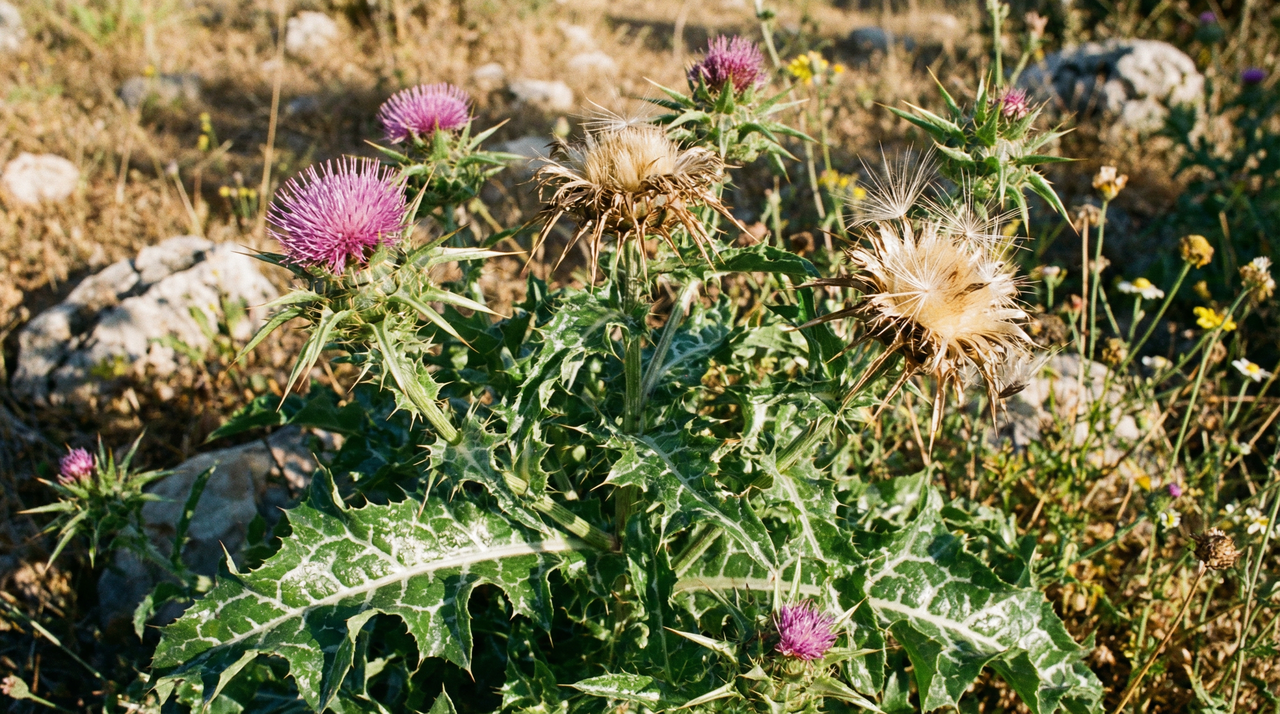
Most people meet milk thistle as a capsule in a pharmacy aisle, something their doctor mentioned after a rough stretch of drinking or a round of hard medications. That version of the plant, powdered and pressed into a supplement, tells you almost nothing useful about what you're actually dealing with. The first time I pulled a first-year rosette out of my garden bed by mistake, I bled. Not badly, but enough to make my point: this is a plant that has been defending itself for millions of years, and those defenses are inseparable from the chemistry that makes it medicinally remarkable. The spines and the silymarin are the same strategy, just expressed differently.
What I find genuinely strange is how a plant this aggressive, one that's legally restricted in several western U.S. states because it colonizes rangeland so effectively,[1] has simultaneously earned one of the strongest safety and efficacy records of any botanical in modern clinical research. It's not a contradiction once you understand the plant. But it does mean that "just growing some milk thistle" requires a clearer head than most herb profiles will tell you.
Milk Thistle Origin, History, and Botanical Background
Milk thistle (Silybum marianum) is a Mediterranean native, originating in southern Europe, North Africa, and the Middle East, and it has followed humans so enthusiastically around the world that it's now naturalized across North America and listed as invasive in California, Hawaii, and Florida.[2][3] That spread wasn't accidental. People carried it deliberately, because for over two thousand years, this plant has been regarded as one of the most reliable herbs for protecting the liver.
Botanical Background and Visual Characteristics of Milk Thistle
Most growers encounter milk thistle as a biennial, spending its first year as a low, spreading basal rosette before bolting in year two to a flowering stem that can reach six feet tall, setting a single crop of seeds and dying.[4][5] That monocarpic habit, flowering once then dying, means the plant puts everything into seed production, and it succeeds spectacularly at it. A single plant can produce between 6,000 and 12,000 seeds, each tipped with a feathery pappus for wind dispersal, and those seeds stay viable in the soil for five to nine years.[6][3] That's not a plant, that's a seed bank strategy.
The signature trait that separates it from every look-alike is the white marbling along the leaf veins. The leaves are large, deeply lobed, and edged with sharp yellow spines, but that glossy white patterning is unmistakable once you know it.[4] Cut a stem and you'll find milky sap; let the plant bolt and you get solitary purple flower heads, each up to two inches wide, on grooved stems that are spineless compared to the leaves.[7] I've learned to label my rows carefully in the first year, because the young rosette can look deceptively mild and gets confused with bull thistle, Canada thistle, and even some edible greens. The white veins are your best friend for identification, but you really want to wait for that purple head before you're certain of what you've got.
Traditional and Cultural Uses of Milk Thistle Through History
The written record on milk thistle is unusually long and consistent. In the 1st century AD, the Greek physician Dioscorides documented it in De Materia Medica for liver and gallbladder disorders, snake bites, wounds, and digestion, with Pliny the Elder making similar references around the same time.[8] Avicenna and other physicians of the Islamic Golden Age expanded that use, prescribing it for liver and spleen ailments and building directly on Greek precedent.[9] Benedictine monks grew it in their physic gardens for jaundice, melancholy, and digestive complaints, and Nicholas Culpeper later recommended it specifically for "opening obstructions of the liver and spleen."[10] The liver-protection thread runs unbroken for two millennia. What traditional herbalists intuited, modern researchers eventually measured when German scientists isolated the active flavonolignan complex, silymarin, in the 1960s.[11] That pattern of folk wisdom preceding the lab is one I've come to expect across many medicinal herbs, but rarely is the continuity this clean.
Fun Facts and Folklore About Milk Thistle
The common name comes from medieval Christian legend: drops of the Virgin Mary's milk fell on the leaves, creating the white veining and giving the plant its protective, healing symbolism.[12] It's a satisfying story because the veins really do look like spilled milk when you hold a leaf up to light, and the combination of obvious beauty and genuinely fierce spines makes it feel like a plant that earned its legendary status. People also carried the seeds as amulets against witchcraft and used the plant in purification rituals, which tells you something about how seriously it was taken.[13]
Ecologically, those same spines and the bitter milky latex function as physical and chemical defenses against browsing animals, and they've served the plant well as it colonizes roadsides, disturbed soils, and waste places from sea level up to 2,000 meters.[2][14] The purple blooms, despite the intimidating architecture around them, draw bees and butterflies reliably, and goldfinches will work through a seed head like it's a thistle buffet.[14] In gardens where self-seeding isn't controlled, that wildlife value comes with a real cost to surrounding native plants. A plant that produces thousands of long-viable seeds needs to be managed, not just admired.
Milk Thistle Varieties and Where to Buy Them
If you've ever browsed a seed catalog hoping to find a 'High Silymarin Improved' or 'Compact Medicinal' milk thistle, you already know how thin the offerings are. Silybum marianum is treated as a single species with no recognized subspecies in most modern floras, and the cultivar shelf is nearly empty compared to almost any other medicinal herb you'd grow alongside it.[15][2] Growing it still means working mostly with wild-type or loosely selected genotypes, and the variegated leaf forms you sometimes see pop up spontaneously without being reliably passed along.[2] Compared to echinacea or lemon balm, which have dozens of stabilized selections, milk thistle still feels like a crop in progress. I mean that as a genuine observation, not a complaint.
Notable Ornamental and Medicinal Varieties of Milk Thistle
The ornamental track is the more familiar one to home gardeners. Selections like 'Silver Queen' and the botanical variety albo-vittatum, with its dramatically marbled white-veined foliage, are grown primarily for visual impact rather than seed harvest.[15][16] I've grown several ornamental batches alongside standard medicinal seed stock, and honestly I haven't noticed any meaningful difference in drought tolerance, growth rate, or vigor between them. They're beautiful, but they're not doing anything different agronomically. The occasional white-flowered mutant, sometimes listed as var. album, shows up rarely and is equally unreliable to reproduce true from seed.
The medicinal track is where things get more interesting, even if the results are still modest by herb-breeding standards. Silymarin concentration in silybum marianum seeds varies from roughly 1.5% to 3% depending on genotype, which is a meaningful range for commercial production.[17][18] European lines like 'Silyherb' and 'Mariendistel' represent attempts to capture the higher end of that range, but no single selection has become a universal standard.[19] Active breeding work continues at USDA Agricultural Research Service, UC Davis, Oregon State, and research programs in Hungary, all aimed at combining silymarin yield with better regional adaptation.[20][21][22] That the primary commercial production in the US happens in California, Oregon, and Washington is partly why those institutions are doing the work.[23][22] Those same western states also carry invasive or noxious weed designations for this species, which is a tension worth sitting with before you order anything.
Sourcing Milk Thistle Seeds and Plants Responsibly
Seed is genuinely easy to find. Johnny's Selected Seeds, Strictly Medicinal Seeds, Baker Creek Heirloom Seeds, and Plant Delights Nursery all carry it, and most offer organic-certified options.[24][25][26] A standard packet of 50 to 100 seeds typically runs $3 to $10, and seed stays viable for two to five years with proper cool, dry storage. I always ask suppliers for a germination test date before buying wild-type medicinal seed because quality varies more than the packaging suggests.[27] A good batch should show germination above 80%.
Before you click buy, look up your state's noxious weed list. Milk thistle is listed as a problem plant in California and several other western states, and it earns that reputation: I've watched it escape a neglected garden corner and set seed in a single season before I realized what was happening.[3][28] If you're in a regulated region or on the fence, growing it in containers with rigorous deadheading is the responsible path. For everyone else in zones 6 through 9, seed is available, affordable, and straightforward to work with once you know what you're dealing with.[29]
Milk Thistle Propagation and Planting Guide
Milk thistle is one of those plants that practically tells you how it wants to be grown just by looking at it. Pick up a ripe seed and you'll see a glossy brown-black achene, 4 to 6 mm long, with a distinctive white hilum scar at the base where the feathery pappus once attached.[30][31][32] That pappus acts like a parachute, carrying seeds on the wind well beyond the parent plant. The morphology explains everything: the light seed coat, the orthodox storage behavior, the enthusiastic colonizing habit. This plant is built to move and built to sprout.
Seed Characteristics and Propagation Methods
Seed is essentially the only practical propagation method here, and the numbers back that up. Germination rates hit 70 to 90 percent under optimal conditions, and stored seeds stay viable for 3 to 5 years in a cool, dry, airtight container, up to a decade under seed-bank conditions.[5][33] I keep mine in a glass jar in the back of the refrigerator with a silica packet, and they've tested well even after four years. That reliability is a genuine gift for a biennial, since you're always carrying seed from one year to the next.
Vegetative methods are worth knowing about mainly so you can dismiss them. Cuttings succeed less than half the time, root division under 30 percent, and grafting is strictly experimental territory pursued only by researchers chasing high-silymarin clones.[34][35] The deep taproot and biennial structure make it deeply reluctant to regenerate from anything other than seed. If you're chasing variegated foliage forms, seed won't reliably pass on that trait, so source vegetatively propagated or tissue-cultured plants specifically for that purpose.[36]
One thing I wish someone had told me early on: treat this plant like mint with respect to containment. Missing a single flower head at the right moment can mean dozens of seedlings the following spring.[37] I now grow a portion of my plants in large fabric pots with the bottoms open to the soil for drainage, which channels the taproot while making deadheading failures far more manageable. In a permaculture context, that self-seeding can fill bare disturbed ground quickly, but it needs a deliberate hand on the throttle.
Soil, Site Selection, and Planting Technique
The three things milk thistle demands at planting are full sun, sharp drainage, and a soil pH in the 6.0 to 7.5 range, with the sweet spot closer to 6.5 to 7.5.[38][2][39] These aren't arbitrary preferences; they mirror the calcareous Mediterranean soils where the plant evolved. I think of it the same way I think about globe artichoke or cardoon: same family, similar taproot architecture, same basic conviction that alkaline-leaning, free-draining soil is simply correct and everything else is a compromise.
After watching chlorosis ruin a patch in what I thought was perfectly neutral soil, I now test every new bed before planting and adjust only after seeing the numbers. To raise pH, agricultural lime at 50 to 100 pounds per 1,000 square feet moves clay about half a unit; elemental sulfur at 2 to 5 pounds per 100 square feet per pH unit brings it down.[40][38] The difference in second-year seed production between a properly amended bed and a guessed one is genuinely dramatic. Aim for 2 to 5 percent organic matter; lean sandy soils benefit from compost, and heavy clay needs perlite or coarse sand worked in to prevent the waterlogging that will rot that deep taproot.
Sun is non-negotiable. Partial shade cuts flowering by 20 to 40 percent and produces leggy, medicinally weaker plants.[34][41] The taproot will eventually push 60 to 100 centimeters into the earth, so you want at least 30 to 50 centimeters of workable soil depth, whether that's in the ground or a genuinely deep raised bed.[2]
Germination Timeline, Spacing, and Establishment
Expect to wait two seasons for seed if you're starting from scratch. The first year produces a basal rosette, the second year brings bolting, flowering, and finally seeds 90 to 120 days after bolting.[42] In a warm, long season it can sometimes compress closer to annual behavior, but plan on two years. The upside, and I genuinely lean into this, is that first-year leaves are harvestable for tea at 60 to 90 days, so the biennial gap becomes a layered harvest rather than dead time.
Sow seeds 6 to 12 millimeters deep in moist soil at 15 to 21 degrees Celsius, and expect germination in 7 to 14 days.[5] In USDA zones 5 through 9, direct sow after the last frost in spring; milder climates can sow in fall for winter rosette development. Stored seed that's been sitting for more than a year benefits from 30 to 60 days of cold stratification at 2 to 4 degrees Celsius before sowing. Label your rows clearly. The first true leaves show those characteristic white veins along the midrib and lateral veins, which is exactly what to look for when distinguishing milk thistle seedlings from the other Asteraceae that always seem to emerge in the same bed at the same time.
Space plants 12 to 24 inches apart in rows 24 to 36 inches apart for a production bed.[43][44] Milk thistle reaches 2 to 6 feet tall and 2 to 3 feet wide at maturity, and good airflow around those spiny leaves matters both for plant health and for your arms when you're working nearby. Tighter spacing works for commercial seed production; wider spacing suits ornamental plantings where you want to showcase the foliage. Either way, commit to deadheading spent flower heads before they shatter or you'll be managing volunteers for seasons to come.
Milk Thistle Care Guide: Growing Silybum marianum Successfully
Milk thistle is genuinely one of the easiest plants I grow, and that's not a backhanded compliment. It's a plant shaped by millennia of Mediterranean sun, thin limestone soils, and summer drought, so most of what gardeners instinctively want to do for it -- extra water, rich compost, a bit of shade -- actually works against it. The care calculus here is mostly about restraint.
Sunlight Requirements for Milk Thistle
Milk thistle wants full sun, at least six hours of direct light daily, and it wants it without apology.[41][4] I've noticed that seedlings in a truly sunny spot develop those characteristic white-veined leaves much faster than plants pushed into even partial shade, which tend to grow lanky and flower reluctantly. That tracks with its origins: this is a plant of open, disturbed ground in the Mediterranean basin, evolved to thrive under intense light with efficient water use.[45] The silymarin-rich seeds you're growing it for are a product of that vigorous, sun-driven growth, so shade is genuinely counterproductive if medicinal harvest is your goal. One caveat: once temperatures push above 35°C for extended periods, you may see leaf scorching and stress symptoms even in sun-adapted plants,[46] which is worth keeping in mind if you're gardening in the hottest parts of its range.
Watering Needs and Drought Tolerance
Once established, milk thistle is impressively drought-tolerant. Its deep taproot reaches subsurface moisture that shallower-rooted plants can't access, so mature plants can go weeks between waterings without visible distress.[4][14] Seedlings are a different story. For the first four to six weeks, I water consistently, aiming for about an inch per week and keeping the top several inches of soil moist but never soggy.[4][47] After that, established plants in my garden are largely on their own except during genuinely prolonged dry spells. Pull back irrigation further during flowering and seed set; too much water at that stage can dilute seed quality and invite fungal problems.[4] Overwatering shows up as yellowing leaves and soggy crown rot; underwatering produces brown leaf edges and curling foliage.[4] The plant prefers a soil pH of 6.0 to 7.5 and tolerates moderate salinity, though it performs best when electrical conductivity stays below 2.0 dS/m.[48]
Feeding and Soil Fertility for Milk Thistle
Milk thistle is adapted to poor, nutrient-sparse soils and rarely needs fertilizer at all.[49][50] I learned this the hard way one season when I dressed a bed with a nitrogen-heavy fertilizer and got the most spectacular leafy rosettes I'd ever seen. The seeds were underwhelming. Excess nitrogen pushes vegetative growth at the expense of seed production and, critically, reduces silymarin concentration in the seeds.[51][52] If a soil test reveals genuine deficiencies, a balanced low-nitrogen formula like 5-10-10 at half strength, applied once in early spring, is plenty.[51] Aim for a pH of 6.5 to 7.5 for optimal nutrient uptake; iron deficiency shows up as interveinal chlorosis on younger leaves, which usually signals pH is too high rather than a true shortage of iron in the soil.[48]
Heat and Frost Tolerance
Milk thistle handles heat the way rosemary does: stoically, up to a point. Its Mediterranean roots give it genuine tolerance, with optimal growth in the 15 to 25°C range and reasonable resilience up to about 35°C.[53] Push past that for extended periods and you'll see wilting, leaf scorch, and potentially premature bolting, along with reduced photosynthetic efficiency that can compromise silymarin levels in the seeds.[54] In the hottest parts of its range, I'd recommend a 30 to 50 percent shade cloth during peak summer afternoons, a generous layer of organic mulch to moderate soil temperature, and drip irrigation to keep roots cool without wetting the crown.[55]
Frost Protection and Cold Hardiness
Mature milk thistle plants are hardier than their thistle-in-the-Mediterranean reputation suggests, tolerating temperatures down to around -15°C in sheltered sites and holding up in USDA zones 6 through 10.[56][41] Seedlings are far more vulnerable and can be killed by temperatures at or below freezing.[57] In my experience, established rosettes sail through light frosts with nothing more than a 5 to 10 cm layer of organic mulch around the base, but I always cover young seedlings with horticultural fleece if a hard freeze is forecast. Good drainage matters at least as much as insulation here; a wet crown in cold weather causes more damage than the cold itself.[58]
Pruning, Maintenance, and Seasonal Care
The main maintenance task with milk thistle is deadheading, and it's non-negotiable if you're growing it anywhere near wild lands or in regions where it's listed as invasive.[59][60] I learned this lesson after one season of letting a few heads mature fully: I spent the following spring pulling volunteers from every corner of the garden. Now I use long-handled pruners and thick leather gloves to remove spent heads before the seed matures, because those bracts are seriously spiny. Beyond deadheading, cut the aerial growth back to ground level after the first hard frost to remove overwintering sites for pests and pathogens.[59] The deep taproot makes staking unnecessary in most situations,[4] and because of that taproot, don't try to divide or transplant established plants -- you'll just kill them.
Seasonal Rhythm and Biennial Lifecycle
Milk thistle is a biennial in most climates, which means the plant you're tending this year looks nothing like the plant it will become next year.[2][6] Year one is all rosette: a low, spreading whorl of spiny white-veined leaves and a deepening taproot. It's humble, almost unassuming. Then in the second year, at optimal temperatures of 15 to 25°C, it bolts into something genuinely dramatic: tall branching stems topped with those bristly purple flower heads that pollinators love, followed by seed set and the plant's natural decline.[51] In mild Mediterranean-type climates it may persist a third year as a short-lived perennial,[61] but don't count on it. The practical upshot: first-year care is about establishing a strong rosette with good drainage and minimal fussing, and second-year care is about protecting that flowering plant through to seed maturity -- which is the whole medicinal payoff of the growing cycle.
Harvesting Milk Thistle Seeds, Leaves, and Roots
Milk thistle is a biennial, which means the clock doesn't really start on harvest until year two. First-year plants are building their rosette and taproot, and while you can take a few young leaves, expecting meaningful seed yield from a first-year plant is largely wasted effort. I learned that the hard way early on, pulling heads that were nowhere near medicinally mature. The payoff comes in year two, when the plant bolts, flowers, and finally ripens those silymarin-packed seeds.
When to Harvest Milk Thistle: Timing, Visual Cues, and Regional Calendars
Once a flower head opens, you have roughly 30 to 45 days before the seeds reach maturity, depending on your summer temperatures.[62][63] The visual cues are your most reliable guide: watch for the head to shift from purple to brown and dry out, and for the seeds themselves to turn hard, dark brown to nearly black, about 5 to 6 mm across, separating easily when you run a thumb across the head. The practical rule is to cut when 60 to 70 percent of seeds on a given head look ready, not when every single one is perfect.[64][65][66] After a couple of hot windy days, what looks like a perfect head will shatter and you'll be chasing seeds across the garden bed. I do a walk-through every morning in late summer once the first heads start browning.
On the calendar, seed harvest falls in late summer to early fall. In zones 8 to 9 that usually means July through September; zone 7 growers are typically looking at August and September; zone 6 pushes into September and October.[2][67] Always harvest in dry morning weather. For leaves, spring to early summer before the plant begins bolting gives you the best combination of palatability and medicinal potency. Second-year roots can be dug in fall once the plant goes dormant, though most home growers prioritize seeds and skip the root harvest entirely.
How to Harvest and Process Milk Thistle
The spines are not a minor inconvenience. I keep a dedicated pair of thick leather gloves just for milk thistle because lighter fabric gloves simply don't cut it, and the leaf margins will find any gap at your wrist. Long sleeves, closed shoes, and eye protection if you're working with dry heads that may release fluffy pappus. That's non-negotiable.
For seeds, clip or cut the mature heads into a paper bag or bucket, then thresh to knock the seeds loose, and clean out the debris. Post-harvest handling matters enormously here because silymarin degrades with heat. Dry the seeds to 8 to 12 percent moisture content using forced-air at 35 to 45°C rather than open-air heat or direct sun, then store in airtight containers at 5 to 15°C with relative humidity below 60 percent, where they'll keep for one to two years.[68][69] Temperature control during drying isn't a technicality; it's how you protect the compounds you grew the plant for. Leaves can be shade-dried for use in teas or tinctures, and harvested roots should be washed, dried, and stored for tea use.
Expected Yields, Flavor Profiles, and Quality Factors
Every harvestable part of milk thistle shares one characteristic: bitterness, driven by silymarin and its related compounds.[70][71] Young leaves are tough and fibrous and need spine removal and cooking to become palatable, but once blanched they take on a mild, slightly bitter green that works well in Mediterranean preparations. The seeds are different. Roasted, they develop an earthy, nutty character with a distinct bitterness that reads a bit like a dark, slightly harsh coffee substitute.[72] Plants grown through hot, dry summers tend to produce seeds with a more pronounced, pungent quality. That's the silymarin talking.
Silymarin content in fully mature seeds sits at around 2 to 3 percent of seed dry weight, and that peak only comes with full maturity.[73][74] Deadheading secondary heads can push concentration higher in the seeds that remain, though you'll sacrifice some total yield to get there.[75] Under optimal conditions, commercial plantings can reach up to 1,000 pounds of seed per acre,[22] though home garden yields are obviously a fraction of that. The takeaway for growers focused on medicinal quality is simple: let the plant complete its full two-year cycle, time your cut at that 60 to 70 percent window, and get the seeds dried at low temperature as quickly as possible after harvest.
Milk Thistle Preparation and Uses
Before you do anything with milk thistle in the kitchen, get a good pair of thick gloves. I learned this the hard way on my first harvest, trimming young leaves without fully removing the spines and ending up with tiny needle-pricks across three fingers. Now it's the first thing I tell anyone: spine removal is not optional, it's step one. Once you've done that, what you have is a genuinely edible plant with more culinary range than most people expect.[2][4][71]
Culinary Uses of Milk Thistle: From Salad to Coffee Substitute
Across Mediterranean cultures, young leaves and shoots have long been eaten fresh in salads, stirred into soups, or cooked down like spinach, usually with a quick blanch first to tame the bitterness.[9] The flower buds are arguably the most rewarding harvest: if you've ever trimmed a globe artichoke, you'll recognize the process exactly, pulling back the tough outer bracts to reach the edible heart underneath.[76][4] The seeds might be the biggest surprise: roasted, they make a passable coffee substitute with a nutty, slightly bitter warmth, and ground into flour they add character to bread or crackers.[7] The bitterness throughout is real, driven by the same silymarin complex that makes this plant medicinally interesting, but blanching and roasting go a long way. One thing I'm firm about on sourcing: I only use milk thistle I've grown myself or obtained from clean, known ground. Roadside plants accumulate pesticides and heavy metals with alarming efficiency, and that's not something you want to brew into tea or grind into flour.
How to Prepare and Use Milk Thistle Medicinally
For medicinal use, standardized silymarin extract is where the evidence sits. Based on assessments from the NCCIH and the European Medicines Agency, the accepted range is 200 to 400 mg of silymarin per day for adults, divided into two or three doses, with products standardized to 70 to 80% silymarin.[77][78][79] I keep an eye on that standardization percentage when recommending products to clients; generic seed powder capsules are not the same thing. For tincture preparations, German Commission E guidance puts the dose at 0.7 to 1.5 ml of a 1:5 ratio in 45% alcohol, taken two to three times daily.[80] Traditionally, the plant was also used as a galactagogue to support milk production in nursing mothers, though the evidence here is anecdotal and safety for that specific use isn't well established.[81][82] If you're drying your own material, keep temperatures between 30 and 40°C and away from direct light; I once lost a whole tray of leaf material to afternoon sun coming through greenhouse glass and the resulting product had almost no medicinal punch left to it.[68] For full safety guidance, including drug interactions and contraindications, the health benefits section covers that ground in detail.
Non-Food Uses: Biomass, Mulch, and Beyond
Once you've harvested the seeds and cut the flower heads, don't haul the rest to the green bin. Milk thistle produces substantial biomass that breaks down well as mulch or compost material, and chopped stems worked back into a bed contribute meaningfully to organic matter. Traditionally, the seed oil was pressed and applied topically for wound care and skin conditions, a practice rooted in the same Mediterranean cultures that ate the leaves for nutrition.[13] As a pioneer plant on disturbed ground, its deep taproot leaves behind channels that improve soil structure long after the plant is gone, which ties back to its role in regenerative systems discussed in the permaculture section. The one non-negotiable practice I'd add here: compost the seed heads only in a hot pile, or better yet, bag and bin them. Leaving mature heads on the compost surface is just a free dispersal mechanism for a plant that really doesn't need help spreading.
Milk Thistle Health Benefits
If you've grown milk thistle, you've probably had someone ask you why you're cultivating what looks like a very aggressive weed. My answer is always the same: the seeds. Specifically, what's inside them. The medicinal reputation of this plant rests almost entirely on a single compound complex called silymarin, and once you understand what it is and how it works, the whole plant starts to make a lot more sense.
Phytochemical Profile: Silymarin and Supporting Compounds
Silymarin is a flavonolignan complex concentrated primarily in the seeds, where it constitutes roughly 1.5 to 3% of dry weight, or about 15 to 30 mg per gram.[83][84][85] It's a mixture, not a single molecule: roughly 70-80% flavonolignans and 20-30% flavonoids, with silybin (also called silibinin) making up the dominant fraction at 50-70% of the total complex.[83][86] Silychristin and silydianin make up most of the rest, alongside isosilybin, isosilychristin, and the flavonoid taxifolin.[83][86]
The rest of the plant contributes a different phytochemical cast. Leaves are the richest source of flavonoids like quercetin, kaempferol, apigenin, and luteolin glycosides (around 5-10 mg/g), while the roots carry notable concentrations of phenolic acids, including chlorogenic and caffeic acids, at roughly 1-2% dry weight.[83][87][88] For growers harvesting their own seed, a couple of practical points matter enormously. Silymarin accumulates most during flowering and is actually enhanced by mild water stress and well-drained, slightly alkaline soil; excessive nitrogen suppresses it.[89][90][91] And once you've harvested, keep the heat low. Shade-drying or low-temperature oven drying below 60°C preserves up to 95% of silymarin, while boiling can strip away 20 to 50%.[92][93] I learned this from experience: the home-dried seeds I shade-processed produced noticeably more potent tea than an earlier batch I'd hurried through a warm oven.
Evidence-Based Medicinal Research and Mechanisms
The most clinically robust benefit is liver protection, and the evidence here is genuinely solid. Meta-analyses and controlled trials show silymarin significantly reduces liver enzymes (ALT and AST) across a range of conditions including cirrhosis, viral hepatitis, alcoholic liver disease, and non-alcoholic fatty liver disease.[94][95][96][86] The mechanisms aren't mysterious: silymarin stabilizes hepatocyte membranes, inhibits lipid peroxidation, prevents fibrosis, and promotes liver cell regeneration, while also demonstrating protective action against toxins like carbon tetrachloride.[9] Underlying all of this is a dual molecular action: silymarin scavenges free radicals and activates the Nrf2 pathway to boost the body's own antioxidant defenses, while simultaneously suppressing NF-κB signaling to reduce pro-inflammatory cytokines like TNF-α and IL-6.[97][98][99][100][101]
Beyond the liver, the research gets more promising but also more preliminary. Clinical trials and systematic reviews point toward meaningful antidiabetic effects, with silymarin improving glycemic control and insulin sensitivity via AMPK and PI3K/Akt pathways.[102][103] Anticancer mechanisms, including apoptosis induction, cell cycle arrest, and tumor growth inhibition, appear in systematic reviews, but the bulk of that evidence comes from preclinical and in vitro work rather than human trials.[104][105] Antimicrobial activity against bacteria like Staphylococcus aureus and E. coli and fungi like Candida albicans has been demonstrated in vitro,[106][107] and animal studies show dose-dependent analgesic effects comparable to aspirin or morphine.[108] Interesting leads, but not human-trial-supported claims.
Silymarin modulates cytochrome P450 enzymes, inhibiting CYP3A4 and CYP1A2 while inducing certain phase II detoxification enzymes, which can meaningfully affect how other drugs are metabolized in the body.[109] The clinical research is also hampered by significant inconsistency in extract standardization (silymarin content ranges from 50 to 80% across products), small sample sizes, and the compound's naturally poor bioavailability, though phospholipid complexes can improve absorption considerably.[110]
Nutritional Value and Edible Uses
Milk thistle is genuinely edible across most of its life cycle. Young leaves work raw in salads or cooked like spinach, young stems and shoots can be peeled and eaten like artichoke hearts, and the seeds can be roasted as a caffeine-free coffee substitute or steeped into tea.[2][111] The seeds are nutritionally substantial: roughly 400-500 kcal per 100g dry weight, 20-30g of protein, and a solid mineral profile including approximately 341-351mg of magnesium and 803mg of potassium, with meaningful iron and calcium as well.[112][113][114][115] They're not quite the nutritional spectacle of flax or hemp, but combining that mineral density with 1.5-3% silymarin content makes them genuinely dual-purpose in a way few edible seeds can claim. Leaves are much lower in calories and silymarin; the trade-off is accessibility, since young leaves are far easier to harvest than mature seeds. Vitamin data for A, C, E, and K is sparse in major nutritional databases, so I wouldn't lean on this plant as your primary micronutrient source.[92][77] For the seeds especially, keep processing temperatures low; boiling them hard defeats much of the purpose.
Safety Profile, Side Effects, and Contraindications
Milk thistle has a genuinely excellent safety record. The FDA classifies it as GRAS (Generally Recognized As Safe) for food use, silymarin shows no significant hepatic toxicity at standard doses, and long-term studies have found it well-tolerated for up to 41 months.[77][116][117] When side effects do occur, they're generally mild: gastrointestinal upset, nausea, bloating, or headache.[77][116] Rare allergic reactions are possible, particularly in people sensitive to other Asteraceae family plants like ragweed, chrysanthemums, or marigolds.[118][119]
The real contraindications are worth taking seriously. Milk thistle is not recommended during pregnancy or breastfeeding, partly due to insufficient data and partly because of potential estrogenic activity.[77][120][116] If you're managing blood sugar or taking medications metabolized by the liver, the CYP modulation and glucose-lowering effects are real, not theoretical. Silymarin can interact with statins, warfarin, and antidiabetic drugs through CYP3A4 and CYP2C9 pathways.[121][116] I always tell people: check with your healthcare provider rather than assuming any herb is universally benign.
On the practical side, always wear gloves and long sleeves when harvesting. I learned this lesson early and it only took one afternoon of unprotected harvesting to make the habit permanent. The spines on mature leaves and flower heads are genuinely sharp.[59] For livestock, excessive consumption can cause nitrate poisoning and photosensitization, so keep grazing animals away from large stands.[122] One reassuring note: unlike some wild thistles and leafy greens, milk thistle does not contain pyrrolizidine alkaloids, so the hepatotoxic risk associated with those compounds simply isn't in play here. That said, watch for look-alikes. Musk thistle (Carduus nutans) and bull thistle (Cirsium vulgare) can be confused with milk thistle, particularly before the characteristic white leaf veins develop fully.[123][124] Know what you're harvesting before you harvest it.
Milk Thistle Pests and Diseases
For a plant that looks this formidable, milk thistle is genuinely easy to grow without a pest management arsenal. The spines are only part of the story. The sesquiterpene lactones and silymarin compounds concentrated throughout the plant's tissues actively deter many generalist insects, giving milk thistle a moderate to high natural resistance that I've come to rely on in my own garden.[125][126] The real threats are almost entirely on the disease side, and they're almost entirely self-inflicted through poor siting.
Natural Pest Resistance in Milk Thistle
I've grown milk thistle for years specifically to harvest seed for liver-support teas, and the insect pressure has always been light compared to other herbs in the same beds. Deer won't touch it, slugs ignore it, and most flying pests give it a wide berth. The chemistry and the architecture work together. No cultivars have been bred specifically for enhanced pest resistance because the breeding focus has gone toward pushing silymarin content higher for medicinal use rather than improving what the plant already does well on its own.[127] That said, it's not entirely immune.
Common Insect Pests and Management
Aphids and thrips are the pests most likely to cause real trouble, particularly in greenhouse settings where natural predators can't keep populations in check.[128][129] Flea beetles and leaf beetles in the genus Cassida occasionally target young plants in the field, and the stem weevil Rhinocyllus conicus can move into flower heads.[130] That last one deserves a specific note: it was introduced as a biological control for weedy thistles, but it can affect non-target native species, so please check with your local extension service before deliberately introducing it near native habitats.[131]
My default approach is IPM from the start: good spacing, consistent but targeted irrigation, and a standing invitation to ladybugs, which I encourage throughout my food forest beds. When young plants do show aphid colonies, a diluted neem spray handles it quickly without disrupting the beneficial insects working nearby.[132] Pest pressure tends to be higher in USDA zones 7 through 10, especially across the Southwest, so regional context matters here.[133]
Disease Susceptibility and Prevention
This is where milk thistle's toughness has real limits. Under typical conditions in a well-sited garden, disease is rarely a concern. But crowd the plants, keep the soil waterlogged, or skimp on air circulation and you'll meet its two biggest vulnerabilities fast. Powdery mildew (Erysiphe spp.) flares in hot, dry weather with stagnant air, while white mold (Sclerotinia sclerotiorum) moves in during cool, wet conditions.[134][135] The seemingly contradictory triggers tell you something important: the environmental conditions are the variable, not the pathogen. Get the site right and neither tends to appear.
Beyond those two, the plant shows moderate susceptibility to rust, leaf spots from Alternaria or Septoria, grey mold under crowded humid conditions, and root rots from Fusarium or Pythium in poorly drained soils.[135][134] I lost a full flat of seedlings to damping-off one wet spring before I started using a sterile seed mix and running a fan on low over the trays for the first three weeks. That one change made a remarkable difference. Viral infections are possible but rare, usually appearing only under significant plant stress.[135]
Integrated Management Practices
The cultural practices in fact do most of the work. Rotating milk thistle on a three to four year cycle, maintaining 18 to 24 inch spacing for airflow, ensuring well-drained soil in the neutral to slightly alkaline range, removing infected debris promptly, and watering at the base rather than overhead will prevent the majority of disease issues you'll encounter.[136][137] I've grown milk thistle in a humid climate for years and plants with excellent air circulation almost never develop the powdery mildew the literature warns about. When I have reached for a fungicide, it's been occasional sulfur dust during an unusually humid stretch, nothing more.[138] Resilience here comes from smart placement and consistent attention, not from the seed packet. Most cultivars offer no meaningful disease resistance advantage anyway; the Mediterranean ecotypes show some fungal resilience, but it's modest and easily outweighed by poor siting decisions.[139]
Milk Thistle in Permaculture Design
Milk thistle is not the plant you slot into a mature food forest and forget about. It's the one that shows up when the ground has been scraped, compacted, or cleared, does its job with some flair, and then absolutely will not leave unless you tell it to. Understanding how to use it deliberately is what separates a useful medicinal patch from a spiny monoculture spreading into your neighbor's fence line.
Climate Adaptability and USDA Hardiness Zones
Its Mediterranean origins explain almost everything about where and how milk thistle grows well. The plant evolved in bright, dry, warm conditions and brought that preference with it wherever it naturalized. In the United States it's reliably hardy in USDA zones 6-9, though some sources stretch that window to zones 5-10 depending on drainage and microclimate.[140][2][4] In central Florida and similar subtropical zones it handles summer heat well; once established it tolerates temperatures up to 95-104°F and gets by on 16-24 inches of annual rainfall.[14] That drought tolerance is real, not aspirational. I've watched plants in lean, sandy beds go weeks without irrigation and keep on growing.
On the cold end, it survives frost down to about 28°F (-2°C) with some hardiness extending to around -15°C (5°F), which puts it comfortably through most zone 6 winters.[4][141] In zone 5 or colder, a layer of mulch over the root zone helps, though performance varies enough that checking with your local extension service before committing is genuinely good advice rather than a hedge.[4] In zone 2, where temperatures can plunge past -40°F, treat it as an annual or start it indoors; survival there is not realistic.[4] Most of its life cycle plays out as a biennial or short-lived perennial, with the first year spent as a basal rosette and the second year producing flowers and seed before it dies.[4]
Ecosystem Functions and Pollination Ecology
Ask what function milk thistle serves ecologically, and the honest answer is: it's a pioneer. It colonizes disturbed soil, stabilizes it, adds organic matter, and begins facilitating succession toward something more complex.[142] That deep taproot does real work, aerating compacted ground and pulling nutrients up from subsoil layers the way dandelion and chicory do in temperate gardens.[142] What it does not do is fix nitrogen or function as a recognized dynamic accumulator of specific minerals.[143] I know that's sometimes implied in looser permaculture writing, but the Asteraceae family doesn't work that way. Manage expectations accordingly.
Where it earns its keep most visibly is pollinator support. Those bold purple flower heads are nectar-rich and draw honeybees, bumblebees, solitary bees, hoverflies, butterflies, and beetles.[142][144] Bees absolutely mob the blooms in mid-summer; I've seen three or four native species working the same patch simultaneously, which makes the research on its pollinator value feel like an understatement. The flowers are protandrous and primarily self-compatible, meaning seed set happens even without insect help, but insects significantly improve outcrossing rates.[145] Bloom runs July through October at its best when temperatures hover around 68-77°F; severe drought can cut pollinator visitation and seed set by up to 30%.[146] Pairing it with lavender or rosemary nearby, where those Mediterranean companions share its preference for lean, sunny, well-drained conditions, supports the overall pollinator picture without creating competition.[147]
Given the chance, milk thistle forms dense stands that suppress native vegetation and reduce local biodiversity.[148] With vigorous self-seeders I always deadhead a portion of the flower heads if I don't need every seed; it keeps the plant useful while protecting the surrounding landscape. Aphid pressure can further interfere with pollination, adding another reason to stay attentive rather than purely hands-off.[149]
Forest Layer Placement and Guild Considerations
Milk thistle doesn't belong to the canopy, shrub, or ground cover layers in any meaningful sense. As an upright herbaceous biennial that reaches 2-6 feet tall, it occupies the herbaceous layer temporarily during its two-year life cycle before dying and decomposing.[4] Think of it as a rotating element rather than a structural one: useful for transitional or disturbed areas, less appropriate once a guild has closed canopy.
Its spiny leaves rule out placement near low-growing edibles or any areas where children, pets, or bare legs are in regular contact. Ground cover it is not.[150] I've found it works best at the sunny edge of a medicinal guild, where its architectural form reads as intentional rather than invasive and its pollinator draw benefits nearby fruiting plants without crowding them. The bold, silver-veined foliage alongside rosemary or sage has genuine ornamental value in a dry-site design, and Mediterranean herbs share its soil preference well enough that competition stays minimal.[4][150] After my own early mistake of siting it too close to a wild area and spending a season pulling seedlings from places I hadn't intended, I now keep it in a dedicated medicinal patch where deadheading is easy and any escapees are caught before they establish. That one adjustment makes all the difference between a useful plant and a persistent problem.
The Plant That Taught Me to Respect a Weed
I still have a small scar on my right thumb from the first time I tried to deadhead a milk thistle without my heavy gloves on. I was impatient, it was August, and the plant won. There's something honest about a medicinal herb that defends itself this fiercely; it doesn't need your approval, it doesn't need good soil, and it has been quietly protecting livers and feeding bees since long before anyone called it a garden plant. That scar reminds me to pay attention.
Sources 150
- Invasive Plant Atlas of the United States: Silybum marianum ↩
- USDA PLANTS Database - Silybum marianum ↩
- California Invasive Plant Council: Milk Thistle ↩
- Missouri Botanical Garden Plant Finder - Silybum marianum ↩
- Milk Thistle (Silybum marianum) Plant Guide - USDA ↩
- CABI Compendium ↩
- Milk Thistle Identification and Look-Alikes ↩
- Milk Thistle: Early Roots of a Modern Treatment for Liver Disease ↩
- Silybum marianum in Ancient and Medieval Medicine ↩
- Historical Use of Milk Thistle in European Herbalism ↩
- Discovery of Silymarin from Silybum marianum ↩
- Milk Thistle: Mythology and Folklore ↩
- Ethnobotany of Milk Thistle (Silybum marianum) in the Mediterranean ↩
- Milk Thistle: Biology and Ecology ↩
- Silybum marianum ↩
- Ornamental Varieties of Milk Thistle ↩
- Variation in silymarin content in the fruits of Silybum marianum (L.) Gaertn. ↩
- Silymarin Content in Selected Cultivars ↩
- Varieties and Breeding of Milk Thistle (Silybum marianum) ↩
- Silymarin Content in Silybum marianum Cultivars ↩
- Breeding Milk Thistle for US Adaptation ↩
- Milk Thistle Production Guide ↩
- Invasive Plant Profile: Milk Thistle ↩
- Milk Thistle Seeds (Organic) ↩
- Milk Thistle - Silybum marianum Seeds ↩
- Silybum marianum - Blessed Milk Thistle ↩
- Organic Seed Certification Guidelines ↩
- Federal Noxious Weeds List ↩
- Milk Thistle (Silybum marianum) Growing Guide ↩
- Silybum marianum - Fire Effects Information System ↩
- Silybum marianum (L.) Gaertn. ↩
- Silybum marianum - Kew Royal Botanic Gardens ↩
- Seed Information Database - Kew ↩
- Milk Thistle (Silybum marianum) Plant Profile ↩
- Propagation of Milk Thistle ↩
- Plants of the World Online - Silybum marianum ↩
- Propagation of Milk Thistle (Silybum marianum) ↩
- Milk Thistle Production Guide ↩
- Silybum marianum Care & Culture ↩
- Soil pH Management for Ornamentals and Vegetables ↩
- Milk Thistle (Silybum marianum) ↩
- Milk Thistle Production Guide ↩
- Milk Thistle Growing Guide ↩
- Milk Thistle Production Guide ↩
- Silybum marianum - Milk Thistle ↩
- Cultivation Guide for Silybum marianum in Mediterranean Conditions ↩
- Silybum marianum Care Guide ↩
- Soil and Water Requirements for Silybum marianum ↩
- Silybum marianum - RHS Gardening ↩
- Missouri Botanical Garden Plant Finder - Milk Thistle ↩
- Agronomic Practices for Milk Thistle Cultivation ↩
- Agronomic Practices for Milk Thistle - FAO Guidelines ↩
- Milk Thistle Plant Profile ↩
- Physiological Responses of Milk Thistle to Drought and Heat Stress ↩
- Mitigation Strategies for Heat Stress in Medicinal Plants ↩
- Silybum marianum Plant Hardiness ↩
- Missouri Botanical Garden Plant Finder ↩
- Winter Protection for Herbs: Milk Thistle ↩
- Royal Horticultural Society - Silybum marianum Cultivation ↩
- USDA PLANTS Profile: Silybum marianum ↩
- Missouri Botanical Garden Plant Finder ↩
- Milk Thistle (Silybum marianum): Cultivation and Harvesting ↩
- Botanical and Agronomic Characteristics of Milk Thistle ↩
- Milk Thistle Production Guide ↩
- Harvesting and Post-Harvest Handling of Milk Thistle Seeds ↩
- Harvesting Milk Thistle Seeds ↩
- Silybum marianum Phenology and Seed Production ↩
- Post-Harvest Management of Milk Thistle ↩
- Silymarin Extraction and Seed Processing Guidelines ↩
- Silybum marianum (Milk Thistle): A Review of Its Phytochemistry and Pharmacological Activities ↩
- Silybum marianum - Milk Thistle ↩
- Volatile Compounds of Silybum marianum Seeds ↩
- Silymarin Accumulation in Silybum marianum Seeds ↩
- Cultivation of Milk Thistle for Flavonoid Production ↩
- Cultivation of Milk Thistle (Silybum marianum) for Silymarin Production ↩
- Milk thistle ↩
- Milk Thistle ↩
- Milk Thistle - EMA Assessment Report ↩
- Assessment Report on Silybum marianum (L.) Gaertn. ↩
- Milk Thistle - German Commission E Monograph ↩
- Milk Thistle: Traditional Uses and Modern Research ↩
- Ethnobotany of Milk Thistle in Mediterranean Folk Medicine ↩
- Silymarin: A Review of Its Phytochemistry and Bioactivity ↩
- Chemical Composition of Silybum marianum (L.) Gaertn. ↩
- Silymarin Content in Milk Thistle Seeds ↩
- Silymarin in the Treatment of Liver Diseases: What is the Clinical Evidence? ↩
- Flavonoids in Leaves and Flowers of Silybum marianum ↩
- Phenolic Compounds in Milk Thistle Roots ↩
- Effect of Water Stress on Silymarin Synthesis ↩
- Silybum marianum Cultivation Manual ↩
- Ecogeographical Variation in Silymarin Content ↩
- Effects of Drying Methods on Silymarin Content in Silybum marianum ↩
- Extraction Optimization of Silymarin from Milk Thistle Seeds ↩
- Silymarin in the treatment of liver diseases: Meta-analysis ↩
- Milk thistle for liver disease ↩
- Clinical Review: Silymarin in Hepatology - Signaling Pathways and Receptors ↩
- Antioxidant effects of silymarin in vitro ↩
- Silymarin as a Natural Antioxidant: An Overview of the Current Evidence and Perspectives ↩
- Molecular Targets of Silymarin in Inflammatory and Oxidative Stress Pathways ↩
- Silymarin inhibits NF-κB signaling ↩
- Anti-inflammatory Effects of Silymarin: Molecular Mechanisms and Therapeutic Potential ↩
- Clinical trial on silymarin for diabetes ↩
- Silymarin and Diabetes: Insights into Anti-diabetic Mechanisms ↩
- Systematic review of silymarin in cancer ↩
- Silymarin in Cancer Treatment: From Bench to Bedside ↩
- Evaluating antibacterial and antifungal activity of Silybum marianum extracts: A comparative study with standard antibiotics. ↩
- Antifungal Activity of Silybum marianum Essential Oil Against Important Plant and Human Pathogenic Fungi. ↩
- Analgesic Effects of Silymarin: A Review of Mechanistic and In Vivo Evidence ↩
- Silymarin and CYP450 Enzyme Modulation: Clinical Implications ↩
- Pharmacological Review of Silybum marianum (2023 Update) ↩
- Edible Wild Plants ↩
- Nutritional Composition of Milk Thistle Seeds ↩
- Nutritional Composition of Milk Thistle Seeds ↩
- Nutritional and Chemical Composition of Milk Thistle (Silybum marianum L. Gaertn.) Seeds Grown in the North of Iran ↩
- Proximate Analysis and Mineral Content of Milk Thistle Seeds ↩
- Milk Thistle: Usefulness and Safety ↩
- Assessment Report Silybi Marianum Fructus ↩
- Allergic Contact Dermatitis to Milk Thistle (Silybum marianum) ↩
- Sesquiterpene Lactones in Asteraceae: Allergenic Potential ↩
- Milk Thistle ↩
- Silymarin and Cytochrome P450 Interactions ↩
- Milk Thistle Poisoning in Livestock ↩
- Missouri Botanical Garden: Carduus nutans ↩
- USDA PLANTS Database: Cirsium vulgare ↩
- Chemical Defenses in Asteraceae: A Comparative Study ↩
- Bioactive Compounds in Milk Thistle and Their Insect Repellent Activity ↩
- Cultivars of Silybum marianum ↩
- Milk Thistle (Silybum marianum) ↩
- Insect Pests of Milk Thistle: Biology and Management ↩
- Insect Pests of Milk Thistle ↩
- Biological Control of Milk Thistle ↩
- Integrated Pest Management for Milk Thistle ↩
- Pest Management Guidelines for Milk Thistle in the Southwest ↩
- Diseases of Milk Thistle ↩
- Milk Thistle: Diseases and Pests ↩
- Milk Thistle (Silybum marianum) Production Guide ↩
- Milk Thistle Cultivation Guide ↩
- Integrated Pest Management for Milk Thistle ↩
- Milk Thistle: Cultivation and Disease Management ↩
- Silybum marianum (Milk Thistle) ↩
- Silybum marianum (Milk Thistle) ↩
- Ecological Roles of Milk Thistle in Disturbed Habitats ↩
- Missouri Botanical Garden - Silybum marianum ↩
- Pollinators and Milk Thistle: Interactions in Agroecosystems ↩
- Pollination Biology of Milk Thistle (Silybum marianum) ↩
- Effects of Drought on Pollinator Visitation in Invasive Asteraceae ↩
- Attracting Pollinators to Your Garden ↩
- Invasive Impacts of Silybum marianum on Biodiversity ↩
- Pest Interactions and Pollination in Silybum marianum ↩
- Companion Planting Guide for Milk Thistle ↩