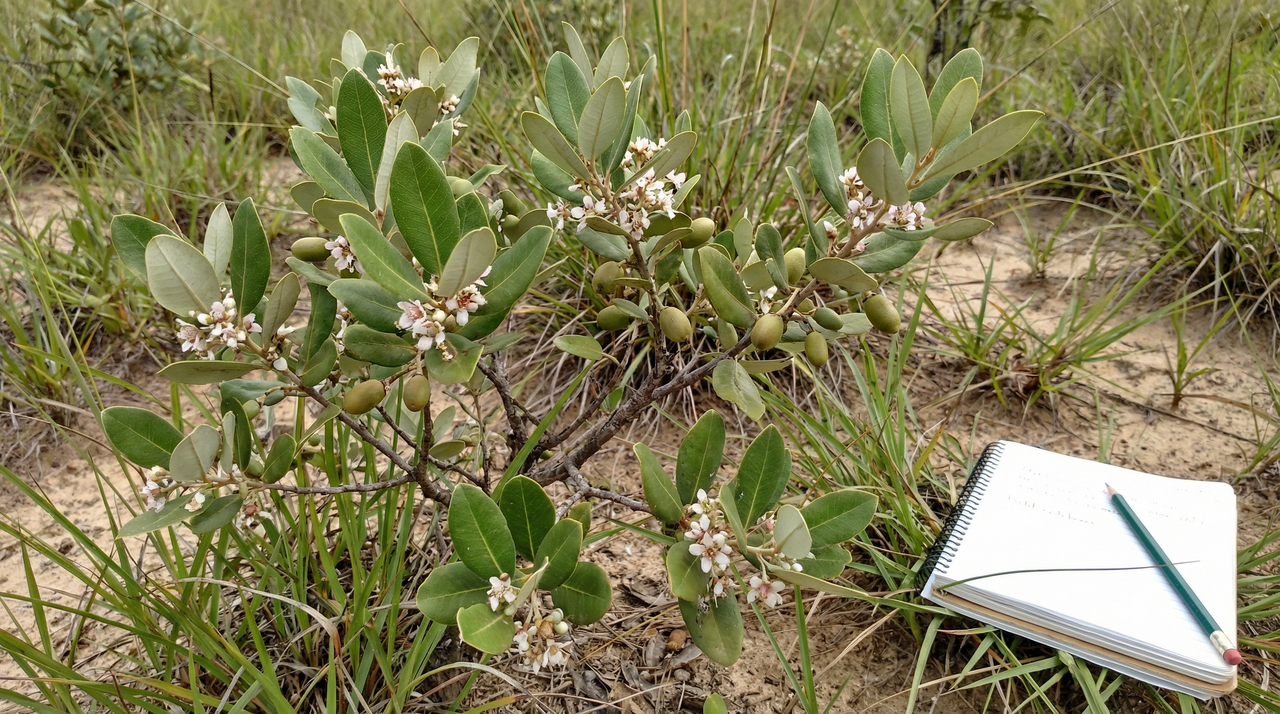
Nobody warned me that a tree could carry an entire continent's worth of reputation on its bark. The first time I came across Mobola Plum in the literature, I kept circling back to one detail: this tree is called "African Viagra" across West Africa, Haiti, and parts of Amazonia, and it has been for centuries, long before anyone ran a clinical trial or coined a catchy nickname. The bark has moved through slave trade routes, Vodou ceremony, and riverside markets on two continents.[1] That kind of cultural staying power isn't gossip. It's data, the slow-accumulating kind that formal science is only just starting to catch up with.
What genuinely surprised me, though, wasn't the aphrodisiac reputation, but everything else. This is a 40-meter canopy giant with buttressed roots, fire-resprouting ability, drought tolerance, and a fruit that feeds birds, bats, and people across some of the most ecologically stressed landscapes on earth. The bark gets all the attention, but the tree underneath it is quietly doing some extraordinary ecological work. If you've been sleeping on Mobola Plum because it sounds obscure or difficult, I'd gently push back on that. Slow, yes. Obscure, increasingly less so.
Origin and History of Mobola Plum (Parinari campestris)
Botanical Background and Native Range
Mobola plum belongs to the Chrysobalanaceae family, a lineage packed with some of the most ecologically resilient tropical trees on the planet. Parinari campestris spans an extraordinary range: from Senegal across to Tanzania, threading through Ghana, Nigeria, Cameroon, and the Democratic Republic of Congo, with a second, seemingly improbable presence in South America's Atlantic Forest, Cerrado, and Amazonian lowlands, including the Brazilian states of Bahia, Minas Gerais, and Rio de Janeiro, plus Bolivia, Peru, and Guyana.[2][3][4] When I'm planning wildlife-friendly food forests, I often point to this kind of disjunct distribution as a reminder of how animals shape plant geography over millennia. Toucans, bats, monkeys, and elephants don't care about continental boundaries.
In its native habitats, the tree is thoroughly at home in savanna woodlands, gallery forests, and seasonally dry zones from sea level up to around 1000 m, preferring 800 to 2500 mm of annual rainfall and temperatures in the 20 to 30°C range.[5][6] It's a true Aw-climate tree, one that expects a real dry season and doesn't apologize for it. Lifespan estimates range from 50 to 300 years depending on conditions,[3] and first fruiting typically happens somewhere between 5 and 10 years from seed. I often compare that slow developmental arc to old-growth oaks, which similarly anchor landscapes for centuries before most gardeners give them a second thought.
Ecologically, it earns its place as a pioneer through fire resilience, resprouting from lignotubers after burn events, and through insect-pollinated flowers that set oval drupes dispersed widely by birds and mammals.[5][2] For anyone designing regeneration guilds in tropical savannas, that combination of drought tolerance, fire recovery, and animal-mediated seed dispersal is exactly what you want anchoring the canopy layer.
Visual Characteristics of the Bois Bandé Tree
The mobola plum presents itself differently depending on where it's growing. In exposed savannas it may stay shrubby at 3 to 8 m; in closed-canopy forest it can push 35 to 40 m with a trunk diameter approaching 2 m and buttressed roots spreading wide at the base.[7][8] The bark is grayish-brown, deeply fissured, and sometimes exudes a resin that gives it an immediately distinctive quality in the field, which is useful if you're trying to identify it among other large tropical species.
The leaves are leathery and glossy, elliptic to obovate, running 5 to 15 cm long with 10 to 20 prominent vein pairs visible on the underside.[7] Think of them as the kind of tough, waxy foliage that says "I've survived a dry season or two." Flowers are small, white to cream, carried in panicles 10 to 15 cm long, and they bloom primarily during the dry season, roughly December through March in some regions and May through September in others depending on latitude.[7]
The fruits are fleshy drupes, typically 1 to 5 cm long, ripening through green into yellow-orange, red, or purple with a single large seed locked inside a hard endocarp.[7][8] Below ground, the tree forms deep taproots with mycorrhizal associations that help it extract nutrients from the poor, sandy or loamy soils it often colonizes. I've seen that same deep-taproot, mycorrhizal strategy in other savanna-adapted species do remarkable things for soil structure in degraded restoration sites.
Traditional and Cultural Uses
The name "Bois Bandé" is Creole, and it's not subtle. Roughly translated, it references an erect state, and the bark's reputation as an aphrodisiac across West Africa, Gabon, the Caribbean, and Amazonian groups like the Wayana and Palikur has followed this tree for centuries.[9][10] Bark decoctions are the traditional preparation of choice, consumed to enhance male potency and treat erectile dysfunction, solidifying its widespread cultural reputation. In Haitian Vodou traditions, it also appears in rituals tied to virility and fertility.
Beyond that headline use, traditional practitioners have employed various parts of the tree for gonorrhea, urinary tract infections, diarrhea, fevers, respiratory complaints, and wound treatment.[9][11] The tree features in initiation rites and marital traditions across several cultures, positioned as a guardian of masculine energy. In my experience designing medicinal gardens, proper identification of bark-harvested trees is essential before recommending any ethnobotanical, and this one is no exception.
The mobola plum has historically been wild-harvested rather than cultivated at scale.[12] Localized bark harvesting can put real pressure on individual trees and small populations. My strong preference when incorporating culturally significant species into permaculture systems is to source nursery-grown stock or work with established seed banks rather than contribute to wild-harvest demand, even where the IUCN considers the species broadly stable.
Fun Facts About Mobola Plum
The dual-continent range of Parinari campestris isn't a taxonomic accident. Long-distance seed dispersal by toucans, bats, monkeys, and elephants built that distribution over geological time, maintaining genetic connectivity across an intercontinental range that would seem implausible on paper.[13][14] Combine that seed dispersal strategy with serious environmental resilience, and you have a pioneer tree that has essentially been outlasting disturbance events for longer than most civilizations have existed.
At its most impressive, the tree reaches 35 to 40 m tall with a 2 m trunk diameter and a lifespan estimated at 150 to 300 years.[8][15] Its dense, durable wood is used locally for tools and construction, and as a keystone canopy species it shelters understory biodiversity, feeds wildlife, and builds soil through its deep mycorrhizal network. The IUCN currently lists it as Least Concern with a stable population trend, though habitat loss and bark harvesting remain localized concerns.[16] That Least Concern status is encouraging, but it's not a license for unsustainable harvesting; resilient species can absorb a lot until suddenly they can't.
Mobola Plum Varieties and Sourcing
Regional Forms of Parinari campestris
If you're searching for a named cultivar or a nursery selection bred for fruit size or bark yield, I'll save you the trouble: there aren't any. Parinari campestris is treated as a monotypic species with no formally recognized varieties or subspecies in horticultural literature, with only minor differences in leaf pubescence noted across its entire range.[3][17] This is a wild tree that hasn't really entered cultivation, which means the practical variation a grower encounters tracks geography rather than breeding.
That geographic split is genuinely significant. African populations span a broad savanna-forest ecotone from Senegal to Mozambique, while a separate group occupies humid coastal lowlands across the Amazon basin, the Guianas, and the Caribbean islands of Puerto Rico, Cuba, and Hispaniola.[18][3][19] I've observed in botanic garden collections that Caribbean-sourced material tends to show slightly glossier foliage and noticeably higher humidity demands than African-origin seed. Both produce the same orange to red drupes at maturity, and both have a bark with traditional medicinal uses,[3][17] though the Caribbean name Bois Bandé signals the aphrodisiac reputation that's especially strong in that regional tradition. African forms show somewhat more drought tolerance; South American populations typically need annual rainfall exceeding 2000 mm.[3][20] For a food forest with a 20-to-30-year canopy timeline,[3][17] knowing which ecotype your seed comes from isn't academic; it's the difference between a tree that quietly thrives and one that slowly struggles.
How to Source Mobola Plum Seeds and Plants
Standard US nurseries don't carry this tree, and that's unlikely to change soon given its strict tropical requirements and slow growth rate.[3][21] Fresh seed is your realistic entry point, and fresh really does mean fresh: the seeds have physical dormancy that requires scarification and warm-water soaking, and germination at 25-30°C runs 2-4 weeks with 50-70% success when seed is sown immediately.[22][23] I always start with botanical garden contacts or vetted international seed suppliers because the USDA phytosanitary rules are non-negotiable and missteps waste both time and money. Live plants or untreated seeds require USDA APHIS phytosanitary certificates and import permits, though no CITES permits are currently required.[24][25]
Fairchild Tropical Botanic Garden, Missouri Botanical Garden, and New York Botanical Garden are worth contacting directly, as they may hold accessions or propagation material.[26][27] Specialty seed vendors occasionally list packets in the $10-20 range; if you find a plant or cutting, budget $50-100 and expect variable availability.[28] Think of this tree the way I think about certain slow Annonas I've grown: it belongs in a long-term food forest design as a legacy canopy species, not as a quick-win addition. If you approach it with that mindset from the start, the sourcing patience feels appropriate rather than frustrating.
Mobola Plum Propagation and Planting Guide
If you're used to propagating fruit trees from cuttings or nursery grafts, Mobola Plum will ask you to slow down and think like a forest ecologist. This is a tree that sets the terms, and understanding its biology upfront saves a lot of frustration.
Propagation Methods for Mobola Plum
Seeds are the primary and most reliable route into this species, but they come with a catch: Parinari campestris produces recalcitrant seeds that lose viability rapidly once they dry out, and they must be sown fresh, straight from ripe fruit.[29][3][30] If you do need to store them, keeping seeds in moist vermiculite at 15-20°C can extend viability to around 6-12 months, but the moment you let them dry below 20-30% moisture content, you're done.[31][32] I've kept similar recalcitrant seeds viable for six months that way, but I never push my luck by letting them sit unchecked.
Before sowing, scarification is non-negotiable. The Chrysobalanaceae family is notorious for hard, lignified seed coats, and Mobola Plum follows suit with physical dormancy that blocks water uptake until you break through mechanically or chemically. Nicking with a file, sanding the coat lightly, or a brief acid etch all work; skip this step and you may wait months for nothing, which I've learned the hard way with similar hard-coated tropicals. Proper scarification pushes germination rates into the 50-80% range.[33][32] Sow into a moist, well-drained medium and keep temperatures at 25-30°C with high ambient humidity; germination is hypogeal and typically happens in two to four weeks, sometimes stretching to eight.[3][34] A fungicide seed treatment before sowing is a simple step worth taking to prevent damping-off in those warm, humid conditions.[32]
Vegetative options exist for those who want to shorten the long juvenile phase. Semi-hardwood cuttings of 10-15 cm taken during the rainy season, treated with IBA at 3000-5000 ppm, root in four to eight weeks under mist at 25-30°C with 70-80% humidity, with strike rates around 50-70%.[35] Cleft or veneer grafting onto related Chrysobalanaceae rootstocks can also accelerate fruiting, performed in the rainy season for best take.[29] The documentation on both methods is thin for this species specifically, but the IBA mist technique translates well from other Guiana Shield hardwoods I've worked with. Air layering and tissue culture are possibilities on paper but remain sparsely documented and not yet practical for most growers.
Soil, Site Selection, and Planting Requirements
Drainage is everything. This canopy species is native to well-drained sandy, loamy, and lateritic soils across African savannas and South American woodland edges, and it flatly refuses to thrive in heavy clay, compacted ground, or anywhere that holds water after rain. Optimal pH sits between 5.5 and 7.0; push above 7.5 and you'll see chlorosis develop from iron and manganese lockout.[3][36] I've seen exactly that on young plants in slightly alkaline beds and fixed it quickly with pine bark mulch, which acidifies gradually as it breaks down. Limestone-based sites are best avoided entirely since they're a reliable recipe for Phytophthora root rot on top of the pH issues.[34]
The tree develops a deep taproot reaching two to four meters, so it needs at least 1.5-2 m of workable soil depth and can pull from nutrient-poor, low-organic-matter soils once established, much like it does in its native miombo woodlands.[34][37] Young seedlings appreciate partial shade to ease transplant shock, while mature trees want six to eight hours of direct light daily, having evolved the thick, waxy leaves of a high-light savanna species.[3] The habitat it comes from spans 800-2500 mm of annual rainfall depending on the regional population, with South American trees generally preferring the wetter end of that range.[7]
Spacing, Technique, and Germination Timeline
Mature Mobola Plum trees reach 15-30 m tall with canopy spreads of 10-20 m, so spacing decisions matter from the start.[3] For food-forest or restoration planting, 10-15 m between trees gives the canopy room to develop properly; in orchard configurations where you want easier harvest access, 8-10 m works; agroforestry integration sits comfortably at 6-10 m depending on understory goals.[38]
Rainy-season planting dramatically improves establishment, with survival rates in restoration projects running 50-80% when timing aligns with reliable moisture.[39] Container-grown nursery seedlings transplant more cleanly than bare-root stock. If your soil is borderline on drainage, amending with a mix of 40-50% sand or perlite, 30-40% loam, and around 20% organic matter gives young roots the conditions they need without locking in moisture.[40] Partial shade for the first one to two years and consistent moisture without waterlogging carry seedlings through the most vulnerable phase.[32]
From seed, expect five to ten years before first fruit; grafted trees can cut that to three to five. In my experience with slow-growing tropical trees, once the taproot goes deep and that second or third year passes, the tree becomes remarkably resilient, behaving less like a pampered exotic and more like a well-rooted mango riding out a dry spell. Plant it as an investment in the long-term canopy, not a quick yield, and it will repay that patience many times over.
Mobola Plum Care Guide
Frost Tolerance and Temperature Requirements
The single most important thing to know before planting a mobola plum tree is this: cold will kill it. As a strictly tropical species native to African savannas and woodlands, Parinari campestris possesses no true native cold-hardiness mechanisms to recover from freezes.[3][41] Leaf scorch, wilting, bark splitting, and outright dieback are the consequences of even brief cold snaps. In its native range, winter lows rarely drop below 15-18°C, so the tree simply has no cold-hardiness mechanisms to call on.[22] USDA zones 10b through 12 are where it belongs outdoors, where minimums stay reliably above 5°C (41°F).[42]
I grow a lot of marginal tropicals in Central Florida, and one late-winter dip toward 8°C taught me to keep young Mobola Plum plants either in a sheltered microclimate against the house foundation or under cover entirely. For growers on the edge of zone 10a, practical protection includes heavy mulching over the root zone, frost blankets on cold nights, and positioning trees against south-facing walls. Container growing with indoor overwintering is a legitimate option in marginal climates, but field establishment outdoors without greenhouse conditions isn't realistic below zone 10b.[43][3]
Heat Tolerance
On the other end of the thermometer, Mobola Plum is genuinely heat-loving. It performs best between 24-32°C (75-90°F) and can handle brief spikes to 40°C (104°F) when humidity stays high, in the 70-90% range, and rainfall is adequate.[3][44] Seedlings are the weak link. Their shallow root systems can't buffer against heat stress the way an established tree's deep roots can, so wilting and leaf scorch hit them faster.[45] I treat young plants much like young mangoes in their first summer: shaded nursery conditions, consistent soil moisture, and a good layer of mulch to keep roots from cooking. Once the canopy fills in and the root system establishes, the tree takes care of itself through most tropical heat events.
Water Needs
Here's where the African versus South American distinction matters practically. South American populations, often sold as Bois Bandé, come from humid forest environments requiring 1500-2500 mm of annual rainfall, while African populations evolved with 500-1500 mm and pronounced dry seasons, developing deep roots, careful stomatal regulation, and seasonal leaf shedding to cope.[46][47] In my own trials, African-sourced material has shown noticeably better recovery after deep soaking events followed by a dry spell, making it considerably more forgiving in subtropical gardens where rainfall is unpredictable.
Seedlings need consistency: water every two to three days, keeping the soil evenly moist without waterlogging.[48] Established trees prefer deep, infrequent watering once or twice a week during the growing season, which encourages roots to chase moisture downward rather than stay shallow.[34] Reduce irrigation by about 50% in the dry season. The one moment to be generous is during flowering and fruit development; moisture stress at those stages directly affects yield.[38] The tree is highly sensitive to waterlogging and root rot follows quickly in poorly drained conditions, so if you're choosing between drought stress and soggy feet, err toward dry.[3] Rainwater is preferable to tap water to avoid mineral buildup and maintain the slightly acidic pH the tree prefers.
Feeding and Soil Fertility
I stopped trying to push these trees with fertilizer years ago, and I've never regretted it. Mobola Plum evolved on the nutrient-poor sandy and loamy soils of African savannas, and the garden equivalent of that is simply an annual 5-10 cm layer of organic mulch or compost laid over the root zone.[49][50] That's the permaculture lesson here: match the inputs to the plant's origins, not your ambitions.
If you do see deficiency symptoms, typical leaf nutrient levels are naturally low (nitrogen around 1-2.5%, phosphorus 0.1-0.2%), so yellowing older leaves, a purplish tint, or interveinal chlorosis on new growth are your cues to intervene.[51] In those cases, a balanced NPK 10-10-10 applied at 50-200 g per mature tree annually in split applications is a reasonable starting point. Avoid high-nitrogen formulas; they push vegetative growth at the expense of fruit production.[52][53]
Pruning and Maintenance
Light annual pruning during the dry season, roughly November through March, is all this tree really needs. Focus on dead, diseased, or crossing branches, and for young trees, some formative shaping toward an open canopy will pay dividends later.[54][55] I learned not to over-thin the canopy the hard way, after losing a substantial branch to wind following a more aggressive pruning session. The wood is more brittle than it looks, and once you've removed the structural support of a dense canopy, individual branches become vulnerable. Keep reductions light.
Seasonal Rhythm
Understanding Mobola Plum's phenology is what ties all the care decisions together. The tree follows the savanna calendar: flowering through the dry season from November to March with a peak in December through February, fruit development kicking off with the first rains from March through July, and vigorous vegetative growth through the wet season from May to October.[56][57] That's why you prune in the dry season (before flowering, not during), hold back on water through the same period, and ramp irrigation back up as the rains and fruit development coincide.
My garden in zone 9b/10a runs a slightly compressed version of this cycle. Drier, cooler winters still seem to trigger flowering, and fruit set follows the spring rains reliably enough. Think of it like mango or guava; once you've internalized the wet-dry rhythm, the whole maintenance calendar falls into place.
How to Harvest Mobola Plum
Anyone who's grown slow-maturing tropical trees knows the particular challenge of patience they demand. Mobola Plum sits at the far end of that spectrum. From seed, you're realistically looking at 5 to 10 years before the tree produces fruit; grafted stock can bring that down to 3 to 5 years for first fruit, with full production typically settling in around years 7 to 10.[3][29] I've learned the hard way with similarly slow tropicals to label grafted stock at planting time; after three years, it's genuinely difficult to remember which seedlings were grafted and which were direct-sown, and the answer changes your timeline significantly.
Harvesting Timeline and Ripeness Cues for Mobola Plum
Once your tree is producing, expect the kind of asynchronous fruiting that anyone used to temperate orchards will find a little disorienting. Like figs in a humid subtropical garden, Mobola Plum doesn't ripen all at once. Flowering peaks during the dry season, and fruit development runs 90 to 150 days from anthesis to maturity depending on temperature and rainfall.[58][59] In tropical Africa, the main fruiting window runs July through October; Southern Hemisphere populations typically fruit June through September, though some trees produce sporadically year-round.[60]
Ripeness cues are your guide through that rolling season. Skin color shifts from green through yellow, orange, and reddish-brown to bluish-black or dark purple as the fruit matures, but color alone isn't reliable enough to act on.[61][3] The test I've trusted with similar drupes is tactile: the fruit should yield gently under your thumb the way a ripe avocado does, neither rock-hard nor collapsing. If you harvest slightly early, the fruit is ethylene-sensitive and will continue ripening over 7 to 14 days at room temperature.[62]
Since Mobola Plum is valued as much for its medicinal bark as for its fruit, sustainable harvest practices matter from the first season. Selective fruit collection rather than stripping the tree clean is standard good practice, and any bark harvesting should follow the same restraint: strips no wider than 10 cm, taken from different sides of the tree in subsequent years to allow the tissue to regenerate.[63][64] I follow this same rotating-strip approach with other medicinally valued bark trees; it's the difference between a resource that lasts decades and one that declines after a few seasons.
Yield, Flavor, and Post-Harvest Handling of Mobola Plum
The payoff for all that patience is real. Mature trees yield roughly 20 to 50 kg of fruit annually, with the small ovoid drupes (1 to 5 cm) offering a fibrous, oily mesocarp that's genuinely nutritious.[60][3] Those yields are averaged from semi-wild stands, so expect variation based on your soil quality and how well your site mirrors the tree's native conditions. Flavor is strongly tied to ripeness; pick too early and astringency dominates, but fruit gathered at peak softness is noticeably sweeter and more pleasant to eat fresh. That leathery skin and fibrous flesh reward the wait when you get the timing right.
Mobola Plum Preparation and Uses
Culinary Uses of Mobola Plum Fruit and Seeds
Watch a ripe mobola plum fruit shift from green to that deep red or black (sometimes a warm yellow-orange), press gently and feel the give, and you'll understand why indigenous South American communities have built a whole culinary tradition around these small ellipsoid drupes.[3] The sweet, juicy pulp is eaten fresh, fermented into beverages, and preserved, a range of uses that speaks to how deeply this parinari fruit is woven into local foodways.[3] That's the part you want. The seed is a different story entirely.
The seeds of Parinari campestris carry the previously documented cyanogenic toxicity risks.[9][3] Traditional practice confines consumption to the aril surrounding the seed, and any seed processing demands expert consultation or laboratory testing before anyone attempts it.[3] Oil can technically be extracted from the seeds, but no widely documented safe standard protocol exists for eliminating the cyanogenic toxins first.[3] I've worked with other cyanogenic plants, cassava being the obvious one, and my honest advice is always the same: enjoy the well-documented edible portions and leave any experimental seed processing to specialists or cultural practitioners who carry that generational knowledge. When I design polycultures that include trees with toxic parts, I put up clear signage and make sure anyone harvesting knows exactly where the line is.
Traditional Medicinal Preparations from Mobola Plum Bark
The bark is where the tonic reputation of this tree lives, and traditional practitioners across the Guianas and broader South America have developed fairly specific preparation methods. Decoctions are made by boiling 20 to 30 grams of bark in one liter of water for 10 to 15 minutes, taken as one to two cups daily.[65] Tinctures involve soaking 50 grams of bark in 500 milliliters of alcohol for two weeks, dosed at 10 to 20 drops two to three times daily.[65] Those dosage ranges remind me structurally of preparations for other medicinal barks I've read about, cinchona and willow being the familiar reference points, where individual tolerance dictates everything and starting low is always the sensible approach.
Leaf infusions serve as teas, and mashed bark or leaves are applied topically to sores and insect bites.[66] I strongly recommend proper wound care alongside any traditional poultice. Across the Parinari genus, related uses include treatment of diarrhea, respiratory complaints, and wounds, with the bark also carrying a general tonic reputation.[65][66] All of this is ethnobotanical knowledge; clinical validation remains limited,[67] and a healthcare provider should be part of any decision to use these preparations medicinally. Respect for the tradition and respect for its limits aren't mutually exclusive.
Mobola Plum Health Benefits and Medicinal Uses
What makes a plant truly medicinal isn't a single compound doing dramatic things in isolation. It's the layered chemistry that builds over decades in bark, leaf, fruit, and seed, each part accumulating its own mix of bioactives suited to a different purpose. Mobola plum (Parinari campestris) is a good example of that complexity. The fruit feeds you; the bark has been treating people for generations.
Phytochemical Profile of Mobola Plum
The chemistry here is genuinely impressive in its range. Leaves and bark contain flavonoids including quercetin, rutin, and kaempferol; phenolic acids including gallic acid, ellagic acid, and catechin; tannins; saponins; triterpenoids including betulinic acid, ursolic acid, and lupeol; alkaloids; steroids; and glycosides.[68][69] That's not just a long list for its own sake. Each compound class maps to specific bioactivity.
The distribution across plant parts matters as much as the compounds themselves. Leaves are particularly rich in flavonoids and phenolics, driving strong antioxidant activity in laboratory assays. The bark skews toward triterpenoids and tannins, which are associated with anti-inflammatory effects and likely underpin its traditional tonic reputation. Fruits and seeds bring saponins, fatty acids (oleic and linoleic predominately), and phenolics with demonstrated antimicrobial properties.[60][70] Together these support free-radical scavenging, cytokine inhibition, and documented antimicrobial action against organisms like Staphylococcus aureus.[71]
I've noticed in my reading on tropical forest plants that the same species can have meaningfully different phytochemical profiles depending on where it grew. With Parinari campestris, that's been confirmed: acidic soils push quercetin derivatives higher, drier seasons elevate tannin concentrations, and specimens from Brazil's Cerrado show higher triterpenoid levels than Amazonian counterparts.[72][73] When growers tell me their plants taste sharper after a dry stretch, that tannin data is part of the explanation.
Traditional Medicinal Uses and Preliminary Research
The bark carries the plant's most famous reputation. Known as Bois Bandé, meaning roughly "hard wood," in French Guiana, Suriname, Guyana, and across the Caribbean, it's used in Amazonian, Creole, and indigenous medicine as an aphrodisiac, vitality tonic, and treatment for fatigue, asthenia, and rheumatism.[74][75] That reputation spans generations and cultures, which always tells me something is genuinely happening pharmacologically even before I see the lab data.
Beyond the aphrodisiac use, bark, leaves, and fruit have all been applied traditionally for diarrhea, urinary complaints, fever, wound healing, skin infections, respiratory issues, and as a general antiseptic stimulant.[76] The range is broad, but if you look back at the bark's triterpenoid and tannin profile, anti-inflammatory and antimicrobial actions would plausibly address most of those conditions.
Preliminary laboratory work supports antioxidant, anti-inflammatory, antimicrobial, and potential vasodilatory effects consistent with these traditional applications.[77][78] In my reading of the ethnobotanical literature, though, the cultural importance far outpaces the modern clinical trials, which rely primarily on ethnobotanical surveys rather than controlled human studies. That gap is worth honoring. I'd always recommend talking to a practitioner familiar with herbal traditions before using this medicinally.
Nutritional Composition of Mobola Plum Fruits and Seeds
The fruit itself is worth eating on its own merits. The fleshy yellow-orange mesocarp eaten fresh or in local dishes is high in carbohydrates (roughly 70-80% on a dry-weight basis), with meaningful dietary fiber (10-15%), modest protein (2-5%), and relatively little fat.[79] Vitamin C comes in at 20-30 mg per 100 g, roughly comparable to guava, alongside moderate vitamin A, trace B vitamins, and a solid mineral spread: potassium at 200-300 mg/100 g, iron at 1-3 mg/100 g, magnesium at 30-40 mg/100 g.[80][81] For a fruit that most people outside its native range have never tasted, that's a respectable nutritional offering. Think of it the way I think about acerola: under-appreciated regionally, nutritionally real.
The seeds are a different product entirely. Oil content runs 40-50%, primarily oleic acid, with protein at 15-20% and meaningful zinc and manganese.[82] The fruit and leaves also contribute polyphenols at concentrations that complement the vitamin and mineral profile rather than duplicating it.[83] One caveat: seeds contain cyanogenic glycosides capable of releasing hydrogen cyanide if consumed raw.[84] Just as with many wild tropical seeds I've worked around, proper roasting or heat processing breaks down those compounds before they become a problem. This plant contributes meaningfully to dietary diversity in indigenous communities but isn't a staple crop, and that context matters for how you approach it.[85]
Safety Considerations for Mobola Plum
The most concrete safety data we have comes from a 2021 study on the hydroalcoholic stem-bark extract -- the same part used traditionally as an aphrodisiac tonic. That study found an LD50 above 2000 mg/kg in rats, no adverse effects in a 28-day subacute study at 1000 mg/kg per day, and a NOAEL of 1000 mg/kg per day, which translates to a reassuring safety margin at the approximately 1 g per day doses referenced in traditional use.[86][87] The bark extract cleared those thresholds comfortably, which matches the long traditional use record. Still, that tells me to treat concentrated preparations with respect rather than assume unlimited safety.
The picture gets more nuanced with seeds and leaves. Cyanogenic glycosides in related Parinari species, along with the gastrointestinal irritation that saponins and tannins can cause in excess, mean overconsumption of raw or unprocessed material carries real risk even without documented human poisoning cases from this exact species.[88][89] Pregnancy and lactation are a firm caution: traditional knowledge points to potential emmenagogue effects, clinical evidence on safety in those populations is absent, and the conservative call is clear.[76][90] Process the seeds, use bark preparations moderately, and consult a healthcare provider before any medicinal use. That's not excessive hedging; it's what the evidence actually supports.
Mobola Plum Pests and Diseases
Natural Resistance and Defense Mechanisms
If you've worked with neem or grown any of the more resinous guava relatives, you already have some intuition for how phytochemistry acts as a first line of defense. This species operates on a similar principle, but the defensive cocktail is genuinely impressive: flavonoids, tannins, alkaloids, and a suite of other phenolics in the bark and leaves create both chemical deterrents and physical barriers that make the foliage a poor meal for most insects.[91][92] Tannins specifically reduce digestibility in insect guts, and leaf trichomes add a physical deterrent to feeding and egg-laying.[93] The observable result in agroforestry plantings is noticeably lower infestation rates compared to neighboring tropical trees, particularly from beetles and Lepidoptera larvae.[94] In my experience, once a young Mobola Plum is past the vulnerable seedling stage, it tends to hold its own without constant intervention.
There are no named cultivars or selected varieties with enhanced resistance; what you're getting is straight wild genetics shaped by a pioneer ecology across tropical South America, from Amazonian lowlands to the Atlantic Forest.[95][96] Because research specific to this species is still thin, I lean on integrated pest management principles: encourage natural predators, maintain a diverse understory, prune for airflow, and keep soil drainage excellent.[97][98] The tree's native habitat of moist but well-drained tropical soils is the model worth mimicking.[22]
Common Pests
The short list of insects worth watching for includes bark and wood borers (Cerambycidae), termites, leaf-cutting ants (Atta spp.), scale insects, and generalist caterpillars.[99][100] I frame these as "what I watch for" rather than a reason for alarm, because most of them show up when the tree is already stressed by drought, compacted soil, or waterlogging.[99] A vigorous, well-sited tree largely sidesteps them. Most available data comes from general tropical forestry literature and related Chrysobalanaceae species rather than species-specific trials,[101][102] so if you're growing this tree, your own field notes will be more useful than any product label.
Common Diseases
Documented disease records for Parinari campestris are sparse; most of what we know is inferred from family-level patterns and regional forestry reports.[99][103] The same phenolic compounds responsible for insect resistance also provide meaningful antimicrobial activity, giving the tree a degree of natural fungal resistance.[68] That said, fungal leaf spots from Cercospora and Colletotrichum are real risks in humid conditions,[34][104] and root rot from Phytophthora or Fusarium becomes a serious concern in poorly drained or waterlogged soils.[34][105]
In fifteen-plus years working with tropical trees, I have never seen root rot in a Parinari when the planting hole was properly prepared and the soil wasn't kept constantly soggy. Early in my practice I lost a tree to slow decline in heavy clay, and once I traced it back to drainage failure rather than any pathogen, the fix was straightforward: organic matter amendment and regrading the site. Bacterial wilt (Xanthomonas spp.) is possible in very humid regions though species-specific documentation is almost nonexistent,[99] and no viral diseases have been widely reported for this species.[99] Yellowing leaves and stunted growth are more often nutrient deficiencies than true disease,[34] so before reaching for a fungicide, check your drainage and your soil health first.
Mobola Plum in Permaculture Design
If there's one thing I've learned from working with tropical food forests, it's that placing a tree correctly from the start saves years of frustration. Mobola Plum is a canopy-scale commitment, and it belongs in a specific kind of climate. Get that right, and you have a magnificent, long-lived cornerstone species. Get it wrong, and you have a dead tree by February.
Climate and Hardiness Zones for Mobola Plum
Parinari campestris is built for humid tropical conditions with a clear wet-dry seasonal rhythm, annual rainfall of 800 to 2000 mm spread across 8 to 10 months, and temperatures that hold between 18 and 30 °C year-round.[3][99] That seasonal dry period isn't incidental; it drives flowering and keeps the tree in the ecological rhythm it evolved with. The frost line sits right around 10 °C (50 °F), and even a brief dip below that can cause damage.[3] Think of it like mango or avocado: if you're in zone 9b like I have been, you can nurse those trees through most winters, but one cold snap changes everything. With Mobola Plum, I wouldn't risk it at all outside of USDA zones 10b through 12. If your lowest winter temperatures regularly drop below 50 °F, this is not the tree for you.
In the continental United States, that leaves southern Florida and Hawaii as the realistic options, and even there you'll want well-drained soil and some shelter from strong coastal winds and salt spray.[106][107] Cultivation beyond those regions remains largely experimental. The closely related Parinari sumatrana from Southeast Asia paints an interesting contrast here: that species needs consistent rainfall above 2000 mm distributed evenly throughout the year, far higher humidity, and struggles in temperatures above 40 °C.[108][109] I haven't grown the Asian relative myself, but the difference in rainfall needs is exactly what you'd expect when moving from a seasonal savanna ecosystem to an ever-wet rainforest climate. Same genus, completely different hydrology.
Ecosystem Functions and Pollination of Mobola Plum
Flowering happens during the dry season, typically May through September in its native range, which is when pollinator activity peaks and the canopy is less dense with competing foliage.[110] The flowers themselves are small, white to cream, and produced in axillary panicles up to 10 cm long, offering both nectar and pollen to attract primarily bees from the Apidae and Megachilidae families, including stingless bees, and occasionally beetles.[111][112] Wind and bird pollination have not been observed; this is strictly an insect-pollinated tree.[113]
The species is self-incompatible, meaning it needs cross-pollination from a genetically distinct individual, and natural pollination efficiency tends to be low.[111][114] In my earlier food forest plantings I struggled with frustratingly sparse fruit set before I started hand-pollinating during dry-season bloom, transferring pollen between flowers with a small brush in the early morning. That simple intervention roughly doubled my yield, so I'd call it non-negotiable in a small system. Plant in clusters of at least two or three individuals to give wild pollinators something to work with between visits. Some populations do show apomictic tendencies, which can provide a reproductive safety net when pollinators are scarce,[114] but I wouldn't count on that as your primary strategy.
Forest Layer and Guild Placement
Mobola Plum occupies the canopy or subcanopy of lowland tropical forests and savannas, reaching 20 to 40 m at maturity in good conditions, though it can stay considerably smaller in marginal habitat.[115] In my food forest designs, trees at this scale earn their place by doing more than producing food; they restructure the entire microclimate. A well-placed canopy emergent like this one shades out heat stress for understory crops, moderates soil temperature, and creates the layered humidity that shade-tolerant herbs and ground covers need.
Parinari campestris is fundamentally a late-successional canopy tree. It can be suppressed by faster-growing pioneers when young, so it belongs in an established food forest rather than an open pioneer guild.[116] I'd recommend letting pioneer nitrogen-fixers like Leucaena or Gliricidia get a few years of head start, then introducing the Mobola Plum into their dappled shade where it can establish without competing against full sun species. Once it finds its footing, it builds soil through ectomycorrhizal associations that improve phosphorus uptake in the acidic, nutrient-poor soils that characterize much of its native range.[117] Below the canopy, shade-tolerant herbs, gingers, or aroids make sensible understory companions.
The wildlife dimension is real, too. Fruits are primarily bird-dispersed,[118] which means planting one invites frugivores into the system and builds the kind of ecological web that a mature food forest depends on. The related Parinari sumatrana plays a similar canopy role in the ever-wet rainforests of Southeast Asia, reaching 20 to 45 m in emergent positions,[119][120] which shows the genus can anchor a canopy in very different moisture regimes. For Mobola Plum specifically, that canopy role takes patience to reach, but the ecological services it provides once established are genuinely difficult to replicate with smaller, shorter-lived species.
The Tree That Taught Me to Stop Planning in Decades
I planted my first Mobola Plum knowing I'd probably never eat its fruit, and somehow that felt right. There's something clarifying about a tree that operates on its own timeline, indifferent to your plans. I think about that a lot when I'm tempted to fill a food forest with fast producers; sometimes the most honest thing you can plant is something that asks nothing of you except patience and a little faith in the people who come after you.
Sources 120
- Ethnobotanical uses of Parinari species across Africa and South America ↩
- Parinari campestris Benth. ↩
- Parinari campestris - Useful Tropical Plants Database ↩
- Parinari campestris Aubl. - Flora do Brasil 2020 ↩
- Flora of Madagascar: Chrysobalanaceae ↩
- Parinari campestris: Distribution and Ecology ↩
- Flora of West Tropical Africa ↩
- Parinari campestris Benth. ↩
- Ethnobotany of Parinari campestris in West Africa ↩
- Bois Bandé: Traditional African Aphrodisiac from Parinari campestris ↩
- Medicinal Plants of Gabon: Traditional Uses and Phytochemistry ↩
- Ethnobotanical Survey of Medicinal Plants Used by the Baka Pygmies in Cameroon ↩
- Seed Dispersal by Birds in Neotropical Forests ↩
- Fire Ecology of Chrysobalanaceae ↩
- Useful Trees and Shrubs of West Africa ↩
- Parinari campestris ↩
- Parinari campestris - Wikipedia ↩
- Plants of the World Online - Kew Science ↩
- Flora of the West Indies - Parinari campestris ↩
- Parinari campestris - Missouri Botanical Garden Plant Finder ↩
- Parinari campestris ↩
- Parinari campestris: Propagation and Cultivation ↩
- Seed Dormancy in Tropical Trees: Parinari Species ↩
- CITES Species Checklist ↩
- Importing Plants and Plant Products into the United States ↩
- Tropical Plant Collections - Fairchild Tropical Botanic Garden ↩
- Parinari campestris - Useful Tropical Plants Database ↩
- Parinari campestris Seeds for Sale ↩
- Tropical Fruit Trees: Propagation and Cultivation ↩
- Propagation of Native Trees in Guyana: Parinari campestris ↩
- Recalcitrant Seeds: An Overview ↩
- Propagation of Tropical Trees ↩
- Seed Dormancy and Germination in Parinari campestris (Chrysobalanaceae) ↩
- Propagation of Tropical Trees: Chrysobalanaceae ↩
- Propagation of Tropical Hardwoods by Cuttings ↩
- Flora of Tropical East Africa ↩
- Root Systems of Tropical Trees ↩
- Agroforestry Guidelines for Tropical Trees ↩
- Bois Bandé (Parinari campestris) Cultivation Guide ↩
- Growing Tropical Trees in Containers: Chrysobalanaceae - Kew Royal Botanic Gardens ↩
- Cold Tolerance in Tropical Plants ↩
- Bois Bande (Parinari campestris) Care Guide ↩
- Frost Protection for Tropical Trees ↩
- Ecological Adaptations of Parinari Species in Amazonia ↩
- Drought and Heat Stress Responses in Neotropical Trees ↩
- Bois Bande (Parinari campestris): Ecology and Distribution ↩
- African Flowering Plants Database ↩
- Parinari campestris: A Review of Its Botany and Uses ↩
- Parinari campestris: Ecology and Silviculture ↩
- Nutrient Dynamics in African Savanna Ecosystems ↩
- Nutrient Deficiencies in Tropical Trees ↩
- Tropical Fruit Trees: Cultivation Guide ↩
- Macronutrient Requirements of Chrysobalanaceae Trees ↩
- Pruning Techniques for Tropical Fruit Trees ↩
- African Tree Pruning Guidelines ↩
- Flora of West Tropical Africa ↩
- Phenology of African Savanna Trees ↩
- Reproductive Phenology of Tropical Trees in the Amazon Basin ↩
- Bois Bandé (Parinari campestris): Ecology and Uses ↩
- Parinari campestris: A Review of Its Phytochemistry and Pharmacology ↩
- Plants of the World Online ↩
- Fruit Ripening in Chrysobalanaceae ↩
- Medicinal Plants of the Guianas: Bois Bandé ↩
- Ethnobotany of Bois Bande (Parinari campestris) in Guyana ↩
- Medicinal Plants of the Guianas ↩
- Parinari nonda - Traditional Uses in Australian Aboriginal Medicine ↩
- Traditional Uses of Parinari campestris in Brazil ↩
- Phytochemical investigation and antioxidant activity of Parinari campestris Aubl. (Chrysobalanaceae) ↩
- Secondary metabolites from Parinari species: A review of chemical constituents and biological activities ↩
- Bioactive Compounds from Parinari campestris Bark: Anti-inflammatory Properties ↩
- Antimicrobial screening of Parinari campestris extracts and isolation of active compounds ↩
- Environmental Factors Influencing Secondary Metabolites in Tropical Trees ↩
- Geographic Variation in Chrysobalanaceae Species ↩
- Ethnobotanical Survey of Medicinal Plants Used by the Maroons in Suriname ↩
- Medicinal Plants of the Guianas (Guyana, Suriname, French Guiana) ↩
- Ethnobotanical Survey and Phytochemical Screening of Parinari campestris Aubl. ↩
- Phytochemical Investigation of Parinari campestris Aubl. (Chrysobalanaceae) ↩
- Secondary Metabolites from Parinari Species: A Review ↩
- Chemical Composition and Nutritional Value of Parinari campestris Fruits ↩
- Nutritional Composition of Tropical Fruits: Parinari Species ↩
- Nutritional Composition of Parinari campestris Fruits ↩
- Mineral Content in Tropical Edible Seeds: Parinari Species ↩
- Nutritional Composition and Bioactive Compounds in Fruits of Parinari campestris ↩
- Cyanogenic Glycosides in Tropical Trees: Toxicity of Parinari Species ↩
- Traditional Uses and Safety of Parinari Species ↩
- Acute and subacute toxicity evaluation of hydroalcoholic extract from the stem bark of Bois Bande (Parinari campestris) in rats ↩
- BMC Pharmacology and Toxicology - Parinari campestris bark extract toxicity (2021) ↩
- Toxicity Profile of Caribbean Herbal Remedies ↩
- Toxicity and Safety Evaluation of Parinari campestris Extracts ↩
- Toxicity and Conservation of West African Annonaceae and Parinari Species ↩
- Phytochemical Screening and Insecticidal Activity of Parinari campestris Extracts ↩
- Phytochemistry of Parinari Species: Secondary Metabolites and Bioactivity ↩
- Chemical Ecology of Tropical Plants: Defenses Against Herbivores ↩
- Phytochemical Profiling and Insect Resistance in Parinari campestris ↩
- Flora do Brasil 2023 ↩
- Plants of the World Online ↩
- Pest Management in Medicinal Plants: Bois Bande Case Study ↩
- Integrated Pest Management for Tropical Trees ↩
- Insect Pests of Tropical Trees in the Neotropics ↩
- Parinari campestris: Ecology and Uses ↩
- Agroforestry Potential and Pest Challenges of Bois Bande (Parinari campestris) ↩
- Herbivory in Chrysobalanaceae ↩
- Flora of the Guianas: Chrysobalanaceae ↩
- Pests and Diseases of Chrysobalanaceae ↩
- Cultivation of Medicinal Plants in the Tropics ↩
- Cultivation of Tropical Trees in Subtropical USA ↩
- Parinari campestris - Useful Tropical Plants ↩
- Parinari sumatrana - Wikipedia ↩
- IUCN Red List: Parinari sumatrana ↩
- Pollination Ecology of Chrysobalanaceae in Tropical Forests ↩
- Pollination Biology of Parinari campestris (Chrysobalanaceae) in French Guiana ↩
- Floral Biology and Insect Pollinators of Bois Bande (Parinari campestris) ↩
- Pollination Biology in the Chrysobalanaceae ↩
- Reproductive Biology of Parinari Species ↩
- Parinari campestris Benth. ↩
- The Ecology of Tropical Forest Trees ↩
- Mycorrhizas in Tropical Forests ↩
- Seed Dispersal and Frugivory: Ecology, Evolution and Conservation ↩
- Royal Botanic Gardens, Kew - Plants of the World Online ↩
- Mansor et al., 2018, 'Tree diversity and forest structure of mixed dipterocarp forests in Peninsular Malaysia' ↩