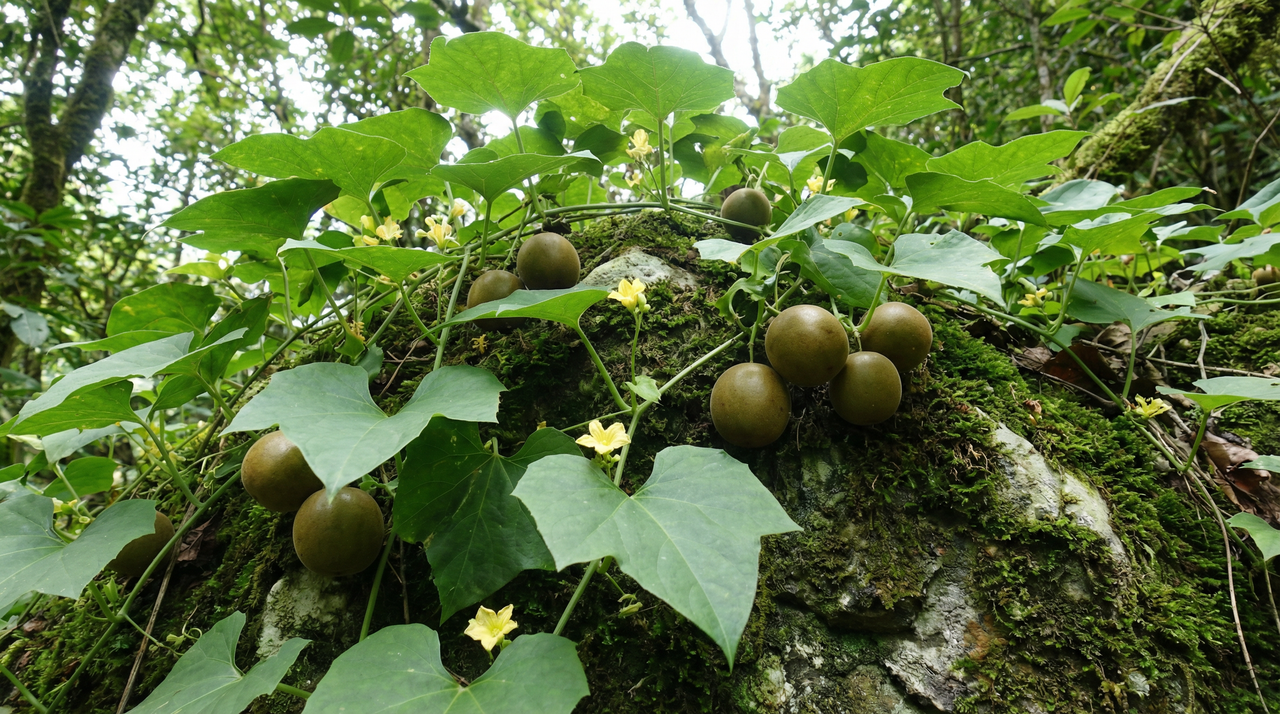
Nobody warned me that monk fruit smells like nothing when you pick it. After years of reading about this revered sweetener, I expected something dramatic off the vine, something fragrant or exotic. What I got was a fuzzy brown gourd about the size of a tennis ball, warm from the afternoon sun, completely odorless. Then I cracked it open. Still not much. The magic of Siraitia grosvenorii is almost entirely invisible to the senses until it's dried, processed, and dissolved into water, at which point it's somewhere between 250 and 300 times sweeter than sugar[1] with zero calories and zero effect on blood sugar. That's not a marketing claim. That's just biochemistry, and it genuinely stops people in their tracks the first time they taste it.
What I find more compelling than the sweetness, though, is the contradiction the plant carries: centuries of cultivation by Buddhist monks in the misty limestone hills of southern China, traditional medicine roots going back to the Tang Dynasty, and yet outside of Asia it remains almost impossible to grow at scale, fiercely difficult to source as a live plant, and still largely misunderstood by Western gardeners who assume "natural sweetener" means "easy to grow in the backyard." It doesn't. But for the patient permaculturist with the right subtropical climate, that difficulty is exactly what makes it worth understanding.
Monk Fruit Origin and History
Botanical Background and Native Habitat
Monk fruit (Siraitia grosvenorii) is a perennial climbing vine in the cucumber family, Cucurbitaceae, native to the subtropical forests of southern China and northern Thailand.[2][3] It's most concentrated in China's Guangxi, Guangdong, Guizhou, and Yunnan provinces, where it scrambles through humid understory habitats on limestone karst hillsides between 200 and 800 meters elevation, with annual rainfall between 1,500 and 2,500 mm.[4][5] That habitat profile tells you a lot about what the plant wants: dappled shade, excellent drainage, and serious moisture in the air, not just in the soil.
In cultivation it performs best with 40-70% light reduction and well-drained sandy loam, but wild populations are under pressure from overharvesting and habitat loss.[5][6] From seed, the vine takes 2-4 years to reach fruiting maturity.[7] I've grown other slow-to-fruit cucurbit relatives, and that kind of waiting teaches patience in a way that annual vegetables simply don't. It also means planning a monk fruit planting is a commitment rather than a casual experiment.
Visual Characteristics of Siraitia grosvenorii
The vine is vigorous. Mature stems reach 10-20 feet in length, climbing by way of slender tendrils with a root system anchored by a primary taproot that sends lateral fibrous roots out 1-2 meters.[8][9] Anyone thinking of slipping it into a food forest should size up their trellis accordingly. The leaves are palmately lobed with 3-7 lobes, broadly heart-shaped at the base, 5-12 cm long, with serrated margins and bristly hairs on the upper surface.[8][10]
The plant is dioecious, which means you need both male and female plants to produce fruit. Small yellow flowers, 5-12 mm across with five-lobed corollas, appear from June through August; males in axillary racemes, females solitary.[11][12] The fruits that follow are round to oblong pepo berries, 3-5 cm across. Immature fruits arrive green and fuzzy, then mature into something velvety and yellowish-brown.[8][13] I've read descriptions of drying monk fruit carrying a mildly fruity, earthy aroma that lingers in the workspace, which makes intuitive sense given how concentrated the compounds inside actually are.
Traditional and Cultural Uses of Monk Fruit
The fruit has been woven into Chinese medicine since at least the Song Dynasty (960-1279 CE), with further documentation in Ming Dynasty herbals.[14] Practitioners classified it as cooling and moistening, turning to it for dry coughs, sore throats, phlegm, heat-related conditions, and digestive sluggishness.[15][16] That cooling, respiratory focus is still what most traditional herbal blends reach for it first.
The name "luo han guo" translates roughly as Arhat fruit, connecting it to the 18 Arhats of Buddhist tradition. Legend credits monks in the Guangxi region with its discovery, and it's carried symbolic weight in Chinese Buddhist practice ever since, associated with longevity, purity, and health, and offered in temples as a kind of living prayer.[17][18] I find that when a plant carries a story like this, gardeners tend to treat it differently, with more attention, more patience. That relationship between cultural knowledge and cultivation care is something I try to honor in every food forest I design.
The Yao and Zhuang peoples of Guangxi have cultivated and prepared this fruit for centuries, most traditionally by boiling the dried fruit into teas and decoctions, often combined with licorice root or platycodon.[19][20] Those pairings still show up in modern herbal formulas, which says something about how well traditional practitioners understood the plant's synergies long before lab analysis arrived.
Fascinating Facts About Monk Fruit
The compound responsible for monk fruit's remarkable sweetness is mogroside V, a triterpene glycoside that makes up 1-2% of the fruit's dry weight and delivers an intensely concentrated sweetness without any caloric load.[21][22] That concentration is why the global sweetener industry is so interested, and why wild populations in China can't keep up with demand. My own sourcing philosophy is straightforward: always choose cultivated material over wild-harvested, because the difference between supporting a regenerative supply chain and accelerating a species' decline often comes down to a label.
Outside of Asia, monk fruit is notoriously difficult to establish. It thrives between 68-95°F with an optimum near 77°F, is frost-sensitive below 50°F, and is realistically suited to USDA zones 9-11 only.[9][23] I've grown passionfruit in similar subtropical conditions and found the humidity requirements alone can be surprisingly hard to replicate outside coastal zones. Monk fruit layers on top of that a narrow pollination window (dawn to noon, bees only), a productive lifespan of just 3-5 years with peak fruiting in years two and three, and real susceptibility to fungal diseases and pests once moved outside its native range.[24][25] That pollination bottleneck surprises most new growers. Supporting a healthy bee population near your planting isn't optional; it's the whole game.
Monk Fruit Varieties and Cultivars
Most of what we know about monk fruit selection comes from decades of breeding work concentrated in Guangxi Province, China, where Siraitia grosvenorii has been cultivated commercially long enough to generate a genuine catalog of named cultivars. These aren't subtle variations. The differences between a high-mogroside selection and an older unimproved type can mean the difference between a sweetener worth making and a vine that simply takes up trellis space.
Notable Monk Fruit Cultivars from Chinese Breeding Programs
The cultivar list reads like a trade-off matrix, and I find it helpful to think about what you're actually optimizing for before choosing planting material. If disease resistance is your primary concern, 'Dahongpao' is the name you'll see recommended most consistently. For the highest mogroside content, which is what delivers that 250-300x sweetness relative to sugar with zero calories, 'Fushan' and the Guangxi regional type 'Damiao' are the benchmarks.[26][27][28] 'Guangfeng No. 1' is the reliable workhorse for yield, while 'Fushoujing' matures earlier, which matters if your growing season is tight. 'Longxu' was selected for mountain conditions, 'Guilin Miaoli' produces larger fruits, and 'Dong' and 'Xin' show superior vigor overall. Older types like 'Swingle' lag behind on productivity by comparison.[26][29]
I've grown a couple of these Chinese selections side-by-side in my Central Florida garden, and the differences in fruit set were real and noticeable, especially on hand-pollinated 'Guangfeng No. 1' compared with an older unimproved line I trialed. That said, most of the performance data comes from Guangxi field trials, and conditions there aren't identical to Florida or coastal California. I'd treat the rankings as directional guidance rather than guaranteed outcomes outside their home range.
Whatever cultivar you choose, the shared requirements don't change. All monk fruit vines are climbing perennials reaching 10-15 feet that need solid trellising, USDA zones 9-11, high humidity, and consistent warmth between 70-85°F.[30][31] Every variety needs pollination support, whether from bees or your own hand with a small brush, and every one is susceptible to powdery mildew under poor airflow, which I think of as the cucumber problem all over again.[32] Standard spacing runs about 2x2 meters with trellising overhead or along a sturdy fence.[31]
Sourcing Monk Fruit Plants and Seeds in the United States
Getting your hands on quality luo han guo planting material in the U.S. takes some persistence. Seeds are more readily available than live plants, but availability across the board is limited by import restrictions and the plant's subtropical requirements.[33] USDA APHIS requires phytosanitary certificates for importing seed or plant material, so purchasing from a reputable domestic specialty nursery sidesteps a lot of regulatory headache.[34]
Vegetative propagation via cuttings is the preferred route because seed germination is unreliable, typically running 50-70% with fresh seed that may need scarification, and genetic variability from seed means inconsistent mogroside levels across your plants.[35] I've learned to source fresh seed every season from vendors I trust, because in my experience germination drops sharply after the first year. Outside zones 10-11, a greenhouse or high tunnel isn't optional; experimental trials in Florida and California have shown success only in protected settings.[36][33]
On quality: if you're buying extract or dried fruit rather than growing your own, I always ask suppliers for third-party mogroside content test results rather than taking marketing claims at face value. Adulteration with cheaper fillers is a documented problem in the lo han guo sweetener market, and lab-verified mogroside V levels are the only way to know what you're actually getting.[37][38] The FDA does recognize monk fruit extract as GRAS, so the regulatory foundation is solid; the quality control piece just falls to the buyer.[39] For the patient permaculture gardener with the right protected microclimate, growing named cultivars from verified high-mogroside stock is genuinely achievable, even if commercial-scale production outside China remains largely experimental.
Monk Fruit Propagation and Planting Guide
Seed Morphology and Propagation Challenges
Monk fruit seeds are small, hard, and black, oval to kidney-shaped, roughly 8-12 mm long with a smooth, shiny coat and a thin white fleshy aril clinging to the outside.[40] They look a bit like miniature, lacquered watermelon seeds. Don't let the tidy appearance fool you into thinking they're forgiving to store. Viability drops by more than 50% within two weeks of harvest if seeds are kept dry or at room temperature.[41] I learned this the hard way after losing two full batches to seed that had sat in an envelope for a month. Now I treat monk fruit seed like a short-lived treasure and sow within days of receiving it.
Sow fresh seed at 25-30°C with consistently high moisture. Some sources report physical dormancy from the hard seed coat, while others see minimal dormancy; the reality seems to vary lot to lot, so gentle scarification with a nail file or brief sulfuric acid treatment is worth trying if your germination stalls.[42][43] Fresh seed under optimal warmth germinates in 7-20 days at 50-80% rates. The bigger problem isn't germination; it's what comes next. Seed-grown plants are genetically variable, which means mogroside content is a gamble, and you'll wait 3-4 years to see fruit at all.[44][45] If you want to test viability before sowing, a tetrazolium assay will stain living embryos red, and X-ray radiography can identify viable seeds non-destructively with 70-90% accuracy.[46][47]
Vegetative Propagation Methods
I always recommend vegetative propagation unless you're genuinely in it for the long permaculture game. Grafted or air-layered plants fruit in 1-2 years and deliver consistent, high-mogroside offspring because they're genetically identical to the parent.[48][49] The trade-off between methods is real, though. Stem cuttings (10-15 cm from mature vines, treated with IBA at 1,000-3,000 ppm) only root successfully 10-30% of the time under typical humid conditions, and those numbers assume a mist system.[50][44] In my own humid Florida summers I've hovered around 20%, even after iterating through different hormone concentrations. Air-layering on one to two year old vines is a completely different story: success rates hit 80-90%,[50][44] and for most home growers with access to an established plant, that's the method I'd choose first. Grafting onto bottle gourd, winter melon, or squash rootstocks achieves over 80% success using cleft or splice techniques and adds disease resistance as a bonus, which is why commercial operations favor it.[51] Tissue culture exists but remains firmly in the commercial realm.
Soil, Site Selection, and Planting Technique
Monk fruit wants well-drained, fertile loamy or sandy loam soil with good organic matter content (around 1.5-3%) and a pH of 6.0-7.5, with the sweet spot sitting at 6.5-7.0.[50][52][53] Its native limestone karst habitat runs slightly more alkaline, but cultivated plants perform best slightly acidic to neutral. Straying outside that pH window causes real problems: low pH can trigger aluminum toxicity, while high pH locks out iron and manganese, reducing vigor, photosynthesis, and mogroside content while raising Fusarium susceptibility.[54][7] I test my beds twice a year and have watched interveinal chlorosis clear up within a few weeks of a sulfur amendment, making regular testing worth doing.
Drainage is non-negotiable. The vine needs consistent moisture at 60-70% field capacity, but waterlogged roots invite Phytophthora and Fusarium almost immediately.[4][55][56] Poor drainage has killed more of my cucurbit attempts than anything else, and monk fruit is less forgiving than bitter melon. Raised beds with heavy mulch are worth the extra setup time. On light, plan for 6-8 hours of direct sun during vegetative growth and 8-10 hours at fruiting to optimize sweetness; in hot climates, 30-50% shade cloth during the hottest part of the day protects against leaf scorch, reflecting the plant's understory origins.[57][58] Outside USDA zones 9-11, you'll need greenhouse or protected culture; the vine requires a frost-free season of at least 150 days at 18-30°C with high humidity, and most U.S. climates simply don't offer that outdoors.[50][58]
Spacing, Supports, and Germination Timeline
Set transplants out in spring once the last frost has passed and soil temperatures are above 70°F (21°C).[59][60] For home gardens, space plants 3-5 feet apart in rows 6-8 feet apart; if you're scaling up, tighter spacing of 20-40 inches between plants and 5-6 feet between rows can yield 1,000-3,600 plants per hectare.[59][60] Start seeds indoors 6-8 weeks before your last frost date if you're in a marginal zone and need every growing day you can get.
A sturdy trellis is not optional. These vines reach 10-15 feet long with a 6-10 foot spread, and they'll pull down a flimsy structure mid-season.[30][59] I build mine 6-8 feet tall using vertical or overhead systems, which also improves airflow and makes harvest far less of an expedition. From a permaculture layering standpoint, a well-built arbor running east to west gives you a productive climbing layer above lower guild plants, a function that other cucurbits like chayote share but rarely with this level of medicinal payoff.
Monk Fruit Care Guide
Growing monk fruit successfully means thinking like the plant. In its native southern Chinese mountain forests, Siraitia grosvenorii climbs through dappled understory light at elevations between 200 and 1,500 meters, where humidity stays high, temperatures are warm but rarely brutal, and the soil drains freely but never dries out completely. Every care decision you make should ask the same question: does this replicate those conditions?
Sunlight and Light Requirements
Monk fruit needs six to eight hours of direct sun daily for strong growth and fruit production, but that understory origin means it's genuinely sensitive to excessive light.[61][62] In my experience with subtropical climbers, six to eight hours of direct sun is the sweet spot once the vine is established, but harsh afternoon exposure in summer is a different matter. Too little light and you'll see etiolated, discolored growth, reduced vigor, and stunted fruit; too much and the leaves scorch, bleach, and lose photosynthetic efficiency.[61] In hot climates, 50 to 70 percent shade cloth over the canopy during the peak of summer is standard practice, not optional.[61][63] I've observed noticeably lower fruit set on vines that received full afternoon sun through July compared with those given 40 percent shade cloth, which matches exactly what the research says about flowering stress thresholds.
Watering Needs
Consistent moisture is non-negotiable. During active growth, the vine drinks steadily, and demand climbs to two to three inches per week once flowering and fruit development begin.[61][64] Drip irrigation is the right tool here; keeping foliage dry is the difference between a clean vine and a fungal problem in humid summers.[61] The soil should stay evenly moist with a pH between 6.0 and 7.0, and deep watering to twelve to eighteen inches encourages the strong root system that carries a vine through the long fruiting season.[65][64] Compared to passionfruit, another subtropical vine I grow, monk fruit is considerably less forgiving of water stress. Overwatering causes yellowing, wilting, and root rot; underwatering triggers leaf curl, dry foliage, and dramatically reduced fruit set.[66][67] Both extremes hurt yield; the vine has moderate short-term drought tolerance, but prolonged stress will show up in the fruit quality at harvest time.[67]
Soil and Fertilization
Monk fruit is a heavy feeder, and getting the timing right matters more than just applying a generic balanced fertilizer. During the first three to four months of vegetative growth, a balanced NPK like 10-10-10 supports strong vine development; once flowering begins, shift to a lower-nitrogen, higher-phosphorus and potassium formula like 5-10-10 to direct energy into fruit rather than foliage.[4][68] At the field scale, annual nitrogen targets run 150 to 200 kg/ha, phosphorus 80 to 120 kg/ha, and potassium 150 to 250 kg/ha, with boron at 0.5 to 1 kg/ha to support pollination and fruit set.[69][42] For home growers, those hectare numbers are context rather than instruction; I use soil color and the look of new growth as my personal cue for side-dressing rather than relying purely on the calendar. Yellow older leaves suggest nitrogen deficiency; purplish leaves point to phosphorus; marginal leaf burn often indicates potassium stress.[70][71] Soil testing before the season starts has saved me from the tip burn I saw in my earliest attempts, when I was over-fertilizing and pushing excessive leafy growth at the expense of fruit.[72] Organic compost or aged manure as the base, with targeted supplementation, is the approach the Chinese research consistently recommends.[69]
Heat and Temperature Tolerance
Monk fruit grows best between 20 and 30°C (68 to 86°F), with short-term tolerance to 35°C and nighttime temperatures staying above 18°C for proper recovery.[73][74] Above 32°C, vegetative growth slows; above 35 to 40°C during flowering, expect flower drop, poor pollination, smaller fruits, and reduced mogroside content.[74][75] That last point is critical; the sweetness you're growing for develops during fruit fill, and heat stress during that window directly degrades the final product. The integrated management toolkit mirrors the native habitat: 30 to 50 percent shade cloth, afternoon shade from a taller companion or structure, morning and evening irrigation rather than midday, five to ten centimeters of organic mulch, and humidity above 70 percent where possible.[76][57][76]
Frost Tolerance and Winter Protection
Monk fruit is reliably hardy in USDA zones 9 to 11 and genuinely cold-sensitive; damage begins below -2°C (28°F) and unprotected plants won't survive a temperate winter.[77][33] Frost damage shows up fast: wilting, blackened leaf tips and edges, shriveled stems, and cracked or darkened fruit are the warning signs.[78] In zones 7 and 8, the practical options are treating the vine as an annual, growing it in a movable container you can roll under cover, or committing to a greenhouse setup with heavy mulch and frost cloth as backup.[59] After losing my first monk fruit vine to a surprise late frost in a borderline year, I now keep frost cloth ready even in central Florida. That mistake turned into a reliable two-part strategy: heavy mulch over the root zone plus a container backup for the most vulnerable early-season plants.
Pruning, Training, and Maintenance
A monk fruit vine will reach ten to twenty feet and absolutely requires sturdy support from the start: a trellis at least 1.5 to 2 meters tall with horizontal wires spaced thirty to fifty centimeters apart gives the vine somewhere useful to go.[50] Train the main stems horizontally along the wires rather than letting them scramble vertically, which opens the canopy to light and air. Annual pruning in late winter or early spring should bring the vine back to four to six main leaders, remove dead or diseased wood, and tip-pinch the laterals to two to three leaves beyond each fruit to push energy into the developing fruit rather than endless new growth.[50][79] Proper trellising and pruning together can increase fruit set and yields by 20 to 30 percent, which is a meaningful return on a few hours of winter work.[50] Finish by laying two to three inches of mulch around the base to retain moisture and suppress weeds, keeping it pulled back from the crown to avoid rot.
Seasonal Growth Rhythm
Monk fruit is polycarpic, meaning it can remain productive for ten to twenty years with good management, peaking around year five.[12] That's a vine worth investing in properly. In its native range, flowering runs May through July and fruit matures August through October; in cultivation, your local summer heat window sets the calendar.[80][81] The vine has no true dormancy in mild climates but slows noticeably when temperatures drop below 10°C (50°F), which is the cue to reduce watering and stop fertilizing until active growth resumes in spring.[82] Outside zones 9 to 11, most growers treat it as an annual or manage it in protected culture; the ten-year lifespan is achievable, but only if the vine never experiences a hard freeze.
Harvesting Monk Fruit for Maximum Sweetness and Flavor
When to Harvest: Timing, Maturity Cues, and Mogroside Peak
Getting monk fruit harvest timing right is everything. The vine flowers in spring, and peak mogroside content builds over an 85-100 day window after pollination.[83][84] In its native southern China, that puts harvest between September and November, roughly 120-150 days after spring flowering depending on local conditions.[85] My subtropical growing conditions shift those dates, and I've learned to trust the fruit itself more than any calendar. The real signal is color change, from green to yellowish-brown or golden, paired with fine skin wrinkling and a slight give under gentle thumb pressure.[83][44] Those skin wrinkles, in particular, tell me more than anything else. Fruits harvested at true peak ripeness yield the highest mogroside levels with a pronounced fruity, caramel-like sweetness and minimal bitterness; pull them even a week early and the difference in flavor is noticeable.[86]
How to Harvest, Thin, and Process for Best Results
Before harvest ever happens, one early-season task pays dividends: thin clusters down to 2-3 fruits when they're pea-sized.[61] I've seen what crowded clusters produce, uneven sizing, pale color, and disappointing sweetness. The thinned fruits get all the plant's energy and show it. At harvest, use clean pruning shears to cut each fruit with a short stem attached; the skin bruises easily and any wound is a mold entry point in humid conditions.[61]
Post-harvest processing is where the sweetness gets concentrated or compromised. Sun-drying and hot-air drying both work to concentrate mogrosides, but overheating introduces bitter, off-flavors that undercut everything you waited three months for.[87] In humid subtropical conditions, I've had the best results with slow, gentle sun-drying over several days rather than pushing heat, keeping the final product sweet and clean.
Yield, Flavor Profile, and Storage Considerations
Fresh monk fruit isn't really eaten as-is; the raw flesh is unremarkable and the real value lives in the mogrosides, which make up 1-2% of dry weight and deliver intense, zero-calorie sweetness.[8][88] The sensory profile of a properly dried, ripe fruit is genuinely lovely: rapid sweetness onset, a clean short finish that doesn't linger the way stevia does, tropical fruit and caramel notes, and almost none of the bitterness that plagues underripe or overprocessed material.[89][90] The aroma when you crack open a dried fruit is striking: honey, ripe tropical fruit, a whisper of licorice, and something almost floral from the monoterpene compounds.[91]
Fresh fruits are highly perishable. At cool temperatures (10-15°C) with high humidity, you have maybe 2-4 weeks before fungal decay sets in.[92] In warm conditions I don't let fresh fruit sit more than a week before drying; mold risk in humid climates is too real to gamble on. Properly dried and sealed in airtight containers away from light and heat, monk fruit keeps for 6-12 months or longer, ready whenever you need it for teas, infusions, or baking.[92][84]
Monk Fruit Preparation and Uses
Monk fruit has a dual identity that surprises most Western cooks when they first encounter it: a fruit revered in China for centuries as both a natural sweetener and a medicinal herb, yet one that is never simply picked and eaten.[93][94] The fresh fruit is intensely sweet but carries an edge of bitterness that makes it unpleasant raw; traditional preparation transforms it through drying, boiling, and sometimes fermentation before it becomes useful in the kitchen or clinic.[95][96] Ripe fruits are harvested and dried for preservation, then used in teas, soups, and as a sweetener in traditional preparations.[95] I've made lo han guo tea from home-dried fruit sourced from a small cultivated farm, and the difference from commercial powder is noticeable: a richer, honey-tropical depth that commercial extracts often flatten out completely.
Culinary Applications and Sweetener Forms
Because the mogrosides responsible for monk fruit's sweetness are intensely concentrated, it means a little extract goes a very long way in zero-sugar baking and beverages.[97] The fruit also contains vitamin C, potassium, calcium, and iron, plus mogrosides with meaningful antioxidant activity.[98][99] For day-to-day cooking, the clean aftertaste is genuinely its biggest advantage over stevia; where stevia can leave a licorice or metallic note in cold drinks, monk fruit stays fruity and neutral, which makes it friendlier in chai, tropical smoothies, and simple syrups. The FDA has granted it GRAS status, and the safety literature shows no significant drug interactions and no reported allergic reactions, which means it's accessible to most people with confidence.[100][101][102] I still suggest anyone on medication check with their practitioner first, not because the science raises alarms, but because measured caution is always sensible.
Traditional Chinese Medicine Preparations and Dosage
In TCM, monk fruit is valued for moistening the lungs, transforming phlegm, cooling the body, soothing sore throats, and relieving coughs.[103][104] In practical terms, a daily maintenance tea uses 6 to 15 grams of dried fruit; when respiratory symptoms are the focus, practitioners may increase that up to 30 grams. Powdered forms run 3 to 9 grams daily, while concentrated extract drops to 0.1 to 1 gram. I usually start at the lower end of the dried fruit range in a throat-soothing tea and adjust only if I need to, paying attention to how my body responds rather than pushing straight to the higher dose. This is supportive daily food-medicine territory, not a cure-all, and treating it that way honors both the plant and the tradition behind it.
Sustainability, Ethics, and Responsible Use
Here's the part of the monk fruit story that deserves more space than it gets on commercial sweetener labels: roughly 90% of global supply still comes from wild collection, and that pressure has caused real population declines in native habitats.[105][106] The Chinese government has implemented protections, including bans on wild collection in protected areas, and cultivation is expanding, but slowly. There's also a subtler issue: Western food industries have built significant commercial value around a plant deeply embedded in Chinese and indigenous southern Chinese culture, often without meaningful benefit-sharing with those communities.[107] I think about this the same way I think about sourcing cultivated vanilla rather than wild-harvested species: buying from suppliers who can verify cultivated, fairly-traded material is a small act of regenerative alignment that matters. When you use monk fruit, knowing its supply chain is part of using it well.
Monk Fruit Health Benefits and Medicinal Uses
Monk fruit sits in an interesting place in my permaculture toolkit: it's a food crop, a medicinal plant, and a sweetener all at once, and the chemistry underpinning all three roles comes down to one remarkable group of compounds. Mogrosides are triterpene glycosides concentrated primarily in the fruit's flesh, and mogroside V is the dominant player, delivering profound sweetness without contributing a single calorie or nudging blood glucose.[108][109] For anyone designing systems aimed at reducing refined sugar reliance, that combination is genuinely hard to find in a perennial vine you can grow yourself.
Key Phytochemicals in Monk Fruit: Mogrosides and More
Mogrosides don't work in isolation. The fruit also contains flavonoids, phenolic acids, triterpenoids, and amino acids, and their distribution shifts depending on which tissue you're analyzing and how mature the fruit is at harvest.[110][111] I've noticed that fruits harvested during drier stretches tend to taste noticeably sweeter, and that observation lines up with research showing altitude, soil composition, and water availability all influence mogroside accumulation.[112] It's the kind of thing you can only really appreciate once you've grown the plant through a few different seasons.
At the biochemical level, these compounds exhibit antioxidant, anti-inflammatory, and antidiabetic activities, with the biosynthetic pathway running through cytochrome P450 enzymes and glycosyltransferases.[113][114] The lab work is solid. What we're still building is the human trial data to match it, which mirrors what I see with many promising permaculture species: impressive preclinical results that growers then have to validate slowly through careful seasonal observation.
Nutritional Profile of Monk Fruit
The fruit most people encounter is the dried form, and it's more nutritionally substantial than its reputation as a sweetener suggests. Per 100 grams, dried monk fruit provides roughly 354 to 400 kcal, 12.8 grams of protein, 75.4 grams of carbohydrates, 8.3 grams of fiber, and 20 to 30 milligrams of vitamin C.[115][116] Fresh fruit, by contrast, is around 90 percent water and runs only 30 to 40 kcal per 100 grams, so the drying process is where its concentrated character really emerges. The mogrosides themselves carry no caloric load and don't trigger a glycemic response, which is why the FDA has granted GRAS status to monk fruit extract and why traditional Chinese medicine has used both the fruit and leaves for generations.[117][118]
Medicinal Research and Traditional Applications
In Traditional Chinese Medicine, monk fruit has been used for centuries to address coughs, sore throats, and heat-related conditions.[119] Modern research has started to explain why: mogrosides inhibit NF-kappaB signaling and scavenge free radicals, giving them measurable antioxidant and anti-inflammatory effects, with additional hypoglycemic and potential anticancer activity appearing in cell and animal studies.[120][121] I'd compare the antioxidant depth here to what I see in elder or calendula: traditional use backed by real phytochemistry, but still awaiting the large randomized controlled trials that would cement therapeutic claims for the clinic.
Most of the metabolic and anti-inflammatory evidence is preclinical for now, and larger human trials are needed before specific therapeutic protocols can be confidently recommended.[122] That doesn't diminish the traditional uses; it just means I hold them with the respect they've earned over centuries while waiting for the science to catch up.
Safety Profile of Monk Fruit
The safety picture is one of the most reassuring things about monk fruit extract. It holds FDA GRAS status and is authorized in the EU as food additive E 968; EFSA reviewed the data and found no safety concerns at reported use levels, declining to establish an acceptable daily intake because toxicity was simply too low to warrant one.[118][123] Animal toxicity studies put the LD50 above 15 g/kg in rats, and subchronic exposure up to 3 g/kg/day produced no adverse effects; human trials at 100 to 500 mg of extract daily have reported the same clean outcome.[124][125][126] I've been using monk fruit extract in my own kitchen for years and have never experienced any digestive upset at normal culinary amounts, which tracks with what the clinical data shows.
A few nuances are worth keeping in mind. Wild or immature fruits may contain trace cucurbitacins in their peels and seeds, though cultivated varieties keep these levels low.[127] Allergenicity is low overall, but anyone with a known sensitivity to other cucurbit family members should stay alert to possible cross-reactivity.[128] Certified sources minimize heavy metal and pesticide concerns, and monk fruit extract is considered safe for people managing diabetes.[129] The one population where I'd dial back enthusiasm is pregnant and breastfeeding people: data there remains limited, so a conversation with a healthcare provider is the right call before making it a daily staple.
Monk Fruit Pests and Diseases
Growing monk fruit outside its native southern Chinese mountain habitat means accepting that you're asking a plant to perform in conditions it didn't evolve for, and the pest and disease pressure reflects that. I've found that the same general vigilance I apply to cucumbers and squash in Central Florida summers applies here, just with higher stakes given how long these vines take to reach productive maturity.
Major Diseases of Monk Fruit
Fusarium wilt caused by Fusarium oxysporum f. sp. grosvenorii is the disease I'd warn any new grower about first. It's soil-borne, it moves fast, and the symptoms follow a grim progression: yellowing, wilting, vascular browning, and eventual plant collapse.[54] I always ensure excellent drainage and avoid overwatering because once vascular wilt takes hold, it's almost impossible to save the plant. Powdery mildew from Podosphaera xanthii is the other major fungal threat, coating leaves and stems with white growth that chokes photosynthesis and tanks fruit yield; it spreads fast in warm, humid air.[130][61] Anyone who's fought powdery mildew on cucumbers knows the drill: morning watering, generous spacing, and good airflow do more preventive work than any spray. Anthracnose and root rot round out the common fungal threats, both tied directly to excess moisture and poor drainage.[61] Select genotypes show useful resistance to Cucumber mosaic virus, staying asymptomatic or showing only mild symptoms where other plants would show severe mosaic and leaf distortion.[131] The plant also shows moderate resistance to root-knot nematodes compared to most cucurbits, producing fewer root galls and supporting lower nematode reproduction rates overall.[132] Wild populations from mountainous regions carry stronger tolerance to both fungal and bacterial pathogens than most cultivated varieties, and Chinese breeding programs are already pulling those traits into commercial lines.[133]
Common Insect Pests
The insect pest list reads like a cucurbit greatest hits: aphids (Aphis gossypii), spider mites (Tetranychus spp.), whiteflies (Bemisia tabaci), leaf miners (Liriomyza spp.), leafhoppers, cucumber beetles, and fruit borers (Conopomorpha sinensis).[134][61] Pressure is highest in humid subtropical climates, exactly the conditions monk fruit prefers, so there's no escaping some degree of monitoring. That said, monk fruit is not the most favored host for several of these insects, which matters when you're managing a mixed planting.
Natural Defenses and Resistance
Monk fruit isn't defenseless. The cucurbitacins and mogrosides in its tissue, combined with dense trichomes on leaves and stems, give it moderate deterrence against chewing and sucking insects. It shows better resistance to cucumber beetles than cucumber itself, and comparable tolerance to squash bugs and vine borers as pumpkin.[134][135] Chinese cultivars like 'Fushan No.1' and 'Guangxi Jingmi No.1' take that further, with bred-in tolerance to leafhoppers and sucking insects that cuts crop losses by up to 30%.[136] When I source seed, I look specifically for suppliers who trace back to these Chinese resistance-breeding programs. It's not a guarantee, but it's a better starting point than unknown provenance material.
Integrated Pest Management Strategies
A solid IPM approach here means regular scouting, crop rotation, pruning for airflow, and leaning on biological controls before reaching for anything else. I've used predatory mites in greenhouse cucurbit trials and watched them keep spider mite and whitefly populations well below damaging thresholds on the vines. Neem oil handles the gaps.[137][138] In my experience, healthy and well-spaced vines with consistent irrigation and fertility rarely need more than occasional intervention. Stressed plants invite problems; vigorous ones largely shrug them off. For U.S. growers, protected culture is often the practical answer since pest and disease pressure outside the native range is genuinely harder to manage.[7][139] No fully immune commercial variety exists yet, but ongoing work incorporating wild germplasm into breeding programs is steadily closing that gap.[140]
Monk Fruit in Permaculture Design
Before you start planning a guild around monk fruit, the climate question has to come first. This vine has non-negotiable requirements, and knowing them upfront saves a lot of heartbreak later.
Climate and Hardiness Zones for Growing Monk Fruit
Monk fruit wants warmth, humidity, and zero frost. Its optimal growing range sits between 20-30°C (68-86°F), with peak vine growth and fruit development happening around 25-28°C; it can push through short stretches up to 35°C with enough shade and moisture, but cold is the hard limit.[50][141][33] Anything below 10°C stresses it hard, and a frost at or below 0°C kills it outright. That alone rules out most of North America as a perennial planting without protection.
Humidity is the other gating factor. The vine needs 70-85% relative humidity and somewhere in the range of 1,200-2,000 mm of annual rainfall distributed fairly evenly through the season.[50][3] In Central Florida, where I do most of my design work, those numbers feel familiar. We hit those humidity targets regularly in summer, and our rainfall patterns aren't far off. That's exactly why this vine keeps coming up in conversations with clients who want subtropical food forests rather than just herb spirals and berry patches.
As a perennial, monk fruit is reliable in USDA zones 9-11, possible in zone 8 with aggressive microclimate management, and broadly at home in humid subtropical and monsoon-influenced climates (Köppen Cfa and Cwa).[142][143][2] In the warmest corners of zones 10-11, you could pair it with a coconut palm as a tall-layer canopy companion that tolerates similar rainfall and moisture conditions,[144] creating a genuinely layered subtropical guild. Outside those warm zones, the practical path is containers or greenhouse culture, which I've used successfully with other frost-tender perennials. Siting near a south-facing masonry wall, using row covers during cold snaps, or moving a container specimen under cover for winter are all approaches I'd reach for before giving up on a marginal site.
Forest Layer, Guild Placement, and Ecosystem Functions
In its native southern China, monk fruit is a forest-edge and understory climber, threading through vegetation at elevations of 200-800 meters in humid subtropical conditions with dappled light.[8][145] That ecological origin tells you almost everything about where to put it in a food forest: not in the open sun on a standalone trellis, but scrambling up through the shrub layer into the lower canopy, finding partial shade and consistent moisture while its roots explore well-drained, organically rich soil.[146][147]
The vine reaches 3-5 meters when supported, occasionally longer,[8] so it fits naturally into the climber layer with a small tree or a robust shrub doing double duty as a living trellis. I've used this same approach with chayote and passionfruit in my Florida designs; let an established Barbados cherry or native wax myrtle carry the vine rather than building a dedicated structure that eats up your design budget. Monk fruit will also form mycorrhizal associations that improve phosphorus uptake,[146] which makes it a decent companion for other mycorrhizal-dependent plants in that layer, and those annual prunings don't go to waste -- they become mulch.
Monk fruit doesn't fix nitrogen.[148] I bring this up because people sometimes expect every productive perennial to carry a nitrogen function, and it doesn't apply here. The way I handle this is to build the guild with a leguminous groundcover or a small nitrogen-fixing shrub like pigeon pea in the same zone, so the nutrient cycling is handled by the system rather than any single plant. A mature vine under good conditions can produce 10-20 fruits per plant,[148][12] which is modest by cucurbit standards but meaningful given how concentrated the mogroside sweetness is. You're not harvesting volume; you're harvesting value.
Pollination Ecology and Management in Permaculture Systems
Monk fruit is monoecious, carrying separate male and female flowers on the same plant, with small yellow blooms around 1-1.5 cm that open between May and August in clusters.[149][150] Those flowers do produce nectar and a light scent to pull in bees -- primarily Apis cerana, Apis mellifera, and various wild bees -- with the best pollination happening at 25-30°C and 70-85% humidity.[151] I've noticed that when I maintain similar humidity windows with other bee-dependent vines in my guilds, natural fruit set improves noticeably; the Chinese research on monk fruit's precise thresholds backs that general observation with real data.
The challenge is that natural fruit set without intervention is often below 10%.[152] That's a hard number to work around in a home food forest. Hand-pollination in the morning hours can push set above 80%, and integrating managed bee hives nearby can improve efficiency by up to 40%.[152][153] Excessive rain during bloom or humidity dropping below 60% reduces success significantly.[154] My honest take: plan to hand-pollinate at least some flowers, especially in the early years before your pollinator guild is fully established. Think of it as a morning garden task rather than a burden; the timing is forgiving enough that a few minutes with a small brush before the heat of the day sets in can make the difference between a harvest and an empty trellis.
Ecologically, the flowering vine does support bees and butterflies in the garden, and its root system helps stabilize soil on sloped food-forest sites.[5] Fruit dispersal in the wild is likely handled by birds and small mammals, which fits its mid-successional habit as a colonizer of disturbed forest edges.[5] Quantified data on these services in North American garden settings is thin; most of the rigorous pollination research comes from Chinese production systems. What I can say from working with similar flowering vines in humid subtropical guilds is that the bee activity around blooming cucurbit-family plants is real and observable. The payoff -- fruit loaded with mogrosides that deliver zero-calorie sweetness far beyond anything else in the food forest -- makes the pollination management worth building your system around.
The Vine That Made Me Rethink Natural Sweeteners
I'll be honest: I came to monk fruit as a skeptic. "Zero-calorie sweetener" sounded like a marketing story, not a garden plant. But the first time I held a fresh fruit, still faintly fuzzy and warm from the trellis, something shifted. This vine carries centuries of careful human relationship inside it, and that's not something you can extract into a packet. It's worth growing for that alone.
Sources 154
- Monk Fruit: A Unique Sweetener with Potential Health Benefits - NCBI ↩
- Kew Plants of the World Online - Siraitia grosvenorii ↩
- Flora of China - Siraitia grosvenorii ↩
- Monk Fruit Cultivation Guide - University of Florida IFAS Extension ↩
- Ecological Distribution of Siraitia grosvenorii in Southern China ↩
- Monk Fruit Cultivation and Harvesting Guide ↩
- Propagation of Luo Han Guo (Monk Fruit) ↩
- Siraitia grosvenorii - Wikipedia ↩
- Siraitia grosvenorii (Monk fruit) ↩
- Monk Fruit Plant Description - USDA ↩
- Flora of China - Siraitia grosvenorii ↩
- Siraitia grosvenorii (Monk fruit) Botanical Description ↩
- Monk Fruit (Luo Han Guo) - Botanical Description ↩
- The History and Traditional Uses of Luo Han Guo in Chinese Medicine ↩
- Traditional Uses of Luo Han Guo in Chinese Medicine ↩
- Siraitia grosvenorii (Monk fruit): An ethnopharmacological review ↩
- Monk Fruit: History and Cultural Significance ↩
- Siraitia grosvenorii (Monk fruit): An overview of its chemical constituents, pharmacological activities and clinical applications ↩
- Ethnobotany of Siraitia grosvenorii in Guangxi, China ↩
- Traditional Uses of Monk Fruit by Yao and Zhuang Ethnic Groups ↩
- Mogrosides from Siraitia grosvenorii and Their Application as Natural Low-Calorie Sweetener Agents ↩
- Sweetness Potency of Mogroside V: A Review ↩
- Monk Fruit Cultivation: Challenges and Opportunities ↩
- Pollination Biology of Siraitia grosvenorii ↩
- Pests and Diseases of Siraitia grosvenorii in China ↩
- Breeding and Cultivation of Siraitia grosvenorii ↩
- Mogroside Content in Different Cultivars of Luo Han Guo ↩
- Mogrosides in Monk Fruit: Sweetness and Health Benefits ↩
- Horticultural Traits of Monk Fruit Cultivars ↩
- Monk Fruit Cultivation Guide ↩
- Monk Fruit (Luo Han Guo) Production Guide ↩
- Pests and Diseases of Siraitia grosvenorii ↩
- Monk Fruit: Growing Guide ↩
- Importation of Fruits and Vegetables ↩
- USDA PLANTS Database ↩
- Monk Fruit Cultivation - University of Florida IFAS Extension ↩
- Monk Fruit Extract: Authentication and Quality Control ↩
- Detecting Adulteration in Natural Sweeteners ↩
- GRAS Notice Inventory ↩
- Flora of China Vol. 19 (Cucurbitaceae) - Siraitia grosvenorii ↩
- Seed Protein Analysis & Germination in Siraitia grosvenorii ↩
- Germination and Dormancy of Monk Fruit Seeds ↩
- Royal Horticultural Society - Siraitia grosvenorii Cultivation ↩
- Propagation of Siraitia grosvenorii: A Review ↩
- Monk Fruit (Luo Han Guo) Production Guide ↩
- X-Ray Analysis of Seed Viability in Tropical Fruits ↩
- Seed Viability Testing in Siraitia grosvenorii ↩
- Propagation Techniques for Siraitia grosvenorii: Ensuring Genetic Fidelity ↩
- Propagation and Cultivation of Siraitia grosvenorii ↩
- Growing Monk Fruit: A Guide ↩
- Grafting of cucurbits: a comprehensive review ↩
- Soil Requirements for Siraitia grosvenorii ↩
- Flora of China ↩
- Nutrient Management for Siraitia grosvenorii ↩
- Root Rot in Cucurbits: Symptoms and Management ↩
- Siraitia grosvenorii (Monk fruit): Cultivation and Soil Requirements ↩
- Monk Fruit Cultivation Guide - University of Florida IFAS Extension ↩
- USDA PLANTS Database - Siraitia grosvenorii ↩
- Monk Fruit Growing Guide ↩
- Siraitia grosvenorii Cultivation Techniques ↩
- Monk Fruit Cultivation Guide - University of Florida IFAS Extension ↩
- Siraitia grosvenorii - Plants of the World Online ↩
- Growing Monk Fruit: A Guide to Siraitia grosvenorii ↩
- USDA Plant Guide for Siraitia grosvenorii ↩
- Monk Fruit Cultivation Guide - Agricultural Extension Service ↩
- Monk Fruit Cultivation Guide - Chinese Agricultural University ↩
- Horticultural Characteristics of Siraitia grosvenorii - Journal of Tropical Agriculture ↩
- Nutrient Management for Siraitia grosvenorii ↩
- Fertilizer Recommendations for Luohan Guo (Siraitia grosvenorii) ↩
- Nutrient Deficiencies in Cucurbits ↩
- Monk Fruit Cultivation Guide ↩
- Luohan Guo (Monk Fruit) Farming Practices ↩
- Monk Fruit (Siraitia grosvenorii): Production and Uses ↩
- Response of Siraitia grosvenorii to High Temperature Stress During Different Growth Stages ↩
- Heat Stress Effects on Flowering and Fruit Set in Monk Fruit (Siraitia grosvenorii) ↩
- Monk Fruit Cultivation Guide ↩
- Siraitia grosvenorii Cultivation and Cold Tolerance ↩
- Frost Damage in Tropical Plants: Symptoms and Management ↩
- Siraitia grosvenorii cultivation research ↩
- Flora of China - Siraitia grosvenorii ↩
- Monk Fruit Cultivation Guide - Chinese Academy of Sciences ↩
- Kew Gardens Plant Profile: Siraitia grosvenorii ↩
- Siraitia grosvenorii (Monk fruit) ↩
- Chemical Composition Changes During Fruit Development in Siraitia grosvenorii ↩
- Monk Fruit (Siraitia grosvenorii): Cultivation and Harvesting ↩
- Effect of Ripening Stages on the Quality of Siraitia grosvenorii Fruits ↩
- Processing Methods and Their Impact on Mogroside Content in Luo Han Guo ↩
- Monk Fruit (Siraitia grosvenorii): A Review of Its Pharmacological and Cosmeceutical Uses ↩
- Sensory Characteristics of Mogrosides from Luo Han Guo ↩
- Monk Fruit (Siraitia grosvenorii) as a Natural Low-Calorie Sweetener ↩
- Volatile Compounds in Siraitia grosvenorii (Monk Fruit): Identification and Sensory Impact ↩
- Postharvest Storage and Handling of Siraitia grosvenorii Fruits ↩
- Monk Fruit: Traditional Uses and Health Benefits ↩
- Siraitia grosvenorii - Plant Use ↩
- Traditional Uses and Processing of Siraitia grosvenorii (Monk Fruit) in Chinese Medicine ↩
- Monk Fruit: Traditional Processing and Modern Applications ↩
- Kew Science - Plants of the World Online: Siraitia grosvenorii ↩
- Comprehensive Review on Phytochemicals and Biological Activities of Siraitia grosvenorii ↩
- Nutritional Composition and Antioxidant Properties of Monk Fruit ↩
- FDA GRAS Notice for Monk Fruit Extract ↩
- EFSA Assessment of Mogrosides ↩
- Journal of Food Science: Safety Evaluation of Monk Fruit ↩
- A Review on the Botanical, Phytochemical, and Pharmacological Investigations of Siraitia grosvenorii (Monk Fruit) ↩
- Ethnobotany of China ↩
- Sustainability Challenges in the Harvesting of Luo Han Guo (Monk Fruit) in China ↩
- From Wild Harvest to Commercial Cultivation: The Transformation of Monk Fruit Production ↩
- Cultural Appropriation in the Global Natural Sweetener Market: The Case of Monk Fruit ↩
- Complete biosynthetic pathway for mogroside V in monk fruit ↩
- Analysis of Mogrosides in Siraitia grosvenorii ↩
- Phytochemical and pharmacological review of Siraitia grosvenorii ↩
- Distribution of bioactive compounds in different tissues of monk fruit ↩
- Effects of environmental factors on mogroside accumulation in Siraitia grosvenorii ↩
- Therapeutic potential of Siraitia grosvenorii secondary metabolites ↩
- Elucidation of mogroside biosynthesis in monk fruit ↩
- Siraitia grosvenorii - Nutritional Composition ↩
- Chinese Food Composition Table (Book II) ↩
- Traditional Chinese Medicine Uses of Siraitia grosvenorii ↩
- FDA GRAS Notice for Monk Fruit Extract ↩
- History and Use of Monk Fruit in Traditional Chinese Medicine ↩
- Sweet-tasting fruit rich in mogrosides ↩
- Anti-inflammatory and antioxidant effects of mogrosides ↩
- Cultivation and Agricultural Challenges of Siraitia grosvenorii ↩
- EFSA Opinion on the Safety of Monk Fruit Extract (E 968) ↩
- Safety Assessment of Monk Fruit (Siraitia grosvenorii) as a Food Ingredient ↩
- Acute and Subchronic Toxicity Study of Luo Han Guo Extract in Rats ↩
- Clinical Trial on Monk Fruit Supplementation ↩
- Cucurbitacins in Cucurbitaceae: Biosynthesis, Pharmacology and Toxicology ↩
- Allergenic Potential of Cucurbitaceae Fruits ↩
- Heavy Metals and Pesticides in Herbal Sweeteners ↩
- Occurrence and Control of Powdery Mildew on Siraitia grosvenorii in Southern China ↩
- Evaluation of Siraitia grosvenorii Germplasm for Resistance to Cucumber mosaic virus ↩
- Host Suitability of Siraitia grosvenorii to Meloidogyne incognita and M. javanica ↩
- Genetic Diversity and Disease Resistance in Wild Siraitia grosvenorii Populations ↩
- Pest Management Strategies for Monk Fruit ↩
- Cucurbitaceae Defense Mechanisms: A Phylogenetic Review ↩
- Breeding and Selection of Siraitia grosvenorii Cultivars for Pest Resistance ↩
- Integrated Pest Management for Luo Han Guo ↩
- Sustainable Pest Control Strategies for Siraitia grosvenorii ↩
- Integrated Pest Management for Monk Fruit (Siraitia grosvenorii) ↩
- Breeding for Pest Resistance in Siraitia grosvenorii ↩
- Siraitia grosvenorii Growing Conditions - Missouri Botanical Garden ↩
- Monk Fruit (Siraitia grosvenorii) - USDA Hardiness Zones ↩
- Kentucky State University - Monk Fruit Production Guide ↩
- USDA PLANTS Database - Cocos nucifera ↩
- Flora of China - Siraitia grosvenorii ↩
- Peer-Reviewed Study on Siraitia grosvenorii Habitat ↩
- Cultivation of Luo Han Guo ↩
- Permaculture applications and guild design ↩
- Pollination Biology of Siraitia grosvenorii ↩
- Monk Fruit (Siraitia grosvenorii) Morphology and Reproduction ↩
- Insect Visitors and Pollinators of Monk Fruit (Siraitia grosvenorii) ↩
- Hand Pollination Techniques for Monk Fruit ↩
- Bee Pollinators in Cucurbit Crops Including Monk Fruit ↩
- Impact of Climate on Siraitia grosvenorii Pollination ↩