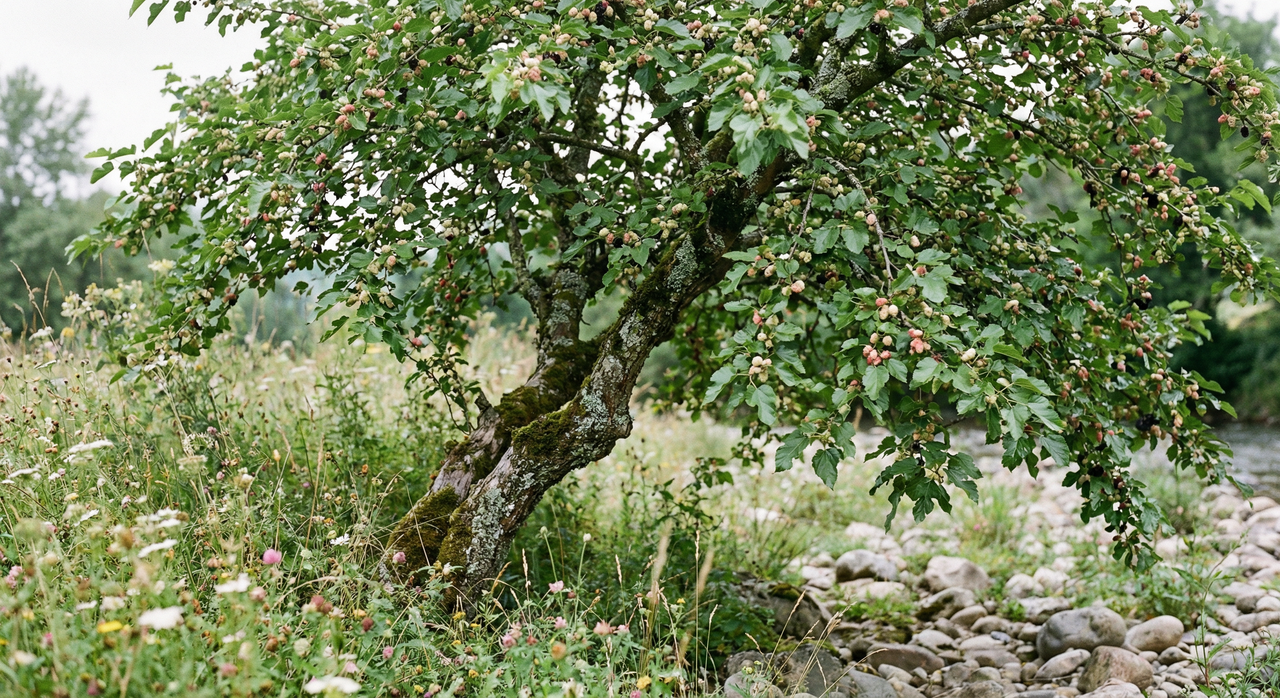
Every mulberry I've ever grown has taught me the same lesson, usually by ruining a shirt: patience has a price, and in this case it's a deep, indelible purple stain that no amount of soaking will fully lift. But here's the thing nobody mentions when they're waxing poetic about foraging mulberries straight off the branch. That same tree, the white mulberry most of us are actually growing, isn't a native American fruit tree or even a particularly innocent one. It's a five-thousand-year-old piece of Chinese sericulture infrastructure that escaped the silk industry and has been quietly colonizing roadsides, vacant lots, and woodland edges across North America ever since.[1] The fruit is extraordinary. The ecological footprint is genuinely complicated.
That contradiction sits at the heart of everything worth knowing about this genus. Mulberry is generous to a fault, fast-growing, drought-tolerant once established, a magnet for birds and beneficial insects, a functional powerhouse in a food forest design. I've planted it, harvested from it, and also spent real hours pulling its seedlings out of places they had no business being. If you're going to grow it well and grow it responsibly, you need the whole picture, not just the part where a warm ripe berry dissolves on your tongue like honeyed blackberry jam.
Origin and History of Mulberry (Morus alba)
Botanical Background and Native Range
White Mulberry, Morus alba, is the scientific name of the mulberry tree most gardeners encounter first, and for good reason: it's the most widely distributed member of the genus on the planet. Native to China, Korea, and Japan, it has been introduced across Europe, the Americas, and beyond, arriving in North America in the 18th century as part of various schemes to establish a domestic silk industry.[2][3] But Morus alba is only one player in a remarkably diverse genus. Black Mulberry (Morus nigra) hails from the Mediterranean and Southwest Asia, Himalayan Mulberry (Morus macroura) from high-elevation slopes in China, India, Nepal, and Bhutan, and Red Mulberry (Morus rubra) from eastern North America stretching from Ontario down to Florida and Texas.[4][5][6] Indian Mulberry (Morus indica) is sometimes treated as a synonym within the M. alba complex, though the Flora of China and other regional botanical sources maintain it separately; careful sourcing matters when you're trying to identify what you actually have.[7]
In terms of growth, this resilient species moves fast. Juvenile trees can put on three to five feet per year, reaching reproductive maturity in as little as two to five years from seed, sooner from cuttings or grafted stock.[2] That pace slows considerably after the first decade, and most cultivated specimens live somewhere between 30 and 70 years, though individuals over a century are documented and some exceptional trees have cleared 200 years.[2][8] I've found that the rapid early growth is genuinely useful for establishing quick canopy in a food forest, but the suckering root system means you want to think carefully about placement from the start.
Traditional and Cultural Uses
The origin of the mulberry tree's global reach is essentially a sericulture story. White Mulberry has been cultivated in China for over 5,000 years as the sole food source for Bombyx mori silkworms, with practices documented in texts as early as the Shennong Bencao Jing and the 6th-century agricultural manual Qimin Yaoshu.[9][10] From China, M. alba traveled westward along the Silk Road, reaching the Middle East, arriving in Rome's orbit by the time Pliny the Elder was writing around 77 AD. It eventually landed in South Carolina in 1733 when colonists tried to spin up a domestic textile industry that never really materialized.[11][12] I grow White Mulberry primarily for fruit and wildlife value, but I hold a real respect for that 5,000-year legacy; there's cultural weight in this tree that goes well beyond what shows up in a permaculture plant list.
Across the genus, the uses are strikingly parallel: White Mulberry leaves, root bark, and fruit have been central to Traditional Chinese Medicine for over two millennia, employed for conditions ranging from diabetes and hypertension to coughs and edema, with modern research now validating those antidiabetic and anti-inflammatory properties.[13] Red Mulberry held deep importance among Native American peoples for food, medicine, dye, and wound care long before European contact.[14] Black Mulberry was being cultivated in the Mediterranean for its exceptional fruit as far back as the 8th century BCE, featuring in the writing of Theophrastus and Pliny and carrying symbolism of fertility and prosperity in Persian and Roman traditions.[15] The Himalayan and Indian species carry Vedic-era roots, woven into Ayurvedic traditions and local folklore as symbols of abundance and resilience.[16]
Visual Characteristics of Mulberry Trees
White Mulberry grows into a deciduous tree 30 to 80 feet tall with a spread of 30 to 50 feet, its form ranging from upright to broadly spreading depending on the cultivar.[17] Young bark is smooth and light gray, roughening into furrowed, scaly plates with age. The leaves are alternate, 7 to 18 cm long, and the same tree can produce both lobed and entirely unlobed leaves at once, a phenomenon called leaf dimorphism that trips up beginners constantly.[18][19] In my designs, I've learned to label young White Mulberry carefully because the juvenile leaves can honestly look like a small maple or even a fig before the tree settles into its adult form.
Flowers are dioecious, with male catkins and shorter female spikes, and the fruit is technically a sorosis, a cluster of tiny drupes that ripens to white, pink, or purple-black depending on variety.[2] Black Mulberry has thicker, glossier, more deeply lobed leaves and larger, darker fruit with a tartness White Mulberry rarely matches. Himalayan Mulberry produces remarkably elongated cylindrical fruits up to 15 cm long; Red Mulberry carries variable, sometimes oak-like leaves and a softer, more delicate fruit.[20][5] Once you know the fruit and that tell-tale milky latex sap from any cut stem, identification becomes second nature.
Fun Facts About Mulberry
Every mulberry species produces a milky latex sap when damaged, a family-wide trait that deters herbivores and helps seal wounds.[21] The fruit drops prolifically and stains everything it touches; dozens of bird and mammal species eat it enthusiastically, which is exactly how seeds end up so far from the parent tree. I once planted a seedling too close to a pathway and spent the next decade managing both purple footprints and root sprouts. Lesson learned: site them at least 20 feet from hardscapes.
That same bird-dispersal efficiency is a significant part of why M. alba is now considered invasive in at least 22 U.S. states, where it forms dense thickets, reduces biodiversity, and hybridizes with native Red Mulberry, gradually eroding its genetic integrity.[22][23] If you're doing native woodland restoration in the eastern U.S., I'd strongly recommend sourcing only verified pure Red Mulberry stock. The tree that built the Silk Road has become, in parts of this continent, a genuine threat to the native species it resembles. Himalayan Mulberry faces a parallel problem in the opposite direction, with habitat loss threatening it in its native range.[24] A genus that is culturally invaluable on every inhabited continent is also, outside its native bounds, capable of disrupting the very ecosystems it moves into.
Mulberry Varieties and Sourcing
Notable Mulberry Cultivars for Fruit, Ornament, and Sericulture
Flavor is usually what hooks people first. White mulberry fruits are sweet and mild with honey notes and low acidity, but cultivar choice shifts that profile considerably, with some selections like 'Shanghai Sweet' registering noticeably higher Brix and others carrying a faint citrus edge.[25][26] That variation matters a lot when you're deciding whether to eat fruit fresh, run it into jam, or leave it mainly for the birds. 'Illinois Everbearing' is the one I return to most reliably in my own plantings: large 1-2 inch blackish-purple fruits, yields up to 50 lbs on a mature tree, solid disease resistance, and hardy through zone 4.[17][27] 'Dwarf Everbearing' suits smaller yards with its compact habit and 20-30 lb yields, while 'Shangri-La' performs well in warmer southern climates but trades off some disease resistance for juicy, flavorful fruit.[17][27]
Morus alba as a species is hardy in zones 4-8, with some cultivars stretching to zone 9, and it adapts readily to a range of well-drained soils given full sun.[17] When fruit mess or spread is the concern, ornamental cultivars earn their place. I've grown a weeping 'Pendula' alongside a fruiting tree and can tell you the difference in groundskeeper effort is real: 'Pendula' stays 10-15 feet tall and 10-12 feet wide when grafted, its small pinkish-red fruits still attractive to birds but far less catastrophic on a patio than a full fruiting tree's drop.[8][28] For truly stain-free landscapes, the sterile male 'Fruitless' eliminates fruit production entirely.[8] Other ornamental forms include golden-leaved 'Aurea', variegated 'Variegata', and the buttery fall-colored 'Lutescens'.[3]
For sericulture, Morus alba remains the gold standard because its leaves are tender and protein-rich, with disease-resistant cultivars like 'Kingan' bred specifically for powdery mildew and verticillium tolerance.[29][30] Having handled leaves from both Morus alba and Morus macroura for a small educational demo, I can say the difference in texture is immediately obvious: macroura leaves are noticeably coarser, which is why silkworms grow more slowly on them.[31] India's sericulture program has taken Morus indica in a completely different breeding direction, with high-yield, drought-tolerant cultivars like Kanva-2 producing 20-30 tons per hectare of leaf biomass.[30]
Beyond white mulberry, the genus offers genuine variety. Black mulberry (Morus nigra, zones 4-9) produces rich, blackberry-flavored 1-1.5 inch fruits on trees that can reach 40 feet, with standout cultivars like 'Kashmir', 'Black Sapphire', and compact 'Fleurose'.[32][33] Morus macroura, with its improbably elongated fruits up to 3 inches long and mild tropical notes, is a specialty find in zones 6-9.[34][17] And then there's red mulberry (Morus rubra), the only mulberry native to eastern North America, hardy in zones 4-9, with named selections including 'Champion' for large fruit and high yield and 'Pennsylvania Golden' for golden-fruited novelty.[35] Red mulberry deserves more attention than it gets, not only for its ecological value but because it's facing real pressure from white mulberry hybridization, which is gradually eroding its genetic integrity across the eastern states where the two species overlap.[36][37]
How to Source Healthy, Responsible Mulberry Trees
White mulberry is easy to find. Nurseries like Stark Bro's, One Green World, Burnt Ridge, Nature Hills, and Raintree carry seedlings through mature specimens, with 1-foot saplings running around $12-18 and 1-3 foot trees in the $25-45 range; larger grafted specimens can reach $100-300 depending on species, size, and certification. Black and red mulberry are available from many of the same specialty suppliers, though red mulberry stock fluctuates and I'd strongly encourage sourcing it from native plant nurseries specifically. Morus macroura remains a specialty find, worth calling ahead before making a trip.
Given the regional variations in restricted species lists, I always recommend checking your state's regulations before purchasing any Morus stock.[38][36] Massachusetts has banned the sale of certain Morus alba types since 2007, and Pennsylvania, Oregon, and Washington have their own restrictions. Where invasiveness is a real concern, sterile cultivars like 'Fruitless' or a native red mulberry planting are the responsible call.[28] On disease, I've learned to ask nurseries for phytosanitary documentation on any imported stock and to walk away from bargain seedlings showing root-bound stress or early scale infestations; healthy certified stock from USDA APHIS-participating nurseries is worth the few extra dollars upfront.[39][40] Morus indica imports carry additional regulatory weight, potentially requiring post-entry quarantine under 7 CFR Part 319, so factor that into any plans involving that species.[41]
Mulberry Propagation and Planting Guide
If you want a fruiting mulberry that tastes like the one you remember or the cultivar you researched, vegetative propagation is the path you want. Seedlings are genetically variable enough that you could grow a hundred White Mulberry trees from seed and end up with a hundred different fruiting characters. For most home growers, that's not the goal. So let's start with the methods that give you what you actually want.
Propagation Methods for Mulberry Trees
Semihardwood cuttings taken in midsummer are my go-to for propagating mulberry, and the literature backs up what I've seen in practice. With 1,000 to 3,000 ppm IBA and a humidity dome keeping things at 80 to 90%, softwood and semihardwood cuttings root at 70 to 90% success in three to eight weeks.[42] I've rooted dozens of White Mulberry cuttings this way using nothing fancier than a basic humidity tent and IBA rooting gel, and my results have landed comfortably in that range when the cuttings come from vigorous current-season growth. Hardwood cuttings in winter are a bit less reliable at 50 to 70%[42], but they're a good option if you miss the summer window. Air layering sits at 75 to 90% success and works well for harder-to-root named cultivars.[42]
Grafting is the professional standard for cultivar production, hitting 80 to 90% success with whip-and-tongue or cleft methods on dormant rootstock.[42][43] White Mulberry is the preferred rootstock across the genus because of its adaptability and good compatibility with Morus nigra, Morus rubra, and Morus indica.[42] Tissue culture is technically possible, producing three to ten shoots per explant from shoot tips on MS medium with cytokinins and auxins[44], but that requires sterile lab conditions most of us don't have.
Seed propagation is accessible and worth understanding, even if it's not the most reliable route to a named cultivar. White Mulberry seeds are small (1 to 3.5 mm), occasionally polyembryonic producing multiple seedlings per seed, but almost never breed true due to the species' high heterozygosity.[45] To germinate them, you'll need cold moist stratification for 30 to 90 days at 4°C, after which fresh seeds can hit 75 to 90% germination at 20 to 25°C.[46] Most orthodox mulberry species (White, Black, Himalayan, and Red) can be dried to 5 to 10% moisture and stored for 5 to 20 years under proper conditions[47][48], but Morus indica is recalcitrant and cannot be dried below 20 to 30% moisture without losing viability.[47] I learned this the hard way: I dried a batch of Morus indica seed thinking I'd treat it like the rest, and the whole lot was dead by spring. Now I propagate those cultivars exclusively by cuttings or layering.
Watch for damping-off (Pythium, Phytophthora) in overly wet propagation media, along with aphids and spider mites on young cuttings.[17] Good airflow and a well-draining medium prevent most of those problems before they start.
Soil, Site Selection, and Planting Requirements
White Mulberry is genuinely forgiving about soil, but "forgiving" doesn't mean "anything goes." The optimal range is well-drained fertile loam at pH 5.5 to 7.0[2][49], and the tree technically tolerates pH 4.0 to 8.0 across a wide range of textures including sand, clay, and compacted urban soils provided drainage holds up.[2] That drainage caveat is serious. Roots need at least two to three feet of workable depth[50], and prolonged waterlogging brings on Phytophthora root rot fast, with wilting, yellowing, and mushy foul-smelling roots as the warning signs.[51] After losing a couple of young trees to root rot in heavy clay, I now always amend planting holes with coarse sand or perlite plus compost, and I test pH before planting rather than guessing at corrections.
pH extremes cause real problems: below 5.0 to 5.5 you're looking at aluminum toxicity and stunting, while above 7.5 iron and manganese lock out and interveinal chlorosis sets in.[52] Lime or sulfur corrections based on a soil test, plus incorporating 1 to 5% organic matter, address both structure and fertility at once.[53] Red Mulberry prefers richer, moister bottomland conditions, while Morus indica is more sensitive to poor drainage and salinity[49], so species choice should match your site rather than fight it.
For light, full sun (six to eight hours of direct sun daily) gives you the strongest growth and best fruit production.[54] Partial shade leads to etiolation, reduced vigor, and poor fruiting, while very young trees in hot dry climates benefit from some afternoon shade or a thick mulch layer to prevent leaf scorch during establishment.[55]
Spacing, Technique, and Early Establishment
How you space a mulberry depends entirely on what you want it to do. For a home fruit orchard, 20 to 30 feet between trees gives canopy room to develop, keeps airflow healthy, and makes harvest manageable.[56] Mature White Mulberries can reach 30 to 50 feet tall with spreads of 30 to 40 feet, so I'd rather give them that space upfront than spend years managing the competition.[56] For intensive sericulture or leaf production, high-density planting at 5 to 6 feet within rows and 6 to 7 feet between rows allows 200 to 400 trees per acre, but that system demands frequent heavy pruning to keep trees in a low bush form.[57] High-density fruit production with dwarfing rootstocks can work at 6 to 10 feet spacing.[57]
Plant in spring after the last frost date, once soil has reached at least 60°F.[58] Stake young trees for the first year or two, mulch two to four inches deep to conserve moisture and suppress weeds, and offer some wind protection while roots are getting established.[59] Size adjustments by species matter: Black Mulberry tops out at 20 to 50 feet, Himalayan at 50 to 65 feet, and Red Mulberry at 30 to 60 feet[58], so spacing should reflect the mature canopy you're actually planning for rather than the sapling you're looking at now.
Germination Timeline and First Fruit Expectations
If you're propagating from seed, stratified mulberry seeds germinate in two to eight weeks at around 70°F after 30 to 120 days of cold stratification at 34 to 41°F, with germination rates of 50 to 90% under good pretreatment.[60][46] But germination timing is far less interesting to most growers than the bigger question: when do I get fruit?
The answer depends on how you propagated the tree. Grafted White Mulberries typically begin fruiting in two to four years.[50][31] Seedling-grown trees are a different story: White Mulberry and Morus indica seedlings might fruit in three to five years under good conditions, Red Mulberry takes three to eight years, and Black Mulberry can demand five to ten years of patience before it gives you much.[35][31] One of my grafted mulberries started producing a light crop in its third year. A neighbor's seed-grown tree of similar age gave almost nothing until year seven. That difference is why I recommend grafted stock to anyone who doesn't want to wait a decade. A note on Black Mulberry specifically: seed-grown plants are often dioecious, requiring separate male and female trees for any fruit at all[50], which is another reason vegetative propagation from a known fruiting cultivar makes so much more sense.
That said, I still start a few seedlings every year. They're useful for rootstock trials, and there's always a chance one surprises you. Mulberry rewards patience; it just rewards grafted stock a little faster.
Mulberry Tree Care and Growing Guide
After several seasons growing White Mulberry in my own food forest, I've come to think of it as a tree that asks very little but repays careful attention generously. Get the fundamentals right at planting and most of the ongoing work manages itself. Get them wrong and you'll spend years compensating for a bad start.
Sunlight Requirements for Mulberry Trees
Morus alba wants full sun: at least six to eight hours of direct light daily for optimal growth and fruit production.[50][61] It will tolerate partial shade, but don't expect a real harvest from a shaded tree. Reduced light means etiolated growth, chlorosis, and a noticeably lower fruit set. Black Mulberry and Morus indica share the same preference, so this is a genus-wide reality worth accepting early.[50]
Watering Needs and Drought Tolerance
Once established, White Mulberry handles dry spells well, tolerating four to six weeks of dry soil without serious stress in zones 4-8.[62] Young trees need more attention: about one inch of water per week through the first year or two while roots are developing, then deep watering every seven to ten days during the fruiting window is plenty.[17] The tree prefers well-drained loamy soil with medium moisture; waterlogged conditions invite root rot.[17] I keep two to three inches of organic mulch over the root zone year-round; it holds moisture, moderates soil temperature, and cuts weeding almost to zero.[50] Symptoms of overwatering start with yellowing in the lower canopy, leaf drop, and sometimes visible fungal growth at the soil surface, while underwatering shows up as browning leaf margins and premature fruit drop.[17][50] Consistency matters most during flowering and fruiting; that's when stress does the most damage.
Soil and Fertilization for Optimal Growth
White Mulberry is a moderate feeder, and the single most useful thing you can do before applying any mulberry tree fertilizer is run a soil test.[59] Ideal soil pH sits between 5.5 and 7.5.[17] A balanced 10-10-10 NPK at one to two pounds per tree, or roughly half a pound of actual nitrogen per inch of trunk diameter, applied in early spring around the drip line and watered in well, covers most situations.[50][63] Split that into two to four applications across the growing season rather than dumping it all at once. Deficiency symptoms worth knowing: interveinal chlorosis on young leaves usually signals iron, uniform yellowing on older leaves points to nitrogen, and purplish-red discoloration often means phosphorus.[64][65] In my own Central Florida beds, soil tests have consistently shown potassium as the limiting nutrient, so I shift to a slightly higher-K formula after the first spring application. Over-fertilizing is a real risk: too much nitrogen pushes lush, succulent growth that attracts pests and becomes more frost-vulnerable.[59][50] I learned that lesson firsthand when nitrogen-rich lawn runoff reached my mulberries and triggered a whitefly outbreak I spent weeks managing. Keep fertilizer inside the drip line and avoid any high-nitrogen application in late season.
Frost Tolerance and Cold Protection
Mature White Mulberries are cold-hardy plants, surviving severe winter drops across its established hardiness range.[62] The vulnerability is not the trunk but the new growth: flower buds, open flowers, and young fruit are damaged below 28°F, and that late-spring frost risk is what actually threatens your harvest.[66] Site selection matters here; plant on a south-facing slope with good air drainage and avoid frost pockets.[67] For young trees, I wrap trunks with burlap each December and mound three to six inches of organic mulch over the root zone; I've never lost a scaffold branch to splitting, even after a surprise 22°F event in March. Row covers or fleece can protect blossoms during a late freeze event, and avoiding high-nitrogen fertilization in late season helps the tree harden off properly before cold arrives.[68]
Heat Tolerance and Summer Stress Management
On the warm end, Morus alba carries an AHS heat zone rating of 1-6 and can handle temperatures up to about 104°F.[17] Seedlings and trees in full flower are the most vulnerable; heat stress shows up as scorched leaf margins, wilting, and premature drop.[69] I use 40% shade cloth on new plantings through their first July in full sun and consistently see less leaf scorch compared to unprotected neighbors. Beyond shade, five to ten centimeters of organic mulch, drip irrigation delivering around twenty to forty liters per mature tree per week in morning or evening hours, and a windbreak that cuts evapotranspiration all reduce heat load meaningfully.[70][71] The tree has real physiological heat defenses, including antioxidant enzymes and heat-shock proteins, but there's no reason to push it unnecessarily.[71]
Pruning, Maintenance, and Invasive Considerations
Before getting into how to prune a mulberry tree, a word on responsibility: White Mulberry is invasive in over twenty U.S. states, spreads readily through bird-dispersed seed, and hybridizes with native Red Mulberry, threatening its genetic integrity.[50][62] If you're near natural areas, choose fruitless or sterile cultivars. That choice made, mulberry pruning is straightforward. I prune on a calm February day when I can see the full branch architecture clearly; waiting until after bud break means sticky sap on tools and clothes. Dormant-season pruning lets you remove dead, diseased, or crossing branches cleanly and train young trees to either a central leader or an open-center form.[50][72] Annual thinning of about twenty to thirty percent of the canopy improves light penetration and airflow, which also reduces disease pressure.[59] Avoid heavy summer cuts; they stress the tree and trigger excessive sap bleed.[50]
Seasonal Rhythm and Long-Term Care
A mulberry's seasonal rhythm in a temperate climate is highly legible. Bud break arrives in March or April, flowering follows in April through May, fruit ripens from June into August, leaves turn and drop in October and November, and then the tree rests.[62][17] That rhythm tells you exactly when to water attentively, when to hold off on fertilizing, and when to watch for late frost damage to blossoms. Tropical Morus indica skips this pattern entirely, cycling through two fruiting peaks without true dormancy, which is worth knowing if you're in a subtropical zone.[73] With consistent management, a White Mulberry typically lives thirty to seventy years; Black Mulberry can reach several centuries under good conditions.[74][59] Soil drainage, balanced fertility, and attentive pruning are the factors that move your tree toward the longer end of that range.
When and How to Harvest Mulberry Fruit
Patience is the first skill mulberry teaches you. Grafted Morus alba trees typically deliver their first meaningful harvest within two to three years, provided they're getting the chill hours they need for proper fruit set.[75][62] Once production begins, the window runs from late May through August depending on where you garden, with southern growers seeing ripe fruit as early as May and those in cooler northern climates waiting until July or even August.[76][77]
Timing and Ripeness Cues for Morus alba
From bloom to harvest takes roughly 60 to 90 days in temperate climates, so once you see those early spring flowers in March or April, you can start doing the mental math.[76] If you're growing 'Illinois Everbearing,' the harvest doesn't arrive as one overwhelming wave; it stretches across four to six weeks, which is genuinely wonderful for a home garden where you're picking to eat and preserve rather than to sell.[78]
Don't go by the calendar alone. A ripe white mulberry turns deep purple to near-black (though some cultivars stay yellow or red), develops a sweet floral fragrance, gives softly when you pinch it, and releases from the stem with the lightest tug.[79][80] I learned to run through that checklist mentally every time before I pick: color, smell, feel, pull. If it resists, I leave it. Black mulberry ripens later and more slowly, often taking 90 to 120 days from bloom, which makes it feel like a different season entirely even when the two trees are growing side by side.[81]
Harvest Techniques That Protect Tree and Fruit
Morning is the best time to pick, before heat softens the fruit further and while it's still holding its shape. Hand-pick individual drupes gently; for larger black mulberry fruits, you can lay a sheet beneath the canopy and give the branches a light shake.[17][82] After losing half my early crops to birds because I wasn't paying close enough attention, I started checking the trees every two to three days during the ripening window. That rhythm keeps you ahead of the wildlife and ensures you're only taking fruit at peak ripeness.[83][59]
Because white mulberry spreads so readily, I only harvest fully ripe fruit and never disturb the roots. It's both good ethics and good garden management. Stripping unripe fruit is wasteful, and any disturbance that encourages suckering or root spread compounds the invasiveness problem. A well-tended mature tree can yield anywhere from 20 to 100 kilograms of fruit per season depending on its age and growing conditions,[58] so there's genuinely no need to rush.
Expected Yields, Flavor, and Post-Harvest Handling
Ripe white mulberry fruit sits between 10 and 18 °Brix, with low acidity that hovers around 0.2 to 0.8 percent.[84][85] The flavor reads as a mild, honeyed blackberry; sweet and clean, with a floral lift from compounds like linalool that shift in balance as the fruit moves through ripeness stages.[80][86] Unripe fruit is noticeably tart and astringent, so the difference is hard to miss. Black mulberry, for comparison, brings a bolder sweet-tart complexity with higher Brix and a musky berry depth that white mulberry simply doesn't match.[87] Those tiny seeds you'll notice? Each fruit carries 100 to 200 of them, but they're so small they mostly just add a faint crunch.[88]
Post-harvest, mulberry doesn't give you much time to decide. Fresh fruit keeps only three to five days in a standard refrigerator, though commercial cold storage at near-freezing temperatures and high humidity can extend that to two or three weeks.[89][58] My rule is simple: any fruit with a bruise goes straight into jam that day, the rest goes into the freezer or fridge immediately after sorting. That split-second triage is honestly half the reason harvest season stays manageable rather than chaotic.
Mulberry Preparation and Uses
Culinary Uses and Edible Parts of Mulberry
When cooking with fresh mulberries, you are working against the clock. The fruits are roughly 80-85% water and last maybe three to five days unrefrigerated before they're fermenting in your bowl.[90] I've learned, through more than a few sacrificed harvests, to have a plan before the berries hit the colander. Jam, wine, pie, or the dehydrator -- decide first. If you must store them fresh, cool them to 0-4°C in ventilated containers as quickly as possible and you'll buy yourself up to two weeks.[90]
The flavor of ripe Morus alba is sweeter and milder than most people expect, somewhere between blackberry and strawberry with a Brix reading of 11-14 and very little bitterness.[91] At 43 calories per 100g with a meaningful dose of vitamin C (about 60% of your daily value), it's a light, fresh-eating fruit that also makes beautiful jams, sauces, pies, and wines.[92] Turkish and Chinese kitchens have long processed it into a thick, sweet molasses called pekmez -- a preparation that takes the perishability problem off the table entirely.[3] If you're drying fruit instead, aim for 40-60°C; at the higher end you preserve shelf life well, though some fruity aroma gives way to a pleasant caramel-nutty depth.[93]
If you want more complexity in jams or pies, Black Mulberry (Morus nigra) is worth growing alongside white. Its flavor runs tart and earthy with blackberry-raspberry-grape notes that produce a richer, more assertive preserve.[94] Red Mulberry (Morus rubra) has its own story: Native American tribes dried and stored it through winter, sometimes with hints of chocolate or vanilla in riper fruit.[95][14] Himalayan and Indian species (Morus macroura and Morus indica) turn up in sherbets, chutneys, and fermented drinks; note that Morus indica leaves need cooking or fermentation before eating to reduce cyanogenic glycosides.[96]
Young M. alba leaves are quietly underrated as an edible. Cooked like spinach or steeped into a caffeine-free tea, they carry a mild, earthy flavor that reminds me of green tea without the tannin edge.[97] I dry my own each spring by harvesting the tender new growth before it toughens, and the resulting tea is noticeably smoother than anything I've bought commercially. Nutritionally they punch well above their weight: 10-15g dietary fiber per 100g dry weight, solid vitamins A, B-complex, and C, and a good mineral spread including iron, calcium, and zinc.[98]
Medicinal Preparations from Mulberry Leaves and Fruit
The medicinal use most supported by research is blood-sugar management via alpha-glucosidase inhibition, driven largely by the compound 1-deoxynojirimycin (DNJ) in the leaves.[99] Traditional Chinese Medicine recommends leaf decoctions at 6-15g daily, and clinical trials have used standardized extracts at 300-1000mg of DNJ-containing material; a more approachable starting point for home use is simply 2-3g of dried leaf brewed as tea.[100][101] I've read the clinical data on this and it's genuinely promising, but I always tell anyone with blood-sugar concerns to work with their doctor rather than self-dose. The risk of interactions with antidiabetic medications is real.
For Morus macroura leaves specifically, drying or cooking before brewing isn't optional -- it reduces tannins and other antinutrients that can interfere with digestion.[102] The preclinical evidence base is substantial, but human trial data remains thin across the genus, so honest traditional-use framing matters more than bold health claims here.
Non-Food Uses of Mulberry
Mulberry's utility extends well past the kitchen. The tree's foundational role in sericulture is legendary: M. alba leaves remain the primary feed for silkworms worldwide, and in permaculture designs I treat that function as a genuine system output, not just historical trivia.[103] Bark fibers from Asian species have been processed for centuries into paper, cordage, and textiles, while Red Mulberry roots and bark fed Native American traditions of natural dyeing, basketry, and net-making.[14] The leaves also serve as high-protein livestock fodder; in Ethiopia, smallholders grow M. alba specifically to supplement goat nutrition.[104] Every mulberry in my food forest designs earns its space on at least three levels simultaneously: fruit for people, leaf biomass for animals or insects, and a root system that stabilizes and builds soil while the canopy does its work above.
Mulberry Health Benefits and Medicinal Uses
Every part of the mulberry tree has earned its place in a medicine chest somewhere in the world. What I find remarkable about this genus is how independently different healing traditions arrived at the same plant parts for overlapping complaints, which tells you something real is going on beyond folklore.
Traditional Medicinal Uses Across Cultures
In Traditional Chinese Medicine, white mulberry is practically a whole pharmacy on its own. Leaves (Sang Ye) are prescribed to clear lung heat, relieve coughs, manage diabetes, and treat insomnia; fruits (Sang Shen) nourish yin and blood for anemia and fatigue; root bark (Sang Bai Pi) functions as a diuretic, antiparasitic, and antihypertensive agent.[105][106] Ayurvedic practitioners used the same tree as a blood purifier, refrigerant, and laxative, specifically for biliousness, fever, urinary disorders, and skin conditions like eczema, with leaf decoctions reserved for diabetes management and as an expectorant.[107] Meanwhile, European herbalists were reaching for mulberry leaves and fruits to treat sore throats, mouth ulcers, and diarrhea, using bark poultices topically for wounds and inflammation, and prescribing fruit preparations as a diuretic for edema.[108] Three continents, one tree, a striking degree of agreement.
Scientific Research on Mulberry's Pharmacological Actions
The clearest bridge from traditional use to modern pharmacology is 1-deoxynojirimycin (DNJ), an alpha-glucosidase inhibitor concentrated in mulberry leaves that slows carbohydrate absorption and measurably reduces postprandial blood glucose.[109][110] This mechanism shows up across Morus nigra, Morus macroura, Morus indica, and Morus rubra, with DNJ concentrations varying by species and growing conditions.[111] I use mulberry leaf tea as a gentle after-meal aid in my own routine, though I'm clear with myself and anyone who asks: it is not a substitute for prescribed diabetes medication, and I monitor how I feel afterward.
Limited human clinical trials for Morus alba and related species have shown promising reductions in HbA1c and postprandial glucose in type 2 diabetes patients, but most of the evidence still comes from in vitro and animal studies.[112][113] Beyond blood sugar, flavonoids, phenolic acids, and polysaccharides drive strong antioxidant activity, with high DPPH scavenging and ferric reducing power measured across the genus.[114][110] Anti-inflammatory action follows, with mulberry extracts suppressing TNF-α and IL-6, inhibiting NF-κB, and reducing edema in preclinical models.[114][115] Leaf extracts also promote vasodilation, inhibit ACE, and lower blood pressure in hypertensive models,[116] while bark and root preparations support hepatoprotective, diuretic, and antiparasitic functions recorded across both TCM and Middle Eastern ethnomedicine.[117][118] More preliminary but still intriguing: Morus alba extracts have demonstrated sedative and anxiolytic effects via GABAergic activity in mouse studies,[119][120] and leaf extracts show wound-healing potential through antioxidant, antimicrobial, and collagen-stimulating properties.[121] Take those last two with appropriate skepticism; they need human trials before anyone should be reaching for mulberry as a sleep aid or wound treatment.
Key Phytochemicals in Mulberry
The bioactive roster in Morus alba is genuinely impressive: DNJ as the alpha-glucosidase inhibitor, mulberroside A for anti-inflammatory activity, morusin with anticancer potential, quercetin, rutin, chlorogenic acid, and oxyresveratrol showing neuroprotective and hepatoprotective actions.[122][123] The distribution matters: leaves concentrate flavonoids and phenolics (including DNJ), fruits are richest in anthocyanins, and bark and roots hold morusin and stilbenes.[122]
None of these concentrations are fixed, and that's something I've noticed firsthand growing several Morus cultivars in Central Florida. Leaves harvested after hot, dry spells taste noticeably more bitter and astringent, which tracks exactly with the known botanical mechanism where environmental stress boosts flavonoid accumulation. Total phenolics in M. alba leaves can range from 10 to 50 mg GAE/g dry weight, flavonoids from 5 to 30 mg/g, and DNJ from 0.1 to 2 mg/g depending on cultivar, season, geography, and soil, with peak phenolic content often occurring in summer leaves.[124][125] Morus indica tends to run higher, reaching 40-50 mg/g phenolics versus 25-30 mg/g for M. alba, with stronger antioxidant IC50 values of 15-20 μg/mL.[13] If you want the deepest antioxidant punch from the fruit side, seek out Morus nigra; the darker the berry, the stronger the color-driven protection from cyanidin-3-glucoside and related anthocyanins.[126]
Nutritional Profile of Fruits and Leaves
Fresh white mulberry fruit is light at around 43 calories per 100g, mostly water, with 9.8g carbohydrates, 1.7g fiber, and 1.44g protein per USDA data.[92] The standout micronutrient is vitamin C at 36.4 mg per 100g (roughly 60% of daily value), alongside vitamin K, folate, and potassium at 194-260 mg. Iron runs 0.6-1.85 mg as non-heme iron, so pairing with a vitamin C source helps absorption, though the fruit itself covers that angle.[92] Total phenolics in fresh fruit land between 200 and 500 mg per 100g. Dried fruit concentrates polyphenols significantly (ORAC of 4000-5000 μmol TE/100g) but loses 20-40% of vitamin C in the process; low-temperature drying preserves more polyphenols if you have that option.[127]
The leaves are worth knowing about if you're a tea drinker. On a dry weight basis, mulberry leaves contain 15-30% protein, fiber, vitamins A and B-complex, calcium, iron, potassium, and solid flavonoid levels including rutin and isoquercitrin at 200-400 mg per 100g DW.[128][129] A simple preparation of 1-3g dried leaves steeped for 5-10 minutes extracts polyphenols well, though hot water will cut vitamin C content by 20-50%.[128] Black mulberry fruits deliver higher anthocyanin density than white; Morus indica peaks in phenolics at full ripeness; Morus macroura and Morus rubra align closely with general mulberry values for vitamin C, minerals, and fiber.[130][131] The genus is broadly nutritious; the variation is mostly about pigmentation depth and anthocyanin richness.
Safety Considerations and Side Effects
Ripe fruits of all Morus species are generally recognized as safe, nutritious, and non-toxic, with FDA GRAS status for the fruit.[132] Properly prepared leaves are safe as tea or cooked greens. The conditional hazards are concentrated in unripe fruit, fresh sap, bark, and roots, which contain latex, tannins, low levels of cyanogenic glycosides, and anthraquinones that can cause gastrointestinal upset, diarrhea, nausea, or contact dermatitis, particularly in sensitive individuals or when consumed in quantity.[132][133] In my foraging workshops I always tell students to taste a single ripe berry first and wait thirty minutes before eating more; that simple habit has prevented every case of stomach upset I've seen.
The drug interaction picture matters more than the toxicity picture for most readers. Mulberry leaf extracts can potentiate antidiabetic medications and increase hypoglycemia risk, and they may inhibit CYP450 enzymes that affect how other drugs are metabolized.[134][135] Morus nigra may carry mild antithrombotic activity, which warrants caution alongside anticoagulants.[136] Because the evidence on uterine stimulation comes from animal models and the blood-sugar-lowering interaction is well-documented, I advise my pregnant or medicated readers to skip medicinal doses and simply enjoy the ripe fruit in season. Mulberry pollen is also a common spring aeroallergen that can trigger hay fever, rhinitis, or asthma in susceptible people.[137] Overall toxicity is low; severe cases are rare and tied to large ingestions of unripe or bark material.[138] Pets and livestock generally tolerate mulberry well, with only mild digestive upset from excess consumption.[139]
Mulberry Pests and Diseases
Morus alba has moderate disease resistance, rated somewhere in the middle of a 1-9 scale, but that number hides as much as it reveals.[140][2] The real story is that resistance shifts dramatically depending on drainage, humidity, cultivar, and how much stress the tree is carrying. A healthy mulberry on a well-sited, well-drained mound in full sun is genuinely tough. The same cultivar sitting in heavy, wet soil after a rainy spring is a different tree entirely.
Common Diseases of Morus alba and Their Management
The diseases that actually kill mulberries are almost always root and crown problems. Phytophthora and Armillaria rot are both potentially fatal once they've taken hold, and they hit hardest in poorly drained or over-irrigated soils.[141][142] I've watched young mulberries decline and die in heavy Central Florida soils where drainage was an afterthought. If your soil stays wet for more than a couple of days after rain, choose a different spot or install drainage before planting. No cultivar selection rescues a tree from chronically saturated roots.
Canker diseases caused by Nectria, Cytospora, or Botryosphaeria species are the next serious threat, entering through wounds and producing sunken, discolored patches that can progress to full branch dieback.[143][144] All Morus species are susceptible, which means clean tool hygiene and dry-weather pruning aren't optional habits. Verticillium wilt is also worth knowing: Morus alba carries moderate susceptibility, sitting between the more vulnerable Morus rubra and the more tolerant Morus macroura, whose drought-adapted root system appears to limit the pathogen's foothold.[145][140]
Foliar problems tend to be seasonal rather than fatal. Powdery mildew flares in humid summers, with Morus macroura's thicker leaf cuticles giving it noticeably better resistance than Morus alba or Morus nigra.[146][147] Mulberry leaf spot (primarily Cercospora moricola) causes the brown spotting and yellowing that worries a lot of new growers; Morus nigra and Morus macroura handle it better than white mulberry, though prolonged wet weather can overwhelm even the more tolerant species.[146][148] Anthracnose and bacterial blight follow similar logic, hitting hardest in cool, damp springs and wet seasons, with Morus alba and Morus rubra both susceptible.[149]
Cultivar selection can shift the odds meaningfully. Morus alba 'Pendula' carries partial powdery mildew resistance, Morus nigra 'Chelsea' performs well against rust and leaf spot, and several Morus indica selections like Kanva-2 and S-36 were specifically bred for root-rot and leaf-spot tolerance.[61][150] Beyond cultivar choice, the real leverage is cultural: excellent drainage, proper spacing for airflow, pruning infected wood in dry weather, removing fallen debris, and avoiding overhead irrigation.[151][152] These are the same fundamentals I lean on for subtropical fruit trees across the board, and mulberry rewards them just as reliably.
Major Pests and Integrated Pest Management
Morus alba's pest profile is more mixed than its close relatives. It has moderate resistance to aphids and whiteflies, but leaf beetles, scale insects, leafhoppers, psyllids, and leaf miners will find it readily enough.[153][154] The tree isn't defenseless, though. Mulberry leaves contain phenolics, flavonoids, condensed tannins, and 1-deoxynojirimycin that deter feeding and disrupt insect digestion.[155] The extrafloral nectaries recruit predatory ants in a move I find genuinely elegant, similar to the way passionfruit recruits its own ant bodyguards; damaged trees even release volatiles that pull in beneficial insects.[156] The tree is doing a lot of its own pest management if you let it.
Birds are the pest most growers actually lose sleep over. After surrendering whole early crops to mockingbirds, I moved to fruit bagging on select branches as a targeted compromise; it's low labor, and it protects the fruit you most want while leaving plenty for wildlife. Netting works too, and selective thinning of heavy-fruiting branches reduces the limb breakage that can create wound entry points for cankers.[50][157]
For everything else, an integrated approach covers the bases: regular monitoring, clean pruning and sanitation, spacing that supports airflow, and biological controls like lady beetles, lacewings, and Bacillus thuringiensis before reaching for anything stronger.[158][159] Horticultural oils, insecticidal soaps, neem, and spinosad all have a place when pest pressure genuinely warrants them, but the threshold matters. Reactive spraying on a tree with strong built-in defenses usually signals a cultural problem worth solving at the root instead.
Mulberry in Permaculture Design
Few trees in the temperate food forest toolkit generate as much excitement among designers as mulberry, and few require as much honest risk assessment before you put one in the ground. I've planted mulberries in multiple system contexts over the years, and my thinking on them has genuinely evolved. The productivity is real. So is the responsibility.
Climate Adaptability and Hardiness Zones
White mulberry (Morus alba) is the anchor species for most permaculture applications, and its climate range is genuinely remarkable. Hardy in USDA zones 4 through 8, established trees can shrug off lows around -25°F to -30°F while tolerating summer heat well above 100°F.[62][17][54] Once established, it handles drought down to about 15 to 20 inches of annual rainfall, though it performs best with 30 to 60 inches and prefers moist, well-drained soil in full sun.[62][8] In zone 4 specifically, a windbreak, decent snow cover, and a generous layer of organic mulch around the base can make the difference between a tree that thrives and one that limps.[54]
The rest of the genus fills out the climate map: Black mulberry (Morus nigra) is the one to reach for in Mediterranean climates, zones 6 to 9, where winters are mild and rainfall concentrates in the cooler months. Himalayan mulberry (Morus macroura) is adapted to high elevations and suits zones 5 to 9. Indian mulberry (Morus indica) thrives in the wet tropics, zones 9 to 11. And red mulberry (Morus rubra), native to eastern and central North America, covers zones 4 to 9 with solid flood tolerance that makes it valuable in riparian buffers.[8][160][161] The genus, taken as a whole, covers an extraordinary slice of the world's temperate and subtropical climates.
That said, climate adaptability is only part of the siting equation. White mulberry is listed as invasive across Florida, Texas, Oregon, Washington, and multiple other states.[162][163][164] Given these regional restrictions, I now default to fruitless cultivars and keep female trees off my projects there unless a client has a contained urban lot with a genuine management plan; the ecological cost simply isn't worth the fruit in many southeastern landscapes. Black mulberry carries no such baggage in the US, and red mulberry is native. Know your region before you plant anything in the Morus genus.
Ecosystem Functions and Biodiversity Support
When a mulberry works in your system, it works hard. The taproot mines deep soil layers, pulling up potassium and other minerals, and the leaf litter, running around 3 to 4% nitrogen by dry weight, decomposes quickly and cycles those nutrients back to the surface.[165][64][166] I regularly chop and drop mulberry leaves onto my perennial beds, and over two to three seasons the difference in soil structure and earthworm activity is visible. You can feel the texture change when you push your fingers in. That's the dynamic accumulator concept, not as abstract theory but as actual dirt.
Mulberry is not a nitrogen fixer. It won't do what black locust or alder does underground. The leaf litter returns nitrogen, but the tree doesn't manufacture it from the atmosphere, so you need to pair it with true nitrogen-fixers in any well-designed guild.[165][64] Think of it less like black locust, more like a nutrient pump and biomass factory rolled into one.
The wildlife value is harder to overstate. Fruit feeds birds and mammals from early summer onward, the flowers open in March through May and supply early-season nectar and pollen to bees and butterflies, and the structure itself offers nesting sites and habitat.[167][168] The sheer volume of fruit that disappears into bird beaks each June tells you something useful about where this tree sits in the food web. Fibrous roots also stabilize soil and assist with erosion control in riparian zones, where red mulberry in particular pulls additional weight.[169] While I don't raise silkworms myself, the volume of high-protein leaf biomass produced each season makes me view every healthy mulberry as a miniature fodder factory that also happens to feed half the neighborhood songbirds.[170][171]
Pollination is mostly handled by wind. Morus is largely dioecious and anemophilous, meaning you'll need both male and female trees within 50 to 100 feet for reliable fruit set, or work at roughly a 1-to-10 to 1-to-20 male-to-female ratio.[50] For guild planning purposes, that's an important layout detail rather than a biology footnote. Black mulberry cultivars often sidestep the issue entirely through parthenocarpy, setting seedless fruit without any pollination.[172] In regions where white mulberry is invasive, parthenocarpic or sterile cultivars also reduce the seed load that birds disperse into surrounding habitat, and they limit the hybridization risk with native red mulberry, whose populations are already under genetic pressure from introduced white mulberry pollen.[173][174]
Forest Layer, Guilds, and Companion Planting
In a food forest, white mulberry occupies the upper canopy or subcanopy layer, typically reaching 30 to 50 feet tall with a broad, rounded crown 30 to 40 feet wide.[62][17] That crown means serious shade once the tree matures, so planning what goes beneath it matters from day one. I've seen designers underestimate this and end up with a lovely mulberry surrounded by struggling, etiolated understory plants that never got the memo about shade tolerance. Spacing and species selection for the lower layers need to account for the canopy you're building toward, not just the sapling in front of you.
Ecologically, white mulberry behaves like a pioneer, colonizing disturbed ground, improving soil through leaf litter and ectomycorrhizal associations that boost phosphorus and nitrogen uptake, and gradually shading out competitors.[175][176] That's the same successional story you see with elderberry or black locust: fast establishment, rapid canopy closure, soil enrichment handed off to the next layer. The difference is that mulberry keeps producing for decades after that pioneer phase, which makes it a longer-term investment.
A solid guild centers the mulberry, pairs it with nitrogen-fixers like alder, clover, or pigeon pea to compensate for what the mulberry doesn't do belowground, and uses alliums nearby for pest deterrence.[170][177] Comfrey is an almost obvious inclusion given how well its dynamic accumulator functions complement the mulberry's own nutrient cycling. Understory fruit like gooseberries or currants can handle partial shade; apples and pears work well in the mid-canopy if you have the space.[170] The Himalayan species can reach 100 feet and might anchor a larger-scale agroforestry planting rather than a kitchen garden; Korean mulberry shows more shade tolerance and fits an understory role where others can't.[170][178]
After planting both seedling and grafted white mulberries in my own systems, I've noticed that seedlings produce noticeably more vigorous root suckering and faster canopy spread, which taught me to strongly favor named, fruitless cultivars in smaller gardens. In regions with any invasive risk, a cultivar like 'Fruitless White' gives you the ecosystem functions, the biomass, the wildlife habitat, without the seed load that turns a thoughtful food forest into a neighborhood ecological problem.[175][179] The gifts of this tree are real. Accessing them responsibly just requires a little more intentionality at the planning stage.
The Tree That Stained My Hands and Stayed in My Heart
I still remember the first summer I actually paid attention to a mulberry instead of just walking under one. I was picking fruit directly off the branch, juice running down my wrists, and I thought: this tree asks almost nothing and gives back constantly. That's a rare quality. Not just in plants, but in anything worth keeping around.
Sources 179
- Invasive Plant Atlas of the United States: Morus alba ↩
- White Mulberry - Morus alba ↩
- Morus alba ↩
- Morus nigra - Wikipedia ↩
- Flora of North America - Morus rubra ↩
- Kew Science - Plants of the World Online - Morus macroura ↩
- Morus indica ↩
- White Mulberry (Morus alba) - Missouri Botanical Garden ↩
- Sericulture and the Silk Industry in Ancient China ↩
- Shennong Bencao Jing ↩
- The History of Silk ↩
- Introduction of Mulberry to America ↩
- White Mulberry (Morus alba L.): An Overview of Its Traditional and Modern Uses ↩
- Native American Ethnobotany ↩
- The Mulberry Tree in Antiquity ↩
- Traditional Uses of Mulberry in Ayurveda and Unani Systems ↩
- White Mulberry (Morus alba) - Missouri Botanical Garden ↩
- Morus alba ↩
- Flora of North America - Morus alba ↩
- Morus macroura ↩
- USDA PLANTS Database Entry for Morus nigra ↩
- Ecological impacts of invasive Morus alba in North American woodlands ↩
- Hybridization threatens red mulberry (Morus rubra) survival ↩
- Plants of the World Online ↩
- Comparative Analysis of Fruit Quality in White Mulberry Cultivars ↩
- Volatile Compounds and Sensory Properties of Mulberry Fruits ↩
- Mulberry Cultivars - USDA National Clonal Germplasm Repository ↩
- Mulberry Cultivars ↩
- White Mulberry (Morus alba) ↩
- Mulberry Varieties for Sericulture ↩
- Sericulture and Mulberry Varieties ↩
- Morus nigra - Missouri Botanical Garden Plant Finder ↩
- Black Mulberry Varieties - University of California Agriculture ↩
- Morus macroura ↩
- Red Mulberry (Morus rubra) Cultivars and Varieties ↩
- Morus rubra ↩
- Hybridization between the escaped white mulberry (Morus alba L.) and native red mulberry (Morus rubra L.) in the Mid-Atlantic Region ↩
- Invasive Plant Atlas: Morus alba ↩
- Guidelines for Producing Healthy Nursery Stock ↩
- Plant Germplasm Resources for Mulberry ↩
- Fruits and Vegetables Import Requirements (FAVIR) ↩
- Propagation of Mulberry (Morus spp.) ↩
- Propagation of Mulberry by Grafting ↩
- Micropropagation of Morus alba through Tissue Culture ↩
- Nucellar Embryony in White Mulberry (Morus alba L.) ↩
- Germination and Storage Physiology of Mulberry Seeds ↩
- Seed Storage of Morus Species: Orthodox or Recalcitrant? ↩
- Seed Storage Behaviour of Morus alba - Kew Millennium Seed Bank ↩
- Mulberry Cultivation Guide - Soil Requirements ↩
- Mulberry Trees: Planting and Care ↩
- Phytophthora Root Rot in Trees ↩
- Soil pH and Nutrient Availability for Woody Plants ↩
- Mulberry Cultivation: Soil Requirements and Management ↩
- Light Requirements for Mulberry Trees ↩
- Sun Stress in Fruit Trees Including Mulberry ↩
- White Mulberry Tree Care ↩
- Mulberry Cultivation Guide ↩
- Mulberry Production Guide ↩
- Growing Mulberries in the Home Garden ↩
- Propagation of Mulberry ↩
- White Mulberry ↩
- USDA PLANTS Database - Morus alba ↩
- Fertilizing Mulberry Trees ↩
- Mulberry Cultivation: Soil and Nutrient Management ↩
- Diagnosis of Nutrient Deficiencies in Mulberry ↩
- Mulberry (Morus spp.) Cultivation and Cold Hardiness ↩
- Morus alba (White Mulberry) ↩
- Frost and Freeze Damage to Trees ↩
- Mulberry Tree Care: Dealing with Heat and Drought Stress ↩
- Heat Stress Management in Mulberry (Morus spp.) ↩
- Physiological Responses of Mulberry (Morus alba L.) to Heat Stress ↩
- Pruning Mulberry Trees ↩
- Tropical Mulberry (Morus indica) ↩
- White Mulberry - Morus alba ↩
- Missouri Botanical Garden - Morus alba Profile ↩
- Phenology of Mulberry (Morus spp.) ↩
- Mulberry Production ↩
- Mulberry Production in the United States ↩
- Missouri Botanical Garden Plant Finder - Morus alba ↩
- Volatile Compounds and Sensory Characteristics of Mulberry Fruits ↩
- Morus nigra ↩
- Black Mulberry (Morus nigra) Production and Harvesting ↩
- Sustainable Foraging Guidelines - USDA Forest Service ↩
- White Mulberry (Morus alba L.) Fruit: Food, Medicinal and Industrial Uses ↩
- Regional Influences on Sugar Content in Mulberry Varieties ↩
- Aroma Profile of Morus alba: GC-MS Analysis ↩
- Chemical Composition and Antioxidant Activity of Morus nigra Fruit ↩
- Morus alba - Kew Science Plants of the World Online ↩
- Postharvest Technology of Horticultural Crops - Mulberries ↩
- Postharvest Handling of Mulberries ↩
- Flavor Profile of Mulberry Fruits ↩
- USDA FoodData Central - Mulberries, raw ↩
- Effect of Drying on Flavor Profile of Morus alba ↩
- Mulberry Fruit Uses and Preparation ↩
- Red Mulberry - Morus rubra ↩
- Morus indica - Useful Tropical Plants ↩
- Mulberry Leaf Tea Benefits - Healthline ↩
- Nutritional Composition of Mulberry Leaves - PubMed ↩
- Health Benefits of Morus alba for Diabetes and Hypertension - Review ↩
- European Medicines Agency - Assessment Report on Morus alba L., folium ↩
- White Mulberry (Morus alba) - Drugs and Lactation Database ↩
- Ethnobotanical Survey of Medicinal Plants in Nepal Himalayas ↩
- Ethnobotanical Uses of Mulberry (Morus spp.) in China ↩
- Mulberry as a fodder crop in Ethiopia ↩
- Morus alba in Traditional Chinese Medicine ↩
- Morus alba L. (White mulberry) - Phytochemicals, pharmacological activities, and economic importance of an ancient plant: A review ↩
- Ayurvedic Uses of Mulberry ↩
- European Folk Medicine of Morus Species ↩
- Antidiabetic Potential of Morus alba Leaves ↩
- Pharmacological Activities of Morus alba: A Review ↩
- 1-Deoxynojirimycin in Mulberry Species ↩
- Clinical Trial of Morus alba in Type 2 Diabetes ↩
- Clinical Trial of Morus indica Extract in Type 2 Diabetes Patients ↩
- Antioxidant and Anti-inflammatory Activities of Morus alba ↩
- Anti-inflammatory Effects of Mulberry (Morus indica) Flavonoids ↩
- Hypotensive Effects of Morus alba Extract ↩
- Phytochemical and Pharmacological Review of Morus alba ↩
- Traditional Medicine Uses of Morus Species in Iran and Middle East ↩
- Sedative and Hypnotic Activities of the Ethyl Acetate Extract from Morus alba L. Leaves ↩
- Anxiolytic-like effect of Morus alba extract in mice ↩
- Wound Healing Properties of Morus alba Leaf Extract ↩
- Phytochemistry and pharmacology of Morus alba ↩
- Bioactive compounds and medicinal properties of mulberry ↩
- Phytochemical and analytical studies on Morus alba leaves ↩
- Seasonal Variation in Phenolic Compounds of Mulberry Leaves ↩
- Phytochemical Profile of Morus nigra Leaves: A Review ↩
- Effects of Processing on Mulberry Fruit Nutrients ↩
- Nutritional Composition of Mulberry Leaves ↩
- Flavonoids in Morus alba Leaves ↩
- Phytochemical and antioxidant properties of anthocyanin-rich Morus nigra and Morus rubra fruits ↩
- Nutritional Composition and Antioxidant Activity of Indian Mulberry (Morus indica L.) Fruits at Different Ripening Stages ↩
- Phytochemistry and Pharmacology of Morus alba ↩
- Safety and Toxicity of Morus alba ↩
- White Mulberry - WebMD ↩
- Mulberry Leaf Extract Safety and Efficacy ↩
- Herbal Interactions with Warfarin: A Review ↩
- Allergenic Potential of Morus Species ↩
- Toxicity of Mulberry (Morus spp.) ↩
- Mulberry Tree - ASPCA ↩
- Comparative Disease Resistance in Morus Species ↩
- Phytophthora Root Rot of Trees and Shrubs ↩
- Mulberry Diseases and Insect Pests ↩
- Mulberry Canker and Management - Penn State Extension ↩
- Diseases of Mulberry and Their Management ↩
- Verticillium Wilt on Trees including Mulberry ↩
- Diseases of Mulberry (Morus spp.) ↩
- Powdery Mildew on Mulberry - University of Florida IFAS ↩
- Disease Resistance in Morus Species ↩
- Mulberry Diseases and Their Management ↩
- Mulberry Varieties for Disease Resistance ↩
- Mulberry Diseases and Their Management ↩
- Integrated Pest Management for Mulberry ↩
- Comparative Resistance in Mulberry Species - Journal of Economic Entomology ↩
- Pests and Diseases of Mulberry ↩
- Chemical and morphological defense of mulberry against insects ↩
- Extrafloral nectaries and ant protection in Morus species ↩
- Growing fruit trees: Mulberry ↩
- Mulberry Pest Management - UC IPM ↩
- Mulberry Pest Management - University of Georgia Extension ↩
- Morus macroura - The Himalayan Mulberry ↩
- USDA PLANTS Database - Morus rubra ↩
- White Mulberry ↩
- Florida's Invasive Plant List ↩
- Invasive Plants of Texas ↩
- Dynamic Accumulators - Permaculture Research Institute ↩
- Nutritional Composition of Mulberry Leaves ↩
- Mulberry for Wildlife - USDA NRCS ↩
- White Mulberry as Pollinator Plant - Xerces Society ↩
- Erosion Control Plants - USDA ↩
- Mulberry in Permaculture Guilds - Permaculture Research Institute ↩
- Productivity of Morus alba as a biomass crop ↩
- Flowering and Fruit Set in Morus Species ↩
- Invasive Effects of White Mulberry on Native Pollinators ↩
- Hybridization between native and invasive Morus species ↩
- White Mulberry (Morus alba) Ecological Interactions ↩
- Mycorrhizal Associations of Morus Species ↩
- Permaculture Companion Planting for Mulberries ↩
- Agroforestry Systems in South Asia: Role of Morus indica ↩
- Invasive Species Profile: Morus alba in Forests ↩