Nobody warned me that the tiny purple muntries berries I'd been walking past for twenty minutes smelled exactly like a cold medicine cabinet. I was on a coastal restoration site in South Australia, crouching down to finally get a proper look at a sprawling ground cover that kept appearing on the species lists but never seemed to get any attention, and when I crushed one of those little fruits between my fingers, I got this hit of cool, resinous spice layered over something almost apple-sweet. That's muntries for you. It's been feeding Aboriginal communities for thousands of years[1], and most people in the Western gardening world have never heard of it.
Here's what gets me though: the same Kunzea chemistry that makes the fruit taste like a wild, spicy little crabapple is also what researchers are now pulling apart in essential oil studies for antimicrobial and anti-inflammatory activity.[2] This isn't a plant with a food side and a medicine side. It's one plant where those things were never separated to begin with, and once you understand that, everything about how to grow it, harvest it, and use it starts to make a different kind of sense.
Origin and History of Muntries (Kunzea axillaris)
Botanical Background and Taxonomy
Muntries, known botanically as Kunzea axillaris, has one of the more interesting geographic stories in the Myrtaceae family: it's native to two countries at once. Its range spans the northern and eastern coasts of New Zealand's North Island, the northern South Island, various offshore islands, and coastal southeastern Australia in New South Wales and Victoria.[3][4][5] Across both countries it gravitates toward the same kinds of places: coastal heathlands, sand dunes, rocky shores, scrubby forest margins, and the kind of well-drained sandy or gravelly soils that many garden plants turn their noses up at.
The species sits within a genus that's frequently misread, and I'll admit I spent an embarrassing amount of time early in my research conflating it with kanuka (Kunzea ericoides). They're close relatives, but 20th-century taxonomic revisions confirmed them as distinct species.[3][5] The formal written record begins with Allan Cunningham's herbarium collections from the 1820s-1830s, now held at institutions including Kew Gardens, followed by Joseph Dalton Hooker's 1864 formal description in his Handbook of the New Zealand Flora, where he placed it under the name Leptospermum axillare.[6][3]
As a landscape designer I'm drawn to plants that earn their keep in difficult conditions, and K. axillaris qualifies on that front. It's a fast-growing pioneer that thrives in temperate oceanic climates with average temperatures around 10-15°C and annual rainfall between 800-1500 mm, growing from sea level up to around 1200 m elevation.[3][7] Plants begin flowering at 3-5 years and can live anywhere from 50 to 150 years depending on site conditions.[3][8] It tolerates salt spray, stabilizes dunes, and supports native birds and insects with nectar.[3][9] For restoration work, that combination of fast establishment and genuine ecological function is hard to beat.
Visual Characteristics of Muntries
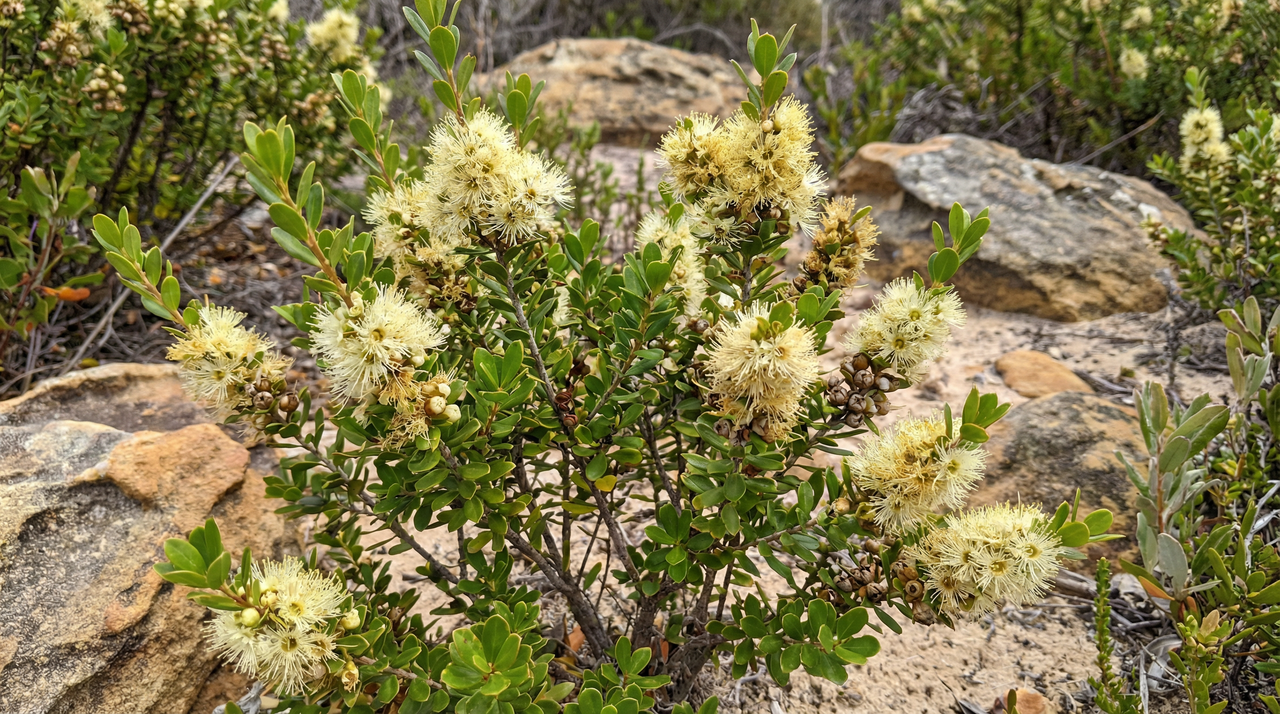
In the garden, muntries presents as an upright to spreading shrub or small tree, typically reaching 3-6 m tall with a 2-4 m spread, though some cultivated forms stay considerably more compact.[4][3] The bark is one of its most distinctive features: reddish-brown, smooth, and peeling in strips the way you'd expect from a well-behaved ornamental. The leaves are tiny (3-8 mm long, rarely more than 1.5 mm wide), linear to lanceolate, dark green above with a slightly hairy surface and visible oil glands.[3][10] Crush a handful and you get a sharp, lemony scent that I find completely unmistakable, similar to a finer-textured tea tree but with more citrus punch.
Flowers come in spring to summer (September through December in the Southern Hemisphere), clustered in dense axillary groupings with five small petals and masses of stamens that give the whole flower head a fluffy, bottlebrush-soft appearance.[4][3] Coloring varies from white or pale yellow to mauve-pink to purple, and in my experience with similar Myrtaceae the deeper-colored forms tend to pull in pollinators noticeably faster. Fruits are small woody capsules around 2-4 mm across that split to release numerous tiny seeds.[3][11] If you're trying to distinguish it from kanuka, look for the smaller flowers, narrower leaves, and that notably axillary flower positioning.[3][11] The roots are fibrous and shallow, non-invasive in the way Myrtaceae roots tend to be, which makes it a reasonable fit near paths or in mixed guild plantings without the worry of structural interference.[4]
Traditional and Cultural Uses
Long before Hooker named it in 1864, both Māori and Aboriginal Australians had extensive working knowledge of this plant and its relatives. In Māori ethnobotany, Kunzea axillaris falls under the broader category of kanuka-type tea trees and holds status as taonga, a treasured resource. Leaves and branches were valued within rongoā across a broad spectrum of medicinal applications, particularly for their antiseptic and anti-inflammatory properties.[12][13] Across the Tasman, Indigenous Australian communities used leaves in poultices and decoctions for similar purposes: respiratory complaints, colds, and skin conditions.[4][14]
I want to be honest about what the written record does and doesn't tell us here. Much of this knowledge predates European documentation, and specific ethnobotanical records for K. axillaris are sparser than for its more intensively studied relatives like manuka.[15] What we have rests substantially on oral histories, and those deserve respect rather than reduction into bullet points. For permaculture growers interested in sourcing this plant, supporting conservation nurseries and Māori-led seed banks isn't just good ethics; it's how that knowledge stays alive and accessible.
Fun Facts About Muntries
Here's the detail that surprised me most when I first researched this plant: despite its pioneer toughness and fire-resprouting abilities, K. axillaris is listed as threatened, Nationally Critical in some assessments, on the New Zealand Plant Conservation Network, largely due to habitat loss and browsing pressure from introduced mammals like possums, deer, and goats.[3][16] A plant that can resprout from lignotubers after fire and germinate from smoke-triggered seeds in the soil seed bank[17][18] is still no match for sustained browsing and land clearing. That tension between ecological resilience and conservation vulnerability is exactly why I think regenerative gardeners should take it seriously.
Its dual-native status across the Tasman is genuinely unusual, and the genetic variability between coastal and inland populations means you're often getting a plant shaped by quite specific evolutionary pressures. Add in the mycorrhizal associations that help it thrive in nutrient-poor soils, the essential oils that deter many pest insects naturally, and the mauve-pink floral forms that tūī and bellbirds visit readily,[19] and you have a shrub that functions as ecological infrastructure while carrying real cultural weight. Growing it is, in a small way, participating in its survival story.
Muntries Varieties and Where to Source Them
Notable Varieties of Northern Kanuka (Kunzea axillaris)
Kunzea axillaris has no formally recognized garden selections or named varieties in commercial circulation; what nurseries sell is the straight species, essentially wild-derived plants grown from seed or cuttings.[20][21][22] Botanically, the species does split into two subspecies: the widespread subsp. axillaris and the much rarer subsp. macrantha, which has larger flowers and occupies a narrower northern range in New Zealand.[20] In practice, subsp. macrantha is a botanical footnote for most growers; you're virtually certain to receive subsp. axillaris from any nursery.
In my experience, the absence of cultivar development hasn't been a limitation at all. The wild-type form already handles drought and variable coastal conditions without complaint, and for guild plantings that's the bar I actually care about. The more interesting varietal story in this genus comes from the closely related rambling kunzea (Kunzea affinis), which has four recognized botanical varieties that show just how much morphological differentiation the genus can sustain.[23] Var. affinis is a low spreading shrub to around 1 m with narrow linear leaves; var. lactea grows upright to 3 m with broader woolly leaves and a preference for damp gullies, needing more summer moisture than the others; var. huegelii is prostrate and mat-forming, maxing out around 0.3-0.6 m with high salt and drought tolerance; and var. pomifera is a compact shrub to about 1.2 m known for edible fruit harvested in traditional Aboriginal practice.[23][24] Var. huegelii in particular reads to me like a prostrate rosemary in terms of visual function; it's the kind of tight, salt-tolerant groundcover that makes you wonder why no one has pushed for selected forms suited to coastal revegetation work. These varieties hint at real potential for future selection within the broader genus.
Sourcing Muntries Plants and Propagation Tips
In Australia and New Zealand, northern kanuka is reliably sold under the trade name 'Kanuka' or occasionally 'White Kanuka'; if you search 'Tea Tree,' you'll end up with Melaleuca, which is a different genus entirely despite the superficial resemblance.[25][26] Pricing is reasonable: seedlings typically run AUD 5-15 or NZ$5-15, with larger plants in the AUD 20-50 range.[27][28] Stock peaks in spring and autumn in line with the plant's October-to-January flowering cycle.[29]
The scarcity of improved material isn't mysterious once you understand propagation. Seed germination sits between 20-50% even under optimal conditions and often requires scarification or cold stratification to get there; semi-hardwood cuttings taken in late summer with a rooting hormone are considerably more reliable, achieving 60-80% success.[30][29] I've had good results with IBA-treated late-summer cuttings, and I'd always start there rather than wrestling with seed. For US-based growers, the picture is considerably harder. Kunzea axillaris has essentially no presence in mainstream American nurseries,[31] and importing live plants or propagative material from Australia or New Zealand means navigating USDA APHIS regulations under 7 CFR 319.37, which tightly restricts Myrtaceae imports to guard against myrtle rust.[32][33] Import permits, phytosanitary certificates, and potential post-entry quarantine are all part of that process; it's a plant for dedicated enthusiasts rather than impulse purchases. Check current APHIS requirements before you start. Your most practical domestic route is specialty native plant importers or botanical garden sales events, where the paperwork has already been handled.
Muntries Propagation and Planting Guide (Kunzea pomifera)
Muntries is one of those plants that rewards the grower who does their homework before sowing a single seed. Get the conditions right and it's genuinely satisfying to grow from scratch. Skip the pretreatments or plant it in the wrong soil and you'll be starting over. I've done both, which is why I now have strong opinions about how to approach kunzea pomifera propagation from the start.
Seed Characteristics, Dormancy, and Germination
The seeds themselves are tiny, 0.5-1.2 mm, elliptical, and brown, released from woody capsules in groups of 10-20 per locule and primarily dispersed by wind.[34][35] Fresh seed looks almost unremarkable, and that's part of the problem: I lost two early batches to damping-off because I'd buried the seed in a standard seed-raising mix without thinking through the dormancy issue first. Now I surface-sow on a thin layer of vermiculite and I don't skip the smoke water.
That smoke pretreatment matters because muntries seed carries physical and physiological dormancy from an impermeable seed coat, a trait common across Myrtaceae that evolved alongside fire-prone Australian landscapes.[36] Karrikinolide, the germination-stimulating compound derived from smoke, mimics the cues the plant actually evolved to respond to after fire. Mechanical scarification, cold stratification at 4°C for 4-8 weeks, or concentrated sulfuric acid all break dormancy too,[36][37] but smoke water is the method I reach for because it connects to the ecology rather than fighting it.
With fresh seed and proper pretreatment, germination rates reach 50-80%, and viability stays high for the first year or two.[38] Let those seeds sit in a drawer at room temperature and viability drops below 30% fast.[39] Germination itself occurs in 2-4 weeks with fresh, pretreated seed at 15-20°C with consistent moisture and light exposure, though it can stretch to 8 weeks under less-than-ideal conditions.[40]
One thing I wish someone had told me early on: muntries seedlings look almost identical to young manuka and tea-tree in the first month. Label every tray. Seedlings also show moderate genetic variation in branching and height even when they breed reasonably true to type,[41] which is why commercial growers tend to skip the seed route entirely for production plants.
Vegetative Propagation: Cuttings, Layering, Grafting, and Tissue Culture
Semi-hardwood cuttings are my go-to, and the numbers back that preference up. Take 10-15 cm non-flowering stems in late summer to autumn, treat with 3000-5000 ppm IBA, and place them in a perlite-sand or sand-peat mix at 20-25°C under a propagator or mist system. I've consistently hit 70-80% strike rates using IBA gel rather than powder, finding the gel delivers more even coverage on the cut surface, and rooting typically shows in 4-8 weeks.[42][43] That's a satisfying turnaround compared to waiting months to see whether seed-grown plants are even uniform.
For growers who want to expand established plants, layering and air layering both work well on mature specimens. Grafting onto related Kunzea or Leptospermum rootstocks is possible using cleft or whip technique in late winter or early spring, and tissue culture on MS medium with cytokinins and auxins is used for commercial mass propagation and research purposes.[44][45] For a home permaculture context, though, semi-hardwood cuttings give you clonal fidelity and speed without the complexity.
Soil, Site Selection, and Planting Technique
If there's one thing I've learned growing Kunzea in central Florida, it's that drainage is non-negotiable. I've watched root rot wipe out plants set into heavy clay, and I've watched those same species thrive in raised sandy beds with zero fuss. Muntries will not tolerate waterlogged conditions or heavy clay, silt, chalk, or peat; it evolved on coastal dunes, heathlands, and post-fire scrub, and it remembers.[3] Sandy, loamy, or gravelly soils with low fertility (2-5% organic matter) at pH 5.5-7.0 are ideal, with the sweet spot around 6.0-6.5. Push above pH 7 and you risk chlorosis; drop below 5.0 and you're into toxicity territory.[4]
For containers, a mix of 50% potting soil, 30% sand or perlite, and 20% compost strikes the right balance of drainage and modest nutrition.[46] Go heavier on the organic amendments and you're retaining moisture the plant doesn't want. The related rambling kunzea (Kunzea affinis) gives a useful genus reference here: it handles sandy calcareous Western Australian coastal soils on a shallow, drought-adapted root system,[47] confirming that across the genus, excellent drainage consistently matters more than exact soil composition. Once established in the right substrate, muntries behaves like a tougher, more drought-tolerant version of manuka and largely takes care of itself.
Spacing, Initial Care, and Timeline to First Harvest
For hedges or windbreaks, space plants 1-1.5 m apart; for general food forest or restoration planting, 2-3 m gives each plant room to develop its natural multi-stemmed form.[48] I've learned to thin early rather than wait: selective thinning after 3-5 years improves airflow and significantly reduces fungal pressure, especially myrtle rust in humid summers.[49] Plant in spring or early autumn, in full sun (at least 6 hours), and water deeply every 1-2 weeks during dry spells for the first 1-2 years while the root system establishes, without letting the soil stay saturated.[46] Young plants appreciate protection from hard frost.
Germination and Establishment Timeline
Here's the honest comparison: seed-grown muntries germinates in 2-4 weeks under optimal conditions, flowers in 2-3 years, and reaches commercial harvest readiness around 3-5 years, with peak productivity at 5-7 years.[50][51] Cutting-grown or grafted plants reach first leaf and fruit harvest in 2-3 years and flower within 1-2 years.[52] In my zone 9B beds, I watched my first grafted muntries reach a harvestable size a full year ahead of seed-grown siblings planted at the same time. For a food forest where you want results in a reasonable timeframe, vegetative propagation is the smarter investment. Pruning after year 2 to encourage bushy branching will shape the plant into something far more harvestable than if you let it sprawl, and that's a decision that pays dividends for every season that follows.
Muntries Care Guide: Water, Light, Feeding, and Maintenance
Most of the care for growing muntries happens in year one, and almost none of it happens after that. This is a pioneer species shaped by nutrient-poor soils and periodic drought, and it performs best when you respect those roots rather than try to garden around them.
Water Requirements for Muntries
During establishment, water your muntries plant about once a week in dry conditions.[4][53] That consistent moisture in year one is what gets the root system anchored. After that, mature plants are genuinely drought-tolerant and only need supplemental water during prolonged dry spells.[4][54] The shift from weekly care to near-zero intervention is real, and it's one of the reasons this plant suits a low-maintenance food forest so well. Overwatering is the main failure mode, especially in heavy or clay soils where root rot can take hold quietly before you notice anything wrong.[4] Well-drained sandy or loamy soil isn't just a preference; it's non-negotiable for keeping the roots healthy long-term.
Sunlight and Heat Tolerance
Muntries prefers full sun to partial shade, with plants spaced 1-2 meters apart in garden settings.[55] In hotter climates, afternoon shade makes a real difference in preventing leaf scorch.[56] I grow it much the way I grow bottlebrush: full morning sun, some protection from the worst of the afternoon heat, and a thick mulch layer over the root zone. Its native coastal heathland habitat explains both the bright-light affinity and the sensitivity at temperature extremes.[57] Optimal growth sits in the -5°C to 30°C range, with increasing stress above 35-40°C, especially for seedlings.[58] If you're pushing that upper threshold, watch for leaf scorching, wilting, and curling; temporary 30-50% shade cloth, consistent watering of around 25-50 mm per week, and mulching will carry it through.[59]
Fertilizer and Nutrient Needs
This is where I've seen the most well-meaning growers go wrong. Muntries is a pioneer species adapted to genuinely poor soils, and it needs minimal to no fertilization once established.[3] Push it with nitrogen and you get soft, leggy growth that's wide open to pest pressure. Excess phosphorus does something subtler but nastier: it damages the mycorrhizal associations the plant depends on for nutrient uptake in low-fertility soils,[60] and those fungal partnerships are part of why this plant survives where others don't.[55] I've learned from soil tests on my own sandy lot that even standard native fertilizers can cause subtle chlorosis if applied at full strength. If you genuinely need to feed, do a soil test first, then use a slow-release, low-phosphorus native formulation or composted pine bark at half the recommended rate.[61][62] Yellowing leaves can signal nitrogen, iron, or magnesium deficiency,[63] but before you reach for a feed, check drainage and watering first. Soil pH should sit between 5.5 and 6.5 for best results, with tolerance up to 7.5.[64]
Frost Tolerance and Winter Protection
Mature muntries plants are moderately frost-hardy, rated USDA zones 8-10, and can handle temperatures down to around -12°C in a sheltered position.[65][66] Young plants and new growth are a different story; they're noticeably more vulnerable, which tracks with what I've seen in related tea trees. In my garden, young plants get a 5 cm layer of pine-bark mulch and a light horticultural fleece on nights forecast below -5°C, and that simple combination has prevented any dieback over multiple winters. Frost damage shows up as wilting, browning or blackening, and shoot dieback.[67] Avoid planting in low-lying frost pockets, and don't prune in late autumn, since that encourages the tender new growth most likely to suffer.[68]
Pruning, Maintenance, and Seasonal Care
Flowering begins in early spring and peaks through late spring into early summer, with the most vigorous vegetative growth following through summer before the plant quiets down for winter without going truly dormant.[69] Pruning should happen immediately after flowering finishes; cut too late and you risk removing next season's buds.[70] I watch for the spent flower clusters as my cue and then do a light tidy: removing dead, damaged, or crossing branches, and shaping the outline if I want it compact. For a small tree form, select a central leader and clear competing stems early.
Leaf harvesting for tea or oil fits naturally into the pruning rhythm. The best window is late spring to early summer when essential oil content peaks,[71] and the sustainable rule of thumb is to take no more than 20-30% of the foliage per plant per season.[72] Light harvesting done with sharp, clean tools serves double duty as maintenance pruning, keeping the plant tidy without stressing it. After the first two establishment years, pruning and occasional harvesting are honestly all the regular care this plant asks for.
How to Harvest Muntries (Kunzea axillaris)
After a few seasons growing this plant, I've learned that muntries rewards the observant grower rather than the calendar-watcher. The window for peak harvest is real, but it's written in the plant itself, not a fixed date.
Timing and Visual Cues for Peak Flavor and Oil Content
Flowering in the Southern Hemisphere runs from October through December, and the sweet spot for foliage harvest falls roughly 30 to 75 days after anthesis, with the full bloom-to-maturity arc spanning 60 to 90 days.[51][19][73] That puts the practical harvest window in late spring to early summer, when you're looking at green mature foliage carrying compact buds or just the earliest open flowers.[74][75] Essential-oil content peaks at up to 1 to 2 percent dry weight right at this stage, and it slides noticeably once the plant pushes into late flowering.
I watch for tight buds in late October and then use my fingers to confirm readiness: crush a leaf between your thumb and index finger, and if you get that sharp, immediate lemon-eucalyptus hit, you're there. It's the same instinct that tells me to cut basil before it bolts. Waiting past that moment means the oils have already begun shifting toward something flatter and less interesting. Your local rainfall and soil temperature will nudge this window a week or two either way, so trust your nose over any fixed date.
One thing I learned the hard way: don't strip a young plant. In year two I took too much in a single pass and watched the canopy struggle to recover for most of the season. Now I never remove more than a third of the foliage at once, and I skip meaningful harvest entirely in years one and two. The three-year wait feels long, but a plant that needs almost no supplemental water once established is not a plant that owes you an apology for taking its time.
What Does Muntries Taste Like?
The tea made from these leaves sits in a gentle category all its own: earthy and slightly sweet up front, with honey-like warmth, a thread of citrus, quiet eucalyptus undertones, and a cool, minty, faintly astringent finish from volatile compounds including 1,8-cineole and camphor.[76][77][78] Readers who know manuka tea will recognize the family resemblance, but this is noticeably milder and softer. The small flowers add a delicate nectar sweetness to the aroma that makes a freshly harvested stem genuinely lovely to hold. Because the leaves are fine and needle-like with low fiber, the infusion comes out smooth in the mouth, with none of the woody or fibrous texture you sometimes get from tougher Myrtaceae.[78] Dry the leaves below 40°C if you're not using them fresh; higher heat drives off the delicate honey notes before they ever reach your cup.
Muntries Preparation and Culinary Uses
Culinary Uses and Flavor of Muntries Fruit
The muntries berry is a genuinely fun ingredient to work with. Those small purple fruits, only 4 to 8 mm across, pack a spicy, apple-cranberry flavor with a satisfying crunch from the seeds inside.[79][80] I think of them as somewhere between a pepperberry and a tart crabapple, but with more warmth. Indigenous Australians have eaten them fresh or dried for generations, and both approaches still make sense today: raw off the plant, folded into a sauce, stirred into jam, or baked into scones or muffins where the crunch survives the oven.[79] I've found that fruits picked after a dry stretch taste noticeably more concentrated, as if the plant pulled the sugars inward, so harvesting timing genuinely shapes your muntries recipe results. For preserving, slow drying at low heat, under 40°C, keeps the volatile aromatics intact; a quick compote works beautifully too.
The flowers of related Kunzea species like Kunzea axillaris scatter well in salads with a mild, honey-sweet flavor, and kanuka honey from those same flowers is worth seeking out specifically: it contains methylglyoxal (MGO), the same antibacterial compound associated with mānuka, and works beautifully in dressings and baked goods.[81][82] One important caveat: not every Kunzea species is safe to eat. Kunzea affinis, for example, lacks documented edible uses and carries potential toxicity concerns, so always confirm your identification before consuming anything from this genus in the wild.[83][84]
Medicinal Preparations from Kunzea
The leaves of Kunzea axillaris sit in a different category from the fruits entirely. They're bitter and astringent with a eucalyptus edge, not something you'd toss into a salad, but Māori practitioners have long prepared them as teas, steam inhalations, and topical infusions for respiratory complaints, fever, digestive upset, and skin conditions.[85][86] If you do make a leaf tea, go gently; large amounts can cause gastrointestinal upset.[87]
Modern extraction focuses on steam distillation of the leaves, flowers, and young twigs at peak flowering, yielding an essential oil rich in monoterpenes that's used topically for muscle aches, minor skin irritation, and as an antiseptic in aromatherapy.[88][89] Always dilute to 1 to 2% in a carrier oil before skin application.[90] I learned this the hard way years ago with an undiluted myrtle oil that left a patch of inflamed skin on my forearm for a week; now I always do a patch test first. And I never recommend ingesting Kunzea essential oil without professional guidance, full stop. The research on dosage is thin and the allergy risk in Myrtaceae-sensitive people is real.[91][92] I keep muntries in the kitchen and kanuka oil for the diffuser or diluted topical use only; if you're pregnant, breastfeeding, or on medication, please consult a qualified herbalist before going further.
Non-Food and Traditional Applications
The usefulness of Kunzea axillaris extends well past food and medicine. Traditional Māori applications turned the whole plant into a resource: hard wood for tools and walking sticks, fiber twisted into rope, resin used as a natural chewing gum, and plant material as a dye for cloth and an element in purification ceremonies.[93][94] Contemporary New Zealand herbalists and craft makers have carried some of that forward, using the leaves and resin in botanical baths for skin conditions and incorporating the essential oil into salves and aromatic blends.[93] There's something genuinely moving about a shrub whose berries you might pickle for a charcuterie board while its cousins are contributing to traditional healing practices that predate written records by centuries. Engaging with this plant well means engaging with that whole picture respectfully.
Muntries Health Benefits and Medicinal Uses
The health story of Kunzea axillaris doesn't start in a laboratory. It starts with generations of Māori practitioners who recognized this plant as medicine long before anyone had a name for α-pinene. The research we have today is genuinely exciting, but I think it lands more meaningfully when you understand the traditional knowledge that pointed scientists toward it in the first place.
Traditional Medicinal Uses in Māori and Aboriginal Practices
In Māori rongoā, Kunzea axillaris has long been applied to an impressively broad range of conditions: skin ailments, wounds, boils, ringworm, respiratory infections, colds, coughs, rheumatism, and arthritis.[95][96][97] Preparations included:
- leaf teas and infusions
- steam inhalation for respiratory support
- poultices laid directly on wounds
- dilute washes for skin infections
Key Phytochemicals and Essential Oil Composition
The essential oil of Kunzea axillaris is dominated by monoterpenes and sesquiterpenes, with α-pinene typically around 40% (though it ranges from 7 to 54% depending on chemotype, provenance, and season), alongside 1,8-cineole at up to 16%, and sesquiterpenes including globulol, viridiflorol, bicyclogermacrene, and spathulenol.[100][101] I've noticed similar variability working with other aromatic Myrtaceae: two plants of the same species grown in different microclimates can smell noticeably different when you crush a leaf, and that scent difference reflects real variation in oil chemistry and, likely, medicinal potency. Beyond the oil, the leaves contain flavonoids including quercetin, rutin, and kaempferol derivatives, alongside phenolic acids such as gallic and chlorogenic acid, with total phenolics measured at 50 to 100 mg GAE per gram.[102][103] That phenolic load helps explain much of the antioxidant activity observed in extracts.
Antimicrobial, Anti-inflammatory, Antioxidant, and Wound-Healing Properties
The antimicrobial evidence is among the strongest in the literature. Kunzea essential oils show activity against Staphylococcus aureus, Escherichia coli, and Candida albicans at minimum inhibitory concentrations as low as 0.25 to 1%, via membrane permeabilization, efflux pump inhibition, and biofilm disruption.[104][105] The anti-inflammatory profile is equally promising: the oil inhibits pro-inflammatory cytokines TNF-α and IL-6, COX-2, and NF-κB signaling pathways, reducing paw edema by 40 to 60% in animal models.[106][107] Antioxidant DPPH and ABTS radical scavenging sits at IC50 values around 20 to 50 μg/mL, comparable to some synthetic antioxidants.[82][108] Topical application in rat models accelerates wound healing by reducing inflammation and promoting epithelialization,[109] which maps neatly onto the traditional poultice and wash preparations. I've seen similar wound-healing patterns with other native Myrtaceae poultices used in restoration plantings; the family seems to have something going on there beyond simple antimicrobial action. Emerging research also suggests enzyme inhibition against acetylcholinesterase and α-glucosidase, and selective cytotoxicity toward cancer cells at low general toxicity to healthy tissue,[110] though these findings are early-stage. Most pharmacological data comes from related Kunzea species rather than K. axillaris specifically, and large-scale human trials don't yet exist.[111] The traditional use record is meaningful; the modern evidence is promising. They're not the same thing, and I think it's worth being honest about that gap.
Nutritional Profile of Muntries Leaves
Nutrition isn't where this plant earns its reputation. The leaves contain modest amounts of protein (roughly 2 to 5%), minimal fat, and carbohydrates running around 10 to 15% by dry weight, with useful mineral contributions of potassium, calcium, and magnesium; vitamin data is essentially absent from the published literature.[102][112] Much of that data is extrapolated from related species rather than directly measured in K. axillaris, so treat the numbers as indicative rather than precise.[102] The real nutritional value here is the phenolic and flavonoid load discussed above. A leaf tea prepared by steeping a teaspoon or two of crushed leaves for five to ten minutes delivers those antioxidant compounds in a caffeine-free, gently aromatic cup[8] that sits closer to lemon myrtle than to anything resembling a medicinal assault. It's mild, pleasant, and a genuinely nice way to spend time with a plant you've grown yourself.
Safety Considerations and Usage Precautions
Overall toxicity is low. Oral LD50 in animal models exceeds 5000 mg/kg, and no severe human poisoning cases have been documented.[113] Livestock may experience minor digestive upset from heavy consumption, but it isn't classified as a poisonous plant.[114] The essential oil is a different story when used undiluted: skin irritation and allergic contact dermatitis are real risks, and ingesting large quantities of leaves, flowers, or concentrated oil can cause gastrointestinal upset.[111][115] Topical use should always be diluted to 1 to 3%; I always patch-test first and recommend anyone working with essential oils therapeutically do the same. Pregnancy safety hasn't been established, and internal use during the first trimester especially should not happen without professional guidance.[100][116] The traditional use record across both Māori and Noongar communities speaks to a long history of safe, moderate use, but that's not a substitute for professional consultation when it comes to internal therapeutic applications, particularly in vulnerable populations. The plant has earned its place in ethnobotanical medicine. That respect is best expressed by treating it carefully.
Muntries Pests and Diseases
Natural Defenses Against Insect Pests
One of the things I noticed early on when working with muntries in the garden is that the foliage has a presence. Brush past it and you get an immediate hit of that sharp, resinous scent -- cineole and pinene doing their job. As it turns out, that's not just pleasant aromatherapy. The essential oils of Kunzea axillaris are rich in monoterpenes including α-pinene and 1,8-cineole, and laboratory bioassays have confirmed they act as genuine insect repellents and feeding deterrents, with mosquito repellency comparable to some synthetic options.[117][118][119] The physical architecture reinforces this: tough, leathery leaves and resinous exudates make the plant genuinely unpleasant for small chewing insects to work with, a trait shared across many Myrtaceae I've planted in similar guilds.[120]
That said, no plant is fully immune. Leaf beetles, aphids, leafrollers, psyllids, and scale insects can all get a foothold, particularly on young growth or stressed plants.[121] In New Zealand plantings, deer and possums are an additional concern, capable of heavily defoliating young shrubs before they're established enough to bounce back.[122] The pattern I keep seeing with stress is consistent: well-sited, well-drained plants in full sun rarely have serious insect issues, while drought-stressed or waterlogged individuals attract problems fast.[123] Stress is almost always the real culprit, not any inherent fragility.
Key Disease Vulnerabilities
Muntries carries moderate overall disease resistance, but two pathogens deserve serious attention. Phytophthora root rot (P. cinnamomi primarily) is the bigger threat in most garden settings: waterlogged or poorly drained soils create exactly the conditions it needs, and once a plant starts wilting from root infection, recovery is unlikely.[124][125] I've learned this the hard way with other Myrtaceae in heavy clay: even drought-tolerant plants will fail in slow-draining soils, and muntries is no exception. Raised beds and sloped sites have become my standard practice now.
Myrtle rust (Austropuccinia psidii) is the other serious concern, especially in coastal or humid conditions. Susceptible populations can see infection rates of 20-50%, with the characteristic yellow pustules, defoliation, and dieback following quickly.[126][127] Fungal cankers from Botryosphaeriaceae and Neofusicoccum species can also cause branch dieback in stressed plants, and Septoria kunzei leaf spots are occasionally reported.[128] These patterns track closely with what I've seen in manuka; the management lessons transfer almost directly between the two.[126] The good news is that natural genetic variation exists in disease resistance across populations, and some provenances show meaningfully lower susceptibility to both myrtle rust and Phytophthora, which is exactly why I try to source plants from diverse provenances when I can.[129]
Prevention and Integrated Management
Most problems with muntries are preventable through site selection rather than reactive spraying. Good drainage is non-negotiable: well-drained soil at pH 5.5-7.0, generous spacing for air circulation, and avoiding overhead irrigation eliminate the conditions that favor both Phytophthora and fungal pathogens.[4][129] For insects, an integrated approach that leans on natural predators, routine monitoring, and exclusion fencing for browsers keeps intervention minimal and targeted.[130][131] Specific myrtle rust-resistant cultivars of Kunzea axillaris are still limited, though related selections like K. ericoides 'Candle Glow' are showing promise as breeding programs work with the natural variation in wild populations.[46] A healthy, unstressed muntries in the right spot is a genuinely low-maintenance plant; the chemistry it evolved does most of the pest-defense work for you.
Muntries in Permaculture Design
Muntries and its close Kunzea relatives occupy a genuinely useful niche in warm-temperate permaculture systems, and I've come to rely on the genus more and more as I design edible landscapes that need to work hard without constant input. The design story, though, is most complete when you draw on the well-documented ecology of Northern kanuka (Kunzea axillaris) alongside the compact, ground-hugging habit of Kunzea pomifera itself.
Climate Adaptability and Hardiness Zones
Kunzea axillaris carries an RHS H4 rating, placing it at USDA Zone 9b, tolerating light frosts down to around -5°C and, with some protection, surviving brief dips toward -10°C.[132][3] Muntries itself (Kunzea pomifera) is a touch more frost-tender, performing best in Zones 9 through 11 with a practical lower limit around -1 to -2°C, so keep that distinction in mind when mixing species in a guild.[133][134] That said, reports vary and local microclimate matters enormously; a sheltered, north-facing pocket can push either species through colder nights than a raw, exposed site would allow.
After growing several Kunzea species in warm-temperate food forests, I can tell you that full sun combined with sharp drainage isn't a suggestion, it's the whole game. Plants I've sited in low pockets where cold air or water collects always show die-back, without exception. The sclerophyllous leaf structure tells you everything: small, thick, rough leaves that cut water loss[3] built this plant for exposed, dry sites, not coddled garden beds. The flip side is sensitivity to persistent humidity and poor air movement, which invites fungal trouble fast.[3] A raised bed or a well-drained slope beats a flat clay garden every time.
Ecosystem Functions and Guild Roles
Kunzea is a genuine pioneer: it colonizes disturbed ground, anchors soil against erosion, and facilitates succession toward more complex forest communities.[46][9] Fire-adapted lignotubers let it resprout after disturbance,[135] which is a reassuring quality in any landscape plant. Leaf litter decomposition gradually improves soil structure and feeds humus formation,[3] so even without actively fixing nitrogen it's doing real soil-building work over time.
That last point is worth being clear about: don't count on Kunzea to build soil nitrogen the way legumes do. I pair it with true nitrogen-fixers, acacias or pigeon pea depending on the climate, so every plant is pulling its actual ecological weight rather than the weight I've imagined for it. Kunzea's contribution is structural and biological diversity, not fertility alone.
Where it genuinely shines is pollinator support. The small white flowers open in dense axillary clusters through spring to early summer, carrying a mild honey-like scent I find impossible to walk past without stopping.[136][57] Native solitary bees (Leioproctus and Hylaeus species), hoverflies, honeybees, honeyeaters, tūī, and bellbirds all work these flowers.[137][138] Plant it on a food-forest edge in full bloom and you've turned that edge into a living apiary. The foliage's essential oils also appear to offer mild pest-deterrent properties,[139] and I've observed noticeably fewer aphids on adjacent fruit trees where Kunzea is interplanted, though I'd frame that as a promising observation rather than a controlled result.
Forest Layer Placement and Companion Planting
In cultivation, Kunzea axillaris typically grows 1 to 3 meters tall with a spread of 1 to 2 meters, while coastal populations stay compact and shadier forest sites push it toward a small tree form.[4][3] That size range places it squarely in the shrub layer of a food forest, and it can form dense thickets that serve as functional windbreaks and erosion barriers along design edges.[57] Muntries itself sits lower in that range, creeping and mounding close to the ground rather than reaching for mid-story height. Where I'd use a tall Kanuka as a 3-meter shrub-layer windbreak, Muntries forms a living mulch that still feeds bees and suppresses weeds underneath taller food-forest trees.
For guild companions, it pairs well with actinidia, coprosma, and ground covers like dichondra,[139] and it thrives from sea level up to 1000 meters in sandy or volcanic soils with reliable drainage.[140][57] Leaf litter accumulation under established plants quietly improves the soil while providing habitat structure for ground-nesting insects and foraging birds.[3] For a Myrtaceae enthusiast designing in Zone 9 or 10, the practical payoff is a plant that stabilizes edges, feeds pollinators, deters pests passively, and asks very little back.
The Plant That Taught Me to Stop Fussing
I spent the first season after planting my northern kanuka checking on it constantly, adjusting the mulch, second-guessing the drainage. It didn't care. It just grew, quietly, on its own terms. There's something clarifying about a plant that thrives most when you leave it alone; it has a way of making you rethink every other corner of the garden where you might be doing too much.
Sources 140
- Seeds of Diversity – Muntries Profile ↩
- Phytochemical and Biological Properties of Kunzea – Molecules ↩
- Kunzea axillaris - New Zealand Plant Conservation Network ↩
- Kunzea axillaris - Violet Kunzea ↩
- Plants of the World Online - Kunzea axillaris ↩
- Handbook of the New Zealand Flora ↩
- New Zealand Climate and Vegetation Zones ↩
- Ecology of Kunzea ericoides (Kānuka) in New Zealand ↩
- Kanuka Ecology and Distribution ↩
- Kunzea axillaris - Plants of the World Online (Kew Science) ↩
- De Lange & Rolfe (2010) - Kunzea in New Zealand Journal of Botany ↩
- Māori Medicinal Plants ↩
- Rongoā Māori Medicinal Plants ↩
- Traditional Aboriginal Plant Use in Australia ↩
- New Zealand Journal of Botany - Medicinal Uses of Kunzea ↩
- Kunzea axillaris Fact Sheet ↩
- Fire Ecology of Kunzea Species in New Zealand ↩
- Fire Ecology of New Zealand Myrtaceae ↩
- Pollination and Seed Dispersal in Kunzea Species ↩
- Plants of the World Online (Kew Gardens) ↩
- Royal Horticultural Society - RHS Plant Finder ↩
- Missouri Botanical Garden - PlantFinder ↩
- Florabase, Western Australian Herbarium ↩
- Grigg, A. S. & Jones, D. A. (2018). 'Ecology and Evolution of Myrtaceae in South-Western Australia: Implications for Restoration'. Australian Journal of Botany ↩
- Plants of the World Online (POWO) ↩
- New Zealand Plant Conservation Network (NZPCN) ↩
- Kunzea axillaris Plants for Sale ↩
- Kanuka Plants for Sale ↩
- Kunzea Species Cultivation Notes ↩
- Propagation of Australian Native Plants ↩
- USDA PLANTS Database ↩
- Foreign Quarantine Notices: Myrtle Rust Quarantine (7 CFR 319.37) ↩
- Myrtaceae Family Import Regulations ↩
- Seed Morphology and Anatomy in the Myrtaceae ↩
- Flora of New Zealand - Kunzea axillaris ↩
- Seed Dormancy and Germination in Australian and New Zealand Myrtaceae ↩
- Germination and Dormancy in Kunzea ericoides and Kunzea axillaris ↩
- Seed Storage Behaviour of New Zealand Native Plants ↩
- Propagation of Native New Zealand Shrubs ↩
- Propagation of Australian Native Plants ↩
- Genetic Diversity and Seedling Uniformity in Myrtaceae ↩
- Propagation of New Zealand Native Plants ↩
- Kanuka (Kunzea ericoides) Cultivation Guide ↩
- Grafting Native Australian Plants ↩
- Micropropagation of Kunzea Species ↩
- Growing Kanuka (Kunzea ericoides) in Containers ↩
- FloraBase - Kunzea affinis ↩
- Planting Native Shrubs and Trees in New Zealand ↩
- Australian Native Plants Society - Kunzea Cultivation ↩
- Propagation and Cultivation of Native Shrubs: Kanuka ↩
- Phenological Patterns in New Zealand Kunzea Species ↩
- Cultivation of Kunzea ericoides and Kunzea axillaris ↩
- Growing Kunzea axillaris: Care Guide ↩
- Drought Tolerant Native Shrubs: Kunzea Species ↩
- Kunzea axillaris Plant Profile ↩
- Light Requirements for Australian Shrubs ↩
- Kunzea axillaris – New South Wales Flora Online ↩
- Climate Tolerance of New Zealand Myrtaceae ↩
- Heat Stress Responses in Australian Kunzea Species ↩
- Phosphorus Sensitivity in Australian Native Flora ↩
- Organic Gardening for Native Plants in NZ ↩
- Nutrient Requirements of Native Shrubs in New Zealand ↩
- Plant Nutrient Deficiencies and Symptoms ↩
- Nutrient Deficiency Symptoms in Woody Plants ↩
- Kunzea axillaris ↩
- Australian Native Plants: Kunzea axillaris ↩
- Frost Tolerance in Native New Zealand Shrubs ↩
- Frost Protection for Native Shrubs ↩
- New Zealand Plant Conservation Network - Kunzea axillaris page ↩
- Kanuka Ecology and Management ↩
- Harvesting Native Plants for Tea: Kanuka (Kunzea ericoides) ↩
- Sustainable Harvesting of Indigenous Flora ↩
- Essential Oil Yield and Timing in Kunzea ericoides ↩
- Essential Oil Production from Kunzea Species in New Zealand ↩
- Harvesting Guidelines for Native Aromatic Plants ↩
- Essential Oil Composition of Kunzea axillaris ↩
- Chemical Composition of Kunzea ericoides Essential Oil ↩
- Edible and Medicinal Plants of Australasia ↩
- Kunzea pomifera - Australian Native Plants Society ↩
- Bush Foods of Australia: Kunzea Species ↩
- Kanuka Honey Production and Uses ↩
- Nutritional and bioactive components of New Zealand honeys ↩
- Toxicity of Australian Plants - Australian Plants Online ↩
- FloraBase - Kunzea affinis ↩
- Māori Medicinal Plants ↩
- Ethnobotany of Kunzea Species ↩
- Kanuka (Kunzea ericoides) - Traditional Uses and Safety ↩
- Journal of Essential Oil Research – Phytochemistry of Kunzea axillaris leaf and flower essential oil (2015) ↩
- Essential Oils of New Zealand Native Plants ↩
- Aromatherapy Guidelines for Kunzea Essential Oil ↩
- Essential Oils of Kunzea Species: Composition and Safety ↩
- Allergic Reactions to Essential Oils ↩
- Traditional Māori Medicinal Plants ↩
- Medicinal plants ↩
- Traditional Māori Medicinal Plants: Kanuka (Kunzea ericoides var. axillaris) ↩
- Traditional Māori Medicinal Uses of Kunzea Species ↩
- Te Manawa Ora: Māori Ethnobotany Online ↩
- Traditional Uses of Kunzea affinis in Indigenous Medicine ↩
- Traditional medicinal uses of Kunzea species in Western Australia ↩
- Kunzea Oil Uses, Benefits and Dosage - Drugs.com ↩
- Comparative Phytochemical Data of Three New Zealand Kunzea Species ↩
- Nutritional and Phytochemical Analysis of Kunzea Species ↩
- Phytochemical Analysis of Flavonoids in Australian Kunzea Species ↩
- Antimicrobial Activity of Kunzea ericoides Essential Oil ↩
- In Vitro Evaluation of Kunzea axillaris for Antibacterial and Anti-inflammatory Effects ↩
- Antioxidant and Anti-inflammatory Properties of Kanuka Essential Oil ↩
- Anti-inflammatory Properties of Australian Kunzea Species ↩
- Antioxidant and anti-inflammatory activities of Kunzea affinis essential oil ↩
- Wound Healing Properties of Kanuka Essential Oil in a Rat Model ↩
- Cytotoxic Activity of Kunzea axillaris Against Cancer Cell Lines ↩
- Kunzea Essential Oil: A Review of Its Chemical Composition and Bioactivity ↩
- Nutritional Composition of New Zealand Native Plants ↩
- Safety assessment of Kanuka (Kunzea ericoides) essential oil ↩
- Toxic Plants of New Zealand - MPI ↩
- Essential Oils and Allergic Contact Dermatitis: A Review ↩
- Essential Oils in Pregnancy - Herbal Academy ↩
- Essential oils of Kunzea species from New Zealand ↩
- Insecticidal Properties of Kunzea axillaris Essential Oil ↩
- Insecticidal properties of Kanuka essential oil ↩
- Plant-herbivore interactions in New Zealand Myrtaceae ↩
- Pests of Kunzea and Leptospermum ↩
- Biodiversity Restoration: Managing Pests in Kanuka Stands ↩
- Insect Pests of Kunzea and Leptospermum in Horticulture ↩
- Phytophthora in native plants: Kanuka susceptibility ↩
- Phytophthora Diseases of Native Plants in Australia ↩
- Myrtle Rust on Kunzea and Leptospermum ↩
- Myrtle rust impact on Myrtaceae in Australasia ↩
- Diseases of Kanuka (Kunzea ericoides var. axillaris) ↩
- Diseases of Kunzea species in New Zealand ↩
- Integrated Pest Management for Native Plants ↩
- Kanuka Beetle Damage Management ↩
- Kunzea axillaris ↩
- Kunzea huegelii Hardiness - RHS Gardening ↩
- Kunzea pomifera Cultivation Guide - Gardening Australia ↩
- Fire regimes in New Zealand shrublands ↩
- Flora of Australia: Kunzea axillaris ↩
- Pollination Ecology of New Zealand Kunzea Species ↩
- Pollinator visitation to manuka (Kunzea ericoides) and kanuka (Kunzea ambigua) flowers ↩
- Permaculture Plants: Kunzea spp. in Guild Design ↩
- Flora of New Zealand - Kunzea axillaris ↩