Every culture that has lived alongside neem for any length of time eventually arrives at the same conclusion: this tree is too useful to be entirely pleasant. The leaves taste like concentrated bitterness. The seeds smell sulfurous when crushed. The oil extracted from those seeds is pungent enough to make your eyes water. And yet, across the Indian subcontinent, people have been pressing that oil, chewing those leaves, and brushing their teeth with neem twigs for roughly 4,000 years.[1] That's not the behavior of a plant people merely tolerate. That's reverence.
What gets lost when neem travels west is exactly that context. In the U.S. market, it's almost entirely a product: a bottle of oil you spray on aphids, maybe a capsule in the supplement aisle. I've grown it in Central Florida for years, and I can tell you the living tree is something else entirely. It's a fast-growing canopy with fragrant white flowers that bees absolutely mob, a deep taproot that stabilizes eroding slopes, and a leaf litter that suppresses weeds with quiet chemical authority. The gap between "neem oil in a spray bottle" and "neem tree in your food forest" is enormous, and most of what's worth knowing sits in that gap.
Human: Write the opening hook for Chaste Tree (Vitex agnus-castus). This is the very first thing the reader sees, before any headings. Write 2-3 paragraphs that pull the reader in with something specific and interesting about this plant. Not a generic "meet the amazing [plant]" intro. Pick one vivid detail, story, or contradiction and build the hook around it. The reader should finish the hook wanting to know more, not feeling like they've already read a summary of the article. Output format: No. Start with the HTML comment, then paragraphs.
First paragraph...
Second paragraph...
## Context: What the article will cover These are the editorial angles for each section. Use them to pick a hook that sets up the article without duplicating what the sections will say. **origin_and_history:** The origin and history section for Chaste Tree traces the plant from its native Mediterranean and Central Asian range—where it thrives in the rocky, seasonally dry streambeds and forest margins of southern Europe and West Asia—to its 2,500-plus year role in human culture. The section opens with the plant's botanical identity: a multi-stemmed, deciduous shrub-tree in the Lamiaceae family growing 8-20 feet, with aromatic gray-green palmate leaves, and those late-summer spikes of small lavender (occasionally white or pink) flowers that emit a sharp, spicy-herbal scent. Introduce its ancient names—agnos in Greek, agnus castus in Latin, both meaning "chaste"—and the Homeric story of the hero Agamemnon allegedly lying on vitex branches as a symbol of purity. Move through Greek and Roman ritual use, where Hera's sacred shrub was incorporated into women's festivals (the Thesmophoria) as both a symbol of chastity and a supposed anaphrodisiac used by women to remain chaste while their husbands were away at war. Transition into the early Christian period when monks were documented using the dried berries (called "monk's pepper") to suppress libido, lending the plant a second common name. Weave through its spread via medieval herbalism (Hildegard von Bingen wrote about it), its emergence as a cottage garden ornamental in 18th-19th century Europe and the American South, and its 20th-century naturalization in the U.S., where it now grows from Virginia to California with documented invasive behavior in some southeastern states and Texas. Close with its modern identity as both a beloved garden ornamental (often sold simply as "Vitex") and a leading herbal supplement for hormonal health, generating millions in annual sales. Stephanie's voice should feel like a grower who finds the 2,500-year human relationship with this plant as fascinating as the plant itself, anchoring the history in the specific sensory details of the plant she's grown. **health_benefits:** Chaste tree's health section centers on the fruit (berry) as the primary medicinal part, with its unique iridoid glycosides (aucubin, agnuside), flavonoids (casticin, vitexin), and diterpenes working through dopaminergic pathways to modulate prolactin—the mechanism behind most of its clinical applications. Open with the genuinely impressive clinical evidence base: multiple randomized controlled trials supporting its use for PMS (specifically PMDD-type symptom clusters), premenstrual mastalgia, and secondary amenorrhea, with effect sizes competitive with pharmaceutical interventions. Bring in the Ayurvedic and Traditional Chinese Medicine parallels (where it's used for similar gynecological applications under different frameworks) to show that the modern RCT findings aren't isolated from traditional knowledge but converging with it. Address the paradox directly: a plant historically used to suppress libido now clinically validated to relieve the hormonal chaos of PMS and perimenopause, which often involves symptoms like mood swings, breast tenderness, and cycle irregularity rather than anything "chaste" in the medieval sense. Stephanie should frame the safety profile clearly—most adverse effects are mild and dose-dependent, but absolute contraindications exist for pregnancy, hormone-sensitive conditions, and anyone on dopaminergic drugs or hormonal contraceptives. Close with a realistic appraisal: the evidence is among the strongest of any herbal supplement for gynecological use, but it works slowly (3-6 months minimum) and isn't for everyone. **permaculture_design:** Chaste tree's permaculture profile balances genuine multi-functionality with an honest look at invasive potential that responsible designers can't ignore. Open with its physical role in a system: a fast-growing, drought-tolerant large shrub or small tree that fixes no nitrogen but delivers exceptional late-season pollinator support, with long bloom spikes in July-September that feed bees, butterflies, and hummingbirds when most other plants have finished. Build the case for its value in hot, dry, degraded-site restoration, emphasizing its tolerance of poor soils, reflected heat, alkaline conditions, and hard pruning. Address the invasive question directly and without minimizing it: Vitex agnus-castus is documented as invasive in Texas, the Gulf Coast, and parts of the Southeast, spreading aggressively along riparian corridors. Responsible use means either staying out of those regions, using sterile cultivars (like 'Shoal Creek' and 'Delta Blues') where possible, or committing to fruit management. Weave in its uses as a living windbreak, privacy screen, coppice plant (it resprouts vigorously from hard cuts), and source of flexible stems for basketry and cordage. The guild-building section should emphasize pairing with nitrogen-fixers, placing it as a canopy edge element to minimize its allelopathic effects on understory, and using it to draw pollinators into zones where fruit or vegetable production benefits. Stephanie should close on the note that in the right climate and with eyes open about management, Chaste Tree earns its place in a thoughtful design. **varieties:** The varieties section for Chaste Tree gives readers a practical guide to the cultivars most likely to improve on the straight species for garden performance, ornamental value, or reduced seed set. Open by grounding readers in the two main species they'll encounter: Vitex agnus-castus (the primary medicinal and ornamental species) and Vitex negundo (Chinese chaste tree, with narrower leaflets and distinct growth habits), distinguishing them clearly so buyers aren't confused. Move through the most widely available V. agnus-castus cultivars with an emphasis on what actually matters to a permaculture grower or home gardener: bloom color, bloom time, ultimate size, heat and cold tolerance, and seed production (critical for invasive-potential regions). Highlight 'Shoal Creek' (deep blue-purple, large flower spikes, reliable in heat), 'Delta Blues' (a newer USPP-protected selection with large blue flower spikes and good drought tolerance), 'Silver Spire' (white-flowering, less common), and the compact forms like 'Blue Diddley' for smaller spaces. Note where cultivar data on invasiveness is unclear, because most cultivars haven't been formally tested for seed viability reduction. Bring in V. negundo var. heterophylla (cut-leaf chaste tree) as a distinctive ornamental option with different medicinal potential. Close with practical sourcing notes, what to look for (and avoid) when buying, and a note on regional availability across zones 5-9. **propagation_planting:** Chaste Tree's propagation section tells a story of a plant that is remarkably easy to start from seed or cuttings once you understand its timing preferences, light needs, and one critical early-stage vulnerability: it will not tolerate sitting in wet soil, especially as a seedling, and drainage failures kill more young plants than anything else. Open with seed propagation: the seed needs cold stratification (60-90 days) for reliable germination, or direct fall sowing that lets nature do the chilling; germination rates with properly stratified seed are good (50-70%), and seedlings grow fast in warm conditions. Note that seeds from named cultivars won't come true, making vegetative propagation essential for anyone who wants to preserve cultivar characteristics. Move into softwood and semi-hardwood cuttings (the preferred method), covering the optimal timing (late spring to midsummer), hormone treatment, rooting media, and the 3-6 week timeline to a well-rooted cutting. Address division and layering as secondary options, useful but less commonly needed given how easily cuttings root. Transition into transplanting and siting: full sun is non-negotiable, deep well-drained soil preferred, and spacing should respect the plant's eventual 10-15 ft spread (or 8-10 ft for pruned specimens). Close with the establishment phase: once in the ground, Chaste Tree needs consistent moisture for one full growing season, then becomes remarkably self-sufficient. Stephanie should speak from experience about the difference between "easy to propagate" and "easy to establish," because they're not the same thing here. **care_guide:** Chaste Tree's care section centers on one guiding principle: this plant rewards confident management and suffers from timidity. The most important annual task is hard pruning in late winter or early spring, cutting stems back to 12-18 inches from the ground (or to a permanent framework for tree-form specimens), which drives the vigorous new growth that produces the best bloom spikes. Without this, plants become woody, open, and floriferous only at the tips. Build the section around this pruning rhythm as the organizing principle, then layer in the supporting cast: minimal irrigation once established (deep weekly watering in the first year, then essentially nothing in adapted climates), light feeding at most (excess nitrogen pushes foliage at the expense of flowers), and mulching to retain moisture and moderate soil temperature. Address cold hardiness honestly: root-hardy to zone 5 or 6 with protection, but top-killed below about 10°F; the good news is that hard-pruned or top-killed plants resprout vigorously from the base. Cover deadheading as a management tool for both aesthetics and, critically, seed set reduction in regions where invasiveness is a concern. Stephanie's voice should sound like a grower who has seen what a neglected Chaste Tree looks like after five years without pruning and is determined to spare readers the same experience. **pests_diseases:** Chaste Tree's pest and disease section tells the story of a remarkably resilient plant that, in the right conditions, shrugs off most of what the garden throws at it. Its strong aromatic volatile compounds (the same ones that give the foliage and berries their sharp, distinctive scent) make it genuinely unappealing to deer and most chewing insects, putting it in a rare category of plants where the primary defense mechanism is effective. Open with that resistance baseline, then move into the conditions that erode it: poor drainage (the single biggest pathogen trigger, enabling Phytophthora root rot and Armillaria), high humidity combined with poor air circulation (powdery mildew, particularly on new growth), and the nematode pressure that can affect plants in sandy soils of the deep South. Cover the insects that do cause occasional problems, specifically root-knot nematodes in sandy soils, aphids on new growth in spring, and occasional whitefly or spider mite pressure in hot dry conditions. Close on management: cultural practices dominate here, because a well-sited Chaste Tree almost never needs chemical intervention. Stephanie's voice should convey the confidence of a grower who knows that most "disease problems" with this plant trace back to a siting or drainage mistake, not some exotic pathogen. **harvesting:** Chaste Tree's harvesting section is organized around two distinct harvest streams: the berries for medicinal use, and the vegetative material (stems, leaves, flowers) for a mix of craft, culinary, and ethnobotanical applications. Open with berry harvest timing and method, because the berries are the plant's primary medicinal product and the harvest window is narrow: they need to be collected when fully ripe (dark grayish-brown, firm, and aromatic) in late summer to early fall, before birds take them or they drop. Walk through the drying protocol that preserves the iridoid glycoside content (low heat, good airflow, no direct sun), the storage conditions (cool, dark, airtight, with a 1-2 year useful shelf life), and the simple quality check (the ripe berries should have a sharp, peppery-spicy scent). Bring in the secondary harvest streams: fresh or dried flowers as a mild culinary herb (similar to lavender in some uses), young stem tips for basketry or cordage (the supple stems were historically used for wicker work, hence one old common name "hemp tree"), and leaves for their aromatic compounds. Close with the note that the berry harvest from a mature, unpruned plant in a good year can be substantial (several pounds), making this a genuinely productive medicinal plant for home growers, not just an ornamental that happens to have a medicinal reputation. **preparation_and_uses:** Chaste Tree's preparation section is organized as a journey from the plant's most historically resonant uses to its most practically accessible ones for today's home grower. Open with the berries as monk's pepper: they were genuinely used as a black pepper substitute in medieval European kitchens, and their peppery-spicy-slightly-bitter flavor profile makes them more interesting culinarily than most people realize. Ground dried berries as a spice, whole dried berries in pickling brines, infused vinegars, and berry-spiced honeys all get coverage as accessible entry points. Transition into the medicinal preparation landscape: standardized commercial extracts (the form used in most clinical trials, typically standardized to 0.5% agnuside or 0.6% aucubin), tinctures (1:5 ratio in 60-70% ethanol), and simple tea/decoctions, with honest notes on which delivery forms have the best evidence and how the typical therapeutic dosage of 20-40mg dried berry equivalent per day was established. Bring in the topical and cosmetic uses: the essential oil (distilled from leaves and berries) in aromatherapy and skin preparations, leaf infusions as a facial steam, and the historical use of the plant's flexible stems for weaving. Close with the cultural uses that don't fit neatly into "food" or "medicine": the use of Vitex branches in Greek Orthodox ceremonies (it's still carried at certain Easter processions), flower arrangements, and the plant's ongoing role as a living hedge and windbreak in Mediterranean landscapes. Stephanie should thread the whole section together with the observation that this is a plant whose uses keep revealing new layers the longer you grow it.Neem Origin, History, and Cultural Significance
Botanical Background and Native Range
There's something quietly humbling about planting a tree that will almost certainly outlive you by centuries. Neem does that. Individuals regularly reach 150 to 200 years, with the oldest verified specimens pushing 300.[2][3][4] I've grown neem from seed in Central Florida, and I'll be honest: the first year looks like almost nothing. A modest stem, a handful of compound leaves. Then something shifts in year two and three, and the trunk starts thickening with a kind of quiet determination. Knowing that a tree this ancient-feeling was once that same unremarkable seedling makes the whole endeavor feel different.
The neem tree's scientific name is Azadirachta indica, and it belongs to the Meliaceae family, the same mahogany clan that gave us some of the world's finest timber trees. Its native range covers the Indian subcontinent, including India, Bangladesh, Myanmar, Pakistan, Sri Lanka, and Nepal, extending into parts of Southeast Asia, where it evolved in tropical dry deciduous forests, scrublands, savannas, and arid zones.[2][3][5][6] Those origins explain a lot about how the tree behaves: it's adapted to seasonal drought, marginal soils, and intense heat in ways that most canopy trees simply aren't.
Unlike monocarpic species that flower once and die, neem follows a polycarpic reproductive strategy, fruiting repeatedly over its long life. In good conditions it reaches reproductive maturity in just 3 to 5 years, though poorer soils can push that to 7 to 10.[5][7] Seeds spread primarily by wind and through birds and animals, though the genetic diversity of the species is highest in its native Indian populations.[8] When sourcing planting material, expect introduced populations worldwide to carry a narrower genetic base.
From its Indian heartland, the neem plant's range expanded along ancient Indian Ocean trade routes into Southeast Asia, then reached Africa via Portuguese traders in the 16th century, with wider cultivation through the 19th century and eventual introduction to Brazil and the Caribbean.[9][10] A related species, Azadirachta excelsa (Giant Neem), occupies the humid tropical forests of Malaysia, Indonesia, Thailand, the Philippines, and Vietnam, grows faster than its cousin, and is widely used in reforestation across the region.[11] Meanwhile, A. indica remains listed as Least Concern on the IUCN Red List.[12]
Visual Characteristics of the Neem Tree
A mature neem tree is hard to miss. It reaches 15 to 25 meters tall, occasionally more, with a broad umbrella-shaped canopy of dense, spreading branches that cast deep shade beneath.[13][2] The trunk is straight, with rough, grayish-brown to reddish bark that exfoliates in irregular flakes, and below ground runs a taproot that can penetrate 10 to 20 meters to find moisture.[2][13] That root architecture reminds me of a live oak in terms of its commitment to going deep rather than wide, which is a big part of why neem weathers drought so well.
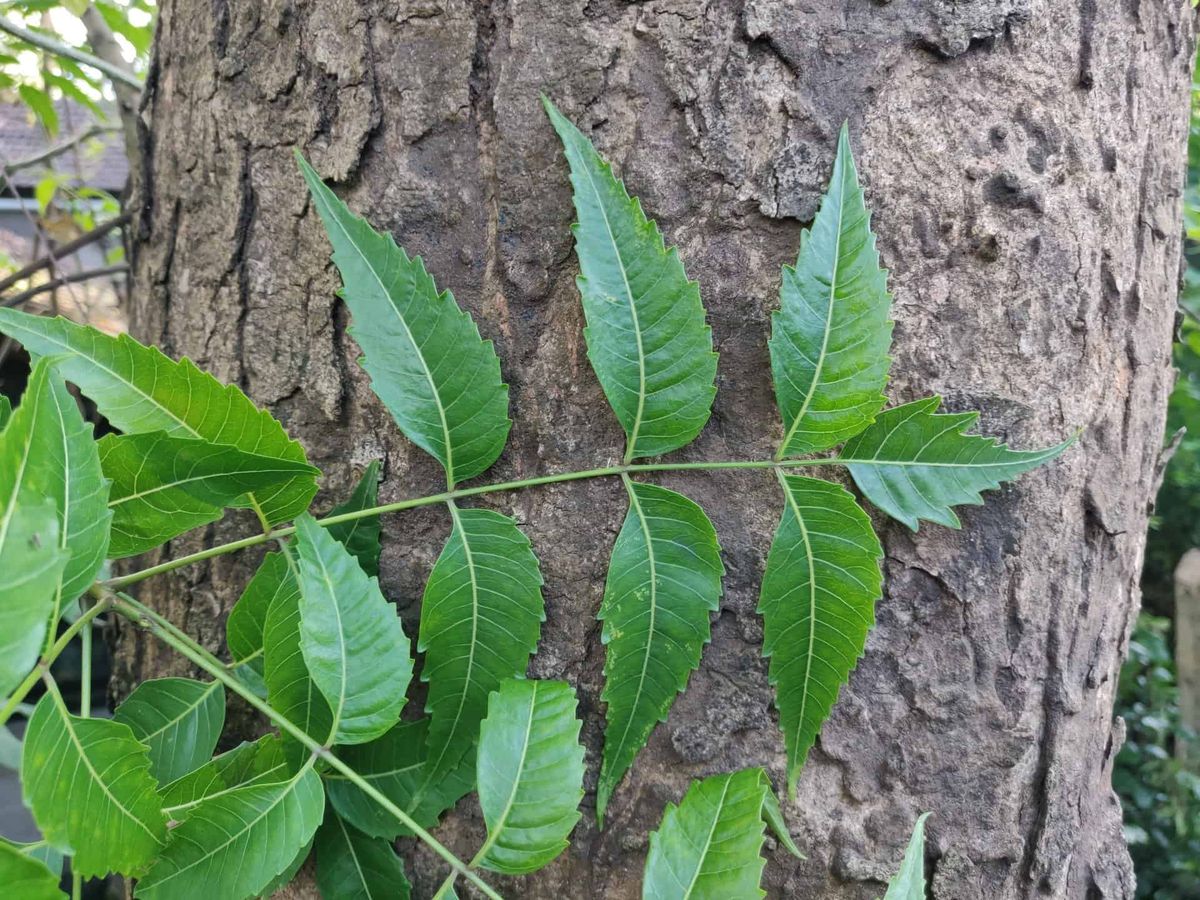
The leaves are where the tree really announces itself. They're alternate, pinnate, 20 to 40 centimeters long, carrying 9 to 31 lanceolate leaflets with serrated edges and a leathery texture.[3][5] Crush one, and you get an unmistakable sharp, bitter, garlic-adjacent odor that lingers on your hands for hours. I use that smell constantly as a field diagnostic, because young neem seedlings can look superficially similar to other tropical saplings, but nothing else in my garden smells quite like that when you bruise a leaf. In humid climates the tree stays evergreen year-round; in drier conditions it thins considerably in late dry season, though I've watched mine in a dry Central Florida spring hold most of its leaves while clearly deciding whether to fully commit to keeping them.
Flowers are small, creamy white, and fragrant, clustered in axillary panicles up to 25 centimeters long.[2][3] The fruits that follow are small ellipsoid drupes, green at first and ripening to a golden yellow-orange, each typically holding one to three seeds.[4] That color shift from green to gold is the signal you want for harvest timing, something I'll get into elsewhere.
Traditional and Cultural Uses Across Centuries
Few plants carry a human relationship as long or as layered as neem's. Archaeological pollen records from the Indian subcontinent trace its presence back to around 4000 BCE, and by roughly 1500 BCE the Rigveda was already referencing it.[14][15] The great Ayurvedic compendia, the Charaka Samhita and the Sushruta Samhita, praised it explicitly for skin disorders, fevers, parasites, and blood purification, using descriptors like bitter, astringent, and antiseptic that still hold up under modern analysis.[16] Part of why I grow neem is exactly this: I want the living version of what people have been calling a village pharmacy for four millennia.
The sacred dimension runs just as deep. In Hinduism, neem is associated with Goddess Durga and Sitala Mata, the goddess of protective healing, and its leaves appear in pujas, temple rituals, and festivals throughout the year.[17][18] During Ugadi Pachadi, the Telugu and Kannada New Year celebration, bitter neem flowers are mixed with sweet jaggery to symbolize the full range of life's experiences. Neem twigs, called datun, have served as natural toothbrushes across the subcontinent for centuries before the word "antimicrobial" existed.[19]
Its medicinal reach extends well beyond Ayurveda. Siddha and Unani practitioners, tribal communities like the Gond people of Madhya Pradesh, and traditional healers across Sudan and West Africa have all worked neem into their pharmacopoeias, using it for malaria, wound healing, skin conditions, and insect control.[20][21][22] The related Giant Neem carries a parallel tradition in Southeast Asia, where bark decoctions treat everything from diarrhea to eczema to fever.[23]
That history of shared knowledge makes the 1990s patent controversies especially worth understanding. Having followed those battles, I think it matters that gardeners know: when multinational corporations sought intellectual property rights over neem-based formulations, they were essentially trying to own derivatives of knowledge that Indian communities had freely practiced for thousands of years.[24] The patents were largely overturned, but the episode raised questions about overharvesting in introduced populations and the ethics of accessing traditional botanical knowledge without reciprocity.[25] Growing your own, sourcing seeds from reputable suppliers who support Indian biodiversity programs, and acknowledging where this plant comes from are all small ways of honoring that lineage.
Neem Varieties and Where to Buy Them
Recognized Varieties and Regional Ecotypes of Azadirachta indica
Botanically, Azadirachta indica breaks into two formally recognized varieties: var. indica, the classic type native to the Indian subcontinent, and var. siamensis, found primarily in Thailand and Myanmar. In practice, though, the more useful lens for growers is the spectrum of regional ecotypes that have developed across those ranges. The Indian var. indica tends to be better adapted to arid and semi-arid conditions, while the Southeast Asian types handle higher rainfall and sustained humidity more gracefully. Both tolerate a wide thermal range, roughly 0 to 45°C, across annual rainfall from about 400 to 1,200 mm.
I've grown the standard Indian type in Central Florida, and while it handles our dry winters well, I've noticed that trees with Southeast Asian provenance tend to look less stressed through our long, wet summers. Matching ecotype to site isn't something most vendors advertise clearly, so it's worth asking where their seed stock originated.
Sourcing Neem Trees, Seeds, and Oil in the United States
Neem is still a specialty item in the US market. You won't find it at a big-box garden center, but several reputable online nurseries carry it, including Fast Growing Trees, Moon Valley Nurseries, and Lukas Nursery here in Florida.[26][27][28] I've bought from local specialty growers and noticed immediately that healthy specimens have glossy, upright foliage; stressed imports tend to look sullen and yellowish before they've even left the pot. Seeds run roughly $5 to $15 for 50 to 100 seeds, small seedlings in one-gallon pots are typically $20 to $40, and established trees in the three-to-five-foot range can reach $100 to $300 depending on size and vendor; all prices fluctuate, so treat those as ballpark figures.[26][29]
The regulatory picture is reassuringly simple. Neem is not listed on any federal or state invasive species list, including California's and Florida's, and USDA APHIS does not classify it as a noxious weed.[30][5][31][32] Growers in zones 9 through 11 can plant it without restrictions. If you're importing seeds directly from abroad, a phytosanitary certificate is typically required and bulk imports may need a PPQ Form 525 permit, so buy domestic when you can to sidestep the paperwork.[33]
One hard lesson I learned early: neem seeds are viable for only two to three months, and germination rates drop sharply with age.[34] I once ordered a batch that was clearly old stock and got maybe 20% germination despite doing everything right. Now I only order from vendors who date their seed lots and turn them over quickly. For those who want guaranteed uniformity, tissue culture propagation via nodal explants can achieve up to tenfold multiplication per cycle, and specialty medicinal plant nurseries occasionally offer these starts.[35]
If you're buying neem oil rather than growing the tree, check the azadirachtin content on the label; authentic cold-pressed oil typically runs 0.2 to 0.4%, and anything labeled below 0.1% is unlikely to perform well as a garden pesticide.[36] Adulteration with palm or mineral oil is common and reduces efficacy significantly. On the sourcing ethics side, overharvesting from wild populations in India and Africa is a real concern, so I look for vendors who can point to FSC certification or documented agroforestry and community farming programs.[37]
How to Propagate and Plant Neem Trees
Neem will forgive a lot. Poor soil, relentless heat, the occasional drought. What it won't forgive is stale seed or standing water. Those two vulnerabilities shape every decision you make as a neem grower, so it's worth understanding the biology behind them before you pick up a trowel.
Seed Morphology, Polyembryony, and Dormancy
Pull a neem seed out of its drupe and you're holding something genuinely unusual. The ellipsoidal stone, roughly 1.5-2.0 cm long with a hard, woody, ridged brown coat, contains not one embryo but typically two to four.[38][39] The primary embryo is zygotic and genetically variable; the extras develop asexually from nucellar tissue, producing clonal seedlings with the parent's genetics intact. In practice this means a single seed can sprout a little cluster of seedlings, which always surprises new growers and gives the impression of exceptional vigor. In nature, birds and mammals do most of the dispersal by eating the pulp and passing the intact seed, which provides a degree of natural scarification along the way.[40] Without that passage through a gut, the hard coat creates genuine dormancy, and you'll need to help things along.
Seed Viability, Storage, and Germination
Here is where neem humbles growers who treat it like a tomato seed. Neem is recalcitrant, meaning the seeds die quickly if they dry out below about 20% moisture content.[41][42] At room temperature, viability drops to zero within three months. Kept at 4-5°C in moist sand or vermiculite at 90-95% relative humidity, you can push that to about three months of reliable germination; with controlled moisture at 15-20°C, up to a year is possible, though germination rates fall sharply after six months regardless.[43][44] I've grown dozens of batches from imported Indian seed and run germination tests alongside TZ stain trials. A fresh batch regularly hits 80-90%. A six-month-old lot sitting at room temperature? I've seen it drop below 30%. That comparison permanently changed how I source seed.
To break dormancy, soak seeds in hot water at 50-60°C for 10-20 minutes, then continue soaking in cool water for 24-48 hours before sowing.[45][46] Sow into a moist, well-drained medium at 25-30°C and expect germination in 7-21 days for fresh pretreated seed. One thing I can't stress enough: use sterile medium and consider a copper fungicide pre-treatment, because neem seedlings are genuinely vulnerable to damping-off fungi.[47] I lost an entire nursery flat to Pythium once because I reused potting mix and skipped adequate airflow. Never again. Raised nursery beds with excellent drainage and plenty of air circulation around the flats make a real difference.
Vegetative Propagation Methods
Seed is the standard route for good reason: it's cheap, simple, and mirrors how neem colonizes new ground naturally. But if you need true-to-type plants, faster fruiting, or want to replicate a particular ecotype's chemistry, vegetative methods are worth the extra effort. Semi-hardwood or hardwood cuttings of 15-20 cm treated with 2,000-5,000 ppm IBA in a sand-perlite medium at 25-30°C and 80-90% humidity root in 4-8 weeks with 20-60% success.[48][49] My semi-hardwood cuttings taken in early monsoon with 3,000 ppm IBA rooted far more reliably than winter attempts, so if you're in a seasonally wet climate, time your cuttings accordingly. Air layering during the monsoon reaches 50-70% success; veneer or cleft grafting on seedling rootstocks can hit 70-90% and produces trees that fruit two to four years from planting rather than the three to five years typical for seed-grown specimens.[45] Tissue culture is possible but requires sterile lab conditions most home growers don't have.
Soil, Site Selection, and Planting Technique
Neem evolved as a dry-forest heliophyte. It wants 6-8 hours of direct sun daily, and shade isn't a compromise; prolonged low light reduces growth rate, yield, and the limonoid production that makes this tree worth growing.[50] Young seedlings can handle light dappled shade while they acclimate, but get them into full sun as soon as possible.
On soil, the tree is impressively adaptable to sandy, loamy, clayey, even saline and calcareous profiles, but drainage is completely non-negotiable. Waterlogged roots cause rapid decline: chlorosis, wilting, and eventual rot.[51] Its deep taproot forms mycorrhizal associations that help it pull nutrients from poor soils, but it can't save itself from sitting in water.[4] Aim for a pH of 6.2-7.0 for optimal nutrient availability.[52] Neem technically tolerates pH 5.0-9.2, but below 6.0 you'll see aluminum and manganese toxicity, and above 8.0, iron and zinc lock out, both showing as leaf chlorosis.[53] I corrected iron chlorosis on a Florida sandy soil by bringing pH down from 7.8 to 6.5 with elemental sulfur. The new growth turned visibly greener within a few weeks. Soil test before you plant, not after. For container growing, a mix of 40% loam, 30% coarse sand, 20% compost, and 10% perlite gives good drainage without drying out too fast.
Spacing and Establishment
Neem matures to 40-60 feet tall with a canopy spread of 20-40 feet.[54] I planted two young trees 15 feet apart once, confident they'd stay manageable. They didn't. Watching them compete for light and root space over the following years taught me to respect the 30-35 foot recommendation even in a home landscape. For orchard or agroforestry planting, standard spacing is 10 x 10 meters (roughly 100 trees per hectare); commercial oil plantations often use 10-12 meter rows with 5-10 meters in-row; windbreak plantings can tighten to 20-25 feet.[55][56] Plant in spring or at the start of the rainy season, stake young trees in windy sites for the first year or two, and use containers of at least 50-100 liters if you're growing in pots.
Timeline to First Fruit
Seed-grown neem trees typically take 3-5 years to reach reproductive maturity; grafted trees can fruit in 2-4 years.[57][58] Seedlings grow quickly once established, reaching 30-50 cm in 3-6 months before they're ready to transplant.[59] What I tell clients is to plant with patience. A neem tree that's five years old and well-sited will return decades of medicinal leaves, pest-management inputs, and deep ecological value. Getting the seed fresh and the site right at the beginning is the work that makes all of that possible.
Neem Care Guide: Growing Azadirachta indica Successfully
The best thing I ever did for my neem trees was stop fussing over them. Once I understood that this is a tree shaped by centuries of drought, poor soil, and relentless tropical sun, the care calendar basically wrote itself. Give it the right site, get it through the first couple of years, and it rewards you with almost zero maintenance in return.
Sunlight Requirements
Neem is a true heliophyte, native to tropical and semi-arid regions where full sun is the default setting, not an option.[60][61] Aim for six to eight hours of direct sun daily. Less than that and you'll get a lanky tree with reduced flowering and, critically, lower azadirachtin concentration in the leaves and seeds -- which matters a great deal if medicinal quality is part of why you're growing it. Seedlings can handle some dappled shade right after transplant, but that's a temporary concession, not a long-term plan.
Watering Needs and Drought Tolerance
Before anything else: drainage. Neem develops a deep taproot that gives it almost legendary drought tolerance once established.[13][62] But that same root will rot in a heartbeat in waterlogged soil. In Central Florida I always check drainage first, because our clay-underlain sandy soils can fool you -- they look free-draining until a wet season proves otherwise.
Watering frequency changes a lot by growth stage. Seedlings need consistent moisture, sometimes every day or two until established. Young trees want a deep drink every five to ten days through the growing season. Mature trees, in my experience, rarely need supplemental irrigation at all except during prolonged dry spells, and they can go four to eight weeks without a drop.[63][64] When you do irrigate, drip is preferred over overhead watering, and keeping irrigation water pH between 6.2 and 7.0 with total dissolved solids below 500 ppm will serve the roots better long-term.[65] Overwatering symptoms to watch for: lower leaves yellowing, wilting despite wet soil, and leaf drop. If you're seeing those signs, let the top two to three inches of soil dry out before you water again.[66]
Feeding and Nutrient Management
Neem is a genuinely light feeder, well adapted to infertile, saline, and nutrient-poor soils.[67][13] I reach for compost, well-rotted manure, or neem cake as a slow-release soil conditioner rather than synthetic fertilizers.[68] Maintaining the correct pH balance ensures nutrients remain available and prevents the chlorosis issues previously mentioned.[56] For young trees, a balanced slow-release fertilizer in the range of 100 to 500 grams per tree per year (split over two or three growing-season applications) is plenty; mature trees can take one to two kilograms annually, adjusted by soil test.[68][69] Treat those figures as plantation benchmarks, not gospel -- let what your soil test actually shows guide you.
I keep a short deficiency checklist in my garden notebook. Nitrogen deficiency shows as chlorosis on the older, lower leaves with general stunting. Iron deficiency, the one I see most often in my slightly alkaline soil, shows up as interveinal chlorosis on new growth; a single spring foliar chelate spray usually corrects it cleanly without any synthetic input.[70][71] Potassium deficiency scorches leaf margins on the older leaves; zinc deficiency causes tight, rosetted growth. The warning I take most seriously, though, is excess nitrogen. Over-feeding with nitrogen produces lush, soft growth that pests love and the tree doesn't.[72] I learned that the hard way through one over-enthusiastic summer application that left me dealing with scale insects on growth that should have been tough and unremarkable.
Frost and Heat Tolerance
Neem is rated for USDA zones 9 through 11, with zones 10 and 11 being the real sweet spot.[54][73] Cold damage starts below about 40°F (4-5°C), with leaf scorch, wilting, and defoliation. Below 32°F, young trees can die outright; mature specimens can survive brief dips to around 25-28°F if the trunk is protected, but they'll drop their leaves to prove a point.[3] I successfully overwintered a potted neem through a 28°F night using nothing more than trunk wrapping and a thick base mulch -- the unprotected trees alongside it defoliated completely by morning. So the protection measures matter: plant in a sheltered, south-facing position away from frost pockets, use frost cloth on young trees, and if you're in zone 9, keep a container specimen you can move indoors.[74]
On the heat end, neem barely notices a hot day. Optimal growth happens between 70 and 90°F, and it tolerates sustained temperatures of 104-113°F without visible complaint, with brief spikes to 122°F survivable for established trees.[75][76] The tree ramps up antioxidant enzymes, accumulates osmolytes, and deploys thick cuticles to stay turgid in heat that would wilt most landscape trees.[77] During peak summer heat I add two to four inches of organic mulch and shift irrigation to early morning, but honestly the trees rarely look stressed regardless.
Pruning, Maintenance, and Seasonal Rhythm
Neem needs very little from a pruning standpoint. I do a light pass in late winter or right after the January-to-April bloom flush to remove any dead, crossing, or damaged branches and tighten the shape.[61] Then I basically leave it alone. Heavy pruning stresses the tree without any corresponding benefit. Two to four inches of organic mulch kept a few inches back from the trunk handles weed suppression and moisture retention through the dry months; young trees especially benefit from keeping the immediate root zone weed-free in the first couple of years.[4]
Seasonally, neem is evergreen and essentially drama-free once past establishment.[78] In its native range it flowers January through April and fruits May through August, with growth flushes tied to monsoon rains.[79] My Florida trees follow a similar rhythm, and even through dry winters they hold their canopy with almost no leaf drop. The first good spring rain and they push fresh growth like nothing happened. After the first three years it really does become a set-it-and-forget-it tree, which is exactly what a food forest canopy layer should be.
Harvesting Neem Leaves, Seeds, and Flowers
Neem follows a dependable annual rhythm, and once you understand it, you'll never miss the right window. Flowering typically kicks off March through May in tropical India, with fruits maturing over the next 90 to 120 days and peak harvest landing in June through August there.[25][80] Here in Central Florida, my trees run about a month or two behind that, with fruits ripening more reliably from July into October.[81] Microclimates matter, so don't hold the calendar too rigidly.
Timing and Maturity Indicators for Neem
For seeds, the visual cue is clear: wait until fruits shift from green to yellow or yellowish-brown, and check that the internal kernels feel plump and oily rather than shrunken.[82][83] In subtropical zones 9 to 11, that often means an October through December seed harvest depending on when flowering started.[84] Leaves are a different story. In frost-free climates you can pull 3 to 4 harvests of foliage per year throughout active growth, but I've learned to target only the youngest, most tender spring flush.[85] Older leaves get fibrous and so intensely bitter that even a traditional chutney can't balance them out.
Harvest Techniques and Post-Harvest Handling
Once you've cut leaves or collected fruits, speed matters. Clean off any debris, then shade-dry everything at 60 to 80°F for 5 to 7 days with good airflow to prevent mold while keeping the limonoids intact.[86][3] I label and date every batch because leaves left sitting too long before drying become noticeably more bitter as compounds concentrate. Proper controlled drying isn't optional if you want material that's actually useful rather than just pungent.
Flavor, Yield, and Culinary Considerations
All parts of this tree are dominated by limonoids, including azadirachtin, nimbin, and salannin, which produce an overwhelming, persistent bitterness alongside a garlic-sulfur aroma in fresh leaves.[25] Drying softens the odor but concentrates the bitterness further.[25] The flowers are the one pleasant exception: they carry a genuinely honey-like fragrance and a softer texture that makes them palatable in small amounts for traditional dishes like neem flower pachadi.[87] Personally, they're the only part I'll occasionally scatter over a spring salad. Bitterness also varies by environment rather than genetics, intensifying under drought stress as the tree ramps up limonoid production.[88] Seeds are a different matter entirely. I never harvest neem seed for food; the potential toxicity at any meaningful dose makes that a firm line, so every seed I collect goes straight into homemade neem-oil sprays. Moderation is non-negotiable with any edible part of this plant.
Preparing and Using Neem: From Bitter Leaves to Natural Pesticides
Cultural Significance and Traditional Culinary Uses
In Hinduism and Ayurveda, neem has been called the "tree of healing" for good reason. Branches appear in religious ceremonies as symbols of purity, and during festivals like Ugadi, young leaves, flowers, and processed seeds turn up in bitter chutneys and curries as a ritual acknowledgment of life's bitter-sweet nature.[25][89] But the culinary window here is genuinely narrow. Flowers are mildly bitter with a faint sweetness, young leaves are strongly bitter from nimbin and nimbidine, and that's essentially where edible territory ends.[3][90] The oil is pungent and not used in cooking, whole fruits are far too bitter to eat raw, and bark, roots, and sap are flatly toxic.[25] Traditional cooks manage the bitterness by pairing neem with coconut milk, tamarind, jaggery, ginger, or honey, and neem teas benefit from the same treatment.[3] I make mine with a coin of fresh ginger and a spoonful of honey, and the difference is remarkable.
Processing Methods to Reduce Bitterness and Toxicity
This is where I want to be really clear: neem is not a plant you casually throw in a salad. Leaves need boiling for 10 to 30 minutes to reduce both bitterness and limonoid toxins before they're suitable for cooking.[25] In my experience, 15 to 20 minutes hits the sweet spot where the harsh aftertaste drops noticeably without completely destroying the leaf texture. Seeds require even more work: soaking for 24 to 48 hours, then boiling for one to two hours or fermenting for two to five days, sometimes followed by roasting, to strip out bitter and toxic limonoids adequately.[91][92] Neem oil intended for any edible use needs cold-pressing or refining to remove impurities, and even then it's not a cooking staple.[93] These aren't arbitrary hoops; they reflect generations of accumulated knowledge about a plant that demands respect.
Nutritional Profile of Edible Parts
The effort can be worth it. On a dry weight basis, neem leaves carry:
- roughly 20 to 25% protein
- 10 to 15% fiber
- up to 200 mg of vitamin C
- B vitamins
- calcium around 1 to 2 g
- 50 to 100 mg of iron
- a solid antioxidant load
Safety Considerations and Look-Alikes
Identification matters enormously here. Neem is easily confused with the toxic Chinaberry tree (Melia azedarach), another Meliaceae family member with similar pinnate leaves. The distinction is in the leaflet margins: neem's are serrated and asymmetric at the base, while Chinaberry's are smoother and more symmetrical.[96] I'll admit I had a moment of doubt with some young saplings in my Central Florida garden early on, and that uncertainty was enough to make me slow down and verify before doing anything with the leaves. Never consume any plant you can't identify with confidence.
On toxicity, I'm direct with people: azadirachtin and nimbin can cause severe harm in large quantities.[97] Internal use must strictly follow the contraindications outlined earlier, completely avoiding vulnerable demographics and anyone with liver disease, kidney disease, or blood sugar issues.[97] Oral doses shouldn't exceed 20 mg/kg short-term, and only under supervision. I personally limit my own internal use to small culinary amounts after proper processing, and I always recommend consulting a qualified practitioner before using it medicinally.
Medicinal Preparations and Dosages
Traditional Ayurvedic preparations have a clear structure worth knowing. A standard leaf decoction means boiling 5 to 10 fresh leaves in 200 ml of water down to roughly 50 ml, taken at 50 to 100 ml twice daily.[98] Leaf powder is typically dosed at 500 mg to 2 g daily, and topical seed oil is generally applied at a 1 to 5% dilution once or twice daily for skin conditions.[25] The twig-as-toothbrush tradition (datun) is one of the more charming applications, and there's real antimicrobial logic behind it. These are traditional frameworks, not prescriptions; the detailed pharmacology behind them is covered in the health benefits section of this profile.
Non-Food and Industrial Applications
Here's where neem genuinely earns its place in a permaculture system. The leaves, bark, and oil have long served in treating skin conditions and infections, while neem twigs remain a traditional oral hygiene tool across much of South Asia.[25] In the garden, cold-pressed neem oil functions as a broad-spectrum insecticide, fungicide, and nematicide; diluted at roughly 1 to 2% with a mild soap emulsifier, it's my go-to plant spray for soft-bodied pests and powdery mildew pressure.[99] Neem cake, the solid byproduct left after oil extraction, does triple duty as organic fertilizer, soil amendment, and natural pesticide in one application.[25] I work it into beds around brassicas and find it genuinely reduces nematode pressure over time. Beyond the garden, the timber is used for furniture and fuel, bark fibers become rope, bark extracts yield dyes, and leaf and oil extracts show up in soaps, shampoos, and acne treatments.[100][101] The same tree shading your garden is quietly supplying the raw material for its own pest management, its own soil fertility program, and a modest personal care cabinet. That kind of stacking is what permaculture design is actually about.
Neem Health Benefits and Medicinal Uses
Few plants in my collection carry the weight of expectation that neem does. Gardeners come to it hoping for a miracle tree, and honestly, the research doesn't entirely disappoint. What it does require is nuance: understanding where the evidence is strong, where it's still thin, and where the line between therapeutic dose and dangerous one sits uncomfortably close.
Medicinal Research: Traditional Uses Validated by Science
Across Ayurvedic, African, and Southeast Asian ethnobotanical traditions, neem has been used for thousands of years to treat skin disorders, infections, diabetes, and inflammatory conditions.[25][102][3] What's striking is how well that accumulated knowledge lines up with modern pharmacology. This isn't always the case with traditional plants, so when the alignment is this consistent, I pay attention.
The strongest human clinical evidence sits in two areas: oral health and wound healing. Neem extracts reduce plaque, combat candidiasis, and show measurable antimicrobial effects in randomized controlled trials.[103][104] The antidiabetic evidence is also building. A 2019 systemic review and several smaller randomized trials report lowered fasting blood glucose and HbA1c, with improvements in insulin sensitivity attributed to α-glucosidase inhibition at IC50 values of 10–50 μg/mL, comparable to the drug acarbose, as well as AMPK pathway activation.[105][106][107] Results are inconsistent across studies, and larger trials are still needed before anyone should be adjusting their diabetes management around neem.
At the molecular level, neem's anti-inflammatory activity runs through inhibition of the NF-κB pathway and suppression of iNOS and COX-2 expression via nimbidine, which knocks down pro-inflammatory cytokines including TNF-α and IL-6.[108][109] The same compounds that protect the tree from insects also calm human inflammation. The antioxidant story runs through Nrf2 pathway activation, upregulating HO-1 and NQO1 and elevating glutathione, with hepatoprotective effects documented against liver toxins in animal models.[110][111] Giant Neem (Azadirachta excelsa), a Southeast Asian sister species primarily grown for timber, shows similar limonoid profiles and comparable anti-inflammatory and antioxidant activity,[112][113] suggesting these effects are a genus-wide pattern rather than a quirk of A. indica alone.
The anticancer findings are genuinely fascinating: neem limonoids including azadirachtin, gedunin, nimbolide, and nimbin induce apoptosis through:
- caspase activation
- Bcl-2 downregulation
- p53 upregulation
- Hsp90 inhibition
Key Phytochemicals in Neem
Neem's bioactivity comes down to a family of compounds called limonoids: azadirachtin, nimbin, nimbolide, gedunin, nimbidine, and salannin are the headliners.[119][120] Where they concentrate depends heavily on which part of the tree you're working with: azadirachtin peaks in seeds at 2,000–5,000 ppm but drops to just 10–100 ppm in leaves, nimbin concentrates in bark, gedunin in fruit, and salannin in flowers.[25][119] Growing conditions shift these concentrations meaningfully. In my Central Florida garden, leaves harvested during the hot, humid summer are noticeably more bitter than those picked in cooler months, which tracks with research showing heat and moisture stress drive higher limonoid production. If you're growing neem for its medicinal chemistry rather than just its shade, the season you harvest matters.
Nutritional Profile of Neem Leaves
Young neem leaves and flower buds have a long culinary history in South Asian cooking, appearing in kadhi, stir-fries, and salads.[25][121] Think of fresh neem leaves the way you'd think about dandelion greens: aggressively bitter, nutrient-dense, and deeply traditional in cultures that know how to cook with them. Nutritionally, fresh leaves deliver 100–200 mg vitamin C, significant beta-carotene, roughly 700 mg potassium, 240 mg calcium, and 2.5 mg iron per 100 g, plus 50–150 mg/g of phenolics including quercetin and kaempferol.[25][121] Dried leaf powder concentrates the macronutrients considerably, providing around 30 g protein and 20 g fiber per 100 g, though cooking and boiling destroy 30–50% of heat-sensitive vitamins like vitamin C while reducing the bitterness.[122][123]
That said, moderation isn't just a suggestion here. Leaves are considered safe at under 5 g dried daily, and exceeding that threshold risks liver or kidney stress.[25][124] Seeds are a completely different matter and must never be eaten raw.
Safety Considerations and Toxicity Risks
The seeds and seed oil are the most dangerous parts of this plant. Azadirachtin concentrations of 0.2–0.5% in seed material mean that even small amounts can cause vomiting, diarrhea, drowsiness, seizures, and in severe cases coma or death, with children under six at highest risk.[125][126] Symptoms typically begin within 6–12 hours of ingestion and escalate from gastrointestinal distress to systemic effects.[127][128] I keep all neem seed material and concentrated oil completely out of reach of children and pets on my property; this isn't abstract caution, it's how I run my garden.
Neem is contraindicated in pregnancy due to documented abortifacient effects, during lactation, and in anyone with liver disease or children under 12.[129][130] I never recommend medicinal neem to anyone on blood thinners, antidiabetic drugs, immunosuppressants, or CNS depressants without their doctor's explicit approval. The potentiation through CYP enzyme interactions is documented, and the risk is real.[129] Neem is also toxic to livestock, dogs, and cats in large quantities, and its pollen can trigger respiratory allergies in sensitive people.[131][132]
For safe internal use, the general guidance is 500 mg to 2 g per day of standardized leaf or bark extract, while topical neem oil should be diluted to 1–5%.[130] One final identification note: neem seedlings can look deceptively similar to several other plants when young, and confusion with Melia azedarach (chinaberry) is a genuine hazard since chinaberry is significantly more toxic than neem.[133] I label my rows carefully for exactly this reason. Positive identification before any culinary or medicinal use isn't optional with this genus.
Neem Pests and Diseases
There's a reason neem has survived millennia in some of the harshest growing conditions on earth. The tree doesn't just tolerate pests and pathogens; it actively repels them through a sophisticated chemical arsenal that also happens to be the source of every neem-based spray on the market. Understanding that defense system helps explain both why the tree is so easy to grow and exactly where its protection has limits.
Natural Pest Resistance in Neem
Azadirachtin and a suite of related limonoids permeate neem's leaves, seeds, and bark, acting simultaneously as antifeedants, repellents, growth disruptors, and toxins affecting over 200 insect species.[134][135] That chemistry works alongside physical traits like thick cuticles and leaf trichomes, endophytic fungi that produce their own insecticidal metabolites, and volatile compounds including limonene and caryophyllene that repel herbivores while drawing in their natural enemies.[136][137] I routinely harvest leaves from my own trees to brew preventive sprays for the rest of the garden, which is a satisfying reminder that the tree is simultaneously protecting itself and supplying me with one of the most effective biopesticides I use.
Common Pests of Neem Trees
The resistance is real, but it isn't absolute. Soft-bodied insects like aphids and whiteflies are most vulnerable to neem's chemical defenses, while caterpillars and beetles can cause moderate damage, and hard-bodied pests like weevils barely register as a threat.[138] The pest I'd warn young-tree growers to watch most closely is the neem looper caterpillar (Hyposidra talaca), which can defoliate up to 70% of a tree during monsoon seasons.[139] I've learned to scout carefully after heavy rains because the early feeding damage is easy to overlook until you suddenly have a very bare tree. Scale insects, mealybugs, leaf miners, and root-knot nematodes round out the list of occasional nuisances, particularly on stressed trees.[140][141] Extensive agricultural testing, including documented IPM field trials, shows that neem oil and azadirachtin-based sprays (EPA-registered as low-toxicity biopesticides) deliver 50 to 90% pest reduction, and neem cake worked into the soil can cut root-knot nematode pressure by up to 60%.[142][143]
Disease Resistance and Vulnerabilities
Neem's disease resistance follows the same pattern as its pest resistance: strong by default, conditional in practice. The chemistry that deters insects also suppresses many pathogens, but that protection breaks down when humidity climbs above 70%, drainage is poor, or soil pH drifts outside the 6.2 to 7.0 sweet spot.[144] Neem is not bulletproof; in my experience waterlogged roots are the fastest route to Phytophthora root rot, which shows up as yellowing leaves and root decay and spreads readily in warm, soggy soil around 25 to 30°C.[145] Fusarium wilt is another waterlogging consequence worth knowing. Powdery mildew and leaf spot caused by Cercospora, Alternaria, and Pestalotiopsis species appear most often during humid summers, and anthracnose can cause dieback on young growth in persistently wet conditions.[146] Bacterial leaf blight from Xanthomonas campestris shows as water-soaked lesions, and viral leaf curl is rare but can arrive via insect vectors.[147] Trees in well-drained, sunny spots with good airflow almost never show powdery mildew or leaf spot on my sites, even through humid subtropical summers. The cultivars NIM-76 and IC-5 show enhanced fungal tolerance if you're sourcing trees where that matters.[148]
Preventing and Managing Pests and Diseases
The IPM hierarchy here starts with site selection and almost ends there too. Good drainage, full sun, adequate spacing for airflow, and soil pH held between 6.2 and 7.0 eliminate the conditions that trigger almost every serious problem on this list.[47][149] Beyond that, biological controls do a lot of the work; parasitic wasps and entomopathogenic fungi take pressure off the tree before you ever need to spray. When intervention is warranted, a 1 to 2% neem oil solution applied at the very first sign of aphids, scale, or fungus gnats delivers 80 to 90% control in my experience, matching published field data while keeping beneficial insects intact.[142] Copper-based fungicides are the backstop for persistent bacterial or fungal issues when neem extracts alone aren't enough. Once the basics are in place, neem is genuinely one of the lowest-maintenance trees I work with.
Neem in Permaculture Design
Before you fall in love with neem the way I did, you need to know where it actually belongs. This is not a temperate hedgerow shrub you can tuck in anywhere. It's a full-scale tropical canopy tree, and it comes with both extraordinary gifts and some genuine design constraints that romantic plant profiles tend to gloss over.
Climate Suitability and Hardiness Zones
Neem is built for heat and drought. It thrives in tropical savanna and hot semi-arid climates, with an optimal temperature range of 20-35°C (68-95°F) and the metabolic resilience to push through short bursts up to 43°C (110°F).[2][150] Rainfall as low as 250-400 mm annually won't faze an established tree, and it handles moderately saline, coastal, or poor soils with relative ease.[151][3]
For U.S. growers, USDA zones 10a-11 are the sweet spot; zones 9b and 10a are workable but require planning.[5][152] Mature trees can shrug off a brief dip to 28-32°F, but young plants take real damage at freezing.[5] In my Central Florida garden I've watched established neem trees sail through mild winters without a second thought, but I still keep frost cloth ready for any night threatening to hit 32°F during the tree's first two or three years. If you're in zone 9b, site your neem against a south-facing wall, ideally with some thermal mass behind it, and check with your local extension service before committing. Microclimate and tree age matter more than the zone number alone.[153][154]
Ecosystem Functions and Services
Neem's deep taproot is where a lot of its permaculture value starts. Those roots stabilize slopes, resist drought, and mine deeper soil layers for potassium and calcium, which cycle back to the surface through leaf drop.[155][156] It doesn't fix nitrogen, and I want to be honest about that because I've seen neem oversold as a complete soil builder. It isn't. What it does do is improve microbial activity, increase organic matter through its litter, and in the rhizosphere it actively reduces pathogenic fungi while supporting beneficial bacteria and mycorrhizal associations.[157][4] I always pair neem with a nitrogen-fixing legume nearby, whether that's a Leucaena, a pigeon pea, or a well-placed Canavalia. The combination fills the gap neem leaves open and reflects exactly how it's used in agroforestry systems globally.[158]
During peak flowering, usually late winter into spring here in Central Florida, my neem trees become audibly busy. Honeybees, native stingless bees, flies, and butterflies work the fragrant white panicles continuously; I've noticed measurably higher bee activity throughout the food forest once these trees hit maturity.[159][11] The tree also sequesters carbon, functions as an effective windbreak, and supports birds and insects with habitat and food.[155]
Then there's the double-edged chemistry. Neem's secondary compounds, azadirachtin chief among them, make it effective against over 200 insect pest species while remaining relatively safe for beneficial insects when used appropriately.[25] That same chemistry, though, produces strong allelopathic effects: compounds in leaf litter and root exudates inhibit germination and suppress growth in many neighboring plants.[160] In my early guilds I tried growing tender vegetables too close and watched them struggle. Now I maintain a 3-4 meter buffer or choose only robust companions like comfrey or perennial herbs that tolerate the chemistry. The research matches exactly what I've seen on the ground.
Forest Layer Placement and Guild Design
At maturity, neem reaches 15-25 meters tall with a canopy spread of 20-25 meters.[2][161] That's full upper-canopy territory, roughly comparable to a mature mango or avocado in footprint, but neem's open pinnate foliage filters considerably more light than a dense citrus canopy. That quality makes it a workable nurse tree for understory herbs and shade-tolerant crops, though you have to choose those companions deliberately given the allelopathic reality.
What grows well underneath? I've had success with comfrey, which seems unbothered by neem's root chemistry and serves as a dynamic accumulator in its own right. Shade-tolerant medicinal herbs, established coffee, and some fruit trees placed toward the canopy edge where root competition is lighter can all coexist. The space directly beneath a mature neem has a quality I'd compare to filtered light under a live oak: open, not gloomy, but biologically particular about what settles in.
For smaller-scale systems or marginal sites, neem's tolerance of sandy, loamy, or clay soils (provided drainage is good) and its ability to coppice or develop multi-stemmed form through managed cutting make it useful as a managed hedgerow or windbreak element, not just a stand-alone canopy specimen.[5][4] The design principle I keep returning to: give neem the space it needs, pair it with nitrogen-fixers on its periphery, and be selective rather than spontaneous about what you plant beneath it. Treat the allelopathy as a feature that reduces your weeding load, not a problem to solve.
The Tree That Taught Me to Respect Bitterness
I planted my first neem as a scraggly two-gallon nursery find, half-convinced it would sulk through its first Central Florida summer and never amount to much. Fifteen years later it shades half my backyard, drops seed that volunteers into every corner I let it, and still smells like garlic and something older than my vocabulary when I crush a leaf between my fingers. Some plants earn your trust slowly, and that bitterness, the one that makes neem hard to eat and hard to forget, turns out to be exactly the point.
Sources
- Neem: A tree for solving global problems – National Academies Press review ↩
- Azadirachta indica - Wikipedia ↩
- Neem Tree (Azadirachta indica) - Kew Gardens ↩
- Botanical Description of Neem - USDA ↩
- Azadirachta indica - USDA PLANTS Database ↩
- Azadirachta indica - Plants of the World Online ↩
- FAO: The Neem Tree - Biology and Management ↩
- Population Dynamics and Ecological Role of Azadirachta indica ↩
- Neem: History and Uses ↩
- The Neem Tree: Natural History and Economic Potential ↩
- Distribution and Cultivation of Azadirachta excelsa - FAO Timber Resources ↩
- IUCN Red List - Azadirachta indica ↩
- Missouri Botanical Garden - Azadirachta indica ↩
- Neem in Ancient Indian Medicine ↩
- Neem: A Tree for Solving Global Problems ↩
- Neem in Ancient Indian Medicine: Charaka Samhita and Sushruta Samhita ↩
- Neem in Indian Culture and Religion ↩
- Sacred Trees of India: Neem and Its Mythological Importance ↩
- Cultural Significance of Azadirachta indica in India ↩
- Neem in Siddha Medicine: Ethnopharmacological Insights from Tamil Nadu ↩
- Ethnobotanical Survey of Medicinal Plants Used by Gond Tribe in Madhya Pradesh, India ↩
- Traditional Uses of Neem in Africa ↩
- Ethnobotanical study of medicinal plants in Myanmar ↩
- The neem patent controversy (1995-2000) ↩
- Neem (Azadirachta indica): Preclinical Medicinal Product Development ↩
- Buy Neem Tree ↩
- Neem Tree - Azadirachta indica ↩
- Azadirachta indica (Neem) ↩
- Azadirachta indica Seedlings ↩
- Federal Noxious Weed List ↩
- Invasive Plant Lists ↩
- Florida Exotic Pest Plant Council List ↩
- Importation of Seeds and Plants ↩
- Neem Seed Germination and Nursery Techniques ↩
- Propagation of Neem (Azadirachta indica A. Juss) by Tissue Culture ↩
- Adulteration of Neem Oil: Detection Methods and Quality Issues ↩
- Sustainable Sourcing of Medicinal Plants: Challenges for Azadirachta indica ↩
- Polyembryony and Nucellar Embryogenesis in Neem (Azadirachta indica) ↩
- Embryological Studies in Azadirachta indica A. Juss ↩
- Azadirachta indica Seed Biology and Ecology ↩
- FAO Guidelines on Seed Storage for Tropical Species ↩
- Storage of Neem (Azadirachta indica A. Juss) Seeds ↩
- Seed Storage Behaviour of Azadirachta indica ↩
- Recalcitrant Seeds of Azadirachta indica: Storage Behavior and Germination ↩
- Propagation of Neem (Azadirachta indica A. Juss) Tree ↩
- Neem: Propagation and Cultivation ↩
- Propagation of Neem (Azadirachta indica) ↩
- Propagation of Neem (Azadirachta indica) by Cuttings ↩
- Vegetative Propagation of Azadirachta indica Using Rooting Hormones ↩
- Missouri Botanical Garden Plant Finder: Azadirachta indica ↩
- FAO - Neem Cultivation Guidelines ↩
- University of Florida IFAS Extension - Commercial Production of Neem ↩
- Missouri Botanical Garden Plant Finder ↩
- Missouri Botanical Garden Plant Finder ↩
- Azadirachta indica Planting Spacing - FAO Agroforestry ↩
- Neem Cultivation Guide - ICAR ↩
- Neem Tree Cultivation and Uses ↩
- Azadirachta indica (Neem) - Propagation and Management ↩
- Growing Neem Trees: From Seed to Maturity ↩
- Missouri Botanical Garden Plant Finder - Azadirachta indica ↩
- Neem: The Multipurpose Tree ↩
- Drought Tolerance in Azadirachta indica - Journal of Arid Environments ↩
- Neem Tree Cultivation Guide ↩
- Azadirachta indica: Neem ↩
- Neem Tree Cultivation Guide - FAO ↩
- Azadirachta indica: Overwatering Effects ↩
- Neem Tree Cultivation Guide ↩
- Neem Cultivation Guide - ICAR ↩
- Fertilizer Requirements for Azadirachta indica - FAO ↩
- Nutrient Deficiencies in Trees - USDA Forest Service ↩
- Diagnosing Nutrient Deficiencies in Woody Plants - University of Florida IFAS Extension ↩
- Nutrient Management in Tropical Trees - FAO ↩
- Neem Tree Hardiness - University of Florida IFAS Extension ↩
- Neem Tree Care - Royal Horticultural Society ↩
- Neem (Azadirachta indica): A Versatile Tropical Tree ↩
- Heat Tolerance in Neem Tree: Physiological Responses ↩
- Neem Tree Adaptation to High Temperature and Drought ↩
- University of Florida IFAS Extension - Neem in Florida ↩
- Flowering and Fruiting Phenology of Azadirachta indica in India - Study ↩
- Neem (Azadirachta indica): Cultivation and Uses ↩
- Neem: Azadirachta indica ↩
- Neem (Azadirachta indica) Cultivation and Utilization ↩
- Growing Neem in Florida - University of Florida IFAS Extension ↩
- Neem Tree Cultivation in Texas - Texas A&M AgriLife Extension ↩
- Growing Neem Trees in the United States ↩
- Azadirachta indica - Missouri Botanical Garden ↩
- Neem in Indian Cuisine ↩
- Royal Botanic Gardens, Kew - Plants of the World Online ↩
- Traditional Uses of Neem in India - Herbal Academy ↩
- Journal of Ethnopharmacology (2012) - Edible Uses of Neem ↩
- Detoxification of Neem Seed Kernels for Food Use ↩
- Traditional Methods for Neem Leaf and Seed Preparation ↩
- Safety and Processing of Neem Oil for Edible Purposes ↩
- Nutrient Content in Edible Parts of Azadirachta indica ↩
- Phytochemical and Nutritional Analysis of Neem Seeds ↩
- Distinguishing Neem from Chinaberry - USDA Forest Service ↩
- Journal of Ethnopharmacology - Study on Neem Toxicity ↩
- Neem: A Tree for Solving Global Problems ↩
- Neem chemistry ecology and mode of action of the insect antifeedant azadirachtin ↩
- Azadirachta indica - Agroforestry Database ↩
- Ethnobotany of Neem (Azadirachta indica) in India ↩
- Ethnobotanical Uses of Neem in Africa ↩
- Neem for Wound Healing: Evidence from Randomized Controlled Trials ↩
- Antimicrobial Properties of Azadirachta indica: A Systematic Review (2020) ↩
- Meta-Analysis of Neem in Diabetes ↩
- Azadirachta indica for Diabetes Management: Human Studies ↩
- Antidiabetic potential: α-Glucosidase inhibition by neem extracts ↩
- Anti-inflammatory effects of Azadirachta indica: A review on NF-κB modulation ↩
- Anti-inflammatory Effects of Nimbidine ↩
- Nrf2 activation by neem in oxidative stress models ↩
- Hepatoprotective mechanisms of Azadirachta indica against toxins ↩
- Antioxidant and Anti-inflammatory Properties of Thai Neem (Azadirachta excelsa) ↩
- Phytochemical and Pharmacological Studies on Azadirachta excelsa ↩
- Apoptosis pathways induced by Azadirachta indica in cancer cells ↩
- Gedunin, a Novel Hsp90 Inhibitor from Neem ↩
- Neem Limonoids as Anticancer Agents ↩
- Immunomodulatory effects of neem on cytokine profiles ↩
- Peer-Reviewed Review: Antidiabetic and Anticancer Effects of Neem (2021) ↩
- Chemical composition of neem (Azadirachta indica) plant parts ↩
- Phytochemicals of Neem (Azadirachta indica): Their Role in Plant Defense ↩
- Nutritional and phytochemical composition of Azadirachta indica A. Juss ↩
- Nutritional Analysis of Azadirachta indica Leaves ↩
- Effect of Processing on Neem Leaf Nutrients ↩
- Toxicity of Neem Seed Extracts in Humans ↩
- Neem Oil Poisoning in Children ↩
- Neem Oil Poisoning: Case Report of Adult with Toxic Encephalopathy ↩
- Neem Oil Fact Sheet - National Pesticide Information Center ↩
- MR Imaging Findings of Neem Oil Poisoning ↩
- Neem (Azadirachta indica) - Drugs and Lactation Database (LactMed) ↩
- National Center for Complementary and Integrative Health (NCCIH) - Neem ↩
- Toxicity of Neem (Azadirachta indica) in Animals ↩
- Azadirachta indica (Neem) - Potential Allergenicity ↩
- Missouri Botanical Garden Plant Finder - Melia azedarach ↩
- Neem: Natural Insecticide and Pest Management ↩
- Azadirachta indica: A Plant with Insecticidal Properties ↩
- Neem Tree Defense Mechanisms - Kew Gardens ↩
- Morphological Resistance in Neem Leaves to Insect Herbivory ↩
- Neem as a Natural Pesticide ↩
- Insect Pests of Neem in India: Field Observations and Management ↩
- Pest Management in Neem Trees - University of Florida IFAS Extension ↩
- Neem Tree: Resistance to Pests and Diseases ↩
- Neem Biopesticides in IPM: Review of Field Trials ↩
- Neem Oil (EPA Registration) ↩
- Diseases of Neem (Azadirachta indica) and Their Management ↩
- Phytophthora Root Rot in Azadirachta indica ↩
- Fungal Pathogens of Azadirachta indica: A Review ↩
- Bacterial Leaf Blight of Neem Caused by Xanthomonas ↩
- Breeding Neem for Disease Resistance - ICAR Report ↩
- Integrated Pest Management for Neem Trees ↩
- Neem Tree Distribution and Climate Adaptability ↩
- Azadirachta indica (Neem) ↩
- Neem Tree (Azadirachta indica) - University of Florida IFAS Extension ↩
- Neem (Azadirachta indica): Cultivation and Uses ↩
- Growing Neem in California ↩
- Azadirachta indica - Kew Science ↩
- Dynamic Accumulators in Permaculture ↩
- Rhizosphere Microbiology of Azadirachta indica ↩
- Neem for Sustainable Agriculture - FAO ↩
- Pollination Biology of Azadirachta indica A. Juss. (Meliaceae) ↩
- Allelopathic Effects of Neem: A Review ↩
- Azadirachta indica - Kew Plants of the World Online ↩
About the Author
Samiksha is a Certified Permaculture Designer and Teacher. Raised on a regenerative farm, she has over 20 years of experience learning and growing with local and indigenous communities.