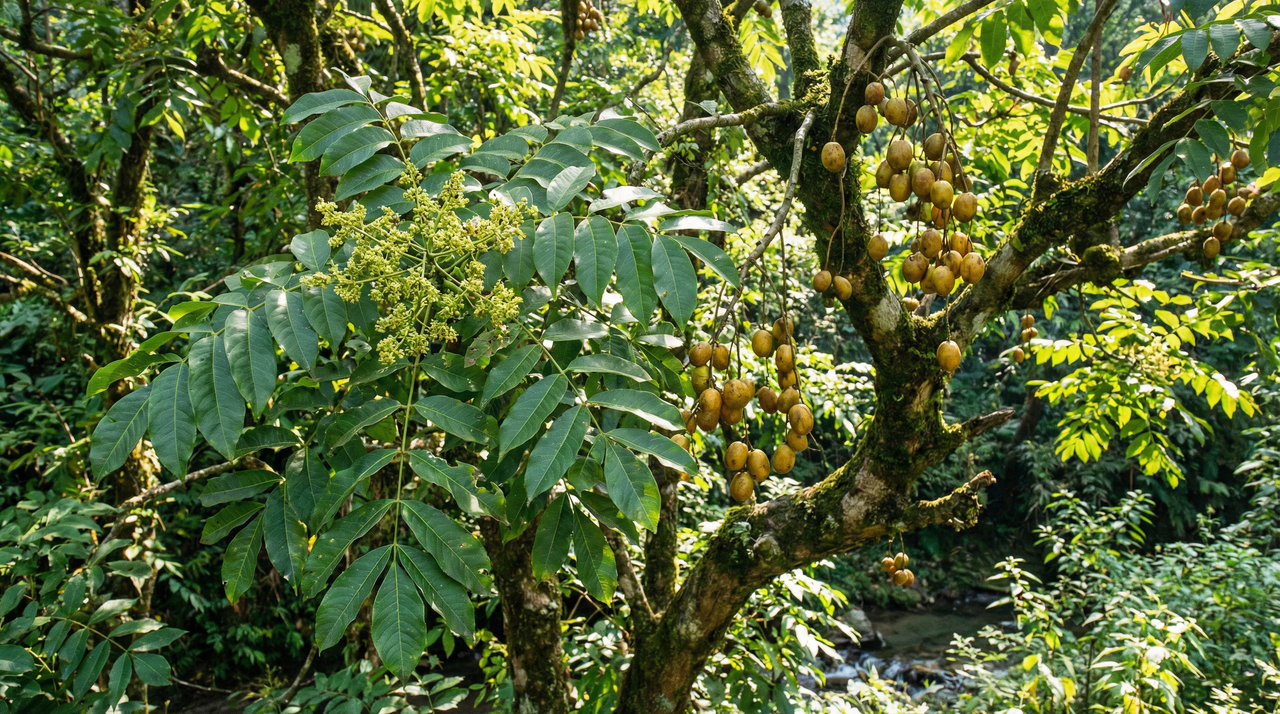
Nobody warned me that the first time I tasted a Nepali hog plum straight off the branch, my mouth would do something between a wince and a grin. It's genuinely sour, puckeringly so, in the way that makes you reach for another one almost against your will. That contradiction is exactly what draws me to Choerospondias axillaris, the Nepali Hog Plum: a fruit that most people in the West have never encountered, yet in Nepal it's so culturally embedded that families gather beneath these trees during Dashain and Tihar to harvest fruit that gets turned into pickles, candies, and syrups shared across entire communities.[1] A tree tied to festivals and livelihoods, with fruit that bites back. That's a plant worth knowing.
What strikes me most is how thoroughly this tree has slipped under the radar in Western permaculture circles, despite ticking nearly every box we care about: multi-decade canopy longevity, slope stabilization, wildlife fodder, medicinal tradition stretching back centuries, and genuine culinary complexity. It's not obscure because it's difficult. It's obscure because we haven't been paying attention.
Origin and History of Nepali Hog Plum (Choerospondias axillaris)
Botanical Background and Native Range
Choerospondias axillaris occupies a singular position in plant taxonomy: it's the only species in its genus, nested within the tribe Spondiadeae of the cashew family Anacardiaceae and closely allied to the tropical Spondias plums.[2][3] Earlier botanists folded it into Spondias entirely, but modern phylogenetics have confirmed it belongs in its own genus. Science caught up to what the tree's native landscape had always suggested: this is a distinct organism shaped by a very specific place.
That place is the subtropical and temperate foothills stretching from Nepal and Bhutan through northern India, southern China, Myanmar, Thailand, and into northern Vietnam, where the tree occupies mixed deciduous and broad-leaved evergreen forests between roughly 600 and 2,500 meters elevation, with the sweet spot somewhere around 1,000 to 2,000 meters.[4][5][6] French botanist Adrien René Franchet first described the species formally in 1893, working from herbarium specimens collected in southern China.[7]
In the landscape, it's unmistakable. The tree carries rough, flaky grayish-brown bark, a rounded crown with elegant pinnately compound leaves carrying seven to fifteen serrated leaflets that flush yellow each autumn, and small yellow-orange drupes that ripen from late summer into October.[8][9] Wild trees can reach 15 to 25 meters; cultivated specimens tend to stay closer to 10 to 15 meters.[10] It's a long-lived species, capable of 50 to 100 years or more, though slow out of the gate and typically not fruiting until four to five years from seed.[10][11] After years working with underutilized Himalayan species in landscape designs, I've come to appreciate how its deep taproot makes it a confident pioneer on slopes where shallower-rooted trees would struggle, and that combination of patience and resilience is really the tree's signature character.
Traditional, Cultural, and Medicinal Significance
Mountain communities across the Himalayas have depended on this tree for at least 600 years, with documented use reaching back to 16th-century Nepalese agricultural records from the Shah dynasty period.[12] In Nepal, where it's known as Lapsi, the tree is woven into the fabric of cultural life in ways that go well beyond the orchard. During Dashain and Tihar, Nepal's most important festivals, lapsi pickle and candy appear as offerings and gifts carrying associations with prosperity, abundance, and protection.[13][14] The flavor is aggressively tart, somewhere between a green mango and a very intense umeboshi plum, and Nepali cooks have spent generations coaxing that acidity into achar, jams, fermented beverages, and the beloved lapsi candy that I'd put up against any sour sweet I've encountered from a more celebrated fruit.
Tamang, Rai, Limbu, Gurung, and other Himalayan ethnic communities use the fruit as a souring agent and have relied on the bark and leaves for traditional medicine, treating digestive complaints, respiratory ailments, skin wounds, and postpartum recovery with decoctions and preparations passed down through generations.[15][16] These are ethnobotanical traditions rather than clinically validated protocols, and the health benefits section will cover what modern research has begun to confirm.
Economically, Lapsi ranks as a key non-timber forest product in Nepal's mid-hills, with annual yields of roughly 10,000 to 15,000 tons and fresh fruit commanding between NPR 50 and 200 per kilogram at market.[17][18] That commercial demand, however, has pushed wild populations under real pressure. I've seen this tension play out with other high-value NTFPs: the moment a forest product develops a processing industry around it, the harvesting calculus shifts in ways that quietly hollow out the wild resource. The answer here, as elsewhere, is moving toward grafted cultivars and intentional cultivation rather than continued reliance on forest extraction.
Fun Facts and Ecological Role
The IUCN lists Choerospondias axillaris as Least Concern globally, but that designation masks genuine stress on local subpopulations across its range.[6] In the forest, those yellow-orange drupes do serious ecological work: hornbills, pigeons, langurs, civets, and wild boars consume them, dispersing seeds through their feces and seeding the next generation of forest across the slopes where the tree grows.[6] Remove the trees from that system and the effects ripple outward.
Sometimes called the monsoon flush tree for its dramatic seasonal leaf emergence, nepali hog plum also holds genuine promise for agroforestry systems within its native elevation band, owing to its tolerance of poor soils and its impressive longevity.[19][11] A tree that feeds people, supports wildlife, stabilizes hillsides, and lives for a century is exactly the kind of investment that regenerative systems are built around, and I think this one is considerably underappreciated outside its homeland.
Nepali Hog Plum Varieties and Where to Buy Them
If you're coming to nepali hog plum expecting a catalog of named cultivars the way you'd find with, say, Japanese plums or figs, I want to set honest expectations upfront. This is a Himalayan specialty that has barely entered formal horticultural development, and that shapes everything about how you'll source and grow it.
Botanical Varieties and Nepalese Landraces
Taxonomically, Choerospondias axillaris recognizes two botanical varieties: var. axillaris (the typical form) and var. intermedia.[20][21] Beyond that, no distinct horticultural cultivars or commercially registered selections appear in any major botanical database.[20] In my landscape design work, when commercial cultivars don't exist, you learn to evaluate what you've got on a tree-by-tree basis after a few seasons of observation, and that's exactly the situation here.
What does exist is genuinely promising, just not yet standardized. Local landraces in Nepal show real natural variation in fruit size, yield, acidity, and disease resistance, and Nepalese breeding programs are actively selecting for improved traits.[22][23] None of those selections have made it to internationally standardized cultivars yet, so growers outside Nepal are essentially working with the core species. Cultivar-specific hardiness data is equally absent, which means you'll rely on species-level tolerances and your own site observations rather than any named-variety spec sheet. That's not a dealbreaker; it's just the reality of working with an underutilized Himalayan fruit tree at this stage of its development.
Sourcing Plants and Seeds in the US and Abroad
You won't find nepali hog plum at your regional nursery or big-box garden center. Its Himalayan origin and subtropical requirements keep it firmly in specialty territory, with no major commercial US orchards documented.[24][25] Seeds are your most accessible entry point. TradeWinds Fruit and Sheffield's Seed Company both carry them, and Etsy has become a surprisingly reliable channel for small batches; expect to pay $3 to $10 for a packet of five to twenty seeds, or $20 to $50 for seedlings or young plants when they're offered.[26][27] I've ordered subtropical seeds from TradeWinds more than once and found them consistently solid on viability and documentation.
For grafted stock or rooted plants, One Green World and Logee's occasionally carry material, but availability is seasonal and inconsistent.[28][29] In my experience working with clients who chase unusual fruit trees, calling those nurseries directly during their restocking windows is the most reliable domestic route. International suppliers affiliated with Nepal's horticulture networks or India's Forest Research Institute can also ship with proper phytosanitary documentation,[30][31] though navigating that paperwork takes patience. Seeds and live plant material require phytosanitary certificates and USDA PPQ Form 526 for live imports; fresh fruit faces stricter inspection and potential quarantine treatment, so the freeze-dried or powdered lapsi you'll find in Nepali grocery stores and online ethnic markets is genuinely the easier path if you just want to taste it first.[32][33][34]
One practical note: the USDA PLANTS Database lists Choerospondias axillaris (symbol CHAX3) as introduced but non-invasive, with no noxious weed classification.[24][35] Also watch for mislabeling in the trade; it sometimes gets confused with Phyllanthus emblica (Indian gooseberry), which is an entirely unrelated species. Double-check your source before you buy. Zone 9 through 11 gardeners willing to start from seed and evaluate their seedlings on individual merit will find this tree very much within reach.
Nepali Hog Plum Propagation and Planting Guide
The first decision you'll make with nepali hog plum is also the most consequential one: seeds or grafted stock. Both paths work, but they lead to very different timelines. Seed-grown trees typically take 4-6 years to produce their first fruit and 7-10 years to hit full productivity, while grafted trees often fruit in 3-5 years, sometimes as early as two to three.[36] I learned that distinction the hard way. My first lapsi seedlings were beautiful, and I watched them grow patiently for years before I finally started sourcing grafted stock whenever I can find it. The wait with seedlings isn't impossible, but going in with eyes open matters.
Choosing Propagation Methods: Seeds vs. Grafting and Vegetative Techniques
The full propagation toolkit for Choerospondias axillaris includes seed sowing, cleft or veneer or whip grafting, semi-hardwood cuttings, air layering, and tissue culture.[37][38] For commercial production, grafting onto one-year-old rootstocks of the same species or closely related Anacardiaceae like Spondias pinnata achieves 60-90% success, and it's best performed during the monsoon season when humidity supports callus formation.[39][40] Semi-hardwood cuttings of 10-15 cm treated with 3000 ppm IBA root at 30-70% in 4-6 weeks under mist, and air layering during the rainy season yields 50-80% success with roots forming in 6-8 weeks. Those are respectable numbers, though outcomes shift with humidity and local conditions. Having grown several Anacardiaceae family members, I'd compare the grafting receptiveness here to mango: timing and cambium alignment are everything.
Seed Storage, Dormancy, Germination, and Viability
If you're going the seed route, the single most important thing to understand is that lapsi seeds are recalcitrant: they can't be dried and stored like bean seeds.[41] Collect seeds fresh from fully ripe drupes and get them into the ground or into moist cool storage immediately. The hard sclerotic endocarp creates physical dormancy, so before sowing you'll need to either scarify mechanically, soak in concentrated sulfuric acid for 30-60 minutes, or use a hot water treatment at 40-50°C for 24 hours to improve water uptake.[39][42] I always run a quick tetrazolium test on a sample batch before committing the whole lot, a habit I've carried over from working with mango and cashew. Fresh seeds test at 70-80% viability and germinate at rates of 60-80% under good conditions, taking 2-4 weeks at 25-30°C in well-drained sandy loam with consistent moisture and 50-70% shade.[43] If you need to store them short-term, keep seeds at 30-50% moisture content in moist sand at 4-15°C; viability under those conditions can extend 6-12 months, but it drops fast outside that window.[44]
In the nursery, use raised beds with sandy loam and organic matter, maintain 10-15 cm spacing between seedlings, and stay alert to damping-off and anthracnose, which can be managed with sterile media and targeted fungicide applications if needed.[45] Transplant seedlings after 1-2 years, once they've reached 30-50 cm. Label your rows carefully; early-stage lapsi seedlings can look remarkably similar to other Anacardiaceae, and a mix-up at the nursery stage is frustrating.
Soil, Site Selection, and Planting Requirements
Nepali hog plum wants well-drained, fertile loamy soil with 2-5% organic matter and a pH sitting between 5.5 and 7.5.[46] It will tolerate a broader range of 4.3-8.2, but below pH 5.0 you risk aluminum toxicity, and above 7.5 expect chlorosis from iron and manganese lockout.[47] I've seen that exact chlorosis pattern in slightly alkaline soils on mango relatives in my subtropical garden, and it's a slow, demoralizing problem to diagnose and correct after the fact. Get a soil test before you plant. It's not optional here.
For sun exposure, aim for 6-8 hours of direct light for good fruiting, though the tree shows genuine shade tolerance when young.[10] In my hot subtropical summers, young transplants genuinely appreciate a bit of afternoon shade for the first season to avoid leaf scorch. The taproot needs at least 1-1.5 m of soil depth, so avoid compacted or shallow spots.[48] Drainage is non-negotiable; waterlogging kills roots faster than almost any other stress. Amend heavy clay with sand or perlite, work in compost to build organic matter, and consider lime only after testing confirms you need it.[49]
Spacing, Technique, and Timeline to First Fruit
Mature lapsi trees reach 15-20 m tall with an 8-10 m canopy spread, growing at a moderate 0.5-1 m per year.[50] Standard Nepalese orchard guidance sets spacing at 6x6 m, which fits roughly 278 trees per hectare, with wider 8-10 m between-row spacing recommended for poorer soils or intercropping systems that need light penetration.[50] Don't be tempted to crowd them; generous spacing improves airflow and significantly reduces the fungal disease pressure I've noticed in dense plantings of other Anacardiaceae. Those first 3-4 years before canopy closes are also prime time to underplant with leguminous groundcovers or shade-tolerant perennials that build soil while the tree establishes.
Plant in spring after the last frost risk has passed, ideally timing transplanting to coincide with the onset of your rainy season for best establishment.[51] With grafted stock, you're looking at fruit in 3-5 years. With seeds, plan for 4-6 years minimum before a single harvest, and the long establishment window is precisely what makes the choice of grafted plants so worthwhile when you can source them.
Nepali Hog Plum Care Guide
Seasonal Rhythm and Lifecycle
Every care decision for the Nepali hog plum flows from one simple fact: it is deciduous on a Himalayan schedule. Leaves drop in winter, new growth and flowers emerge from March through June, fruits develop through the summer monsoon window of June to September, and the tree rests in dry dormancy from roughly November to February.[10][52][53] I think of it like a persimmon in that regard: bare and dormant when everything around it still looks green, then suddenly exploding with flower and leaf in spring. Once you internalize that calendar, watering, feeding, pruning, and frost protection all click into place as seasonal tasks rather than guesswork.
Sunlight Requirements
The Choerospondias axillaris tree needs a minimum of 6 to 8 hours of direct sun daily to fruit well and resist disease.[54][55] That said, its native Himalayan foothills habitat includes some canopy dappling, so it tolerates partial shade without dying. It just won't fruit for you, at least not reliably. In cooler climates, full sun all day is the goal. In hot, humid regions like my zone 9B, I've found that giving young trees afternoon shade their first two summers prevents the leaf scorch I used to see on newly planted specimens. Once the root system is established and the canopy starts filling in, those trees handle our summer sun just fine.
Water Needs
During establishment, water deeply every 5 to 7 days. Once the tree is settled in, it develops genuine drought tolerance and only needs deep watering every 2 to 3 weeks during extended dry spells, letting that top inch or two of soil dry before you water again.[56] The mistake I see most often with subtropical fruit trees is chronic shallow watering, which keeps roots near the surface and makes trees permanently dependent. Deep and infrequent from the start trains roots downward and builds real resilience. A finger-check before reaching for the hose has saved more of my trees than any irrigation schedule.
Feeding and Fertility
This tree prefers fertile, well-drained loamy soil with a pH between 5.5 and 7.5.[57] For fertilizer, balanced NPK formulations like 10-10-10 or 10-20-10 work well applied two to three times through the growing season, at roughly 200 to 500 grams per mature tree and half that for young ones, supplemented with 5 to 20 kilograms of compost or aged manure annually.[58][59] I've watched over-fertilized mangoes in my neighborhood turn into gorgeous green monuments that never set fruit, so I take the excess-nitrogen caution seriously here.[57] High-rainfall gardens should also watch for zinc, iron, manganese, and boron deficiencies as leaching strips those out; foliar sprays can correct shortfalls quickly when you catch them early.[60] When in doubt, soil test first and fertilize to what's actually missing.
Frost Tolerance and Protection
This is a subtropical Himalayan species rated for USDA zones 9 to 11, marginal in zone 9 and possible only in sheltered zone 8 microclimates.[10][61] Damage typically begins below 25°F (-4°C), and young trees are considerably more vulnerable than established ones.[62] Established trees can survive brief dips into the teens, but prolonged exposure below freezing causes real dieback.[62][61] My area rarely drops below 25°F, but I still throw frost blankets on young trees during their first two winters. Heavy mulch over the root zone, site selection away from low-lying cold-air pockets, and container growing for overwintering in colder climates are all practical tools here.[63] The spring flowering window is the real vulnerability: a late frost that hits open blossoms will take the whole year's fruit crop with it.
Heat Tolerance and Summer Management
The nepali hog plum tree thrives between 15 and 30°C (59 to 86°F) and tolerates short spikes up to 35 to 40°C, but prolonged heat above 35°C stresses the tree noticeably, and seedlings struggle above 32°C.[64][65] The symptoms to watch for are scorched leaf margins, wilting, premature flower or fruit drop, and cracked or deformed fruit.[66] In my first Florida summer with this species, I lost two young trees to a combination of afternoon sun and poorly mulched roots before I learned to layer 4 to 6 inches of organic mulch and run drip irrigation in the early morning rather than midday.[64] A 30 to 50 percent shade cloth over young trees during peak summer heat, combined with deep infrequent drip irrigation (roughly 40 to 60 liters per tree every 7 to 10 days), makes a significant difference.[67] Windbreaks that reduce evapotranspiration and well-drained soil that prevents root rot round out the summer toolkit.[68]
Pruning, Training, and Maintenance
Start shaping this tree early. Select 4 to 6 strong scaffold branches in the first few years and prune during dormancy, late winter to early spring, to remove dead, diseased, or crossing wood and open the canopy to light and airflow.[69][70] Keep annual removal to no more than 20 to 30 percent of the canopy; taking more than that stresses the tree and sets back fruiting. An open-center or central-leader form suits a tree that can eventually reach 20 meters and carry heavy fruit loads. The parallel I keep coming back to is mango pruning: the temptation is always to cut more, but it's the light management and structure you build in years one through five that determines what kind of producer you'll have decades later. This is a 50 to 100 year tree. The pruning choices you make now will matter long after you're gone.
Nepali Hog Plum Harvesting Guide
Getting the harvest right with this tree is genuinely one of the more satisfying learning curves in the home food forest, because once you understand the phenological arc, every signal clicks into place. In Nepal, flowering happens March through April, and from there the fruit takes 90 to 120 days to reach maturity, with peak harvest running September through November after the monsoon recedes.[71][72] Lower elevations ripen earlier; higher elevations later. That rhythm is elegantly consistent once you've watched it through a full season.
When to Harvest Choerospondias axillaris – From Flowering to Full Ripeness
The clearest signal is color. Fruit transitions from green to yellowish-orange or reddish-brown as it approaches maturity, reaching roughly 2 to 3 cm across, and the flesh softens to a firm-yet-yielding give when you press it gently with a thumb. At that point, soluble solids are running 12 to 15° Brix, sugars have climbed to 10 to 12 percent, and acidity has begun to drop noticeably.[73][74] A ripe fruit also separates from the peduncle with almost no resistance. If you're tugging, it's not ready.
I've learned to watch that first color shift like a hawk. In Central Florida's humidity, a fruit that looks perfect on Monday can turn over-soft by Wednesday. No Brix meter will save you if you're not out there looking at the tree every day once color starts to break. In USDA zones 7 through 10, ripening generally falls in late summer to early autumn, but the exact window shifts with your microclimate and the tree's age.[75][76] The Himalayan monsoon rhythm simply doesn't translate here, so your job is to become a phenologist for your own tree, reading those color, texture, and detachment cues fresh each season.
Harvest Methods, Post-Harvest Handling, and Expected Yields
Hand-picking is the method, full stop. The fruits are small and the tree rewards a gentle, attentive approach that lets you sort as you go, pulling the ready ones and leaving anything still firmly attached. What happens in the next 24 to 48 hours matters enormously: these are juicy, high-acid drupes that ferment quickly if piled up wet. Immediately after picking, spread them out to sun-dry or shade-dry for 3 to 5 days until they reach 10 to 15 percent moisture and feel leathery rather than plump.[72][77] I shade-dry mine under a simple mesh screen; it keeps the skin from case-hardening in direct sun while still dropping moisture fast enough to stay ahead of mold, a small process tweak that has made a real difference.
Mature trees at peak productivity, generally from years five to seven onward, yield 50 to 100 kg per tree.[72][73] Once you learn the tree's seasonal rhythm, harvest almost becomes leisurely; the fruits that have colored and begun to drop tell you exactly where to look.
Flavor Evolution: From Puckering Sour to Sweet-Sour Balance
Each fruit is a small ovoid drupe with thin leathery skin, a generous pocket of acidic pulp, and one large woody seed that takes up a surprising amount of the interior.[78] The flavor story is dominated by citric and malic acids, which give unripe fruit a puckering intensity I'd compare honestly to green tamarind: face-contorting sour with a dry astringent finish from tannins. As ripeness progresses, those tannins recede and a subtle sweetness lingers at the back of the palate.[79][80]
That flavor arc determines everything about how you use the fruit. Green fruits go straight into pickles and chutneys where that fierce acidity is the whole point; fully ripe fruit suits jams, syrups, and candies where you want a more balanced sweet-sour character.[81][18] Wild-type trees tend to produce smaller, more intensely sour fruit that reminds me of foraged forest plums; selected cultivars lean gentler, closer to a Japanese plum in overall balance.[82] Once you've tasted your tree at different stages and matched what you picked to what you made, this fruit's range in the kitchen makes every week of waiting feel entirely worth it.
Nepali Hog Plum Preparation and Uses
Culinary Uses and Traditional Preparations of Lapsi Fruit
The fruit is the whole point. Bite into a fresh lapsi and you get something close to a very tart, unripe mango: sour, crunchy, fibrous, with that low-sugar punch that makes your jaw ache pleasantly.[83] That acidity isn't accidental. The Choerospondias axillaris fruit loads up on vitamin C and polyphenols with real antioxidant and antimicrobial activity, a profile that directly drives its intensely tart culinary flavor.[84] The flesh itself is safe to eat fresh or processed, but the seed is a different story. Tannin and oxalate levels in the pit run as high as 20-30%, and consuming it untreated can cause gastrointestinal irritation.[85] A double boil with a baking soda soak works far better than plain water at cutting that bitterness, in my experience. Traditional processing backs this up: soaking in lime water, blanching, sun-drying, and pickling with salt and oil all bring tannins to manageable levels before the fruit reaches the table.[18] If you have sensitivities to other Anacardiaceae plants like cashews or poison ivy, start small and watch for itching or digestive upset. Better safe than sorry with a new fruit from this family.
Once you understand the processing, the range of preparations is genuinely exciting. Lapsi achar, the classic spiced pickle, is the everyday workhorse, but the fruit also becomes mithai (a sweet-sour candy), syrups for drinks, chutneys, jams, and a souring agent in curries that works beautifully as a tamarind substitute.[86][87][10] For syrup, the ratio I'd start with is straightforward: one kilogram of peeled lapsi simmered with 500 grams of sugar and a liter of water until it thickens. The result is tart, fragrant, and immediately useful over ice or in cocktails. It's not far off from how I'd approach carambola or guava syrup, just with more acidity to balance against. Nepali hog plum powder is also achievable at home by drying the fruit at around 60°C, removing the pits, and grinding the flesh. The seeds can be roasted and ground separately once properly detoxified. Drying concentrates the sourness nicely, which is why the powder works so well as a finishing spice in the way tamarind powder does in South Indian cooking. Leaves, flowers, and bark don't have food applications here; this is a fruit-forward plant through and through.
Non-Food Uses of Choerospondias axillaris
What I appreciate from a permaculture perspective is that the tree keeps giving long after the harvest ends. The timber is durable and lightweight, used across the Himalayas for construction, furniture, tool handles, and agricultural implements.[88] The bark yields strong fibers woven into ropes, baskets, handicrafts, and paper, supporting rural livelihoods in mountain communities where off-farm income is scarce.[89] Beyond the craft and building value, the tree itself earns its space as a windbreak, a soil stabilizer on steep terrain, and an agroforestry component.[90][91] A single mature lapsi offers kitchen staples, building material, and erosion control all from the same canopy. That kind of stacking of functions is exactly what makes it worth the patience required to grow it.
Nepali Hog Plum Health Benefits and Medicinal Uses
Traditional and Modern Medicinal Applications
Lapsi has been a fixture in Ayurvedic and Nepali folk medicine for as long as communities have lived beneath its canopy, and what strikes me most is how comprehensively these traditions used the entire tree, not just the fruit.[92][93] The ripe fruit has long been the go-to remedy for indigestion, diarrhea, constipation, and poor appetite, consumed fresh, dried, juiced, or preserved, and its cooling reputation made it a standard treatment for fevers.[94] Move up the tree to the leaves and you find a different set of applications: wound healing, skin infections, respiratory complaints like cough and asthma, and urinary disorders. Additionally, leaf extracts have been shown to inhibit both E. coli and Staphylococcus aureus in the lab.[95][96] The bark rounds things out as an astringent remedy for fever, pain, oral health, dysentery, and urinary issues, properties attributed to its tannin and flavonoid content.[93][96]
Modern pharmacological research is starting to catch up with what Himalayan communities have practiced for generations. In-vitro and animal studies confirm significant antioxidant activity through DPPH scavenging and Nrf2 pathway activation, alongside anti-inflammatory effects via NF-κB inhibition and COX-2 suppression, mechanisms that map neatly onto the traditional use for fevers and inflammatory complaints.[97][98][92] Preliminary screens also show antimicrobial, antidiabetic (alpha-glucosidase and alpha-amylase inhibition comparable to acarbose in some assays), hepatoprotective, and anticancer potential.[99][100] The vast majority of this evidence is pre-clinical. Large-scale randomized human trials are essentially absent right now, which means the traditional use context carries real weight, but therapeutic claims need to stay measured.[101][94]
Key Phytochemicals in Choerospondias axillaris
What gives lapsi its medicinal punch is a layered chemistry that extends across the whole plant. The fruits are particularly well-stocked, carrying vitamin C in the range of 20 to 300 mg per 100g depending on ripeness and processing, flavonoids including quercetin, rutin, catechin, and kaempferol, phenolic acids like gallic, protocatechuic, and ellagic acid, tannins, saponins, and triterpenoids such as beta-amyrin and oleanolic acid.[94][102][103] The leaves contribute their own flavonoid and phenolic pool, which explains both their antioxidant capacity and the antimicrobial activity confirmed in extract studies.[102][104]
Growers should know that these compound levels are not static. Phenolics can run as high as 150 mg GAE/g in unripe fruit, dropping toward 80 mg GAE/g as the fruit ripens, and trees grown above 1,000 m in acidic soils tend to produce more bioactive-dense fruit than those at lower elevations.[105][106] In my experience working with related Anacardiaceae species in zone 9B, good airflow and a slightly acidic soil amendment do seem to push fruit quality in the right direction, and that connection between growing conditions and phytochemical outcomes is something I track closely with any new species I'm trialing.
Nutritional Composition of Nepali Hog Plum
Nutritionally, the edible part is the fleshy pulp surrounding the hard central seed, and it's a low-calorie, high-moisture food that earns its keep through micronutrients rather than macros. A 100g serving delivers roughly 60 to 70 kcal, 10 to 18g of carbohydrates (including 3 to 5g of fiber and 8 to 12g of sugars), about 1 to 2g of protein, and under 1g of fat, with moisture around 80 to 85%.[107][108] The sourness that makes it so compelling as a pickle base comes from organic acids, citric and malic acid specifically, which also account for part of its digestive-stimulating reputation in traditional preparations.[109]
Where lapsi genuinely stands out is vitamin C and antioxidant density. Fresh ripe fruit can deliver 20 to 300 mg of ascorbic acid per 100g, which puts it in conversation with guava and acerola as genuinely high-C tropical fruits, especially when you consider that most of us are comparing it to an orange at around 50 mg.[107][110] Potassium runs 200 to 300 mg per 100g, with useful amounts of calcium, magnesium, and iron rounding out the mineral picture.[108] Total phenolics register at 50 to 100 mg GAE/g fresh weight, concentrating dramatically to 1,000 to 1,500 mg GAE per 100g when the fruit is dried, while total flavonoids sit at 20 to 40 mg QE/g with strong DPPH and ABTS scavenging activity.[111][18] The seed oil is rich in unsaturated fatty acids, predominantly oleic and linoleic, at 70 to 80% of total fat content.[112] Processing does reduce vitamin C significantly, so fresh or minimally processed fruit captures the most nutritional value.
Safety Considerations and Potential Side Effects
The ripe fruit pulp has a long, well-established record of safe consumption across Nepal and northern India, and nothing in the research literature or traditional use reports raises concerns about eating it in normal food quantities.[113][114] The seeds are a different matter entirely. They're hard, indigestible, and should always be discarded after eating the pulp; swallowing them risks gastrointestinal obstruction, and that's a particular concern for children.[113][115] I can say from hands-on work with lapsi pickles and chutneys that those seeds are slippery enough to swallow accidentally if you're not paying attention, so it's worth being explicit about this whenever you're introducing the fruit to someone new.
Because lapsi belongs to Anacardiaceae, the same family as mango, cashew, and poison ivy, other plant parts including leaves, bark, and sap may carry urushiol-like irritants that can trigger contact dermatitis in sensitive individuals.[113] The ripe pulp generally lacks these compounds, but anyone with known sensitivities to mango or cashew should proceed with awareness. Unripe fruit, with its higher acidity and tannin load, can cause nausea, diarrhea, or constipation if overconsumed, so ripe is the right call for eating fresh.[116] For pregnant or lactating women, children, or anyone managing GI ulcers, kidney issues, or blood sugar with medication, moderate consumption of the ripe fruit is likely fine, but consulting a healthcare provider before using any part of the plant therapeutically is genuinely necessary given the absence of clinical trial data.[92][117] The pre-clinical antidiabetic findings are intriguing, but potential interactions with blood sugar medications remain unconfirmed at the clinical level. The overall picture is a low-toxicity food plant with real nutritional value and promising bioactivity, and I have full respect for the generations of Himalayan communities whose accumulated knowledge got us here, but the research still needs to catch up before anyone should treat it as a substitute for medical care.[101]
Nepali Hog Plum Pests and Diseases
Nepali hog plum sits in a more comfortable spot than most of its Anacardiaceae relatives when it comes to pest and disease pressure. Compared to mango or cashew, Choerospondias axillaris shows moderate baseline resistance to common fungal and bacterial diseases, with relatively few reports of severe outbreaks in its native Himalayan habitats.[118][119] That doesn't mean it's bulletproof. Move it into a wetter, warmer climate or let cultural practices slip, and you'll see the cracks.
Common Diseases and Environmental Triggers
The main disease threats are fungal: leaf spot (Cercospora spp.), anthracnose (Colletotrichum spp.), fruit rot caused by Phytophthora, Alternaria, or Colletotrichum, and powdery mildew (Erysiphe spp.) can all cause defoliation, fruit lesions, and serious post-harvest losses in humid conditions.[119][120][121] Bacterial leaf spot (Xanthomonas spp.) and viral issues do occur but are far less documented and less frequently the culprit when something looks wrong.[119]
What triggers most of these problems is predictable: rainfall above 2000 mm, poor drainage, temperatures outside the 15–30°C sweet spot, or soil pH drifting below 5.0 or above 8.0.[54][122] In my zone 9B garden, the same heavy summer rains that push the tree into active growth are also the weeks when anthracnose pressure spikes. I've noticed the timing almost exactly mirrors monsoon onset. Himalayan landraces handle their local pathogen community far better than seedlings introduced to tropical or coastal settings, which is one more reason to source locally-adapted material whenever possible. Since no commercial cultivars with documented disease resistance exist, you're working with landrace or wild-seedling genetics across the board.[123][124]
Key Insect Pests and Natural Resistance
The pest roster includes the lapsi fruit borer (Conopomorpha sinensis), fruit flies (Bactrocera spp.), stem borers (Cerambycidae), scale insects, aphids, leaf miners (Liriomyza spp.), thrips, leafhoppers, and various defoliators.[125][126][127] Fruit borers and flies hit hardest because they directly damage the harvest rather than just the canopy. I've watched fruit-fly pressure surge right as the first heavy rains arrive each summer, which tracks with the known biology of humidity-driven outbreaks.
The encouraging counter-story is that the tree's own chemistry provides a real defensive edge. Secondary metabolites including flavonoids, phenolic acids, tannins, and volatile compounds act as antifeedants, giving lapsi noticeably better pest tolerance than mango in comparative settings.[128] It's a similar dynamic to what you see in native Florida oaks and wax myrtles, where dense polyphenol loads simply make the leaves and fruit less appealing. Thick, pubescent leaves and a deep root system add to that baseline resilience, though these are species traits, not selected resistance. I've grown several seedling-sourced trees side by side and seen real differences in vigor and how much insect attention each one attracts, which tells me that picking the most vigorous individuals from locally-adapted seed is worth the extra attention.
Prevention and Integrated Management Strategies
Most problems I've seen with lapsi come back to site and spacing decisions made at planting. Keeping trees at least 5–6 meters apart to encourage airflow, pruning annually to open the canopy, and staying on top of sanitation are the foundation.[129][130] I remove every fallen fruit and infected leaf I see. Skipping that step is the fastest way to invite anthracnose back the following season. Good drainage and soil pH in the 5.5–7.5 range address the environmental triggers before they become disease outbreaks.
Integrated pest management is the right framework here: prioritize biological and cultural controls, and reach for chemical options only after you've confirmed pressure has crossed a meaningful threshold.[131][132] When I do intervene, copper-based fungicides at the first sign of leaf spot or anthracnose, and neem-based biopesticides for early insect pressure, are my go-to tools before anything else enters consideration.[133] In the polycultures I design, maintaining that airflow around the lapsi tree has done more to keep powdery mildew in check than any spray schedule I've ever tried.
Nepali Hog Plum in Permaculture Design
What draws me to this tree as a permaculture designer is how much ecological work it was already doing before anyone called it a food forest species. In its native Himalayan foothills, Choerospondias axillaris has spent millennia stabilizing slopes, cycling nutrients, and holding together recovering forest ecosystems. Those instincts don't disappear in cultivation. They show up in your food forest whether you plan for them or not.
Climate Suitability and Hardiness Zones
This tree comes from subtropical to warm temperate monsoon climates in the foothills of Nepal, Bhutan, northern India, and southern China, typically at 300 to 2,000 meters elevation.[134][135] It handles annual rainfall from 1,000 to 2,500 mm and temperatures as low as -5°C and as high as 40°C, though it really hits its stride between 15 and 30°C with reliable humidity.[132] In practical terms, that maps to USDA zones 8b through 11, with the sweet spot at 9 to 10.[136]
The hardiness numbers are almost beside the point, though. The real risk is spring frost hitting during leaf flush or bloom. I've watched loquats and certain citrus lose an entire year's crop to a single late cold snap in zone 9B, and lapsi is similarly vulnerable at exactly that window.[137] Site selection matters more than the zone number on the map. I look for south-facing slopes, proximity to thermal mass, or the warm air pocket on the north side of a structure. Growers in central and northern Florida can make this work with thoughtful placement and frost cloth on hand for those surprise late freezes.[138] California coastal and inland valley growers with Mediterranean climates also have a reasonable shot, since the seasonal dry-wet rhythm there approximates the monsoon pattern this tree evolved with.[139]
Forest Layer and Guild Integration
At maturity, Nepali hog plum is a tall deciduous tree, reaching 15 to 25 meters with a broad spreading crown.[10] That puts it squarely in the canopy layer for most home-scale food forests, or the upper mid-canopy if you're working with a more compressed design. In its native mixed broadleaf forests it functions as a pioneer, colonizing disturbed ground and initiating succession, which means it's comfortable with more light exposure than a late-successional species would tolerate and doesn't sulk in partially shaded conditions either.[140] I think of it similarly to the way I think about mulberry or fig in a subtropical food forest: a fast-establishing, light-filtering overstory that creates conditions for everything planted beneath it.
Because it's deciduous, the canopy opens up in winter just when lower layers appreciate the extra sun. And when those leaves drop, they break down quickly in humid subtropical conditions. I've seen analogous fast-decomposing deciduous species turn a clay-heavy bed into something workable within two or three seasons, and lapsi's leaf litter does the same kind of quiet soil-building work, cycling nitrogen and organic matter back into the system without any effort from you.[141] It's not a nitrogen fixer, so I'd pair it with Gliricidia, pigeon pea, or another leguminous companion in the guild to cover that function, with low groundcovers underneath to suppress weeds and retain moisture.
The tree is dioecious, which means you'll need both male and female plants to get fruit. Its small greenish-yellow flowers attract bees, butterflies, and flies, with Asian honeybee (Apis cerana) documented as a key pollinator.[142] The fruit itself feeds frugivorous birds and mammals, making it a genuine wildlife node in the system rather than just a crop tree.[143]
Ecosystem Functions and Services
The deep root system on this tree is one of its most underappreciated features. It actively prevents erosion while facilitating succession around it.[144] Those same roots go hunting in the subsoil for potassium, phosphorus, and other minerals that shallower-rooted companions can't reach, effectively pumping fertility upward through leaf drop.[145] Above ground, phenolic compounds in the leaves and fruit give it solid natural pest resistance, which reduces the pest pressure radiating outward to neighboring plants in the guild.[146]
On the dioecious question: I made the beginner mistake of planting only female trees in my first lapsi guild, then spent a season wondering why I had flowers and no fruit. Lesson learned. For a home-scale planting you want at least one male for every three to four females, and you want to support pollinators actively. Borage, lavender, and native wildflowers are my go-to companions for bumping up bee activity around dioecious species in humid subtropical conditions. Documented fruit set runs around 20 to 40% under good pollination conditions,[147][148] and in small plantings where the male might be some distance away, hand pollination during peak bloom is genuinely worth the twenty minutes it takes. The ecological returns, including the bird activity I've watched increase noticeably around fruiting specimens, make that investment easy to justify.[149]
For growers considering Choerospondias axillaris in Australia or other non-native climates outside its Himalayan origin, its low invasive potential is reassuring. The tree's specific climatic requirements keep it from naturalizing aggressively, so the ecological services it provides stay within the system you design rather than wandering into adjacent bushland.[150] Combined with the timber value, fiber, and habitat it provides over a lifespan that can stretch a century,[143] managing that one dioecious complication feels like a small price for a tree that does this much heavy lifting.
The Tree That Made Me Rethink What "Useful" Means
I'll be honest: I almost passed on Lapsi the first time I encountered it, put off by the wait, the dioecious complexity, the sheer size. Then I tasted a piece of sun-dried lapsi candy from a Nepalese market, that concentrated sour-sweet hit, and something clicked. Some plants don't ask you to fit them into your system. They ask you to build the system around them, and in doing so, they make you a better designer.
Sources 150
- FAO: Non-Wood Forest Products in Nepal ↩
- Choerospondias axillaris ↩
- Choerospondias axillaris (Roxb.) Burtt & A.W.Hill ↩
- Choerospondias axillaris ↩
- Flora of China - Choerospondias axillaris ↩
- Choerospondias axillaris ↩
- Flora of China - Choerospondias axillaris entry ↩
- Flora of China: Choerospondias axillaris ↩
- Choerospondias axillaris ↩
- Choerospondias axillaris - Useful Tropical Plants Database ↩
- Choerospondias axillaris ↩
- Khadka et al. (2014) - Ethnobotany of Himalayan Fruits ↩
- Ethnobotany of Nepal: Plants, Their Uses and Ethnic Perception ↩
- Cultural Significance of Wild Fruits in Nepali Festivals ↩
- Ethnobotanical Uses of Choerospondias axillaris in Nepal ↩
- Ayurvedic Uses of Indian Hog Plum (Choerospondias axillaris) ↩
- Economic Importance of Non-Timber Forest Products in Nepal: Focus on Lapsi ↩
- Traditional Uses and Conservation of Lapsi (Choerospondias axillaris) in the Himalayas ↩
- Lapsi (Choerospondias axillaris) - A Potential High Value Tree for Nepal ↩
- Tropicos - Choerospondias axillaris ↩
- Flora of China: Choerospondias ↩
- Lapsi (Choerospondias axillaris): A Potential Fruit Crop for the Mid-hills of Nepal ↩
- Horticultural Potential of Underutilized Fruits in the Himalaya ↩
- Choerospondias axillaris ↩
- Three-Seed Hog Plum (Choerospondias axillaris) ↩
- Choerospondias axillaris (Lapsi) Seeds ↩
- sheffields.com ↩
- Exotic Fruit Trees Catalog ↩
- Rare Tropical Plants ↩
- Choerospondias axillaris Cultivation Guide ↩
- Lapsi Tree Suppliers in Nepal ↩
- Plants and Plant Products Permits ↩
- Importing Fruits into the US: Regulations for Tropical Fruits ↩
- Seeds Import Regulations ↩
- Noxious Weed List ↩
- Lapsi Tree (Choerospondias axillaris) - Growth and Fruiting Timeline ↩
- Propagation Techniques for Lapsi (Choerospondias axillaris) ↩
- Vegetative Propagation Techniques for Lapsi (Choerospondias axillaris) ↩
- Propagation Techniques for Choerospondias axillaris ↩
- Propagation Techniques of Choerospondias axillaris ↩
- Recalcitrant Seeds: A Status Report ↩
- Seed Dormancy and Germination in Nepalese Wild Fruits: Lapsi (Choerospondias axillaris) ↩
- Propagation and Nursery Management of Lapsi (Choerospondias axillaris) ↩
- Seed Biology and Storage of Choerospondias axillaris ↩
- Nursery Practices for Choerospondias axillaris ↩
- Choerospondias axillaris (Lapsi) - Cultivation and Uses ↩
- Soil Requirements for Lapsi (Choerospondias axillaris) in Nepal ↩
- Choerospondias axillaris: Distribution, Ecology and Economic Importance ↩
- Cultivation of Lapsi (Choerospondias axillaris) in Nepal ↩
- Cultivation Practices of Lapsi (Choerospondias axillaris) in Nepal ↩
- Propagation and Cultivation of Lapsi (Choerospondias axillaris) ↩
- Phenology of Choerospondias axillaris in the Eastern Himalayas ↩
- Lapsi (Choerospondias axillaris): A Multipurpose Tree of the Mid-Hills of Nepal ↩
- Lapsi (Choerospondias axillaris) Cultivation Guide ↩
- Himalayan Fruit Trees: Sunlight and Habitat Requirements ↩
- Choerospondias axillaris ↩
- Choerospondias axillaris - Cultivation and Management ↩
- Nutrient Requirements of Lapsi (Choerospondias axillaris) ↩
- Cultivation of Lapsi (Choerospondias axillaris) in Nepal ↩
- Nutrient Management for Subtropical Fruit Trees ↩
- Choerospondias axillaris ↩
- Lapsi (Choerospondias axillaris): Cultivation and Utilization ↩
- Frost Protection for Subtropical Fruit Trees ↩
- Mitigating Heat Stress in Fruit Orchards: Strategies for Lapsi Cultivation ↩
- Choerospondias axillaris: Propagation and Cultivation ↩
- Physiological Responses of Choerospondias axillaris to Heat Stress ↩
- Horticultural Practices for Choerospondias axillaris in Subtropical Regions ↩
- Impact of Climate Change on Lapsi (Choerospondias axillaris) in the Himalayas ↩
- Pruning Deciduous Fruit Trees ↩
- Choerospondias axillaris: Cultivation and Uses ↩
- Phenology and Fruit Development of Choerospondias axillaris in the Mid-Hills of Nepal ↩
- Lapsi (Choerospondias axillaris) Production and Marketing ↩
- Choerospondias axillaris: A Potential Fruit Crop for the Hills of Nepal ↩
- Biochemical Changes During Ripening of Hog Plum (Choerospondias axillaris) ↩
- Flora of China ↩
- USDA PLANTS Database ↩
- Post-harvest Management of Lapsi Fruit ↩
- Anacardiaceae: Choerospondias axillaris ↩
- Lapsi (Choerospondias axillaris): A Multifaceted Fruit from Nepal ↩
- Phenolic Compounds and Antioxidant Activity in Choerospondias axillaris During Ripening ↩
- Choerospondias axillaris: Nutritional Composition and Health Benefits ↩
- Sensory Evaluation of Wild and Cultivated Lapsi Fruits ↩
- Choerospondias axillaris - Wikipedia ↩
- Choerospondias axillaris: Phytochemicals and Pharmacological Activities ↩
- Toxicity and Processing of Anacardiaceae Fruits ↩
- Lapsi: The Versatile Fruit of Nepal ↩
- Traditional Uses of Choerospondias axillaris in Indian and Nepali Folklore ↩
- Lapsi (Choerospondias axillaris): A Multipurpose Himalayan Plant ↩
- Ethnobotanical Uses of Choerospondias axillaris in Nepal ↩
- Choerospondias axillaris: The Lapsi Tree of the Himalayas ↩
- Lapsi (Choerospondias axillaris) Fruit Processing and Uses ↩
- Ethnobotanical Study of Choerospondias axillaris in Nepal ↩
- Traditional Medicinal Plants of Nepal: Focus on Lapsi (Choerospondias axillaris) ↩
- Phytochemical Screening and Antioxidant Activity of Choerospondias axillaris Fruits ↩
- Antimicrobial Activity of Leaf Extracts of Choerospondias axillaris ↩
- Medicinal Uses and Phytochemical Constituents of Choerospondias axillaris: A Review ↩
- Phytochemical and Antioxidant Analysis of Lapsi ↩
- In-Vitro Anti-inflammatory Activity of Choerospondias axillaris ↩
- Antimicrobial and Antidiabetic Screening of Lapsi Extracts ↩
- Pharmacological Review of Choerospondias axillaris ↩
- Review on Research Status and Gaps for Choerospondias axillaris ↩
- Phytochemical and Pharmacological Review of Choerospondias axillaris ↩
- Bioactive Compounds and Pharmacological Activities of Choerospondias axillaris: A Review ↩
- Flavonoids and Phenolics from Leaves of Choerospondias axillaris ↩
- Seasonal Variation in Antioxidant Activity of Lapsi Fruit ↩
- Effect of Maturity and Soil on Phenolics in Indian Hog Plum ↩
- Nutritional Composition of Lapsi (Choerospondias axillaris) Fruit ↩
- Nutritional and Phytochemical Evaluation of Choerospondias axillaris Fruits ↩
- Choerospondias axillaris - Useful Tropical Plants ↩
- Nutritional Composition of Choerospondias axillaris Fruit ↩
- Phytochemical Analysis and Antioxidant Activity of Choerospondias axillaris Fruits ↩
- Antioxidant and Antimicrobial Properties of Choerospondias axillaris Seed Oil ↩
- Lapsi (Choerospondias axillaris): A review on traditional uses, chemical constituents and biological activities - PMC ↩
- Plants For A Future - Choerospondias axillaris ↩
- Lapsi review - traditional uses, chemical constituents and biological activities - ScienceDirect ↩
- Pharmacological Activities of Choerospondias axillaris: A Review ↩
- Choerospondias axillaris: A Review on Phytochemistry and Pharmacology ↩
- Flora of China: Choerospondias axillaris ↩
- Diseases of Choerospondias axillaris in the Himalayas ↩
- Fungal Pathogens Affecting Lapsi Fruit Trees ↩
- Diseases of Choerospondias axillaris in Nepal ↩
- Diseases of Subtropical Fruit Trees in the Himalayas ↩
- Plants of the World Online ↩
- Nepal Agricultural Research Council - Lapsi Production ↩
- Insect Pests of Fruit Trees in the Himalayas ↩
- Management of Pests in Choerospondias axillaris ↩
- Pests and Diseases of Lapsi (Choerospondias axillaris) in Nepal ↩
- Phytochemical Composition and Bioactivity of Choerospondias axillaris ↩
- Horticultural Management of Lapsi (Choerospondias axillaris) ↩
- Diseases of Choerospondias axillaris ↩
- Pest Management in Choerospondias axillaris Orchards ↩
- Himalayan Fruit Trees: Ecology and Cultivation of Lapsi (Choerospondias axillaris) ↩
- Integrated Pest Management for Fruit Crops in Nepal ↩
- Kew - Plants of the World Online: Choerospondias axillaris ↩
- Flora of China Volume 5 ↩
- Choerospondias axillaris - Missouri Botanical Garden ↩
- Lapsi (Choerospondias axillaris) Cultivation and Uses ↩
- Growing Exotic Fruit Trees in Florida ↩
- Subtropical Fruit Trees for California ↩
- Shade Tolerance and Succession in Subtropical Forests: Case of Lapsi Tree ↩
- Nutrient Cycling by Choerospondias axillaris in Mixed Forests ↩
- Flora of Nepal: Choerospondias axillaris ↩
- Biodiversity Conservation and Ecosystem Services Provided by Lapsi (Choerospondias axillaris) in the Mid-Hills of Nepal ↩
- Ecological Role of Choerospondias axillaris in Subtropical Forests of Nepal ↩
- Nutrient Dynamics and Soil Improvement by Choerospondias axillaris ↩
- Ecological Roles of Choerospondias axillaris in Himalayan Agroforestry ↩
- Pollination Ecology in the Anacardiaceae Family ↩
- Choerospondias axillaris: Ecology and Uses in the Eastern Himalayas ↩
- Permaculture Plants: Choerospondias axillaris ↩
- Flora of China: Choerospondias axillaris ↩