Nobody warns you the first time. You're crouching in a damp hedgerow or a disturbed patch at the edge of a trail, and then your wrist brushes something and you know immediately, unmistakably, that you've made contact with stinging nettle. That sharp, electric burn isn't just a chemical irritant; it's the plant's entire reputation compressed into about two seconds. And here's the part that still gets me after years of working with it: that sting is the reason nettle survived. Not in spite of it. Because of it. While every other tender spring green got grazed to the ground over millennia, nettle just kept spreading, thriving, following humans across continents and thriving in the disturbed, nitrogen-rich soil we leave behind wherever we go.
What most people never get past is the sting itself, and that's genuinely a shame, because underneath that defense is one of the most productive, giving plants I've ever put in a food forest guild. The same trichomes that light up your forearm contain formic acid and histamine; blanch the leaves for thirty seconds and all of it is gone, leaving behind a vegetable with a mineral profile that rivals most cultivated greens. I've watched skeptical gardeners taste nettle soup for the first time, braced for something medicinal or unpleasant, and then go completely quiet for a moment. That quiet is always the tell.
Origin and History of Nettle (Urtica dioica)
Botanical Background and Native Range
Stinging nettle, known scientifically as Urtica dioica, is a rhizomatous perennial native to Europe, northern Africa, temperate and tropical Asia, and North America, and has naturalized across most of the United States, excluding a handful of southern states like Florida and Hawaii.[1][2][3] It spreads by underground rhizomes to form dense, vigorous colonies in moist, nitrogen-rich soils, typically shooting up 1 to 2 meters tall, with exceptionally well-fed plants reaching 3 meters.[4][5] What I find remarkable about this plant, having watched patches come back in gardens across multiple climates, is the sheer speed of spring rebound. Individual shoots live only 2 to 3 years, but the clone itself is effectively immortal through vegetative reproduction,[6][7] and it backs that up with seeds viable in the soil for decades.[8] It's a plant that thinks in generations, not seasons, and I design around it accordingly.
Visual Characteristics of Stinging Nettle
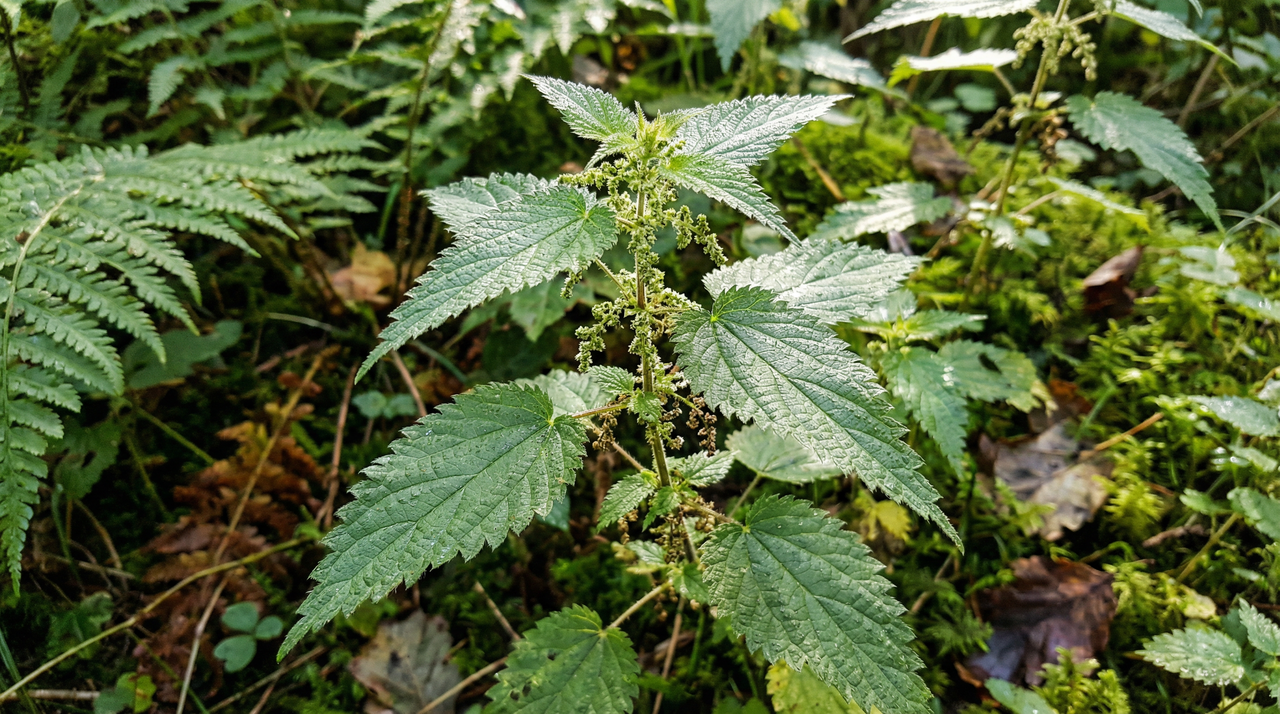
Learning to identify nettle by sight before your skin does it for you is the skill I emphasize with every client who wants to include it in a guild. The plant grows upright with square stems and opposite, heart-shaped leaves 3 to 15 centimeters long, their margins coarsely serrated and their surfaces marked by a pale, almost quilted blister pattern between the veins.[4][9] That blister venation is the field mark I use most reliably, and it's the first thing I point out before anyone's bare hand gets anywhere near the plant.
The stinging mechanism itself is worth understanding. Both stems and leaves are covered in hollow, silica-tipped trichomes that function like hypodermic needles, injecting a cocktail of histamine, acetylcholine, serotonin, and formic acid on contact.[10][11] The plant also produces small greenish-white flowers in drooping clusters and tiny achenes containing dark seeds; the subspecies common across North America is U. dioica subsp. gracilis, which tends to carry fewer stinging hairs than its European counterpart.[2] Size and leaf form shift with habitat, with lush woodland-edge plants towering over the compact clumps you'd find in drier grassland, and early spring shoots producing small, tender leaves that expand considerably through summer before the whole plant dies back to the ground in winter.[2][12]
Traditional and Cultural Uses Through History
People have been working with nettle for at least 10,000 years. Archaeobotanical evidence from Neolithic sites across Europe documents its use for food, medicine, and fiber going back to roughly 4,500 to 10,000 years ago.[13] That someone would harvest a stinging plant regularly enough to leave an archaeological record speaks to how valuable the reward was. Pliny the Elder and Dioscorides both documented its medicinal applications, describing uses for arthritis, gout, wound healing, and as a diuretic, while Columella noted its agricultural utility as a soil amendment.[14] I find it striking that the same plant was simultaneously medicine and fertilizer in the Roman-era toolkit, which feels very permaculture to me.
Medieval European herbalists recommended it as a tonic for anemia and rheumatism, and Indigenous North American nations including the Cherokee, Iroquois, and Ojibwe used it for joint pain, urinary complaints, blood purification, cordage, and dyes.[14][15] Across Europe, the bast fibers from nettle stems were spun into textiles and rope with a strength that reminded me of ramie when I first handled processed samples. The plant also found its way into cheesemaking, brewing, and fabric dyeing.[16] European folklore tied it to protection, courage, and the Norse god Thor. The introduced populations now widespread across North America arrived in the 19th century, likely through contaminated agricultural seed or deliberate medicinal importation.[1][2] Modern clinical research has since validated many of those traditional applications, confirming nettle preparations show measurable efficacy for benign prostatic hyperplasia, allergic rhinitis, and arthritis through anti-inflammatory and antioxidant activity.[17][14] Different parts carry different traditional roles: leaves for food and rheumatism preparations, roots for prostate support, and stems for fiber.[16]
Interesting Facts About Nettle
Nettle's sting is not uniform. Potency varies by region, season, and growing conditions, and plants in wetter, richer soils tend to sting considerably harder than those in lean, dry spots. In parts of the Pacific Northwest and Midwest, nettle is flagged as weedy or invasive in disturbed habitats precisely because its rhizomatous spread and long-lived seed bank make it difficult to remove once established.[2][18] My protocol is consistent: gloves always, even for a quick look at new growth, and a clear containment boundary before the first plant goes in the ground. Cooking or drying neutralizes the irritants completely, which makes all that nutritional and medicinal value fully accessible with very little effort. The sting is a calling card, not a barrier, and for a plant that has been feeding, healing, and clothing people for ten millennia, a pair of gloves is a modest price of admission.
Nettle Varieties and Sourcing
Subspecies, Varieties, and Ornamental Cultivars of Urtica dioica
Most gardeners encounter stinging nettle as if it's one unified thing, but Urtica dioica is actually a species with several recognized subspecies shaped by regional conditions. The Eurasian subsp. dioica is the form most associated with the plant's fierce reputation, while subsp. gracilis, native to North America, carries fewer stinging hairs and has smoother stems.[11][3][19] I've noticed this difference in the field. Plants I've grown from North American provenance seed definitely feel less aggressive to handle than Eurasian stock, though you'd still be foolish to grab either bare-handed. Among named botanical varieties, var. macrophylla stands out for its noticeably larger leaves,[11] which makes it appealing for culinary harvesting where leaf yield per cut matters.
A clarification worth making: Urtica urens, sometimes called small nettle or burning nettle, is a completely separate annual species, not a subspecies of U. dioica.[11][3][20] It tolerates drier, poorer, and more alkaline soils than the perennial forms while sharing similar bioactive compounds,[11][20] which is useful context if you're gardening on challenging ground, but it's a different plant with a different life cycle.
For gardeners who want color or a more compact habit, the RHS recognizes ornamental cultivars including 'Gold' with golden foliage, 'Variegata' with patterned leaves, and 'Compacta,' a dwarf form reaching around 60 cm.[21][11] I've run my fingers over 'Gold' leaves and they still sting, so don't let the decorative foliage fool you into carelessness. For genuine sting reduction, the bred cultivars 'Mikado,' 'Bowles,' and 'Sencast' minimize trichomes significantly, making harvest and kitchen prep far less dramatic while reportedly retaining the plant's medicinal qualities.[21][22] Growing 'Mikado' alongside wild subsp. dioica, I found the cultivar harvested far more comfortably and the leaf tissue showed comparable mineral density. That said, there are no specially bred medicinal cultivars; wild or standard subsp. dioica remains the default for medicinal use, and phytochemical concentrations vary more by habitat than by cultivar anyway.[11] My own preference for foraging and herbalism stays with provenance-verified wild-type plants from trusted sources.
Where to Buy Quality Nettle Seeds and Plants
Stinging nettle is widely available through reputable U.S. suppliers. Prairie Moon Nursery, Strictly Medicinal Seeds, Horizon Herbs, and Plant Delights Nursery all carry plants or seed.[23][24][25][26] For medicinal use specifically, I always go for certified organic or wildcrafted material. Strictly Medicinal Seeds, Horizon Herbs, and Richters Herbs all offer seed produced under quality controls that minimize contamination and allergen risk,[27][28][29] and I've ordered from Strictly Medicinal and Richters multiple times with consistently good germination rates. Misidentification in the Urticaceae family is a real risk with unlabeled seedlings; I label my rows the moment I sow because young nettle seedlings can look deceptively similar to other family members before the characteristic leaf teeth fully develop.
Availability can shift seasonally and a handful of states have restrictions on shipping certain plant material, so check before ordering.[27][28] The USDA PLANTS Database and Flora of North America both confirm Urtica dioica as a widely distributed native North American perennial,[3][30][31] so sourcing from verified botanical suppliers isn't just about quality, it's about getting a plant that's authenticated to species and provenance. Your regional native plant society or agricultural extension office can also point you toward locally trusted vendors, which I'd strongly recommend if you want material adapted to your specific climate.
Stinging Nettle Propagation and Planting
Nettle is one of those plants that almost seems to propagate itself, and in a way, that's exactly the problem. Before you put a single rhizome in the ground, you need a plan for where it lives, because once it's comfortable, it's staying. Starting from an established division or cutting gives you harvest-ready plants far faster than seed, and it lets you clone exactly the individual you want rather than gambling on seedling genetics.
Propagation Methods for Stinging Nettle
Division is the method I reach for first, and for most home gardeners it's the right call. Splitting root clumps or rhizomes in early spring or autumn delivers success rates of 80 to 90 percent,[32][33] and it respects the plant's natural way of moving through a landscape: sideways, underground, relentlessly. The other reason I prefer it is that you get to choose your source plant. After years of growing nettle I now keep a couple of clones with noticeably mild sting and excellent flavor, and I propagate those exclusively. Seedlings from my own saved seed are far too unpredictable for consistent culinary or medicinal use, so division is how I keep the best genetics in the garden. Wear thick gloves. I learned this the hard way transplanting bare-root divisions one March morning, and the sting that worked up my wrist before I'd even realized what happened left a welt for three days.
Stem cuttings are a solid middle ground when you want more plants than a single crown can provide. Softwood cuttings of 4 to 6 inches taken in spring or early summer root within 2 to 4 weeks at a 60 to 70 percent success rate,[34][35][36] and root cuttings planted horizontally in fall are another option if you have autumn divisions to spare.
Seed is where the biology gets genuinely interesting, and also where things slow down. Nettle seeds are tiny ovoid achenes, only 1 to 1.5 mm, grayish-brown and smooth-surfaced, with physiological dormancy that requires cold stratification to break.[37][38] Give them 4 to 6 weeks of cold, moist stratification at around 4°C before sowing, and expect germination in 7 to 14 days once temperatures sit between 15 and 20°C with light reaching the soil surface; skip the stratification and germination becomes slow and patchy.[39][33] Even under ideal conditions you're looking at 50 to 80 percent germination rates, partly because nettle is dioecious and wind-pollinated with an obligate outcrossing system that produces enormous genetic variability in the seed crop.[40][41] That variability also shapes the seeds themselves: cooler latitudes and low-light conditions produce larger seeds with more energy reserves, while high-disturbance sites produce smaller, more numerous ones.[42][43] It's a beautiful ecological system for a colonizer; less convenient when you're trying to grow nettle for the kitchen. If you do go the seed route, the good news is that seeds store well. Dried to 3 to 7 percent moisture content and kept at 4°C with under 20 percent relative humidity, viability holds for 5 to 10 years; freeze them at -18°C and they'll last 20 years or more.[44][45]
Seed Characteristics and Germination Timeline
Propagation method determines your harvest calendar more than almost anything else. Seed-grown nettles typically need the entire first season to establish, with only a light harvest advisable before the second year when perennial production hits its stride.[11][39] I've found the second-year flush noticeably more abundant and tender than anything a first-year seeding produces, so patience genuinely pays. Transplant seedlings out after 4 to 6 weeks indoors,[39] but manage expectations. Divisions and cuttings, by contrast, can yield meaningful harvests within the same season you plant them, with cuttings often ready to pick within 60 to 90 days.[39][46] For anyone wanting nettle on the table this season, start with a division.
Soil, Site, Spacing, and Planting Technique
Nettle is nitrophilous to its core, meaning it gravitates toward fertile, nitrogen-rich, moist ground and signals that richness when you find it growing wild. Its sweet spot is a loamy soil with good organic matter, consistent moisture without waterlogging, and a pH between 6.0 and 7.5, though it will tolerate a surprisingly wide range from 5.0 to 8.0 and soils anywhere from clay to sandy loam.[2][47] I notice mine self-seeds most aggressively near the compost bins and the chicken run, which tells you everything about what it's looking for. Amend with compost or aged manure before planting and you'll see the difference in leaf size within a few weeks.[48][49]
For light, 4 to 6 hours of direct sun is the target,[50][51] and it tolerates partial shade about as well as lemon balm or mint, which gives most gardeners an instant reference point. In hot climates, afternoon shade keeps the leaves from scorching and reduces stress. Full sun is fine as long as moisture stays consistent.
Space plants 12 to 18 inches apart with 24 to 36 inches between rows if you're growing more than a single patch.[33][52] Individual plants reach 2 to 7 feet tall and spread 2 to 3 feet on their own, but rhizomes will extend that colony considerably if given the chance.[20] Tighter spacing works well when you're harvesting frequently, since regular cutting keeps plants juvenile and productive. The same fertility that produces lush leaves also drives aggressive underground spread, so containment isn't optional. I grow mine in large bottomless nursery pots sunk into the bed so the rhizomes can't escape; it's the only way I've kept it from swallowing my comfrey patch. Raised beds with root barriers work equally well.[2][52] Before planting, check whether nettle is considered invasive in your region; regulations vary and the plant spreads readily beyond intended boundaries. And at every stage of the process, gloves on.
Nettle Care Guide: Growing Stinging Nettle Successfully
Nettle has a reputation for growing anywhere and doing whatever it wants, and honestly, that reputation is mostly earned. But "tough" doesn't mean "undemanding," and the difference between a scraggly, stressed patch and a lush, productive stand comes down to a few key decisions made early in the season.
Sunlight Requirements for Nettle
Stinging nettle grows well across a wide light range, thriving with at least 4-6 hours of direct sun daily while tolerating dappled shade without complaint.[53][54] In my experience, morning sun with afternoon shade produces the most succulent leaves. The plants I've grown in full sun all day tend to develop larger leaves, but the sting is noticeably more intense and they wilt fast if moisture gets inconsistent. That tracks with where you find nettle in the wild: woodland edges and stream banks, not baking open fields.
Watering Needs
Nettle wants consistent moisture, roughly 1 inch of water per week for established plants.[52][55] New transplants and divisions need water every day or every other day for the first three to four weeks while roots establish.[52] I usually rely on mulch after that initial period, topping up manually during dry spells rather than keeping to a strict schedule. Keeping soil evenly moist also pays dividends later: well-hydrated plants handle both heat stress and cold snaps with considerably more resilience than thirsty ones.
Feeding and Soil Fertility
Nettle is a heavy nitrogen feeder and a reliable indicator of fertile, nitrogen-rich ground.[56][39] What I find genuinely exciting about this is the closed loop it creates: nettle accumulates nutrients from deep in the soil profile, and I harvest those nutrients right back by brewing nettle leaves into a fermented liquid feed for my tomatoes and fruit trees. The plant fertilizes itself and its neighbors simultaneously.
If you're starting in less-than-ideal soil, work in well-rotted compost or manure at planting; the target pH sits between 6.0 and 7.0, though nettle tolerates a range of 5.5 to 7.5.[52][57] Established beds generally need a light spring compost top-dressing and little else, but yellowing in older leaves signals nitrogen deficiency, purpling suggests phosphorus is low, marginal scorch points to potassium, and interveinal chlorosis in new leaves indicates iron.[52] On the other side, too much fertilizer causes leaf tip burn, wilting, and root damage, so resist the urge to over-apply, especially with concentrated feeds.[58] The plant tells you what it needs if you're watching.
Frost Tolerance and Winter Protection
Nettle is rated for USDA Zones 3-10 and survives minimum temperatures down to approximately -40°F through root dormancy.[53][2] The roots are extraordinary; the top growth is not. Frost blackens and wilts the above-ground stems within 24-48 hours, but the crown and rhizomes shrug off temperatures well below -15°C and push up fresh growth every spring.[59][60] Established plants need no winter protection in most climates, but I learned the hard way that newly planted divisions in Zone 5 or colder appreciate 2-4 inches of organic mulch their first winter to prevent frost heave while the root system settles in.[61]
Heat Tolerance and Summer Care
Nettle performs best at 59-77°F and is rated for AHS Heat Zones 1-7.[62] Chronic heat above 95°F reduces biomass noticeably, and above 104°F, non-acclimated plants start to die back.[63] The symptoms look a lot like basil in a heat wave: wilting, leaf curl, scorching along the edges, and eventually bolting.[64] In my hotter summer months I drape 30% shade cloth over my main patch and shift irrigation to early morning; that combination keeps leaves harvestable and tender well into July.[65] A 2-4 inch mulch layer does double duty here, holding soil moisture and buffering root zone temperature simultaneously.
Pruning, Maintenance, and Seasonal Rhythm
The first thing to sort out with a nettle planting is containment. Nettle spreads aggressively via underground rhizomes, and without a buried root barrier or raised bed to limit it, a small patch becomes a takeover operation within a few seasons.[66][67] I've used a simple plastic root barrier buried about 12 inches deep around my main bed for several years now, and it genuinely works. Every three years or so I lift and divide the clumps anyway, which rejuvenates the patch and gives me divisions to share with neighbors who are curious about growing their own.
For pruning, cut stems back to 4-6 inches in late winter or early spring before new growth emerges, then prune again after flowering to encourage a second flush of tender leaves.[66][52] Pinching tips after every 4-6 leaves keeps plants bushy rather than tall and leggy, and regular cutting can increase overall biomass yield by 20-50% while preventing unwanted self-seeding.[68] A 2-3 inch layer of straw or compost mulch around the base retains moisture, suppresses competing weeds, and has the practical bonus of reducing accidental contact with stinging hairs at ground level.[52]
In temperate climates, the seasonal calendar runs something like this: emergence in March-April, vegetative growth through late spring and early summer, flowering from May through July, seed set by August-September, and senescence back to the ground by October.[69][70] I mark my calendar for that first spring flush because those early shoots are the sweetest and most tender of the year. I let a few stems go to flower and seed in a far corner deliberately; they're magnets for beneficial insects and a handful of specialist butterfly species that won't visit much else. Exact timing shifts with latitude and microclimate, but the rhythm itself is reliable, and once you know it, managing nettle feels less like fighting a weed and more like conducting a very willing orchestra.
Harvesting Nettle: Timing, Technique, and Flavor at Peak
The single most important thing to understand about harvesting nettle is that the window is real and it closes fast. Miss it and you're left with coarse, astringent leaves that no amount of cooking fully redeems. Catch it and you have one of the most satisfying spring harvests in the garden.
When to Harvest Nettle Leaves and Shoots
Young shoots and leaves are at their best in early spring, from March through May, when tips are 2 to 6 inches long and the plant hasn't yet set flower.[39][71][72] Once flowering begins, oxalate and tannin levels climb, the leaves toughen, and that clean earthy flavor shifts toward something distinctly more bitter.[73] I've deliberately let a few stems flower to compare, and the difference is unmistakable. The pre-flowering window is non-negotiable if you're harvesting for the kitchen or for drying nettle leaves for tea.
In temperate North America, peak season runs from late spring into early summer, May through July, with the summer solstice as a useful mental cutoff.[74] I go out in the morning once the dew has dried but before the midday heat sets in. That sensory cue of bright, upright tips at the six-inch mark tells me more than any calendar date. The good news is that nettle regrows within three to four weeks under moist, fertile conditions, giving you two to four harvests across the season.[39] Beyond leaf harvests, seeds are collected in late summer once mature, and roots are dug in autumn or spring during dormancy, rounding out a full year of useful yields from a single perennial patch.[75][76]
Sustainable Harvesting Techniques for Regrowth
Gloves are not optional. Beyond that, the cardinal rule is never taking more than one-third of any single plant per cut.[39] I've followed that limit consistently across years of managing my nettle patches, and I've never had to replant an established stand. That one rule keeps the plants vigorous and the local ecosystem intact. Use scissors or snips rather than pulling, cut the top few sets of leaves, and let the stems push new growth from the nodes below. The rapid regrowth established in the timing above[39] only happens if you leave the plant enough foliage to keep photosynthesizing.
Yield, Flavor, and Texture of Harvested Nettle
Young stinging nettle leaves harvested before flowering carry an earthy, nutty, spinach-like flavor with genuine umami depth once cooked, and a fresh grassy aroma raw that mellows completely in the pan.[77][78][79] Every spring I notice that same shift from cut-grass sharpness to something closer to blanched spinach, tender and clean on the palate.[73][80] Older summer leaves lose that quality, turning tougher and more astringent as oxalates and tannins accumulate, which is why timing matters so much more than any varietal difference. Processing method, particularly blanching or low-temperature drying, has far more influence on the final result than subspecies selection.[73] Whether you're making dried stinging nettle for tea or wilting fresh leaves into a soup, the quality in the bowl is mostly a function of what you picked and when.
Stinging Nettle Preparation and Uses
Culinary Preparation and Edible Uses
After years of foraging and growing nettle, I've developed what I'd call a ritual: gloves on, harvest into a bucket, blanch within the hour. The whole plant is edible in some form, young leaves, tender stems, roots, flowers, and seeds, but every part needs heat, drying, or some other processing before it's safe to eat.[80][81] The formic acid, histamine, and serotonin in those trichomes denature completely with heat, which means blanching young leaves for one to two minutes then shocking them in ice water is all it takes to turn something painful into something genuinely delicious. That ice bath also locks in that vivid, almost electric green color, which is half the appeal when you're making nettle soup or pesto.
The blanching route is just the beginning. You can also dry leaves at low temperatures below 40°C to preserve their nutrients for teas and infusions, ferment them over one to two weeks, pickle them in vinegar or brine, or grind dried leaves into flour for baking.[73] Once cooked, the tender leaves can be substituted directly for wilted spinach in almost any recipe.[82][83] I always compare it to how amaranth or spinach needs just a brief hit of heat to mellow into something mellow and satisfying. European kitchens have known this for centuries, using nettle in soups, stinging nettle pesto, and as a straight spinach substitute.[16] The nutritional depth behind those uses is covered fully in the health benefits section.
Medicinal Preparations and Dosages
Nettle's culinary history runs parallel to a long medicinal one. For leaf infusions, the standard adult dose is 2 to 4 grams of dried leaf per cup, taken up to three times daily; tinctures (1:5 in 40% ethanol) run 2 to 4 mL on the same schedule, while root decoctions call for 4 to 6 grams of dried root per cup three times daily.[84][85] For allergic rhinitis specifically, freeze-dried leaf extract at 300 mg twice daily has shown effectiveness in randomized controlled trials as an adjunct for hay fever symptoms.[86]
For peak medicinal extraction, always prioritize the early spring flush before flowering. Spring through midsummer (roughly March to July in temperate climates) is the prime window, and I never take more than a third of any plant at a time.[87][88] Young tops harvested before flowering carry the highest vitamin, mineral, and phytochemical content; once the plant flowers, medicinal potency in the leaf tends to decline, and the harvest focus shifts to seeds in late summer.[89] For clinical safety information and contraindications, the health benefits section has everything you need.
Traditional and Non-Food Uses
Beyond the kitchen and the medicine cabinet, nettle has a structural legacy that most people have completely forgotten. The bast fiber from Urtica dioica stems can be retted and scutched, much like flax, to produce a linen-like textile that's historically been stronger than hemp.[90][91] During both World Wars, when cotton and flax supplies were strained, nettle fiber went into clothing and military sails. I've twisted small batches of nettle cordage for garden trellising, and it holds together remarkably well, which gives you a real feel for why pre-industrial communities valued this plant so heavily. On the contemporary end, nettle extracts show up in shampoos, scalp treatments, and anti-aging creams, drawing on the same anti-inflammatory and antioxidant properties that make the leaf medicinally interesting.[14] There's something quietly satisfying about a plant that can sting you, feed you, heal you, clothe you, and condition your hair, all from the same patch of ground.
Nettle Health Benefits and Medicinal Uses
Nettle has been used as food and medicine across cultures for millennia, and modern research is finally catching up to what European herbalists, Native American healers, and Traditional Chinese Medicine practitioners have long understood.[92][15] Its traditional applications, including arthritis relief, allergy support, urinary health, and general nourishment, aren't just folk wisdom anymore.[93] There's a growing body of clinical evidence behind most of them.
Key Phytochemicals in Nettle
The leaf's medicinal reputation rests on a dense matrix of bioactive compounds. Flavonoids, primarily quercetin, kaempferol, and rutin, are present at 10 to 50 mg per gram dry weight, with total flavonoid content reaching 1 to 5 percent of dry leaf mass.[94][95][96] Phenolic acids, including caffeic acid and chlorogenic acid, add another 20 to 50 mg GAE per gram dry weight to that antioxidant load.[97][95] Together, these compounds drive nettle's anti-inflammatory activity by suppressing the NF-κB pathway and reducing pro-inflammatory cytokines like TNF-α and IL-6.[98][99]
I always harvest the young spring shoots before flowering, and there's a real reason beyond tenderness. The phenolic content is highest in those early leaves, and I've noticed that plants growing in nitrogen-rich soil produce noticeably darker, more intensely aromatic foliage, exactly the kind the chemistry supports as most potent. The root tells a different story chemically: it contains lignans, phytosterols including beta-sitosterol at 0.1 to 0.8 percent, and scopoletin, compounds that account for nettle root's documented role in prostate health rather than the anti-inflammatory applications most people associate with the leaf.[100] Leaf preparations and root preparations are genuinely different medicines.
Nettle Nutrition Facts
Raw leaves deliver approximately 481 mg calcium, 2.57 mg iron, 42 mg magnesium, and 334 mg potassium per 100 grams.[101] Cooking shifts those numbers slightly: a 100-gram cooked serving provides around 175 mg calcium, 1.7 mg iron, 84 mg magnesium, and 675 mg potassium, alongside 14,836 IU vitamin A and 66 mg vitamin C, with actual values varying by soil and growing conditions.[102] The practical upshot is that blanching for one to two minutes neutralizes the sting while losing only 10 to 20 percent of vitamin C, and cooking retains 80 to 95 percent of minerals like iron and calcium.[103] I think of that as a favorable trade compared to spinach, which loses a greater proportion of its minerals through cooking; nettle holds on to what matters.
Longer boiling does reduce water-soluble vitamins by 20 to 50 percent and causes some polyphenol loss, but the overall antioxidant activity stays high.[103] When brewing nettle tea, a gentle steep rather than a hard boil preserves more of those flavonoids while still rendering the sting harmless.
Medicinal Research and Clinical Evidence
The strongest clinical evidence clusters around three areas. For allergic rhinitis, Urtica dioica has shown efficacy in reducing sneezing and congestion at a level comparable to antihistamines in controlled trials.[73] For osteoarthritis and rheumatoid arthritis, leaf preparations have reduced inflammation markers and produced modest but measurable improvements in pain and stiffness.[104][73][98] For benign prostatic hyperplasia, root extracts have improved urinary flow and reduced BPH symptoms in clinical trials, often in combination with saw palmetto.[105] Diuretic effects have also been confirmed in human trials, with increased urine output and no significant electrolyte disruption.[106]
Two areas get overstated in online wellness spaces and deserve honest framing. Blood glucose effects look promising in animal models, but the human data is inconsistent and preliminary at best.[107] Anti-cancer activity has been observed in vitro against breast and colon cell lines, but in-vitro results don't translate automatically to clinical outcomes, and no human trials exist yet.[108] Nettle earns genuine respect through what the evidence actually supports; it doesn't need the hype.
Safety and Side Effects
Properly prepared nettle is not systemically toxic to humans or pets.[109][110] The sting itself comes from specialized trichomes that inject histamine, serotonin, and acetylcholine on contact.[111][112] I learned early on that even a brief brush against a stem without gloves means a couple of hours of tingling. Cooking, blanching, drying, or crushing the leaves deactivates those compounds reliably, making the plant safe to handle and eat.[113][114] Raw leaves do contain oxalates and formic acid, which can cause oral irritation or gastrointestinal upset if eaten without adequate preparation.[115]
A few populations need to exercise real caution. Because nettle can act as a uterine stimulant, I never recommend it during pregnancy; the research is clear enough that I err firmly on the side of caution for my own family and clients.[107] Nettle also interacts with diuretics, blood thinners, diabetes medications, and lithium, so anyone on those medications should consult their prescriber before using therapeutic doses.[116] One foraging hazard deserves particular attention: Urtica dioica can be confused with poison hemlock (Conium maculatum), which has purple-spotted stems and a distinctly foul odor, and is highly toxic.[117] Positive identification before harvesting isn't optional.
Nettle Pests and Diseases
Nettle is one of the lower-maintenance plants in my food forest. A healthy, well-sited stand will shrug off most of what the garden throws at it, and that resilience isn't accidental. The plant carries a formidable arsenal: stinging trichomes loaded with formic acid, histamine, and serotonin, plus a suite of phenolic compounds and flavonoids that make it deeply unappealing to generalist feeders.[118][119] That said, resistance isn't absolute. It's context-dependent, shifting with soil health, spacing, drainage, and humidity, so the cultural basics you're already practicing elsewhere in the garden matter here too.
Nettle's Natural Defenses Against Pests and Disease
Think of nettle's defenses as a filter: effective against most generalist attackers, but leaky when plants are crowded, waterlogged, or starved of nutrients. Under optimal conditions the plant's chemical and mechanical defenses do most of the work for you.[120][121] Stress the plant, though, and those defenses thin out. That's where the problems I've seen in my own patches have always started.
Common Insect Pests and Beneficial Relationships
Some insects have spent millennia cracking nettle's chemical code, and I've come to love them for it. The nettle aphid (Microlophium carnosum), nettle leaf beetle (Gastrophysa viridula), and various weevils are genuine specialists that have evolved around the plant's defenses.[122] The ones I pay the most attention to, though, are the caterpillars of the small tortoiseshell and peacock butterflies, both of which use stinging nettle as a primary larval host.[123] Every spring I watch them strip sections of my patch bare, and every time the nettle rebounds within days. It's one of my favorite reminders that "pest damage" and "ecosystem function" can be the same thing.
Generalist pressures, aphids, spider mites, leaf miners, and slugs, tend to show up mainly under humid, crowded conditions.[118] Aphid colonies in particular rarely get out of hand because ladybugs find them quickly.[124] And nettle's growth rate is so aggressive, similar to comfrey in its ability to bounce back from defoliation, that moderate insect pressure rarely translates into a real setback.[125]
Fungal, Bacterial, and Viral Diseases
Fungal pathogens are where I've seen the most actual trouble. The main culprits are rust (Puccinia urticata), powdery mildew (Erysiphe spp.), downy mildew (Peronospora spp.), and leaf spot.[126] I learned about powdery mildew the hard way the first time I grew nettle in a tight clump against a fence with no airflow. Within a few weeks the leaves were coated. Rust favors cooler, humid conditions around 15 to 20°C; powdery mildew prefers moderate temperatures paired with stagnant, moist air; downy mildew thrives when drainage is poor.[127][128] Soil pH below 5.5 and deficiencies in potassium or phosphorus amplify susceptibility across all of them.[127] Bacterial blight and viral infections like nettle mosaic virus do occur, but they're genuinely infrequent and rarely worth losing sleep over.[121]
Integrated Prevention and Management
I almost never reach for neem or any other spray on nettle. Cultural practices and natural predators handle 95% of what I've encountered over the years. Good spacing for airflow, avoiding overhead irrigation, pulling and destroying infected material promptly, and keeping soil pH above 5.5 with balanced nutrition eliminate most problems before they start.[124][129] There are no commercially available cultivars bred specifically for disease resistance, so you're working with the species' natural variation rather than any engineered advantage.[21] Nettle's mild allelopathic tendencies do help it hold its own against competing plants,[130] and its role as habitat for dozens of insect species means a biodiverse planting tends to regulate itself.[131] Give it space, good drainage, and decent soil, and nettle will sort out most of its own problems.
Nettle in Permaculture Design
There's a plant in almost every neglected corner of my temperate garden that most people want to pull out on sight. I've learned to see it differently. Stinging nettle is one of the hardest-working members of any guild I design, and once you understand what it's actually doing for the system, "weed" stops being the right word entirely.
Climate Adaptability and Hardiness Zones
Few herbaceous perennials match nettle's climatic range. It's hardy from USDA zones 3 through 10, with the sweet spot sitting in zones 5-7 where it grows with genuine vigor.[2][132] Those cold-winter roots can survive down to -30°F without batting an eye, and the plant handles summer temperatures up to 90°F before showing real stress.[51] It's most at home in temperate oceanic and humid continental climates, thriving with 20 to 60 inches of annual rainfall and humidity that keeps the soil from drying out between rains.[133][134]
Zone 3 growers can mulch crowns through winter to protect them, and zone 8 and above plantings sometimes produce woodier, less vigorous stems or spread more aggressively as winters become mild enough to skip true dormancy.[132][135] In my experience working with clients in zone 7, mimicking the plant's native riverbank or woodland-edge conditions, essentially consistent moisture and some canopy protection from midday heat, makes an enormous difference in summer leaf quality. The care guide covers watering specifics, but for site selection, think "moist and temperate" and you're already halfway there.
Ecosystem Functions and Biodiversity Support
Nettle's reputation as a dynamic accumulator is well-earned. Its roots aggressively scavenge nitrates, phosphates, potassium, and iron from the soil, and when that biomass breaks down through composting, mulching, or decomposing in place, those minerals cycle back to neighboring plants.[18][136] I've chopped and dropped nettle biomass around young apple trees twice per season for years now, and the difference in leaf color and vigor compared to unfed trees in the same guild is obvious.
As a pioneer species, nettle actively transforms disturbed, depleted ground into something more hospitable for the plants that come after it.[18][137] I've noticed this firsthand: when I see nettle seedlings volunteering near a compost pile or along a recently disturbed path edge, I take it as a reliable signal that nitrogen is concentrated there. The plant essentially bio-indicates soil conditions you might otherwise miss. Then there's the biodiversity piece, which is genuinely remarkable. Stinging nettle hosts more than 40 species of butterflies and moths at the larval stage, including the small tortoiseshell and peacock butterfly, and the stinging hairs that make us reach for gloves are actually what discourage mammalian grazers from clearing it out.[138] Within a season of establishing a nettle patch in one of my food forest designs, the flutter activity was noticeably different.
The wind-pollination mechanics are worth understanding for anyone placing nettle in a guild. It's dioecious, with separate male and female plants, and male flowers can explosively release pollen in visible clouds on a breezy spring day at temperatures between roughly 59 and 77°F.[139][11] Site it where air moves freely; heavily sheltered or fragmented plantings can see pollen limitation affect up to half of all ovules,[140] which matters if you're managing for seed harvest in addition to biomass.
Forest Layer Placement and Guild Integration
In a food forest, nettle occupies the herbaceous layer. It typically grows two to six feet tall, occasionally taller in nitrogen-rich conditions, and spreads via rhizomes to form dense colonies along woodland edges, moist clearings, and disturbed patches.[141][142] It handles partial shade reasonably well, which makes it a good candidate for the dripline zone beneath fruit trees, though it genuinely prefers edges where it catches more direct light.[143]
As an herbaceous companion plant in guild design, nettle earns its place by suppressing weeds, cycling nutrients, and supporting a web of beneficial insects that extend well beyond its own lepidopteran residents.[144][145] I pair it with comfrey around fruit trees regularly; together they're essentially a two-plant fertility engine. That said, nettle has allelopathic tendencies through both root exudates and decomposing leaf compounds that can inhibit nearby seedlings,[146] and I learned the hard way that planting it too close to delicate annual herbs is a mistake. I now give it a three to four foot buffer from anything I don't want it competing with.
Because nettle colonies persist for decades via rhizomes, the best design move is placing them where their enthusiasm serves the system rather than fighting it. A contained patch on the downhill edge of a fruit tree guild, harvested twice a season to produce mulch and compost tea, stays productive and manageable. The annual small nettle, Urtica urens, is worth mentioning briefly as a contrast: it's a shorter, sun-preferring annual that tops out around two feet, carries minimal allelopathy, and fits early-succession or quick mulch-cycle contexts better than a stable food-forest understory.[147][47] For long-term guild building, though, perennial U. dioica is the one you want. Selective harvesting keeps the colony from overtaking its neighbors and simultaneously produces the biomass that makes the whole guild run better.
The Plant That Stung Me Into Paying Attention
My first real encounter with nettle wasn't in a garden; it was a brushed ankle on a trail, followed by a long walk home and a quiet reconsideration of everything I thought I knew about weeds. That sting sent me to books, then to seeds, then to a corner of my food forest I now visit more than almost anywhere else. I've never stopped being grateful for the lesson.
Sources 147
- Urtica dioica L. ↩
- Urtica dioica L. ↩
- Urtica dioica ↩
- Urtica dioica (Stinging Nettle) ↩
- Ecological requirements of Urtica dioica ↩
- Stinging Nettle (Urtica dioica) Plant Guide - USDA ↩
- Stinging Nettle (Urtica dioica L.): Its Botany, Ecology and Management ↩
- Reproductive biology of Urtica dioica ↩
- Urtica dioica ↩
- Stinging Nettle (Urtica dioica) - Britannica ↩
- Urtica dioica - Wikipedia ↩
- Royal Horticultural Society - Urtica dioica Description ↩
- Current Approaches in Archaeobotany - 10. Neolithic Plant Exploitation at La Draga (NE Iberian Peninsula) ↩
- Stinging Nettle (Urtica dioica): Historical and Modern Uses ↩
- Nettle in Native American Ethnobotany ↩
- Nettle (Urtica dioica L.): An Extraordinary Plant with Many Uses ↩
- Clinical Efficacy of Stinging Nettle in BPH ↩
- Urtica dioica ↩
- Urtica dioica L. - Kew Science Plants of the World Online ↩
- Urtica dioica - Missouri Botanical Garden ↩
- Royal Horticultural Society: Stinging Nettle Cultivars ↩
- Non-Stinging Nettles for Culinary Use ↩
- Stinging Nettle Seeds ↩
- Urtica dioica Plants ↩
- Stinging Nettle - Urtica dioica ↩
- Urtica dioica ↩
- Stinging Nettle Seeds (Organic) ↩
- Stinging Nettle Seeds ↩
- Stinging Nettle (Urtica dioica) ↩
- Urtica dioica - USDA PLANTS Database ↩
- Plants of the World Online ↩
- Urtica dioica - Missouri Botanical Garden Plant Finder ↩
- Propagation of Stinging Nettle (Urtica dioica) ↩
- How to propagate stinging nettle ↩
- Propagating Urtica dioica from cuttings ↩
- Vegetative Propagation Techniques for Perennials ↩
- Urtica dioica ↩
- Seed Morphology of Urtica dioica ↩
- Stinging Nettle: Harvest and Use ↩
- Reproductive Biology of Urtica dioica ↩
- Genetic Variation in Stinging Nettle (Urtica dioica L.) ↩
- Intraspecific Variation in Seed Morphology of Urtica dioica ↩
- Environmental Influences on Seed Traits in Perennial Weeds ↩
- Seed Information Database - Urtica dioica ↩
- Seed Storage Behaviour of Urtica dioica ↩
- Plant Finder Search Result for Urtica dioica ↩
- Missouri Botanical Garden - Urtica dioica ↩
- Urtica dioica Habitat Preferences - Karelian Research Centre ↩
- Ecological Requirements of Stinging Nettle in Europe ↩
- Missouri Botanical Garden - Urtica dioica ↩
- Kew Gardens - Urtica dioica ↩
- Stinging Nettle Cultivation Guide ↩
- Stinging Nettle (Urtica dioica) Plant Profile - Missouri Botanical Garden ↩
- Urtica dioica - Royal Horticultural Society ↩
- Urtica dioica Cultivation Guide - University of Minnesota Extension ↩
- Stinging Nettle (Urtica dioica L.): A Plant with Multiple Potentialities ↩
- Soil Requirements for Nettle Cultivation - University of Minnesota Extension ↩
- Fertilizer Toxicity in Herbs - Gardening Know How ↩
- Frost Tolerance in Perennial Herbs - University of Minnesota Extension ↩
- Urtica dioica: Ecology and Hardiness - Plants for a Future ↩
- Winter Protection for Perennials - University of Minnesota Extension ↩
- Urtica dioica - Stinging Nettle - Missouri Botanical Garden ↩
- Physiological Adaptations of Urtica dioica to Temperature Extremes ↩
- Heat Stress Responses in Plants: From Molecular Mechanisms to Physiology ↩
- Urtica dioica (Stinging Nettle) - Missouri Botanical Garden ↩
- Stinging Nettle (Urtica dioica) - Missouri Botanical Garden ↩
- Urtica dioica L. - North Carolina State University ↩
- Urtica dioica: Pruning and Yield Management - Permaculture.co.uk ↩
- Phenology of Urtica dioica in Temperate Europe - Botanical Journal ↩
- Stinging Nettle (Urtica dioica) Plant Guide - USDA NRCS ↩
- Harvesting Stinging Nettles ↩
- Stinging Nettle: Harvesting and Uses ↩
- Urtica dioica: Culinary Uses and Flavor Profile ↩
- Stinging Nettle: A Foraging Guide ↩
- Urtica dioica - Kew Science ↩
- Stinging Nettle (Urtica dioica) - RHS Gardening ↩
- Chemical Composition of Stinging Nettle - NCBI ↩
- Volatile Compounds in Stinging Nettle (Urtica dioica L.) ↩
- Sensory and Nutritional Characteristics of Nettle ↩
- Urtica dioica - Stinging Nettle ↩
- University of Michigan Extension ↩
- Urtica dioica - Missouri Botanical Garden ↩
- Nettle Soup Recipe - Traditional European ↩
- American Herbal Products Association Monograph ↩
- European Pharmacopoeia - Urticae folium ↩
- Urtica dioica for allergic rhinitis: A systematic review ↩
- Stinging Nettle: Harvesting and Uses ↩
- Sustainable Wildcrafting Guidelines ↩
- Stinging Nettle (Urtica dioica) in Phytotherapy ↩
- Nettle Fiber Processing and Uses ↩
- Nettle Fiber in Historical Textiles ↩
- Ethnobotanical Study of Urtica dioica ↩
- Journal of Ethnopharmacology Review: Urtica dioica Ethnomedicinal Uses ↩
- Chemical Composition of Stinging Nettle (Urtica dioica L.) ↩
- Phytochemical Composition of Stinging Nettle (Urtica dioica L.) Leaves ↩
- Flavonoids and Phenolic Acids in Urtica Species ↩
- Antioxidant Activity and Phenolic Compounds in Urtica dioica ↩
- Anti-inflammatory effects of stinging nettle (Urtica dioica) on rheumatoid arthritis ↩
- Anti-inflammatory effects of Urtica dioica leaf extract in vitro and after short up-take in vivo ↩
- Phytochemical and Pharmacological Studies on Urtica dioica ↩
- Nettle Leaves Nutrition Facts ↩
- USDA FoodData Central - Stinging nettle leaves, cooked, boiled, drained, without salt ↩
- Effect of processing on the nutrient content of stinging nettle (Urtica dioica L.) ↩
- Anti-inflammatory effects of Urtica dioica in patients with osteoarthritis ↩
- Cochrane Review on Benign Prostatic Hyperplasia Treatments Including Urtica dioica ↩
- Diuretic effect of Urtica dioica in healthy volunteers ↩
- Herbal Medicine: Biomolecular and Clinical Aspects - Stinging Nettle ↩
- Antioxidant and anti-proliferative activities of nettle extracts ↩
- Stinging Nettle Toxicity - Poison Control ↩
- Nettle Rash and Toxicity in Animals - ASPCA ↩
- Chemical Composition of Stinging Hairs of Urtica dioica ↩
- Plant Dermatology: Contact Dermatitis from Nettles (DermNet NZ) ↩
- Nettle: Safe Preparation and Edibility - University of Minnesota Extension ↩
- Stinging Nettle (Urtica dioica and Urtica urens) Toxicity ↩
- Identification of Oxalic Acid and Tartaric Acid as Major Persistent Pain-inducing Toxins in Nettle Stinging Hairs - PMC ↩
- Stinging Nettle Drug Interactions - Drugs.com ↩
- Common Nettle | Urtica Dioica | Foraging and More ↩
- Diseases and Pests of Stinging Nettle ↩
- Chemical and Mechanical Defense in Urtica dioica ↩
- Chemical Defenses in Urtica dioica ↩
- Diseases of Stinging Nettle ↩
- Herbivory on stinging nettle: Specialist and generalist insect herbivores ↩
- Insects associated with Urtica dioica ↩
- Integrated Pest Management for Stinging Nettle ↩
- Comparative Pest Susceptibility in Urtica Species ↩
- Fungal Pathogens of Nettles ↩
- Diseases of Urtica dioica ↩
- Fungal Pathogens on Urtica dioica ↩
- Disease of Garden Vegetables - Nettle ↩
- Allelopathic Effects of Stinging Nettle ↩
- Ecological Role of Urtica dioica in Temperate Ecosystems ↩
- Missouri Botanical Garden - Urtica dioica ↩
- Global Biodiversity Information Facility - Urtica dioica Distribution ↩
- Stinging Nettle (Urtica dioica L.): Environmental Requirements ↩
- Royal Horticultural Society - Urtica dioica ↩
- Dynamic Accumulators in Permaculture: Stinging Nettle ↩
- Pioneer Species and Soil Fertility: Role of Nettles ↩
- Ecological Role of Stinging Nettle - Butterfly Conservation ↩
- Urtica dioica - Missouri Botanical Garden ↩
- Reproductive Ecology of Urtica dioica in Disturbed Habitats ↩
- Missouri Botanical Garden Plant Finder ↩
- USDA PLANTS Database ↩
- Shade Tolerance and Understory Dynamics of Urtica dioica ↩
- Urtica dioica in Agroforestry Systems: Benefits and Management ↩
- The Guild Guide to Permaculture (Teneyck) ↩
- Allelopathy and Competition in Stinging Nettle ↩
- Urtica urens - Kew Science ↩