Most people in North America have handled niger seed without ever once thinking of it as food. It comes in those tidy bags at the hardware store, goes into the tube feeder, and that's the end of the relationship. What I find almost funny about that is the seed sitting in the feeder has a 3,000-year culinary history behind it, pressed into cooking oil in Ethiopian homes, folded into injera batter, celebrated at religious festivals in the Horn of Africa long before anyone thought to market it as "nyjer" for goldfinches.[1] The entire American context for this plant is a footnote. A profitable footnote, sure, but a footnote.
I started growing it because I wanted to understand it as a food crop, and what I found complicated every assumption I'd brought to it. It's not a simple plant. It has real pest vulnerability, a tight harvest window where timing genuinely matters, and nutritional chemistry that changes depending on how you process it. Raw seeds are not the same thing as roasted ones, and that distinction carries real consequences in the kitchen. If you've only ever known niger seed as something that attracts small birds, you're about to meet a different plant entirely.
Origin and History of Niger Seed
The story of cultivated niger seed stretches back thousands of years. Guizotia abyssinica, the niger seed plant, was domesticated in the Ethiopian highlands somewhere between 2,000 and 3,000 years ago, thriving at altitudes of 1,500 to 2,500 meters where the air is cool, the rains are seasonal, and smallholder farmers still depend on it today.[2][3] This is an ancient crop with deep roots in one of the world's oldest agricultural cultures, and understanding that origin changes how you think about growing it.
Botanical Background
Niger seed is a member of the Asteraceae family, the same great clan that gives us sunflowers, chamomile, and calendula. It's an erect, branched annual herb that completes its entire life cycle in a single season, flowering once and dying after seed set, a monocarpic strategy that concentrates all of the plant's energy into reproduction.[4][5] From germination to mature seed typically spans 90 to 180 days depending on conditions, with the first month or so devoted entirely to vegetative growth before flowering begins.[5]
One thing I wish someone had told me before I first grew niger seed is how strongly it responds to day length. It's a short-day plant, triggering bloom 60 to 90 days after sowing as days shorten.[6] I've sown other photoperiod-sensitive Asteraceae too early in spring and waited and waited, then watched everything rush to flower in the same week come August. Niger behaves similarly. Direct-sowing after your soil has genuinely warmed, rather than at the first hint of spring, aligns the plant's vegetative phase with long days and its flowering with the natural shortening that follows. When mature seeds ripen, the fruits dehisce forcibly, propelling seeds outward in a kind of explosive dispersal that makes timely harvest essential.[7]
Across its native range, the species is morphologically conservative: regional variation owes more to soil microhabitat than to genetic differentiation.[7] It's currently listed as Least Concern on the IUCN Red List, though agricultural habitat loss is a noted minor pressure.[8] Germplasm collections exist to support future breeding, which reassures me that the narrow genetic base of cultivated varieties isn't a dead end for breeders working on climate resilience. Niger was introduced to India around the 1920s under British colonial agricultural programs, and entered the United States in the early 20th century, primarily as a birdseed crop, where USDA classifies it as an introduced species.[9][10]
Visual Characteristics
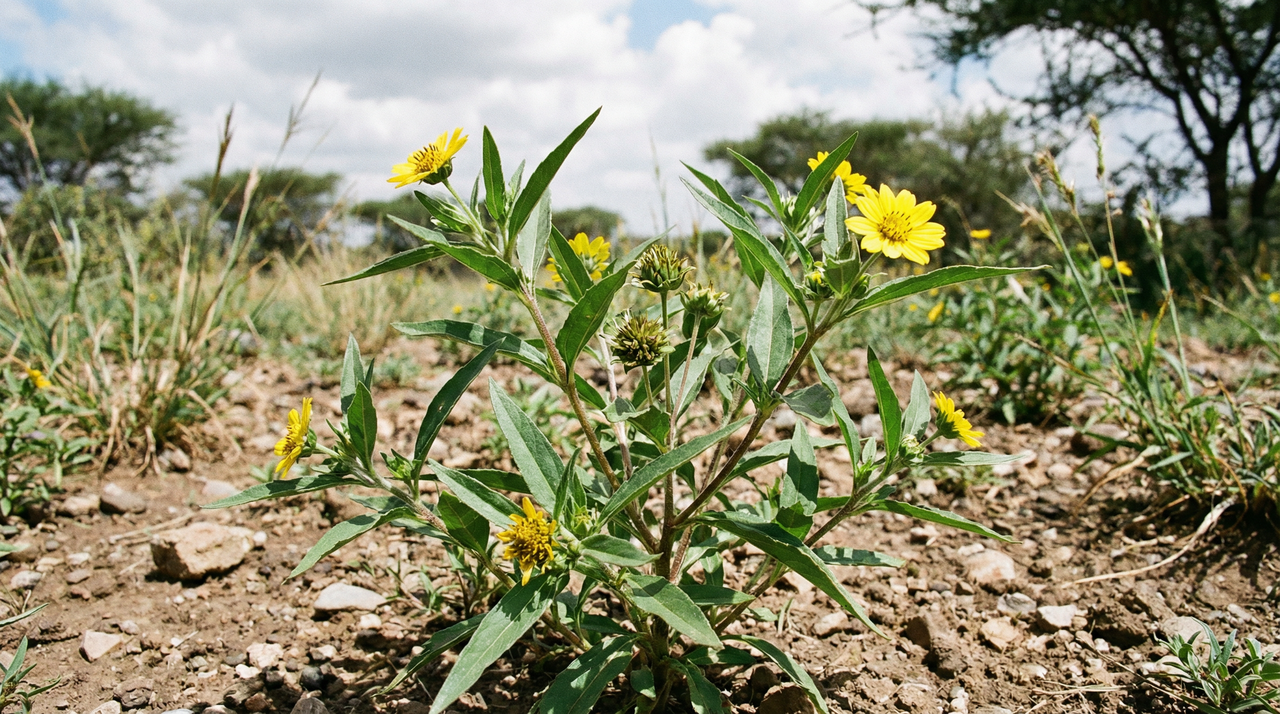
In the garden, niger seed is a rangy, open-branched herb that can reach anywhere from half a meter to two meters tall depending on soil fertility and moisture.[11] Its taproot is genuinely impressive, capable of driving a meter or more into the soil, which partly explains its drought resilience in dry Ethiopian seasons.[12] The leaves are simple, opposite or nearly so, lanceolate to ovate, lightly serrated along the margins, and covered in fine hairs that give them a slightly rough texture when you run a finger across the surface.[13] I've found the seedlings easy to confuse with a few weedy Asteraceae relatives until those opposite hairy leaves firm up, so I label my rows carefully now.
Come late summer, the plant produces clusters of bright yellow capitula (composite flower heads) 5 to 10 millimeters across, each made up of ray and disc florets arranged just as you'd expect from a sunflower cousin.[14] The flowers give way to small black achenes (the seeds we actually harvest), containing 30 to 45% oil by weight, which is the number that has made this crop economically significant for centuries.[15]
Traditional and Cultural Uses
In Ethiopia, where niger seed has been cultivated since at least the Aksumite period, it's woven into daily life in ways that go far beyond a single use.[16] The seeds and their pressed oil appear in injera preparation, wat stews, and niter kibbeh, the spiced clarified butter that is a cornerstone of Ethiopian cooking. The oil also served historically as lamp fuel. Among Amhara, Oromo, and Gurage communities, niger carries deep symbolic weight: it appears at weddings, Orthodox Christian festivals like Timkat, and harvest celebrations as a token of fertility and abundance.[17] That warming, nutty flavor profile makes the culinary tradition immediately intuitive even if you're coming to it fresh.
Ethiopian traditional medicine draws on niger extensively. Ethnobotanical surveys have documented more than twenty distinct applications, covering topical use on wounds, eczema, and scabies; internal use for respiratory complaints like coughs and asthma; relief for rheumatism and joint pain; digestive support; and use as a laxative, with leaves sometimes applied directly to skin infections.[18][19] That breadth of use speaks to a long, observational relationship between farming communities and this plant.
In India, where it's called ramtil, niger seed found a parallel role in Ayurvedic practice for digestive disorders, fever, joint pain, and as a hair tonic. Tribal communities like the Gond and Bhil incorporate it into curries and folk remedies, and it appears as an offering at festivals including Pongal and Badipooja.[20] In Nepal, the Tharu and other indigenous groups consume the seeds roasted as snacks or press them for frying oil, a quieter but consistent presence in highland diets.[21]
Fun Facts and Modern Significance
The economic story of niger seed is a tale of two markets. In Ethiopia, it remains a vital smallholder oilseed crop, with seeds containing 30 to 40% oil dominated by linoleic acid (70 to 75% of the fatty acid profile), and average field yields running 500 to 1,000 kilograms per hectare.[17][22] Globally, though, the plant's biggest market is the backyard bird feeder. The U.S. birdseed trade in niger was valued around $35 million in 2019, driven primarily by its popularity with American Goldfinches and other finches.[23] That's how most people on this continent encounter it, and there's a common misconception worth clearing up: niger seed is not thistle. The "nyjer" branding used by the birdseed industry is a trademark, not a botanical claim.
The plant shows genuine phenotypic plasticity across growing conditions, even though cultivated varieties carry relatively limited genetic diversity.[24][25] Active genebank collections give breeders the raw material to work with as climate pressures intensify, which matters for a crop this central to food security in the Horn of Africa. For gardeners in warmer climates curious about an ancient oilseed that feeds people, attracts pollinators, and pulls double duty at the bird feeder, the history alone makes a compelling argument.
Niger Seed Varieties and Sourcing
If you want to understand Guizotia abyssinica as a cultivated plant, you have to start in Ethiopia. That's not just botanical trivia; Ethiopia is the center of origin and holds over 80% of global production, with a sprawling collection of landraces adapted to everything from highland mist to semi-arid lowlands.[26][2] That genetic breadth is what gave breeders something to work with.
Notable Niger Seed Cultivars from Ethiopia, India, and Kenya
The seeds themselves are small, black, and lightly nutty -- I'd describe them as a miniature sunflower seed without the hull, though even more delicate in the hand. Improved cultivars push seed weight toward 3-4 grams per thousand seeds, which sounds trivial until you're trying to maximize oil yield on a small plot.[27]
Ethiopia's EIAR has released a long roster of named cultivars, but three are worth knowing by name. Nera is adapted to altitudes between 1,500 and 2,500 meters with meaningful pest resistance. Getet carries resistance to both Striga and rust, which matters enormously in humid conditions. Sasiga is a mid-altitude performer with enhanced seed size and oil yield, pushing oil content up toward 40%.[26][28][29] When you're shopping for seed and see these names, they're not random labels -- each reflects specific breeding goals around altitude tolerance, disease pressure, and seed quality. India's UAS Bangalore contributed lines like JNC-1 and N-8 for similar reasons: yield, oil quality, disease resistance in South Asian conditions.[30][31] Kenya developed KNF-1 for semi-arid adaptation.[29] Backing all of this is a germplasm collection of over 1,000 accessions held between EIAR and ICRISAT, which keeps the raw diversity available for future breeding work.[32][26]
Where to Buy Niger Seed: Regulations, Availability, and Practical Purchasing Tips
The bag of "nyjer seed" or "thistle seed" at your local wild-bird store will not germinate.[4][33] USDA APHIS requires imported niger seed destined for the birdseed market to be heat-treated specifically to prevent germination, removing weed-seed contaminants in the process.[34][35] I tested this myself with a batch from a feeder bag and got exactly zero sprouts. Don't waste a season on it.
For viable planting seed, go directly to specialty suppliers. Johnny's Selected Seeds and Baker Creek Heirloom Seeds both carry it, and small packets of 100-500 seeds typically run $2-5, with larger quantities around $10-20 per pound.[36][37] Starter plants are rare and run about $5-10 from specialty nurseries when you can find them at all, but honestly direct sowing is so straightforward that transplants aren't worth the trouble or expense.[36][38]
One thing I reassure gardeners about regularly: niger seed is not invasive. The USDA lists it as introduced and sparingly naturalized in parts of Florida and Texas, but holds no federal noxious weed status for it.[4][39] I've grown it in Central Florida and never once had a volunteer show up somewhere unwanted. Grow it with confidence, just source your seed from the right place.
Niger Seed Propagation and Planting (Guizotia abyssinica)
Seed Characteristics and Storage
The seeds themselves tell you a lot about how this plant wants to be grown. Guizotia abyssinica seeds are tiny, only 2-4 mm long, teardrop-shaped, and glossy black from the high oil content packed inside.[40][41] The plant is predominantly self-pollinating with outcrossing rates below 5%, which means saved seed stays true-to-type year after year without any isolation protocol you'd need for cross-pollinating crops.[40][42] That's genuinely good news for seed savers.
Niger seed also exhibits orthodox storage behavior, meaning it tolerates desiccation well and holds viability for years when kept properly.[43] Optimal conditions are 5-7% moisture content at 5-10°C for medium-term storage, or -18°C for long-term, sealed in moisture- and oxygen-proof containers with a desiccant included.[43][44] Germination can stay at 80-90% after five years under those conditions, but drops below 50% after just one to two years at room temperature.[45] I keep mine in airtight glass jars with silica packets in a cool garage and have had germination hold up reliably into the third year, which matches the research perfectly. Seed is the only practical propagation method for this annual; it needs a frost-free period of 120-150 days and the autogamous biology makes vegetative propagation pointless outside a lab setting.[46][47]
Germination Requirements and Timeline
Optimal germination happens between 20-30°C (68-86°F), with seedlings typically emerging in 5-14 days and success rates running high when the soil is genuinely warm.[46][48][47] Germination slows dramatically below 15°C, and I learned this the hard way in an early trial where I jumped the gun by two weeks and got a patchy, uneven stand. Waiting until the soil thermometer reads at least 68°F before sowing made a noticeable difference.
A simple pre-sowing treatment can improve your odds: clean the seed, optionally soak it for 12-24 hours, and consider a fungicide treatment like thiram if damping-off has been a problem in your beds.[47][49] For organic systems, the soak alone is worth doing. One practical note: the seedlings look remarkably similar to other composite-family annuals in the first week or two, so label your rows carefully before you forget what you planted where.
Soil Preparation and Site Selection
Niger seed has non-negotiable opinions about drainage. It wants well-drained loamy or sandy-loam soil with a pH between 5.5 and 7.5, ideally sitting in the 6.0-7.0 sweet spot, at least 30-45 cm deep to accommodate its taproot.[50][2] Waterlogging is genuinely fatal to this crop, and compacted soil above 1.6 g/cm³ bulk density slows root development noticeably.[50] I recommend a basic soil test kit before planting; in my experience, moving pH into that 6.0-7.0 range with a lime amendment improved branching and seed set in ways I could see clearly at harvest. Think of the drainage requirement the way you'd think about sunflowers or zinnias: they'll sulk and fail in a low spot, and so will this plant.
Full sun, meaning 6-8 hours of direct light daily, is equally non-negotiable.[51][52] The species evolved in open Ethiopian highland savannas, not in dappled shade, and reduced light cuts both yield and oil content.[53] Incorporate 1-3% organic matter into your planting area before sowing; the deeper tillage and amendment work pay back in root development and overall plant vigor through the long growing season.
Direct Sowing, Spacing, and Planting Technique
Sow directly into the ground. Transplanting causes enough shock to set plants back significantly, and there's simply no reason to start these in trays when direct sowing in warm soil works so reliably.[47][54] Sow 1-2 cm deep; any shallower and the seeds dry out, any deeper and emergence is slow and uneven.[47] Because the seeds are so small, mixing them with dry sand before broadcasting helps distribute them evenly across the bed without creating clumps.
For row plantings, target 30-45 cm between rows with 10-15 cm between plants, aiming for a stand density around 200,000-300,000 plants per hectare.[55][56] On lower-fertility soils or in organic systems, err toward the wider end of that spacing to give plants more room to branch without competing for nutrients. Mature plants reach 0.5-2 m tall with a 0.3-0.6 m spread, so dense plantings on rich soil can cause lodging.[57]
Timing is the last piece: plant after your last frost date, once soil has reached at least 15-20°C, and keep the seedbed consistently moist through germination.[58][49] Once established, the niger seed crop is moderately drought tolerant and asks for relatively little. Get the warmth, drainage, and depth right at the start, and the plant handles the rest.
Niger Seed Care Guide
Niger seed isn't a complicated plant to grow, but it is an unforgiving one if you misread the calendar. Get the season right and the rest of the work is mostly observation. Fumble the timing or let it meet a late frost, and you're starting over.
Seasonal Rhythm and Growth Cycle
Plan on 90 to 120 days from sowing to harvest, and make sure every one of those days falls within your frost-free window.[2][59] Niger seed is a short-day plant, meaning flowering is triggered by shortening daylength rather than a specific calendar date, so in temperate gardens the plant will typically come into bloom as summer tips toward fall. I've found this makes timing feel a bit counterintuitive at first: you're sowing in the warmth of late spring or early summer, but the plant is essentially waiting for August nights to shorten before it commits to flowering. In practice, this means your entire vegetative window happens in peak heat, your flowering window catches the early transition, and your seed fill is racing against the return of cold. Map that arc onto your local frost-free dates before you sow a single seed.
Water Needs and Drought Tolerance
Niger seed originates from Ethiopian and Eritrean highlands at 1,500 to 2,700 meters, where soils are well-drained and annual rainfall sits between 500 and 1,200 mm.[60] Total seasonal water use is roughly 400 to 600 mm, but distribution matters far more than volume. Once the taproot is established, the plant handles short dry spells reasonably well; the hairy leaves reduce transpiration and the deep root can chase moisture down.[60][6] I water deeply every 7 to 10 days once the plant is established rather than giving it shallow drinks daily, and I've watched it bounce back from short dry spells without measurable yield loss.
That resilience disappears the moment flowering begins. During seed set, water stress directly reduces seed size and oil content, so this is not the time to let the soil dry out.[60][6] A practical schedule: light irrigation of 20 to 30 mm every 7 to 10 days at the seedling stage, stepping up to 40 to 60 mm every 5 to 7 days through vegetative growth, then 50 to 70 mm every 4 to 6 days during flowering and seed fill, maintaining soil moisture to 30 to 60 cm depth.[61] If you see leaves rolling or edges going brown and crispy, you've waited too long. The flip side is equally damaging: soggy soil invites Fusarium and Pythium root rot, with yellowing, wilting, and the unmistakable sour smell of anaerobic roots.[62][63] Deep, infrequent watering and avoiding overhead irrigation are the simplest preventive measures.
Sunlight Requirements and Heat Tolerance
Full sun, 6 to 8 hours minimum, is non-negotiable for good seed yield.[59][64] Shade-grown plants show reduced vigor, poor seed set, and the bleached look of photoinhibition; they simply don't have enough energy to fill seeds properly.[65] The one exception is peak heat above 35°C, where 30 to 50% shade cloth during the hottest part of the day can prevent leaf scorch without meaningfully reducing light for photosynthesis.[59] I treat this the same way I treat basil or sunflowers in July heat waves: the plant drops flowers above roughly 95°F, so I deploy 40% shade cloth over flowering heads during the worst afternoon heat spikes. Above 35°C, expect leaf scorch and flower drop; sustained heat above 40°C pushes yield losses into the 20 to 40% range.[66][62] A 5 to 10 cm organic mulch layer reduces soil temperature by 2 to 4°C and is probably the single easiest intervention for hot climates.[67] Wider row spacing of 45 to 60 cm also improves airflow and reduces heat buildup between plants.[67]
Fertility and Soil Management
Niger seed prefers well-drained loamy soil with a pH between 5.5 and 7.5.[60][4] Standard recommendations land around 30 to 60 kg N, 20 to 60 kg P₂O₅, and 20 to 40 kg K₂O per hectare, with the full phosphorus and potassium dose plus half the nitrogen worked in before planting, and the remaining nitrogen side-dressed 25 to 30 days after sowing.[68][69] I always incorporate well-rotted manure or compost at planting; about 5 to 10 tonnes per hectare (or a generous barrowful per bed) is the conventional recommendation, and on sandy soils I've seen it make a visible difference in early root development.[68] I've also learned the hard way about excess nitrogen: a patch that got too much in a rainy season lodged badly and the yield was disappointing, so now I split applications strictly and let a soil test guide the second dose rather than guessing.[68]
Potassium is worth paying particular attention to because it directly supports oil content and disease resistance.[70][71] Deficiency shows as marginal leaf necrosis on older leaves with noticeably weak stems. Phosphorus shortage produces that purplish tint on younger growth I've learned to catch early, especially on acidic sandy soils where it locks up quickly.[72] Nitrogen deficiency is the most obvious: yellowing on older leaves and stunted, sparse branching. Soil test every two to three years and lean on local extension advice rather than applying generic oilseed programs, since rates vary considerably by region.[70]
Frost Sensitivity and Temperature Limits
Niger seed cannot tolerate frost. Light frost damages foliage; anything below -2°C (28°F) sustained for more than a night or two kills the plant outright.[26][73] Optimal growth happens between 15 and 30°C, and germination won't reliably begin below 15 to 18°C soil temperature.[4] After losing a patch to an unexpected late frost in my zone 9b garden, I stopped trusting the calendar and started trusting the soil thermometer: I don't direct sow until that reading holds steady at 18°C. It's usually a couple of weeks later than I'd like, but it's never failed me since.
Niger seed is reliably suited to USDA zones 9 to 11 as an annual; growers in cooler zones can succeed with season extension tools like row covers and windbreaks, but you're working with a narrower margin.[4][73] Mulch helps here too, moderating soil temperature swings in spring and fall that can stress emerging seedlings or late-season plants.
Pruning, Maintenance, and Monitoring
Niger seed needs almost no intervention once it's up and growing well. At 0.5 to 2 meters tall with naturally branching stems, it doesn't require staking or pruning under normal conditions.[74][75] As the plant matures, taper irrigation gradually to avoid excess soil humidity that creates favorable conditions for fungal disease.[74] Mulch remains useful through the whole season, handling moisture retention, weed suppression, and temperature moderation in one layer. If you're asking how to stop niger seed growing where it isn't wanted, the simplest answer is timely harvest before seed shatter: the plant doesn't spread aggressively, and removing spent heads before they drop solves the problem entirely.
The real maintenance work is attentive observation during that 90 to 120 day window. Watch for stress signals at the canopy: rolling leaves mean water, bleached patches mean heat, purplish tints mean phosphorus. A plant well-matched to its site and guided through those critical flowering and seed-fill stages largely takes care of itself in a thoughtfully chosen guild.
Niger Seed Harvesting: Timing, Technique, and Flavor
Niger seed runs on a tight calendar. From sowing to harvest, the whole lifecycle wraps up in 120-150 days,[76][77] and once flowering kicks off, you've got a 30-45 day window before seeds hit maturity.[77] For spring-planted U.S. crops, that means flowering runs June through August and harvest lands in late summer or fall.[78] Plan your season around those numbers from day one.
When to Harvest Niger Seed
The window is short and the penalty for missing it is real. Niger seed shatters -- those tiny achenes drop from open capsules fast once the plant decides it's done. I watch my test plots daily once the first seeds start turning dark, because from that point I've got roughly seven to ten days before shatter losses start climbing. The practical cue is color: harvest when 75-80% of seeds have shifted to dark brown or black, capsules are beginning to open, and the seeds themselves feel uniformly hard and brittle between your fingers.[79][80] Physiologically, that's also the moment oil content peaks, somewhere in the 35-50% range, when seed moisture has dropped to 6-8%.[81][80] Waiting for full uniform blackening to feel "safe" actually costs you oil quality and seed yield simultaneously. For context, Ethiopian farmers harvest September through November, Indian growers January through February, and Ethiopian landraces can mature anywhere from 110 to 140 days depending on altitude.[82][27] The regional variation is wide, but the on-plant indicators are the same everywhere.
How to Harvest and Process Niger Seed
At scale, direct combining or swathing at the 75-80% dark-seed stage is standard practice.[79] For home plots, cutting and hanging bundles works fine, though niger's small seed size makes shatter losses more punishing than with sunflower -- think sesame, not sunflower, in terms of how unforgiving a gust of wind can be. Whatever your method, post-harvest drying is non-negotiable. Spread seeds in thin layers and dry under shade or sun for three to seven days until moisture drops to 8-10%.[79][83] I learned the hard way in a humid summer that skipping thin-layer drying turns an oily seed into a mold problem within days. Once properly dried, store in clean, airtight containers kept below 25°C with low humidity.[83][84] Rancidity follows moisture; protect the oil and you protect the seed's value as both food and future planting stock. If you're asking how long niger seed stays fresh, that depends almost entirely on whether you hit those storage conditions -- cool, dry, airtight is the answer to does niger seed go bad before its time.
Yields, Flavor, and Seed Characteristics
Expect 500-1,500 kg/ha from a well-managed stand; improved cultivars push toward the upper end while Ethiopian landraces more typically yield 400-800 kg/ha.[80][85] In my experience, hitting that upper range on a home plot comes down almost entirely to harvest timing -- late harvests shatter their way to mediocre yields no matter how well the rest of the season went. What you're actually collecting are small 2-4 mm oval achenes, black to dark gray, with a hard lignified pericarp and 35-45% oil content packed inside that modest exterior.[86][10] Raw from the field, they smell mildly earthy with a faint green quality. Roast them, and the transformation is genuinely striking -- Maillard reactions develop a pronounced nutty, coffee-like aroma that makes the seed suddenly legible as the culinary ingredient central to Ethiopian and Indian cooking.[87][88] The flavor itself lands somewhere near sesame but softer, with earthy undertones and a crunch from that hard shell. For anyone interested in pressing their own oil, the extracted oil is smooth and low-viscosity with an iodine value of 130-140 and saponification value of 190-195.[89] That oil profile is also a big part of why the seed commands premium prices as birdseed -- it's genuinely nutritious, not just small and black.
Niger Seed Preparation and Uses
Culinary Applications and Nutritional Profile of Niger Seed
The seeds are the real prize here, and the leaves are a distant second. Young niger leaves do show up as a potherb in rural East African cooking,[11][90] but I'd want to be confident in your ID before foraging them -- young niger foliage looks enough like Bidens pilosa and other weedy Asteraceae relatives that a mistake is easy. Stick to the seeds until you know the plant well.
Before anything else: roast or parboil them. Raw niger seeds contain guizotia abyssimides, lectins, trypsin inhibitors, and guizotia acid -- anti-nutritional compounds that processing neutralizes.[91][92] I always roast mine before any kitchen use; skipping that step isn't a shortcut -- it's just leaving the problem in the food. The good news is that roasting does far more than make the seeds safe. The aroma shift is dramatic: what starts as a mildly bitter, earthy note transforms into something rich and deeply nutty, reminiscent of toasted sesame with a bit more punch.[93][94] Once you've smelled a small pan of niger seeds hitting that toasted stage, you'll understand why Ethiopian cooks have built an entire condiment tradition around them.
That tradition is extensive. Roasted seeds go into injera batter, wat stews, kitfo, fermented coffee-like beverages, and seasoning pastes like t'beb or nug.[11][95] In southern India, the same roasted seeds are eaten as a crunchy snack under the names Noog or Ramtil.[90] The nutritional case for all this effort is solid: 100g of seeds delivers 25-30g protein, 35-42g fat, significant calcium, up to 30mg iron, and 250mg magnesium.[96][97]
The pressed oil -- 35-42% of seed weight -- runs 70-80% linoleic acid with high vitamin E content.[98] Think of it like a more assertive sesame oil: nutty, slightly pungent, with a mild astringent finish.[99] Commercial niger seed oil typically goes through degumming, neutralization, and deodorization to soften that edge,[92][22] and properly refined oil has the oxidative stability and high smoke point you want for frying. Properly dried seeds stored below 15°C at low humidity maintain both quality and safety through long storage,[100] and allergenicity is generally low -- though if you're sensitive to sesame, cross-reactivity is possible.[101][102]
Traditional Medicinal Preparations from Niger Seed
Ethiopian traditional medicine applies niger seed oil topically for skin conditions, wounds, and rheumatism; Ayurvedic practice uses it internally for digestive and respiratory complaints and inflammation.[103][104] Typical traditional guidance lands around 1-2 teaspoons of oil or decoctions from 5-10g of seeds daily, though these figures aren't clinically standardized.[105] The processing approach mirrors culinary preparation -- the same roasting that makes seeds safe to eat also underpins most seed-based decoctions. The phytochemical research on why these preparations seem to work, particularly the anti-inflammatory and antioxidant mechanisms, is covered in the health benefits section. Here, the point is context: these are longstanding cultural practices grounded in generations of observed use, not marketing claims.
Non-Food and Industrial Uses of Niger Seed
Most North American gardeners encounter niger seed long before they think of cooking with it, because in the US it's primarily sold as premium finch and songbird feed -- commercially produced in Texas and Oklahoma as an introduced crop.[9][10] Labeling constraints have kept it out of the US human food market almost entirely,[27] which is genuinely strange given its nutritional profile. Meanwhile, industrially, that same high-linoleic oil goes into soap manufacturing, paints, varnishes, and lubricants.[106]
From a permaculture standpoint, what I find most compelling is the crop's footprint. Niger seed needs minimal inputs, supports pollinators through its pollen-rich flowers, contributes to soil health, and produces yields of 500-800 kg/ha without nudging toward invasiveness outside its native range.[107][108] I've grown similar drought-tolerant Asteraceae annuals in zone 9B polycultures and the pattern holds -- low water, low fertility demand, high ecological return. Growing niger for dual use as birdseed and occasional home roasting makes excellent sense in a warm-climate guild design where you want something that gives back more than it takes.
Niger Seed Health Benefits
What strikes me most about niger seed, having grown and pressed various oilseeds over the years, is how much biological activity is packed into those small black achenes. The health story starts at the chemical level, and it's a genuinely interesting one.
Key Phytochemicals in Niger Seed
Niger seed contains 10-20 mg/g of phenolic compounds, including flavonoids like quercetin, kaempferol, and rutin, alongside phenolic acids such as gallic, ferulic, caffeic, and chlorogenic acids, all of which contribute meaningfully to its antioxidant activity.[109][110] The oil itself is dominated by linoleic acid (omega-6), comprising 70-80% of fatty acids, with oleic acid at 15-20% and the remainder split between palmitic and stearic acids; oil content runs 35-40% of total seed weight.[111][112] That fatty acid dominance drives most of the observed biological activity. Rounding out the profile are lignans including sesamin (0.5-1.5% of the oil) and sesamolin, phytosterols like beta-sitosterol (200-300 mg/100g oil), tocopherols at 50-70 mg/100g oil, tannins, saponins, and trace sesquiterpene lactones and glycosides.[113][114]
For growers, there's something practically useful buried in the variation data. Seeds contain 3-5 times more total phenolics than leaves, plants grown at higher altitudes or in alkaline soils show 20-30% increases in certain antioxidants and kaempferol derivatives, and organic fertilization boosts flavonoids by roughly 28%.[115][116] I've noticed something similar with other Asteraceae oilseeds I've grown: seeds from plants stressed by leaner soils or cooler high-elevation sites tend to develop more intensity in flavor and pungency. That's the phytochemical variation you can actually taste. Wild populations also show up to 25% higher flavonoids than cultivated varieties, which is worth keeping in mind when assessing the pharmacological research.[115]
Nutritional Profile of Niger Seed
The seeds are the primary edible part, typically consumed roasted or pressed into oil, with a standard serving of 20-30 grams.[117] Per 100g raw, you're looking at 553 kcal, 26.5g protein, 41.7g fat, 29.2g carbohydrates, and 10.5g dietary fiber, with linoleic acid making up roughly 38% of total seed weight.[97][118] Vitamin E content is genuinely striking at about 35.3 mg alpha-tocopherol per 100g (235% DV), and the B-vitamin picture is strong: B6 at 68% DV, thiamin at 62% DV, niacin at 41% DV, and folate at 24% DV.[119] The mineral density rivals almost anything in my seed pantry:
- 1290 mg calcium
- 37.5 mg iron
- 800 mg potassium
- 540 mg phosphorus
- solid amounts of zinc, manganese, and copper per 100g
Here's the practical bit: roasting at 120-150°C for 10-20 minutes reduces anti-nutritional factors like phytic acid, tannins, and polyphenols by 20-50%, pushes protein digestibility from roughly 70% to above 85%, improves mineral bioavailability, and inactivates trypsin inhibitors.[121][122] Excessive heat does trim tocopherols slightly, so I've found that 15 minutes at 140°C hits the sweet spot in my own trials with niger and similar seeds: anti-nutritionals are well reduced, flavor develops fully, and most of that impressive Vitamin E stays intact. The phytosterols (200-300 mg/100g oil) and phenolics also support cholesterol-lowering and cardiovascular benefits that compound on top of the unsaturated fat and lignan profile.[123]
Medicinal Research and Pharmacological Properties
Ethiopian and Indian traditional medicine have long used niger seed for rheumatism, skin disorders, wounds, digestive complaints, and as a laxative, with ethnobotanical reports also noting adaptogenic, nervine, and sedative effects, though those last claims lack robust clinical backing.[124][125] Modern bench research is building a credible foundation for at least some of these uses. Seed extracts show strong DPPH radical scavenging activity comparable to ascorbic acid, reduce pro-inflammatory cytokines including TNF-alpha and IL-6, and inhibit both COX-2 and LOX enzymes.[104][126] Anti-diabetic potential shows up through alpha-glucosidase inhibition and improved glucose tolerance in animal models, and antimicrobial activity against Staphylococcus aureus and Candida albicans has been documented, attributed to thymoquinone, essential oils, and fatty acid fractions.[127][128]
Preliminary work also points to hypolipidemic, hepatoprotective, analgesic, and antispasmodic effects, which broadens the nutraceutical picture considerably.[114] Most of this evidence comes from in-vitro and animal studies; large-scale human trials are thin. That's a real gap, and I won't pretend otherwise. What I will say is that the consistency between centuries of traditional use, the animal-model anti-inflammatory data, and the digestive gentleness I've observed in properly roasted seed gives me reasonable confidence in moderate culinary use while we wait for the clinical literature to catch up.
Safety Considerations for Niger Seed
Niger seed is generally recognized as safe at moderate dietary intakes of 10-20g per day, especially when roasted or consumed as oil. There are no significant adverse effects documented from normal use, no hepatotoxicity, no genotoxicity at dietary levels, and the acute toxicity threshold (LD50 above 2000 mg/kg in rodents) is reassuringly high.[129][130] Raw seeds carry mild anti-nutritional factors (saponins, phytic acid, tannins, trace lectins) that can cause mild GI discomfort or reduce mineral absorption in large quantities, but roasting cuts those by 20-50%.[121][131] There are no cyanogenic glycosides, harmful alkaloids, gossypol, or major toxins; erucic acid is present only at trace levels below established safety thresholds.[121]
A few caveats are worth taking seriously. Anyone with Asteraceae or sesame sensitivities should approach with care, as rare anaphylaxis has been documented.[132][114] Pregnancy caution applies due to limited specific human data. The anticoagulant interaction is one I take seriously: the linoleic acid content is high enough that it can meaningfully potentiate drugs like warfarin. If you're on blood thinners, talk to your doctor before using niger seed medicinally or as a concentrated oil supplement. That's not generic hedging -- the fatty-acid interaction data is clear enough to warrant the conversation.[132][114] For birds and livestock the safety record is excellent; for dogs and cats the data is limited but no toxicity has been established.[133][134] One sourcing note worth mentioning: commercial seed lots can occasionally be contaminated with toxic weed species like Senecio, so buy from reputable suppliers.[135]
Niger Seed Pests and Diseases
Niger seed is not a carefree plant, and I'd rather tell you that upfront than let you find out mid-season with half your stand collapsing. The good news is that the plant does have some built-in defenses: a suite of flavonoids, phenolics, and terpenoids that act as antifeedants, plus dense glandular trichomes on the leaves that physically gum up small insects.[136][137] I noticed this firsthand the first time I rubbed a leaf between my fingers -- there's a sticky, faintly resinous quality that makes sense once you know the chemistry. But that chemistry takes you only so far, especially when your site has the warm, humid conditions that most of its worst pathogens and insects absolutely love.
Major Insect Pests of Niger Seed
The pest list for Guizotia abyssinica is genuinely long: Helicoverpa armigera, aphids (Aphis fabae, Myzus persicae, Aphis gossypii), bruchid beetles, leaf beetles, stem borers, flea beetles, cutworms, grasshoppers, and leaf miners all show up in the literature.[138][139][140] Helicoverpa is the one that keeps growers up at night. I've watched the same caterpillar devastate sunflowers and tomatoes in my garden, so seeing it hammer niger at flowering and podding stages was no surprise -- but a 30-60% yield loss when populations peak is a number worth taking seriously.[141][142] Aphids are subtler but arguably more damaging over time because they transmit viruses and leave honeydew that fuels sooty mold, ultimately stunting growth and cutting seed set.[143][144] And the threat doesn't stop at harvest: bruchid beetles (Callosobruchus spp.) move into stored seed and can eat through 20-30% of your yield if storage conditions aren't managed.[145]
Some partially resistant cultivars exist -- 'N-1' and 'N-6' from India, 'K-2' from Ethiopia -- offering modest gains against aphids, leaf miners, and stem borers.[146][147] In my experience, though, the bigger wins still come from cultural timing rather than genetics. No variety is bulletproof, and the plant's own trichomes and secondary metabolites, impressive as they are, need cultural support to do meaningful work.
Key Diseases and Their Triggers
The fungal disease list is equally sobering: rust (Puccinia guizotiae), downy mildew, powdery mildew, Alternaria leaf spot, Fusarium wilt, Sclerotinia stem rot, and Sclerotium rolfsii root rot are all documented.[148][149][150] Rust is the one I watch most closely; it produces orange pustules on leaves and stems and can defoliate plants enough to cost you 30% of your harvest, though some Ethiopian lines like 'N-6' show better tolerance than others.[148][139] I learned the hard way that overhead watering in late summer almost guarantees Alternaria and powdery mildew -- switching to drip and widening spacing was the single change that made the difference between a total loss and a usable harvest. High humidity above 80%, temperatures between 20-30°C, and poorly drained soil are exactly the conditions that accelerate spore germination across this whole disease complex; keeping humidity below 70%, temperatures toward the cooler end of that range, and drainage excellent are the most reliable levers available.[151] Bacterial wilt (Ralstonia solanacearum) and root-knot nematodes round out the threat profile; both are rare but devastating when they arrive, and genetic resistance to either is thin.[148] Under severe pressure, fungal diseases alone can strip 20-50% of yield depending on timing and weather.[149]
Integrated Management Strategies
The most important thing I can tell you is that an IPM approach -- cultural controls first, biological controls where available, targeted chemistry only at threshold -- can reduce pesticide use by 30-50% compared to calendar spraying.[152][153] The cultural toolkit does most of the heavy lifting: a 2-3 year rotation with non-host cereals, timely sowing to sidestep peak pest and disease windows, proper plant spacing, weed control, and prompt removal of infected debris all address both pest and disease pressure simultaneously.[154][155] Those same practices also support the plant's own phytochemical defenses rather than overriding them. Breeding programs in Ethiopia and India are still working toward better resistance, but widely available fully resistant cultivars remain a work in progress.[156] For chemical intervention, I keep a simple rule: I only reach for a fungicide when I see rust pustules on more than 10% of the plants; anything less and cultural fixes have always been enough for me. When thresholds are genuinely exceeded, mancozeb or carbendazim for fungi and neem-based products for insects are the go-to options, applied judiciously to slow resistance development.[155] Stay ahead with sanitation and drainage, and these are manageable stresses rather than season-ending ones.
Niger Seed in Permaculture Design
When I first started researching Ethiopian highland crops for subtropical food-forest designs, niger seed kept showing up in contexts I hadn't expected: erosion control on steep slopes, pollinator strips between cereal rows, quick-establishing border plantings that feed birds through winter. What struck me was how tightly its ecological role is tied to where it comes from. Understanding that origin is the prerequisite for placing it well in any system.
Climate and Growing Zones for Niger Seed
Because of its native highland habitat, the plant is adapted to warm days, cool nights, and a fairly specific temperature window.[157][158] Optimal growth happens between 20-30°C (68-86°F), with the vegetative and flowering stages preferring that 20-25°C sweet spot; below 15°C growth slows noticeably, and a frost event near 0°C can kill seedlings outright.[157][46] That frost sensitivity is non-negotiable and shapes every design decision. It can tolerate brief spikes to 40°C, but sustained heat above 32°C starts suppressing yields, so the plant likes warmth without punishment.[159][48]
Rainfall of 500-1,000 mm distributed through the season suits it well, with 600-900 mm being the real productive range.[2] Once established it handles dry spells reasonably well, but waterlogging is a genuine problem: excess moisture above 1,200 mm can trigger lodging and disease pressure that rolls together into a bad season fast.[160] I've found that consistent warmth drives far better flowering than irregular heat, which is something you feel in the field watching the plants either surge or stall depending on your microclimate.
As a primary growing zone, USDA 9-11 is the comfortable range, with some sources extending that to zone 8 given adequate frost-free days and a season of at least 180 days.[157][4] In cooler zones (5-8) it's grown as a protected annual, and experimental cultivation across California, Florida, Texas, and the Southeast has shown it's promising territory for birdseed or small-scale oil production.[161] For those of us designing food forests in the subtropical South, it fits naturally as a fast annual that fills seasonal gaps.
Ecosystem Functions and Guild Roles
Niger seed grows as an erect annual herb reaching 0.5-2 meters, with branched stems and bright yellow daisy-like flower heads 2-5 cm across that bloom from summer into early fall.[162][11] Those flowers are pollen-rich but relatively low in nectar, so what they offer pollinators is primarily protein rather than sugar.[162] Honeybees, wild bees, flies, butterflies, and thrips all visit, which matters practically: bee-mediated cross-pollination can boost seed yields by 20-30% over what the plant sets through self-pollination alone.[163][164] In my own plantings near established hive sites, I've noticed measurably heavier seed heads at harvest, which lines up with that research figure in a satisfying, observable way.
Niger seed is not a legume and does not fix nitrogen.[165] Unlike a lot of cover crops I reach for when I want to feed the soil, its contribution is biomass. Its residues decompose into organic matter that builds soil structure and feeds microbial communities, which is genuinely valuable even without the nitrogen bonus.[166] On slopes especially, that dense growth and shallow taproot system work together to reduce erosion during the critical establishment window before perennial groundcovers fill in.[167] I've seen it stabilize a fairly steep test planting in a way that surprised me given how modest the plant looks.
Its seeds are the other functional output worth planning around. They're the foundation of a high-protein birdseed that attracts finches and other seed-eating birds in particular.[168] Expect yields of 400-800 pounds per acre under reasonable conditions, with favorable sites pushing toward 1,000.[169] The plant doesn't naturalize or escape cultivation readily in North American settings, so the non-invasive behavior is a real positive for anyone nervous about adding a new annual to a food forest edge.[170] The challenge is that the same birds you're trying to attract will happily strip ripening heads before you get to them. I've learned to either net the plants as they mature or harvest a bit early, which is a lesson I wish someone had told me in year one.
Forest Layer Placement and Companion Planting
At 0.5-2 meters tall with branching stems and opposite lanceolate leaves, niger seed sits comfortably in the herbaceous layer of a food forest, working best along edges and in annual beds rather than under a closed canopy.[4][171] It has moderate shade tolerance, but seed production falls off meaningfully without full sun, so I think of it the way I think about sunflowers or basil: it'll survive in partial shade but it'll thrive in the open.[172] In Ethiopian and Indian agroforestry systems it's traditionally intercropped with taller cereals like sorghum and maize, which tells you something about how well it performs as an understory companion without demanding the prime spot.[171]
For guild design, pairing it with legumes like beans or chickpeas makes practical sense: the legumes supply the nitrogen fixation niger can't provide, while niger contributes the pollinator draw and the biomass that both species benefit from sharing space with.[173][174] Sunflowers are another natural companion given their similar conditions and complementary height profile. Brassicas are the exception to avoid because of overlapping pest pressure.[175] What I love about using niger seed along food-forest borders is that it works as a quick seasonal cover that supports bees actively through its niger seed flower heads, improves organic matter turnover without competing heavily with the woody perennials it surrounds, and gives you a harvestable seed crop at the end. For what birds like niger seed offer, the answer is essentially a finch magnet, which builds a case for deliberately placing it where you want that wildlife activity concentrated rather than scattered through the whole system.
The Plant That Made Me Rethink What "Useful" Looks Like
I almost dismissed niger seed as a birdseed crop and moved on. Then I roasted a small handful, and the smell alone stopped me. Something between coffee and toasted sesame, rising off a seed most North Americans have only ever handled in a finch feeder. That moment is why I keep growing it on the sunny edge of my food forest, where the yellow flowers open and the goldfinches arrive before I do every morning.
Sources 175
- Niger (Guizotia abyssinica): A Crop with Promising Future ↩
- Origin and Distribution of Niger Seed ↩
- Guizotia abyssinica (L.f.) Cass. ↩
- Guizotia abyssinica - USDA Plants Database ↩
- Agronomy of Guizotia abyssinica - ResearchGate ↩
- Agronomic Practices for Niger Seed ↩
- Missouri Botanical Garden: Guizotia abyssinica ↩
- Guizotia abyssinica ↩
- Niger (Guizotia abyssinica) Seed Production in the United States ↩
- Guizotia abyssinica ↩
- Guizotia abyssinica - Wikipedia ↩
- Guizotia abyssinica ↩
- Guizotia abyssinica ↩
- Guizotia abyssinica (L.f.) Cass. ↩
- Niger (Guizotia abyssinica) Seed - Crop Handbook ↩
- Traditional Uses of Plants in Ethiopia ↩
- Cultural and Economic Importance of Oilseeds in Ethiopia ↩
- Ethnobotanical Study of Traditional Medicinal Plants Used by People in Zegie Peninsula, Northwestern Ethiopia ↩
- Traditional Uses of Guizotia abyssinica in Ethiopian Folk Medicine ↩
- Cultural Significance of Oilseeds in Indian Festivals: A Case of Niger Seed ↩
- Cultural significance of oilseeds in Nepalese indigenous diets ↩
- Niger Seed (Guizotia abyssinica) Production and Utilization in Ethiopia ↩
- Niger/Thistle Seed Information ↩
- Guizotia abyssinica (L.f.) Cass.: A Comprehensive Review ↩
- Germplasm Diversity in Guizotia abyssinica ↩
- Niger Seed Production in Ethiopia: Opportunities and Challenges ↩
- Guizotia abyssinica Production Guide ↩
- Breeding and Improvement of Niger (Guizotia abyssinica) in Ethiopia ↩
- Niger Seed Production and Cultivars in East Africa ↩
- Varietal Development of Niger Seed in India ↩
- Breeding for Yield and Quality Improvement in Niger (Guizotia abyssinica Cass.) ↩
- Germplasm Conservation of Oilseed Crops in Ethiopia ↩
- What is Nyjer Seed ↩
- Importation of Seeds and Seedlike Products ↩
- Nyjer Seed Import Regulations ↩
- Niger Seeds for Planting ↩
- Niger Seed (Guizotia abyssinica) ↩
- Guizotia abyssinica Seeds ↩
- Noxious Weed List ↩
- Guizotia abyssinica (L.f.) Cass.: A Comprehensive Review ↩
- Morphology and Taxonomy of Guizotia abyssinica ↩
- Niger Seed Production and Utilization ↩
- Seed Storage of Guizotia abyssinica ↩
- Kew Millennium Seed Bank Storage Protocols ↩
- Seed Storage Behaviour of Niger ↩
- Niger Seed Production Manual - ICARDA ↩
- Niger Seed (Guizotia abyssinica) Production Guidelines ↩
- Agro-Climatic Requirements of Niger Seed - TNAU ↩
- Niger Seed (Guizotia abyssinica) Production Guide ↩
- Guizotia abyssinica (Niger Seed) - Cultivation and Uses ↩
- Niger Seed (Guizotia abyssinica L.) ↩
- Niger (Guizotia abyssinica) Ecology and Cultivation ↩
- Guizotia abyssinica: Habitat and Distribution ↩
- Seed Germination and Planting Guidelines for Niger Seed ↩
- Niger Seed (Guizotia abyssinica) Production Manual ↩
- Niger Seed (Guizotia abyssinica) Production Manual ↩
- Missouri Botanical Garden - Guizotia abyssinica ↩
- Niger (Guizotia abyssinica) Production Guide ↩
- Niger Seed (Guizotia abyssinica) Production Guide ↩
- Niger Seed Cultivation Guide ↩
- Irrigation Management for Niger Seed ↩
- Drought Stress Effects on Guizotia abyssinica ↩
- Pests and Diseases of Oilseed Crops ↩
- Guizotia abyssinica (Niger) ↩
- Response of Guizotia abyssinica to Abiotic Stresses ↩
- Response of Niger (Guizotia abyssinica) to Abiotic Stresses: A Review ↩
- Management of Heat Stress in Niger Seed (Guizotia abyssinica) ↩
- Niger Seed Cultivation Practices ↩
- Guizotia abyssinica Agronomy Guide ↩
- Niger Seed (Guizotia abyssinica) Production Guidelines ↩
- Agronomic Practices for Niger Seed (Guizotia abyssinica) ↩
- Nutrient Management in Oilseed Crops: Niger Seed ↩
- Niger Seed (Guizotia abyssinica) Production Manual ↩
- Niger (Guizotia abyssinica) Production Guidelines ↩
- Niger (Guizotia abyssinica) Production Guide ↩
- Niger Seed (Guizotia abyssinica) Production Guide ↩
- Niger Seed: Production and Utilization ↩
- Guizotia abyssinica (PROSEA) - PlantUse ↩
- Niger (Guizotia abyssinica) Seed Production ↩
- Guizotia abyssinica (L.f.) Cass.: Production and Improvement ↩
- Harvest physiology and seed quality in Niger (Guizotia abyssinica) under Indian conditions ↩
- Niger Seed Production in Ethiopia ↩
- Post-Harvest Management of Oilseeds ↩
- Seed Storage of Niger (Guizotia abyssinica) ↩
- Agronomic Performance of Niger Seed (Guizotia abyssinica) Varieties in Ethiopia ↩
- Guizotia abyssinica ↩
- Volatile Compounds in Roasted Niger Seeds and Their Contribution to Aroma ↩
- Physicochemical and Sensory Properties of Niger Seed ↩
- Physicochemical Properties of Niger Seed Oil ↩
- Ethnobotany of Guizotia abyssinica in Ethiopia - Journal of Ethnobiology and Ethnomedicine ↩
- Missouri Botanical Garden, Guizotia abyssinica ↩
- Akl Akkin (2012), Procedia - Social and Behavioral Sciences ↩
- Flavor Profile of Oilseeds: Niger Seed Analysis ↩
- Physicochemical and Sensory Properties of Niger Seed Oil ↩
- Culinary Uses of Niger Seeds in Ethiopian Cuisine ↩
- Nutritional Composition of Niger Seed (Guizotia abyssinica) - Research Article ↩
- USDA FoodData Central - Seeds, niger ↩
- Nutritional Composition of Niger Seed Oil - ResearchGate ↩
- Niger Seed (Guizotia abyssinica) - Ethnobotany and Uses ↩
- Niger Seed Production Guidelines ↩
- Safety Assessment of Niger Seed Oil for Human Consumption ↩
- Traditional Uses and Safety of Guizotia abyssinica in Ethiopian Diet ↩
- Traditional uses and pharmacological properties of Guizotia abyssinica ↩
- Ethnobotany and Medicinal Uses of Guizotia abyssinica in Ethiopia ↩
- Niger Seed in Ethiopian Cuisine and Medicine ↩
- Industrial Applications of Niger Seed Oil in Cosmetics and Soaps ↩
- Sustainability Assessment of Niger Seed (Guizotia abyssinica) Production in Ethiopia ↩
- Niger Seed: Production, Processing and Utilization ↩
- Phytochemical Analysis of Niger Seed (Guizotia abyssinica) Seeds ↩
- Phytochemical Screening and Antioxidant Activity of Guizotia abyssinica ↩
- Nutritional Composition and Antioxidant Properties of Guizotia abyssinica Seed Oil ↩
- Chemical Composition of Niger Seed (Guizotia abyssinica) Oil by GC-MS ↩
- Fatty Acid Composition and Lignan Content in Niger Seed Oil ↩
- Phytochemical and Pharmacological Review of Guizotia abyssinica (L.f.) Cass. ↩
- Phytocomposition of Guizotia abyssinica: Influence of growth stage and season ↩
- Altitudinal variation in phytochemical traits of niger seed ↩
- Missouri Botanical Garden Plant Finder - Guizotia abyssinica ↩
- Nutrient Composition of Guizotia abyssinica ↩
- Seeds, niger, raw ↩
- Nutritional Composition of Niger Seed (Guizotia abyssinica) ↩
- Nutritional Composition and Processing Effects on Guizotia abyssinica Seeds ↩
- Effect of Roasting on the Quality Characteristics of Niger Seed Oil ↩
- Health Benefits of Guizotia abyssinica: A Review ↩
- Traditional medicinal uses of Guizotia abyssinica in Ethiopia and scientific validation ↩
- Ethnobotanical Study of Medicinal Plants in Ethiopia Including Guizotia abyssinica ↩
- Anti-inflammatory and Anti-diabetic Potential of Guizotia abyssinica Extracts ↩
- Antioxidant and antimicrobial activities of Guizotia abyssinica seed extracts ↩
- Pharmacological evaluation of niger seed (Guizotia abyssinica) for therapeutic uses ↩
- Health Implications of Niger Seed Oil Consumption in Ethiopian Diets ↩
- Guizotia abyssinica (L.f.) Cass.: A Nut-rich Potential Crop for Human Nutrition and Food Security ↩
- Niger Seed (Guizotia abyssinica) - Composition and Nutritional Value ↩
- Asteraceae Species as Potential Environmental Factors of Allergy - PMC ↩
- Niger Seed (Guizotia abyssinica) in Poultry Nutrition ↩
- ASPCA Toxic and Non-Toxic Plants List ↩
- Toxic Plants in Birdseed - Potential Hazards - Audubon ↩
- Phytochemical Profiling and Insect Resistance in Guizotia abyssinica ↩
- Role of Trichomes in Plant Defense Against Insect Pests in Guizotia abyssinica ↩
- Insect Pests of Niger (Guizotia abyssinica) and Their Management ↩
- Pests and Diseases of Guizotia abyssinica in Ethiopia ↩
- Pests and Diseases of Niger (Guizotia abyssinica) ↩
- Helicoverpa armigera on Niger Seed: Biology and Control ↩
- Helicoverpa armigera on Guizotia abyssinica: Incidence and Damage Assessment ↩
- Pest Management in Oilseed Crops: Focus on Niger ↩
- Pests and Diseases of Oilseed Crops in Ethiopia ↩
- Storage Pests of Niger Seed: Bruchid Beetles and Control Measures ↩
- Breeding for Pest Resistance in Niger Seed (Guizotia abyssinica) ↩
- Evaluation of Niger Seed Cultivars for Insect Resistance ↩
- Diseases of Niger Seed (Guizotia abyssinica) and Their Management ↩
- Diseases of Niger (Guizotia abyssinica): A Review ↩
- Pests and Diseases of Niger (Guizotia abyssinica) ↩
- Environmental Factors Influencing Diseases in Oilseed Crops ↩
- Integrated Pest Management for Guizotia abyssinica ↩
- Integrated Pest Management in Niger Seed ↩
- Niger Seed Production Guide ↩
- Management of Diseases in Niger Seed ↩
- Breeding for Disease Resistance in Oilseed Crops: Focus on Niger ↩
- Guizotia abyssinica - Crop Production ↩
- Niger Seed Production in Ethiopia - FAO ↩
- Climate Requirements for Oilseeds ↩
- Niger Seed (Guizotia abyssinica) - Crop Profile ↩
- Niger (Guizotia abyssinica) Production Guide ↩
- Guizotia abyssinica - Niger ↩
- Pollination Biology of Guizotia abyssinica (L.f.) Cass. ↩
- Insect Pollinators and Yield Improvement in Niger Seed ↩
- Niger Seed (Guizotia abyssinica) as a Cover Crop in Ethiopian Agriculture ↩
- Role of Guizotia abyssinica in Soil Conservation and Fertility Management ↩
- Agroforestry Practices with Niger Seed in Ethiopian Highlands ↩
- Promoting Pollinator Habitat - Nigerseed, Nyjer ↩
- Niger Seed Production ↩
- Guizotia abyssinica - Useful Tropical Plants Database ↩
- Agroforestry Practices with Oilseeds in Africa ↩
- Guizotia abyssinica Plant Profile ↩
- Niger Seed Production in Ethiopia ↩
- Role of Niger Seed in Pollinator Conservation in Ethiopian Agroecosystems ↩
- Guizotia abyssinica (Niger) ↩