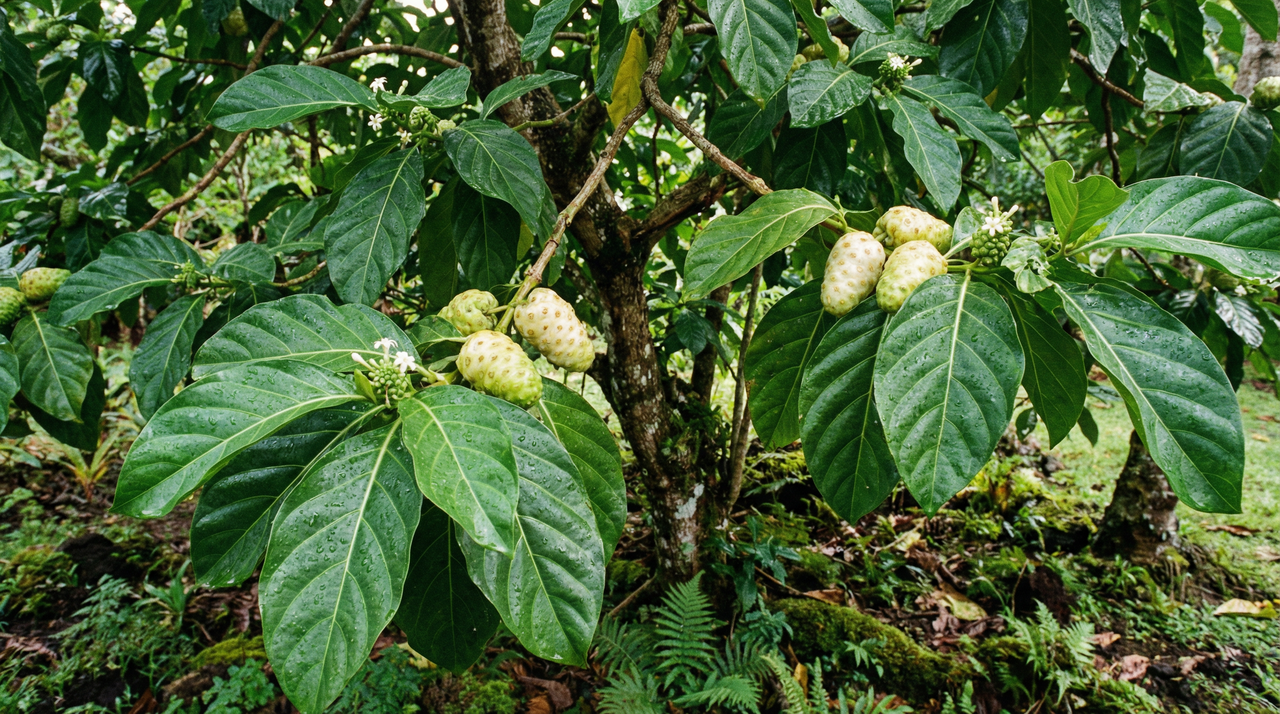
Nobody warns you about the smell. I planted my first noni tree in a client's food forest in coastal South Florida, tucked it into the understory like I would any tropical fruiting shrub, and more or less forgot about it for a season. Then one humid August morning I walked past and thought something had died nearby. It hadn't. The fruit had just ripened. Morinda citrifolia earns its nickname "cheese fruit" generously, and if you've ever encountered a very old, very pungent blue cheese left in a warm car, you're somewhere in the neighborhood. What stopped me from pulling the tree out was what I learned next: across Polynesia, Southeast Asia, and the Pacific Islands, people have been deliberately seeking out this smell for thousands of years, not avoiding it.[1]
That contradiction sits at the heart of this plant. Noni isn't a pleasant-smelling, crowd-pleasing addition to the garden. It's a tough, polycarpic evergreen with a 20-to-40-year productive lifespan, a remarkable tolerance for salt, drought, and disturbed soils, and a phytochemical profile complex enough that researchers are still arguing about what it actually does in the human body. The traditional knowledge around it is deep and specific. The modern marketing around it is frequently neither. Before you decide whether this plant belongs in your system, it's worth understanding what noni actually is, and what it isn't.
Noni Origin, History, and Botanical Background
Every plant has a home territory, and for noni (Morinda citrifolia) that territory stretches from Southeast Asia through Australasia and across the Pacific Islands, spanning India, Malaysia, Indonesia, northern Australia, Polynesia, Melanesia, and Micronesia.[2][3] Hawaii, where noni is practically synonymous with traditional healing culture, is not actually part of that native range. Humans brought it there, a fact that foreshadows everything about how this plant traveled the world. As a polycarpic perennial, noni flowers and fruits continuously in suitable tropical climates and can live for 20 to 40 years, occasionally longer, with first fruiting typically arriving 3 to 5 years from seed.[4][5][6] I tell clients thinking about adding noni to a food forest to expect a slower payoff than, say, papaya or passionfruit, but what they get in return is a plant that keeps producing for decades rather than years.
Botanical Background and Visual Characteristics of Noni
In the wild, noni settles into wet lowland habitats: coastal forests, riverbanks, and the disturbed volcanic soils that pioneer species tend to favor, from sea level up to about 2,000 feet elevation.[7][8] It prefers temperatures between 20 and 30°C, annual rainfall in the 1,000 to 2,000 mm range, and high humidity, yet it tolerates saline soils and established drought in ways that many tropical fruiting trees simply cannot manage.[9] Having worked with a lot of coastal and sandy sites where the pickings for useful food plants are slim, I've come back to noni more than once as a candidate precisely because of those tolerances. The plant itself grows as an evergreen shrub or small tree, typically reaching 3 to 9 meters tall and wide, with a spreading, slightly irregular canopy and glossy, dark green, leathery leaves arranged in opposite pairs along the stems, each leaf 10 to 20 cm long with prominent veining.[10][11]
The flowers are small, white, funnel-shaped, and faintly fragrant, clustered in dense globular heads about 2 to 3 cm across tucked into the leaf axils.[10][2] Then comes the fruit, which is really what everyone is asking about. It's a compound berry, spherical to oval, 5 to 10 cm across, with a warty, pitted surface that ripens from green to a translucent yellowish-white, and it emits an odor that has been compared, generously, to cheese, and less generously to overripe fruit or vomit.[3] Once you've smelled a noni fruit at the peak of ripeness, you never confuse it with anything else. That scent actually becomes useful, because it tells you exactly when the fruit is ready. If you're trying to identify noni in a nursery or on a planting, look for the combination of those opposite glossy leaves, rounded white flower heads, and the distinctive warty fruit; it can be confused with related species like Morinda tinctoria or M. royoc, but there are no widely reported toxic look-alikes within its primary range to worry about.[8]
Traditional and Cultural Uses Across Polynesia, Asia, and Beyond
The fact that noni is not native to Hawaii but arrived there anyway tells you something important about how Polynesian voyagers thought about this plant. It was one of the essential species loaded onto voyaging canoes more than 2,000 years ago as people migrated across the Pacific, spreading noni from its Southeast Asian origins to islands thousands of miles away.[12][13] You don't carry a plant across an ocean unless you genuinely depend on it. In Polynesian tradition, the fruit, leaves, and roots have been used for over two millennia to treat infections, fever, digestive complaints, wounds, inflammation, and skin conditions, often as poultices, decoctions, or fermented juices, and the plant appears in healing ceremonies as well as everyday medicine.[14][15] The reach of noni's ethnomedicinal record is genuinely wide: in Ayurveda it's known as Ashyukarna, valued for digestive, anti-inflammatory, analgesic, and immune applications; in Traditional Chinese Medicine the root, called Ba Ji Tian, tonifies yang for fatigue; and in Caribbean folk medicine it addresses hypertension, diabetes, and wound care.[16][17] The genus pattern holds too, with related species like Indian Mulberry (M. tinctoria) and M. lucida filling similar roles in India and West Africa, suggesting deep and independent ethnobotanical recognition across cultures.[18]
Beyond medicine, traditional uses extended to boiling noni roots and bark to produce red and yellow dyes for tapa cloth and ceremonial fabrics, and extracting bark fibers for nets, strings, and fishing lines.[19][20] Early European explorers including Captain James Cook documented its presence and uses during Pacific voyages.[21] What followed in the late 1990s and early 2000s, when noni products exploded into the commercial supplement market, is a more complicated story. Having studied traditional Polynesian plant knowledge for years, I believe we owe it to the communities who cultivated and preserved this knowledge to prioritize ethical sourcing and support indigenous-led enterprises rather than reaching for generic noni powders with no traceable origin. That traditional knowledge was held communally, and commercializing it without acknowledgment or reciprocity raises serious questions about biopiracy that the permaculture community shouldn't ignore.[22]
Fun Facts and Ecological Insights on Noni
Ecologically, noni earns its keep as a true pioneer. It colonizes disturbed sites, feeds birds and bats that disperse its seeds, attracts nocturnal moth pollinators drawn to its distinctive odor, and forms mycorrhizal associations that help it extract nutrients from the poor soils where it often germinates.[23][24] From a permaculture design standpoint, that combination of traits is genuinely useful: a plant that rebuilds soil, supports wildlife, and produces medicine across a 20-to-40-year lifespan fits multiple functions at once. The non-food uses only deepen that picture. Polynesian communities who developed noni as a dye plant and fiber source were working with a species that has broad chemical complexity and long-established cultivation, which I find more impressive than almost any modern single-use crop.
There's a real tension to acknowledge, though. Noni germinates readily, tolerates salt spray, poor sandy or rocky soils with pH ranging from 4.5 to 8.0, and established drought, which sounds like the profile of an ideal permaculture plant.[6][25] In Hawaii and parts of Florida, however, that adaptability flips into invasiveness, with noni forming dense thickets that displace native vegetation.[26] From my experience designing in humid subtropical conditions, I've learned to site noni with its spreading habit firmly in mind, giving it room at the edge of a food forest guild where it can perform its ecological functions without overwhelming smaller companions. A resilient survivor, yes. But one that rewards thoughtful placement more than most.
Noni Varieties and Sourcing
Notable Noni Cultivars and Leaf and Fruit Differences
If you've only ever seen a wild Morinda citrifolia seedling, you might not immediately recognize a well-selected cultivar as the same plant. Wild noni trees tend toward smaller leaves and correspondingly modest fruit, while cultivated selections have been steadily pushed in the other direction, toward heavier yields and larger leaves.[27] It's a classic domestication arc, and once you see it in action, it makes intuitive sense for home food forest growers who want actual harvests rather than a botanical curiosity.
The two cultivar names you'll encounter most often are 'Potentiana,' selected specifically for medicinal applications, and 'Tahitian Noni,' which is the commercial juice industry's preferred fruiting selection.[3][28] Larger-fruited forms make obvious practical sense if you're growing for juice or food use. I'll be honest, though: the worldwide cultivar catalog for noni is still pretty thin outside of Hawaii-centric research, so treat those two names as a starting point rather than a complete picture of what's out there.
Where to Buy Noni Plants and Seeds in the US
For zone 10-11 gardeners ready to actually get one in the ground, sourcing is refreshingly straightforward. Specialty tropical nurseries, particularly those based in Florida and Hawaii, carry both plants and seeds reliably. Logee's, Baker Creek Heirloom Seeds (RareSeeds.com), and Strictly Medicinal Seeds are all places I've successfully sourced tropical perennials from, and noni shows up in their catalogs regularly.[29][30] Young plants from Logee's typically arrive in good shape, well-rooted and ready to acclimate. If you're ordering from outside the US, expect standard USDA APHIS import permit requirements for live plant material; it's manageable but worth researching before you commit to an international order.
If you're on the edge of zone 10, noni will need a protected microclimate or container culture through any cold snaps.[31][29] And if you have a neighbor or HOA nervous about introduced tropicals, you can reassure them with confidence: noni is naturalized but not invasive in Hawaii, and Florida's invasive species authorities have not listed Morinda citrifolia as a problem plant. The USDA doesn't classify it as a federal noxious weed either.[32][33][31][34] In twenty-plus years of designing regenerative gardens in warm climates, that kind of clean regulatory status genuinely matters, because invasive plants are a real and serious problem and I won't recommend anything that belongs on that list.
How to Propagate and Plant Noni (Morinda citrifolia)
Growing noni rewards growers who understand it biologically before they pick up a trowel. The propagation method you choose shapes everything downstream, from how soon your first fruit appears to whether you get consistent results or a wild genetic lottery.
Understanding Noni Seeds: Polyembryony, Recalcitrant Storage, and Variable Offspring
Noni seeds are small, 3-5 mm, oblong, brown to nearly black, with a hard coat that actively resists germination without pretreatment.[35][36] What makes them genuinely fascinating is polyembryony: a single seed can produce two to five seedlings through nucellar embryony alongside the zygotic embryo.[35][37] I've sown noni here in Central Florida and watched multiple seedlings emerge from a single seed that looked nearly identical at week two, then diverged noticeably by month three, one upright and vigorous, another sprawling and slower. That divergence taught me quickly why anyone wanting predictable fruiting steers toward vegetative propagation.
The storage biology complicates things further. Noni seeds are recalcitrant, meaning they're sensitive to desiccation and don't form persistent seed banks.[38][39] Fresh seeds germinate at 80-90%, but leave them sitting at room temperature for six months and that figure drops to around 50%.[40] The better approach is moist storage in breathable containers with vermiculite or moist sand at 40-80% moisture content and around 15°C, which can hold viability above 50% for up to two years.[41][42] I check stored seed monthly for rot, and switching from sealed plastic bags to breathable mesh genuinely improved my germination results. Even with perfect storage, you'll still want to scarify: mechanical scarification, an overnight soak, or gibberellic acid treatment gets germination rates to 60-80% in two to six weeks at 25-30°C.[43] The genetic variability in those seedlings, driven by noni's tetraploidy, heterozygosity, and outcrossing habit, means phenotypic fidelity is low even if DNA similarity runs higher.[44] For a breeding project or seed-saving exploration, that diversity is genuinely useful. For a food forest where you want reliable fruit, it's a gamble.
Noni Propagation Methods: From Seed to Cuttings, Air Layering, and Beyond
Vegetative propagation is where I land every time I want dependable noni production. Semi-hardwood stem cuttings of 10-20 cm, treated with IBA at 1000-2000 ppm, root at 60-80% in well-drained media under warm, humid conditions (25-30°C, 80-90% humidity) within four to six weeks.[45][46] Air layering edges even higher at 70-90% success when you wound the stem and apply rooting hormone before wrapping in moist moss.[45] Grafting is the frustrating option, with only 20-40% success rates and persistent compatibility issues from latex exudation; I'd skip it unless you have a specific rootstock reason.[47] Tissue culture using shoot tips on MS medium with cytokinins is how commercial nurseries achieve mass clonal production, but it's not a home-grower tool.[48]
Seed-grown plants take one to two years to fruit and give you genetic diversity; clonal plants get you there faster and give you the uniform fruit quality worth planning a food forest around.[49][50] My recommendation: start with cuttings from a known-performing tree, and save the seed-raising for curiosity or intentional selection work.
Soil, Site, and Light Requirements for Successful Noni Establishment
Noni is famously adaptable, tolerating sandy, loamy, clay, rocky, and marginal soils across its native range of coastal dunes, volcanic slopes, and disturbed tropical habitats.[51][3] The one condition it simply won't forgive is waterlogging. Phytophthora and Pseudomonas move fast in saturated soil, producing mushy, foul-smelling roots, wilting, and rapid decline.[52] I've lost young plants to Phytophthora in heavy Florida clay before I learned to run a percolation check on every planting site first. Now I amend compacted spots with coarse sand or perlite and use raised beds where drainage is questionable. Target a soil pH between 5.5 and 7.5, work in 2-5% organic matter as compost or aged manure, and you'll cover the full range of what this plant wants below ground.[53]
For light, full sun (six to eight hours of direct sun daily) is the standard for strong flowering and fruiting.[54] I treat young noni seedlings the same way I treat new papaya or citrus transplants: 30% shade cloth for the first four weeks while roots establish, then full exposure. Skipping that step invites leaf scorch and stunted early growth, especially in summer heat.
Spacing, Planting Technique, and Initial Care
Mature noni reaches 3-6 m tall with a 2-4 m spread and a naturally bushy, irregular habit, so tight spacing is an invitation to disease.[49] Standard commercial planting runs 2-3 m between plants in rows 3-4 m apart; in a food-forest guild, I plant at the wider end of that range (around 3 m) to leave room for understory companions and maintain the airflow that keeps anthracnose pressure manageable through humid summers.[55] Stake young plants in exposed or windy spots, mulch well to retain moisture and suppress weeds during establishment, and water consistently until the root system is established. Get those first few months right and noni largely takes care of itself.
Noni Care Guide: Growing and Maintaining Morinda citrifolia
Noni is genuinely forgiving once established, but getting it to that point requires hitting a few non-negotiables: adequate light, consistent moisture without waterlogging, and temperatures that never dip below what a Southeast Asian coastal forest would consider cold. Get those fundamentals right and this plant will reward you with fruit cycles that basically never stop.
Sunlight Requirements for Healthy Growth and Fruiting
Noni tolerates partial shade, but if you want reliable flowering and fruit set, aim for full sun.[56][54] Less light means fewer flowers, longer intervals between flushes, and the kind of humid, still canopy that fungal diseases love. Young plants and container specimens do fine with bright indirect light while they're getting established, since that prevents scorching on tender new growth.[57] Once they're rooted and pushing hard, get them into the sun.
Watering Needs and Drought Tolerance
The practical rule I follow: water deeply, then let the top inch or two of soil dry out before watering again. Established noni wants roughly 1 to 2 inches per week and develops a deep taproot that gives it genuine drought resilience once it's settled in.[3][58] Seedlings are a different story; they need water every two to three days, or daily in a Florida summer, keeping the soil consistently moist but never soggy.[59][58]
Drainage is the other half of that equation. Noni prefers loamy or sandy soils with a pH between 5.0 and 7.0, tolerating a surprisingly wide range down to 4.5 and up to 8.0, and has moderate salinity tolerance up to around 4 to 6 dS/m.[58][60] A thick mulch layer helps retain moisture while keeping the root zone from going anaerobic. Overwatering shows up as yellowing leaves and root rot; underwatering gives you wilting, drooping, and brown leaf tips.[61][58] After watching a few hot summer afternoons cause afternoon wilting on my papaya and passionfruit, I learned to treat that early afternoon droop as a cue to deepen irrigation on all my tropical fruit trees, noni included. Fruit drop follows water stress closely.
Fertilizing Noni: Nutrient Requirements and Deficiency Symptoms
Noni is a moderate feeder that can grow in genuinely poor soils, but it responds well to structured fertility management. A balanced 10-10-10 fertilizer at 1 to 2 pounds per mature tree, applied two or three times during the growing season, gives you a reliable baseline; shift toward higher phosphorus and potassium formulas once the plant is flowering and setting fruit.[62][63] I prefer organic amendments, 5 to 10 kilograms of compost or well-rotted manure per plant annually, because they feed slowly and eliminate the burn risk that excess synthetic nitrogen creates.[64][65]
Run a soil test before planting and annually after that. Target organic matter above 2 percent, phosphorus above 20 ppm, and potassium between 150 and 250 ppm.[66][67] Zinc deficiency is the one I watch most closely because heavy rains reliably flush it from my soil, and the symptoms, small mottled leaves and poor fruit set, are easy to misread as a watering or pH problem. A targeted foliar zinc spray in early spring made a noticeable difference in my yields. For the full deficiency picture: nitrogen shows up as uniform yellowing on older leaves, phosphorus as purplish stunted growth, potassium as marginal leaf scorch, and iron as interveinal chlorosis on new leaves.[68][69]
Frost Tolerance and Cold Protection Strategies
There's no softening this: noni cannot survive freezing temperatures. Leaf damage begins at 30°F (–1°C), and sustained exposure below 50°F (10°C) causes irreversible injury.[70][71][56] It's reliably hardy only in USDA Zone 11; Zone 10b is marginal with protection. In Florida, central and southern regions can work, but buds, young fruit, and new growth are the first to go when temperatures slide.[72][73] I grow several tender tropicals in containers specifically so I can move them into a bright garage when forecasts drop below 50°F. If you're in a marginal zone, frost cloth, heavy mulch around the root zone, and a warm south-facing microclimate aren't optional extras; they're what keeps the plant alive.
Heat Tolerance and Temperature Management
On the other end of the thermometer, noni is comfortable. Its sweet spot is 70 to 85°F (21 to 29°C), it handles sustained temperatures of 95°F (35°C) when well watered, and it can tolerate brief spikes to 104°F (40°C) before stress becomes visible.[74][75] Mature plants handle high heat well with adequate irrigation; seedlings are more sensitive. If you see leaf scorch, wilting, or premature fruit drop during a heat event, the answer is almost always deeper, more consistent watering rather than shade.[76][77] My papaya and passionfruit thrive on a deep weekly soak through summer, and noni responds the same way: treat the heat as a cue to irrigate, not to panic.
Pruning, Maintenance, and Integrated Pest Management
I train young noni plants into multi-stem shrubs at 6 to 8 feet rather than letting them go tree-form. Remove dead, diseased, or crossing branches; shape the canopy open; and do any significant cutting during the dry season or dormancy to avoid disease entry points and keep flowering strong.[78][79] Heavy pruning suppresses flowering, so the goal is airflow and structure, not reduction. Keep 1 to 3 inches of organic mulch around the root zone, replenish it annually, and always keep it clear of the trunk to prevent collar rot.[62]
For pest and disease prevention, good spacing, open pruning, and drainage do most of the heavy lifting. Monitor for fruit flies, aphids, scale, and mites; use neem oil or biological controls when populations climb.[80][81] Leaf spot, anthracnose, and root rot are the diseases to know; all three are aggravated by poor drainage and stagnant air, which is exactly why the pruning and mulch practices above matter preventively. Plants begin fruiting 8 to 12 months after planting and, in frost-free conditions, produce year-round with harvest cycles every two to three months.[53][82]
Harvesting Noni Fruit
Noni is a generous fruiter once it finds its rhythm. Plants typically begin producing 8-12 months after planting, with each fruit taking another 90-120 days from flowering to mature, and in true tropical conditions the tree never really stops.[31][78] That year-round production is one of the things I love about growing it in a food forest: there's almost always something to pick if the tree is happy.
When to Harvest Noni: Ripeness Indicators and Timeline
The clearest ripeness signal isn't visual, it's olfactory. A ripe noni fruit shifts from green to a yellowish-white, swells to somewhere between 2-4 inches, and announces itself with a pungent, unmistakable aroma that stops you mid-stride.[31][83][84] I trust that smell more than any calendar now. First-time growers often find it off-putting, which is completely fair, but once you've associated it with peak medicinal potency you start reading it differently. Green fruit pulled early just isn't worth the effort.
How to Harvest Noni Without Damaging the Fruit or Tree
Hand-harvest in the early morning, either by gently twisting ripe fruits free or cutting the stem with clean pruning shears.[78] Mechanical harvesting is a hard no here because the fruit bruises easily, and bruising accelerates fermentation before you've had a chance to process it. I learned that one in Florida heat: a roughly handled harvest becomes a bucket of mush within a day. I also pick only what I need at any one time rather than stripping the tree, which keeps the remaining fruits developing cleanly and keeps the tree's energy well distributed. Leaves can be taken for medicinal use whenever needed, with young tender growth preferred, but the same rule applies: never strip a single branch bare.[78][83]
What to Expect: Yield, Flavor, and Post-Harvest Handling
Nobody grows noni for fresh eating. The ripe fruit is soft, gelatinous in texture (think overripe pawpaw pushed past the point of pleasure), intensely bitter, sour, and carries that signature fermented-cheesy aroma that clings for hours.[85][84] For contrast, its West African cousin Morinda lucida produces a similarly bitter-sour fruit with quinine-like qualities and garlic-sulfurous notes when the leaves are crushed, so the genus runs bitter as a theme.[86] People grow noni because they want the juice, the tonics, and the medicine; the flavor is the price of admission.
Post-harvest, store fruit at 45-55°F with high humidity, which extends shelf life to 2-4 weeks and slows unwanted fermentation.[84] In practice, I try to process most of what I pick into juice within a week. Beyond that window, fermentation takes over and changes the compound profile considerably. The preparation section covers what to do from there, but the key grower takeaway is simple: harvest carefully, refrigerate promptly, and process soon.
Noni Preparation, Culinary Uses, and Non-Food Applications
Culinary Uses and Processing Methods for the Pungent Fruit
If you've ever held a fully ripe noni fruit, you already understand why no traditional culture ever just ate it out of hand. The flesh is waxy and slimy, packed with hard little seeds that give every bite a gritty crunch, and the aroma is genuinely difficult to describe charitably -- rotten cheese, sweaty socks, and something faintly vomitous all at once.[3][83] Only the fully ripe pulp is traditionally consumed at all; the unripe fruit, leaves, roots, seeds, and sap all carry carcinogenic pyridine alkaloids and other compounds that put them firmly in the "do not eat" category.[87][88]
Processing is what makes this plant a food rather than a liability. Fermentation, boiling for more than an hour, and sun-drying all reduce anthraquinone content and volatile acids while building esters that soften the sensory profile into something more tolerable.[89][90] I've fermented noni juice at home in Central Florida during summer, and the 4-8 week window maps almost perfectly onto our hottest months -- the ambient warmth keeps fermentation active without any special equipment. You do need to vent the jars regularly in those first two weeks; the gas buildup is substantial and the odor is, let's say, assertive. A tip I picked up after a few harvests: chilling the ripe fruit briefly before juicing makes it much easier to separate the seeds and noticeably reduces the slimy texture you're fighting against.
Across Indonesia and Malaysia, noni gets combined with coconut or other sweeteners to offset the bitterness, and there's actually a subtle umami quality hiding underneath all that pungency -- free amino acids like glutamic acid that give it a savory depth once you get past the first impression.[91][92] The related Morinda pubescens shares noni's vomit-fruit reputation and gets processed similarly, which tells you something about the genus's chemistry as much as its cooking traditions.[93] After harvest, keep the fruit washed, sorted, and stored at 10-15°C with good humidity; it holds for two to four weeks before quality degrades significantly.[94][28]
Traditional Medicinal Preparations and Modern Supplement Guidance
Traditional Polynesian practice used fermented fruit juice at 30-100 mL daily, though ceremonial contexts sometimes reached 750 mL; leaf and root decoctions were taken one to two cups per day, tinctures one to two teaspoons up to three times daily, and fresh leaf poultices were applied directly to cuts, abscesses, and sprains.[95][96] For home juice production, natural fermentation at 25-30°C for four to eight weeks enhances the bioactive profile; modern extracts typically suggest 500-1000 mg daily, but standardization across products is essentially nonexistent.[94][97]
I've seen supplement labels suggesting daily intakes far beyond anything traditional Polynesian use would recognize, and I always tell people: start at the low end, around 30 mL of fermented juice or 500 mg of extract, and talk to your doctor first. If you're pregnant, on blood thinners, or managing kidney disease, that conversation is non-negotiable. The hepatotoxicity and hyperkalemia research covered earlier in this article isn't theoretical -- it's reason enough to treat this as medicine rather than a wellness beverage you pour freely.
Non-Food Uses, Fibers, Dyes, and Sustainability Considerations
Noni's usefulness extends well past the fruit. The roots yield a yellow dye that Pacific islanders used for textiles for centuries; the bark provides fiber for rope; the wood, though modest in dimension, has been fashioned into tools and handles.[87] The glossy evergreen foliage also makes it genuinely ornamental in a subtropical garden, which matters when you're designing a space people actually want to spend time in.
The sustainability picture deserves honesty, though. Wild harvesting of roots and bark for medicinal markets is putting pressure on natural populations in some regions.[98] As a pioneer species that handles salt spray, drought, and depleted soils, noni has genuine value in a regenerative planting system -- but that value depends on sourcing it from cultivated stock rather than stripping wild stands.[99] When I place noni in a guild, I think of it the same way I think about any pioneer: put it to work in the landscape you're building, propagate it from cuttings, and leave the wild populations alone.
Noni Health Benefits and Medicinal Uses
Few plants carry as much traditional weight as noni. As someone who spends a lot of time tracing how different cultures converged on the same plants for similar purposes, I find that convergence genuinely compelling. What it doesn't do, by itself, is prove that the plant works the way people think it does. So let me walk through what we actually know, because the honest answer is more interesting than the marketing copy.
Traditional Medicinal Uses of Noni Across Cultures
Across Polynesia, noni (Morinda citrifolia) has been treated as something close to a panacea, used to address colds, infections, diabetes, hypertension, and joint pain, typically as a juice or topical preparation.[15][100] In Ayurvedic and Siddha traditions, it appears as a remedy for digestive complaints, skin disorders, and fever, valued as an immune-supporting adaptogen.[101] Across Indonesia, Malaysia, and the Philippines, traditional healers applied leaf poultices to wounds and ulcers, and prepared fruit tonics for respiratory ailments and arthritis.[102] Three entirely separate medical traditions, operating on different continents, landed on overlapping uses. That pattern is worth taking seriously, even if it can't substitute for clinical evidence.
Key Phytochemicals in Noni and Their Health Roles
The plant's bioactive profile is genuinely complex. Key compounds include iriflophenone 3-C-glucoside, xanthones, scopoletin, anthraquinones, and polysaccharides, alongside flavonoids, phenolic acids, terpenoids, saponins, tannins, steroids, coumarins, and alkaloids.[103][104] Where those compounds concentrate depends heavily on which part of the plant you're using. Fruit is the primary source of iridoids like asperuloside (up to 10-20 mg/g in ripe fruit) and scopoletin.[105] Leaves run higher in rutin (2-4 mg/g dry weight), quercetin, and kaempferol.[106][107] Roots pack in damnacanthal and anthraquinone derivatives like alizarin and rubiadin at concentrations up to 0.5-1% dry weight.[108] Total phenolics in the fruit juice clock in at 500-1,000 mg GAE per 100g, driving strong antioxidant readings.[109]
I've noticed that the fruit grown in my own subtropical projects varies noticeably in bitterness and smell depending on the season and soil conditions, which almost certainly reflects real shifts in iridoid concentration. Think of it the way you'd think about curcumin levels in turmeric, where the chemistry is real but the numbers aren't fixed. The plant is responding to its environment, and so is its medicine chest.
Noni Nutrition Facts
All parts of noni are edible, though the raw fruit's strong odor and bitter flavor make it a tough sell for fresh eating. Leaves become more palatable when cooked, and roasted seeds are traditionally consumed as well.[110][111] The fruit itself is modest as a food source, around 33-47 calories per 100g, with roughly 90% water content, 5-11g carbohydrates, and 0.6-3.4g fiber.[112] Where it stands out nutritionally is vitamin C (33-50 mg per 100g) and potassium (150-250 mg per 100g), with trace amounts of vitamins A, E, B6, and K.[113]
Processing matters enormously here. Drying significantly depletes heat-sensitive vitamin C, while fermentation and juicing each affect bioavailability differently.[113][114] I've found that gentle cold-pressing preserves more of both the vitamin C and the phytochemicals than heat processing, which is worth knowing if you're making your own juice rather than buying a commercial product. Don't think of noni as a nutritional powerhouse on par with, say, moringa. Its strength is the phytochemical complexity, not raw micronutrient density. The anthraquinone content is also worth flagging here: in large amounts it can cause diarrhea, and that same compound class is part of why moderation matters.[115]
Scientific Evidence for Noni Health Benefits
The preclinical signals are genuinely interesting. Noni extracts suppress pro-inflammatory cytokines and inhibit COX-2 and the NF-κB pathway in cell and animal studies,[116][117] show antimicrobial activity against Staphylococcus aureus and various fungi,[118] and produce analgesic effects in animal pain models comparable to aspirin in some assays.[119][120] Antioxidant activity rivals vitamin C in DPPH and ABTS assays.[121] Adaptogenic potential, including reduced cortisol in stressed animals, has also been documented, though that work is thinner and less replicated.[122]
Here's where I have to be honest with you: the human data doesn't match the excitement. Small clinical trials suggest possible benefits for chronic pain and arthritis symptoms, but systematic reviews consistently conclude that the evidence for noni's benefits in cancer, diabetes, or infection is simply not there at a quality that warrants clinical recommendations.[123][124][125] Traditional use across three continents is meaningful context. It is not a substitute for well-designed trials. I hold noni in the same category as elderberry or turmeric: real bioactive compounds, plausible mechanisms, enthusiastic traditional use, and a clinical research record that still has a lot of catching up to do.
Noni Safety, Side Effects, and Contraindications
Noni fruit consumed in moderation has a long traditional safety record, and EFSA classified noni juice as safe at up to 125 ml per day for adults, with monitoring for potassium intake.[126][127] The risks, however, are serious enough that I never wave them away with clients.
Hepatotoxicity is the one I lead with. Case reports have linked noni consumption to acute hepatitis and elevated liver enzymes, and chronic high-dose animal studies show hepatocyte necrosis and significant AST elevation.[128][129] The cases are rare, but they're documented and serious. Anyone with existing liver concerns should avoid noni supplements entirely and limit even properly prepared fruit juice until they've spoken with their physician. That's not alarmism; that's a reasonable reading of the case literature.
The high potassium content (150-250 mg per 100g) creates real hyperkalemia risk for people with kidney disease or those on potassium-sparing medications, and noni is genuinely contraindicated in kidney impairment.[97][130] Gastrointestinal symptoms like nausea, diarrhea, and abdominal discomfort are the most common side effects, and allergic reactions ranging from mild rashes to anaphylaxis have been reported.[131][132] Pregnancy and breastfeeding are hard contraindications due to potential uterine stimulant effects and insufficient safety data.[133] Drug interactions are also worth checking carefully, particularly with anything metabolized through the CYP450 system, antihypertensives, and immunosuppressants.[89] I always advise clients to review noni with their doctor before using it medicinally, not as a formality but because the interaction profile is genuinely non-trivial.
Noni Pests and Diseases
Natural Resistance and Chemical Defenses
Noni is one of the more self-sufficient tropical perennials I've worked with, and a lot of that comes down to chemistry. The plant loads its leaves, fruit, and roots with anthraquinones, iridoids, phenolic compounds, and terpenoids that function as broad-spectrum deterrents against both insects and pathogens.[134][135][136] Wild populations have few specialized herbivores for exactly this reason.[137] Compare that to coffee or quinine tree, both close Rubiaceae relatives that I've seen struggle badly with rust and borers, and Noni's bitter latex gives it a genuinely meaningful edge when conditions are managed well.[138][139] Indian Mulberry, Morinda tinctoria, shares many of these secondary metabolites and even adds glandular trichomes for extra physical defense, with mosquito repellency exceeding 80% in lab studies.[135][140] The genus as a whole is built to defend itself. That said, cultivated plants in monoculture settings lose some of that edge, which is why mimicking natural conditions matters so much.[141]
Common Pests and Management
The pest story sorts itself neatly by deterrence level. Caterpillars like Eutectona morindae are strongly repelled by Noni's bioactive compounds.[142] Fruit flies get moderate deterrence at best.[143] Soft-bodied insects, aphids, scale, and whiteflies, are the real weak spot.[142][49] Mealybugs and thrips round out the usual suspects, especially under intensive cultivation.[141] I've noticed that seedlings and young rooted cuttings in humid propagation trays will draw aphids almost immediately if airflow is poor, so good row spacing from the start isn't optional. Root-knot nematodes also show up during propagation when soil drainage is questionable.[144] For management, neem oil and insecticidal soap handle most soft-bodied pests effectively. One of my favorite tricks is brewing a dilute spray from fermented Noni fruit and leaf scraps, essentially turning harvest waste into pest control, which connects nicely to the plant's own phytochemical toolkit.[142][143]
Major Diseases and Prevention
Drainage is the single most important disease-prevention decision you'll make with Noni. Phytophthora root rot thrives in waterlogged soils at temperatures between 25 and 30°C, which describes a typical subtropical rainy season almost perfectly.[145][146] I lost a few young plants early on before I committed to raised beds and sloped planting sites, and I won't go back. Anthracnose from Colletotrichum and leaf spot from Cercospora morindae are the other major threats, both favored by humidity above 80% and heavy rainfall, and both capable of cutting photosynthesis and yield by 20 to 50% in bad rainy seasons.[147][53] Bacterial blight from Xanthomonas-like organisms can appear in wet conditions, though viral infections are rare.[148] For fungal management, copper-based fungicides, aggressive pruning to open the canopy, and good spacing do most of the work. If you're selecting plants, Hawaiian cultivars like Puna and Nourish Noni show better tolerance to soil-borne pathogens, and the University of Hawaii extension material is worth consulting when sourcing.[146] Prevention through site selection and cultural practice will always outperform reactive spraying with this plant.
Noni in Permaculture Design
Before you fall in love with noni's ecological story, you need to know whether it can even survive on your site. This is a plant with a firm climate envelope, and ignoring that is how people end up with a dead stick where a productive food forest shrub should be.
Climate and Zone Requirements
Noni is reliably hardy in USDA zones 10a through 12b, with its sweet spot sitting between 21 and 32°C (70-90°F).[144][45] Growth slows noticeably below 15°C (60°F), and prolonged cold below 10°C (50°F) is genuinely damaging.[3] Zone 9b is possible with protection, but I want to be honest about what that means in practice: you're managing microclimate very deliberately, not just hoping for the best. In the Central Florida landscapes where I've worked with noni, mature, established plants handle brief temperature dips better than young seedlings do, so if you're pushing the limit, get your plants through a full season of root development before your first cool winter.
On the moisture and humidity side, noni thrives with annual rainfall in the range of 1,000 to 3,000 mm and relative humidity between 70 and 90%.[64][7] It has genuine salt and wind tolerance once established, which makes it useful near coastal food forest margins where other tropical fruiting plants struggle. South Florida, particularly Miami-Dade and Monroe counties, sits squarely in its reliable range.[149] For gardeners in colder zones who are determined to try the genus, Indian mulberry (Morinda tinctoria) is hardy through zone 9 and can serve as a container-grown proxy, though its ecological contributions in a food forest design are necessarily more limited.[150]
Ecosystem Functions and Pollination
Here's one thing that catches new growers completely off guard: noni flowers smell genuinely foul. The plant uses sapromyiophily, meaning it mimics the odor of decaying matter to lure flies and other dipterans as pollinators.[151] Honey bees and drone flies also visit, but the carrion-fly crowd does a lot of the heavy lifting.[152] The flowers are protandrous (releasing pollen before becoming receptive), which means the plant needs multiple flowers at different stages, or multiple plants, for reliable fruit set.[153] In years when fly activity is low, I've found that a quick pass with a small brush in the morning, transferring pollen between flowers at different stages, noticeably improves fruit set. Research backs this up: hand pollination can increase yields by up to 50% when natural pollinator activity is limited.[154] If you're placing noni near a seating area or outdoor kitchen, that floral odor is a real consideration. Indian mulberry flowers have a sweeter fragrance and attract bees and butterflies rather than flies, so it's worth knowing which species you're planting before it ends up next to the patio.
Beyond pollination, noni earns its place in a food forest through several ecological functions. It's a genuine pioneer species that colonizes disturbed, rocky, or nutrient-poor ground rapidly, stabilizes soil with an extensive root system, and cycles nutrients efficiently through fast-decomposing leaf litter that releases nitrogen, phosphorus, and potassium back into the soil profile.[155] Its flowers and fruit support birds, bats, and a range of insects, building the biodiversity scaffold that makes a food forest resilient over time.
That said, noni comes with caveats that any responsible designer should weigh upfront. It exhibits allelopathic properties that can suppress neighboring plants, and it does not fix nitrogen, so claims you might see to the contrary are simply wrong.[156] In Hawaii and other Pacific island habitats, bird-dispersed seeds allow noni to spread aggressively and outcompete native flora, giving it a real invasive track record in those contexts. In Florida, it's generally not considered invasive.[157] Because noni can suppress neighbors and spread by bird-dispersed seed in island ecosystems, I always site it with generous spacing and monitor edges, and I give the same caution to clients in South Florida food-forest designs regardless of the local invasive status.
Forest Layer, Guilds, and Design Integration
Noni is a woody, often multi-stemmed shrub or small tree, typically reaching 3 to 6 meters, though occasionally pushing toward 10 meters in ideal conditions.[158][159] Its shade tolerance is genuine, not just theoretical: in natural forest ecosystems it occupies the understory and mid-canopy comfortably, which is exactly the layer that tropical food forests most need to fill.[3] I think of it a bit like a robust, shade-tolerant moringa cousin for that middle story, filling space that would otherwise go to ornamentals with no ecological function.
In guild design, noni pairs well with mango, papaya, citrus, and avocado as canopy or upper mid-story companions, but it needs real spacing to prevent root competition and to give its allelopathic chemistry room to dissipate before reaching neighboring root zones.[159][160] It can also serve as a living fence or windbreak component, which aligns with its native habitat on coastal margins and forest edges.[159] Propagation from cuttings is straightforward, making it easy to establish multiple plants for a screen or guild planting without significant cost.
Noni's primary value in most permaculture systems is ecological rather than culinary. Its leaf litter builds soil organic matter and fertility even on volcanic or otherwise poor substrate, and it handles occasional waterlogging better than most tropical fruiting trees while still preferring well-drained conditions long-term.[161][162] If you're designing a resilient subtropical food forest, this is a plant that earns its footprint through soil building and biodiversity support even in years when the fruit goes mostly to wildlife.
The Plant That Made Me Reconsider What "Useful" Actually Means
I'll be honest: the first time I cut into a ripe noni, I nearly walked away from the whole experiment. That smell is not subtle. But I kept coming back to it, season after season, because the more I learned, the more I respected the generations of people who looked at something that pungent and thought, "no, there's something here worth keeping." That kind of accumulated wisdom is exactly why I grow it.
Sources 162
- Ethnomedical uses of Morinda citrifolia (noni) in the Pacific Islands ↩
- Morinda citrifolia - Kew Science ↩
- USDA PLANTS Database - Morinda citrifolia ↩
- Noni (Morinda citrifolia) - Wikipedia ↩
- Noni (Morinda citrifolia) Plant Profile - University of Florida IFAS Extension ↩
- Noni (Morinda citrifolia) Production in Hawaii - University of Hawaii ↩
- Noni (Morinda citrifolia) Habitat and Distribution - FAO ↩
- Morinda citrifolia - Useful Tropical Plants Database ↩
- USDA Forest Service - Noni (Morinda citrifolia) ↩
- Morinda citrifolia - Missouri Botanical Garden ↩
- Noni: The Most Important Beach Plant in the Pacific ↩
- Pacific Voyages and Plant Introductions ↩
- Noni: The Divine Tree of Life in Polynesian Culture ↩
- Noni: A Review of its Ethnomedicinal Uses and Pharmacology ↩
- Traditional Uses of Morinda citrifolia in Polynesia ↩
- Traditional Uses of Noni (Morinda citrifolia) in Chinese and Ayurvedic Medicine ↩
- Noni in Caribbean Folk Medicine ↩
- Morinda tinctoria - Useful Tropical Plants Database ↩
- Traditional Uses of Noni (Morinda citrifolia) in Polynesia ↩
- Polynesian Plants: Historical and Cultural Uses ↩
- Ethnobotany of Noni in Southeast Asia and Indonesia ↩
- Biopiracy and the Commercialization of Traditional Knowledge: The Case of Noni ↩
- Morinda citrifolia: A Review of Its Ecological and Biological Aspects ↩
- Mycorrhizal Associations in Tropical Plants ↩
- Ecological Adaptations of Morinda citrifolia in Tropical Islands ↩
- Invasive Species: Morinda citrifolia ↩
- The Noni Website ↩
- Noni Cultivation Guide ↩
- Noni Cultivation in Florida ↩
- Noni Seeds - Morinda citrifolia ↩
- Morinda citrifolia (Noni) ↩
- Hawaii Naturalized and Invasive Plants ↩
- Florida Invasive Species List ↩
- Federal Noxious Weeds List ↩
- Seed Morphology and Anatomy of Morinda citrifolia L. ↩
- Noni (Morinda citrifolia) Fruit and Seed Structure ↩
- Morinda citrifolia (Noni): A Comprehensive Review ↩
- Recalcitrant Seeds: Morinda citrifolia Viability Studies ↩
- Germination and Storage Behavior of Morinda citrifolia Seeds ↩
- Seed Storage of Noni (Morinda citrifolia L.) ↩
- FAO Guidelines on Seed Storage for Tropical Fruits ↩
- Seed Storage of Noni (Morinda citrifolia L.) ↩
- Propagation of Noni (Morinda citrifolia) from Seeds ↩
- Phenotypic variation in Morinda citrifolia seedlings ↩
- Propagation of Noni (Morinda citrifolia) ↩
- Propagation of Noni (Morinda citrifolia L.) ↩
- Noni (Morinda citrifolia) Graft Compatibility and Techniques ↩
- Tissue Culture of Morinda citrifolia ↩
- Noni Cultivation Guide ↩
- Growing Noni (Morinda citrifolia) ↩
- Plants of the World Online (Kew Science) ↩
- Phytophthora infection in Morinda citrifolia L. ↩
- Noni Cultivation Guide - University of Hawaii ↩
- Noni Production ↩
- Cultivation of Noni (Morinda citrifolia) ↩
- Noni (Morinda citrifolia) Plant Finder ↩
- Noni Plant Care Guide ↩
- University of Hawaii Noni Plant Care Guide ↩
- Morinda citrifolia Cultivation ↩
- Growing Noni: Soil and Water Management ↩
- Watering Tropical Plants: Noni ↩
- Noni Fruit Production in Hawaii ↩
- Fertilization of Tropical Fruit Trees including Noni ↩
- Noni Production in Hawaii ↩
- Soil and Fertilizer Recommendations for Noni ↩
- Deficiencies of zinc, manganese, and boron in an Andisol: Mechanistic impacts on fruit set of morinda citrifolia (nonu) ↩
- Noni Cultivation Guide - University of Hawaii ↩
- APEDA Terroir Profile: Nonu - Morinda Citrifolia L. (Noni Fruit) ↩
- Nutrient Deficiency Symptoms in Tropical Fruit Trees ↩
- Morinda citrifolia (Noni) USDA Profile ↩
- RHS Plant Finder - Morinda citrifolia ↩
- UF/IFAS Extension: Tropical Fruit Crops in Florida ↩
- Cold Injury in Tropical Plants: Symptoms and Recovery ↩
- Morinda citrifolia (Noni) - Cultivation Guide ↩
- Morinda citrifolia ↩
- Pacific Islands' Noni Production Guidelines ↩
- AHS Heat Zone Map and Ratings ↩
- Noni Production and Pruning Guidelines ↩
- Florida A&M University - Noni (Morinda citrifolia) Cultural Guidelines ↩
- Noni Pest and Disease Management ↩
- Integrated Pest Management for Tropical Fruits ↩
- Post-Harvest Handling of Noni Fruit - FAO Guidelines ↩
- Morinda citrifolia L. ↩
- Noni Fruit Description - University of Hawaii ↩
- Sensory Evaluation of Noni Fruit (Morinda citrifolia L.) ↩
- Morinda lucida - Useful Tropical Plants Database ↩
- Missouri Botanical Garden ↩
- Royal Horticultural Society ↩
- Morinda citrifolia (Noni): A Comprehensive Review ↩
- Sensory Evaluation and Volatile Profile of Noni Juice Using GC-MS ↩
- Culinary and Medicinal Uses of Noni in Southeast Asia ↩
- Chemical Composition and Bioactive Compounds in Noni Fruit ↩
- Ethnobotanical Survey of Morinda lucida in Nigeria ↩
- Post-Harvest Management of Noni (Morinda citrifolia) ↩
- Noni (Morinda citrifolia) - Drugs and Lactation Database (NCBI) ↩
- Ethnobotany of Morinda citrifolia L. (Rubiaceae) in the Pacific Islands ↩
- NONI: Overview, Uses, Side Effects, Precautions, Interactions, Dosing and Reviews (WebMD) ↩
- Sustainability Assessment of Noni Cultivation and Harvesting Practices ↩
- USDA Forest Service - Noni (Morinda citrifolia) ↩
- Ethnobotanical survey of Morinda citrifolia in Polynesia ↩
- Ethnomedicinal Uses of Morinda citrifolia in India ↩
- Traditional Uses of Noni in Southeast Asia ↩
- Bioactive Compounds from Morinda citrifolia (Noni): A Review ↩
- Phytochemical Review of Morinda citrifolia ↩
- Phytochemical Constituents of Morinda citrifolia: A Review ↩
- Secondary Metabolites from Morinda citrifolia Leaves and Their Distribution ↩
- Flavonoid Composition in Flowers and Leaves of Morinda citrifolia ↩
- Anthraquinones in Roots and Fruits of Noni Plant ↩
- Antioxidant Activity and Phenolics in Noni ↩
- University of Hawaii at Mānoa College of Tropical Agriculture and Human Resources - Noni: From Polynesian Healer to Superfruit ↩
- Purdue University Center for New Crops and Plant Products - Morinda citrifolia ↩
- Nutritional and phytochemical composition of Morinda citrifolia fruit ↩
- Nutritional and medicinal properties of Morinda citrifolia (Noni) ↩
- Bioactive compounds and antioxidant activity of noni fruit during processing ↩
- Review on the Phytochemistry and Pharmacology of Noni Fruit ↩
- Pharmacological Activities of Morinda citrifolia: A Review ↩
- Anti-inflammatory Effects of Noni Fruit Extract In Vitro ↩
- Antimicrobial Activity of Morinda citrifolia Extracts ↩
- Analgesic Activity of Noni in Animal Models ↩
- Analgesic Effects of Noni in Animal Models ↩
- Antioxidant and Antimicrobial Properties of Morinda citrifolia ↩
- Adaptogenic Potential of Morinda citrifolia on Stress Hormones ↩
- Clinical Trial on Noni for Pain Relief ↩
- Efficacy and safety of Morinda citrifolia L. (Noni) fruit: A systematic review ↩
- The Therapeutic Potential of Noni Fruit: A Review of Human Intervention Studies ↩
- EFSA Opinion on Noni Juice ↩
- Morinda citrifolia (Noni): A comprehensive review on its industrial uses, pharmacognosy, phytochemistry and toxicology ↩
- FDA - Noni Juice and Liver Injuries ↩
- Noni (Morinda citrifolia) Hepatotoxicity: A Case Report and Review of the Literature ↩
- Noni juice (Morinda citrifolia): Hidden potential for hyperkalemia? - AJKD ↩
- Safety assessment of noni fruit puree and juice ↩
- Allergic Reactions to Noni Juice: A Case Report ↩
- Noni | Memorial Sloan Kettering Cancer Center ↩
- Journal of Agricultural and Food Chemistry ↩
- Journal of Agricultural and Food Chemistry (2015) - Iridoid phytochemistry ↩
- Secondary Metabolites from Rubiaceae: Defense Strategies Against Herbivores ↩
- Annals of Botany ↩
- Missouri Botanical Garden Plant Finder - Morinda citrifolia ↩
- Royal Horticultural Society - Morinda citrifolia ↩
- Larvicidal Activity of Morinda tinctoria Against Aedes aegypti ↩
- Horticulturae ↩
- Journal of Economic Entomology ↩
- Phytoparasitica ↩
- Morinda citrifolia (Noni) ↩
- Phytophthora Root Rot in Noni (Morinda citrifolia) ↩
- Noni Cultivation and Disease Management in Hawaii ↩
- Diseases of Morinda citrifolia in Tropical Regions ↩
- Bacterial Diseases of Noni ↩
- University of Florida IFAS Extension: Noni (Morinda citrifolia) ↩
- Morinda tinctoria - Missouri Botanical Garden Plant Finder ↩
- The Noni Website - Flowering and Pollination ↩
- Pollination biology of Morinda citrifolia (Rubiaceae) ↩
- Reproductive Biology of Noni (Morinda citrifolia L.) in Hawaii ↩
- Cultivation of Noni (Morinda citrifolia L.) - Pollination and Fruit Set ↩
- Missouri Botanical Garden PlantFinder ↩
- CABI Invasive Species Compendium - Morinda citrifolia ↩
- Florida Invasive Species Council - Noni Status ↩
- Morinda citrifolia - Kew Science ↩
- Morinda citrifolia - Missouri Botanical Garden ↩
- Noni (Morinda citrifolia) ↩
- Soil Nutrient Dynamics Under Noni Plantations ↩
- Flora Malesiana Foundation Online ↩