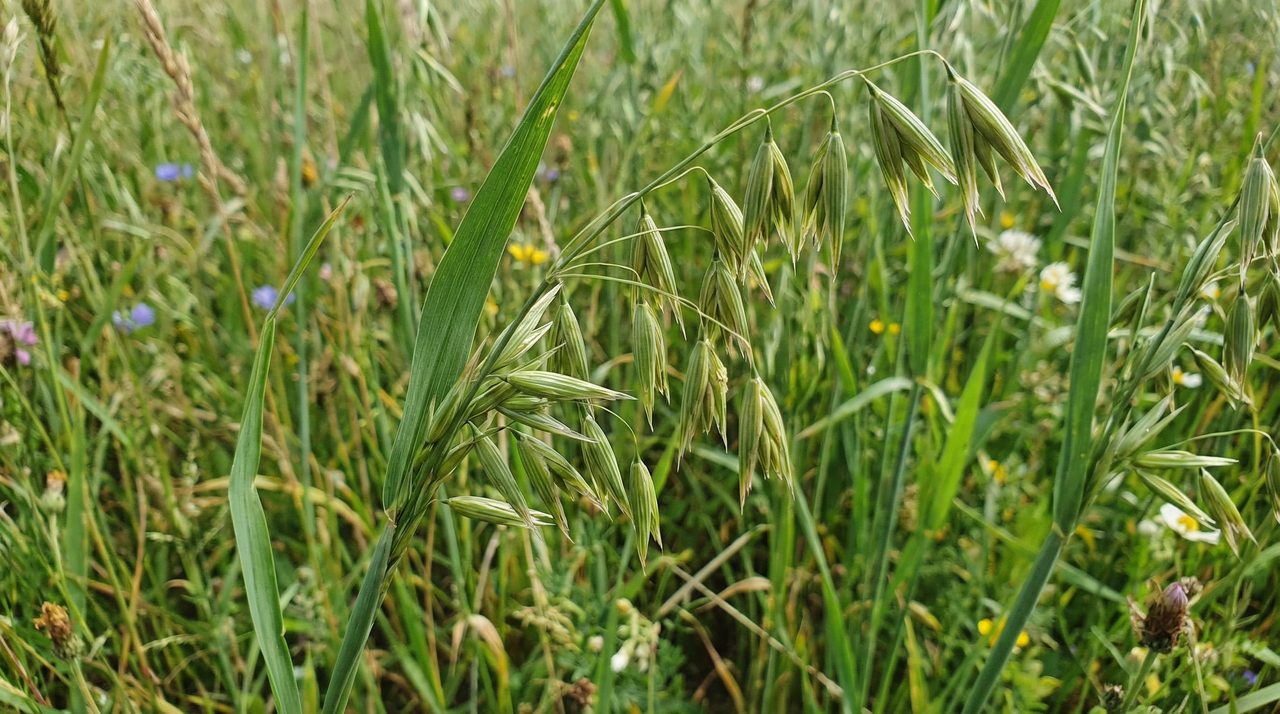
Most grains earn their domestication. Oats had to sneak into it. For centuries, farmers growing emmer and einkorn in the Fertile Crescent pulled oats out of their fields as weeds, and the plant just kept coming back. It wasn't until Bronze Age Central Europe, roughly 3,000 years ago, that someone finally stopped yanking it and started planting it on purpose.[1] That reversal from persistent weed to cold-climate staple is one of my favorite origin stories in all of agriculture, because it says something true about how permaculture actually works: the plant that won't leave you alone is usually the one worth paying attention to.
I've grown oats in heavy clay, in sandy loam, and in a cold Pacific Northwest season where half my other grains gave up by August. Oats didn't flinch. What strikes me every time is how much this plant does quietly, mostly underground and mostly for free, before you ever harvest a single grain. There's a reason experienced cover-croppers reach for oats first, and it has very little to do with breakfast.
Origin and History of Oats (Avena sativa)
Botanical Background and Native Range
The oat plant's scientific name, Avena sativa, belongs to a genus with deep roots in the Mediterranean Basin, where wild relatives like Avena sterilis and Avena fatua have been part of the landscape for at least 10,000 years.[2][3] That native range spans Europe, North Africa, and Western Asia, which explains a lot about the cool, moist conditions where oats do their best work. One botanical detail I find genuinely fascinating is the hygroscopic awns on wild oat florets: they twist and untwist with changes in humidity, physically corkscrewing seeds into the soil surface.[4][5] I've watched similar self-burying mechanics in other awned grasses and it never stops being a clever trick. Cultivated Avena sativa retains the trait in muted form; it's far more dramatic in Avena fatua, its weedy wild relative. Avena abyssinica, the Ethiopian oat, represents a separate branch of the genus adapted to highland East Africa at elevations between 1,500 and 3,200 meters, a reminder that oat diversity extends well beyond the European grain we usually picture.[6]
Traditional, Cultural, and Historical Uses
Oats were not part of the original Neolithic agricultural package. While wild Avena sterilis was being gathered in the Near East over 11,000 years ago, formal domestication of Avena sativa didn't happen until roughly 2000 to 1000 BCE, in Bronze Age Central Europe and Anatolia.[7][8] Oats started as a weed in wheat and barley fields, gradually selected for reduced seed shattering and larger grain size until they became a crop in their own right. I think about this pattern a lot when I'm designing successional polycultures: secondary species that slide into a niche without being deliberately planted are often the most resilient performers in the long run.
In ancient Greece and Rome, oats were considered horse fodder, decidedly inferior to wheat and barley for human use.[9] The crop's real elevation came further north. Scotland, Scandinavia, and Russia, with their short cool seasons and damp soils, proved ideal for oat cultivation, and by the medieval period oat porridge had become the backbone of peasant diets across those regions.[10][11] The Hanseatic League moved oats along Baltic trade routes from the 12th century onward, carrying them as both food and horse feed across a continent that still ran largely on equine power.[12] Celtic traditions wove oats into harvest festivals like Lughnasadh, associating the grain with fertility and protection, while early European herbalists reached for oat preparations to calm the nerves and soothe the skin.[13]
Visual Characteristics of Oats
If you've only ever seen oats in a bowl, the living plant is a pleasant surprise. Avena sativa grows as an upright cool-season grass, typically reaching 2 to 4 feet tall under good conditions, with a graceful drooping panicle at the top that catches wind beautifully.[4][14] The groats inside the hull are white to pale yellow. There's nothing flashy about the plant, but there's an honest, clean elegance to a stand of oats ripening in cool morning light.
Fun Facts About Oats
The modern scale of oat production puts its long journey into sharp perspective. Russia leads globally with roughly 4.5 million hectares under cultivation, while the US produced around 337 million bushels across 1.3 million acres in 2022, concentrated in North Dakota, South Dakota, Minnesota, and Wisconsin.[15][16] The record for highest yield belongs to the UK, where a 2022 grower hit 208.8 bushels per acre, a number that reflects exactly the cool, moist conditions oats evolved for.[15] And for sheer botanical ambition: the tallest recorded oat plant measured 10 feet 6 inches, nearly three times the average height you'd see in a field.[15] Not bad for a crop that started as a weed.
Oat Varieties and Cultivars
Avena sativa isn't a plant you browse by appearance at a garden center. It's a crop, and the variety landscape reflects that: cultivars are bred for specific end-uses, specific regions, and specific pressures, not for visual appeal or garden novelty. That's actually useful information if you know what you're trying to grow.
Notable Oat Varieties by Purpose and Region
The clearest way to navigate oat cultivars is to start with your goal. If you're growing for human nutrition and want maximum beta-glucan, look at lines like BetaOat, HiFi, or Marion, which hit above 5% beta-glucan content.[17] For milling into rolled oats or groats at scale, plump-kerneled types like AAC Reid were bred for exactly that. If you're in the Upper Midwest, names like Troy, Reins, and Goliath dominate seed catalogs for good reason: North Dakota and Minnesota together account for over 70% of U.S. oat production, and their university programs have poured decades into developing cultivars suited to that climate.[18][19] Both the University of Minnesota and NDSU now use genomic selection and marker-assisted breeding to push climate resilience and fungal-disease resistance into new releases.[20]
For home and small-scale growers, hull-less types are worth serious consideration. Freyr, Fiore, and AC Morgan are good examples: they carry higher protein (15-20% versus 12-15% in hulled types) and higher beta-glucan (5-7% versus 3-5%), at the cost of roughly 10-20% lower yield.[21] I've grown hull-less oats in my own garden trials, and honestly, that yield tradeoff feels negligible when you're processing by hand. Dehulling hulled oats without equipment is genuinely tedious. The hull-less types sidestep the problem almost entirely. For cold climates and early spring planting, varieties like Snowbird, Belt, and Banjo survive down to -25°C, which matters when you're pushing the planting window in a late-thawing zone.[22]
Permaculture growers often have more to gain from heirloom lines than from chasing yield maximums. Red Rustproof, a rust-resistant variety dating to the 1920s, Black Winter Oats, and Swedish Six-Row all offer the kind of genetic diversity and adaptability to organic, low-input systems that modern commercial releases sacrifice for uniformity.[23][24] Matching cultivar to your USDA zone, planting window, and actual goals matters more than chasing any single metric.[18]
Ethiopian Oat Landraces as Genetic Resources
Avena abyssinica, the Ethiopian oat, exists primarily as landraces rather than registered commercial cultivars. Its two main types, a blue-leaved form that heads 15-20 days earlier and tolerates drought better, and a green-leaved form that yields around 10% more under favorable conditions, are rarely grown outside their native highlands.[25] Most gardeners will never plant A. abyssinica directly, but its traits show up indirectly: breeders regularly draw on it as a donor parent to introduce drought tolerance, cold hardiness, and stress tolerance into modern Avena sativa lines.[26] That kind of deep genetic reservoir is exactly why germplasm conservation matters, even for crops that seem straightforward.
Sourcing Oat Seeds and Market Considerations
Oat seed lives in the agricultural supply chain, not the garden center aisle. You'll find it at grain elevators, farm supply stores, and crop seed companies. For certified organic stock, I order from Johnny's Selected Seeds (Monida hulless is a solid choice) or Albert Lea Seed (Streaker is worth trying), both of which carry cultivars bred with natural pest resistance and low-input systems in mind.[27][28] The USDA National Plant Germplasm System conserves a huge range of Avena sativa accessions, but that material is for research and breeding, not retail purchase.[29] Domestic seed moves without significant restriction; imported seed requires USDA APHIS permits and phytosanitary certificates, so stick with domestic suppliers unless you have a specific reason not to.[30]
U.S. production in 2023 came in at 46.5 million bushels across 1.1 million acres, with North Dakota, South Dakota, and Minnesota leading the way and prices running $3.40-$3.80 per bushel.[31] Ornamental selections like Avena sativa 'Ardenna' exist but are genuinely rare and harder to source than any standard agricultural cultivar.[4] For a home permaculturist, I'd always lean toward a hull-less or heritage type over whatever promises the highest bushels per acre. Easier processing and better resilience in a diverse system beat commercial yield numbers every time.
Oat Propagation and Planting Guide
Of all the grains I've worked with in permaculture settings, oats may be the most forgiving to propagate. There's no grafting, no layering, no complicated rooting protocol. You plant seed, and oats grow. The whole story starts there.
Understanding Oat Seeds and Their Viability
Oats are an annual cereal propagated almost exclusively by direct sowing from seed.[32][33] Each seed is a caryopsis, a structure where the pericarp and seed coat are fused together into a single grain about 4-10 mm long, with a starchy endosperm, a thick aleurone layer, and a single embryo nestled at the base.[34][35] Hulled varieties carry a papery outer covering that sticks to the grain; hulless types have been bred without it, which matters more at the milling stage than during planting.
What I appreciate most about oats for seed saving is their pollination biology. The flowers are cleistogamous, meaning they self-pollinate before they even open, keeping outcrossing rates below 1-5%.[36][37] That near-zero crossing rate means the seed you harvest this year will grow plants nearly identical to the ones you harvested it from. I save oat seed from my own plots routinely and confidently, with none of the isolation anxiety I deal with when growing squash or corn. For anyone new to seed stewardship, oats are the place to start building that habit.
Storage is straightforward if you respect the conditions. Oat seed is orthodox, meaning it tolerates drying and cold without damage, and viability can hold for a decade or more at around 4°C and 20% relative humidity, potentially far longer under seed-bank conditions.[38][39] For practical home storage, keep seed moisture below 10%, hold temperature between 4-10°C for medium-term or below -18°C for the long haul, and seal out humidity.[38][40] If you're ever uncertain about an older lot, a simple germination test at 15-20°C over 5-10 days will tell you what you need to know before committing a whole bed to questionable seed.[41][42]
Tiller division is technically possible as a vegetative method, but it's impractical at any real scale.[32] Tissue culture and micropropagation are used in breeding programs, typically working from immature embryos on MS medium with various hormones to induce somatic embryogenesis.[43][44] I've studied those protocols in hort-tech contexts and find them genuinely fascinating, but they belong in a lab, not a garden. The takeaway for home growers is simpler: start with clean, well-stored, high-viability seed and the rest of propagation nearly takes care of itself.
Site Selection and Soil Preparation
Oats prefer a fertile, well-drained loam or sandy loam at pH 6.0-7.0, with soil organic matter ideally in the 3-4% range.[45][4][46] They'll tolerate a wider range from pH 4.5 up to 8.5 in a pinch, but phosphorus availability drops significantly outside that neutral zone and you'll see it in the plants. I always soil-test before planting and have watched oats stunt and tiller poorly when pH slipped below 5.5. A single dolomitic lime application corrected it the following season, and as a bonus, dolomitic limestone also supplies magnesium that many oat-growing soils are quietly short on.[47][48]
Drainage matters more with oats than with many crops I've grown. Their fibrous roots need 60-100 cm of loose, aerated soil to develop fully, and even moderate waterlogging invites Pythium and Rhizoctonia root rots that can wipe out a stand before it properly establishes.[49][50] I've found that deep, friable beds reward oats handsomely, and compaction reveals itself fast -- yield loss starts climbing above a bulk density of around 1.7 g/cm³.[51] If your site tends toward heaviness, incorporating 10-20 tons per acre of compost before planting will open up structure and feed soil biology at the same time.[52]
For light, oats want full sun, at least 6-8 hours of direct exposure daily.[4] Partial shade is tolerated but yield drops 20-50%, which matters if grain is your goal. Oats perform best in USDA zones 4-7 for grain production, though the species is grown across zones 3-9 depending on the season and purpose.[53]
Spacing, Planting Technique, and Germination Timeline
Oats are almost always direct-seeded and transplanting isn't recommended. Their fibrous root system resents disturbance and transplant shock translates directly into yield loss.[45][54] Plant into rows spaced 6-8 inches apart, which is the sweet spot for weed suppression, airflow, and a canopy that actually closes over the soil.[55] Seeding rate for grain production runs 80-120 lbs per acre, adjusted upward for forage use or poorer seedbeds; broadcast sowing works fine at the garden scale where a drill isn't practical.[47][56]
Depth is one detail I pay close attention to. The recommendation is 1-2 inches, and in my loamy beds I've found that 1 inch produces the most uniform emergence. Go shallower in heavy, wet soils; push toward 2 inches in light sandy ground or where the seedbed is dry at planting.[45] Once established, plants reach 24-60 inches tall with a canopy spread of 12-24 inches and throw 2-4 tillers under good conditions, which is what creates that dense, weed-suppressing stand that makes oats so useful as a cover crop in polyculture designs.[4][57]
Timing follows the cool-season preference: early spring in March-April for northern temperate zones, or late summer into early fall (August-September) for winter-type varieties or cover-crop uses.[58][45] Germination happens within 7-10 days when soil temperatures sit in the 35-40°F range, which feels cool enough to surprise people who have only grown warm-season crops.[53][58] In my cool-season plantings I use that predictable window to time succession sowings for continuous cover-crop coverage. The seedlings emerge looking very much like lawn grass, which catches first-time oat growers off guard -- once you've seen a few come up, you recognize them immediately, but labeling your rows the first season is worth the effort. When those conditions are met, germination is reliable enough that the main question left is simply which seed lot you're setting aside for next year.
Oat Care Guide: Water, Fertility, Light, Temperature, and Maintenance
Oats are forgiving, but they're not foolproof. Get the fundamentals right and they practically grow themselves. Miss the cues on water or fertility and you'll know about it fast, because this plant speaks clearly through its leaves and stems if you're paying attention.
Water Requirements and Irrigation for Oats
Over a full growing season, oats typically need somewhere between 12 and 25 inches of total water, with most productive stands landing in the 15-25 inch range depending on your climate and soil.[59][60][61] How you deliver that water matters as much as how much. Young seedlings want a modest 0.5 to 1 inch per week, vegetative plants 1 to 1.5 inches, and then demand climbs sharply at flowering and grain fill, up to 2.5 inches per week at peak.[59][62] Keep soil at roughly 50 to 75% field capacity and you'll rarely have problems.
The crop has moderate drought tolerance, but don't let that lull you into complacency. Mild stress trims yield by 10 to 30%; prolonged drought at the reproductive stage can mean 40 to 60% losses.[63][59] I monitor leaf color and tiller vigor weekly once my summer heat kicks in, because by the time a plant is visibly wilting with brown leaf margins, you've already missed the optimal intervention window.[59] On the flip side, waterlogging is equally damaging: chlorotic leaves, stunted growth, and Pythium root rot are the calling cards of consistently soggy soil.[59][64] If you're irrigating, aim for water with an EC below 1.0 dS/m and a pH in the 6.5 to 8.5 range; rainwater is always the better choice when you have it.[59][65]
Soil Fertility and Nutrient Management
Soil pH is the foundation everything else sits on. Oats perform best between 6.0 and 7.0; outside that range, nutrient availability gets complicated fast.[66][67] If you're correcting acid soil, budget 1 to 2 tons of lime per acre per pH unit on loam, more on clay.
For nitrogen, the standard extension recommendation sits at 60 to 100 lbs N per acre for a 60 to 80 bushel yield target.[68][69] Split the application: put 40 to 60% down pre-plant or at emergence, then add the rest at tillering.[70][71] I learned this the hard way early on: I over-fertilized a test plot and after one good thunderstorm, the stems flopped completely. Excess nitrogen causes lodging, and there's no recovering a flattened crop. In regenerative systems, compost and legume rotations can meet a substantial portion of these N needs while building soil structure at the same time. For phosphorus and potassium, don't guess; base rates on soil tests, targeting a Bray P1 of 15 to 30 ppm and exchangeable K of 100 to 150 ppm.[72][73]
Micronutrient deficiencies show up visually once you know what you're looking for. Pale older leaves signal nitrogen shortage; purple leaf tinting and poor root development suggest phosphorus. Potassium deficiency shows as marginal leaf scorch and weak stems. Zinc deficiency produces white or yellow leaf streaks reminiscent of what I've seen in zinc-stressed corn; manganese and iron both cause interveinal chlorosis but on different leaf ages (young leaves for both); copper deficiency appears as leaf tip necrosis with reduced tillering.[74][75] I test my beds every three years and adjust accordingly; that practice has consistently produced the best stands and lowest disease pressure I've seen.[67][76]
Sunlight and Light Intensity Needs
Oats want full sun, at least 6 to 8 hours of direct light daily.[53] Plants sited under partial canopy get leggy and tiller poorly, the same etiolated, pale-foliaged habit I've observed in barley and wheat grown in suboptimal light.[77][78] At the other extreme, high light intensity combined with heat or drought can tip into photoinhibition: bleached leaves, premature senescence, scorched tips.[79] The practical takeaway is simple: choose the sunniest open bed you have, avoid planting near trees or tall structures that cast afternoon shade, and prioritize airflow through the canopy.
Frost and Heat Tolerance in Oats
Oats are a cool-season cereal with solid vegetative frost tolerance.[66] Established seedlings shrug off light freezes that would set back more tender crops, which is part of why early-spring planting works so well. The cold-hardening mechanisms in oats are similar to those in wheat and barley, though the precise lethal temperature thresholds for Avena sativa are less thoroughly documented than for those crops. What I've observed is that very young seedlings, just germinated, can take a hit from late frost and stall, but they typically recover. Reproductive plants are a different story entirely.
Heat Tolerance and Heat Stress Management
Optimal growth happens between 59 and 77°F (15-25°C). Above 86°F (30°C), heat stress begins; above 95°F (35°C), the damage gets serious fast: wilting, leaf scorch, accelerated senescence, and floret sterility at heading.[80][81] Temperatures above 30°C during anthesis can cause 10 to 50% yield loss, and the duration of that heat matters as much as the peak temperature.[82] Growing oats in Central Florida, I watch leaf color especially closely once we're consistently above 80°F, catching early stress signals before they compound into tillering failures.
Mitigation is genuinely practical. Morning or evening drip irrigation keeps canopy temperatures down without wasting water. A 5 to 10 cm layer of organic mulch can lower soil temperature by up to 5°C.[83][84] I tested 30% shade cloth during one particularly brutal spring and measured noticeably cooler canopy temperatures with a basic infrared thermometer; the difference in plant posture by midday was obvious. If you're in a region with warm springs, heat-tolerant cultivars like 'Troy', 'HiFi', 'AP307', or 'Kent' give you a useful buffer.[82]
Pruning, Maintenance, and Lodging Prevention
Oats need almost no classic pruning. Tiller removal isn't a standard practice and actually reduces total biomass when attempted.[85] The one exception is forage production: clipping at boot to early heading stage, around 50 to 60 days after planting, improves forage quality, reduces lodging pressure, and allows the plant to regrow for a second cut.[86]
Lodging is the real maintenance challenge. Semi-dwarf varieties, split nitrogen applications, 6 to 8 inch row spacing for airflow, and growth regulators applied at stem elongation all help keep stems upright.[87][88] In small garden plots exposed to wind, simple staking works. For weed control, competitive seeding rates and a stale seedbed go a long way; in organic systems, rotation with legumes and minimal tillage keep pressure manageable without synthetic inputs.[47][89]
Seasonal Growth Rhythm and Storage
Oats follow a cool-season annual pattern. Spring types go into the ground as soon as soil reaches 40 to 50°F; winter types overwinter under snow cover in appropriate climates.[66][90] Optimal growth happens between 55 and 70°F, and you can watch the whole lifecycle read out clearly in the plant's structure if you pay attention: tillering, stem elongation, panicle emergence, and finally the grain fill that turns green heads gold.
Harvest timing and storage are the final care steps that protect everything you've grown. Grain should reach physiological maturity at around 13 to 14% moisture before going into storage.[66] Once dried, store at 50 to 59°F (10-15°C) and below 65% relative humidity in breathable containers or aerated bins; handled correctly, oats will hold quality for one to two years with minimal risk of fungal growth or mycotoxin development.[91][92] I watch panicle color and kernel hardness as my primary harvest cues; a thumbnail that dents but doesn't compress tells me it's close, and golden, drooping panicles seal the decision.
Oat Harvesting and Storage Guide
When to Harvest Oats: Growth Stages, Moisture, and Visual Cues
The full cycle from sowing to harvest runs 90 to 120 days depending on your cultivar and climate, with early varieties finishing closer to 80-100 days and late-maturing types pushing 110-130.[93][94] Once flowering wraps up, you're looking at another 35-50 days before the grain reaches physiological maturity.[93] That post-flowering window is where I pay the most attention, because the plant moves through milk stage, soft dough, and hard dough in a way that's visible if you know what to look for.[95]
My personal go-to is the thumbnail test: once the panicles have gone golden and I can press a kernel with my nail and feel real resistance, the grain is close. Ideally you want 50-75% of the crop showing that firmness and color before you commit to harvest.[96] A moisture meter confirms what your thumbnail suspects. Field moisture at physiological maturity sits around 30-35%, and you need to bring that down to 14-18% for safe storage.[93][97]
If you're growing oats for forage rather than grain, the timing flips entirely. Cut at the boot stage or into soft dough, roughly 50-80 days after emergence, and you'll capture protein content in the 12-15% range.[86] I think of it like harvesting broccoli before the heads bolt: you sacrifice yield size for nutrient density, and the plant rewards you for it.
How to Harvest Oats: Methods for Grain, Forage, and Small-Scale Use
Commercial-scale grain harvest uses a combine with cylinder speeds around 800-1000 rpm, ground speeds of 3-4 mph, and concave clearance set at roughly half an inch to a full inch to avoid splitting kernels.[98][71] Windrowing the crop first allows it to dry further in the field before combining, which reduces the load on your dryer afterward. I've studied those settings carefully to advise clients scaling up, but for my own patches I reach for a hand sickle. Harvesting by hand when kernels are firm but not fully dry lets me work row by row as each plant is ready, which cuts down on the shattering losses you get when oats are left standing past peak.
Regardless of method, harvest during dry weather and aim for early morning or late afternoon when humidity is lower.[99] For hay, a mower-conditioner that crimps the stems speeds field drying; you want moisture down to 15-20% before baling, and you never want to rake in wet conditions.[98] After the grain is off, thresh and sieve to remove chaff, weed seed, and debris.[91] The principles of gentle handling and thorough cleaning apply equally whether you're running a combine or beating bundles over a tarp.
Yield Expectations and Post-Harvest Handling
A well-managed oat crop gives you grain, straw, and optionally the whole plant as forage. Hulled varieties typically yield 3-5 tonnes per hectare; hull-less types run a bit lower, around 2-4 tonnes per hectare.[100] The straw that comes off after combining doesn't go to waste in my systems; it becomes mulch or animal bedding, closing the loop in a way that feels genuinely satisfying.
Whatever you harvest, drying to that 14-18% moisture target before storage is non-negotiable.[91][92] I learned this the uncomfortable way growing in Florida's humidity; even grain that felt dry to the touch went musty within weeks. A cheap moisture meter is the simplest insurance you can buy for your oat harvest.
Oat Preparation and Uses
Culinary Uses of Oats: Nutrition, Flavor, and Preparation
The part of the oat plant you're actually eating is the groat, the whole kernel once the inedible hull is stripped away during milling.[4][101] From there, the groat gets rolled, cut, ground into oat flour, or processed into oat bran, each form landing differently in both flavor and nutritional density. A 100g serving of dry oats delivers 13 to 17g of protein, a meaningful hit of B vitamins, vitamin E, manganese, phosphorus, iron, and zinc. They also provide 3 to 5g of beta-glucan, a soluble fiber EFSA has formally approved as cholesterol-lowering at a daily intake of 3g.[102][103][104] Oat bran concentrates this soluble fiber even further.[102] I've noticed that a bowl of home-cooked steel-cut oats feels genuinely satisfying in a way that commercial instant packets don't, and I think some of that comes down to how processing affects both beta-glucan integrity and sheer fiber density.
Flavor-wise, raw oats carry fresh, grassy notes from volatile compounds like hexanal; cook them and Maillard reactions kick in, producing that warm, nutty, faintly caramelized quality that makes oatmeal so comforting.[105][106] Steel-cut oats retain the most of that earthy chew; rolled oats go milder and creamier; instant oats are the gentlest of the three.[107] Oats pair beautifully with apples, berries, almonds, walnuts, cinnamon, and vanilla, whether you're building a morning porridge or folding them into a cookie.[108] For overnight oat recipes, the long soak in liquid softens rolled oats without any heat, and in my experience it also noticeably reduces the slight bitterness some people detect, which makes sense given that soaking and fermentation reduce phytic acid and improve mineral bioavailability.[109] I'd skip eating raw oats straight from the bag; some preparation, whether soaking, cooking, or fermentation, is genuinely worth it.
Although oats are naturally gluten-free, I always recommend certified gluten-free products when cooking for friends with celiac disease because cross-contamination in shared milling facilities is a real problem I've seen play out, and roughly 10% of celiac patients may also react to avenin, an oat-specific protein.[110] The other risks worth knowing: mycotoxin contamination (the EU sets limits on deoxynivalenol specifically), cadmium uptake from polluted soils, and intestinal obstruction from excessive oat bran in people with compromised gut motility.[111][112] Wild oat (Avena fatua) looks similar in the field, especially before the panicles fully open, but contains saponins that can cause gastrointestinal upset; when foraging or harvesting from your own plots, knowing what you planted matters.[113] Storing harvested grain cool and dry, below 13% moisture and between 40 and 60°F, keeps quality up and contamination risks down.[59]
Ethiopian oat (Avena abyssinica) is worth a mention here because it fills a parallel culinary role in the highlands of East Africa, appearing in porridges, breads, and sometimes mixed with teff for injera.[114] Its nutrition profile is comparable, 12 to 15% protein with meaningful iron, zinc, B vitamins, and vitamin E, and it's prepared through the same basic methods: soaking, fermenting, roasting, or cooking.[115][116] It's a drought-adapted grain doing similar nutritional work in a very different climate, which I find genuinely fascinating as a systems thinker.
Medicinal Preparations from Oats and Oat Straw
The medicinal side of oats is something I came to slowly, honestly skeptical of the nervous-system claims until I started making oat straw infusions and paying attention to how I felt. The smell of a freshly brewed cup is unmistakably grassy and mild, close to standing in a cut oat field in early summer. Preparation is simple: 1 to 2 teaspoons of dried oat straw or milky oat tops steeped in hot water, or a 1:5 alcohol tincture at 3 to 5mL taken two to three times daily for nervous-system support.[117][118] Traditional European herbalism has long used oats as a nervine for anxiety and insomnia, a topical preparation for eczema and irritated skin, and occasionally as a mild diuretic or laxative.[119] Ethiopian traditional medicine uses Avena abyssinica similarly for digestive complaints, anemia, and respiratory issues.[120] These are traditional and monograph-based uses; individual responses vary, and the deeper phytochemical mechanisms behind the cardiovascular and anti-inflammatory benefits are covered in the health benefits section of this profile.
Non-Food Uses of Oats
Once you've harvested the grain, the straw isn't waste. Oat straw has a long history in European folk crafts: woven into dolls, decorations, and thatching, and still used today for livestock bedding and fodder.[121][122] Both Avena sativa and Avena abyssinica grain also serve as reliable livestock feed, which matters in dual-purpose permaculture systems where a single crop can feed both people and animals.[123] Industrially, oat derivatives show up in cosmetics, soaps, and shampoos, capitalizing on the same skin-soothing compounds that make colloidal oatmeal a dermatological staple. And as the permaculture design section covers more fully, oats grown as a cover crop suppress weeds, prevent erosion, and build organic matter, which means even a patch that never makes it to the kitchen is doing useful work in the system.
Oat (Avena sativa) Health Benefits and Medicinal Uses
Most grains earn their health reputation through basic nutritional density. Oats earn theirs through chemistry that's genuinely unusual in the grass family. Two compound classes do the heavy lifting: avenanthramides, a group of polyphenols found almost nowhere else in the plant kingdom, and beta-glucan, a soluble fiber with some of the strongest human clinical evidence of any food compound. Understanding those two molecules explains most of the cardiovascular, metabolic, neurological, and dermatological benefits that researchers keep confirming decade after decade.
Key Phytochemicals: Avenanthramides, Beta-Glucan, and Supporting Compounds
Avenanthramides are structurally derived from anthranilic acid and hydroxycinnamic acids, present at roughly 0.1-0.3% of dry weight in oat bran.[124][125][126] They concentrate in the grain itself, particularly the bran, groats, and aleurone layers, reaching 300-400 mg/kg in whole grain, while leaves, stems, and roots carry significantly lower levels.[126][127] That matters for anyone growing oats: the grain is where the medicinal action lives, not the straw.
The broader phytochemical picture is genuinely rich. Oats contain phenolic acids including ferulic, vanillic, and caffeic; flavonoids like quercetin and apigenin glycosides that concentrate more in leaves and stems; triterpenoid saponins (avenacosides A, B, and C) found in leaves and hulls; beta-sitosterol; low-level alkaloids like gramine primarily in the foliage; condensed tannins; and coumarins such as scopoletin.[124][128][129] What oats don't have is glucosinolates, the sulfur compounds that define Brassicaceae plants, which makes their antioxidant mechanism distinctly their own.[124]
Growing conditions directly shape how much of this chemistry ends up in your grain. Cultivar genetics alone account for 20-50% differences in avenanthramide and phenolic levels, and cooler growing periods can push phenolics up by as much as 30%.[130][131] Organic farming practices and reduced tillage elevate secondary metabolite profiles further.[132] I've grown several oat cultivars in rich compost-amended beds and noticed the straw smells noticeably more aromatic and the grain has a deeper, nuttier character compared to plants scraped along in poor, compacted soil. That's not just aesthetic; biochemical assays demonstrate it directly. Avenanthramides from well-grown grain show antioxidant activity comparable to or exceeding vitamin E in assay conditions, and they activate the Nrf2 pathway to upregulate protective enzymes like HO-1 and NQO1 while suppressing inflammatory cytokines including IL-8, TNF-α, and IL-6.[133][134][135]
Bioavailability of avenanthramides runs at a moderate 20-50%, but the oat fiber matrix and beta-glucans slow gastric emptying in a way that actually supports their absorption over time.[136][137] It's a good example of a whole food where the parts reinforce each other.
Evidence-Based Medicinal Actions and Traditional Uses
The cardiovascular evidence for oat beta-glucan is about as solid as it gets in food science. Beta-glucan lowers LDL cholesterol by binding bile acids in the gut, promoting their excretion, and upregulating hepatic LDL receptors to clear more cholesterol from circulation. Just 3 grams daily produces significant, clinically meaningful reductions in human trials.[138][139][140] The same compound modulates blood glucose by slowing carbohydrate absorption, inhibiting DPP-4, and stimulating GLP-1 secretion, the satiety hormone that helps prevent blood sugar spikes.[138][141] On the immune side, beta-glucan binds Dectin-1 and TLR2 receptors to promote balanced immune responses rather than overstimulating them.[142]
Daily consumption of 40-100 g of oats also reduces C-reactive protein, a key inflammatory marker, in adults.[143] The traditional European use of Avena sativa as a nervine tonic for anxiety and nervous exhaustion is a category I've always appreciated for having genuine ethnobotanical depth, and the clinical data is starting to catch up. A 1600 mg/day oat extract taken over four weeks showed anxiolytic effects in human trials,[144] and the European Medicines Agency formally recognizes Avena sativa herba for relieving mild mental stress and fatigue.[145] Preliminary animal data points to GABA modulation as the likely mechanism.[146][147] I grow oats partly for soil building, but I've brewed enough oat-straw tea to say the calming effect feels real, and the science is no longer just anecdote.
Topically, colloidal oatmeal is FDA-recognized for soothing eczema, dermatitis, burns, and rashes through demulcent and anti-inflammatory action.[147] When clients ask me for functional plants in a wellness garden, this is one I always mention alongside aloe, because oat has the regulatory backing that aloe doesn't when it comes to dermatological use. Traditional preparations use tinctures at 2-5 mL of a 1:5 preparation in 40-60% alcohol two to three times daily, or oatstraw teas at 1-2 tsp dried herb per cup, one to three cups daily, with the European Pharmacopoeia requiring a minimum 0.5% flavonoids in Avena sativa herba.[148][149]
A range of other actions have been identified, including ACE-inhibitory peptides for blood pressure support, xanthine oxidase inhibition for uric acid reduction, mild diuretic and antispasmodic effects, neuroprotective activity in animal models, and in-vitro antimicrobial effects from saponins and phenolics.[150][151][152][153] Most of these remain at preclinical or early-clinical stages, so treat them as promising leads rather than established benefits.
Nutritional Profile and Everyday Health Contributions
A 100 g serving of cooked oatmeal delivers roughly 71-105 kcal, 2.5-2.6 g protein, 12-21 g carbohydrates, and 1.7-2.5 g of fiber with notably low sugar content.[102][154] Oat bran pushes all those numbers higher and is where the beta-glucan concentration really climbs, reaching around 15 g per 100 g dry weight.[155] Beyond the macros, oats supply B vitamins with thiamine highest, vitamin E, iron, magnesium, phosphorus, zinc, and manganese, a micronutrient spread that ties directly to the cardiovascular and metabolic benefits already covered.[156]
Cooking retains over 90% of beta-glucan but can reduce water-soluble B vitamins by 10-30%; raw or minimally processed oats preserve the highest nutrient density overall.[157] Traditional fermentation can boost folate and mineral bioavailability by up to 50% by reducing phytate.[158] I've settled on steel-cut or overnight oats in my own kitchen. The viscous, sticky texture you get from intact groats is exactly what slows digestion and produces that steady, unhurried energy, and you can feel the difference from quick-cook oats within an hour of breakfast.
Safety, Dosage, and Practical Considerations
Avena sativa is classified GRAS with an animal LD50 above 10 g/kg and no toxicity concerns under normal consumption or topical use.[159][160] On the gluten question: oats are naturally gluten-free, but cross-contamination with wheat, barley, or rye during growing or milling is common enough to be a real concern. Certified gluten-free oats, produced under purity-protocol or mechanical-sorting standards to under 20 ppm gluten per FDA rules, are safe for most people with celiac disease, though roughly 10% may still react to avenin, oat's own storage protein.[161][162][163] I routinely recommend certified options to clients with autoimmune conditions, and I keep a small dedicated plot for purity-protocol oats where no wheat has ever grown. Segregation matters, and being specific about it does too.
Common side effects are mild and fiber-related: bloating and gas as the gut adjusts to increased beta-glucan intake. Serious allergic reactions occur in under 1% of the general population, with higher rates in people who already react to grasses.[164] For medicinal dosing, oat bran at 40-100 g/day delivers the 3-10 g of beta-glucan supported by cholesterol research; tincture doses run 2-4 mL three times daily; a colloidal oatmeal bath uses about one cup per bath for skin conditions.[149][165] Wild relatives like Avena fatua and A. sterilis are a different story; they're not cultivated oats, and in large amounts their high phytic acid content can cause mineral-binding issues in livestock.[166][167] If you're foraging or using volunteer grains, always confirm which species you have, as wild types carry very different nutritional profiles. Cultivated Avena sativa is safe during pregnancy, lactation, and for children as food, and if you're taking cholesterol or blood sugar medications, the additive effects of regular oat consumption are worth mentioning to your prescriber.[168][169]
Oat Pests and Diseases: Identification, Resistance, and Integrated Management
In my experience growing small grains alongside each other, oats almost always need fewer interventions than wheat or barley. That's not luck; it's biology. Oats carry a broader portfolio of built-in defenses, and even in susceptible varieties, pest and disease losses typically stay under 20-30% rather than the crop-wrecking numbers you can see in a badly hit wheat field.[170] That comparative resilience doesn't mean you can ignore problems entirely, though. A few diseases and insects genuinely matter, and knowing which ones to watch makes all the difference.
Disease Resistance and Management in Oats
Crown rust, caused by Puccinia coronata f. sp. avenae, is the headline threat. It's the most widespread and yield-robbing disease oats face in the United States, and humid Midwestern states like North Dakota, Minnesota, and Iowa tend to see the worst of it.[171][172][173] Resistance is well understood and embedded in commercially available genetics. Resistance genes in the Pg and Pc families confer low infection types, and cultivars like 'Morton', 'HiFi', 'Reins', 'Goliath', and 'Kamex' consistently score in the 0-2 range on a 0-4 severity scale.[174][175] I always check the most recent university trial data for my region before buying seed, because pathogen races are shifting under climate pressure and monoculture, and older resistant varieties can lose their edge faster than breeders can replace them.[176]
Across the broader disease spectrum, modern oat cultivars generally show moderate to high resistance to powdery mildew and loose smut, while resistance to barley yellow dwarf virus (BYDV) and bacterial leaf blight is more limited.[174] For BYDV specifically, tolerant cultivars like 'TAMO 401', 'Monida', 'Mattern', and 'Freyr' are worth seeking out, particularly where aphid pressure runs high, since the bird cherry-oat aphid (Rhopalosiphum padi) is the primary vector linking insect management directly to disease outcomes.[177][178] Oats also hold a real advantage over wheat for Fusarium head blight and are notably tolerant of take-all (Gaeumannomyces tritici), two diseases that can devastate wheat rotations.[179][180]
For management, cultivar selection and rotation are the two highest-leverage tools available to a small-scale grower. Rotating oats with non-host crops like corn or soybeans on a 2-3 year cycle breaks disease cycles far more effectively than chasing problems with fungicide.[171] Where crown rust or Septoria leaf blotch pressure is historically high, strobilurin or triazole fungicides applied at flag-leaf to 50% head emergence can protect yield, and loose smut is best addressed with hot-water seed treatment at 49-52°C for 10-15 minutes before planting.[181][182] Avoiding oat-after-oat sequences, keeping fertility balanced, and maintaining good drainage all reduce the lush, soft growth that rusts love to colonize.[183][59]
Insect Pests and Natural Resistance Mechanisms
Oats come loaded with defenses against insects, including physical traits like solid stems and tight panicles, and a suite of compounds (avenanthramides, benzoxazinoids, phenolics) that act as anti-feedants and can be induced further through jasmonic and salicylic acid pathways when plants are under attack.[184][185][186] The major insect pests to know are aphids (especially the bird cherry-oat aphid and English grain aphid), Hessian fly, cereal leaf beetle, armyworms, cutworms, oat stem sawfly, wireworms, and weevils, though which ones actually show up depends heavily on region and conditions.[187][188]
Cultivar choice matters here too. 'Cimarron' and 'Bob' carry Hessian fly resistance, lines derived from Avena sterilis or SC-8211 show aphid resistance through antibiosis and antixenosis, and solid-stem types reduce oat stem sawfly damage.[189][190] I start scouting from tillering stage onward, walking rows and flipping leaves to check for the honeydew sheen and leaf curl that signal bird cherry-oat aphid colonies before they build. The economic threshold for aphids matters most because of the BYDV vector connection; once you're above 15 aphids per stem, you're also amplifying disease risk.[191] For cereal leaf beetle, the action threshold is 3-5 larvae per stem.[192]
Beyond thresholds, supporting populations of lady beetles and parasitic wasps does real work in keeping aphid pressure from spiking, and planting at the recommended density of 200-300 plants per square meter in well-drained, near-neutral soil gives oats the vigor to outpace moderate pest pressure without intervention.[191][193] From a rotation standpoint, oats genuinely function as a break crop, disrupting pest and disease cycles that accumulate in wheat or barley sequences.[177] That's something I appreciate about slotting oats into a diverse system: you're not just growing a grain, you're resetting the pest baseline for whatever comes next.
Oats in Permaculture Design
If I had to name one annual grass I'd never want to rotate out of my cool-season toolkit, it would be oats. Not because of the grain yield (though that's a nice bonus), but because of what oats do to a patch of earth between one season and the next. In my food forest edges here in Central Florida, I sow oats every fall and watch the soil change. By the time I terminate the stand in late winter, the tilth is noticeably different: looser, darker, alive in a way that a bare fallow patch never achieves. That transformation isn't accidental.
Ecosystem Functions and Soil Health Benefits
Avena sativa earns its place as a cover crop through a combination of physical and biochemical services that stack on top of each other. The fibrous root system stabilizes soil against erosion, builds structure, and feeds organic matter back into the profile when the stand is terminated as green manure.[194][195][196] The high biomass production under good conditions means there's genuinely useful material to incorporate, whether you're plowing it under, cutting it for mulch, or baling it as livestock feed.[195] At the same time, oats scavenge excess nitrogen and other nutrients that would otherwise leach below the root zone, holding them in plant tissue until the next rotation needs them.[197][195] And the allelopathic chemistry they release suppresses weed germination through both chemical inhibition and simple mechanical competition from a dense canopy.[194][196] That reduced weed pressure carries forward; I reliably get a quieter seedbed the following summer wherever oats ran the previous winter.
Oats do not fix nitrogen.[195] I see them mischaracterized as soil-enrichers in the same breath as legumes, and it's not quite right. What they do instead is support microbial activity through root exudates in ways that facilitate nutrient cycling, which is genuinely valuable, just different. The smart pairing is oats alongside clover, field peas, or another legume so that the grass captures the leached nitrogen the legume is simultaneously fixing from atmosphere into soil.[198][199] I use this pairing every season, and the combined effect on subsequent crop fertility is measurably better than either species run alone. The carbon sequestration that comes along with all that organic matter accumulation is a secondary benefit that adds up quietly over the years.[200]
Ecologically, oats also function as a pioneer species on disturbed ground, promoting succession in areas where bare soil would otherwise be vulnerable.[201] A stand left to mature provides habitat and forage for birds, beneficial insects, and small mammals, which matters if you're trying to build biodiversity across a whole property rather than just grow food.[202][203] For highland and agroforestry contexts, Avena abyssinica (Ethiopian oat) performs parallel soil stabilization and biomass functions, producing 4-6 tons of biomass per hectare under good conditions for compost, feed, or fodder, while also contributing an ornamental grass quality that fits well in food forest understories.[204][205]
One practical guild design note: oats are predominantly self-pollinating, with cleistogamous flowers that self-fertilize before they even open, making wind and insects essentially incidental to seed set.[206][4][207] I never worry about providing dedicated floral resources specifically for oats; they set seed reliably even in insect-poor years. That lets you slot them into polycultures without any obligation to design around their reproductive needs.
Climate Adaptation and Hardiness Zones
Oats are a cool-season crop in the most fundamental sense: their sweet spot is 15-20°C (59-68°F), germination is most reliable with soil temperatures between 10-20°C (50-68°F), and vegetative growth runs best with cooler nights than days.[208][59] Once temperatures push above 25-30°C, especially during flowering and grain fill, yields take a significant hit.[208][209] In my zone 9B garden, this is a real constraint. I don't push oats toward grain in late spring; I terminate them early as green manure instead, turning what would be a climate failure into a deliberate fertility strategy.
On the cold end, oats are surprisingly tough. Vegetative plants handle frost down to -5 to -7°C (20-23°F), and the species is hardy across USDA zones 2-9.[59][210][211] In the colder reaches of that range, seedling survival through winter depends heavily on snow cover acting as insulation, something worth factoring into site selection in zones 3-5. My zone 9B winter planting rarely needs any protection at all, which is a genuinely different management reality than a Minnesota grower faces.
Oats need 18-25 inches (450-650 mm) of well-distributed annual rainfall, performing best at moderate humidity of 50-70%; humidity above that threshold starts increasing fungal pressure.[212][213] They grow from sea level up to around 2,500 meters (best below 1,500 m), and prefer well-drained, neutral to slightly acidic soils at pH 6.0-7.0.[214][2] Modern cultivars have low photoperiod sensitivity despite oats being technically long-day plants, which is why they succeed across a wide range of temperate latitudes without much fussing over day length.[215][216]
In the U.S., production concentrates in the northern Midwest, Great Plains, and Pacific Northwest; in zones 8-9, growers plant in fall as a winter annual, while zones 3-5 call for spring planting after soil temperatures climb out of freezing.[217][218] The timing I choose in my own garden follows observed soil temperature rather than a calendar date, because local microclimates vary enough that a fixed date misleads more than it helps. One final microclimate caution: where high heat coincides with high humidity, disease pressure from crown rust and other fungals rises sharply, so site selection within your property matters as much as regional climate zone.[219]
The Grain That Made Me Rethink "Boring"
I'll be honest: oats were the last thing I wanted to write about. A breakfast grain, a cover crop, nothing glamorous. Then I spent a season actually watching them, the way the panicles sway before anything else moves, the way a stand of oats after a hard frost just shrugs and keeps going. There's a quiet stubbornness to this plant that I've come to respect deeply, and now I won't design a cool-season rotation without them.
Sources 219
- Oat | Description, Grain, Uses, & Facts | Britannica ↩
- Oat - Wikipedia ↩
- Domestication and Genetic Diversity of Oats - Annals of Botany ↩
- Avena sativa L. ↩
- Hygroscopic Movements in Awns of Wild Oats (Avena fatua) and Their Role in Seed Dispersal ↩
- Kew Gardens Plant Profile ↩
- The Domestication of Oats (Avena sativa) ↩
- Missouri Botanical Garden Plant Finder: Avena sativa ↩
- Oats as Fodder in Ancient Rome ↩
- Oats in Medieval Europe: Diet and Economy ↩
- Scottish Porridge: A Cultural History ↩
- Trade Routes and Grain Exchange in Medieval Europe ↩
- Oats (Avena sativa) - Historical and Medicinal Uses ↩
- Kew Science Plants of the World Online: Avena sativa ↩
- USDA National Oat Yield Data ↩
- Global Oat Production Statistics ↩
- High Beta-Glucan Oat Varieties - Oat Nutrition Notes ↩
- Oat Variety Selection Guide - North Dakota State University ↩
- University of Minnesota Oat Breeding Program ↩
- Agronomy Journal: Oat Breeding Review 2023 ↩
- Hull-less vs. Hulled Oats Comparison ↩
- Oat Variety Descriptions ↩
- Heirloom Oat Varieties ↩
- Common Oat Cultivars List ↩
- Kew Science - Avena abyssinica ↩
- ICARDA - Avena abyssinica Germplasm Information ↩
- Organic Oat Seed Varieties ↩
- High Mowing Organic Seeds ↩
- National Plant Germplasm System (GRIN) - Avena sativa ↩
- Regulated Seeds within the US (Chapter 9)- APHIS ↩
- Crop Production 2023 Summary ↩
- Oats: Botany, Cultivation, and Utilization ↩
- Oat Production Guide ↩
- Oat Seed Morphology and Anatomy ↩
- Grain Anatomy of Avena sativa ↩
- Pollination Biology of Cultivated Oats (Avena sativa L.) ↩
- Breeding Systems in the Genus Avena ↩
- Seed Storage of Orthodox Species ↩
- Long-term Seed Storage Conditions for Cereals ↩
- USDA National Plant Germplasm System - Seed Storage Guidelines ↩
- ISTA International Rules for Seed Testing ↩
- USDA Seed Vigor Testing Handbook ↩
- In vitro regeneration of oat (Avena sativa L.) through somatic embryogenesis ↩
- Micropropagation of oats: A review ↩
- Oat Production Guide ↩
- Soil Organic Matter and Crop Production - University of Minnesota Extension ↩
- Oat Production in Minnesota ↩
- Liming to Improve Soil pH for Crop Production ↩
- FAO Oat Production Guidelines ↩
- USDA Plant Disease Handbook: Oats ↩
- Drought and Waterlogging Tolerance in Oats ↩
- USDA NRCS Soil Quality for Crop Production ↩
- Oat Growth and Development ↩
- Small Grains Production Handbook ↩
- Seeding Rates and Row Spacing for Small Grains ↩
- Small Grains Production Handbook ↩
- Oat Agronomy Handbook ↩
- Oats: Planting and Management Guide ↩
- Oats Production Guide - University of Minnesota Extension ↩
- Irrigation Management for Oats - Purdue University Extension ↩
- Crop Water Requirements - FAO ↩
- Oat Production in North Dakota ↩
- Crop Water Use and Drought Stress in Cereals - NDSU ↩
- Root Rot in Cereals: Pythium and Fusarium - Kansas State University Plant Pathology ↩
- Irrigation Water Quality Guidelines - FAO ↩
- Oat Production Handbook - USDA ↩
- Soil Fertility Recommendations for Oats - Penn State Extension ↩
- Oat Fertilization Guidelines - University of Minnesota Extension ↩
- North Dakota State University Oat Fertilization Guide ↩
- Fertilizer Recommendations for Oats - North Dakota State University Extension ↩
- Nutrient Management for Oats - Purdue University Extension ↩
- Nutrient Recommendations for Oats - University of Minnesota Extension ↩
- Soil Fertility Recommendations for Corn, Soybean, Small Grain, and Forage - Iowa State University Extension ↩
- Micronutrient Deficiencies in Oats ↩
- Zinc Deficiency in Cereal Crops ↩
- Nutrient Management for Oats - University of Minnesota Extension ↩
- Physiological Responses of Oats to Shade Stress ↩
- Etiolation and Photomorphogenesis in Avena sativa ↩
- Canopy Photosynthesis in Small Grains ↩
- Effects of Heat Stress on Oat (Avena sativa L.) at Different Growth Stages ↩
- Heat Stress Effects on Oat Physiology and Yield ↩
- Heat Stress Tolerance in Oat (Avena sativa L.) ↩
- Heat Stress Management in Oat Production ↩
- Mulching and Irrigation Strategies for Cool-Season Crops Under Heat Stress ↩
- Influence of Tiller Removal on Oat Yield ↩
- Oat Forage Production and Management ↩
- Lodging in Small Grains: Prevention and Management ↩
- Alberta Agriculture - Cultivating Oats ↩
- Organic Oat Farming Practices ↩
- Oat Production Guide ↩
- Post-Harvest Handling of Oats ↩
- Storage of Cereal Grains and Their Products ↩
- University of Minnesota Extension: Oat Production Guide - Harvesting ↩
- Oat Growth and Development ↩
- Harvesting Oats ↩
- Oat Production Guide ↩
- Harvesting and Storing Oats ↩
- Iowa State University Extension: Oat Harvest Guide ↩
- Minnesota Extension: Oat Production and Management ↩
- Field Crops: Oats Production Guide ↩
- Avena sativa - Missouri Botanical Garden Plant Finder ↩
- USDA FoodData Central - Oats ↩
- Beta-Glucan - Overview ↩
- EFSA Health Claims - Beta-Glucan ↩
- Sensory Evaluation of Oat Products ↩
- Volatile Compounds in Oats: A Review ↩
- Oats: Nutrition Facts and Health Benefits ↩
- University Extension Oat Recipes ↩
- Phytic Acid in Oats and Reduction Methods ↩
- Oats and Celiac Disease: A Review ↩
- Mycotoxins in Oats: Deoxynivalenol Occurrence and Risk ↩
- Oat Allergy: Clinical Presentation and Diagnosis ↩
- Wild Oat (Avena fatua) - USDA Plants Database ↩
- Traditional Food Processing of Ethiopian Oats (Avena abyssinica) ↩
- Avena abyssinica: A Review of Its Nutritional and Health Benefits ↩
- Avena abyssinica - Wikipedia ↩
- European Medicines Agency (EMA) - Avena sativa HMPC Assessment Report ↩
- Monograph on Avena sativa ↩
- Ethnobotanical Study of Traditional Medicinal Plants in Ethiopia ↩
- Traditional Uses and Safety of Ethiopian Indigenous Grains ↩
- Oat Straw Crafts - Traditional Uses ↩
- Oats: Crop Production Guide - Penn State Extension ↩
- Oats - USDA Agricultural Research Service ↩
- Phytochemicals in Oat (Avena sativa L.): A Review ↩
- Avenanthramides: A Review of Their Biological Activities ↩
- Avenanthramides in Oats: Their Structure, Biosynthesis, and Health-Promoting Effects ↩
- Phenolic Compounds in Whole Grain Oats and Oat Bran ↩
- Secondary Metabolites in Oats: Focus on Saponins and Phenolics ↩
- Phytochemicals in Oat Leaves and Their Distribution ↩
- Cultivar Differences in Oat Secondary Metabolites ↩
- Seasonal Variation of Phenolic Compounds in Oats ↩
- Influence of Soil on Avenanthramides in Avena sativa ↩
- Antioxidant activity of oat extracts ↩
- Nrf2 Activation by Avenanthramides ↩
- Avenanthramides, polyphenols from oats, inhibit IL-8 production ↩
- Chemical Composition and Bioactive Compounds in Oats ↩
- Avenanthramides: Avena's Secret Weapon ↩
- Health Effects of Oat Beta-Glucan ↩
- Cholesterol-Lowering Mechanisms of Oats ↩
- Oats and CVD Risk: A Systematic Review ↩
- DPP-4 Inhibition by Oat Beta-Glucan ↩
- Beta-Glucan Immune Modulation via Dectin-1 and TLR2 ↩
- Clinical Trial: Oat Consumption Reduces Inflammatory Markers ↩
- Oat Extract for Anxiety: Clinical Trial ↩
- European Medicines Agency (EMA) Assessment Report on Avena sativa Herba ↩
- Oats as a nervine and sedative in herbal medicine ↩
- Journal of Ethnopharmacology (2020) Review of Oat's Traditional and Modern Uses ↩
- European Pharmacopoeia 10.0 - Monograph on Avena sativa herba ↩
- Avena Sativa (Oats) - Drugs and Lactation Database (LactMed) ↩
- ACE Inhibition by Oat Peptides ↩
- Xanthine Oxidase Inhibition by Oat Compounds ↩
- Neuroprotective Properties of Oats ↩
- Anxiolytic Effects of Avena sativa ↩
- Oats | The Nutrition Source | Harvard T.H. Chan School of Public Health ↩
- USDA FoodData Central - Oat bran, raw ↩
- USDA FoodData Central - Oat groats, cooked ↩
- Beta-Glucan in Oats: Effects of Processing and Cooking ↩
- Nutritional Composition of Ethiopian Oat (Avena abyssinica) Grains ↩
- Avenanthramides and Avena sativa Extracts: Pharmacological Activities and Safety ↩
- Avena sativa - Drugs and Lactation Database (LactMed) ↩
- Gluten-Free Oats: What's the Deal? - Celiac Disease Foundation ↩
- Are Oats Gluten-Free? - BeyondCeliac.org ↩
- Oats and Celiac Disease: Safety Assessment ↩
- UPMC - Allergic Reaction to Oats ↩
- Avena Sativa (Oats) Monograph ↩
- Missouri Botanical Garden Plant Finder: Avena fatua ↩
- UC IPM: Wild Oats ↩
- American Pregnancy Association - Safe Foods During Pregnancy ↩
- Drugs.com - Oat Bran Interactions ↩
- Crop Profile for Cultivated Oats in the United States ↩
- Oat Crown Rust Management - University of Minnesota Extension ↩
- Oat Crown Rust Management - Penn State Extension ↩
- University of Minnesota Extension - Oat Disease Management ↩
- USDA National Plant Germplasm System - Oat Disease Resistance ↩
- Oat Variety Trial Results - Crown Rust Resistance ↩
- Journal of Phytopathology - Research on Oat Diseases ↩
- Cereal Crops Research - BYDV Resistance in Oats ↩
- Barley Yellow Dwarf in Oats - Resistant Cultivars ↩
- Fusarium Head Blight in Small Grains ↩
- Oat Diseases and Their Management ↩
- Septoria Leaf Blotch of Oats - Ohio State University ↩
- Managing Loose Smut and Bunt in Oats - Purdue Extension ↩
- Temperature Effects on Cereal Rusts ↩
- Aphid Resistance in Oats: A Review ↩
- Avenanthramides, a Group of Phenolic Antioxidants Unique to Oats, Have Potential for Health Promotion ↩
- Induced Systemic Resistance in Cereals ↩
- Insect Pests of Small Grains in the North Central Region ↩
- Insect Pests of Oats in North America ↩
- North Dakota State University Extension - Oats Pest Management ↩
- Breeding for Resistance to Hessian Fly in Cereals ↩
- Integrated Pest Management for Oats ↩
- Cereal Leaf Beetle Management ↩
- Insect Pests of Small Grains - North Dakota State University Extension ↩
- Cover Crop Benefits: Oats ↩
- Oats as a Cover Crop ↩
- Cover Crops and Soil Health - USDA ↩
- Nutrient Cycling with Cover Crops ↩
- Cover Crops for Sustainable Agriculture - SARE ↩
- Permaculture Research Institute - Grains in Permaculture ↩
- Ecosystem Services of Cereal Crops ↩
- UC Agriculture and Natural Resources - Perennial Grass Ecology ↩
- Biodiversity and Cover Crops ↩
- USDA Plant Guide: Oats ↩
- Kew Gardens - Plants of the World Online ↩
- USDA PLANTS Database - Avena abyssinica ↩
- Oat Production Guide ↩
- FAO Pollination Manual ↩
- Temperature Requirements for Oat Germination and Growth - FAO ↩
- Temperature Effects on Oat Growth - Journal of Agronomy ↩
- Heat and Cold Tolerance in Cereal Crops - Journal of Experimental Botany ↩
- USDA PLANTS Profile - Avena sativa ↩
- Oat Production Guide - University of Minnesota Extension ↩
- Water Requirements for Oat Crops - FAO ↩
- FAO - Oat Production and Adaptation ↩
- USDA Plant Guide - Oats (Avena sativa) ↩
- Photoperiodism in Oats (Avena sativa) ↩
- U.S. Oat Production Regions - USDA NASS ↩
- Oat Production and Management in the United States ↩
- Oat Climate Requirements - FAO ↩