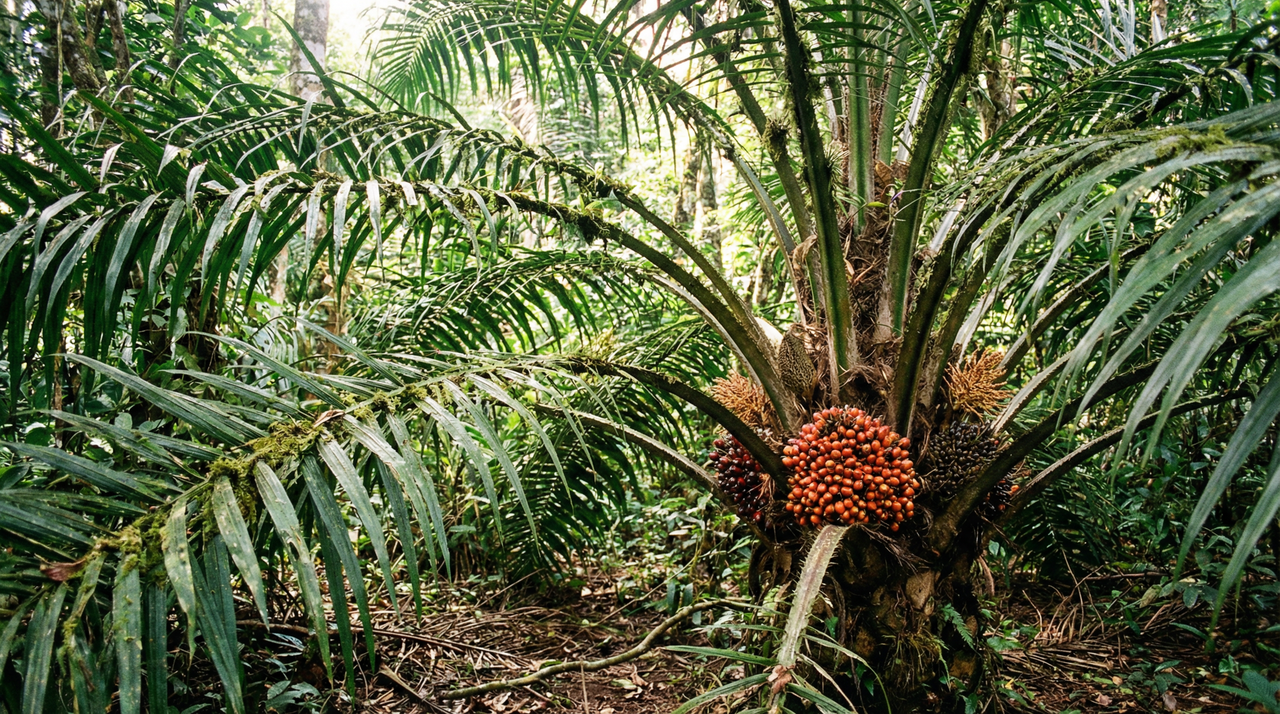
In the global food system, oil palm carries a reputation that is about as ecologically and politically complicated as it gets. But here's the thing that keeps stopping me when I dig into this plant: the same tree that's become shorthand for deforestation and biodiversity loss has been feeding, healing, and sustaining communities across West and Central Africa for at least 5,000 years.[1] The industrial monoculture version and the ancient forest garden version are, botanically speaking, the same species. That contradiction is worth sitting with before we go any further.
I came into researching this plant with a lot of assumptions, most of them shaped by grocery store boycotts and satellite images of cleared Borneo rainforest. What I didn't expect was to find a deeply sophisticated food system built around Elaeis guineensis by the Yoruba, Igbo, Akan, and Kpelle peoples long before a single plantation existed. The oil, the wine, the fronds, the kernel, the roots used as medicine; this was never a single-purpose crop. It became one, and that transformation is a story worth understanding if you're serious about growing food, restoring ecosystems, or just making more informed choices about what ends up in your kitchen.
Oil Palm Origin, History, and Cultural Significance
Botanical Background and Native Range of Elaeis guineensis and Elaeis oleifera
The African oil palm forms the foundational layer of its native ecosystems. Elaeis guineensis evolved in the humid tropical rainforests stretching from Liberia across West and Central Africa to Angola, with the Congo Basin at its ecological core, thriving at elevations below 500 meters in the understory of primary forest.[2][3] In the wild, it can live up to 200 years.[4] Industrial plantations give it 25 to 30 years before pulling the trees and replanting for yield efficiency.[5] That gap tells you a lot about what the global palm oil industry has optimized for, and what it hasn't. I've seen the same pattern in other long-lived perennials I work with: when yield drives the timeline, longevity gets sacrificed. Regenerative systems ask different questions.
The genus Elaeis has a New World branch as well. The American oil palm, Elaeis oleifera, is native to lowland tropical floodplains, wetlands, and seasonally inundated forests from southern Mexico through Central America into Colombia, Ecuador, Peru, and Brazil.[6][7] It shares the humid tropical affinity of its African cousin but is adapted to periodically flooded, acidic soils in ways that E. guineensis typically isn't. Its natural lifespan runs 80 to 100 years, with a productive cultivation window of 25 to 40 years.[8] Worth keeping in mind when we talk about hybrids and breeding later.
Visual Characteristics of the African and American Oil Palms
Stand next to a mature Elaeis guineensis and you understand immediately why it dominates so many landscapes. The trunk rises unbranched anywhere from 12 to 30 meters, marked all the way up by prominent horizontal leaf scars that make it look like something between a telephone pole and a relic column.[9][10] Those scars are actually useful to me as a designer: they're one of the clearest visual cues for identifying older palms from a distance. The crown holds 30 to 40 pinnate fronds, each 2 to 4 meters long, packed with 200 to 400 dark green, waxy leaflets arranged in a spiral that catches light from every angle.[11] Crown spread reaches 4 to 6 meters wide. The root system, by contrast, is shallow and fibrous, spreading 6 to 10 meters laterally from the trunk while rarely going deeper than a meter or two.[12] That wide lateral root spread is something I always factor in when spacing guild plantings around oil palms; underplanting close to the trunk is far less disruptive than you might expect given the tree's size.
The fruit is a one-seeded drupe, ovoid, about 3 to 5 centimeters long, turning a vivid reddish-orange at maturity with a fibrous orange mesocarp enclosing a hard black endocarp.[13] It's genuinely beautiful on the tree, and that color is biologically intentional: the bright signal attracts wildlife, particularly elephants, for dispersal. The flowers have a distinctively musky, almost fermented aroma during anthesis that I find striking the first time you encounter it. Knowing that weevils are the primary pollinators and that the scent is tuned to attract them makes the whole thing click.
Site conditions and genetics do shift the picture considerably. Higher humidity produces broader leaves, seasonal variation can alter leaflet dimensions by up to 20 percent, and cultivar differences mean a Tenera hybrid will often carry noticeably larger fruit than a Dura type.[14] The American oil palm looks related but different: slimmer, shorter (typically 7 to 15 meters in cultivation), with a narrower trunk, slightly glaucous leaflets, and small dark purple to nearly black fruits at maturity rather than the fiery orange-red of E. guineensis.[15][16] Those differences in fruit color and oil chemistry are exactly why breeders value it as a hybrid parent.
Traditional and Cultural Uses in Africa and the Americas
Archaeological evidence places human use of Elaeis guineensis at least as far back as 5000 BCE, with the primary centers of domestication in the humid lowland forests of modern Nigeria and Ghana, and palm oil residues associated with the Nok culture dating to around 1000 BCE.[17] This is not a tree that cultures stumbled across; it was embedded into daily life and woven into systems of meaning across an enormous swath of the continent. Palm oil and kernel oil for cooking, lighting, and soap. Palm wine, fermented from the sap, for rituals and social gatherings. Leaves for thatching, weaving, and construction. Bark, roots, and fruit in medicine for everything from wound treatment to postpartum care.[18][19]
Among the Yoruba, oil palm is associated with Orunmila, a deity of wisdom in Ifá divination, with palm fronds used as sacred brooms symbolizing purification.[20] Ghanaian groups including the Akan, Ewe, and Ashanti incorporate it into naming ceremonies, ancestral libations, healing salves, and hair and skin care.[21] Igbo communities integrate it into festivals, and among the Kpelle in Liberia, it sits within functional agroforestry systems where kernel oil treats rheumatism.[22] The first written European mention appears in 1453 in Gomes Eanes de Zurara's Crónica da Guiné, describing West African coastal regions in terms that make clear the Portuguese were encountering something already deeply culturally established, not a wild resource waiting to be discovered.[23]
The American oil palm has its own independent story. Archaeological evidence from Panama and the Amazon basin shows human exploitation of E. oleifera going back to at least 3000 BCE.[24] Groups including the Yanomami, Shipibo-Conibo, Waorani, and many others across Central and South America used the fruit oil for cooking, lighting, and skin care; tapped sap for fermented drinks; consumed palm heart as food; and built with the leaves.[25][26] Within Amazonian mythologies, E. oleifera symbolizes fertility, sustenance, and connection to ancestral spirits.[27]
The modern sustainability challenges around oil palm include deforestation, biodiversity loss, soil degradation, water pollution, land rights violations affecting indigenous communities, and the commercialization of traditional African knowledge without benefit flowing back to origin communities.[28][29] My permaculture ethics push me to take that seriously: when I choose palm products, I look for sourcing that supports traditional producers and sustainable agroforestry, not the industrial monocultures that extracted this plant from its cultural context while leaving little behind for the peoples who stewarded it for millennia.
Key Historical Milestones and Modern Developments
The biology of E. guineensis practically guaranteed it would travel. Those bright reddish-orange drupes evolved to be eaten by elephants, the hard endocarp surviving gut passage to be deposited far from the parent tree.[10] From early cultivation centers in Nigeria and Ghana around 3000 to 5000 BCE, Portuguese traders introduced the species to Southeast Asia in the 15th century, with initial plantings recorded in Java and Timor.[5] British and Dutch colonial interests scaled that introduction dramatically in the 19th and 20th centuries, and today Indonesia and Malaysia together account for approximately 85 percent of global palm oil production.[30] The irony is considerable: a tree that fed and sustained communities across West Africa for thousands of years now primarily enriches supply chains headquartered far from its continent of origin.
The American species has a quieter but increasingly important modern role. Germplasm collections at institutions like Kew Royal Botanic Gardens preserve E. oleifera material for conservation and breeding research.[31] The interspecific OxG hybrids (oleifera x guineensis) bring improved disease resistance and better fatty acid profiles into commercial breeding programs, making the American species far more than a botanical footnote.[8] That genetic partnership between the African and American species is, in a way, a mirror of the two ancient stories above: parallel domestication histories, separated by an ocean, now rejoined in the laboratory.
Oil Palm Varieties and Sourcing
Notable Varieties and Hybrids of Oil Palm
The breeding story of Elaeis guineensis is really a story about one hybrid. The species produces three fruit forms: Dura, with its thick shell and 20-25% oil yield; Pisifera, thin-shelled but frustratingly prone to sterility and poor fruit set; and Tenera, the cross between them. Tenera is what dominates commercial plantations worldwide, combining the thin shell of Pisifera with the reliable fertility of Dura to hit 30-35% oil yield and first harvest as early as 24 months under ideal tropical conditions.[32][33] Mine took closer to 30 months growing in subtropical conditions, which tracks with what I've seen across the literature: the 24-month figure assumes near-equatorial heat and humidity, and anything less stretches the timeline noticeably.
Even within the African oil palm, flavor and nutrition aren't fixed. Regional Tenera hybrids typically run 40-45% palmitic acid, but some Nigerian Dura selections carry higher oleic fractions, which shifts both the stability and the sensory character of the oil.[34] That variation matters if you care about unrefined red palm oil quality at the source, something I'll leave to the preparation section rather than repeat here.
Then there's the American cousin. Elaeis oleifera has no formal international cultivar registry; selections are typically referenced by geographic origin (Coari and other Amazonian types from Colombia, Ecuador, Brazil) or by breeding-program lines like Embrapa's Oleris series, which were developed specifically for South American soils and a higher oleic acid fraction.[35][36][37] Pure E. oleifera is rarely grown for commercial oil because its yields simply can't compete, but it pulls its weight as an ornamental in zones 10-12 and as an irreplaceable genetic donor in breeding collections.[38]
The real action for permaculture-minded growers is the OxG interspecific hybrid, E. oleifera crossed with E. guineensis. These crosses trade some raw productivity for disease resistance (notably against lethal yellowing and spear rot), a higher unsaturated fatty acid profile, and meaningfully better cold tolerance from the American parent.[39][40][41] I've grown both a pure guineensis and an OxG hybrid in zone 9B containers, and after a brief dip into the mid-20s°F, the hybrid recovered considerably faster. That's not a production claim, just a useful resilience signal for anyone growing these as specimen plants at the edge of their range.
Sourcing Oil Palm in the United States
Elaeis guineensis is not commercially grown for palm oil anywhere in the continental U.S.; the climate simply doesn't cooperate, and nearly all domestic supply is imported.[42] What you'll find from most mail-order nurseries is grown for its dramatic foliage, not its fruit. Small potted seedlings occasionally appear from tropical specialty sources, but availability is inconsistent and the plants are effectively ornamentals outside zones 10b-12.
Elaeis oleifera and OxG hybrids are harder still to find in commerce. They're primarily held in botanical garden collections (Fairchild Tropical Botanic Garden being a notable U.S. example), university programs, and active breeding collections where they're valued for disease-resistance genetics rather than offered to home growers.[43][44] I once waited six months for a reputable specialist nursery to fulfill an order for E. oleifera germplasm, and that wasn't unusual; patience isn't optional here.
Importing either species requires a USDA APHIS import permit, a phytosanitary certificate from the country of origin, and frequently post-entry quarantine to guard against Ganoderma and lethal yellowing introductions.[45][46] I helped a local botanical garden work through that paperwork for a new accession, and the process was thorough enough to make clear why casual imports don't happen. Germplasm of E. oleifera can be requested through CATIE in Costa Rica, Bioversity International, or the USDA National Plant Germplasm System, though access is generally restricted to researchers with appropriate permits in place.[47][48][49] For anyone determined to work with the American species, seeds run $1-15 each and specialist nursery seedlings can reach $100 or more, with germination taking 2-3 months at 25-30°C under warm, humid conditions.[43]
Oil Palm Propagation and Planting Guide
Growing oil palm from scratch means accepting, early on, that this is not a plant you can treat like a tomato seed tucked into a paper envelope. Everything about propagating this species flows from one biological reality: the seeds are recalcitrant. They cannot be dried out, refrigerated, or left sitting on a shelf. Understanding that single fact makes the entire propagation process make sense.
Seed Morphology and Storage of Recalcitrant Oil Palm Seeds
The seed's unusual morphology directly dictates its narrow handling requirements. Mature Elaeis guineensis kernels measure roughly 1.5 to 2.0 cm long and weigh between 1.2 and 1.8 grams, enclosed in a woody endocarp inside a drupe fruit 3 to 5 cm across.[50][51] The first time I cracked one open to examine the embryo, I was struck by how coconut-like but far denser the shell felt. The hard endocarp isn't just structural; it's protecting a recalcitrant embryo that will die if it dries below 20 to 25% moisture or gets chilled below 10 to 15°C.[52][53] That's why I now buy pre-treated seed from certified producers rather than attempting acid scarification at home. The margin for error is too narrow to make it worthwhile for most growers.
Short-term storage, if you need it, requires moist airtight containers with damp sand, peat, or vermiculite held at 15 to 20°C and 80 to 90% relative humidity. Even under those controlled conditions, viability drops sharply after 12 to 18 months.[54][55] This is precisely why commercial seed producers dominate supply; they have the humidity-controlled infrastructure that makes reliable handling possible. The species is predominantly monoembryonic, which means seed-propagated offspring carry high genetic variability and won't reliably replicate the parent's yield or disease resistance.[56] For growers who want elite, consistent genetics, tissue culture via somatic embryogenesis from leaf or inflorescence explants produces uniform, disease-resistant clones that often fruit 6 to 12 months earlier than seedlings, though the process is expensive and technically demanding enough to remain firmly in specialist hands.[57][58]
The American oil palm (Elaeis oleifera) follows a different dormancy pattern. Its seeds require heat maturation at 38 to 40°C for 60 to 80 days plus acid or mechanical scarification just to achieve 70 to 90% germination within 2 to 4 months.[59] The additional handling steps make it a less common starting point for propagation, but its value as a hybrid parent for difficult sites keeps it relevant in breeding programs.
Germination Timeline and Nursery Practices
With properly pretreated E. guineensis seed, soaked at 40°C for five days or acid-scarified and then held at 30 to 35°C with 80 to 90% humidity, you can expect germination rates of 50 to 80%.[60][61] Seedlings go into polybags for the first 3 to 6 months, then spend another 6 to 12 months in a nursery stage until they've developed 3 to 4 true leaves. Field transplanting happens at 12 to 18 months of age, and first fruit bunches appear 3 to 4 years after that.[62][50] That wait is real, and it tests patience in a way that annual crops simply don't.
At demonstration plots I've visited, tissue-cultured palms reached uniform bunch production a full six months ahead of neighboring seedlings planted at the same time. For serious growers, that half-year advantage justifies the premium. E. oleifera takes even longer, typically 4 to 6 years to first harvest and commercial maturity at 8 to 10 years, but its better adaptation to periodic flooding and acidic soils can make that slower timeline acceptable on marginal sites.[63][64] One practical note I always give to new growers: label everything carefully. Oil palm seedlings in the first year look remarkably similar to several other palm species, and it's surprisingly easy to lose track of what you're growing.
Soil, Site Selection, and Planting Technique
Oil palm wants deep, well-drained loamy or sandy-loam soil, at least 1 to 1.5 meters deep (ideally more than 2 meters), with organic matter in the 2 to 4% range and a pH between 4.5 and 6.5.[10][65] The waterlogging sensitivity is not a negotiable point. Poor drainage creates the exact conditions that invite Ganoderma and Phytophthora root rot, and I learned that the hard way on an early project where a low-lying site I hadn't drained properly became a Phytophthora nursery within two seasons. I now insist on soil testing and French drains before planting any palm into a wet-prone site in zone 9b or 10. Two percent organic matter is the practical minimum I aim for when amending sandy soils; it's the floor, not a target to approach casually.
Elaeis oleifera handles seasonal flooding and highly acidic soils (down to pH 4.0) far better than its African counterpart, making it the go-to species or hybrid parent for sites that would otherwise be marginal.[66][67] Think of it the way you might think of a coconut palm compared to a date palm -- related, but occupying meaningfully different drainage niches. That distinction matters enormously when you're choosing which genetics to plant on a site with questionable wet-season drainage.
Spacing, Density, and Early Establishment
Mature E. guineensis canopy spreads reach 7.6 to 12 meters, and E. oleifera stays slightly smaller at 6 to 9 meters.[68] Those dimensions explain why the industry standard is triangular spacing at 8 to 9 meters between palms, yielding roughly 143 palms per hectare.[5][69] In every commercial block I've walked, that 9-meter triangular pattern is the sweet spot that lets sunlight reach the lower fronds while still allowing a small tractor between rows for harvest. Where basal stem rot pressure is high, widening to 10 meters is worth the reduced density for the airflow benefit alone.[70]
Young transplants go in at the start of the wet season when soil moisture is reliable. Wind protection in the first year reduces transplant stress considerably, and supplemental irrigation of 20 to 40 liters per plant per week is necessary where annual rainfall falls below 2,000 mm.[71][72] The first three years are also the only realistic window for intercropping; I've used nitrogen-fixing legumes and pineapples between rows to suppress weeds, build organic matter, and generate some early-return income while the palms establish. Once the canopy closes, that window closes with it, and the understory becomes deeply shaded. Plan your guild plantings deliberately before transplanting day, not after.
Oil Palm Care Guide
Growing oil palm well means understanding what the plant is at its core: a tropical rainforest giant engineered by millions of years of equatorial conditions. Every care decision flows from that identity. Get the fundamentals right and a mature Elaeis guineensis will produce 8–12 inflorescences per year for decades. Push it outside its comfort zone and the whole system unravels quickly.
Sunlight Requirements for Oil Palm
Mature oil palm requires full sun to thrive.[73][74] But seedlings are a different matter. I've watched first-year seedlings under open sky develop bleached, papery leaf tips within a week, while their neighbors under 50% shade cloth put on steady new growth. That nursery shade cloth stays on for the first three to six months, then I gradually raise it as the seedlings gain height and their canopy hardens off.[75] Outside the tropics, any greenhouse setup needs to replicate equatorial light intensity and humidity, which is a real commitment of infrastructure.[9][10]
Elaeis oleifera is more forgiving during establishment, tolerating 20–70% of full sun without scorching, though it still wants at least six direct hours daily once it's pushing toward production.[76][77] For anyone trialing oil palm in a marginal subtropical garden, that extra shade tolerance during the vulnerable juvenile phase is genuinely useful.
Water Needs and Irrigation for Oil Palm
A mature E. guineensis wants 150–250 mm of water per month, which works out to 2,000–2,500 mm annually, kept at 60–80% field capacity.[78][79] On sandy loam I apply 25–50 mm every 7–14 days. Younger plants need far more frequent attention: seedlings require 5–10 liters daily, vegetative palms 20–40 liters every four to seven days, and a palm in active bunch development can demand 100–150 liters every 7–10 days.[80][81] Soil pH should sit between 4.5 and 6.0 with salinity below 2–4 ppt; E. oleifera handles a slightly wider pH range of 5.0–6.5 and tolerates moderate salinity better.[82][83]
Overwatering shows up as yellowing lower fronds, and from there root rot pathogens like Phytophthora and Ganoderma are quick to follow.[84] Underwatering produces wilting, tip necrosis, and spear-leaf damage that I've seen growers mistake for a disease problem until they check soil moisture.[85] One useful resilience note: E. guineensis tolerates about two to four weeks of drought before real damage sets in, but E. oleifera can push through 60–120 days with only moderate productivity decline and handles periodic flooding via aerenchyma tissue in its roots.[86][87] For subtropical gardeners working with imperfect drainage or unpredictable dry spells, that difference matters.
Feeding and Nutrient Management for Oil Palm
This is among the heaviest-feeding palms I've worked with. Potassium is the dominant nutrient removed at harvest, running roughly 2.5–3 kg of K₂O per tonne of fresh fruit bunches, so any fertilizer program that skimps on potassium will show up in the fruit.[88][89] A vegetative-stage palm needs roughly 0.8–1.2 kg N, 0.3–0.5 kg P, and 1.5–2.5 kg K per year. Mature bearing palms scale up to about 1.2–1.5 kg N, 0.4 kg P₂O₅, and 2.0–2.5 kg K₂O annually, split across two to four applications.[73][90] Seedlings start much smaller: 10–20 g of a balanced 12-12-12 monthly is enough to get them going without burning tender roots.[91]
Beyond the NPK headline numbers, calcium, magnesium, and sulfur all earn their place, and micronutrients including boron, copper, iron, manganese, and zinc are genuinely critical for photosynthesis, enzyme function, and pollen viability.[89][92] Nutrient deficiencies often resemble environmental damage; leaf sampling confirmed that orange spotting on older fronds was potassium deficiency rather than sun scorch. That experience pushed me toward routine 17th-frond analysis, which targets N at 2.5–3%, K at 1–1.5%, Mg at 0.3–0.5%, and B at 12–18 ppm.[93][94] Uniform yellowing says nitrogen, a purplish tint says phosphorus, orange banding on older fronds is my first cue to reach for magnesium sulfate, and hooked leaflet tips point straight to boron.[95] Elaeis oleifera runs about 15–30% lower overall nutrient demand and adapts better to low-fertility acidic soils, which makes it easier to manage on a small scale without the precision inputs that a commercial E. guineensis stand requires.[96][97]
Heat and Cold Tolerance of Oil Palm
Oil palm's native climate is West and Central African rainforest: 24–35 °C, 80–90% humidity, and over 2,000 mm of well-distributed rainfall, ideally below 300 meters elevation.[98] Sustained heat above 35 °C cuts photosynthetic efficiency by 20–50% and can trigger fruit abortion.[99][100] Short spikes to 40–45 °C won't kill a mature palm outright, but recovery requires shade and heavy irrigation, and the symptoms (leaf scorching, wilting, chlorosis) can linger for weeks as the plant ramps up its antioxidant defenses.[101][102]
Elaeis oleifera handles heat better than E. guineensis, with more efficient stomatal regulation and faster recovery when nights drop below 25 °C, which is why interspecific hybrids bred for thermotolerance are gaining ground in warmer subtropical margins.[103][104] When summer highs push past 35 °C, my go-to combination is 20–35% shade cloth, 5–10 cm of organic mulch over the root zone, windbreaks, and bumping irrigation to 30–50 liters per mature palm every three to five days.[105]
Frost Protection for Oil Palm
Elaeis guineensis has essentially no frost tolerance. Growth slows below 20 °C and stops below 16 °C; chilling injury or death follows at 15 °C, and a mature palm can survive a brief dip to -2 °C, but with severe damage.[106][50] Young plants hit those thresholds even faster. I lost a two-year-old specimen to a single night that barely touched 13 °C; the spear leaf had gone water-soaked and necrotic by morning, and that's exactly where cold damage shows first on any oil palm I've observed since.[107] Flowering and fruit set fail outright below 20 °C night temperatures, so even a climate that keeps the plant alive may not be warm enough for production.[108] Hardiness sits at USDA zones 10b–12.[109]
Elaeis oleifera handles brief exposure down to -2 °C to -4 °C and falls into zones 10a–11, which gives gardeners a narrow but real advantage in marginal climates.[110][111] Prioritize site selection and windbreaks over heroic frost-cloth maneuvers. If the microclimate can't reliably stay above 15 °C through winter, a greenhouse is the only realistic option for keeping either species long-term.[10]
Pruning, Maintenance, and Seasonal Rhythm
The rule I use in the field is simple: if a frond has dropped below horizontal, it's ready to come off. Retaining 20–40 green fronds on E. guineensis (40–48 on the slower-growing E. oleifera) keeps the canopy photosynthetically productive without suppressing light to developing inflorescences.[112][88] I made the mistake early on of stripping too many fronds at once on a palm that had been getting poor light, thinking I was doing it a favor. Yield the following season dropped noticeably, and I've since stuck to removing no more than 24–30 old fronds per session. Always use sharp, clean tools, and do the work during dry weather to reduce pathogen entry points.
Keep a weed-free circle around the base maintained with 10–15 cm of organic mulch; weeds compete aggressively for the potassium that oil palm demands, and the palm's sensitivity to strong winds means established windbreaks aren't optional in exposed sites.[113][114] Nursery and young palms need irrigation every two to four days alongside low-dose balanced NPK; mature stands shift to split fertilizer applications two to four times per year with ongoing scouting for nitrogen and potassium deficiencies, which appear first on older fronds and are especially common on sandy soils.[78][115]
In stable tropical conditions, oil palm has no dormancy. A well-managed palm produces 8–12 inflorescences per year continuously, with each bunch taking five to six months from initiation to harvest.[4][116] First fruiting arrives three to four years after planting for E. guineensis, while E. oleifera asks for five to seven years of patience before the first bunches appear.[117] Outside the equatorial belt, cooler winters and hurricane risk in places like Florida make commercial growing impractical.[73][118] I grow specimen palms under glass in those conditions for their dramatic architecture and the educational value they bring to food forest tours, not for oil. That framing keeps expectations realistic and the plants genuinely thriving.
Oil Palm Harvesting: Timing, Technique, Yield, and Flavor
Patience is the first requirement. Elaeis guineensis won't produce its first harvestable bunch until 30 to 36 months after planting, and peak yields don't arrive until years 15 through 20.[119][120] Once the tree is productive, though, it runs on a continuous cycle, and every harvest decision hinges on a narrow window of biochemical readiness.
When to Harvest Oil Palm: Ripeness Indicators and Seasonal Patterns
From flower to mature fruit takes roughly 150 to 180 days, with peak mesocarp oil content arriving around day 170 when the fruit's oil load reaches 20 to 25 percent of fresh bunch weight.[121][120] The visual cues that signal that moment are specific enough to teach reliably: the outer fruit skin shifts from green to yellow, orange, or red across at least 60 percent of the bunch surface, spikelets start to loosen, and loose fruits detach at the bunch base.[122][123] In practice, that loose-fruit count on the ground is the quickest field test I teach anyone new to the crop. Five to ten detached fruits tells you the bunch is ready; zero tells you to come back in a few days; twenty tells you it's already sliding toward over-ripeness.
Harvest rotations run every 7 to 14 days per plot, tightening during peak rainy seasons when the tree is pushing bunches hardest.[32] The American oil palm, Elaeis oleifera, follows a similar 150 to 180 day development window and fruits year-round with the same rainy-season emphasis, though breeders target a higher mesocarp oil content threshold of 40 to 50 percent and establishment is slower overall.[64][124] Outside true equatorial conditions, both species lose the rainfall and temperature stability that sustains this continuous rhythm, and the entire harvest cycle becomes marginal to impossible.
Harvesting Techniques and Critical Post-Harvest Handling
Young palms under three meters can be cut from the ground; taller trees require long poles fitted with sickles, chisels, or curved knives to sever the bunch stalk.[125] It's physical, repetitive work, and it's worth knowing that at commercial scale this often falls to migrant workers handling unwieldy poles at height for hours at a stretch. The botany is elegant; the labor conditions frequently are not. Harvests are timed for cooler parts of the day specifically to reduce the fruit bruising that starts the clock on oil degradation.[126]
Once cut, fresh fruit bunches must reach the mill within 24 to 48 hours, stacked carefully to prevent bruising.[126][127] I've seen oil quality drop noticeably when bunches sit beyond 36 hours; the free fatty acid spike that follows bruising and microbial activity is real and irreversible. Rough handling is the most common mistake in small-scale operations, and no amount of good growing practice downstream recovers what's lost in a sloppy stack on a hot truck bed.
Oil Palm Yield and the Sensory Profile of Fresh vs. Processed Oil
A mature Elaeis guineensis produces 10 to 25 fresh fruit bunches per year, each weighing 10 to 40 kilograms under normal conditions, for a total annual yield of roughly 100 to 200 kilograms of fresh fruit per tree.[128][129] Each bunch delivers two distinct products: palm oil and palm kernel oil. The orange-red mesocarp oil, what you'd call crude palm oil in trade terminology, comes from the fleshy outer layer. The kernel oil, pressed from the seed inside the hard shell, is a separate product with its own chemistry and uses.
Fresh, well-handled crude palm oil from ripe fruit has a genuinely pleasant profile that most people who've only encountered the refined version wouldn't recognize. The flavor is mild and slightly sweet with nutty undertones and faint earthy bitterness; the aroma carries tropical-fruity notes, banana and citrus, from volatile aldehydes and esters like hexanal and nonanal; the mouthfeel is smooth and creamy, closer to unrefined shea or fresh cocoa butter than to any refined cooking oil.[130][131] Over-ripe or poorly handled fruit flips the aftertaste toward metallic and earthy, which is exactly why that 48-hour window exists.[132] Refining, bleaching, and deodorization strip most of those volatiles out entirely, leaving a neutral, stable oil. Fractionation then separates it further into liquid olein and solid stearin, each with distinct culinary applications.[133][134]
Elaeis oleifera offers a genuinely different aromatic register. Its unrefined oil carries pronounced pineapple, citrus, floral, and herbal notes from ethyl butanoate, linalool, and more than 50 identified volatiles.[135][136] Yields are somewhat lower, running 10 to 15 bunches annually per tree at 15 to 25 kilograms each, and oil per hectare in natural stands falls well below E. guineensis, but the higher proportion of unsaturated fatty acids improves oxidative stability.[137][138] Those aromatic compounds are a big part of why breeders favor OxG hybrids for specialty and premium markets; the chemistry translates directly into commercial positioning. West African cooking has long valued the earthy, carotenoid-rich unrefined oil in ways that Southeast Asian industrial processing was never designed to replicate, and that distinction starts right here at the harvest and handling stage.
Oil Palm Uses in Cooking, Medicine, and Culture
Few trees supply as much of a kitchen as a single oil palm. The fruit mesocarp alone powers entire culinary traditions: red palm oil is the backbone of West African cooking, showing up in egusi soup, banga (palm nut soup), and jollof rice, where its rich, earthy, slightly nutty depth is irreplaceable.[139] Travel east and it turns up again in Southeast Asian rendang, curries, and fried noodles, prized for its heat stability as much as its color.[139] That's before you get to the kernel oil, which has a pronounced coconut character from its high lauric acid content (roughly 44 to 47 percent) and sits closer to a baking and confectionery fat than a savory cooking oil.[140][141] Then there's palm wine, tapped from the inflorescences and fermented into a mildly alcoholic beverage with deep ceremonial roots across West and Central Africa, and further processed into palm vinegar or distilled into palm whisky.[140] The palm heart is edible too, with a delicate flavor reminiscent of artichoke or water chestnut, typically boiled or used raw in salads.[140] One tree, genuinely, an entire pantry.
Edible Parts and Traditional Culinary Applications of Elaeis guineensis
When I teach workshops on tropical food systems, I always spend time on the fresh mesocarp itself. Most people have only ever encountered palm oil in its refined, deodorized form, so hearing that the raw pulp has a sweet, fibrous, moist-date-meets-carrot quality genuinely surprises them.[140] In traditional diets across the oil palm's native range, the pulp was consumed directly, cooked or raw, long before industrial processing entered the picture. The full breadth of edible parts, from sap to heart to kernel to fruit pulp, reflects how thoroughly these communities understood and used the plant. That's ethnobotanical knowledge worth respecting.
Processing Methods for Safe Oil Extraction and Detoxification
Safe processing is a critical step that home growers must properly understand. Unprocessed oil palm fruit contains toxic compounds similar to urushiol that require thermal processing before the oil is safe to consume.[142] Proper processing, specifically high-pressure steam sterilization at around 140°C for 60 to 100 minutes, followed by threshing, digestion, mechanical pressing, and clarification, is what eliminates those compounds and stabilizes the oil for the kitchen.[143] Further refining (degumming, neutralization, bleaching, deodorization) removes up to 90 percent of phenolic compounds and clears free fatty acids and peroxides, producing the food-grade oil used across the global processed food industry.[144][145] I've also seen Cycas revoluta, the sago palm, mistaken for a true palm in subtropical gardens, and the consequences of that confusion are serious. Cycas revoluta is a cycad loaded with cycasin, a compound that causes liver failure and severe gastrointestinal distress.[146] Learn the difference in structure before you experiment with any palm heart or sap from an unidentified specimen.
Flavor Profiles, Nutritional Value, and Comparisons with American Oil Palm
Crude red palm oil is a genuinely different product from what most Western cooks think of as "palm oil." The vivid reddish-orange color comes from an extraordinary carotenoid load, roughly 500 to 800 ppm beta-carotene, translating to approximately 500 to 3,000 IU of vitamin A activity per gram.[147] The tocotrienol profile is equally impressive, with total vitamin E around 800 mg/kg, predominantly gamma-tocotrienol.[148] I always use the color as a teaching cue: that deep orange signals nutrient density in a way you simply cannot fake. Refine it through RBD processing and you lose most of that, arriving at a nearly neutral, semi-solid fat with roughly 49 percent palmitic acid, 37 percent oleic acid, and 10 percent linoleic acid.[149] Useful as a palm oil shortening and a stable frying medium, but a very different product nutritionally. Tocotrienols from unrefined oil have shown potential for lowering LDL cholesterol and neuroprotection in meta-analyses, though the high saturated fat content warrants moderation in the overall diet.[150] The American oil palm, Elaeis oleifera, produces a noticeably milder mesocarp oil, pale yellow to orange with nutty and subtly fruity aromas and lower pungency, and sensory evaluations consistently rate it higher for flavor acceptance in direct comparisons.[151] Its carotenoid content can run up to ten times higher than its African relative, which is remarkable from a nutritional standpoint.[152]
Traditional Medicinal and Cultural Significance
Across West and Central Africa, virtually every part of the oil palm appears in traditional medicine: leaf decoctions for fever, wound healing, and inflammation; roots for stomach ailments and parasites; the oil itself applied topically for skin care, hair care, and postpartum recovery; sap taken for general health or to address anemia. The pharmacological evidence behind these uses varies, and I'd never position myself as an authority on lived healing traditions I haven't grown up with. What I can say, from years of reading ethnobotanical literature, is that this depth of medicinal knowledge represents generations of careful, systematic observation. The cultural significance goes deeper still: the oil palm appears in agricultural ceremonies, rites of passage, ancestor veneration, and the anointing of chiefs and kings across many West and Central African communities, and those traditions have traveled with diasporic communities around the world.[153]
Safety Considerations and Environmental Impact
Evaluating palm oil products requires acknowledging their severe environmental costs. Oil palm cultivation is directly linked to deforestation, peatland degradation, and biodiversity loss, particularly in Indonesia and Malaysia, where industrial-scale expansion has driven significant carbon emissions.[154][155] In my own permaculture design work, I insist on RSPO-certified or equivalent sustainably sourced oil whenever a project specification calls for it. The certification schemes aren't perfect, but they represent a meaningful step toward separating the tree's genuine productivity from the land-clearing practices that have made it so controversial. A plant this ecologically capable and nutritionally rich deserves better stewardship than industrial monoculture has given it.
Oil Palm Health Benefits
Few food plants carry as much cultural weight and as much nutritional complexity as the oil palm. Long before it became the most produced vegetable oil on earth, both Elaeis guineensis and its American cousin Elaeis oleifera were deeply embedded in the healing traditions of communities who understood, through generations of use, that this tree offered far more than calories.
Traditional Medicinal Uses of Oil Palm
Across West and Central Africa, virtually every part of Elaeis guineensis has earned a place in the medicine cabinet. Leaves, roots, bark, fruit, kernels, and sap have all been prepared as decoctions, poultices, and topical treatments for an astonishing range of conditions: wounds, skin infections, malaria, fever, rheumatism, convulsions, digestive complaints, gonorrhea, infertility, hypertension, and urinary tract infections, among others.[156][157][158][159] When I think about the pruned fronds coming off a mature palm, it's a reminder that communities in Cameroon and Nigeria were pressing those same leaves into wound poultices long before anyone ran a pharmacological assay on them. The parallel story in the Americas is just as rich: indigenous peoples including the Tikuna and Bora have used Elaeis oleifera leaves, fruit, and oil to treat skin conditions, inflammation, pain, fever, and respiratory problems, woven into rituals and daily material culture alongside their healing roles.[160][161]
Modern pharmacology increasingly validates this traditional knowledge, though the evidence base remains weighted toward the lab rather than the clinic. Extracts from E. guineensis demonstrate meaningful antioxidant and antimicrobial activity in in vitro assays, with leaf and fruit extracts showing inhibition against Staphylococcus aureus, E. coli, and Candida albicans at minimum inhibitory concentrations of 0.5 to 2 mg/mL.[162][163] Rodent models show analgesic and anti-inflammatory effects, with carrageenan-induced paw edema reduced by 40 to 60% through inhibition of NF-κB and COX-2 pathways.[164][165] The tocotrienols concentrated in palm oil add another layer: they've shown anticancer potential in cell lines via apoptosis induction, and there's limited but real human trial data suggesting they may modulate lipid metabolism and reduce LDL oxidation.[166][167] Personally, while that tocotrienol research is exciting, I stay cautious about anticancer claims with clients and focus on the better-supported antioxidant and cardiovascular evidence when recommending how to use this oil. Most of these findings come from in vitro or animal models, and researchers consistently call for robust randomized controlled trials before stronger conclusions can be drawn.[168][169]
Key Phytochemicals in Oil Palm
The chemistry behind these traditional uses is genuinely impressive. Crude palm oil from E. guineensis contains tocotrienols at 600 to 1000 mg/kg, primarily the α- and γ-forms, alongside carotenoids (β-carotene and α-carotene at 500 to 2000 mg/kg in red palm oil), phenolics including quercetin, kaempferol, gallic acid, ferulic acid, and catechins (sometimes exceeding 100 mg GAE/g in leaf extracts), plus phytosterols, squalene, saponins, and tannins.[170][171][172] The distribution is part-specific in ways that matter: leaves carry the highest flavonoid and phenolic loads, the mesocarp concentrates carotenoids and phenolics, bark holds the alkaloids, and kernel oil is where squalene accumulates. That part-specificity is exactly why traditional healers used different preparations for different conditions.
The American oil palm adds an interesting dimension here. Elaeis oleifera generally carries 20 to 50% more β-carotene than its African relative, with carotenoid levels reaching 800 to 1000 ppm, alongside higher phenolic content (600 to 800 mg GAE/100g) and tocotrienols dominated by the δ- and γ-forms rather than the α-form that predominates in E. guineensis.[173][174] These aren't fixed values, either. Genetics, plant age, nitrogen fertilization, and light conditions all shift the metabolite profile, and those compounds serve the plant first -- defending against UV, pathogens, and herbivores, and attracting the frugivores that disperse the seeds.[175][176] The fact that they benefit us too is a fortunate overlap.
Nutritional Profile of Oil Palm Fruit and Oil
Most people encounter oil palm only as a refined oil on an ingredient label, which is a shame because the nutritional story of the fresh mesocarp is extraordinary. The raw fruit comes in at 349 to 487 kcal per 100g with 40 to 50g of fat, but it also delivers provitamin A carotenoids equivalent to 83,000 to 133,000 IU of vitamin A per 100g fresh weight, up to 30mg of vitamin E (mostly tocotrienols), meaningful phenolic content, and a solid mineral package including 200 to 400mg potassium per 100g.[177][178][179]
The refining process dismantles most of that. Industrial degumming, bleaching, and deodorization destroys up to 99% of the carotenoids and 20 to 50% of the vitamin E, leaving primarily the fatty acid profile: roughly 50% saturated (mostly palmitic acid at around 44%), 39% monounsaturated oleic acid, and 10% polyunsaturated linoleic acid, at about 120 kcal and 13.6g fat per tablespoon.[180][181] I can tell the difference immediately: unrefined red palm oil is a vivid orange-red with a distinctive earthy, slightly carrot-like aroma; refined palm oil is pale, odorless, and nutritionally stripped. The visual cue is the carotenoid content telling you exactly what survived processing. The kernel, for its part, offers a different profile entirely, lower in fat-soluble vitamins but more mineral-dense, with 500 to 600mg potassium, 150 to 160mg phosphorus, and 5 to 6mg iron per 100g.[182]
Elaeis oleifera brings a more favorable fatty acid profile to the table, with oleic acid reaching 40 to 70% and palmitic dropping to 20 to 40%, alongside up to ten to twenty times more carotenoids than E. guineensis and even some vitamin C at 10 to 15mg per 100g of mesocarp.[183][184] Indigenous communities in South America have eaten it as fresh fruit and in soups for good reason. The refining losses are similar across both species, which makes sourcing unrefined oil a priority regardless of which species produced it.
Safety Considerations for Oil Palm
Ripe, properly processed mesocarp and palm oil from both species are FDA GRAS and present no significant toxicity concerns; leaf extract LD50 in rats exceeds 5000 mg/kg, placing it in the lowest-risk OECD oral toxicity category.[185][186] The caveats cluster around specific scenarios rather than the plant itself. Unprocessed or unripe plant parts contain antinutritional factors including tannins, phytic acid, saponins, and oxalates that can cause gastrointestinal upset in quantity. Additionally, the ~50% saturated fat content of refined commercial oil is linked to elevated LDL cholesterol and cardiovascular risk in some individuals. Finally, the tocotrienol fraction may potentiate anticoagulant drugs like warfarin, so anyone on blood thinners should flag palm oil use with their healthcare provider.[187][188] I use small amounts of sustainably sourced, unrefined red palm oil in my own kitchen for its nutritional density, but always balanced within a diet that's rich in unsaturated fats and fiber. Moderation and quality of source are doing a lot of the heavy lifting there.
Beyond individual consumption, industrial processing introduces risks worth naming. Palm oil mill effluent is toxic to aquatic organisms due to its high organic and phenolic load, and plantation burning releases particulate matter linked to respiratory illness in surrounding communities.[189][190] These are reasons why I look for RSPO-certified or smallholder sources in any design work or purchasing recommendation, because the health profile of the oil itself doesn't exist in isolation from how it was produced. Palm pollen can also trigger rhinitis or asthma in sensitive individuals, and direct contact with fresh plant parts may cause mild dermatitis in some people.[191] No established contraindications exist for moderate consumption of properly processed oil during pregnancy or lactation, but given the high saturated fat content and limited specific data, consultation with a healthcare provider is the sensible call.[192]
Oil Palm Pests and Diseases
If there's one thing that humbles even the most productive tropical crop, it's a pathogen that has time and biology on its side. For oil palm, that pathogen is Ganoderma boninense, the fungus behind basal stem rot (BSR), and in mature Southeast Asian plantations it's genuinely alarming: infection rates reach 80-90% in older stands, and the disease can shorten productive lifespan by 10-20 years.[193][194][195] No commercial cultivar is fully immune to Ganoderma or Fusarium, and replanting cycles often make things worse, not better. This is why I always advise growers to prioritize site-specific management over hoping for a resistant miracle variety.
Major Diseases of Oil Palm
BSR gets the headlines, but it's not the only challenge. Phytophthora bud rot hits young palms hard in high-rainfall regions, with incidence between 20-50% in susceptible populations; even the better-performing hybrids like AVROS show only moderate resistance.[196][197] Fusarium wilt (Fusarium oxysporum f. sp. elaeidis) targets seedlings and young palms, and breeding for complete resistance has proven stubbornly difficult.[198] Red ring disease, caused by the nematode Bursaphelenchus cocophilus and spread by weevil vectors, kills 10-30% of affected palms in specific regions.[199] On the brighter side, modern Tenera lines hold strong resistance to leaf spot fungi like Helminthosporium and Pestalotiopsis, so that's one front that rarely demands serious intervention.[200]
This is where the American oil palm, Elaeis oleifera, becomes genuinely valuable as a genetic resource. It carries notable tolerance to Ganoderma, high resistance to Phytophthora bud rot (OxG hybrids reduce incidence by up to 50%), and better standing against lethal yellowing, bacterial wilt, and Fusarium compared to its African cousin.[201][202][203] When I think about how plant breeders tap E. oleifera to shore up a vulnerability, it mirrors the logic behind designing diverse polycultures: genetic breadth is structural resilience. Still, resistance levels shift with genotype, soil type, palm age, and management context, and what performs in a trial may not translate identically to a commercial field.[200][198] Worth noting that Ganoderma is under quarantine in the U.S., and infected stumps and trunks must be removed to reduce inoculum in the soil.[204]
Key Pests Affecting Oil Palm
Routine monitoring forms the baseline of any IPM protocol for this species.[205] The rhinoceros beetle (Oryctes rhinoceros) bores into the growing point and causes characteristic V-shaped frond damage; in Florida it's a particular concern.[88] Red palm weevil (Rhynchophorus ferrugineus) and leaf-eating caterpillars round out the main threats. Biological controls carry real weight here: Oryctes nudivirus targets the rhinoceros beetle, pheromone traps help monitor and reduce populations, and entomopathogenic nematodes are effective against red palm weevil alongside targeted insecticide applications and removal of infested material.[206][207] Covering developing fruit bunches with bags can protect them from insect damage during the critical ripening window.[88]
Integrated Pest and Disease Management Strategies
In my experience designing tropical guilds, consistent monitoring and proactive cultural management prevent far more problems than any single treatment. For oil palm, that means field sanitation first: remove infected stumps, clear debris, improve drainage, and avoid wounding the palm during maintenance operations.[208] Triangular spacing at roughly 9-10 meters supports air circulation, which directly reduces fungal pressure.[209] Balanced nutrition, particularly adequate potassium and magnesium, keeps palms resilient; waterlogging is the enemy of root health and feeds Ganoderma's spread.[210]
Biological agents deserve a prominent place in that toolkit. Trichoderma spp. applied to planting holes and around established palms can suppress Ganoderma inoculum in the soil, and phosphonates remain a practical chemical option for Phytophthora when cultural controls aren't sufficient.[211][212] Research into genetic markers and CRISPR-assisted breeding is genuinely exciting, but it hasn't reached commercial deployment yet.[200] The most reliable tools remain the ecological ones: healthy soils, thoughtful spacing, biological allies, and the kind of early detection that only comes from actually walking your planting regularly. That principle holds whether you're managing a large plantation or a single specimen palm in a subtropical garden.
Oil Palm in Permaculture Design
In its native West and Central African rainforests, Elaeis guineensis is a genuine ecosystem contributor: carbon sequestration in the range of 100-200 tons per hectare, nutrient cycling driven by rapid leaf-litter decomposition that returns phosphorus and potassium to the soil, root systems dense enough to reduce erosion by up to 90%, and a structural role that supports birds, bats, hornbills, monkeys, and insects while hosting epiphytic ferns and orchids on aging trunks.[168][213][214] Those numbers are impressive. But I only recommend oil palm in small, diversified systems where those ecosystem services aren't canceled out by habitat simplification. The deforestation and biodiversity loss documented around large-scale commercial monoculture is real, and no amount of carbon math erases it. The permaculture case here is about thoughtful integration, not a blanket endorsement of the crop.
Climate and Zone Considerations for Oil Palm
Elaeis guineensis is a strictly tropical plant. In open ground, that means USDA zones 10b through 12, with winter minimums staying reliably above 30°F (-1°C).[109][106][50] The American species, E. oleifera, shows modestly better cold tolerance, with some provenances surviving brief dips to 32°F or even just below, which gives it a slightly wider margin in marginal subtropical sites.[215] Even so, juveniles of both species are considerably more sensitive than established adults, so those published thresholds should be treated as the outer edge, not a comfortable target.
The thermal sweet spot for growth and fruiting runs 24-28°C (75-82°F), with useful production possible up to about 32°C; sustained temperatures below 15°C slow growth noticeably, and anything below 10°C causes real damage.[216][217] Rainfall requirements are equally exacting: 2000-3000 mm annually, evenly distributed, with no dry period exceeding three months. Monthly rainfall below 150 mm hurts yields, and humidity should stay in the 70-90% range.[142][218]
In the continental United States, those requirements limit realistic open-field cultivation to southern Florida and Hawaii, and even then hurricane risk reduces commercial viability considerably.[219][220] I've watched repeated frost damage on zone 10a plantings in Florida, and my advice now is to treat oil palm as a large specimen or protected microclimate plant rather than a reliable staple. E. oleifera and OxG hybrids handle those marginal conditions better, but readers outside South Florida and Hawaii should think carefully before committing serious garden space to this genus for production purposes.
Ecosystem Functions and Pollination
One of the design challenges people don't anticipate with oil palm is pollination. The tree is monoecious and protandrous, meaning male and female flowers mature at different times on the same plant, and it's partially self-incompatible, so cross-pollination between trees is needed for good fruit set.[221][222] The primary pollinator is the weevil Elaeidobius kamerunicus, introduced from West Africa to Southeast Asia where it dramatically improved yields.[223] Wind helps minimally. The whole system is fragile in monoculture conditions: pesticide use, lack of understory flowering plants, and climate extremes can reduce pollination efficiency by up to 30%. In contrast, permaculture approaches that preserve understory vegetation and practice integrated pest management can increase fruit set by 20-50%.[224][225]
I learned this the hard way watching weevil populations crash on a neighbor's sprayed plantation. Now, whenever I'm designing around oil palms, I make sure there are plenty of understory flowering plants in the guild specifically to buffer pollinator diversity. If weevil populations are unreliable, assisted hand pollination is worth the effort.
Elaeis oleifera brings a broader cast of native pollinators, including Oxyphilus weevils, and its floodplain adaptations and pioneer-species behavior make it genuinely useful for restoration planting in appropriate lowland tropical settings.[226][227] The OxG hybrids that combine guineensis yield with oleifera disease resistance and environmental tolerance represent the most realistic path toward genuinely sustainable palm oil production in a small-scale designed system.[228]
Forest Layer and Guild Placement
Elaeis guineensis is a canopy or emergent-layer plant, reaching 10-30 meters on a solitary unbranched trunk.[50] In my food forest designs, I think of it as occasional overstory punctuation rather than a foundational structural species, partly because of its allelopathic root exudates that can inhibit certain neighbors, and partly because the heavy shade cast by mature palms will suppress understory productivity unless the design actively accounts for it.[229][230] On the positive side, E. guineensis associates with arbuscular mycorrhizal fungi for phosphorus uptake, and I always inoculate new palm plantings with native AMF to speed establishment.[231] Juveniles do tolerate moderate shade, which means you can stack other species beneath them in the early years before the canopy closes.
Elaeis oleifera plays a different role. Shorter, more understory- or subcanopy-oriented, it integrates well with cacao, bananas, vanilla, ginger, legumes, and coffee in multi-strata systems.[232][233] Its allelopathic effects are more limited and largely tied to leaf litter rather than root exudates, which makes guild design considerably less finicky. I think of it as a subcanopy anchor that still allows light penetration for shade-tolerant companions below.
The sustainable palm oil conversation, including everything from RSPO certification to the broader roundtable on sustainable palm oil frameworks, is ultimately a systems conversation. Intercropping, multi-strata agroforestry, reduced chemical inputs, and resistant or hybrid varieties are the practices that actually move oil palm sustainability in the right direction.[234][235] For growers in the continental United States, the more realistic path is a well-sited specimen in a protected microclimate or container culture, valued for its biomass contribution and ecological interest rather than as the backbone of a palm oil plantation. That's a humbler ambition, but it's an honest one.
The Debt I Owe This Tree Before I Ever Grew One
Long before I put a single Elaeis seedling in the ground, palm oil was already in my kitchen, my soap, and probably my lip balm. That's the uncomfortable truth this plant forced me to sit with. Growing it, even as a specimen, even carefully, changed how I read an ingredient label. I can't unknow that, and honestly, I don't want to.
Sources 235
- Ethnobotany and traditional uses of oil palm in Africa ↩
- Elaeis guineensis - Useful Tropical Plants ↩
- Elaeis guineensis - Kew Science ↩
- Oil Palm - Wikipedia ↩
- The Oil Palm (Elaeis guineensis Jacq.) - FAO ↩
- Elaeis oleifera - Distribution and Ecology ↩
- Elaeis oleifera (Kunth) Cortés ↩
- The Oil Palm (Elaeis guineensis Jacq.) and American Oil Palm (Elaeis oleifera (Kunth) Cortés): Similarities and Differences ↩
- Elaeis guineensis ↩
- Elaeis guineensis ↩
- Elaeis guineensis - Useful Tropical Plants Database ↩
- The Oil Palm (Elaeis guineensis Jacq.) Root System ↩
- Elaeis guineensis - Plants of the World Online | Kew Science ↩
- Morphological Variation in Oil Palm (Elaeis guineensis) Under Different Environmental Conditions ↩
- Elaeis oleifera (American Oil Palm) ↩
- Morphological Differences Between Elaeis guineensis and Elaeis oleifera ↩
- The Origin and Domestication of Oil Palm (Elaeis guineensis Jacq.) ↩
- Ethnobotany of the Oil Palm (Elaeis guineensis Jacq.) in Tropical Africa ↩
- Traditional Uses of Oil Palm in West Africa ↩
- Oil Palm and Yoruba Religion ↩
- Traditional Uses of Palm Oil in Ghanaian Ceremonies ↩
- Indigenous Knowledge of Oil Palm Among the Kpelle in Liberia ↩
- Crónica da Guiné by Gomes Eanes de Zurara ↩
- Phytolith Evidence for Pre-Columbian Oil Palm Management in Panama ↩
- Ethnobotany of the American Oil Palm (Elaeis oleifera) in the Amazon Basin ↩
- Traditional Uses of Palms in the Amazon ↩
- Mythology and Symbolism of Palms in Amazonian Folklore ↩
- The State of the World's Forests: Palm Oil Sustainability ↩
- Land Grabs and Human Rights in African Palm Oil Sector ↩
- Global Palm Oil Production Statistics ↩
- Kew Gardens Plant Database - Elaeis oleifera ↩
- Oil Palm Production and Management ↩
- Oil Palm Varieties: Dura, Tenera, and Pisifera ↩
- Fatty Acid Composition and Sensory Evaluation of Oil Palm Cultivars in Different Regions ↩
- Breeding and Genetic Resources of Elaeis oleifera ↩
- Embrapa Oil Palm Breeding Programs ↩
- Elaeis oleifera - Wikipedia ↩
- Missouri Botanical Garden Plant Finder ↩
- Interspecific Oil Palm Hybrids: Status and Prospects ↩
- Oil Palm Hybrids: The Oleifera-Guineensis Cross ↩
- Oil Palm Hybrids: Yield and Oil Quality ↩
- USDA Plant Hardiness Zone Map ↩
- Elaeis oleifera Cultivation Notes ↩
- Tropical Palms for Southern Landscapes ↩
- Importing Plants and Plant Products to the US ↩
- Plant Import Permits ↩
- Elaeis oleifera Germplasm Collection ↩
- National Plant Germplasm System (NPGS) ↩
- Bioversity International Oil Palm Genetic Resources ↩
- USDA PLANTS Database Profile for Elaeis guineensis ↩
- Oil Palm: Morphology and Anatomy ↩
- FAO - Oil Palm Seed Production and Handling ↩
- Recalcitrant Seeds: Biology and Storage ↩
- FAO - Oil Palm Seed Storage and Handling ↩
- Seed Storage of Horticultural Crops ↩
- Embryology of the Oil Palm (Elaeis guineensis Jacq.) ↩
- Clonal Propagation of Oil Palm via Somatic Embryogenesis ↩
- Propagation of Oil Palm by Tissue Culture ↩
- Germination and Dormancy in Oil Palm Seeds: A Review ↩
- Seeds of the Oil Palm ↩
- Oil Palm Cultivation Guidelines ↩
- Oil Palm: Production and Processing ↩
- Oil Palm Research in South America ↩
- Elaeis oleifera: A Review ↩
- FAO: Oil Palm Management Guidelines ↩
- Elaeis oleifera (Kunth) Cortés - American oil palm ↩
- Soil Adaptation in American Oil Palm (Elaeis oleifera) ↩
- Morphological Characteristics of Elaeis oleifera ↩
- Malaysian Palm Oil Board (MPOB) Planting Recommendations ↩
- Planting Density and Spacing in Oil Palm Plantations ↩
- Wind Protection in Young Oil Palm Plantations ↩
- FAO Oil Palm Manual: Planting and Management ↩
- University of Florida - Oil Palm Cold Damage ↩
- Missouri Botanical Garden - Elaeis guineensis ↩
- Oil Palm Nursery Management ↩
- Elaeis oleifera: A Review of Its Agronomic Characteristics and Potential ↩
- Light Deficiency Effects on Growth and Yield of Elaeis oleifera ↩
- FAO: Oil Palm Water Requirements and Irrigation ↩
- Oil Palm Water Requirements - FAO Guidelines ↩
- FAO Irrigation and Drainage Paper: Water Management in Oil Palm ↩
- Malaysian Palm Oil Board (MPOB) Guidelines for Oil Palm Cultivation ↩
- Oil Palm Cultivation: Soil and Water Requirements ↩
- Plants of the World Online: Elaeis oleifera ↩
- Oil Palm Waterlogging and Root Rot Symptoms ↩
- Water Relations and Drought Tolerance in Oil Palm ↩
- Comparative Drought Tolerance in Oil Palms ↩
- Drought Tolerance in Oil Palm Species ↩
- Oil Palm Agronomy in Florida ↩
- FAO: Oil Palm Nutrition and Fertilization Guidelines ↩
- Oil Palm Fertilization Guidelines - Malaysian Palm Oil Board (MPOB) ↩
- FAO Guidelines on Oil Palm Nutrition and Fertilization ↩
- Nutrient Disorders of Oil Palms in Malaysia ↩
- Oil Palm Leaf Analysis Guide - University of Florida IFAS ↩
- Oil Palm Nutrient Deficiency Symptoms - FAO ↩
- Nutrient Disorders of Oil Palm ↩
- Malaysian Palm Oil Board (MPOB) Soil Fertility Guidelines ↩
- Comparative Nutrient Uptake in Elaeis Species ↩
- The Oil Palm (Elaeis guineensis Jacq.) ↩
- Temperature Effects on Oil Palm Physiology ↩
- Effects of Heat Stress on Photosynthesis and Chlorophyll Fluorescence in Oil Palm (Elaeis guineensis Jacq.) Seedlings ↩
- Oil Palm: Heat Stress and Management ↩
- Physiological Responses of Oil Palm to High Temperature Stress ↩
- Heat Stress Responses in Oil Palm (Elaeis guineensis and Elaeis oleifera) ↩
- Heat Stress Tolerance in Oil Palm: Elaeis oleifera vs. E. guineensis ↩
- Temperature Tolerance and Cultivation Limits of Oil Palm in Subtropical Regions ↩
- African Oil Palm - University of Florida IFAS Extension ↩
- Cold Injury in Oil Palm (Elaeis guineensis) ↩
- Effects of Low Temperature on Elaeis guineensis ↩
- Elaeis guineensis - Wikipedia ↩
- Cold Tolerance of Oil Palm Species: A Review ↩
- Elaeis oleifera - Useful Tropical Plants Database ↩
- Oil Palm Pruning Guidelines ↩
- Oil Palm Seedling Production ↩
- Royal Horticultural Society - Oil Palm Growing Guide ↩
- University of Florida: Nutrient Management for Tropical Crops in Florida ↩
- Fruit Development in Oil Palm ↩
- Phenology of American Oil Palm (Elaeis oleifera) ↩
- Growing Oil Palm in Florida Greenhouses ↩
- Oil Palm Cultivation Guidelines ↩
- Oil Palm Handbook: Production and Management ↩
- Phenology and Physiology of the Oil Palm ↩
- Oil Palm Fruit Bunch Ripeness Standards ↩
- Harvesting Maturity Indicators for Oil Palm ↩
- Phenology and Fruit Production of American Oil Palm (Elaeis oleifera) ↩
- Oil Palm Harvesting Techniques ↩
- Harvesting and Post-Harvest Handling of Oil Palm ↩
- Post-harvest handling of oil palm fruit ↩
- Oil Palm Cultivation: Varieties and Yields ↩
- Oil Palm Production and Processing ↩
- Oil Palm Fruit Chemistry and Sensory Properties ↩
- Volatile Compounds in Crude Palm Oil: A Comprehensive Review ↩
- Volatile Compounds in the Fruit of Oil Palm (Elaeis guineensis Jacq.) during Ripening ↩
- Changes in Volatile Compounds during Palm Oil Refining ↩
- Palm Oil Fractionation: Influence on Physical and Sensory Properties ↩
- Characterization of Volatiles in American Oil Palm (Elaeis oleifera) Fruits ↩
- Sensory and Chemical Profiles of Oils from Elaeis oleifera and Elaeis guineensis ↩
- American Oil Palm (Elaeis oleifera) Cultivation Practices ↩
- Breeding Oil Palm Hybrids for Improved Traits ↩
- Traditional Uses of Palm Oil in West African Cuisine ↩
- Oil Palm (Elaeis guineensis Jacq.) ↩
- Palm Kernel Oil Fatty Acids - AOCS Press ↩
- Palm Oil Production and Processing - FAO ↩
- Small-scale palm oil processing in Africa ↩
- Refining Processes for Edible Palm Oil - ScienceDirect ↩
- Detoxification of Phenolic Compounds in Palm Oil - Journal of Food Science ↩
- Sago Palm Poisoning ↩
- Carotenoid Content in Red Palm Oil - Journal of Food Composition and Analysis ↩
- Tocotrienols in Palm Oil - Systematic Review, Nutrients Journal ↩
- USDA FoodData Central - Palm Oil Composition ↩
- Health Benefits of Red Palm Oil - Cochrane Systematic Review ↩
- Comparative Study of the Chemical and Sensory Properties of Oils from Elaeis oleifera and Elaeis guineensis ↩
- Traditional uses and properties of the oil palm (Elaeis guineensis Jacq.) and its relatives ↩
- Royal Botanic Gardens, Kew - Plants of the World Online - Elaeis guineensis ↩
- WWF - Palm Oil and Deforestation ↩
- The Anthropocene Review - Deforestation rates ↩
- Ethnobotanical Survey of Medicinal Plants Used by the Ijebu Speaking People of Ogun State, Nigeria ↩
- Traditional uses of oil palm (Elaeis guineensis Jacq.) in Cameroon ↩
- Ethnobotanical Survey of Medicinal Plants Used by the Igede People of Nigeria ↩
- Ethnopharmacological Survey of Plants Used in the Traditional Treatment of Hypertension in Central Cameroon ↩
- Ethnobotany of the American Oil Palm (Elaeis oleifera) in Colombia ↩
- Ethnobotanical Uses of Elaeis oleifera in Colombia ↩
- Antioxidant and free radical scavenging activities of phenolic extracts from oil palm ↩
- Antioxidant, antimicrobial and antivirulence activities of Elaeis oleifera ↩
- Analgesic and Anti-inflammatory Activities of Elaeis guineensis Leaf Extract in Rodent Models ↩
- Anti-inflammatory effects of phenolic compounds from oil palm (Elaeis guineensis) on NF-κB pathway ↩
- Tocotrienols from Palm Oil as Potent Anticancer Agents ↩
- Tocotrienols from Palm Oil in Hyperlipidemia: Meta-Analysis of RCTs ↩
- Pharmacological Review of Elaeis guineensis (Oil Palm): Potential Health Benefits ↩
- Systematic Review of Bioactive Compounds in Oil Palm ↩
- Tocotrienols in Palm Oil - Journal of Nutritional Science and Vitaminology ↩
- Carotenoids in Red Palm Oil - Food Chemistry Review ↩
- Phytochemical Analysis of Elaeis guineensis Parts ↩
- Carotenoids and Tocochromanols in Oil Palm Fruits from Hybrids Elaeis guineensis × Elaeis oleifera ↩
- Phenolic Compounds and Antioxidant Activity of American Oil Palm (Elaeis oleifera) Fruits ↩
- Schreiber et al. (2018) - Genetic variation across accessions ↩
- Fuzian et al. (2008) - Phenolic compounds in oil palm under nitrogen fertilization ↩
- Nutritional Composition of the Mesocarp of the Fruit of the Oil Palm (Elaeis guineensis) ↩
- Carotenoid content in palm oil ↩
- USDA FoodData Central - Oil Palm Fruit ↩
- FAO - Palm Oil Processing and Quality ↩
- Oil, palm (USDA FoodData Central) ↩
- USDA FoodData Central - Palm Kernel ↩
- Nutritional Composition of American Oil Palm (Elaeis oleifera) Fruits ↩
- Fatty Acid Composition of Oils from New Palm Hybrids Elaeis oleifera x Elaeis guineensis ↩
- Acute Oral Toxicity and Brine Shrimp Lethality of Elaeis guineensis Leaf Extract - PMC ↩
- FDA GRAS Status for Palm Oil ↩
- Palm Oil and Health: A Review ↩
- Vitamin E and Anticoagulant Interactions: Implications for Palm Oil Consumption ↩
- Toxicity of palm oil mill effluent to aquatic organisms ↩
- Health impacts of oil palm plantation fires ↩
- Allergic Reactions to Palm Pollen ↩
- Safety Assessment of Vegetable Oils Including Palm Oil ↩
- Ganoderma Diseases of Oil Palms ↩
- Screening Oil Palm (Elaeensis guineensis Jacq.) Progenies for Resistance to Ganoderma boninense Infection ↩
- Basal Stem Rot Disease in Oil Palm - APS Journals ↩
- Bud rot of oil palm: Phytophthora palmivora screening and resistance in breeding programs ↩
- Phytophthora Bud Rot of Oil Palm ↩
- Disease Resistance in Oil Palm: Progress and Challenges ↩
- Red Ring Disease of Palms ↩
- Major Diseases of Oil Palm: A Review of Current Knowledge and Management Strategies ↩
- Disease Resistance in Oil Palm: The Contribution of Elaeis oleifera ↩
- Ganoderma Resistance in Hybrids of Elaeis guineensis x Elaeis oleifera ↩
- Phytophthora Bud Rot Resistance in American Oil Palm ↩
- USDA APHIS: Quarantine Information on Ganoderma boninense ↩
- Oil Palm Cultivation Guide ↩
- FAO: Rhinoceros Beetle Management in Oil Palm ↩
- University of Florida IFAS Extension: Oil Palm Pests and Diseases ↩
- Management of Basal Stem Rot Disease in Oil Palm ↩
- Plantation Spacing and Irrigation in Oil Palm ↩
- Integrated Pest Management for Oil Palm ↩
- Ganoderma Diseases of Oil Palm Revisited ↩
- Management of Ganoderma Diseases in Oil Palm ↩
- Soil Organic Matter Dynamics in Oil Palm ↩
- Biodiversity Conservation in Oil Palm Landscapes ↩
- Cold Tolerance in American Oil Palm (Elaeis oleifera) ↩
- Oil Palm Cultivation - Temperature Requirements ↩
- Climate Requirements for Oil Palm ↩
- Ecological Requirements of Oil Palm - World Agroforestry Centre ↩
- University of Florida IFAS Extension - Oil Palm in Florida ↩
- Cultivation of American Oil Palm in Florida ↩
- Pollination ecology of oil palm (Elaeis guineensis Jacq.) in tropical regions ↩
- Oil Palm Pollination: A Review ↩
- The Role of Elaeidobius kamerunicus in Oil Palm Pollination ↩
- Impact of Pesticides on Oil Palm Pollinators: A Review ↩
- Pollination in Oil Palm: Managing the Future ↩
- Pollination Biology of the American Oil Palm, Elaeis oleifera ↩
- Role of Elaeis oleifera in Forest Restoration in the Amazon ↩
- Hybrid Oil Palm Breeding for Sustainable Production ↩
- Allelopathy and Competition in Elaeis guineensis ↩
- Multi-Strata Agroforestry with Oil Palm ↩
- Mycorrhizal Associations in Oil Palm Plantations ↩
- Agroforestry Systems with Elaeis oleifera: Benefits and Challenges ↩
- Biodiversity in American Oil Palm Agroforestry Systems ↩
- Sustainable Cultivation of American Oil Palm ↩
- Agroforestry with Oil Palm ↩