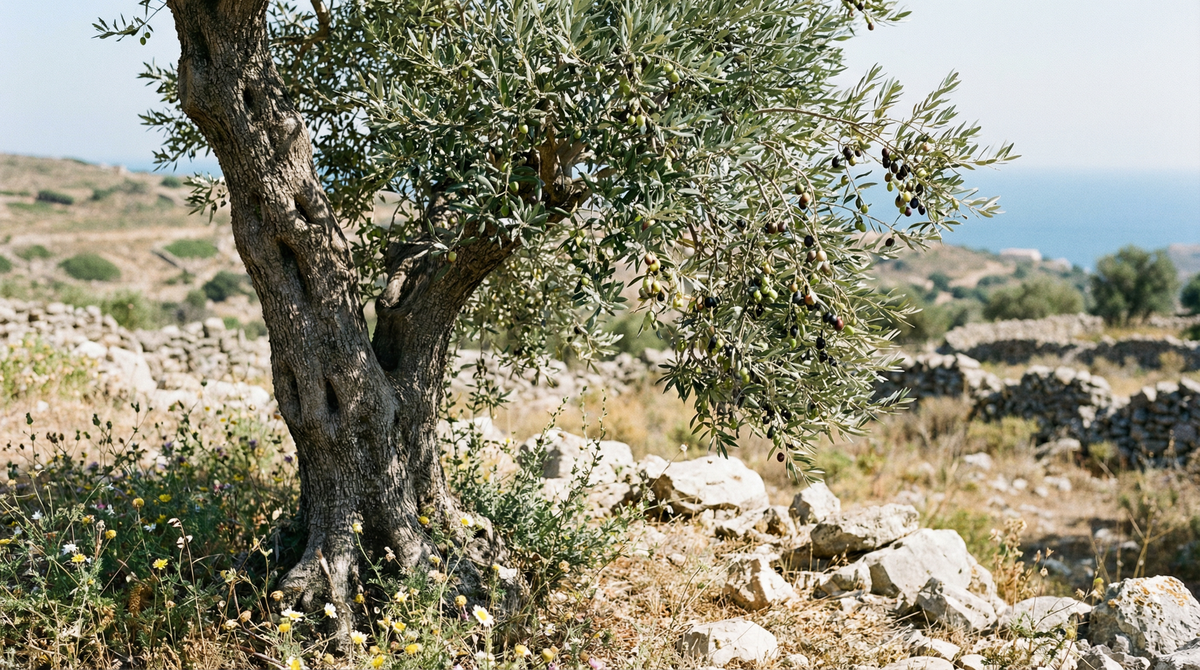
A mature olive tree can outlive every human institution that has ever tried to govern it. There are specimens in the Mediterranean still producing fruit that were already old when the Roman Empire collapsed, and I find that genuinely unsettling in the best possible way. We talk a lot in permaculture circles about "perennial systems" and "long-term thinking," but most of us are designing for decades, maybe a century if we're being ambitious. The olive is designing for millennia. It's the plant that makes my 30-year food forest plan feel almost embarrassingly short-sighted.
What gets me every time I walk past one in a garden is the contradiction written right into its leaves: silver underneath, grey-green on top, this quiet shimmer that looks almost like it's lit from within on a dry afternoon. That's not decoration. Those silvery leaf surfaces are the tree's drought architecture, reflecting heat, slowing water loss, shrugging off conditions that would send most fruiting trees into decline. The gnarled trunk, the deep taproot boring down through caliche and clay alike, the way it regenerates from a stump that looks completely dead, all of it is the same story told in different plant tissue. Resilience isn't something the olive performs. It's structural.
Origin and History of the Olive Tree
Botanical Background and Adaptations
Olive trees can live 500 to well over 2,000 years, with some specimens estimated at 3,000 years old, and they regenerate from root systems and hollow trunks when the canopy is lost.[1][2] That experience permanently changed how I design long-term food forests. No other canopy tree I work with asks you to think in centuries rather than decades.
Part of what sustains that extraordinary lifespan is the species being polycarpic: it flowers and fruits repeatedly throughout its life, not just once.[3][4] The tradeoff is patience upfront. Seed-grown trees can take 7 to 15 years to bear their first fruit, while grafted or cutting-grown trees compress that to 3 to 5 years.[5] I now almost always recommend grafted trees to clients, because waiting a decade or more for fruit tests even the most committed gardener's resolve.
Olea europaea is native to the Mediterranean basin, with the center of origin in the eastern Mediterranean, where modern-day Greece, Turkey, and the Levant sit, and where genetic diversity in the species remains highest.[6][1] The climate that shaped it, mild wet winters and hot dry summers over calcareous, well-drained soils, is baked into the tree's physiology.[1][7] Today, successful commercial cultivation has expanded far beyond that original range to California, Chile, Argentina, Australia, South Africa, and parts of China, but the Mediterranean basin, especially Spain, Italy, Greece, Turkey, and Tunisia, remains the heart of global production.[8][9]
Visual Characteristics of Olea europaea
Mature trees are evergreen, typically reaching 20 to 30 feet tall with a similar canopy spread, though exceptional specimens can push toward 50 feet.[10][11] As a landscape designer, I always map out the full 30-foot spread before planting; it's the single most common mistake I see with olives, and it's not one you can easily undo twenty years later. The growth form ranges from a multi-stemmed shrub to a single-trunked small tree depending on how it's trained.
The bark is what signals age. Young trees have smooth, gray-green bark; older trees develop thick, deeply fissured, grayish-brown bark that peels in patches to reveal greenish or yellowish inner wood.[12] That sculptural, gnarled form is part of why olive is such a striking focal point in a drought-tolerant garden. Pair it with lavender or rosemary in the understory and you've got a composition that looks like it belongs to a hillside in Crete.
The leaves are the species' most recognizable field mark: lanceolate to elliptical, leathery (coriaceous), 2 to 10 centimeters long, with dark green upper surfaces and silvery-green or glaucous undersides caused by dense fine scales.[10][13] That two-tone shimmer when a breeze moves through the canopy is unmistakable. Flowers are small, creamy white, and fragrant, appearing in spring in axillary clusters.[14][15] The fruit is a drupe, 1 to 3 centimeters long, ripening from green to black or purple, with a fleshy mesocarp (the edible flesh) containing 15 to 30 percent oil surrounding a single hard pit.[16][1] Below ground, the architecture is equally impressive: a taproot reaching 10 to 20 feet deep, with lateral roots extending 20 to 40 feet outward, giving the tree access to groundwater that most other species can't touch.[17]
Traditional, Cultural, and Symbolic Uses
The archaeological record pushes olive domestication back to 6000 to 4000 BCE in the Levant, at sites like Kfar Samir and 'Ain Ghazal, with cultivation spreading throughout the Mediterranean by the Bronze Age.[18][19] Phoenician traders and later the Roman Empire carried the tree across the Mediterranean world; Roman agronomists Columella and Pliny the Elder documented orchard management in enough detail that their observations remain relevant to growers today.[20][21]
The olive's symbolic weight across cultures runs as deep as its taproot. In ancient Greece, the tree was sacred to Athena; olive oil was used for cooking, anointing athletes, lighting, and religious offerings, and Olympic victors received wreaths cut from its branches.[22] Across Abrahamic traditions, olive tree symbolism carries meanings of peace, victory, and divine light. The Quran describes a "blessed olive tree" as a metaphor for divine illumination (Surah 24:35),[23][24] while in Jewish tradition the tree was central to temple rituals including the fueling of the Menorah.[25] Berber communities in North Africa and Sephardic Jewish traditions maintained distinctive cultivation and processing practices that wove the olive into food, medicine, trade, and ritual simultaneously.[26]
That layered cultural history is part of why I choose olive for regenerative garden designs. A tree that has fed, healed, lit, and symbolized hope across thousands of years of human civilization aligns with permaculture's ethics of earth care and people care in a way that few other species can match.
Fascinating Facts About the Olive Tree
Olive wood is exceptionally dense, ranging from 730 to 900 kg/m³, with a Janka hardness around 2,700 lbf, harder than both oak and maple, thanks to high natural oil content and tight grain.[27][28] It's the same quality that made ancient olive presses last for centuries and still makes olive cutting boards some of the most durable you can own.
Fresh fruits contain high levels of the bitter phenolic compound oleuropein, which decreases as the fruit ripens and during processing.[29][30] Oleuropein also gives the tree real antimicrobial defense, a theme that echoes through the olive's entire chemistry. The drought tolerance that enables those 3,000-year lifespans comes from an integrated suite of adaptations: rapid stomatal closure, sclerophyllous leaves with a thick waxy cuticle, those extraordinary deep roots, and phenolic compounds that reduce oxidative stress at the cellular level.[31] Watching my own olive's leaves flip to show their silver undersides during a dry summer is a small reminder of the same mechanisms that have kept this species alive across millennia.
Beyond yield, established trees contribute meaningfully to the ecosystems around them: stabilizing soil, enriching it through leaf-litter decomposition, and providing nectar for pollinators that in turn support fruit set.[32][33] For a permaculture designer, that's not a bonus feature; it's the whole point of choosing a tree that rewards patience with centuries of service.
Olive Tree Varieties and Cultivars
With over 250 named cultivars of Olea europaea selected across millennia of agricultural practice,[34][35] the olive is one of the most finely differentiated crops on earth. For a permaculture designer, that diversity is both an asset and a decision point that demands clarity before a single tree goes in the ground. The first question I ask clients isn't "where do you want it?" -- it's "what do you actually want from it?" Because flavor chemistry, oil percentage, cold tolerance, and mature tree size all diverge sharply depending on which olive tree variety you choose.
Notable Olive Cultivars: Arbequina, Koroneiki, Picual, Frantoio, Leccino, and Hojiblanca
Flavor profiles alone reveal how different these cultivars really are. Koroneiki oil is robust and peppery, Arbequina mild and fruity, Picual intense and almost aggressively bitter -- differences rooted in distinct volatile compounds and phenolic profiles that also determine oil stability and shelf life.[36] I've noticed that oils pressed from Koroneiki and Picual trees stay fresh noticeably longer in the pantry than commercial Arbequina blends, which makes sense once you understand that higher polyphenol content is directly tied to oxidative stability.
The arbequina olive tree is compact and yields 18-22% oil, with adaptability to cooler or drier conditions and a growth habit that suits high-density planting.[37][38] After trialing it in several small urban lots, I can say its compact habit makes harvest netting far more manageable than with the vigorous, upright Frantoio, which can exceed 20 feet and requires a completely different approach to canopy management.[38] The koroneiki olive tree punches above its size in oil content, delivering 24-29% with exceptionally high polyphenols, though it's cold sensitive and struggles below roughly -7°C.[37][39] Picual is a different kind of workhorse: vigorous, high-yielding at 20-25% oil, and genuinely drought tolerant, with oil that ranks among the most phenolic-rich of any cultivar.[37][39]
Frantoio is the classic Italian oil cultivar, a medium to large upright tree yielding 20-23% oil with dual oil-and-table potential.[37][38] Where I'd steer people away from it is in soils with any Verticillium history -- Frantoio is notably susceptible, and I've watched trees in a client's planting show early decline symptoms while neighboring Leccino trees stayed completely healthy.[40] Leccino earns its place specifically because of that resilience: it's hardy to -12°C, yields 18-22% oil, and holds up in sites where other cultivars wouldn't last a decade.[37][40] Hojiblanca rounds out the set as a dual-purpose Spanish cultivar (20-23% oil, prized for green table olives) with moderate cold hardiness and medium vigor -- a reasonable choice when a household wants both cured olives and pressed oil from a single tree.[37]
Sourcing Olive Trees in the United States
Nearly all commercial U.S. olive production is concentrated in California, with smaller but meaningful plantings in Texas and Florida, and regional cultivar choices reflect those distinct climates.[41][42][43] The 'Arbequina' cultivar dominates U.S. nursery stock because it's adaptable, productive, and scales well from backyard containers to high-density commercial rows.[44][37] If you're in USDA zones 8-10 with an established tree, you can expect tolerance down to about 10°F (-12°C), though young trees in zone 8 will need winter protection through their first few seasons.[45]
Budget-wise, expect to pay $20-50 for seedlings, $50-100 for 5-gallon pots, and $200-400 for 15-gallon specimens, with the final price varying by cultivar rarity, propagation method, and whether stock carries disease-free certification.[46] That certification piece matters more than most buyers realize. USDA APHIS regulations strictly limit olive imports because of Xylella fastidiosa, the pathogen behind olive quick decline syndrome, and those rules directly constrain what genetic diversity domestic nurseries can offer.[47][48] Because of that regulatory reality, I always recommend buying certified disease-free stock from reputable California or Texas nurseries rather than taking chances on unverified online imports. Choosing the right cultivar for your microclimate and intended use from a trustworthy source is the single decision that most determines whether your olive thrives for decades or disappoints you in year three.
Olive Tree Propagation and Planting Guide
If you're serious about planting an olive tree that produces reliably, the first decision you make is also the most important: how it was propagated. Everything downstream, from time to first fruit to disease resistance to whether the tree even resembles the cultivar on the label, flows from that single choice. I've grown olives from seed, from cuttings, and from grafted nursery stock, and I'll tell you plainly that each path leads somewhere very different.
Understanding Olive Seeds: Morphology, Dormancy, and Why Seed Propagation Is Rare
The olive seed sits inside one of the more fortress-like endocarps in the plant world: a woody pit measuring roughly 1.5 to 2.5 cm long with walls thick enough to protect an oily, almond-like kernel inside.[49][50] Each pit contains a single zygotic embryo, meaning there's no clonal insurance the way polyembryonic seeds offer.[49] That matters because olive cross-pollinates freely and carries high genetic variability, so a seed from 'Arbequina' might grow into something resembling its parent in leaf shape and not much else.[51][52]
Getting those seeds to even sprout requires overcoming significant physical and physiological dormancy. Without cold stratification, scarification, or mechanically cracking the endocarp, germination rates sit between 20 and 50%.[53][54] Seeds are classified as orthodox, meaning they store reasonably well at 4 to 10°C with moisture content dropped to 5 to 10%, remaining viable for one to three years under normal conditions and far longer in seed bank environments.[55][56] In practice, that storage capacity is useful mainly for breeders and rootstock programs, not home orchardists. Seed-grown olives are used in research and for developing rootstocks, not for producing trees you'd actually want to harvest from.
Vegetative Propagation Methods: Cuttings, Grafting, Layering, and Tissue Culture
For the home grower who wants to know how to grow an olive tree that fruits predictably and matches its cultivar description, semi-hardwood cuttings are the most accessible starting point. Taken in late summer from the current season's growth, treated with IBA at 1,000 to 3,000 ppm, and stuck into a well-draining medium like coarse perlite or a 1:1 perlite-sand mix, cuttings root in 6 to 12 weeks under 80 to 90% humidity with bottom heat around 70 to 75°F.[53][57] Success rates of 50 to 70% are typical, though Arbequina is notably forgiving, often hitting 70 to 90% with IBA bumped to 3,000 to 5,000 ppm.[58] I've rooted dozens of olive cultivars in a simple mist setup and the difference between Arbequina and older varieties like Manzanillo is striking; Arbequina just wants to root, while some others make you earn it.
Grafting is what commercial production actually relies on. Cleft and veneer grafting onto established rootstocks in late winter to early spring achieves 80 to 95% success and lets you incorporate disease-resistant rootstock genetics while preserving exact cultivar traits in the scion.[53][59] Air layering is possible in spring with wounding and hormone application but yields only 40 to 60% success, and tissue culture micropropagation achieves 85 to 95% in sterile lab conditions but costs make it impractical outside of research.[53][60] Across all methods, Phytophthora root rot is the waiting threat; it can infect up to 50% of susceptible setups when media stays too wet.[61] I learned this early by potting freshly rooted cuttings into a heavy potting mix that held moisture, and losing half a batch within three weeks. Sterile media, excellent drainage, and good airflow are non-negotiable from day one. Once rooted cuttings move into containers, expect some transplant shock; gradual acclimation and mycorrhizal inoculants at transplant reduce first-year losses significantly.[62]
Soil, Site Selection, and Sun Requirements for Successful Establishment
The olive's Mediterranean heritage is the clearest guide to what it needs in the ground. It evolved on calcareous, rocky, lean soils with sharp drainage, and it has essentially never forgiven anyone for ignoring that background.[63][64] Sandy loam, chalky, or limestone-derived substrates are ideal. Heavy clay without serious amendment is a slow death sentence via Phytophthora and fungal root rot.[65] When I'm installing olives in beds with heavier native soil, I work in pumice or coarse grit to 24 to 30 inches deep, and the improvement in establishment speed and drought resilience over the first two years is consistently dramatic. A quick drainage test before any planting, digging a hole and watching whether water clears in an hour, has saved me from several bad decisions.
Optimal soil pH runs from 6.5 to 7.5, with tolerance extending to 5.5 on the acidic end and 8.5 in some cultivars like Arbequina under alkaline conditions.[66][67] Iron chlorosis tends to appear below pH 6.0 or above 8.5. I always run a soil test before planting; in alkaline-prone soils like those common in Florida landscapes, that one step has prevented chlorosis in every olive I've installed. Olive roots are shallower than people expect, with 90% of root mass in the top 60 cm, so minimum soil depth of 60 cm supports establishment and 1 to 1.5 meters gives mature trees real room to perform.[68] Soil compaction above 1.5 to 1.6 g/cm³ restricts roots and can cut yields by 10 to 30%.[69] It's the same principle as lavender and rosemary: give the root zone somewhere to breathe, keep it lean and fast-draining, and the plant rewards you. Full sun, at least 6 to 8 hours of direct light daily, is not negotiable for young trees; insufficient light causes etiolation and chlorosis before the tree even has a chance to establish.[70] A 2 to 4 inch layer of organic mulch kept well away from the trunk helps retain moisture and suppress weeds without inviting collar rot.[71]
Planting Density, Spacing, and Technique for Long-Term Orchard Health
How far apart you plant olives shapes not just yields but disease pressure, pruning ease, and how you'll be harvesting for the next several decades. Traditional orchards use 20 to 30 feet between trees, roughly 100 to 150 trees per hectare, giving each tree the canopy room to develop its characteristic open structure and allowing hand harvesting without acrobatics.[72][73] Intensive systems bring that down to 10 to 15 feet at 250 to 400 trees per hectare, and super-high-density hedgerow plantings push to 1,000 to 2,000 trees per hectare with in-row spacing of just 3 to 4 feet, demanding trellising, mechanical hedging, and cultivars compact enough to suit the system.[74]
For backyard or permaculture-scale plantings, I nearly always recommend traditional spacing. Wider spacing, at least 20 feet, improves air circulation and meaningfully reduces pressure from olive knot disease caused by Pseudomonas syringae.[66] You can prune and harvest without equipment, and the tree develops into something beautiful rather than a hedge. High-density systems do advance fruiting to 3 to 4 years and can increase yields by 20 to 80%, but they require a different management commitment and cultivar selection entirely.[75] Let your intended harvest method and long-term management capacity guide that choice before you put anything in the ground.
Timeline from Propagation to First Harvest
This is where propagation method becomes very concrete. Seed-grown olives, when they germinate at all (best at 65 to 75°F with dormancy properly broken), spend 10 to 15 years in the juvenile phase before they reliably set fruit.[76][77] I've run a few seedling experiments out of curiosity, and watching them grow for years without a single fruit teaches patience that, honestly, most home orchardists don't need to acquire that way. A grafted tree typically fruits within 2 to 4 years after grafting, with a first commercial harvest at 3 to 5 years after planting.[78] Semi-hardwood cuttings taken in summer are ready to transplant from a 4-inch pot in roughly 10 to 20 weeks; hardwood cuttings can take 4 to 6 months.[53] Start with grafted stock from a reputable nursery, choose your site with the drainage and sun requirements firmly in mind, and a first harvest within a few years is entirely realistic.
Olive Tree Care Guide: Watering, Feeding, Pruning, and Seasonal Management
The secret to a long-lived, productive olive comes down to one principle I keep returning to: respect the tree's Mediterranean origins. That means dry summers, wet winters, lean soil, and plenty of sun. Once you internalize that template, most of the specific care decisions start making intuitive sense.
Water Needs and Drought Tolerance
One of the most frequent mistakes I see with olives is overwatering, especially with newly planted trees where growers panic and water too often. Young trees in their first three years do need consistent moisture to establish their deep taproot system, so plan on watering every 7-14 days during that period.[79][80] Once established, though, mature olives are genuinely drought-tolerant. Deep, infrequent watering every 4-6 weeks during dry periods is the standard,[79][81] roughly equivalent to 15-30 inches of annual water, though you'll need to adjust that upward in high-evapotranspiration climates.
Soil texture matters here. Sandy soils dry out faster and need more frequent moderate irrigation, while clay soils hold water longer and benefit from less frequent, deeper soaks to avoid the waterlogging that invites root rot.[82] A rough seasonal rhythm looks like this: spring every 7-10 days, summer weekly deep soaks for in-ground trees (more often for containers), tapering to every 10-14 days in fall, and barely at all in winter.[83][84] Yellow, wilting leaves usually signal overwatering and possible Phytophthora root rot; leaf scorch and premature fruit drop point the other way.[83] In humid climates, excellent drainage isn't just helpful, it's what keeps your tree alive. Olives can tolerate moderate soil salinity up to about 3-5 dS/m and prefer water pH between 6.5-7.5,[85] but drainage is the variable that matters most.
Sunlight Requirements and Light Stress
Olives want at least 6-8 hours of direct sun daily, and fruiting drops off noticeably without it.[10] That said, sudden intense exposure, especially for container plants moved outside after winter, can cause leaf scorch, bleaching, and photoinhibition where the leaves actually reduce their own photosynthetic rate to protect themselves.[86] I always acclimate potted specimens gradually over 10-14 days rather than moving them straight from a bright indoor window into full afternoon sun. Think of full sun as the target for mature, in-ground trees and a transition goal for everything else.
Feeding and Nutrient Management
Olives are moderate feeders, and overfeeding is a real problem. I test soil in client gardens every 2-3 years because I've learned the hard way that imbalances quietly undermine trees for seasons before you notice anything obvious. Target nitrogen at 50-200 ppm, phosphorus at 15-40 ppm, and potassium at 100-300 ppm, with a preferred pH of 7.0-8.0.[87][88] Apply roughly 1-2 pounds of a balanced NPK fertilizer per mature tree annually, split into two or three applications in spring through early summer.[89] Excess nitrogen produces lush, dark vegetative growth at the expense of fruit set and also increases frost and pest susceptibility.[53] Nitrogen drives shoots and flowers, phosphorus supports root development and fruit set, potassium improves yield and drought tolerance, and calcium prevents fruit drop.[53] On alkaline soils especially, watch for iron chlorosis showing up as interveinal yellowing on young leaves, a sign that iron, zinc, and manganese are getting locked out.[90] When I've seen that in high-pH gardens, combining a foliar spray with organic matter amendments corrected the yellowing within one growing season.
Frost Tolerance and Cold Protection
Mature olive trees are hardy in USDA zones 8-11, tolerating brief dips down to 10-15°F.[91] But prolonged exposure below 23°F can cause bark splitting and dieback,[83] and flower buds and young shoots are considerably more vulnerable than mature wood, so protect anything that drops below 20°F.[92] Young trees need extra attention regardless of variety. Cold-hardy cultivars like 'Arbequina' and 'Leccino' push tolerance a bit further,[91] but site selection still matters more than cultivar. Good cold air drainage, meaning avoiding frost pockets at the base of slopes, is your first line of defense. From there, trunk wraps, organic mulch over the root zone, and anti-transpirant sprays give you meaningful protection during cold snaps.[93] Potted olives on a patio need to come under cover when temperatures threaten to stay below 20°F overnight.
Heat Tolerance and Summer Stress Management
Olives are rated for AHS Heat Zones 7-10 and handle sustained temperatures up to about 104°F under good conditions,[94] but heat stress begins showing up above 95°F, photosynthesis declines noticeably above 98°F, and serious damage occurs beyond 113°F.[95][96] The most vulnerable window is bloom and fruit set, when temperatures above 95°F cause pollination failure and premature flower and fruit drop.[97] I watch mine closely during that stretch. In hot humid summers, I've found that 2-4 inches of organic mulch over the root zone and ensuring nighttime temperatures drop below 68-70°F makes a real difference between a tree that recovers and one that drops most of its crop.[98] For extreme heat events, temporary 30-50% shade cloth and supplemental irrigation, up to 40-60 gallons per week for a stressed mature tree, can prevent the worst of it.[99]
Pruning, Maintenance, and Seasonal Rhythm
Olive pruning is one of my favorite topics because it sits at the intersection of plant science and garden craft. The open-vase system, built around 3-5 main scaffold branches starting 2-3 feet off the ground, is the standard for good reason: it maximizes light penetration into the canopy and keeps air moving through the tree, which suppresses fungal disease and makes harvest manageable.[100] I aim for scaffold angles around 45-60 degrees from vertical, which avoids weak, narrow crotches that split under a heavy fruit load. Prune in late winter, just before bud break, removing 20-30% of the canopy annually for oil cultivars and rather less for table varieties.[101][102] A light follow-up prune in June or July removes any awkward summer growth; avoid fall pruning entirely since new growth triggered late in the season enters winter vulnerable to frost damage.[100]
The annual calendar flows naturally from the tree's Mediterranean rhythm. Vegetative growth peaks in the cooler, wetter months; flowering runs April through June; fruit develops through summer and hits the harvest window in September through November.[103][104] That means spring is when you fertilize, late winter is when you prune, and winter dormancy is when you back way off on water. I track bloom dates in my own garden because flowering signals the start of fruit set, which then sets the countdown to harvest. Establishing that rhythm in your own notes makes caring for an olive feel less like guesswork and more like a predictable annual partnership with the tree's own biology.
When and How to Harvest Olives
From full bloom to harvestable fruit, an olive tree takes somewhere between 150 and 240 days, with most commercial cultivars settling around 180 to 200 days.[105][106][107] That's a long time to watch and wait, and the calendar end-point shifts considerably depending on where you're growing. In California, harvest typically runs October through December, while Spain's Andalusia tends to start earlier in September, and Italian growers in the north may still be picking in January.[108][109][110] I've talked with California growers who push that window even earlier in warm coastal microclimates, pulling fruit well before the first rains complicate things.
Timing and Ripeness Indicators for Olives
Knowing when to pick comes down to reading three signals at once: color, texture, and detachment. For oil olives, the target is typically when more than half the fruit has transitioned from green to purple or black, fruits have reached roughly 0.8 to 1.5 inches in diameter, and they release from the branch with gentle pressure rather than resistance.[111][112] I've learned to feel for that easy detachment by hand; it tells you the oil content is approaching its peak of 20 to 30%.[111]
Table olives follow a completely different calendar. You're picking them earlier, while they're still green and firm, typically September to October, because that snap and density is exactly what you want in a brined olive.[113] The same tree can essentially be harvested twice for different purposes, which is something I find endlessly satisfying about growing Olea europaea in a home garden context.
Expected Yield, Flavor, and Sensory Profile
The bitter phenolic compound oleuropein is present at 2 to 3% in immature fruit that drops below 0.5% as the fruit ripens.[114][112] That drop happens alongside a texture shift from the firm, almost crisp bite of a green olive to the softer, buttery give of a fully ripe black one as enzymatic breakdown loosens the cell walls.[115] Oil content climbs in parallel, from around 15 to 25% in the green stage up to 20 to 30% at full ripeness, with the sweet spot for pressing sitting at 22 to 28%.[116][112]
What changes most dramatically with harvest timing is flavor. Early-harvest oils carry a pronounced bitterness from residual oleuropein derivatives and a peppery, throat-catching pungency from oleocanthal, a compound with notable anti-inflammatory properties.[117] I've pressed my own small batches from trees picked at the turning stage, and that oleocanthal burn at the back of the throat is unmistakable. It fades into a clean peppery finish that tells you the phenolics are where you want them. Wait longer and the oil softens into fruitier, grassier notes driven by volatile compounds like hexanal and (E)-2-hexenal, with the intensity depending heavily on cultivar.[118] A Koroneiki pressed early is a completely different sensory experience than a late-harvest Arbequina. The International Olive Council evaluates these qualities on a standardized 0-10 scale with a lexicon of over 80 descriptors,[119] which gives some useful vocabulary to what most growers just call "getting the timing right."
Olive Preparation, Culinary Uses, and Medicinal Applications
The olive gives you two completely different harvests from one fruit, and neither one arrives ready to use. The edible parts are the cured fruit, the pressed oil, and the leaves for herbal preparations.[120][64] Everything else, including the hard pits, stays out of the kitchen. The reason curing and pressing exist at all comes down to oleuropein, the bitter phenolic compound saturating every fresh olive. It doesn't diminish on its own, and the raw fruit is genuinely unpleasant to eat.[121][122] Curing isn't a finishing step; it's the whole transformation.
Curing Olives: Removing Bitterness and Developing Flavor
The four main curing pathways each take a different route to the same destination. Brine fermentation soaks fruit in an 8 to 10 percent saltwater solution for six to twelve months, letting lactic acid bacteria convert the sugars and hydrolyze oleuropein into non-bitter compounds like hydroxytyrosol while the pH drops to a tangy 4 to 5.[123][124] Lye curing speeds things up dramatically by using a dilute alkaline solution to strip the bitterness in days rather than months, followed by rinsing and brining to stabilize the fruit.[121] Dry salt curing and oil curing round out the options, each producing a noticeably different texture and depth of flavor.
I've done small batches at home using both brine and lye, and the difference is real. My long-fermented brine olives have a complexity that quick lye-cured ones just don't match: earthier, funkier, with more layered savoriness. The resulting flavors depend heavily on cultivar and how far you let fermentation run, ranging from salty and buttery to fruity, nutty, or herbal. One practical note for anyone on a sodium-restricted diet: brine-cured olives can carry 1,000 to 2,000 mg of sodium per 100 grams, but a good rinse before eating reduces that meaningfully.
Making and Using Olive Oil
Cold pressing, where malaxation stays below 27°C, preserves the volatile compounds and phenolics responsible for that grassy, peppery bite that characterizes genuinely good extra-virgin oil. Push the temperature higher and you lose up to 40 percent of that characteristic bitterness along with a substantial portion of the antioxidants. The first time I pressed a home batch at two different temperatures, the pungency difference was immediate. Cooking with extra virgin olive oil at low to medium heat keeps those flavors intact; for higher-heat applications, a lighter grade works fine. The full flavor spectrum of extra-virgin runs from mild and sweet to robustly fruity and herbal depending on cultivar and harvest timing, which is exactly why selecting and pressing your own fruit gives you something supermarkets rarely deliver.
Medicinal Preparations from Olive Leaves
I harvest and dry leaves from my trees each autumn specifically for winter teas. The preparation is simple: one to two teaspoons of dried leaves steeped for ten to fifteen minutes, two to three times daily.[125][64] The same phenolic chemistry that makes fresh olives inedible becomes the therapeutic payload in the leaf. For clinical applications, standardized extracts at 15 to 20 percent oleuropein content are typically dosed at 500 to 1,000 mg daily, with hypertension studies using 500 mg twice daily showing meaningful results.[126] For deeper detail on the mechanisms and safety considerations, the health benefits section of this profile covers the research thoroughly.
Non-Food Uses: Wood, Craft, and Sustainability
Beyond fruit and oil, which have anchored Mediterranean economies for millennia,[127][54] the wood itself has always been prized. Olive timber is exceptionally dense and fine-grained, resistant to splitting, and beautiful in the way that only slow-grown, stressed trees can produce.[127] Artisanal cutting boards, carving blanks, and turned bowls from pruned limbs represent a zero-waste approach that fits naturally into how I manage my own grove: heavy prunings become material rather than debris. The sustainability picture for large-scale olive cultivation is more complicated, with real concerns around monoculture impacts and water demand, but best practices emphasizing organic methods, integrated pest management, and biodiversity support address most of those pressures directly.[128] In a permaculture context, that framework isn't a corrective afterthought; it's the baseline. Every part of a mature olive tree has historically earned its place, and designing with that in mind is what separates an orchard from a living system.
Olive Health Benefits and Medicinal Uses
Most people think of the olive as a food first and a medicine second, if they think of it as medicine at all. But Olea europaea is one of those plants where the deeper you look, the more pharmacologically interesting it becomes, and a lot of that interest lives in parts of the tree that most people compost or ignore.
Phytochemicals: Oleuropein, Hydroxytyrosol, and the Phenolic Suite
The olive's medicinal reputation rests on a dense phenolic suite distributed across every part of the plant. The major players are oleuropein, hydroxytyrosol, and tyrosol, but they're supported by a cast of flavonoids (luteolin, quercetin, apigenin, rutin), secoiridoids, and triterpenic acids like oleanolic and maslinic acid that contribute their own antioxidant, anti-inflammatory, and antimicrobial activity.[129][130] Leaves are where oleuropein concentrates most heavily, typically running 20-60 mg per gram dry weight, making them far richer than the fruit most growers fixate on.[131][132] Green fruit holds a surprising amount too, up to 800 mg oleuropein per 100 g fresh weight, though that concentration falls sharply as the fruit matures and ripens.[133][134]
Growing conditions shift these numbers meaningfully. Cultivar matters a lot: Picual and Coratina run higher phenolic levels than Arbequina or Frantoio.[135] Season, climate, and even water stress matter too. Research shows drought stress can push phenolic accumulation 30-50% higher,[136] and I've tasted this firsthand. My trees in a hotter, drier summer produce fruit with a noticeably sharper, more bitter bite before curing, and once brined, they hold a more complex, lingering finish than fruit from cooler, wetter years. The research and the palate point in the same direction.
Nutritional Profile of Olives and Olive Oil
Here's the catch with all those impressive oleuropein numbers: you can't eat raw olives. The bitterness is genuinely unpleasant, and at those oleuropein concentrations, eating a handful of uncured green olives would likely cause nausea or digestive distress.[133] Curing, whether by brine, lye, or dry salt, breaks down most of that oleuropein, reducing total phenolics by 80-90%, while also generating hydroxytyrosol as a beneficial byproduct of the process.[137] The trade-off is sodium, which climbs to around 735 mg per 100 g in brined olives, something worth knowing if you're eating them by the bowlful.
Processed olives clock in at roughly 115-145 kcal per 100 g, with most of that fat coming from oleic acid, the monounsaturated fatty acid that makes up 71-80% of olive fat content.[138][139] Extra-virgin olive oil concentrates that further: 884 kcal per 100 g, 73% oleic acid, and up to 800 mg/kg of retained polyphenols including hydroxytyrosol.[140][141] The fruit itself also provides fiber, modest vitamin E, and small amounts of potassium, calcium, and iron, though the macronutrient and phenolic story is more compelling than the micronutrient one.
Medicinal Research and Evidence for Olive Leaf Extract
Mediterranean folk medicine has used olive leaf tea for hypertension, fever, respiratory infections, and blood-sugar management for centuries, and olive oil topically for wound healing and skin conditions.[142][143] Modern clinical research is now giving those traditional uses a molecular explanation. Oleuropein and hydroxytyrosol work via free-radical scavenging, Nrf2 pathway activation that upregulates antioxidant enzymes like SOD and catalase, and NF-κB suppression that reduces pro-inflammatory cytokines including TNF-α, IL-1β, and IL-6.[142][118]
The cardiovascular evidence is the strongest on the human-trial side. Meta-analyses of olive leaf extract show average blood-pressure reductions of 3.93 mmHg systolic and 3.0 mmHg diastolic, with some trials reporting drops as large as 11 mmHg systolic.[144][145] When I recommend plants for cardiovascular support in Florida gardens, I often mention both olive leaf tea and hibiscus as complementary options with real clinical data behind them. The difference is that olive leaf also shows improved insulin sensitivity and glucose regulation in clinical models,[146] broad antimicrobial activity against S. aureus and E. coli,[147] and preclinical anticancer mechanisms including apoptosis induction in breast, colon, and prostate cell lines.[148] That last category deserves an honest caveat: it's preclinical, and most of the antidiabetic and anti-inflammatory work still relies on small, short-term human trials.[149] The blood-pressure evidence is where the science is genuinely solid.
Safety, Side Effects, and Drug Interactions
Olea europaea is non-toxic to humans, dogs, cats, and horses according to both ASPCA and USDA classifications, and oleuropein's acute toxicity in rodent studies shows an LD50 above 2000 mg/kg, which puts it firmly in the low-hazard category.[150][151] That said, chewing raw leaves or eating uncured green olives is a reliable route to nausea and digestive upset.[152] Standardized leaf extracts at 500-1000 mg per day over 6-8 weeks are generally well tolerated in clinical settings.[153] Personally, I use standardized extracts only, I check in with my doctor first whenever I'm also taking any blood-pressure medication, and I don't consider that overcautious given the interaction data.
That interaction data matters. Olive leaf extract can potentiate antihypertensives to the point of hypotension, carry mild antiplatelet activity that adds up with anticoagulants, and lower blood glucose enough to compound antidiabetic drugs.[154][142] Avoid it during pregnancy entirely. On the allergy side, olive pollen is a major seasonal allergen in Mediterranean climates, with the Ole e 1 protein affecting an estimated 20-30% of atopic individuals.[155][156] I always flag this with clients who have spring allergies before siting an olive near a patio or seating area.
One more thing every gardener should know: oleander (Nerium oleander) has similar narrow, leathery leaves and can fool someone who isn't paying attention, and it is extremely toxic.[157] I once had a neighbor who nearly planted it into an edible hedge thinking it was an ornamental olive. The tell is the flower: oleander has large, showy blooms, while true olive flowers are tiny and clustered. Check the leaf underside too, olive shows silvery scales, oleander does not. Privet (Ligustrum) is another toxic look-alike worth knowing, while Russian olive (Elaeagnus) is only mildly so.[150] Label your trees, especially in a mixed edible landscape where visitors might be foraging.
Olive Pests and Diseases
Olives are genuinely tough trees, but "moderate pest resistance" doesn't mean you can plant and forget. No cultivar is fully immune to the full roster of threats, and the olive fruit fly (Bactrocera oleae) alone can wipe out 20-80% of a crop if conditions favor it and you're not paying attention.[158][159][160] I've watched that play out in mixed polycultures near the coast where the humidity gives flies a real foothold. Cultivar selection is your first line of defense, not an afterthought.
Olive Pest Resistance and Natural Defenses
Koroneiki and Arbequina show measurable tolerance to olive fruit fly, while Leccino and Frantoio carry moderate resistance to olive moth (Prays oleae).[161][162] In my own plantings, I've noticed that Koroneiki fruits seem to draw fewer oviposits even when they're hanging right next to more susceptible varieties -- that's not just mythology, it tracks with the chemistry. Olives defend themselves through oleuropein and other phenolics, a thick waxy leaf cuticle, volatile organic compounds that trigger induced resistance, symbiotic endophytic fungi, and even extrafloral nectaries that pull in beneficial insects.[163][164][165][166] I can actually taste the difference in bitterness between leaves of high-oleuropein varieties versus milder ones -- it's a direct sensory read on why some trees hold up better in the field.
Beyond the fruit fly, the supporting cast includes olive scale (Saissetia oleae), olive psyllid, lace bug, olive moth, and mite, all of which fluctuate heavily with local temperature and humidity.[158][167] In drier, hotter inland sites these rarely become serious; in humid subtropical zones they can. A solid IPM framework puts cultural and biological controls first: pruning for airflow, choosing resistant cultivars, deploying parasitic wasps like Psyttalia spp., and reserving targeted chemistry as a genuine last resort.[168][169] That's the permaculture instinct anyway: design the system to be inhospitable to pest outbreaks before you ever reach for a spray.
Common Olive Diseases and Cultivar Resistance
The disease picture follows the same logic as pests: no single cultivar delivers complete immunity, so management layers on top of cultivar choice rather than replacing it.[170] The most urgent story right now is Xylella fastidiosa, the bacterium behind Olive Quick Decline Syndrome. Since 2013 it's devastated groves across southern Italy and Spain, spreading via the spittlebug Philaenus spumarius, and susceptible cultivars like Cellina di Nardo and Ogliarola have been hit hard.[171][172] Leccino and the breeding selection FS17 have shown meaningful resistance in field trials, which is compelling enough that I now prioritize Leccino in any grove or hedge planting I design for vector-prone regions -- even though I haven't personally encountered the pathogen, the European data is too consistent to ignore.[173]
On the fungal side, olive leaf spot (peacock spot, Spilocaea oleagina) thrives in cool, humid conditions -- roughly 50-77°F with humidity above 70% -- and Leccino and Picual hold up better than most.[174][175] I learned this the hard way early on by leaving dense canopies on young trees during a wet winter; the peacock spot took hold fast. Now I remove about 25% of interior wood every year as standard practice. Verticillium wilt favors cooler soils and hits Frantoio hard while Arbequina and Koroneiki show better tolerance, though that resistance is polygenic and can shift under real field conditions.[170][176] Anthracnose (Colletotrichum spp.) follows a similar pattern, with Koroneiki and Arbequina performing reasonably well, though environment shifts the outcome.[177]
On the bacterial side, olive knot (Pseudomonas syringae pv. savastanoi) is as much a wind problem as a genetic one -- infection enters through wounds opened by driving rain and mechanical damage, so windbreaks genuinely reduce spread regardless of cultivar.[178][179] Arbequina and Kalamon show moderate tolerance. Below the soil line, Phytophthora root and crown rot is the threat that overwet, poorly drained soils invite, and no amount of cultivar resistance compensates for waterlogged roots.[61] Tolerant rootstocks help manage both Phytophthora and Verticillium where soils are heavy or irrigation is hard to calibrate precisely.[180] I always specify grafted stock on tolerant rootstocks rather than susceptible ones like Manzanillo when I know a site has clay subsoil or inconsistent drainage.
Integrated Management Practices for Olive Trees
The practical payoff from all of this research is fairly simple in application: prune during dry periods, keep good airflow through the canopy, irrigate with drip rather than overhead systems, and start with rootstocks and cultivars suited to your specific disease pressures. Removing 20-30% of the canopy annually and cutting out any infected wood immediately reduces fungal and bacterial load significantly.[181][66] Drip irrigation targeting 1-2 inches per week without letting water pool around the root crown keeps Phytophthora risk low.[182] Temperature matters too: cooler conditions below 50°F favor Verticillium while warmer spells above 68°F accelerate Xylella spread where vectors are established.[183][184] With consistent monitoring and the right cultivar-rootstock pairing, most olive health problems stay manageable long before you'd ever need to reach for a chemical intervention.
Olive in Permaculture Design
The olive is one of those plants that makes a permaculture designer's job feel almost too easy -- on paper. Plant it in the right climate, give it decent drainage, and a tree that outlived the Roman Empire will mostly look after itself. The catch is that "right climate" part. Getting the placement wrong, or ignoring what the Mediterranean ecology is actually telling you, is how you end up with a beautiful tree that never sets fruit or rots at the crown after its first wet winter.
Climate Requirements and Suitable Zones
Olive thrives in that specific Mediterranean rhythm of hot, dry summers and mild, wet winters, with annual average temperatures between 15 and 21°C.[8][9] Critically, it needs 200 to 600 chill hours below 7°C to flower and set fruit reliably.[185] Without that cold signal, you get a healthy tree with very little to show for it at harvest. Temperature tolerance runs in both directions: growth and fruiting peak between 15 and 30°C,[186] heat stress starts creeping in above 35°C, and leaf damage occurs above 45°C.[187]
On the cold end, most cultivars can handle brief dips to around -9°C, but new growth suffers at -4°C and woody tissue below -7 to -9°C.[188][189] Cold-hardy selections like 'Arbequina' and 'Leccino' can survive short drops to around -18°C, which opens up possibilities well beyond the standard USDA zones 8-11 guidance.[190] I've grown 'Arbequina' in a zone 7b microclimate -- south-facing slope, dark stone mulch around the base, protected from north wind by a dense hedge -- and it has fruited reliably for several years now. In my experience, drainage and winter protection matter more than the zone number printed on the label.
Moisture expectations are equally specific. Established trees manage on as little as 250mm of annual rainfall with supplemental irrigation, though 500 to 750mm is more comfortable.[83][191] High humidity is the enemy here. Olive tolerates coastal salt spray and grows from sea level to around 1,000m elevation, but precipitation above 1,000mm or persistent humidity above 60% invites fungal disease and root rot fast.[192][10] For gardeners in wetter climates, container growing and overwintering indoors is a legitimate strategy for enjoying the tree without the losses.[193][194]
Ecosystem Functions and Services
What I love about designing with olive is the sheer density of ecological work it does without any intervention from me. In Mediterranean agroecosystems, olive groves actively support birds, insects, and small mammals while sequestering carbon, stabilizing slopes, and cycling nutrients through leaf-litter decomposition.[195][196][197] Those roots, which can push down 6m, are mining potassium, phosphorus, and other minerals from depths that most plants simply can't reach. When that leaf litter breaks down around the base, it feeds back into the soil as organic matter and structure over time -- a slow but genuinely cumulative benefit. The silvery leaf litter I rake from my mature trees is honestly my favorite mulch for Mediterranean herbs; it's already pre-adapted to the same conditions and breaks down at just the right pace.
Olive also functions well as a windbreak and produces meaningful biomass through annual pruning that can go straight back into the system as mulch or fuel.[198] On slopes especially, those deep roots do real erosion control work without the surface competition that shallower-rooted canopy trees create.
Pollination is primarily wind-driven, which surprises a lot of people who assume bees are the main event.[199] Most cultivars are self-incompatible, meaning they need a compatible pollinizer variety within 30-50m to produce fruit reliably; natural fruit set is only 1-5% even under good conditions.[200][201] The difference between a tree with a compatible neighbor and one planted alone is dramatic. I went from nearly nothing to a genuine harvest simply by adding a second cultivar. Bees do contribute -- roughly 10-20% in some orchards -- so planting an insectary strip nearby visibly increases activity and improves set further.[202] Maintaining 6-8m spacing between trees keeps airflow moving through the canopy, which matters both for wind pollination and for disease suppression.[203]
On disease, Xylella fastidiosa is the one I take most seriously. It causes olive quick decline syndrome and spreads via insect vectors with no cure once established.[184] I monitor for vector insects and treat pruning as a biosecurity tool, keeping the canopy open every single year rather than leaving it for alternate seasons. Good airflow is the best thing you can do structurally.
Forest Layer Role and Guild Design
In a food forest, olive occupies the canopy or small tree layer. Standard cultivars reach 6-9m at maturity, with wild specimens occasionally hitting 12-15m, while dwarf selections stay in the 2-4.5m range for tighter designs or intensive polycultures.[16][10] The root architecture is part of what makes it such a cooperative guild partner. Like a mature oak or fig, olive sends a deep taproot down 2-6m rather than spreading aggressively through the topsoil where understory plants are feeding.[204] Those deep roots also form symbioses with arbuscular mycorrhizal fungi, particularly Glomus species, and those networks benefit the surrounding plants as much as the tree itself.[205]
Olive has minimal allelopathic effects, which means the guild design practically builds itself from the ecology of its native range. Nitrogen-fixing legumes like clover, alfalfa, and fava bean work well in the understory. Aromatic herbs -- rosemary, lavender, oregano, thyme -- pull double duty as pest deterrents and pollinator attractors while thriving in the same well-drained, lower-fertility conditions olive prefers. Comfrey makes a reliable dynamic accumulator at the drip line.[206][207] Standard spacing of 6-15m depending on cultivar vigor gives mature trees room to produce their full 20-50kg of fruit annually once they hit their stride, typically after 5-10 years, while still leaving productive ground beneath.[208] Annual pruning to maintain light penetration through the canopy isn't just a health practice; it's also how you keep generating a steady supply of woody biomass for mulch.
For gardeners interested in genus breadth, Elgon teak (Olea welwitschii) offers a useful comparison: in African woodlands it occupies a mid-story role, shelters fire-sensitive species, and produces facilitative leaf litter from a similarly deep taproot with minimal surface competition.[209] The design principles transfer well to warm-climate systems that need a resilient canopy analog with similar root behavior.
The Tree I Planted for Someone I'll Never Meet
I put my first olive in the ground knowing I'd probably never harvest a full crop from it, and that felt right somehow. There's something clarifying about a plant that asks you to think in generations rather than seasons. Every spring when the new leaves come in silver and the old ones hold on green, I'm reminded that the best things in a garden aren't always for you.
Sources
- USDA Plants Database - Olea europaea ↩
- The Oldest Olive Tree in the World ↩
- Kew Science - Plants of the World Online ↩
- Missouri Botanical Garden Plant Finder - Olea europaea ↩
- University of California Agriculture and Natural Resources - Olive Production ↩
- Plants of the World Online - Olea europaea ↩
- FAO - Olive Cultivation ↩
- USDA PLANTS Database - Olea europaea ↩
- Royal Horticultural Society - Olea europaea ↩
- Missouri Botanical Garden Plant Finder - Olea europaea ↩
- Royal Horticultural Society - Olea europaea ↩
- Royal Horticultural Society Plant Profile - Olea europaea ↩
- Plants of the World Online - Olea europaea ↩
- Britannica - Olive Plant and Fruit ↩
- The Olive Tree: Botany and Horticulture ↩
- Wikipedia - Olive ↩
- Missouri Botanical Garden Plant Finder - Olea europaea ↩
- The Origins of the Olive: A Review of the Archaeobotanical Evidence ↩
- Archaeology of the Olive: 7000 Years of Cultivation ↩
- Domestication and spread of olives ↩
- Pliny the Elder: Natural History ↩
- The Olive Tree in Ancient Greece and Rome ↩
- Surah An-Nur ↩
- Olive Branch ↩
- Olives and Olive Oil in the Ancient Mediterranean ↩
- Sephardic Traditions and Olive Oil ↩
- Properties of Olive Wood ↩
- Janka Hardness Ratings for Woods ↩
- Olive Fruit Characteristics and Oil Content ↩
- Oleuropein in Olives: Bitterness and Health Benefits ↩
- Missouri Botanical Garden - Olea europaea ↩
- Ecological Contributions of Olea europaea to Mediterranean Woodlands ↩
- USDA PLANTS Profile - Olea europaea ↩
- Missouri Botanical Garden Plant Finder ↩
- USDA PLANTS Database ↩
- Journal of Agricultural and Food Chemistry - Volatile Compounds in Olive Oil from Different Cultivars ↩
- Olive Cultivars - USDA National Clonal Germplasm Repository ↩
- Olive Cultivars - USDA Agricultural Handbook ↩
- Phenolic Compounds in Olive Oils - 2022 Review ↩
- Verticillium Wilt in Olives - Research Article ↩
- Olive Production in California ↩
- Growing Olives in Texas ↩
- Olive Culture in Florida ↩
- Olive Cultivation in the United States ↩
- Olive Tree Hardiness Zones ↩
- Olive (Olea europaea) - UC ANR ↩
- Importation of Fruits and Vegetables ↩
- Xylella fastidiosa Regulated Plant List ↩
- Embryology of Olea europaea L. ↩
- Olive Fruit and Seed Morphology ↩
- Olive Propagation ↩
- Vegetative Propagation of Olives ↩
- Propagation of Olive ↩
- Olive Seed Germination and Dormancy - FAO Olive Production Manual ↩
- Seed Storage of Mediterranean Trees: Olive (Olea europaea L.) ↩
- Millennium Seed Bank: Seed Drying and Storage Protocols ↩
- Rooting Olive Cuttings ↩
- Olive Propagation by Cuttings ↩
- Olive Grafting Techniques and Rootstock Selection ↩
- Micropropagation of Olea europaea ↩
- Managing Phytophthora in Orchards ↩
- Propagation of Olives ↩
- Olive Tree Cultivation - RHS Gardening ↩
- Olea europaea Fact Sheet - Kew Gardens ↩
- Olive Root and Crown Rot ↩
- Olive Production Manual ↩
- Scientific Reports: Olive tree adaptation to alkaline soils ↩
- Olive Production Manual ↩
- Management of Soil Compaction in Olive Groves ↩
- Olives for Your Home Garden ↩
- Growing Olives in Your Home Garden ↩
- FAO Olive Production Manual ↩
- Olive Production Manual ↩
- University of California Olive Production Guidelines ↩
- FAO Olive Production Handbook ↩
- Olive Cultivation: From Seed to Harvest ↩
- Germination of Olive Seeds ↩
- Olive Production Manual ↩
- UC IPM: Olive Water Use and Management ↩
- Missouri Botanical Garden - Plant Profile: Olea europaea ↩
- FAO Irrigation and Drought Guidelines for Olive Cultivation ↩
- UC Agriculture & Natural Resources - Olive Water Management ↩
- How to grow olives - Royal Horticultural Society ↩
- Olive Tree Care - Missouri Botanical Garden ↩
- Salinity Tolerance of Olive Trees ↩
- Photoinhibition in Olea Europaea ↩
- Olive Nutrient Management - University of California Agriculture and Natural Resources ↩
- Olive Oil Production: Soil Management ↩
- Fertilizing Olive Trees ↩
- Chlorosis in Olive Trees - UC IPM ↩
- Olea europaea - Olive ↩
- Frost Tolerance of Olive Trees ↩
- Olive Tree Cold Protection - University of California Agriculture and Natural Resources ↩
- AHS Heat Zone Map ↩
- Heat Stress in Olive Trees: Physiological Responses and Management ↩
- Temperature Tolerance of Olive Trees (Olea europaea L.) ↩
- Heat Stress Effects on Olive Trees ↩
- Mulching and Shade Effects on Olive Trees Under Heat Stress ↩
- Effects of Heat Stress on Olive Trees: A Review ↩
- Pruning Olive Trees ↩
- How to Prune an Olive Tree ↩
- Olive Production Manual ↩
- Royal Horticultural Society - Growing Olives ↩
- Olive Cultivation - University of California Agriculture and Natural Resources ↩
- Olive Fruit Development and Ripening ↩
- Phenology of Olive Trees ↩
- Olive Cultivation: From Flowering to Harvest ↩
- Olive Harvest Timing in California ↩
- Olive Production in Spain: Harvest Seasons ↩
- Olive Phenology and Harvest in Italy ↩
- Olive Production Manual ↩
- FAO Technical Guide on Olive Harvest and Post-Harvest ↩
- Olive Production Manual ↩
- Oleuropein and Bitterness in Olives - Journal of Agricultural and Food Chemistry ↩
- Texture Changes in Olive Fruit During Ripening - Peer-reviewed Paper ↩
- Olive Fruit Ripening: Chemical Changes and Their Relationship to Harvest Timing ↩
- Pungency in Olive Oil: Role of Phenolic Compounds - Food Chemistry ↩
- Volatile Compounds in Virgin Olive Oil and Their Sensory Impact ↩
- International Olive Council Sensory Analysis of Virgin Olive Oil ↩
- Olea europaea - Missouri Botanical Garden ↩
- Olive Curing Methods - USDA Agricultural Handbook ↩
- FAO Guidelines on Olive Fruit Processing and Oleuropein Management ↩
- Olive Processing Methods - University of California Agriculture ↩
- Traditional Brine Fermentation of Olives - Journal of Food Science ↩
- USDA PLANTS Database - Olea europaea ↩
- Effects of Olive Leaf Extract on Blood Pressure ↩
- Plants of the World Online: Olea europaea ↩
- Sustainability Practices in Olive Cultivation ↩
- Terpenoids and Flavonoids from Olea europaea: A Review ↩
- Triterpenic Acids in Olive Seeds ↩
- Phytochemicals of Olea europaea L. Leaves and Their Antioxidant Activity ↩
- Phenolic Compounds in Olive (Olea europaea L.) ↩
- Phenolic Compounds in Olive Fruit: A Review ↩
- Oleuropein Content in Olives - PubMed Review ↩
- Phenolic Compounds in Olive (Olea europaea L.) Cultivars Grown in Sardinia ↩
- Climate Impact on Olive Fruit Phenolics: A Review ↩
- Changes in Phenolic Compounds During Olive Curing ↩
- USDA FoodData Central - Olives, raw ↩
- USDA FoodData Central - Olives, pickled, canned or bottled, green ↩
- USDA FoodData Central - Oil, olive, extra virgin ↩
- Olive Oil Composition - Harvard T.H. Chan School of Public Health ↩
- Pharmacological Activities of Olea europaea: A Review ↩
- Kew Gardens - Olea europaea Fact Sheet ↩
- Effect of Olive Leaf Extract on Blood Pressure: A Systematic Review and Meta-analysis ↩
- Olive Leaf Extract for Cardiovascular Health: Clinical Trial Results ↩
- Antidiabetic Effects of Olive Leaf Extract ↩
- Antimicrobial Activity of Olive Oil: Systematic Review ↩
- Anticancer Activity of Olea europaea Phenolics ↩
- Anti-Inflammatory Effects of Olive Leaf Extract: A Meta-Analysis ↩
- Toxic and Non-Toxic Plants - Olive ↩
- Toxicity and Safety of Olive Leaf Extract and Oleuropein ↩
- Nutritional and Toxicological Aspects of Olive By-Products in Animal Feed ↩
- Olive Leaf Extract: Health Benefits, Uses, Dosage, and Side Effects - WebMD ↩
- Interactions of Olive Leaf Extract with Anticoagulants ↩
- Olive Pollen Allergens ↩
- Prevalence of Olive Pollen Allergy in the Mediterranean ↩
- Nerium oleander Identification and Toxicity - Missouri Botanical Garden ↩
- USDA Forest Service - Olive Pests ↩
- UC IPM Online: Olive Pests ↩
- Olive Fruit Fly Management ↩
- USDA ARS: Evaluation of Olive Cultivars for Pest Tolerance ↩
- Journal of Economic Entomology: Bactrocera oleae Cultivar Resistance ↩
- Oleuropein: A Key Constituent in Olive Defense ↩
- Physical and Chemical Barriers in Olive Leaves Against Insects ↩
- Endophytic Fungi and Olive Pest Resistance ↩
- Extrafloral Nectaries in Olea europaea ↩
- EPPO Global Database: Pests of Olea europaea ↩
- UC Agriculture & Natural Resources - IPM for Olive ↩
- FAO: Olive Pest Management Guidelines ↩
- Verticillium Wilt Resistance in Olive Cultivars ↩
- Xylella fastidiosa in Olives: Cultivar Susceptibility ↩
- Resistance to Xylella fastidiosa in Italian Olive Cultivars ↩
- Xylella fastidiosa on Olive: Host Range and Cultivar Susceptibility ↩
- Peacock Spot on Olives - RHS Gardening ↩
- Olive Leaf Spot (Cycloconium) - UC IPM ↩
- Susceptibility of Olive Cultivars to Verticillium dahliae ↩
- Olive Anthracnose: Epidemiology and Cultivar Resistance ↩
- Bacterial Diseases of Olive: Olive Knot ↩
- Olive Knot Bacterial Disease - Texas A&M AgriLife ↩
- USDA ARS: Olive Rootstock Research ↩
- UC IPM Online: Olive Diseases and Pests ↩
- Texas A&M AgriLife: Olive Production in Texas ↩
- Olive Diseases and their Management - USDA ↩
- Xylella fastidiosa in California Olives - UC IPM ↩
- Olive Production in Florida ↩
- Temperature Requirements for Olive Trees ↩
- Heat Stress in Olive Trees: Physiological Responses ↩
- Olive Trees and Cold Weather ↩
- Frost Protection for Olive Trees ↩
- Olive Tree Cold Hardiness and Cultivars ↩
- Rainfall Requirements for Olive Cultivation ↩
- Royal Horticultural Society: Olive (Olea europaea) Growing Guide ↩
- UC Davis Olive Center ↩
- Growing Olives in the Pacific Northwest ↩
- Ecological Role of Olive Groves in Mediterranean Biodiversity ↩
- Ecosystem Services Provided by Olea europaea in Agroforestry ↩
- Soil Health and Nutrient Cycling in Olive Orchards ↩
- Olive Trees as Windbreaks and Erosion Control ↩
- Role of Honeybees in Olive Pollination ↩
- Self-Incompatibility in Olea europaea Cultivars ↩
- Pollination in Olive Trees: Factors Affecting Fruit Set ↩
- Enhancing Pollination in Olive Orchards through Habitat Management ↩
- Compatible Pollinizers for Olive Varieties ↩
- Root system architecture of Olea europaea ↩
- Mycorrhizal associations in olive orchards ↩
- Permaculture Research Institute - Olive Tree Guild ↩
- Understory plant diversity in Mediterranean olive groves ↩
- Permaculture Companion Plants for Olive Trees ↩
- Missouri Botanical Garden Plant Finder - Olea welwitschii ↩
About the Author
I have always been fascinated by different ecosystems and environments, and the art and science of growing. I have learned, practiced and observed the more natural forms of food production in a variety of environments.