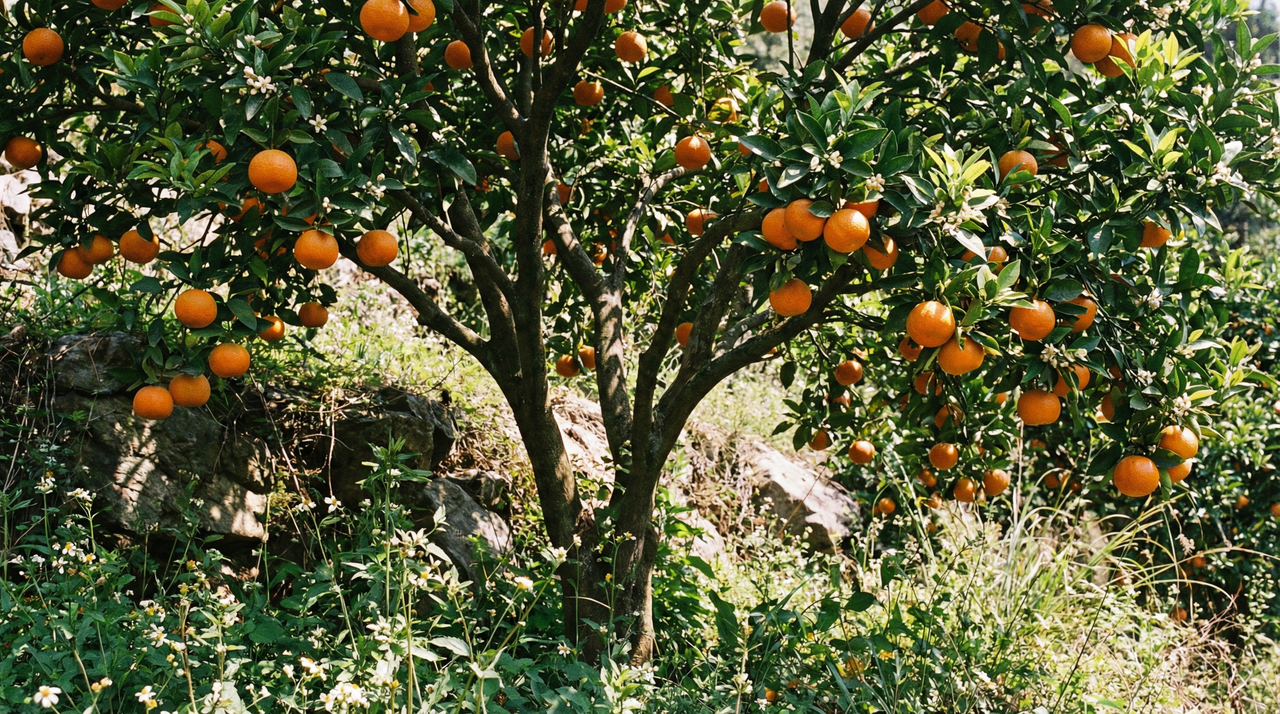
Nobody told me, when I first planted a sweet orange in my Central Florida yard, that I was putting in a tree that could outlive me. Not by a little, either. Citrus sinensis can hit 100 years under good care, and there are documented specimens older than that, still fruiting.[1] We think of oranges as a grocery-store commodity, something sold in five-pound bags, priced by the season. But the tree itself operates on a completely different timescale, one that has more in common with an heirloom apple or a heritage olive than anything in the produce aisle.
Here's the contradiction I keep coming back to: the orange is one of the most mass-produced fruits on earth, yet the plant it comes from is genuinely ancient, biologically complex, and surprisingly misunderstood by most people who grow it. Its genetics alone are a puzzle researchers are still untangling, a hybrid lineage that traces back through pomelo and mandarin to forest edges in southern China, long before anyone imagined it on a breakfast table. Growing one well, from site selection to guild design to the patience of a 14-month bloom-to-harvest cycle, is a different project entirely from buying a tree at a box store and hoping for the best. The gap between those two experiences is what this article is about.
Origin and History of the Orange (Citrus sinensis)
There's something I always tell clients before we place a citrus tree in a food forest: this is not a short-term decision. Sweet orange, Citrus sinensis, is a polycarpic perennial evergreen, which means it flowers and fruits year after year across its entire lifespan rather than dying after a single reproductive event like a monocarpic plant.[2][3] Under good care, these trees typically live 50 to 100 years, with some documented specimens exceeding 200.[4][5] Commercial orchards replace them after 30 to 50 years, but that's an economic calculation, not a biological limit. When I'm designing a planting with that kind of multigenerational potential, I plan accordingly.
Botanical Background and Visual Characteristics of Citrus sinensis and Related Species
Sweet orange originated in subtropical Southeast Asia, with domestication centered in southern China, and its hybrid ancestry draws from three ancestral species: mandarin (Citrus reticulata), native to southern China and northeastern India; pomelo (Citrus maxima), from Malesia; and citron (Citrus medica), from the Himalayan foothills.[6][7] The full genus ranges considerably: citrons are shrubby and thorny with enormous thick-rinded fruit whose rind can comprise up to 50% of fruit weight and minimal edible pulp[8]; mandarins stay compact with loose, easy-peel skins; pomelos can reach 15 to 30 cm across; and bitter orange (Citrus × aurantium) has naturalized invasively in Florida, California, and Mediterranean regions via seed and root suckers.[9]
Sweet orange itself grows as a rounded, spreading tree, typically 20 to 30 feet tall with a 15 to 25 foot canopy.[10] Young stems carry axillary thorns that diminish with age, which matters practically: I always site young citrus away from main pathways until they've settled into that calmer, mature habit. The leaves are glossy, dark green, elliptical, with translucent oil glands that release a sharp citrus scent when you crush them between your fingers.[11] Spring brings clusters of white fragrant flowers, 10 to 20 mm across, though in true tropical conditions blooming can happen almost year-round.[12] The root system is fibrous and shallow, concentrated in the top 12 to 24 inches of soil, which directly informs how I mulch and irrigate these trees; deep cultivation near the trunk is a mistake I've seen cause real damage.[13]
The fruit is a hesperidium, a modified berry with a leathery rind and segmented juicy pulp.[14] Navel oranges run larger, with a thicker rind around 4 mm and no seeds thanks to parthenocarpy; Valencia types have a thinner rind around 2.5 mm, higher juice content, and occasional seeds.[15][16] From a planting design perspective, I always ask clients what they want to do with the fruit first. Easy fresh eating points to a loose-rinded mandarin; serious juicing or processing points elsewhere. Those distinctions matter before you ever dig a hole.
Traditional, Cultural, and Medicinal Uses Across Civilizations
Sweet orange was domesticated in southern China roughly 2,500 to 3,000 years ago, spreading from there to India and Southeast Asia before Arab traders carried it westward.[17] By the 10th century it had reached Spain and Portugal during Moorish rule, and Christopher Columbus introduced it to the Americas in 1493.[18] The spread of this one tree is essentially a map of global trade routes.
Throughout Chinese culture, oranges and mandarins symbolize good fortune and prosperity, their Cantonese name being homophonous with the word for luck; they remain traditional New Year gifts, and pomelos appear in rituals to attract abundance.[19] Citron has its own sacred history: as the etrog of Jewish Sukkot, one of the Four Species with specific Talmudic selection criteria, it's been central to that ritual for over 2,000 years.[20] I try to hold all of that history with genuine respect when I incorporate these plants into client designs; a citrus tree can carry a lot of meaning well beyond its fruit.
Medicinally, sweet orange peel dried as chen pi has been used in traditional Chinese medicine for digestive complaints and phlegm[21]; Ayurvedic practice uses citrus to balance doshas and support digestion[22]; and Arab Unani medicine valued orange for cooling fevers. After Spanish introduction, citrus was absorbed into Latin American, Caribbean, and indigenous practices for treating scurvy, digestive ailments, skin conditions, and spiritual cleansing, including offerings in Santería.[23] That's a remarkable depth of traditional knowledge, much of which now sits awkwardly alongside a modern commercial industry with real sustainability concerns, including water use up to 10,000 liters per kilogram of fruit and biodiversity losses in monocultures.[24]
Fun Facts: Production, Records, Longevity, and Ecological Roles
Global sweet orange production sits around 109 million metric tons annually, with Brazil, India, and the United States as the leading producers.[25] A well-sited mature tree can yield hundreds of pounds of fruit, and some California specimens planted over a century ago are still going.[5] The record for a single sweet orange stands at 12.5 inches in diameter and 2.5 kg[26]; a record pomelo came in at 9.1 kg.[27] The genus clearly doesn't do anything small.
The seedlessness of navel oranges comes from a genetic mutation causing parthenocarpy, fruit development without pollination, and the complex hybrid histories of modern citrus varieties are still being untangled by genomic research.[28][29] In their native Southeast Asian habitats, citrus act as pioneer species in disturbed areas, supporting bees, flies, birds, bats, and mammals through nectar, pollen, and fruit; cultivated monocultures contract much of that ecological function.[30] That contrast between what a citrus tree is capable of ecologically and what industrial production asks of it sits at the center of why I find these plants so worth understanding deeply before you design with them.
Orange Varieties and Sourcing
As I covered in the origin section, sweet orange didn't arrive in the world as a single, stable species. Citrus sinensis is itself a hybrid of pomelo (Citrus maxima) and mandarin (Citrus reticulata),[31][32][33] which means the dizzying array of cultivars we have today is really just the genus continuing a project it started millions of years ago. That hybrid complexity is worth keeping in mind when you're standing at a nursery trying to decide what to actually plant.
Notable Sweet Orange Cultivars: Navel, Valencia, and Beyond
For most home growers, the decision comes down to two cultivars that dominate commercial production worldwide: Navel and Valencia.[34][35] They're not interchangeable. Navels are naturally seedless, ripen early (November through January), and produce that sweet, easy-to-eat fruit most people picture when they hear "orange."[36] Valencia ripens later (March through June), tends to carry seeds, and delivers the thin-skinned, high-juice fruit that made Florida famous.[37] I've grown both in containers on my Central Florida property, and the long-game difference is real: Navel trees grow fast early but may start declining after 20-30 years, while Valencia can keep producing for up to 50 years and yield 20-30 percent more fruit per tree under good conditions.[38][36] If I were planting for the long haul in a food forest, I'd lean Valencia.
If you're in zone 8b or cooler, container growing extends your practical range by two to three zones,[3][39] and during the rare hard freezes we get, I wheel my potted trees onto a covered porch and they come through fine. A compact Navel in a 15-gallon pot is very manageable for that kind of microclimate work.
Beyond sweet oranges, the genus offers niches worth knowing. Blood oranges like 'Moro', 'Tarocco', and 'Sanguinelli' deliver striking color and a slightly berry-like flavor profile, though their global production volume is a fraction of Navel or Valencia. Mandarin orange (Citrus reticulata) covers everything from cold-hardy Satsumas (Owari and Miho are the workhorses) to Clementines and tangerines like Dancy.[40][41] Honestly, after years of wrestling with Valencia's thick peel, there's something deeply satisfying about a Satsuma that practically unzips itself. Meyer lemon, a hybrid valued for cold tolerance and milder flavor,[42] is a reliable companion planting choice for anyone designing a mixed citrus guild. Pomelo's Chandler cultivar (pink flesh) and grapefruit's Ruby Red and Star Ruby round out the color spectrum,[43][44] while Buddha's hand citron sits at the ornamental-aromatic end of the spectrum, useful more for fragrance and tea than fresh eating.[45] For exhaustive cultivar specs, harvest windows, and hardiness ratings by clone, the UC Riverside Citrus Variety Collection is the resource I send people to rather than trying to replicate it here.[46][47]
Sourcing Healthy Orange Trees and Regulatory Considerations
Sweet orange trees are widely available at retail nurseries across citrus-growing states, and reputable mail-order sources like Four Winds Growers, Logee's Plants, Nature Hills Nursery, and Everglades Farm ship grafted stock nationwide.[13][48] Container trees generally run $20-40 for a 1-gallon, $30-50 for a 2-gallon, and $50-80 for a 5-gallon. Buy grafted, not seed-grown. I learned that lesson the slow way: a seed-grown orange I planted early in my gardening life took seven years to produce fruit and wasn't true-to-type when it finally did. Certified grafted stock fruits years earlier and reliably delivers the cultivar you actually chose.[4]
The regulatory landscape around citrus has become genuinely complicated. Citrus greening (HLB) and citrus canker quarantines now shape what can be shipped where, and interstate movement requires a USDA APHIS phytosanitary certificate.[49][50][51] Florida and California impose additional certification and greenhouse requirements on nursery stock.[52][53] Before I order anything across state lines, I check the current APHIS quarantine map and call my county extension office because the rules shift. Buying from a certified nursery isn't just a quality preference; in many cases it's a legal requirement, and it's your best protection against introducing disease into your landscape.
Orange Tree Propagation and Planting Methods
Growing oranges from scratch is one of those topics where the biology and the practical reality pull in opposite directions. The plant itself is biologically fascinating when it comes to seed reproduction, but that same biology is exactly why experienced growers almost always reach for a grafted tree instead. Understanding why takes about two minutes, and it'll save you a decade of waiting.
Understanding Polyembryony and Seed Propagation in Citrus
Sweet orange seeds aren't like tomato seeds or bean seeds. Each one typically contains multiple embryos: one zygotic embryo produced through sexual fertilization, and several nucellar embryos that develop from maternal tissue without fertilization.[54][55] Those nucellar seedlings are true-to-type clones of the mother plant, which sounds like a shortcut to free trees.[56][57] The problem is you can't visually separate the nucellar seedlings from the zygotic one in a germination tray, and that one zygotic seedling introduces genetic variability you don't want if you're after a specific named variety.[56][58]
I learned this the hard way early in my career. I saved seeds from a sweet orange I loved, grew out a tray of seedlings, and they looked identical for the first two seasons. By year eight, I had fruit on some plants and nothing on others, and the ones that did fruit weren't quite right. The juice was thinner, less sweet. I'd mixed up my zygotic seedling with the clones without realizing it, and I'd spent nearly a decade finding out. This is why seed propagation is primarily used for growing rootstocks like trifoliate orange, not for producing fruiting trees of named varieties.[13][59] If you plan to experiment with seed germination, sow the seeds fresh immediately after extracting them. Don't let them dry out on the counter for a week and expect strong germination.
Grafting, Cuttings, Air Layering, and Tissue Culture Methods
T-budding is the gold standard for sweet orange propagation, and the numbers back it up: success rates typically run 80-95%, versus 70-85% for cleft or whip-and-tongue grafting.[60][13] Timing matters more than most people expect. Late winter through early spring, roughly February through April, when temperatures hold between 65 and 75°F, gives callus tissue the conditions it needs to knit together reliably.[13][61] After years of trialing both approaches in my own designs, I always reach for certified grafted stock when I'm specifying trees for a client's landscape.
Cuttings are possible but genuinely difficult with sweet orange. Hardwood cuttings root at only 10-30% success, which isn't commercially viable by any measure. Semi-hardwood cuttings taken in spring, treated with IBA at 1,000-5,000 ppm, kept under mist propagation with bottom heat around 70-80°F and humidity above 80%, can push success up to 20-60%, but that's a lot of infrastructure for a home grower to maintain.[62][13] Air layering is more reliable at 50-80% success, works best in humid summer conditions with moist sphagnum moss, and is a reasonable option for a home grower who wants to preserve a specific tree, though it's labor-intensive enough that commercial growers rarely bother.[63][13] Tissue culture micropropagation achieves 70-90% survival for elite clones and is how disease-free foundation stock gets produced commercially, but it requires specialized lab facilities and isn't something a backyard grower needs to think about.[64]
Recommended Rootstocks and Disease Considerations During Propagation
Rootstock selection is where propagation gets genuinely consequential. Sour orange was the workhorse for decades, offering excellent vigor and fruit quality, but its susceptibility to citrus tristeza virus makes it a liability in most regions today. Trifoliate orange provides nematode and cold resistance with some useful dwarfing effect. For gardeners with limited space, that dwarfing trait is actually an asset: I've used trifoliate-based rootstocks to keep trees at a manageable 10-12 feet in small permaculture gardens, allowing tighter spacing while still getting solid nematode resistance. Hybrid rootstocks like Swingle citrumelo, Cleopatra mandarin, and Volkamer lemon each bring specific advantages depending on your soil, climate, and local disease pressure, with US-942 emerging as a strong option in HLB-affected areas.[65][66]
On certified budwood and disease: I only source from registered, certified blocks. Once HLB gets into a planting it's game over, and that's not caution talking, it's watching entire blocks decline. The USDA APHIS and state extension programs maintain certified nursery stock programs for exactly this reason, and it's worth seeking out those certified sources even if they cost a bit more upfront.
Soil, Site Selection, and Sunlight Requirements for Planting
Sweet orange needs full sun, at least 6-8 hours of direct light daily, and that's genuinely non-negotiable for good flowering and fruit production.[67][13] Beyond light, the single most important site factor is drainage. Sweet orange roots need soil that holds at least 40-50% total porosity with 10-20% air-filled pore space at field capacity; when soil oxygen drops below 10%, root respiration suffers measurably.[65][68] Sandy loam, loamy sand, and gravelly soils do this naturally; heavy clay does not.[69][70]
In my years specifying citrus plantings, I have never seen a tree survive long-term in waterlogged clay without raised beds or French drains. Prolonged saturation doesn't just stress the roots; it opens the door for Phytophthora root rot, which moves fast and is very hard to reverse.[71][13] Soil compaction is a related issue: root growth stalls when bulk density exceeds about 1.4-1.6 g/cm³, and most roots stay in the top 30-90 cm of soil, so what happens in that zone matters enormously.[72] If you're working with a heavy or compacted site, deep tillage before planting and the addition of organic matter (targeting 2-4% by content) will improve aeration and structure without pushing water retention into the danger zone.[65][72] Target a soil pH of 6.0-7.5; outside that range, nutrient availability starts to shift in ways that create deficiency problems even when fertility is adequate.[65] For container growing, skip garden soil entirely and use a blend of peat or coir, perlite, and coarse sand or pine bark that drains freely.[13][73]
Optimal Spacing, Planting Techniques, and Timelines
Mature sweet orange trees typically reach 15-20 feet tall with canopies spreading 12-18 feet wide, and that mature size has to drive your spacing decisions from day one.[74] Standard commercial spacing runs 15-25 feet between trees in the row and 20-30 feet between rows, yielding roughly 80-150 trees per acre.[75] High-density systems compress that to 8-10 feet within the row and 12-15 feet between rows, achieving 500-800 trees per hectare, but these require dwarfing rootstocks like Flying Dragon trifoliate orange to keep trees manageable and to prevent canopy crowding that limits airflow and light penetration.[76][77] For a home permaculture garden on standard rootstock, I'd plan for at least 15 feet in every direction and be honest about whether the site can actually accommodate that at maturity.
For planting time, early spring after the last frost (February through April in most southern regions) or fall (September through November) in mild climates like Florida and California gives new trees the best establishment window.[13] Always plant certified grafted nursery stock rather than seeds or uncertified material. Grafted trees begin fruiting in 2-3 years and reach full production in 4-5 years; seed-grown trees typically won't produce for 7-15 years, with 8-10 being average for sweet orange.[13][59][60] That gap is significant enough that I can't think of a compelling reason for a home grower to start from a grocery-store seed when certified grafted trees are accessible from reputable nurseries.
Seed Storage, Viability, and Germination Timeline
If you do want to experiment with growing an orange tree from seed, go in with clear expectations. Seeds from sweet orange are recalcitrant, meaning they don't tolerate drying or cold storage the way orthodox seeds like beans or peppers do. Sow them within a few days of extracting from the fruit, into warm, moist, well-draining media, and expect germination in 2-4 weeks under good conditions. The seedlings will emerge quickly and look vigorous. The long wait is for fruit: sweet orange from seed averages 8-10 years to first flower, with some trees taking up to 15.[13][73] Lemons are comparatively forgiving at 3-6 years from seed; mandarins, pomelos, and grapefruits fall closer to the sweet orange range of 5-15 years. Seed propagation has its place in rootstock production and in breeding work, but for the home grower who wants fruit, the grafted nursery tree wins every time.
Orange Tree Care and Maintenance Guide
Caring for a sweet orange tree comes down to finding and holding a subtropical balance. These trees want heat, sun, steady nutrition, and consistent moisture, but they'll punish you for excess just as quickly as for neglect. Get the fundamentals right and you're rewarded with decades of fragrant blooms and heavy harvests. Slip on drainage or frost timing, and a tree that could have lived a century starts declining in its first decade.
Water Needs for Sweet Orange Trees
The foundational rule I come back to every season: deep and infrequent beats shallow and frequent, every time. Sweet orange roots need to breathe, so letting the top inch or two of soil dry between waterings isn't neglect, it's how you prevent the Phytophthora root rot that kills more home citrus than any pest.[13][78] In practice, mature trees need deep watering once every seven to ten days through spring and summer, delivering one to two inches per session to fully saturate the root zone, which extends two to three feet down.[79][13][79] Come winter, I scale back to every two to three weeks.[79] In Florida's sandy soils I use a screwdriver test: push it six inches down, and if it slides in without resistance the soil still has enough moisture. If it won't budge, it's time to water.
Young trees are less forgiving than established ones. They need about one to two inches per week consistently, because while a mature tree can shed leaves and survive a two-to-four-week dry spell, that same stress on a young tree translates directly into reduced long-term vigor and fruit yield.[13] Diagnosing whether you're over or underwatering matters: overwatering shows up first in older leaves as yellowing and eventually as mushy dark roots with a sour smell, while underwatering hits the younger growth first with curling, brittle foliage and dry browning at leaf edges.[13][13] Those two sets of symptoms can look confusingly similar, so always check soil moisture several inches down before reaching for the hose. Water quality matters too: sweet orange prefers slightly acidic to neutral irrigation water (pH 6.0 to 8.0) with low salinity and minimal chlorine.[80] Rainwater, if you can collect it, is ideal.
Fertilization and Nutrient Management
Sweet orange is a genuine heavy feeder with particularly high nitrogen demands.[81][13] Regional extension guidance is where I always start before applying anything, because the numbers differ significantly by climate. Florida mature trees typically receive one to two pounds of actual nitrogen annually, split across three to four applications between February and September. California growers generally apply somewhat less, around 0.5 to 1.5 pounds over three to six monthly applications from March through October.[13][82] I never apply nitrogen after August in Central Florida. That late-season push produces tender new growth that's almost guaranteed to take cold damage on the first cool nights of fall, a lesson I learned in my first year growing Navels.
Young trees need a higher nitrogen ratio (something like 3-1-2 NPK) to push vegetative growth, while bearing trees shift toward a balanced ratio like 2-1-1 or 3-1-3, where potassium gets more emphasis to support fruit size, juiciness, and disease resistance.[13][83] The micronutrient picture is where I'd encourage every grower to do a soil or leaf test before assuming deficiency. In Florida's calcareous soils, iron chlorosis is common: you'll see a distinctive yellowing between the veins of young leaves while the veins themselves stay green. A single foliar spray of chelated iron usually greens those leaves up within two weeks, which is deeply satisfying to watch. Zinc shows up differently, as small mottled leaves and rosetting at the branch tips, while manganese deficiency hits older leaves first with grayish-green patches.[84] Both iron and manganese problems tend to resolve faster when you address soil pH than when you just keep spraying.
Sunlight Requirements
Sweet orange needs six to eight hours of direct sun daily to fruit well.[85] I've watched trees in partial shade put on beautiful foliage but stubbornly refuse to set a meaningful crop, while the same variety in full western sun scorched in July. The practical takeaway: full sun is the goal for fruiting, but afternoon shade or a windbreak becomes a tool once temperatures regularly push past 95°F or in frost-prone microclimates where a south-facing wall can make the difference between tree survival and a bad winter.
Frost Tolerance and Cold Protection
The threshold to memorize is 28°F (-2°C). Mature sweet orange trees can handle brief dips to that temperature without severe damage, but young trees get into trouble closer to 30°F.[86][74] Below that threshold, you'll see leaf yellowing and browning at tips and margins, bark discoloration, and, on hanging fruit, peel pitting that renders the crop unsaleable even if the tree itself survives.[87][88]
Site selection is your first and most durable protection: elevated ground with good airflow keeps you out of the cold air pockets that settle in low spots. After siting, the practical toolkit runs from frost blankets and Christmas lights on young trees all the way to micro-sprinkler systems for established plantings, which protect by releasing latent heat as they form a thin ice layer, requiring about 0.1 inches of water per hour to keep foliage wet throughout the frost event.[89][90] I once lost all the new growth on a young tree at 29°F because I waited for the temperature to actually hit the damage threshold before turning the sprinklers on. Now I start protection measures the moment the forecast calls for 32°F, not 28°F. Container orange trees have the simplest solution of all: move them indoors. Gardeners in zone 8b who want to push the envelope should look hard at Satsuma mandarin or Seville orange, which carry meaningfully better cold tolerance than sweet orange does.
Heat Tolerance and Summer Stress Management
Sweet orange hits its productive sweet spot between 55 and 85°F.[13] Sustained daytime temperatures above 95 to 100°F (35 to 38°C) cause real problems: reduced photosynthesis, fruit drop, and sunscald on exposed bark.[83] Short spikes up to 113°F can be survived if they're brief and followed by cool nights, but don't count on that as a management strategy. Mitigation is straightforward: shade cloth at 30 to 50% density, two to four inches of mulch over the root zone, and deep early-morning irrigation.[13] Under heat stress, the tree's demand for potassium and calcium rises to support cellular stability, so a feeding program that goes light on those nutrients during summer can compound the heat problem.[91]
Pruning, Maintenance, and Seasonal Rhythm
The best time to prune sweet orange is late winter to early spring, after harvest and just before the new growth flush begins.[92] I do my heavy work in February in Florida to avoid leaving freshly cut wood exposed to peak summer sun, which causes sunscald on the newly bare branches. For young trees, the goal is building a vase-shaped canopy by selecting three to four wide-angled scaffold branches in the first few years and removing anything vertical or crowded that blocks light from the center. On established trees, maintenance pruning means removing dead, diseased, or crossing branches whenever you spot them, thinning dense interior growth annually to improve fruit quality and airflow, and holding yourself to removing no more than 25 to 30% of the canopy in any single season.
Seasonal Care Calendar for Sweet Orange
The rhythm of a sweet orange year runs roughly like this: late winter brings pruning, the first fertilizer application, and the start of the irrigation ramp-up as growth resumes. Spring is when the fragrant white flowers appear and fruit set begins, demanding consistent soil moisture and active pest monitoring. Summer is full irrigation and feeding mode, with heat management layered in during peak months. By late summer I've made my final nitrogen application. Fall is harvest season for Navel oranges (Valencia runs later, into early summer), and it's also when frost-protection planning moves from idea to action. Winter means reduced watering, no fertilizing, and frost vigilance.
Underneath all of that seasonal rhythm sits a longer-arc reality. Sweet orange is biologically capable of living 50 to 100 years, but productive fruiting typically spans only 30 to 50 of those years, and the gap between a tree that hits that full potential and one that declines in its first decade almost always comes down to disease management.[93] Citrus greening (HLB) can kill a tree within five to ten years; root rot from Phytophthora in waterlogged soil can do it even faster. Every care decision, from drainage at planting to the timing of a fertilizer application, either builds toward that century-old tree or quietly works against it.
Orange Harvesting: Timing, Technique, and Flavor at Peak Ripeness
Sweet orange requires more patience than almost any other fruit tree in a home garden. From the moment a flower opens to the day you pull a ripe fruit off the branch, you're looking at 12 to 14 months of development.[94][95] Compare that to mandarins, lemons, limes, and grapefruit, which all reach maturity in roughly 6 to 9 months,[96] and you start to understand why rushing a sweet orange harvest is one of the more dispiriting mistakes a new grower makes.
Knowing When Sweet Oranges Are Ready to Pick
That extended development window plays out differently depending on where you're growing. In Florida, navel oranges come in from late October through January, while Valencias run February through May. California's cooler, longer season stretches navels from November all the way to May, with Valencias carrying through to October.[97][98] That staggered pattern isn't accidental; navels are harvested earlier and eaten fresh, while Valencias come later and go primarily to juice.[99]
Skin color is the first cue most people reach for, and in warm climates it's the least reliable one. Fruit can be perfectly ripe and still mostly green because chlorophyll breakdown slows in persistently warm nighttime temperatures.[100][101] After years of growing both navels and Valencias in Central Florida, I stopped trusting the color break before mid-November. What I use now is a combination of Brix reading and a taste test. Ripe sweet oranges should measure 10 to 12° Brix with a Brix-to-acid ratio of at least 8:1, and the fruit should reach 65 to 75 mm in diameter.[100][101] Those numbers give you a framework, but slicing open a sample fruit and tasting it remains the most honest final check. An early orange that tests just under threshold usually tastes flat, and it won't improve sitting on the counter the way a climacteric fruit like a pear would.
How to Harvest Oranges Without Damaging the Tree or Fruit
The actual harvest is straightforward once timing is right. I use pruning shears or clippers to cut each stem close to the fruit rather than pulling or twisting, which can tear the peel or strip bark from the spur.[13][102] I always pick before 10 a.m. Cooler fruit handles better, the stems cut cleaner when they're turgid, and you avoid the rind disorders like peel pitting that show up more often when fruit is warm and stressed. Wet weather is the other thing to watch; harvesting during or right after rain increases surface damage and shortens shelf life.
If you're growing in a warm climate and your fruit is physiologically ripe but still showing green patches, commercial growers solve this with ethylene degreening chambers at 20 to 29°C and 90 to 95% humidity for 24 to 72 hours.[103][104] At home, I just put the fruit in a paper bag with an apple for a few days. The apple releases natural ethylene slowly, the green fades, and you don't need any equipment beyond what's already in the kitchen.
What Perfectly Ripe Oranges Taste, Smell, and Yield
The edible portion of the fruit is made up of heavily packed, juice-filled vesicles inside each membrane segment.[105] At peak ripeness, the Brix-to-acid ratio climbs to anywhere from 10:1 to 20:1, producing that characteristic sweet-tangy balance with subtle bitter undertones.[106] The peel aroma is dominated by limonene, which accounts for over 90% of the volatile compounds there, while the flesh carries fruity ethyl esters that give fresh juice its distinct fragrance.[107]
Navel and Valencia diverge noticeably at harvest. Navels run sweeter with lower acidity and hold well after picking, which is why they're the better choice if you're eating fresh out of hand over several weeks.[108] Valencias carry more volatile compounds like linalool and valencene that push the juice in a more floral, complex direction,[109] and in my experience the summer-picked Valencias from my garden produce the most fragrant fresh juice of any orange I grow. Season matters too: winter-harvested fruit tends toward thicker rinds and higher acidity, while summer fruit comes in sweeter, juicier, and thinner-skinned.[110]
For context across the genus, mandarins deliver a higher sugar-to-acid ratio with delicate floral-tropical aromatics, while Seville oranges tip hard into bitterness suited to marmalade rather than fresh eating. Pomelos give mild, sweet-floral juice; key limes deliver intense tartness at pH 2.2 to 2.5; grapefruit trails a lingering naringin bitterness that some people love and others find overwhelming.[111][112] Having tasted my way through most of them over the years, the clean sweet-tart finish of a well-timed sweet orange remains the most approachable entry point in the genus, and the one that most reliably rewards the patience those 12 to 14 months demand.
Orange Preparation and Uses
Culinary Uses of Sweet Orange
Most people's relationship with sweet orange starts and ends with peeling one over the sink or pouring a glass of juice, and honestly, that's a perfectly reasonable place to spend most of your time with this fruit. The pulp and juice are rich in vitamin C[113][114] and the flavor is that reliable sweet-with-moderate-acidity balance that makes oranges so universally appealing.[115] After years of designing edible landscapes, I've learned to always label harvested citrus by cultivar because Navels and Valencias behave very differently in the kitchen. Navels are sweeter and lower in acid, perfect for eating fresh or zesting; Valencias are juicier with more bite, which makes them my first choice for anything cooked.[115]
The peel is where things get genuinely exciting, provided you're working with untreated fruit. I only candy or steep peels from my own unsprayed trees; for store-bought fruit, I've developed a thorough washing routine with a scrub brush and warm water that removes surface residues reliably before I zest anything. Properly sourced peel is edible and genuinely useful, turning up in marmalade, candied strips, and zest that lifts desserts and savory sauces alike.[113] Orange blossoms are worth collecting too, especially if you grow your own; they show up in teas, syrups, and Middle Eastern sweets with a delicate floral quality that no extract really replaces. Leaves can be used for flavoring stocks and braises or as wrappers, though most people don't eat them directly. If you're working with food-grade essential oil from the peel, treat it carefully: a drop or two goes a long way, and concentrated oil should never be ingested undiluted.
For pairings, sweet orange has a generous range. It works beautifully with herbs like basil, thyme, and rosemary; spices like ginger and turmeric; and proteins including poultry, pork, and seafood. Chocolate, vanilla, and almonds are natural partners in the dessert world.[116][117] Chicken and orange recipes in particular benefit from Valencia's acidity cutting through fat. Once you bring fruit home from market, optimal storage is 5-10°C at 85-90% humidity, which extends shelf life to four to eight weeks depending on the cultivar.[103][118]
Compared to key limes I've grown (intensely tart, almost aggressive), sweet oranges feel forgiving and crowd-pleasing. Mandarins are sweeter still, with Brix levels typically reaching 10-14 degrees and acidity around 0.5-1.0 percent, which makes them better for snacking than for a sweet orange marmalade recipe that needs pectin tension.[119] Seville or bitter orange peel is the classic marmalade base, but it needs real cooking to tame its bitterness; the juice is better suited to liqueurs than drinking straight.[120][121] Citron is something else entirely; its thick aromatic rind is the whole point, used for candying and baking, while the pulp is too acidic and bitter to eat raw.[122][123]
Medicinal Preparations
The simplest medicinal preparation from a sweet orange is a peel infusion: one to two teaspoons of dried peel steeped in 250 mL of hot water for ten to fifteen minutes, taken two to three times daily.[124] Traditionally this preparation targets digestive complaints and indigestion, where the peel's carminative compounds do the work.[125] For essential oil, the standard adult guidance is one to two drops diluted in a carrier oil or honey, up to two to three times daily for short-term use only.[124] I keep diluted orange essential oil on hand mainly for cleaning rather than internal use, because the research on safe ingestion levels is still developing and I'd rather stay cautious. Topically and aromatically, the oil has a more established track record for stress and respiratory support. Flowers and leaves have their own traditional role as mild sedatives and antispasmodics,[126] which is why orange blossom tea has such a long history in Mediterranean herbalism. Always start with the lower end of any dosage range, and treat concentrated preparations differently from eating the whole fruit.
Non-Food and Industrial Applications
The heavy concentration of essential oils in the peel makes it exceedingly useful beyond the kitchen: as a natural solvent, cleaning agent, aromatherapy ingredient, and cosmetic formulation base.[127] Peel also yields pectin, the same gelling agent that makes sweet orange marmalade recipes set properly, and it has pharmaceutical applications in the same capacity.[127][128] Across the broader citrus genus, essential oils from mandarin, lemon, grapefruit, bitter orange, and key lime share antimicrobial, anti-inflammatory, and insecticidal properties that find their way into perfumes, cleaning products, and traditional medicine systems.[129] Orange waste biomass can even be processed into biofuel through anaerobic digestion and pyrolysis.[127]
From a permaculture standpoint, the most immediately useful non-food application is also the most unglamorous: peels and prunings going straight back into the garden. I've experimented with orange-peel mulch in guild plantings and noticed what seems like weed suppression around the base of beds, which makes sense given the aromatic compounds concentrated in that rind. Citrus leaf litter and fruit waste decompose into organic matter that feeds the soil,[129] and prunings go directly into my compost pile where they break down over a season. Citrus waste also serves as livestock feed or feedstock for biogas production at larger scales.[129] The throughline is simple: a healthy orange tree produces food, medicine, fragrance, and soil-building material season after season, and the more of that you can cycle back into your garden, the less you're throwing away.
Orange Health Benefits and Medicinal Uses
I've grown sweet oranges in Central Florida long enough to know that what looks like a simple backyard fruit tree is doing a lot of nutritional heavy lifting. A medium orange delivers roughly 70 mg of vitamin C, impressive hydration, meaningful potassium and folate, and a phytochemical portfolio that researchers are still mapping. The whole fruit is safe, approachable, and genuinely good for most people. That's a rare combination, and it's worth understanding why.
Nutritional Profile of Oranges: Vitamin C, Flavonoids, and More
Per 100 grams, a raw sweet orange weighs in at about 47 calories and nearly 87 grams of water.[114] That hydration matters more than people give it credit for, especially in hot-climate gardens where you're eating straight off the tree. The carbohydrate profile is modest: 11.75 grams total, including 2.4 grams of fiber and about 9 grams of natural sugars.[114] Protein and fat are negligible. What it does deliver is vitamin C at approximately 53 mg per 100 grams (around 59% of the daily value), plus 181 mg potassium, 30 µg folate, 40 mg calcium, and 71 µg beta-carotene.[114][130]
Navel oranges edge slightly higher, around 59 mg vitamin C per 100 grams, compared to Valencia at 53 mg.[130] Eat them fresh whenever you can. Commercial juice processing through heat and oxidation typically strips 10 to 20 percent of that vitamin C, leaving commercial orange juice with somewhere in the 33 to 50 mg range per 100 grams.[131] Freshly squeezed from your own tree is still excellent; shelf-stable carton juice is a distant second. The sweet orange also contributes around 46 mg hesperidin per 100 grams, its primary flavonoid, concentrated in the pulp and peel.[132] Across the genus, grapefruit and pomelo carry higher naringin, lemon peel surpasses everything for fiber density at 10.6 grams per 100 grams,[133] but sweet orange holds the center as the most nutritionally balanced and accessible everyday option.
Key Phytochemicals in Orange: Hesperidin, Limonene, and Limonoids
The peel is where things get chemically interesting. Sweet orange essential oil is dominated by d-limonene, which can account for up to 95 percent of the oil's composition.[134][135] That's the compound responsible for the characteristic bright, citrusy scent you get when you nick a peel with your thumbnail. Beyond limonene, the fruit contains flavonoids (hesperidin comprising up to 50 percent of total flavonoids, alongside narirutin and naringin), limonoids like limonin concentrated in the seeds, phenolic acids, coumarins, and carotenoids including beta-cryptoxanthin.[134]
These compounds aren't evenly distributed. The peel carries the densest load of essential oils and flavonoids. Seeds run high in limonin at 0.5 to 2 percent dry weight. Leaves concentrate hesperidin and rutin, flowers lean toward linalool and limonene, and the pulp holds phenolics.[136] After years of growing these trees in Central Florida's hot, humid summers, I've noticed that stress conditions, heat intensity, and soil character visibly influence the aromatic punch of the peel, and the research backs that up: environmental factors including soil pH, climate, cultivar, and developmental stage all shape secondary metabolite content, with plant stress often increasing monoterpene production.[137] Fruit from my summer harvest often has a particularly aromatic, almost resinous peel that I suspect reflects exactly this pattern. The flavonoids and limonoids don't just act individually either; they show synergistic bioactivity, with some studies reporting two to three-fold increases in certain pharmacological effects when compounds are combined.[138]
Medicinal Research on Orange: Antioxidant, Anti-Inflammatory, and Beyond
Traditional medicine systems knew what they were working with long before clinical trials arrived. In TCM, dried orange and tangerine peel (Chen Pi) has been used for centuries to regulate qi, ease digestion, and resolve phlegm.[139] Ayurvedic practice uses the fruit to balance doshas and support respiratory and skin health.[140] Across folk traditions worldwide, sweet orange appears consistently for digestive disorders, coughs, sore throats, wound healing, and scurvy prevention.[141] These uses weren't arbitrary; the underlying chemistry was doing real work.
Modern research has been most productive in the antioxidant and anti-inflammatory space. Vitamin C, hesperidin, and naringin scavenge free radicals, upregulate antioxidant enzymes, and activate Nrf2 pathways.[142][143] The anti-inflammatory side works partly through NF-κB inhibition and reduction of cytokines like TNF-α and IL-6. Clinical trials and observational studies connect these mechanisms to real cardiovascular outcomes: improved endothelial function, reduced blood pressure, and lower overall CVD risk.[144][145] D-limonene and peel extracts also show genuine antimicrobial activity against bacteria including Staphylococcus aureus and fungi like Candida albicans,[146] and hesperidin appears to modulate immune function including NK cell activity.[147]
Preclinical research points to antidiabetic effects (improved insulin sensitivity, α-glucosidase inhibition) and anticancer activity (apoptosis induction, cell cycle arrest),[148][149] but most of this work is in vitro or animal-based, with limited large-scale human trials. Worth watching, but not worth overstating. Related species offer useful contrast: mandarin peel has shown reductions in LDL and C-reactive protein in small trials,[150] pomelo's high naringin supports lipid metabolism via PPARγ pathways, and bitter orange contains synephrine with some weight-loss trial data behind it but real cardiovascular risks attached.[151] Sweet orange remains the safest, most clinically documented everyday choice across the genus.
Safety Considerations for Orange Consumption and Use
For most adults, eating one to two sweet oranges a day is about as safe as it gets in the plant world. True IgE-mediated citrus allergies are rare, affecting fewer than one to two percent of people, and most reactions are mild oral allergy syndrome triggered by pollen cross-reactivity rather than genuine fruit allergy.[152][153] The fruit itself, eaten whole, has an excellent safety record across populations.
A few specific situations do warrant attention. On seeds: I've swallowed a few orange seeds while eating quickly and felt nothing beyond mild bitterness, and the science supports that reaction. Seeds do contain trace cyanogenic glycosides (amygdalin), but you'd need to consume hundreds to approach any risk.[154] Concentrated peel oils are a different matter. Sweet orange essential oil benefits for skin are real, particularly in aromatherapy and topical preparations, but the furanocoumarins in peel extracts can cause phytophotodermatitis under UV exposure. The effect is milder than with lemon or lime oils, which I often flag with clients before they start zesting outdoors in summer, but it's still worth keeping concentrated applications away from sun-exposed skin.[155] Leaves, stems, and peels aren't recommended for ingestion due to potential irritation from their essential oil concentration, and all citrus parts, especially the oils rich in limonene and linalool, can cause gastrointestinal upset, vomiting, or neurological depression in dogs and cats. Keep concentrated forms well away from pets.[156]
If you're on medications, the drug interaction picture matters. Sweet orange shows milder CYP3A4 inhibition than grapefruit or pomelo because it carries lower furanocoumarin levels, but orange juice and especially concentrated peel supplements can still interact with statins, calcium channel blockers, and immunosuppressants, potentially elevating blood levels in ways that last up to 72 hours.[155][157] I always tell clients managing polypharmacy: the risk is real, just milder than with grapefruit, so check with your doctor before reaching for peel extracts or essential oil preparations. High-dose supplemental vitamin C above 2000 mg daily can increase kidney stone risk in susceptible people, and the fruit's natural acidity can aggravate GERD or contribute to enamel erosion with frequent consumption.[158] Finally, wash citrus under running water before use to reduce pesticide residues,[159] and if you're foraging in mixed landscapes, know your plants: Osage orange looks nothing like Citrus sinensis once you've seen both, but its hard, bumpy green fruit and irritating latex have confused newer foragers, and oleander in the landscape is genuinely dangerous.[160]
Orange Pests and Diseases
The disease picture for sweet orange is sobering. These trees have real vulnerabilities, and anyone who tells you otherwise is selling you something. But I've kept citrus productive for decades using integrated practices, and the research is only daunting if you ignore it entirely or try to fight it with a single spray bottle.
Major Diseases of Sweet Orange
Huanglongbing (HLB, or citrus greening) is the disease that reshaped everything. Caused by Candidatus Liberibacter asiaticus and vectored by the Asian citrus psyllid, it has no cure, and no commercial sweet orange cultivar is immune.[161][162] Valencia types tend to show slightly better field tolerance than Navels, but every infected tree eventually declines and becomes a source of inoculum for neighbors. I only buy certified disease-free nursery stock, and I never move citrus material between properties without checking current state quarantine regulations first.
Citrus canker runs a close second in warm, humid climates. Xanthomonas citri spreads explosively in warm, wet, windy conditions, leaving corky lesions on leaves and fruit, and no sweet orange cultivar carries real resistance.[163][164] Copper-based bactericides, aggressive sanitation, and removal of heavily infected trees are the main tools. Certain mandarins, especially Sunki, show meaningful canker tolerance, and pomelos have moderate resistance; those contrasts matter when you're designing a guild, even if tolerance never equals immunity.[165]
Phytophthora root and foot rot is where site selection becomes life or death. Sweet orange carries moderate susceptibility, but poor drainage turns a manageable risk into a tree-killer fast.[166] I've watched trees on flat, heavy clay collapse within two seasons while identical trees planted into raised, well-drained beds on trifoliate orange or Flying Dragon rootstock stayed productive for years longer.[167][168] Rootstock choice is not a footnote; it's a primary management decision. Citrus Tristeza Virus adds another layer: sweet orange has moderate susceptibility, and trees grafted onto sour orange rootstock can experience rapid decline if a severe CTV strain arrives, while most modern rootstocks confer reasonable tolerance.[169]
Across all of these diseases, environmental stress amplifies severity. Water stress, poor drainage, and nutritional deficiency don't just weaken trees aesthetically; they make every pathogen more dangerous.[167] Consistent irrigation, calibrated fertility, and excellent drainage are the baseline, not optional extras.
Common Insect Pests and Mites
The Asian citrus psyllid deserves its own sentence: sweet orange has no meaningful innate resistance to it, and because it's the HLB vector, every population spike is a disease event waiting to happen.[170][171] Nymphs feed on young flush, with populations typically peaking in spring and fall to coincide with new growth flushes. I've noticed that trees on certain bitter orange rootstocks seem to attract slightly fewer psyllids than nearby trees on other understocks, though I wouldn't call it protection so much as a marginal edge worth noting.
Citrus leafminer is the pest I get the most questions about from new growers, because the silvery, distorted young leaves look alarming. Mature foliage is mostly safe; it's unprotected new flush that takes the real hit.[172] I now time any spinosad applications to coincide with bud swell on young trees in their first two seasons, when they're pushing flush constantly and have no mature leaf buffer. Navel types tend to handle the cosmetic damage somewhat better than other sweet oranges, thanks to thicker leaf cuticles.[173]
Scale insects (California red scale, black scale), aphids including the brown citrus aphid that vectors CTV, whiteflies, thrips, citrus rust mite, and citrus nematodes all cause meaningful damage on sweet orange.[174][175] Lemons and mandarins can face even heavier scale pressure in some regions; Key lime sometimes shows comparatively lower psyllid preference. None are immune, just differently vulnerable depending on climate and season.
One thing I find genuinely useful to remember is that orange trees aren't defenseless. Their leaves, fruit, and rinds produce limonene, limonoids, and other volatile compounds that repel or harm many pests outright.[176][177] Glandular trichomes, waxy cuticles, and extrafloral nectaries that recruit parasitoid wasps and predatory insects give the tree additional layers of defense it developed long before we started farming it.[178] Understanding that chemistry changes how you approach the pest management question.
Integrated Pest and Disease Management
My early years with citrus included a phase of overreacting to pest pressure with broad-spectrum sprays. What I got in return was a secondary spider mite outbreak that took most of a season to correct, because I'd wiped out the predatory mites doing the quiet work of keeping things in balance. That experience made me a committed IPM grower, and I haven't looked back.
The practical sequence goes: monitor first (sticky traps, regular scouting, learning the threshold between cosmetic damage and real loss), then improve cultural conditions (airflow through pruning, consistent nutrition, drainage above all else), then encourage biological controls like Tamarixia radiata for psyllid pressure, lady beetles, lacewings, and predatory mites.[179][180] Choose resistant rootstocks and the most appropriate cultivar for your region before you ever open a spray cabinet. When targeted intervention is genuinely necessary, horticultural oils, neem, copper, and spinosad applied at the right threshold cause far less collateral damage than broad-spectrum options.[181]
If you're in an HLB-affected state, follow USDA APHIS and your state department of agriculture guidelines on citrus movement and quarantine before purchasing or relocating any plant material.[182] Your local cooperative extension office is genuinely the best resource for current regional pressure, approved materials, and updated quarantine rules; what applies in coastal California differs meaningfully from what you'll face in Florida or Texas. The research on sweet orange disease susceptibility is heavy reading, but growers who lean into prevention, choose their rootstocks carefully, and protect their beneficial insect populations give their trees the best shot at a long, productive life.
Orange in Permaculture Design
Sweet orange sits in an interesting position in the permaculture toolkit: it gives a lot, but it also needs a well-designed support system around it. In my Central Florida food forests, it tends to anchor the mid-to-upper canopy layer, topping out somewhere between 15 and 30 feet depending on rootstock and conditions.[183][85] Once it's established and blooming, it becomes one of the most active pollinator hubs in the entire landscape, and the rest of the design should be built to take advantage of that.
Ecosystem Functions and Services
Orange flowers are self-fertile, so you'll get fruit without a second tree. But "self-fertile" shouldn't be read as "pollinators don't matter." Agronomic trials demonstrate that bee pollination improves fruit set efficiency by 20 to 50 percent compared to self-pollination alone.[40][184][185] I've noticed this in my own garden: branches that were well-visited by bees during bloom consistently carry larger, sweeter fruit than isolated ones. The difference is visible by midsummer. Honey bees are the primary workers, achieving 80 to 90 percent pollen transfer on flowers they visit, with bumblebees, solitary bees, syrphid flies, and butterflies filling in as secondary visitors.[185][186]
Those blooms earn all that attention. The flowers are white, an inch or two across, and loaded with linalool, limonene, geraniol, and several other volatile aromatics that bees find irresistible, backed by nectar at 20 to 30 percent sugar concentration.[187][188] Peak pollination happens in a narrow temperature window, roughly 70 to 85 degrees Fahrenheit with 50 to 70 percent humidity and at least six to eight hours of full sun, so site selection and bloom timing matter.[189][95] Those same aromatic compounds, by the way, do double duty: volatile oils from the leaves and flowers passively repel certain pest species, which is one reason a well-planted citrus guild often has lower pest pressure than a solitary tree in a lawn.[190]
The one thing orange does not do is fix nitrogen. The entire Citrus genus lacks that ability, which means the tree depends entirely on external sources or companion plants to keep nitrogen cycling through the soil.[191] It does form beneficial relationships with arbuscular mycorrhizal fungi, particularly Glomus spp., which improve phosphorus uptake and drought tolerance considerably,[192] but those fungi need a living root system and undisturbed soil to thrive. Leaf litter decomposes relatively quickly and feeds soil microbial communities, and wildlife consuming fruit disperses seeds into the broader landscape.[193] These functions apply broadly across the genus: mandarin, lemon, pomelo, citron, Seville orange, key lime, and grapefruit all share the same self-fertile structure, mycorrhizal dependencies, and total absence of nitrogen fixation.[184][192]
Forest Layer, Guilds, and Companions
In its native subtropical forests of Southeast Asia, wild sweet orange occupied mid-layer or understory positions at elevations below 1,200 meters.[194] In cultivated food forests, though, it performs best with six or more hours of direct sun, so I place it at the canopy edge or in the upper mid-layer where it can intercept light while still casting useful dappled shade for heat-sensitive understory plants. The shallow, fibrous root system concentrates almost entirely in the top 60 centimeters of soil, which means it's genuinely sensitive to compaction, waterlogging, and aggressive competition from neighbors.[183][195]
Building the right guild around that root zone makes an enormous difference. I've seen orange trees underplanted with white clover and comfrey carry noticeably greener foliage and fewer yellowing symptoms than isolated trees in the same soil. The clover fixes nitrogen right at the surface,[196] and comfrey's deep taproot mines minerals that the citrus roots simply can't reach. Pigeon pea or crimson clover work similarly as leguminous companions in warmer spots where clover struggles.[197] For pest management, marigolds, nasturtiums, basil, rosemary, and lemon balm planted around the drip line add aromatic deterrence without competing in the critical root zone. Ground-level creeping thyme or oregano conserves soil moisture and suppresses weeds with minimal root conflict.[198] I'd give the tree 10 to 15 feet of breathing room from heavy-feeding neighbors; it's not a rigid rule, but it's held up consistently in my designs.
Citrus leaf litter contains phenolic compounds with mild allelopathic effects that can inhibit germination of some understory plants.[199] With active soil biology and good microbial activity, these effects diminish quickly, and the companions mentioned above handle the litter zone fine. Across the genus, layer position shifts slightly with size: compact mandarins at 6 to 15 feet fit neatly as sub-canopy elements, while pomelos at up to 49 feet and grapefruits at 15 to 30 feet push into true canopy territory, yet every species benefits from the same legume, aromatic herb, and ground cover guild logic.[200][95]
Climate Adaptation and Hardiness Zones
Sweet orange is reliably at home in USDA zones 9 through 11, where humid subtropical or tropical savanna climates deliver warm days in the 70 to 95 degree range, nights staying above 50 degrees Fahrenheit, and 40 to 60 inches of annual rainfall.[201][202] Mature trees can tolerate a brief dip to 28 degrees Fahrenheit, but young trees get into trouble anywhere from 25 to 30 degrees, and the practical risk window is narrower than those numbers suggest because duration matters as much as minimum temperature.[13]
Rootstock choice changes the calculus significantly. Trees on trifoliate (Poncirus trifoliata) rootstock can survive short exposures down to 15 or 20 degrees Fahrenheit, which opens up the edges of zone 8b with careful management.[13][203] I've grown trifoliate-rootstock trees through some rough winters in Central Florida, though I'll be honest: I lost two young ones before I learned that the first two winters still require active protection regardless of rootstock. Cover early, cover young, and don't let overconfidence in the rootstock data substitute for a frost blanket and a watchful eye on the forecast.
Microclimates are where marginal sites become productive ones. A south-facing wall or fence can raise local temperatures by 5 to 10 degrees Fahrenheit, and I've watched trees against a south-facing brick wall sail through freezes that damaged unprotected trees 20 feet away in the open garden.[13][39] Well-drained sandy loam soils reduce the compounding cold damage from waterlogged roots, and humidity above 60 percent actually slows frost injury by reducing evapotranspiration stress on the canopy.[202] The rest of the genus follows similar patterns: mandarins and Seville oranges tend to push cold tolerance to 20 or 25 degrees, while lemons, limes, and grapefruit typically hold the 25 to 28 degree floor.[89] In true zone 10 to 11 conditions, coconut palm can extend the guild vertically into the true canopy, pairing well with citrus in the mid-layer and sharing similar tolerance for the heat and humidity that make both species thrive.[204]
The Tree That Taught Me to Slow Down
I planted my first navel orange the same spring I started my first real food forest, and I spent years convinced it was underperforming because I kept comparing it to faster, showier plants. Then one January morning I walked out to find it loaded with fruit, covered in bees, smelling like something you'd want to bottle, and I realized it had been quietly doing everything right the whole time. I was the one who hadn't been paying attention.
Sources 204
- The Sweet Orange - UF/IFAS EDIS ↩
- Citrus Production Manual - University of California Agriculture ↩
- Reproductive Biology of Citrus - University of Florida IFAS Extension ↩
- Sweet Orange Tree Care - University of Florida IFAS Extension ↩
- Longevity of Citrus Trees ↩
- Kew Royal Botanic Gardens - Plants of the World Online: Citrus sinensis ↩
- The Origin of the Cultivated Citrus - NCBI ↩
- Citrus medica (Citron) - Missouri Botanical Garden ↩
- Invasive Plant Atlas - Bitter Orange ↩
- USDA Plant Profile for Citrus sinensis ↩
- Citrus sinensis - Missouri Botanical Garden Plant Finder ↩
- Citrus Flowers - University of Florida IFAS Extension ↩
- Root Systems of Citrus Trees ↩
- The Biology of Citrus - University of California Agriculture ↩
- UC Riverside Citrus Variety Collection: Navel Orange ↩
- Florida Extension: Valencia vs. Navel Guide ↩
- Sweet Orange ↩
- History of Citrus in the New World ↩
- Symbolic Foods of Chinese New Year ↩
- Citron ↩
- Traditional Uses of Citrus in Chinese Medicine ↩
- Ayurvedic Uses of Citrus Fruits ↩
- Ethnobotany of Citrus in Latin America ↩
- Sustainable Citrus Production and Environmental Impacts ↩
- FAO Statistics Division ↩
- Guinness World Records - Largest Orange ↩
- Heaviest pomelo ↩
- Parthenocarpy and Seedlessness in Citrus ↩
- Sequencing of Diverse Mandarin, Pummelo and Orange Genomes Reveals Complex History of Admixture ↩
- Citrus Ecology and Management ↩
- USDA Plants Database - Citrus sinensis ↩
- Kew Plants of the World Online - Citrus sinensis ↩
- Genomic analyses of citrus domestication and breeding ↩
- University of California, Riverside - Citrus Variety Collection ↩
- USDA Economic Research Service - Citrus Fruit ↩
- Navel Orange Cultivation - University of California Agriculture and Natural Resources ↩
- Valencia Orange Characteristics - Royal Horticultural Society ↩
- Comparative Growth of Citrus Cultivars - Journal of Horticultural Science ↩
- University of California Agriculture and Natural Resources: Citrus Frost Protection ↩
- Mandarin orange - University of Florida IFAS Extension ↩
- Mandarin Types and Varieties - USDA ARS ↩
- The Origin of the Lemon - USDA ARS ↩
- Citrus maxima ↩
- University of Florida IFAS Extension - Grapefruit Cultivars and Varieties ↩
- Citrus Varieties - University of California Riverside ↩
- University of California Citrus Research Center ↩
- Florida Citrus Production Guide ↩
- Citrus Trees for Sale ↩
- Phytosanitary Certificates ↩
- Subpart - Citrus Greening and Asian Citrus Psyllid ↩
- Subpart - Citrus Canker ↩
- Citrus Nursery Certification Program ↩
- Citrus Nursery Stock Program ↩
- University of Florida IFAS Extension - Citrus: Growing in the Home Landscape ↩
- Citrus Variety Collection at UC Riverside - Sweet Orange ↩
- Polyembryony in Citrus: The Basis for Seedlessness ↩
- Nucellar Embryogenesis in Citrus: A Review ↩
- Polyembryony in Citrus: Origin and Evolution ↩
- Growing Citrus from Seed - University of Florida IFAS Extension ↩
- Grafting and Budding Citrus Trees ↩
- Grafting Citrus Trees ↩
- Citrus Propagation Guide ↩
- Air Layering and Grafting in Citrus ↩
- Micropropagation of Citrus ↩
- Rootstocks for Florida Citrus ↩
- Citrus Rootstocks for California ↩
- Royal Horticultural Society Plant Care Guide for Citrus ↩
- Root Physiology and Soil Aeration in Citrus ↩
- Missouri Botanical Garden Plant Finder ↩
- University of Florida IFAS Extension ↩
- Waterlogging Tolerance in Citrus ↩
- Soil Physical Properties and Citrus Root Health ↩
- Growing Citrus in Containers - Royal Horticultural Society ↩
- University of Florida IFAS Extension: Citrus Production Guide ↩
- Citrus Production in California: Orchard Establishment ↩
- High-Density Citrus Planting Systems ↩
- Citrus Rootstocks and Spacing Recommendations ↩
- Citrus Watering Guidelines ↩
- Citrus Irrigation Management ↩
- Citrus Water Quality Guidelines ↩
- Fertilization - Citrus (UC IPM) ↩
- UC ANR: Nitrogen Management for Citrus ↩
- Nutrition of Florida Citrus Trees, 2nd Edition ↩
- Nutrient Deficiencies in Citrus ↩
- Citrus sinensis ↩
- Citrus Cold Protection ↩
- Cold Damage in Citrus ↩
- Frost Protection and Freeze Damage in Citrus ↩
- Citrus Cold Protection ↩
- Frost Protection for Citrus ↩
- Nutritional Management of Citrus under Abiotic Stress ↩
- Pruning Citrus Trees ↩
- Huanglongbing (Citrus Greening) Disease Impact ↩
- University of California Agriculture and Natural Resources, Citrus Varieties ↩
- Citrus Production Manual ↩
- Fruit Development in Citrus ↩
- Florida Citrus Harvest Seasons ↩
- California Citrus Harvest ↩
- Citrus Harvesting and Marketing ↩
- Orange Production Manual ↩
- Citrus Maturity Standards ↩
- How to Harvest Citrus Fruits ↩
- Postharvest Handling of Florida Citrus ↩
- Citrus Postharvest Quality Management ↩
- USDA PLANTS Database ↩
- Orange Juice Quality and Composition ↩
- Volatile Compounds in the Peel and Pulp of Sweet Orange (Citrus sinensis) ↩
- Flavor and Aroma Compounds in Citrus Fruits ↩
- Volatile Compounds in Orange Juice: Effect of Processing ↩
- Kew Science: Sweet Orange Fact Sheet ↩
- Citrus reticulata Essential Oil: A Review of Its Composition and Bioactivity ↩
- Grapefruit: Chemistry and Pharmacology ↩
- Citrus sinensis - Wikipedia ↩
- USDA FoodData Central - Oranges, raw, all commercial varieties ↩
- Citrus sinensis - Sweet Orange ↩
- Missouri Botanical Garden Plant Finder ↩
- USDA PLANTS Database ↩
- Sweet Orange Postharvest Handling ↩
- Flavor and Aroma Compounds of Mandarin Orange (Citrus reticulata Blanco) ↩
- Citrus aurantium - Wikipedia ↩
- Citrus aurantium (Bitter orange) - CABI Compendium ↩
- Citron - Wikipedia ↩
- Citron Production and Uses - University of Florida IFAS Extension ↩
- Citrus sinensis (L.) Osbeck (Rutaceae): In the context of phytotherapy - A review ↩
- Journal of Ethnopharmacology - Medicinal uses of Citrus species ↩
- Ethnobotanical Uses of Citrus Species: A Review ↩
- Kew Gardens - Citrus sinensis Uses ↩
- Pectin Production from Citrus Byproducts ↩
- Essential Oils of Citrus: Extraction and Application ↩
- USDA FoodData Central - Oranges, raw, navel ↩
- Vitamin C Stability During Food Processing ↩
- Hesperidin content in Citrus species - Review ↩
- Lemon peel, raw ↩
- Phytochemical Profile of Citrus sinensis: A Review ↩
- Phytochemical Composition and Antioxidant Activity of Sweet Orange (Citrus sinensis) Peel ↩
- Secondary Metabolites of Citrus spp.: An Overview from a Medicinal Chemistry Standpoint ↩
- Influence of Soil and Climate on Secondary Metabolites in Citrus ↩
- Synergistic Effects of Citrus Flavonoids and Limonoids on Cancer Prevention ↩
- Traditional Chinese Medicine: Chen Pi (Dried Tangerine or Orange Peel) ↩
- Ayurvedic Uses of Citrus Fruits ↩
- Citrus sinensis (Sweet Orange) in Traditional and Folk Medicine ↩
- Antioxidant Mechanisms of Orange Flavonoids ↩
- Citrus flavonoids and their antioxidant activities: A review of human clinical trials ↩
- Citrus Flavonoids and Cardiovascular Health - Journal of Nutrition ↩
- Effects of orange juice on cardiovascular risk factors and antioxidant status in healthy adults: A randomized controlled trial ↩
- Antimicrobial Activity of Citrus Essential Oils ↩
- Pharmacological Activities of Citrus sinensis: A Review ↩
- Anticancer Potential of Citrus sinensis Bioactives ↩
- Antidiabetic Properties of Orange Peel Extracts ↩
- Clinical Trial on Citrus reticulata for Hyperlipidemia ↩
- Efficacy of synephrine in weight loss: A meta-analysis of randomized clinical trials ↩
- Citrus Allergy ↩
- NIH Vitamin C Fact Sheet ↩
- Are Orange Seeds Poisonous? ↩
- Drug Interactions with Grapefruit and Other Citrus Fruits ↩
- Toxic and Non-Toxic Plants: Citrus ↩
- FDA: Grapefruit Juice and Some Drugs Don't Mix ↩
- Bitter Orange Toxicity - StatPearls ↩
- FDA Advice on Washing Fruits and Vegetables ↩
- Osage Orange - Wikipedia ↩
- Huanglongbing (Citrus Greening) - UF/IFAS Extension ↩
- Citrus Greening (Huanglongbing) - UC IPM ↩
- Citrus Canker - UC IPM ↩
- Citrus Canker Management - University of Florida IFAS Extension ↩
- Citrus Canker Resistance in Mandarins ↩
- Phytophthora Root Rot in Citrus - UC IPM ↩
- Phytophthora Root Rot of Citrus - University of Florida IFAS ↩
- Rootstocks for Florida Citrus - HLB and Phytophthora Resistance ↩
- Citrus Tristeza Virus - UC IPM ↩
- Asian Citrus Psyllid ↩
- Asian Citrus Psyllid Management in Florida Citrus ↩
- Citrus Leafminer Management ↩
- Citrus Leafminer - UC IPM ↩
- Citrus Pest Management Guide - University of Florida IFAS ↩
- Nematode Management in Citrus ↩
- Insecticidal Activity of Citrus Essential Oils ↩
- Limonoids from Citrus: Chemistry and Biological Activity against Insects ↩
- Extrafloral Nectaries in Citrus: Attraction of Beneficial Arthropods ↩
- Integrated Pest Management for Citrus in Florida ↩
- UC IPM Online: Citrus Pests and Their Management ↩
- Florida Citrus Production Guide: Disease Management ↩
- USDA APHIS - Citrus Plant Protection ↩
- University of California IPM - Citrus Root Structure ↩
- Pollination in Citrus: A Review ↩
- Role of Honey Bees in Citrus Pollination ↩
- Insect Pollinators of Citrus Crops ↩
- Floral Biology of Citrus ↩
- Volatile Compounds in Orange Flowers ↩
- Environmental Factors Affecting Citrus Flowering ↩
- Ecological Roles of Citrus Species in Asia ↩
- Nitrogen Fixation in Tropical Agricultural Forestry Systems ↩
- Mycorrhizal Associations in Citrus Plants ↩
- Nutrient cycling in citrus agroecosystems ↩
- The Origin and Domestication of Citrus sinensis - FAO ↩
- FAO Agroforestry Species - Citrus sinensis ↩
- Cover Crops for Citrus Groves ↩
- Companion Planting Guide for Citrus Species ↩
- Groundcover Options for Citrus Groves ↩
- Allelopathy in Citrus Orchards ↩
- Citrus in Permaculture Systems ↩
- USDA Plant Hardiness Zone Map ↩
- Growing Citrus in the Home Landscape ↩
- Citrus Rootstock Selection for Cold Tolerance ↩
- USDA PLANTS Database - Cocos nucifera ↩
About the Author
Tanya has been contributing to sustainability in Vietnam since 2010. She leads the Wholistik Permaculture team in developing educational programs focused on deep sustainability and designing systems that work in harmony with nature.
Visit Website