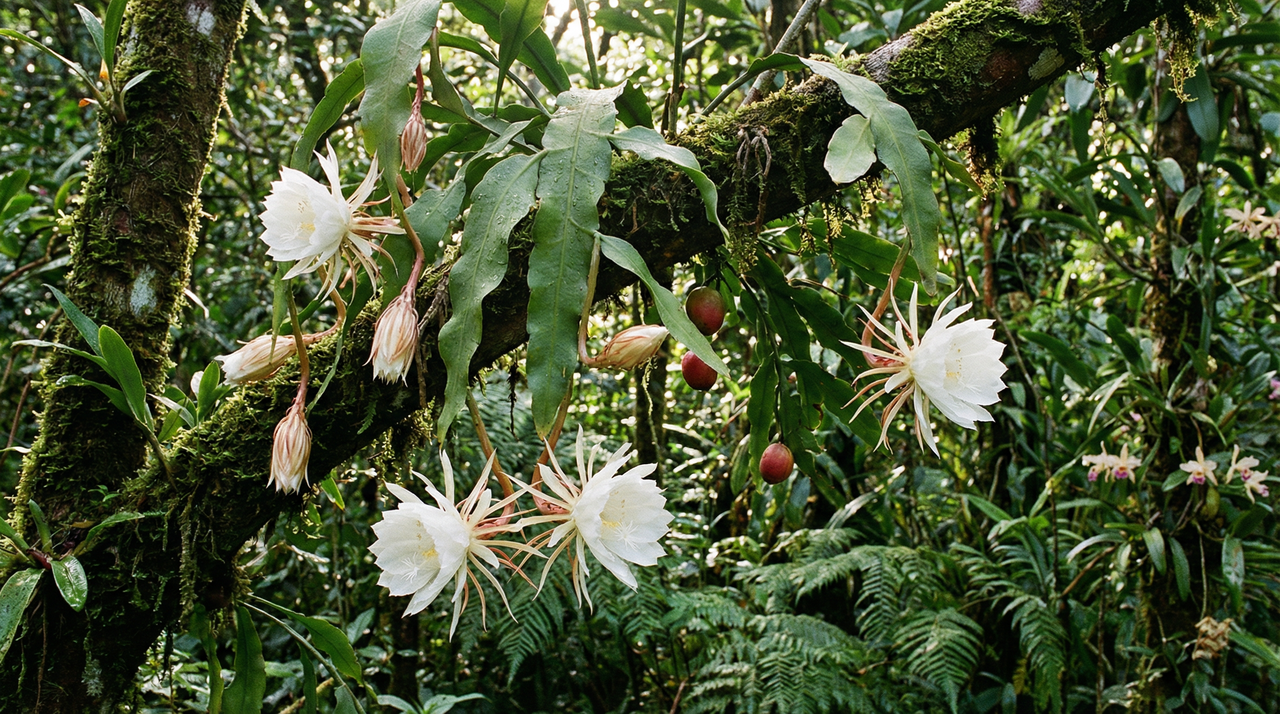
I've killed exactly one Orchid Cactus in my life, and I did it by treating it like a cactus. That sounds obvious in retrospect, but walk into almost any garden center and you'll find this plant shelved between the barrel cacti and the prickly pears, tagged with a little card that says "drought tolerant, full sun." Both of those things are technically true and practically disastrous. Epiphyllum oxypetalum is a cactus the way a bromeliad is a pineapple plant. The family resemblance is there if you squint, but the actual life strategy is completely different. It evolved clinging to the shaded canopy of humid tropical forests from Mexico down through northern South America, pulling moisture from air and bark rather than baking in open ground. Give it what it looks like it wants and you'll have a crispy brown tangle within a season.
What it actually wants, and what it will reward you with if you listen, is something I still find genuinely hard to describe to people who haven't experienced it. The flowers open after dark, a single night per bloom, sometimes only a handful of nights across a whole year. They're enormous, white, and smell like something between jasmine and vanilla with a faint green edge underneath. By morning they're collapsing, and if you weren't watching, you missed it. I've set phone alarms for this plant. I've pulled chairs out onto my porch at eleven o'clock at night just to sit with it. That's the kind of grower this plant makes you into.
Origin and History of the Orchid Cactus
Botanical Background and Native Habitat
The orchid cactus, Epiphyllum oxypetalum, is a perennial cactus in the Cactaceae family with roots stretching from southern Mexico through the humid lowlands of Central America and into northern South America, covering Guatemala, Belize, Honduras, Costa Rica, Panama, Colombia, Venezuela, Brazil, and beyond.[1][2] Most populations live below 500 meters in lowland tropical forest, though it climbs to around 1,500 meters in some parts of its range.[3] This plant didn't evolve in soil at all. It's an epiphyte that perches on trees, rocky outcrops, and even mangrove edges, anchoring itself with aerial roots that harvest moisture from rain, fog, and decomposing organic matter on host bark.[1][4] It doesn't harm its hosts; it's a lodger, not a parasite. Understanding that completely reframes how you grow it. The related Epiphyllum crenatum shares a similar native range from southern Mexico to Costa Rica and the same epiphytic lifestyle,[5] and both species are polycarpic, meaning they can bloom repeatedly over a cultivated lifespan that can stretch 50 years or more.[1]
Visual Characteristics and Growth Habit
One of the first things I tell clients when I recommend this plant for a shaded patio is that it doesn't actually have leaves. What look like flat, succulent, scallop-edged leaves are actually photosynthetic stems called cladodes, typically 30 to 60 centimeters per segment, waxy and notched along the margins, with a sprawling or pendant habit that can reach one to five meters over time.[6][7] In a hanging basket or mounted on a tree, those cascading stems create a living sculpture even when the plant isn't in bloom. Then comes the flower. The blooms are enormous, up to 35 centimeters across, pure white, and they open at dusk with a fragrance that genuinely stops you mid-conversation: sweet, exotic, jasmine and vanilla with a thread of citrus.[3][8] By morning it's closed and gone. That single dramatic night is where the common name comes from, and I can tell you from experience that nothing else in the garden creates quite the same sense of occasion.
Traditional, Cultural, and Folklore Significance
European botanists encountered this plant in the 18th century; Martinus Houttuyn first described it in 1778, Peter Collinson introduced it to European cultivation around the same period, and Adrian Hardy Haworth gave it the scientific name we use today in 1812.[9][10][11] From there it traveled through horticultural trade, naturalizing in Florida and the Caribbean, and reaching Asia's botanical gardens by the mid-19th to early 20th centuries.[12] Seeing it grown at collections like Kew reminds me that this plant has been treasured in formal botanic culture for over two centuries, which is worth something when you're selecting specimens for a regenerative garden with long-term ambitions.
What the single-night bloom does to human imagination is remarkable and consistent across cultures. In Latin American folklore it's tied to enchanted lovers and wandering spirits.[13] In Vietnam, Indonesia, and the Philippines it carries associations with nocturnal deities, lunar myths, and protection.[14] A blooming night in India or China is considered an auspicious event, and the plant appears in poetry and visual art across Southeast Asia.[8] I've worked with other night-fragrant plants, night-blooming lilies among them, but none carries this same weight of cross-cultural symbolism. The epiphyllum flower meaning clusters around ephemerality, romance, and mystery wherever it travels, a testament to how powerfully a single vanishing night affects the people who witness it. Traditional folk medicine across Mexico, China, India, and Vietnam has long used the plant for respiratory complaints and calming effects,[15] though those uses remain anecdotal and largely unvalidated by clinical research; I love the folklore, but I enjoy my Queen of the Night strictly as the garden specimen it is. The good news for growers everywhere is that the IUCN rates it as Least Concern, and commercial plants come from vegetative propagation rather than wild harvest, so cultivation is as sustainable as it gets.[16]
Fun Facts About the Queen of the Night
A quick name note: you'll sometimes see this plant called Dutchman's pipe cactus, but that name properly belongs to Aristolochia species, an entirely different genus.[4] The confusion is common and worth clearing up before you go searching for it at a nursery. The aerial roots that look purely ornamental are actually doing real work, pulling dissolved nutrients from rainwater, fog, and bark debris the same way they did in the forests of Central America.[4] And then there's the wait. From propagation, a plant typically takes three to five years to produce its first flower, and even established specimens bloom only once or twice a year in cultivation.[17] I always propagate from cuttings for clients to cut that timeline down as much as possible, but even so, you're building toward a moment. In my experience, that anticipation is part of what the plant does to you. When the night finally arrives and the fragrance hits, every month of waiting feels exactly right.
Orchid Cactus Varieties and Where to Buy
Notable Cultivars and Hybrid Parentage
Most growers never encounter a named cultivar of Epiphyllum oxypetalum because there aren't many to find. The straight species is what gets passed around at plant swaps, sold at specialty nurseries, and grown on grandmother's porch across Southeast Asia.[18] There's a variegated form called 'Variegata' with pale-streaked stems, plus the occasional monstrose or crested mutation that collectors sometimes seek out, but these are curiosities rather than a developed cultivar lineup.[1]
Where this species truly shines in the horticultural record is as a parent. Its towering white nocturnal blooms, heavy fragrance, and sheer stem vigor made it foundational to the Epicactus hybrid group, contributing the "night queen" genetics behind cultivars like 'Royal Queen'.[19][18] Cross it with other epiphyllum species and the offspring can bloom in vivid red, coral, yellow, and pink, often in full daylight with flowers considerably larger than the parent.[18] I've grown a handful of those Epicactus hybrids alongside the pure species, and the contrast is striking: one gives you a single breathtaking white night, the others put on a daytime color show for weeks. Both are worth having, but they're doing very different things in your garden. More recently, breeders, particularly in Asian horticulture markets, have selected for compact growth and more continuous blooming, which makes the hybrids increasingly practical for container culture.[20]
Sourcing and Buying Orchid Cactus
Epiphyllum oxypetalum is genuinely easy to source in the US through specialty cactus nurseries, botanical garden sales, and online retailers.[21][22] Small cuttings and young plants typically run $10 to $50, mid-size plants $20 to $100, and mature specimens capable of blooming this season can reach $100 to $300 or more. Seed packets are usually $5 to $15, though growing from seed is slow and the results are variable. My honest advice on the expensive mature plants: they're worth it only if the seller can confirm the exact clone, because flower size and fragrance vary meaningfully between unnamed plants.
No CITES restrictions apply to this species, and it's not flagged as invasive at the federal level, so buying and shipping within the US is straightforward. Importing from abroad just requires standard USDA APHIS phytosanitary documentation.[23][24][25] When the plant arrives (or before you bring a nursery specimen home), check the stems: they should feel firm and look evenly green without mushiness or yellowing. Peer into the crevices along the stem edges for mealybugs, because I've been burned enough times by overlooked infestations to make this a non-negotiable step. Healthy roots are white to beige and firm, never brown and slimy.[26][27] A few minutes of inspection at purchase prevents weeks of remediation later.
Orchid Cactus Propagation and Planting (Epiphyllum oxypetalum)
There are actually several ways to propagate orchid cactus: stem cuttings, seeds, grafting, air layering, and even tissue culture are all on the table.[28][29] For most home growers, though, stem cuttings are where you want to start. They're fast, reliable, and produce plants genetically identical to the parent.
Propagation Methods for Orchid Cactus
Stem cuttings have an 80-95% success rate when done properly,[30][31] and I've consistently hit the upper end of that range with one simple adjustment: letting the cut ends callus long enough. Take 6-12 inch sections from healthy mature stems using sterilized tools, then set them somewhere warm and dry for a full two weeks before planting.[32][30][33][34] I once lost an entire tray by rushing them into soil after just three days; the cut ends felt dry on the surface but hadn't sealed properly. A fully callused end has a distinctly leathery, slightly wrinkled feel. Don't skip this step.
Once callused, plant cuttings in a well-draining mix of cactus medium, orchid bark, perlite, and peat moss. Optional but helpful: a light dip in 0.1-0.3% IBA rooting hormone speeds things along.[32][34] Keep temperatures between 70-80°F, maintain 70-80% humidity (a simple humidity dome works well), provide bright indirect light, and water sparingly until roots form. Under those conditions, roots typically develop in 4-8 weeks.[32][35][30]
Seed propagation is slower but genuinely fascinating because of a trait called polyembryony: a single seed can develop multiple embryos, sometimes giving you several genetically identical seedlings from one sowing.[36][37][38] I've started saving a handful of seeds each year just to watch this happen and maintain genetic backups, even though I rely on cuttings for any plant I actually intend to grow on. Germination rates run 50-70%.[36][39] Sow the small, dark seeds (1-2 mm, minimal dormancy) on the surface of moist sterile medium, maintain 75-85°F and high humidity, and expect germination in 2-4 weeks.[3][40] Seeds store well too: dried and sealed in airtight containers at 4-10°C, viability holds for 5-15 years.[41] The main caveat with seed-grown plants is that Epiphyllum oxypetalum is self-incompatible, so you need cross-pollination for viable seed, and the offspring won't necessarily come true to type.[42][37]
Grafting onto Hylocereus (dragon fruit) rootstock is worth learning if you want fruit faster; success rates reach 70-90% in spring or summer with clean, sterilized cuts and precise vascular alignment.[43][17] Air layering is a gentler option for rescuing a leggy established specimen without separating it from the parent until roots are well formed.[35] Regardless of method, sterilized tools are non-negotiable every time.[43]
Soil and Site Requirements
Because orchid cactus evolved as a canopy epiphyte growing in decomposing leaf litter caught in tree crevices, it has zero tolerance for dense, compacted soil.[44][21] The mix that works best mimics that organic, airy canopy substrate: equal parts peat moss or coco coir, perlite, and coarse sand or orchid bark, kept at a pH of 5.5-7.0 with 6.0-6.5 as the sweet spot.[21][17] I test pH every time I repot, and I've noticed that my plants show subtle interveinal yellowing at pH 7.2 (iron deficiency, classic symptom of too-alkaline conditions[45]). Switching to a more acidic orchid-bark blend corrected it within a few weeks. On the other end, dropping below pH 5.5 risks aluminum and manganese toxicity, showing up as chlorosis and stunted growth.[46][45] Amend with peat or sulfur to lower pH, lime to raise it.
The root system is shallow and horizontal, typically only 2-4 inches deep, which is why I think of it almost like an epiphytic orchid in terms of pot choice: shallow, wide, and porous works far better than a deep nursery pot.[46][47] Repot every 2-3 years in spring using fresh sterile medium, and 4-6 inches of soil depth is genuinely sufficient.[48] For light, position in bright indirect light or partial shade (4-6 hours daily); an east- or west-facing window indoors hits the recommended 2000-5000 foot-candles without risking the bleaching and photoinhibition that prolonged afternoon sun causes.[28][3][49] Two to four hours of gentle morning sun is fine; harsh afternoon sun is not.
Spacing, Supports, and Planting Technique
This is a vining, climbing plant that can reach 10-20 feet with support, so thinking about structure before planting saves a lot of untangling later.[21][50] I learned this the hard way: my first few cuttings were left to sprawl freely and turned into an impressive tangle that was difficult to manage without snapping stems. Now I train young plants onto a small bamboo teepee from the start. It takes five minutes and prevents a mess that would take an hour to sort out later.
Most growers will keep orchid cactus in containers, hanging baskets, or trained on a trellis rather than planted in the ground, which makes spacing largely irrelevant unless you're in USDA zones 10-12 with room for a landscape planting.[51] In that case, aim for roughly 2-4 feet between plants: closer if you want a denser ornamental effect, toward the wider end to allow full sprawling growth and enough air circulation to keep fungal issues at bay.[21][17] Stakes or a trellis are important regardless of setting; the stems are too heavy and brittle to support themselves once the plant matures.
Timeline to Bloom and Fruit
Grafted plants are the fastest route to that first legendary bloom and subsequent fruit, typically producing within 1-3 years from grafting onto Hylocereus rootstock.[52][28] Plants grown from cuttings follow closely behind at 1-3 years to first bloom, usually 2-3 years on average under good conditions.[53] Seed-grown plants ask for considerably more patience: expect 4-7 years or more before the first flower appears.[1][53]
I grow from seed occasionally because watching polyembryonic seedlings emerge is genuinely delightful, but for any plant I actually want to see bloom in a reasonable timeframe, I start with cuttings or grafted stock. Waiting seven years for a single night of flowers is a long game even by my standards.
Orchid Cactus Care Guide
Everything about caring for orchid cactus makes more sense once you stop thinking of it as a cactus and start thinking of it as a tropical rainforest epiphyte that happens to have succulent stems. It doesn't want bone-dry soil or blazing sun. It wants the kind of bright, humid, shaded canopy life its ancestors had in the forests of Central and South America. Getting that mental model right prevents probably 80 percent of the mistakes I see growers make.
Watering Orchid Cactus
The rule I follow is simple: water when the top inch or two of the mix has dried out, which in my Central Florida summers usually means every seven to ten days rather than the full two-week window.[54][55] Epiphytic mixes drain fast, so they genuinely dry faster than standard potting soil even in humid weather. Come fall and winter, I back off significantly to every two to four weeks, which connects directly to the dormancy strategy I'll cover below. Overwatering is the single quickest way to lose one of these plants, and the damage usually starts quietly at the roots long before stems show symptoms.
Light, Soil, and Fertilizer Needs
Bright indirect light is the baseline for epiphyllum oxypetalum plant care: four to six hours of filtered sun daily, never direct afternoon rays, which scorch those flat green stems fast.[17] For soil, I mix roughly 50 percent coco coir, 30 percent perlite, and 20 percent orchid bark, targeting a pH between 5.5 and 6.5.[56][57] That combination drains well enough to prevent rot while still holding a little moisture around the roots.
For fertilizing, orchid cactus is a moderate feeder. Through spring and summer I apply a balanced fertilizer like 10-10-10, diluted to half strength every two to four weeks.[58][59] Once buds start forming, I switch to a bloom-booster formula higher in phosphorus and potassium, something in the 5-10-10 range, to support those spectacular orchid cactus flowers.[60] Winter feeding stops entirely while the plant rests.
One thing I learned the hard way: salt buildup from fertilizer is sneakier than most growers expect. I now flush my pots with plain water every sixth week or so during the active season, ever since I started seeing tip burn on stems in late summer and traced it back to potassium deficiency from accumulated salts rather than any watering issue.[17][61] Yellowing leaves usually point to iron, nitrogen, or magnesium deficiency, often aggravated by a soil pH that's crept too alkaline or by overwatering that locks out nutrients at the root level.
Temperature Tolerance: Frost and Heat
The cold tolerance profile of this plant is simple: it has essentially none.[6][62] In its native tropical range, temperatures stay between 59 and 86°F year-round with no frost whatsoever.[3] Even a brief dip to 32-40°F causes blackened stems, mushy tissue, and aborting flower buds, and prolonged exposure is simply fatal.[17][63]
I'm in zone 9B, which means frost is a real annual event I plan around rather than worry about. By mid-November every orchid cactus I own comes indoors to an east-facing window paired with a small humidifier to keep humidity in that 50-70% range the plant expects.[64] For anyone who can't bring plants in, frost cloth and cloches offer short-term protection, but the real answer for anything below Zone 10 is growing in containers so the plants stay mobile.[17]
On the heat side, the plant handles temperatures up to 95°F reasonably well as long as humidity stays up and direct sun stays off the stems, though above 90°F you'll start seeing wilting, scorched edges, and bud drop if conditions are dry.[21][65] Providing 50-70% shade during peak summer and irrigating in early morning makes a real difference.[36] I keep my variegated forms under slightly denser shade cloth than the solid-green ones because I've watched their leaf edges scorch during Florida heat spikes even when the green-stemmed plants nearby stayed fine.[66]
Pruning, Maintenance, and Seasonal Care
Pruning is where I made my worst early mistakes with this plant. I cut back a large specimen by about a third one spring, thinking I was shaping it up nicely, and it produced almost no blooms that season. Flowers form on new growth, but new growth needs established stems to push from, and removing too much set the whole cycle back.[67] Now I prune in late winter before growth begins and remove no more than 10-20% annually, targeting dead or weak stems first.[68] Those trailing stems can eventually reach 20 feet, so a trellis or stake matters more than aggressive cutting for managing size.[69]
The seasonal rhythm underneath all of this is what makes the orchid cactus bloom reliably. Active growth runs spring through summer, with flowering peaking in late summer, then the plant needs a genuine two-to-three month winter rest with reduced watering, cooler temperatures, and minimal feeding.[70][71] Skipping that rest is one of the most common reasons growers get beautiful foliage and no flowers. The same cool, dry, bright-indirect-light conditions that protect the plant over winter are precisely what trigger it to bloom the following season.[72] I always keep the overwintering pots somewhere I walk past regularly, partly for pest monitoring, and partly because every summer evening when the buds finally start swelling, the anticipation of that one spectacular night makes the whole patient year feel completely worth it.
Harvesting Orchid Cactus (Epiphyllum oxypetalum)
Harvesting fruit from an orchid cactus is genuinely an intentional act. The flowers open on summer nights, between May and October in the Northern Hemisphere, and each bloom lasts exactly one evening before collapsing by morning. Because the plant relies on bats for pollination in the wild, a potted specimen in your garden or living room has almost no chance of setting fruit on its own. You have to be there, and you have to do the work yourself. I won't pretend the hand-pollination routine isn't a little absurd: transferring pollen with a small brush by headlamp at eleven o'clock at night while the flowers glow in the dark is one of the stranger things I do in the garden, but the payoff makes it worthwhile.
Timing and Ripeness Cues for Queen of the Night Fruit
If the pollination takes, you'll know within a day or three: the tiny ovary at the base of the spent flower will swell rather than shrivel, and from there the fruit develops steadily over the next 30 to 60 days.[73][74] I've learned to check the developing ovary daily after pollination because the initial color change from green toward red or purple can be subtle enough to miss if you're only looking weekly. Once the plant is established and you've gotten the pollination timing down, you can reasonably expect a harvestable fruit annually during the summer window.[52] The clearest harvest signal is simple: a ripe fruit lets go of the stem with almost no resistance.[52] If you're tugging, wait another few days.
Yield, Flavor Profile, and Harvest Technique
Ripe fruits run 3 to 10 centimeters long and shift from green to vibrant shades of red, pink, orange, or reddish-purple depending on the individual plant.[75][76][77] Beyond the color, I rely on two other cues: a slight give under gentle thumb pressure (firm but not hard) and a faint sweet fragrance that's most noticeable in the early morning.[78] When all three signals line up alongside that easy stem release, the fruit is ready.
The pulp inside is sweet and juicy, filled with small black seeds, and the overall flavor lands somewhere between dragon fruit and kiwi with a mild, clean aftertaste and no real bitterness.[75][79] I'd describe it as a gentler, less intensely flavored pitaya. The honest caveat is that the science on flavor variation across ripeness stages or parent plants is thin.[75][80] What I've noticed in my own collection is that seedlings from different parent plants produce fruit with noticeably different levels of sweetness. That data gap is actually an invitation: track your own plants, compare, and see what you find. The epiphyllum seed pods themselves are worth saving and trialing if you're the kind of grower who enjoys that kind of long-haul experiment.
Orchid Cactus Preparation and Uses
Most people grow Queen of the Night for its flowers, full stop. But after years of keeping these plants, I've found there's a modest edible and practical dimension worth knowing about, even if it never rivals the drama of a bloom night.
Culinary Uses of Orchid Cactus Flowers and Fruit
The ripe fruit is the real edible surprise here. I cross-checked this against the University of Arizona's edible cacti extension guide before recommending it, and the confirmation was reassuring: ripe fruit from Epiphyllum oxypetalum is safe to eat fresh, toss into salads, blend into drinks, or fold into desserts.[75][79] I've harvested a ripe one on a few occasions and found it mild, juicy, and faintly sweet, though considerably less showy on the plate. A summer fruit salad with it is a fun conversation piece.
The flowers have a longer culinary history in traditional Mexican and Central American cooking, where they're occasionally eaten fresh or added to salads.[75] Texture-wise I'd put them somewhere near young squash blossoms: delicate, slightly mucilaginous, not much assertive flavor on their own. That said, the use is genuinely occasional and supplementary. This is a treat, not a crop, and only fully ripe fruit should be consumed; unripe fruit and other plant parts can cause irritation, as covered in the health benefits section.
Traditional Medicinal Preparations
Traditional practice calls for simple infusions using one to two teaspoons of dried stems or flowers steeped in hot water for ten to fifteen minutes, or decoctions made by simmering one to two grams of chopped stems for fifteen to twenty minutes, with a typical range of one to three cups daily.[81] I've made similar mild teas from other succulents for respiratory comfort, and the preparation itself isn't complicated. My honest advice, though: start with a single cup and see how your body responds, and consult a healthcare provider before making this a regular habit. The research supporting Epiphyllum oxypetalum is still largely in-vitro or animal-based with no human clinical trials, so these preparations are folk remedies rather than proven treatments. The pregnancy cautions and potential medication interactions flagged in the health benefits section apply here too.
Non-Food Uses in Permaculture and Beyond
As an epiphyte, orchid cactus pulls nutrients from air and host surfaces rather than soil, which means it won't function as a dynamic accumulator or contribute meaningful biomass to nutrient cycling the way a ground-layer comfrey or nitrogen-fixer would.[82] I've used it mounted on tree trunks and wooden structures at the edge of vertical guilds, and its value there is real but different: instant nocturnal habitat, structural visual interest, and reliable support for the hawkmoths and other night pollinators that visit. It doesn't compete for soil resources with its neighbors, which is exactly what you want when you're stacking functions in a layered system. This plant earns its place through presence and pollinator ecology, and that's genuinely enough.
Orchid Cactus Health Benefits and Medicinal Uses
The orchid cactus is grown for its flowers, not its medicine cabinet. Queen of the Night has no clinical trials behind it, no approved therapeutic applications, and no human studies confirming the effects that traditional healers have described for centuries.[83][84] What it does have is a genuinely interesting phytochemical profile, a long folk history across two continents, and a handful of preclinical findings that make it worth knowing about, as long as we keep the proportions right.
Phytochemical Profile of Epiphyllum oxypetalum
Beneath those fleeting white blooms is a surprisingly complex chemistry. Epiphyllum oxypetalum produces flavonoids including quercetin, kaempferol, and rutin; phenolic acids like caffeic and chlorogenic acid; alkaloids including hordenine; steroidal compounds; terpenoids; betalains; mucilage; and polysaccharides.[85][86][87] These compounds aren't distributed evenly: the flowers are richest in flavonoids and ascorbic acid, the stems run high in mucilage and phenolics, and the fruits concentrate betalains along with vitamins and fiber.
Measured phenolic content ranges from 20 to 150 mg GAE/g dry weight, with flavonoids at 10 to 80 mg QE/g, depending heavily on which plant part you're extracting, what solvent you use, and when you harvest.[88][89] Growing conditions matter enormously here. Plants from native tropical regions and those subjected to environmental stress, including nutrient-poor soils and seasonal drought, tend to accumulate more secondary metabolites than pampered cultivated stock.[89][90] I've noticed this pattern myself: in my zone 9b garden, the plants that push through our hot, humid summers produce noticeably thicker, more mucilaginous stems and flowers with a richer fragrance than the same plant does when I baby it indoors through a cooler spell. The chemistry follows the stress.
These compounds serve the plant first. They deter herbivores, attract nocturnal pollinators through floral volatiles, and protect tissues from oxidative damage.[91] That much of the research on this species is inferred from related Cactaceae rather than direct Epiphyllum oxypetalum studies is a real limitation, and it's worth acknowledging that species-specific metabolomic work remains thin.[86][87]
Traditional and Modern Research Findings
Folk medicine traditions in Mexico, Central America, and parts of Southeast Asia have long used stems and flowers as infusions or poultices for wounds, inflammation, asthma, cough, bronchitis, and rheumatism, with additional roles as diuretic, expectorant, antispasmodic, sedative, and adaptogen.[92][93] That's a wide-ranging list, and it deserves respect as accumulated human observation, even without clinical validation.
The preclinical research gives those traditions some biochemical plausibility. Extracts show strong antioxidant activity in DPPH assays, performing comparably to ascorbic acid, with IC50 values often below 100 μg/mL.[15][94] Anti-inflammatory effects in animal models include inhibition of COX-1, COX-2, and NF-κB pathways, with carrageenan-induced paw edema reduced by up to 60%.[95][96] Antimicrobial activity against Staphylococcus aureus and E. coli has been demonstrated with MIC values of 0.5 to 2 mg/mL.[85] Aqueous extracts accelerate wound closure in animal models, achieving 70 to 80% healing in 14 days through fibroblast proliferation and collagen synthesis.[97] There are even anti-diabetic signals, with alpha-glucosidase and alpha-amylase inhibition recorded at IC50 values of 50 to 100 μg/mL and blood glucose reductions of 25 to 40% in diabetic rat models.[98][99] Methanolic extracts have also induced apoptosis in HeLa and MCF-7 cancer cell lines via caspase activation and mitochondrial pathways.[100]
Every single one of those findings is in vitro or animal-based. None has been replicated in human trials. In my work with clients who enjoy experimenting with edible flowers, I always emphasize that these beautiful blooms are best enjoyed as an occasional garnish rather than a daily medicine. The preclinical picture is promising enough to justify continued research, but it doesn't justify therapeutic claims.
Nutritional Value and Edibility
The flowers are the most approachable edible part, and they're genuinely pleasant. They carry a mild flavor that works in salads, soups, and teas, and they're used this way in Mexican, Central American, and Southeast Asian cuisines.[1][101] I rinse them gently at dawn after the night bloom and either toss them fresh into salads or steep them for a mild, slightly sweet tea. The ripe fruits are a different pleasure entirely, sweet and tangy, reminiscent of kiwi or dragon fruit.[1]
Nutritionally, the flowers are low-calorie (roughly 20 to 60 kcal per 100 g), high in water content (85 to 90%), and supply vitamins A and C, dietary fiber, and antioxidants.[102][103] Specific macronutrient data for Epiphyllum oxypetalum itself is limited; most figures are inferred from related cacti like Opuntia rather than direct analysis.[104] Young cladodes can also be eaten after boiling or grilling, which reduces both bitterness and oxalate content, though they're less popular than the flowers or fruit.[101] Think of it like preparing prickly pear pads: a little heat, a little patience, and you've addressed the main preparation concern.
Safety Considerations
Epiphyllum oxypetalum is generally regarded as non-toxic to humans and pets, with a low acute toxicity profile (LD50 greater than 2000 mg/kg in rodents) and no known poisonous compounds.[105][106] The ASPCA lists it as non-toxic to cats and dogs, which I know is often the first thing people search when a curious pet bumps into an unfamiliar plant.
The real hazards are mechanical and contact-related. Spines puncture and abrade, and the milky latex sap can cause contact dermatitis or eye irritation in sensitive individuals.[107][108] I always wear gloves when doing any hands-on work with the stems, and I keep a small jar of aloe gel nearby for the occasional accidental smear. Large quantities of raw stem can produce mild gastrointestinal upset, and the calcium oxalate crystals in stems should be reduced through proper cooking before eating them.[109] People with hay fever may also react to the pollen during blooming season.[110]
Given the preclinical anti-diabetic and antihypertensive signals in the research, anyone on hypoglycemic or blood pressure medications should approach therapeutic use cautiously, even though no documented drug interactions currently exist. The plant is traditionally considered to have uterotonic activity, so pregnancy is a reasonable contraindication. Finally, always be sure you're actually working with Epiphyllum oxypetalum and not a Euphorbia look-alike; several Euphorbias produce a far more caustic milky sap that poses a genuine toxicity risk.[111][112]
Orchid Cactus Pests and Diseases
Orchid cactus holds up reasonably well against the typical roster of garden troublemakers. Its waxy cuticle, trichomes, and chemical defenses including alkaloids and phenolics give it moderate pest resistance compared to many other cacti and succulents.[113][114] It's not bulletproof, though. Suboptimal care has a way of opening the door, and once pests move in they often set the stage for secondary disease. I've found that the growers who rarely deal with problems are the ones who've learned to read the plant early, before a minor nuisance becomes a real crisis.
Common Pests of Orchid Cactus
Mealybugs and scale insects are the most frequently damaging pests on epiphyllum, though spider mites, aphids, thrips, and whiteflies all show up occasionally too.[115][116] In my experience growing epiphytic cacti in humid subtropical conditions, the first sign of mealybugs is often a faint white dusting tucked into the leaf axils, something a lot of people mistake for normal fuzz. Catching it at that stage, before the full cottony masses appear, has saved me from more than a few outbreaks that would have spread quickly in warm weather.
Pest pressure spikes in two opposite scenarios: humid, stagnant air and hot, dry indoor environments. The first favors mealybugs and scale; the second is where spider mites thrive.[115][117] Both conditions also weaken the plant and create wound sites that invite fungal and bacterial pathogens in secondarily, so addressing pests promptly isn't just cosmetic.
My approach follows an IPM ladder: cultural prevention first, then biological controls, then sprays only if needed. Good drainage, consistent air circulation, avoiding overhead watering, and a weekly visual scan handle the majority of issues before they escalate.[118] If populations do establish, I encourage lacewings, ladybugs, and predatory mites, which are genuinely effective against spider mites, whiteflies, and soft-bodied pests without disrupting the rest of the garden.[118] I reach for neem oil or insecticidal soap at the first sign of aphids clustering on new growth because they work quickly and leave my beneficial insects intact.[119][115] Systemic insecticides like imidacloprid are a genuine last resort; the phytotoxicity risk and collateral damage to beneficials make them a poor fit for most home gardens.[118] No named cultivar or hybrid offers any meaningful pest resistance advantage over the species, so local extension resources are your best guide to what's actually active in your region in a given season.[120][119]
Diseases of Orchid Cactus and Prevention
Orchid cactus has moderate disease resistance among epiphytic cacti, but it earns no special immunity points. Root rot caused by Phytophthora, Fusarium, or Pythium is by far the most common problem, and it's almost always a watering issue.[121][122] I learned early on to lift the pot and judge its weight before watering rather than following a schedule. A heavy pot means moisture is still present; a light one tells me it's time. That one habit has kept my collection remarkably free of rot even through Florida's wet seasons.
Beyond root rot, the main epiphyllum diseases to watch for are stem rot (fungal or bacterial, including Erwinia soft rot), anthracnose showing up as dark lesions in warm humid low-light conditions, powdery mildew in stagnant humid air, and bacterial leaf spot driven by overhead watering.[121][17] The common thread across all of them is environmental: too much moisture sitting on stems or roots, too little air movement, too little light. Pest damage compounds everything by weakening tissue and opening wounds, which is why the two subsections here aren't really separate stories. Keeping humidity between 50 and 70 percent, temperatures in the 60 to 80°F range, and giving the plant 4 to 6 hours of bright indirect light daily removes most of the conditions these pathogens need to establish.[123][36]
There are no disease-resistant cultivars worth seeking out; no hybrids have been bred specifically for that trait, and any vigor differences between selections are modest at best.[21] Cultural prevention is genuinely more effective than variety selection here. When something does go wrong, remove affected tissue promptly, quarantine new plants before introducing them to your collection, and reach for fungicides only after correcting the underlying conditions.[124][17] A healthy plant with good air flow and a well-draining mix recovers from minor epiphyllum fungal leaf spot or soft rot surprisingly well once you give it the conditions it actually wants.
Orchid Cactus in Permaculture Design
Most permaculture plants earn their place by fixing nitrogen, producing biomass, or feeding something edible up the food chain. Orchid Cactus earns its place by opening enormous white flowers at 10 pm on a single summer night and attracting hawkmoths the size of hummingbirds. That's a different kind of value, and understanding it changes where and how you place this plant in a designed system.
Climate and Hardiness Zones for Epiphyllum oxypetalum
This plant is native to tropical rainforests of Central and South America, the kind of environments that deliver 1,000 to 4,000 mm of annual rainfall and rarely let humidity dip below comfortable.[3][1] Its practical outdoor range runs USDA zones 10 through 12.[21][125] Anything cooler than that means containers, a greenhouse, or a bright interior spot from November through March.
I'm in zone 9B in Central Florida, which puts me in interesting territory with this one. Most winters I can leave it outside on a sheltered porch with a fleece cloth on standby, but I've lost stems to a hard frost event more than once. The plant flatly refuses prolonged exposure below 50°F and will tell you about it in the most dramatic way possible.[21][17] It wants nights between 55 and 65°F and days between 65 and 85°F, which for most of my year is exactly what it gets.[126]
Humidity is equally non-negotiable for placement decisions. The plant wants 60 to 80 percent relative humidity and starts showing stress through wrinkling and drooping stems when conditions drop below 40 to 50 percent for extended periods.[127][128] Its CAM physiology and succulent cladodes do give it some buffer against brief dry spells,[129] but I think of this less like a true drought-tolerant cactus and more like a staghorn fern that can miss a watering without panicking. The distinction matters when you're deciding which microclimate in your design will shelter it.
Ecosystem Functions and Pollination Ecology
Nothing in my garden generates the kind of genuine astonishment that a fully open Queen of the Night flower does at midnight. The blooms run 12 to 18 inches long, pure white, and intensely fragrant, and they are built almost exclusively for one pollinator: hawkmoths in the family Sphingidae.[130][131] The flowers are protandrous, releasing pollen before their receptive stage to push cross-pollination, and the whole performance happens at peak efficiency around 70 to 80°F with humidity in that same 60 to 80 percent range.[132][17] I've sat on my back porch at dusk and watched a sphinx moth work a flower with the same purposeful efficiency as a bee in a squash blossom. It's one of the more memorable things a garden can offer.
If your site doesn't host a reliable hawkmoth population, hand pollination with a soft brush is a practical substitute and can yield seed pods four to six months later.[133][134] Bats and other insects do occasionally visit, but compared to related species like Epiphyllum phyllanthus, this one's floral architecture really is tuned for the big moths.[135]
Beyond pollinator attraction, the plant contributes to a designed ecosystem by producing fruit that birds and small mammals may disperse, and by cycling nutrients aerially through foliar uptake and canopy humus collection.[136][137] Be honest with yourself, though: it's not going to fix nitrogen, build soil, or produce meaningful biomass. Its permaculture value is nocturnal pollinator habitat, biodiversity support, and the kind of ornamental punch that makes people stop and pay attention to a food forest they might otherwise walk past.[82]
Forest Layer Placement and Guild Integration
In the wild, Epiphyllum oxypetalum grows perched on host trees in canopy and understory layers, attaching with aerial roots without parasitizing the host, and sending stems arching outward 10 to 20 feet in a loose, vining habit.[1][138] It pulls nutrients from accumulated humus in branch crotches and from the air and rain moving through the canopy, not from soil at all.[139][1] I think of it the same way I think about bromeliads or staghorn ferns in a client design: a vertical-layer resident that adds structure and habitat without competing for the same resources as the plants underneath it.
In practice, I train the long stems along a wooden fence, up a tree trunk, or over a pergola near the edge of a food forest where it gets dappled afternoon shade and good airflow. At night those draping stems shelter small lizards and insects and create exactly the kind of sheltered corridor that nocturnal visitors need to feel safe moving through a garden. It's genuinely functional vertical habitat, even if it will never be your protein source.[140][141]
One thing I want to be direct about for Florida growers specifically: UF/IFAS has flagged Queen of the Night as potentially invasive, with documented capacity to escape cultivation and displace native vegetation.[142][143] I keep mine in monitored, contained areas and pull any volunteers I find beyond my intended planting zone. The goal is for it to enhance native canopy diversity, not quietly compete with it. In zones where that risk doesn't apply, the guild integration calculus is simpler, but here it's worth staying attentive.
The Night I Finally Understood Why She Only Blooms Once
I set my alarm for 2 a.m. the first time a bud looked ready, shuffled out to my back porch in the dark, and just stood there in the humidity with my coffee going cold. The flower was already fully open, maybe eight inches across, smelling like something between vanilla and wet jasmine. I understood then why people in other countries hold festivals around this moment. One night is enough if you actually show up for it.
Sources 143
- Epiphyllum oxypetalum ↩
- Epiphyllum oxypetalum Haw. ↩
- Epiphyllum oxypetalum Habitat and Ecology ↩
- Epiphyllum oxypetalum Profile ↩
- Epiphyllum crenatum - Kew Science ↩
- Missouri Botanical Garden Plant Finder ↩
- RHS - Epiphyllum oxypetalum ↩
- Epiphyllum oxypetalum: The Queen of the Night ↩
- Natuurlyke Historie der Planten ↩
- The Life and Correspondence of Peter Collinson ↩
- Synopsis Plantarum Succulentarum ↩
- Epiphyllum oxypetalum ↩
- Folklore of Night-Blooming Cacti in Latin America ↩
- Cultural Significance of Cereus in Southeast Asia ↩
- Ethnobotany of Epiphyllum oxypetalum in Traditional Medicine ↩
- Epiphyllum oxypetalum ↩
- Caring for Epiphyllum (Orchid Cactus) ↩
- Epiphyllum Hybrids and Cultivars - Cactus and Succulent Society of America ↩
- Kew Gardens Plants of the World Online ↩
- Epiphyllum oxypetalum - Royal Horticultural Society ↩
- Epiphyllum oxypetalum - Queen of the Night ↩
- Epiphyllum oxypetalum ↩
- CITES Species Database ↩
- USDA PLANTS Database ↩
- Plant Import Regulations ↩
- UC Master Gardeners of Northern Utah: Epiphyllum Care ↩
- Royal Horticultural Society: Buying Plants ↩
- Queen of the Night Cactus (Epiphyllum oxypetalum) ↩
- Epiphyllum oxypetalum ↩
- Epiphyllum oxypetalum Propagation Guide ↩
- How to Propagate Epiphyllum Species ↩
- Epiphyllum oxypetalum ↩
- How to Propagate Epiphyllum Oxypetalum ↩
- Epiphyllum Propagation Techniques ↩
- Cacti and Succulents: Propagation Techniques ↩
- Epiphyllum oxypetalum Propagation Guide ↩
- Seed Development and Polyembryony in Cactaceae ↩
- Polyembryony in the Cactaceae Family ↩
- Queen of the Night Cactus Care and Propagation ↩
- Optimal Conditions for Cacti Seed Germination ↩
- Seed Storage of Succulent Plants ↩
- Propagation of Epiphytic Cacti ↩
- Grafting Epiphyllum Cacti: Techniques and Rootstocks ↩
- Epiphyllum oxypetalum - RHS Gardening ↩
- Diagnosing Nutrient Deficiencies in Cacti ↩
- Epiphyllum oxypetalum ↩
- Dutchman's pipe cactus (Epiphyllum oxypetalum) ↩
- Epiphyllum oxypetalum Care Guide ↩
- Epiphyllum oxypetalum - Royal Horticultural Society ↩
- Epiphyllum oxypetalum (Queen of the Night) ↩
- Queen of the Night Cactus (Epiphyllum oxypetalum) ↩
- Grafting Epiphyllum oxypetalum for Faster Fruiting ↩
- Growing Epiphyllum oxypetalum from Seed and Cuttings ↩
- Missouri Botanical Garden Plant Finder ↩
- Royal Horticultural Society - Epiphyllum oxypetalum ↩
- Epiphyllum oxypetalum Care Guide ↩
- Soil Requirements for Epiphytes ↩
- Missouri Botanical Garden Plant Finder ↩
- Epiphyllum Oxypetalum Care Guide ↩
- Royal Horticultural Society Plant Care Guide ↩
- Nutrient Deficiencies in Cacti and Succulents - Missouri Botanical Garden ↩
- Plants USDA Profile ↩
- Frost Damage in Cacti and Succulents ↩
- Royal Horticultural Society - Frost Protection for Tropical Plants ↩
- Heat Stress in Cacti and Succulents ↩
- Heat Stress Management in Cacti ↩
- Missouri Botanical Garden - Epiphyllum and Cacti Care Sheet ↩
- How to Grow Epiphyllum (Night-Blooming Cereus) ↩
- Palms and Cacti: Training and Pruning ↩
- Epiphyllum oxypetalum - Missouri Botanical Garden Plant Finder ↩
- Royal Horticultural Society - Epiphyllum care page ↩
- Epiphyllum oxypetalum - Kew Gardens Plants of the World Online ↩
- Fruit Development in Epiphytic Cacti ↩
- Epiphyllum oxypetalum: Cultivation and Propagation ↩
- Epiphyllum oxypetalum - Queen of the Night Cactus ↩
- Plants of the World Online ↩
- University of Florida IFAS Extension ↩
- Growing Epiphyllum Oxypetalum ↩
- Edible Cacti and Succulents ↩
- Royal Botanic Gardens, Kew - POWO - Epiphyllum oxypetalum ↩
- Traditional Uses of Epiphyllum oxypetalum in Respiratory Ailments ↩
- Permaculture Plants: Epiphytes and Ornamentals ↩
- Epiphyllum oxypetalum - PubMed Search ↩
- ClinicalTrials.gov Search for Epiphyllum oxypetalum ↩
- Phytochemical Analysis of Epiphyllum oxypetalum: Focus on Phenolic Compounds and Flavonoids ↩
- Journal of Ethnopharmacology - Review on Epiphyllum species ↩
- Secondary Metabolites in Cactaceae: Focus on Epiphyllum Species ↩
- Phenolic Content and Flavonoid Quantification in Night-Blooming Cereus ↩
- Antioxidant Activity and Seasonal Variation in Epiphyllum oxypetalum Metabolites ↩
- Geographic Variation in Phenolic Content of Ornamental Cacti ↩
- Secondary Metabolites in Cacti ↩
- Traditional Medicinal Uses of Epiphyllum oxypetalum in Latin America ↩
- Ethnobotany of Cacti in Mexico and Central America ↩
- Antioxidant and Anti-inflammatory Properties of Epiphyllum oxypetalum Extracts ↩
- Anti-Inflammatory Effects of Queen of the Night Cactus in Rat Models ↩
- Antioxidant and Anti-inflammatory Activities of Cactaceae Species ↩
- Wound Healing Potential of Aqueous Extract of Epiphyllum oxypetalum ↩
- Bioactive Compounds from Cactaceae Family: Focus on Anti-diabetic Potential ↩
- Potential Anti-Diabetic Properties of Cactaceae Family Plants Including Epiphyllum oxypetalum ↩
- Cytotoxic Evaluation of Epiphyllum oxypetalum Against Cancer Cell Lines ↩
- Edible Cacti: Identification and Preparation ↩
- Nutritional Composition of Edible Flowers ↩
- Nutritional Composition of Cactus Pear and Other Edible Cacti ↩
- Nutritional Composition of Edible Cactus Flowers ↩
- Queen of the Night Cactus (Epiphyllum oxypetalum) ↩
- Toxicity Profile of Epiphyllum oxypetalum Extracts ↩
- Queen of the Night: Care and Potential Hazards ↩
- Plant Latex Allergies in the Cactaceae Family ↩
- Queen of the Night Cactus (Epiphyllum oxypetalum) ↩
- Queen of the Night Cactus (Epiphyllum oxypetalum) ↩
- Toxic and Non-Toxic Plants: Epiphyllum ↩
- Poisonous Plants: Euphorbia Species ↩
- Chemical Defenses in Cactaceae: A Review ↩
- Epiphytic Cacti Pest Resistance Review ↩
- Pest Management for Epiphyllum Cacti ↩
- Cacti and Succulents: Pests and Diseases ↩
- Susceptibility of Succulents to Arthropod Pests ↩
- Integrated Pest Management for Ornamental Plants ↩
- Insect Pests of Ornamental Plants ↩
- Epiphyllum oxypetalum: Care and Cultivation ↩
- Diseases of Epiphyllum and Related Cacti ↩
- Common Diseases in Cacti and Succulents ↩
- Epiphyllum oxypetalum Care Guide ↩
- Epiphyllum oxypetalum Care ↩
- USDA Plant Hardiness Zone Map for Epiphyllum oxypetalum ↩
- Queen of the Night (Epiphyllum oxypetalum) ↩
- Epiphyllum oxypetalum ↩
- How to Grow and Care for Queen of the Night Cactus ↩
- Growing Rare and Unusual Cactus and Succulents: Epiphytic Cacti ↩
- Night-Blooming Cereus Pollination Ecology ↩
- Nocturnal Pollination in Cacti: Hawkmoths and the Queen of the Night ↩
- Pollination Biology of Epiphyllum oxypetalum ↩
- Epiphyllum oxypetalum - Night-blooming Cereus ↩
- Pollination of Epiphytic Cacti ↩
- Pollination Ecology of Epiphytic Cacti - Journal of Arid Environments ↩
- Epiphytic Cacti in Central American Forests ↩
- Epiphytic Cacti in Tropical Forests - Smithsonian Institution ↩
- Plants of the World Online - The Royal Botanic Gardens, Kew ↩
- Competition Among Epiphytes in Rainforests - Journal of Ecology ↩
- FAO - Agroforestry with Epiphytes ↩
- Kew Gardens - Epiphytic Cacti in Tropical Ecosystems ↩
- University of Florida IFAS Invasive Plant Management ↩
- USDA PLANTS Database ↩